
Wedged between the Black and Mediterranean Seas, Turkey is a transcontinental country that’s been ruled throughout time by a range of powers, including the Hittites, Persians, Greeks, Romans, and Ottomans before becoming a modern republic in the early 1920s. All of these varying powers left their mark on the country in the form of ancient ruins, including beautiful arenas where gladiators and animals fought to the death, sprawling necropolises that now sit in the midst of modern life, large outdoor theaters for plays and concerts, Roman-style baths, and even underwater cities that you can still see from atop the water. In total, there are thousands of registered sites with the Turkish government that are protected, and more of them have been identified throughout the country, with ruins waiting to be excavated under homes and in pastures and farmland.
Many of these archaeological sites remain unexcavated due to the sheer number of sites in Turkey. Add to that limited funding and staff, protection concerns, and the prioritization of tourism over research, and you see why so many places still lie unexplored. One of these protected sites that you can visit, however, is located in the province of Antalya along the Mediterranean Sea, allowing guests to explore an active archaeological site in Olympos, within the Beydağları Coastal National Park.

The Ancient Port City of Phaselis
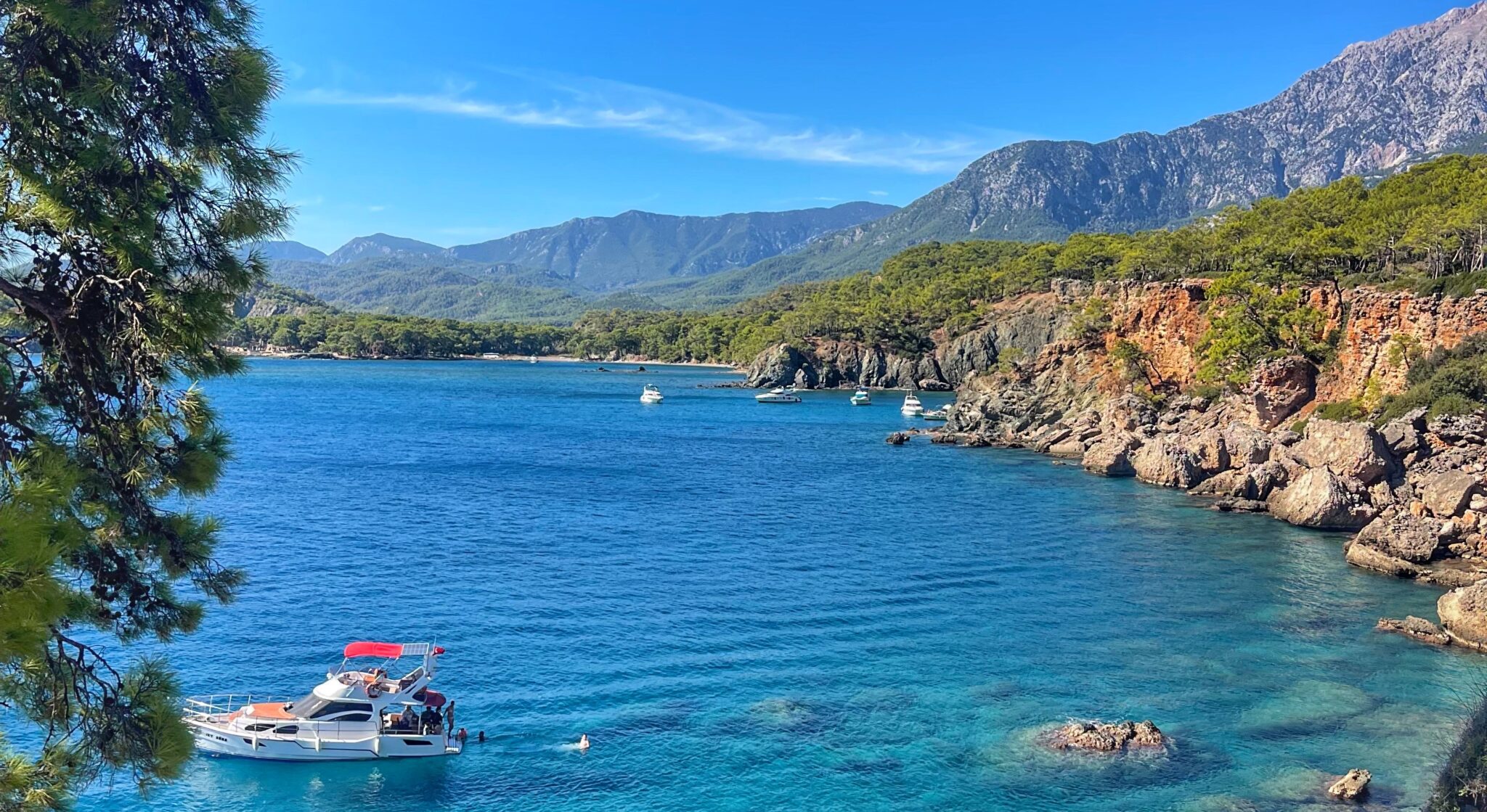
The site, Phaselis, is an ancient city surrounded by three small bays that allow for boats and swimming. It’s a popular spot for locals and one of the most popular ruin sites along the Mediterranean. Dating to the 7th century, Phaselis was founded by settlers from nearby Rhodes and quickly became a major city for trading, thanks to its three harbors. The city was ruled by Persians, Athenians, Alexander the Great, the Egyptian Ptolemies, and then the Romans, and most ruins you’ll see here are from Roman rule.
Hiking along Turkey’s Lycian Way, the country’s first marked, long-distance hiking trail along the Mediterranean Coast, I discovered Phaselis after walking through rocky outcrops and beneath Turkish pines. For most of my excursion, the teal Mediterranean Sea swirled beneath me, the sound of the waves below heard through the trees as I wound my way around sarcophagi among the cliffsides. Down I descended towards the beach, where Phaselis lies. Boats bobbed in the harbor, while tractors and trailers parked amidst the ruins were piled with excavated stones.
Excavations Are Ongoing
Muhammet Doğan, an archaeologist and the assistant excavation director at Phaselis for the past two years, tells me that excavations here are happening fast, with visitors always seeing new discoveries. Excavations in the central harbor were done in just 9 short months and digs at the two other harbors and throughout the area are underway. “The three natural harbors and other important structures were important aspects for the city,” says Doğan. “In this respect, it was the most important commercial city of the Lycia region and today the most beautiful tourist location.”
Connecting the north and south harbors is an ancient main street full of dig sites. Certain areas are roped off while active digs take place, but you can still walk through the entire area and see history come to life. So far, archaeologists have uncovered agoras, private baths, a latrina, a synagogue, a small theater, an ancient marketplace, and even an altar and ritual site. There’s also a well-preserved aqueduct, and ancient docks used for trading. The ruins date to Hellenistic, Roman, and Eastern Roman periods. “The most beautiful finds I have seen so far in Phaselis are small figurines, including griffins, horsemen, priests, warriors, and horses, that were unearthed during the excavations of the north main street,” Doğan states. “They were probably used for a sacrificial ritual.”

Swimming Among the Ruins
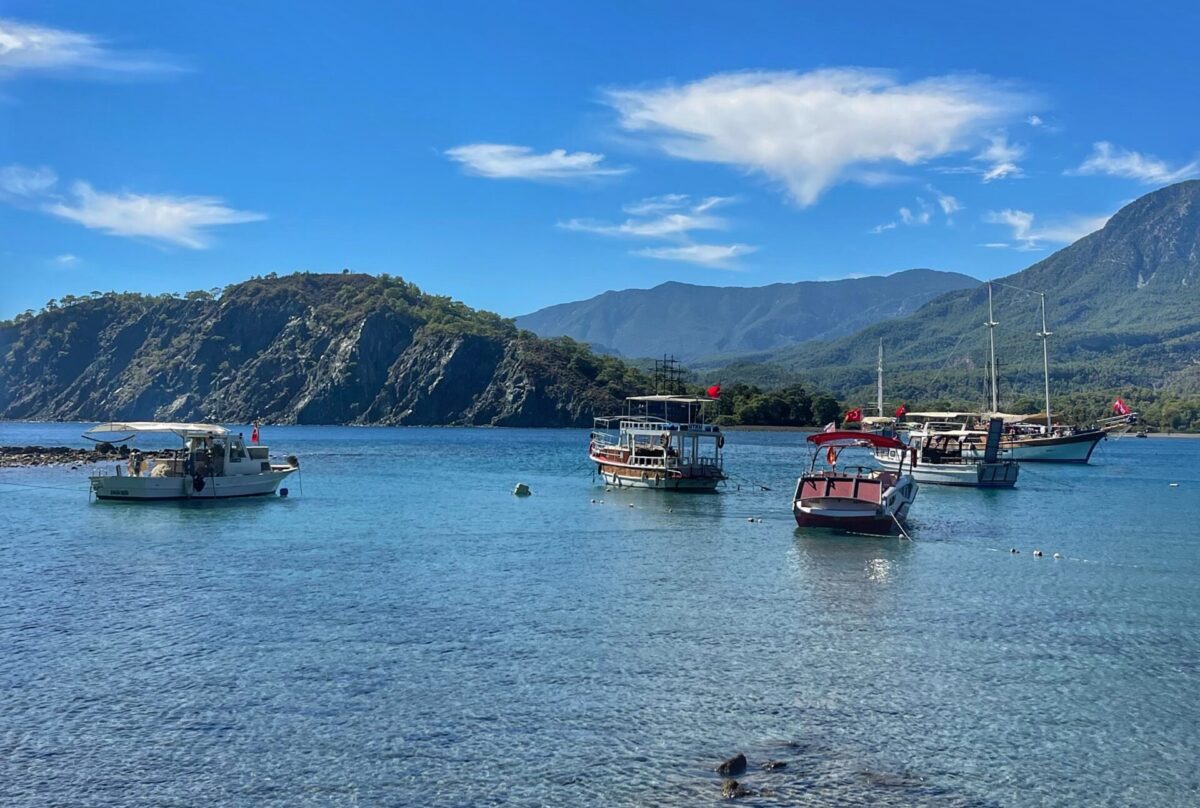
At the end of the main street past stacks of intricate capitals and piles of recovered and reusable stones is the southern beach, where you’ll find more boats anchored in the still, cerulean waters and a beach dotted with beachgoers idling the afternoon away. After hiking the Lycian Way and strolling through ancient ruins, the best way to cool off here is a dip in the Mediterranean Sea, where the extra-salty water keeps you afloat and a mix between sunny shoreline and pine-provided shade give you plenty of options.
Expect to see a mix of tour boats anchored here for lunch and a quick dip, plus locals taking advantage of a long afternoon in the water. With the Taurus Mountains in the background, it’s not only a peaceful beach setting, but a unique one with a mix of history buffs and sun worshipers all sharing one beautiful locale.

The Details
There is a small admission fee (about 10 Euros) to Phaselis, and near the parking lot is a café where you’ll find basic snacks and drinks. Basic facilities are located here as well. The Museum Pass (Müze Kart) is also accepted at the entrance.
About a 30-minute drive south of Phaselis is Çıralı Beach, a long, winding beach with lots of cafes for a proper lunch. Grab a chair under a shaded patio and nosh on fresh seafood, pide (Turkish flatbread pizza), kebobs, and more.

Where to Stay
Here, you’ll find the Olympos archaeological site, where you can explore the ancient city of Olympos. Beachside hotels are abundant here, but I recommend heading into the nearby mountains for a stay at Olympos Mountain Lodge. Situated on a 10-acre olive grove and garden, Olympos Mountain Lodge is small with only 8 rooms, but full of rustic charm. Cozy up to the fireplace in the lobby area (you might get lucky and share a chair with the owner’s pups, Montar and Luna) or listen for the evening call to prayer from your private veranda.
A pool with ocean views sits beneath the lodge, and the on-site restaurant, The Rabbit Hole, is run by the lodge’s owner and chef, Mehmet Ali Börtücene and his team. Expect a casual fine dining tasting menu that changes every evening, with seasonal, local products. Breakfast is divine, with a spread of local pastries and fresh fruits and vegetables sprawled across the lobby bar.