
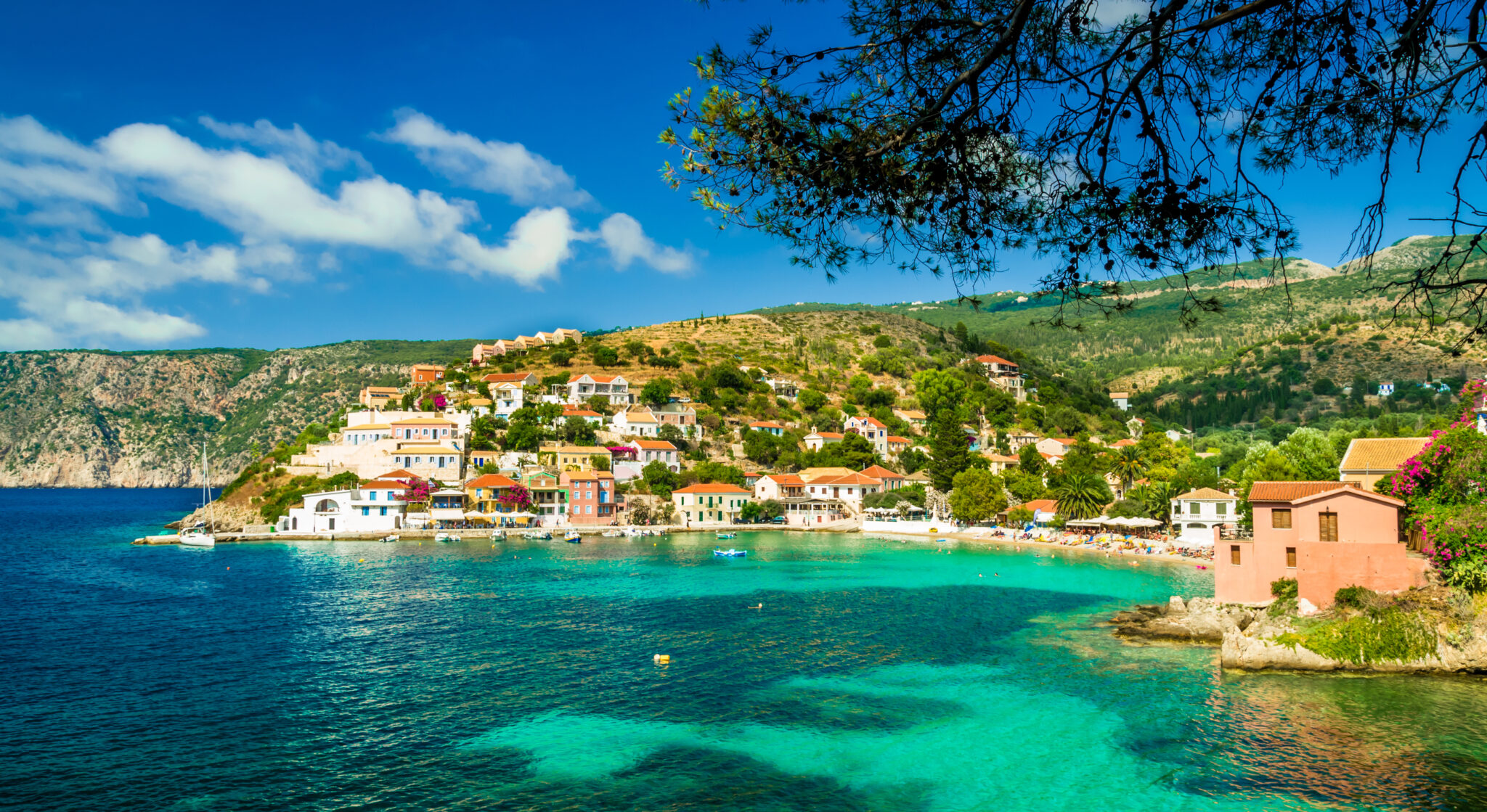
Many towns on the most popular Greek Islands are jammed with tourists in July and August, the peak of the visitor season. Oia village in Santorini and Chania in Crete are just two that come to mind, having explored many throughout the country. But there are many quiet Greek Island towns to enjoy before the crowds descend.
The best time for soaking up tranquility is from around late April through early June. While the sun is nearly always shining and temperatures are frequently idyllic, everything feels as if it moves at a more relaxed pace, making it easy to enjoy the little moments. Watch the fishing boats bob up and down on the turquoise water while the scent of jasmine mingles with the salty sea air. Or witness a classic scene in the town square with elderly locals gathering beneath the shade of olive trees.
Some of my favorite quiet Greek Island towns are those I’ve just happened to stumble upon while aimlessly exploring, while others are a bit more well-known. By visiting any of these before the peak season, you’re virtually guaranteed a memorable experience.
Kaliviani, Crete
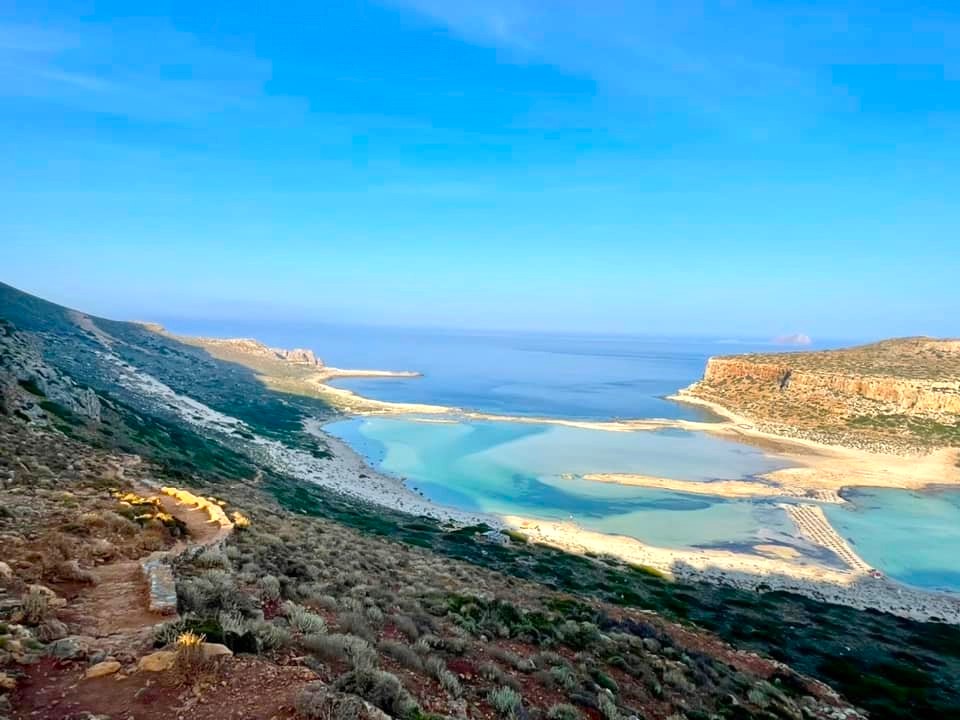
Located near Kissamos in northwestern Crete, Kaliviani is one of those rare, true hidden gems. It’s a peaceful traditional village, yet it’s one of the closest to famous Balos Lagoon, making it easy to visit well before the crowds arrive. The village itself offers s panoramic views of Kissamos Gulf and the surrounding hills, along with narrow, cobbled streets brightened by bougainvillea and lined with old stone homes.
It’s enjoyable just to wander before sitting down at one of the tavernas, known for serving high-quality, authentic Cretan cuisine that can be paired with a tasty island wine.
Gialos, Symi
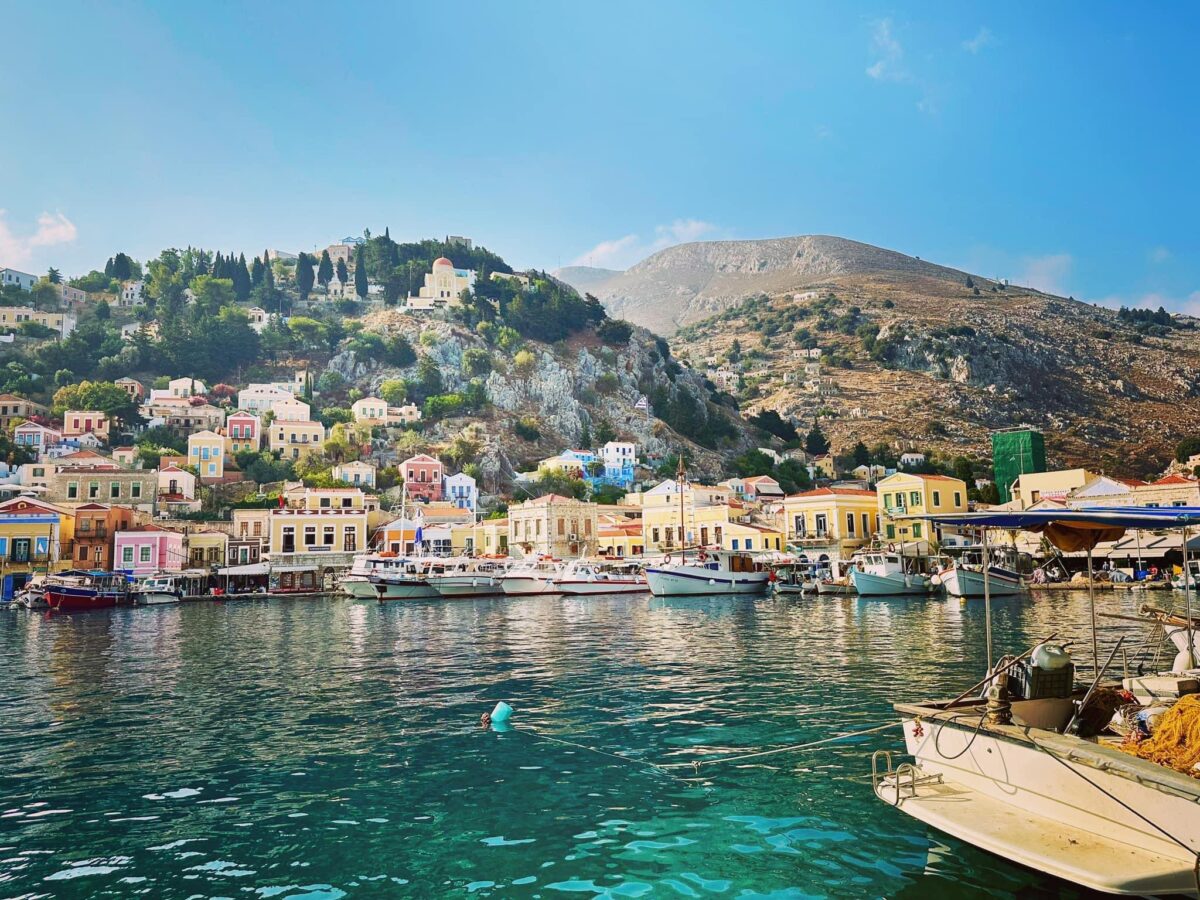
Located in the Dodecanese, the small island of Symi is less than an hour by fast ferry from Rhodes, yet it’s much more peaceful, and even more so before the peak season. When you arrive at Symi’s port, in the capital of Gialos, it seems as if you’re gliding into a painting with colorful neoclassical homes lined around the waterfront. It’s the ideal base for exploring quiet beaches while offering plenty of its own.
The town was built around the harbor, right into the side of the rocky hills that overlook it. Highly walkable, you’ll find plenty of traditional cafes and fish tavernas serving classic Symi shrimp that can be enjoyed with a beautiful water view.
Apollonia, Sifnos
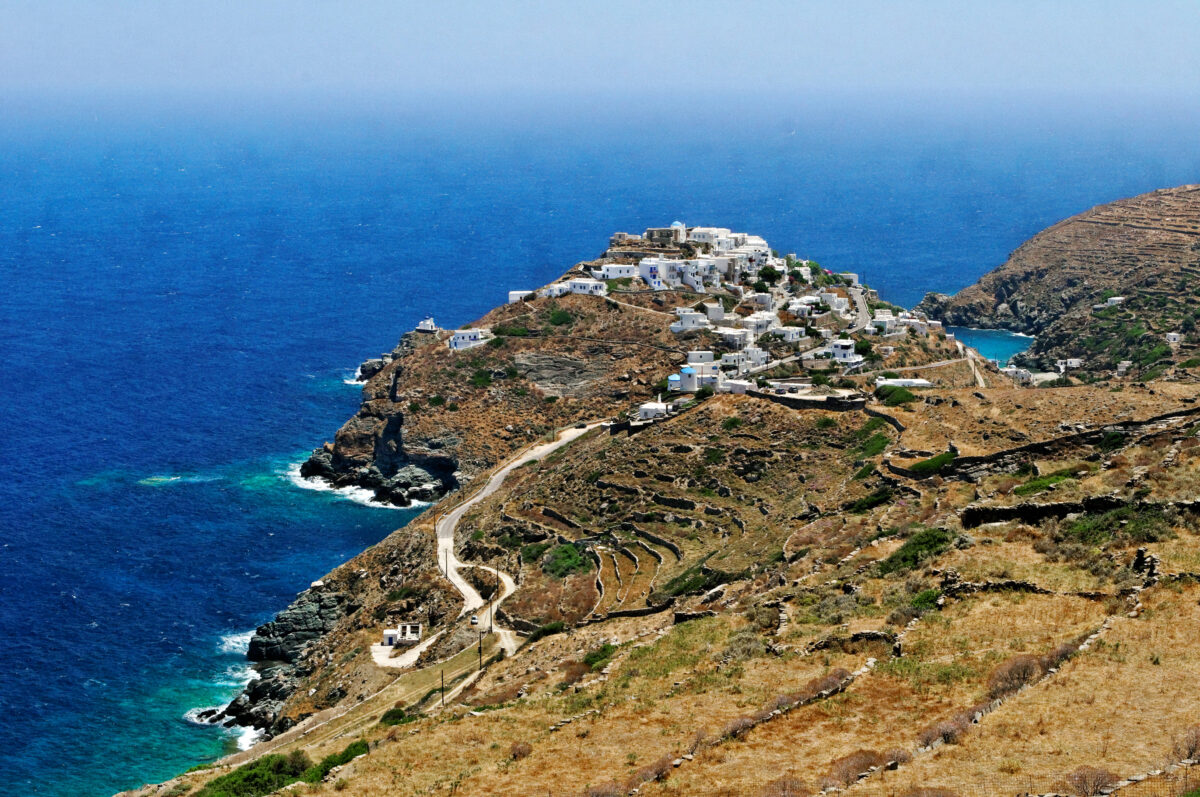
Sifnos is sometimes referred to as the “perfect Greek Island,” with a little bit of everything Greece is known for, including an exceptional gastronomic scene, a rich ceramics tradition, and beautiful sandy beaches. The village of Apollonia is the capital, yet its population is under a thousand. Outside the peak season, enjoy wandering the central pedestrianized main street and charming alleyways with few others. They’re lined with traditional shops selling local pottery, stylish boutiques, and cafes.
Every day can be beautifully ended by watching the sun go down from a rooftop bar before enjoying the local fare. Some of the must-try traditional dishes include revithada (chickpea stew), mastelo (lamb with red wine and dill), and shrimp orzo. The seafood served in Sifnos is typically so fresh that it was probably caught that morning, best with a glass of the crisp Cycladic white Assyrtiko.
Chora, Folegandros
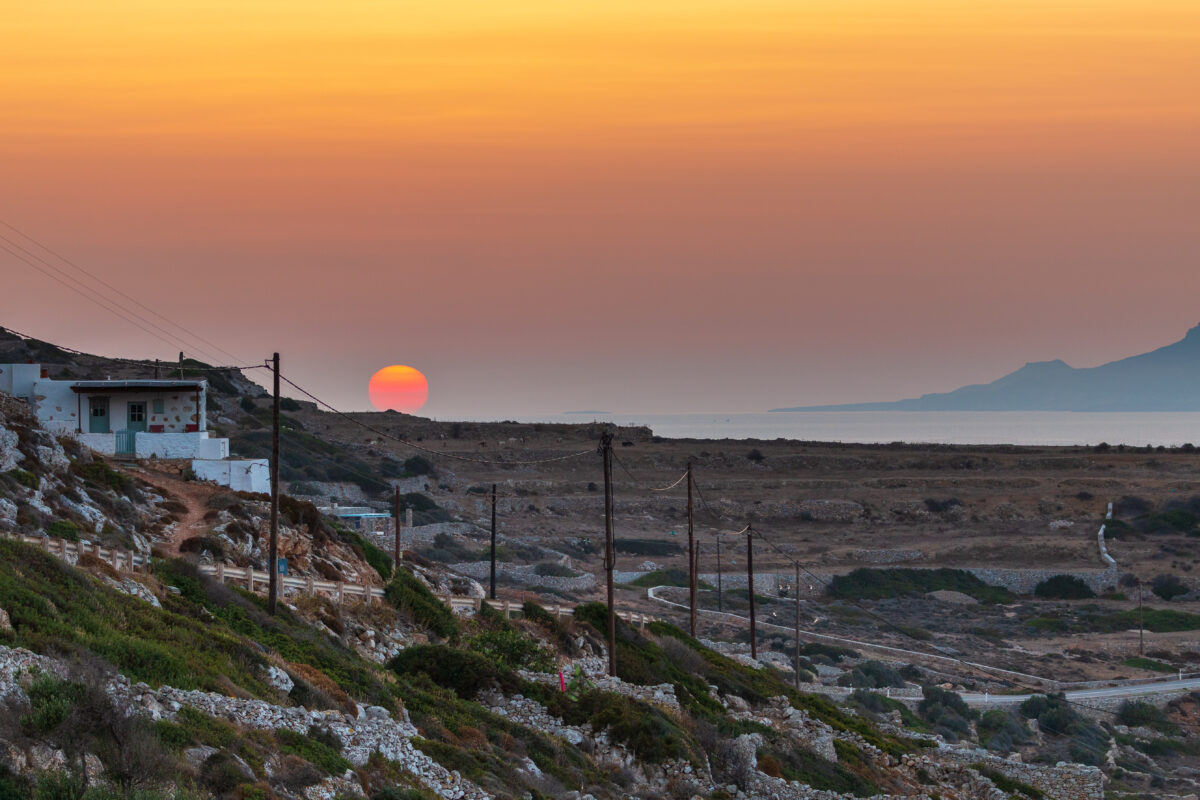
Folegandros is the much more tranquil neighbor of Santorini. There are no fancy restaurants, no luxury boutiques, and no massive cruise ships pulling into port. In the cliff-side village of Chora, the main town, you’ll enjoy a Bohemian feel with traditional, whitewashed architecture and cozy taverns serving authentic dishes like homemade matsata. Enjoy them with a side of warm hospitality and capped off by the region’s signature liquor, rakomelo.
Nearby, you’ll find unspoiled white sand beaches lapped by crystal-clear cobalt waters ideal for secluded swims, while goats scurry up rocky hills in the backdrop. And, all of this can be enjoyed minus the big tourist crowds.
Orthonies, Zakynthos
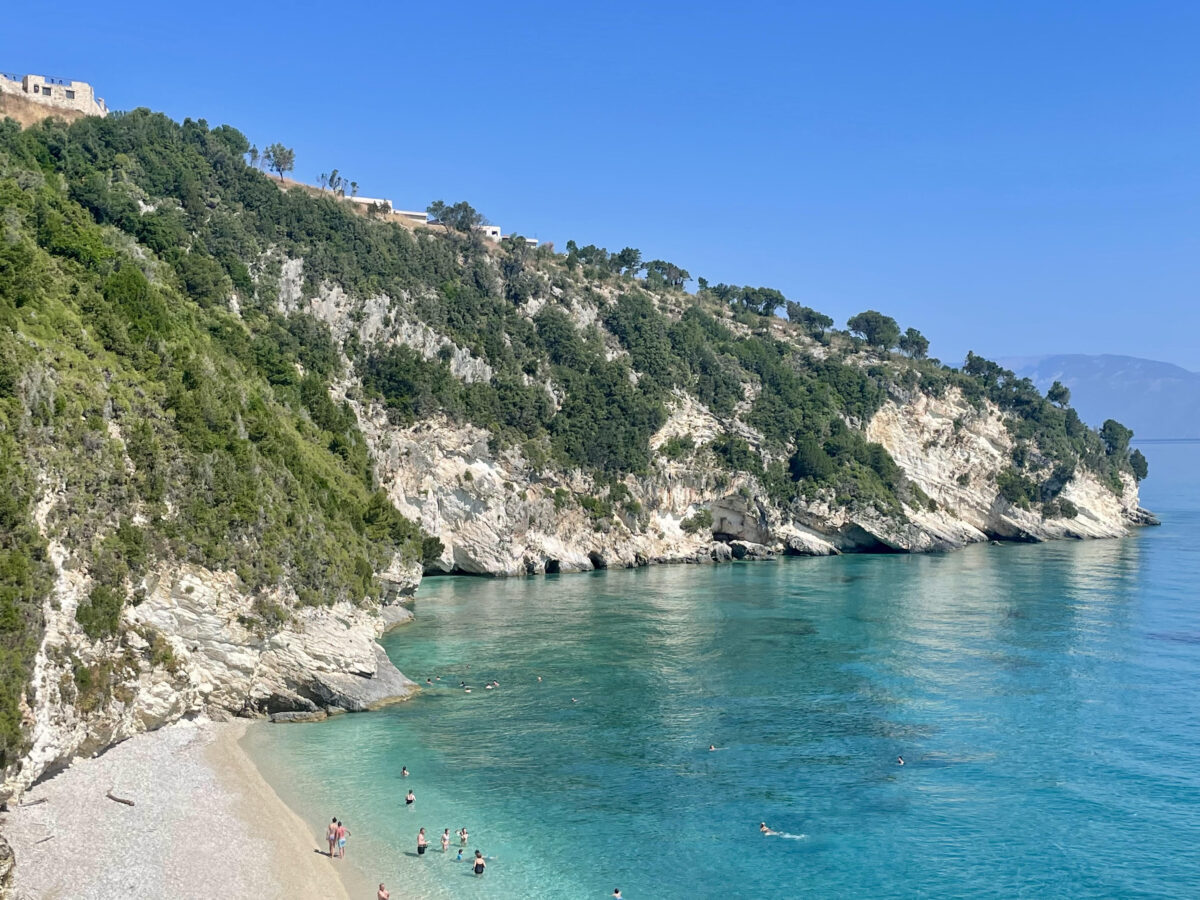
Most visitors to Zakynthos simply enjoy the scenery when passing through the mountain village of Orthonies. But it’s an ideal base for those who want to enjoy peace and quiet while being just minutes from stunning beaches like Pelagaki and Xigia, where natural hot springs flow directly into the sea through underwater caves. As these are small beaches, tucked into coves at the base of the soaring white cliffs, they get crowded during the peak season, but outside of the busiest months, you’ll enjoy a more relaxed experience.
Tourism development is limited in the area, but you will find vacation rental properties, including luxurious villas, a couple of family-run tavernas, and a cafe serving authentic home-cooked Greek meals. There are also several attractions, like the Botega Cafe Museum and a folklore museum. Just outside the village is the serene Monastery of Panagia Spiliotissa. Surrounded by lush greenery with a view of the brilliant blue sea, it includes a 16th-century church and stone bell tower.
Hydra Town, Hydra
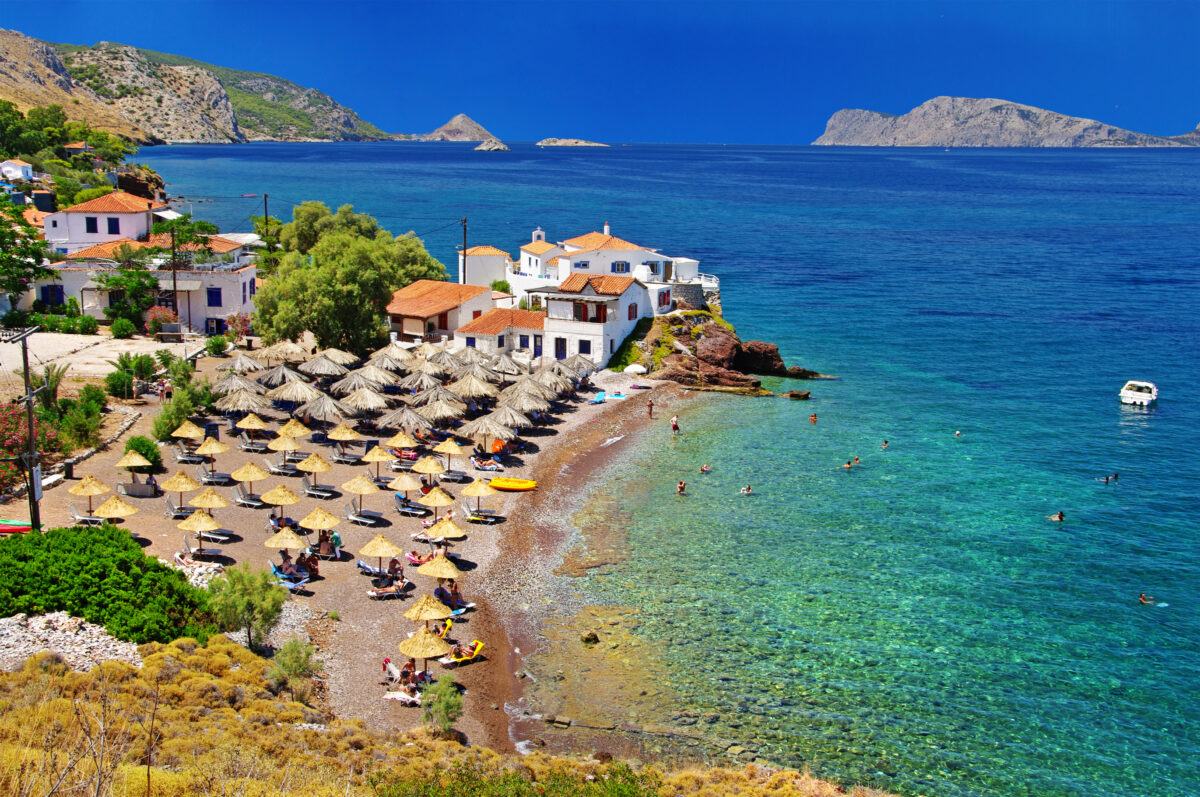
The car-free island of Hydra in the Saronic Gulf feels like a step back in time. Life moves at a slower pace here, ideal for spending days hiking through the hills that plunge to the sea and swimming in the clear blue waters. In the main town of the same name, you’ll see people getting around on foot, by boat, or by donkey. A short walk from the harbor via a scenic coastal path will bring you to pebble beaches providing the perfect spot to watch the sun go down, while the deep, clear blue waters are ideal for snorkeling and diving.
Along the town’s winding cobbled streets, you’ll see grand neoclassical-style mansions, some of which house museums like the 18th-century Lazaros Kountouriotis Residence, with original family furnishings, art collections, and the studio of famous Greek painter Panayiotis Tetsis. You’ll find plenty of shopping and dining venues, including Xeri Elia. The famous traditional taverna where former island resident Leonard Cohen often used to dine, it’s been run by the Douskos family for nearly 200 years, featured on the cover of LIFE Magazine alongside Cohen in the October 1960 issue.
Chora, Astypalea
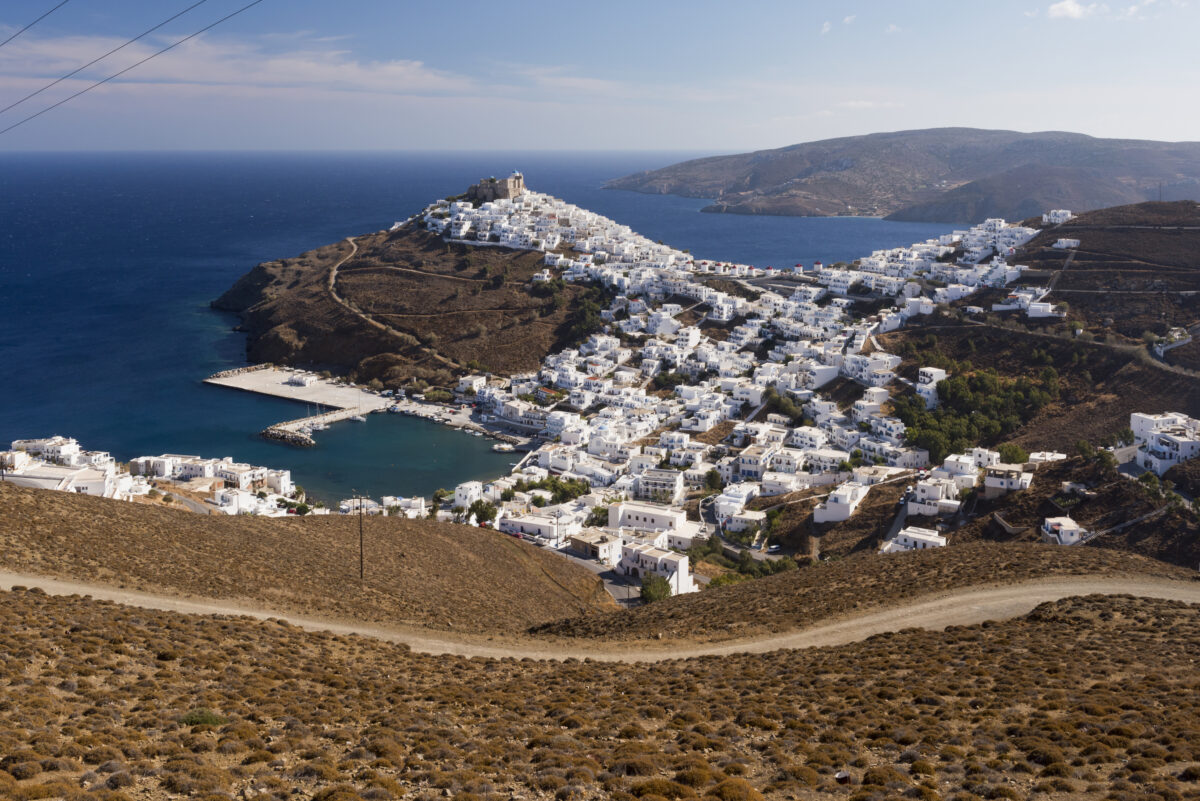
Astypalea, also called the “Butterfly Island” for its shape, is located in the heart of the Aegean between the Cyclades and Dodecanese island groups. While it’s technically part of the Dodecanese, it’s widely regarded as a bridge between the two due to its location and Cycladic features, including whitewashed buildings and homes with blue doors. Chora, the main town, is a traditional hilltop settlement that overlooks the endless blue of the sea. Eight traditional windmills line the path to its 15th-century Venetian castle, providing an ideal vantage point for watching colorful sunsets. One of the prettiest towns in Greece, it’s a maze of steep, stone-paved streets with romantic cafes and traditional tavernas serving local specialties like poungia (cheese pastries).
Just below Chora is the old port and beach area, Pera Giaolos, providing convenient access for those staying in town. You’ll find nicer beaches nearby, like Livadi and the more secluded stretch of Tzanakia Beach.
Apeiranthos, Naxos
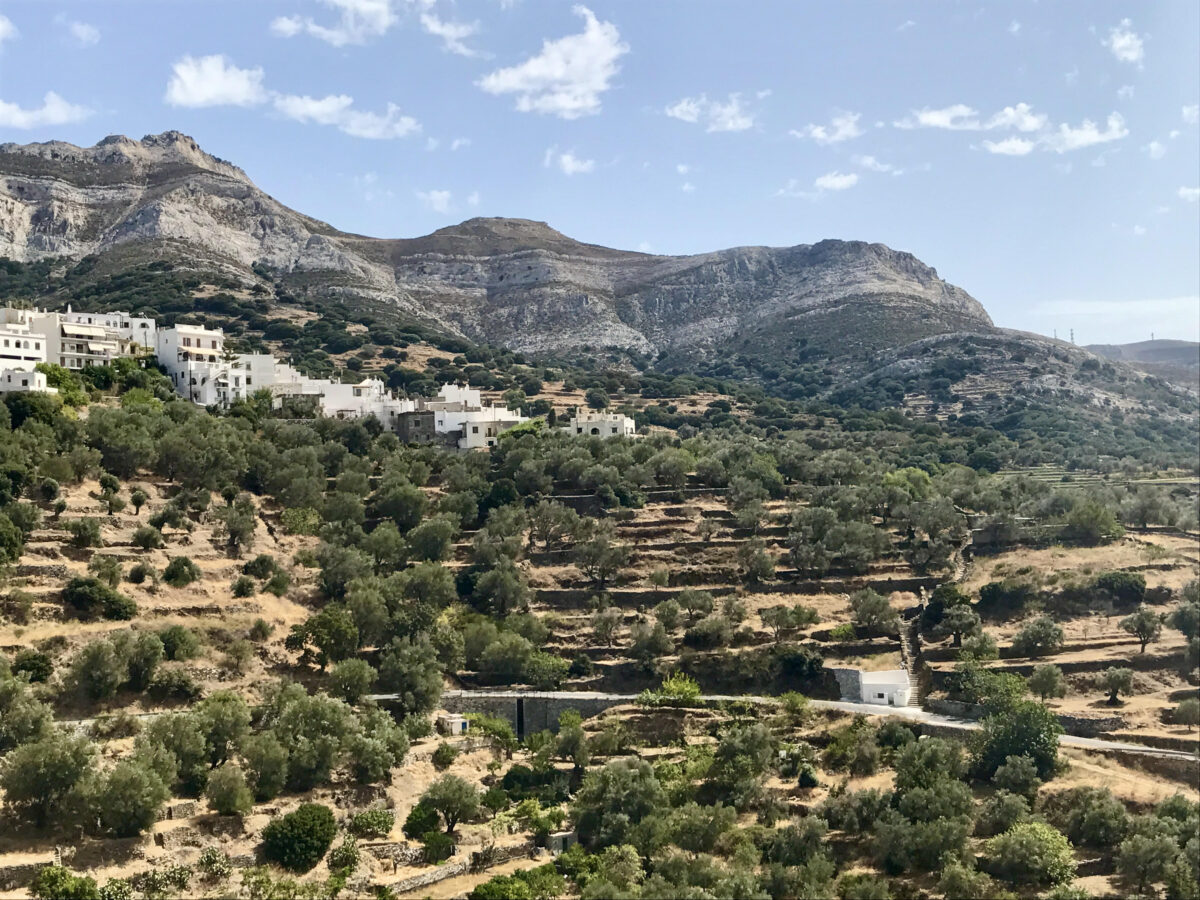
Known as the “marble village,” Apeiranthos is nestled along the slopes of Mount Fanari, built amphitheatrically with Venetian buildings lined along its narrow streets. Quiet and filled with charms, it’s become a famous foodie destination thanks to the late chef/author/TV personality Anthony Bourdain. Featured in an episode of “Parts Unknown” in which he raved about the cuisine, look forward to local specialties like smoked ham, patudo (stuffed lamb), goat cheese with honey, and eggplant with graviera cheese. Meals are often topped off with a complimentary dessert and kitron, the local liqueur.
Most visitors to Naxos stay in accommodations along or near the beach, so Apeiranthos provides a wonderfully serene and picturesque base in addition to its own offerings. That said, you won’t be far from the shore, with the closest beach roughly a 20-minute drive. Serene Moutsouna, on the east coast, offers fine sands with fish tavernas nearby. Lionas Beach, a pebbly stretch to the northeast, is even quieter.
Agios Georgios, Iraklia
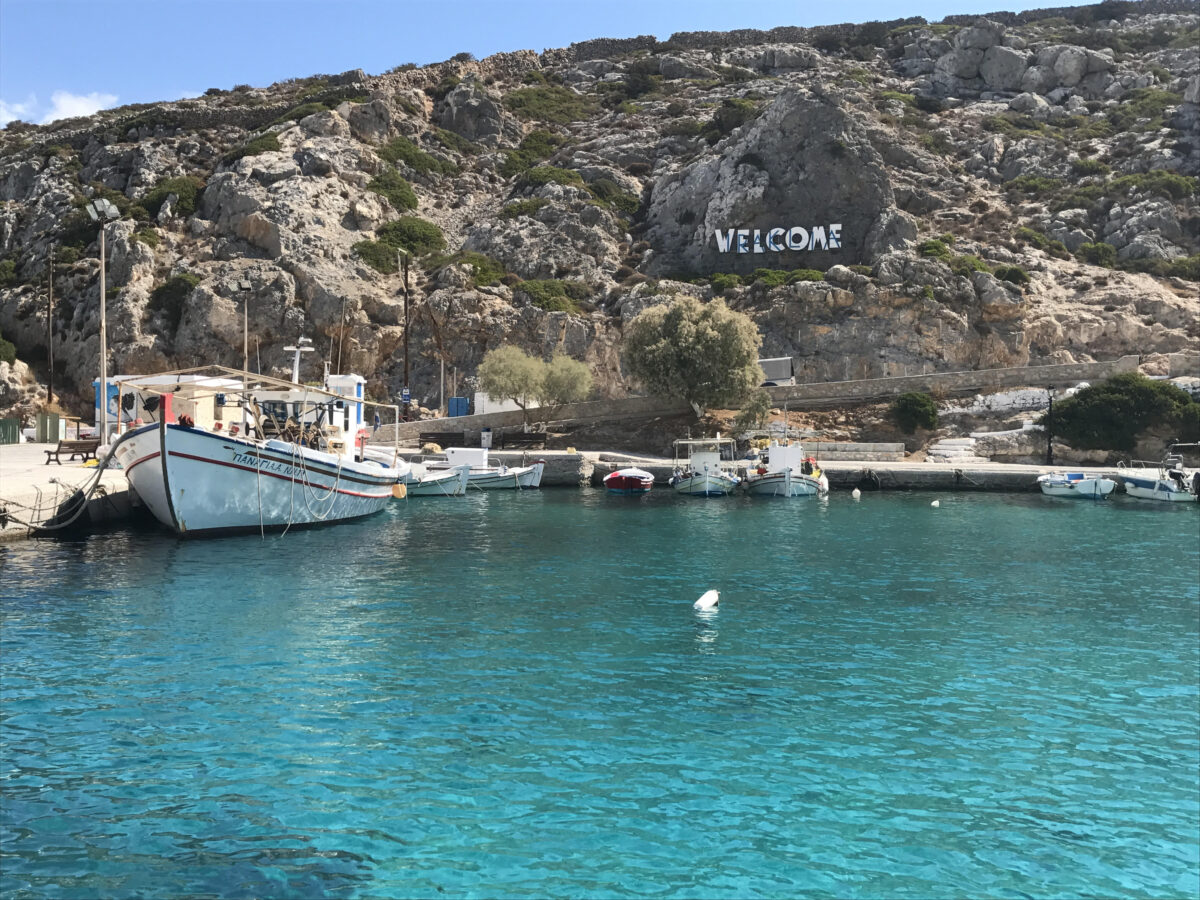
Iraklia is a short boat ride from Naxos, making it a popular day trip, but for those who want to enjoy a very quiet island with stunning scenery and just a handful of eateries and accommodations, it’s worth spending at least a night. Outside of the peak season, there are likely to be only a few others around. When you glide into the bay, you’ll be awed by the surreal, brilliant blue-green waters so enticing you might want to leap right off the vessel.
But from the beach, you can easily step in to enjoy floating across the water for relaxation bliss, while gazing up at the nearly always bright blue skies.
Lefkada Town, Lefkada
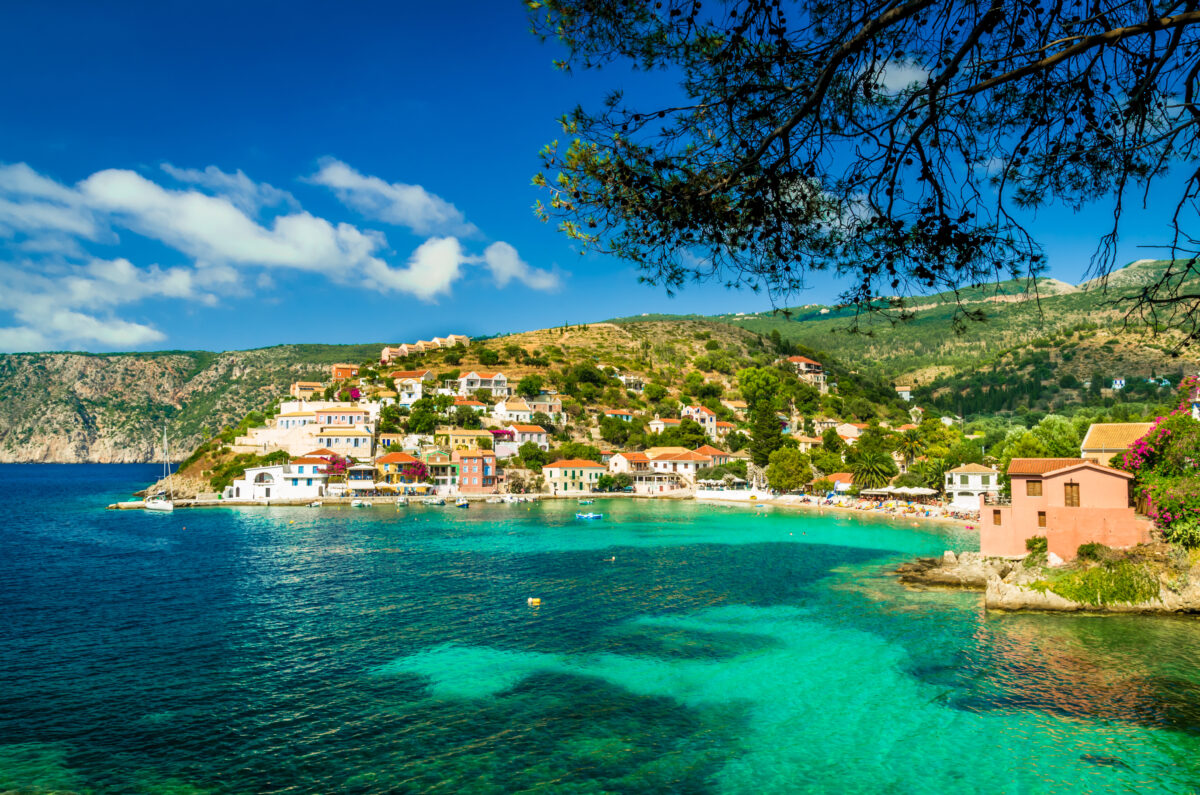
Lefkada Town is very quiet outside of the peak season. Located on the island of Lefkada, connected to the mainland by a floating bridge, it’s an authentic local town rather than a tourist resort. There are no traffic jams, parking is easy, and you might encounter just a handful of tourists from late fall through early spring. If you arrive in the shoulder season (late April through early June or mid-September through October), you’ll enjoy an ideal balance of few crowds and pleasant weather while experiencing traditional village life. The large town square is bordered by cafes for soaking up the scene and dining on delicious local dishes.
There are several museums and historic sites in Lefkada Town too. Explore the Archaeological Museum or the more unique Phonograph Museum, along with many colorful 17th- and 18th-century churches, a 14th-century castle, and a 17th-century monastery. Nearby, there are many postcard-perfect beaches and sparkling, clear turquoise bays for everything from swimming, snorkeling, and kayaking to windsurfing and kitesurfing.
Patitiri, Alonissos
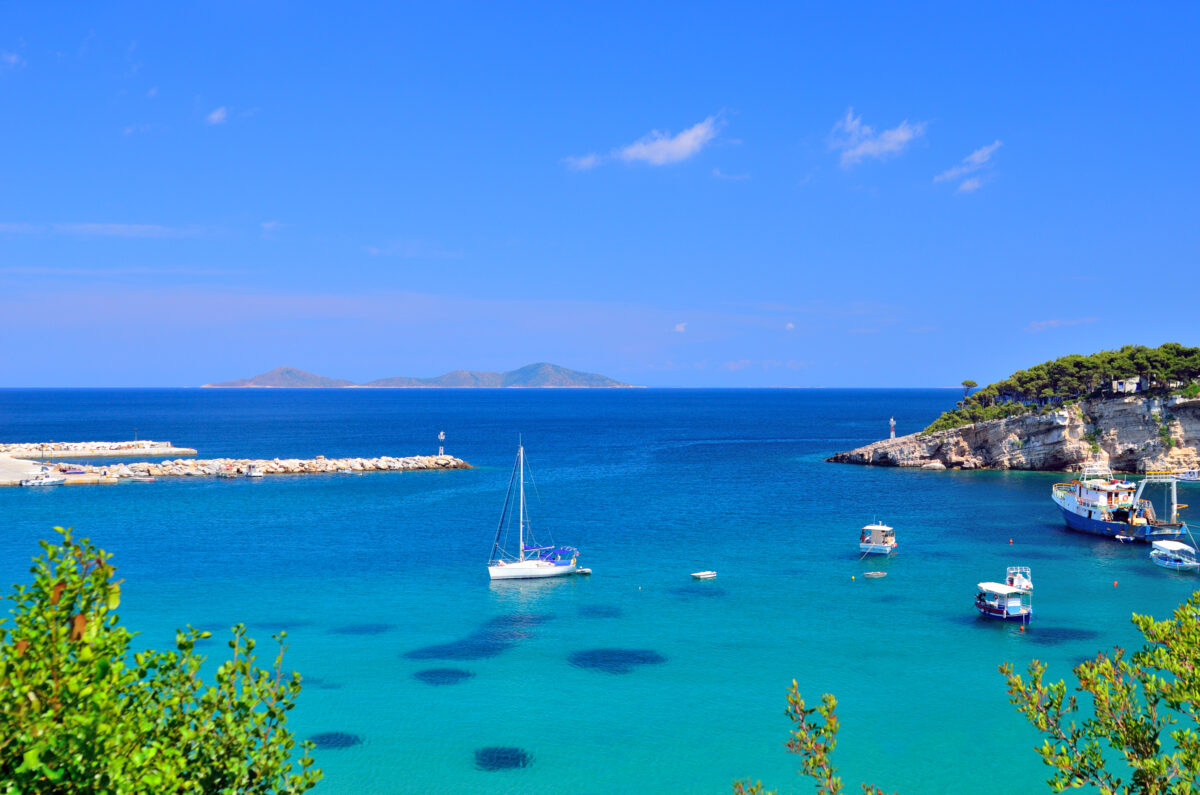
Alonissos isn’t an island you’ll often find mentioned in travel guides. As the most remote in the Sporades, Patitiri, the capital and central hub for shopping, dining, and ferries, remains relatively uncrowded even during the peak season, providing a laid-back, authentic Greek Island experience. The tavernas and restaurants serve delicious, and often cheap, eats, with fish dishes like the catch of the day especially popular. In fact, that’s all many serve. It can be enjoyed alongside a chilled Mythos beer, crisp white wine, a cocktail, or ouzo.
Head out to explore the rugged natural landscape to see olive and pine trees sprawling out to the crystal-clear cobalt waters. From Pattitiri’s medieval castle, one can take in a sweeping view over the island and the sea. If you’re hoping to watch wildlife, the National Marine Park of Northern Sporades provides the chance to spot dolphins, Mediterranean monk seals, and rare birds.