
| Beach type | Golden sand · Backed by red and orange sandstone cliffs |
| Access | Stairs from clifftop car park · Ramp access at eastern Vilamoura end |
| Entry permit | None required |
| Crowds | Busy Jul–Aug near main access points · Quieter Apr–Oct · North end calmer than south |
| Best for | Long walks · Cliff photography · Family swimming · Surfing · Sunset watching |
| Facilities | Lifeguards (Jun–Sep) · Beach bars and restaurants at western and central sections · Sun lounger hire · Showers · Paid toilets · Shops |
| Lifeguard | Yes (June–September, supervised sections only) |
| Dogs allowed | No (summer ban) |
The Beach
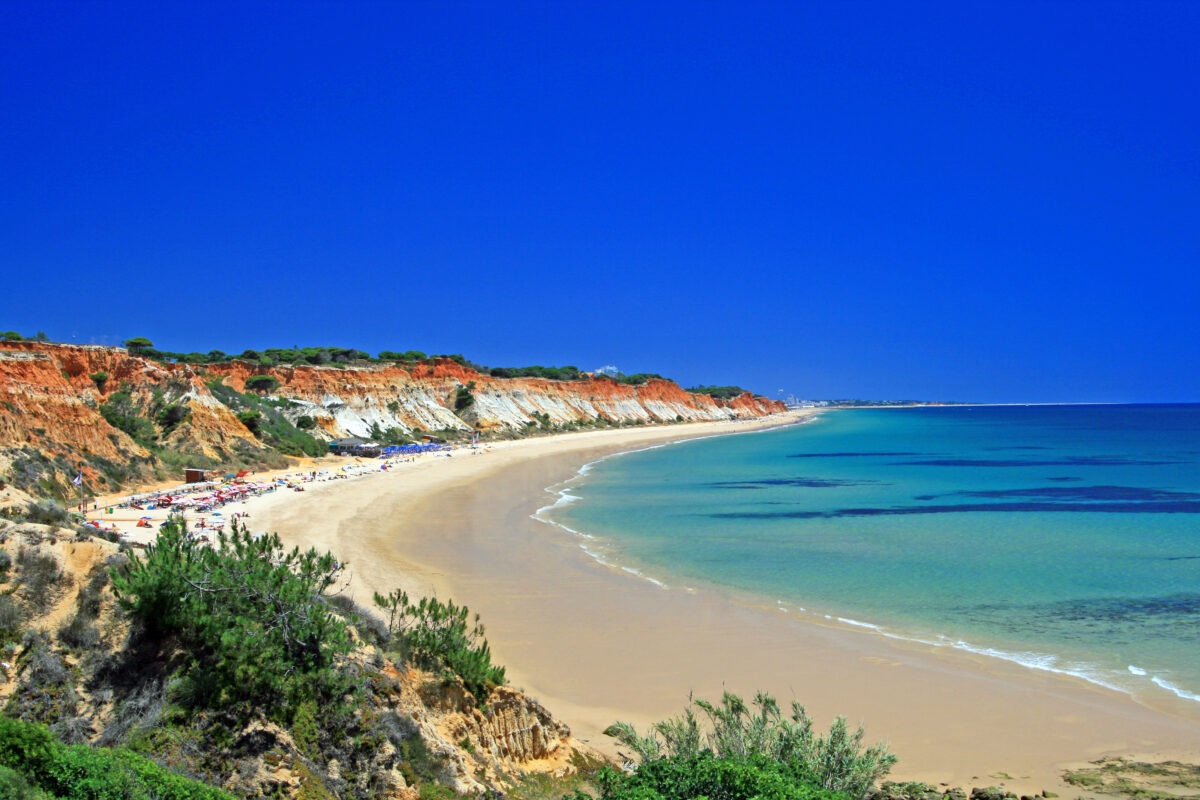
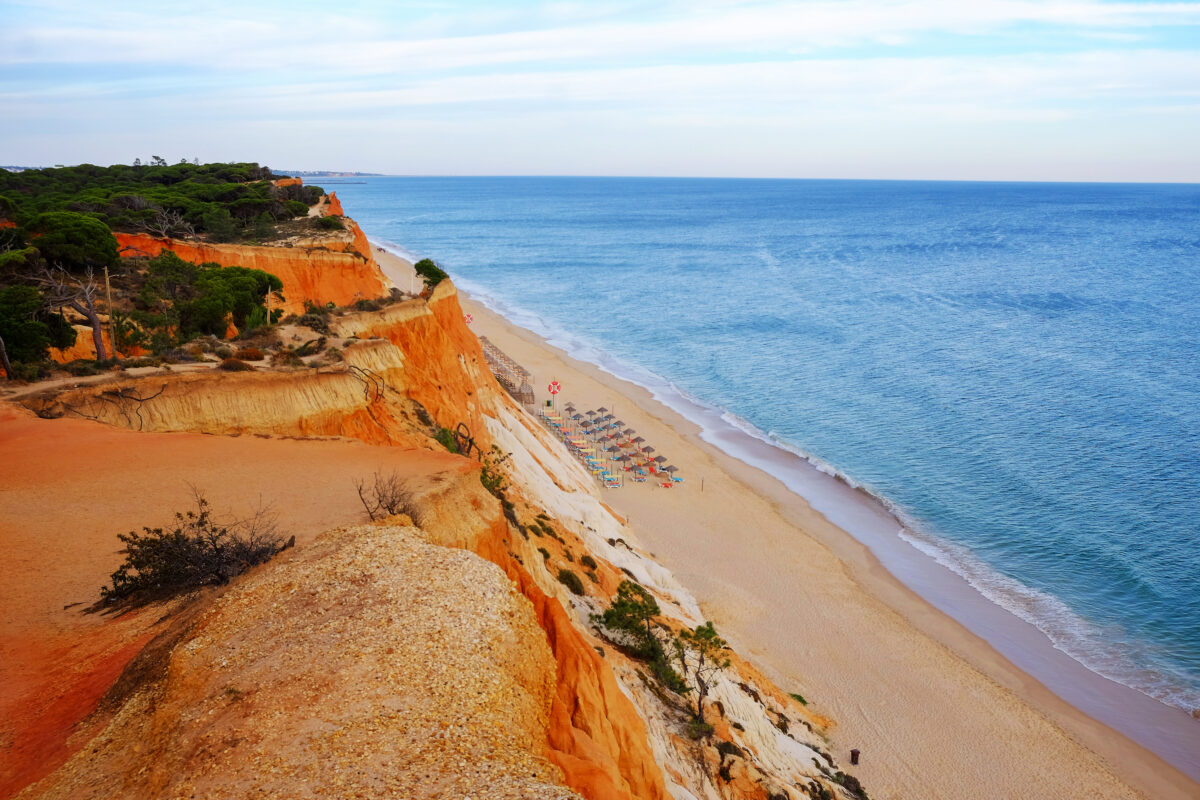
Falésia is Portuguese for cliff, and the cliffs are the reason you come to this popular Algarve beach. They run for most of the beach’s length, banded in horizontal stripes of deep red, terracotta, ochre, and cream where millions of years of sediment have been cross-sectioned by the Atlantic. Pine trees grow along the tops. At the bottom of it all, wide, hard-packed golden sand and clear south-facing Atlantic water.
Praia da Falésia divides naturally into two characters. The western half, from Olhos de Água to the Pine Cliffs resort, has the tallest and most dramatic cliffs, the best-developed beach facilities, and the highest concentration of visitors. The eastern half, running toward Vilamoura, sees the cliffs diminish and eventually give way to dunes and beach vegetation; the sand widens considerably and the water shallows, making it better suited to families with young children and to water sports. Both halves are part of the same continuous stretch of sand and you can walk the full length in around 90 minutes each way. The best version of a visit to Falésia involves covering as much of it as possible.
Why It Made Our World’s Best Beaches List
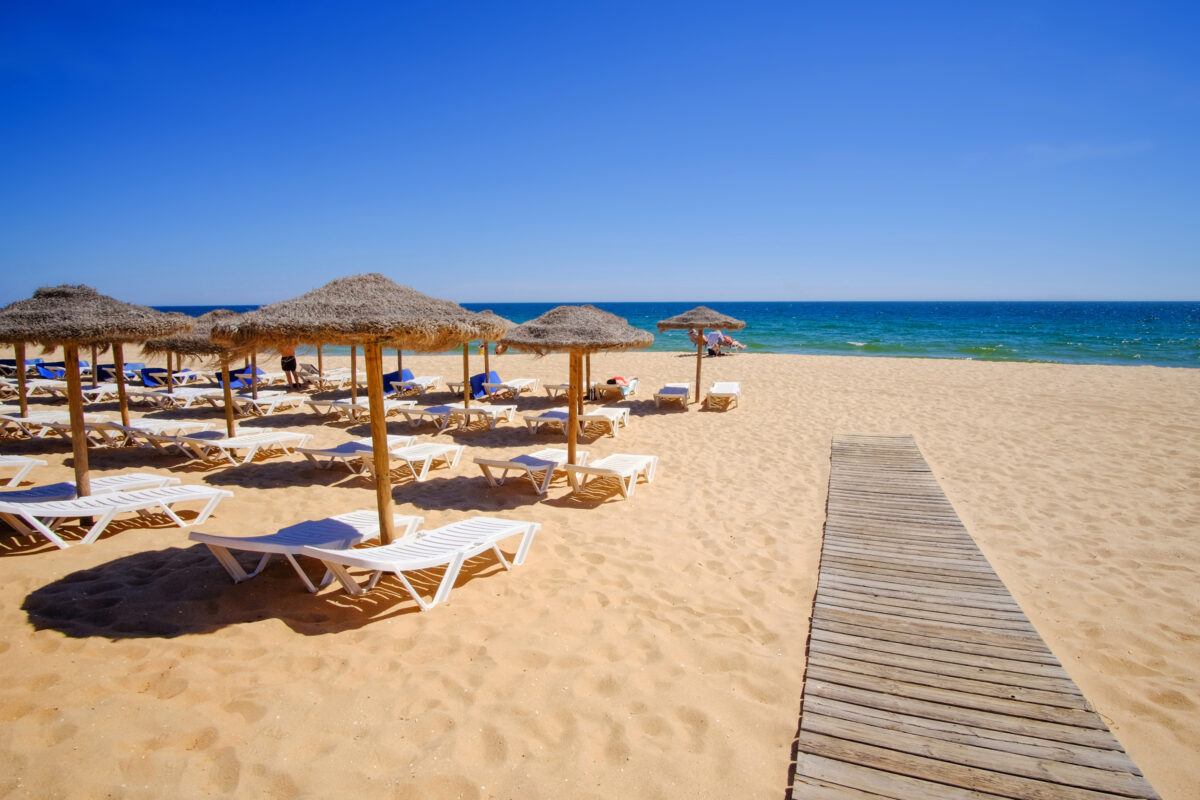
The cliffs. The sandstone was deposited 5 to 10 million years ago in distinct horizontal layers; iron-rich bands produce the reds and oranges, while calcium-heavy strata show as cream and pale yellow. No development sits behind Praia da Falésia itself: the fragile cliffs and a protected nature reserve along their tops have prevented construction, leaving a long, wild backdrop that’s unusual for a beach in this part of Europe.
Its environmental quality. Praia da Falésia has held Blue Flag certification consistently, and the conservation buffer along the clifftops has kept the immediate surroundings in a condition that larger visitor numbers elsewhere in the Algarve have not managed to sustain.
The light. The cliff face runs roughly east to west, meaning the afternoon and early evening sun hits it side-on. In summer, from around 5pm, the sandstone turns amber and the erosion channels cast long shadows across the sand.
How to Get There
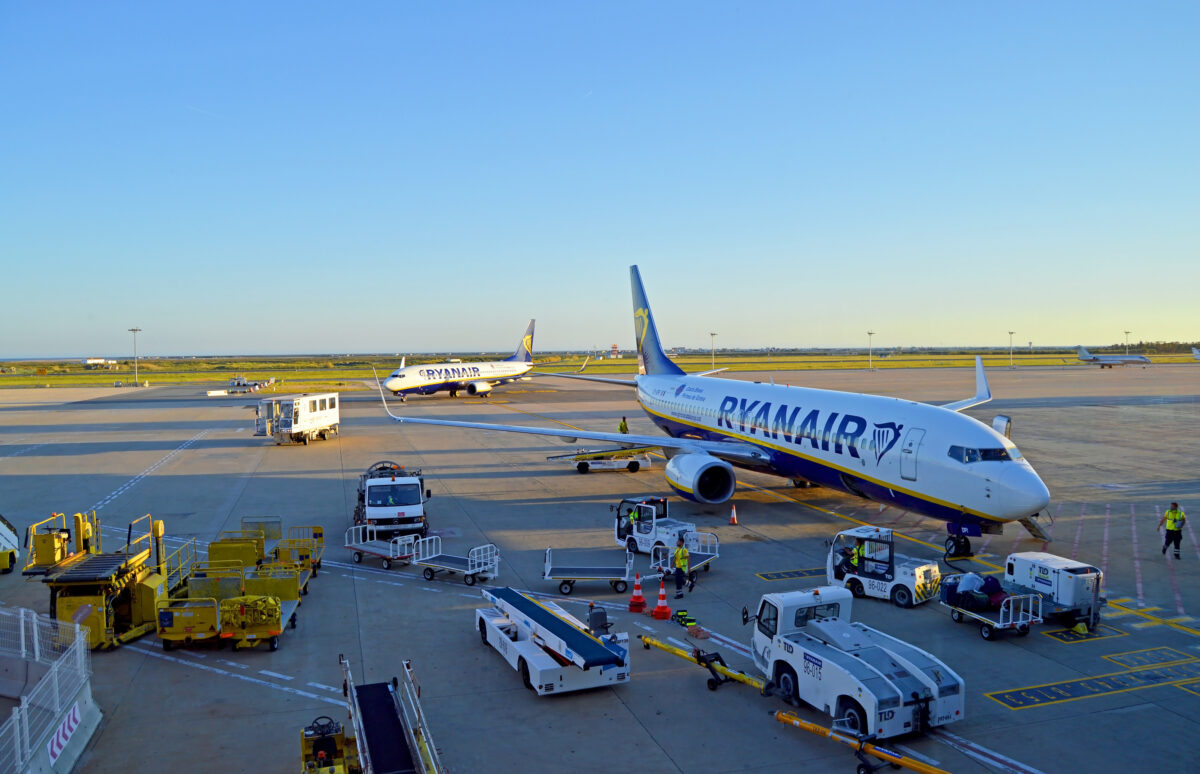
Nearest airport: The nearest airport to Praia da Falésia is Faro (FAO), about 11 miles (18 km) from the beach by road. In normal traffic, that’s around 25 to 30 minutes by car or taxi. Faro is well-served by year-round routes from across Europe and the UK.
By car from Faro: Take the A22 motorway (Via do Infante) west from Faro, which runs parallel to the coast. Exit at Almancil or Loulé Sul, then follow signs toward Vilamoura or Olhos de Água depending on which section of the beach you’re targeting. Three main car parks serve the beach; pricing varies, with the Vilamoura end charging around €2.80/hour.
By bus from Albufeira: Bus No. 8 (Vamus) runs from Albufeira bus station to Praia da Rocha Baixinha, stopping near Praia da Falésia in about 20 minutes. Bus No. 6 (Alfamar) serves the eastern section from central Albufeira and takes around 30 minutes. Services are infrequent, so check current timetables before you go.
By taxi or rideshare: You’re looking at around €10 to €15 from central Albufeira, and a similar amount from Vilamoura. It’s the most practical option for visitors without a car.
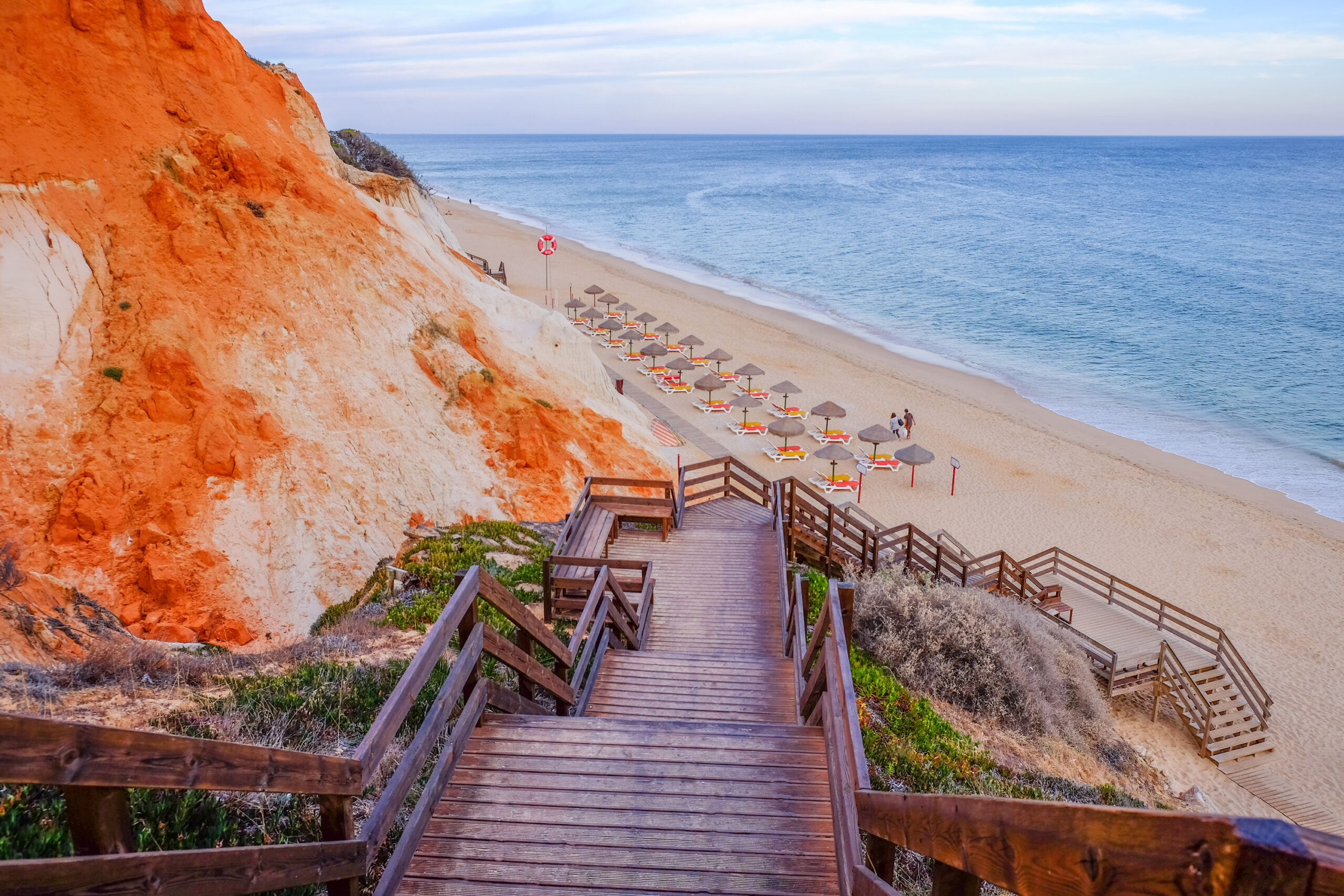
From the clifftop to the sand: Getting from the clifftop down to the sand requires stairs at all three main access points. The Açoteias entrance has around 80 concrete steps; the Pine Cliffs western entrance has about 60 via a boardwalk path. The eastern Rocha Baixinha end has a gentler ramp suitable for pushchairs and reduced mobility. There’s no step-free access to the clifftop sections with the most dramatic scenery.
Entry requirements: No beach entry fee.
Best Time to Visit
Recommended: June or September.
June–August is the optimal three-month season for visiting Praia da Falésia, but June and September offer the same conditions (warm sea, consistent sunshine) with substantially less pressure on parking and beach space. The Atlantic here runs cooler than the Mediterranean; water temperature peaks at around 22°C in August.
Peak season (July–August): The main access car parks fill by mid-morning. The beach itself handles the numbers across its length, but the developed western sections feel busy. Water sports operators are usually fully staffed. Book accommodation months ahead.
Shoulder (May–June, September–October): May is often warm enough for beach days but the sea is still cool. June is the sweet spot, with water temperature climbing, crowds manageable, and cliff flowers at their most vivid. September retains the summer’s sea warmth and visitor numbers drop sharply after the first week. October remains pleasant for walking but swimming is a bit too chilly by then.
Winter (November–April): The cliffs are at their most dramatic. The clifftop trail is worth doing in cooler months, with the caveat that sections become slippery and even dangerous after heavy rain. Swimming isn’t practical, and some beach facilities close entirely.
Things to Do at Praia da Falésia
The full beach walk: Probably the most satisfying single thing you can do here. Walk the length of the beach at low tide, when the sand is widest and firmest. It’s about 90 minutes each way at a relaxed pace. High tide occasionally narrows the beach to 15 meters in places near the western cliffs, so check the tide table before setting out.
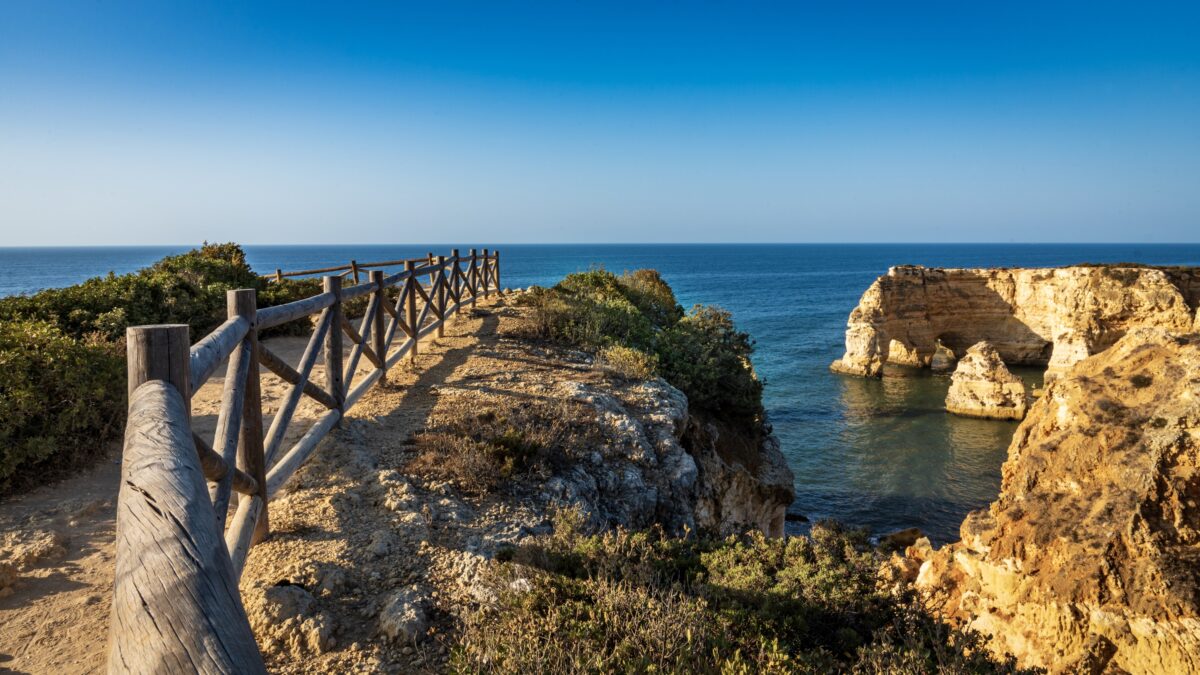
The clifftop trail: Runs along the top of the cliffs from Açoteias westward toward Olhos de Água, and partially east toward Vilamoura. The best section runs between Açoteias and Praia do Barranco. The Miradouro da Falésia viewpoint near the Olhos de Água end provides the classic panorama of the full cliff face and beach below. Stick to the marked path; the rock is fragile and edges can give way without warning, particularly after rain. Don’t approach cliff edges and don’t attempt the trail in wet conditions.
Sunset photography: The window between 5pm and 7pm in summer is when the low sun strikes the cliff face side-on. The sandstone turns amber and the erosion channels cast long shadows across the sand. Position yourself at beach level looking west along the cliff face for the most dramatic effect.
Swimming: The beach faces south and is sheltered from the prevailing northwest wind, giving it generally calm morning conditions before the afternoon sea breeze picks up. The western sections are more exposed; the eastern half near Vilamoura offers shallower water and gentler conditions, with a very gradual sandy seabed that works well for children and less confident swimmers. Lifeguards operate at the supervised sections from June to September; check flag conditions at each access point.
Surfing: The eastern Alfamar section has a surf school operating in summer, and the Atlantic swell reaching the central sections provides reasonable beginner conditions. More experienced surfers will find better, less crowded breaks at beaches further west along the Algarve coast.
Water sports: Jet skis, parasailing, and boat hire are available at the eastern Alfamar end near Vilamoura during summer. Kayak and paddleboard hire is available from beach operators in the same area.
Where to Stay Near Praia da Falésia
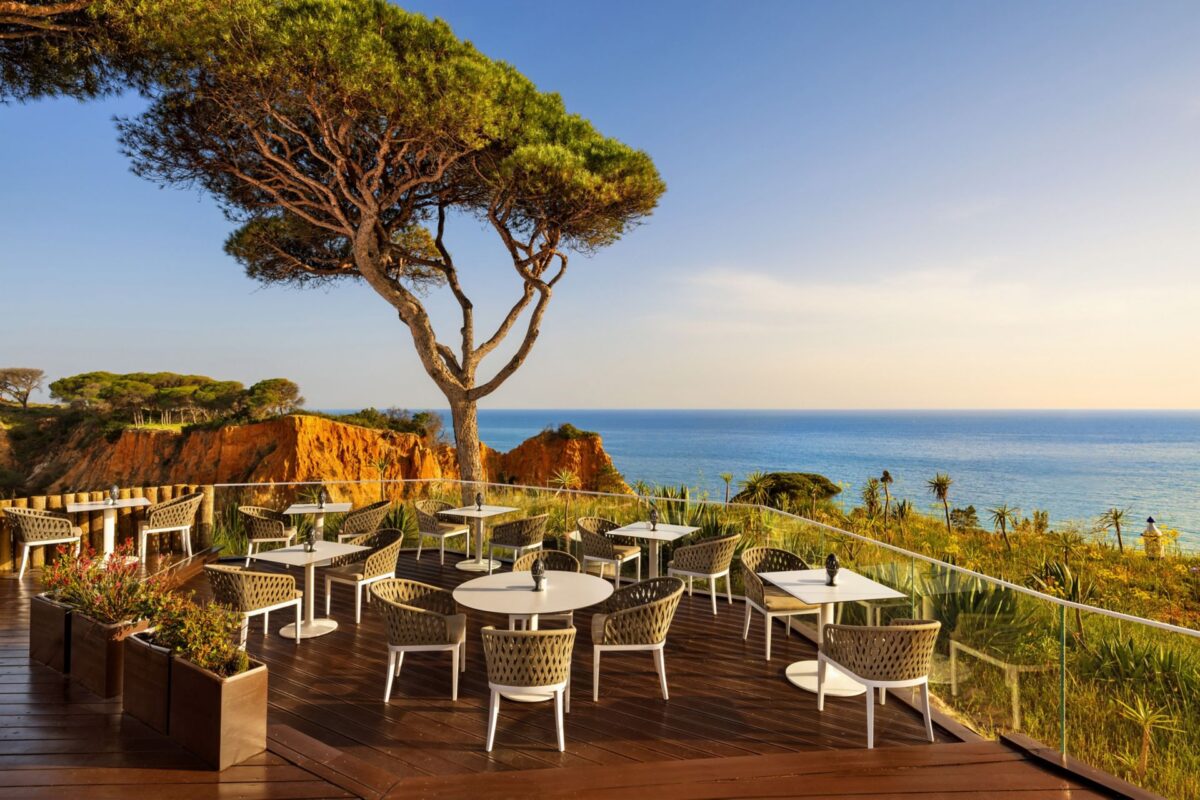
The beach’s position between Albufeira and Vilamoura gives it one of the best hotel lineups of any beach in the Algarve. Several internationally recognized properties sit directly above the cliff edge, with private staircase access to the sand.
Pine Cliffs Hotel, a Luxury Collection Resort — Five-star with a clifftop position at the western end, its own beach access, a cliff-face restaurant (Maré), and a rooftop bar with the most dramatic view of the coast. It’s the benchmark property for this stretch.
EPIC SANA Algarve Hotel — Also five-star, sitting above the Açoteias section with contemporary Moorish-inspired architecture, multiple restaurants, a spa, and direct cliff access. It’s consistently well-reviewed and a slightly better value than Pine Cliffs for the facilities offered.
Hotel PortoBay Falésia — A solid mid-range option between the two luxury properties, with cliff and sea views, a pool, and reliable quality at a more affordable price point.
3HB Falésia Mar — Sea-view apartments in the budget-to-mid-range bracket and a practical choice for self-catering visitors.
For visitors based in Albufeira town or Vilamoura and day-tripping to the beach, both towns are 15 to 20 minutes by car and offer considerably wider accommodation options at all price points.
Nearby Beaches
Praia da Falésia connects to a broader stretch of Algarve coastline that contains several distinct beaches worth combining, particularly on a longer stay.
Praia de Vilamoura: A short walk from the Vilamoura marina, at the eastern end of Falésia’s reach. Wide, calm, well-facilitated, with a lively promenade of bars and restaurants directly behind the sand. A useful base for day trips east or west.
Praia de Olhos de Água: The village beach at the western end of Falésia, compact and sheltered by the headland. Livelier and more local in character than Falésia itself; good seafood restaurants in the village above.
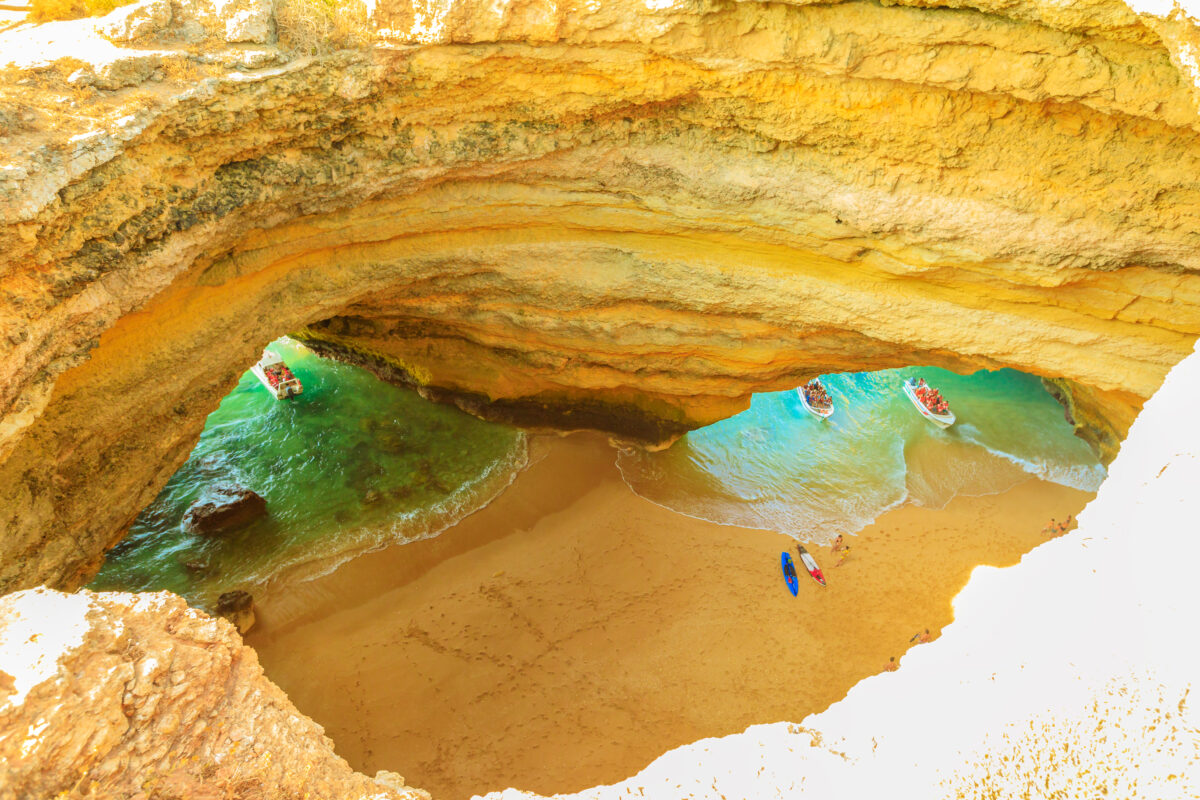
Benagil and the sea caves: An hour’s drive west along the coast. Benagil Beach is small and unremarkable on its own, but the sea cave accessible by kayak or small boat tour from here—a cathedral-scale cavern with a natural skylight—is one of the most distinctive geological features in the Algarve. Book tours in advance from May through September.
Conservation and Responsible Travel
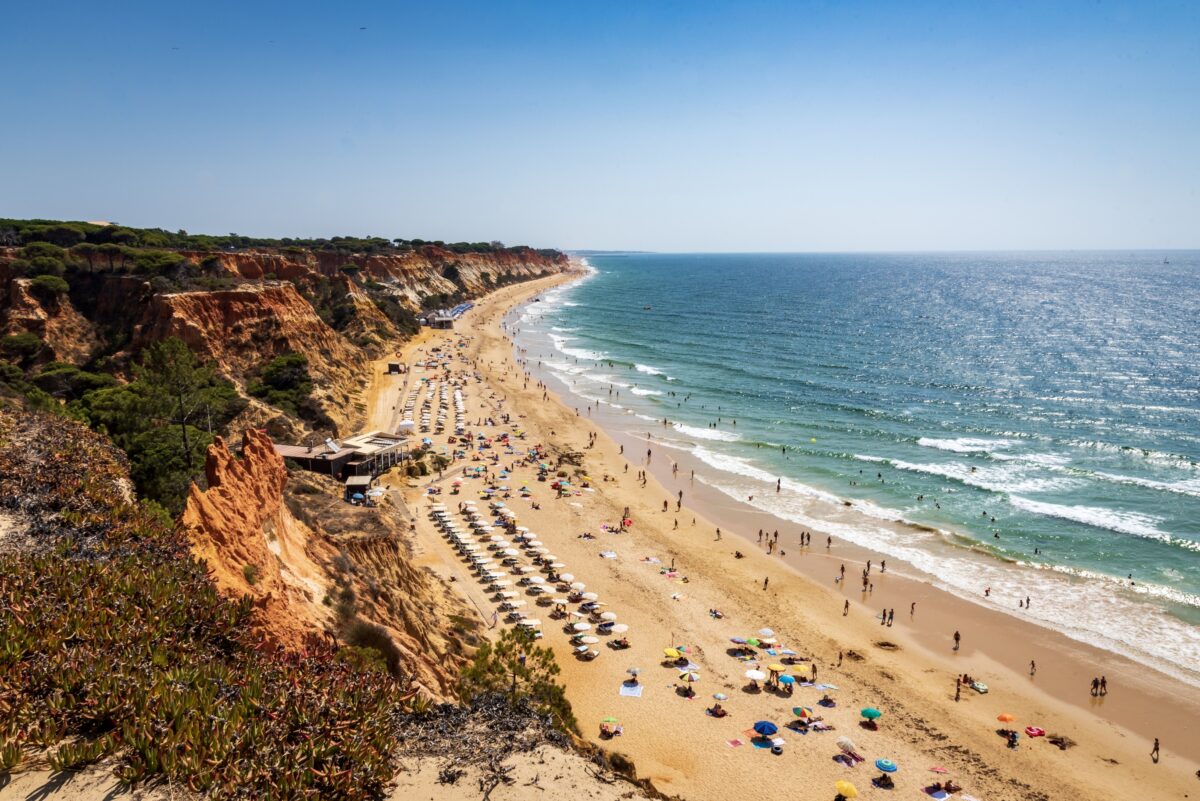
The cliffs of Praia da Falésia are both the reason to visit and the beach’s primary conservation concern. The sandstone is soft and fragile; sections collapse periodically, particularly after heavy winter rainfall, and the base of the cliff shifts year by year as erosion advances. A protected nature reserve runs along the clifftops (this buffer has prevented construction directly behind the beach and is the principal reason such a long stretch feels wild despite being surrounded by some of the Algarve’s most developed resort areas).
Rules visitors must follow:
- Don’t climb the cliff face or sit beneath overhangs. Cliff collapses occur without warning.
- Don’t approach cliff edges on the clifftop trail, especially after rain.
- No vehicles on the clifftop paths.
- Use reef-safe sunscreen. The Atlantic waters at Falésia are measurably clean (Blue Flag certification is an ongoing requirement, not a historical one), and chemical sunscreen compounds put pressure on marine life.
- Respect the nature reserve vegetation at the clifftop. The plants growing in and around the sandy soil stabilize the cliff edge and are protected. Stay on the paths.
FAQs
Is Praia da Falésia sandy or rocky?
Sandy throughout, with fine, golden, soft sand along the full length. The beach’s name refers to the cliffs behind it, not the beach surface itself. The entry into the sea is sandy and gradual at the eastern Vilamoura end; the western sections can be slightly more exposed to Atlantic swell but remain sandy-bottomed throughout.
How long is Praia da Falésia and how long does it take to walk?
Walking the full length at the water’s edge takes around 90 minutes each way at a relaxed pace. The walk is flat, on firm sand, and best done at or near low tide since a few sections near the western cliffs narrow significantly at high tide. The clifftop trail runs the same distance and takes slightly longer given the uneven terrain and viewpoint stops.
When is the best time to visit for the cliff colors?
Between 5pm and 7pm in summer, when the low sun strikes the cliff face side-on and the sandstone turns deep amber. The blue hour immediately after sunset extends the window. Morning light is flatter but gives better water color.
Is Praia da Falésia safe to swim?
Generally yes. The beach faces south and is sheltered from the northwest wind, giving calm morning conditions in most of the supervised sections. The eastern Vilamoura end has very shallow water and gentle conditions suitable for children. The Atlantic here is cooler than Mediterranean beaches (peaking at around 22°C in August) and swell can build during the afternoon. Check flag conditions at each access point; lifeguards operate the supervised sections from June to September.
How do I get from Faro Airport to Praia da Falésia?
By car or taxi, it’s around 25 to 30 minutes along the A22 motorway. Taxis from Faro Airport to the beach cost roughly €25 to €35. Car hire from the airport is widely available and recommended for exploring the Algarve coast. Public transport from Faro requires a connection through Albufeira and is significantly slower, so a taxi or rideshare is the practical option for most visitors.