
The beauty of Italy reaches its peak in summer. That’s when the stunning beaches are at their warmest, and the sunny days don’t end. June to August is also the most popular season to visit the coast, resulting in crowded streets, no free space on the beaches, and higher prices.
The good news is that it isn’t like this everywhere. The Apennine country offers hundreds of beach towns in the Adriatic, Ionian, and Tyrrhenian Seas. While high-hitters like Positano and Portofino will definitely be packed, lesser-known gems like Scilla in Calabria, Pittulongu in Sardinia or the remote Ponza still retain their gorgeous seaside calm. This article covers popular Italian coastal regions and takes you to more unconventional beach towns to visit this summer.
Trieste, Friuli Venezia Giulia
Best for splendid architecture
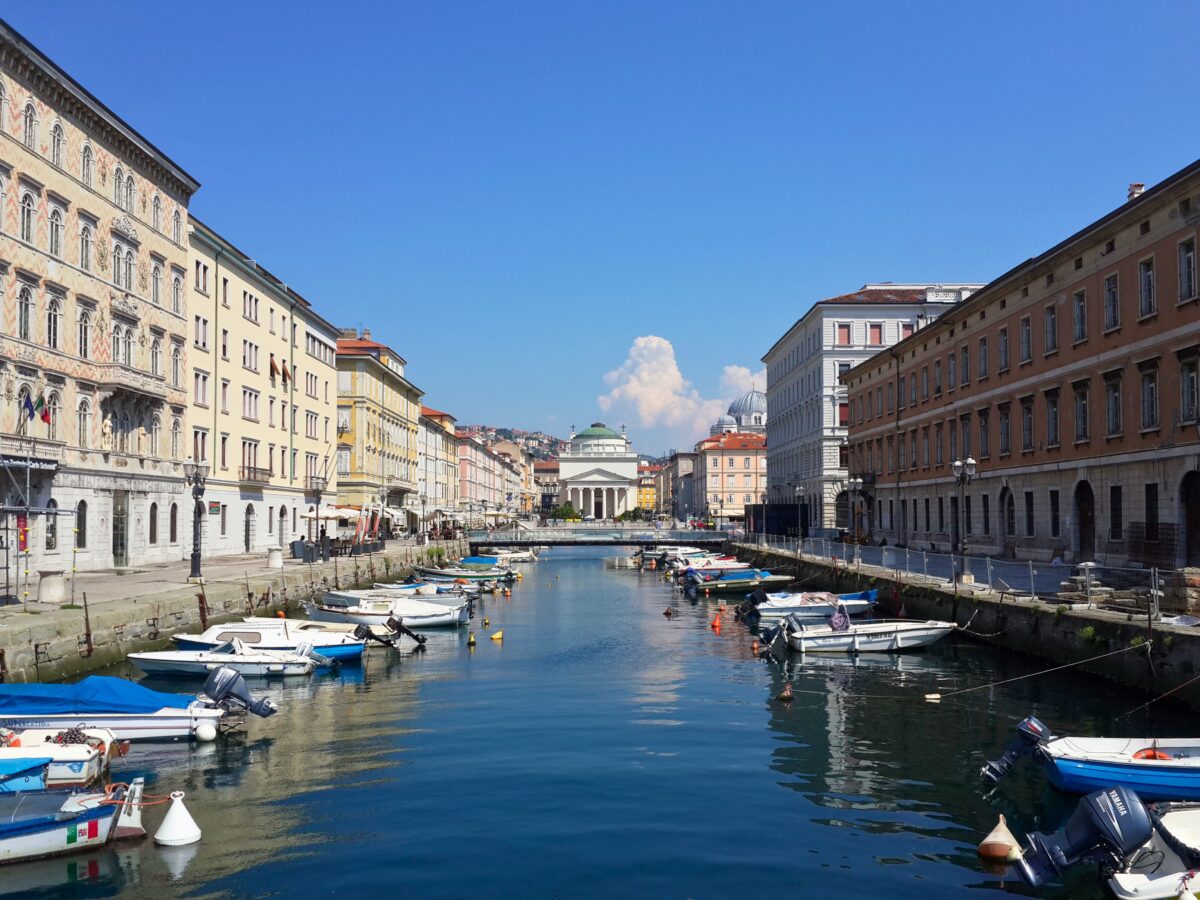
Trieste is the ultimate Italian “melting pot” city. Located at the very border with Slovenia in the country’s northeast, it blends Italian, Austrian, and Slavic influences. This combination is very chic—the beautiful Austro-Hungarian-era palaces form geometrical streets, the Venice-like canals inspire meandering, and the breathtaking seaside promenade is among Italy’s finest.
A birthplace of the Illy coffee brand, Trieste is also the country’s center of cafe culture. Piazza Unità d’Italia is the magnificent palace-dotted town square that opens to the sea. A stroll in the city center leads you to the Roman Amphitheatre ruins, the medieval Castle of San Giusto, and the windy streets of the Old Town. On the outskirts of Trieste is the Miramare Castle, a picture-perfect royal residence commissioned for the Austrian Archduke Ferdinand Maximilian. Next to it, you find Bivio di Miramare, the beloved local swimming area to enjoy a quick dip in the Adriatic waters.
Lido di Jesolo, Veneto
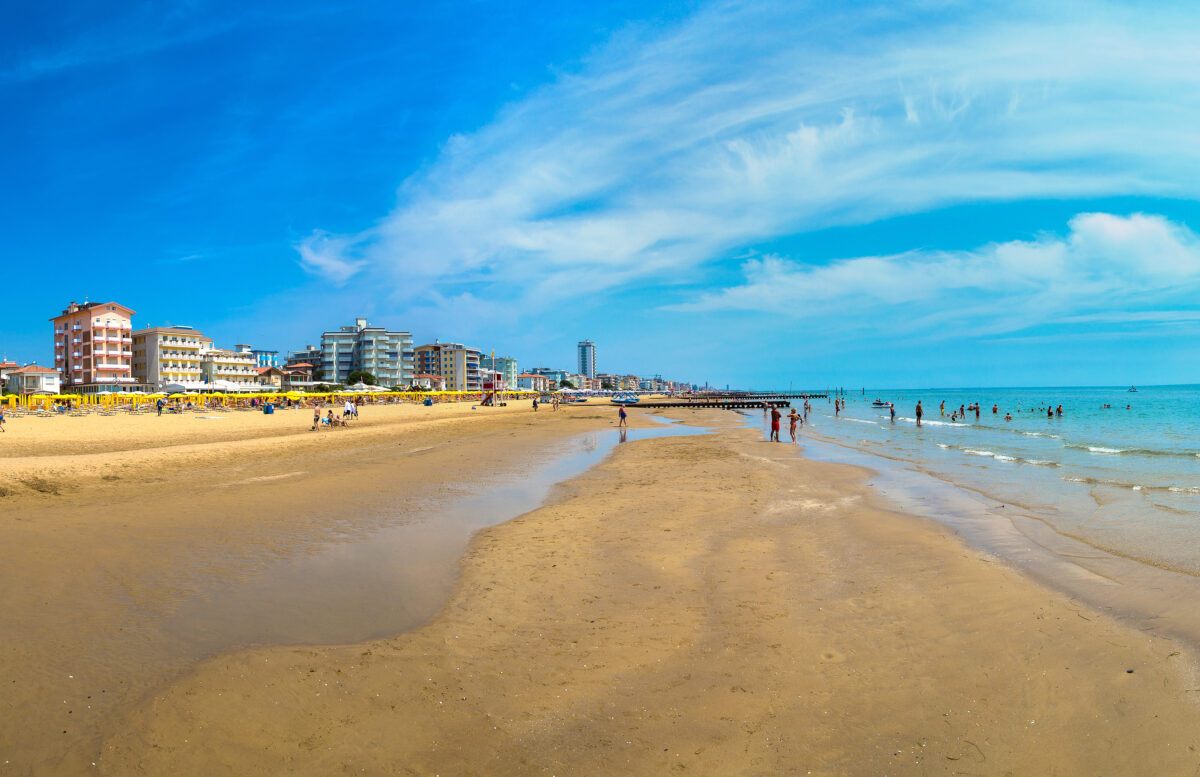
Best for a classic Italian beach holiday
Venice is one of the must-see Italian destinations. If you’re brave enough to visit the oversaturated La Serenissima in summer, chances are you’d want to plunge into the tempting lagoon waters after sightseeing. Skip crowded Lido di Venezia and head north to Lido di Jesolo, the Veneto resort where locals actually go. The most popular of the Venetian Riviera coastal towns, it offers a glorious, 12-mile-long sandy beach. Most of it is reserved for private beach clubs called stabilimento balneare, with multicolored umbrellas and often bars and restaurants.
Shallow access and great amenities make Lido di Jesolo a great choice for families with small kids. To the west, you find the areas of Cavallino and Ca’ Savio that are popular for their seaside camping resorts in the pine forest. Lido di Jesolo is also famous for its amusement parks, Tropicarium, Caribe Bay, and New Jesolandia.
Monopoli, Puglia
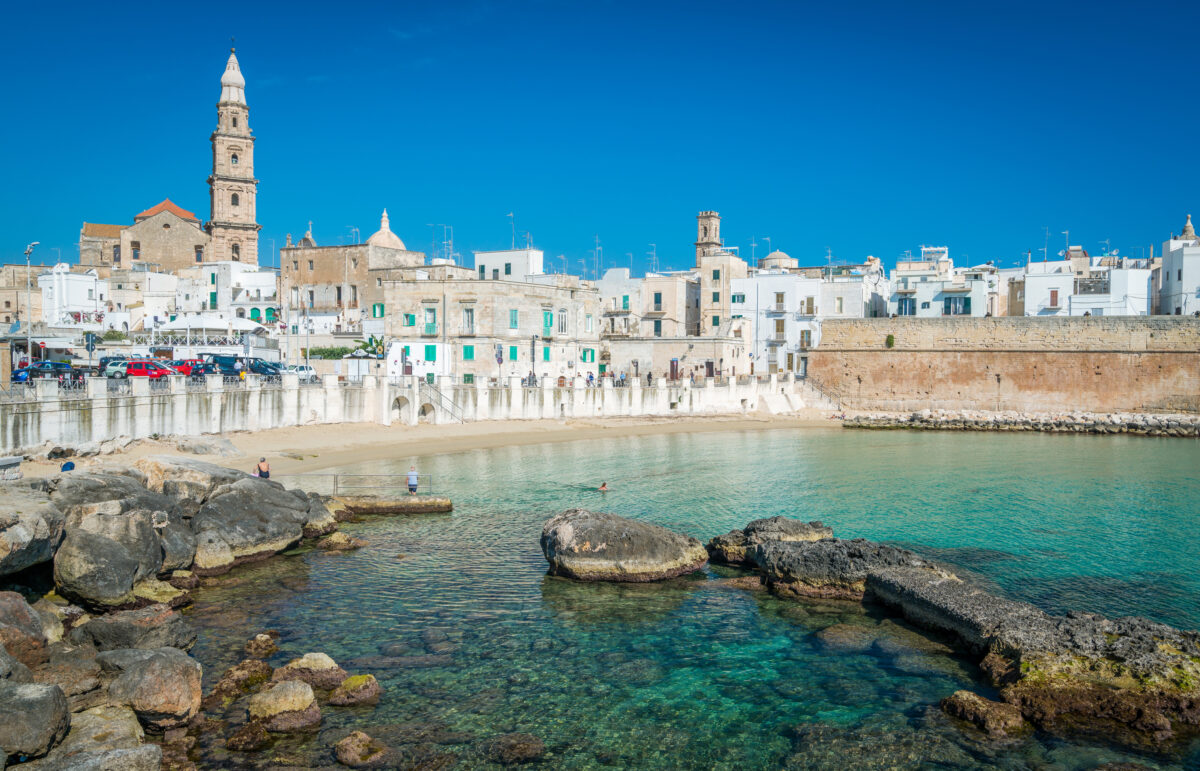
Best for the whitewashed Old Town and coves
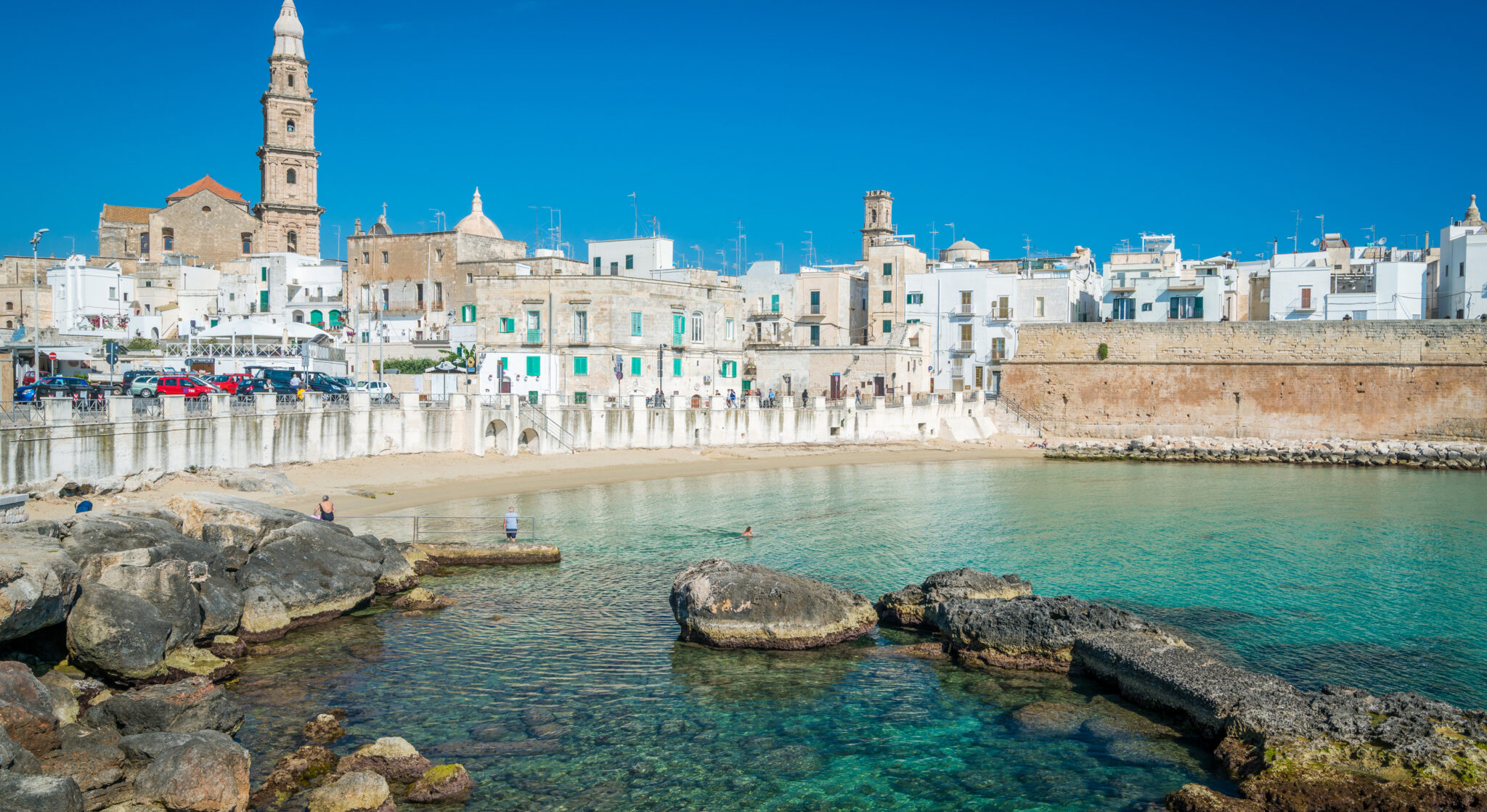
The Southern region of Puglia is known for its crystal-clear coves. Monopoli is a coastal town, where accessing these marvelous beaches is incredibly easy. First, it’s connected to the region’s capital, Bari, by train. While most tourists will hop off in Polignano a Mare, which is also a dreamy beach destination, those who end up in Monopoli will be rewarded with less-crowded coves. Cala Porta Vecchia overlooks the whitewashed Old Town. A scenic coastal trail connects it to other limestone coves, such as Cala Cozze, Porto Bianco, and Porto Rosso.
Each is a spectacle of sapphire waters, white sand, and beige rocks. Proceed further to find the sublime Porto Verde Beach and Cala Paradiso. The coastline there is peppered with grotti, or striking sea caves you can explore on a boat trip or a kayaking excursion. The narrow streets of Monopoli are very cinematic. The town is also perfect for discovering Apulian cuisine and sampling local dishes such as orecchiette con cime di rapa (typical local pasta with broccoli rabe) and panzerotti (bread turnovers with tomato and mozzarella).
Scilla, Calabria
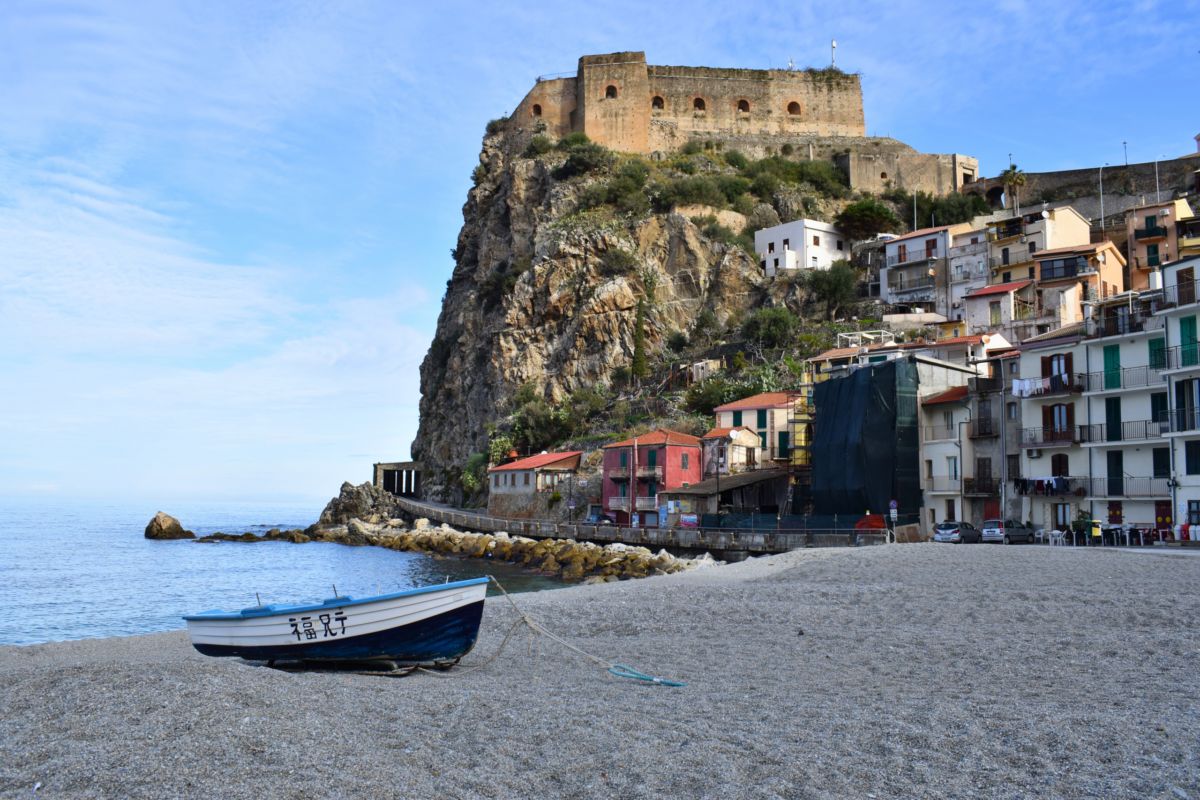
Best for the glorious beach panoramas
Standing at Scilla’s gorgeous pebbly stretch, you can’t help but wonder why this Calabrian town isn’t more famous. Easily giving the hilltop gems of Amalfi and Cinque Terre a run for their money, Scilla is a perfect beach destination. Its spiaggia hugs the aquamarine Tyrrhenian Sea as the Old Town climbs the hill. The medieval Castello Ruffo dramatically watches over the landscape.
On the other side of the hill is Borgo Chianalea, a quaint seaside neighborhood that looks like a film set for a movie about Italian dolce vita. There, you will find many seafood taverns, offering the prime vistas of the Calabrian coast from their terraces. Climb the Belvedere di Piazza San Rocco for the highest view of Scilla. Another wonderful vantage point is the romantic Lighthouse at the town’s port.
Pittulongu, Sardinia
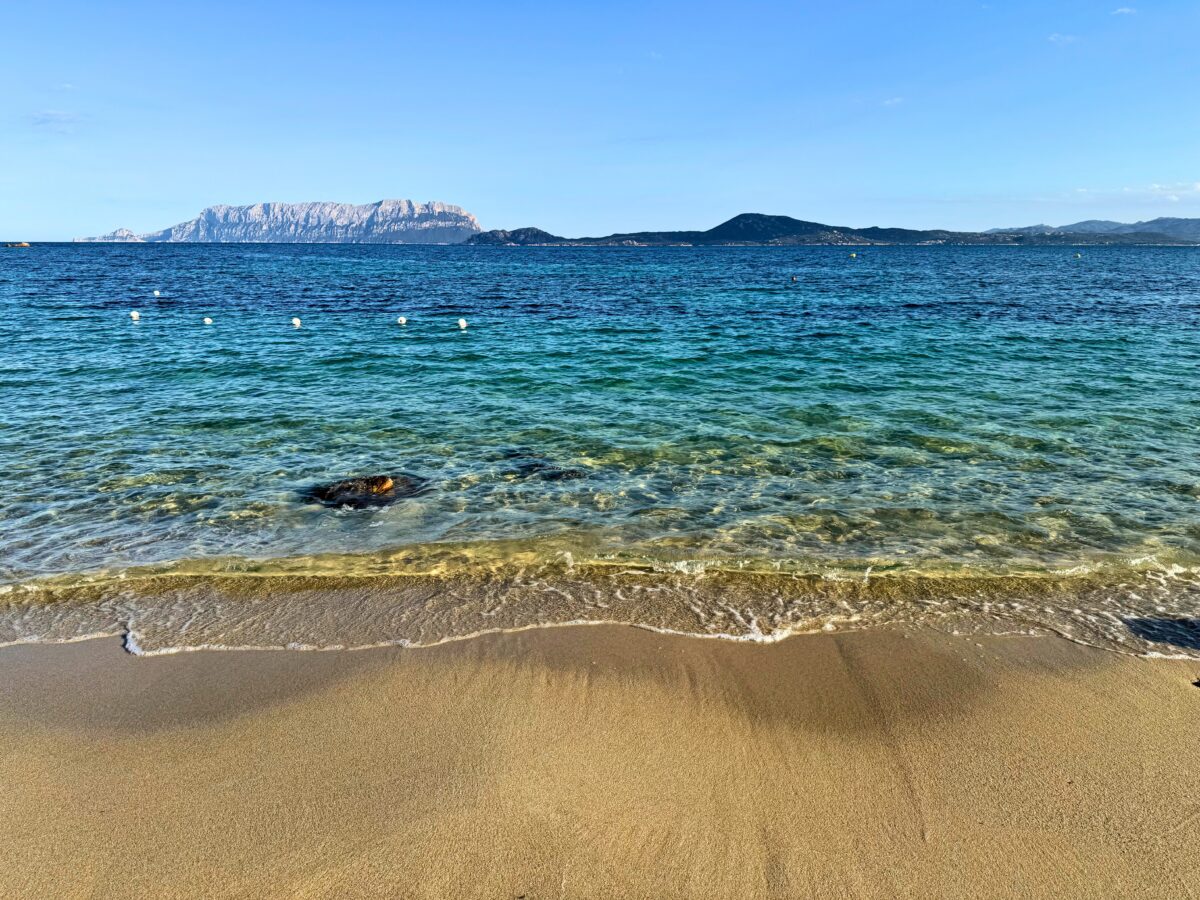
Best for the laid-back Sardinian white-sand magic
Lesser-known Sardinia awaits at Olbia. This East Coast town usually serves as a transit point to head north to the exclusive Costa Smeralda. If you’re looking for an unfiltered and more local side of the famous Italian island, take a short ride to Pittulongu. It’s a relaxed resort town, with a series of superb sandy bays. Technically, Olbia’s main beach area, Pittulongu is a perfect place to unwind and enjoy the pleasant Sardinian shallow waters. Every local beach features a striking vista of the gargantuan Isola Tavolara. Spiaggia Pittulongu is the longest stretch where you’ll find a free spot even in the height of the summer. My personal fave is Spiaggia Bados, offering transparent, turquoise waters and a chill beach bar.
Finale Ligure, Liguria
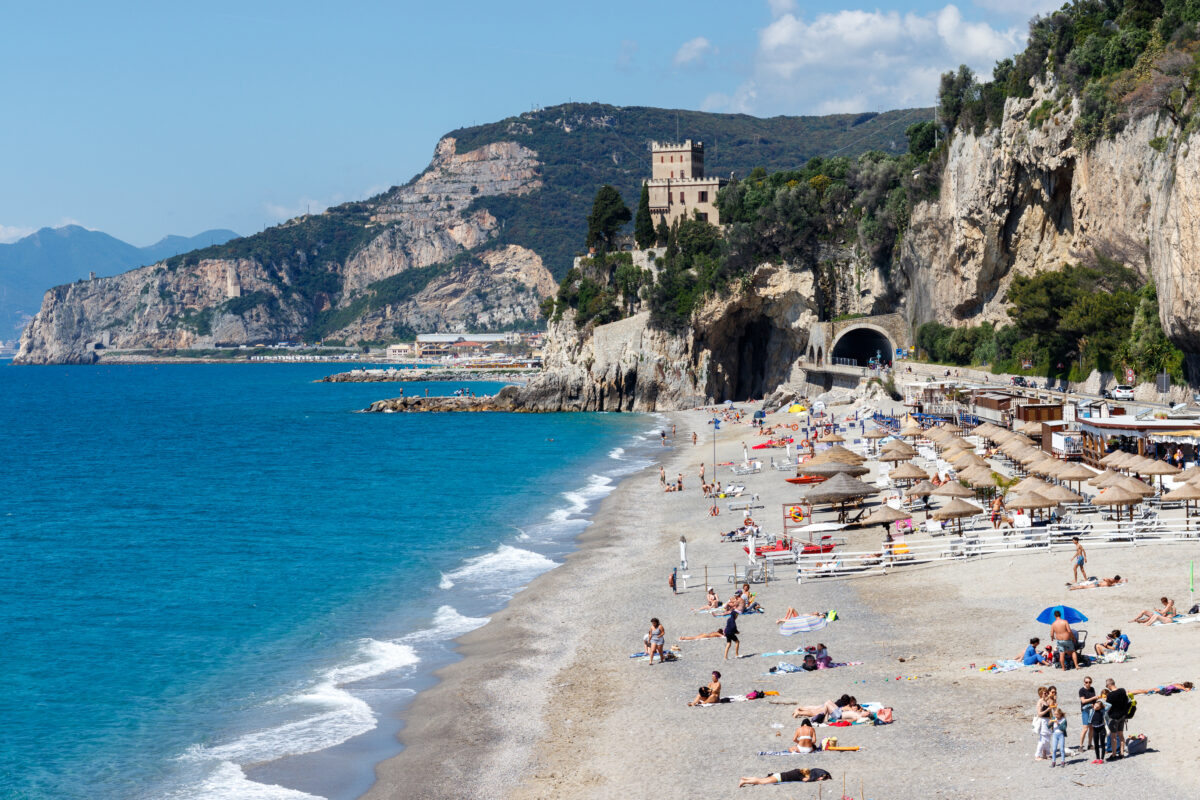
Best for Italian Riviera vibes without crowds
Discover the delights of Riviera di Ponente at Finale Ligure. This coastal town is one of the pearls of Liguria. Set between Savona and Sanremo, it exemplifies the Italian Riviera’s holiday chic. Stroll along the palm-tree-dotted lungomare, lounge under the umbrellas of the easygoing lidos (private beach clubs), eat well at Ligurian trattorias, and treat yourself to countless local desserts. It’s also home to one of Italy’s most scenic beaches, the Castelletto, nestled under a Colombara cliff with a castle on top.
Moreover, Finale Ligure comprises three distinct parts: the picturesque Finalborgo village in the valley, the elegant Finalmarina with all the hotels and restaurants, and Finalpia by the Sciusa River. A railway station next to the beach means that you’re only an hour away from both Genova and the French border.
Ponza, Latina
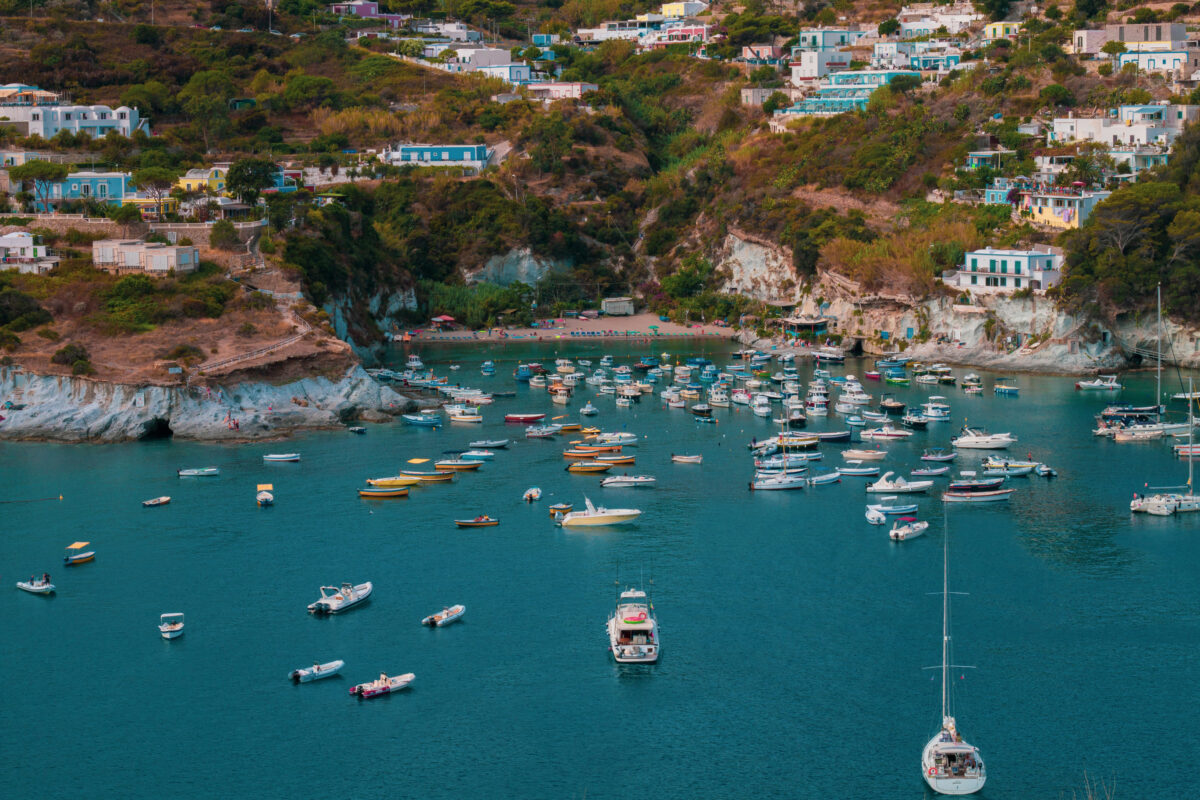
Best for a colorful harbor and mesmerizing beaches
The most stunning Italian seaside town is one you’ve probably never heard of. Ponza is the capital of the unsung Isole Pontine, an archipelago in Latina province between Rome and Naples. Arriving there by boat is amazing—the colorful Neo-Classical houses cover the gentle hills as numerous fishing boats sway in the harbor. Everywhere you walk in Ponza leads you to the shimmering blue sea. It’s in the center of spectacular natural formations, including the Grotte di Pilato, an intriguing collection of tunnels and caves founded by the Romans to cultivate moray eels.
Another sight to check out is the tall Faraglioni della Madonna (or sea stacks). But the island’s standout attraction is Chiaia di Luna, a magnificent beach nestled beneath the gargantuan wall-like limestone cliff. It is reminiscent of the dramatic beaches of Kefalonia and Zakynthos in Greece.
Maiori, Amalfi Coast
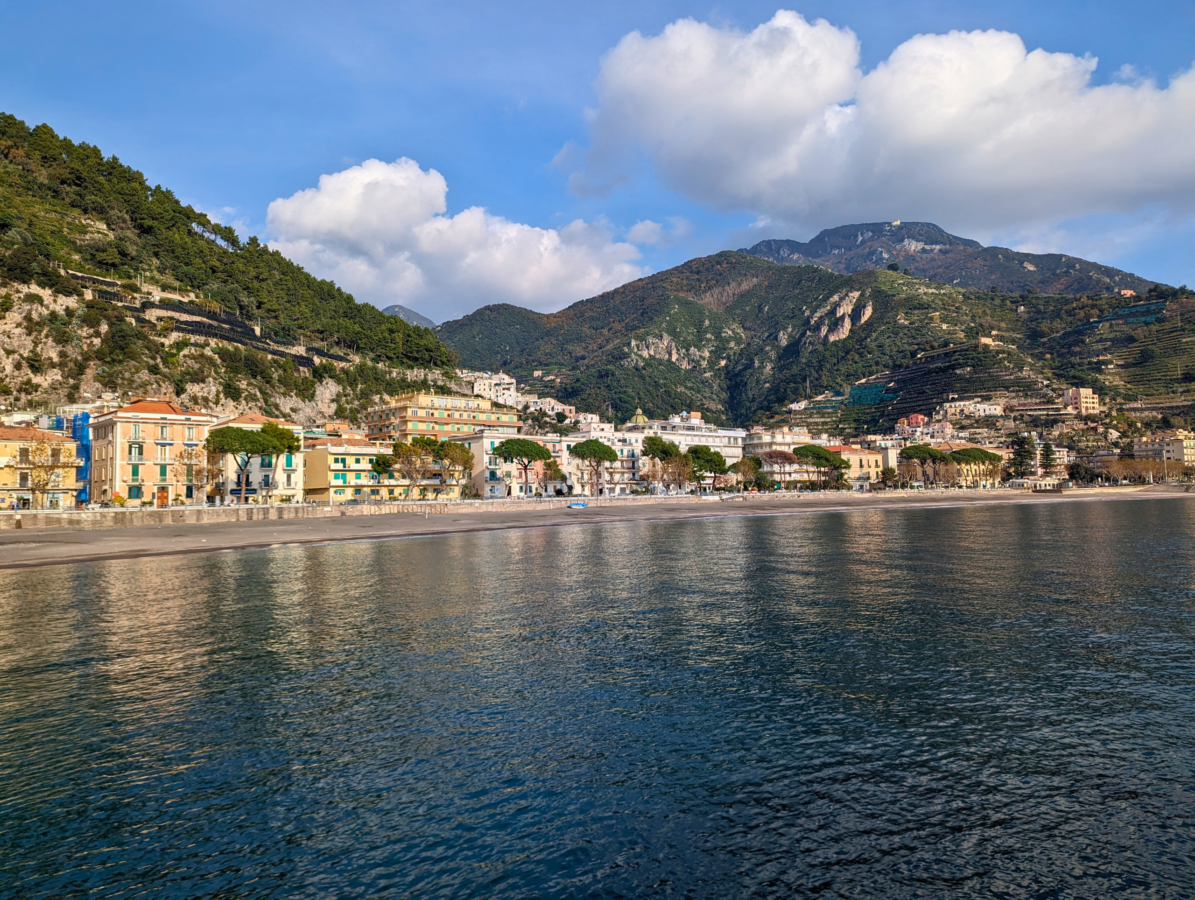
Best for the chill Amalfi Coast base
While summer isn’t the best time to visit the Amalfi Coast cost-wise, it’s still a perfect season to enjoy the region’s beaches and hiking trails. If that’s your plan, save money and nerves by basing yourself in Maiori, the region’s unofficial beach capital. First of all, the town is home to a spectacular 930-meter stretch, the Amalfi Coast’s largest. It’s well-connected to Amalfi, Positano, and Atrani by bus and ferry, but lacks their crowds and busyness. You have a better selection of hotels and vacation homes here for different budgets.
It also has the traditional Italian resort town vibe, making Maiori a perfect pick for families. Uber-scenic Path of the Lemons (or Sentiero dei Limoni) connects Maiori to Minori, another beautiful Amalfi destination. For beauty overload, visit the Palazzo Mezzacapo Gardens, the manicured public park next to the 19th-century castle.
Favignana, Aegadian Islands
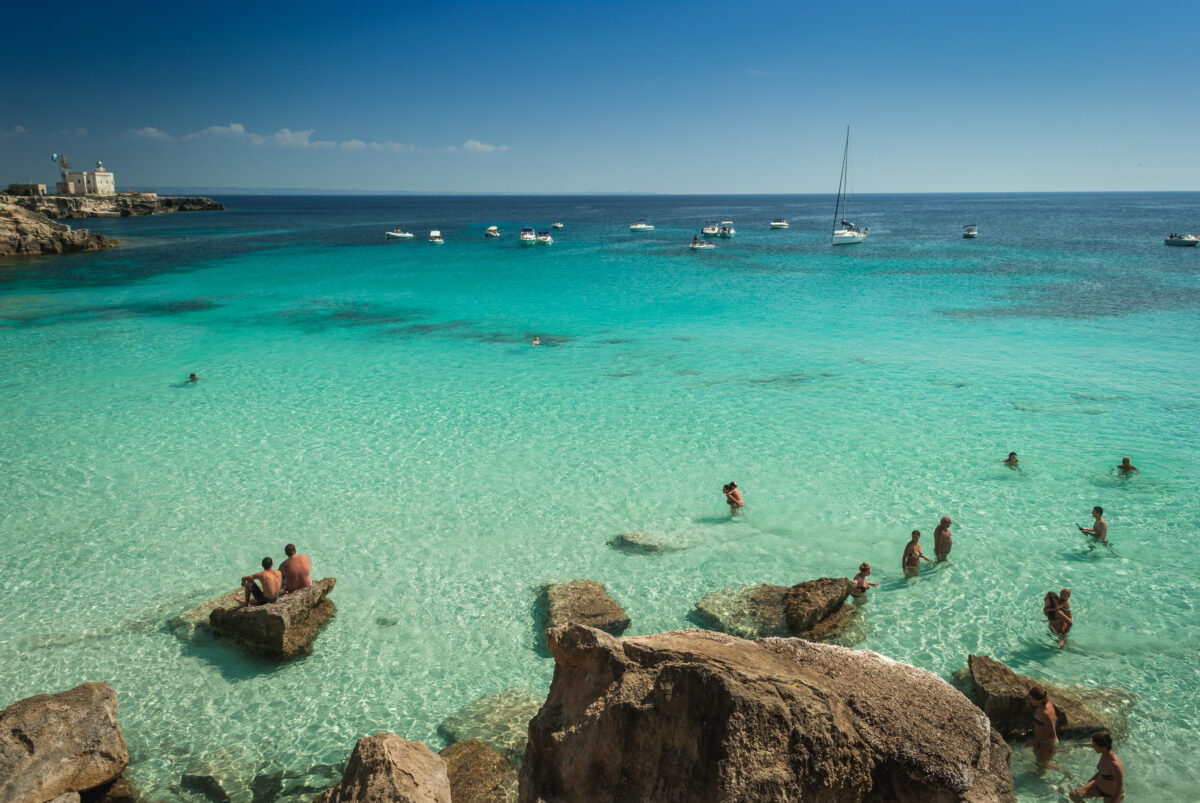
Best for cycling trips and cove snorkeling
Sicily’s best-kept secret is actually another island. The largest of the Aegadians, an archipelago off Sicily’s West Coast, Favignana is your gateway to the wonderful protected marine area. The town is a collection of picturesque one-story houses next to the turquoise harbor. To make things more epic, the mountain views are everywhere you look. While you can certainly enjoy all the Sicilian gastronomic hits like cannoli (tube-shaped pastry filled with ricotta), pasta with pesto alla Trapanese, and arancini (Sicilian deep-fried stuffed rice balls), the real Favignana spectacle begins once you take a bicycle ride along the coastal road.
The town is close to the wonderful blue coves Cala San Nicola and Cala Graziosa. To the south is the crystal-clear Spiaggia di Marasolo, an ultimate snorkeling playground. Proceed to Spiaggia di Lido Burrone and Spiaggia di Calamoni for more sapphire-colored waters. Cycling is the most popular way to explore the island’s many coves. You can also hire a boat for a spellbinding sunset tour around Favignana. Regular ferries connect the island to Trapani.
Termoli, Molise
Best for an unhurried seaside exploration
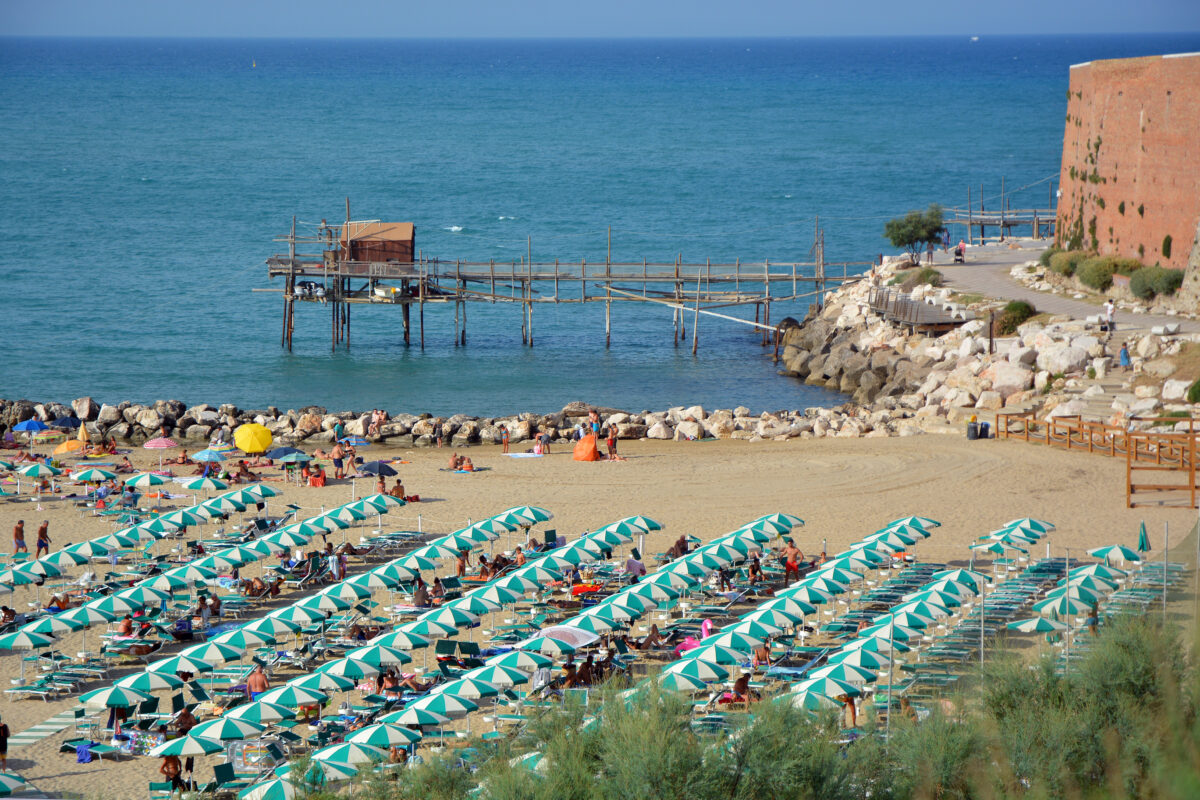
Set between Abruzzo and Puglia, the Molise region is so unexplored that there’s even a meme in Italy proclaiming that it doesn’t exist. But that’s precisely why its only port city, gorgeous Termoli, is so tempting to discover. Embraced by the Adriatic Sea, it looks virtually unchanged from its Middle Ages heyday: the tall white walls separate the colored fishing houses from the water, a Romanesque cathedral on a sleepy piazza glistens in the sun, and the limestone tower of Castello Svevo watches over a vast sandy beach.
Right under the ramparts, you notice a skeletal wooden platform reaching into the sea. That’s a trabucco, a traditional structure used by fishermen of Molise and Abruzzo for centuries. Termoli’s Old Town seems to be made for admiration. Sunsets from the bastion walls are to die for. They are best enjoyed at dinner (preferably grilled seafood and local wine) at one of the ristoranti in the historic part.