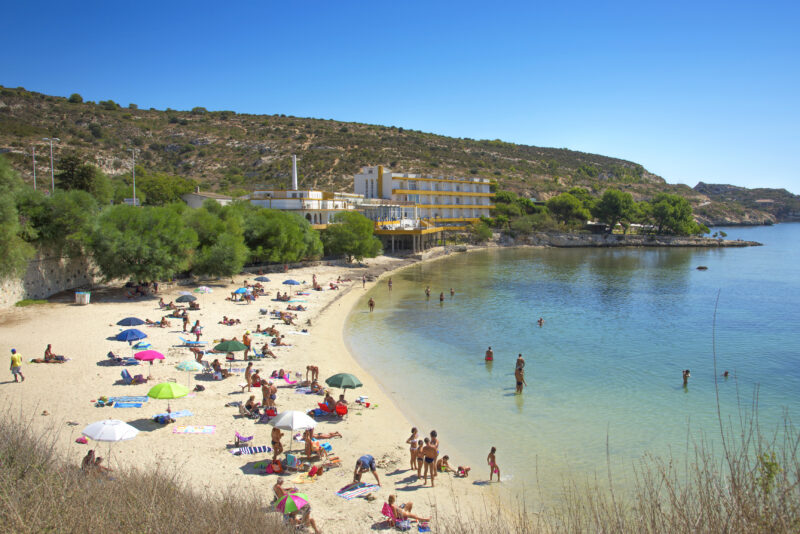

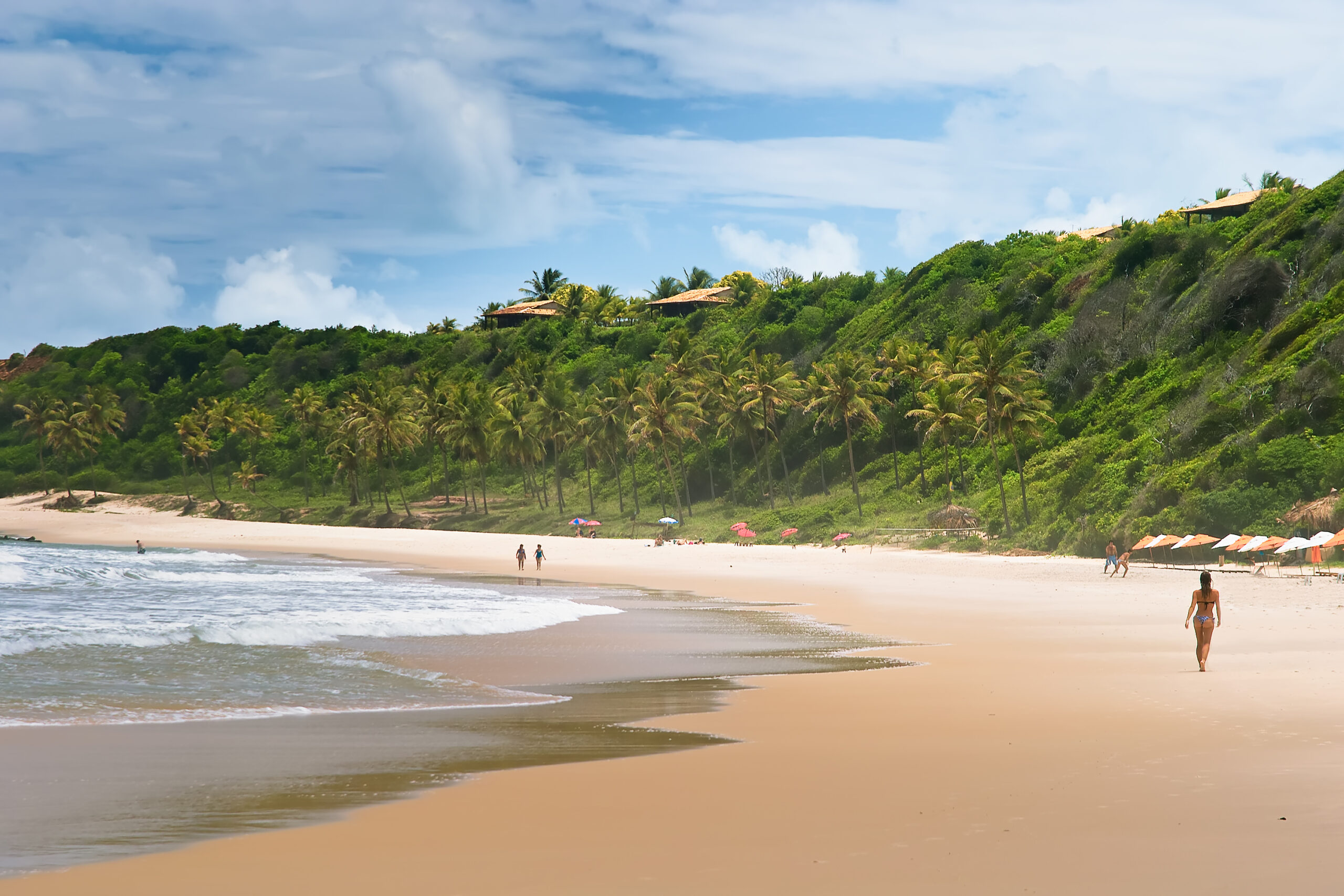
Brazil is a massive country, and each region carries its own distinct culture and way of life. The still-undiscovered Northeast stands out as one of the richest in identity. It’s a region deeply tied to the country’s origins, where the Portuguese first landed in the 1500s and where African, Indigenous, and European influences blended to shape what Brazil is today.
That cultural depth is part of what makes the coastline here feel different. Beach days aren’t just about the scenery. They’re also centered around long lunches of fresh seafood and spicy moqueca stews and forró music drifting through open-air bars. Everything feels a bit more colorful and vibrant in a completely effortless way. And the warmth you feel isn’t just in the water. It’s in the way people gather, celebrate, and welcome visitors in.
Of course, the landscapes deliver too: From coral reefs that create natural pools to dunes, cliffs, and endless coconut groves, the variety is unmatched. From Alagoas to Bahia to Ceará, let me introduce you to the beautiful beaches that define Brazil’s Nordeste.
Baía do Sancho, Pernambuco
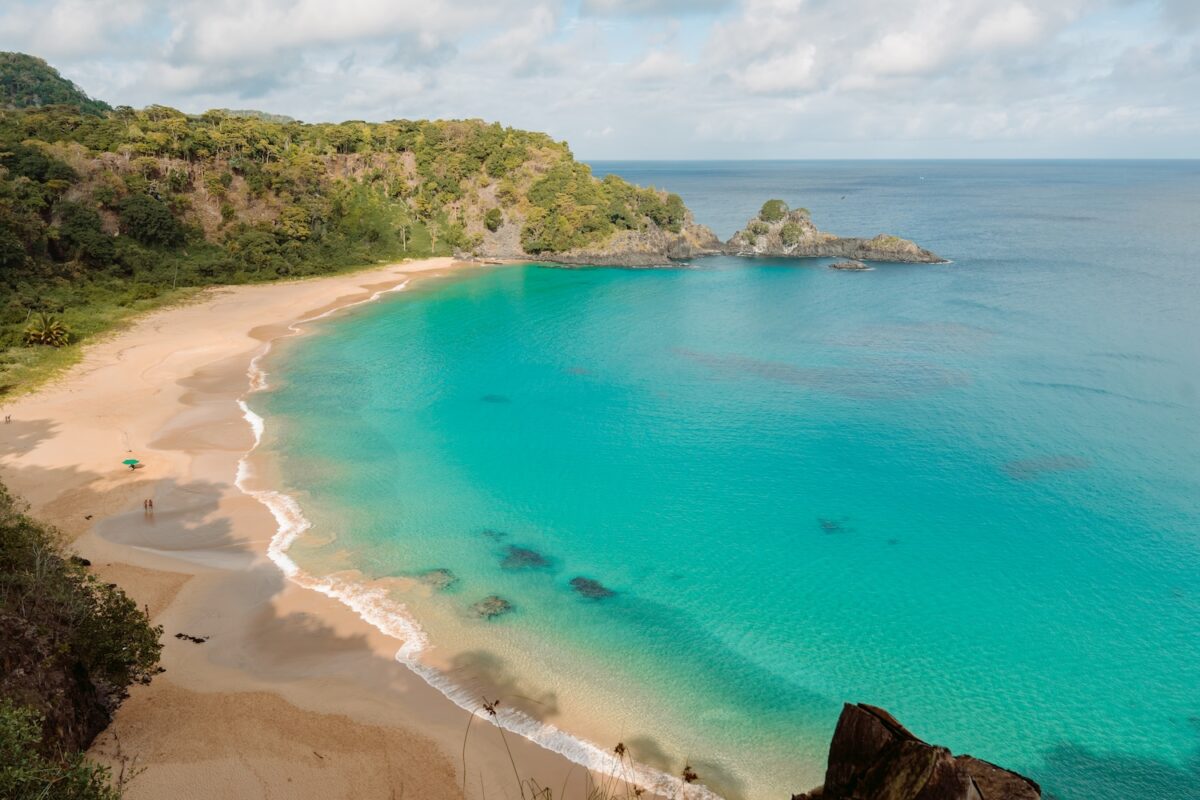
Baía do Sancho is probably the most famous beach in Brazil’s Northeast. It’s often ranked among the best in the world, and once you’ve been there, you understand why. First off, it’s located on Brazil’s most remote island, Fernando de Noronha, which limits the number of visitors that can arrive each year to keep its beaches pristine.
Baía do Sancho is a cove of calm, crystal-clear water tucked between towering cliffs. Visitors descend through ladders carved into a narrow passage between the rocks to reach the sand. The extra effort naturally filters the crowds, preserving the sense of isolation that defines the experience.
What really sets Sancho apart, though, is what’s beneath the surface. The surrounding waters are part of a protected marine park, and visibility is often so clear you can spot sea turtles, rays, sharks, and schools of fish without even trying.
Praia do Patacho, Alagoas
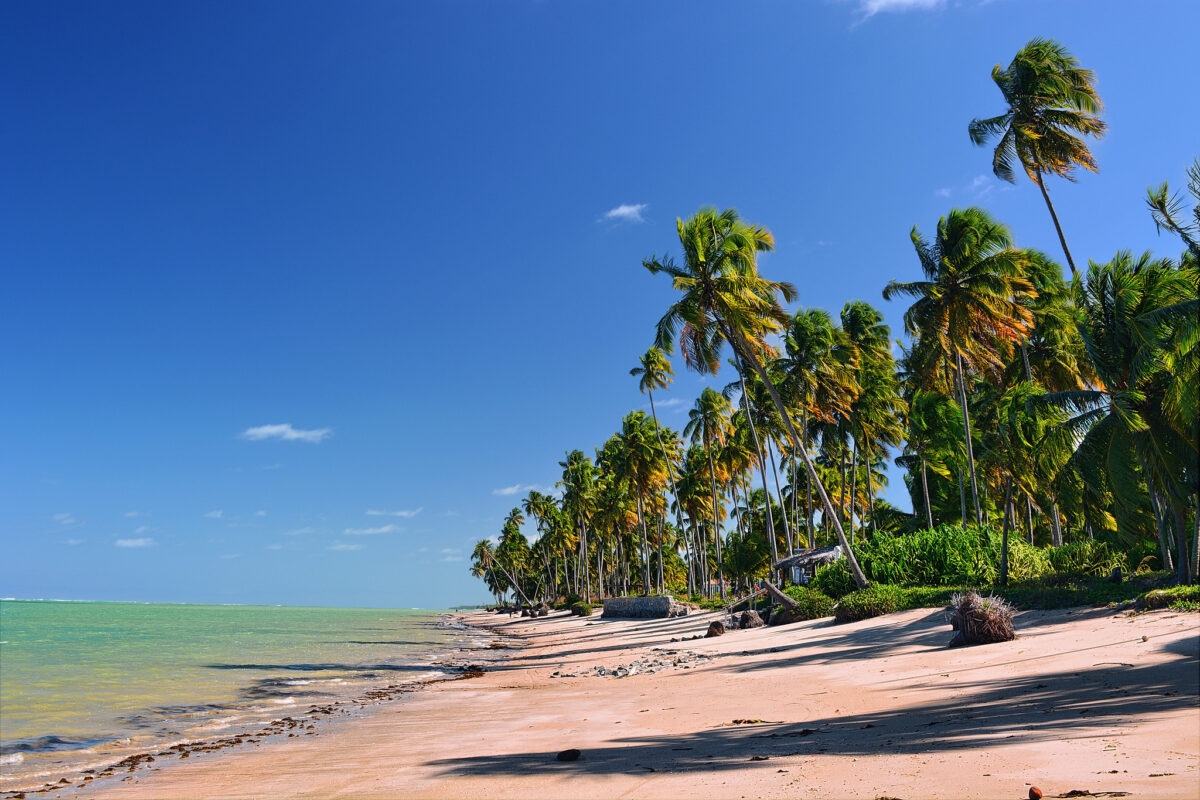
Praia do Patacho sits along the Rota Ecológica dos Milagres in Alagoas, a stretch of coastline known for its protected beaches and that soft, almost unreal shade of turquoise water. It’s the kind of place travelers seek out when they want to slow down. There’s little development, few beach clubs, and long, quiet stretches of sand that feel intentionally preserved.
Part of a Blue Flag–certified region, the beach stands out for its clean waters and strong environmental protections. At low tide, natural pools form just offshore, creating calm, shallow areas that are perfect for a relaxed swim without the crowds. One of the main reasons this beach is on my radar is the stunning boutique hotel Pedras do Patacho, a design-forward, immersive stay worth planning a trip around.
Praia de Antunes, Alagoas
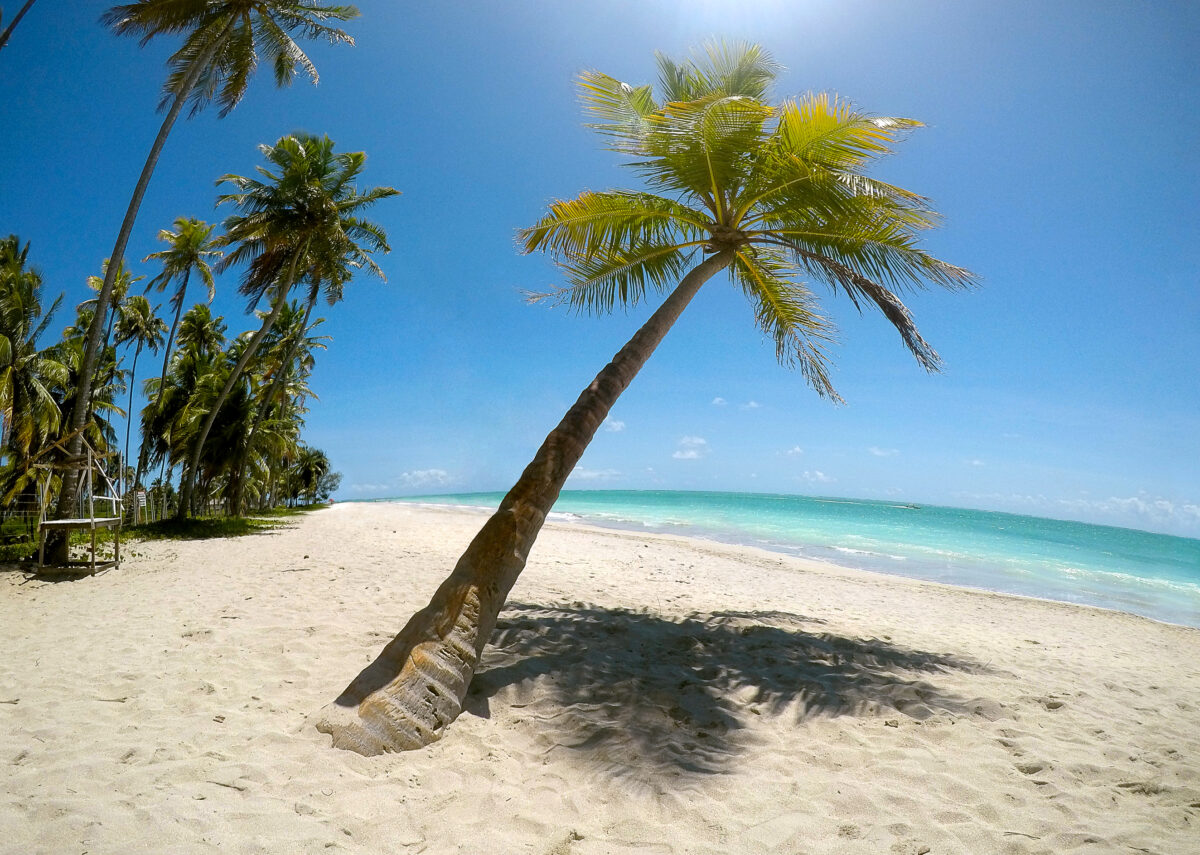
Praia de Antunes is one of the most beautiful stretches of coastline in the state of Alagoas, with water here shifting between shades of turquoise and light blue, especially in the summer. At low tide, sandbanks emerge, allowing you to walk far into the ocean as natural pools form along the reef.
Unlike more remote beaches along the Rota Ecológica, Antunes strikes a balance between beauty and convenience, with beach bars offering chairs, umbrellas, and simple seafood dishes. Its location also makes it ideal for exploring nearby beaches like Barra Grande and Ponta de Mangue, some of the most scenic in Alagoas.
Jericoacoara, Ceará
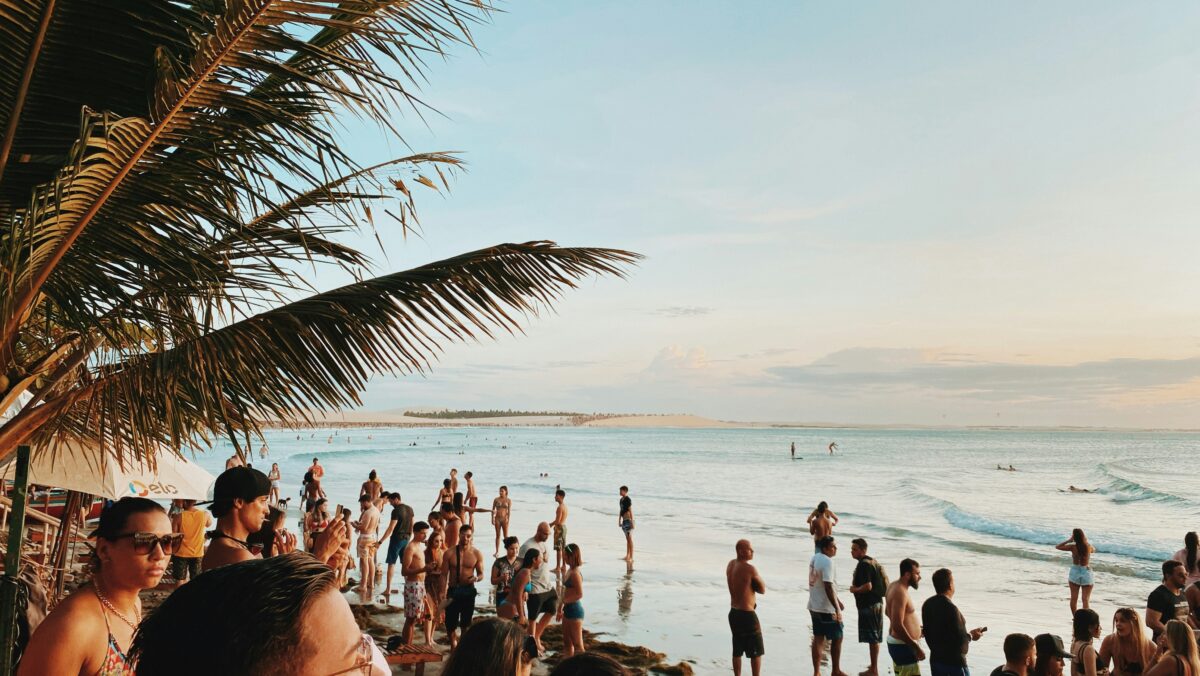
Jericoacoara, or known simply as Jeri, is another beach destination you may recognize. The region’s constant trade winds make it one of the best places in the country for kitesurfing and windsurfing, drawing enthusiasts from around the world.
What sets it apart isn’t just the beach itself, but the surrounding landscape: rolling sand dunes, freshwater lagoons, and a laidback village where streets are still made of sand. And even if you’re not into kitesurfing, watching dozens of colorful kites move across the ocean is part of the experience.
Praia dos Carneiros, Pernambuco
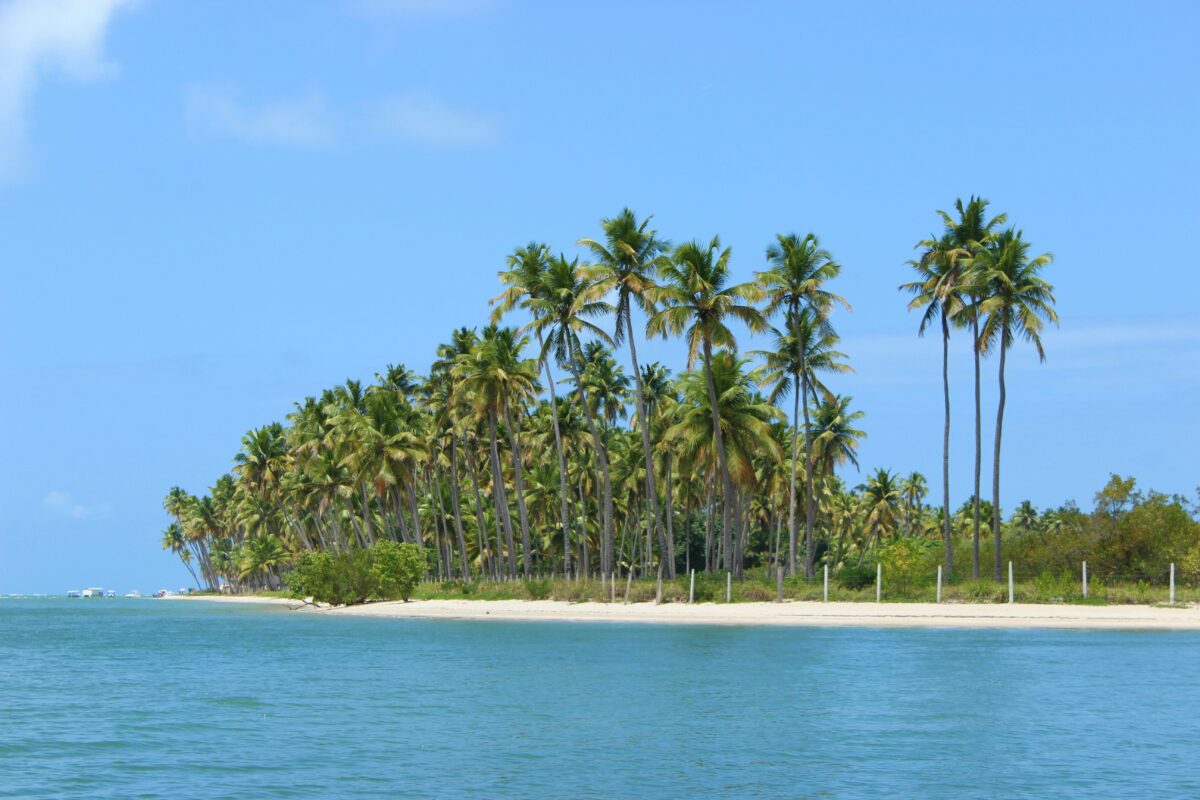
Located about 100 kilometers south of the capital city of Recife, Praia dos Carneiros is known for its long stretch of sand lined with coconut palms, warm, shallow water, and natural pools that form at low tide.
The beach’s most recognizable feature is the Capela de São Benedito, a small white church sitting right on the sand. It’s become a symbol of the region, and one of those places that looks exactly like you see it in photos.
Beyond the scenery, Carneiros is easy to visit as a day trip from Recife or Porto de Galinhas, though staying overnight gives you a quieter, more local experience once the day-trippers leave.
Praia da Pipa, Rio Grande do Norte
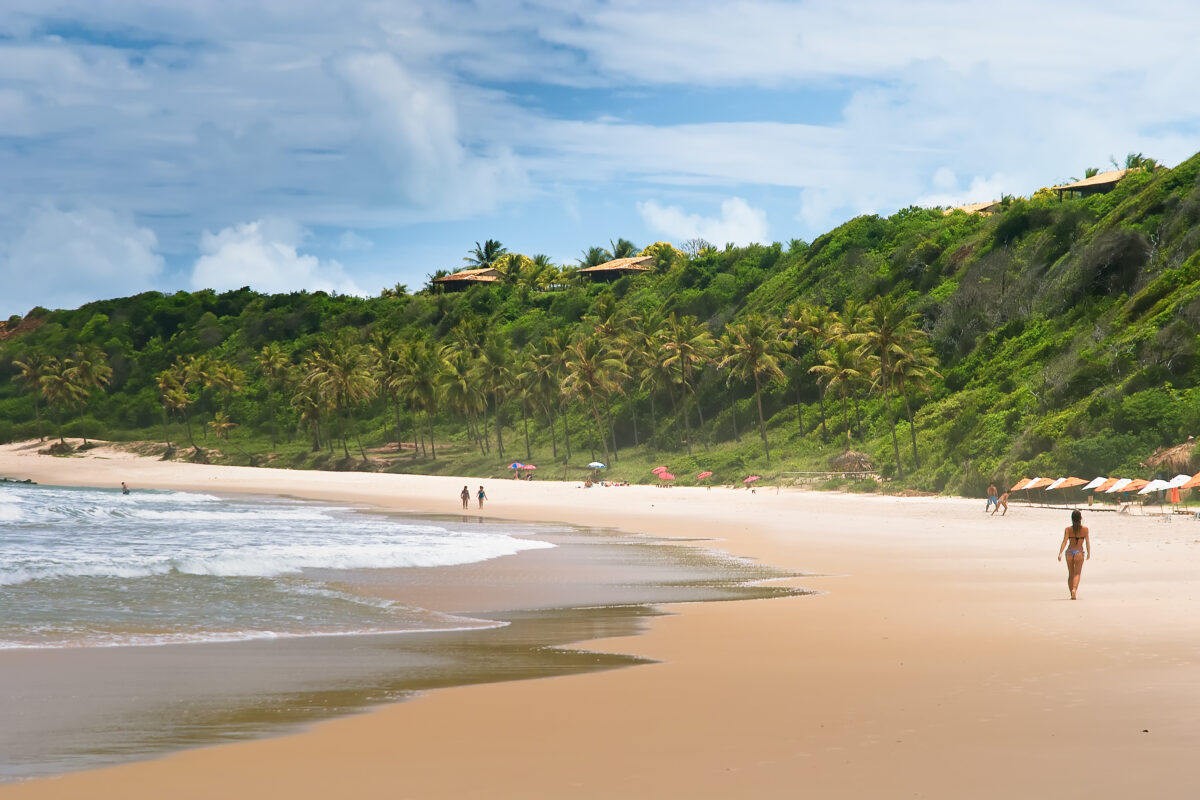
One of the coolest experiences in Pipa is the frequent dolphin sightings. Located about 85 kilometers south of Natal, what was once a quiet fishing village has evolved into a lively, beach vacation hotspot. “Pipa” isn’t just one beach, but a collection of them. From Praia do Amor, popular with surfers, to Baía dos Golfinhos, where dolphins are often spotted close to shore, each stretch of coastline offers something different.
The village itself is part of the appeal. In areas like Vila Mangueira, whitewashed buildings, boutique shops, and open-air restaurants create a setting that feels unexpectedly Mediterranean. By night, it becomes the social heart of Pipa, with music, drinks, and a steady flow of visitors moving between spots.
Praia do Espelho, Bahia
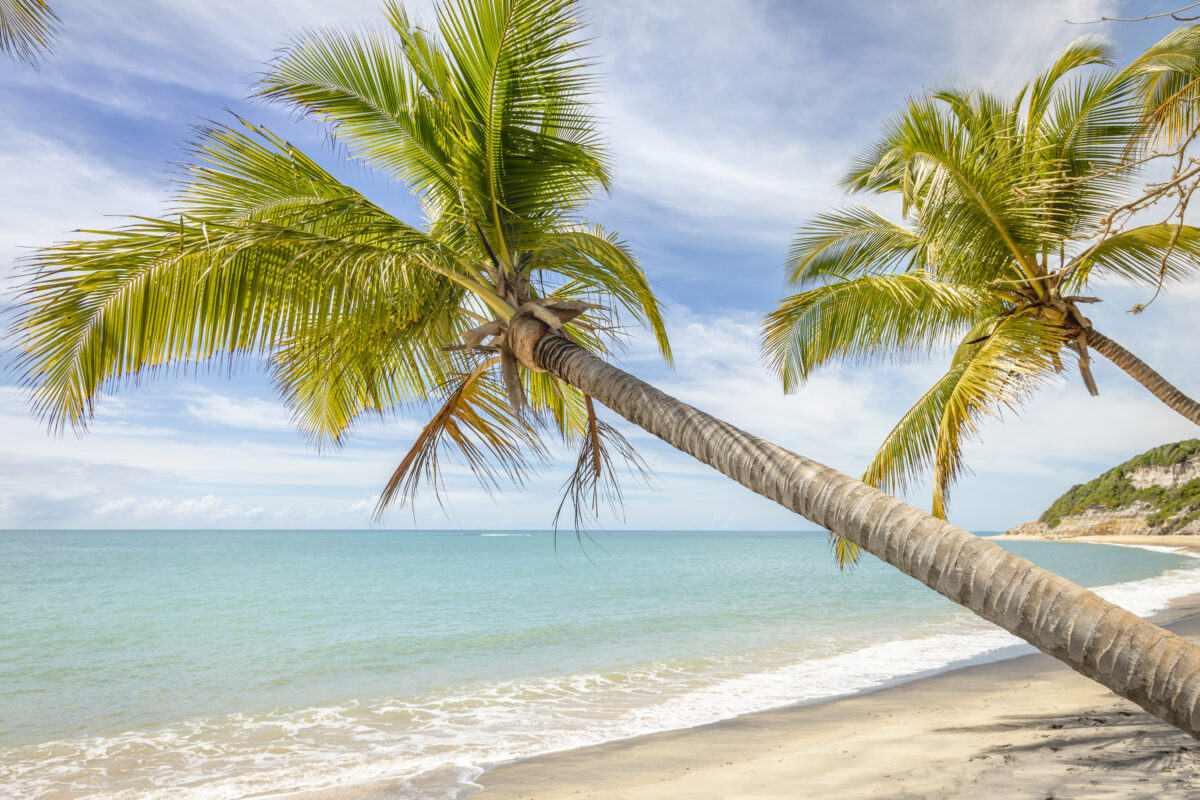
Praia do Espelho is located along my favorite stretch of Bahia’s coast, right between the charming fishing villages of Trancoso and Caraíva. It’s mostly known for its natural pools that form at low tide, with water that is so still it reflects the sky like glass.
The name “Mirror Beach” comes from this exact phenomenon, and timing your visit around the tides makes all the difference. On the right day, especially around new or full moons, the water turns into a series of shallow, crystal-clear pools scattered across the sand. Despite its remote feel, Praia do Espelho has just enough structure to make a full day of it, with a few beachside restaurants serving fresh seafood and offering lounges by the sea.
Praia do Forte, Bahia
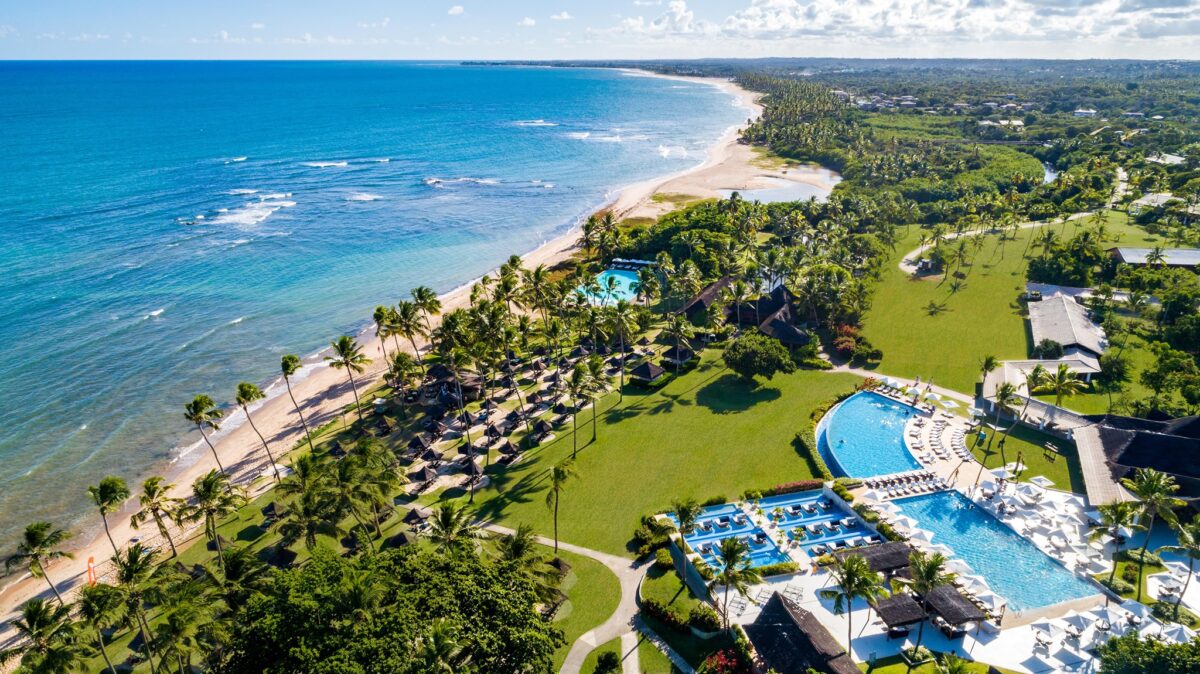
Praia do Forte sits about 1.5 hours north of the lively city of Salvador, which is worth a visit in and of itself. What was once a small fishing village has grown into a polished beach town, with calm, clear waters and the Tivoli Ecoresort, one of the best beach resorts in Brazil.
It’s also one of Brazil’s most important hubs for marine conservation, home to Projeto Tamar, where visitors can learn about sea turtle protection efforts up close. Just inland, the Sapiranga Ecological Reserve protects a stretch of Atlantic Forest, adding another layer to the destination.
There’s also a ton of history here. Overlooking the coastline are the ruins of the Garcia d’Ávila castle, a rare example of colonial-era fortification in Brazil. Together, it all makes Praia do Forte a well-rounded beach destination in the Northeast.
Taipu de Fora, Bahia
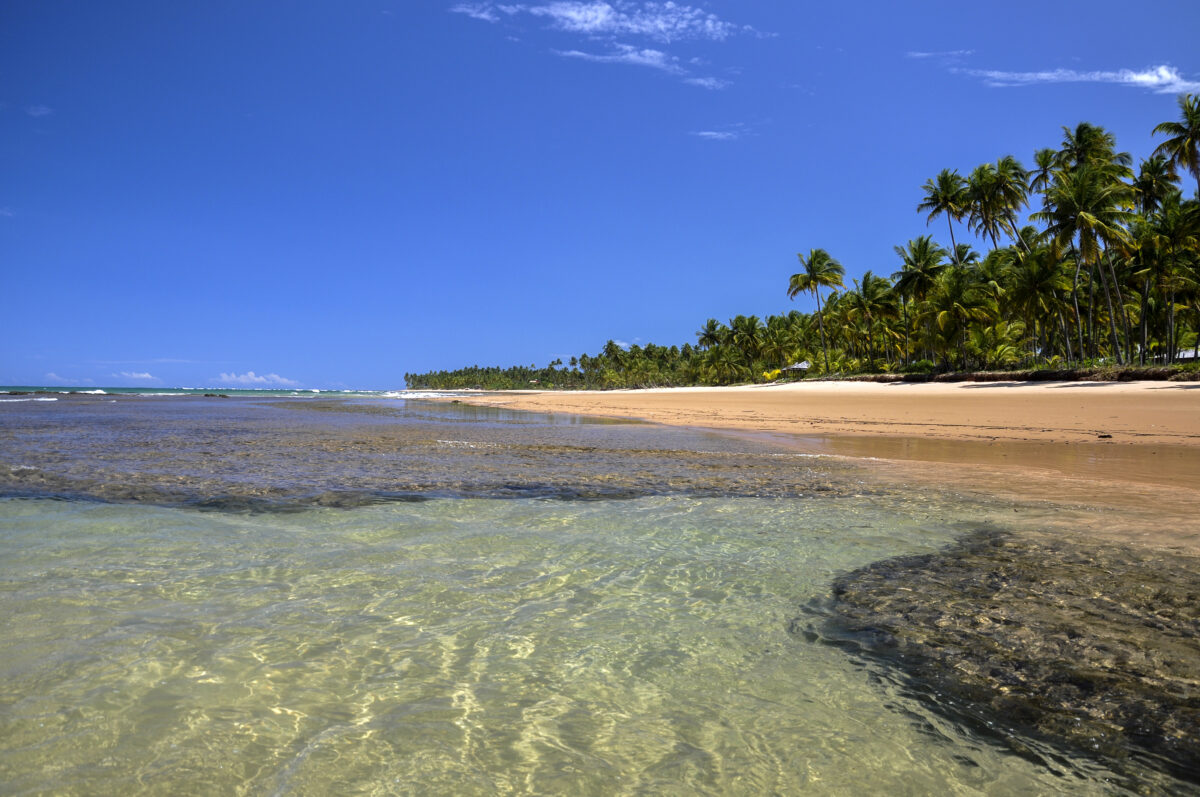
Located on the Península de Maraú, along Bahia’s southern coast, Taipu de Fora feels more remote than many of the state’s better-known beach destinations. To put it into context, most travelers heading to Bahia for Salvador or Trancoso, but Maraú sits further south, requiring a bit more effort to reach, which is exactly what keeps its seclusion intact.
What draws people here are the region’s famous natural pools that form directly along the shoreline. Just walk into the water and you’ll be surrounded by coral formations and small, colorful fish. It’s one of the easiest and most rewarding snorkeling experiences in the Northeast. Outside of the reef area, the beach stretches for miles, lined with coconut trees and long, empty sections of sand. It’s the kind of place where you come to truly disconnect.