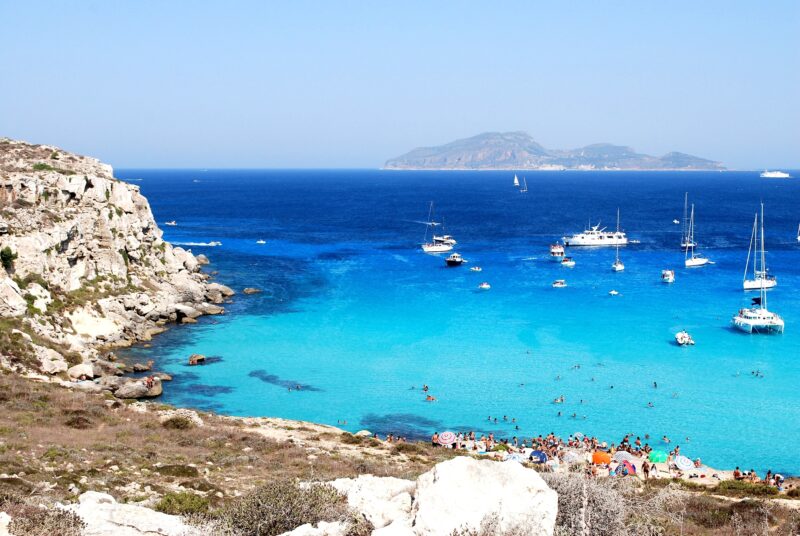

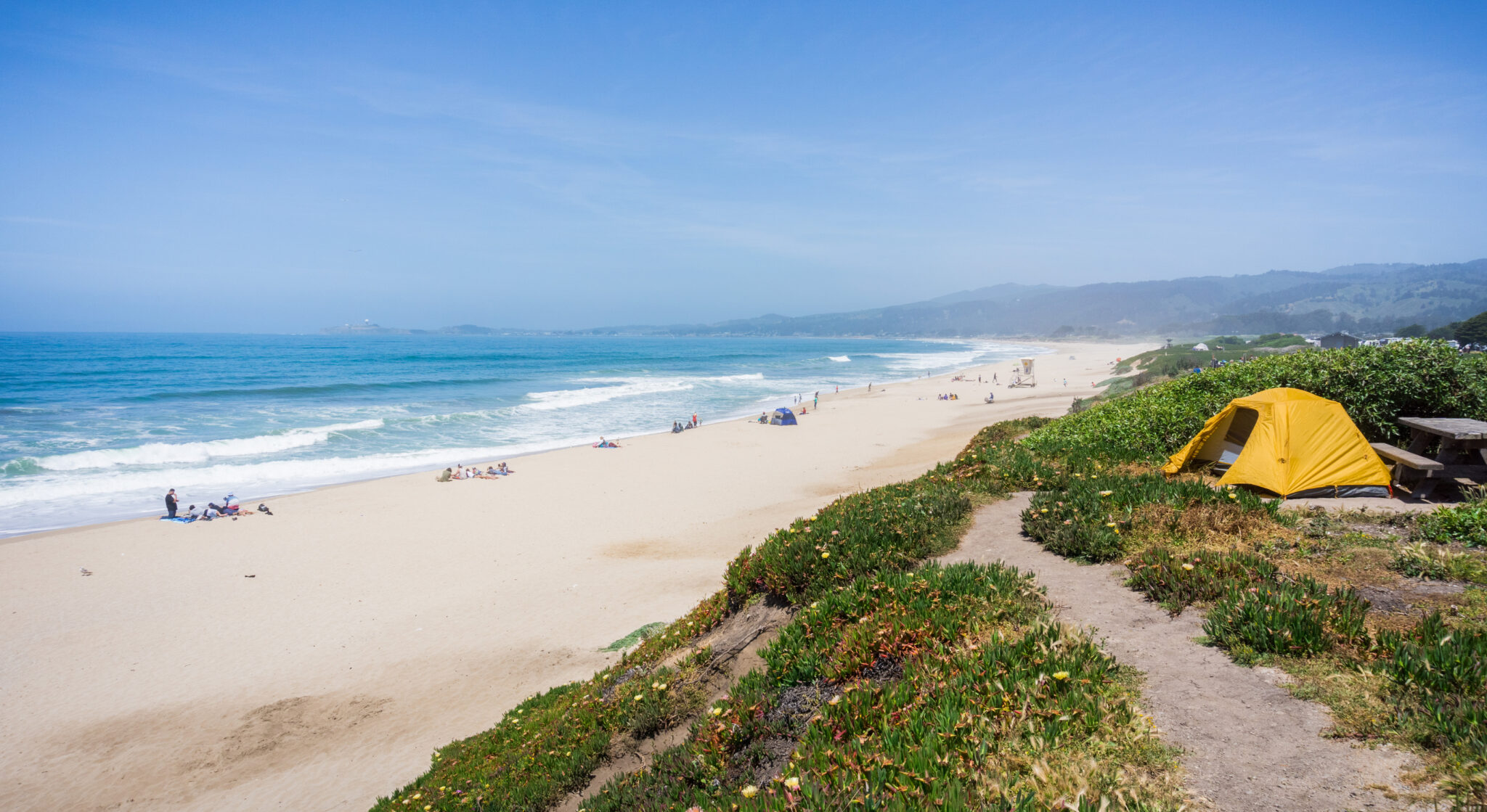
I spent four years living out of a van, slowly working my way up and down the California coast when I lived in San Diego. In that time, I camped at more beaches than I can count, and I learned which campgrounds are worth the hype, which ones are worth the drive, and which ones I’d go back to in a heartbeat. California’s coastline stretches over 800 miles, offering some of the most spectacular beach camping in the country. Whether you want to fall asleep to crashing waves, wake up to Pacific sunrises, or explore dramatic bluffs and hidden coves, there’s a spot for every kind of camper.
To help round out this guide, we also tapped local experts, seasoned campers, and coastal insiders for their firsthand tips and recommendations. Here’s the list — from the wild northern shores all the way down to sunny San Diego.
Before You Book
Pitching a tent directly on California’s sand is generally not permitted, but the state’s network of coastal campgrounds puts you close enough to hear the waves from your sleeping bag. Most sites can be reserved through ReserveCalifornia up to six months in advance on a rolling basis, meaning campsites are competitive and book out fast, especially in summer. Your best bet is to book midweek or aim for late September through October, when crowds thin and the weather is still gorgeous.
Northern California
Gold Bluffs Beach — Prairie Creek Redwoods State Park (Humboldt County)
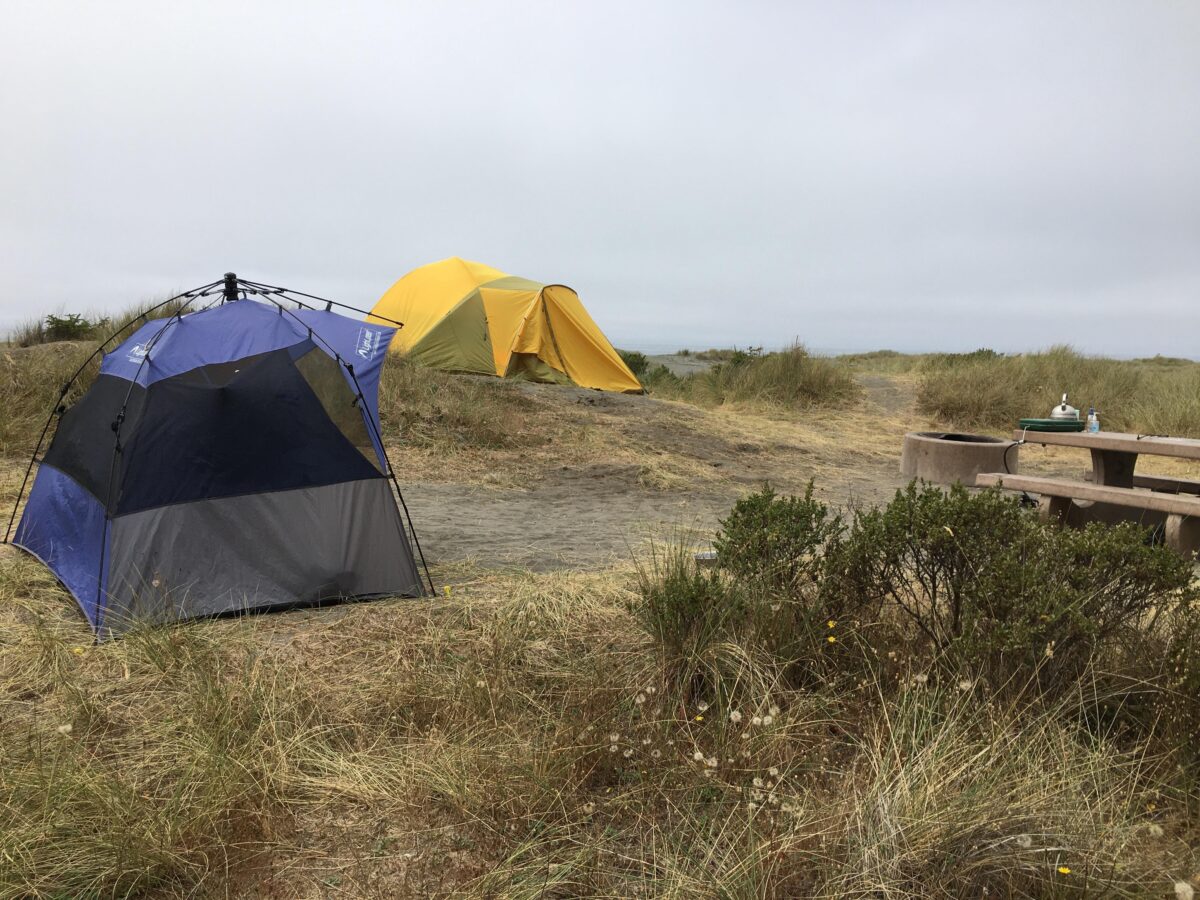
If you’ve ever dreamed of camping where ancient redwoods meet the Pacific, Gold Bluffs is it. Tucked into the dunes along a peaceful 10-mile stretch of sandy beach within Prairie Creek Redwoods State Park (just south of Redwood National Park), this campground feels like the edge of the world. Amenities include bear-proof lockers, solar-heated showers, and firepits. You can reach it by driving 6 miles of unpaved road from Highway 101, or hiking in via the 4.1-mile Miners Ridge Trail. Either way, you’ll be far enough from main roads to truly fall asleep to nothing but the ocean.
Kayla Anderson, co-author of Moon Best of California State Parks, recommends booking early, especially for the sites with direct beach access: “Sites 7, 9, and 12–17 are closest to the sea, and reservations fill fast.” Her favorite time to visit? “Late August, when it’s easier to get a reservation.”
- Best for: Tent campers, nature lovers, redwood enthusiasts
- Cost: ~$35/night (car camping); $5/person for hike/bike-in sites
- Book: ReserveCalifornia.com
The Lost Coast Trail (Humboldt & Mendocino Counties)
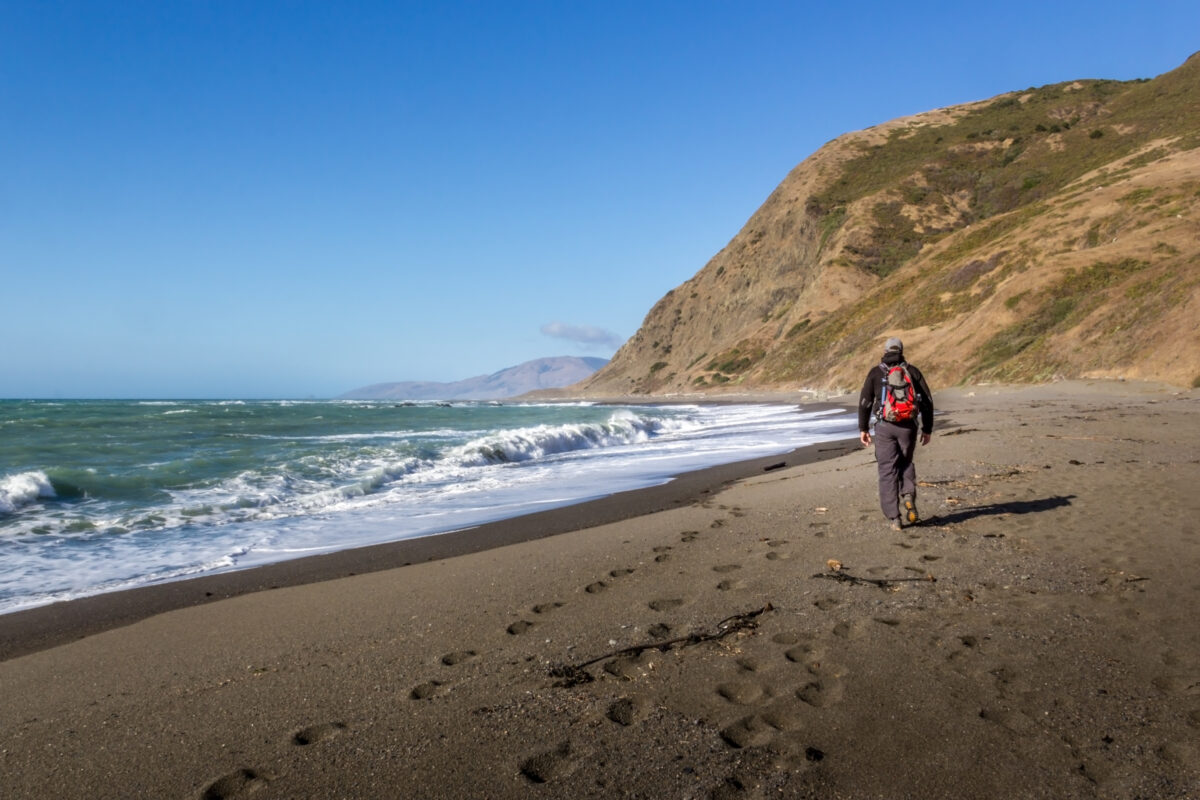
For the adventurous camper who wants true wilderness, the Lost Coast Trail is unlike anything else in California. The coastline here is too rugged for roads, meaning the only way in is on foot. The northern section runs 24.6 miles from Mattole to Black Sands Beach and takes most backpackers four days to complete. It’s remote, demanding, and absolutely breathtaking — one of the few genuinely wild coastal hikes in the country.
- Best for: Experienced backpackers, off-grid seekers
- Permit: Free backcountry permit required (apply in advance)
- Note: Not recommended for beginners
Bodega Bay — Sonoma Coast State Park (Sonoma County)
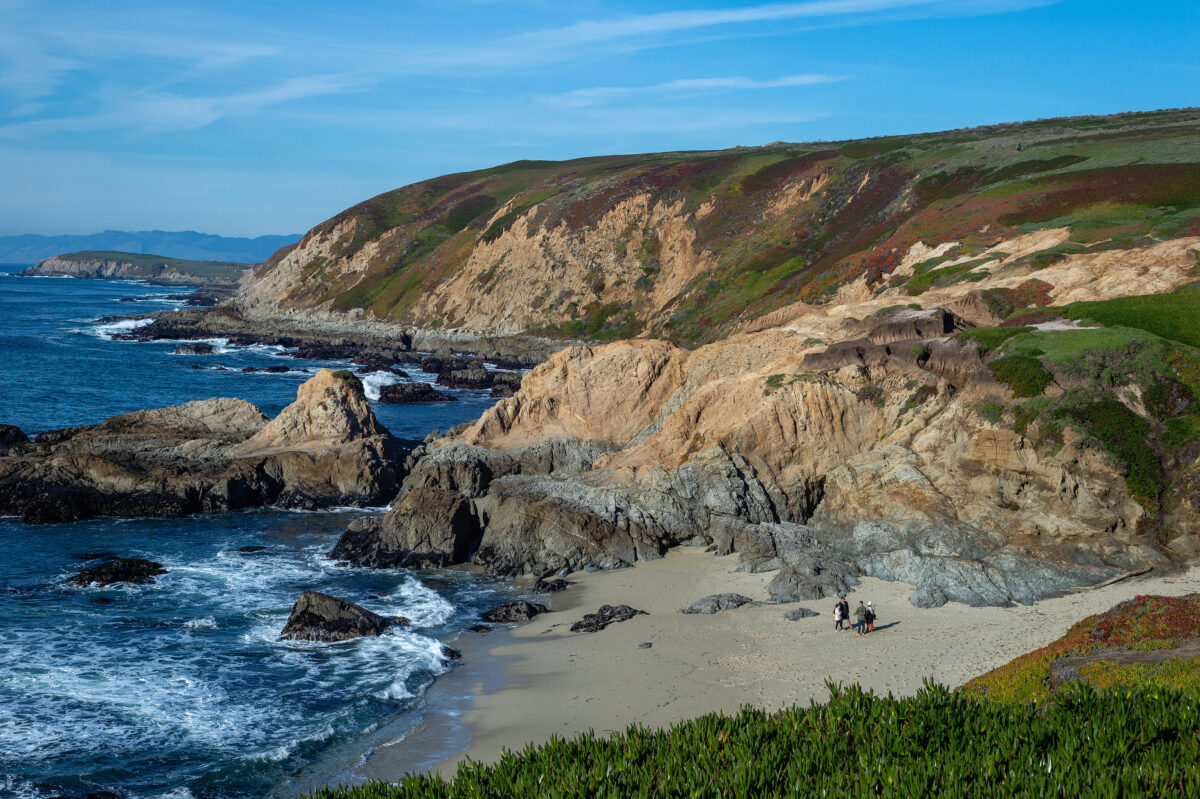
Set on beautiful Bodega Bay, this Sonoma County campground offers 120 sites with restrooms and coin-operated showers (no hookups). The beach here features soft sand, a mellow surf break, and is beloved by dog-walkers, birders, and beachcombers hunting for sand dollars. The jetty at Bodega Harbor is a favorite for fishing and crabbing. Fair warning: it can get breezy (great for kite-flying, a little tricky for tent setup).
Anderson says “Wright’s Beach and Bodega Dunes are arguably the best coastal campgrounds in the state, because you are steps away from the ocean — you will fall asleep to sounds of the waves crashing.” Annie Cresswell, Executive Director of Stewards of the Coast and Redwoods, adds that the area combines scenery and variety: “You get rugged headlands, wide sandy beaches, tide pools, seabirds, and the sound of the Pacific right from camp.”
Suki Waters, owner of WaterTrek EcoTours, suggests going early: “Morning is often the best time for beach walks, birding, and quieter moments along the water before day visitors arrive.”
- Best for: Families, dog owners, birders, anglers
- Cost: Varies by site
- Book: ReserveCalifornia.com
Central Coast
Pfeiffer Big Sur / Plaskett Creek — Big Sur (Monterey County)
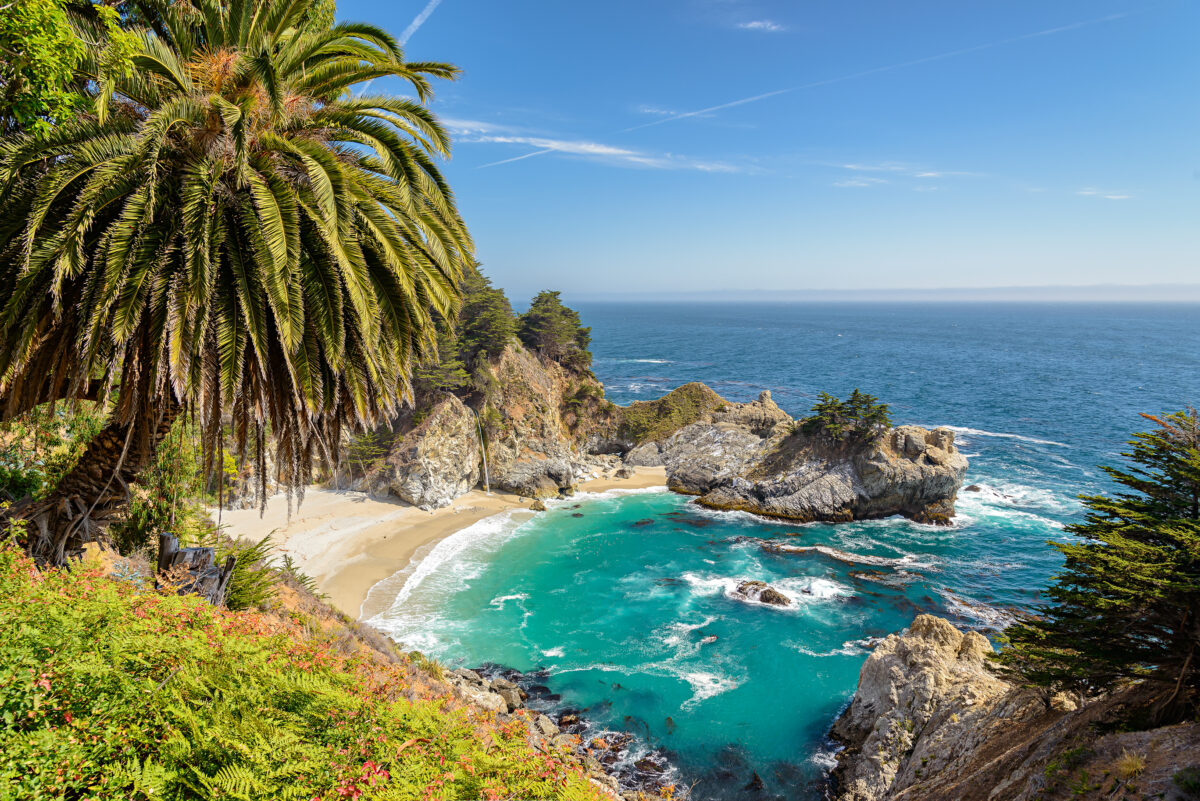
Big Sur is one of California’s most iconic stretches of coastline, and camping here is a bucket-list experience. The dog-friendly Plaskett Creek campground offers 33 tent/RV sites (no hookups) with picnic tables, fire rings, and grills, plus five hike-in sites. Your camping permit includes free access to both Sand Dollar Beach, Big Sur’s largest sandy beach, and the otherworldly Pfeiffer Beach, with its famous purple sand and dramatic offshore rock formations.
Becca Hunt, Publisher at Lonely Planet, adds a tip for timing: “Fall is when things heat up, right around September and even into October. And you’re in for a treat first thing in the morning, when those sunbeams burst through the tall trees.” Anderson recommends visiting in March: “The weather is pleasant, there’s a better chance to see more wildlife and fewer people on the trails — it’s also the best time to spot gray whales and witness harbor seals giving birth.”
- Best for: Couples, hikers, photographers, dog owners
- Cost: ~$35/night
- Book: ReserveCalifornia.com
Jalama Beach County Park (Santa Barbara County)
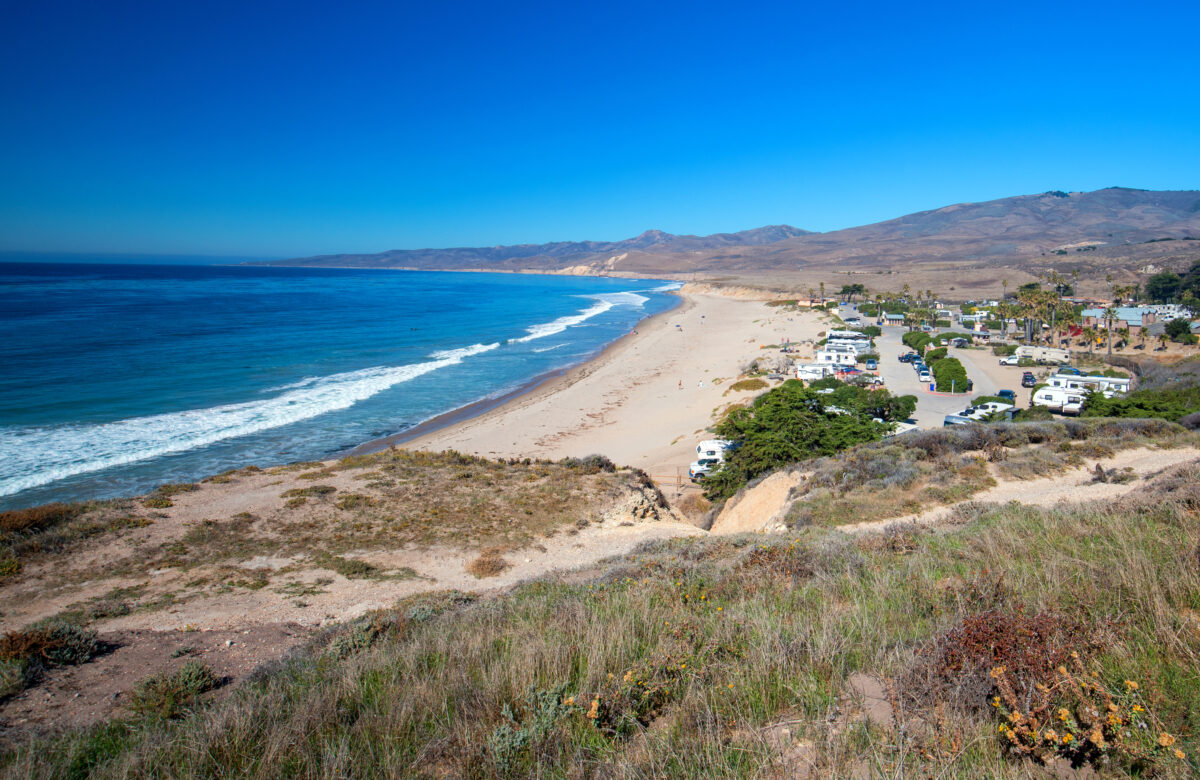
Jalama is one of California’s best-kept secrets and one of the rare spots where you camp right at beach level, not on a bluff. Fourteen winding miles off the Pacific Coast Highway bring you to this windswept, rocky beach with 107 campsites, most beachfront or with ocean views. The campground has a legendary general store serving hot food, including the famous “Jalama Burger” that devoted regulars swear is worth the drive alone. Hot showers and full restroom facilities round out the amenities.
“Jalama Beach has a uniquely raw feel — cliff sides, dependable waves, and a large amount of shoreline that creates an area with little foot traffic or noise pollution that is getting harder to come by,” says Tym Lewtak, Founder of Luxatolls. His insider tip: “The elevated bluff areas can be the very best locations for viewing sunsets — first-time visitors will typically only consider the quality of the beach and miss this entirely.”
- Best for: Tent campers who want true beachfront access, foodies
- Cost: ~$35/night standard; ~$50/night for beachfront sites with partial hookups
- Book: Reserve through Santa Barbara County
Southern California
South Carlsbad State Beach (San Diego County)
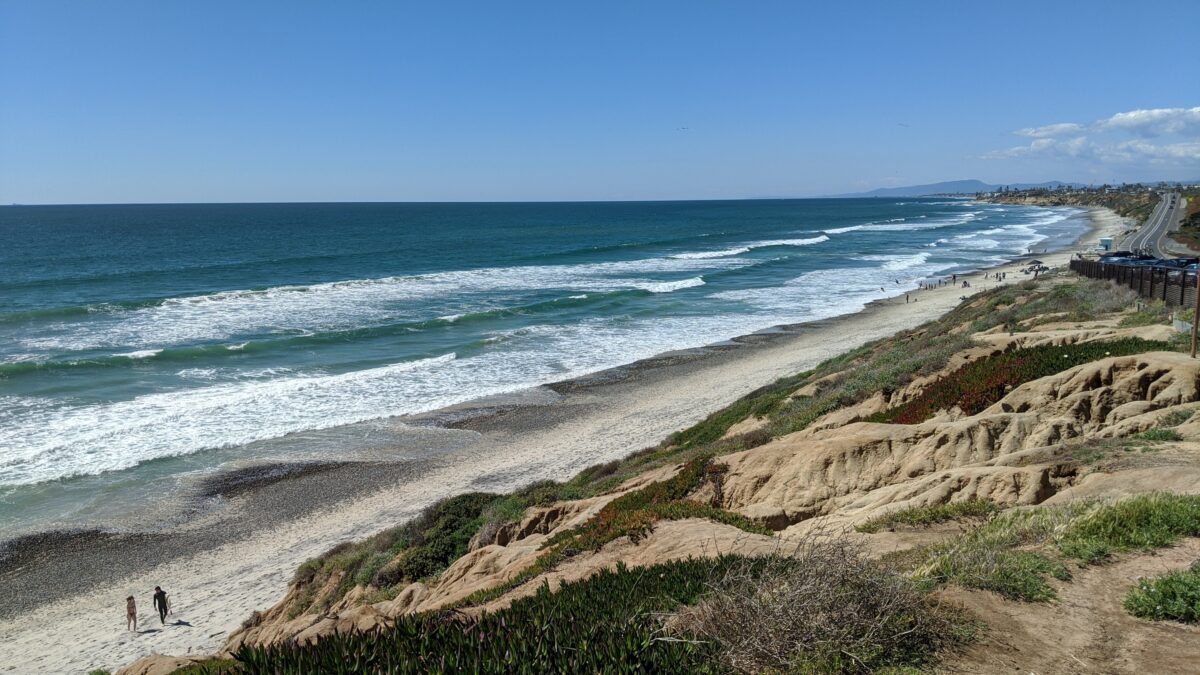
One of the largest beach campgrounds in SoCal, South Carlsbad has 215 campsites — roughly half perched along a bluffside with sweeping ocean views, many with hookups. Long staircases (or a ramp at the south end) lead down to a wide sandy beach. The campground is walkable to the cafes and shops of Carlsbad village, and it’s an ideal base for surfers, with great breaks nearby. Sunsets from the bluff are spectacular.
- Best for: Families, RV campers, surfers
- Book: ReserveCalifornia.com
San Elijo State Beach — Cardiff-by-the-Sea (San Diego County)
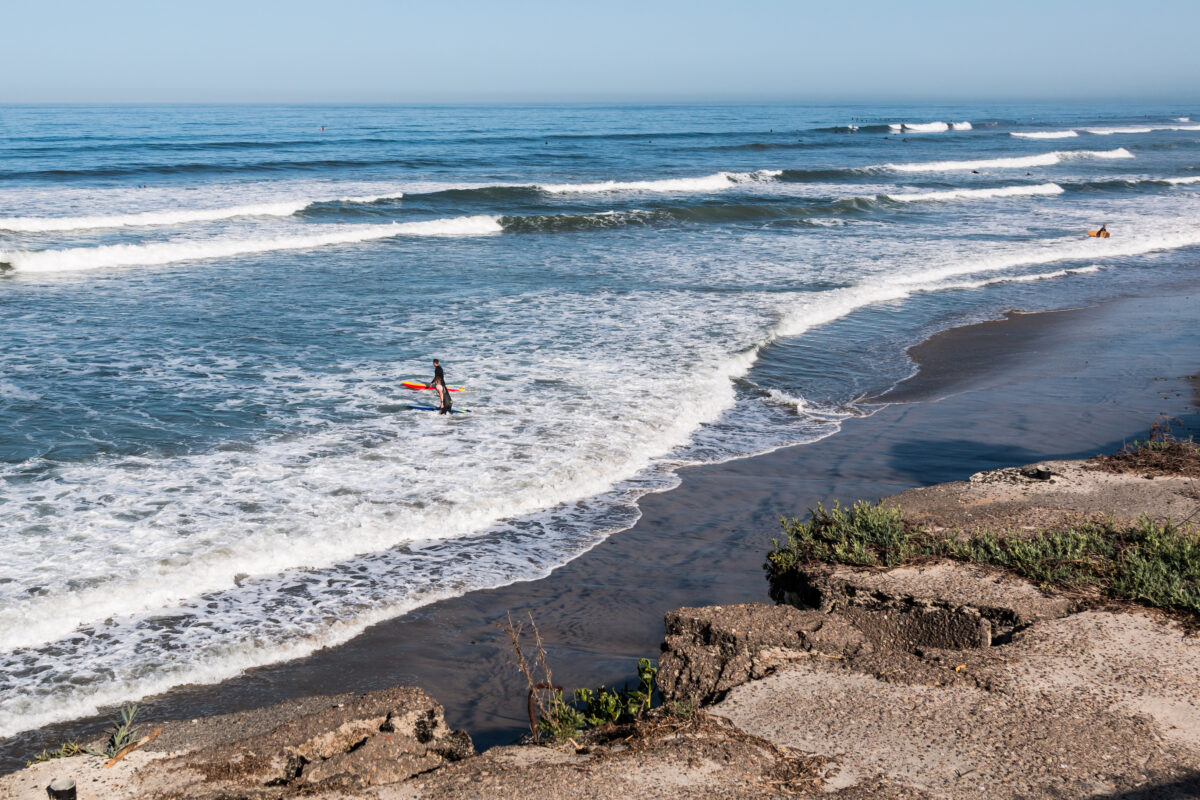
A favorite for surfers and foodies alike, San Elijo offers 156 campsites right in Solana Beach, with a mix of coastal, street-side, and interior spots. The beach draws surfers from March through November, and you’re walking distance from the town center of Cardiff-by-the-Sea — home to the beloved Seaside Market deli and VG Donut & Bakery. The on-site Eli Howard Surf School makes it easy for beginners to catch their first wave.
- Best for: Surfers, foodies, couples, social campers
- Book: ReserveCalifornia.com
San Onofre State Beach — San Clemente (San Diego/Orange County line)
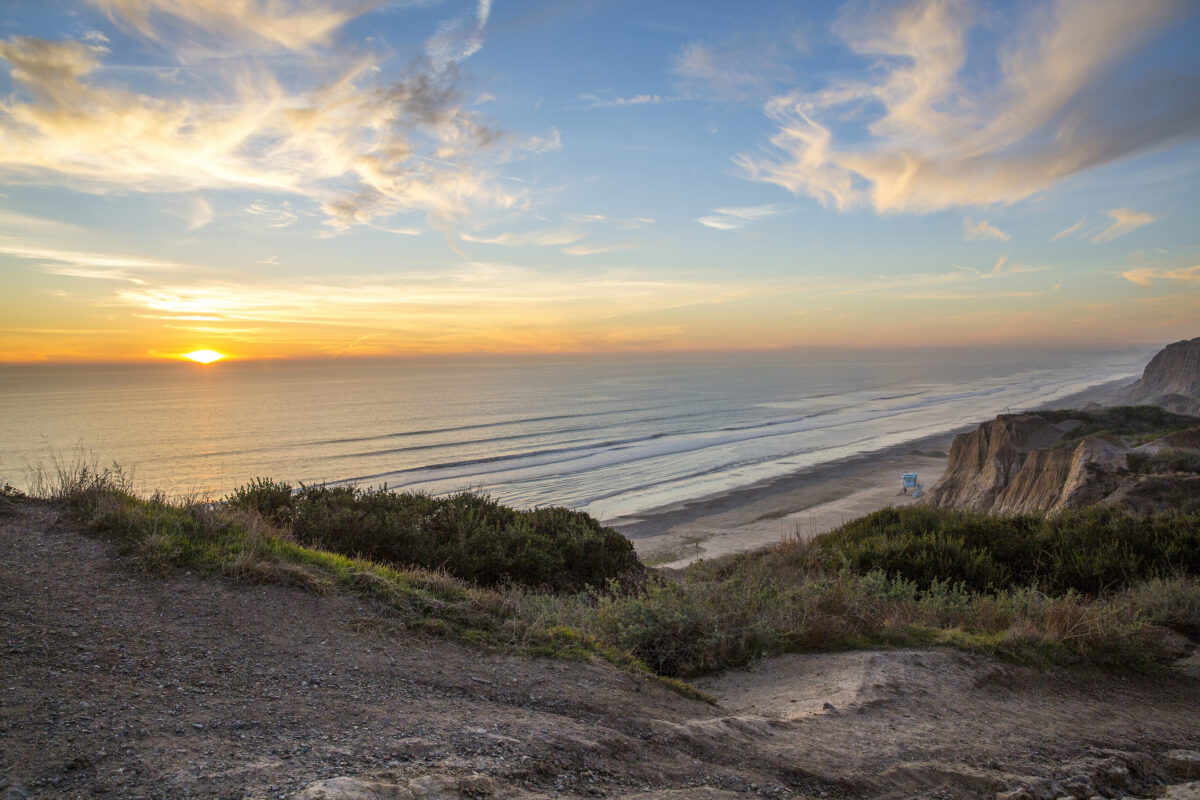
San Onofre is a SoCal institution, and one I kept coming back to during my van years. The park actually has two distinct campgrounds worth knowing about. The Bluffs Campground sits atop 175 sites along sandstone bluffs overlooking the Pacific, with six rugged trails cutting down to 3.5 miles of largely undeveloped beach. It’s primitive: cold outdoor showers, chemical toilets, no hookups. But the sunsets from the bluff edge are stunning, and the surf below is excellent.
The San Mateo Campground, slightly inland, is the more comfortable option, with 146 sites (62 with electric and water hookups), hot coin-operated showers, flush toilets, and a 1.5-mile nature trail connecting you to Trestles Beach, one of the most legendary surf breaks in the U.S. One honest caveat: the I-5 freeway and a railroad run nearby, so light sleepers should bring earplugs. Still, for surfers especially, this place is hard to beat.
- Best for: Surfers, bluff-top sunset seekers, van and RV campers
- Cost: ~$45–$70/night (San Mateo); $45–$250/night (Bluffs)
- Book: ReserveCalifornia.com
Newport Dunes Waterfront Resort — Newport Beach (Orange County)
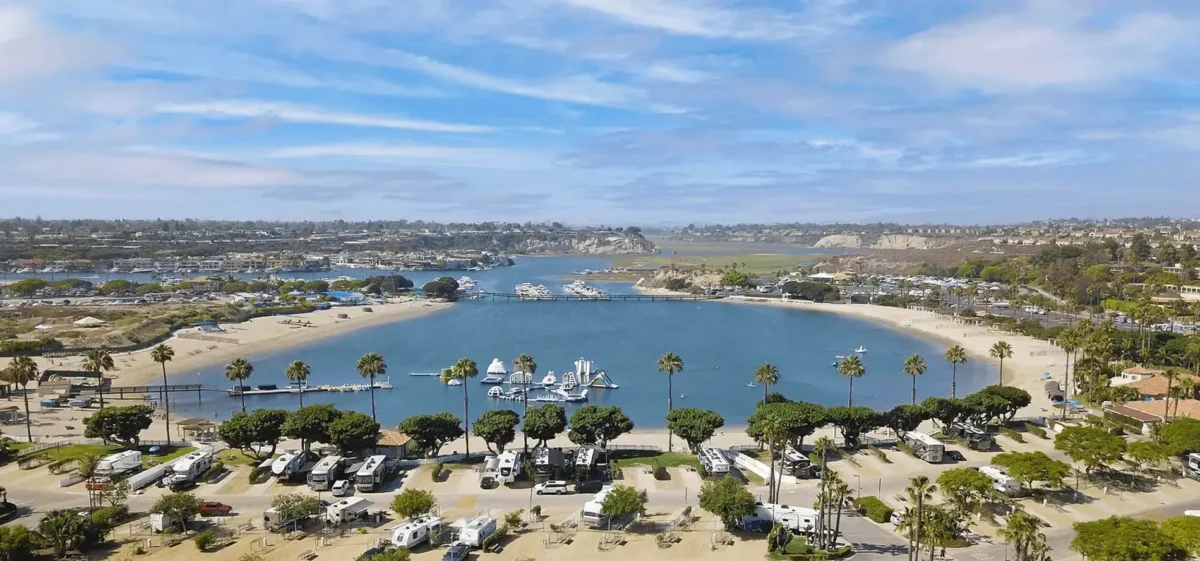
Newport Dunes is the resort-style option on this list. Set on 110 acres along the Back Bay in the heart of Newport Beach, this is one of the few places in Southern California where you can actually camp on the sand in a tent, right on a mile-long lagoon beachfront. With 372 RV and tent camping sites plus 27 cottages, it has a lot going on: inflatable water park in summer, paddleboard and kayak rentals, a beach bar and grill, pools, bike trails around the bay, and easy access to Balboa Island just across PCH.
It’s pricier than a state park and has more of a resort-community vibe than a wilderness feel, but if you want waterfront camping in the middle of one of California’s most beautiful coastal towns, it delivers.
- Best for: Families, resort-style campers, those who want waterfront tent sites
- Cost: ~$75–$550/night depending on site and season
- Book: NewportDunes.com
Catalina Island — Various Campgrounds (22 miles off the SoCal Coast)
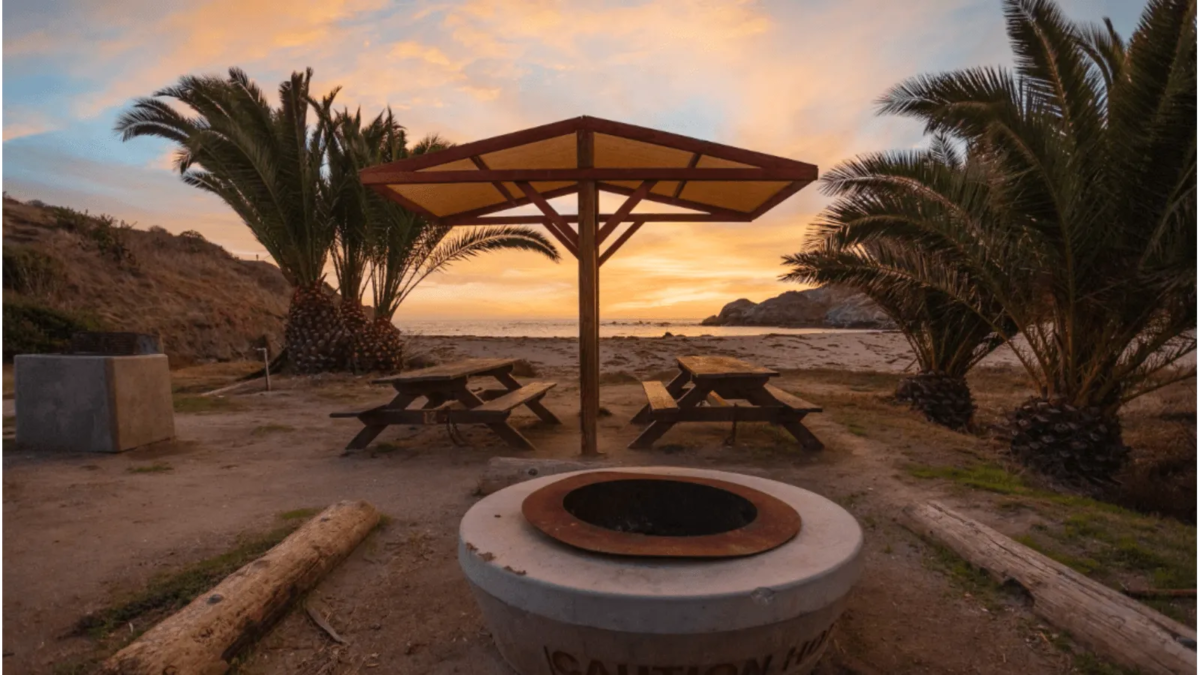
Catalina deserves its own category. Sitting 22 miles off the Southern California coast, it’s the one spot on this list that requires a ferry to reach. The island has several campgrounds ranging from beginner-friendly to genuinely wild, and the primitive options in particular are unlike anything else in California. Parsons Landing is the one to know if you want remote beach camping done right. Located seven miles west of Two Harbors along the island’s northern shore, its eight primitive beachfront sites are accessible only by a moderately difficult 7-mile hike from Two Harbors or a 2.5-mile kayak paddle. There’s no running water or showers — your fee includes one bundle of firewood and 2.5 gallons of water, and everything else you pack in, you pack out.
Jeanine Romo, travel content creator at Le Wild Explorer, has camped there and describes it vividly: “Waking up at Parsons Landing is about as peaceful as it gets, since you’ll likely be one of the only people on the beach in the early morning.” Her practical tip: “Reserve a water locker with Two Harbors Visitor Services and it’ll be waiting at the campground, stocked with a 2-gallon jug of water, firewood, and a fire starter.”
Little Harbor Campground, on Catalina’s remote backside, offers 16 beachfront sites right on a sandy beach and is rated one of the best campgrounds in the West by Sunset Magazine. You hike in from either Two Harbors or Avalon; no vehicles allowed. For the truly adventurous, there are also nine boat-in only primitive campgrounds along the island’s leeward shore between Avalon and Two Harbors, accessible only by kayak or private boat. No water, no facilities, no roads — just you, a cove, and the Pacific. A ranger patrols daily. Kayak rentals are available through Descanso Beach Ocean Sports in Avalon.
- Best for: Adventure campers, kayakers, anyone who wants to feel truly away from it all
- Getting there: Catalina Express ferry from Long Beach, San Pedro, or Dana Point; then hike, kayak, or shuttle to your campground
- Book: ReserveCalifornia.com (Parsons Landing, Little Harbor); visitcatalinaisland.com (boat-in sites)
- Note: Reservations for boat-in sites open January 5th each year at 8am
Tips for Beach Camping in California
- Book early. Most state park campgrounds open reservations six months in advance on a rolling basis. For popular summer dates, set a calendar reminder and book the moment your window opens.
- Try shoulder season. Late September through early November is a sweet spot when summer crowds have gone, weather is still warm, and sites are far easier to snag.
- Know the rules. Many beach campgrounds sit on protected land with specific regulations around fires, pets, and wildlife. Always check before you go.
- Pack layers. Even in summer, California coastal evenings can be surprisingly cold. A fleece and a windbreaker go a long way.
- Leave No Trace. Pack out everything you pack in, respect wildlife corridors, and use designated fire rings only.