
I’ve solo-traveled Europe for years and years, and if there’s one thing I’ve learned about myself in that time, it’s that I will go to almost any length to chase the sunshine.
While everyone else is digging out their winter coats, I’m refusing to accept that the season has to mean grey skies and cold toes.
The good news, after a lot of trial and error and more flights than I care to admit, is that you don’t have to leave the continent to find proper warmth in the depths of winter. You just have to know where to point yourself.
These are the 11 warmest beaches in Europe in winter, the ones where you can still feel the sun on your skin between December and February. I’ve ordered them roughly warmest first, so the toastiest escapes are right at the top.
Playa de las Teresitas, Tenerife (Canary Islands)
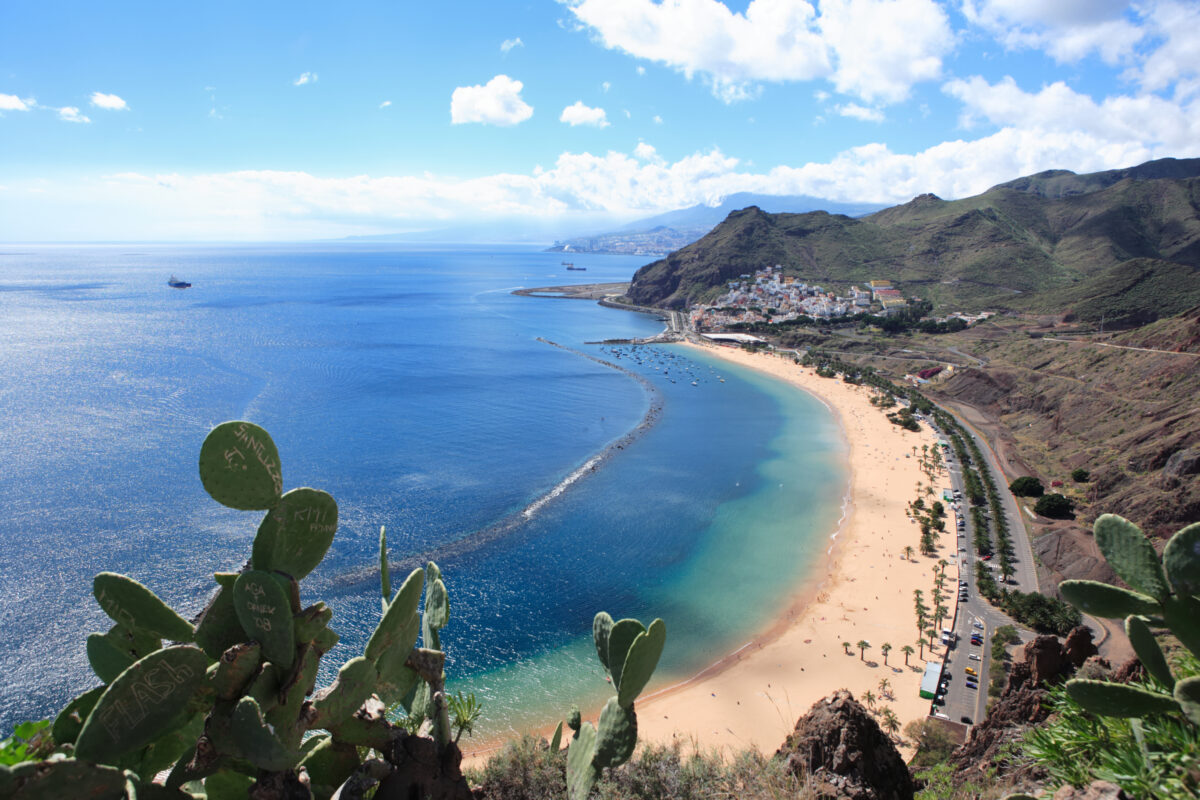
This is about as warm as European winter gets, and it’s where I send anyone desperate for a January thaw.
The sand here is golden and soft, shipped over from the Sahara decades ago, and the bay is sheltered by a long breakwater so the water stays calm and swimmable even in the cooler months.
Most visitors cluster near the entrance, but if you walk to the far end you’ll find a quieter stretch with far more space. Better still, slip into the fishing village of San Andrés tucked behind the beach for the freshest grilled fish you’ll eat on the island.
Maspalomas, Gran Canaria (Canary Islands)
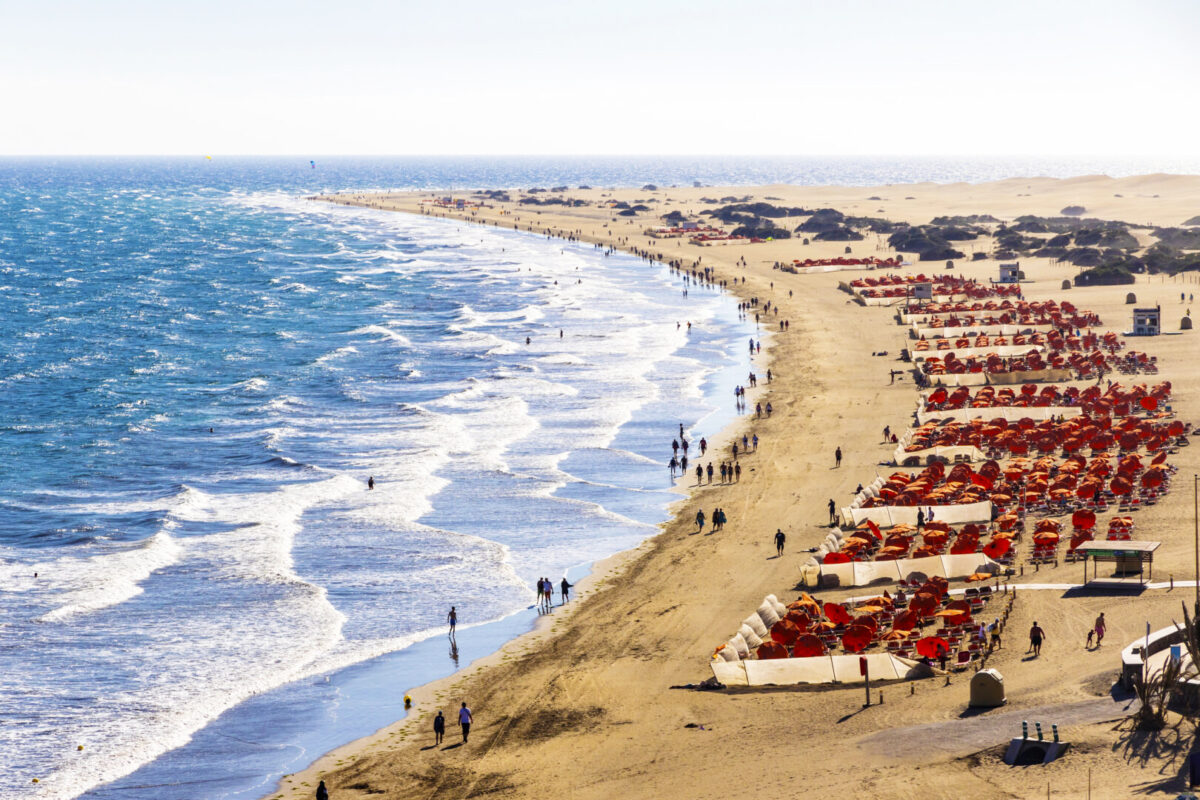
Maspalomas feels less like a beach and more like a slice of the desert that ran into the sea, all rolling golden dunes stretching as far as you can see.
In winter, the temperatures hover beautifully in the low twenties, and the sheer scale of the place means it never feels crowded once you’re past the busy entrance.
My favorite trick here is to walk the dunes at first light, before the day-trippers arrive, when the sand is cool underfoot and the whole landscape glows. Aim for the lighthouse end and you’ll often have great swathes of it entirely to yourself.
Playa de Sotavento, Fuerteventura (Canary Islands)
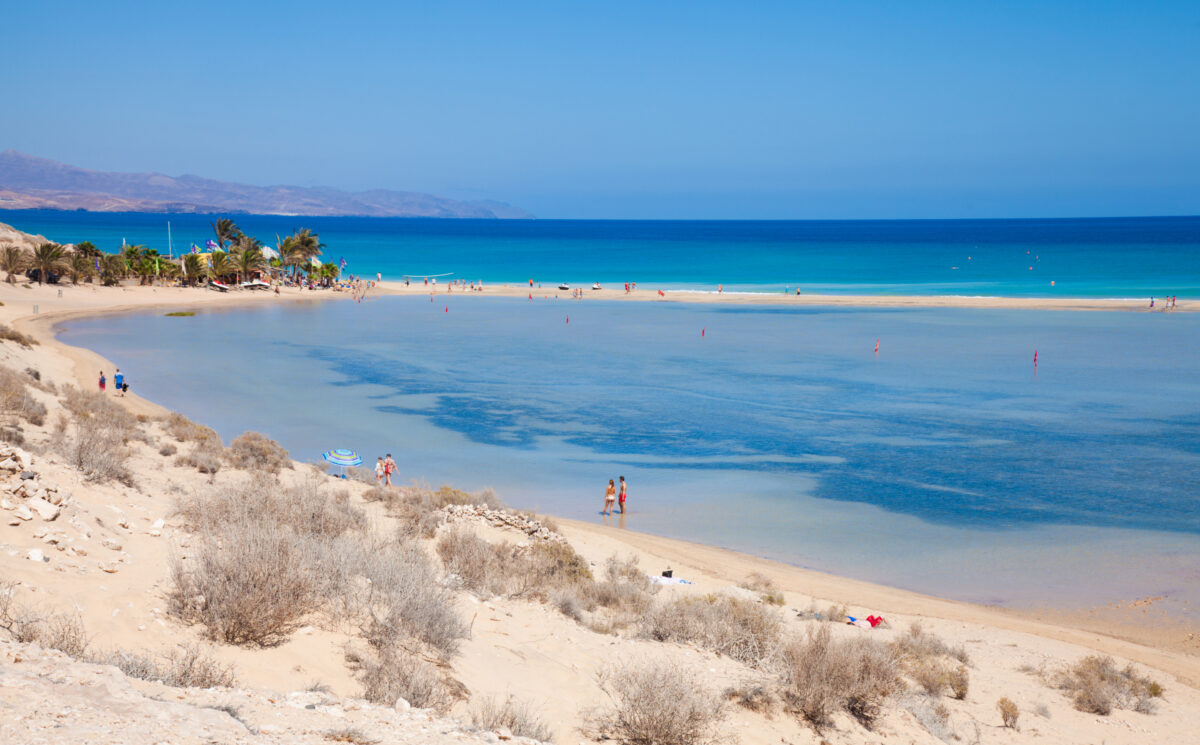
Sotavento is vast, wild, and gloriously empty, a long ribbon of pale sand on Fuerteventura’s quieter southern coast. It’s a windsurfing legend, but you don’t need a board to love it.
The real magic happens with the tide: at low water, a shallow turquoise lagoon forms between the beach and a sandbar, warm and calm and perfect for paddling about. Check the tide times before you go and plan your visit around low tide, because catching that lagoon at its fullest is the difference between a nice beach day and a truly unforgettable one.
Papagayo, Lanzarote (Canary Islands)
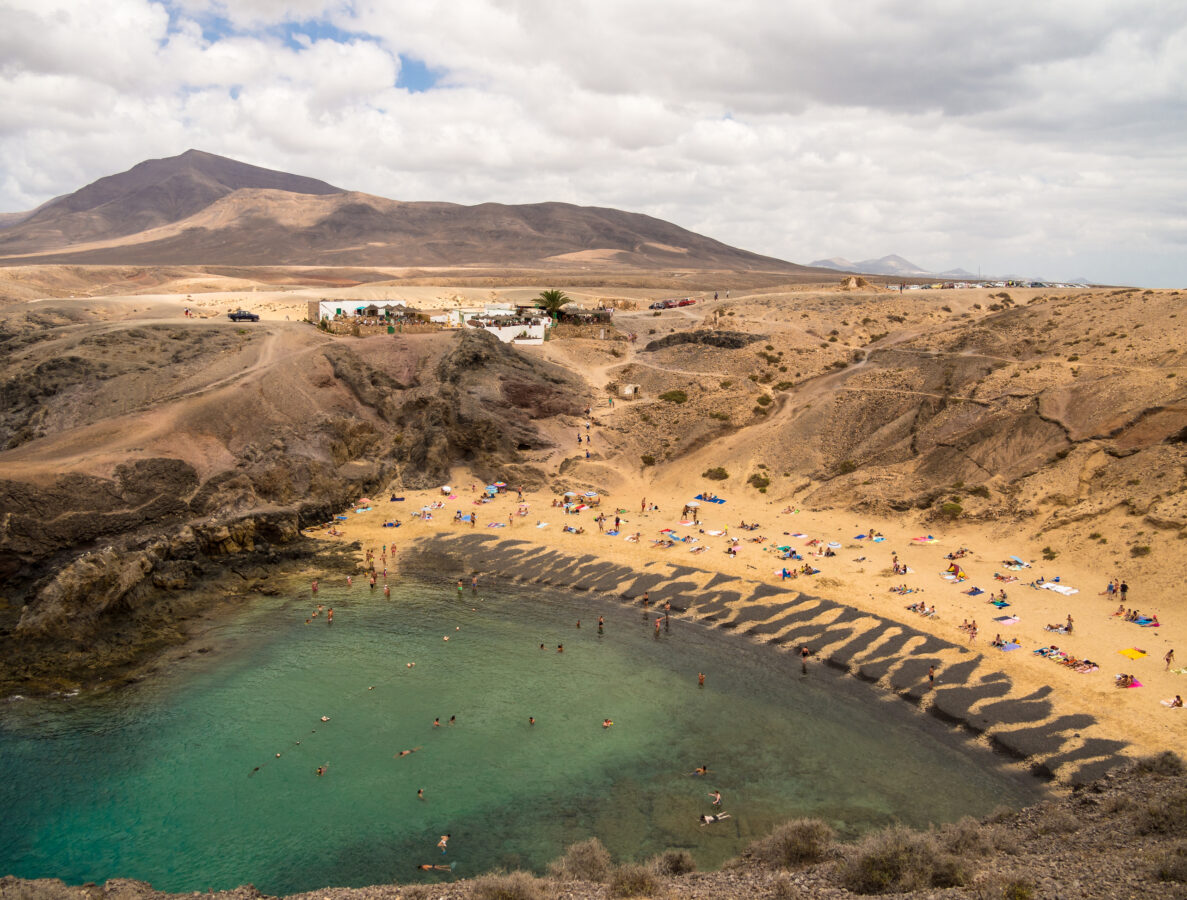
Papagayo isn’t one beach but a string of golden coves tucked into the rugged southern tip of Lanzarote, each one sheltered and clear and warm right through winter.
There’s a small charge for the dirt road in, which is part of why it stays so unspoiled. The mistake most people make is stopping at the first cove they reach, which is also the busiest.
Keep walking over the headlands and you’ll find smaller, emptier coves with the same impossible blue water, and a real chance of having a patch of Lanzarote sand all to yourself.
Porto Santo (Madeira, Portugal)
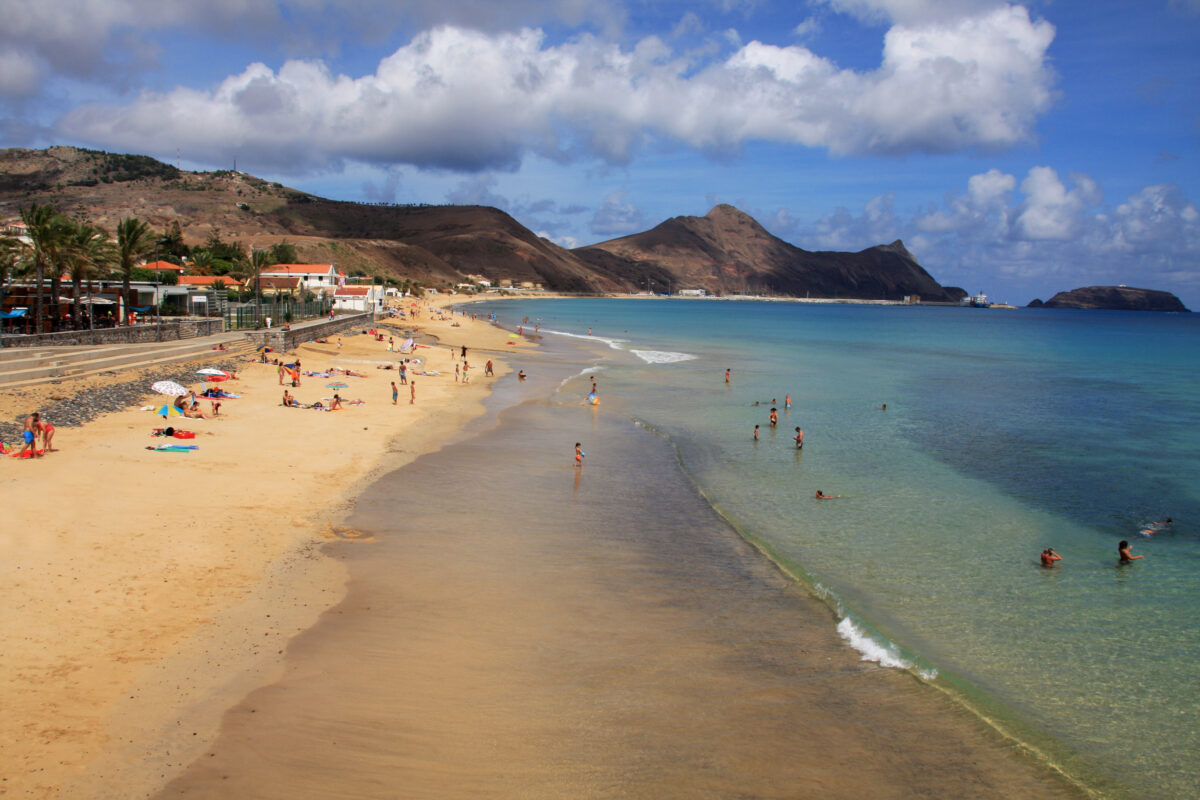
While Madeira itself is short on sandy beaches, its little sister island Porto Santo has nine uninterrupted kilometers of soft golden sand and barely anyone on it.
A short ferry or flight from Madeira, it stays mild and bright through winter and feels like a proper secret. The sand here has long been believed to have healing, mineral-rich properties, and you’ll spot locals doing exactly what their grandparents did: burying their aching legs in the warm sand as a kind of natural therapy.
Join them! It sounds odd, but there are far worse ways to spend a warm winter afternoon.
Fig Tree Bay, Protaras, Cyprus
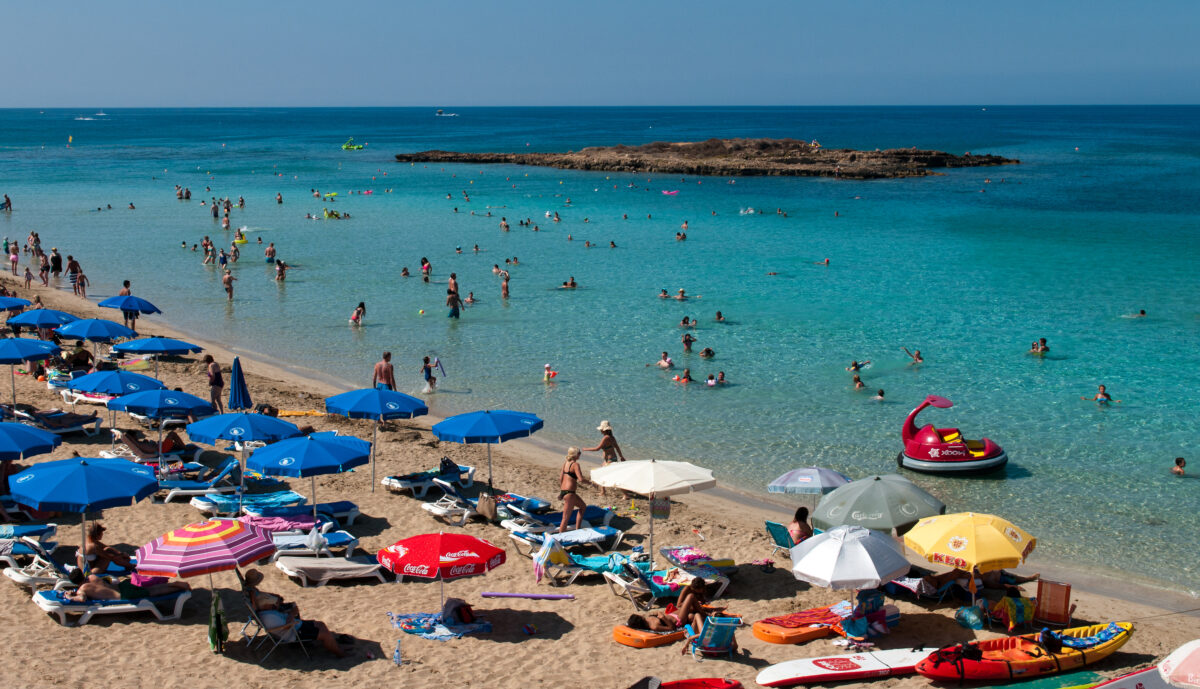
Cyprus is one of the warmest corners of the Mediterranean, and Fig Tree Bay is its postcard, a curve of fine sand and water so clear it barely looks real.
Winter days here are mild and bright, and with the summer crowds long gone you get the place at its calmest and best.
Rather than staying put, take the coastal path that runs from the bay, which winds along the cliffs to neighboring Konnos Bay, a quieter, more sheltered cove that most beach-goers never bother to reach. The walk alone, with the sea glittering below, is worth the trip.
Ramla Bay, Gozo (Malta)
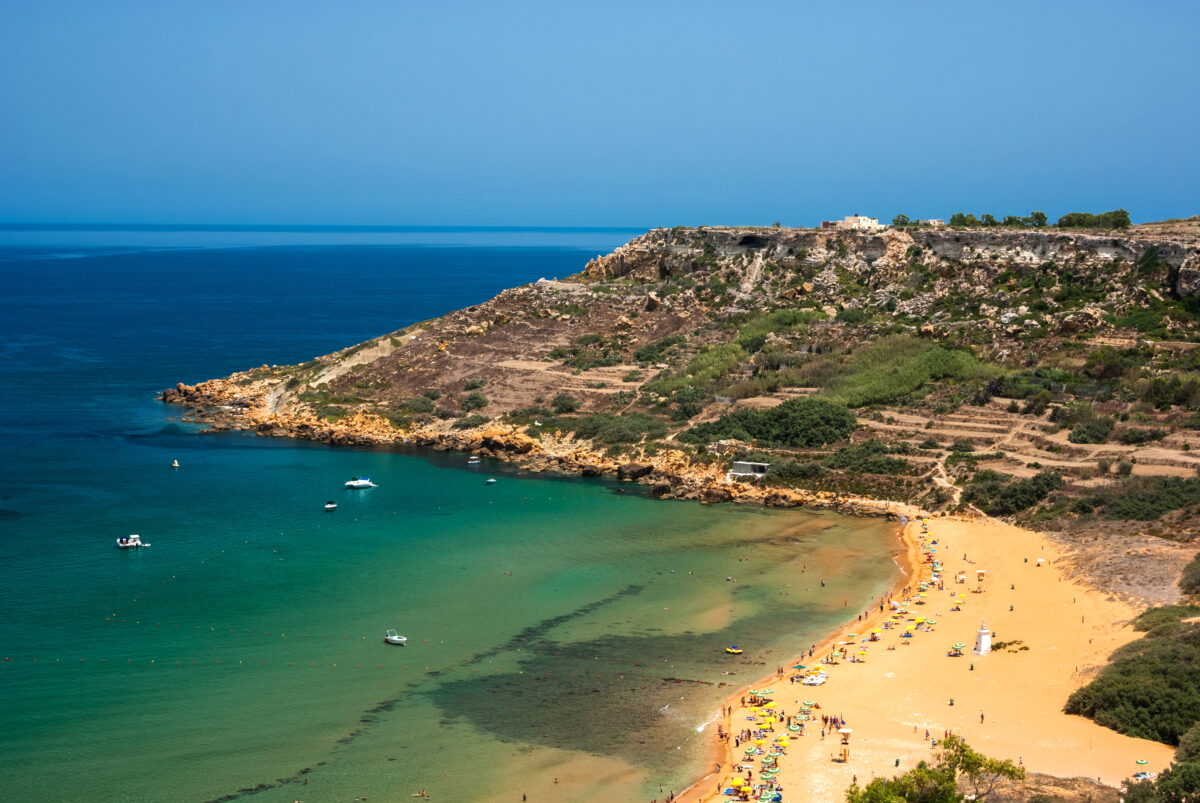
Malta’s winters are mild and sunny, and Ramla Bay on the sleepy island of Gozo is its standout stretch of sand, famous for an unusual red-gold color you won’t see elsewhere.
It’s wild and undeveloped, backed by green hills rather than hotels, which makes it feel wonderfully off the beaten track.
Climb the path up the hillside above the bay to find Calypso Cave, the spot mythology ties to Homer’s Odyssey, where Calypso is said to have kept Odysseus captive. The cave itself is modest, but the view back over that red sand and blue sea is the real reward.
San Vito Lo Capo, Sicily (Italy)
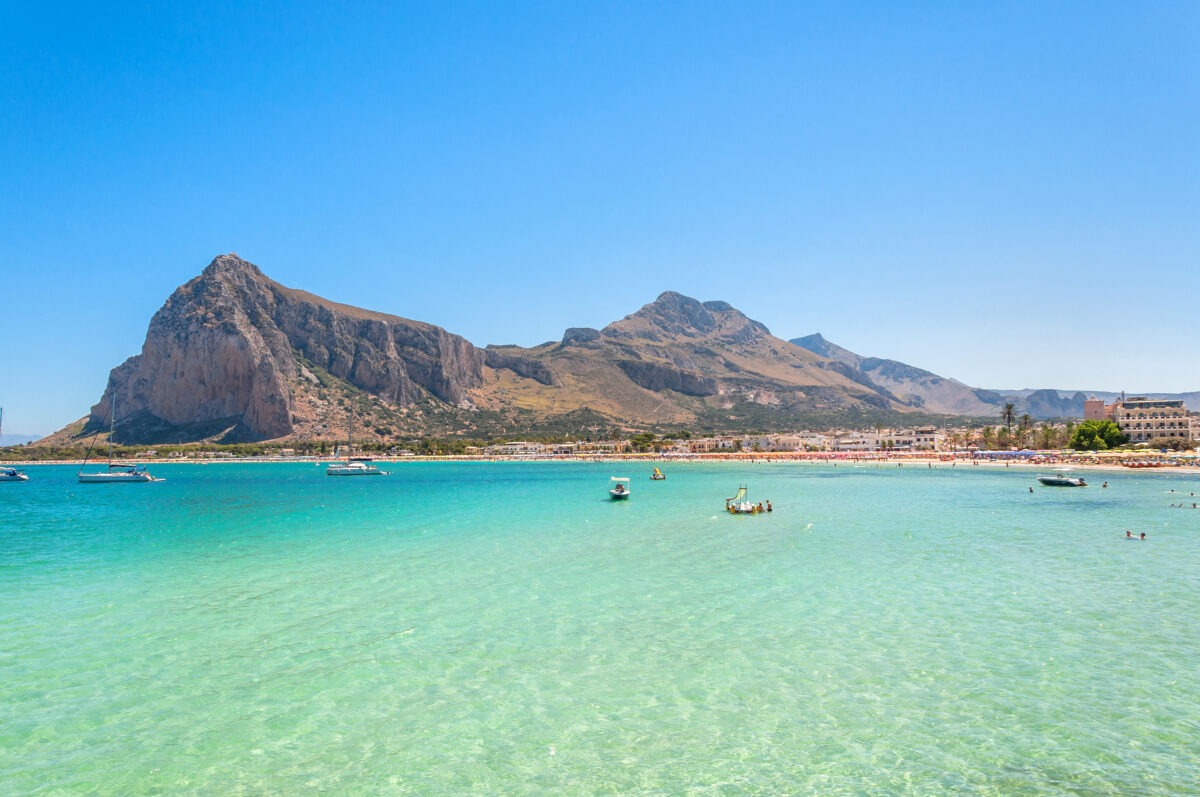
Tucked into Sicily’s north-western tip, San Vito Lo Capo is a dazzling crescent of white sand framed by a dramatic limestone mountain, and it holds onto its warmth far later than most of Italy.
Winter is the time to have it at its most peaceful, long before the famous couscous festival fills the town each autumn. From the beach, take the walk out towards the old lighthouse, or go a little further to the edge of the Zingaro nature reserve, a stretch of wild coastline with hidden pebble coves and not a sunlounger in sight. It’s Sicily at its most untouched.
Elafonissi, Crete (Greece)
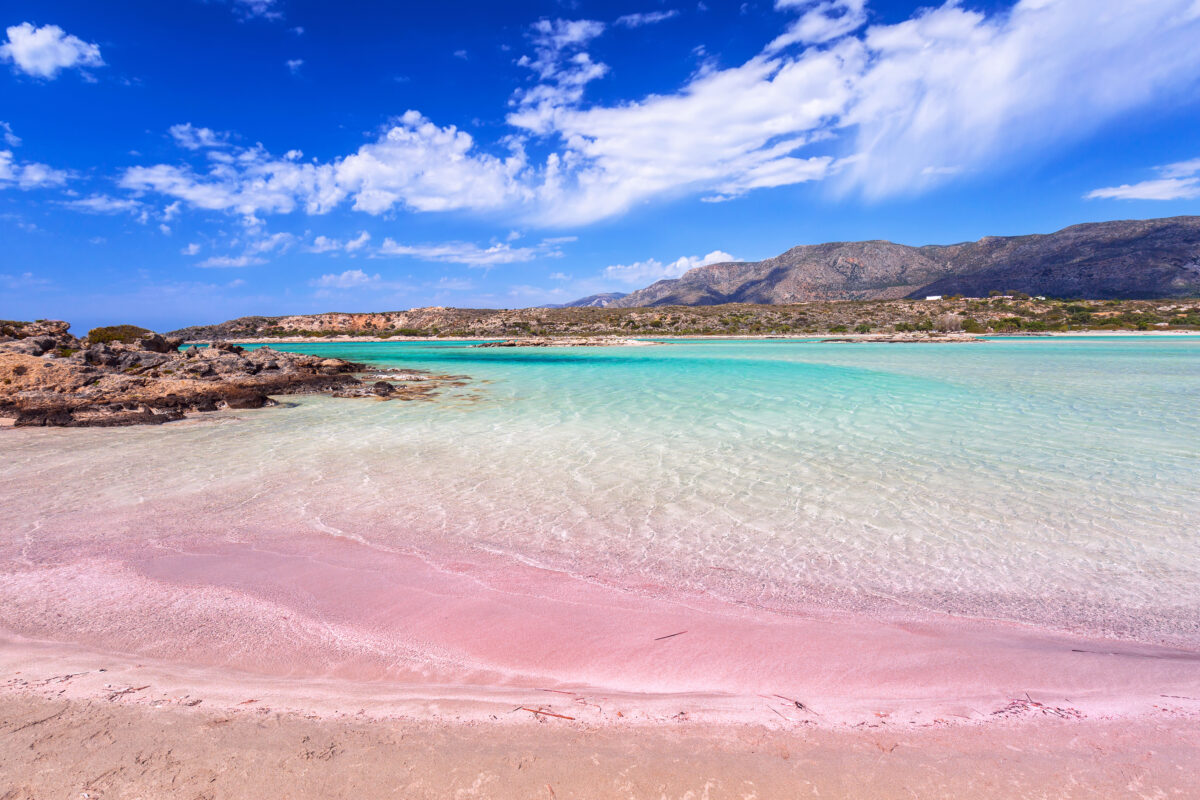
Elafonissi is the beach that pink-sand dreams are made of, a shallow, lagoon-like stretch on Crete’s south-western corner where the sand takes on a soft rosy hue from crushed shells. Crete stays mild through winter, and with the tour buses gone you can experience this famous spot in near solitude.
The thing most summer visitors miss in the crush is that you can wade across the shallow sandbar to the little islet on the far side, a low, wild patch of dunes and sea lilies. In winter, you’ll very likely have that whole islet to yourself.
Praia do Camilo, Algarve (Portugal)
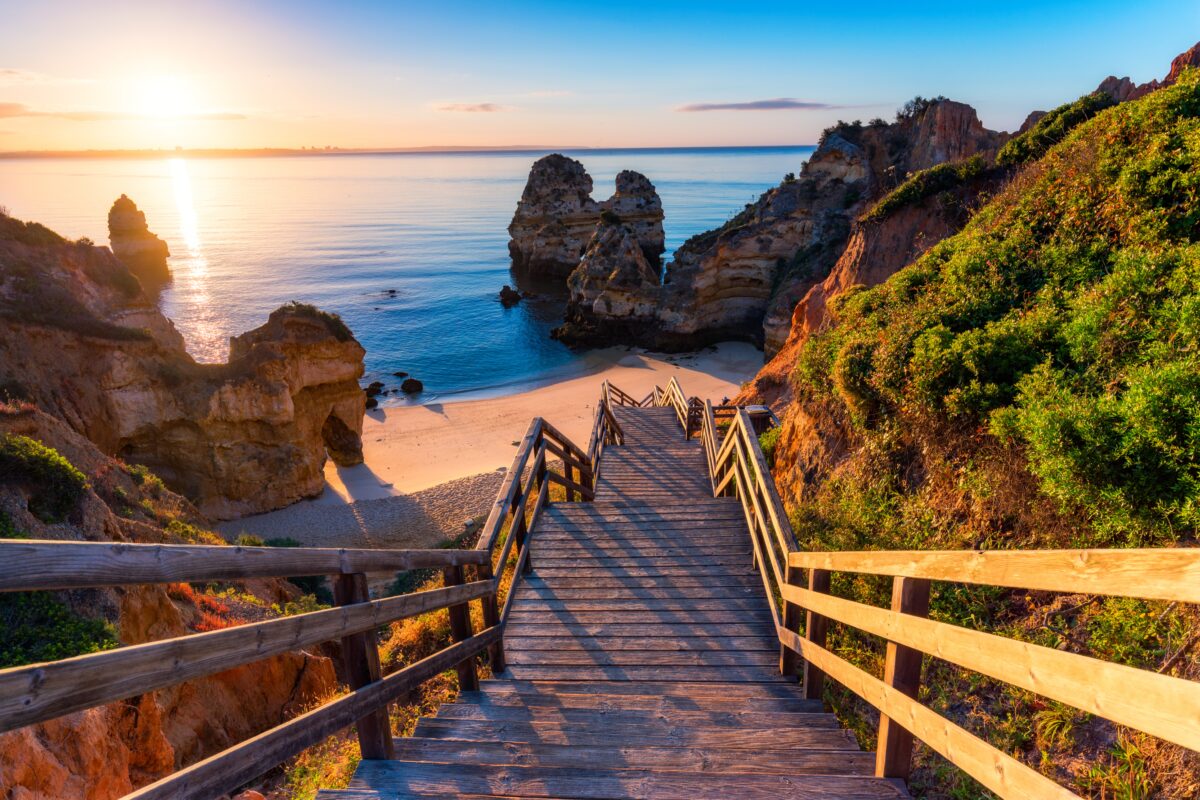
The Algarve enjoys some of the mildest winters in mainland Europe, and Praia do Camilo near Lagos is its most photogenic cove, reached by a long wooden staircase down the golden cliffs.
It’s compact and sheltered, which makes it lovely even when there’s a winter nip in the air. Here’s the bit people walking down those steps often miss: at the bottom, a short tunnel carved through the rock leads to a second, hidden cove next door, usually far quieter than the first. Walk through it and you’ll feel like you’ve found a beach all of your own.
Bolonia, Costa de la Luz (Spain)
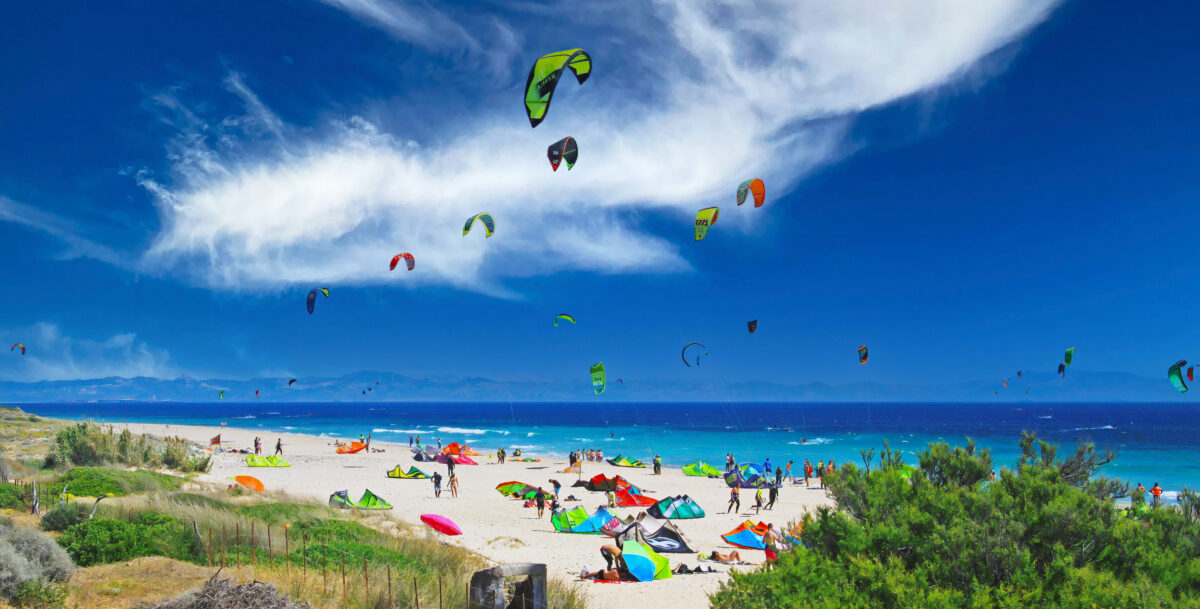
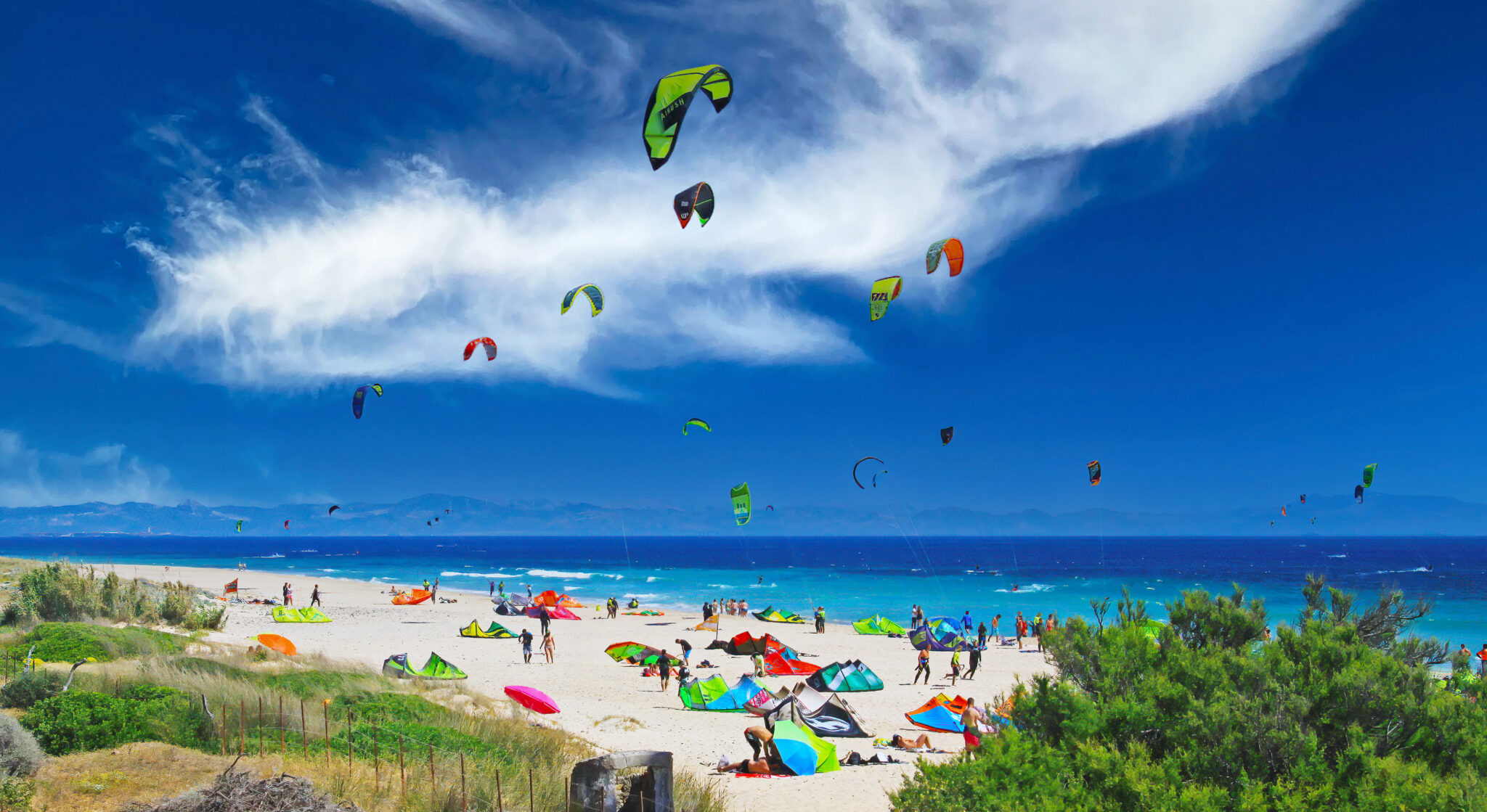
Down on Spain’s Atlantic-facing Costa de la Luz, Bolonia is a wide, wild beach crowned by an enormous shifting sand dune, and it stays mild and bright when much of Europe is shivering.
What sets it apart from any other beach on this list sits right behind the sand: Baelo Claudia, the remarkably complete ruins of a Roman town, with its forum, temples, and theater looking straight out to sea.
You can wander the ancient streets and then walk a few steps onto the beach itself. Climb the great dune at sunset to finish, and you’ll wonder why it isn’t far more famous.
A Quick Reality Check Before You Book
Let me set your expectations, because “warm” in a European winter doesn’t mean July. On every beach on this list you’ll get sunshine and comfortable daytime temperatures, often warm enough for shorts and a long, lazy lunch outdoors.
What shifts is the sea. In the Canaries and on Porto Santo, the water stays mild enough that plenty of people still swim. Around the Mediterranean—Cyprus, Malta, Sicily, Crete—the air can be lovely while the sea sits on the bracing side, so go expecting beautiful beach days and bright walks rather than long swims (unless you’re hardy).
A few other things worth knowing. Winter days are shorter, so the warmth fades quickly once the sun dips, and you’ll want a layer for the evenings.
Some beach bars and seasonal restaurants close out of season, particularly in the quieter spots, so check ahead. And the trade-off for all that space and solitude is that a handful of places feel sleepy. To me, an empty warm beach in January is the whole point.