
The Great Ocean Road is one of the most famous routes in Australia. Spanning 151 miles, it officially starts in the surf town of Torquay (about 64 miles southwest of Melbourne) and ends at Allansford in the Western District of Victoria. Flying into Melbourne will put you just over an hour’s drive from the beginning of this epic road trip.
Look forward to views of dramatic coastal cliffs, ancient limestone stacks, unique geological formations, lush rainforests, and waterfalls on this world-class scenic drive. Of course, for beach lovers, you’ll want to stop at some of the best beaches from Bells to Port Campbell and beyond.
Bells Beach, Torquay
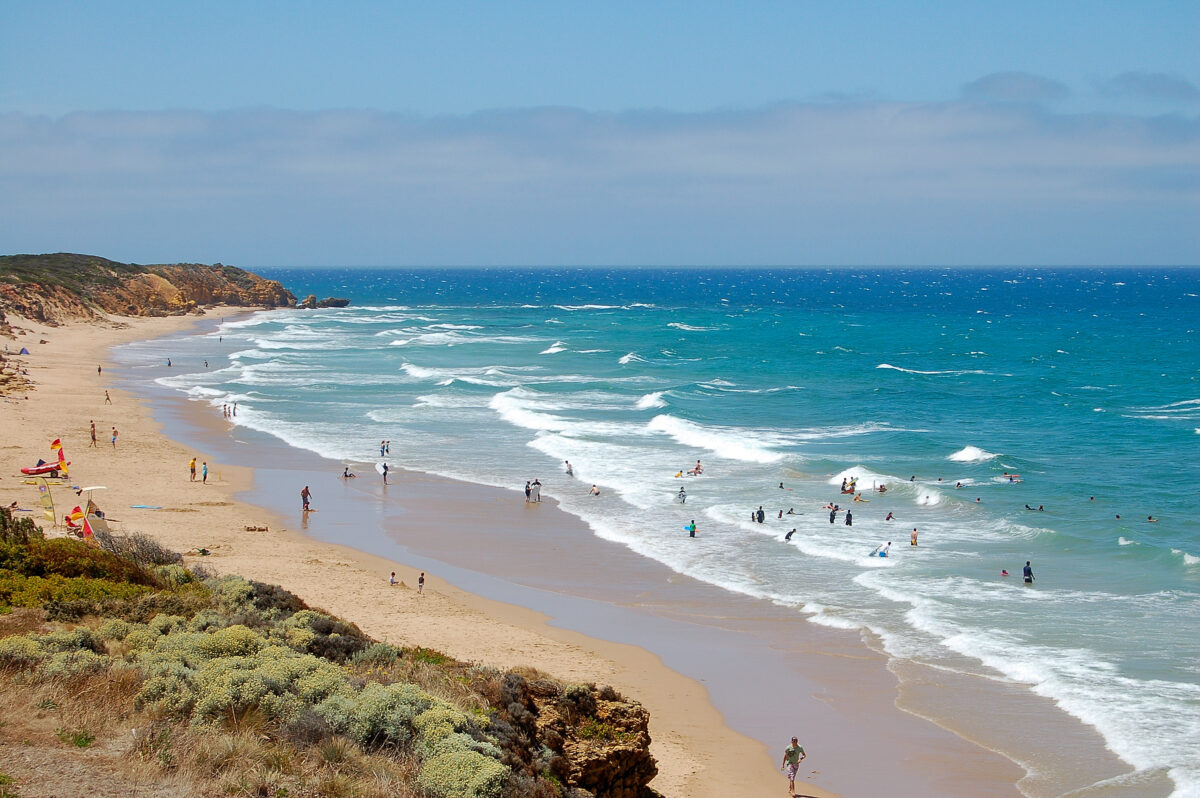
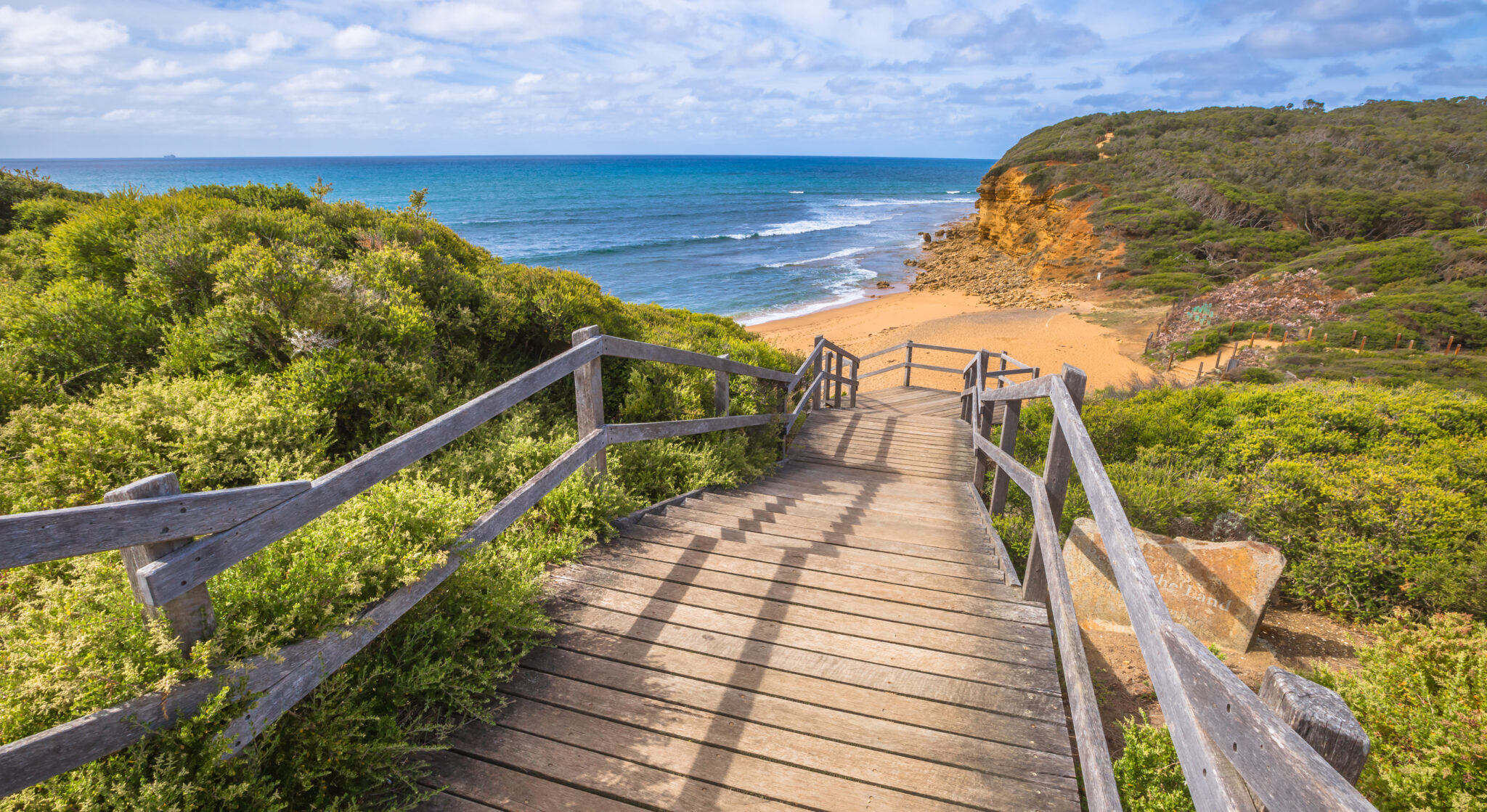
Bells Beach is located near the start of the Great Ocean Road, just minutes from downtown Torquay. A world-famous surf spot renowned for its big swells and towering cliffs, this is where the famous Rip Curl Pro Surfing competition takes place. Legends have been made by these waves, including surf pioneer and co-founder of the Australian National Surfing Museum, Peter Troy, and Doug “Claw” Warbrick, the co-founder of Rip Curl.
This isn’t a place to swim or for beginners to learn to surf, but the unique amphitheater-style shape of the beach means you’ll have outstanding views of the waves for watching the experts ride. Plus, you can keep an eye out for dolphins, fur seals, and whales, including humpbacks and southern right whales that pass by during their winter migration. Land animals like echidnas and kangaroos that inhabit nearby coastal scrub can be spotted too.
Point Roadknight Beach, Anglesea
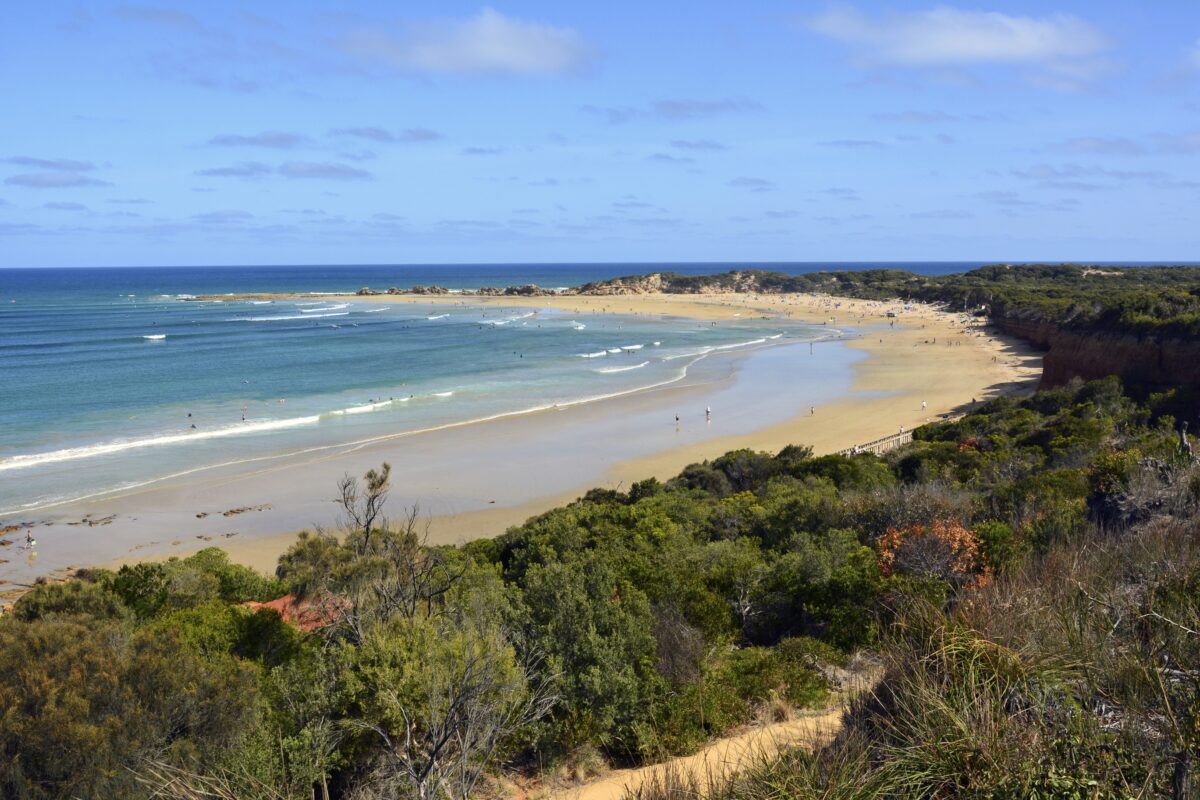
The much smaller town of Anglesea is only 10 minutes further down the road. It’s home to beautiful beaches like Point Roadknight. The long sandy beach is nestled in a cove with calm water for swimming, as it’s protected from strong winds. It’s great for those with young kids who want to splash around, particularly at the right side of the boat ramp. Paddleboarding and snorkeling among colorful reef fish are popular too. When light winds pick up across the bay, windsurfing and sailing can be enjoyed.
To stretch your legs, hike the Surf Coast Walk that connects Point Roadknight and Anglesea. No matter where you’re at in the Anglesea area, kangaroos are commonly spotted on the beach and even at the Anglesea Golf Club, so keep an eye out.
Sunnymead Beach, Aireys Inlet
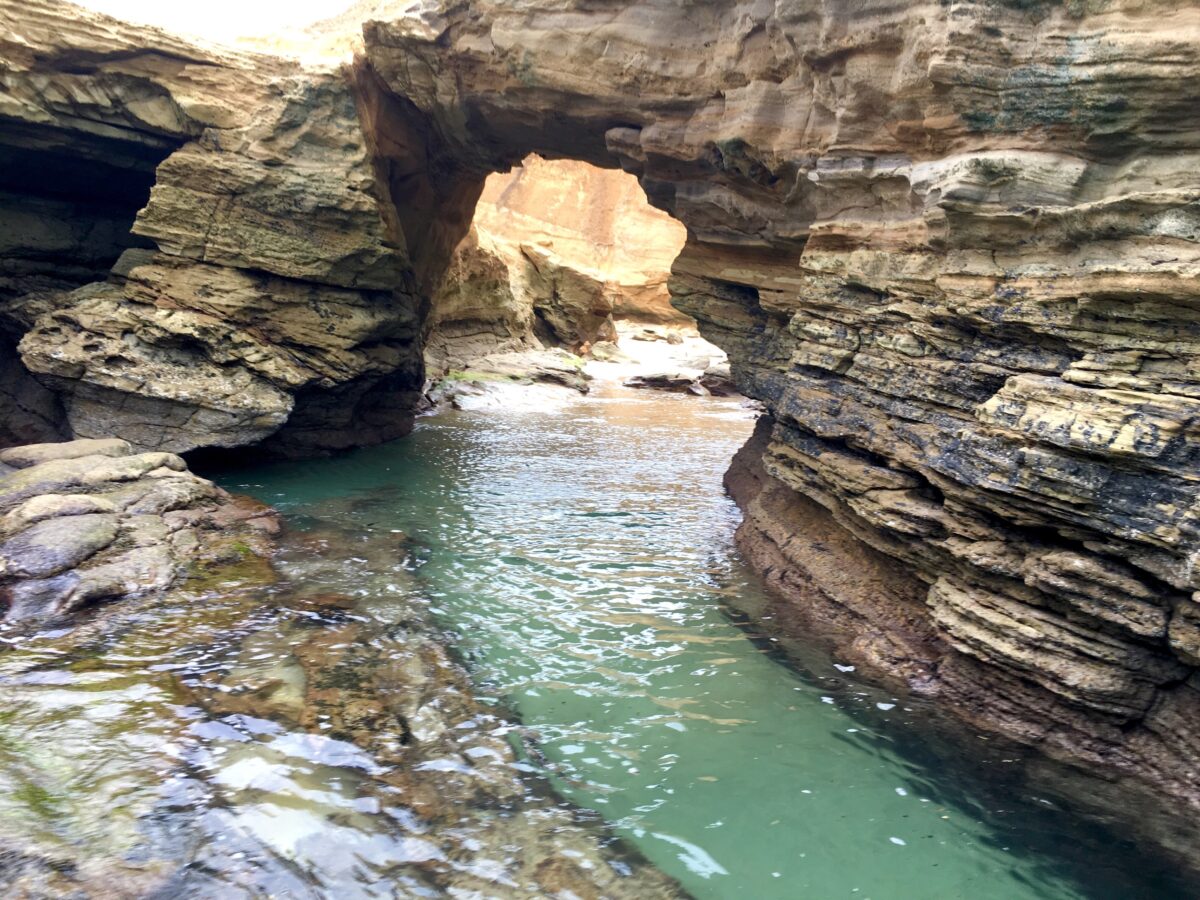
Nestled in Aireys Inlet, Sunnymead Beach is a tranquil nearly half-mile of golden sand framed by rugged cliffs, looking as if it should be in the Mediterranean. The Arch Rock and other unique geological formations add to the spectacular scenery while providing outstanding backdrops for photography.
Relax and enjoy the secluded atmosphere, swim or snorkel in the crystal-clear blue water, or bodyboard gentle waves. Calm days are also ideal for snorkeling with a reef offshore that’s teeming with sea life.
Fairhaven Beach, Fairhaven
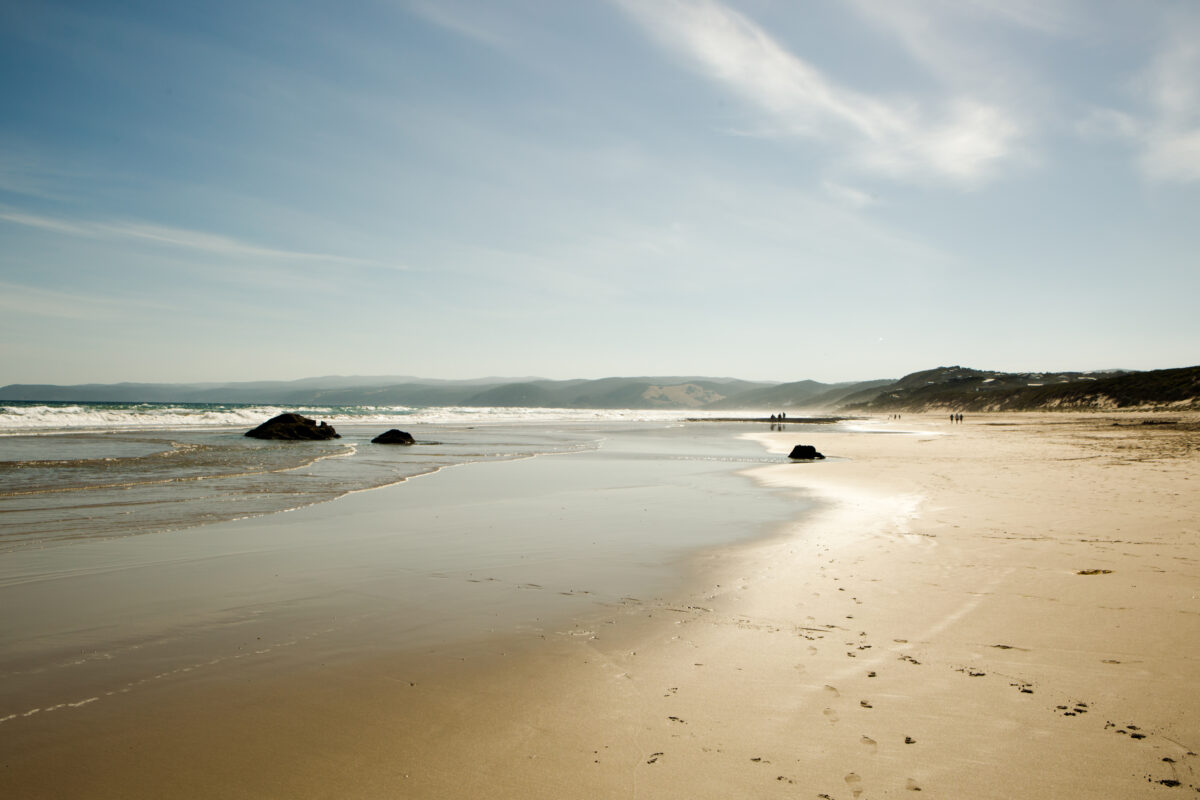
The small village of Fairhaven is the longest uninterrupted stretch of beach along the Great Ocean Road, spanning more than 3.7 miles. It’s a popular spot among surfers and families. Visitors can check out the Rockatansky home from the original “Mad Max” movie, the famous Pole House built high on a single pole overlooking the ocean, and the nearby Split Point Lighthouse.
Right at the beach, enjoy stunning coastal views and take advantage of excellent surf breaks or swimming areas that are patrolled by lifeguards in the summer. The Fairhaven Surf Life Saving Club also has an ocean-view lounge open during the warmer months for dining and drinks.
Lorne Beach, Lorne
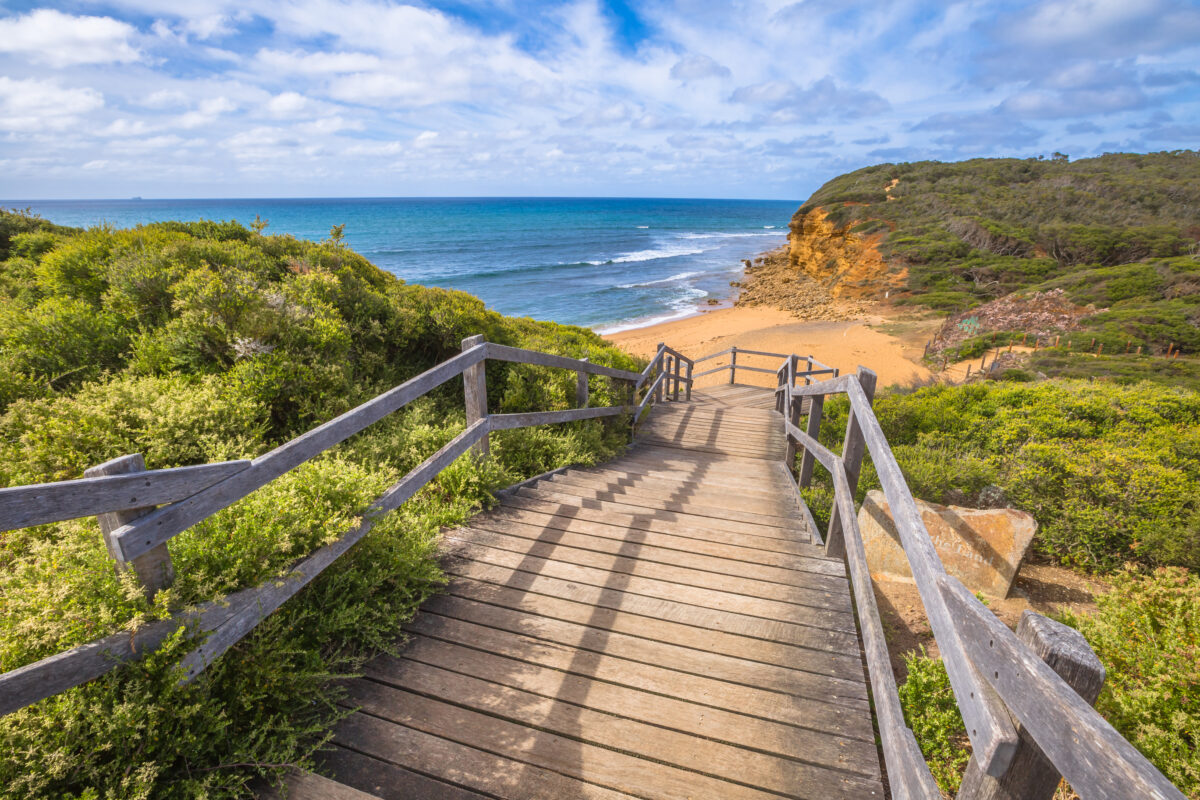
Located in the town of Lorne, a must-stop on the Great Ocean Road with art galleries, shops, and delicious food, Lorne Beach is one of the most spectacular along the coast. A 1.25-mile span of soft, golden sand and turquoise water with scenic mountain views, it offers safe swimming in a section marked by flags and areas with great surf.
Families won’t want to miss it, as it’s perfect for kids who need to burn off energy. In addition to building sandcastles and the usual beach fun, they can play at the nautical-themed playground only steps away. It includes a slide, fireman’s ladders and poles, and even a ship. Grassy picnic spots, BBQ areas, and cafes are nearby too.
Kennett River Beach, Kennett River
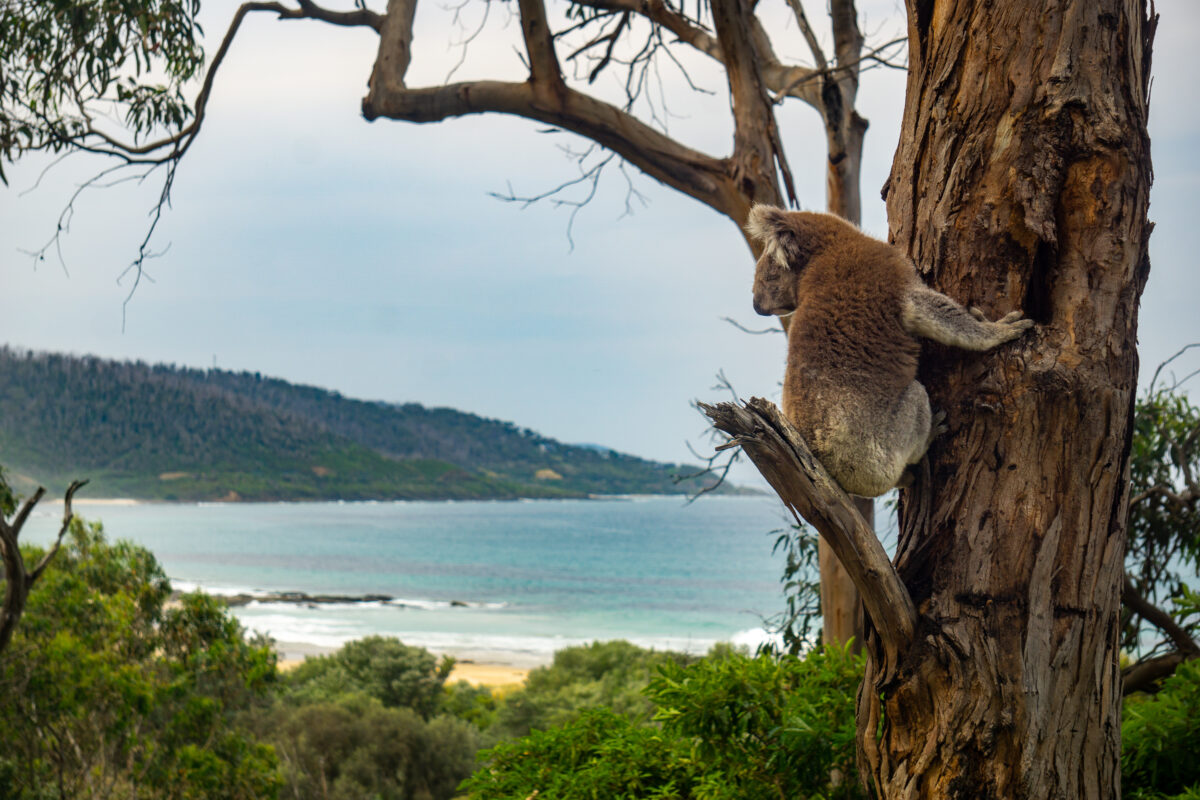
Located where the ocean meets the Otway forest, Kennett River Beach is the main stretch of sand in the coastal hamlet of the same name, known for its many wild koalas and colorful birds. If you’re here in the winter, it’s a good spot to see migrating whales. On a summer’s day, relax or swim in the calm, shallow water near the mouth of the river.
Surfers can take advantage of the main break, best on lower tides. While it’s suitable for a variety of skill levels, the larger swells are best for the more experienced. Fishing can be enjoyed right from the sandy shore or along the banks of the river. To spot wild koalas, take a stroll along Grey River Road where they’re often hanging around in the eucalyptus trees.
Blanket Bay Beach, Great Otway National Park
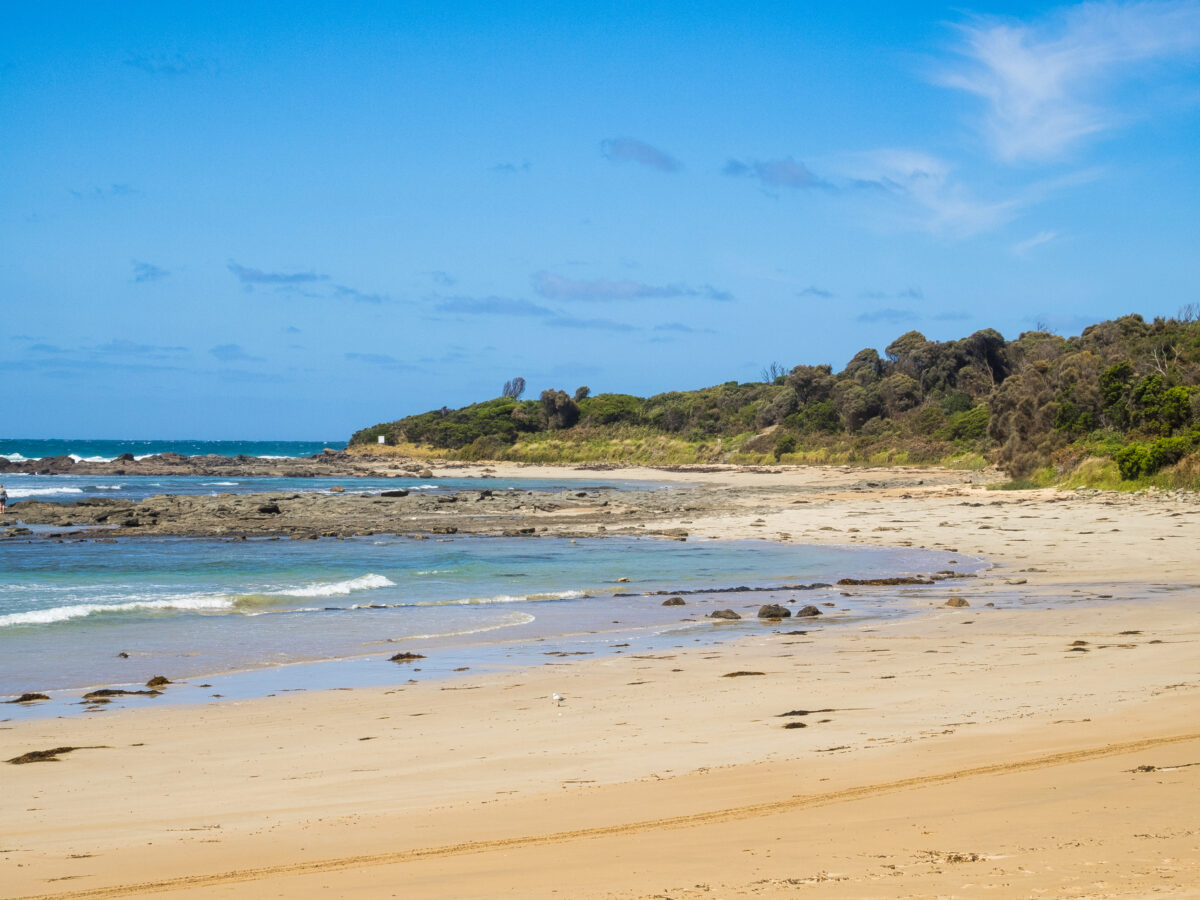
Set within Great Otway National Park, Blanket Bay offers the opportunity for a peaceful stop or an adventure, complete with lush rainforest, views of the Southern Alps, coastal cliffs, and golden sand beaches. Blanket Bay Beach is the main beach in the park’s Cape Otway section, offering something for everyone, from building sandcastles to tidepooling and swimming. If you’re up for a hike that will get you out of the car for a while, take the 6.5-mile trek to Cape Otway Lighthouse, which includes coastal tracks, rock platforms, forest climbs, and sandy stretches.
The area around Blanket Bay is inhabited by abundant wildlife on land and at sea. That includes seals, dolphins, and whales in the Bass Strait. In the surrounding hills and forests, koalas, kangaroos, and numerous bird species are often spotted.
Johanna Beach, Johanna
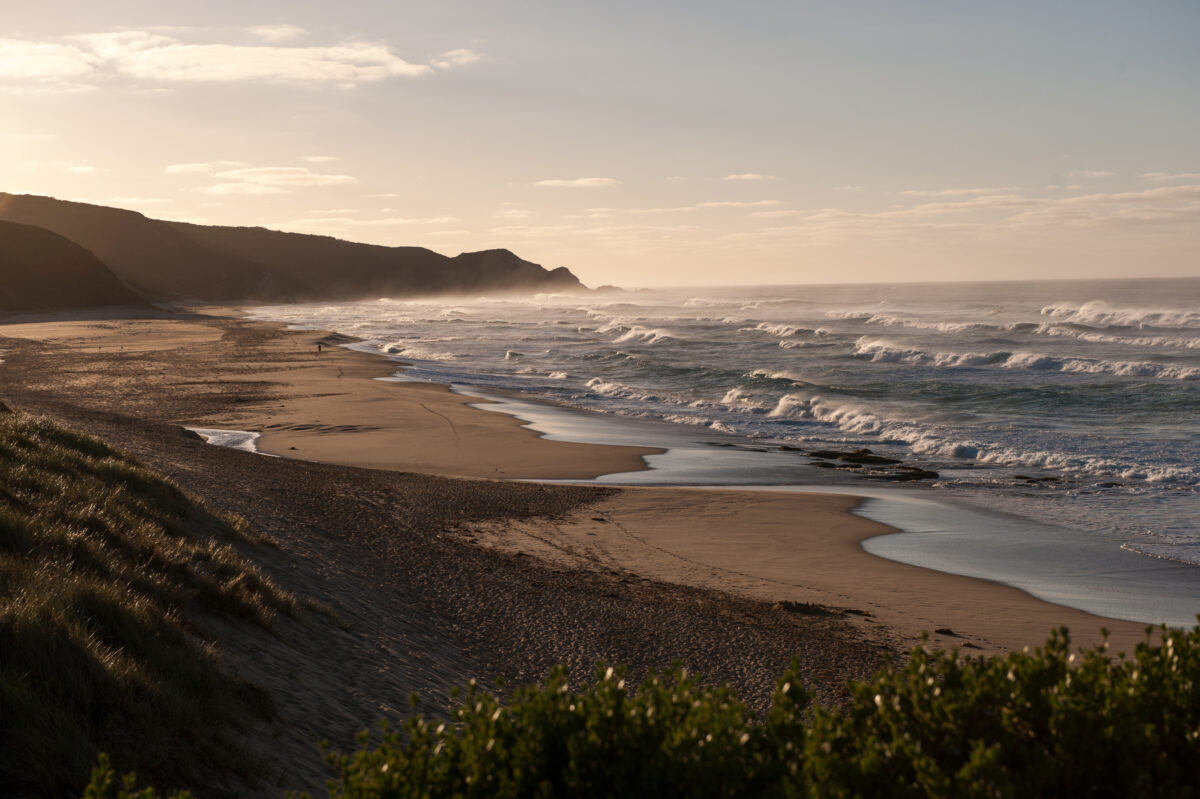
Wild and remote, Johanna Beach lies west of Cape Otway. It’s a renowned surfing beach with powerful breaks named after the Johanna, a Victorian-built wooden schooner that wrecked in 1843. While the water is too rough for safe swimming, visitors can walk the dramatic coastline, capture photos, watch experienced surfers ride the waves, spot humpback or southern right whales during their migration (July through September), or fish for salmon, mullet and gummy shark.
Twelve Apostles and Princetown Beach, Port Campbell National Park
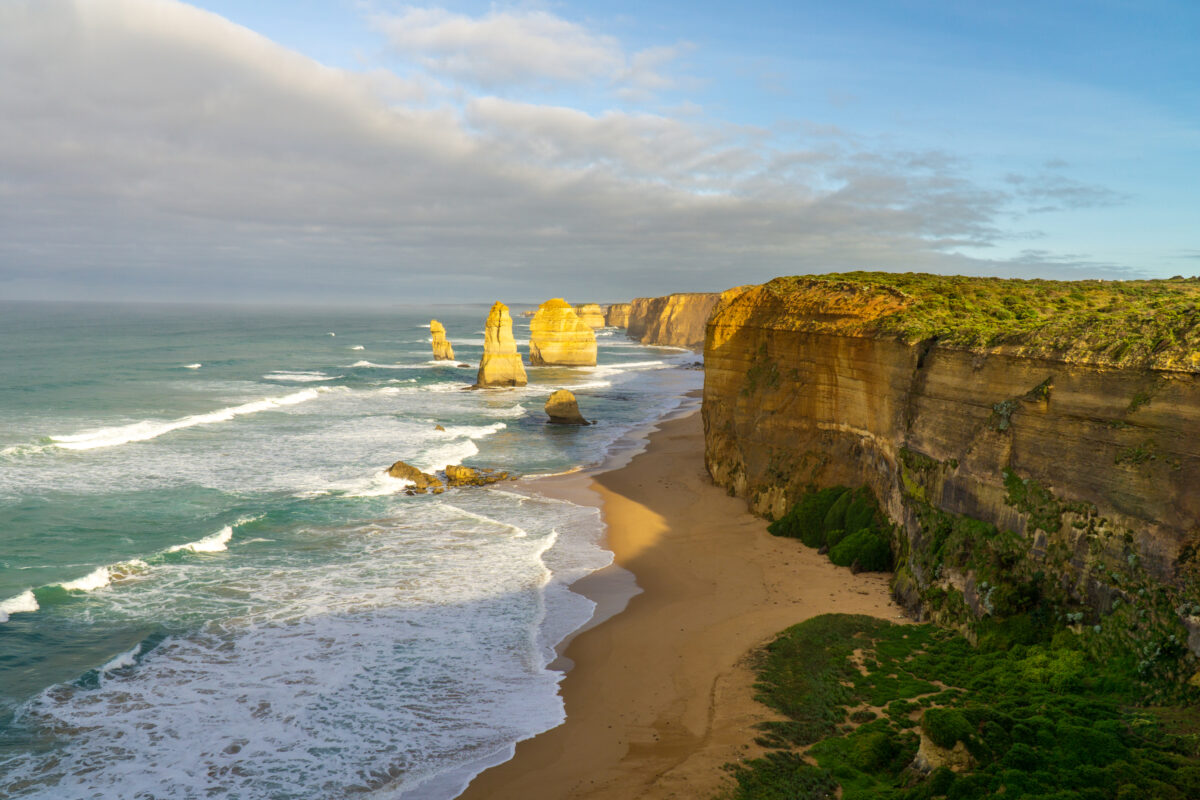
The Twelve Apostles in Port Campbell National Park is one of the most iconic landmarks along the Great Ocean Road. There are just eight of the original dozen left today, but the view is still out of this world. If you want a perspective of the towering limestone stacks from the water, boat tours are available. Or, join a helicopter tour for a bird’s-eye view.
Those up for a trek might hike from Princetown Beach, which takes anywhere from 90 minutes to 2.5 hours to complete, passes an estuary, boardwalks, and dramatic clifftops before arriving at the most impressive viewpoint. The wetland boardwalk travels through the wetlands along the Gellibrand River, where one can spot spoonbills, egrets, and many other birds.
Gibson Steps Beach, Port Campbell National Park
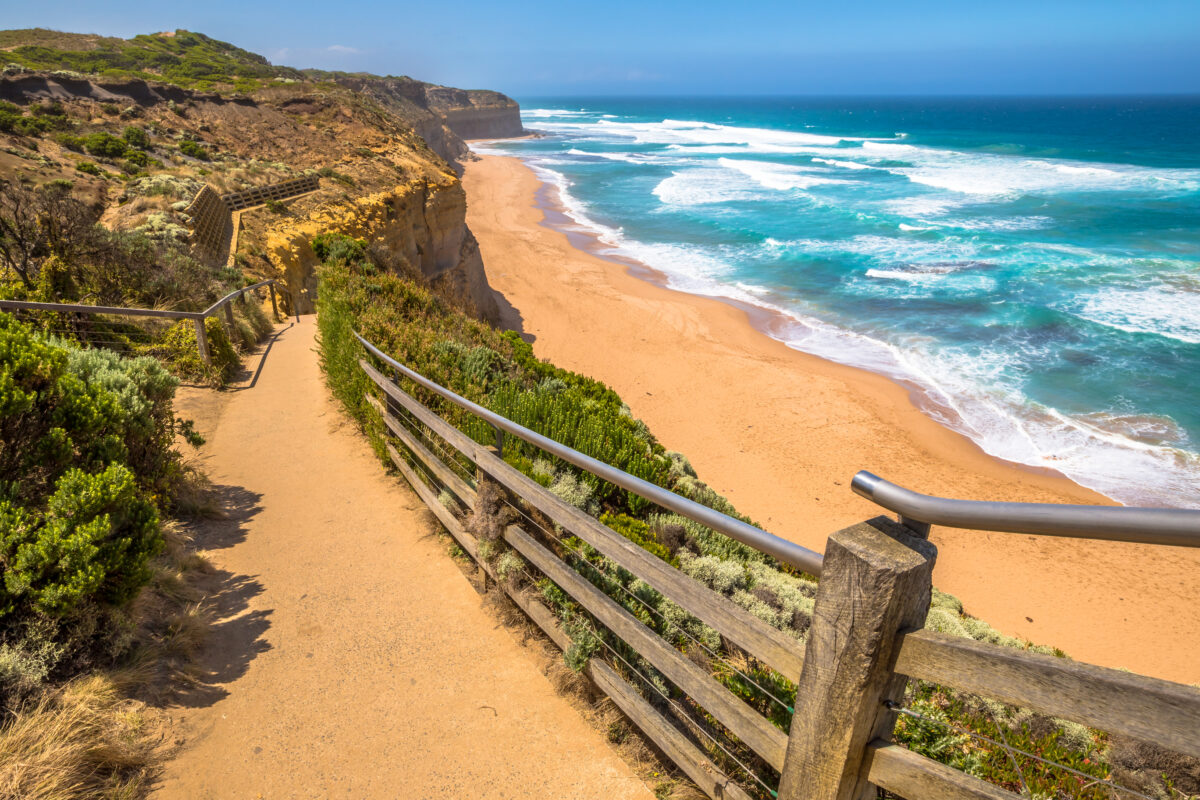
Also in Port Campbell National Park, less than a mile west of the Twelve Apostles, the Gibson Steps are a carved staircase with over 80 steps that descend the cliffs to the beach, aptly known as Gibson Steps Beach. Once on the sand, you’ll have a ground-level view of the massive Gog and Magog rock stacks offshore. The beach is pounded by major ocean swells, which means it’s not safe for swimming, but the scene is jaw-dropping, well worth the trek to get here alone.
Port Campbell Beach, Port Campbell
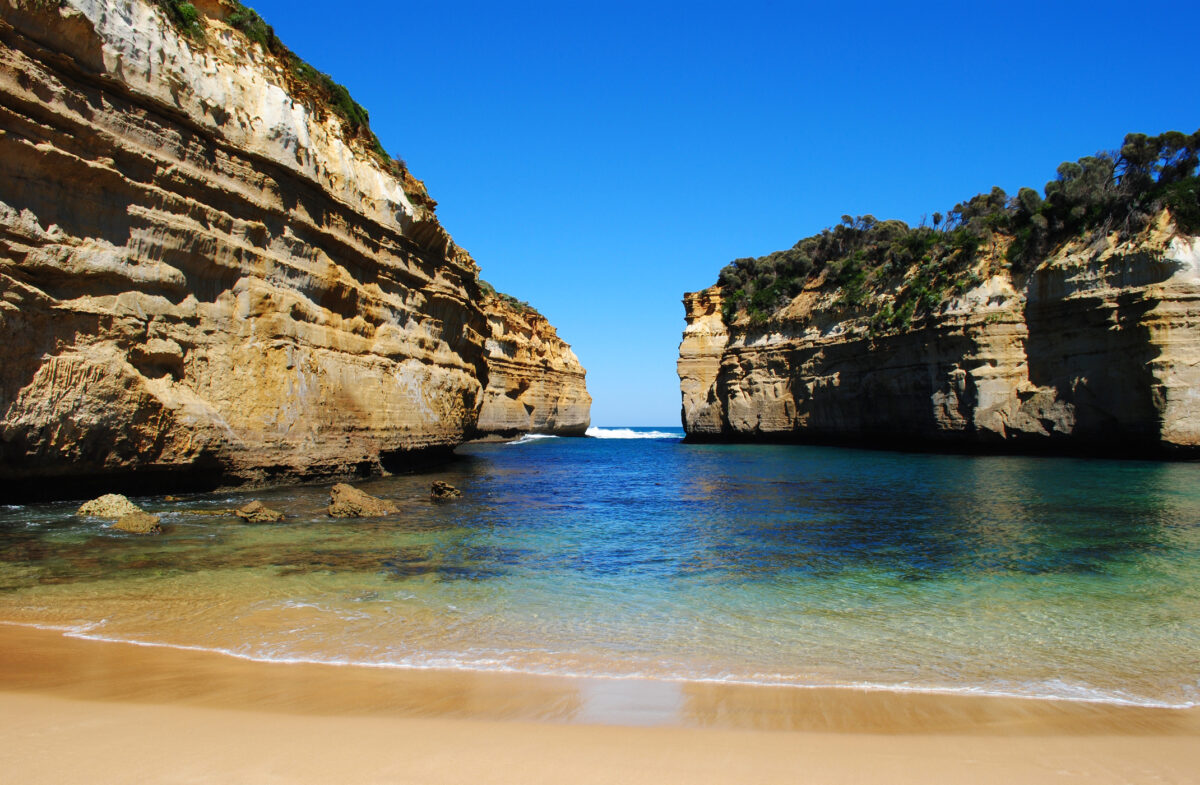
The picturesque village of Port Campbell is home to local shops, art galleries, bakeries, and one of the most idyllic beaches of the same name. It’s one of the few that’s protected, providing a safe spot to swim on this notorious stretch of exposed coastline. Plus, the beach sits at the heart of the village, providing easy access to the soft white sand lapped by calm, turquoise water. A must-visit for families, it’s ideal for sandcastle-building, paddling, swimming, and for kids who just want to splash around.
Parents and others often simply enjoy relaxing beneath the surrounding limestone cliffs, soaking up the sun and the beauty. There is also a playground and grassy areas for picnics nearby, so be sure to bring your supplies.
Warrnambool Beach, Warrnambool
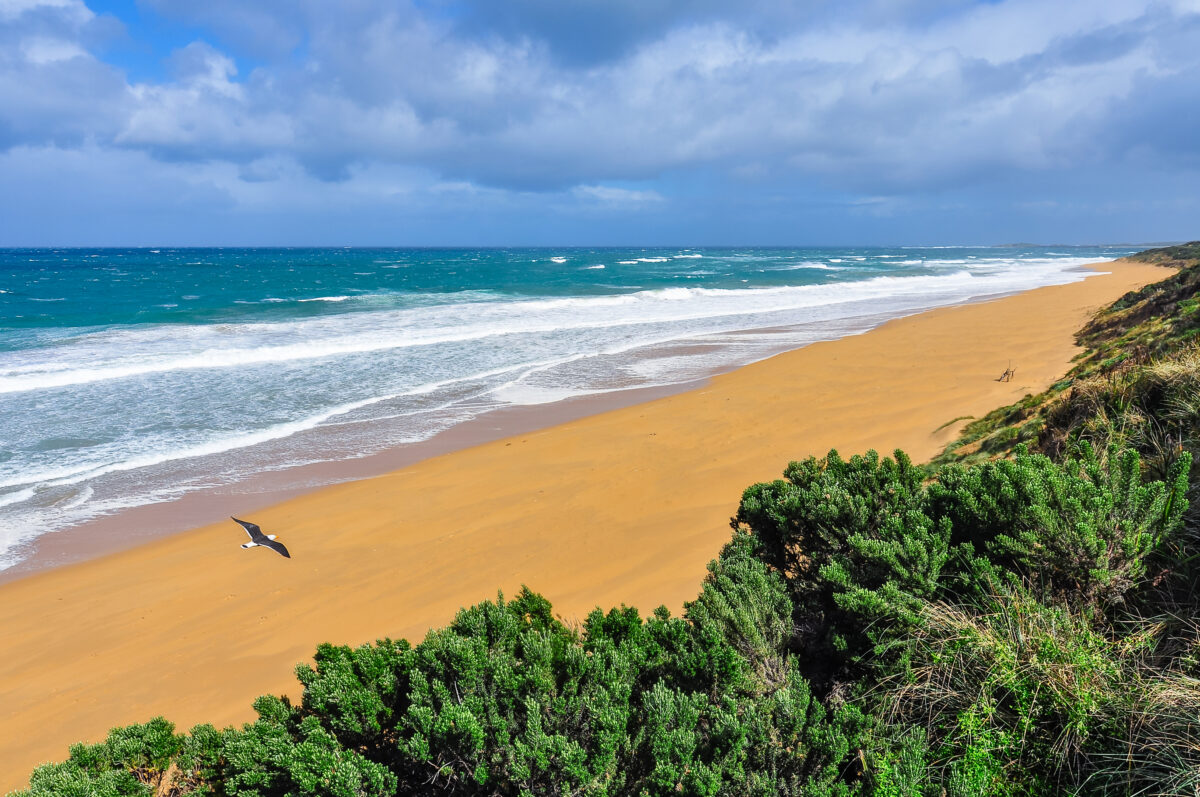
While Allansford marks the end of the Great Ocean Road, you might want to conclude in nearby Warrnambool as Allansford itself sits on the Hopkins River. The charming coastal town of Warrnambool is home to several beautiful beaches, including the main beach of Lady Bay, which has protected swimming areas patrolled by the Warrnambool Surf Lifesaving Club. If you’re here between May and October, watch for southern right whales as they migrate along the coast.
If you’re interested in ships or history, the bay holds many shipwrecks, and there is interpretative signage highlighting some of the tragedies. Up for a stroll? Follow the paved promenade that leads to Logans Beach, which starts with fantastic views at the 1890 Breakwater, follows the bay, crosses the mouth of the Hopkins River estuary, and ends at Logans’ Beach whale nursery.