


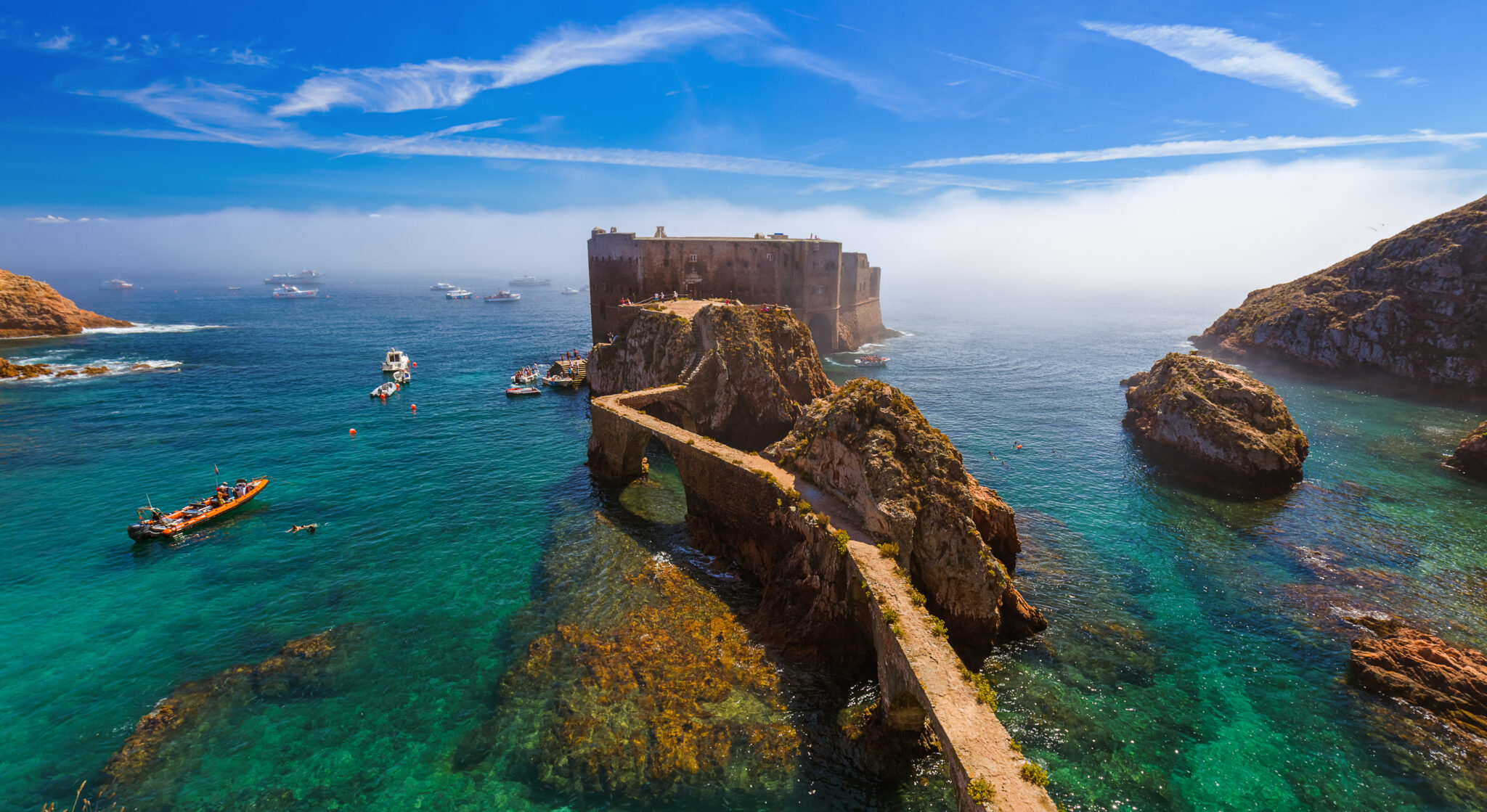
Nine miles off the coast of Peniche sits Berlenga Grande, the only inhabited island in the Berlengas archipelago and one of the strangest, most beautiful places in mainland Portugal. It’s a UNESCO Biosphere Reserve barely half a mile across, ringed by cliffs, sea caves, and water so clear it looks tropical (until you jump in and remember you are in the Atlantic).
There is one fort, one beach, one restaurant, and a strict daily cap on how many people are allowed to set foot on it.
Here is everything you need to know before you go.
Where Berlenga Island Is
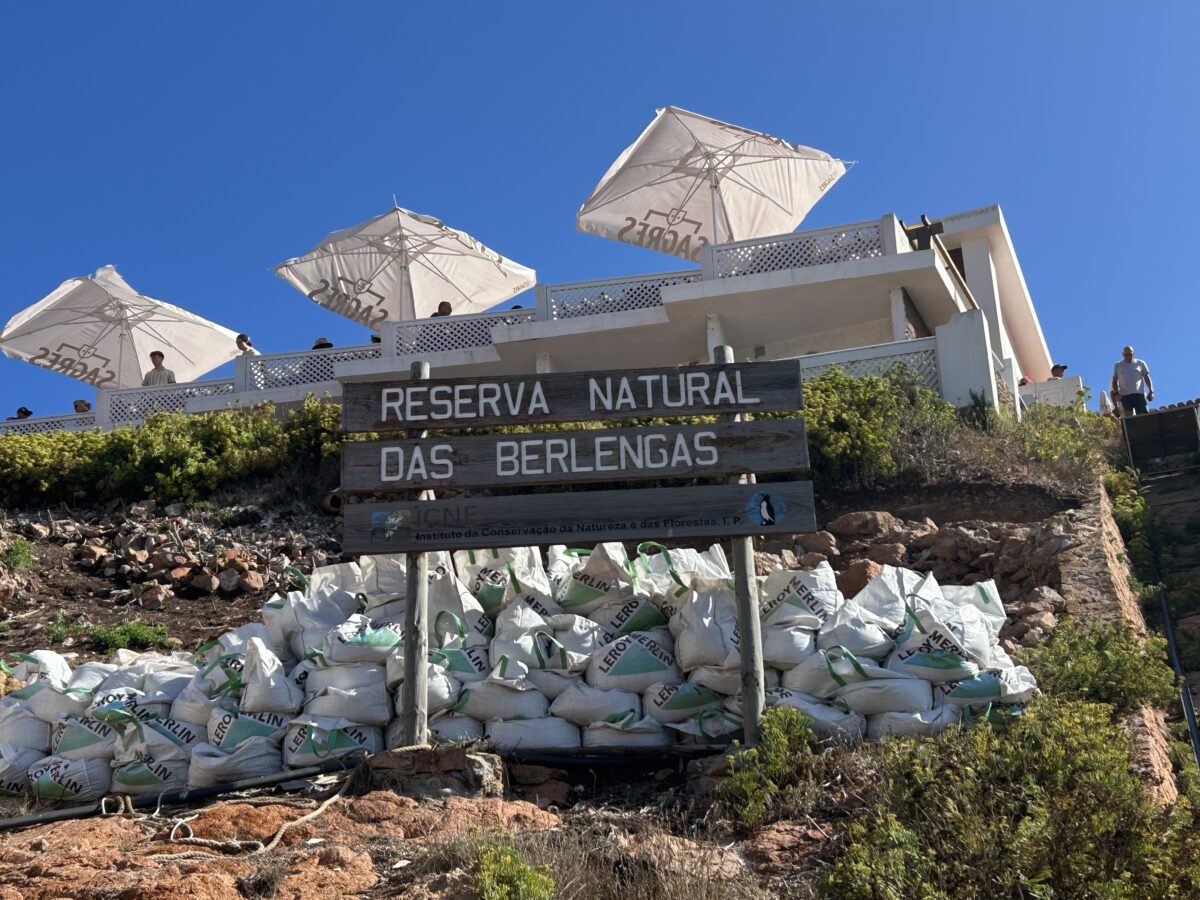
Berlenga Grande is the main and only visitable island of the Berlengas archipelago, an isolated cluster of granite islets in the Atlantic off the Silver Coast, roughly 9 miles from Peniche and about an hour and a half north of Lisbon by car. The whole archipelago has been a protected nature reserve since 1981 and a UNESCO Biosphere Reserve since 1984, which is the reason access is so tightly controlled.
How to Get There
There is only one way onto the island: by boat from Peniche, and only with a permit in hand.
Get your ICNF Berlenga Pass first. Every visitor over six years old needs this pass, issued by the ICNF (Portugal’s nature conservation institute) through berlengaspass.icnf.pt. It costs a few euros, and it is what actually caps the number of people allowed on the island each day, so buy it before you book your ferry ticket, not after. We filled ours out in advance, (though no one actually checked it on the day), so it might be worth doing regardless since enforcement can vary.
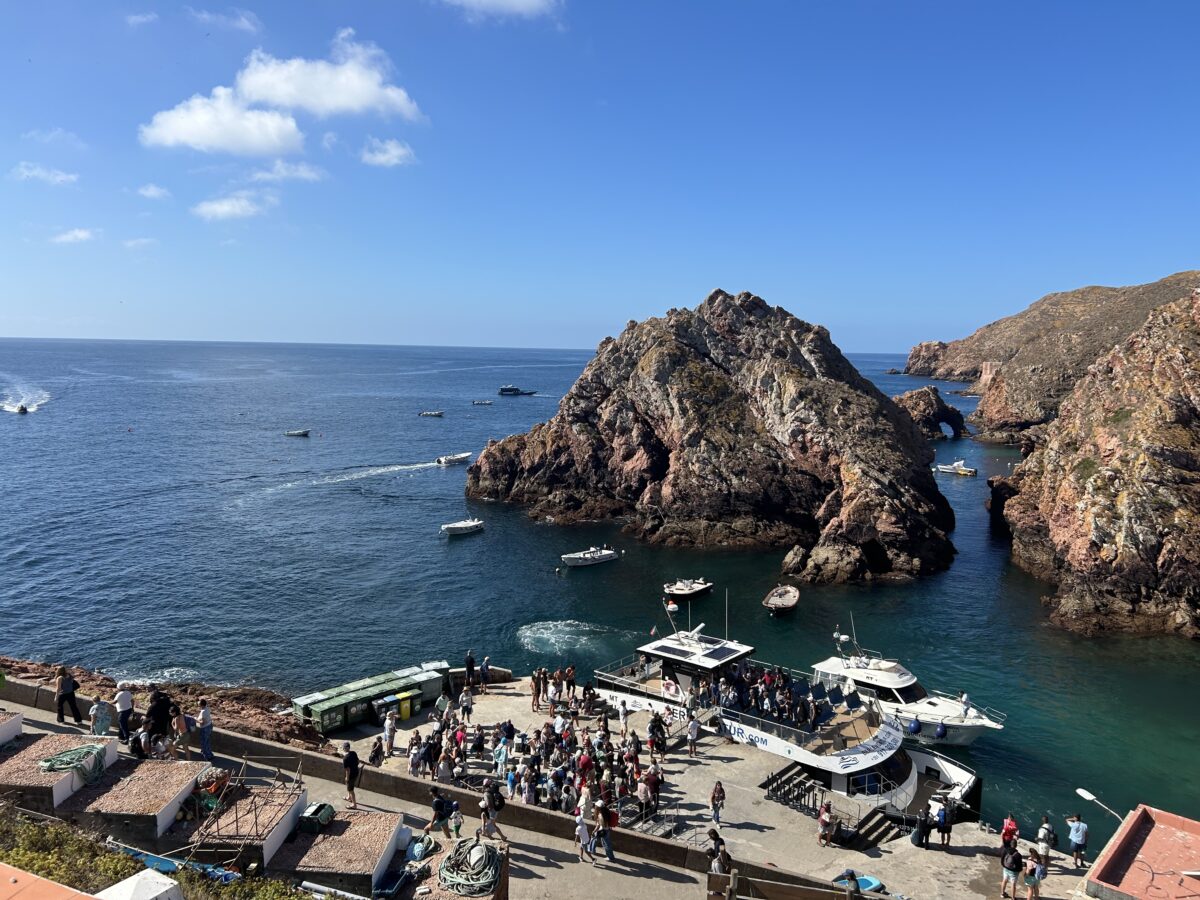
Then book your ferry. Several ICNF-licensed operators run the crossing from the Cais da Ribeira fishing port in Peniche, including Viamar (the long-running operator, over sixty years on the route), Berlengatur, and Feeling Berlenga, who we booked through. The crossing takes 30 to 45 minutes, depending on the boat and sea conditions. Round-trip tickets run somewhere in the €20 to €30 range, depending on operator and season. We opted for the fast boat, which took about 25-30 mins to cross. Be warned, it was a bit choppy so take your Dramamine before the boat if you get seasick!
The season generally runs May through October, with sailings suspended outside that window when the Atlantic gets too rough. In July and August, tickets and passes can sell out weeks in advance, so if you are planning a summer trip, book as early as you can. Shoulder season (May to June, September) is far more forgiving.
Parking. Peniche’s port area has parking near the ferry terminal, which cost us €2, though it fills up fast in peak season. If you are coming from Lisbon for the day, arrive early or park a short walk from the dock and expect to hunt a little in August.
What to Do on the Island
Once you are on Berlenga, everything is within walking distance, since the whole island is barely half a mile long.
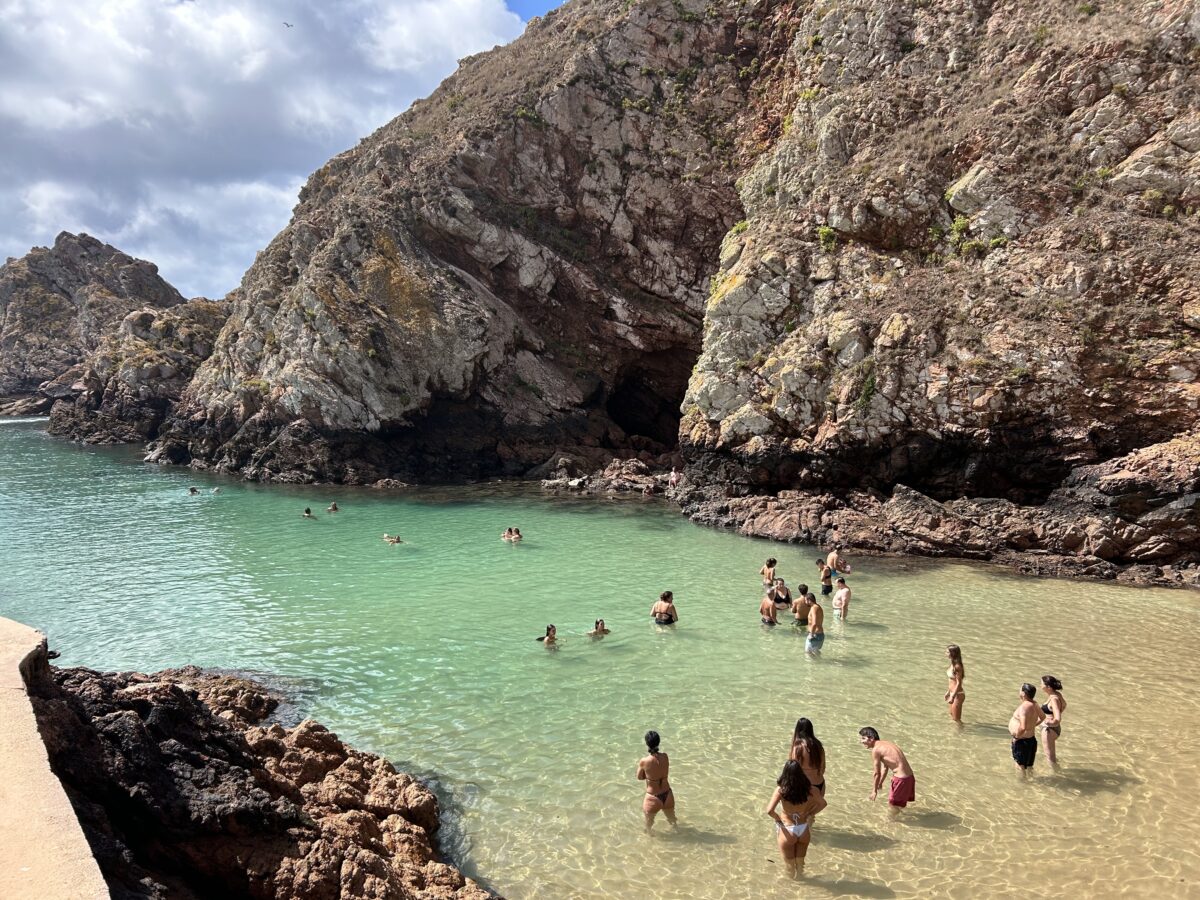
Swim and snorkel. Praia do Carreiro do Mosteiro, tucked beneath the fort and named for a long-vanished sixteenth-century monastery, is the only real beach and the only safe place to swim. The water is startlingly clear and cold, and it is the best spot on the island for snorkeling, with gilthead bream and other small fish drifting around the rocks.
Kayak. You can rent kayaks near the harbor in high season to explore the coves and sea caves at your own pace, which is a more unique way to see the island than the walking trails allow.
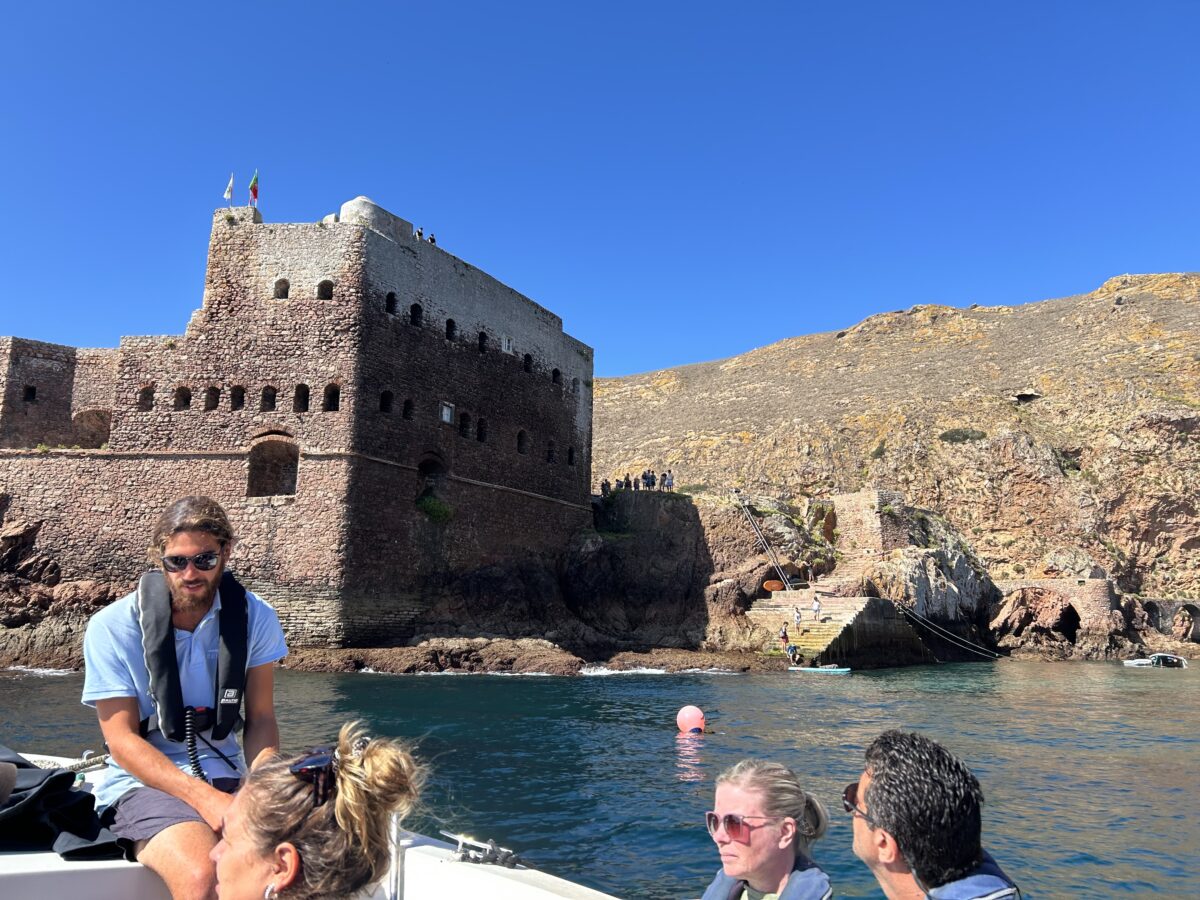
Take a cave tour. Boat operators run short trips through the island’s sea caves and tunnels, including the Furado Grande, a natural granite tunnel you pass straight through by boat, along with the Blue Grotto and a rock formation locals call the Elephant. These are worth doing even if you only have a few hours on the island. (we did this and it was really fun!)
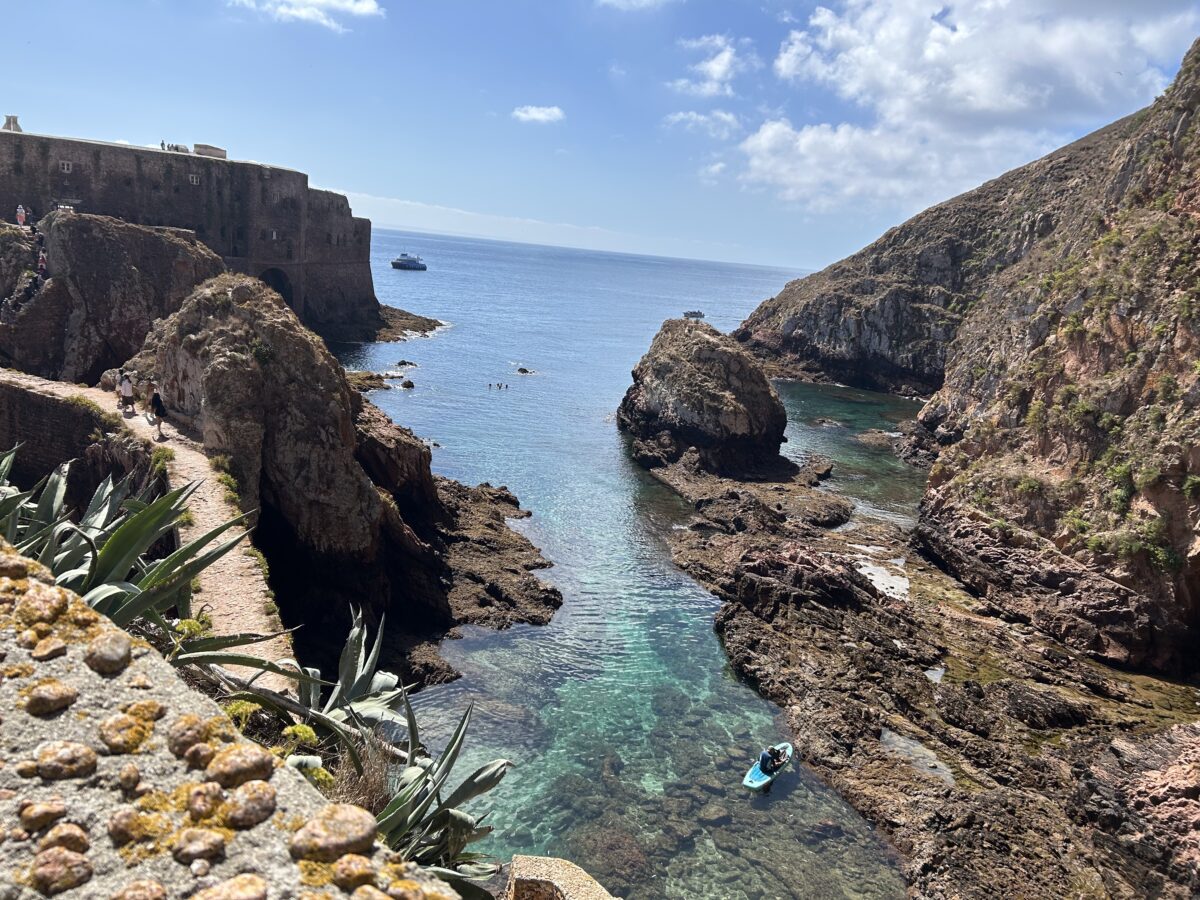
Hike. Berlenga has two marked trails. The main one climbs from the harbor past the fort, the old cisterns, the Cova do Sono viewpoint, and the lighthouse before dropping to the beach, a loop of a couple of miles. The quieter Ilha Velha trail loops the wilder northern side of the island, with fewer people and better views if you want some solitude. Stay on the marked paths. It is a nature reserve, and rangers do enforce it.
Look up. Berlenga is one of the best birdwatching spots in Portugal, especially in spring, with nesting colonies of European shag, yellow-legged gulls, and razorbills on the cliffs. Dolphins turn up in the surrounding waters too.
Where to Eat
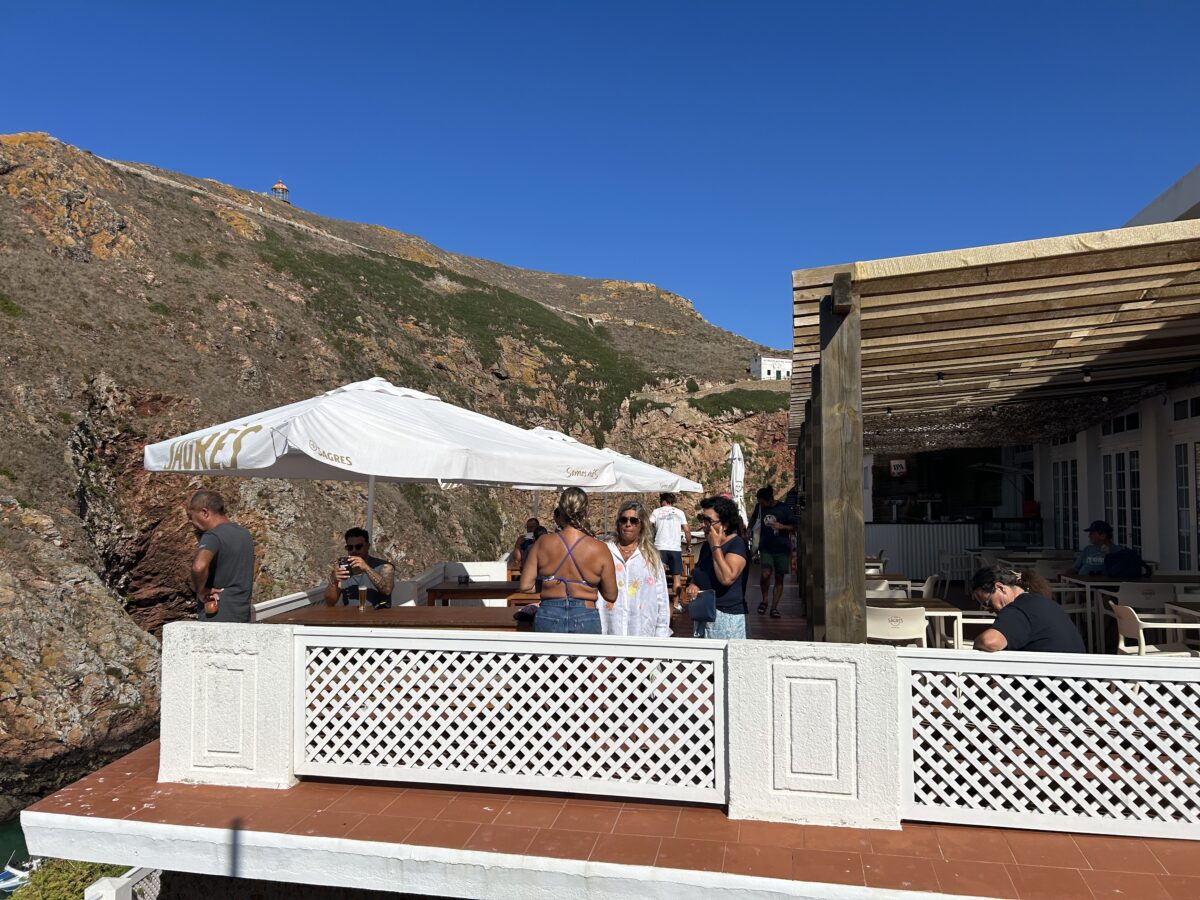
Food options are deliberately minimal, since the island supports almost no permanent population. There is one restaurant, inside the Forte de São João Baptista, run in connection with the volunteer firefighters who help maintain the fort, and one snack bar near the harbor for something quick between the boat and the trails. Neither is fancy. Expect simple, hearty food, sandwiches, bifanas, that kind of thing, not a sit-down seafood dinner. If you are particular about what you eat or are staying overnight, it is worth packing some of your own food and water, especially outside peak season when hours can be unpredictable.
Where to Stay
Most visitors come for the day and sleep in Peniche, which has the full range of hotels, guesthouses, and hostels and puts you five minutes from the ferry dock the next morning.
But you can also stay on the island itself, inside the Forte de São João Baptista, the seventeenth-century fort connected to the island by a stone causeway. It functions as a rustic hostel run by the Associação de Amigos da Berlenga (AAB), not the ICNF, so it is booked separately from your ferry ticket and pass, and it is not listed on Booking, Expedia, or any of the usual travel sites. You have to contact the association directly, and only during the May to October season when the fort accepts guests.
To book, reach out to AAB by email at [email protected] or [email protected], or by phone at +351 912 631 426 or +351 934 460 294. Expect to pay roughly €15 to €20 per person, per night. Spots for high season tend to book out months ahead, so reach out early if you want a summer date.
Conditions are genuinely spartan: bring your own bedding, expect a shared kitchen and bathroom, and do not expect modern comforts. What you get in return is having the island to yourself after the last day-trip boat leaves, which is a completely different experience from the crowded midday hours.
A Few Practical Notes
- The island has no cars and almost no infrastructure beyond the fort, the beach, and the trails, so bring sun protection, water, and good shoes.
- Boats can cancel on short notice if the swell picks up, so build a buffer into your schedule if you are coming from further afield.
- Everything you carry in, carry back out. There are no bins scattered around the trails.


