
Home to ten volcanic islands scattered off the coast of West Africa, Cape Verde has long been one of the world’s best-kept beach secrets. For years, it was popular with windsurfers, divers, and travelers looking for an off-the-radar beach escape and a place to get away from it all. Then this summer, the country’s football team, nicknamed the Blue Sharks, made its first-ever World Cup appearance representing a nation of just over half a million people. What followed was the stuff of underdog legend: a scoreless draw against Spain, a 2-2 tie with Uruguay, and a run through the knockout rounds before finally falling to Argentina. Almost overnight, the country that most people couldn’t find on a map became one of the tournament’s most talked-about stories.
The good news about Cape Verde: you’re spoiled for choice with natural beauty, whether you’re looking for a cultural immersion, an adrenaline-filled day of windsurfing, or a quiet day lounging on the shoreline. Read on to discover what you need to know before you visit this island destination.
Which Island Should You Visit?
What most people don’t realize is that Cape Verde isn’t just one single destination; it’s actually ten islands (nine inhabited). Each of these islands offers something different, spread across roughly 385 miles of the Atlantic. Here are some of the most popular:
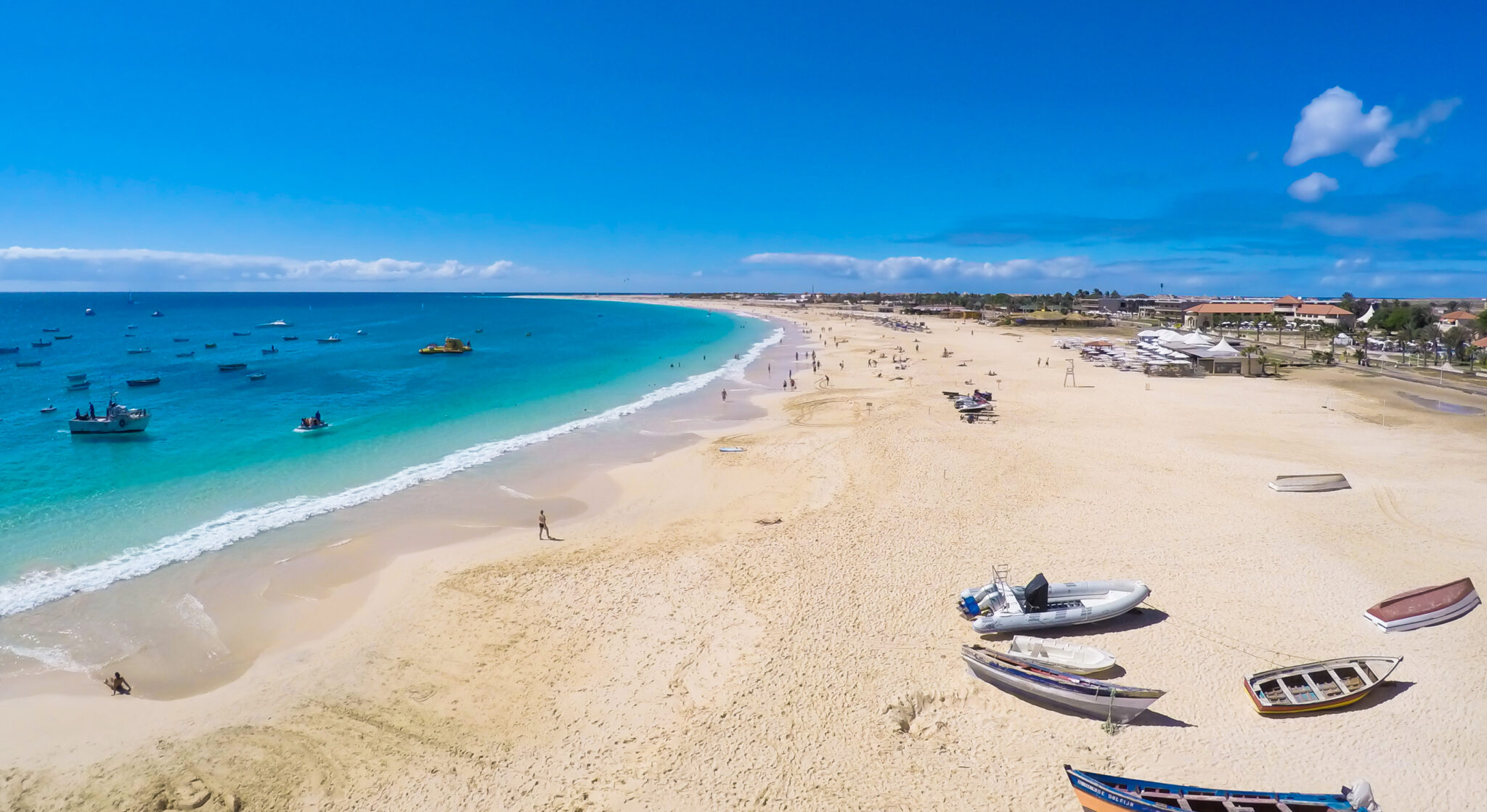
Sal is an excellent choice for a beach getaway, and the one most first-time visitors land on since it has the country’s most popular international airport. Head to the town of Santa Maria on the island’s resort strip to access the island’s long, white-sand beach and warm, shallow water. It’s known for consistent windy weather, so you’ll often find a scattering of kitesurfers and windsurfers looking to ride the waves. It’s the most developed island in Cape Verde, which means there are more resorts and restaurant options for a stress-free vacation.
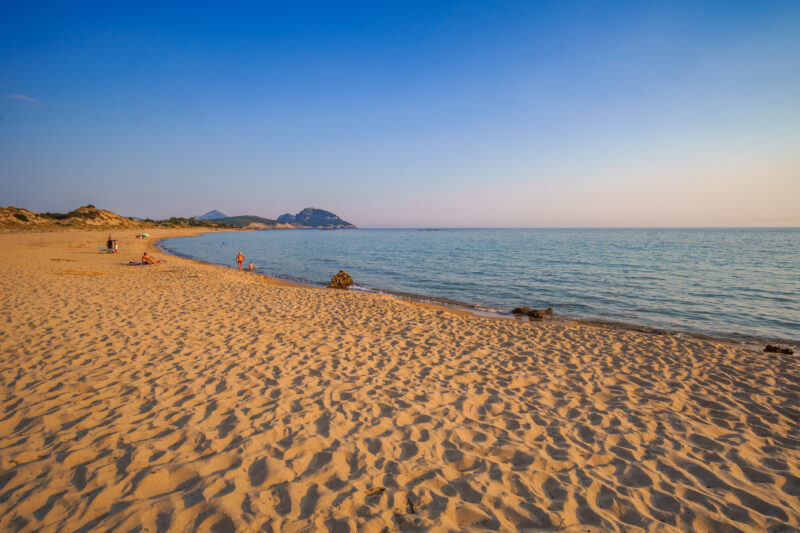
Boa Vista is the quieter, sandier neighbor of Sal. Much of the island is desert, with dunes that roll right down to the coast. The island’s beaches, particularly Praia de Santa Mónica, offer some of the most dramatic scenery in the country. This island is also one of the most important nesting sites in the Atlantic for loggerhead turtles, with nightly nesting tours running in summer.
Santo Antão is where you go if you’re looking for an adventure. In fact, it’s not a beach island at all. It’s a hiking island, with bright green, terraced valleys, volcanic peaks, and cobblestone trails that wind between villages growing sugarcane and coffee. It’s worth the trek if you want to see spectacular landscapes, but make sure to pack your boots, not flip-flops.
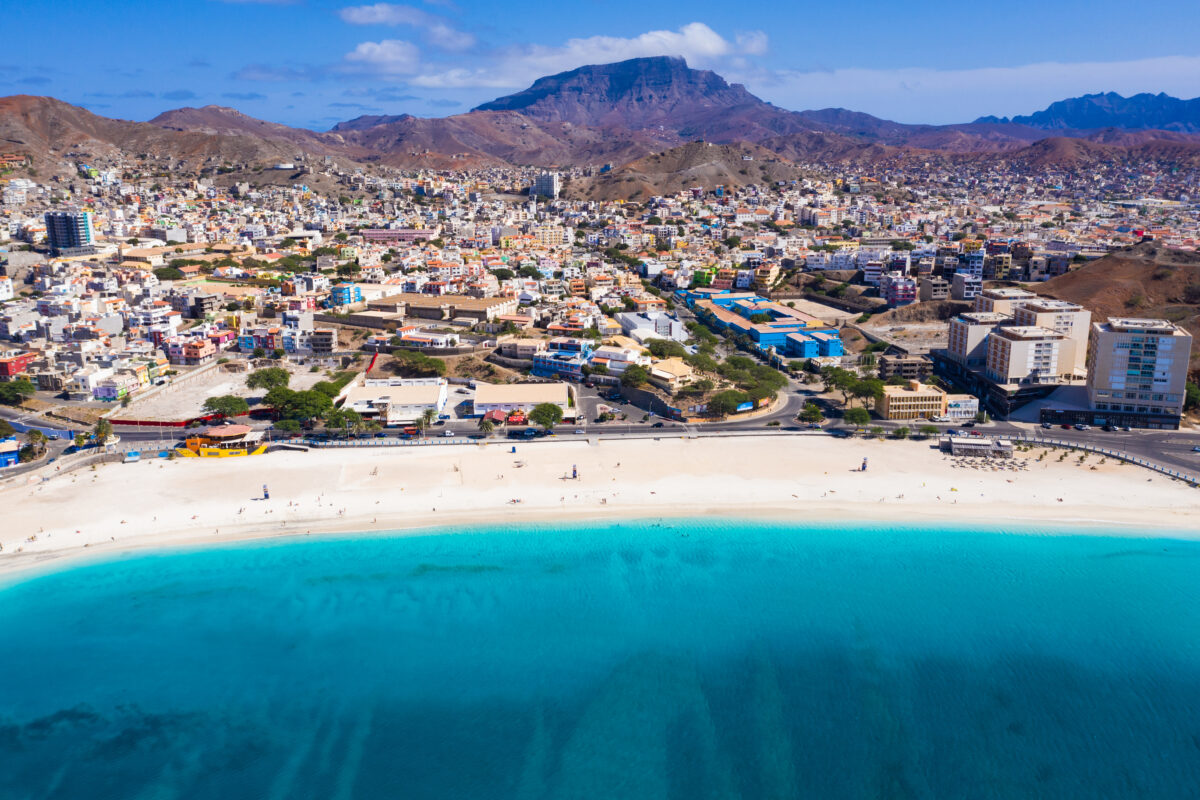
São Vicente, and specifically its main town, Mindelo, is the vibrant heart of Cape Verde’s cultural identity. This is the birthplace of morna, the melancholic musical genre that produced the country’s most famous export, singer Cesária Évora. It also hosts one of Africa’s most celebrated carnivals each February, with Brazilian-style parades and costumes that rival those of Rio.
Santiago is home to the capital, Praia. Most travelers say it’s the most authentically Cape Verdean of the islands, as it’s less designed for tourists and showcases more of the true local life. The nearby town of Cidade Velha was the first European colonial settlement in the tropics. It’s a UNESCO World Heritage site and the closest thing the country has to a living history museum.
Fogo is the volcano island, best known for its still-active Pico do Fogo, which last erupted in 2014. You can hike to its summit and stay in the crater village of Chã das Caldeiras, where farmers grow wine grapes in volcanic soil.
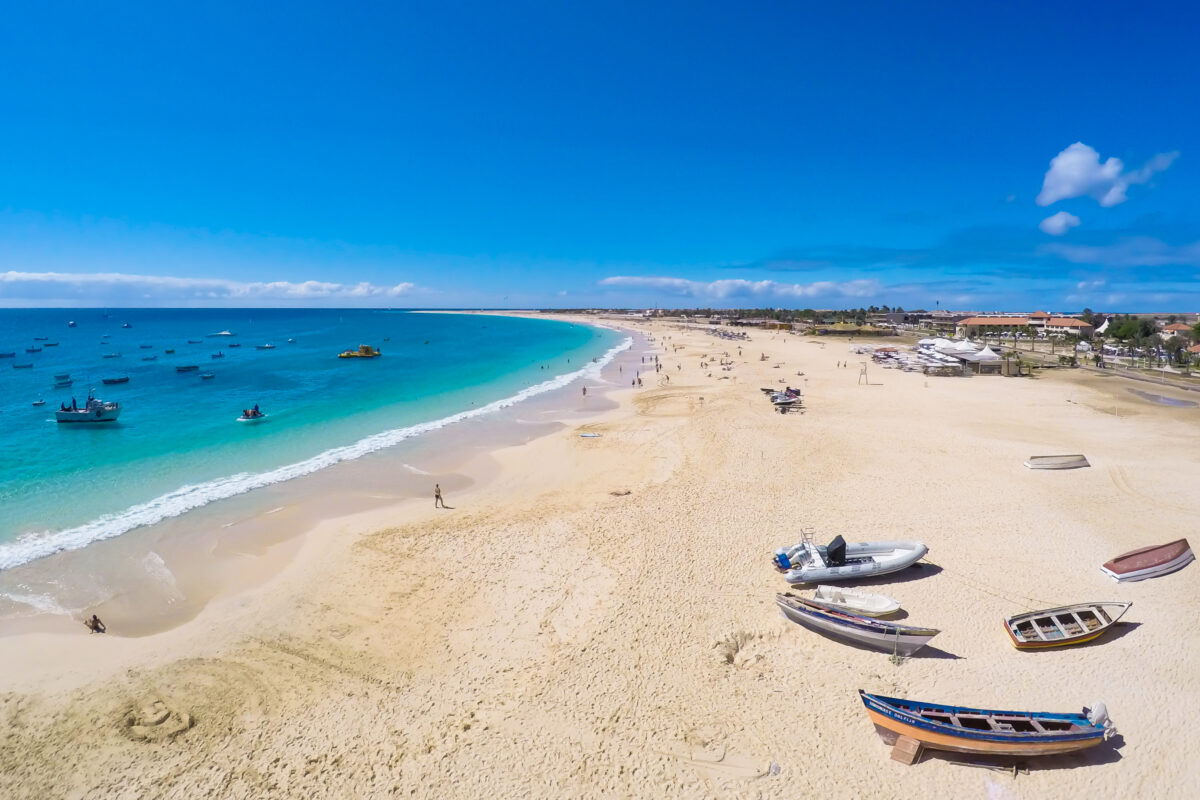
Best Beaches in Cape Verde
- Praia de Santa Maria (Sal) — a postcard-perfect beach, long and wide with calm, clear water and a lively strip of beach bars behind it.
- Praia de Santa Mónica (Boa Vista) — miles of untouched dunes and sand with no crowds; bring your own shade and water, as it’s largely undeveloped.
- Praia de Chaves (Boa Vista) — a favorite with kitesurfers, with consistent wind and a wide, sweeping bay.
- Praia da Laginha (São Vicente) — Mindelo’s town beach, more about the vibes and atmosphere and people-watching than pristine sand.
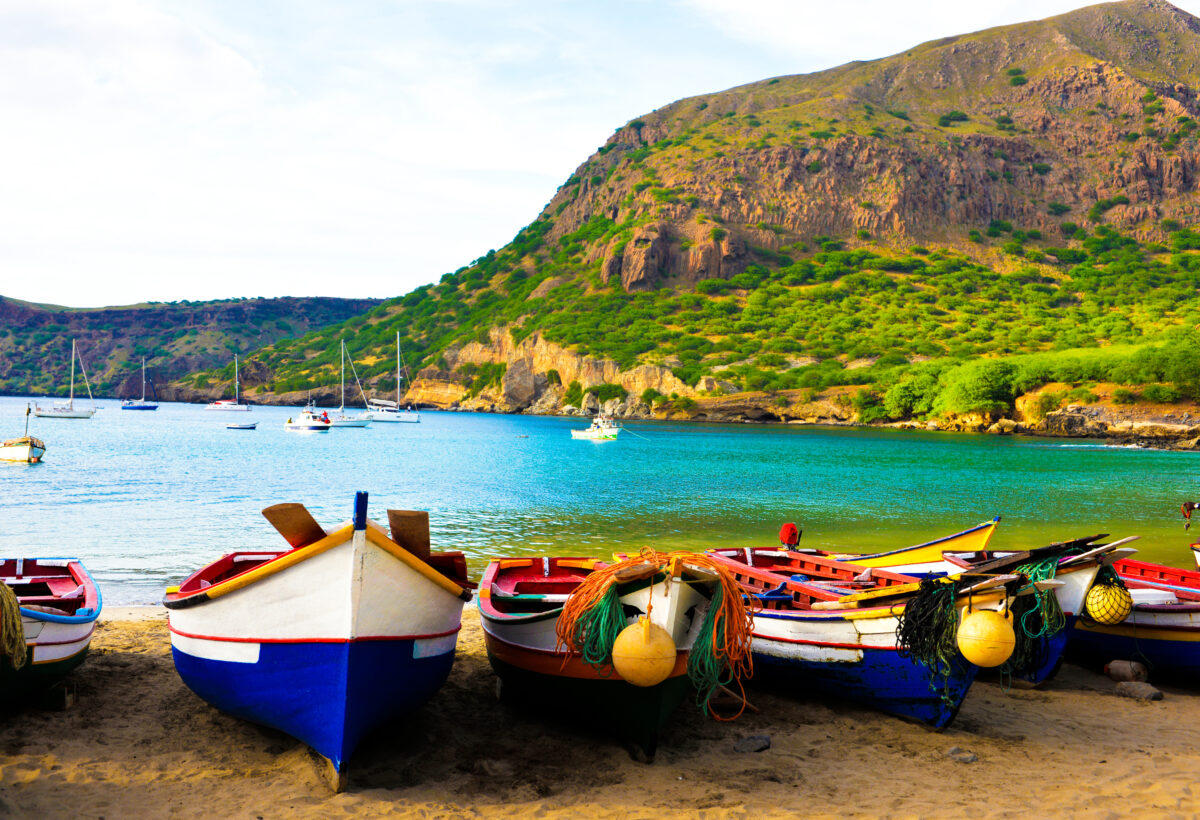
- Tarrafal (Santiago) — a palm-fringed cove on the island’s northern tip, popular with locals on weekends and quieter than the resort beaches further north.
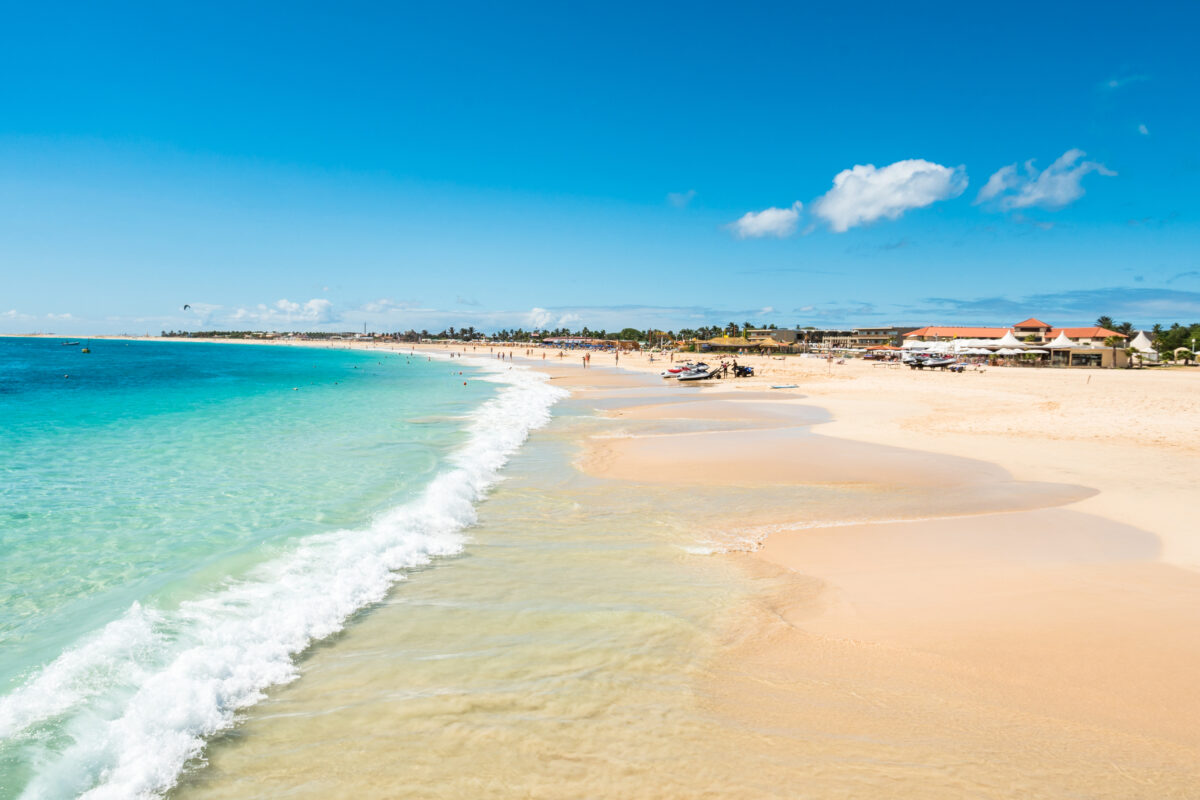
Best Time to Visit
If you’re looking for a warm beach getaway, Cape Verde has you covered. Its biggest appeal is that it barely has an off-season because of its location off the West African coast. This keeps temperatures pleasant year-round, generally between the mid-70s and mid-80s Fahrenheit.
The dry season, from November through June, is the most popular window and the best time for consistent sunshine, while peak demand (and prices) are around Christmas, New Year’s, and February’s Carnival in Mindelo.
July through October brings the rainy season. However, showers are often brief, concentrated more in the mountainous islands like Santiago and Santo Antão than in Sal and Boa Vista.
If you’re a kitesurfer chasing the strongest winds, June through August is ideal.
Getting There and Getting Around
Most international flights arrive at Amílcar Cabral International Airport on Sal or Nelson Mandela International Airport on Santiago, with direct connections from several European hubs, including Lisbon, Amsterdam, and Milan; travelers from the U.S. typically connect through Europe, though seasonal charter routes occasionally run direct from the East Coast.
FAQs
Is it Cape Verde or Cabo Verde?
Both are correct, and this isn’t a case of one being wrong. Cabo Verde is the official name, adopted by the Cape Verdean government in 2013 as part of an effort to standardize its Portuguese name internationally rather than have it translated. Cape Verde is simply the English translation, and it remains in wide use. You’ll see both used interchangeably.
Where is Cape Verde located?
Cape Verde is an archipelago in the Atlantic Ocean, roughly 385 miles off the coast of Senegal in West Africa. It’s a former Portuguese colony, independent since 1975, and its ten islands are typically grouped into the Barlavento (windward) islands to the north, including Sal, Santo Antão, and São Vicente, and the Sotavento (leeward) islands to the south, including Santiago and Fogo.
Do they speak English in Cape Verde?
The official language is Portuguese, and Cape Verdean Creole (Kriolu) is the language most people actually speak day-to-day. English is widely used in tourist businesses, such as hotels, resorts, and restaurants, in beach towns like Santa Maria and Mindelo. However, learning a few Portuguese phrases goes a long way with locals.
Do I need a visa to visit Cape Verde?
U.S. citizens don’t need a visa for stays of up to 30 days, but everyone is required to complete an online pre-registration and pay an airport security fee (known as the TSA) before arrival. Requirements can shift, so it’s worth checking the current rules on Cape Verde’s official EASE registration platform or official travel advisories before you book.
Is Cape Verde safe for tourists?
Cape Verde is considered one of the more stable and low-crime destinations in West Africa, and violent crime against tourists is rare. As with most beach destinations, petty theft can occur in busy resort areas, so it’s best to take standard travel precautions.