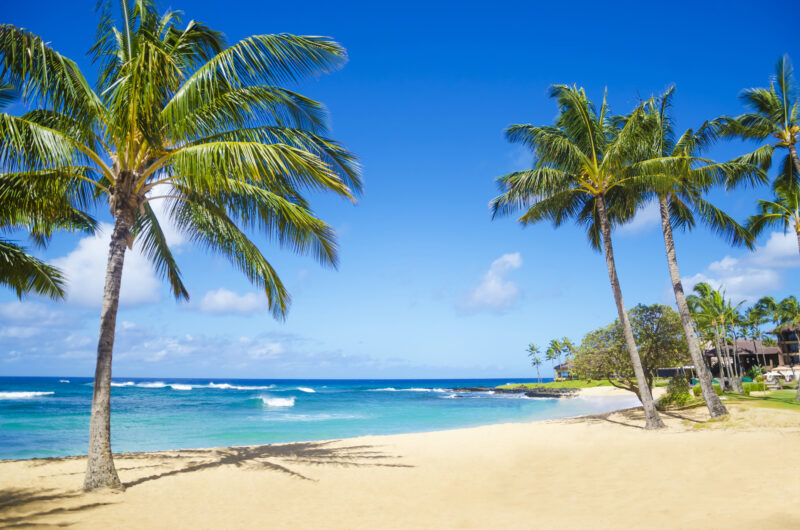

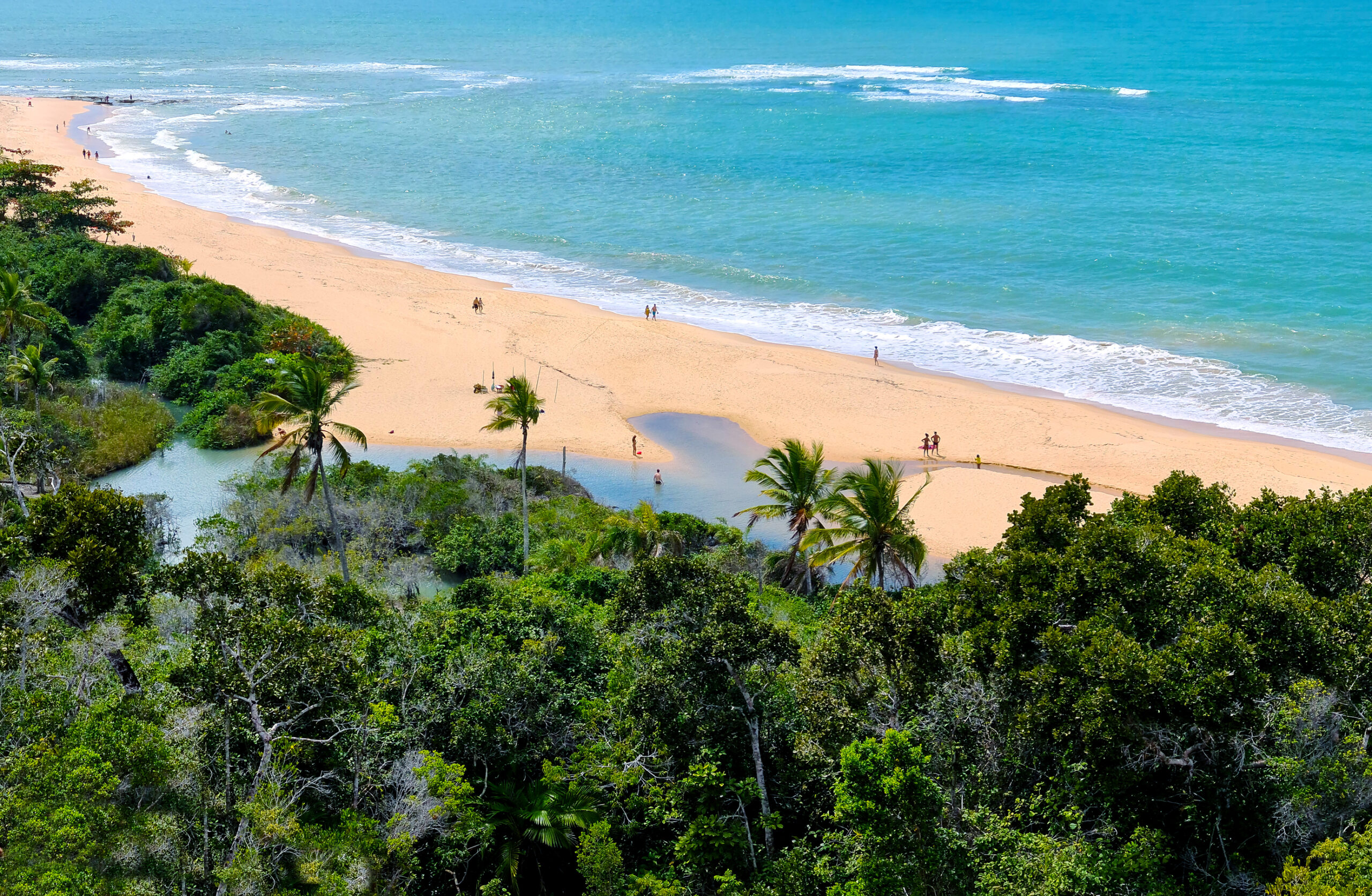
It’s hard to meet someone who hasn’t fallen in love with Bahia. Located in northeastern Brazil, the state is best known for Salvador, Brazil’s first capital and a center of Afro-Brazilian culture, music, and food. But if it’s beach time you crave, then I recommend leaving the city and following the coastline south.
My road trip through Southern Bahia was one of my favorite trips I’ve taken in Brazil. I was able to fully disconnect, stay in beautiful but unpretentious hotels, and spend time in small fishing villages that have gradually become laidback vacation towns. It’s the kind of place where nothing feels rushed—and where you leave already knowing you’ll want to come back.
Why Southern Bahia?
What sets Southern Bahia apart isn’t just how beautiful the beaches are, but how deeply you experience the destination once you arrive. Here, bumpy roads and spotty cell service are part of the charm. Even the long drawl of the Bahiano accent begs you to slow down. Meals and conversations drag on delightfully, marked less by schedules and more by the weather and mood. And the southern portion of the state, specifically, is home to Arraial d’Ajuda, Trancoso, and Caraiva, three of the most charming beach towns you can visit in Brazil.
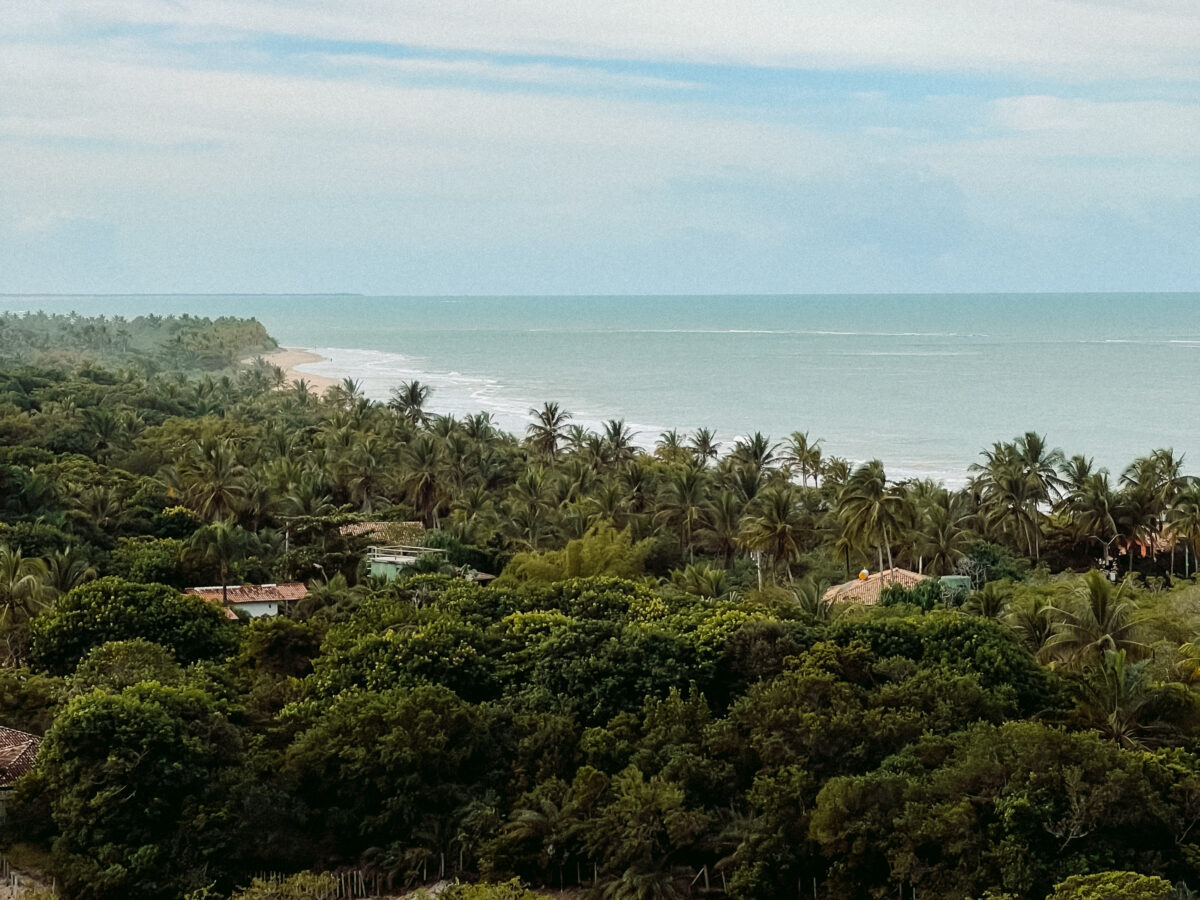
How to get there
The easiest way to reach Southern Bahia from Rio de Janeiro or São Paulo is by flying to Porto Seguro. The Portuguese first arrived in Brazil in 1500 in this historic coastal city. Today, it serves as the main gateway to three of the state’s most well-known beach towns. You can book direct flights from either hub, taking from 1.5 to 2 hours. From the airport, it’s a 10-minute ride to the ferry terminal, which will take you across the river to Arraial d’Ajuda, the start of this road trip.
7-day itinerary
I recommend carving out at least a week for this road trip through Southern Bahia. While the beaches here are the main draw, each stop also offers cultural experiences, great restaurants, and excursions to more off-grid coves nearby. Seven days gives you enough time to experience it all without rushing, while still leaving room for spontaneity.
Arraial d’Ajuda (Days 1–3)
The road trip starts in Arraial d’Ajuda, which sits right across the river from Porto Seguro. These first few days are about settling in, getting oriented, and enjoying the mix of beaches and the lively town center.
It’s worth choosing a hotel near the ocean. I stayed at Kuara Hotel, a beachfront resort set directly on Praia da Pitinga. The property has a large oceanfront pool and direct beach access, which made it difficult to leave. But Arraial has seven main beaches, and from there, I was well-positioned to explore the coastline.
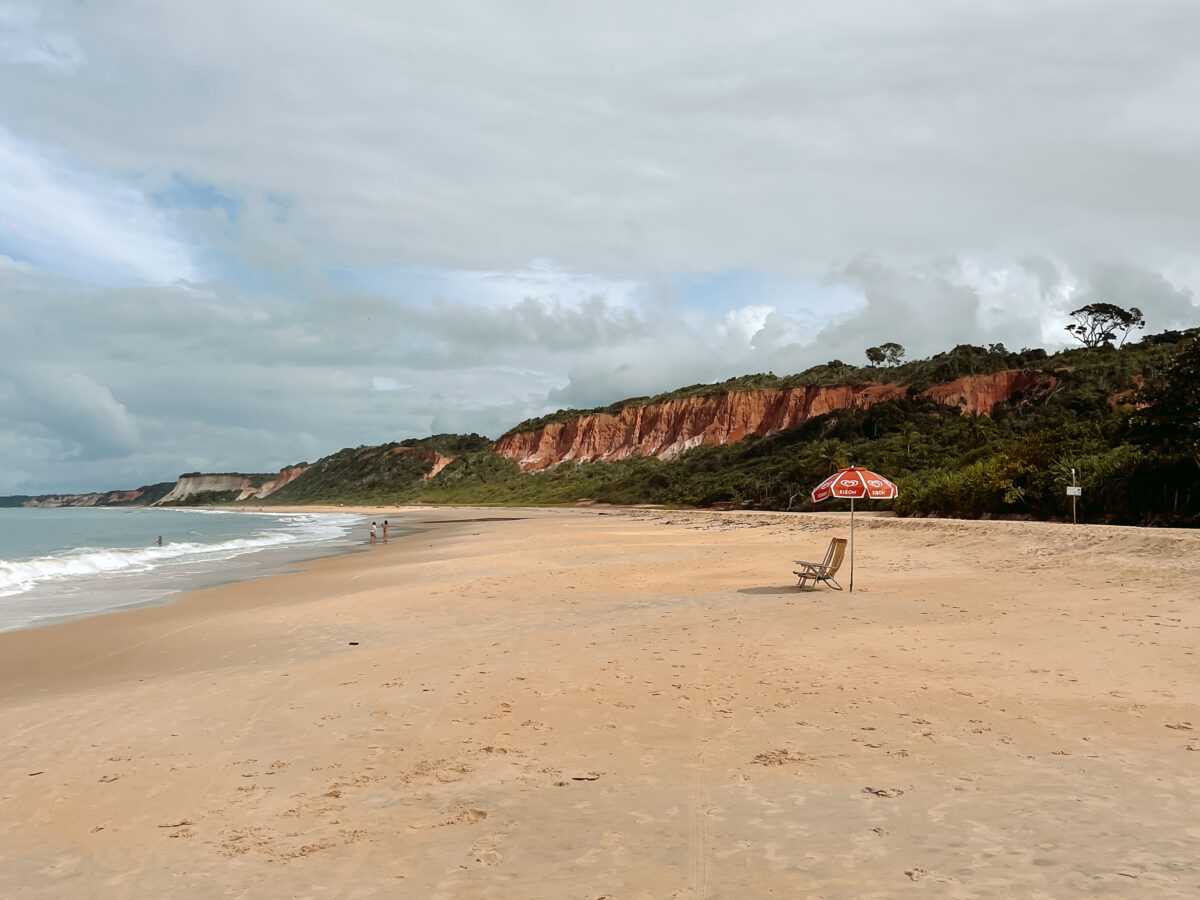
During low tide, the beaches connect into long, walkable stretches with natural pools appearing as the water recedes. Praia do Parracho and Praia do Mucugê are more social, with beach bars and restaurants dotting the sand. They feel very different from the quieter, more scenic Pitinga, where I was staying. As you head south toward Praia do Taípe, the coast starts feeling wilder and more remote, with dramatic cliffs meeting the sand and fewer people to share it with.
In the late afternoons, most people head into town. The historic center is small but worth a visit for the church, ocean views, and fresh seafood. Evenings usually end on Mucugê street, where most of Arraial’s restaurants and live music are concentrated. It’s lively without feeling chaotic, and the perfect introduction to Southern Bahia.
Trancoso (Days 3–5)
The next stop is Trancoso, just under an hour south of Arraial d’Ajuda. Trancoso is one of Brazil’s most understated luxury destinations. It’s more polished than Arraial, but not in a flashy way. The town is known for stylish, design-forward hotels and excellent restaurants with menus rooted in local ingredients. Over the years, Trancoso has quietly attracted artists, designers, and international celebrities, many of whom own private homes hidden behind gates and dense greenery. Despite that, the overall atmosphere remains relaxed.
The village itself is small, and everything revolves around the Quadrado, a grassy square framed by carefully preserved, colorful houses, restaurants, and small shops. At one end sits the Igreja de São João Batista, a small white church built in the 17th century and one of the town’s most recognizable landmarks. The Quadrado is where everyone naturally gathers for a long lunch, sunset drinks, or the boutiques.
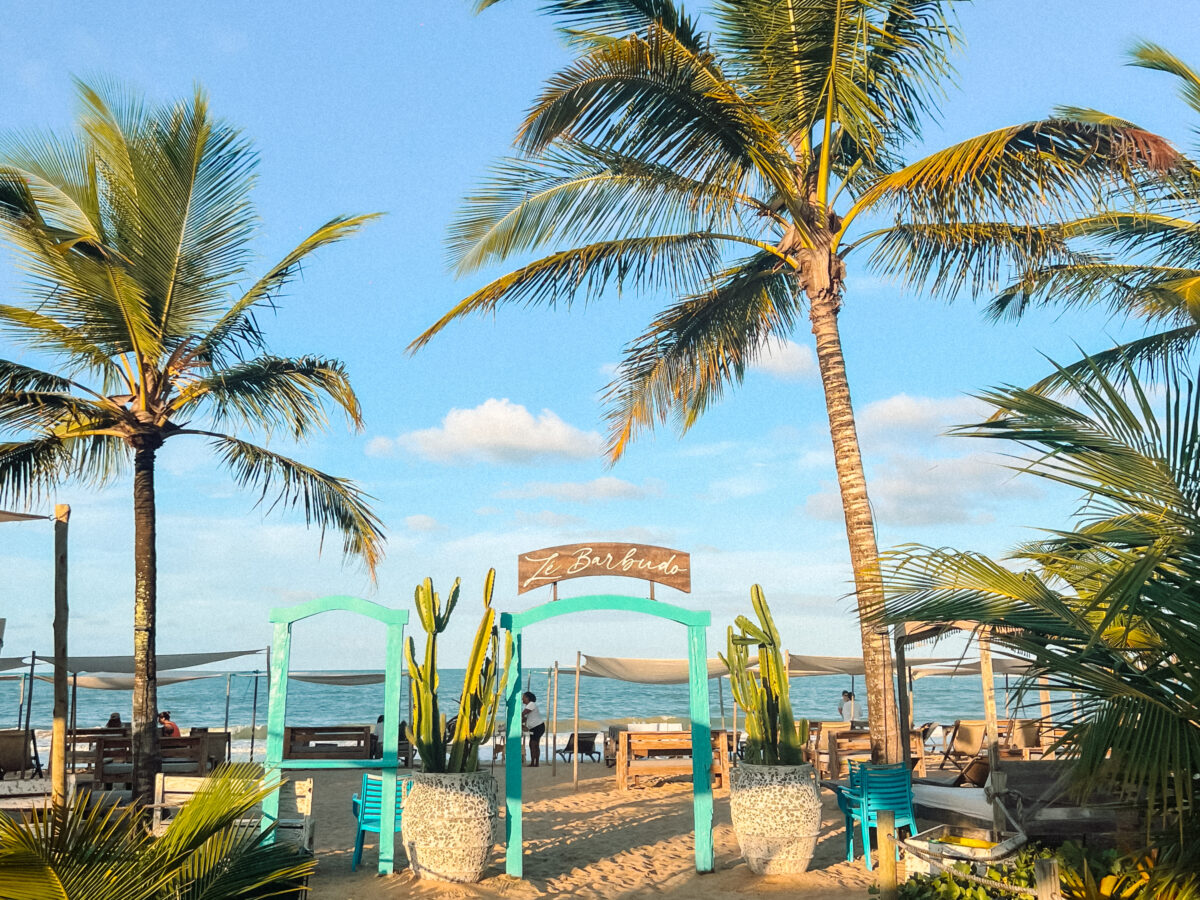
From there, you walk downhill to reach the two main beaches: Praia dos Coqueiros to the south and Praia dos Nativos to the north. Both are easily accessible on foot and well set up for long beach days, with restaurants and loungers available. I spent a lovely afternoon at Zé Barbudo, a beach club named after one of Trancoso’s iconic locals. It has a relaxed yet upbeat vibe, good food, DJs on select days, and ample space to feel comfortable without feeling crowded.
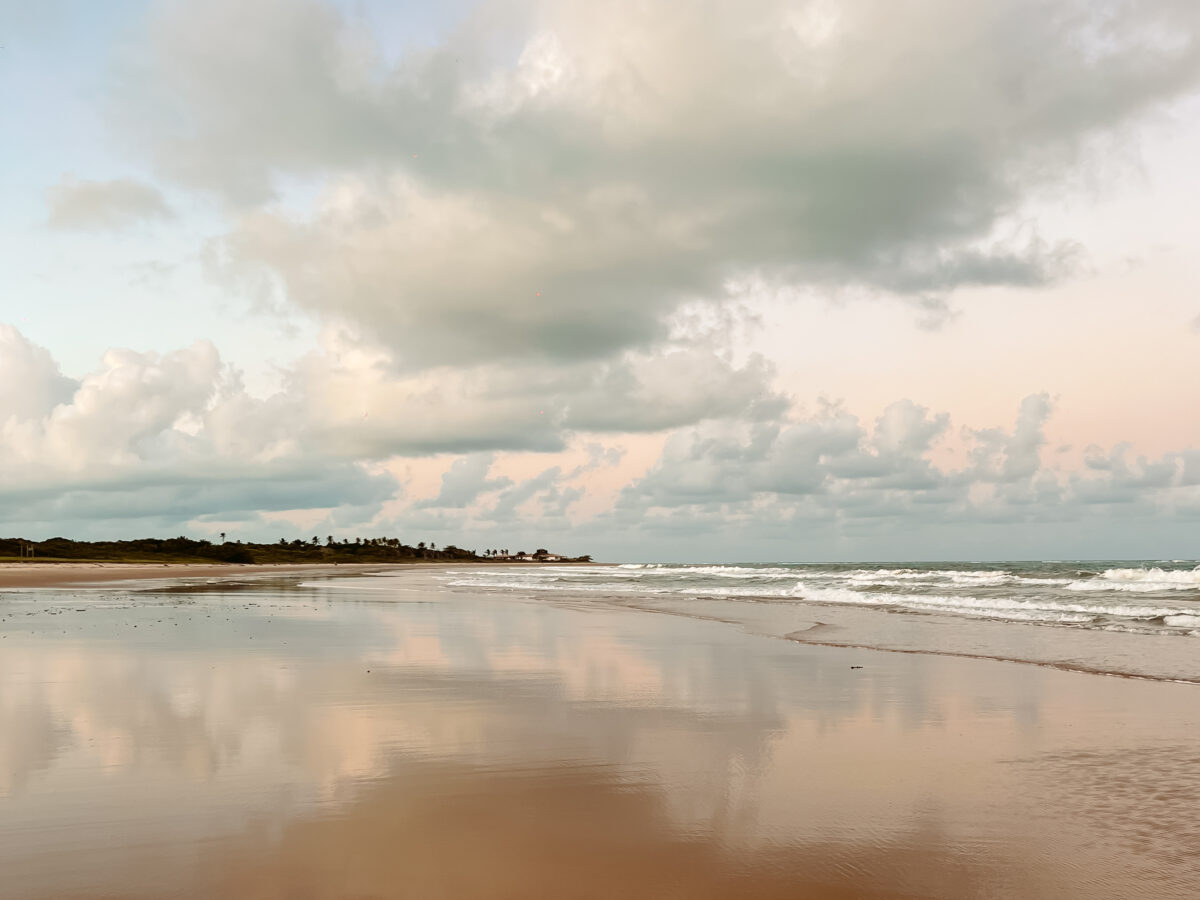
To explore beyond the main beaches, there are quadricycle tours to quieter beaches and more remote stretches of coastline harder to access on foot. It’s also worth making the trip to Praia do Espelho, which you can reach by car. The name translates to “Mirror Beach” for the way its clear water reflects the sky and cliffs, making it one of the most striking beaches in the region.
Lastly, have fun with your hotel pick. There are so many great options, including UXUA Casa Hotel & Spa, which consistently ranks among the world’s best. I personally stayed at Casa de Perainda, a small boutique hotel tucked into the forest just a few minutes outside the Quadrado. It felt quiet and intimate, and every morning began with a multi-course breakfast made and served by the owners, which was one of the highlights of my stay.
Caraíva (Days 5–7)
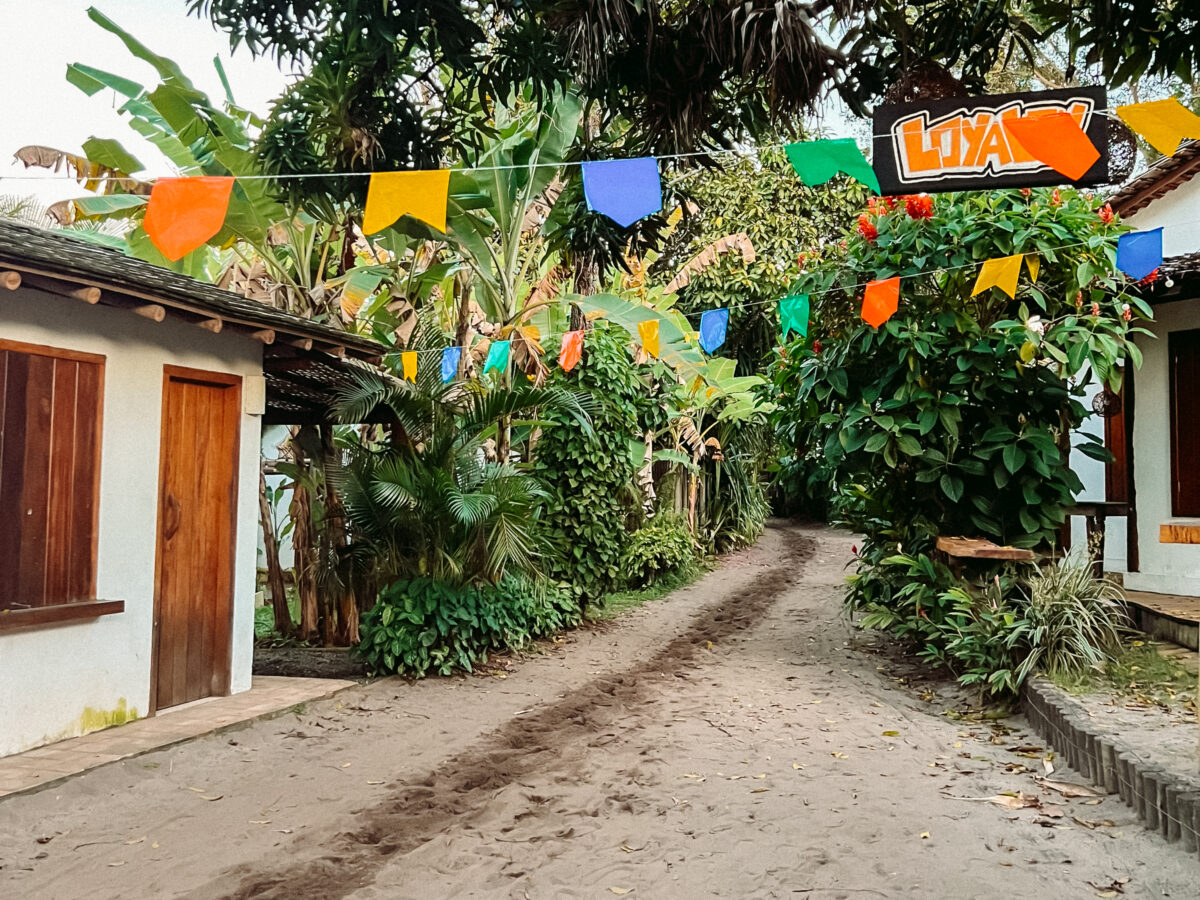
The last stop of the trip is Caraíva, my personal favorite beach town in Bahia. Getting there is part of the experience. You’ll reach the town in about an hour and 40 minutes by car. You’ll then leave your car in a parking lot on the other side of the river, grab your bags, and cross over by canoe. Once you arrive, there are no cars and no paved roads. Everything in Caraiva happens on foot, along sandy streets that run between the river and the ocean. Cell service is unreliable, which honestly makes the experience even better.
Caraíva has both river beaches and ocean beaches, and switching between the two becomes part of your daily rhythm. Praia da Barra, where the river meets the sea, is the most social area and one of the best spots for swimming, especially on the river side where the water is calm. It’s lined with simple beach barracas run by locals, where you can order a caipirinha served inside a cacao fruit. I highly recommend it.
From there, the ocean beach stretches south in a long, open strip that’s perfect for walking, especially at low tide. About 3 kilometers north of the village is Praia do Satu, one of the best beaches in the area. It’s known for its natural pools at low tide and a freshwater lagoon just behind the sand. You can walk there during low tide or cross the river by canoe and continue on foot. I spent a day at what used to be Hayo Beach Club, which has since been transformed into a beautiful beachfront hotel and appears to be an excellent place to stay.
Sunset in Caraíva is a daily ritual. People gather along the river to swim, or head to the famous Boteco do Paá, where you can try fried pasteis stuffed with cheese, shrimp, and different local ingredients. Caraíva has a surprisingly good food scene for such a small village, with casual beachfront restaurants, fresh seafood, and plenty of spots for a drink. After dinner, it’s easy to find a good time: just follow the live music and join the dancing.
When to Go to Southern Bahia
Southern Bahia is a year-round destination, but some months are better than others. The best and driest time to visit is from September to March. But keep in mind that high season, from December to February, brings more visitors, especially around the holidays and Carnaval. The winter months of July and August are slightly cooler and slower, making them a good option if you prefer mild temperatures and less foot traffic.
Insider tips
- The most convenient place to rent a car is at the Porto Seguro Airport.
- Visitors to Brazil may drive with their home country’s license for up to 180 days, but it’s always a good idea to have an international driving permit.
- When you get off the main highway, you can expect dirt roads, uneven surfaces, and occasional flooding after heavy rain, especially outside major towns.
- Download offline maps before you hit the road in case you lose cell service.