

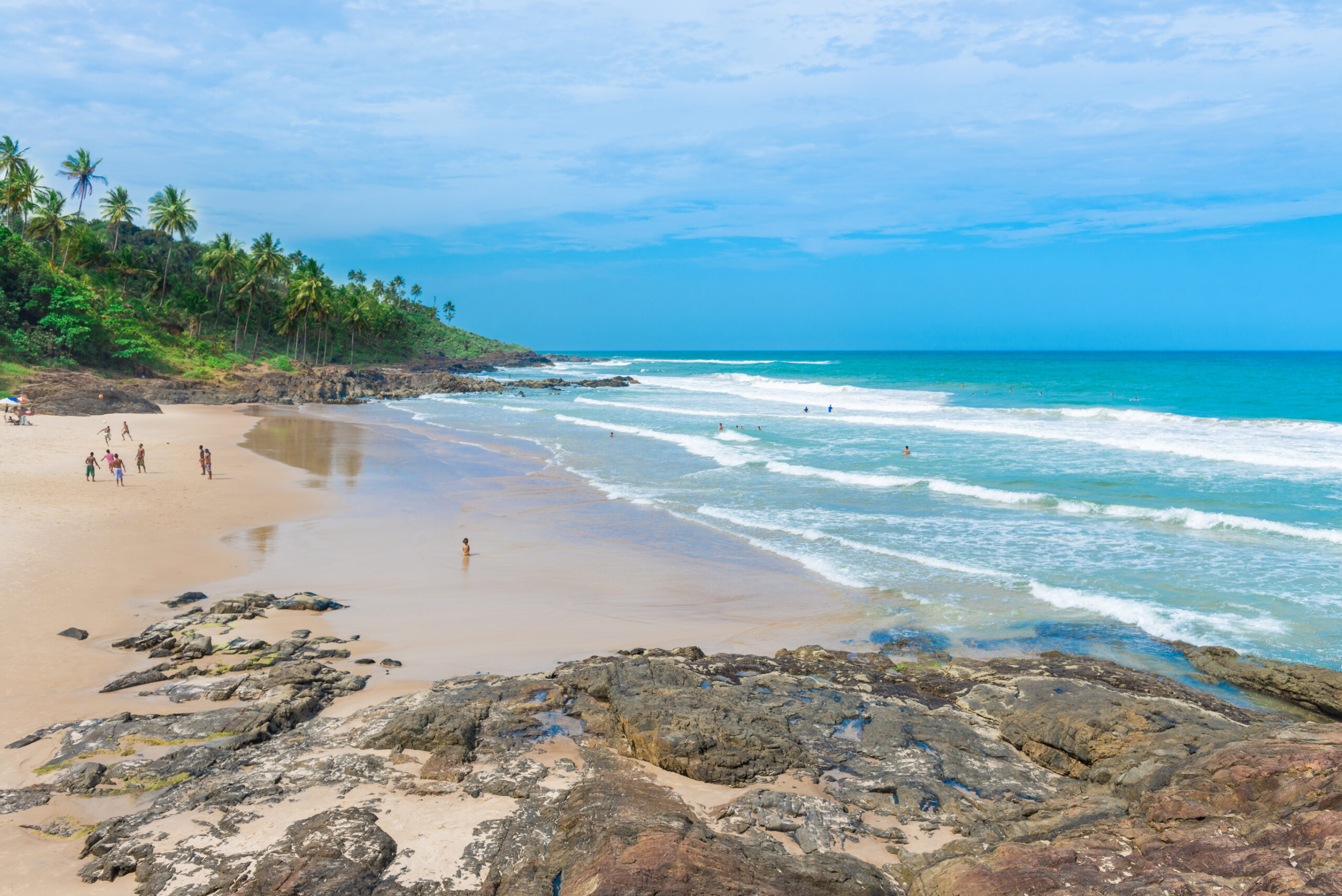

Known as the cradle of Afro-Brazilian culture, Bahia offers more than just stunning beaches. It’s where travelers come to experience Brazil’s roots through music, food, and tradition. Though best known for its colorful capital, Salvador, the state is home to some of the country’s most beautiful stretches of sand, many quieter and more secluded than the shores of Rio de Janeiro.
Yet a trip to Bahia is never just about the beach. Bahia’s long, sandy shores beg you to slow down. Traveling here is about disconnecting and settling into a daily rhythm that reflects the state’s laid-back ethos—a rhythm marked by bare feet in the sand and spicy seafood stews followed by afternoon naps.
With more travelers adding the state to their itineraries, it seems this is exactly what many are seeking. From Blue Flag coves near Salvador to the remote sands of Boipeba, here are the best beaches in Bahia to forget about your responsibilities, if only for a little while.
Praia do Espelho (Between Trancoso and Caraíva)
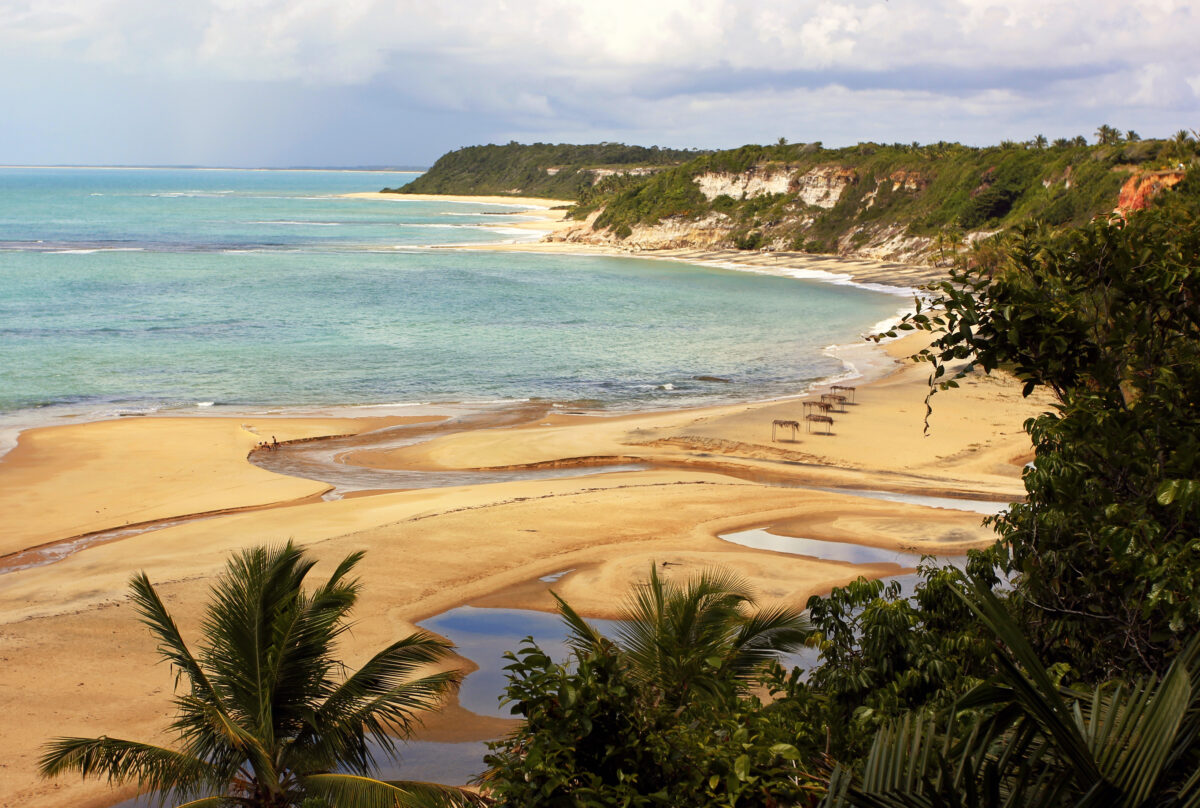
Located between Trancoso and Caraíva, two popular vacation spots on Bahia’s southern coast, Praia do Espelho is one of Brazil’s most celebrated beaches. It sits about 1.5 hours from Trancoso along a dirt road, or can also be reached by boat on calm days. Known for its crystalline tidepools that resemble mirrors at low tide—hence the name “Mirror Beach”—Espelho rewards visitors who plan their trip around the tides. Take note: new and full moons bring the clearest reflections.
The beach has a handful of hotels and beachside restaurants offering day-use service and fresh seafood lunches. The neighboring Praia dos Amores is quieter and more secluded, connected to Espelho only at low tide. The mix of scenic cliffs, gentle surf, and reliable infrastructure makes Espelho a must for anyone spending some time in Trancoso’s chic beach clubs or Caraíva’s bohemian village.
Praia do Satu (Caraíva)
Praia do Satu is a remote beach near the village of Caraíva, located on Bahia’s Costa do Descobrimento, a historic stretch of coastline known as one of the earliest Portuguese landing sites in the 1500s.
To reach it, travelers cross the Caraíva River by canoe, then walk about four kilometers north along the sand. There’s no road access and no beach kiosks, so bring your own water and snacks. The reward is total tranquility, a stretch of untouched coastline where two lagoons meet the sea: the freshwater Lagoa do Satu and the saltier Lagoa do Mucaba.
Both are perfect for cooling off after the walk, especially at low tide when the colors are most vibrant. The beach is practically uninhabited, with only a handful of travelers making the journey each day. Satu is ideal for anyone craving seclusion, yet within walking distance of one of the state’s most charming—and my personal favorite—beach villages.
Ponta do Corumbau (Between Caraíva and Prado)
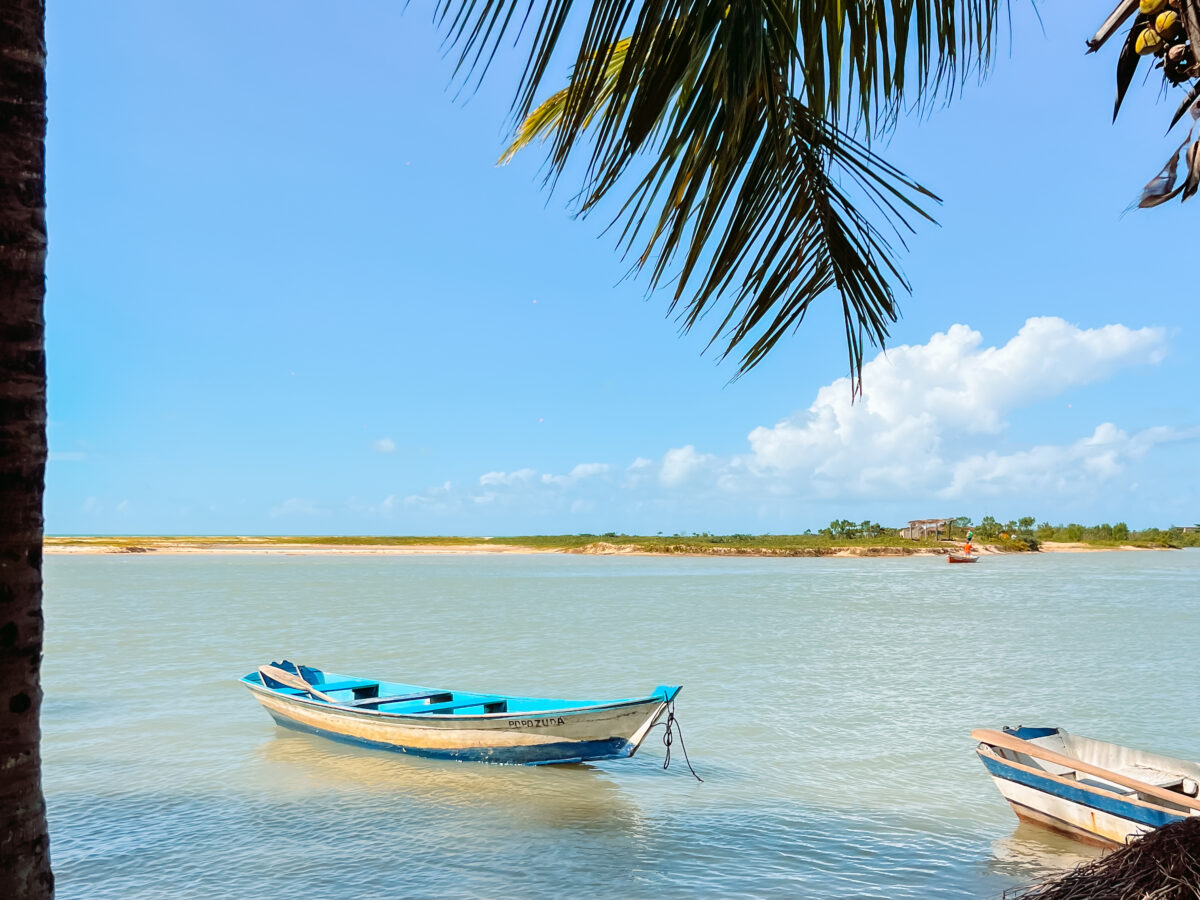
Tucked into the southern tip of Bahia between Caraíva and Prado, the Ponta do Corumbau is one of the state’s best-kept secrets. It’s located inside a marine reserve, reachable by boat from Caraíva or Trancoso, or by car along a long dirt road from Prado. Its remote location keeps crowds away, preserving miles of empty shoreline and turquoise sea.
Corumbau is a quiet fishing village with limited but charming accommodation and beach huts serving fresh seafood and coconut water. Expect minimal infrastructure—no big hotels or nightlife—but reliable comfort and friendly locals. It’s an excellent place for travelers seeking solitude, nature, and unspoiled beauty, with optional reef excursions for snorkeling nearby. Whether you visit on a day trip or stay overnight, Corumbau is as off-grid as you can get around here.
Ponta de Nossa Senhora de Guadalupe (Ilha dos Frades, Salvador Bay)
Just off the coast of Salvador, Ponta de Nossa Senhora de Guadalupe is the main beach on Ilha dos Frades, a protected island within Brazil’s largest bay, the Baía de Todos os Santos. Travelers can visit on organized day tours from Salvador or arrive independently via the Terminal Marítimo de Madre de Deus, about 65 kilometers away, where local boats make the short crossing.
Why should you make the journey over? Well, the beach holds the prestigious Blue Flag certification, recognized worldwide for exceptional environmental standards. Visitors rave about its warm, calm, and clear waters, ideal for snorkeling and swimming. The island also offers restrooms, food stands, and a restored 17th-century chapel with panoramic views of the bay. The eco-certified paradise was recently named the Best Beach in the Americas and Iberian Peninsula by CIF Playas, making it one of Bahia’s very best coastal destinations.
Praia de Moreré (Ilha de Boipeba)
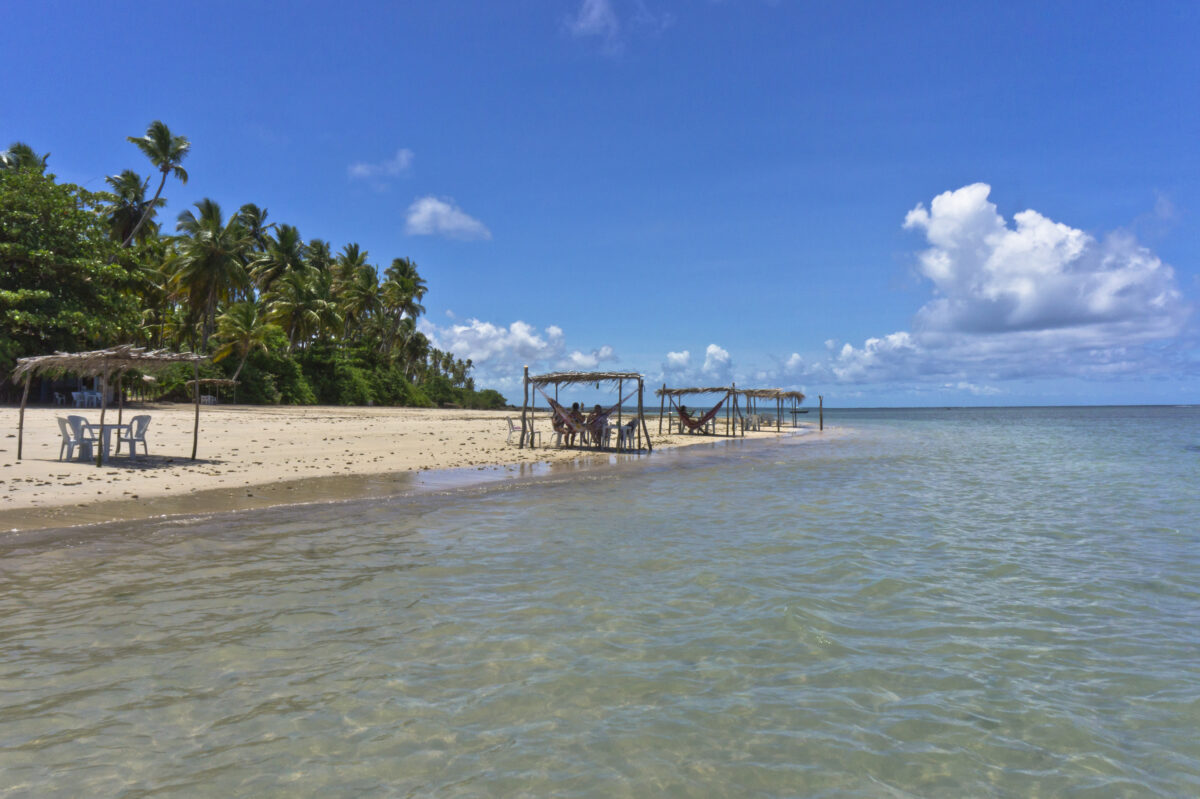
Reaching Praia de Moreré is part of the adventure. The beach lies on Ilha de Boipeba, a car-free island south of Salvador known for its slow rhythm and coral-lined coast. Travelers can arrive by small plane from Salvador (a 30-minute flight) or take a ferry to Itaparica, followed by a road transfer to a port where boats depart for Boipeba. From the island’s main village, Velha Boipeba, visitors reach Moreré by foot, tractor, or quad. The journey’s effort is well rewarded: at low tide, natural pools form among offshore reefs, revealing some of Bahia’s clearest snorkeling spots. The small fishing village has sandy streets, simple pousadas, and open-air restaurants serving fresh seafood. With limited cell service and no cars, days here flow with the tides—a place where the only agenda is to swim, eat, and sway in a hammock until sunset.
Ponta dos Castelhanos (Ilha de Boipeba)
Also on Ilha de Boipeba, the remote Ponta dos Castelhanos is one of Bahia’s most untouched beaches. You’ll reach it most easily by boat from Velha Boipeba (via a “around the island” tour) or by hiking a trail through mangroves (a guide helps). During low tide, a long strip of sand stretches into the sea, creating calm, shallow pools perfect for swimming. The area has virtually no infrastructure, save for a couple of simple kiosks serving drinks and snacks, so bring your own food and drink. Castelhanos is ideal for anyone seeking solitude and natural beauty, coupled with complete disconnection from modern life. The farther the tide recedes, the more stunning the scene becomes. Whether you visit by boat or on foot, this is Boipeba at its purest—still preserved, still quiet, and still one of the most rewarding beach adventures in Bahia.
Itacarezinho (Itacaré)
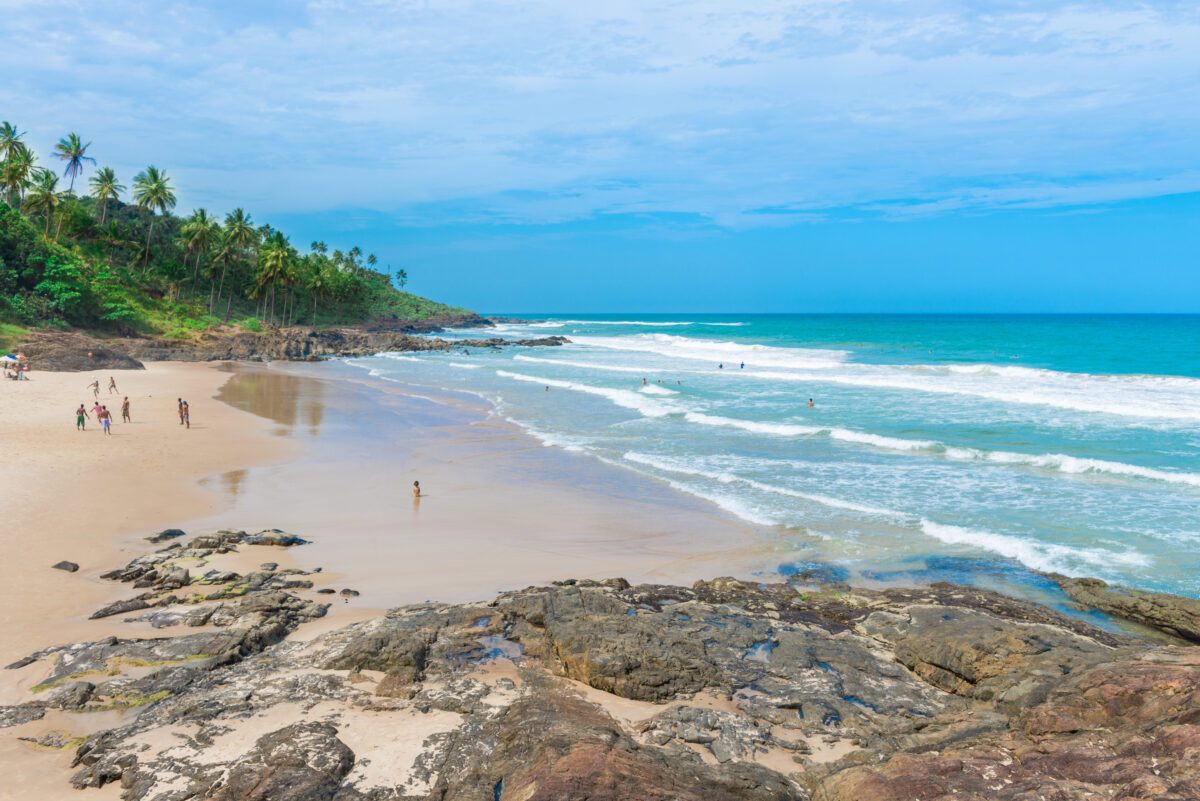
Despite its diminutive name, Itacarezinho is anything but small. This 3-kilometer stretch south of the laidback surf town of Itacaré is one of Bahia’s most breathtaking beaches. Framed by palm trees and backed by Atlantic rainforest, the wide golden sand alternates between calm natural pools and perfect surf waves depending on the tide and moon. Most visitors access it via Restaurante Itacarezinho, where cars can park close to the beach for a fee and day-use service includes shaded lounges and refined seafood dishes. The Txai Resort, perched at the center of the beach, offers a luxurious place to stay without disturbing the tranquility of the landscape. A small waterfall at the northern end provides a refreshing rinse after the saltwater, while those craving solitude can walk toward the far right where the beach meets a river.
Taipu de Fora (Península de Maraú)
One of the most spectacular beaches on the Península de Maraú, a tropical peninsula on Bahia’s southern coast, Taipu de Fora is famous for its vast natural pools that form right off the shore during low tide. Between the coral reefs and tide-carved rock formations, the ocean turns into a crystal-clear aquarium filled with colorful fish. The best time to visit is around the new or full moon, when the tide drops the lowest and the pools are at their clearest. Here you’ll find plenty of beachfront restaurants serving seafood and caipirinhas, yet walk a few minutes in either direction and the beach becomes nearly deserted, fringed by coconut palms and golden sand.
Praia do Forte (North Coast of Salvador)
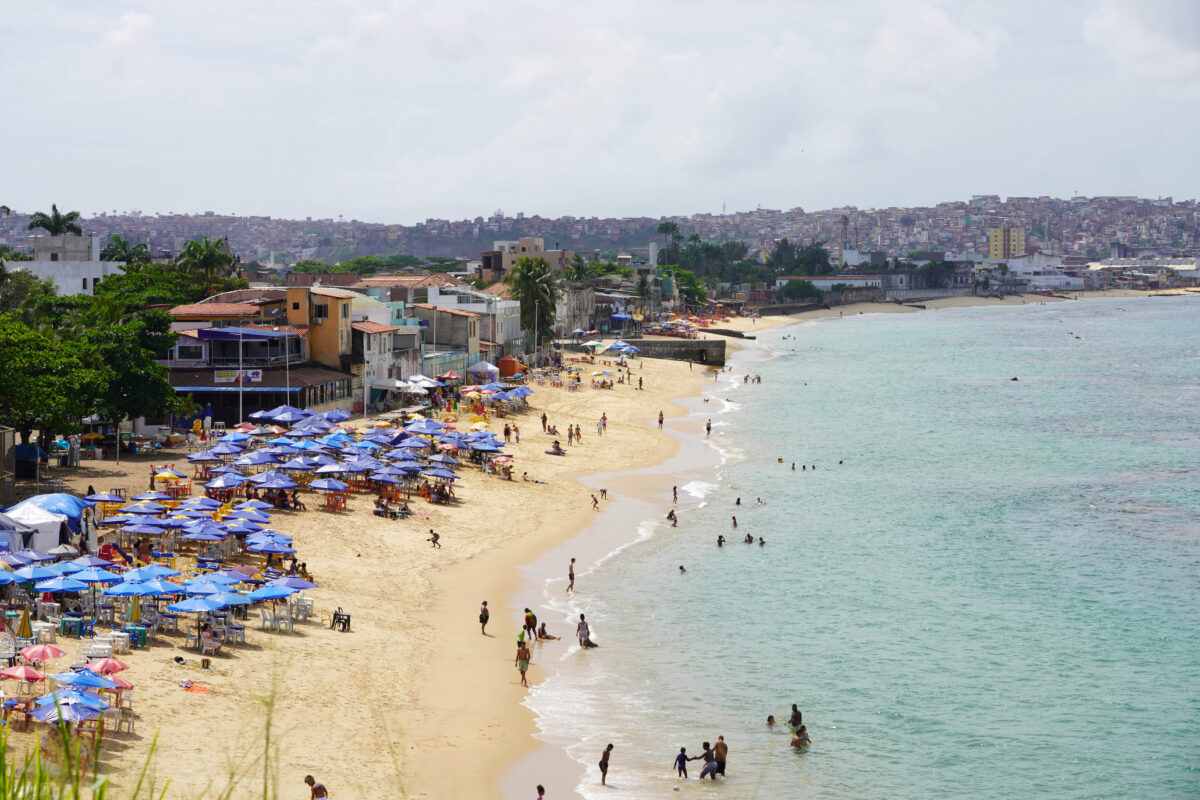
We can’t round out this list of Bahia’s best beaches without including the coast near Salvador. About 80 kilometers north of the city, Praia do Forte combines pristine beaches with one of the best tourist infrastructures in the state. Once a humble fishing village, it’s now a charming seaside town known for its calm, crystal-clear waters and well-kept natural pools that appear at low tide.
The area’s long coastline includes several beaches, yet Praia do Forte stands out for its strong conservation efforts. Here, you’ll find Projeto Tamar, Brazil’s leading sea turtle protection program, where visitors can learn about these peaceful marine creatures up close. Nearby, the Sapiranga Ecological Reserve preserves the Atlantic Forest habitat. Perched above the shore are the ruins of the castle of Garcia d’Ávila, widely cited as the only example of medieval-style fortification in Latin America, adding a dose of history to the visit.