


At a Glance
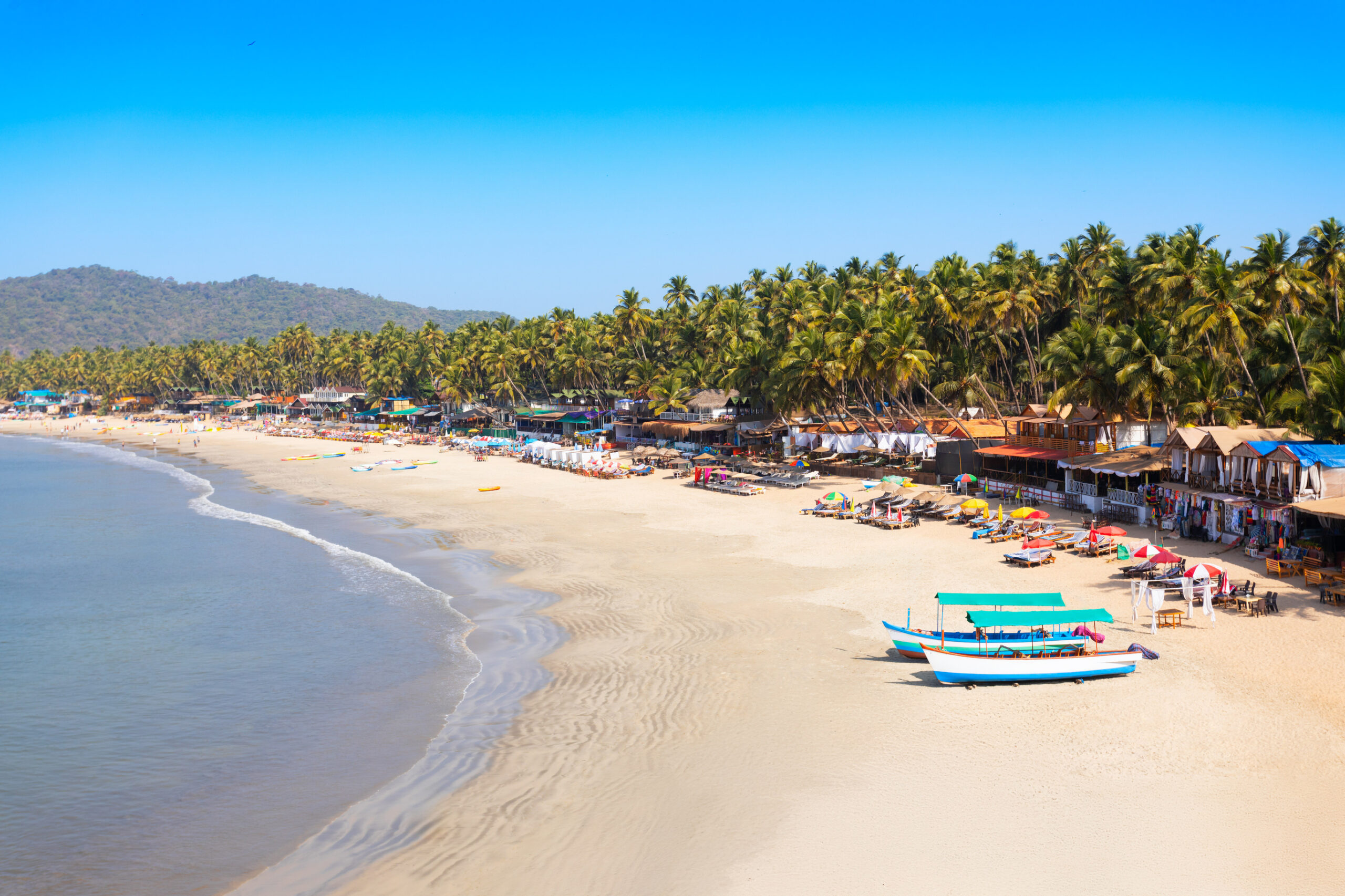
| Beach type | Crescent bay · Pale golden sand · Palm-fringed, calm Arabian Sea |
| Access | Drive or taxi to beach entrance · Scooter hire widely available |
| Entry permit | None required |
| Crowds | Moderate Nov–Mar · Quieter Apr–Oct · North end calmer than south |
| Best for | Swimming · Dolphin watching · Yoga retreats · Backwater kayaking |
| Facilities | Full range · Beach shack restaurants · Sun loungers · Kayak hire · ATMs · Pharmacies · Shops |
| Lifeguard | No |
| Dogs allowed | Yes |
The Beach
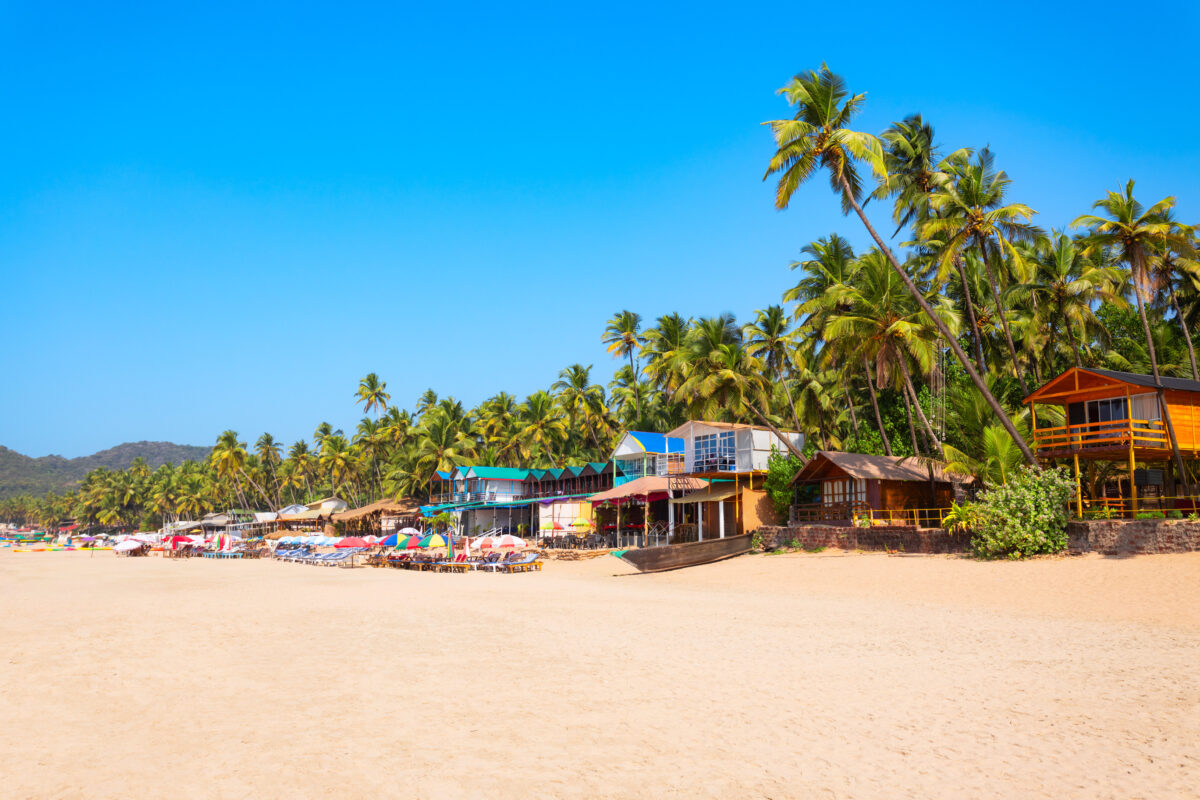
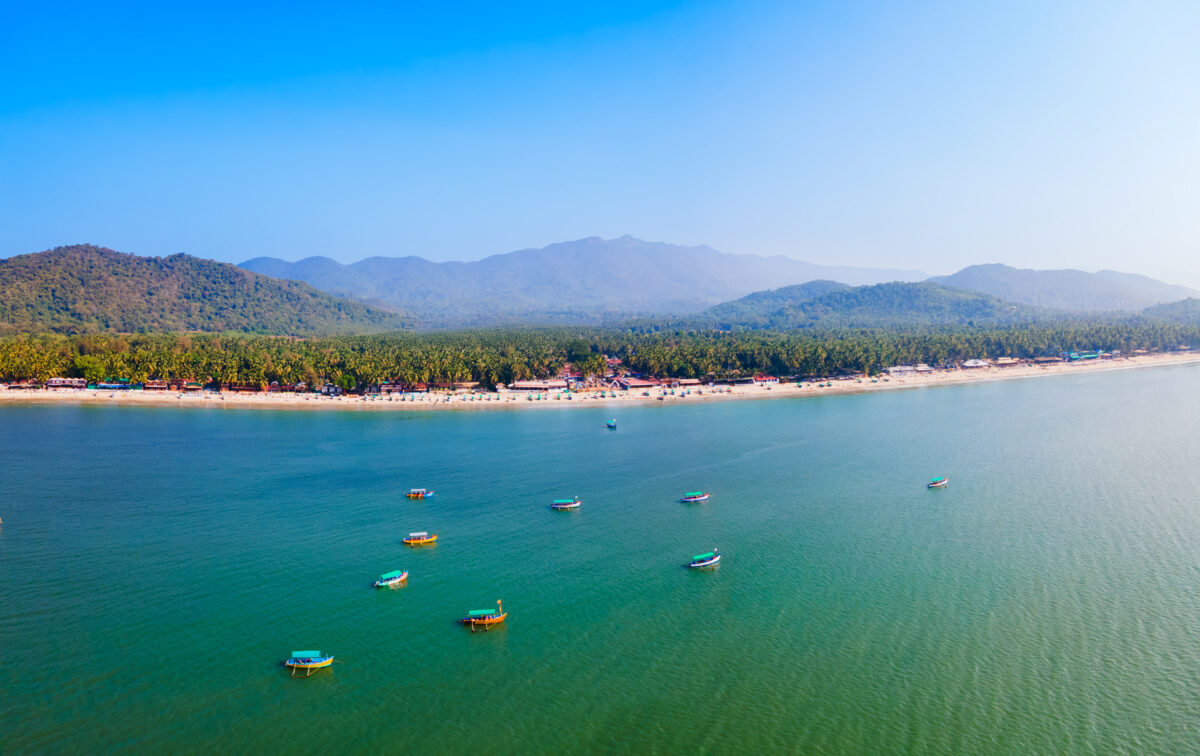
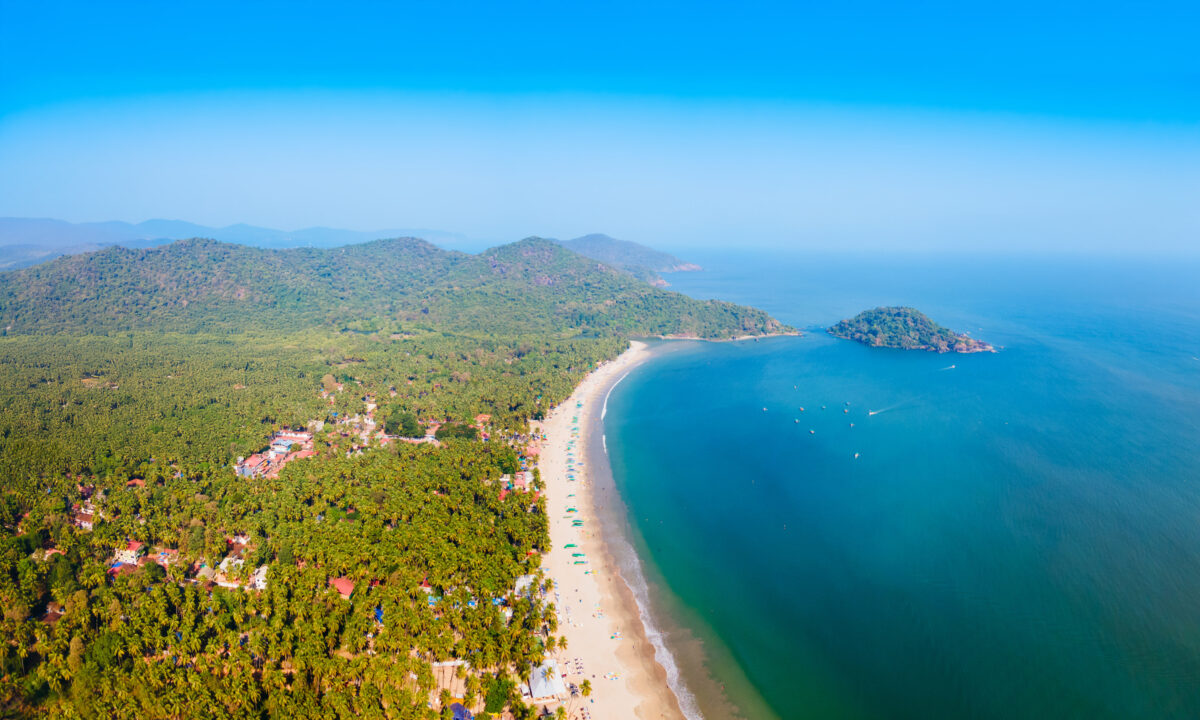
Palolem sits at the southern end of Goa, in a crescent bay. The sand is pale gold, soft, and flat enough to walk the full arc at low tide. Coconut palms lean over the back of the beach in the way you see on postcards. The Arabian Sea in the bay is calm—sheltered by headlands on both sides—which makes the swimming consistently gentle and the entry gradual enough for non-swimmers.
The north end, near the backwater inlet and Monkey Island, is quieter and draws families and solo travelers looking for something unhurried. The center is where the shack restaurants line up, each offering free sun loungers in exchange for food and drink orders. The south end is livelier, and home to the Silent Noise disco on Saturday nights.
What separates Palolem from most of South Goa’s beaches isn’t a single extraordinary feature, it’s the combination: good swimming, a functioning fishing village directly behind it, a backwater to kayak into, an interesting offshore island, and a secondary constellation of nearby beaches that reward a longer stay.
Why It Made Our World’s Best Beaches List
The building codes. Goa’s coastline has been heavily developed in the north, but Palolem has been protected from that fate. Strict regulations prevent permanent high-rise construction on the beach itself, so the accommodation lining the sand consists largely of bamboo and timber huts—structures that are dismantled at the end of every season and rebuilt the next. The beach looks now broadly as it did fifteen years ago, which on the Indian coastline is a meaningful achievement.
The noise curfew. Goa enforces a 10pm noise ban. Rather than kill nightlife, the restriction at Palolem produced something far more interesting: the Silent Noise disco, a weekly headphone party where three DJs broadcast simultaneously on different channels and the beach stays quiet enough that you can still hear the sea. It gives the place a nightlife character unlike anything else in India, and it’s worth staying for a Saturday just to experience it.
It’s the best base in South Goa. Butterfly Beach, Agonda, Patnem, the backwaters, Cotigao Wildlife Sanctuary. Palolem sits at the center of a remarkable cluster of places worth visiting. Nowhere else in South Goa puts you within easy reach of all of them.
How to Get There
Nearest airports: Goa’s Dabolim Airport (GOI) is 60–65 km north—allow around an hour and a half by taxi. The newer Mopa International Airport (GOX) is approximately 100 km away and less convenient for Palolem specifically. Check which airport your flight uses before planning your transfer, as the difference matters.
By taxi from Dabolim: This is the standard route for most visitors. Pre-paid taxi counters operate from the terminal, which takes the guesswork out of pricing. Journey time is roughly 90 minutes depending on traffic. If you use an informal taxi rather than the pre-paid counter, agree on a fixed price before you set off (metered rides are not standard in Goa).
By train: Canacona Railway Station is just 2–3 km from the beach, a five-minute auto-rickshaw ride for around ₹100. Canacona sits on the Konkan Railway route, which connects Goa to Mumbai and coastal Karnataka. From Margao—the main South Goa rail hub, 38 km away—trains to Canacona run regularly and take about 40 minutes. From Mumbai, the overnight Konkan Kanya Express or Mandovi Express are your most direct options.
By bus from Margao: Buses run regularly between Margao and Canacona village, dropping you a short auto-rickshaw ride from the beach. The journey takes around an hour and is a practical, budget-friendly option if you’re arriving by train in Margao and want to avoid the full taxi fare.
By scooter: Once you’re in Palolem, hiring a scooter (around ₹350 per day) is the most practical way to explore the surrounding area. It’s essential for reaching Agonda, Butterfly Beach, and Cotigao.
Entry requirements: None. No permit or entry fee applies to Palolem Beach
Best Time to Visit
The monsoon clears by mid-October, and by November the sea is calm and the beach shacks are back open for the season. December and January are the sweet spot with warm days, cool evenings, good swimming, and manageable crowds. Late December spikes with Christmas and New Year visitors; if you have flexibility, the first two weeks of January offer peak-season conditions without peak-season pricing. February remains excellent. March brings higher temperatures and the year’s warmest water, though the crowds thin as European visitors head home.
Dry season (November–March): The main tourist season. Temperatures sit between 21–30°C, the sea is calm, and all facilities are operating. Water sports run from October through May. The shack restaurants, yoga schools, and boat operators are fully open. Accommodation fills quickly in December, so book ahead if you’re visiting over the holidays.
Shoulder (April–May): Hot and humid, with water temperatures at their annual peak. Some shoulder pricing kicks in as the European crowd thins out. Conditions are still good for swimming and water sports, and the beach is noticeably quieter (a decent trade-off if heat doesn’t bother you).
Monsoon (June–September): The beach shacks close and most accommodation shuts down for the season. The sea is rough and boat trips don’t run. Palolem during this period is largely a locals-only village. A handful of guesthouses stay open for budget travelers willing to experience monsoon Goa—heavy rain, green hills—just don’t come expecting beach activities.
October: A transitional month. The monsoon retreats and some operators open early. Worth checking ahead if you’re visiting in the first half of the month, as availability and conditions can vary.
Things to Do at Palolem Beach
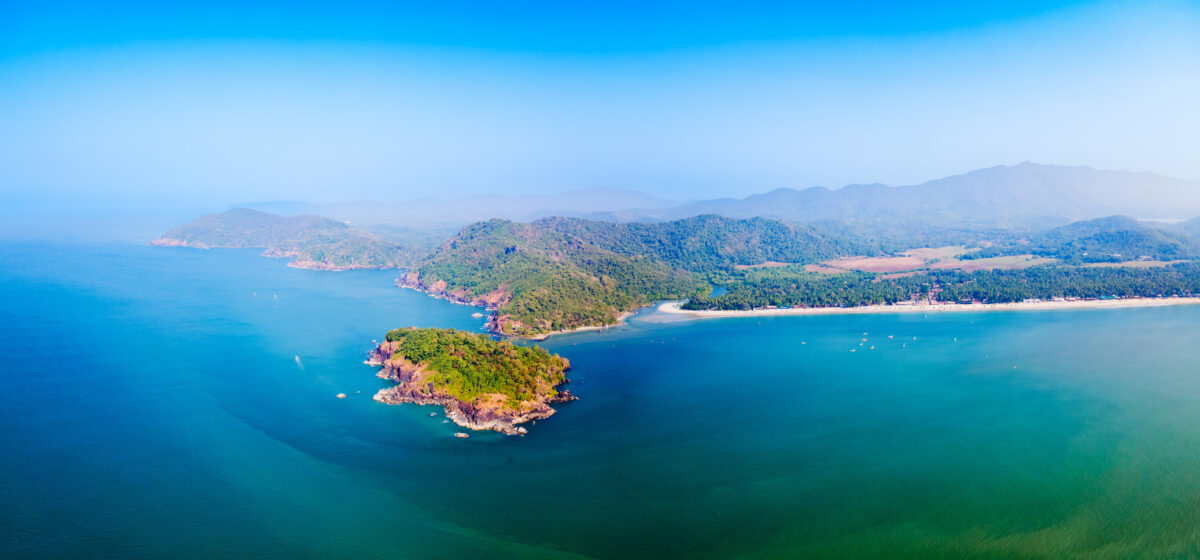
Swimming: The bay’s sheltered geometry keeps conditions calm throughout the dry season. The entry is sandy and gradual, chest-depth water is reachable without navigating rocks or coral, and the sea is warm enough to stay in for hours.
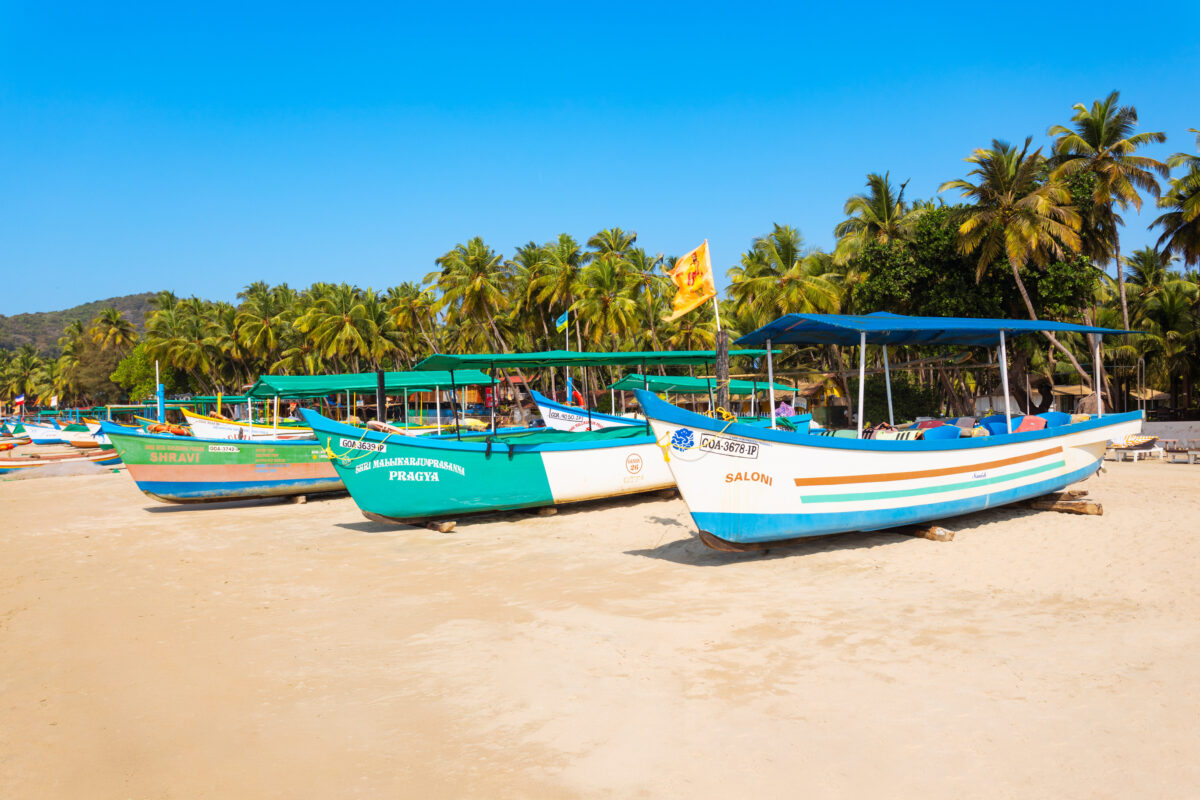
Dolphin watching: Boat operators run early-morning dolphin-watching trips departing around 6:30am and returning before 9am, getting you back on the beach before the heat builds. Indian Ocean humpback dolphins are resident in the bay; bottlenose dolphins appear seasonally. The sea is flattest before the afternoon wind picks up, which is another reason the early start works in your favor. Prices run around ₹600–1,000 per person but you can negotiate directly with operators on the beach.
Backwater kayaking: At the northern end of Palolem, a backwater channel runs inland behind the beach, flanked by hills, mangroves, and kingfishers. Hire a kayak directly on the beach and paddle in at your own pace. The channel leads to a floating rock formation. Monkey Island (Canacona Island) is reachable on foot at low tide, or by kayak or small boat at other times.
Silent Noise disco: Every Saturday night from November through April, Neptune Point at the southern end of the beach hosts Goa’s most distinctive night out: a silent disco where three DJs broadcast simultaneously on separate headphone channels, each color-coded. You can see what everyone else is hearing by looking at the color of their headphones—and watch an entire beach of people dancing to songs only they can hear. Entry is around ₹800 per person including headphones. It runs from 9pm to roughly 3–4am, and it’s worth staying up for.
Yoga: Palolem has a healthy concentration of yoga schools ranging from serious to perfunctory. Anand Yoga Village is the most consistently recommended—a full retreat with accommodation and meals for those booking stays, but drop-in classes are available for around ₹250–400 per session. Earth Yoga Village is another established option, right on the beach itself.
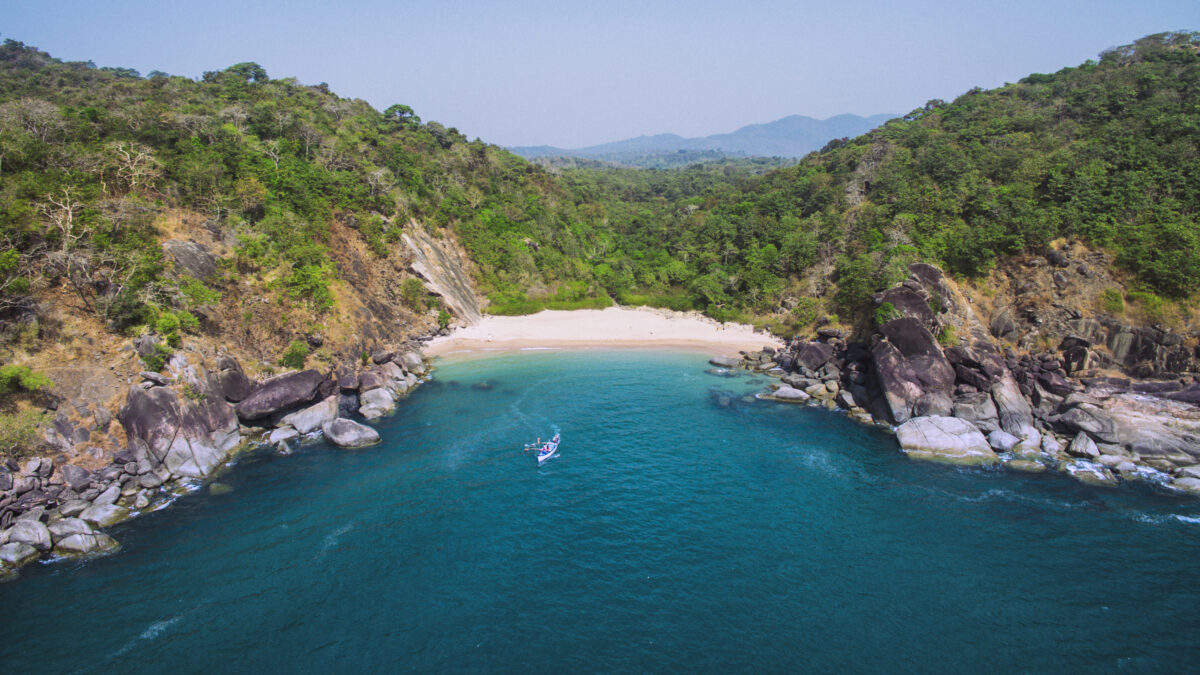
Butterfly Beach day trip: A small, secluded cove roughly 4 km north of Palolem by boat (₹300–500 per person), accessible only by water or via a 30-minute forest trek. The beach is tiny, has no facilities whatsoever, and is genuinely quiet outside peak weekends. Water clarity here is noticeably better than the main bay. Bring water, bring food, and arrange your return time with the boatman before he leaves.
Where to Stay Near Palolem Beach

Palolem’s accommodation character is defined by what isn’t here: no high-rise hotels, no international chains. Everything is small-scale—bamboo-and-timber huts directly on or near the sand, mid-range guesthouses set slightly back, and a small number of boutique options.
Bhakti Kutir — Eco-boutique. Coconut-grove setting behind the beach, with thatched cottages built into the hillside. The most characterful option in the area; yoga and Ayurveda on site.
Oceanic Luxury Boutique Hotel — Mid-range. On the Palolem–Patnem road, 200 meters from the beach. Pool, consistently well-reviewed, good value for the quality offered.
Coco Hostel Goa — Budget. Five minutes’ walk from the beach. Garden, bar, social common areas. The most practical option for solo travelers or backpackers.
Nearby Beaches
Palolem is the most practical hub for South Goa’s southern beaches and all reachable by scooter, auto-rickshaw, or boat.
Patnem Beach: 2 km south on foot or by auto-rickshaw. Quieter and slightly less developed than Palolem, with the same shack-and-sun-lounger setup at lower density. A better choice if you want the Palolem infrastructure at reduced volume.
Agonda Beach: 20 minutes north by scooter. One of the longest and least developed beaches in Goa—a wide, open bay with almost no commercial development and an important sea turtle nesting site. The contrast with Palolem is stark and worth experiencing.
Butterfly Beach: 4 km north by boat. Tiny, secluded, and facility-free. The journey is part of the point—a short boat ride along a coastline of forested cliffs. See above for logistics.
Conservation and Responsible Travel
Palolem sits adjacent to the Cotigao Wildlife Sanctuary, and the backwater at the northern end of the beach feeds into a mangrove system that supports significant birdlife. The beach itself benefits from seasonal closure. The annual dismantling of structures at the end of each tourist season allows the foreshore to reset, and the building restrictions that prevent permanent development have so far held.
Rules and practical responsibilities:
- Do not approach, feed, or handle the monkeys on Monkey Island or in the surrounding area. They are wild animals.
- Use reef-safe sunscreen. The Arabian Sea coral around Palolem’s southern headland is under pressure from warming and chemical runoff.
- Agonda Beach, 20 minutes north, is a nesting site for Olive Ridley sea turtles (November–March). If you visit during nesting season, stay on marked paths and do not approach nests or hatchlings.
- Dolphin watching—book with operators who maintain a respectful distance from pods and do not rev engines near dolphins. Ask before you board.
FAQs
Is Palolem Beach good for swimming?
Yes. It’s one of the most reliably swimmable beaches in Goa. The crescent bay is sheltered on both sides by headlands, which keeps the sea calm even when conditions offshore are choppier. Entry is sandy and gradual. There is no lifeguard; take standard precautions and be aware that jellyfish are occasionally present, particularly in early morning when fewer swimmers are in the water.
Is Palolem Beach safe?
Palolem is generally considered one of the safer tourist destinations in India, particularly for solo travelers and women. The beach has a well-established traveler infrastructure and a local community that’s been hosting visitors for decades. Standard precautions apply: keep an eye on your belongings on the beach, use pre-paid taxis or agreed fixed fares, and avoid the water at night.
What’s the food like at Palolem?
Very good, and surprisingly varied. The beach shack restaurants serve everything from fresh grilled seafood and Goan fish curry to wood-fired pizza and full English breakfasts. For something more authentic, head into Canacona village, where you’ll find local Goan restaurants serving thalis and seafood at a fraction of beach-shack prices.
Is Palolem good for families with young children?
Yes. The calm, shallow water makes it one of the more family-friendly beaches in Goa, and the gradual sandy entry means children can wade in safely without navigating rocks. The north end of the beach, near the backwater, tends to be quieter and suits families well. The main thing to note is that there’s no lifeguard.
Is Palolem walkable, or do I need transport?
The beach itself and the immediate strip of restaurants, shops, and guesthouses are all walkable. For anything beyond that—Patnem, Agonda, Butterfly Beach, Cotigao—you’ll want a scooter or auto-rickshaw.
What currency is used, and can I pay by card?
Indian Rupees (INR). Card payments are accepted at some hotels and larger restaurants, but the beach shacks, boat operators, scooter hirers, and most smaller businesses operate on cash only. Don’t assume a card will get you through—carry rupees and carry more than you think you’ll need, given ATM reliability issues.


