I’ve been to Santorini a handful of times now, and there’s one question I get asked more than any other: “How do you afford it?” The assumption is always the same—that Santorini is a bucket-list splurge, the kind of place you save for years and visit once. And look: it can be that, but it doesn’t have to be.
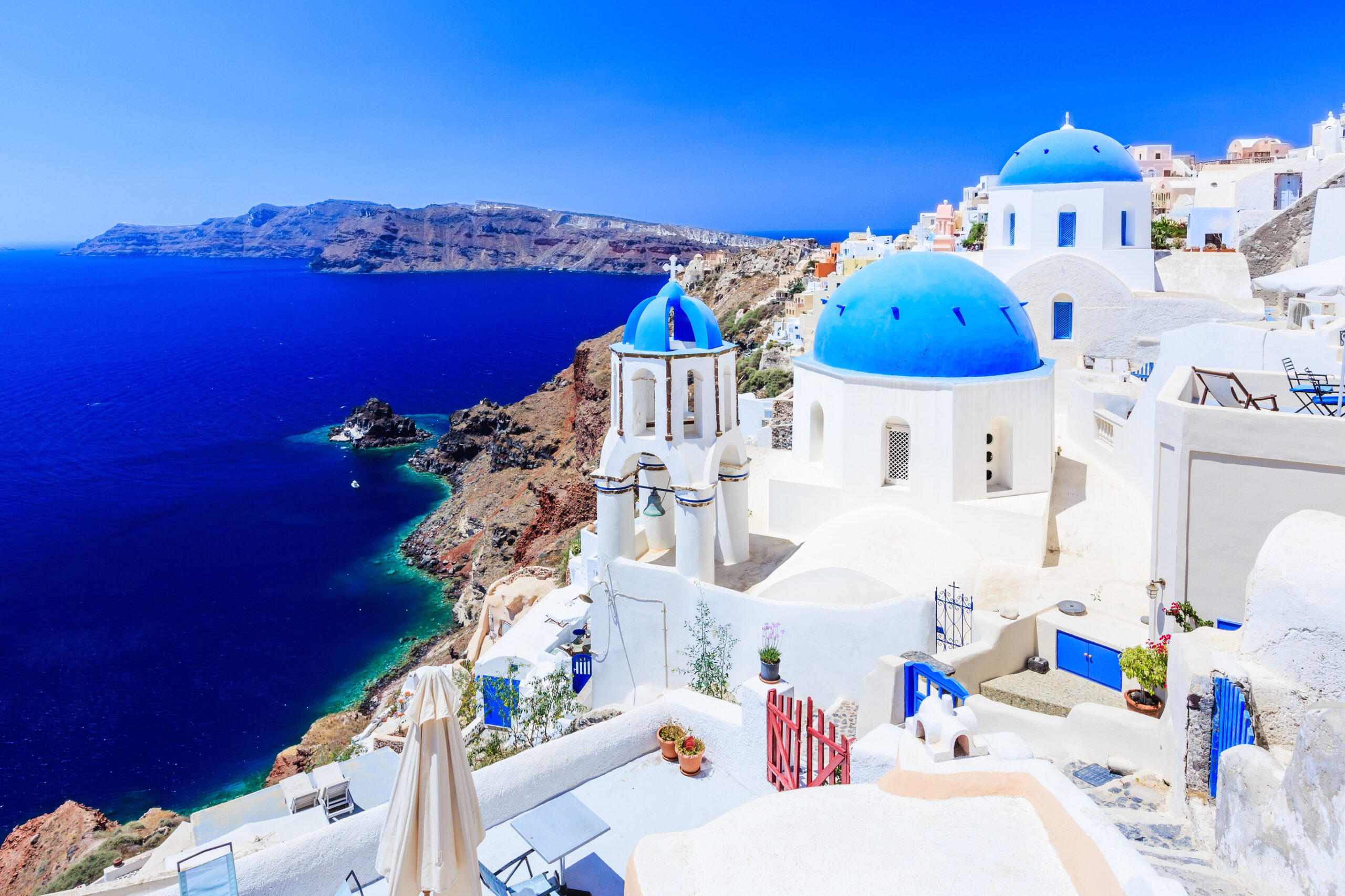
The island has a reputation for infinity pools and eye-watering sunset dinners, and sure, that version of Santorini exists (and it’s very good at getting itself photographed).
What doesn’t get talked about as much is the other version, the one where you’re eating incredible tomato fritters for a few euros, walking clifftop paths that cost nothing, and watching that same famous sunset from a spot with a fraction of the crowd and none of the markup. Here’s exactly how I do it.
When to Visit Santorini for the Best Prices
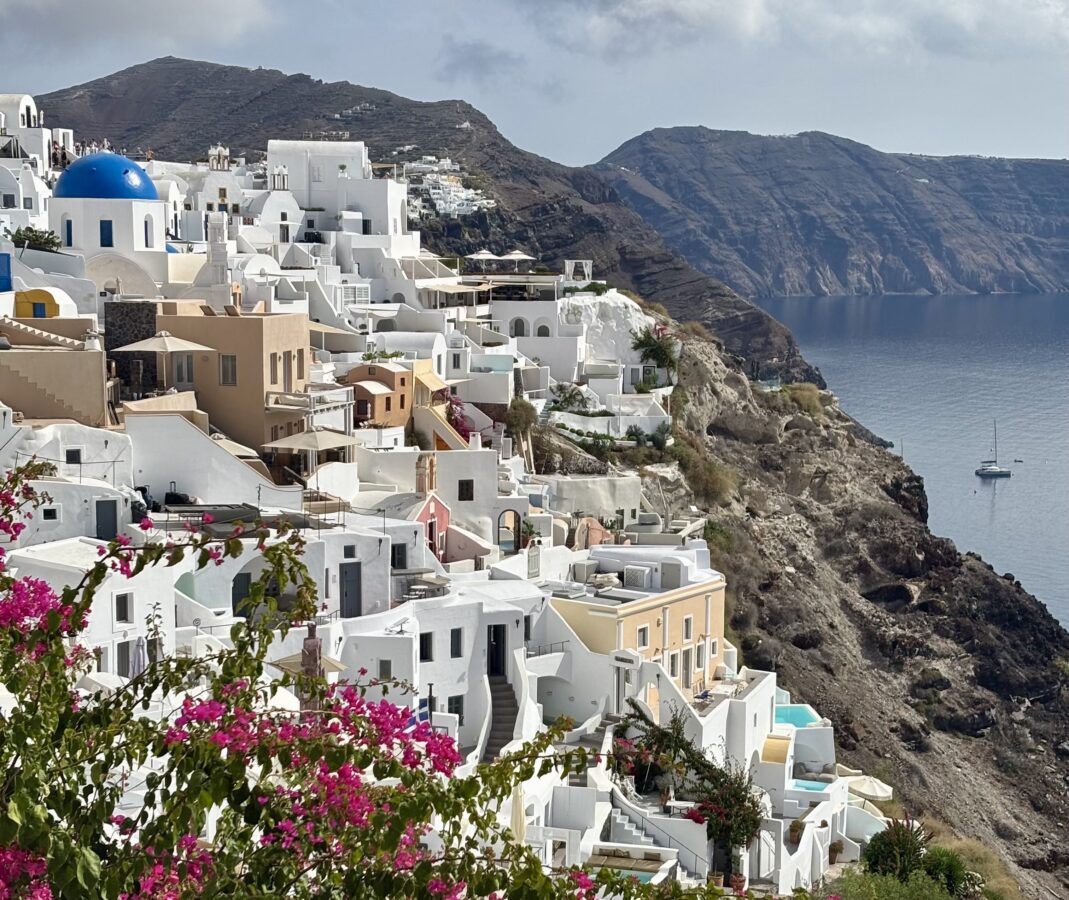
If there’s one decision that will affect your budget more than any other, it’s timing. July and August are peak season in every sense—flights, hotels, even a plate of fava beans somehow costs more. I’ve visited in high summer and I’ve visited in May and October, and the price difference isn’t subtle. Accommodation alone can drop by 30-40% outside of peak months.
Late April through May, and September through mid-October, are the sweet spot. The sea is still warm enough to swim in September especially, the light is arguably better for photos (softer, less white-out glare), and restaurants aren’t fully booked out by cruise ship crowds. I got a caldera-adjacent room in October for less than half what the same place was charging in August.
If you can be flexible, shoulder season isn’t a compromise; it’s actually the better time to go.
Where to Stay Without Paying Caldera Prices
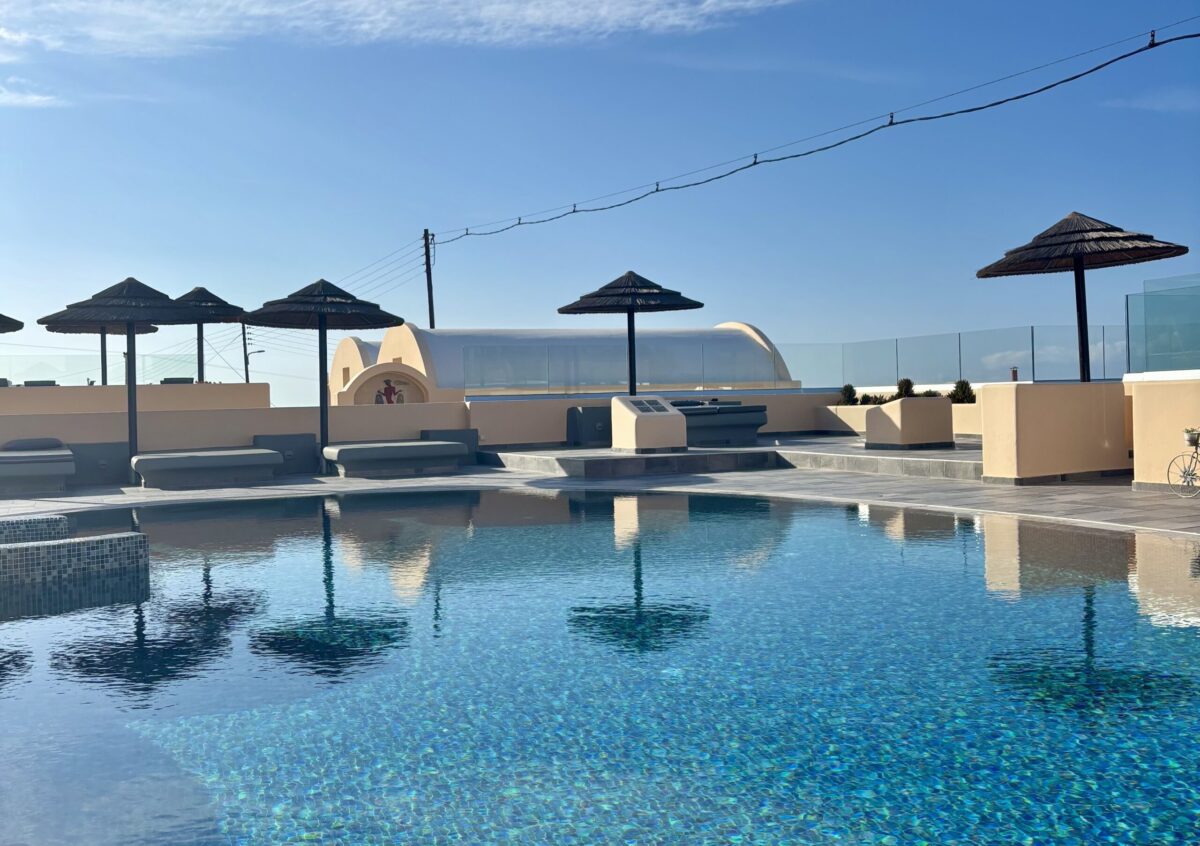
Fira and Oia are where the postcard views live, and they know it. A caldera-view room in either town can run into the hundreds per night even in low season. But Santorini is a small island, and you don’t have to sleep where you sightsee.
I’ve had really good, really cheap stays in Perissa, Kamari, and Karterados—all a short bus or ATV ride from Fira, all considerably easier on the wallet. Perissa in particular has its own charm: a long black-sand beach, a much more local, unhurried feel, and guesthouses where a clean, comfortable double can come in well under what you’d pay for a broom cupboard with a caldera sliver in Oia.
My approach now is always the same: book somewhere affordable outside the main towns, then budget a sunset trip or two into Oia or Fira as an outing rather than trying to live inside the postcard the whole week.
It’s also worth booking directly with smaller guesthouses where you can, rather than always going through the big booking sites.
A few of the places I’ve stayed have knocked a bit off the price, or thrown in breakfast, simply for booking direct (and you tend to get more useful local tips from an owner than from an app).
Getting Around Santorini on a Budget
Taxis on Santorini are notoriously expensive and, during peak times, difficult to find. Skip them where you can.
The local bus network (KTEL) connects most of the island from a central hub in Fira, and it’s remarkably cheap—a few euros gets you between towns and beaches. It’s not always frequent, so it takes a bit of planning, but for point-to-point trips it’s the best value option by far.
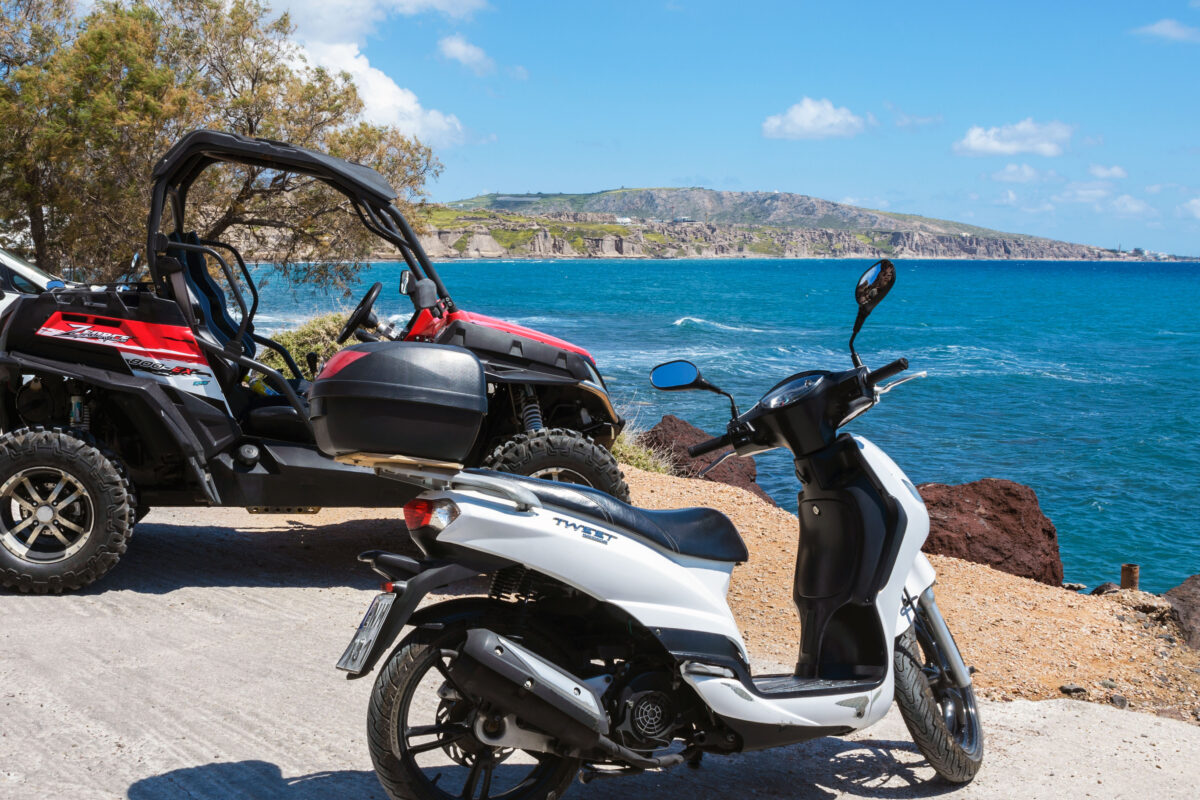
For flexibility, I usually hire an ATV or a small car for a day or two rather than the whole trip. Split between a couple of people, it works out very reasonably, and it means you can get to the quieter spots the bus doesn’t reach, like the Red Beach car park, the trailhead for the Fira-to-Oia walk, or Pyrgos village up in the hills.
I wouldn’t hire one for a week straight; a couple of well-planned days covers everything the buses can’t.

Free and Cheap Things to Do in Santorini
This is the part people are always surprised by. So much of what makes Santorini special doesn’t cost anything.
The walk from Fira to Oia along the caldera rim is, in my opinion, the single best thing to do on the island, and it’s completely free. It takes around three hours at a relaxed pace, with views the entire way that put most paid excursions to shame. Start early to beat the heat.
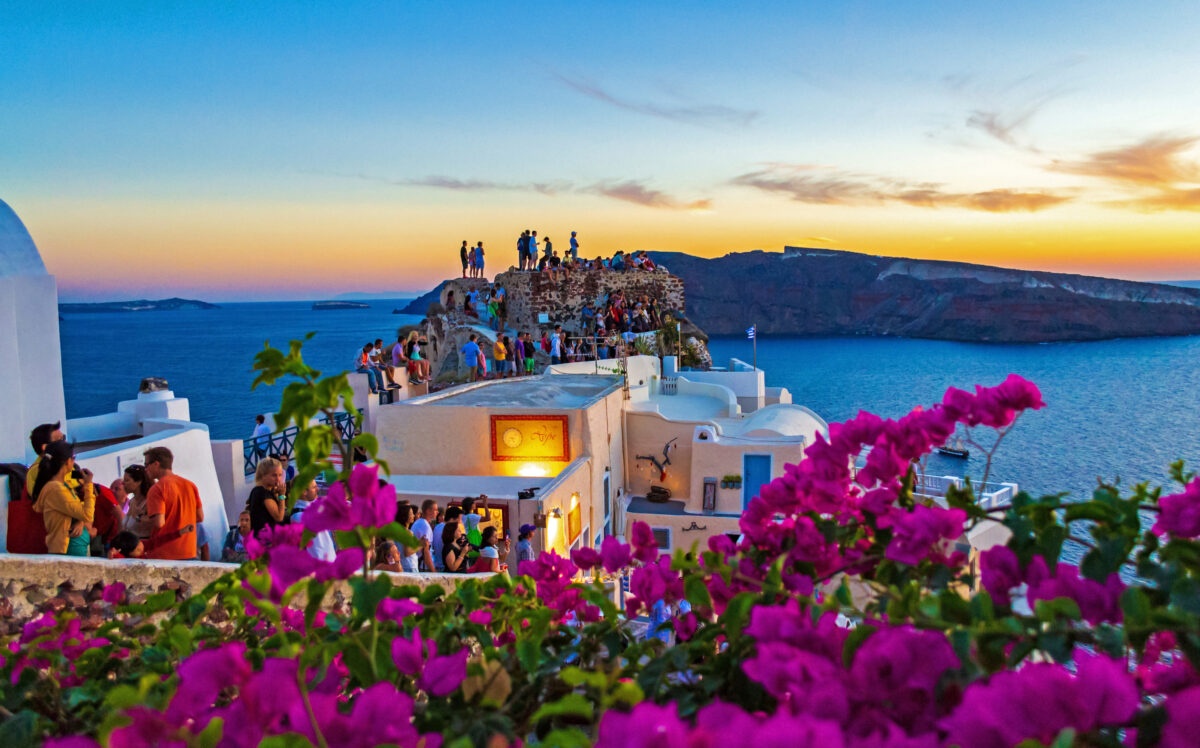
Sunset viewing in Oia gets all the attention (and all the crowds), but I’ve had just as good an experience watching it from Imerovigli, or from the caldera path itself, with a fraction of the people and zero cover charge. Akrotiri Lighthouse is another quieter sunset spot worth the detour.
Beyond that: wander Pyrgos, one of the island’s oldest villages and largely tourist-free; walk the black sand beaches at Perissa and Kamari, which cost nothing beyond a towel; and spend an afternoon in Fira’s back streets away from the main strip, where the architecture is just as photogenic without the queue for a photo spot.
Emporio is another village worth a wander for the same reason—a maze of narrow lanes and old stone houses, with a ruined Venetian castle at its center, and hardly another tourist in sight. It’s the sort of place that reminds you Santorini is a real, lived-in island, not just a backdrop.
Eating and Drinking Without the Tourist Markup
The general rule I follow: the closer a restaurant is to a caldera view, the more you’re paying for the view rather than the food. That’s not always true, but it’s true often enough to be useful.
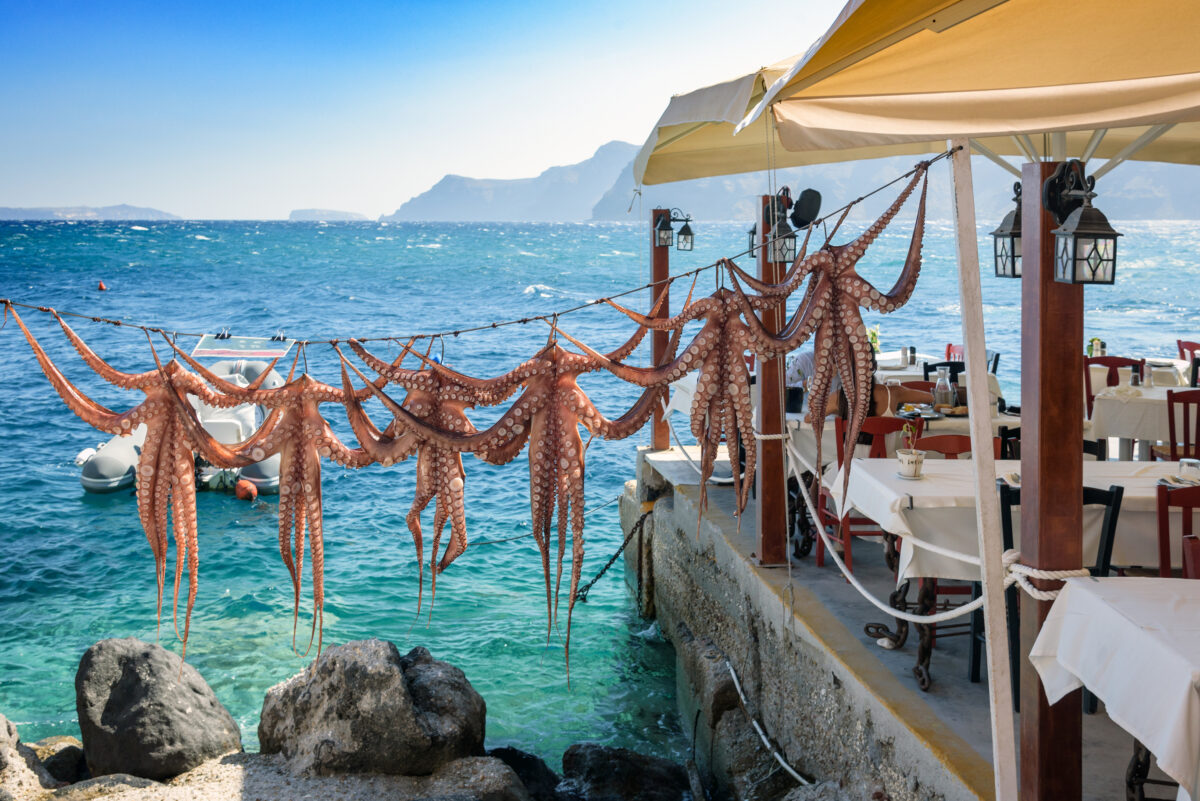
Some of the best meals I’ve had on Santorini have been in small, unassuming tavernas a street or two back from the main viewpoints, where prices drop noticeably and the food is, if anything, better.
We’re talking proper Greek salads with local tomatoes (Santorini tomatoes are a must-try kind of thing, small and intensely flavored because of the volcanic soil), fava with caramelized onions, fresh grilled fish priced by the kilo rather than inflated for the view.
Perissa and Kamari both have excellent, good-value tavernas right on the seafront. You get the view without the Oia price tag. And for something quick and cheap, look out for bakeries selling tomato keftedes (fritters) and spanakopita for a couple of euros—an easy, filling lunch on the move.
Budget-Friendly Day Trips and Activities
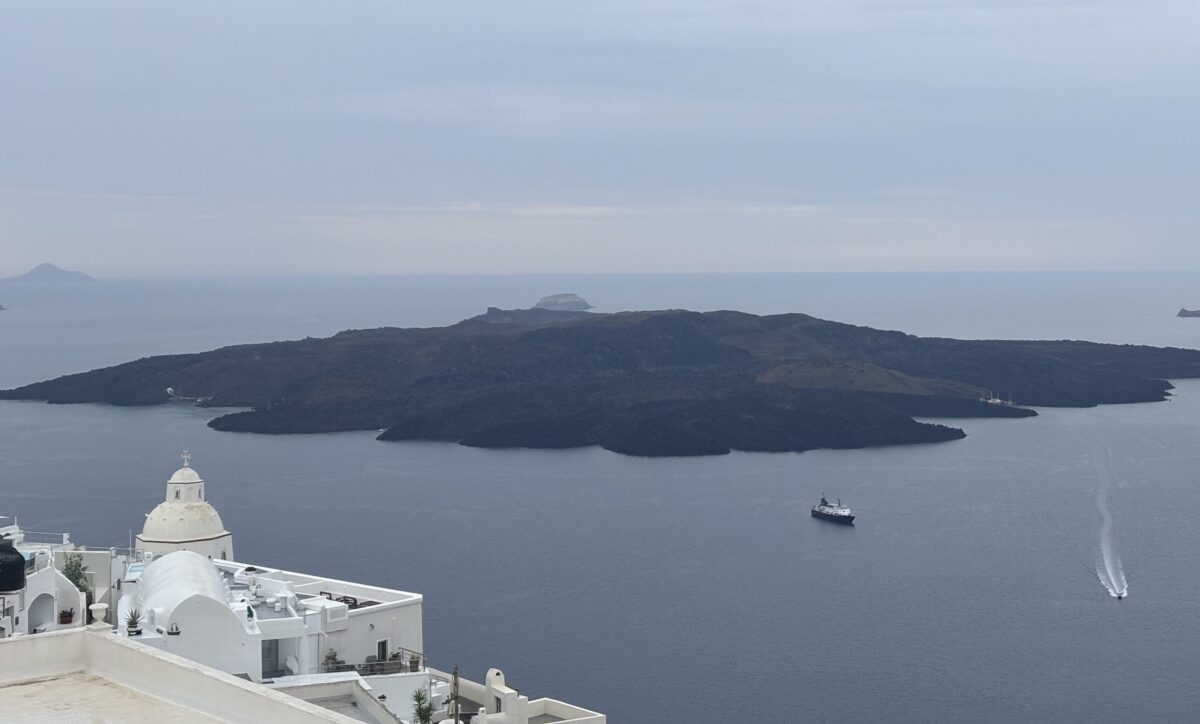
You don’t need to book the priciest catamaran tour to see Santorini from the water. Shared boat trips around the caldera, stopping at the hot springs and Nea Kameni volcano, run at a fraction of the cost of a private charter and you still get the same views and swim stops.
Speaking of the volcano, hiking Nea Kameni is one of the cheapest activities on the island relative to what you get: a short, easy walk up an active volcanic crater, with the boat crossing included in most low-cost group tours.
Wine is another area where Santorini rewards a bit of research. Rather than the big-name wineries with steep tasting fees, some of the smaller, family-run vineyards offer tastings for a few euros that are just as good, often better, since you’re usually talking to the person who actually made the wine.
What’s Worth the Splurge?
Budget travel doesn’t mean saying no to everything, and after a few trips I’ve got a clearer sense of where the money’s actually well spent.
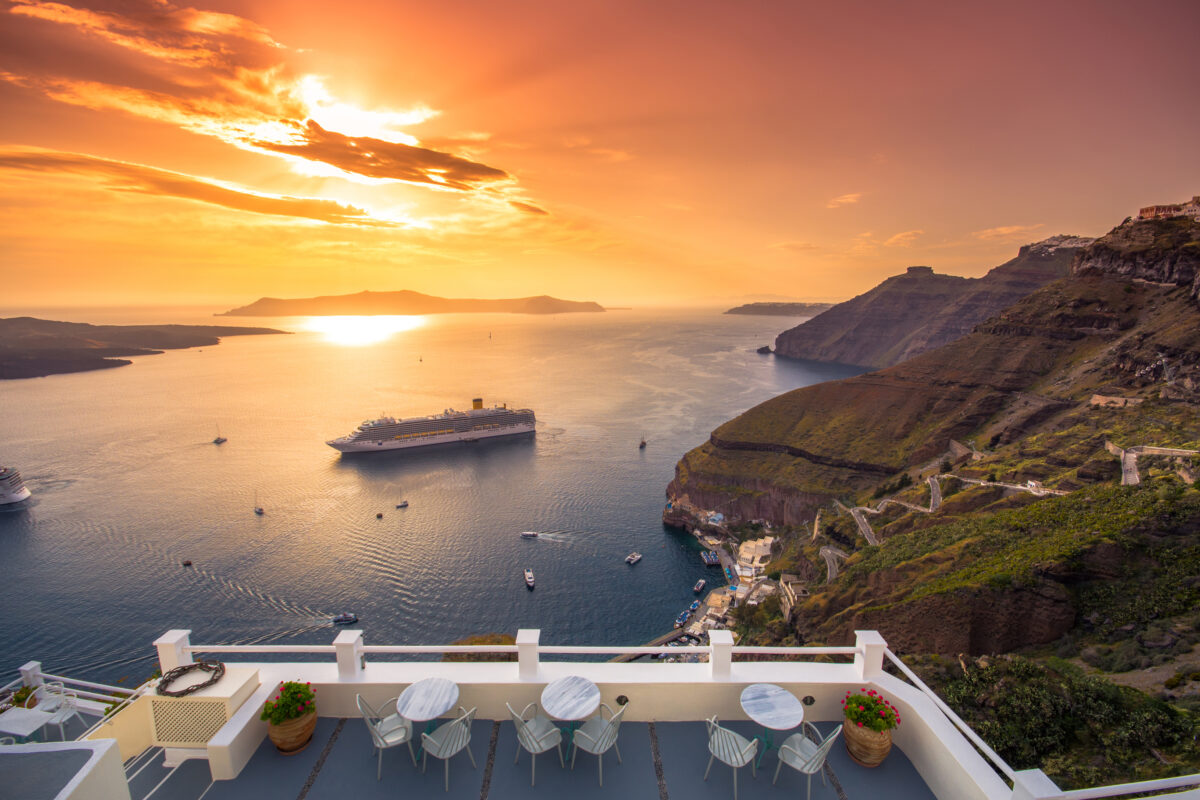
One night in a caldera-view room, even just one, is worth it. There’s a reason people save up for it—waking up to that view is a whole different experience from seeing it from a viewpoint, and one night keeps the cost manageable while you still get it.
A catamaran sunset cruise is the other one I’d make an exception for, at least once. Being out on the water as the caldera turns pink is a gorgeous experience.
What I’d skip: dinner at a “sunset view” restaurant in Oia, where you’re often paying double for average food and a table booked hours in advance.
A spa treatment at your hotel is another one to give a miss. Santorini has some lovely ones, but the prices are steep and you’ll find similar (sometimes better) treatments off the tourist strip for a fraction of the cost. Save the splurge budget for the view, not the extras around it.
My 2026 Santorini Budget Breakdown
To give you real numbers rather than vague reassurance, here’s roughly what a budget-conscious few days on Santorini has looked like for me, traveling in shoulder season:
- Accommodation: €40-70/night for a guesthouse in Perissa/Kamari/Karterados vs. €200-300+ for a caldera-view room in Oia
- Food: €15-25/day eating local vs. €120-160 for a caldera-view dinner for two
- Transport: €4-8/day on buses, or €25-35/day for an ATV
- Activities: free hike, around €35-40 for a shared volcano/hot springs boat tour (plus a €5 crater entry fee), €10-15 for a small winery tasting
Total: roughly €65-90/person/day, excluding flights.