
When most people think of Portugal’s beaches, they picture the sun-drenched Algarve in the south. But the Sintra coast is something uniquely its own. I moved here from the US not long ago, and the coastline is one of the things that made the decision an easy one. Where else can you drive twenty minutes through eucalyptus forests and misty hills and arrive at a cliff-top above the churning Atlantic, with almost no one around?
Sintra itself is an inland town (a UNESCO World Heritage Site to be exact) in the Serra de Sintra hills, known for its extraordinary Romantic palaces like Pena, Monserrate, and the ancient Moorish Castle. It’s a fairy-tale kind of place, full of winding cobblestone lanes, pastry shops selling the famous travesseiros, and more history than you can absorb in a single visit. But the coast is just a short hop away, and it offers something completely different from the palace-and-gardens crowds.
The Sintra coast faces west, straight into the open Atlantic. This means wilder waves, stronger winds, and more dramatic scenery than the calmer southern Portuguese Riviera beaches around Cascais and Estoril. The water temperature hovers around 15–17°C (59–63°F) even in summer, so most locals treat it as an adventure beach rather than a lounging destination (though on warm August days, the beaches fill up fast). The entire coastline sits within the protected Sintra-Cascais Natural Park, which keeps development low and the natural beauty intact.
Whether you’re visiting for a day from Lisbon or lucky enough to be based here like me, here’s your guide to the best the Sintra coast has to offer.
Getting Here
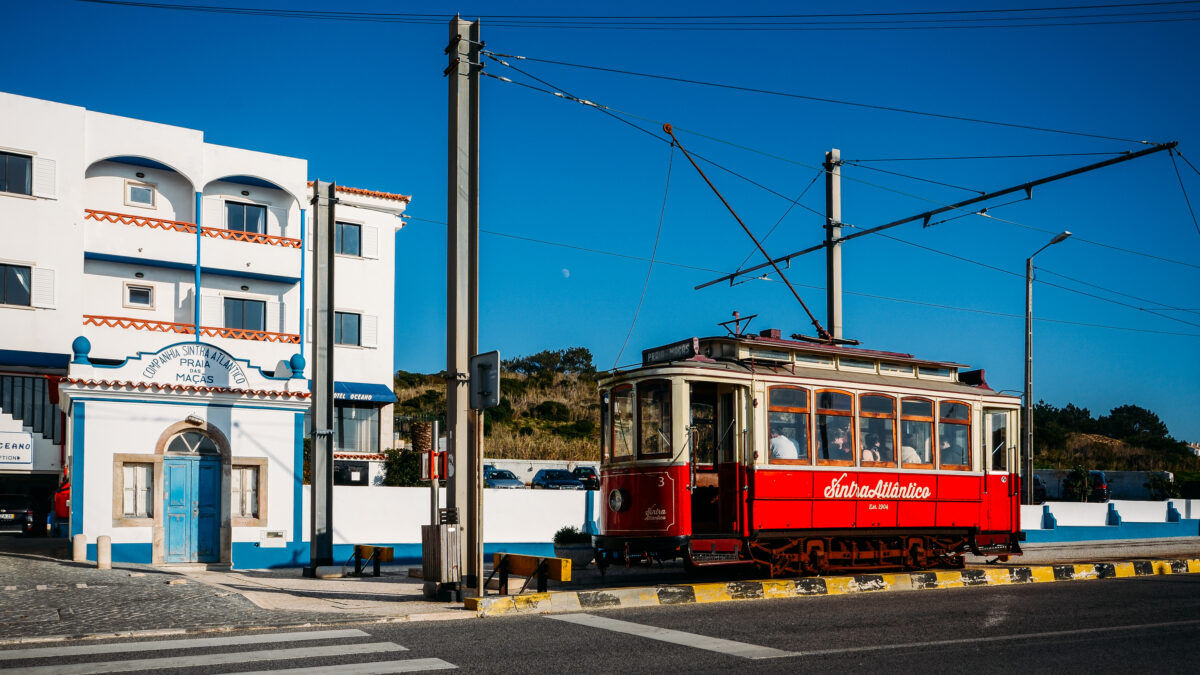
From Sintra town, most beaches are a 10–25 minute drive. If you’re car-free, the Scotturb bus network connects Sintra train station to the coast. There’s also one of the most charming ways to reach the beach anywhere in the world: the historic electric tram that trundles from Sintra town out to Praia das Maçãs, passing through vineyards and shaded valleys at a wonderfully unhurried pace. It runs seasonally so check the timetable before you go.
From Lisbon, the train to Sintra takes about 40 minutes from Rossio station, and buses to the coast add another 30–45 minutes on top.
The Beaches
Praia das Maçãs
Best for: Families, first-timers, summer days, surfing
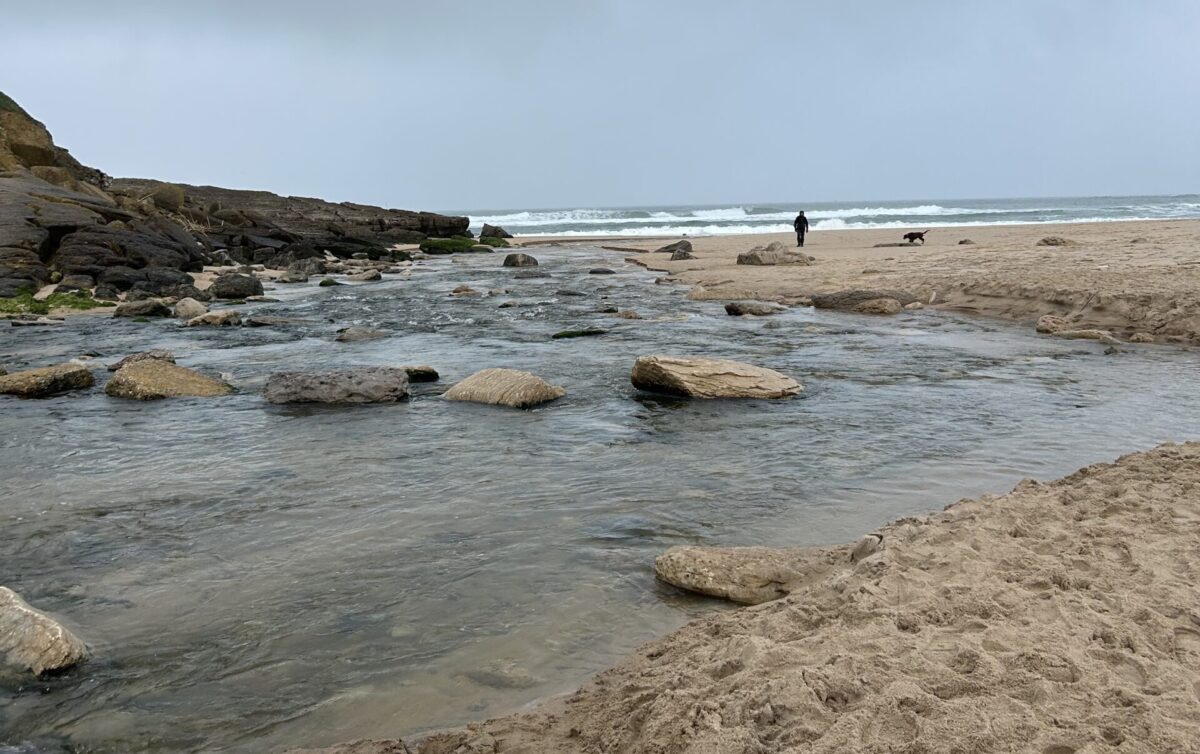
Praia das Maçãs — “Apple Beach” — gets its name from the apple orchards that used to line the river valley leading to the sea, where fallen fruit would reportedly wash down to the sand. It’s the most accessible and popular beach on the Sintra coast, and for good reason. There’s a proper village here with restaurants, cafés, shops, public showers, toilets, and lifeguards from May through mid-October. A saltwater pool sits right on the beach, and there are even tennis courts nearby.
This is where I come when I want an easy beach day without too much effort. The tram drops you right here, the parking is free and plentiful, and there’s always somewhere to grab a cold Sagres and a plate of grilled fish afterward. The waves are consistent enough for beginner and intermediate surfers, and surf schools operate here in season.
Getting there: Take the historic tram from Sintra town (seasonal) or drive/bus directly.
Azenhas do Mar
Best for: Photos, a tidal pool dip, slow mornings
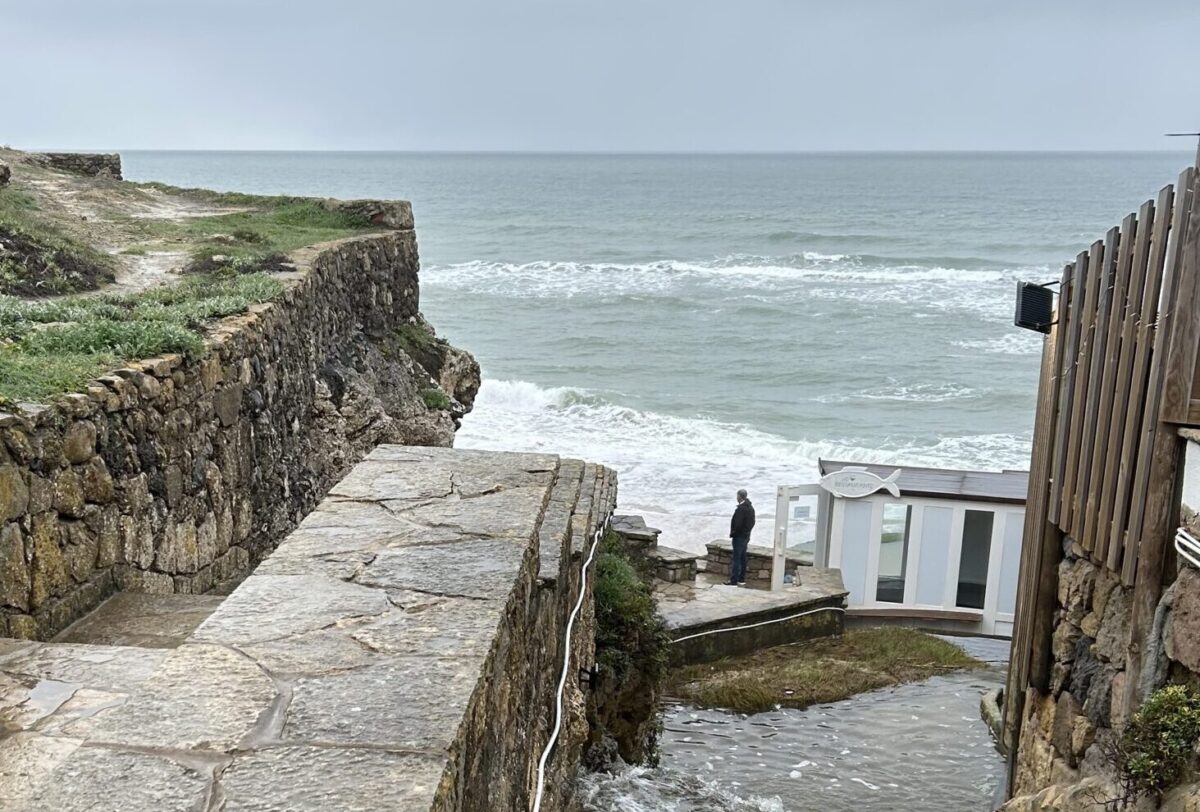
Whitewashed houses cascade down a clifftop in irregular, gravity-defying stacks, and the village ends at the sea in a spectacular natural pool carved into the rock. At high tide the beach mostly disappears beneath the waves, but the pool remains, filled and refreshed by the Atlantic, and framed by black volcanic rock. At low tide, a small crescent of sand appears.
The viewpoint from the opposite cliff (a short drive or walk south toward Praia Grande) gives the full picture: village, pool, sea, horizon. It’s one of the most photographed spots on the entire Portuguese coast, and justifiably so.
The beach itself is modest, but the pool is genuinely wonderful for a swim, especially when the open Atlantic is too rough. There’s a café and limited parking near the viewpoint.
Getting there: Drive or take the bus from Sintra. Very limited parking in the village itself — arrive early in summer.
São João das Lampas
Best for: Hikers, those seeking off-the-beaten-path coastline, peaceful rural Sintra
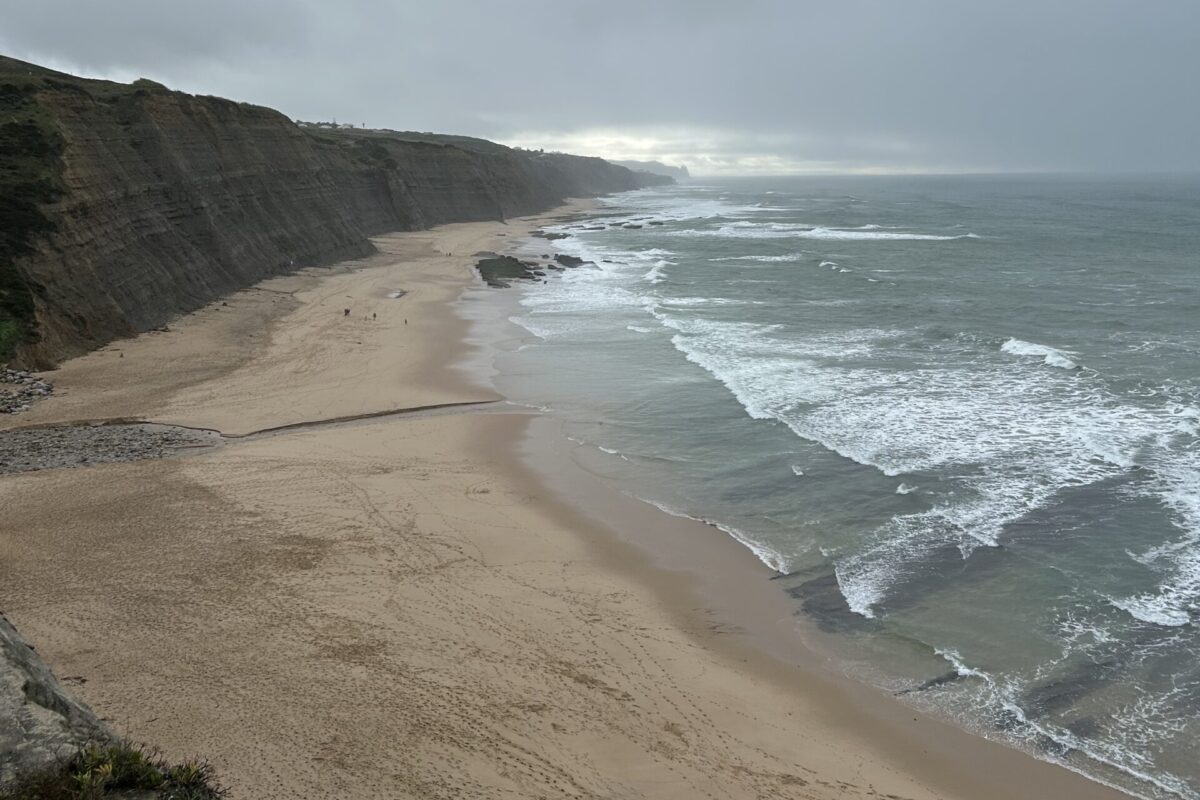
São João das Lampas is a small village sitting on the plateau above the cliffs, between Sintra town and the coast. It’s one of those quintessentially Portuguese villages that most tourists drive straight through without stopping (which is why it’s worth stopping). The surrounding landscape is rural and windswept, and from the clifftops nearby you get sweeping views over the Atlantic that feel nearly private.
This area connects to some lovely coastal walking routes, and it’s a good base for exploring the wilder stretches of coastline between Praia do Magoito to the north and Azenhas do Mar to the south. Several trails also thread through here.
Praia Grande
Best for: Surfers, bodyboarders, families, those who want full facilities
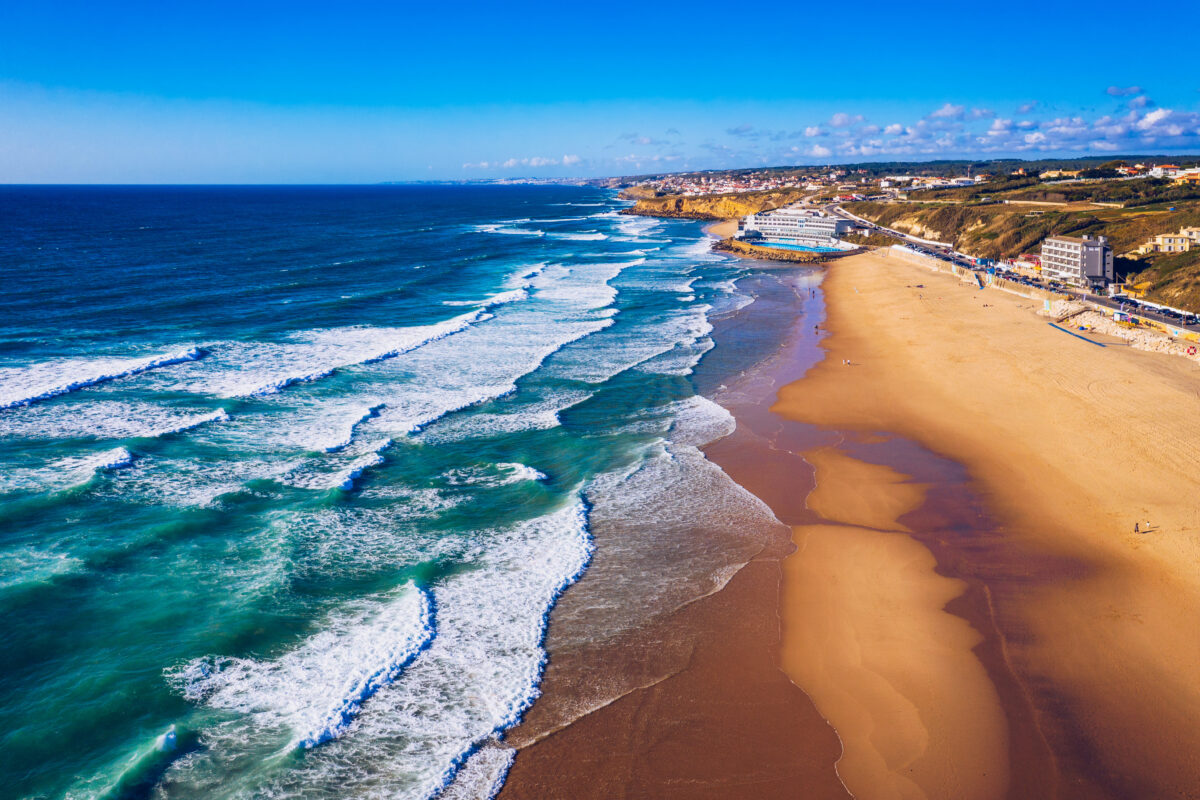
Praia Grande—”Big Beach”—is exactly what it sounds like: one of the longest, broadest beaches on the Sintra coast, with consistent surf, golden sand, and excellent facilities. It hosts international bodyboarding and surf competitions and attracts a young, sporty crowd. The famous Arribas Sintra Hotel sits at the northern end with what is reportedly one of the longest seawater swimming pools in Europe—100 meters of saltwater overlooking the Atlantic (open to non-guests for a fee). On rough days, it’s a perfect alternative to the ocean.
One hidden gem, just south of the main beach, fossilized dinosaur footprints from roughly 170 million years ago can be seen on the cliff face at low tide. A wooden staircase leads down to a viewing platform and it’s completely surreal to stand there watching the waves with the Atlantic wind in your face, staring at Jurassic-era tracks in the stone.
Getting there: Regular bus from Sintra, or drive. Free parking opposite the beach.
Praia da Adraga
Best for: Dramatic scenery, couples, photographers, experienced surfers
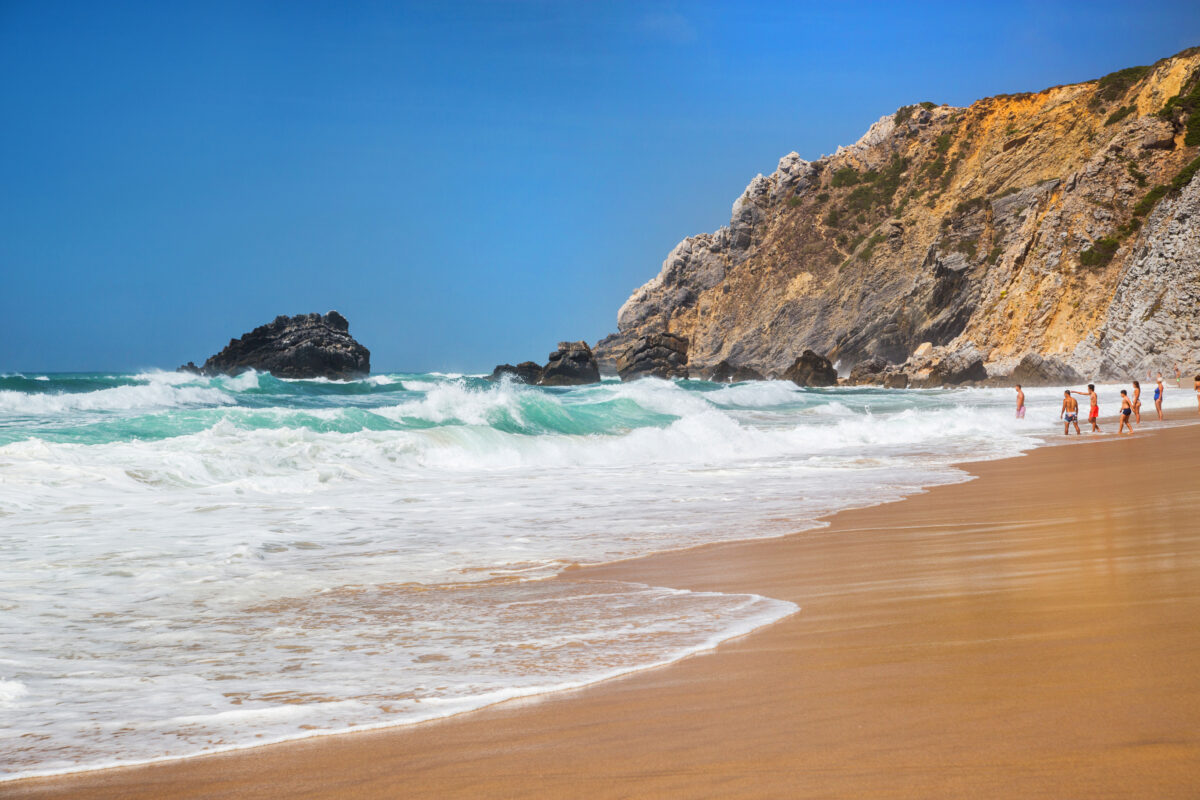
Adraga is the beach that makes people gasp. Surrounded by towering cliffs and studded with extraordinary rock formations, it’s been ranked among the top beaches in Europe, and it’s easy to see why. The setting is genuinely cinematic, especially at sunrise when the sea stacks glow orange and the beach is still empty.
Getting here requires a winding drive down through the hills, which keeps some of the crowds away. There’s a legendary restaurant at the top of the cliff—Restaurante Adraga—famous for its fresh fish and seafood and its views. Book ahead if you’re going in summer.
The surf can be intense here, recommended for experienced surfers only. But even if you don’t go in the water, it’s well worth the trip just to walk the beach and take in the scenery.
Praia da Ursa
Best for: The adventurous, naturists, those who want solitude
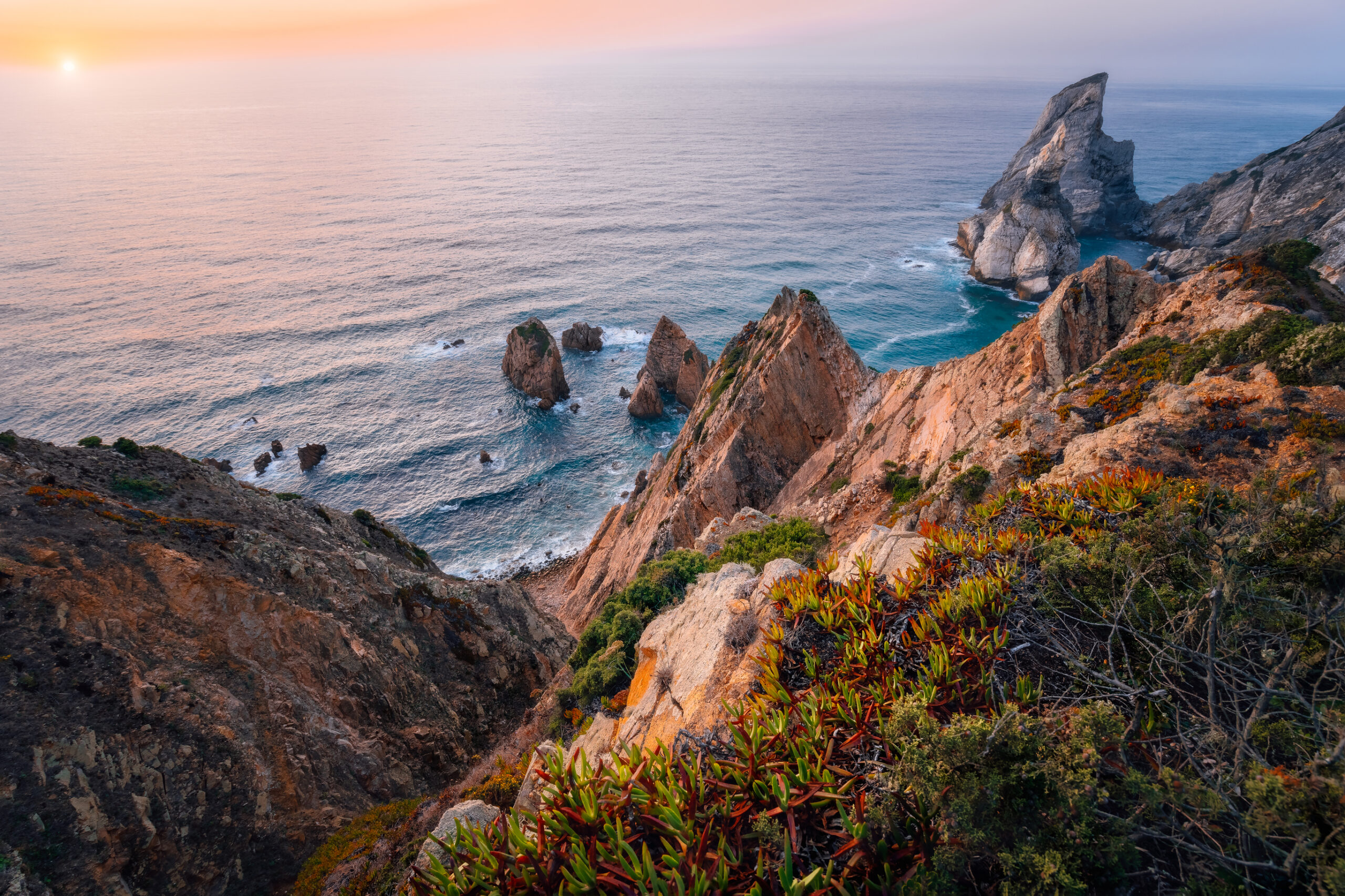
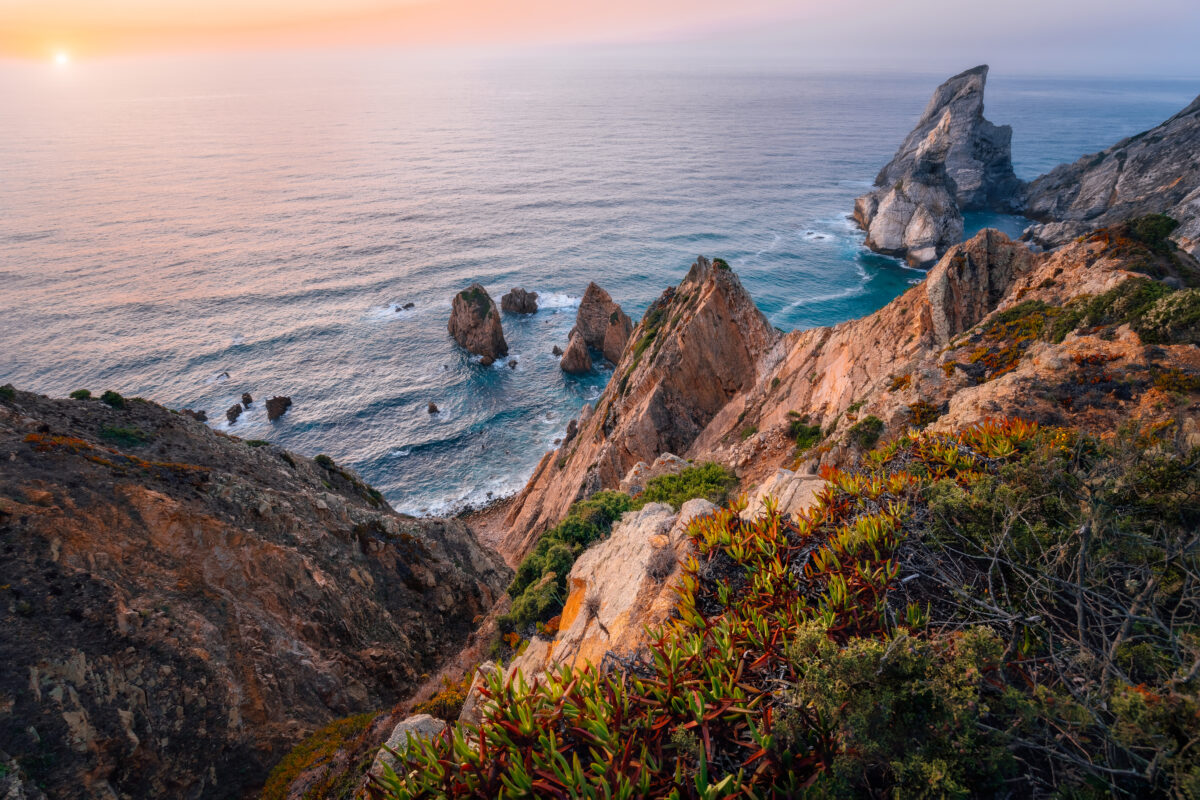
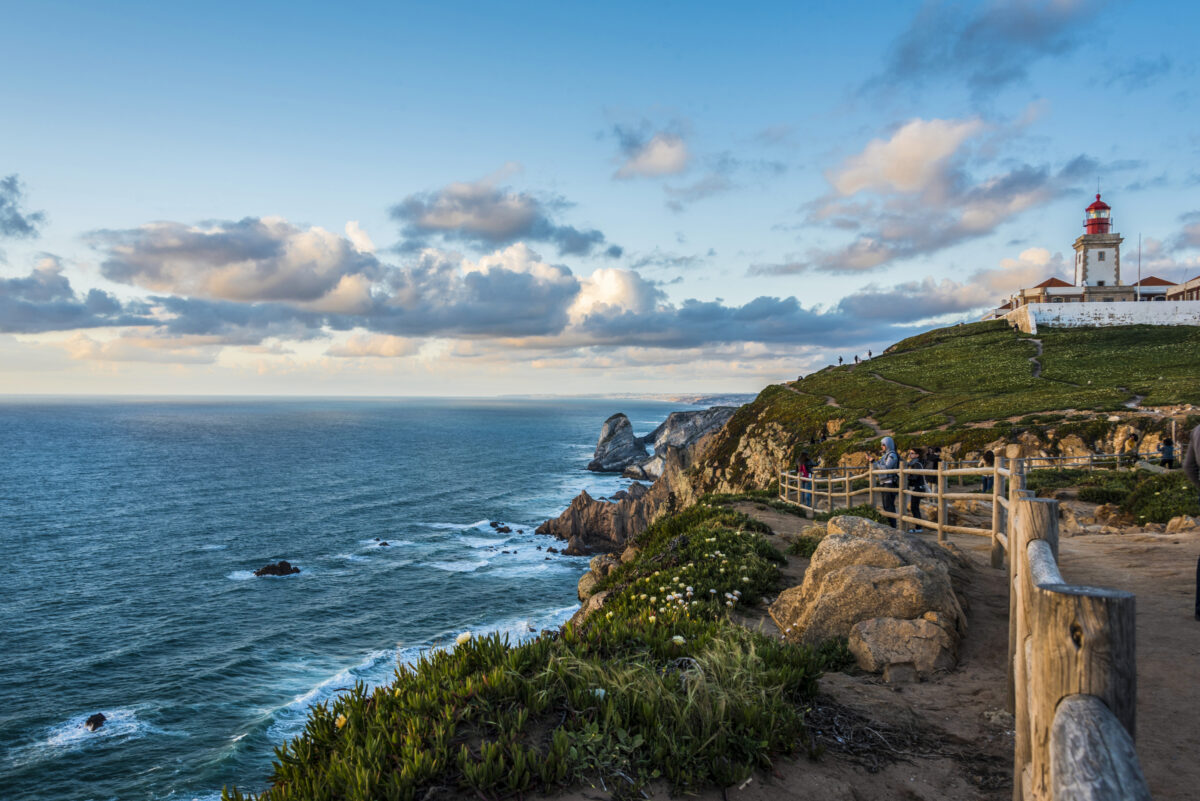
Ursa is the beach you’ve seen in photos without knowing where it was: two enormous sea stacks rising from the sand, dramatic cliffs, impossibly clear water. It sits just north of Cabo da Roca—the westernmost point of mainland Europe—and reaching it requires a 30-60 minute hike down a steep, unmarked trail. There are no facilities, no lifeguards, no restaurants, no crowds.
A word of caution that this is not a casual beach. The path is steep and can be dangerous, especially after rain when the cliffs are unstable. The beach has been temporarily closed in the past due to landslides. The tide can cut you off from the path if you’re not paying attention. Go with proper footwear, check the tide times, and don’t attempt it in bad weather. But if conditions are right, there are few more beautiful beaches in all of Portugal.
Getting there: Drive to the Cabo da Roca car park (free) and follow the coastal path northeast.
Praia do Magoito
Best for: Surfers, those wanting fewer crowds, caves and rock formations
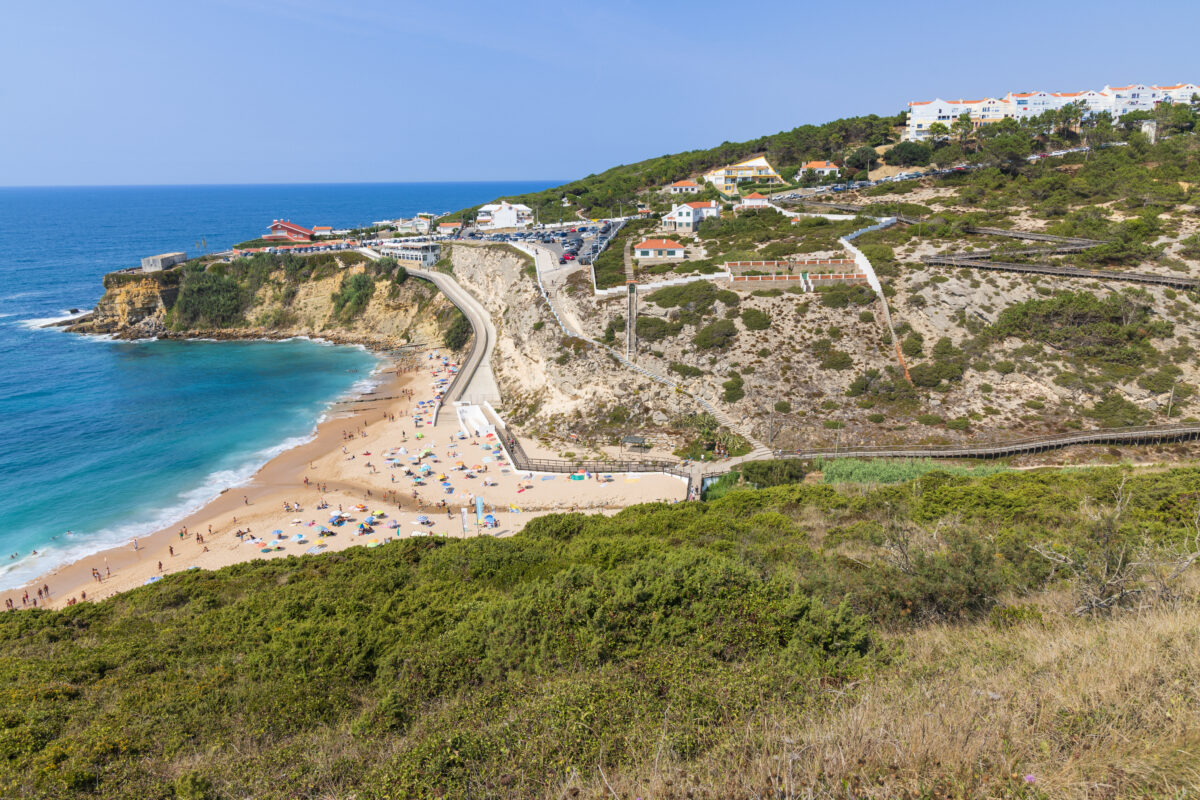
Magoito is one of the lesser-known beaches on the Sintra coast, which makes it a good choice when the more famous spots are busy. It’s backed by dramatic cliffs, and the coastline is dotted with caves and rocky formations perfect for exploring at low tide. The surf is consistent and strong, and the beach attracts a loyal local crowd of surfers and bodyboarders.
There’s no major tourist infrastructure here, only a small car park at the top of the cliff, a steep set of stairs down, and the wild ocean (but that’s the appeal).
Praia Pequena
Best for: A quieter alternative to Praia Grande, bodyboarders
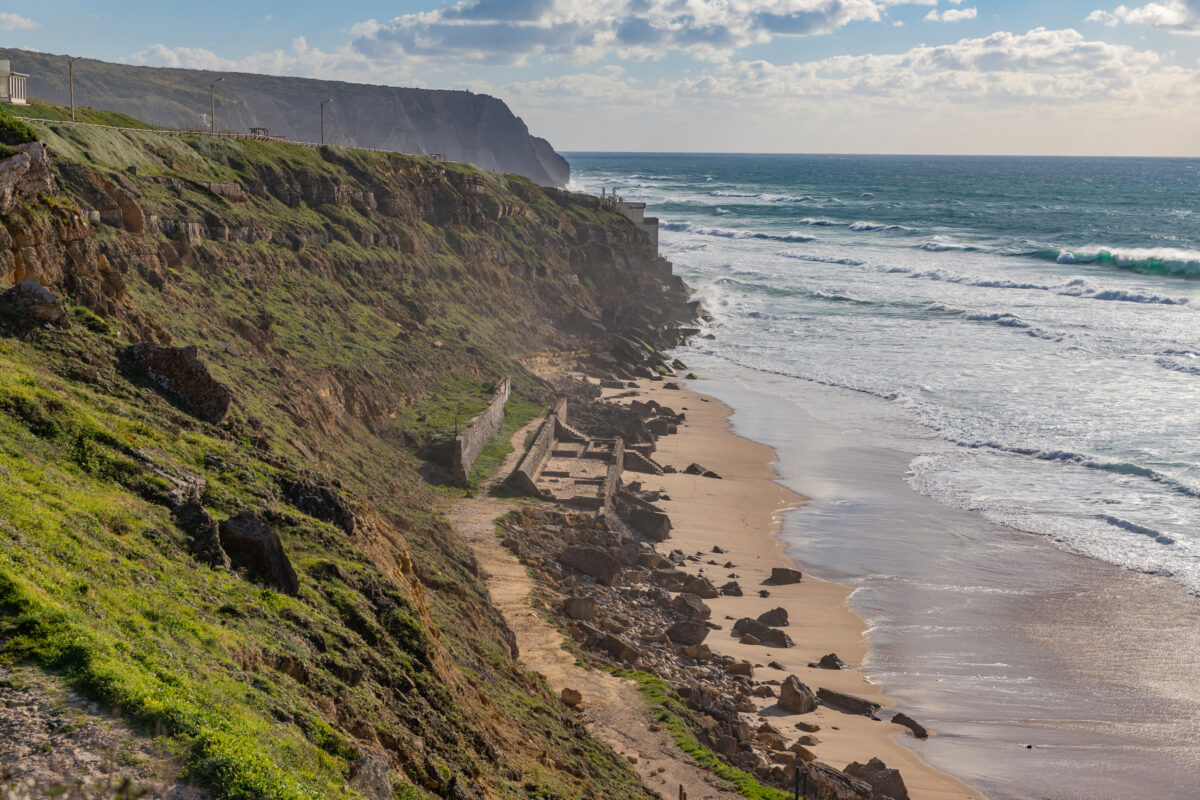
Just north of Praia Grande and connected to it at low tide, Praia Pequena (“Small Beach”) is somewhat of a misnomer. It’s actually a substantial stretch of sand, just less famous than its larger sibling. It attracts a similar sporty crowd and is excellent for bodyboarding. Without the hotel and the major surf school presence, it tends to feel a little more relaxed.
Practical Tips for the Sintra Coast
Water temperature: The Atlantic here is cold year-round—around 15–17°C (59–63°F) in summer. A wetsuit is recommended for anything more than a quick dip, especially from autumn through spring.
Wind: The Sintra coast faces directly into the Atlantic trade winds. Summer afternoons can be very windy. Mornings are typically calmer and warmer.
Rip currents and waves: These are powerful Atlantic beaches, not sheltered Mediterranean coves. Swim at beaches with lifeguards, respect the flags, and be cautious. Several beaches are not safe for swimming at all.
Timing: July and August are the busiest months. September and October offer warm weather, smaller crowds, and often better surf. Spring is beautiful for hiking the coastal trails.
Food: Seafood is exceptional all along this coast. Grilled fish, percebes (barnacles, a local delicacy), and clams in garlic and white wine are staples. Most beach restaurants offer set lunch menus (ementa do dia) that are excellent value.
Parking: Free at most beaches, but gets crowded fast in summer. Arrive before 10am or after 4pm to find a spot easily.
Beyond the Beach: What to Do in Sintra
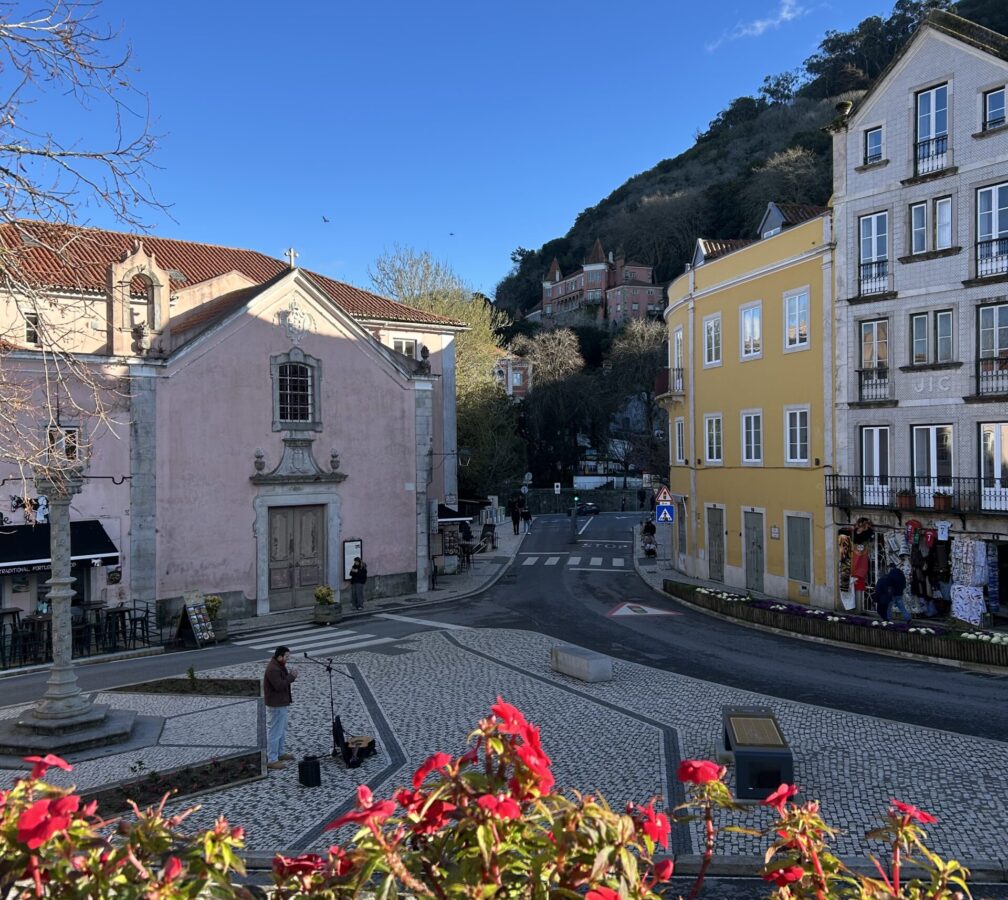
If you find yourself with time to spare away from the coast, Sintra town rewards slow exploration. The Pena Palace, perched on a hilltop above the town in vivid reds and yellows, is extraordinary. Quinta da Regaleira is perhaps even more magical—a neo-Gothic estate with secret tunnels, grottos, and an initiation well that spirals down into the earth. The Moorish Castle offers the best views over the Serra and out to sea. And the town’s main street is lined with shops selling the legendary travesseiros pastries and the flaky queijadas de Sintra, both of which deserve attention.
After a morning of palaces and pastries, an afternoon at one of these beaches feels like a perfectly balanced day in one of the most beautiful corners of Portugal.