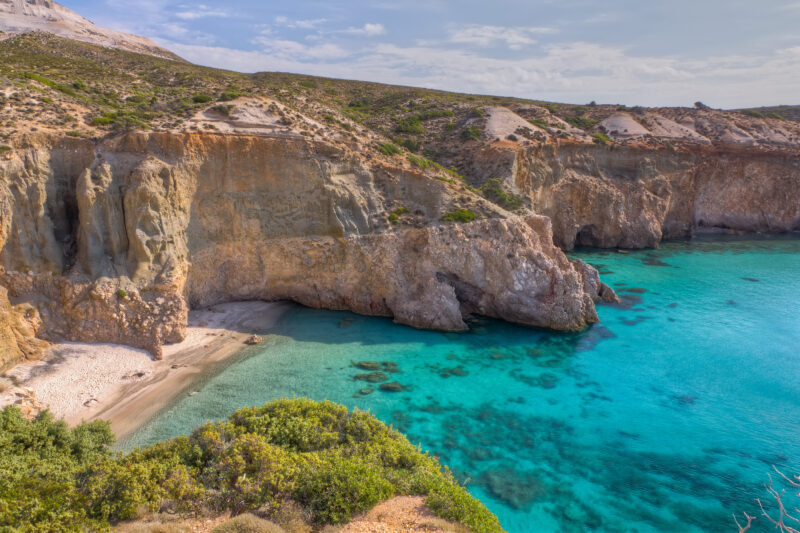

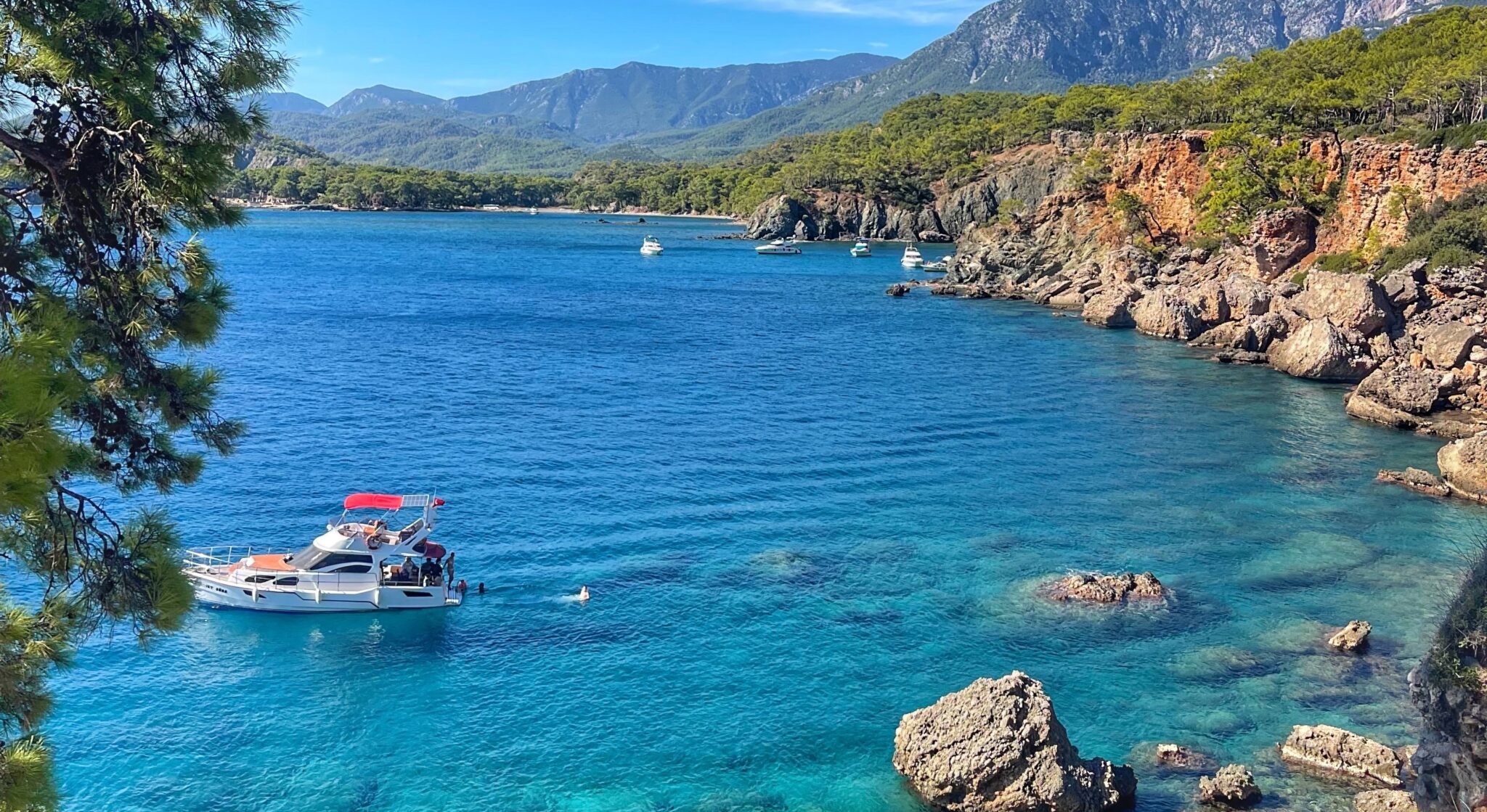
Typically, tourists to Turkiye visit either Istanbul or Cappadocia, often missing most of the country and the beauty within—especially on the southern coast, which hugs the Mediterranean Sea. Turkiye has more than 500 beaches, most of which are along the Turkish Riviera along the Mediterranean Sea. Most of these are Blue Flag beaches, meaning they’re easy for swimming, meet environmental and safety standards, and have accessible facilities. With winding roads through pine forests and picturesque seaside views all around, the Turkish Riviera gives travelers a gorgeous alternative to more touristed locales such as the French Riviera and Greek Islands. Along the way, find ancient ruins from the Byzantine, Roman, Hittite, Ottoman, and other eras, incredible diving sites, scenic river trips, and stunning hikes along the country’s waymarked Lycian Way, which offers coastal cliff views and historic ruin stops along the route.
From Antalya to Muğla, here are my favorite ways to explore this section of the Turkish Riviera.
Aspendos Ancient Theater and Aqueducts
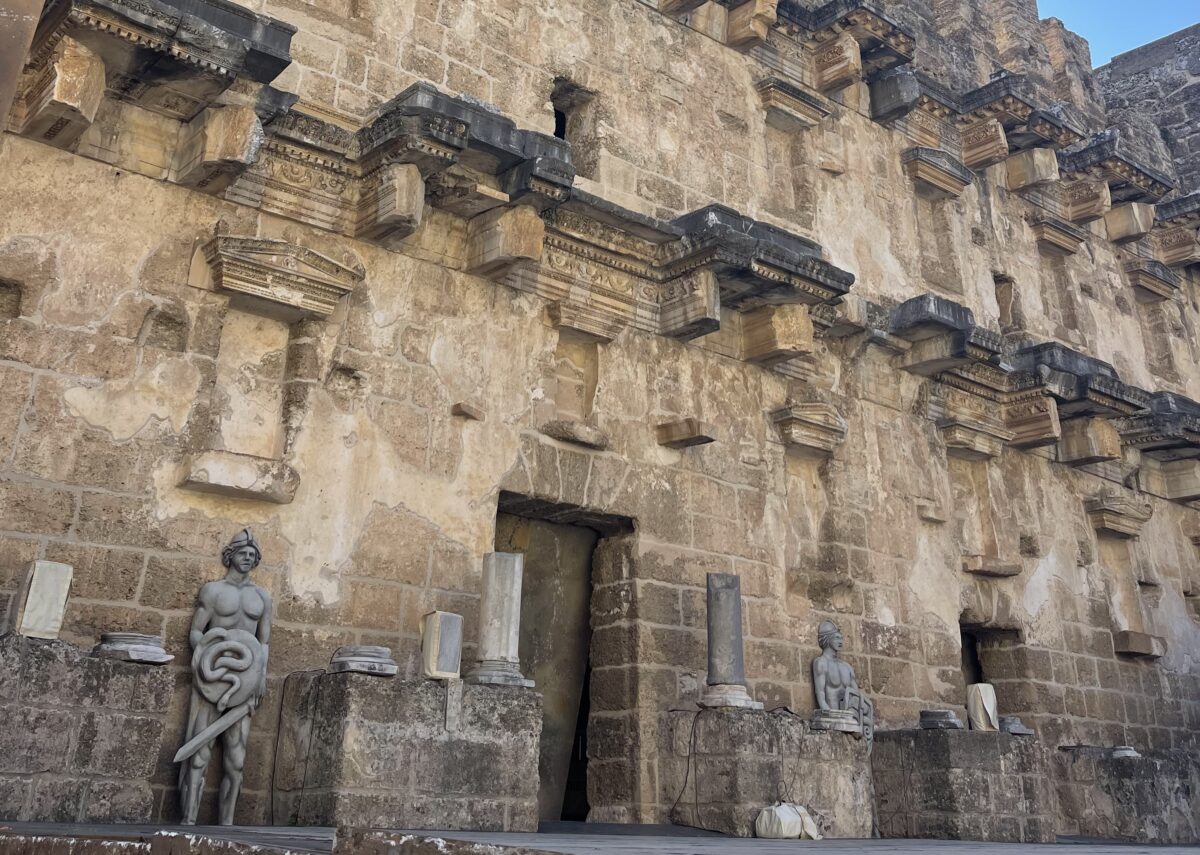
In Antalya, the Aspendos ancient theater is worth a visit, as it is the most well-preserved theater of its kind in Asia Minor and beyond. The Roman-style theater was originally built between 160 and 180 A.D., during the reign of Roman emperor Marcus Aurelius. Gawk at the large stage and surrounding stadium seating, which held up to 8,500 people for ancient performances. Take a look at the aqueduct system here as well, which has fascinated researchers for years.
Side Ancient City
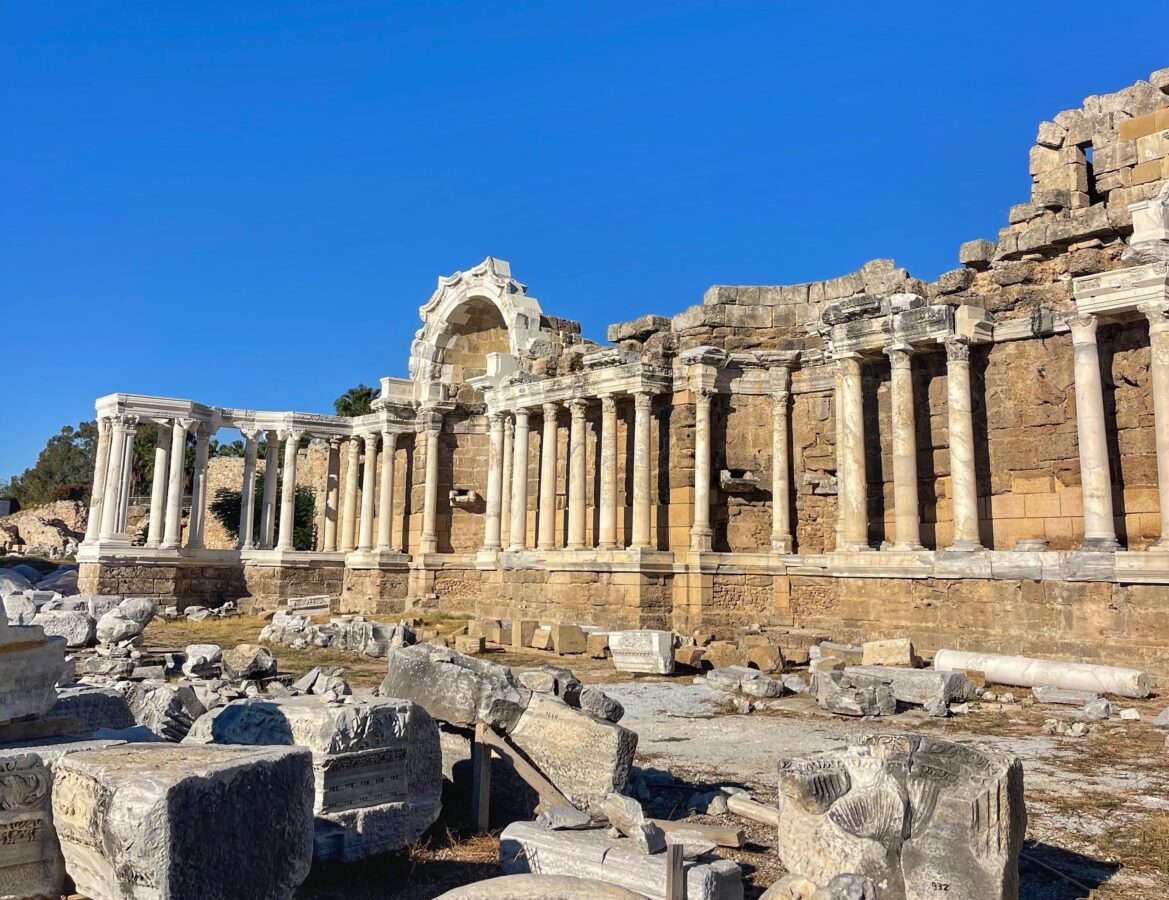
Situated along the Mediterranean Sea, Side was a booming port city in ancient times and was founded in the 7th century BCE by Greek settlers. The city was once ruled by Lydians, Persians, Alexander the Great, the Roman Empire, the Byzantine Empire, the Ottoman Turks, and other powers throughout time, and the city’s name means “pomegranate” from an ancient Anatolian language. Today, Side is a popular resort town, where you’ll find public beaches and ancient ruins, including a Roman-era theater and temples dedicated to Athena and Apollo. Walk through Side and you’ll notice 2,000-year-old Greco-Roman ruins everywhere beneath your feet, with shops, restaurants, and homes built right on top. The archaeological remains are protected by fencing and glass flooring, allowing you to walk through history and see remains everywhere you turn.
Where to Stay: In Old Town Antalya, RuinAdalia offers Ottoman-style rooms and suites, plus a gorgeous pool, on-site restaurant, and direct access to Old Town’s winding cobblestone streets that are full of cafes and shopping. Of course, the hotel has a museum right underneath it, where pathways walk you through ancient ruins from various eras of history.
Phaselis Ancient Site
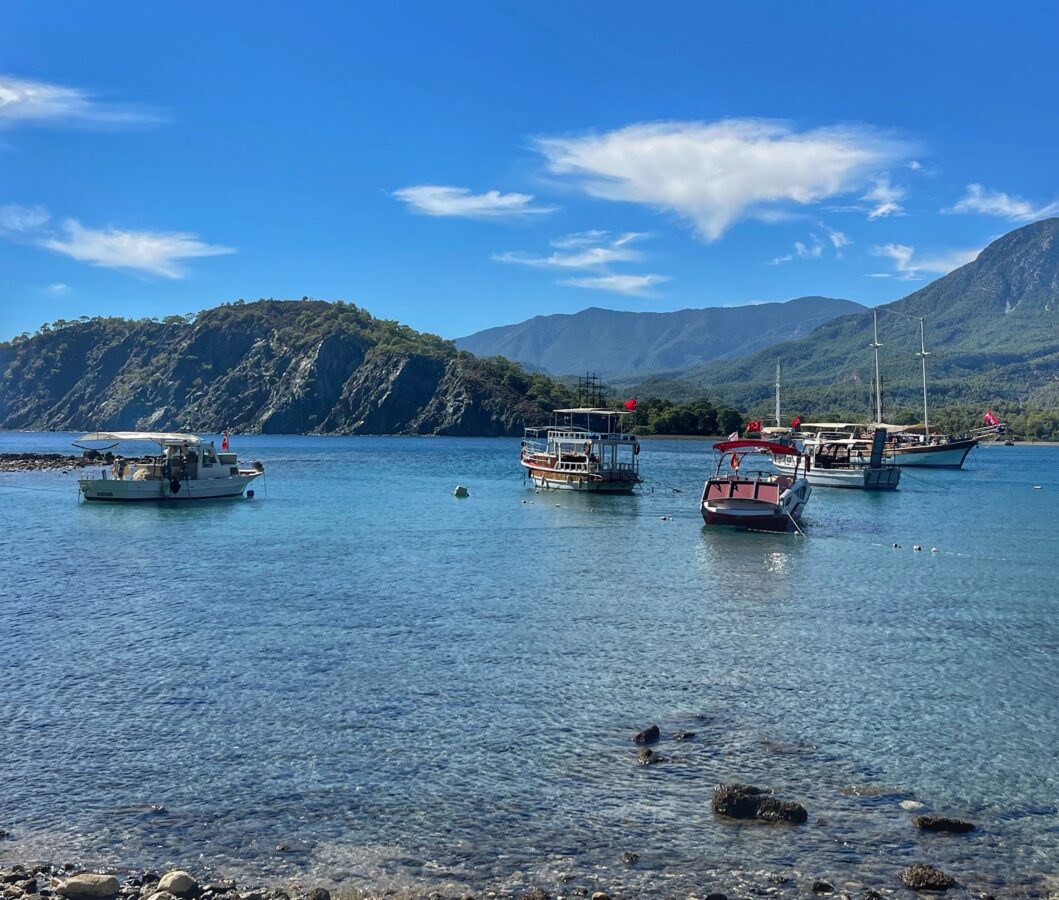
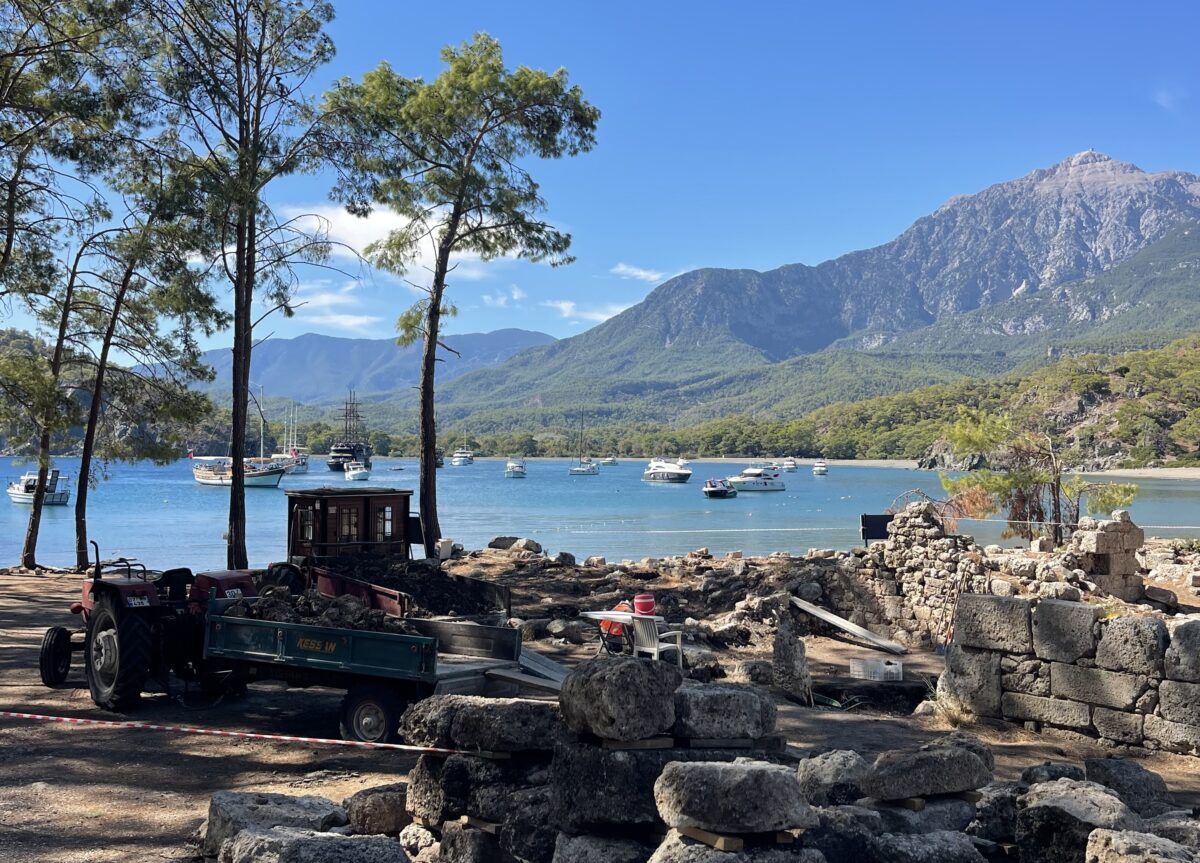
South of the city of Antalya is Phaselis, an active archaeological site and ancient city with ruins dating from the 7th century. The city was founded by Rhodians and was a major trading hub due to its three harbors. Today, visitors can walk among the ruins, which are still being excavated, and see a ritual site, ancient marketplace, synagogue, theater, private baths, and more. Swim in the bays surrounding the ruins, or sunbathe along the shoreline or from the back of a boat anchored in the bay. For an active way to get to Phaselis, hike the Lycian Way, Turkiye’s first marked, long-distance hiking trail, to get to Phaselis. Admission is about 10 Euros, and there’s a parking lot and cafe on site.
Olympos Archaeological Site
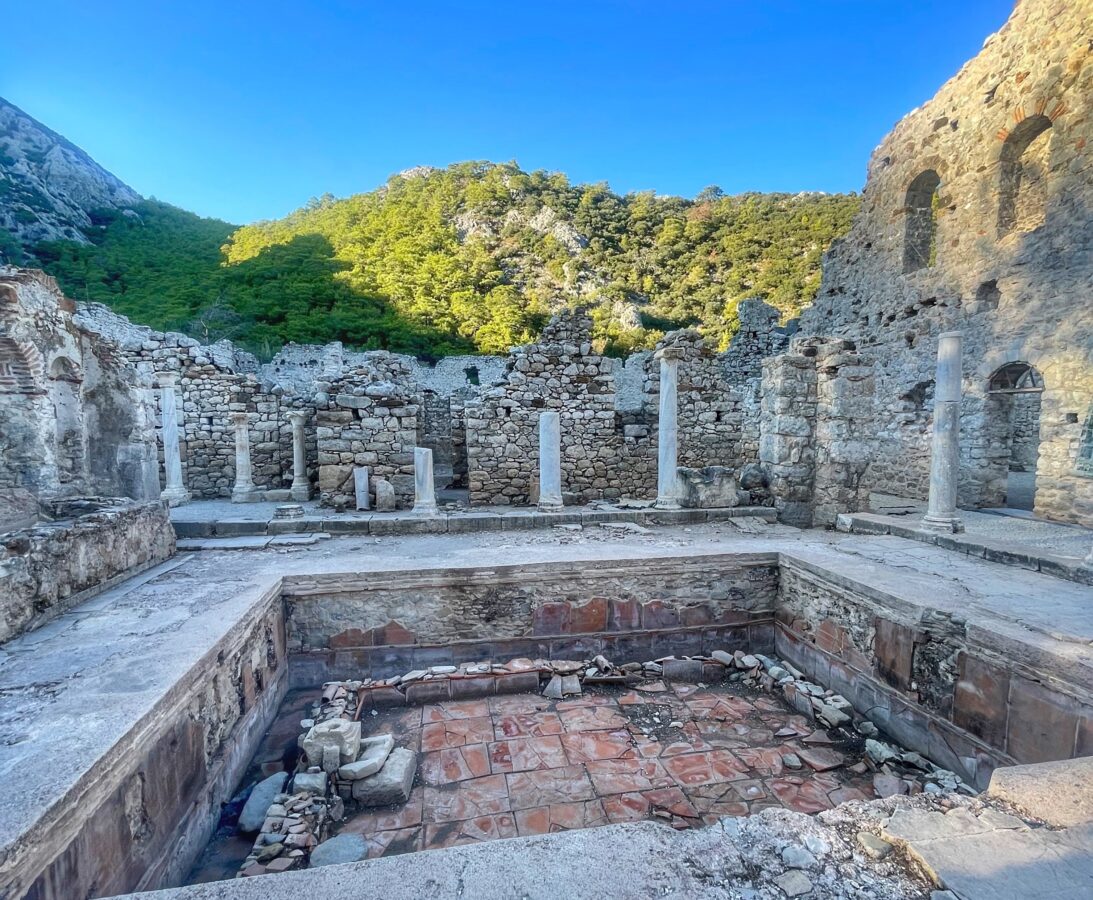
About a 30-minute drive south of Phaselis is Olympos, a ruins site nestled above a beautiful beach full of sunbathers, families building sandcastles, and seaside cafes serving Turkish fare. It’s also located along the Lycian Way, and here, you can see the ruins of a Byzantine-era bishop’s palace and basilica, Roman baths and a temple, sarcophagi, a Roman theater, remnants of the city walls, canal ruins, and beautiful views of the sea below.
Where to Stay: High above the beach in the mountains, Olympos Mountain Lodge is a boutique property with only 8 rooms and stunning views of the sea below. The lobby fireplace is a great spot for a cozy cocktail, and your private veranda is the place to be during sunset and the evening call to prayer, which you’ll hear through the hills. The owner of the hotel, Mehment Ali Börtücene, is also the chef, and the on-site restaurant, The Rabbit Hole, is a casual fine-dining experience with a menu that changes nightly, depending on local ingredients and what’s available.
Saint Nicholas Museum
In the coastal town of Demre (ancient Myra), stop by the Saint Nicholas church and museum, dedicated to Saint Nick – yes, Santa Claus – himself. Saint Nicholas was born in the nearby Lycian city of Patara, and later became a bishop in Myra. Stories about the saint are endless, but he is remembered in Turkiye as a patron saint to children and sailors. After his death, this 6th-century church was built for pilgrims who came to visit St. Nicholas’ tomb. Outside, you’ll see the statue of Saint Nicholas with children at his side, and inside, see intricate mosaics and well-preserved frescoes of Saint Nicholas, Jesus and his twelve apostles, and the Virgin Mary. There’s also a Romanesque sarcophagus inside that is believed to hold the remains of Saint Nicholas. Here, you’ll see a crowd of visitors standing as close as they can to the plexiglass barrier protecting the sarcophagus, praying to the saint in Turkish, Russian, and other languages.
Myra Necropolis
In modern-day Demre, the ancient city of Myra contains preserved tombs cut straight into the cliff face, dating back to the fifth through third centuries BCE. These tombs include intricate entryways and inscriptions, elaborating on the life of the person buried within. There’s also an ancient theater within walking distance, which sat around 13,000 spectators. At the stage, you’ll see stone-carved theater masks depicting various characters, including Zeus and Medea.
Simena
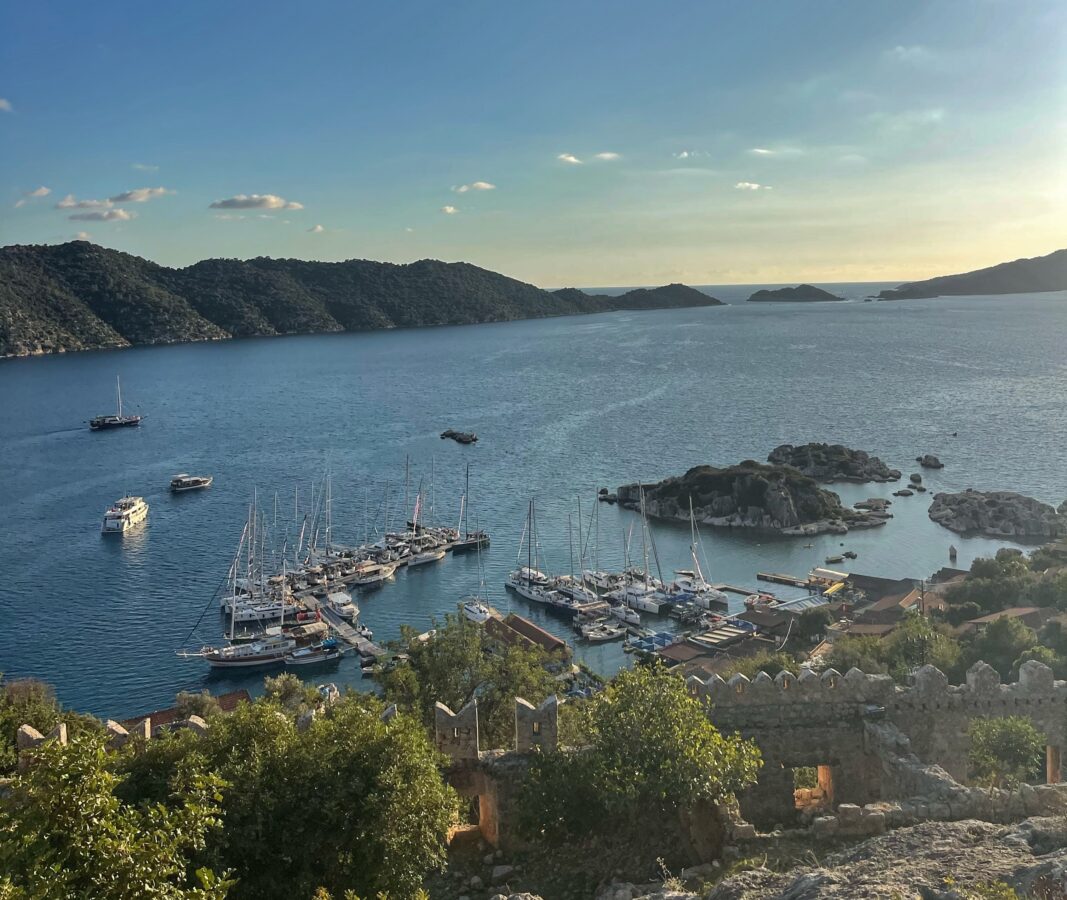
A must-stop while making your way along the coast is Simena, a small village that’s only accessible by boat or by walking the Lycian Way. I made my way to Simena along the Lycian Way by walking through the nearby village of Üçağiz, where a necropolis scattered among farmland offers glimpses at Lycian tombs dating to the 4th century BC. After walking through the village, you’ll emerge along the sparkling coast, where you can then board a boat for a day of snorkeling, swimming, and exploring via the Mediterranean Coast. My vessel, organized with Kekova Haydi Boat, picked me up at Kekova Harbor, where we then cruised and swam in sky-blue bays while sipping Turkish tea and grazing over a Mediterranean-inspired lunch.
A highlight of the experience is cruising over the sunken city, where you’ll see Lycian-era docks, house foundations, and even sarcophagi, all dating to the 2nd century CE right underneath the water. Cruising on, you’ll stop at Simena Castle, where winding steps lead you past vendors selling Turkish textiles and ice cream. (Pro tip: This is a great spot to capture that quintessential Turkish cat photo.) At Simena Castle, wander through ruins and catch sunset views of Kekova, the surrounding necropolis, and one of Turkiye’s only villages not accessible by car.
Kas
Farther west is Kas, a popular Turkish resort town and a top spot in the region for diving. Beginners and advanced divers alike enjoy diving here, as the clear water gives you visibility of more than 100 feet below. One of the coolest things to see here are the amphora—ancient jars that held oil, grain, wine, and more—that rest on the ocean floor and are around 2,000 years old. You’ll see fragments of them everywhere, as well as almost-whole amphora that likely fell overboard during storms. There’s also shipwrecks to explore, plus sunken planes, rock formations, and of course, sea life such as sea turtles and shimmering fish.
Patara
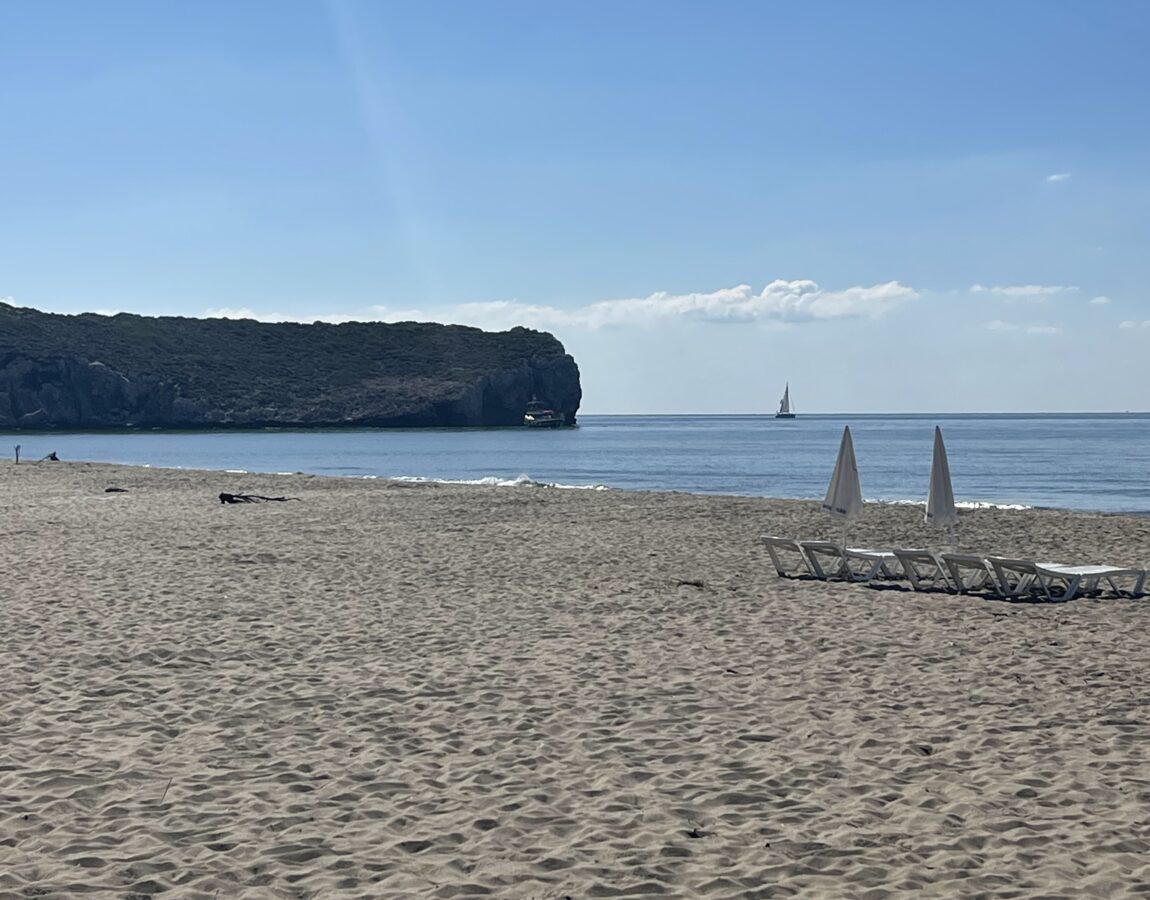
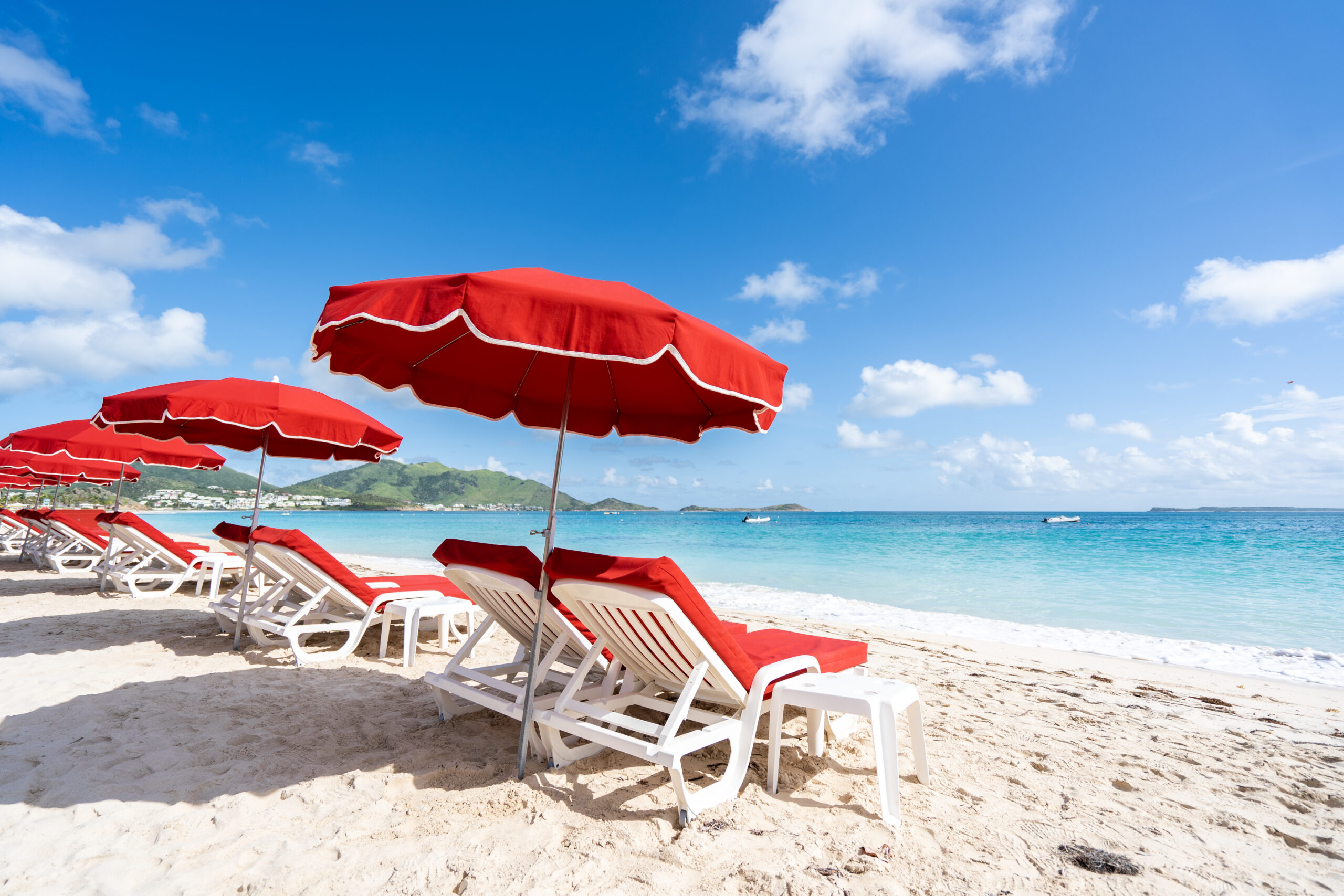
An ancient Lycian city dating to the early Bronze Age, Patara is said to have been founded by Patarus, the son of the god Apollo. The port city was important to Lycia, and archaeological ruins include sarcophagi, Byzantine baths, and a Roman street that connected the harbor to the market in town. This ancient street is one of the best preserved streets in Anatolia, and here, you’ll see where citizens spent time at their amphitheater, where parliament meetings were held, the arched gate that were thought to have been the grand entrance to the city, Lycian tombs, and where merchants set up shop. Granite and marble columns still line the thoroughway, and the nearby beach is a must after exploring the ruins. Patara Beach is part of the protected Patara National Park, so there’s no development here. You can rent beach umbrellas and loungers here, but expect a quiet locale without crowds or extra amenities.
Xanthos-Letoon
A bit inland from Patara, Xanthos-Letoon includes ruins from every era of its civilization: Anatolian, Greek, Roman, and Byzantine. Here, inscriptions discovered in rocks and pillars were carved in three languages—Lycian, Aramaic, and Greek—which has helped scholars better understand Lycian culture and language. There’s also a theater here, and unique Lycian tombs set high in the air on top of pillars. It was believed that placing the dead higher in the sky helped them get to the afterlife easier, and these posh resting places were reserved for those with status and power.
Pinara
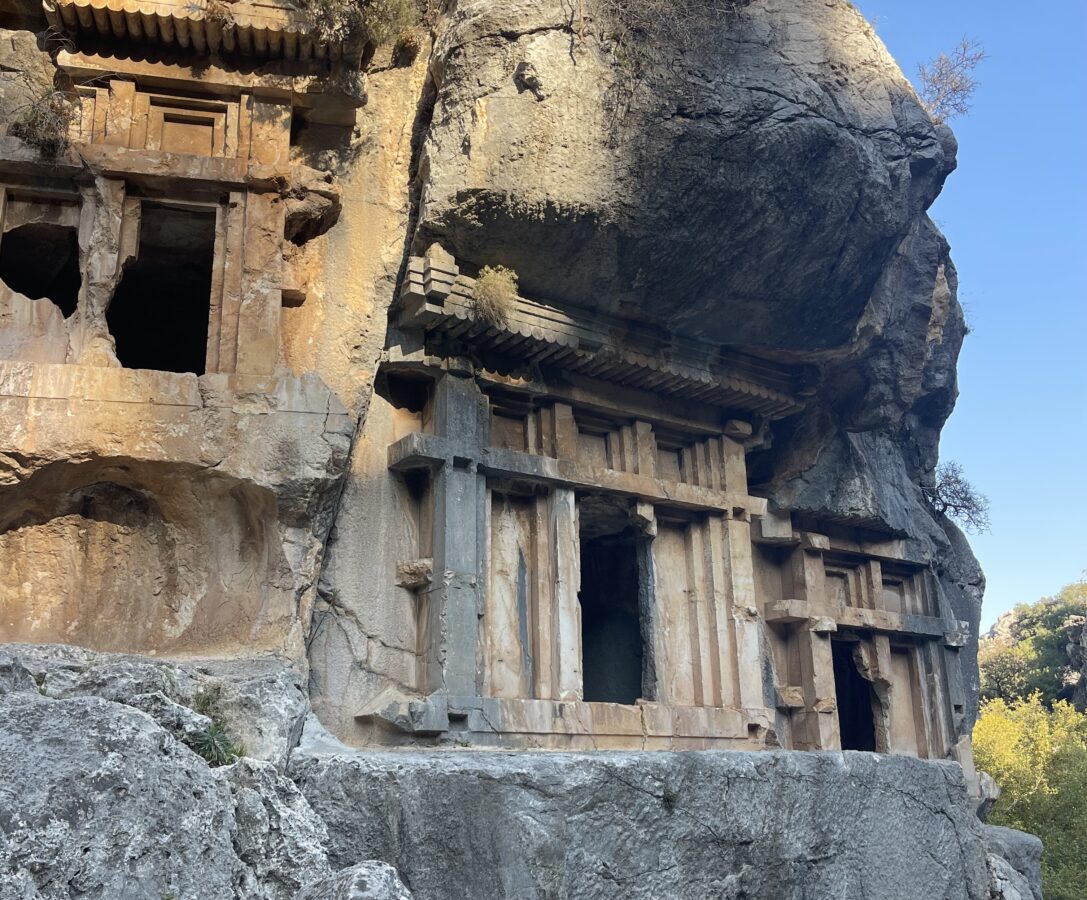
In the Muğla province, Pinara is my favorite ancient site along the Lycian Way. Here, while hiking amidst monstrous boulders underneath a canopy of trees, you’ll notice the red cliffs in the background, pocked with small, dark holes resembling a wasp nest. Those small holes are actually ancient tombs carved into the rock, from the top to the bottom. It’s believed that ancient Lycians used a rope system to work their way down the cliff faces, carving tombs as they went. They’ve been dubbed “Flying Lycians,” and gawking at their work leaves you in awe. Ancient Lycians believed that their dead were carried off into the afterlife by winged creatures, so these cliffside tombs made their journey easier.
Amid the maze of boulders below, you’ll see larger, elaborate rock tombs carved into the base of the cliffs as well. These tombs were built for elite members of society, and feature carved figures and dwellings that often represent the individual’s life. After viewing the tombs, see the well-preserved ancient theater below the cliffs, plus an agora, and even a temple with heart-shaped columns, likely dedicated to Aphrodite.
Iztuzu Beach
Near Dalyan, Iztuzu Beach is a laid-back Blue Flag beach where azure water and golden sand provide a tranquil spot for an afternoon swim or a snooze on a sunbed. The beach is an important nesting site for area loggerhead turtles as well, so be aware of fenced-off nesting areas. Umbrellas and sunbeds are available to rent, and there’s also a small cafe on site, plus showers, bathrooms, and dressing cabins. A popular way to get to the beach is by river boat, as the Dalyan River connects to the Mediterranean Sea, and boat trips take travelers past ancient Lycian rock tombs and through winding reeds to get to the beach.
Ölüdeniz Beach
In Fethiye, Ölüdeniz Beach is considered Turkiye’s most beautiful beach, with its turquoise waters and a Neverland-esque view that’s best captured by paragliding over it. It’s famous for its Blue Lagoon, a beautiful bay that’s great for families to swim and snorkel. The town of Ölüdeniz is actually the starting point of the Lycian Way, so you can hike here for stunning views of the beach below. Beach bars and restaurants are plentiful here.
Kayaköy Ghost Town
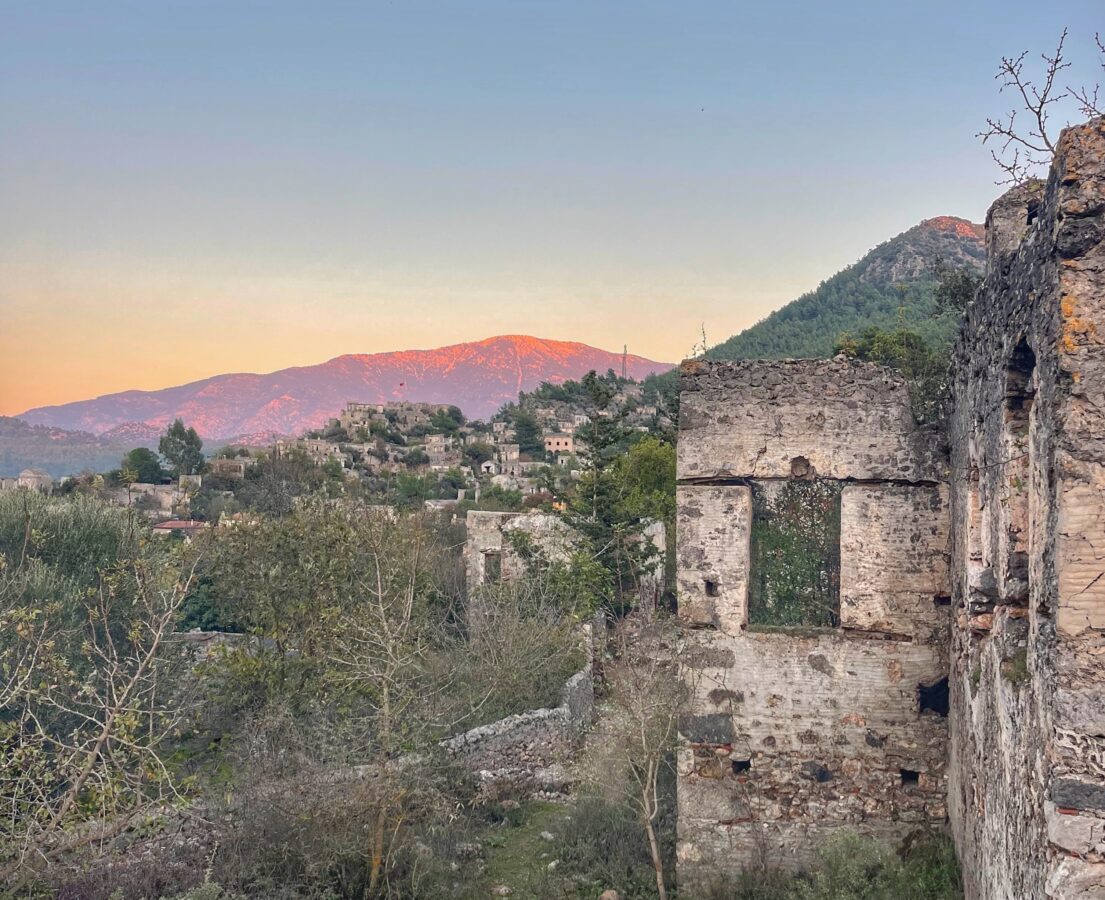
Known as a Greek village during the Ottoman Empire, Kayaköy was a thriving community in the 18th and early 19th centuries, where Greek Orthodox Christians and Muslim Turks lived amongst each other, sharing traditions and their livelihoods. They built stone churches and houses and schools, and worked together in agricultural pursuits. However, this all changed in 1923 with the Treaty of Lausanne, which forced a population exchange, meaning that about 20,000 Greeks here were forced to migrate back to Greece, and Muslim Turks in Greece were forced to migrate back to Turkiye. The incoming Muslims refused to live in the Greek’s stone houses, so Kayaköy soon became a ghost town. Today, visitors can walk through Kayaköy’s stone structures and remember the thriving culture that was once here. UNESCO designated the site a World Friendship and Peace Village, and preservation works are underway.
Where to Stay: In Fethiye’s marina, Yacht Boheme is a quick walk to the heart of town, where you’ll find plenty of restaurants, shops, and cobblestone streets full of baubles. Rooms have a, of course, bohemian aesthetic, and the pool and spa offer relaxation after a day about town.
How To Do It
Cicerone Travel offers small-group and private adventure trips through Turkiye, catered to travelers interested in Turkish history and culture. Whether you want to spend most of your time beach hopping across the Turkish Riviera or visiting ancient sites while hiking the Lycian Way, Cicerone Travel offers custom trips fit for solo travelers, families, and multi-generational groups.