
When I first traveled through Colombia years ago, I went more for the colorful streets of Cartagena and the promise of wonderful coffee than for its beaches. Yet Colombia stretches across the Caribbean to the north and the Pacific to the west, creating a diverse coastline dotted with fascinating beaches.
Along the Caribbean, beaches are spread across national parks like Tayrona, offshore islands like San Andrés and Providencia, and remote regions like La Guajira. On the Pacific side, places like Nuquí and Bahía Solano feel far more untouched. Whether you’re looking for calm, turquoise-blue waters or something raw and off-the-grid, Colombia has a beach for it.
Playa Cristal (Tayrona National Park)
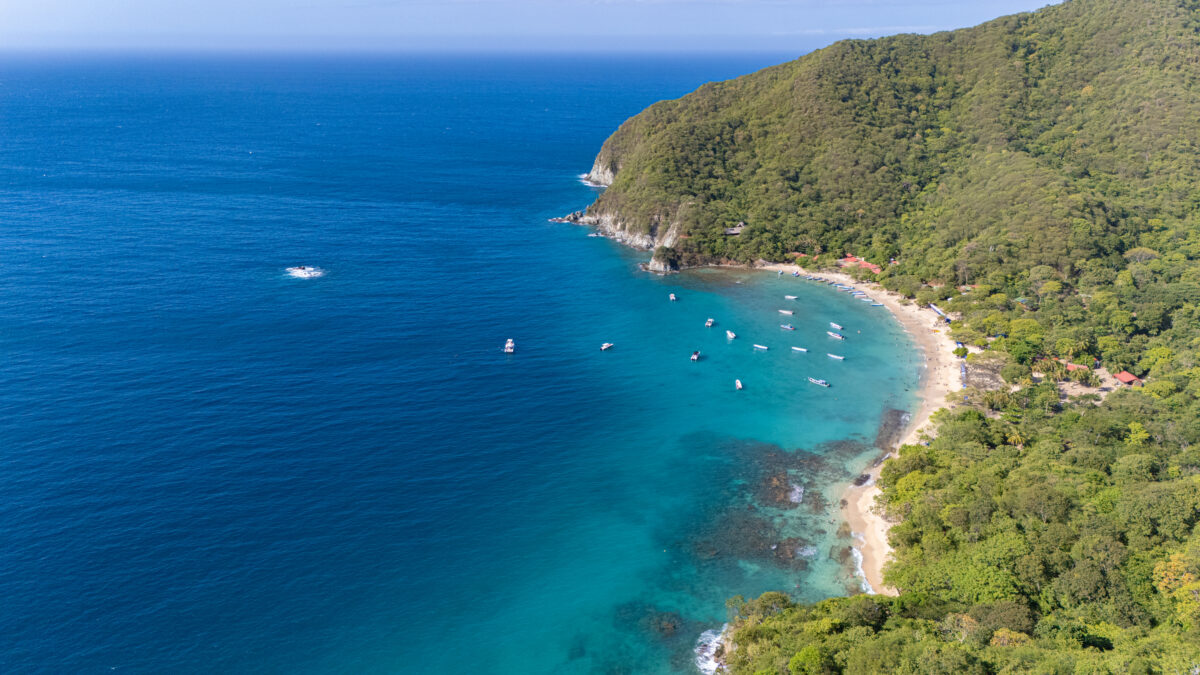
Tucked inside Tayrona National Park, just outside Santa Marta, Playa Cristal is one of the clearest beaches on Colombia’s Caribbean coast. Unlike many of Tayrona’s wilder beaches, the water here is calm and protected, making it ideal for snorkeling. You’ll often spot fish just steps from the shore.
You can only arrive by boat or combine a short hike with a transfer from nearby beaches. Daily visitor numbers are limited, which helps preserve the crystal-clear water, though it can still feel busy during peak times. The setup is simple but comfortable, with beachside restaurants serving fried fish with coconut rice. Don’t skip the spectacular viewpoints above the bay.
Cabo San Juan (Tayrona National Park)
If you’ve ever seen a photo of Tayrona National Park, it’s probably been of two crescent-shaped coves connected by a narrow strip of sand, framed by palm trees and jungle-covered hills. This is the iconic Cabo San Juan Beach, located a scenic hike from the park’s main entrance near Santa Marta.
Both sides of the beach are swimmable, with clearer water than many nearby coves and some rocky areas where you can spot fish. There’s a small restaurant, food stalls, and a large campsite, making it one of the few places in Tayrona where you can spend the night.
That being said, it can get busy. Cabo San Juan is the park’s most popular destination. Arrive early or stay overnight to experience it at its most peaceful, when the crowds thin and the landscape really shines.
Capurganá (Chocó)
Set on Colombia’s remote Caribbean edge near the border with Panama, Capurganá still feels sheltered from the modern world. To reach its untouched sands, most travelers either take a small charter flight from Medellín or arrive by boat from Necoclí on the mainland. Once you’re there, you’ll want to stay overnight; choose from a range of simple hotels, eco-lodges, and guesthouses, all within walking distance.
The landscape is what makes this place so special, with dense jungle spilling into white-sand coves and clear, warm water ideal for snorkeling and diving. Nearby spots like La Caleta offer excellent reef access, while others can be reached through short hikes or boat rides. There are no cars and Wi-Fi is limited—it’s the kind of place you come to disconnect fully.
Isla Tintipán (San Bernardo Archipelago)
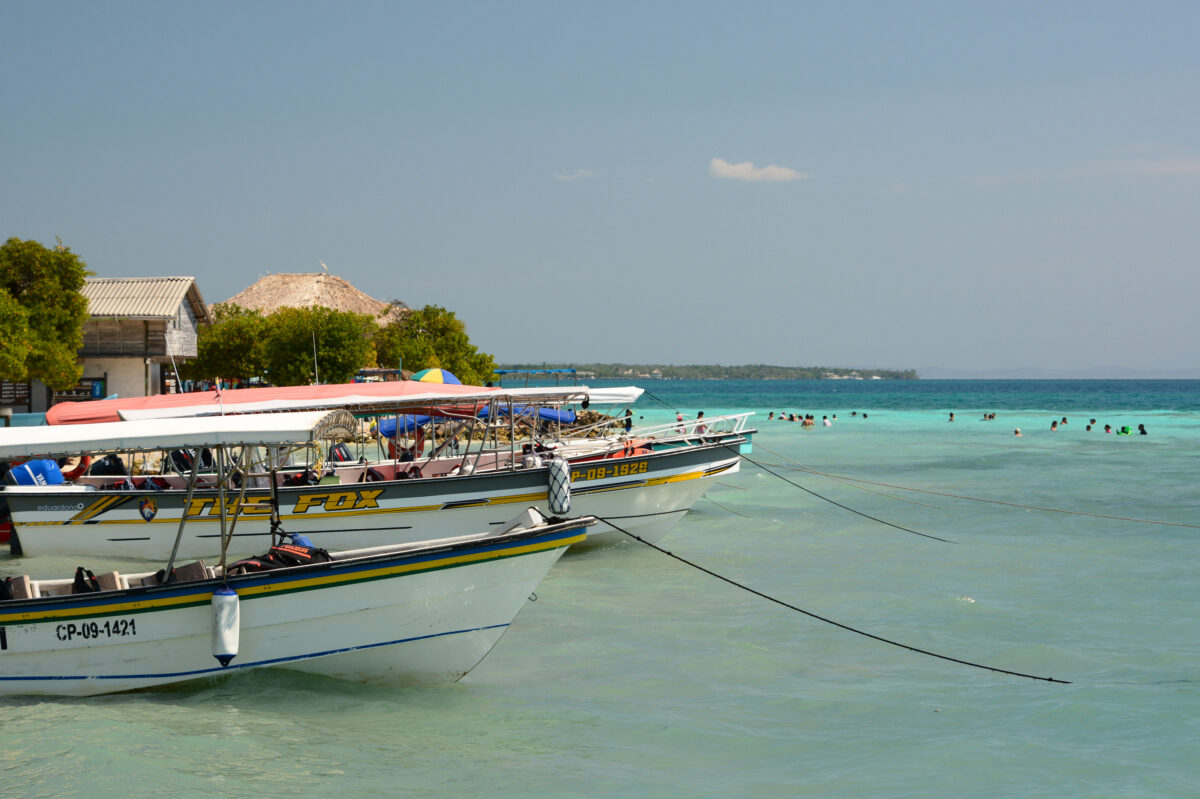
Located off Colombia’s Caribbean coast in the San Bernardo Archipelago, Isla Tintipán feels like a quieter alternative to the better-known Rosario Islands. Surrounded by mangroves and part of the protected Corales del Rosario y San Bernardo National Natural Park, it’s a place defined by a rich marine ecosystem and slow pace of life.
The island has a handful of eco-lodges and small accommodations, but no large towns, and a strong focus on conservation. You can kayak through mangrove channels, snorkel over coral reefs, or take a short boat ride to nearby islands like Múcura. The real highlight comes after sunset. On certain nights, the water glows with bioluminescent plankton, one of those rare experiences that makes the trip worth it.
Isla Múcura (San Bernardo Archipelago)
Also set within the San Bernardo Archipelago, Isla Múcura has soft white sand, calm turquoise water, and that slow, easy rhythm that makes it hard to leave. Compared to nearby Tintipán, Múcura feels a bit more polished. It’s one of the main hubs of the archipelago, with small hotels, beach restaurants, and just enough infrastructure to make your stay comfortable without losing its laidback charm.
But like Tintipán, the real magic happens at night. Under the right conditions, you can head out toward the mangroves to swim among bioluminescent plankton that turn the water into a glowing lagoon. Reaching Múcura typically involves a 2 to 2.5-hour boat ride from Cartagena, making it best suited for an overnight stay. It’s one of the easiest ways to experience Colombia’s Caribbean island life without the crowds of more developed destinations.
Southwest Bay (Providencia)
Southwest Bay is the largest beach on the island of Providencia, a quieter, lesser-known sister island to San Andrés. Yet it often feels remarkably uncrowded. It’s a long stretch of pale sand lined with palm trees, a few wooden houses tucked behind them, and calm, glassy water dotted with small fishing boats.
Mornings are quiet and ideal for swimming or walking the length of the beach with barely anyone around. By afternoon, wooden beach huts come to life with soft reggae playing and local restaurants serving lobster, snapper, and coconut rice just steps from the water. There’s little large-scale infrastructure here, and that’s exactly the point. Even the weekly horse races running casually along the sand feel more like a community gathering than an event.
Johnny Cay (San Andrés)
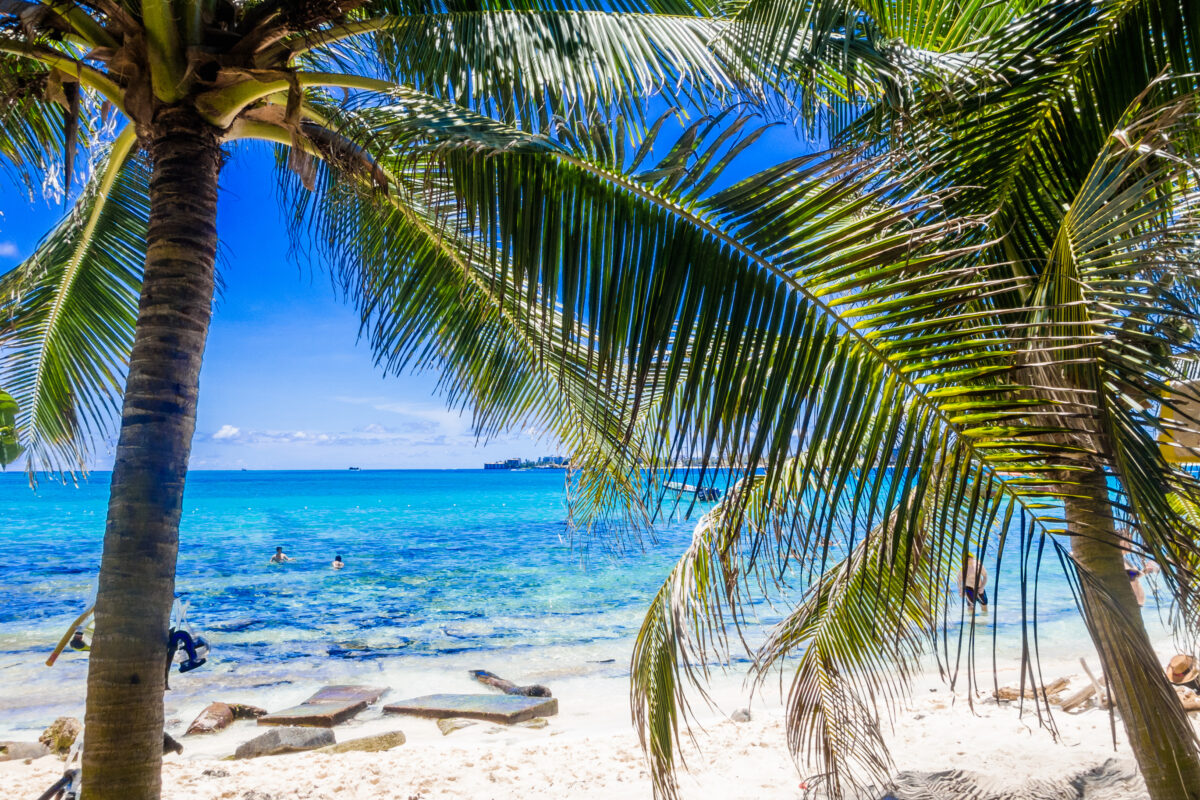
Just off the coast of San Andrés, about a 10 to 20-minute boat ride from the main town, Johnny Cay is a small coral islet that feels like a classic Caribbean postcard. Surrounded by vividly blue water, the island is ringed by white sand and shaded by coconut palms. Despite its size, Johnny Cay is one of the most popular day trips from San Andrés. Boats arrive throughout the day, bringing a lively atmosphere to the sand.
Another unique aspect: the hundreds of iguanas roaming freely across the island. Most visitors come to relax under the palms, enjoy freshly fried fish, and take in the shifting shades of the region’s famous “sea of seven colors.” It’s not the most quiet escape, but for a few hours, it delivers that unmistakable Caribbean energy.
Guachalito (Nuquí, Chocó)
On Colombia’s remote Pacific coast, near Nuquí, Guachalito feels like the complete opposite of the Caribbean. Reaching it requires a 30 to 45-minute boat ride along a jungle-lined coastline, and once you arrive, you’ll find a dark sand beach backed by dense rainforest—and not much else. There are no roads and no large hotels, just a handful of eco-lodges.
The waves are powerful, and trails lead to waterfalls and hot springs hidden in the forest. Between July and October, humpback whales migrate through, making it one of the best places in Colombia to see them up close. This beach is not for everyone, but if you’re looking for something raw and deeply connected to nature, it’s one of the most unforgettable places in the country.
Playa El Almejal (El Valle, Chocó)
Located in the village of El Valle, near Bahía Solano on Colombia’s Pacific coast, Playa El Almejal is the kind of raw shoreline that makes you feel like you’re in South America. The setting feels untouched: a long stretch of dark sand backed by dense rainforest, with powerful waves shaping its waters. Add to that nearby waterfalls, wildlife moving through the trees, and the wild rhythm of the Pacific Ocean crashing onto shore. It’s a favorite spot for surfers, and swimming requires caution due to strong currents.
Like much of this coastline, visiting El Almejal is about more than just the beach. Between July and December, sea turtles return to nest along these shores, supported by local conservation projects. And during whale season (roughly June to October), humpbacks pass just offshore. There are a handful of eco-lodges and small stays nearby, but the overall feel remains quaintly remote.
Cabo de la Vela (La Guajira)
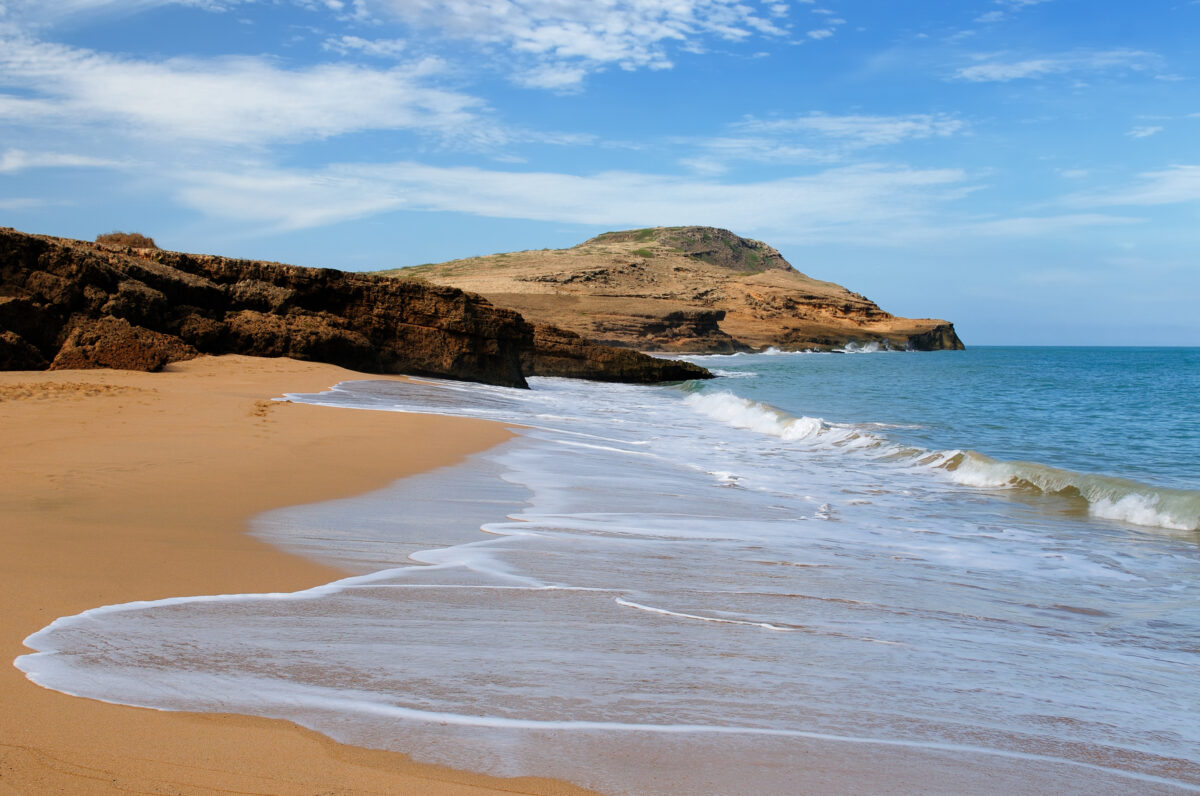
On Colombia’s far northern coast, Cabo de la Vela is where the Caribbean meets dunes, cacti, and the wide-open Guajira desert. This remote coastal village sits about 2 to 3 hours from Riohacha, and getting there—often along unpaved roads—is part of the adventure.
It’s not the typical tropical beach. While the water is clear and the sand is golden, the real draw is the contrast between the wind sweeping across the desert and colorful sunsets over the sea. Given its locations, it’s one of those rare places where you feel like you’re standing at the edge of a continent.
Strong trade winds make it a hotspot for kitesurfing, while the beach also holds deep cultural significance for the Wayuu people, who consider it sacred. Nearby landmarks like Pilón de Azúcar offer panoramic views over the coastline and are worth the short climb. It’s raw and unlike anywhere else in the country, which is why it made the list of Colombia’s best beaches.