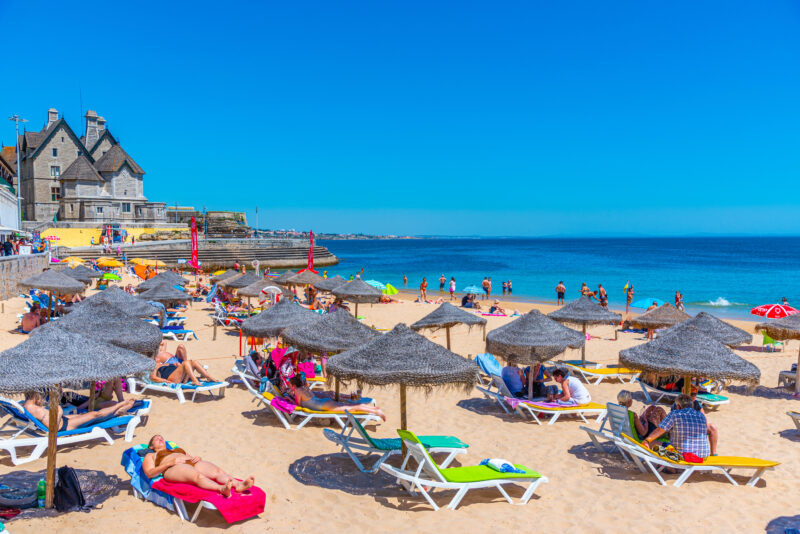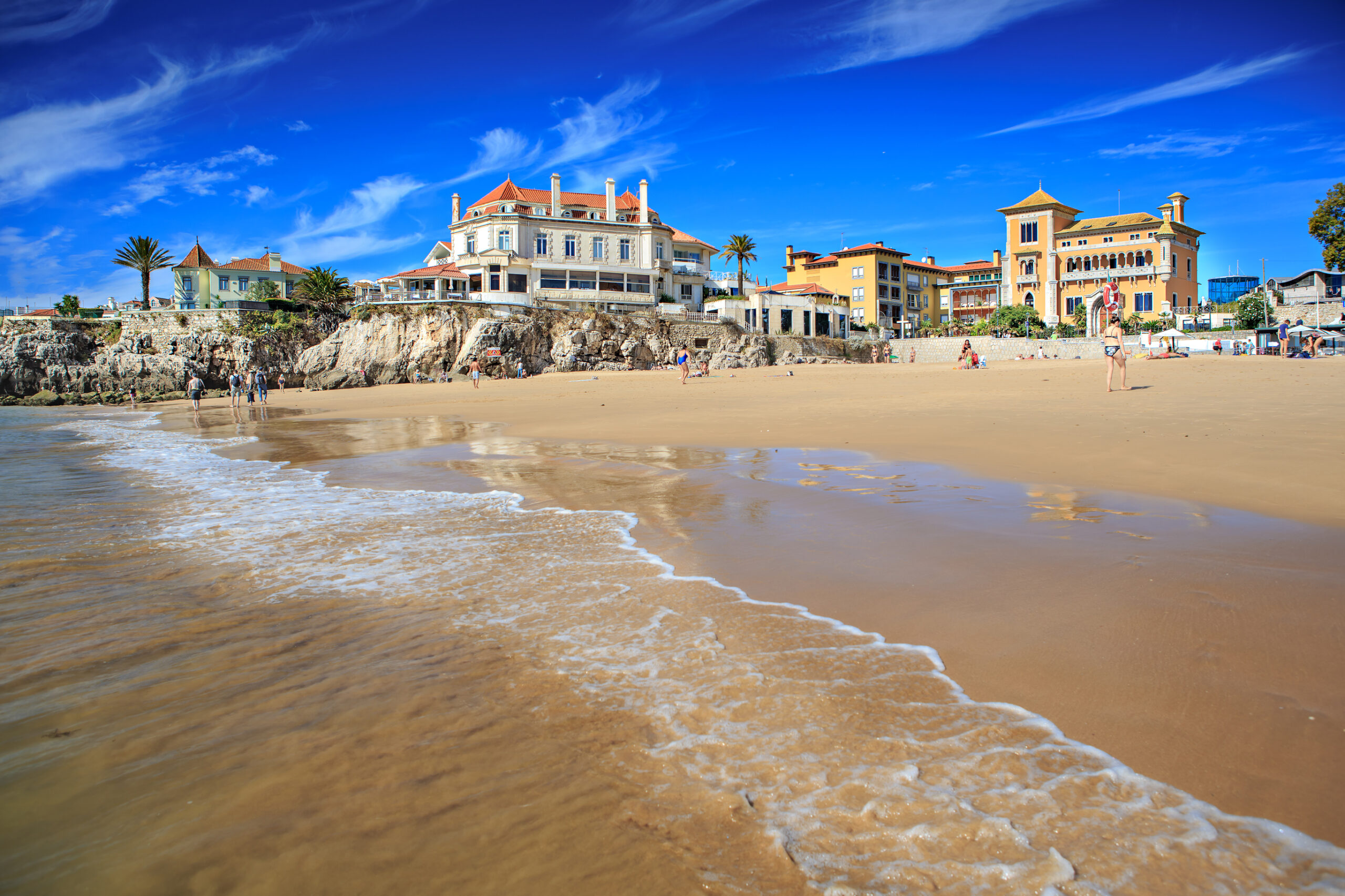
Cascais has a way of making you slow down. It’s a fishing town turned royal retreat turned favorite weekend escape for Lisbon locals. Three days is enough time to swim, wander the old town, eat well, and still leave wanting more. Here’s how to spend a long weekend in one of Portugal’s prettiest coastal towns, from the harbor to the market to the beaches in between, from someone who calls it home.
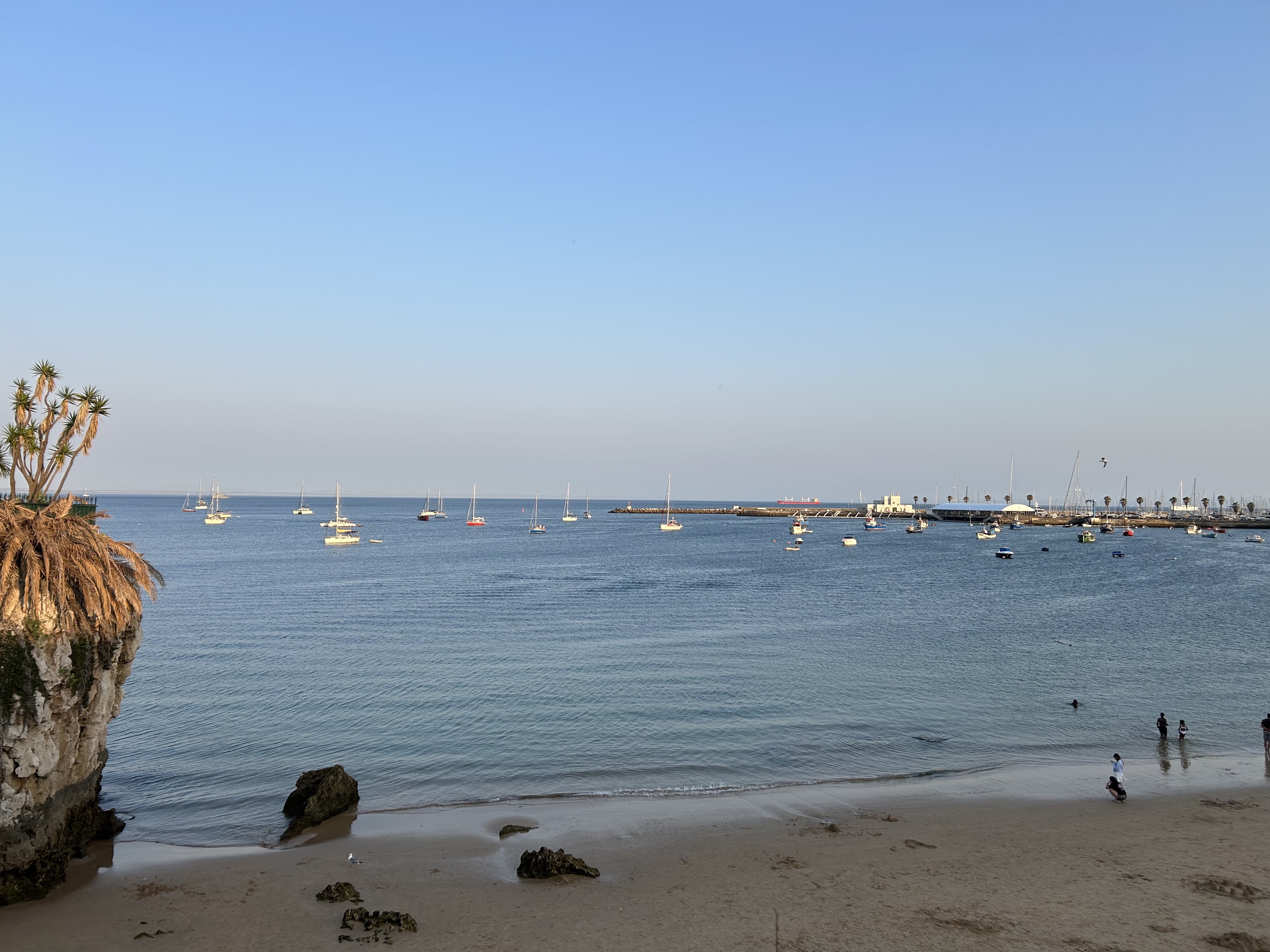
Day 1: Old Town, Harbor, and a First Swim
Ease into Cascais with the old town. Start at the marina, where fishing boats and sailboats sit side by side, then wander into the historic center along Rua Frederico Arouca, known to locals as “rua direita,” lined with traditional shops, cafés, and ice cream stops. Follow it toward Praia da Rainha and Praia da Ribeira, the two small sandy coves that sit right in the middle of town. They’re compact, but that’s just part of the charm. You can swim, dry off, and be back at a café table within minutes.
In the afternoon, walk out toward Boca do Inferno, the dramatic cliff formation where the Atlantic crashes into a sea cave with real force. It’s an easy walk or a short taxi ride from the center. On the way back, stop at Casa da Guia, a converted 19th century villa turned open-air shopping and dining complex right on the coast, for a sunset drink overlooking the water.
For dinner, stay local and traditional. O’Viriato, on Avenida Vasco da Gama, has been serving charcoal-grilled fish and meat for more than fifty years, and the carne de porco à alentejana (pork with clams) is what regulars order without glancing at the menu. Fado sometimes plays live over dinner and it sums up the town’s easy, unhurried character on night one.
Day 2: Guincho, Cycling, and Wide Open Coast
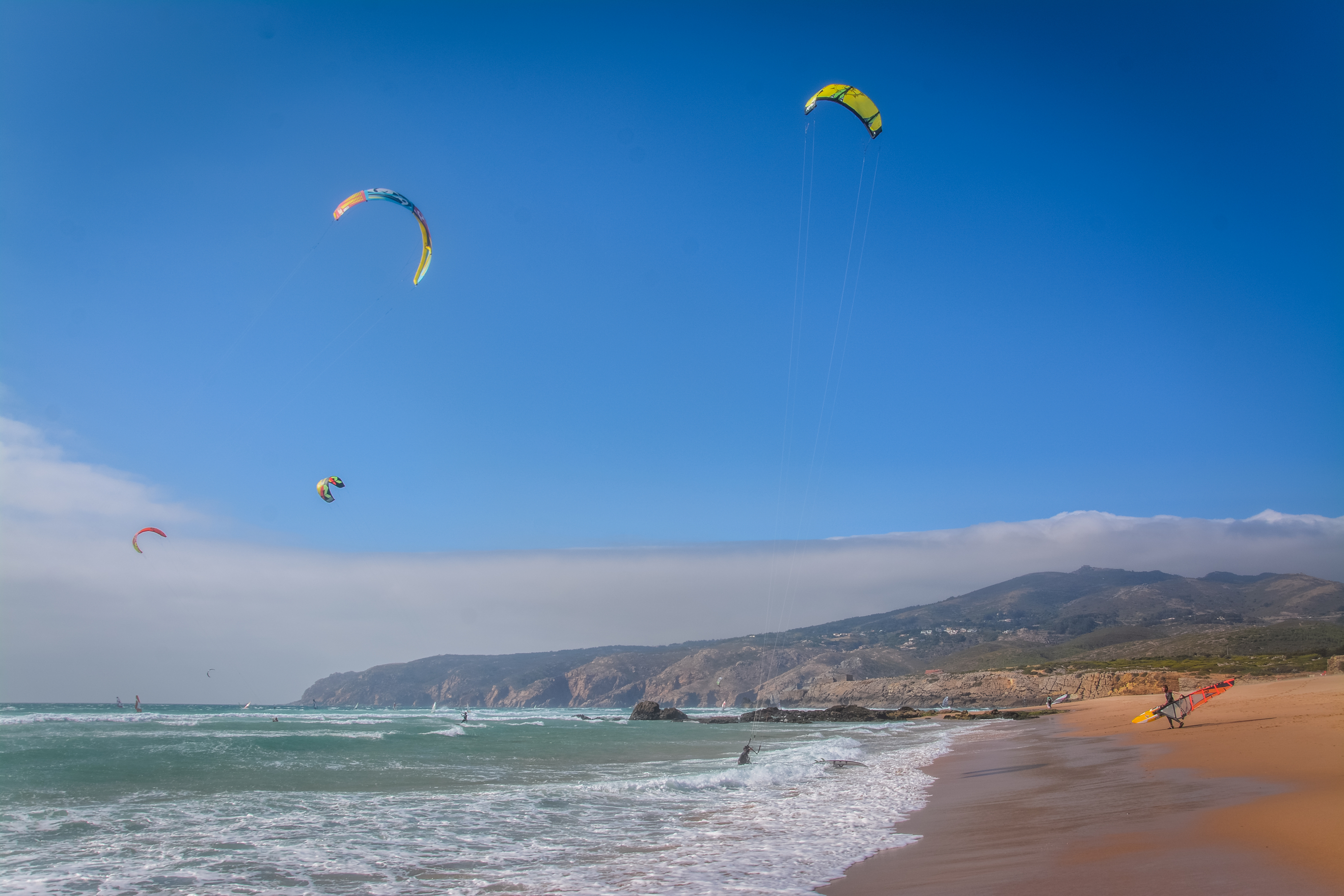
Day two is for the wilder side of Cascais. A paved cycle path runs about 5.5 miles from the marina out to Guincho Beach, tracing the edge of the Sintra-Cascais Natural Park, and it’s one of the best ways to see this stretch of coast. Rent a bike in town and take it slow. You’ll pass rocky coves, pine-backed dunes, and a roaring wind that explains why Guincho is one of Europe’s best surf and windsurf spots.
Guincho itself is a proper Atlantic beach: big, open, and more about the scenery and the surf than calm swimming. If you’re not up for a board, it’s still worth the trip just to walk the sand and watch the kite surfers. Bring a windbreaker even in summer; the wind here is part of the experience!
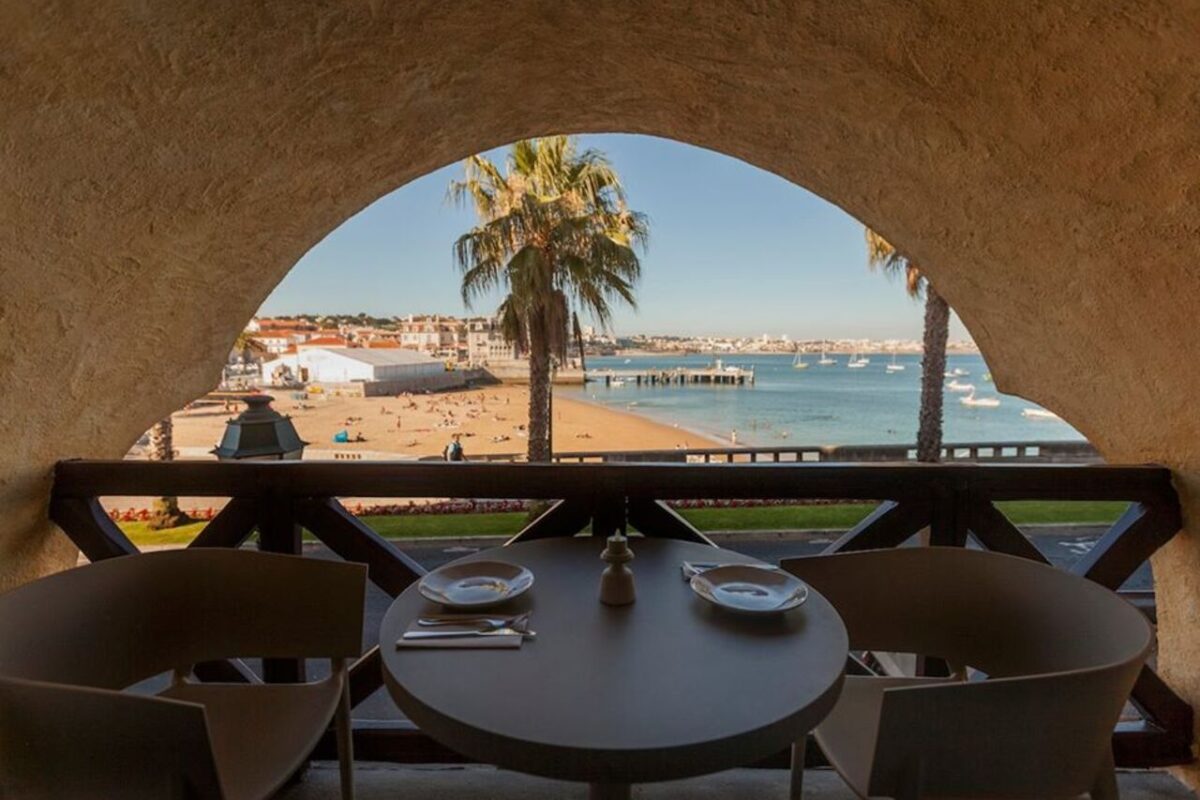
Head back into town for the evening and give yourself a proper wind-down dinner. Hifen, right on Cascais Bay, is built for exactly this. Portuguese cooking with a modern, shareable-plates twist, like Galician octopus with sweet potato or a light beetroot tartare, eaten with a view of the water.
Day 3: The Market, Shopping, and Yellow Street
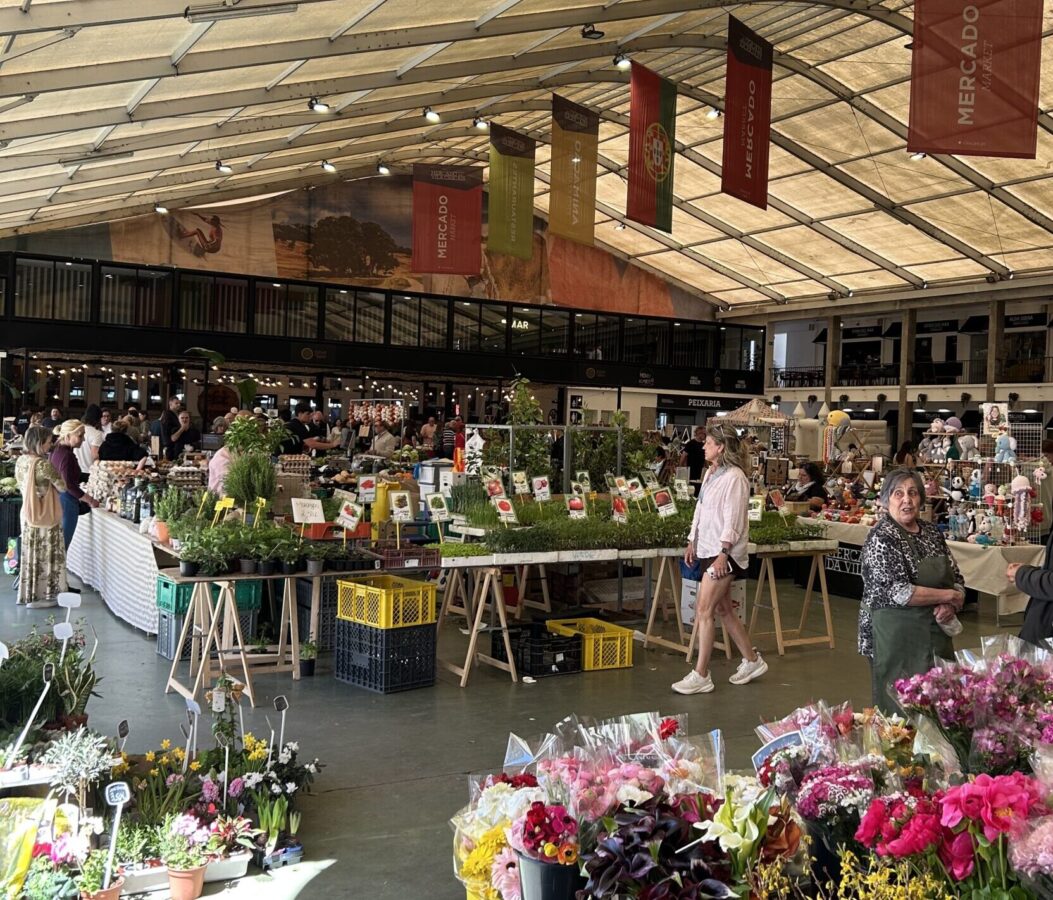
Save your last day for the parts of Cascais that feel most local. Start at the Mercado da Vila, the town’s covered market, for fresh produce, local cheeses, fish, and flowers. The traditional farmers’ market runs Wednesday, Saturday, and Sunday mornings, so time your visit for one of those if you can. It’s a good place to see the daily rhythm of the town before the tourist crowds settle in, and a good stop if you want to bring home something small, like local honey or a bag of pastries.
From there, spend the late morning shopping along Rua Frederico Arouca and the perpendicular side streets, where small boutiques sit alongside wine shops and tile stores.
Then head to Bairro Amarelo, or Yellow Street, for lunch. It’s a small food district centered on Rua Afonso Sanches, named for its cluster of yellow-painted buildings, and it’s the first place locals send visitors who ask where to eat in Cascais. Book ahead if you can and start at Taberna Clandestina for Portuguese and Italian tapas built for sharing (grilled octopus with potato, burrata with anchovies, beef cheek focaccia), or go for tacos and margaritas at Malacopa if you want something more casual. If pizza is what you’re craving, Pizzeria Il Siciliano turns out some of the best in town, thin and wood-fired, with a crust that does all the talking (they also have a handful of delicious gluten free options). Order a few small plates across a couple of stops rather than committing to one sit-down meal, and let the afternoon go slow.
Where to Stay
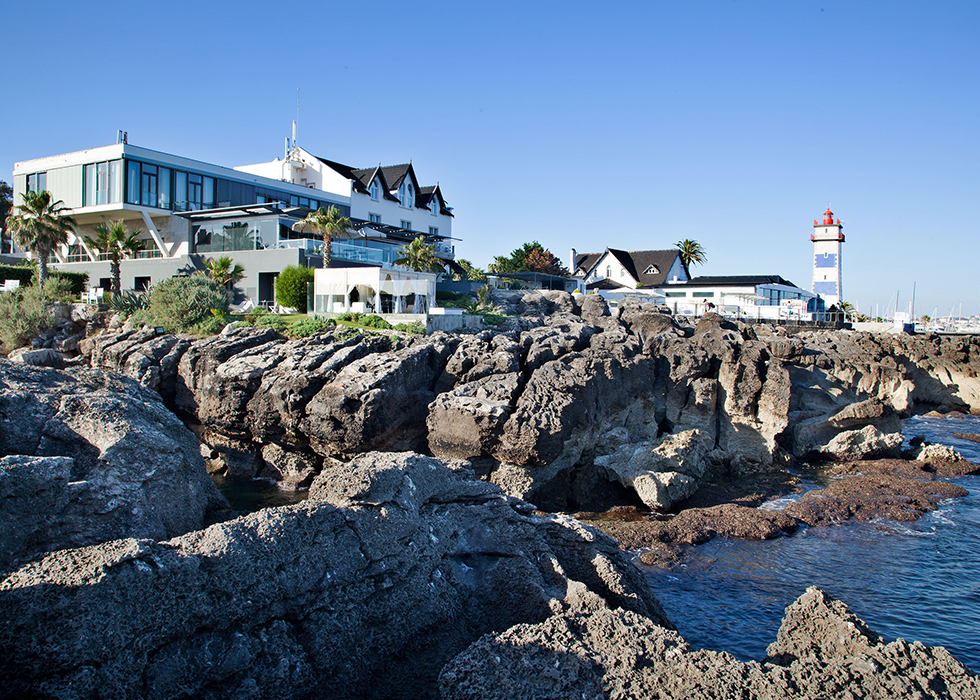
Farol Hotel is the standout pick if you want a splurge. It’s a design-led boutique hotel built around a 19th century mansion on the cliffs, right on the water near the Santa Marta Lighthouse, and an easy walk to both the marina and the old town. Expect individually decorated rooms, sea views, and a pool terrace that makes it hard to leave.
Pestana Cidadela Cascais, also known as the Pousada de Cascais, is built inside a 16th century fortress in the historic center and blends a genuine sense of place with an on-site art district of galleries and studios. It’s a strong choice if you want history and location in equal measure.
Pergola Guest House is a solid mid-range option, set close to the train station and the beaches, and a good base if you’d rather spend your budget on long lunches than on the room itself.
Where to Eat
Cascais is small and walkable enough that you can genuinely eat your way through it, and a few spots are worth building a day around beyond what’s already on the itinerary.
Bairro Amarelo (Yellow Street) is the easiest way to sample a wide range of food in one sitting. Beyond Taberna Clandestina and Malacopa, Aqafarina, just off the neighborhood on Largo Cidade de Vitória, is worth the extra five minutes for fresh daily pasta and focaccia sandwiches in a shaded courtyard, with a rooftop terrace, Copa Alto, for a drink after.
For old-school, no-frills Portuguese food, Dom Monolo on the Marginal has been serving piri-piri roast chicken and grilled sardines since the 1970s, and O Cantina da Belinha, tucked into the fishermen’s association building near the old town, is one of the best spots in town for sardines and whole fish straight off the boat, especially in summer.
If you can’t agree on one cuisine, the Mercado da Vila covers it by evening, when the stalls around the covered market turn into a mix of seafood counters, pizza, and craft beer, good for a night when nobody wants to commit to one restaurant.