
Surrounded by the Indian and Pacific oceans about 150 miles south of the Australian mainland, the isolated state island of Tasmania is one of the country’s less-visited destinations, but it’s well worth putting on your itinerary. It’s home to mountains with pink granite peaks and pristine rainforest, often called the “forgotten wilderness.” Featuring massive tree ferns, hidden waterfalls, wild rivers, and unique wildlife from rare birds like the orange-bellied parrot and the famous Tasmanian devil, it’s like a fantasy come to life.
Beach lovers won’t be disappointed either, with the island boasting many stunning white sandy beaches, including the exotic Bay of Fires, which just landed on AFAR’s list of the world’s best.
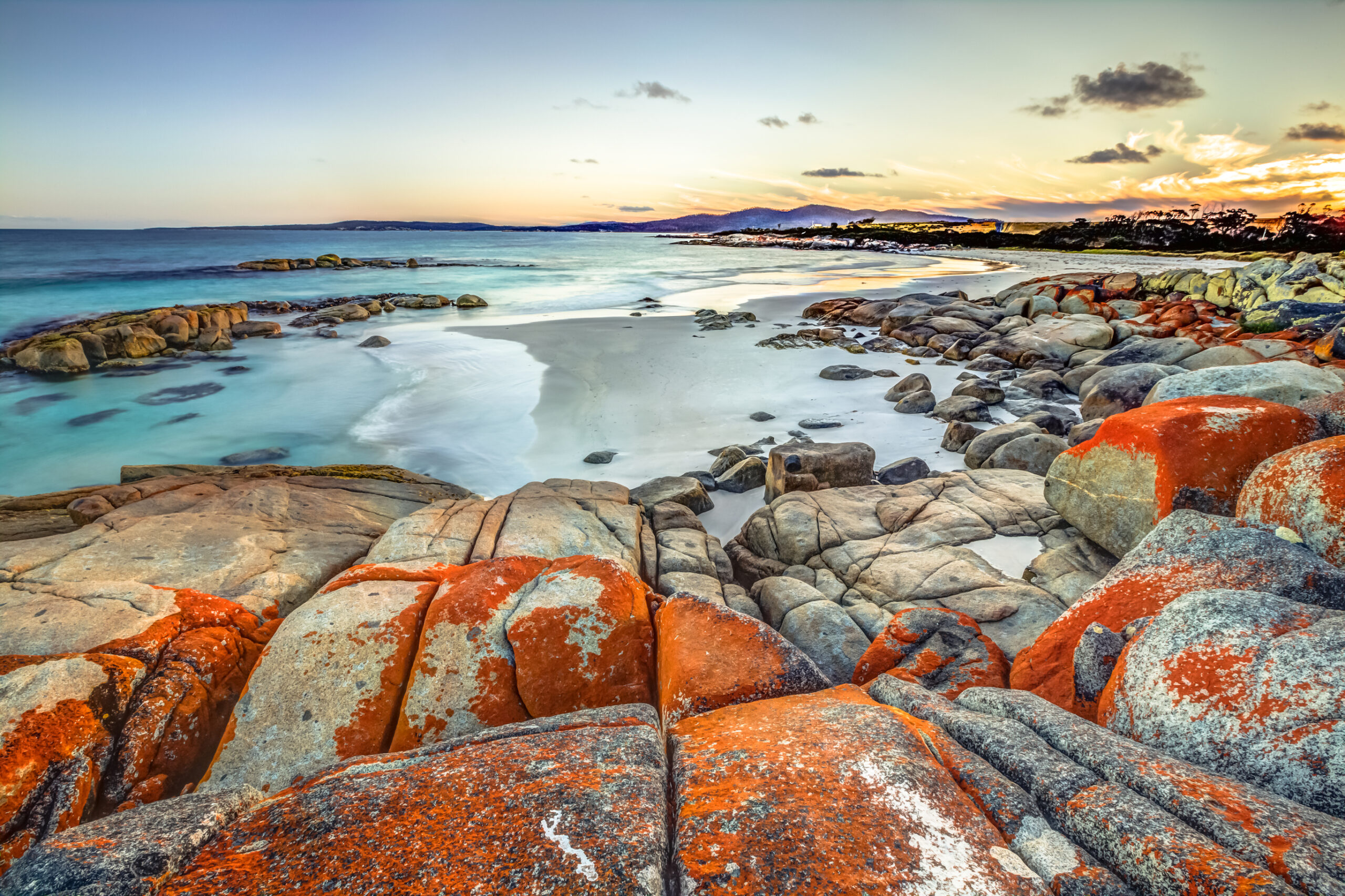
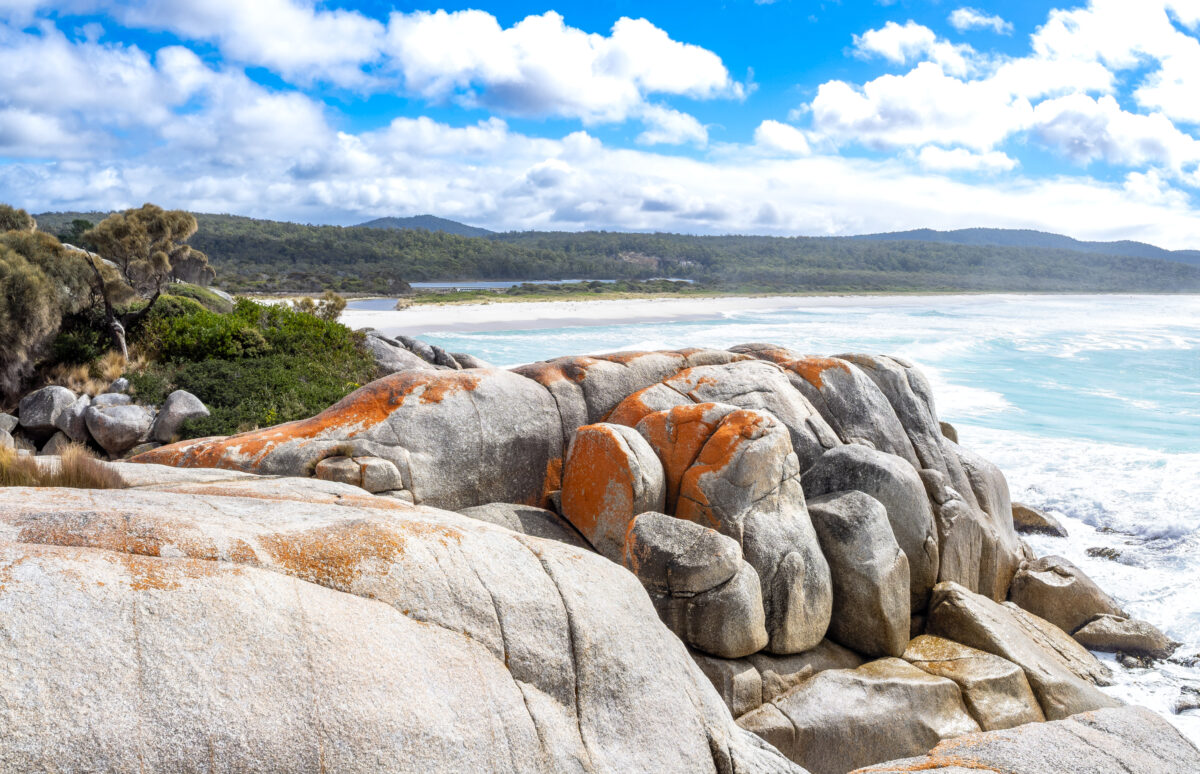
The Bay of Fires isn’t just one beach but a handful along a six-mile stretch of shoreline. Named in 1773 by a passing British sea captain who saw the campfires of the Palawa people burning in the bush. There are few signs left of those indigenous inhabitants that became extinct in the late 19th century, other than shell and bone dumping grounds. But you will find miles of powder sugar-like, bone-white sand lapped by brilliant aquamarine water and iconic orange granite boulders. Covered in lichen that thrives in the salty sea air, the coastline is a remarkable sight, providing endless photo ops.
Top Things to Do at The Bay of Fires
Long walks along the coast are always popular. Some of the major hikes include the guided Bay of Fires Lodge Walk and the multi-day walk guided by Aboriginals on Aboriginal land, ideal for learning about unique First Nations culture.
Beyond walking and hiking, Binalong Bay offers swimming and snorkelling, with some of the top spots found at the North and South Cosy Corner beaches. Kayaking is popular in the calm waters of Ansons Bay. If you’re into mountain biking, take on the 26-mile Bay of Fires Trail that will bring you from the Blue Tier mountains to Swimcart Beach.
Wildlife watching is excellent in Mount William National Park, including kangaroos and wombats. Plus, when along the coast from May to July and September to November, keep an eye out for humpback and southern right whales that migrate by.
When to Go
The best time to visit the Bay of Fires for warm, sunny weather, comfortable swimming, and great snorkeling is in the summer months (December through March). However, the shoulder seasons of autumn (March through May) and spring (September through November) are worth considering. You’ll enjoy milder temperatures, fewer crowds, and potential whale sightings in late autumn or throughout the spring.
How to Get There
The southern end of the Bay of Fires Conservation Area at Binalong Bay is a 3-hour and 20-minute drive northeast of the capital of Hobart. There are direct flights to Hobart (HBA) from many major Australian cities, including Sydney, Melbourne, Perth, Adelaide, and Brisbane, as well as from Auckland, New Zealand.