
Located in the Seto Inland Sea off the southwest coast of Japan, Naoshima Island isn’t on the radar of most travelers, but as an emerging destination, that’s likely to change in the near future.
This highly underrated island just made CN Traveler’s list of the Best Places to Go in 2026—and, as the publication notes, you’ll want to take advantage of the chance to visit before the crowds descend.
While it was once home to just a few traditional fishing villages, it’s now a hub of arts and culture. A virtual art gallery, it features renowned architect Tadao Ando’s architectural masterpieces, art museums, installations, exhibitions, outdoor sculptures, and other works. For beach-loving art enthusiasts, Naoishma is a paradise.
Hottest Art Spots
Museums & More
Art museums on the island include the Chichu Art Museum, an architectural wonder built underground with natural light used to illuminate works like Claude Monet’s Water Lilies, designed to change with the seasons and even the time of day, integrating nature into art. The Lee Ufan Museum is a tranquil space featuring the works of Korean-Japanese artist Lee Ufan, including stone and iron sculptures. The Ando Museum, a traditional house renovated by Tadao Ando, showcases the Pritzker prize-winning architect’s signature concrete and natural light design.
The recently opened Naoshima New Museum of Art is partially underground, featuring works by Cai Guo-Qiang and Takashi Murakami that explore Asian futurism and Japanese cosmology themes. In the village of Honmura, you’ll find the Benesse House Museum, part of the Art House Project. It’s a complex that also includes outdoor sculptures and a hotel, all designed by Ando for art, nature, and architecture to coexist.
Iconic Outdoor Works Not to Miss
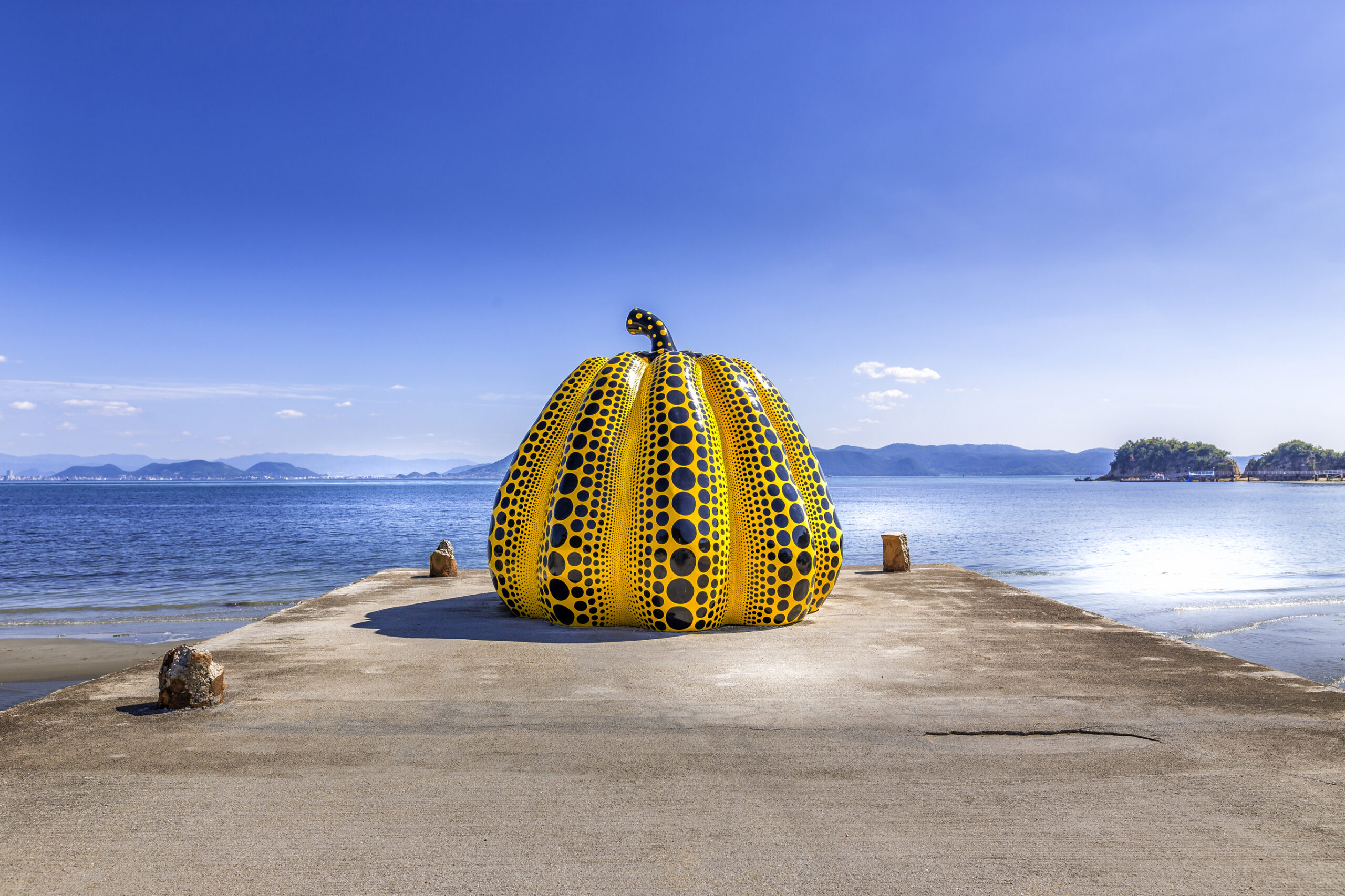
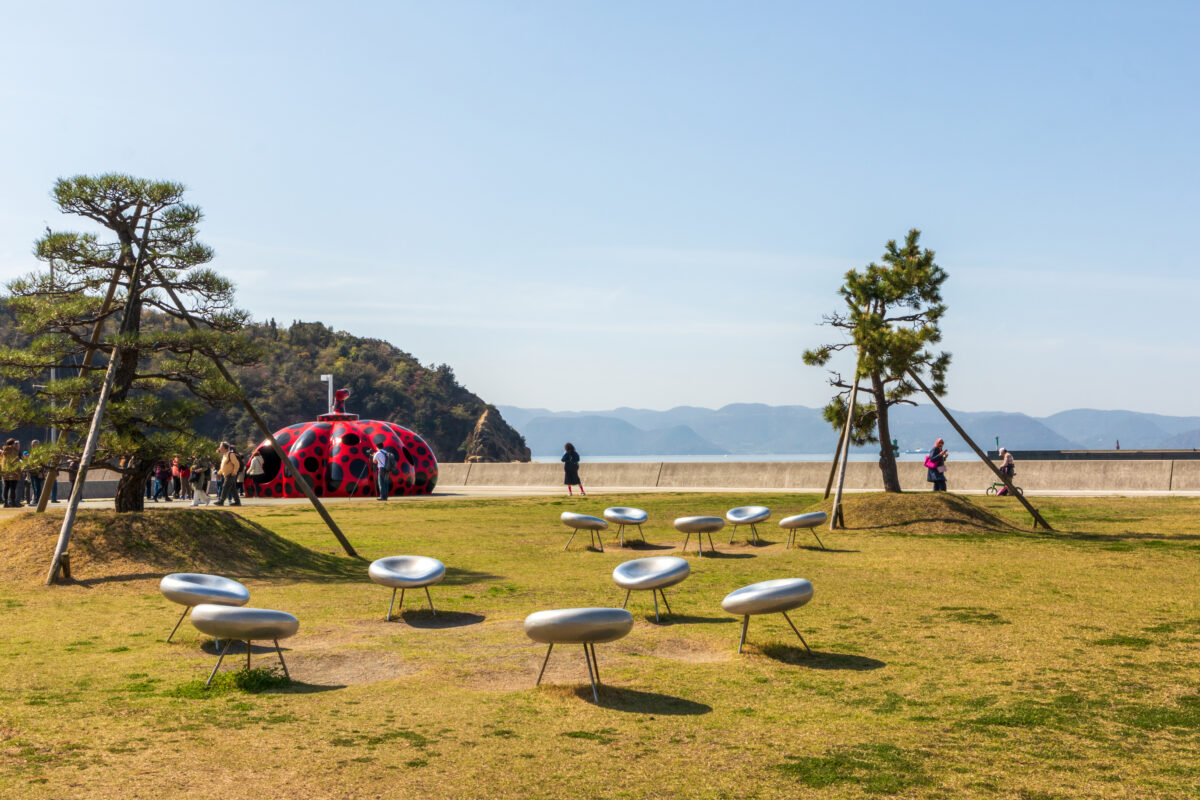
The top photo spot on the island is the famous Yellow Pumpkin on the pier at the Benesse Art Site, by Yayoi Kusama, which has become a beloved symbol of “Art Island.” The minimalist, mirror-clad Naoshima Pavilion, a highly transparent, mesh-like steel structure by architect Sou Fujimoto, is one of the more recent additions, casting a striking silhouette on Naoshima’s coastline.
The Valley Gallery covers over 1,030 square feet, with a trapezoidal floor plan and an angular steel roof influenced by the landscape. A white-walled room sits within an external concrete shell, housed under the roof that’s reminiscent of origami folds. Accented by 30-degree corner openings, it frames the sky to reveal seasonal changes. Ando describes the space as pure and simple as a white canvas with natural light entering, creating “a void in which everything superfluous has been erased, colored by light that shifts with time and the seasons.” It includes Tsuyoshi Ozawa’s Slag Buddha 88 and Kusama’s Narcissus Garden (mirror balls).
The Beaches
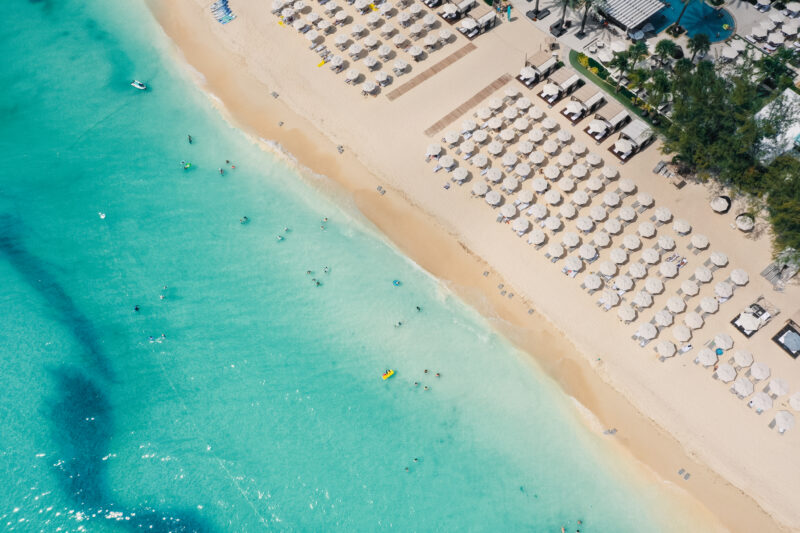
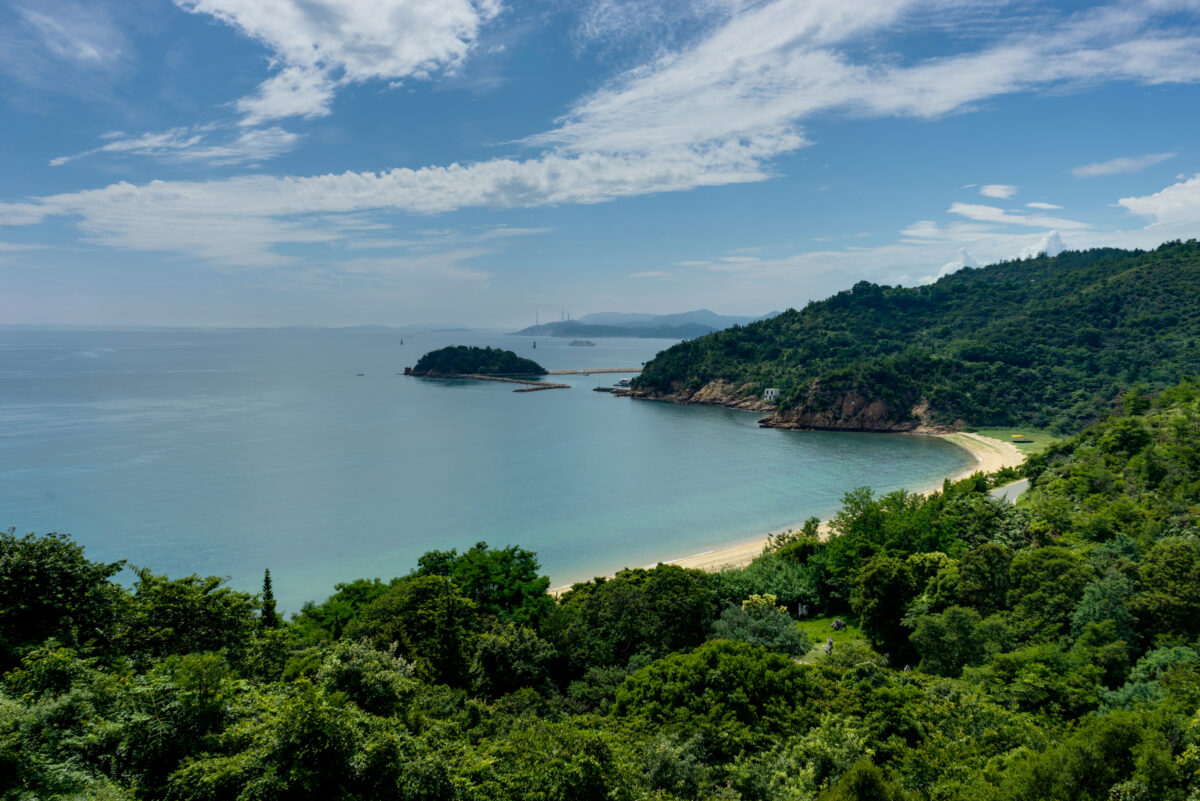
In between exploring all the art, you can take advantage of the sunny Mediterranean climate to enjoy Naoshima’s beaches, known for their crystal-clear blue waters ideal for swimming, best enjoyed from July through September. Gotanji Swimming Beach near the Yellow Pumpkin is one of the most convenient, close to the museums, but there are secluded options like Secret Beach Number One on the east side of the island in the Honmura area.
Plus, it’s easy to visit nearby islands like Inujima and Tesima from Naoshima on day trips by ferry for even more spectacular beaches and hidden art installations.