

-
Bahia
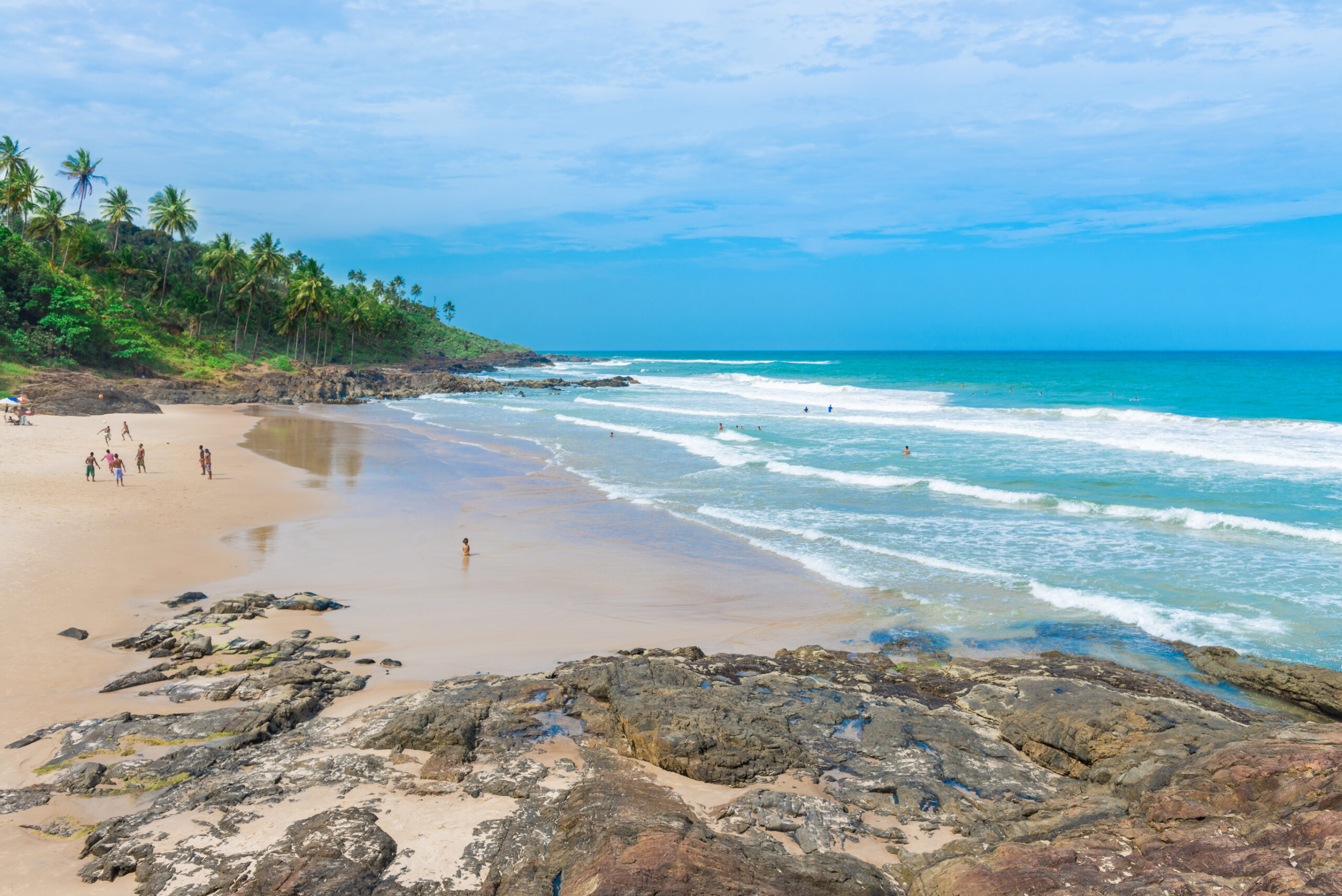
9 Best Beaches in Bahia, Brazil
Afro-Brazilian culture, crystalline shores & spicy seafood stews
Known as the cradle of Afro-Brazilian culture, Bahia offers more than just stunning beaches. It’s where travelers come to experience Brazil’s roots through music, food, and tradition. Though best known for its colorful capital, Salvador, the state is home to some of the country’s most beautiful stretches of sand, many quieter and more secluded than the shores of Rio de Janeiro.
Yet a trip to Bahia is never just about the beach. Bahia’s long, sandy shores beg you to slow down. Traveling here is about disconnecting and settling into a daily rhythm that reflects the state’s laid-back ethos—a rhythm marked by bare feet in the sand and spicy seafood stews followed by afternoon naps.
With more travelers adding the state to their itineraries, it seems this is exactly what many are seeking. From Blue Flag coves near Salvador to the remote sands of Boipeba, here are the best beaches in Bahia to forget about your responsibilities, if only for a little while.
Praia do Espelho (Between Trancoso and Caraíva)
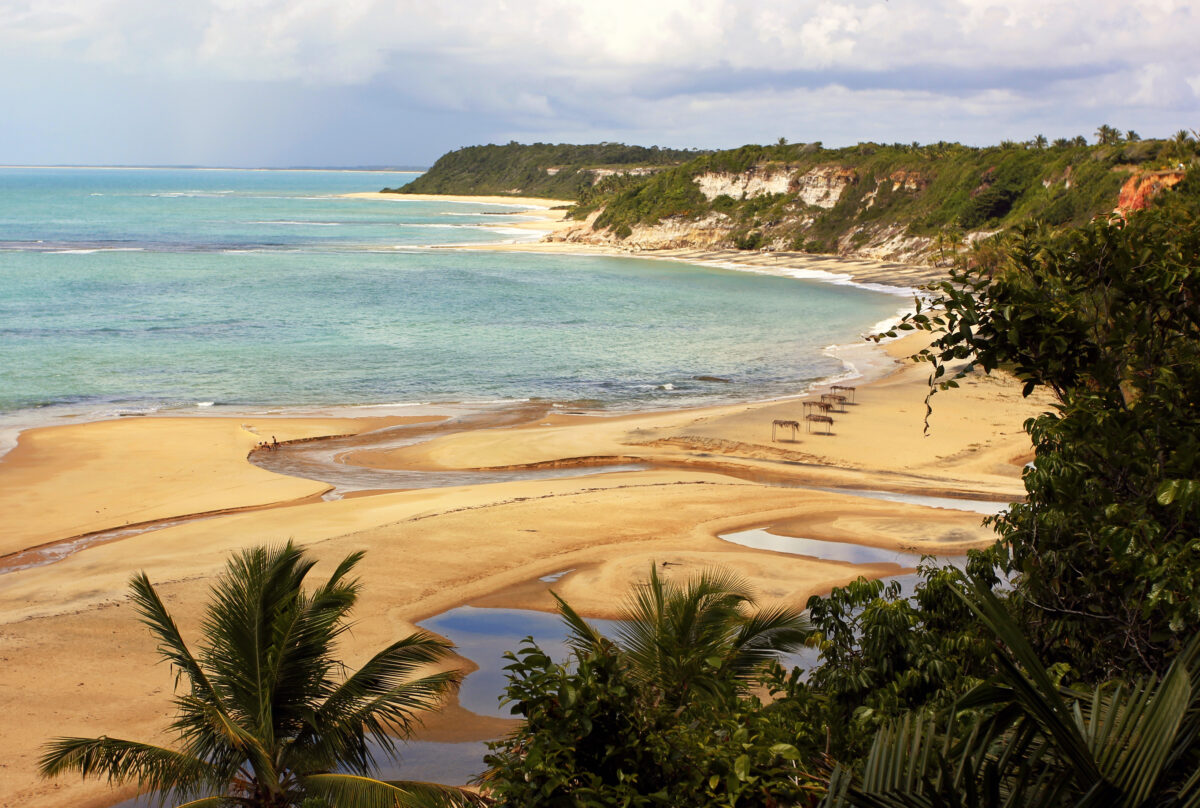
Photo by © Egazeredo | Dreamstime.com Located between Trancoso and Caraíva, two popular vacation spots on Bahia’s southern coast, Praia do Espelho is one of Brazil’s most celebrated beaches. It sits about 1.5 hours from Trancoso along a dirt road, or can also be reached by boat on calm days. Known for its crystalline tidepools that resemble mirrors at low tide—hence the name “Mirror Beach”—Espelho rewards visitors who plan their trip around the tides. Take note: new and full moons bring the clearest reflections.
The beach has a handful of hotels and beachside restaurants offering day-use service and fresh seafood lunches. The neighboring Praia dos Amores is quieter and more secluded, connected to Espelho only at low tide. The mix of scenic cliffs, gentle surf, and reliable infrastructure makes Espelho a must for anyone spending some time in Trancoso’s chic beach clubs or Caraíva’s bohemian village.
Praia do Satu (Caraíva)
Praia do Satu is a remote beach near the village of Caraíva, located on Bahia’s Costa do Descobrimento, a historic stretch of coastline known as one of the earliest Portuguese landing sites in the 1500s.
To reach it, travelers cross the Caraíva River by canoe, then walk about four kilometers north along the sand. There’s no road access and no beach kiosks, so bring your own water and snacks. The reward is total tranquility, a stretch of untouched coastline where two lagoons meet the sea: the freshwater Lagoa do Satu and the saltier Lagoa do Mucaba.
Both are perfect for cooling off after the walk, especially at low tide when the colors are most vibrant. The beach is practically uninhabited, with only a handful of travelers making the journey each day. Satu is ideal for anyone craving seclusion, yet within walking distance of one of the state’s most charming—and my personal favorite—beach villages.
Ponta do Corumbau (Between Caraíva and Prado)
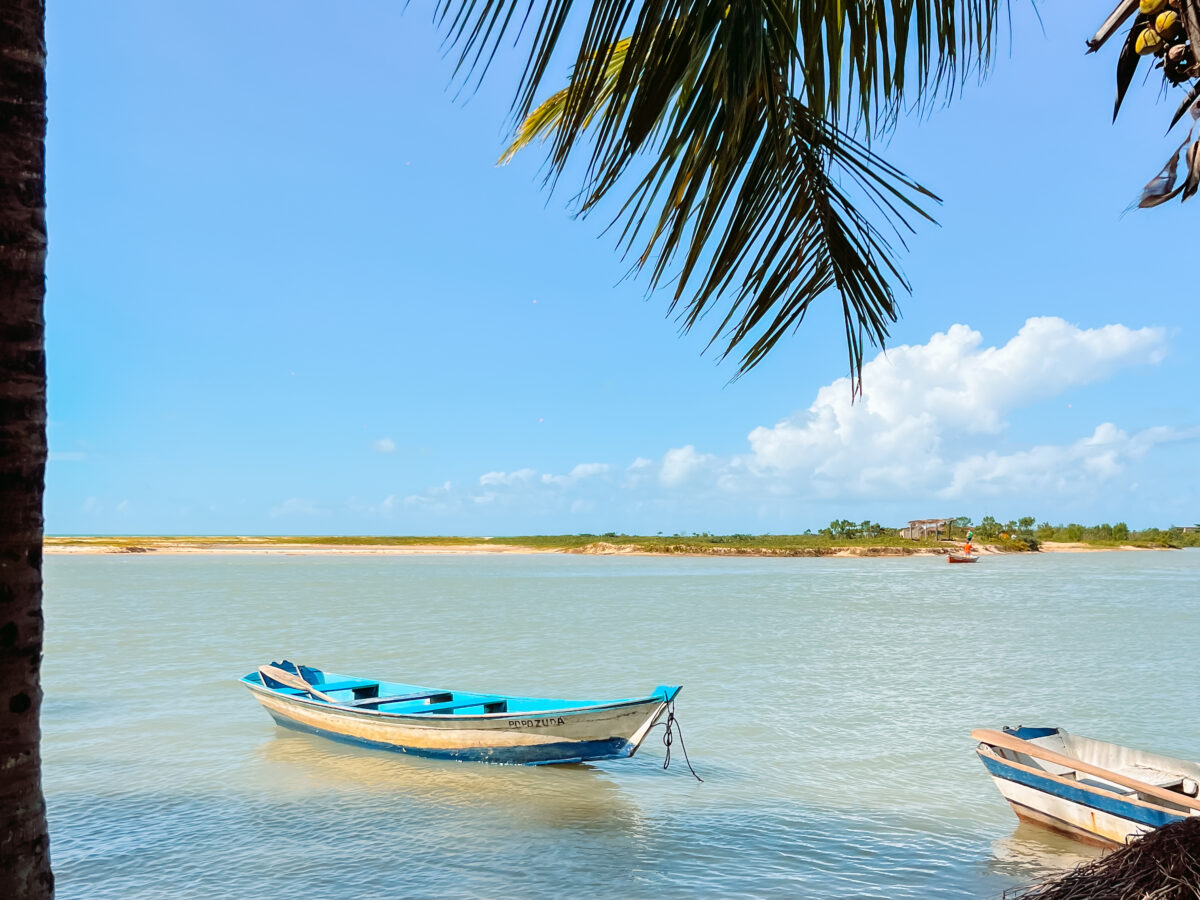
Photo courtesy of Carla Vianna Tucked into the southern tip of Bahia between Caraíva and Prado, the Ponta do Corumbau is one of the state’s best-kept secrets. It’s located inside a marine reserve, reachable by boat from Caraíva or Trancoso, or by car along a long dirt road from Prado. Its remote location keeps crowds away, preserving miles of empty shoreline and turquoise sea.
Corumbau is a quiet fishing village with limited but charming accommodation and beach huts serving fresh seafood and coconut water. Expect minimal infrastructure—no big hotels or nightlife—but reliable comfort and friendly locals. It’s an excellent place for travelers seeking solitude, nature, and unspoiled beauty, with optional reef excursions for snorkeling nearby. Whether you visit on a day trip or stay overnight, Corumbau is as off-grid as you can get around here.
Ponta de Nossa Senhora de Guadalupe (Ilha dos Frades, Salvador Bay)
Just off the coast of Salvador, Ponta de Nossa Senhora de Guadalupe is the main beach on Ilha dos Frades, a protected island within Brazil’s largest bay, the Baía de Todos os Santos. Travelers can visit on organized day tours from Salvador or arrive independently via the Terminal Marítimo de Madre de Deus, about 65 kilometers away, where local boats make the short crossing.
Why should you make the journey over? Well, the beach holds the prestigious Blue Flag certification, recognized worldwide for exceptional environmental standards. Visitors rave about its warm, calm, and clear waters, ideal for snorkeling and swimming. The island also offers restrooms, food stands, and a restored 17th-century chapel with panoramic views of the bay. The eco-certified paradise was recently named the Best Beach in the Americas and Iberian Peninsula by CIF Playas, making it one of Bahia’s very best coastal destinations.
Praia de Moreré (Ilha de Boipeba)
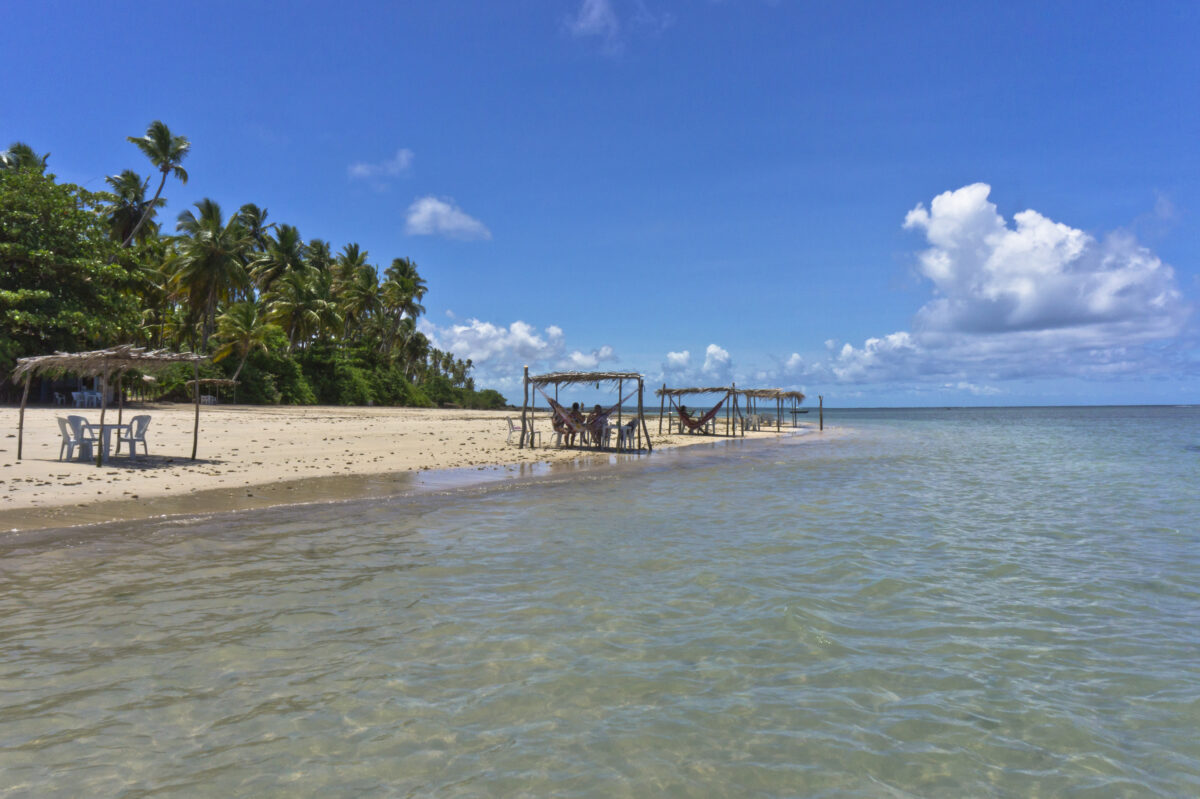
Photo by © Andreas Giannakis | Dreamstime.com Reaching Praia de Moreré is part of the adventure. The beach lies on Ilha de Boipeba, a car-free island south of Salvador known for its slow rhythm and coral-lined coast. Travelers can arrive by small plane from Salvador (a 30-minute flight) or take a ferry to Itaparica, followed by a road transfer to a port where boats depart for Boipeba. From the island’s main village, Velha Boipeba, visitors reach Moreré by foot, tractor, or quad. The journey’s effort is well rewarded: at low tide, natural pools form among offshore reefs, revealing some of Bahia’s clearest snorkeling spots. The small fishing village has sandy streets, simple pousadas, and open-air restaurants serving fresh seafood. With limited cell service and no cars, days here flow with the tides—a place where the only agenda is to swim, eat, and sway in a hammock until sunset.
Ponta dos Castelhanos (Ilha de Boipeba)
Also on Ilha de Boipeba, the remote Ponta dos Castelhanos is one of Bahia’s most untouched beaches. You’ll reach it most easily by boat from Velha Boipeba (via a “around the island” tour) or by hiking a trail through mangroves (a guide helps). During low tide, a long strip of sand stretches into the sea, creating calm, shallow pools perfect for swimming. The area has virtually no infrastructure, save for a couple of simple kiosks serving drinks and snacks, so bring your own food and drink. Castelhanos is ideal for anyone seeking solitude and natural beauty, coupled with complete disconnection from modern life. The farther the tide recedes, the more stunning the scene becomes. Whether you visit by boat or on foot, this is Boipeba at its purest—still preserved, still quiet, and still one of the most rewarding beach adventures in Bahia.
Itacarezinho (Itacaré)
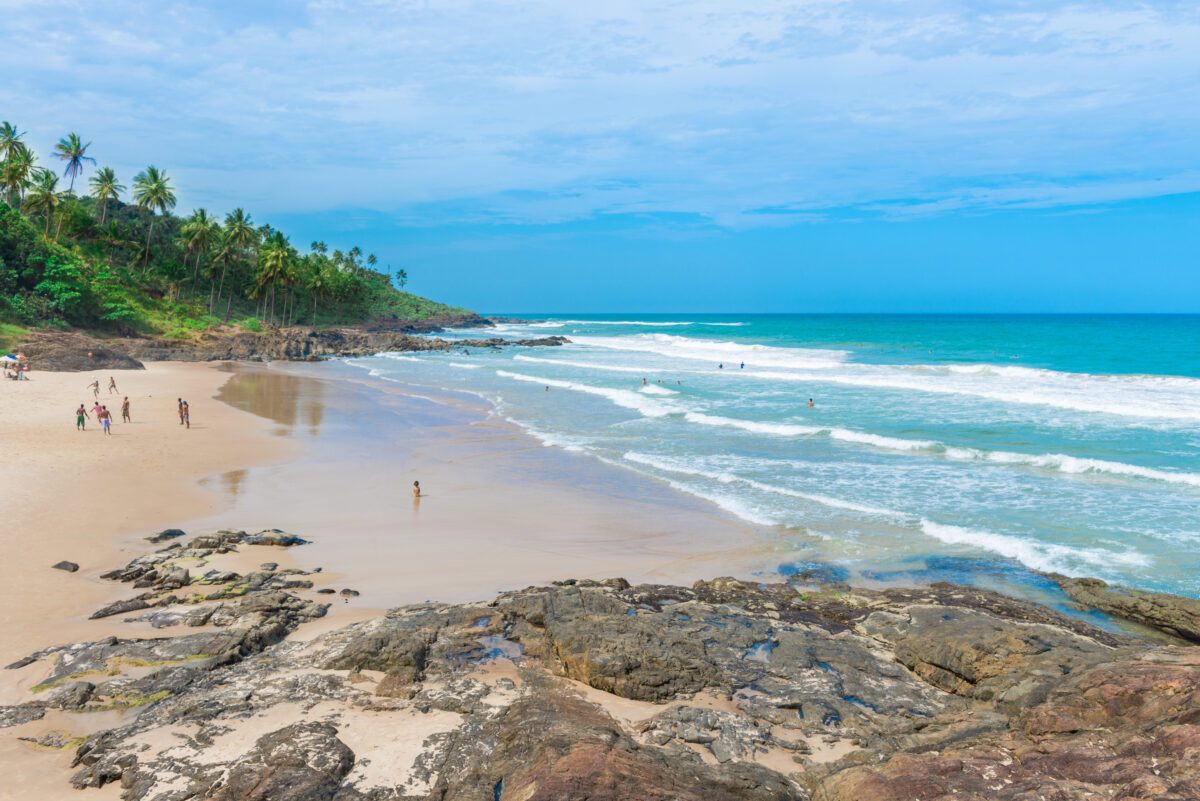
Photo by © Junior Braz | Dreamstime.com Despite its diminutive name, Itacarezinho is anything but small. This 3-kilometer stretch south of the laidback surf town of Itacaré is one of Bahia’s most breathtaking beaches. Framed by palm trees and backed by Atlantic rainforest, the wide golden sand alternates between calm natural pools and perfect surf waves depending on the tide and moon. Most visitors access it via Restaurante Itacarezinho, where cars can park close to the beach for a fee and day-use service includes shaded lounges and refined seafood dishes. The Txai Resort, perched at the center of the beach, offers a luxurious place to stay without disturbing the tranquility of the landscape. A small waterfall at the northern end provides a refreshing rinse after the saltwater, while those craving solitude can walk toward the far right where the beach meets a river.
Taipu de Fora (Península de Maraú)
One of the most spectacular beaches on the Península de Maraú, a tropical peninsula on Bahia’s southern coast, Taipu de Fora is famous for its vast natural pools that form right off the shore during low tide. Between the coral reefs and tide-carved rock formations, the ocean turns into a crystal-clear aquarium filled with colorful fish. The best time to visit is around the new or full moon, when the tide drops the lowest and the pools are at their clearest. Here you’ll find plenty of beachfront restaurants serving seafood and caipirinhas, yet walk a few minutes in either direction and the beach becomes nearly deserted, fringed by coconut palms and golden sand.
Praia do Forte (North Coast of Salvador)
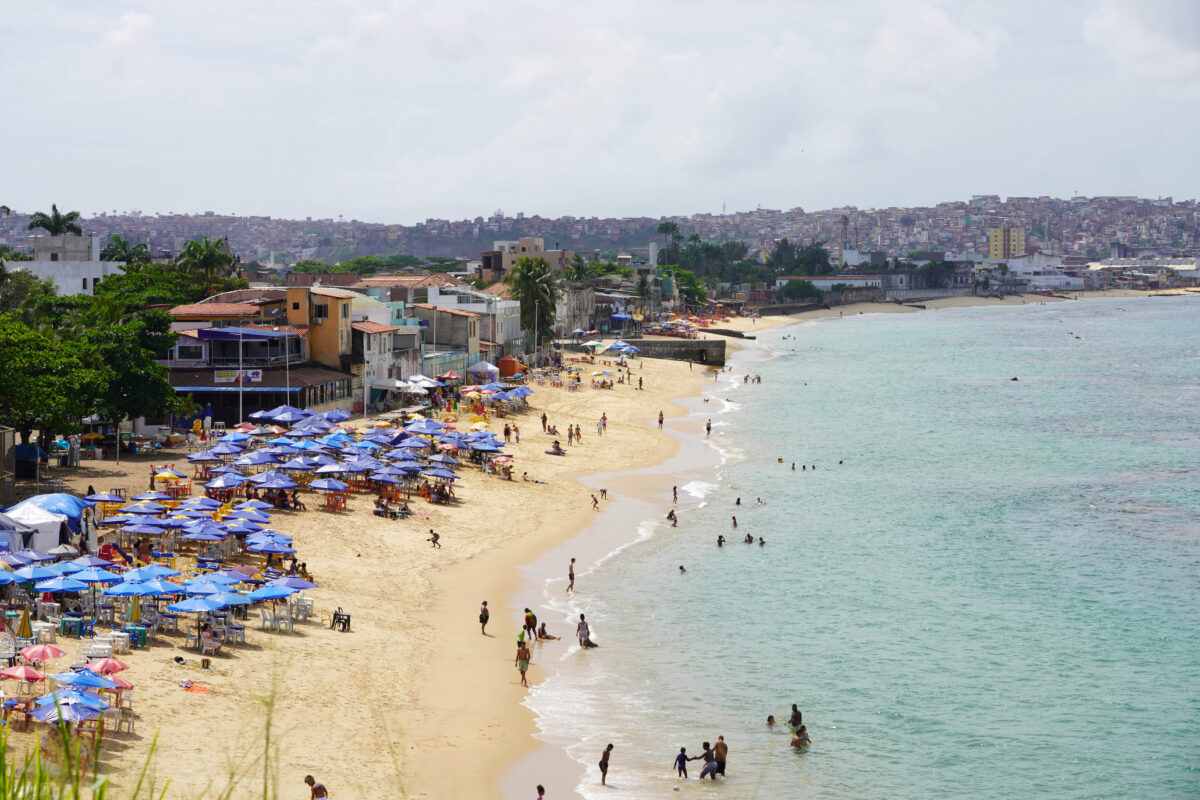
Photo by © Sergiomonti | Dreamstime.com We can’t round out this list of Bahia’s best beaches without including the coast near Salvador. About 80 kilometers north of the city, Praia do Forte combines pristine beaches with one of the best tourist infrastructures in the state. Once a humble fishing village, it’s now a charming seaside town known for its calm, crystal-clear waters and well-kept natural pools that appear at low tide.
The area’s long coastline includes several beaches, yet Praia do Forte stands out for its strong conservation efforts. Here, you’ll find Projeto Tamar, Brazil’s leading sea turtle protection program, where visitors can learn about these peaceful marine creatures up close. Nearby, the Sapiranga Ecological Reserve preserves the Atlantic Forest habitat. Perched above the shore are the ruins of the castle of Garcia d’Ávila, widely cited as the only example of medieval-style fortification in Latin America, adding a dose of history to the visit.
-
Guatemala
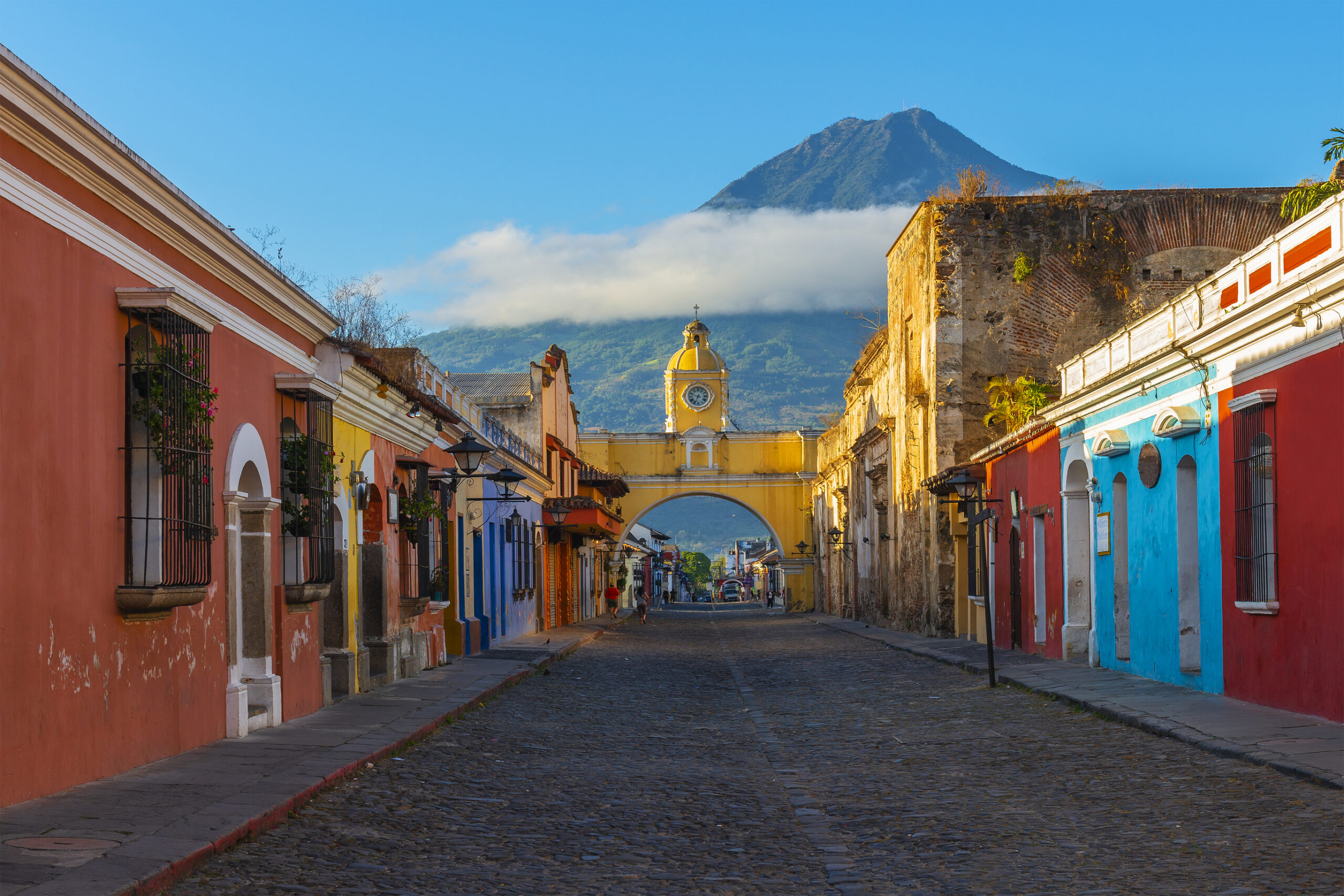
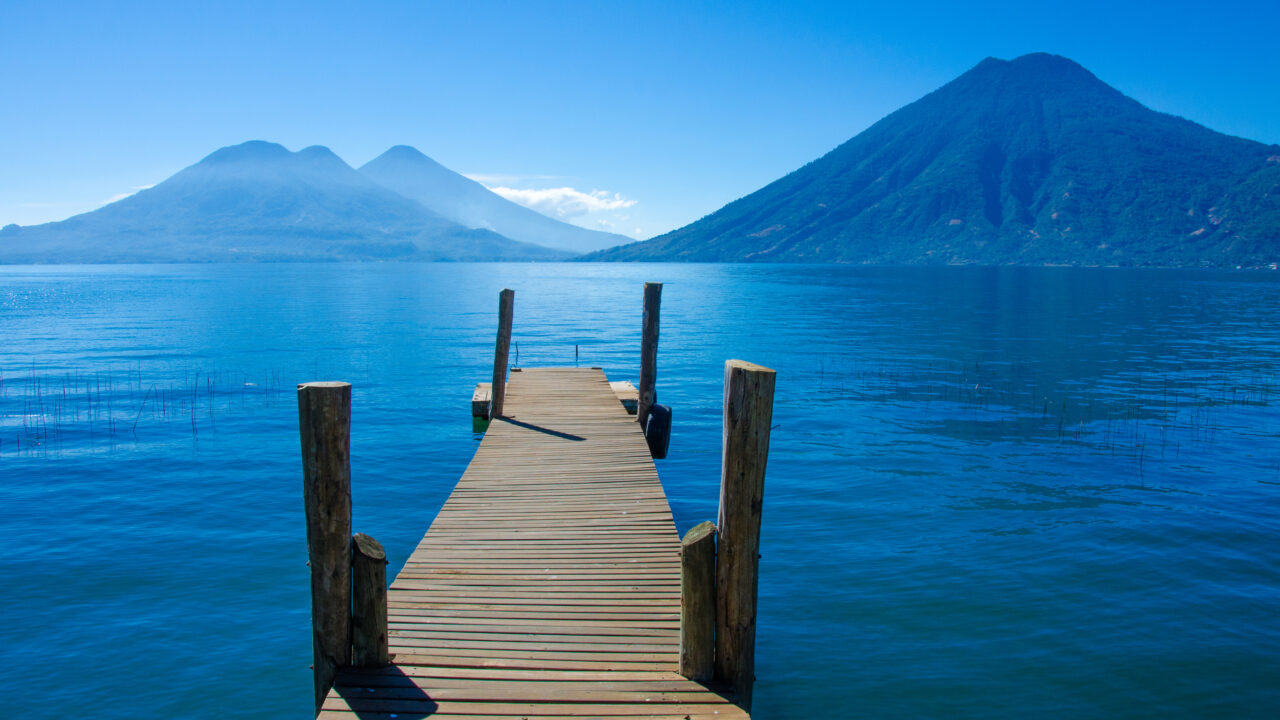
When it comes to beaches, you don’t hear much about Guatemala, as its Mexican and Belizean neighbors usually get most of the attention there. And while Guatemala does have impressive Mayan pyramids, volcanoes puffing away on hillsides, lush rainforests, and the lively chicken buses used for public transportation, the country also has its share of beaches, which tend to be quiet, laid back, and local. Add in a long dry season from November to April, and you’ve got a long window of time during the winter and spring months to find a warm spot in the sand. Here, our favorite beaches in Guatemala.
El Paredón
A small beach town along the Pacific, El Paredón has a laid-back vibe and black sandy beaches. Surfing is popular here, and you’ll find everyone from beginners to advanced surfers riding a wave. Infrastructure is still growing here, so don’t be surprised if your Wi-Fi isn’t strong and you find yourself walking down an unpaved street.
Still, you’ll find hotels and hostels, authentic Guatemalan food, and a lot of nightlife. From September through December, guests at the Driftwood Surfer can participate in daily sea turtle hatchling releases in the morning, and just to the west of town, Sipacate-Naranjo National Park is great for birdwatching and lazy beach days.
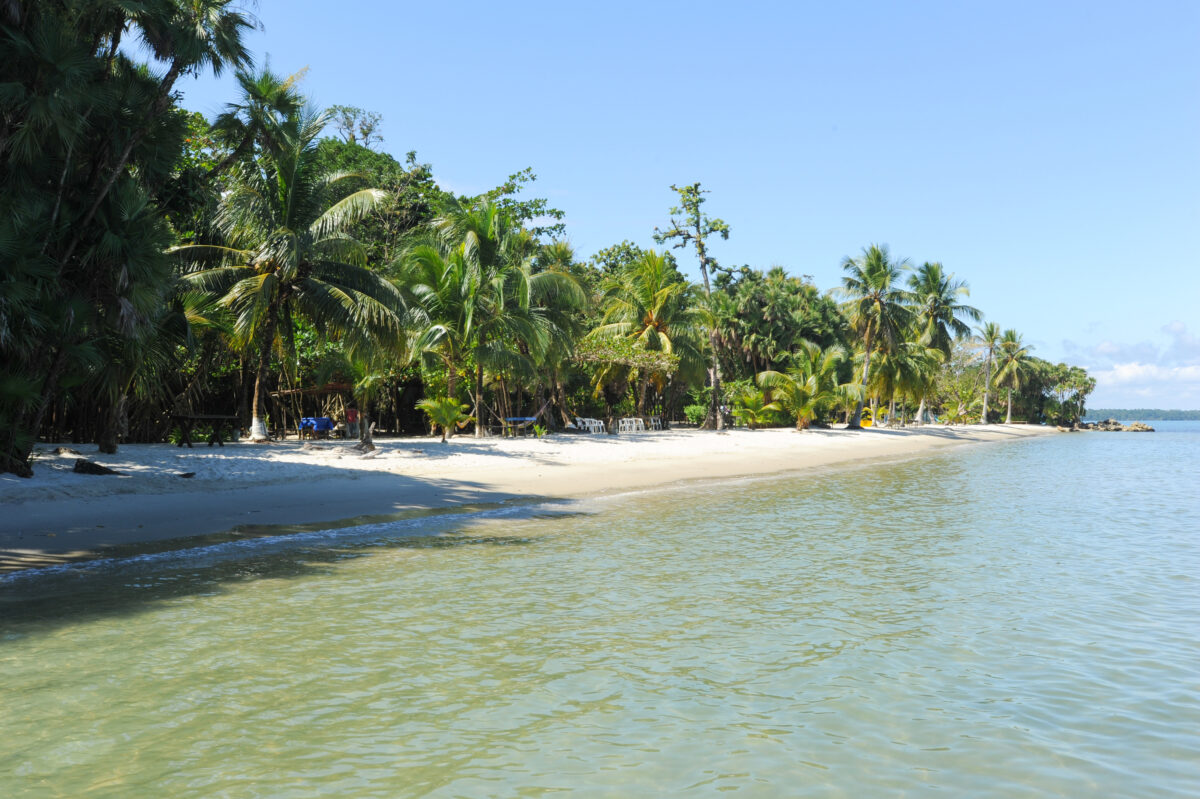
Photo by © Stefano Ember | Dreamstime.com Playa Blanca
On the Caribbean side, Playa Blanca is near Livingston and is an isolated, white sand beach that is perfect for doing absolutely nothing. Yes, you read that right. If you’re looking to unplug and get away from life’s daily noise, this is your spot. Playa Blanca is only accessible by boat, making it a much less touristed spot than traditional beaches. Bring along a book or spend some time napping in a hammock strung between the coconut trees for a truly relaxing day.
Depending on the season, food vendors are set up selling local fare, so it’s smart to bring a snack in case no one is set up. You’ll need to arrange a boat transfer through your hotel or travel agency, which often includes a stop to nearby Siete Altares, where you’ll find small pools and waterfalls in the jungle. Pro tip: Bring some cash for the entry fee, or make sure the fee is paid for through your boat tour.
Montericco
Popular with locals and tourists alike, Montericco is a Pacific-side beach town where you’ll find the luxe Hotel Dos Mundos, plus other mid-range options. The town is another laid-back option, where sunbathing and playing in the waves is the main form of entertainment. Another popular option are the mangrove tours, which leave early in the morning and take you through the estuary to spot wildlife. This is also a popular sea turtle hatchling release spot, and a great place to watch the sun set against the black sand beach.
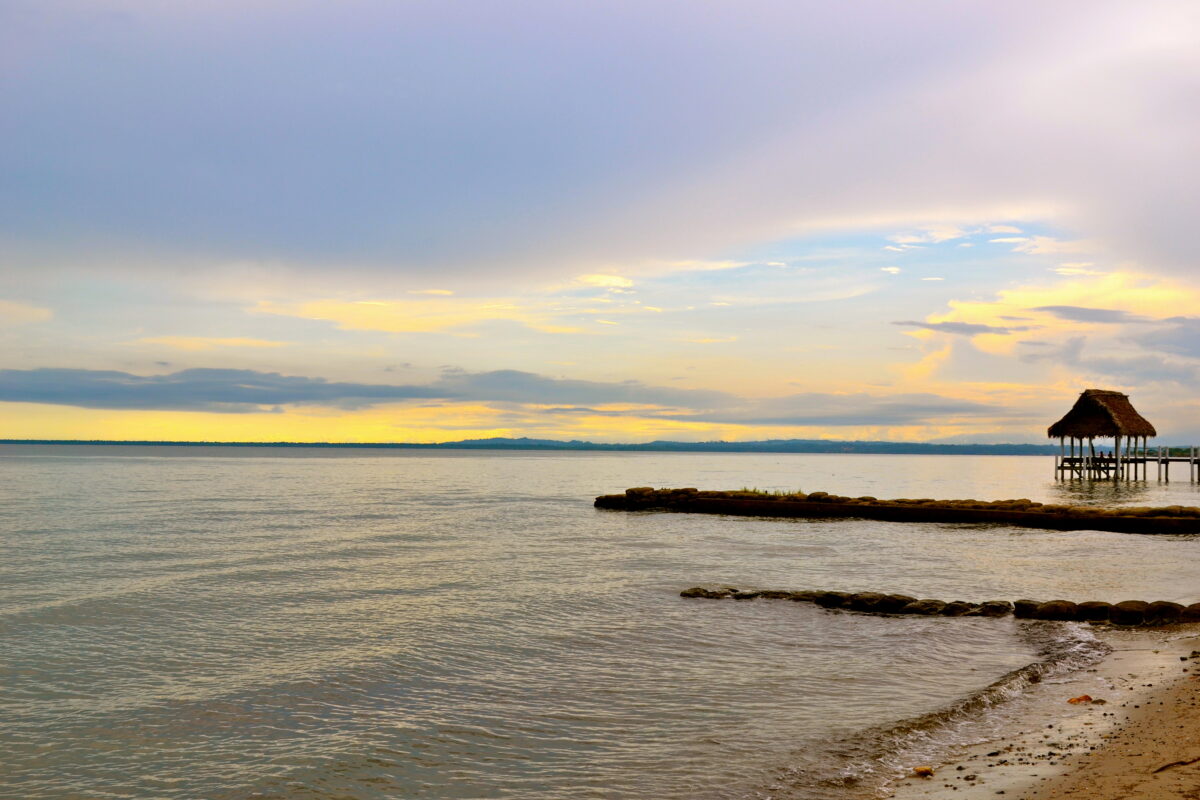
Photo by © Mamie Maynard | Dreamstime.com Playa Punta de Manabique
Where Amatique Bay flows into the Caribbean, you’ll find Playa Punta de Manabique, a small peninsula jutting out into the sea that’s great for a day trip from nearby Puerto Barrios or Livingston. There are no accommodations here, so bring some snacks and a book for reading. Sometimes, you can find locals setting up and cooking lobster by fire on the beach, which you can buy for a tasty local lunch. On the western side of the peninsula, the sea is calm and great for snorkeling, where you might see sea turtles, manatees, and dolphins porpoising through the waves.
Playa Dorada
Near Amatique Bay, Playa Dorada is actually a beach along Lake Izabal and a popular weekend spot for locals. The sand here, a golden color, gives the beach its name (Golden Beach), and it’s a prime spot for watersports like jet skiing, water bikes, and kayaks, which are all available to rent. Find a shaded spot and spend some time in the sand, or take to the water and make a day zipping through the surf. There are lots of restaurants and places to stay in this buzzy little beach town, but you won’t find anything fancy, which makes this spot a beloved local treasure.
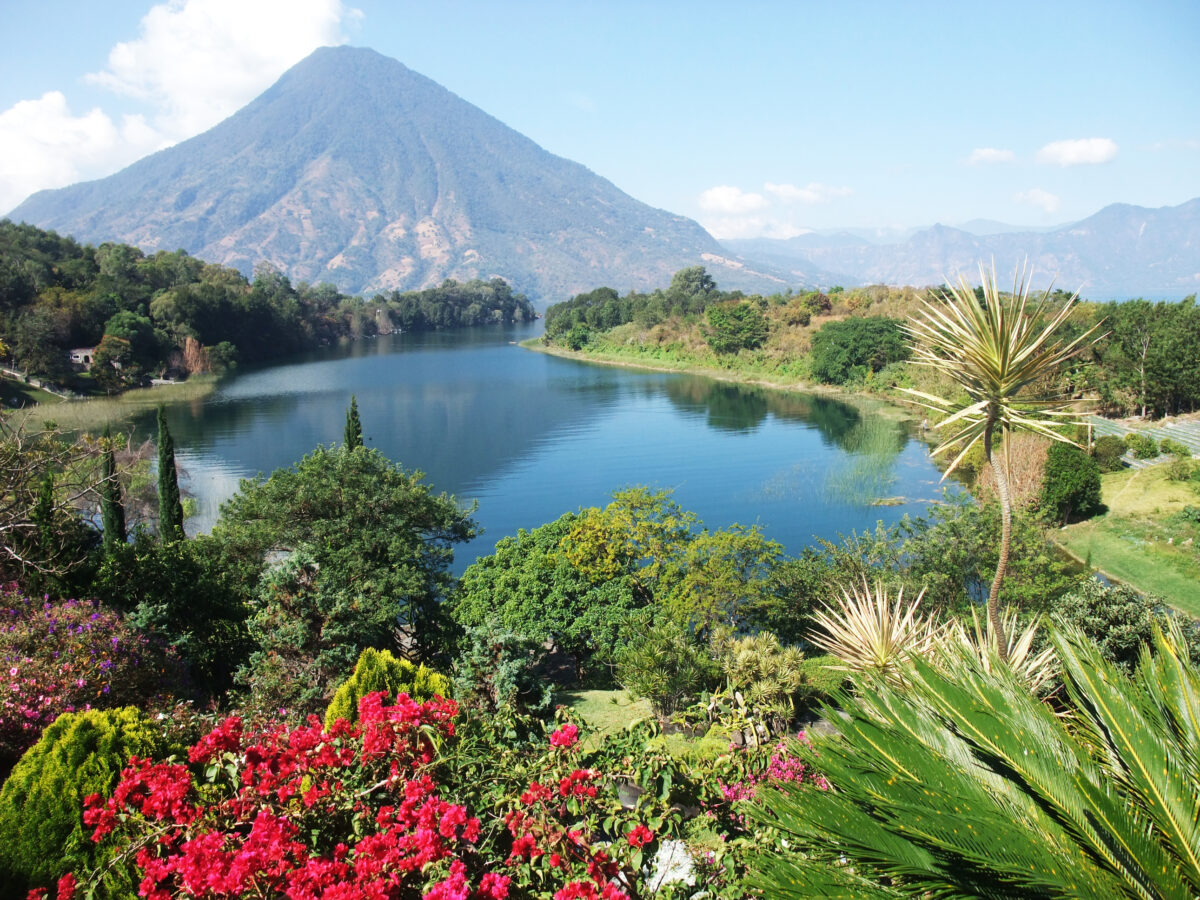
Photo by © SimonDannhauer | Dreamstime.com Lake Atitlán
While not a beach in the traditional sense, Lake Atitlán has to be included in this list, as it’s arguably the most beautiful place in Guatemala and its shoreline does offer some beach spots. The lake sits in a massive volcanic crater and is surrounded by green hills and Mayan villages. The town of San Pedro la Laguna sits along the lake and has a public beach, or you can swim at the Cerro Tzankujil Nature Reserve.
There are about 12 villages along the shores of Lake Atitlán, inhabited by different Mayan peoples with different languages, clothing, and specialties. In some places, you’ll find gorgeous weaving and textiles, and in others, beautiful pottery or coffee farms. Take a lancha (boat) across the water to hop along the villages.
My advice? Stay at Casa Palopó, which has jaw dropping views of the lake, and is only one of two Relais & Chateaux properties in the entire country. The hotel arranges lancha tours across the lake and guides you through villages. On my journey, we traveled across the lake to San Juan la Laguna, where Tz’utujil Mayans demonstrated their centuries-old weaving techniques and art galleries were plentiful. Back at Casa Palopó, dine at Kinnik, the fabulous dockside restaurant where seasonal ingredients and Mayan grilling are the focus, and Lake Atitlán unfolds in front of you.
Iztapa
Along the Pacific coast, Iztapa is a small port town that’s known for its sailfishing. It’s not uncommon to catch around 20 sailfish a day, as the fish flock to this area to feed. Iztapa has a black sand beach, and surfing is popular. Fishing lodges here are modern and comfortable, and hotels in town are more basic, but development is in the works.
-
South America
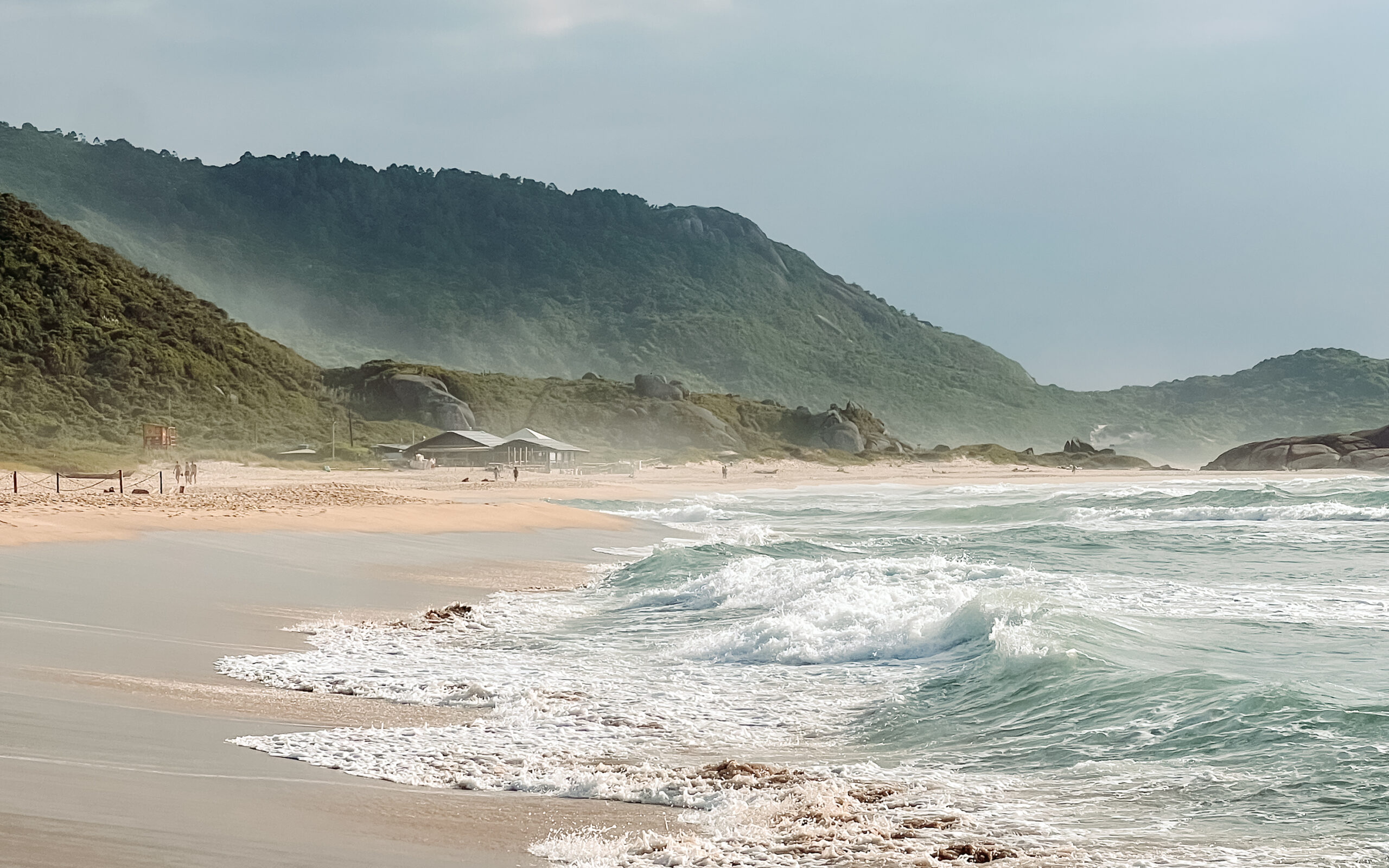
10 Best beaches in South America
Emerald rainforests, colonial plazas & coastal hideaways
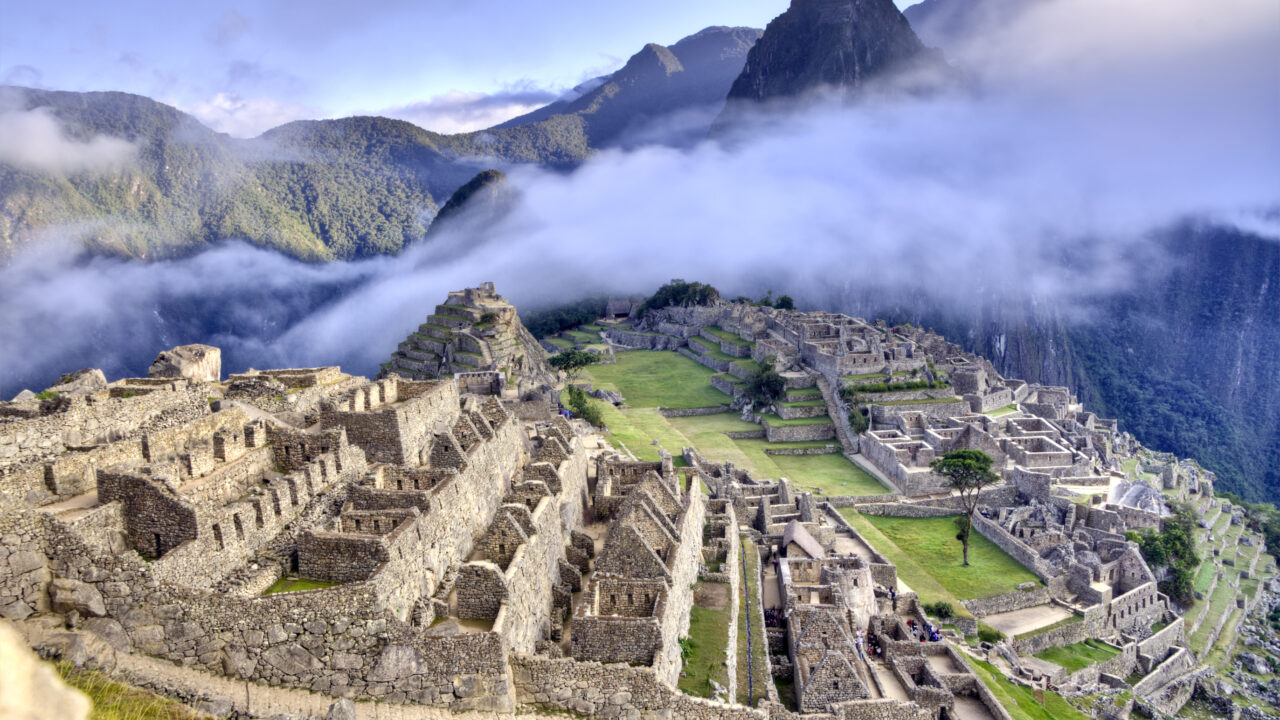
Hailing from Brazil, I’ll admit I’m spoiled when it comes to beaches. Today, the Atlantic stretches out in a mosaic of blues just steps from my front door—a horizon the color of ink that gently fades to turquoise as the waves reach my feet.
It’s the daily canvas I’m rewarded with on Ipanema Beach, undoubtedly one of the very best beaches in South America. But I refuse to believe Brazil is the only country worthy of a beach vacation on this vast continent. South America is home to the world’s highest mountain range, the driest desert, and the largest tropical rainforest, so it only makes sense that its coastlines rise to the occasion, too.
That’s why I set out to write this guide: to look beyond the shores of Rio de Janeiro and shine a light on Colombia’s Caribbean sands, Ecuador’s pristine Galápagos shores, and others—finally getting the recognition they deserve.
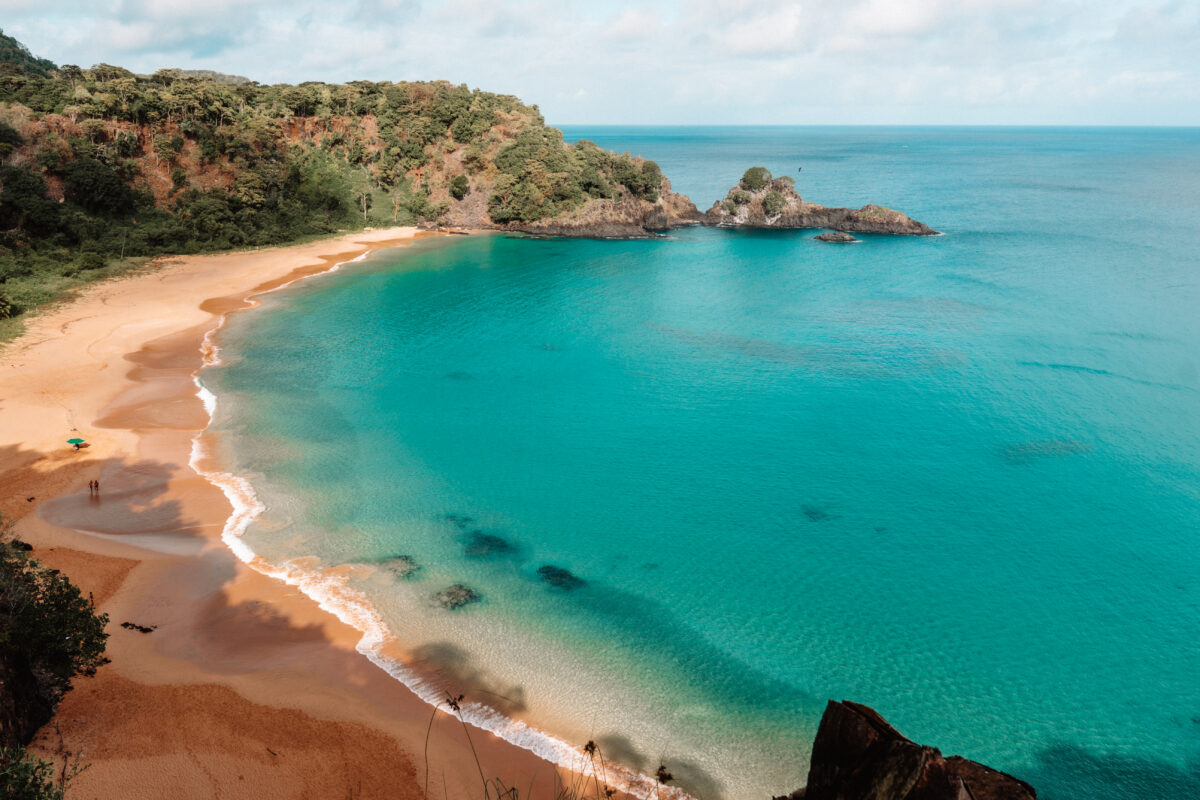
Photo courtesy of Carla Vianna Praia da Baía do Sancho, Brazil
We can’t list the best beaches in South America without including Baía do Sancho. Consistently named one of the most beautiful beaches in the world, this picture-perfect cove can be found on Fernando de Noronha, a remote island off Brazil’s northeast coast.
The water here is so clear it rivals a swimming pool, but with the bonus of vibrant marine life. Snorkeling is a must—on both of my visits, I spotted sharks, sea turtles and giant schools of fishes gliding through the turquoise shallows. Don’t worry about the sharks: Despite their reputation, these reef sharks are harmless, sharing the ocean peacefully with swimmers and snorkelers.
Getting to Baía do Sancho is an adventure in itself. The beach is framed by dramatic cliffs, and the only way down is through a narrow staircase carved into the rock. Once your feet hit the soft golden sand, the effort melts away, leaving you in one of South America’s true natural wonders.
Pontal do Atalaia, Brazil
Often called the “Brazilian Caribbean,” the small town of Arraial do Cabo is home to some of Brazil’s clearest waters. And none shine brighter than Pontal do Atalaia, recently ranked #20 in the world by The World’s 50 Best Beaches. This shoreline is accessible only by boat or by descending a long, steep staircase carved into the cliffs, which helps preserve its sense of seclusion.
Aside from the cooler water temperatures, the fine white sand and electric-blue sea make this beach feel every bit as paradisical as those in the Caribbean. What sets Pontal apart, though, are its panoramic views. From the top of the cliffs, you can look out over turquoise bays, nearby islands, and the sweeping Atlantic horizon. It’s a reminder that while Brazil has no shortage of famous beaches, some of its most breathtaking coastlines remain just a bit harder to reach.
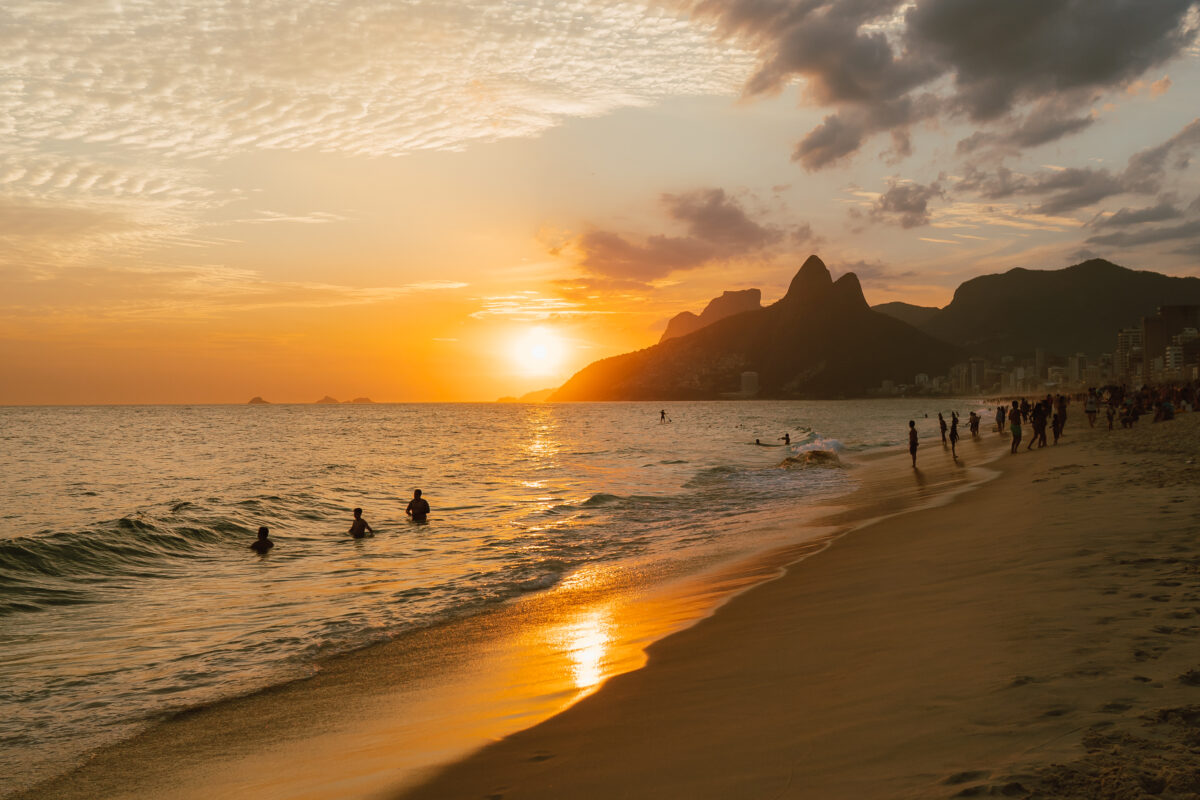
Photo Courtesy of Carla Vianna Ipanema, Brazil
Go ahead, call me biased—but there are few better stretches of sand in the world than Ipanema in Rio de Janeiro. This beach is a feast for the senses, beginning with the backdrop: the Two Brothers Mountain (Morro Dois Irmãos) framing the horizon, its twin peaks rising straight out of the sea. And then there are the sunsets, treated like a performance, where the crowd literally applauds the sun as it disappears into the Atlantic.
On the sand, the energy is just as palpable. While less touristy than neighboring Copacabana, Ipanema is where visitors, kids from nearby favelas, and Rio’s effortlessly beautiful crowd all gather. Beach vendors weave between colorful umbrellas, selling everything from chilled sweet tea and cold beers to buttery steamed corn and grilled meats on a stick. It’s chaotic, colorful, and indesputably Rio.
Punta del Este, Uruguay
Uruguay is the country most travelers have never been to, yet it hides one of South America’s best beach vacations. Set on a peninsula where river and ocean collide, Punta del Este balances the calm, glassy waters of the Río de la Plata with the untamed waves of the Atlantic.
On one side lies Playa Mansa (“Calm Beach”), which is ideal for swimming and long, lazy walks. Just offshore is Isla Gorriti, a small forested island that can be reached via a short boat ride. There, quiet beaches and picnic spots offer an even more peaceful retreat. And then there’s the wilder oceanfront, where Playa Brava (“Wild Beach”) lives up to its name with crashing waves giving something for surfers to talk about.
Of course, Punta del Este isn’t just about natural beauty. Over the years it has evolved into a glamorous retreat, with high-rise hotels, luxury resorts, chic restaurants, and nightlife that has drawn comparisons to Miami, St. Tropez, and the Hamptons.
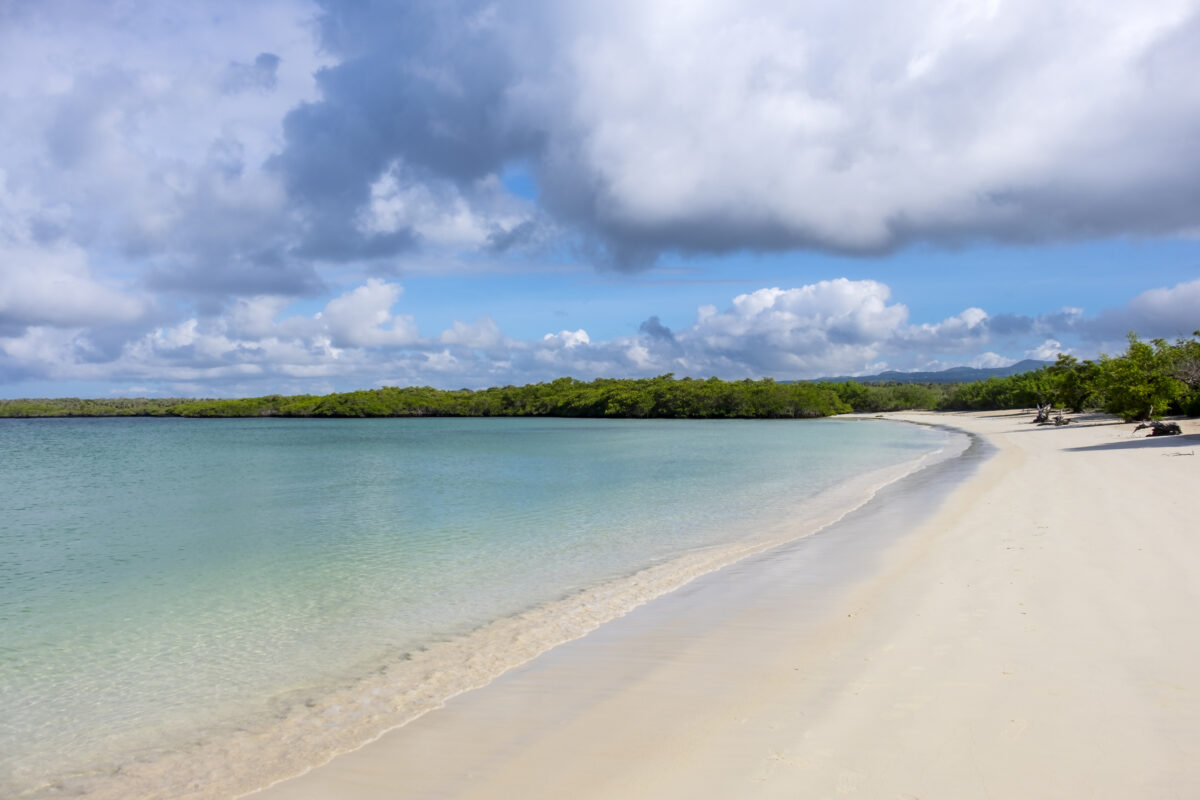
Photo by © Chiyacat | Dreamstime.com Tortuga Bay, Ecuador
On the Galápagos island of Santa Cruz lies Tortuga Bay, a dazzling stretch of white sand regularly ranked among the world’s best beaches. The beach takes its name from the sea turtles that come ashore to nest, but it’s far from the only wildlife you’ll spot here. It’s also home to the archipelago’s other famous residents, like marine iguanas, Sally Lightfoot crabs, pelicans, and the occasional flamingo wading in the salt lagoon behind the mangroves.
This beach offers two distinct experiences: a wide open shoreline as well as a sheltered lagoon ideal for swimming, snorkeling, or kayaking among rays and reef sharks. What makes Tortuga Bay unforgettable is its combination of pristine natural beauty with abundant animal encounters—a reminder that in the Galápagos, we are simply guests in a thriving marine environment.
Cabo San Juan, Tayrona National Park, Colombia
Tayrona National Park is one of Colombia’s greatest natural treasures. Here, the Sierra Nevada de Santa Marta mountains cascade into the Caribbean Sea, creating a wild coastline of jungle, granite boulders, and golden sand. Yet no beach captures this magic more than Cabo San Juan.
Most visitors reach it by hiking two to three hours from the park’s El Zaino entrance, a moderate trek through tropical forest and past smaller beaches like Arrecifes and La Piscina. The payoff is a stunning crescent of sand divided into two bays: one calm enough for swimming, the other open to stronger currents. Perched above the beach is a thatched hut where travelers can rent hammocks with sweeping sea views.
Many come on a day trip from Santa Marta or Taganga, but spending the night in one of those hammocks offers those once-in-a-lifetime experiences you surely won’t regret.
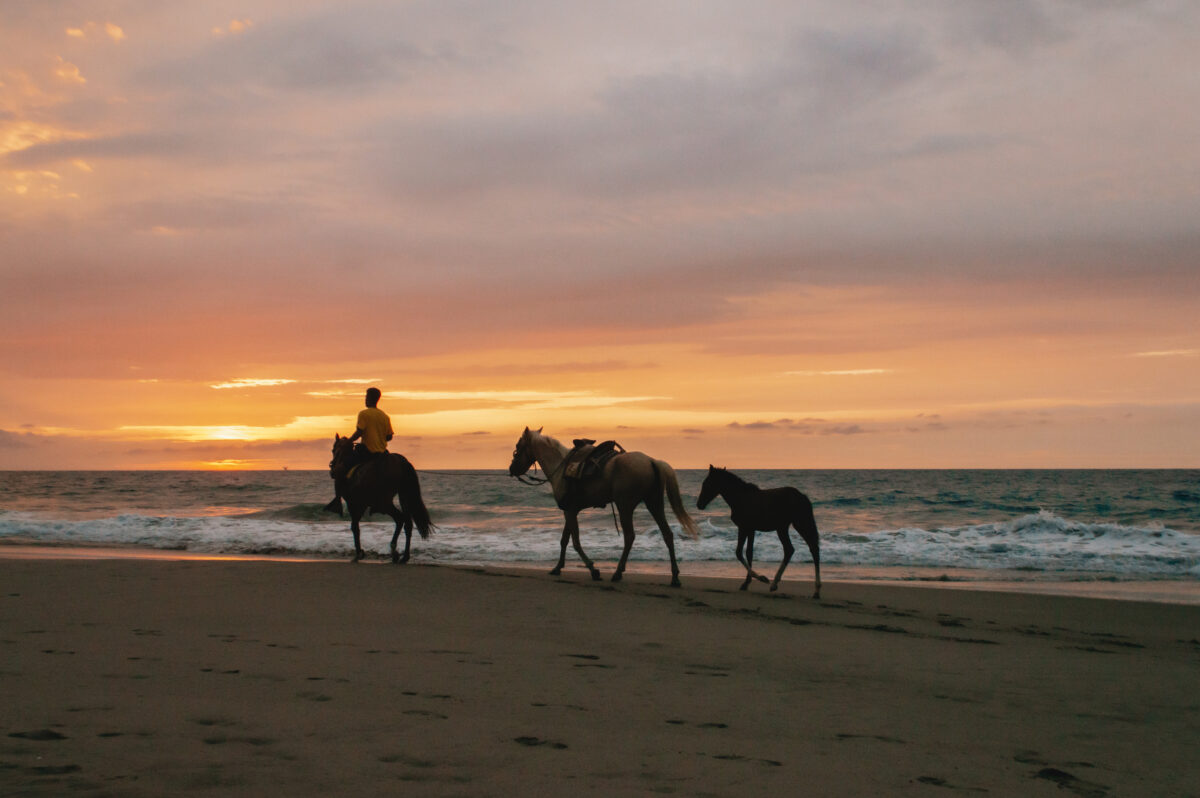
Photo courtesy of Carla Vianna Máncora, Peru
On Peru’s otherwise rugged and cool Pacific coast, Máncora stands out as a rare year-round sunny escape. Tucked in the country’s far north, this beach town is known for golden sand, endless blue skies, and a laid-back vibe that draws surfers, backpackers, and Peruvian vacationers alike. Consistent swells make it one of the country’s top surf spots, luring wave riders from around the world.
But Máncora isn’t only about the waves. The main strip hums with cevicherías, surf schools, and beach bars that keep the town buzzing well into the night. For travelers crossing South America—like I did back in 2018—Máncora is both a stopover and a destination in itself: a place to slow down, surf, eat, and soak up a side of Peru few realize exists.
Playa de Spratt Bight, Colombia
Set in the western Caribbean, closer to Nicaragua than mainland Colombia, San Andrés is a small island with more than 40 beaches. They’re all fringed by what locals call the “Sea of Seven Colors”—a striking mix of turquoise, teal, and deep blue created by the contrast of sandy shallows, coral reefs, and sudden drop-offs.
The most iconic of the island’s beaches is Playa de Spratt Bight. Stretching wide along the town center, it’s known for its soft white sand, clear water, and lively, social atmosphere. Its central location makes it especially convenient, with beach bars and restaurants lining the promenade. The water is calm and shallow, perfect for swimming or cooling off between hours under the sun. And for those craving a bit of action, jet skis, parasailing, and banana boat rides are all on offer.
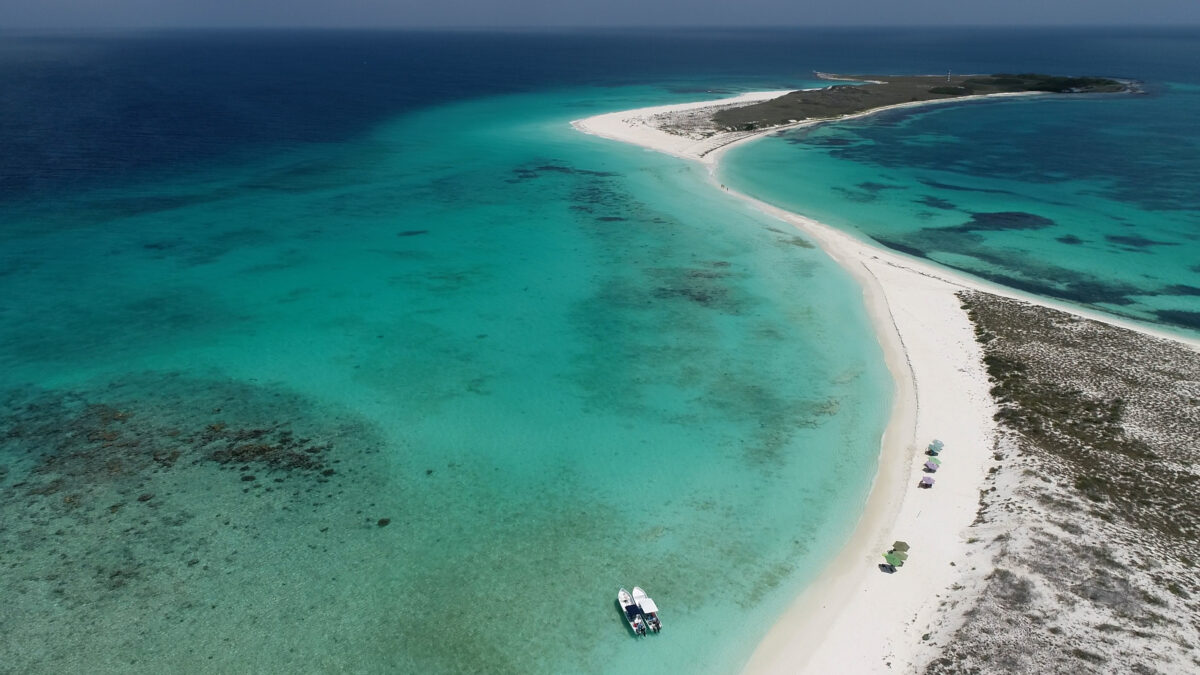
Photo by © Cristianlourenco | Dreamstime.com Los Roques Archipelago, Venezuela
Scattered across the Caribbean north of Venezuela, the Los Roques Archipelago National Park is made up over 300 cays and islands, most of them uninhabited. Protected since 1972, it’s one of South America’s most pristine coastal landscapes—a place where white sandbanks meet shallow turquoise lagoons, coral reefs teem with life, and the sea shifts through every imaginable shade of blue.
The only permanently inhabited island is Gran Roque, the main hub for visitors, where small guesthouses and posadas welcome travelers. From here, boats head out daily to nearby islets like Cayo de Agua, often named among the Caribbean’s most beautiful beaches. With little large-scale development and no cruise ship crowds, Los Roques remains a rare, untouched island escape in South America.
Because of logistics and the political situation, Los Roques tends to attract adventurous travelers, Venezuelan expats, or high-end tourists who come via private charter. Visiting requires flying in via Caracas and some careful planning—but those who make the journey are rewarded with one of the most unspoiled beach destinations in South America.
Anakena Beach, Chile
Few beaches in the world blend natural beauty with cultural heritage like Anakena on Chila’s Easter Island (Rapa Nui). This crescent of white sand is shaded by palms and lapped by calm turquoise waters, with the massive stone statues standing watch just beyond the shore.
Anakena is one of the island’s only swimmable beaches, its relatively warm water setting it apart from the chilly Pacific coast of mainland Chile. It also holds deep cultural significance: oral tradition says Anakena was the landing place of Hotu Matu’a, the island’s first king, making it the birthplace of Rapa Nui’s settlement.
Two restored ceremonial platforms still remain, with statues rising above the sand as they have for centuries. For visitors, a day at Anakena is a rare chance to experience a tropical beach in the shadow of one of the world’s most mysterious archaeological sites.
-
Brazil
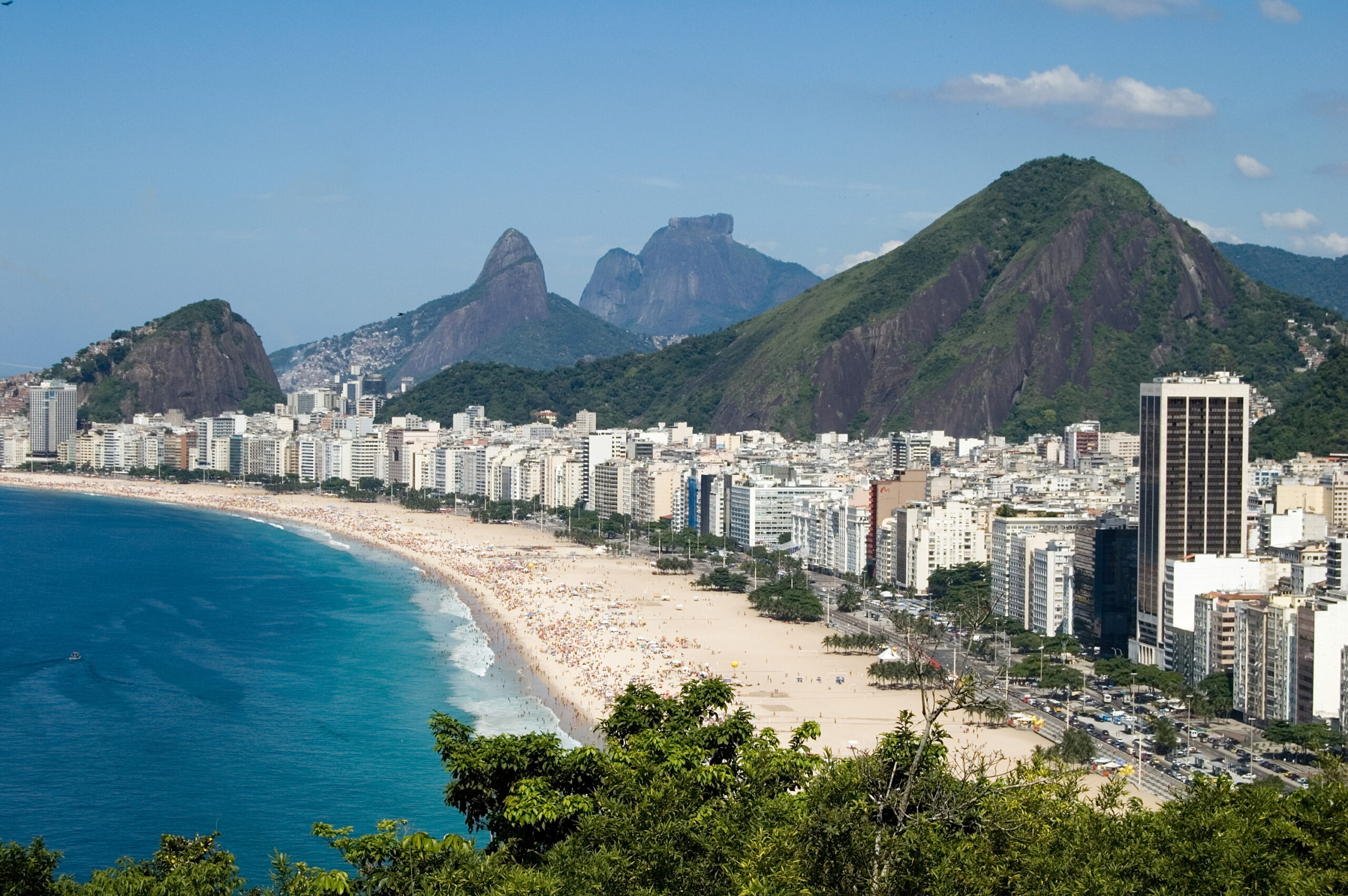
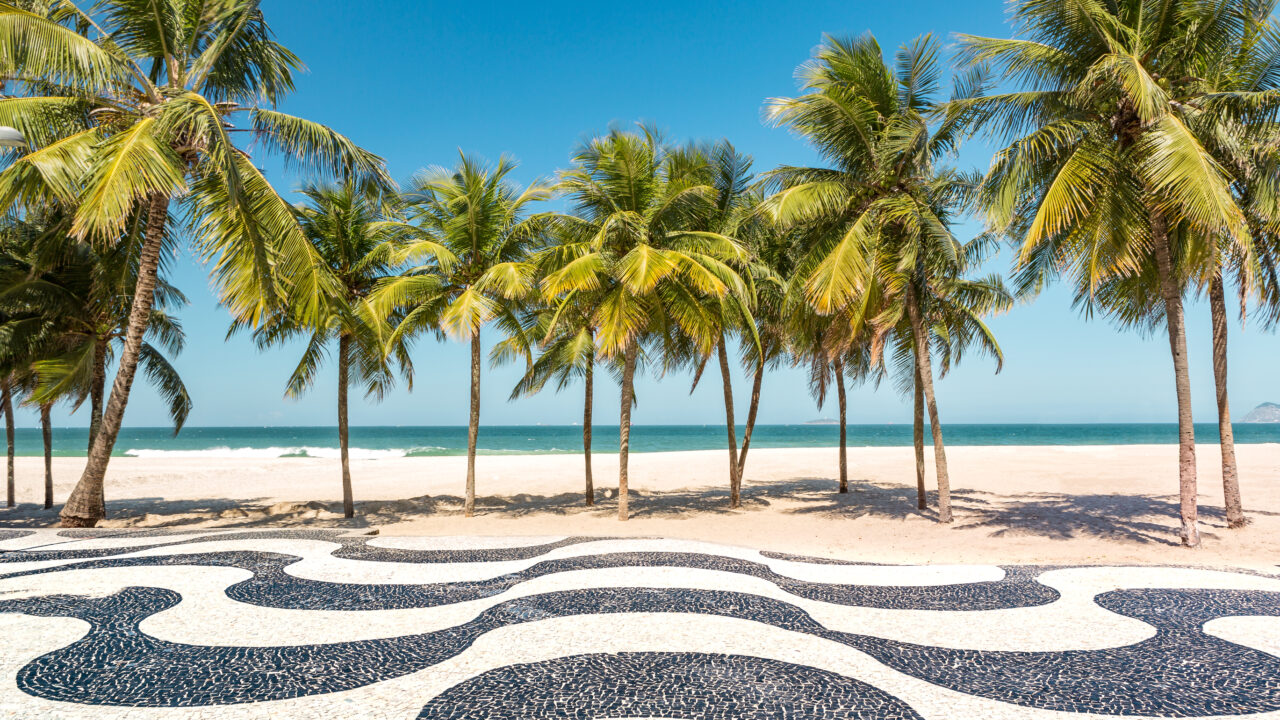
As a Brazilian-American who has spent the last four years exploring Brazil’s beaches, I can tell you firsthand that the untouched, tropical paradises you dream of do, in fact, exist. Better yet, many of Brazil’s most stunning beaches have yet to be widely discovered by international travelers, especially those from outside South America.
The lack of mass tourism has preserved their charm, giving you a chance to experience Brazil’s true coastal beauty without the boombox-clad tourists. On this list you’ll find beaches ideal for adventurous travelers, honeymooners and families alike—pretty much anyone seeking unique, off-the-beaten-path destinations that offer both scenic landscapes and a deeper connection with local culture.
While most flock to iconic spots like Copacabana and Ipanema, I am here to tell you about 10 other beaches that are also worth booking for a trip. Many of them are tucked away in small fishing villages or natural reserves, offering an authentic taste of Brazilian life away from the more commercialized areas—and nowadays, that’s precisely the kind of beach vacation we need.
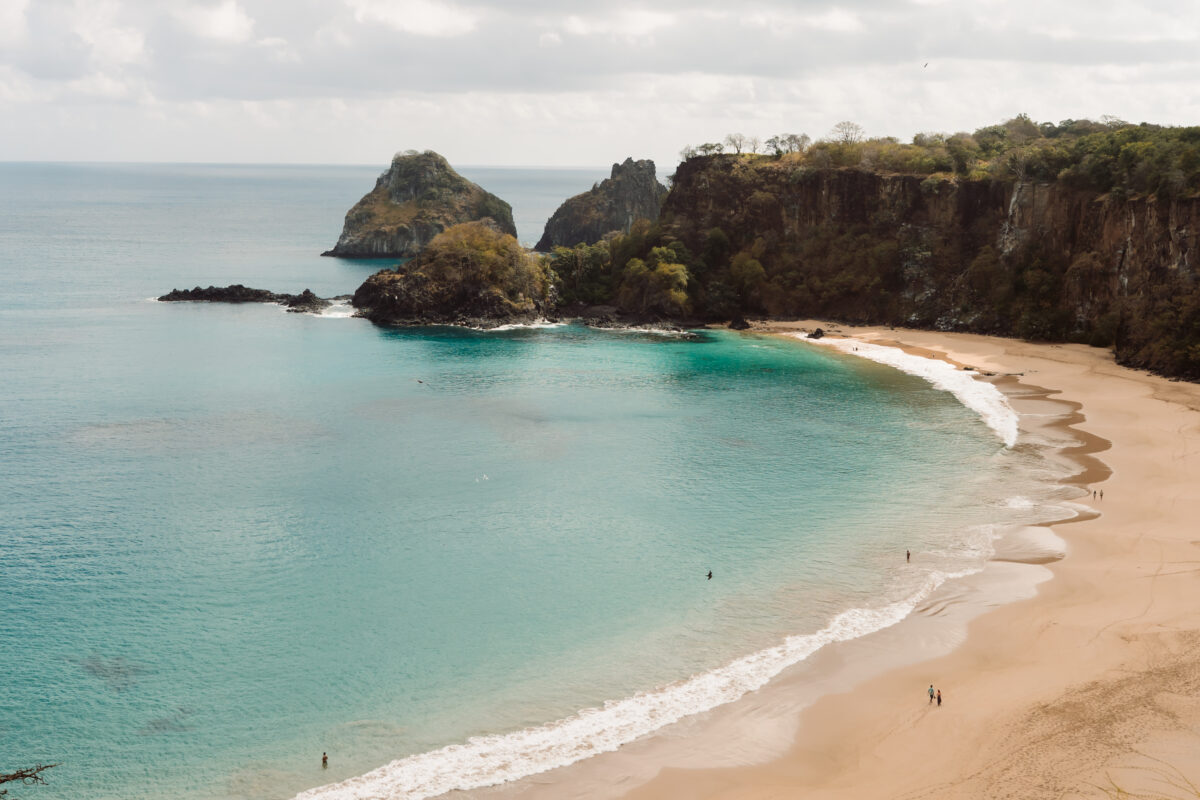
Photo courtesy of Carla Vianna Praia da Baía do Sancho, Fernando de Noronha – Pernambuco
For years, I had read that Praia da Baía do Sancho was one of the most beautiful beaches in the world and when I finally saw it for myself, I completely understood why. Located on the secluded island of Fernando de Noronha—which is worth a visit in and of itself—the beach is a brilliant representation of what draws visitors to Brazil. The untouched cove is home to turquoise waters and towering cliffs draped in wild vegetation. Known as one of the best spots in Brazil to experience marine life, the island’s beaches, including Baía do Sancho, are home to dolphins, sea turtles and vibrant tropical fish. Getting there is part of the adventure; you descend a wooden ladder carved into giant rocks, literally passing through a boulder to reach the beach. It might sound a bit intimidating, but it’s actually very safe and well-organized, making it all the more rewarding once you arrive.
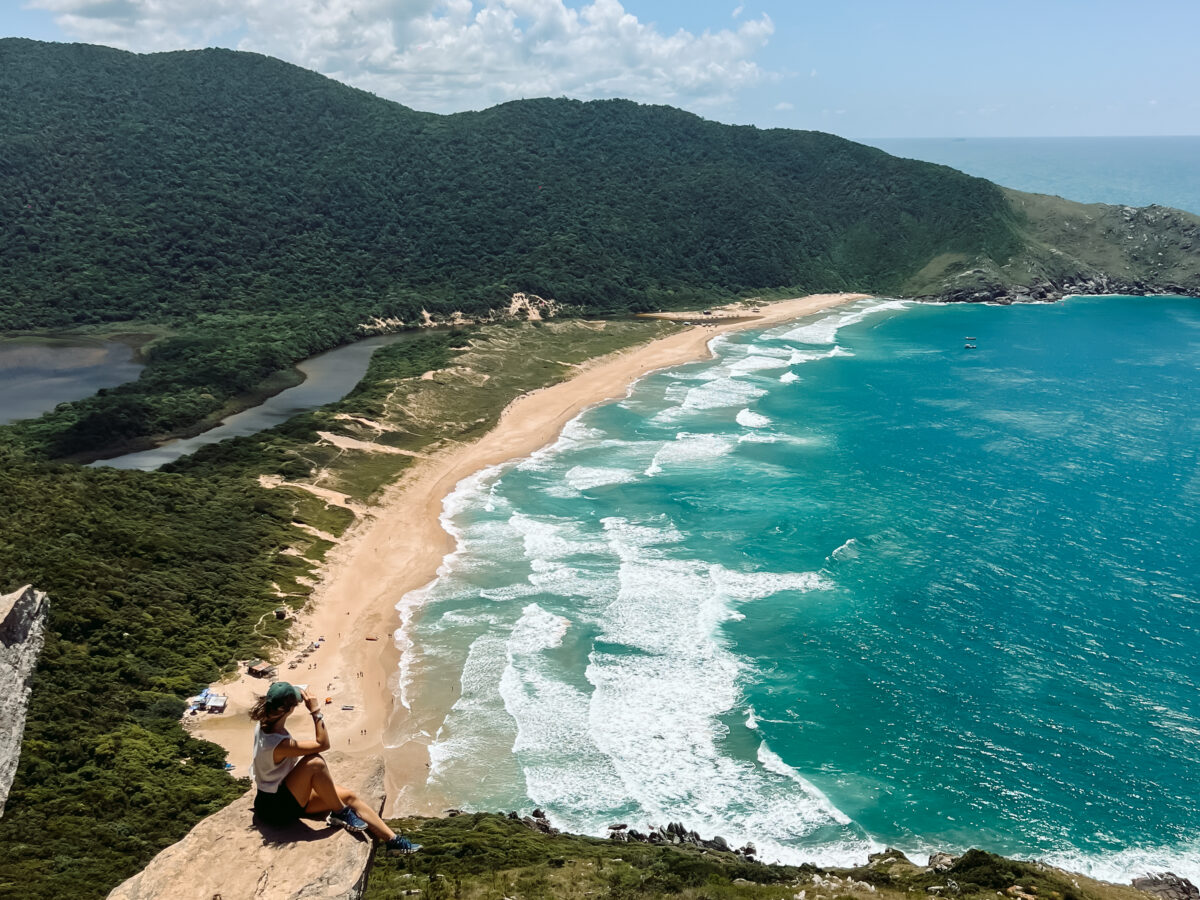
Photo courtesy of Carla Vianna Praia da Lagoinha do Leste, Florianópolis — Santa Catarina
This was the highlight of a weekend trip to Florianópolis, an island in southern Brazil home to over 100 beaches. While the island itself has made it onto the tourist radar, Lagoinha do Leste still feels like a well-kept secret—and for good reason. Tucked away in a natural cove, this beach is only accessible after a scenic hike through the forest, offering visitors a glimpse of Brazil’s tropical terrain. Once you reach the beach, take a short detour to a nearby viewpoint to witness the expansive shoreline from above—truly a breathtaking sight. And don’t worry, ice-cold coconuts are sold at the bottom as a reward.
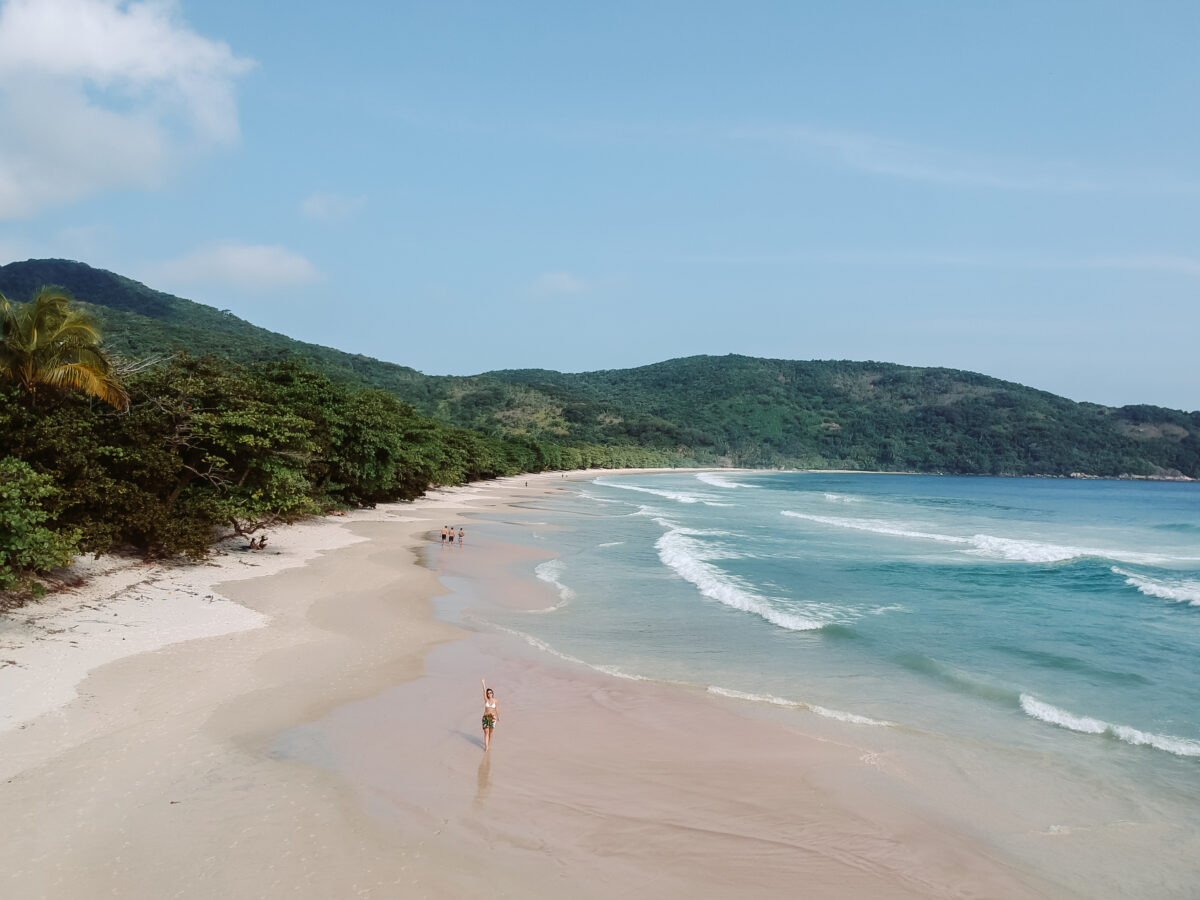
Photo courtesy of Carla Vianna Praia de Lopes Mendes, Ilha Grande — Rio de Janeiro
When I first visited Ilha Grande, I was immediately transported back to my backpacking days, when life was all about fresh fish and good vibes on a remote Thai island. Just off the coast of Rio de Janeiro, Ilha Grande is one of Brazil’s original backpacker havens, frozen in a slower, more humble time. Here, Wi-Fi feels like a luxury and power outages are part of the charm. Yet the hostels now share the sand with beautiful beachfront hotels, like Bonito Paraiso, a charming inn situated on its very own beach. Lopes Mendes is the island’s crown jewel—an expansive stretch of golden sand only accessible by boat, surrounded by lush green mountains. The beach is long enough that the further you walk, the more secluded it becomes, offering the perfect opportunity to enjoy one of the best beaches without many people around.
Praia da Barra, Caraíva – Bahia
Located in the southern part of Bahia, a state renowned for its vibrant Afro-Brazilian culture, Caraíva is a charming, car-free village where time seems to slow down. Reaching Caraíva involves a short but scenic journey by car and boat, enhancing its allure as a tranquil escape. The best part? There’s virtually no cell service around the island, unless connected to WiFi. Once there, you’ll discover Praia da Barra, where the Caraíva River meets the Atlantic Ocean, offering the rare opportunity to choose between swimming in freshwater or saltwater—or both. A local specialty is the caipirinha served inside a cacao fruit, a delightful twist on the traditional Brazilian cocktail.
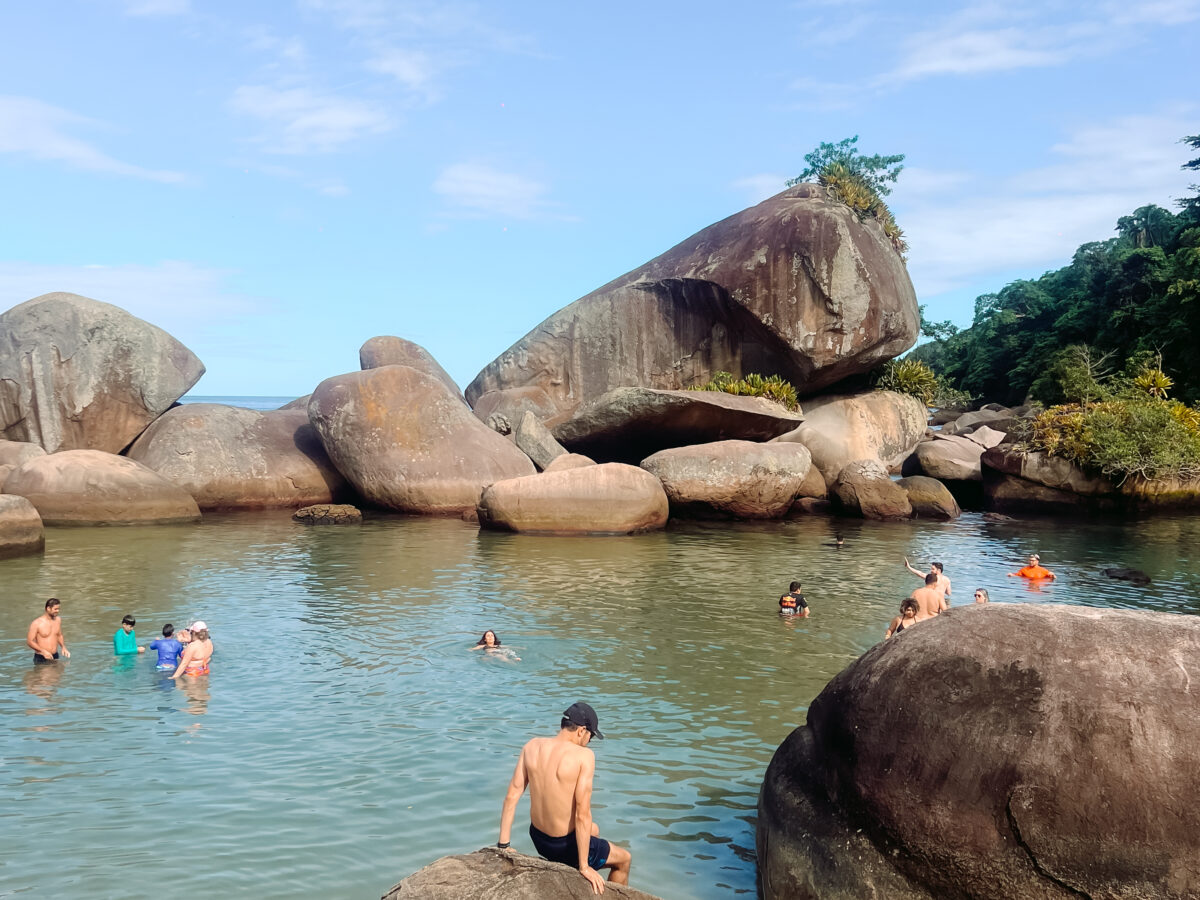
Photo courtesy of Carla Vianna Praia do Cachadaço, Trindade — Rio de Janeiro
Nestled in a picturesque fishing village, Praia do Cachadaço is the place to go for fresh fish and cold beers with your feet in the sand. Here you’ll find a couple of beachfront restaurants serving up delicious local delicacies, to be enjoyed before, after, or during your sunbathing routine. You can relax by the water and enjoy the laid-back vibe, or take a quick 5-minute boat ride to the nearby natural pools where the clear and shallow waters are ideal for people of all ages. I took my mom here for the first time and it was a magical experience—her first time visiting natural pools, and it couldn’t have been more special.
Baía dos Golfinhos, Pipa — Rio Grande do Norte
Baía dos Golfinhos translates to the Bay of Dolphins, and that’s exactly what it’s known for. If you’re lucky enough to visit at the right time, you’ll be treated to dolphins swimming gracefully in the crystal-clear waters. The stunning bay is unique because it’s only accessible during low tide by walking along the sand. When the tide rises, waves crash against the cliffs, making it difficult—sometimes impossible—to reach the beach, depending on the season. The best time to visit is during the summer, when the waters are calm and visibility is at its peak. There’s nothing quite like the tranquility of this beach, watching the dolphins play, knowing you’re in one of the most beautiful spots in Brazil.
Praia de Itamambuca, Ubatuba — São Paulo
Praia de Itamambuca is a beloved destination for both surfers and nature enthusiasts. With over 2 km of golden sand and crystal-clear waters, it’s the perfect place to unwind or try water sports like stand-up paddleboarding and kayaking. The calm waters near the shore make it great for families, while the waves further out are ideal for surfers seeking a challenge. Visitors often return for the good vibes and relaxed atmosphere, making it a spot that feels like home. For a more secluded experience, head to the left side of the beach, where there are no buildings—just pure, untouched nature. Easily accessible by car or public transport from Ubatuba, Itamambuca offers a peaceful escape that remains largely undiscovered by mass tourism.
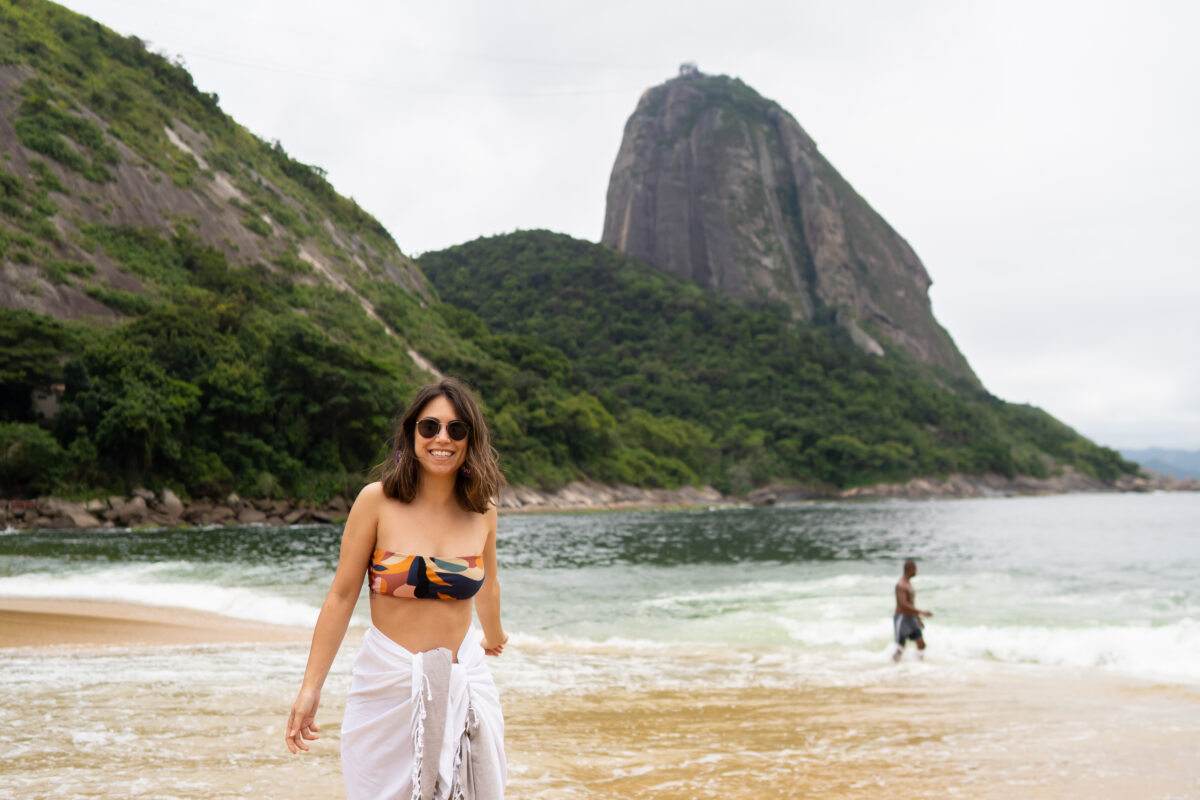
Photo courtesy of Carla Vianna Praia Vermelha, Rio de Janeiro — Rio de Janeiro
Amidst the hustle and bustle of Copacabana Beach, it’s hard to imagine that a neighborhood like Urca exists so nearby. But it does, and it’s there that you’ll find one of the most pristine beaches in the city. Nestled at the foot of the iconic Sugarloaf Mountain, Praia Vermelha is a decidedly local beach. Its reddish sand contrasts with the emerald green waters and dramatic rock formations, making it a popular spot for photographers. If you’re looking for something quieter than Rio’s more famous beaches, Praia Vermelha offers a refreshing escape from all the noise. At the end of the day, head over to the seawall (known affectionately as the Mureta da Urca), grab a freshly fried cheese or shrimp pastel and enjoy the sunset by the bay.
Pontal do Atalaia, Arraial do Cabo — Rio de Janeiro
If there’s one place at the top of my Rio bucket list, it’s the beach at Pontal do Atalaia. Often referred to as the “Caribbean of Brazil”, this coastal area features incredibly clear turquoise waters and powdery white sands. It’s a postcard-perfect setting—with a long wooden staircase leading awe-struck visitors down to the sand. The waters are always crystal clear and calm, perfect for snorkeling. And while the water temperature can be cooler than other Brazilian beaches, it’s still comfortable enough for a dip.
Praia do Patachó, São Miguel dos Milagres — Alagoas
Praia do Patachó is nestled in a famous region of Brazil known for stunning beaches and vibrant New Year’s parties. This particular beach is a serene stretch of sand perfect for those looking to unwind in paradise. The beach is known for its calm, crystal-clear waters and natural pools, ideal for a relaxing swim or snorkeling. There are plenty of beachfront hotels worthy of a honeymoon or family vacation alike, with a backdrop made up of coconut trees and sand dunes. The state’s commitment to preserving its natural beauty ensures visitors can experience unspoiled landscapes and a beautifully peaceful atmosphere.
FAQs
What is the best beach in Brazil?
Praia da Baía do Sancho on Fernando de Noronha consistently ranks as the country’s finest. A protected cove with turquoise water, dolphins, sea turtles, and cliffs you descend via a wooden ladder carved into the rock. It’s remote and requires a flight from the mainland, but most people say it’s worth every bit of the effort.
What month is best for beach trips in Brazil?
December through March is peak summer in Brazil, with warm water and long days, though it’s also the busiest and most expensive period. For fewer crowds without sacrificing good weather, September and October are the better call, particularly for beaches in the northeast like Pipa and Alagoas.
Which beach in Brazil is least crowded?
Praia da Barra in Caraíva, Bahia is one of the quietest on this list—the village is car-free, there’s almost no cell service, and getting there requires both a car and a boat. Praia da Lagoinha do Leste in Florianópolis is another strong option, only reachable after a hike through the forest.
Which beach in Brazil is best for snorkelling?
Pontal do Atalaia in Arraial do Cabo is our pick. The water is consistently clear and calm, and the visibility is some of the best on the Brazilian coast. Fernando de Noronha is the other obvious answer if you’re willing to make the trip, with marine life that’s hard to match anywhere in the country.
-
Costa Rica
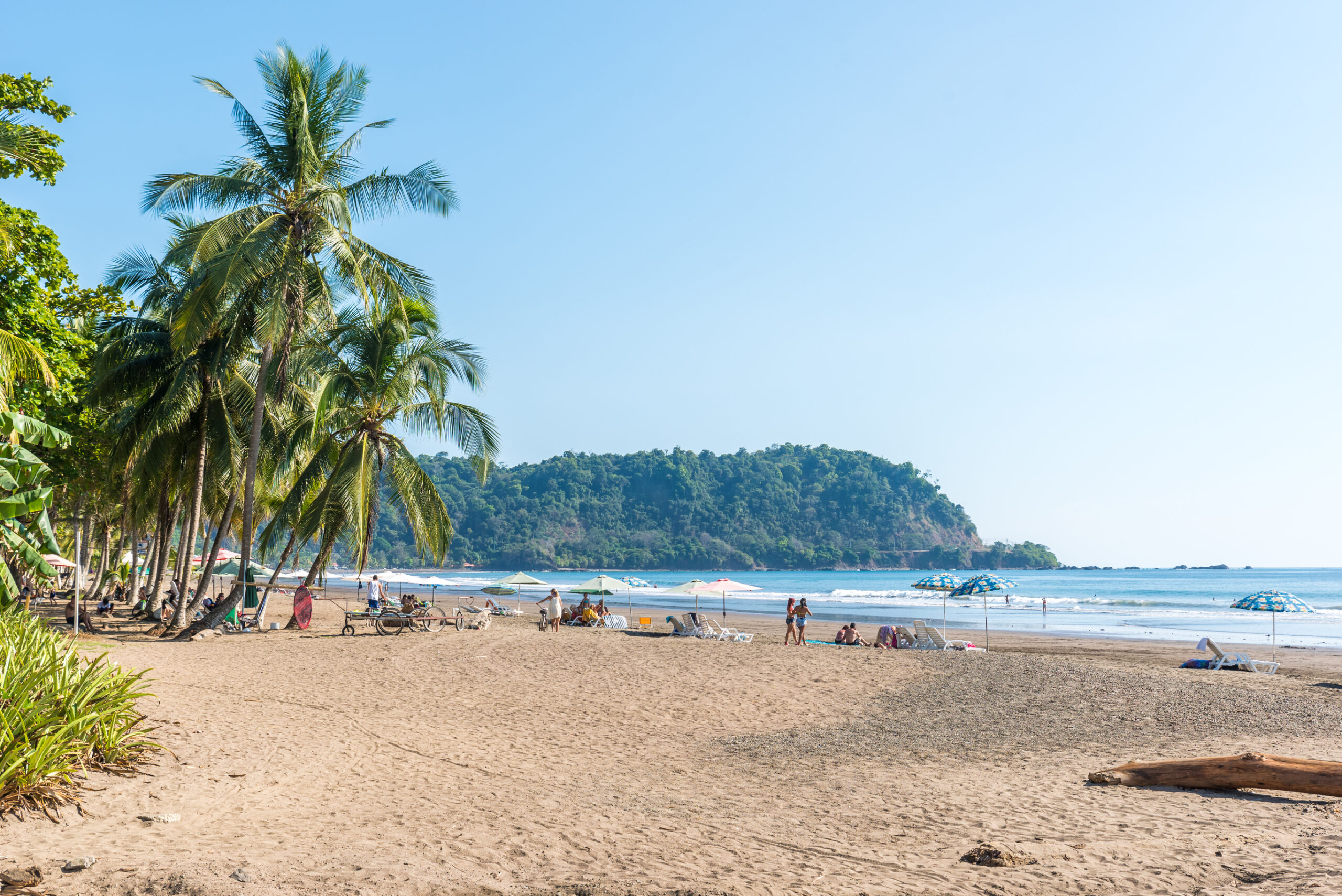
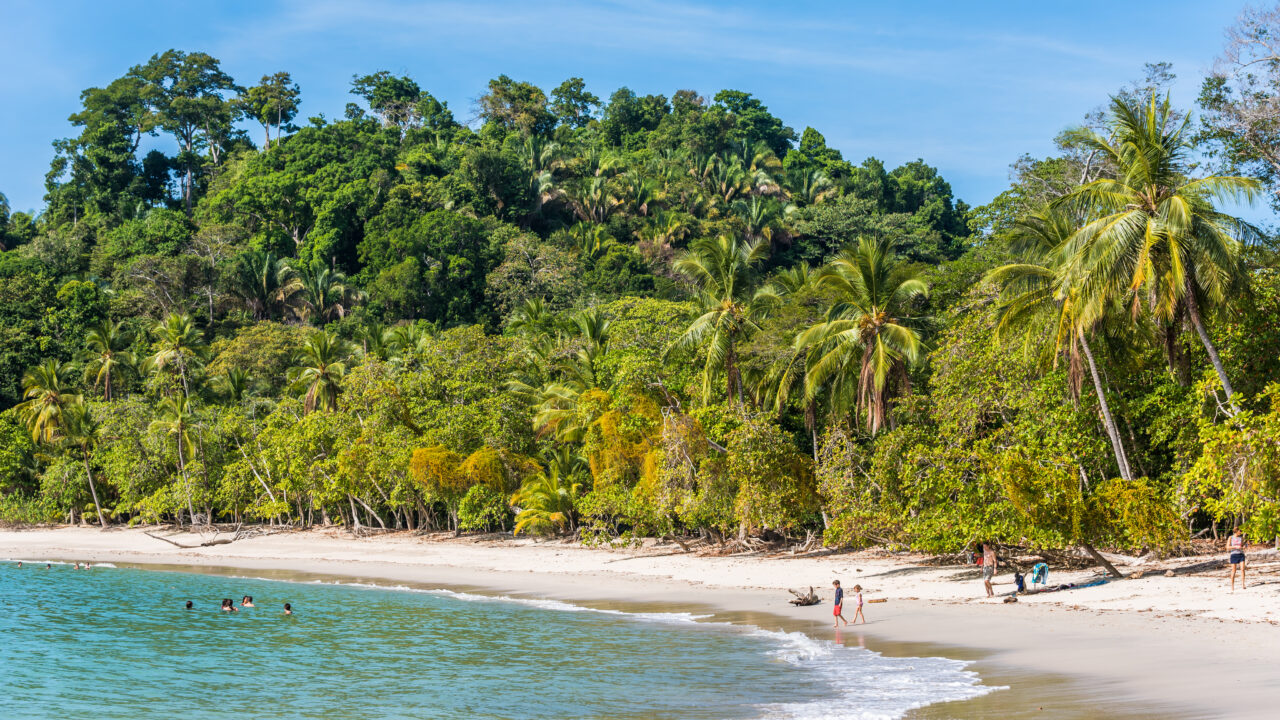
During my last trip to Costa Rica, I rented a car and spent three weeks driving around the country. While I could’ve easily spent three more months exploring, I covered a lot of ground and discovered some incredible beaches along the way. Each one has its own personality and I’m excited to share my favorites with you.
Whether you’re into surfing, sunbathing, yoga or simply soaking up the “pura vida” lifestyle, these are some of the best beaches in Costa Rica.
Playa Tamarindo
Located in Guanacaste, Playa Tamarindo is a lively and popular surf town beloved for its consistent waves, nightlife and easy beginner surf breaks. I found it to be undeniably touristy, but it’s also a great family-friendly spot and a solid place to learn how to surf. You’ll find plenty of shops, restaurants and beach bars hosting parties late into the night.
If you’re looking for a “no worries” beach experience with lots of amenities, Tamarindo checks all the boxes, even if it doesn’t feel as “off the beaten path” as some other Costa Rican destinations. It’s also a convenient jumping-off point for exploring other beaches in the region.
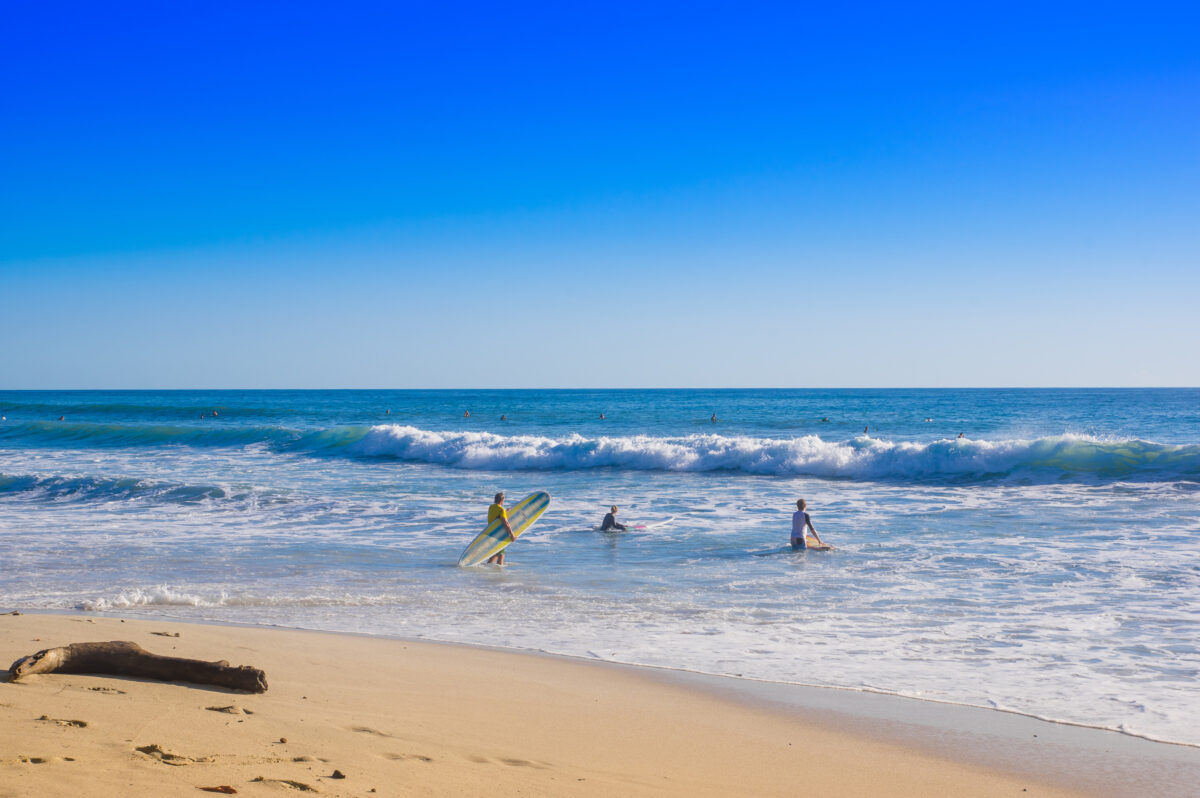
Photo by © Pablo Hidalgo | Dreamstime.com Playa Santa Teresa
At the southwestern tip of the Nicoya Peninsula, Santa Teresa is a bohemian paradise (and my personal favorite on the list). The roads are dusty, the energy is laid-back and the surfing scene is world-class. You’ll see ATVs kicking up trails of dust, surfers heading to the beach with boards tucked under their arms and friendly travelers from all over the globe mingling in local cafes.
Getting here involves a ferry ride (if coming from the mainland near Puntarenas), but the effort is worth it. The long, rugged beaches and consistent waves make Santa Teresa a favorite among surfers, yogis and anyone looking for that barefoot, tropical dreamland.
Playa Conchal
A short drive south from Tamarindo (and easily accessed via the town of Brasilito), Playa Conchal offers a more tranquil setting with a unique twist: instead of traditional sand, its shoreline is made up of millions of crushed seashells. When the sun hits those shimmering shells, the beach practically glows.
Playa Conchal has calm, clear water that’s perfect for swimming and snorkeling. You may catch glimpses of colorful fish—or even the occasional stingray—just off the shore. Vendors wander by selling fresh ceviche and cold coconut water, but aside from that, this beach remains wonderfully low-key and secluded.
Playa Nosara
Heading deeper down the Nicoya Peninsula, Nosara is where wellness fanatics gather. Known for its surf-and-yoga culture, Nosara draws a health-conscious, relaxed crowd looking to recharge. The main beach, Playa Guiones, is a broad, sandy stretch perfect for surfing—beginners will appreciate the mellow waves closer to shore, while more advanced surfers can head out to the bigger breaks.
Nosara’s layout is spread out, so renting an ATV or bike is your best bet for exploring. Between yoga studios, organic cafes and boutique shops, Nosara is all about balance. Grab a green juice, hit a yoga class and then cool off in the Pacific—life here is blissfully intentional and slow-paced.
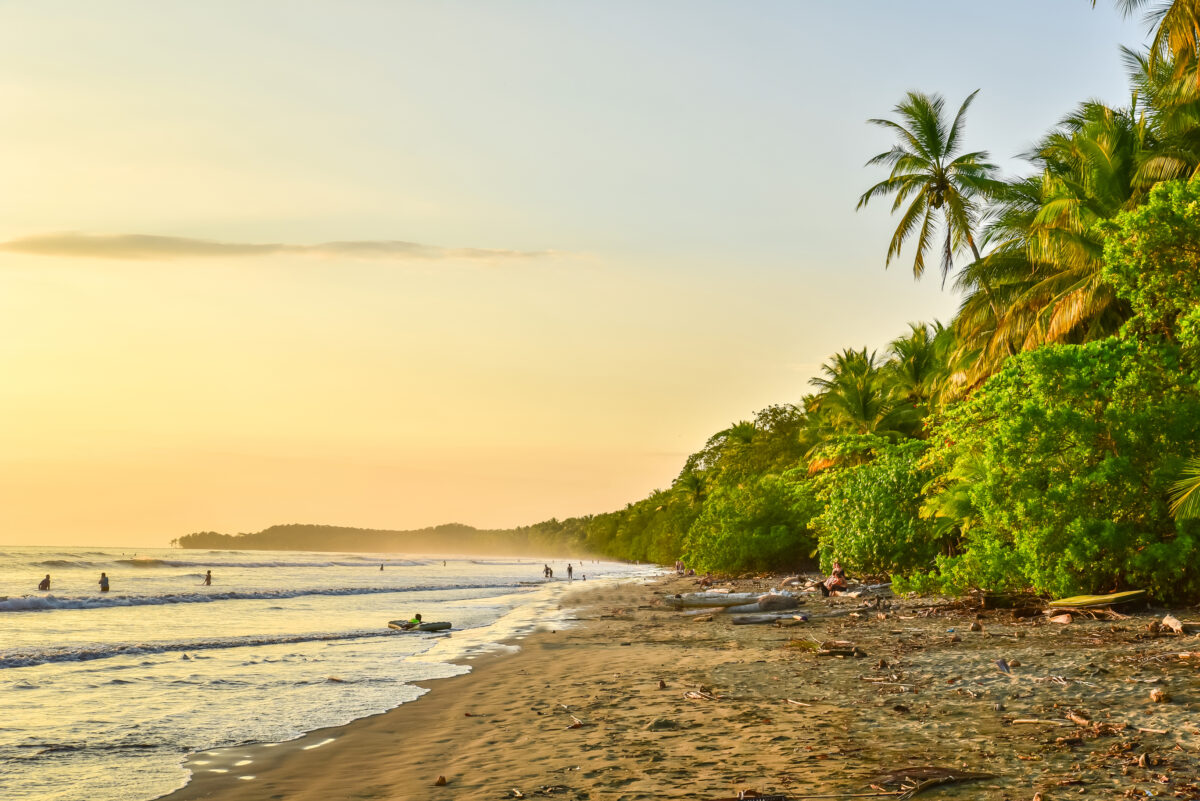
Photo by © SimonDannhauer | Dreamstime.com Playa Uvita (and Playa Chaman)
Venturing further south, Uvita puts you front and center with nature. This small town on the Pacific coast feels untouched, with dense jungle spilling onto quiet beaches. The highlight here is the iconic whale’s tail sandbar, a natural formation best seen from above during low tide.
While in Uvita, I hiked to nearby waterfalls and spent lazy afternoons on the beach. It’s not as developed as other beach towns, so having a car is essential, but the lack of crowds makes it worth it. Uvita feels like a hidden paradise where you can truly disconnect and hang out with the lovely locals.
Playa Samara (and Playa Carrillo)
Further south on the Nicoya Peninsula is Playa Samara, often touted as a favorite “local getaway.” This small, laid-back town feels authentically Tico, offering a calm and family-friendly beach. The water is warm, shallow and great for swimming, kayaking, or paddleboarding. One of my favorite things about Samara is that it’s incredibly walkable (unusual for Costa Rica) so you can explore the town on foot.
You’ll find beachfront cafes serving up fresh ceviche, cold beers and that quintessential pura vida vibe. It doesn’t have the party scene of Tamarindo, but its simplicity and charm more than make up for it. Just south of Samara there is also Playa Carrillo, often hailed as one of the most beautiful beaches in all of Costa Rica. Think palm-fringed shores, turquoise waters and hardly any crowds. A must-visit!
Playa Jaco
Moving toward the central Pacific coast, Playa Jaco is just an hour and a half’s drive from San José, making it one of the most accessible beach towns in Costa Rica. Jaco was my first stop in Costa Rica and it gave me a great introduction to the country. The town has a reputation for a fun, slightly party-oriented vibe, but it’s also family-friendly, with plenty of activities from surfing to ATV tours. Its wide, busy beach offers consistent waves that cater to surfers of all levels, perfect if you’re looking to book your first lesson.
If you’re up for a short 15–20 minute drive, Playa Hermosa is a quieter spot popular for its powerful surf breaks. Hermosa is a favorite for more experienced surfers, though beginners are welcome to watch the action or even take a lesson if they’re feeling adventurous. The beach is also less crowded than Jaco and offers a more relaxed ambiance.
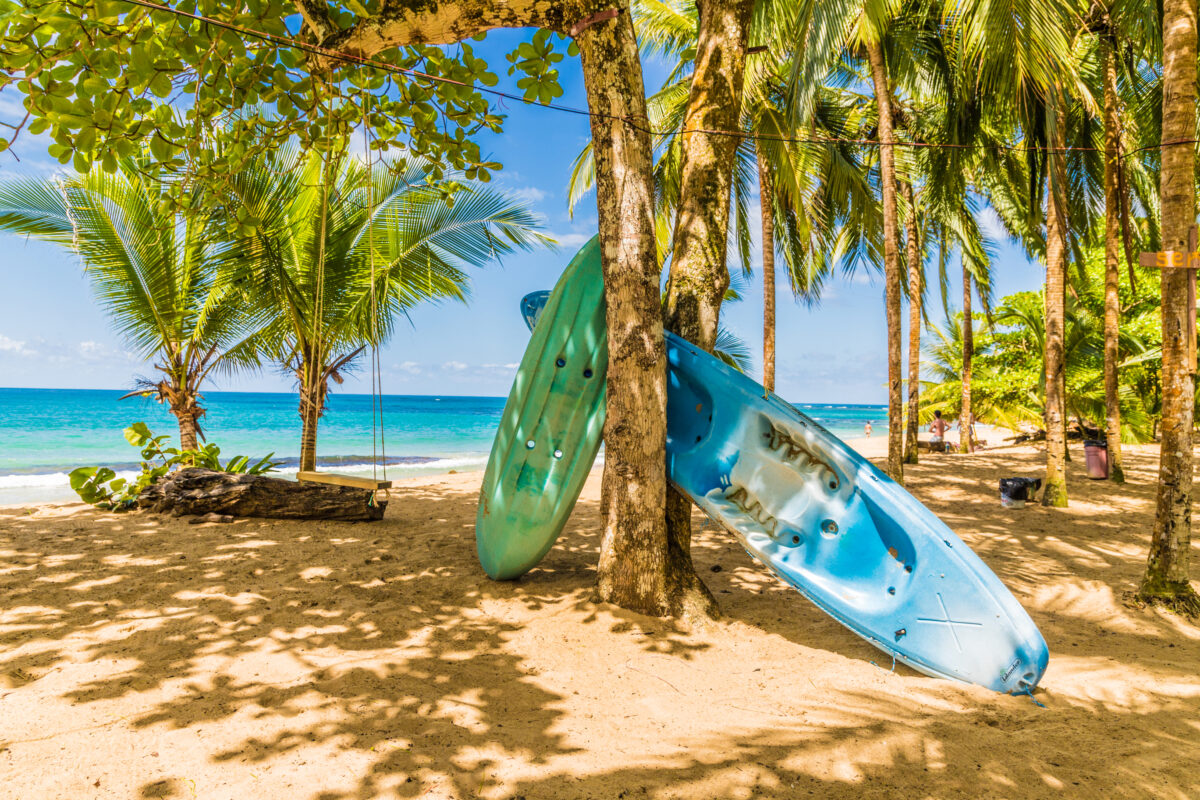
Photo by © Chris Mouyiaris | Dreamstime.com Punta Uva
The Caribbean side of Costa Rica is a world apart from the Pacific and is known for its reggae music, Afro-Caribbean culture and beaches that feel wild and free. I didn’t make it to this area on my trip, but friends who have raved about the laid-back energy and stunning beaches. It’s more rugged than the Pacific coast, with spotty Wi-Fi and fewer ATMs/amenities, so plan ahead. But if you’re looking for something off the beaten path, the Caribbean side is worth the trek.
Punta Uva is in the town of Limon and is considered to be one of the Caribbean coast’s most beautiful beaches. The water here is calm and crystal-clear, so it’s perfect for snorkeling or simply floating under the sun. Punta Uva feels like a private oasis surrounded by verdant jungle. It’s less crowded than other beaches in the area too, so it’s ideal if you’re looking for peace and quiet. Pack a picnic and enjoy a day of pure relaxation.
Playa Manuel Antonio
Continuing down the central Pacific coast, you’ll hit Manuel Antonio, which truly feels like stepping into a postcard. The main beach, with its powdery white sand and clear blue water, is framed by lush jungle, where you’ll spot monkeys swinging through the trees. Located just outside Manuel Antonio National Park, it’s one of Costa Rica’s most popular destinations, and for good reason.
I spent hours lounging on the beach, sipping piña coladas from a nearby bar and soaking in the beauty of my surroundings. (Although, I did get stung by a jellyfish here—thankfully, those cocktails helped dull the sting!) If you’re visiting the park, make sure to take a break from hiking to relax on Playa Espadilla, a gorgeous long stretch of beach. You have to pay to enter the park but the beach alone is worth it. And don’t be surprised if a curious monkey or sloth decides to join you!
Playa Carate, Corcovado National Park
Near the southern tip of the Pacific coast, Playa Carate is your gateway to Corcovado National Park—one of the most biodiverse regions on the planet. Getting there involves a long drive on bumpy roads, but the reward is an otherworldly mix of rainforest and beach.
You might spot scarlet macaws, howler monkeys and possibly even a puma or jaguar track (if you’re extremely lucky). It’s a great place for intrepid travelers who want to experience Costa Rica’s more raw, natural beauty. If you’re craving a more off-the-grid experience, Carate and Corcovado should be high on your list.


