

-
Costa da Caparica
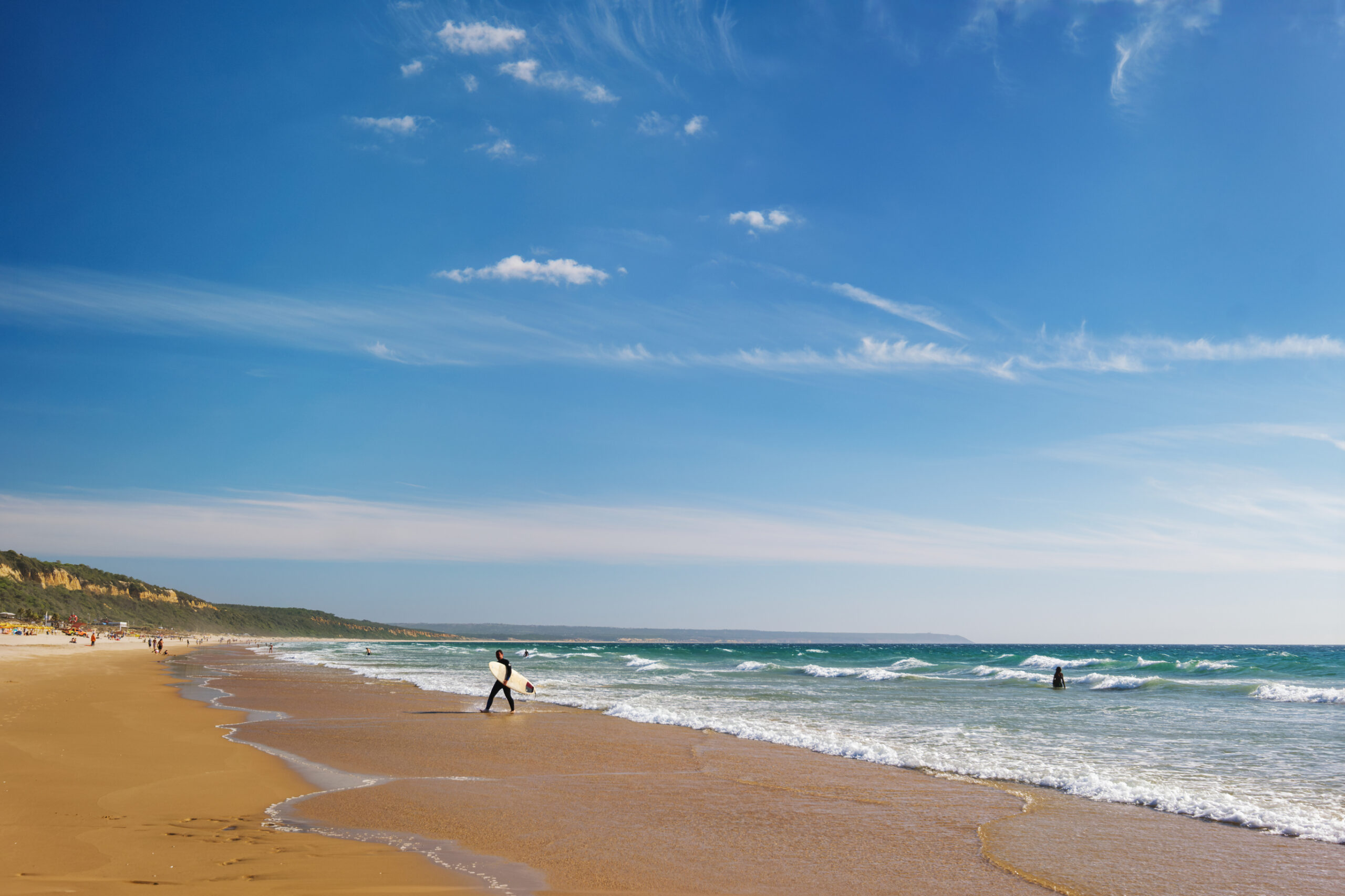
7 Best Beaches in Costa da Caparica, Portugal
Atlantic swells, sandy stretches & windswept dunes
From the postcard-perfect Algarve coves to wild stretches of Atlantic sand further north, I’ve spent years chasing the best coastline here. Lisbon, where I’m based, has some great options too. And yet, when the weekend rolls around, I keep driving across the bridge to Costa da Caparica.
Just across the river, this long, untamed sweep of sand feels refreshingly real. The waves are powerful, the beaches stretch on forever, and even in summer there’s a sense of space that’s hard to find elsewhere. It’s not polished or precious, and that’s exactly why I love it.
I spend a lot of my weekends here. Some days I’m chasing the best surf conditions or a great party, other days I just want a long walk, a cold drink at a beach bar, and that unmistakable Atlantic air. These are the Costa da Caparica beaches I return to again and again (and why I think they’re some of the best in Portugal).
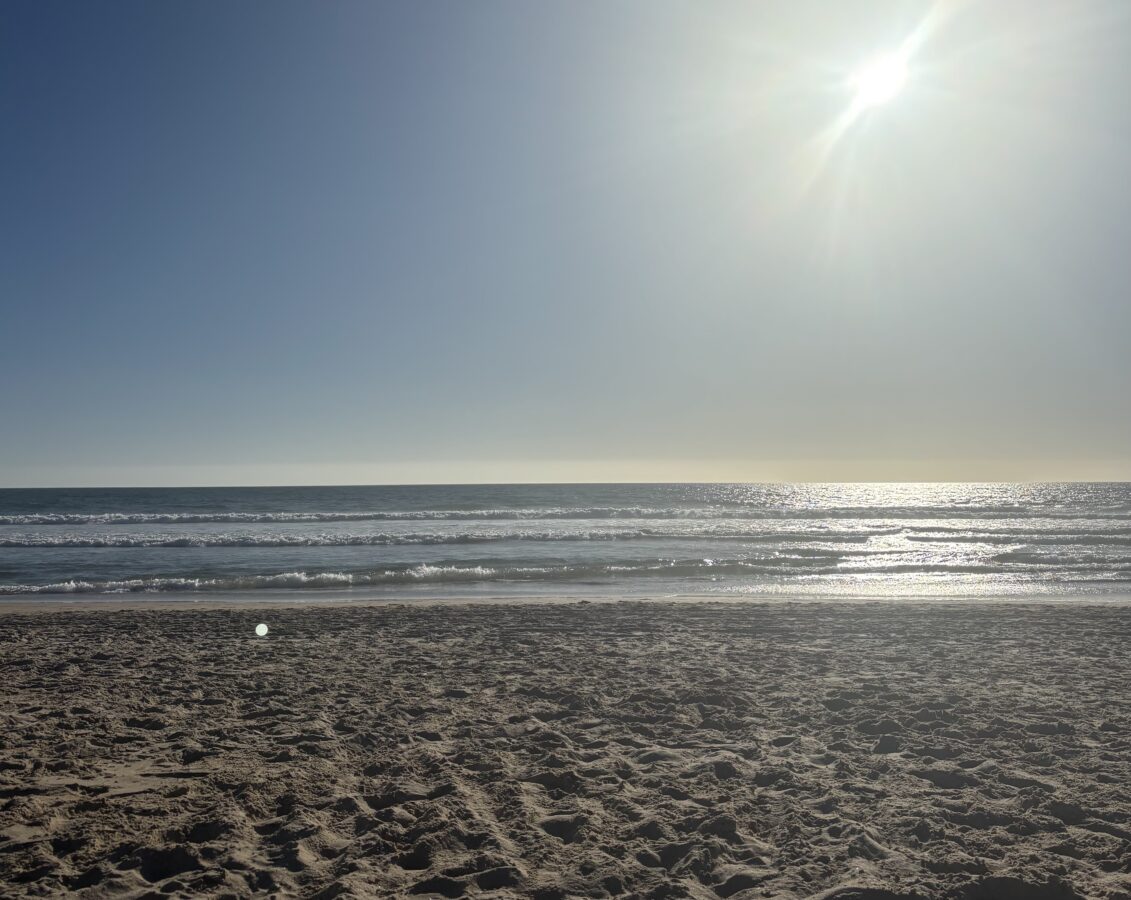
Photo courtesy of Georgie Darling Praia de São João da Caparica
Praia de São João da Caparica is where I go when I want an easy, no-stress beach day that still feels expansive and wild. It’s one of the most accessible beaches in Costa da Caparica, but it never feels small. The sand stretches wide and flat, with rolling Atlantic waves and plenty of space to spread out, even on busy summer weekends.
This beach is best for relaxed social days, casual swimming on calmer mornings, and long walks along the shoreline. There are several beach bars and restaurants right on the sand, many with sunbeds and umbrellas available to rent, plus toilets and outdoor showers, which makes it a practical choice if you’re staying all day.
What makes São João beautiful is the balance. You get energy without chaos, comfort without overdevelopment, and that constant Atlantic breeze that keeps everything feeling fresh and open.
Praia do Castelo
Praia do Castelo is one of the beaches I choose when I want the ease of Costa da Caparica without the busiest feel. It sits just south of the main town beaches and immediately feels a little more open and relaxed, with wider sand and more breathing room.
This beach is best for long, unrushed days where you want a mix of comfort and space. There are several good beach bars and restaurants right on the sand, many offering sunbeds and umbrellas, plus toilets and showers, so it works well for full-day stays. The waves here are often strong, making it popular with surfers, though calmer mornings can be suitable for a dip.
What makes Praia do Castelo beautiful is its sense of balance. The dunes frame the beach, the Atlantic stretches endlessly ahead, and even on warm weekends it never feels cramped. It’s an easy step into the wilder side of the coast.
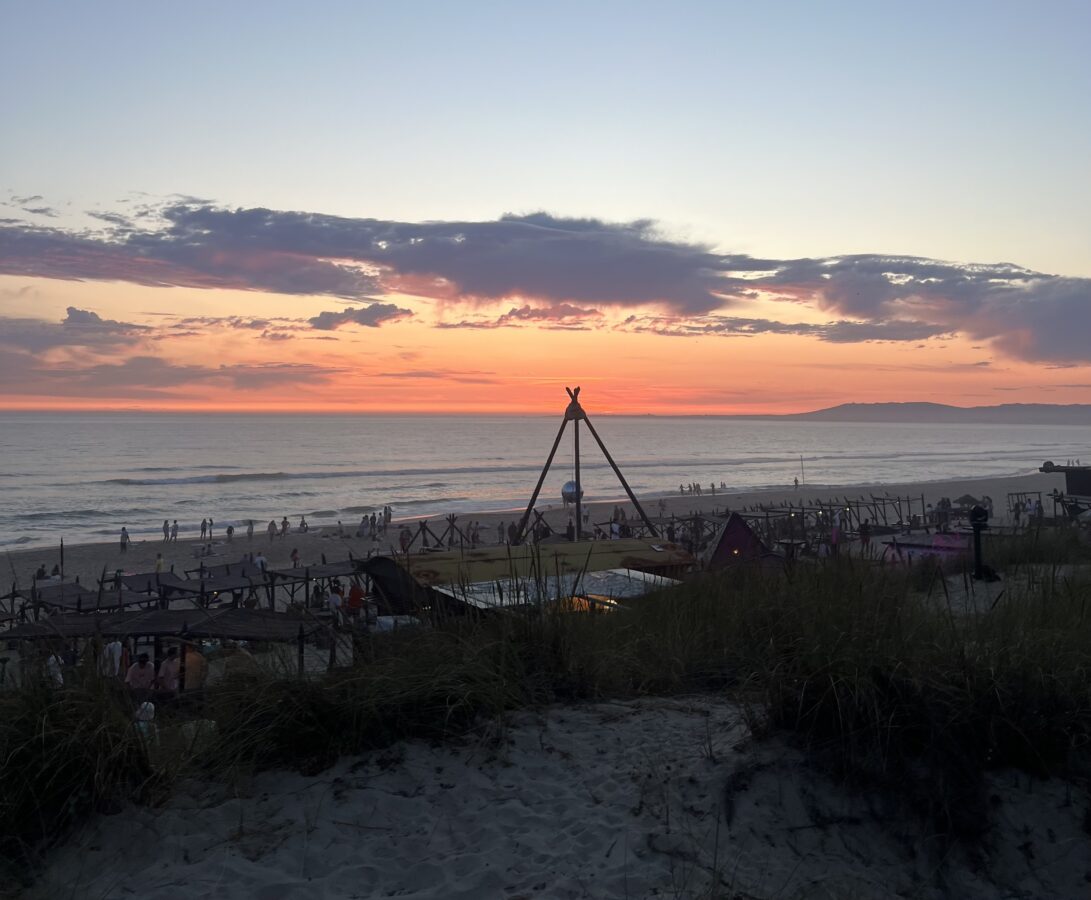
Photo courtesy of Georgie Darling Praia da Morena
Praia da Morena is one of the beaches I return to when I want Costa da Caparica at its most effortless. It feels slightly calmer than São João, with a more laid-back rhythm that suits long lunches and unplanned afternoons that drift into evening.
This beach is best for slow days, sunset watching, and pairing beach time with food and drinks. There are good beach bars with loungers, umbrellas, toilets and showers, so you can settle in comfortably without feeling confined to one small area. The sand here feels endless, and it’s easy to find a quiet patch just by walking a little further down the shore.
Morena’s beauty lies in its light and space. The coastline opens up, the dunes frame the beach beautifully, and at golden hour the whole stretch glows. It’s social, scenic, and unpretentious in the best possible way.
Praia do CDS
Praia do CDS is where Costa da Caparica starts to feel properly wild. The beach widens, the crowds thin out, and the Atlantic takes center stage. This is one of my favorite spots when I want space, movement, and that feeling of being dwarfed by the coastline.
It’s best for surfers, confident swimmers, and long, uninterrupted beach walks. Facilities are more limited than further north, but there are still beach bars with basic amenities, including toilets and seasonal sunbeds. The trade-off is space and atmosphere rather than convenience.
What makes Praia do CDS so beautiful is its rawness. The dunes roll behind you, the waves are powerful and dramatic, and the horizon feels endless. On quieter days, it can feel almost meditative. This is Costa da Caparica stripped back to sand, wind, and water.
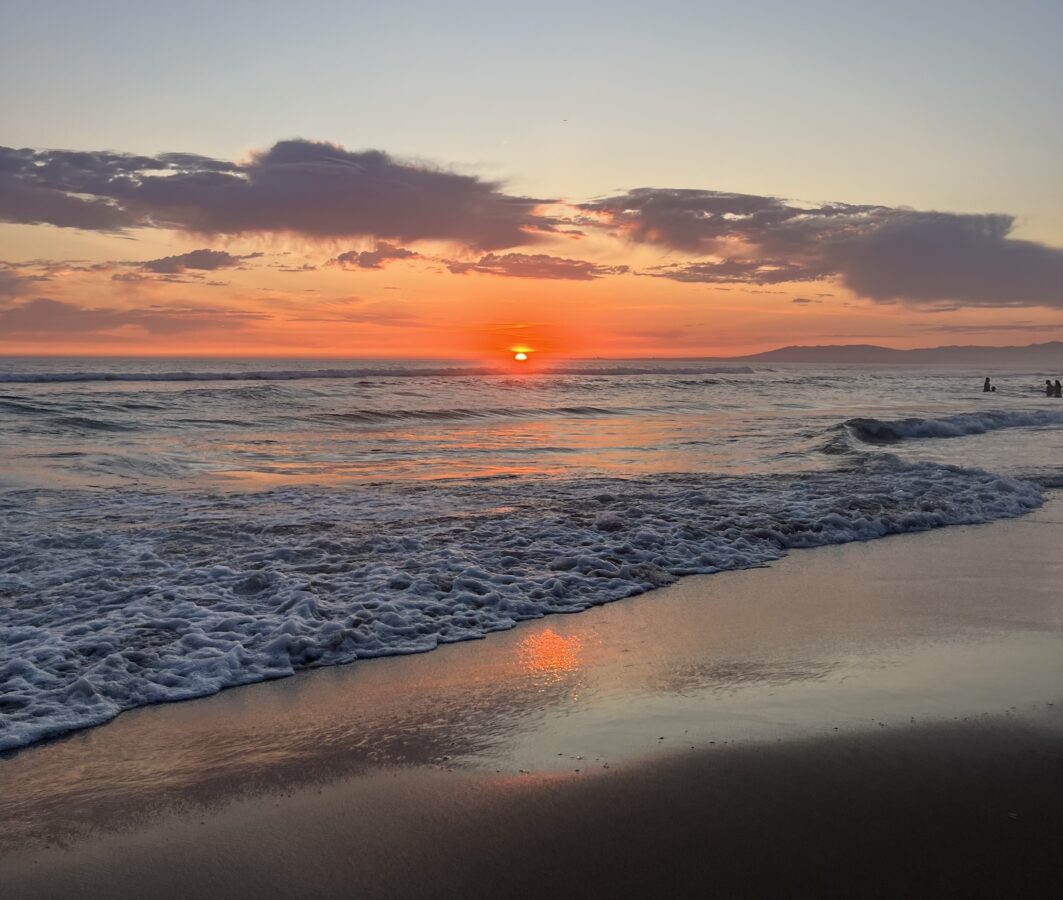
Photo courtesy of Georgie Darling Praia da Fonte da Telha
Praia da Fonte da Telha feels like the soul of Costa da Caparica. By the time you reach it, the beaches are vast, the dunes are higher, and everything slows down. I come here when I have time to spare and want a full afternoon that naturally turns into sunset.
This beach is best for long walks, relaxed swims on calm days, and lingering meals with a view. There’s a small village atmosphere here, with beach restaurants, bars, toilets, and sunbeds available, but nothing feels overbuilt or rushed.
Fonte da Telha is beautiful because of its scale and stillness. The Atlantic stretches wide and loud, the sky feels bigger, and sunsets here are consistently spectacular. It’s the kind of place that reminds me why I think Costa da Caparica has some of the best beaches in Portugal.
Praia da Cabana do Pescador
Praia da Cabana do Pescador has a quieter, more traditional feel than many of the beaches nearby. It’s a place I go when I want Costa da Caparica stripped back and slightly slower, with fewer people and a stronger connection to the coastline’s working past.
This beach is best for peaceful walks, uncrowded afternoons, and watching the ocean without distraction. Facilities are simple but sufficient, with seasonal beach bars offering food, toilets, and occasional sunbeds, though this is more about space than services.
The beauty here is subtle. Fishing boats are sometimes pulled up on the sand, the dunes feel closer, and the coastline stretches uninterrupted in both directions. It’s not flashy or trendy, but it’s deeply atmospheric. On quieter days, it feels like a reminder of what this coast was long before beach clubs arrived.
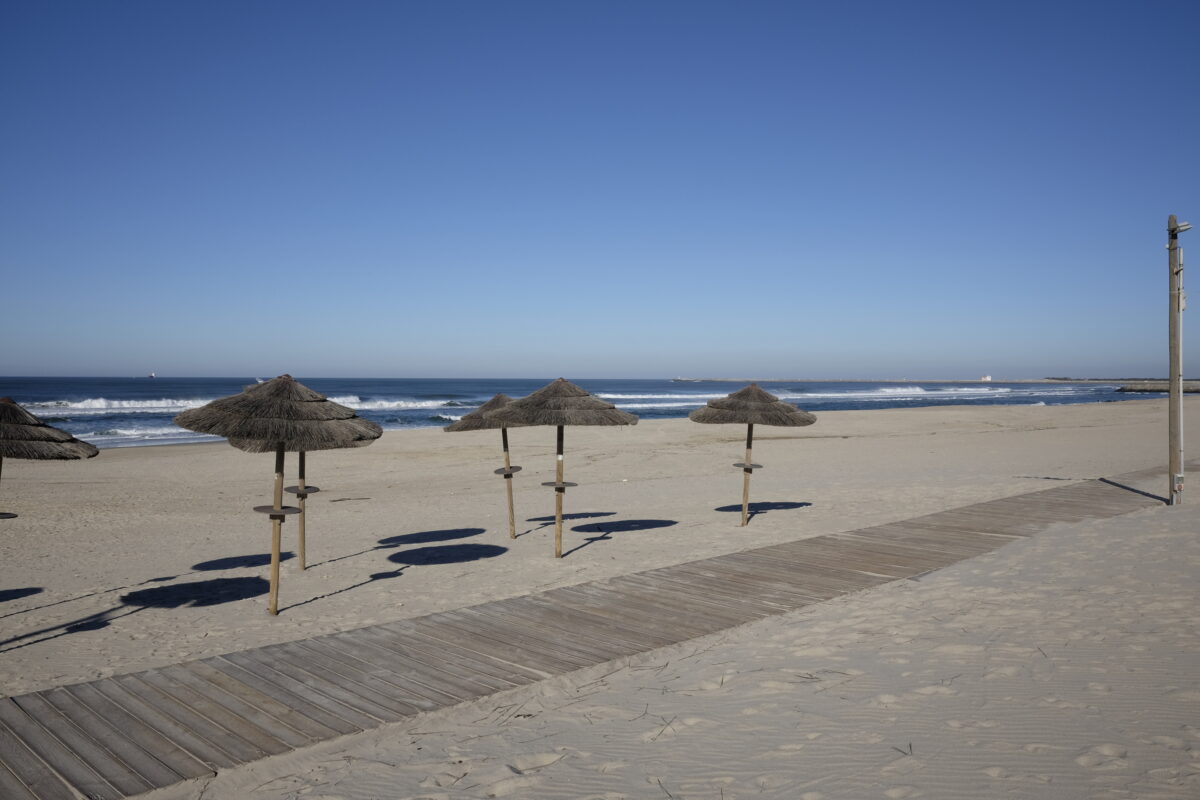
Photo by © Roberto Pangiarella | Dreamstime.com Praia da Nova Praia
Praia da Nova Praia is one of the beaches I head to when I want maximum space and minimal fuss. It sits further south along the Costa da Caparica strip and immediately feels less crowded, even during the height of summer.
This beach is best for long walks, quiet sunbathing, and days when the goal is simply to be by the ocean. Facilities are more limited than the central beaches, but there are seasonal beach bars with toilets and light food, and enough infrastructure to stay comfortably for a few hours.
Nova Praia’s beauty lies in its scale. The sand feels endless, the dunes roll gently behind you, and the Atlantic dominates the view. There’s a calmness here that’s hard to find closer to Lisbon. It’s the kind of beach that encourages you to slow down and stay longer than planned.
How to get to Costa da Caparica from Lisbon
One of the reasons I spend so many weekends in Costa da Caparica is how easy it is to reach from Lisbon. Despite feeling wild and expansive once you arrive, it’s just across the river.
If you don’t have a car, buses from central Lisbon run regularly to Costa da Caparica town and the main beach access points. They’re affordable and reliable, especially in summer, though they can get busy on hot weekends. Uber and Bolt are also popular options and surprisingly good value if you’re traveling with someone else.
Driving gives you the most freedom, particularly if you want to head further south towards Praia do CDS or Fonte da Telha, where the beaches feel bigger and quieter. Parking is generally straightforward near the beach bars, but it fills up quickly on sunny afternoons, so I always aim to arrive earlier in the day.
When to visit Costa da Caparica
Costa da Caparica is very much an Atlantic beach destination, and timing makes a big difference to how it feels.
Summer brings warmth, energy, and long beach days, but it also comes with stronger winds, especially in the afternoons. I usually visit in the morning if I’m going in July or August, when the air is calmer and the beaches feel more spacious. Even in peak season, you can escape crowds by walking a little further down the coast.
Late spring and early autumn are my favorite times to be here. The weather is still warm, the light is beautiful, and the beaches feel noticeably quieter. Winter is best left to surfers and long coastal walks, but even then, the scenery is dramatic and refreshing in its own way.
-
Georgia, USA
5 Best Beaches in Georgia, USA
Golden Isles beaches, maritime forests & wild Atlantic shores
When most people think of Southern beaches, Florida typically dominates the conversation. But Georgia’s 100 miles of Atlantic coastline deserve far more attention. Stretching from Tybee Island near Savannah to the remote wilderness of Cumberland Island, Georgia’s beaches are authentic without being overdeveloped, naturally beautiful without the crowds, and charming and unspoiled.
Georgia’s coast is defined by its barrier islands—14 of them, each with a distinct personality. What ties them together is the gorgeous landscape of massive live oak trees draped in Spanish moss, salt marshes, and wildlife ranging from loggerhead sea turtles to wild horses and dolphins.
Here are the best beaches in Georgia that capture what makes this coastline special.
Tybee Island
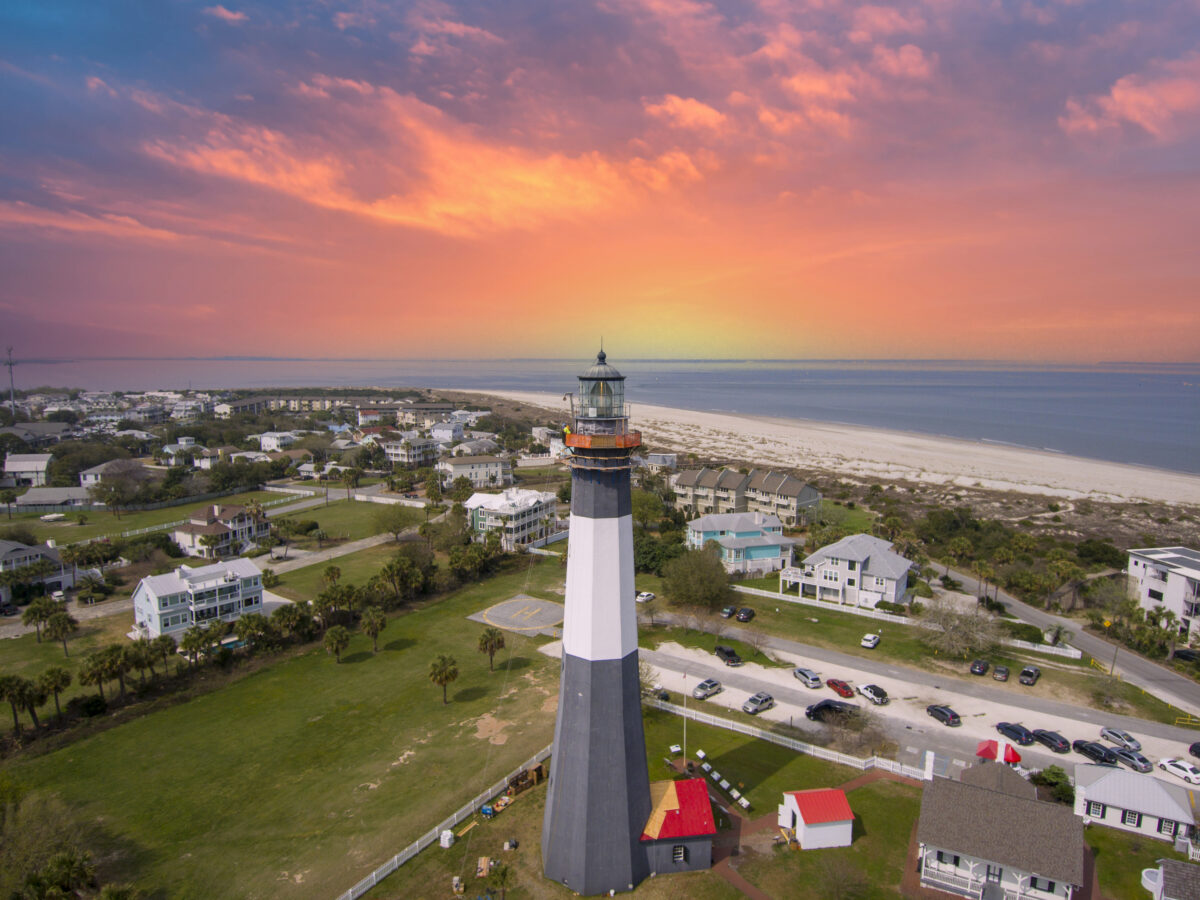
Photo by © Marcus Jones | Dreamstime.com Just 18 miles east of historic Savannah, Tybee Island is Georgia’s most accessible beach destination. This five-mile barrier island is packed with coastal town charm, like colorful cottages, seafood shacks, and a refreshing lack of high-rise development. The vibe is laid-back, so it’s nice for both day-trippers from Savannah and week-long beach vacations.
North Beach is best for quieter experiences. Home to the iconic Tybee Island Light Station—one of America’s oldest lighthouses dating back to 1736—this area attracts fewer crowds but still has great swimming conditions. The lighthouse is worth climbing all 178 steps for panoramic Atlantic views that stretch to Hilton Head on clear days. The North Beach Birding Trail is perfect for spotting herons, egrets, and oystercatchers, especially during early morning hours.
South Beach brings more energy. The Tybee Pier is surrounded by Tybrisa Street, lined with shops selling beach essentials, restaurants serving fresh-caught seafood, and beach bars. The pier itself is prime for fishing, and you might catch whiting, flounder, or even sharks, or simply watch dolphins play in the surf.
Local tips: Don’t miss The Breakfast Club for their famous crab cakes benedict and shrimp and grits, or grab drinks at The Deck Beach Bar for a classic Tybee experience with your toes in the sand. For dinner, try The Crab Shack, a Tybee institution where you can feast on Low Country boil while surrounded by marsh views and resident alligators (safely contained, of course).
Jekyll Island

Photo by © Rod Gimenez | Dreamstime.com Once the exclusive winter retreat of the Vanderbilts, Morgans, and Rockefellers, Jekyll Island became a state park in 1947, opening these privileged shores to everyone. Today, you can explore 10 miles of pristine coastline without the pretension, though the island retains its elegant charm. Georgia law mandates that 65% of Jekyll remain undeveloped, ensuring lasting natural beauty for generations.
Driftwood Beach is Jekyll’s most famous stretch, and one of the most photographically stunning beaches anywhere on the East Coast. Decades of erosion have created a graveyard of gnarled live oak and pine trees scattered across the sand. If you’ve seen “The Walking Dead,” you’ve probably seen Driftwood Beach standing in as various filming locations. Arrive early for fewer crowds as this spot has become an Instagram sensation in recent years.
Great Dunes Beach Park is the family hub, with ample parking, clean facilities, picnic areas under shady pavilions, and summer lifeguards keeping watch. The beach is wide with gentle slopes, perfect for swimming and elaborate sandcastle building. After a morning in the sun, rent bikes and explore 20 miles of paved trails that wind through maritime forests and along scenic marsh views.
St. Andrews Beach Park on the southwestern tip is one of the few East Coast beaches where you can watch the sunset directly over water, thanks to Jekyll’s unique curved geography. The beach features a boardwalk that meanders through marshland and maritime forest, ideal for spotting wildlife like great blue herons, snowy egrets, and even the occasional alligator sunning on logs (they stay in the marsh and avoid beach areas, so no worries).
Local tips: Be aware that Jekyll charges a $10 parking fee ($15 for large vehicles), which helps maintain the island’s infrastructure and protected areas. Stay at the historic Jekyll Island Club Resort for a taste of Gilded Age luxury steps from the beach.
St. Simons Island
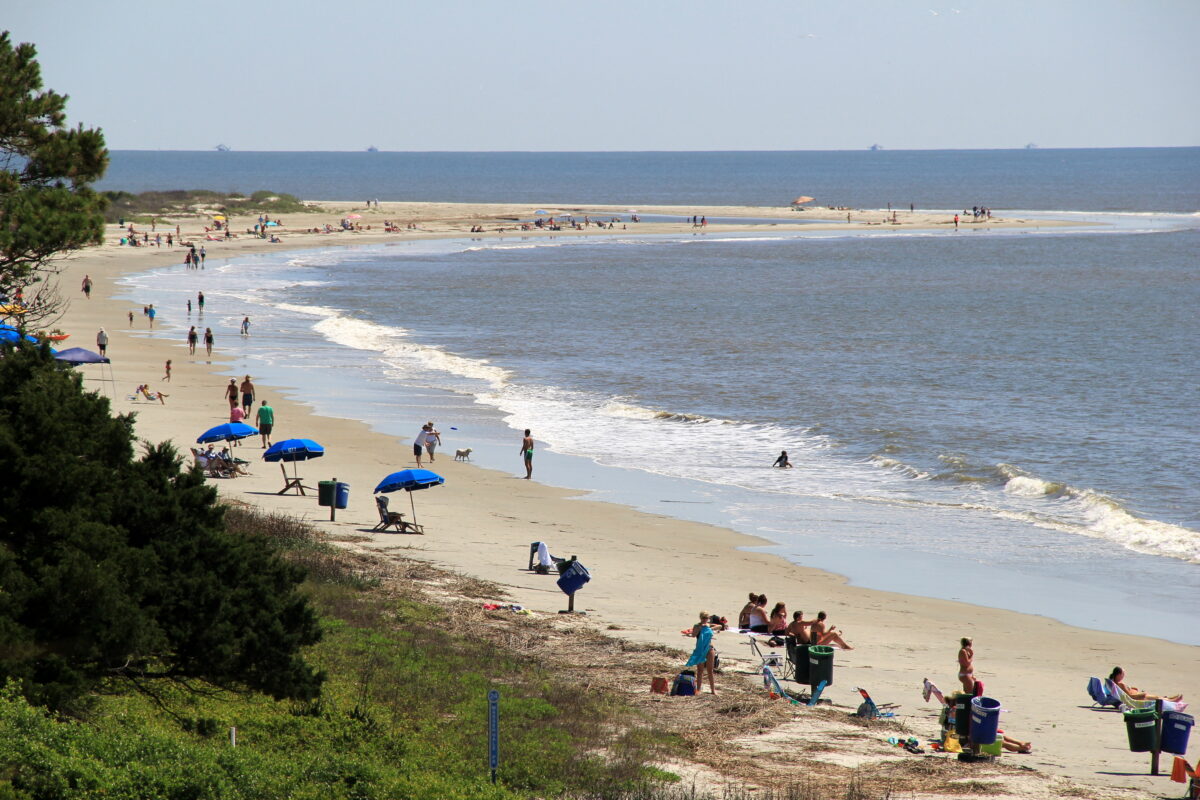
Photo by © Bratty1206 | Dreamstime.com As Georgia’s largest barrier island, St. Simons has a nice balance between amenities and natural beauty.
East Beach near the Coast Guard Station is the island’s most popular stretch, with good parking, clean bathrooms, outdoor showers, and seasonal snack stands. It’s dog-friendly (with summer time restrictions: before 9am and after 6pm Memorial Day through Labor Day). The sand is firm enough for biking at low tide, and sand dollar hunting is practically a sport here.
Gould’s Inlet isn’t ideal for swimming due to currents, but it’s stunning for sunset walks and wildlife watching. Where St. Simons Sound meets the Atlantic creates a dynamic environment attracting shorebirds, dolphins, and occasionally manatees. The golden hour views are some of Georgia’s best.
Massengale Park has beach access with shaded picnic areas, a playground, and water fountains—ideal for full-day family outings.
Local tips: Beyond the beaches, you can climb the historic St. Simons Lighthouse, visit Fort Frederica National Monument, or explore Pier Village for shopping and dining. With 37 beach access points, you’re never far from the sand.
Cumberland Island
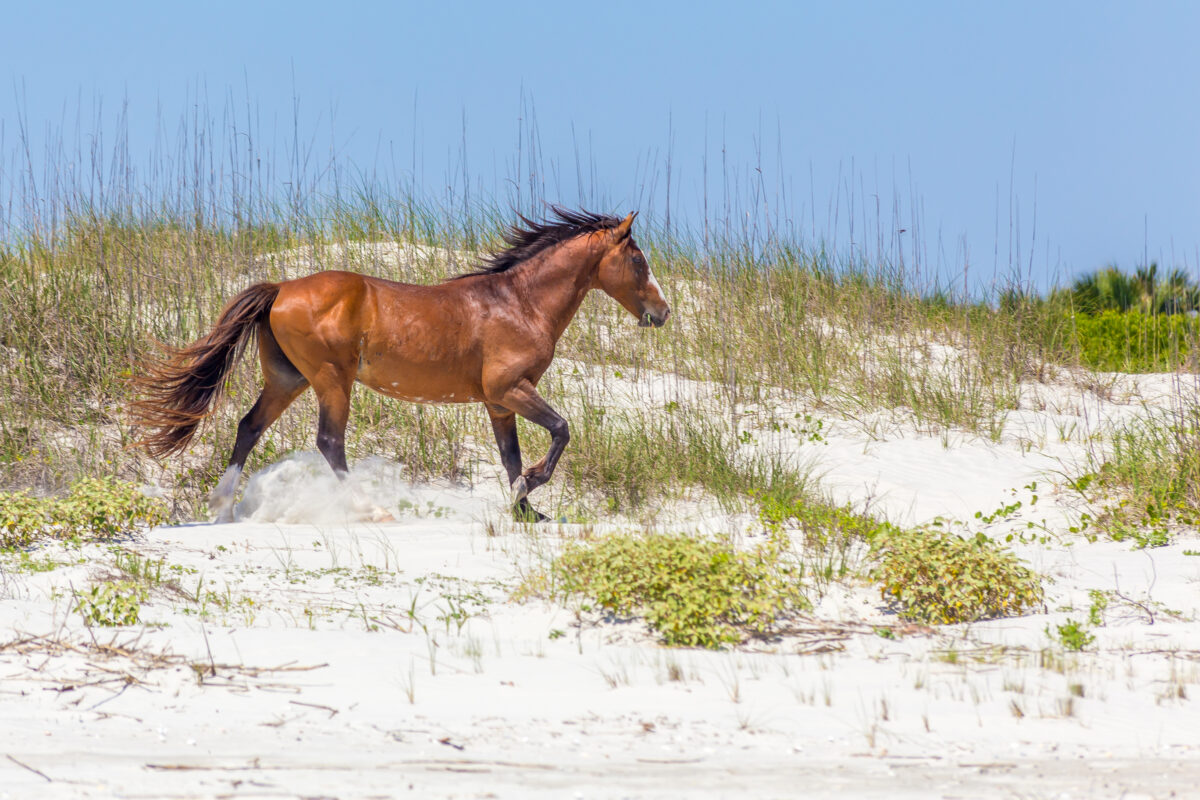
Photo by © Brian Welker | Dreamstime.com Cumberland Island is the antithesis of developed beach resorts. This southernmost barrier island is protected as a National Seashore and accessible only by ferry from St. Marys. This is as wild and pristine as Georgia’s coast gets.
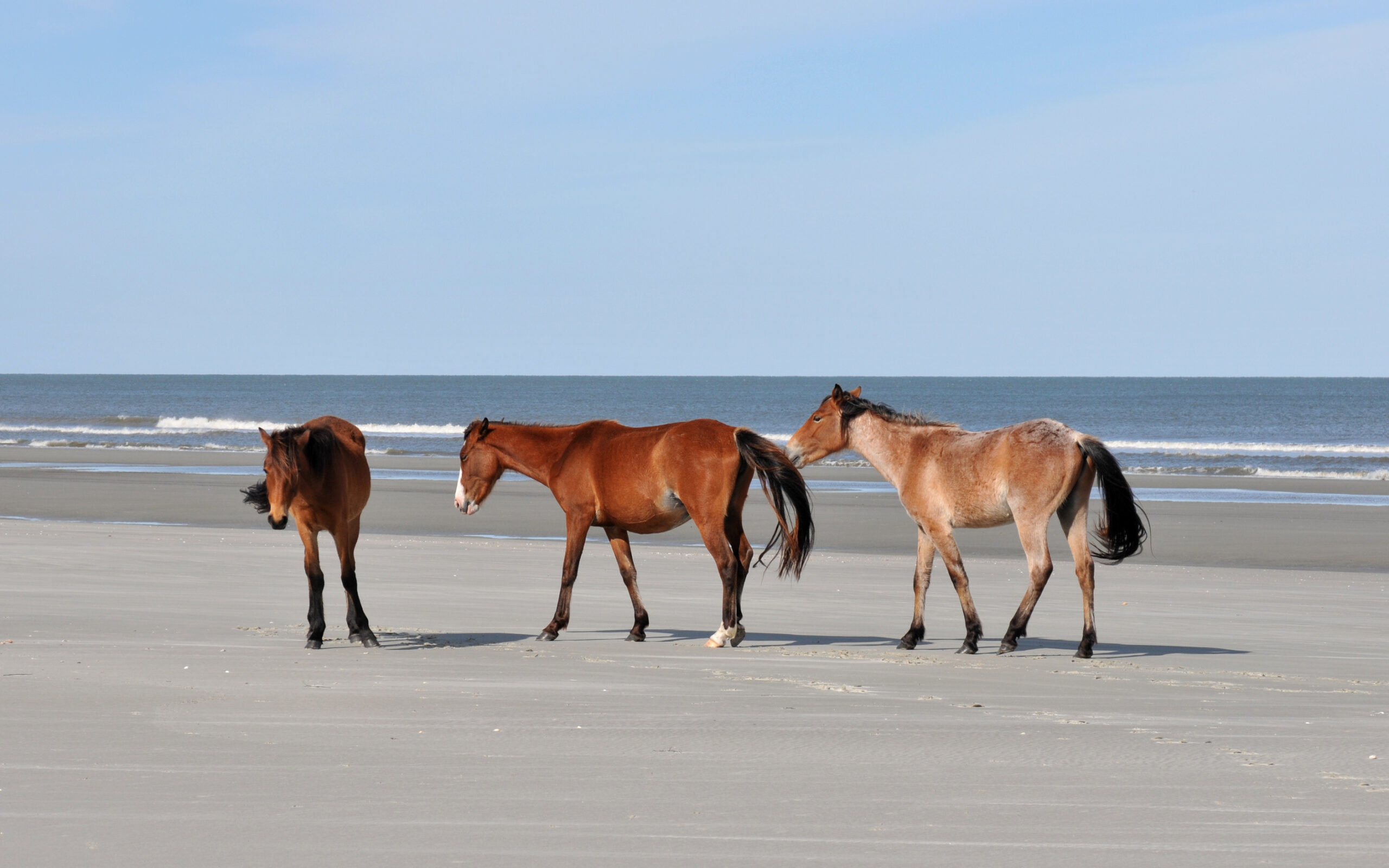
Cumberland boasts over 17 miles of undisturbed beaches where your footprints might be the only ones visible. The island is famous for wild horses—descendants of Spanish settlers’ horses—that roam freely through maritime forests and along beaches.
The island is a critical habitat for loggerhead sea turtles nesting from May through August. The beaches are prime for finding fossilized shark teeth, perfect shells, and driftwood. Beyond beaches, hiking trails wind through maritime forests and past Dungeness ruins, a mansion built by the Carnegie family in the 1880s.
Local tips: The island has no paved roads, no cars (except park vehicles), and very limited facilities. Bring water, snacks, and sunscreen. Book the Cumberland Island Ferry from St. Marys well in advance. For the full experience, consider camping at one of five campgrounds. Sea Camp is closest to the ferry, while Hickory Hill offers true wilderness camping.
Sapelo Island
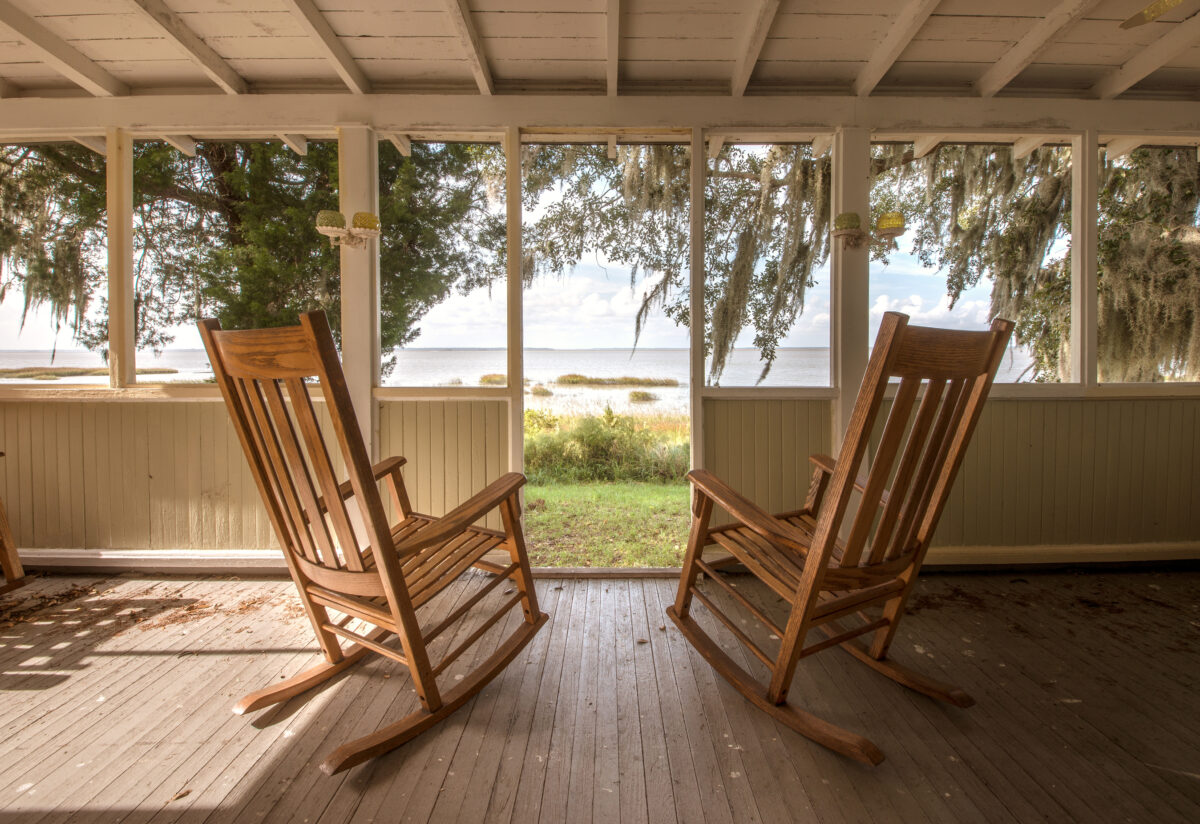
Photo by © Wirestock | Dreamstime.com Sapelo Island requires planning but rewards visitors with something special: Georgia’s Gullah-Geechee heritage. The beaches are pristine and typically deserted, perfect for beachcombing and spotting dolphins and sea turtles.
What makes Sapelo unique is Hog Hammock, one of the few remaining intact Gullah-Geechee communities in the United States. The Gullah-Geechee people are descendants of enslaved Africans who developed a distinct culture and language. Tours are led by community members sharing perspectives you won’t hear elsewhere.
You’ll see historic tabby ruins (made from oyster shells, lime, sand, and water), old slave houses, and the Reynolds Mansion. With fewer than 50 full-time residents remaining, the cultural preservation efforts are increasingly important.
Local tips: This remote barrier island is accessible only via ferry from Meridian through guided tours arranged via the Sapelo Island Visitor Center.
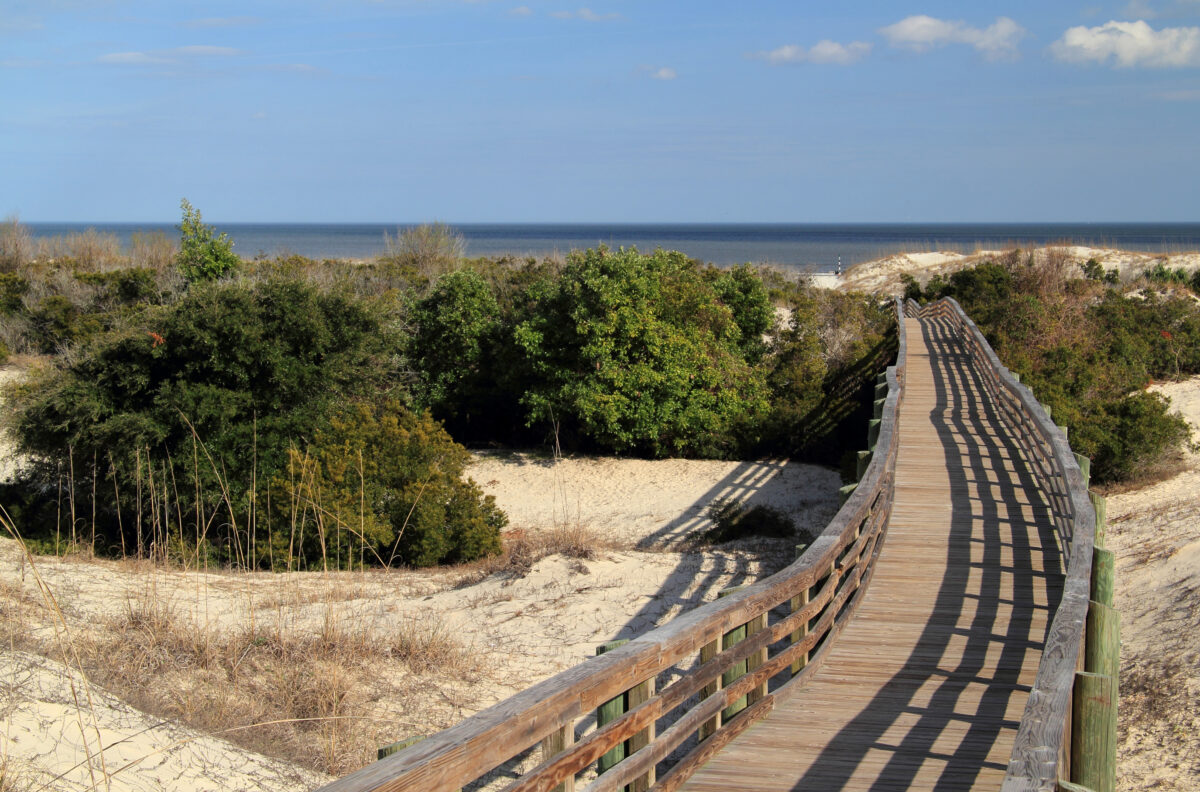
Photo by © Paula Stephens | Dreamstime.com Planning Your Georgia Beach Trip
Best Time to Visit: Late spring (April-May) and early fall (September-October) for warm weather with fewer crowds and lower prices. Summer (June-August) is peak season with the warmest waters but most visitors. Winter months are mild but cool for swimming, though beach walks remain delightful.
Getting Around: Most barrier islands are accessible by car via causeways, except Cumberland and Sapelo, which require ferry reservations. Jekyll Island charges $10 parking per vehicle. Many islands are bike-friendly with rentals available.
What to Bring: Sunscreen is essential year-round. Insect repellent helps near forests and marshlands. Bring beach chairs and umbrellas as shade is limited. Water shoes are useful for shells and occasional jellyfish.
Wildlife: Georgia’s beaches are nesting grounds for endangered loggerhead sea turtles (May-August nesting, July-October hatchlings). Respect all marked turtle nests and never use flashlights near nesting areas.
-
Malaysia
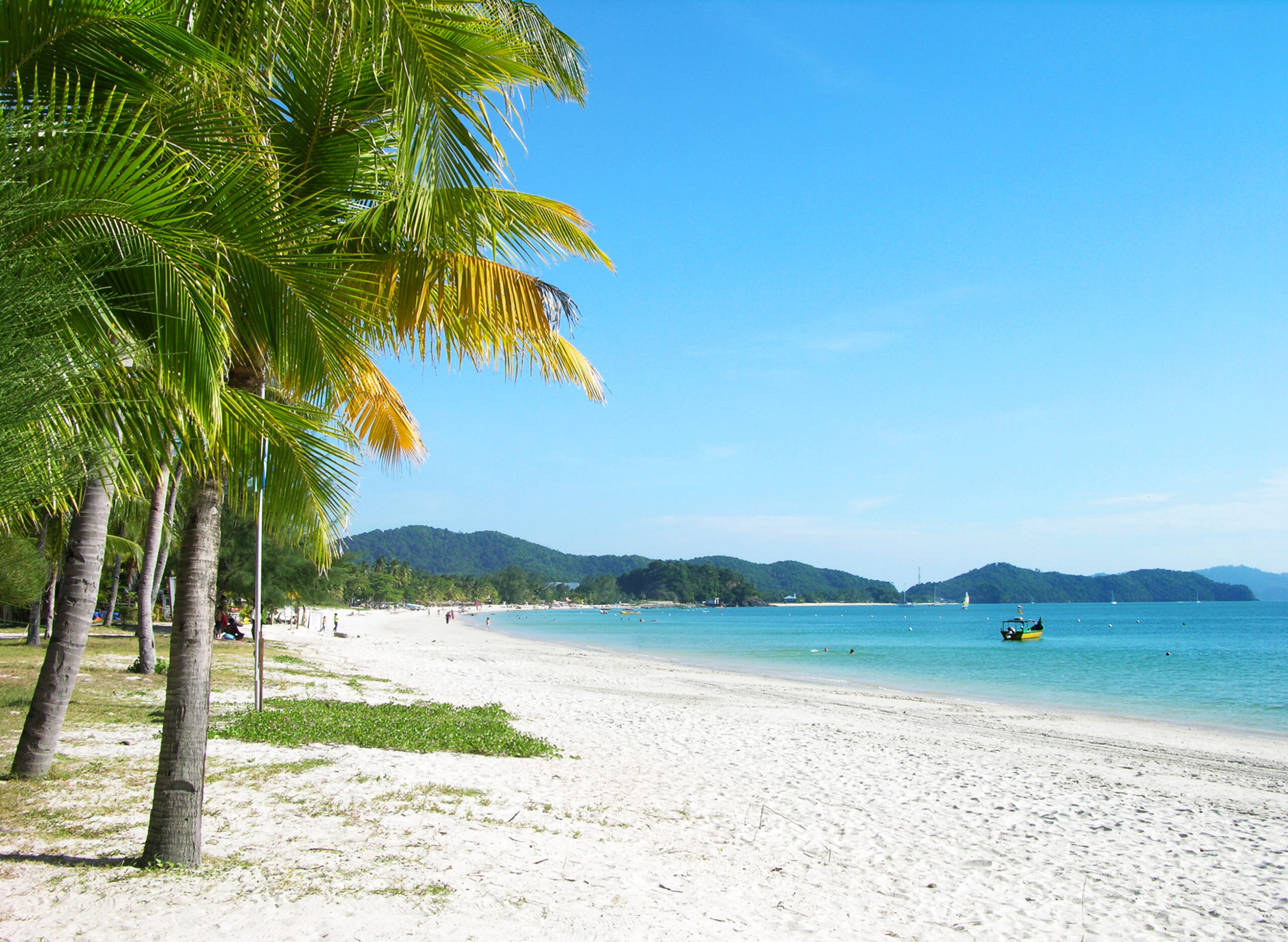
Malaysia doesn’t get enough attention for its beaches. With over 800 islands and almost 3, 000 miles of coastline, this Southeast Asian destination offers stretches for every kind of traveler.
There are pristine white-sand marvels, surfing hotspots, and vibrant street food-filled urban getaways. You’ll discover the ultimate holiday islands such as Langkawi, Pangkor, and Redang, as well as lesser-known spots like the Perhentians. Malaysia gets fewer tourists than its neighbors, Thailand and Indonesia, resulting in uncrowded beaches.
For me, Malaysia has always been a feel-good destination, where you meet friendly people, eat magnificent food, and visit striking natural sites. Here’s a collection of the best beaches in the country, including the most well-known stretches and the hidden spots.
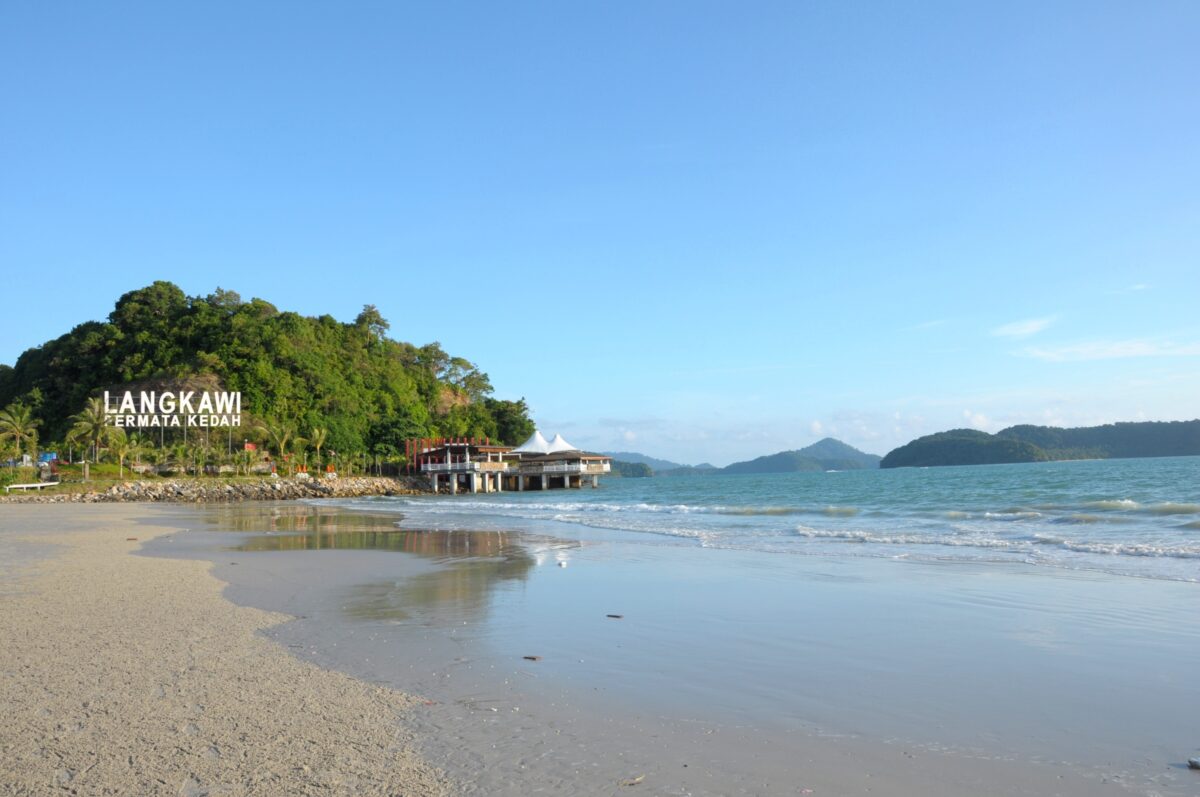
Photo by © Rushour | Dreamstime.com Pantai Cenang, Langkawi
Best urban beach in Malaysia
Langkawi is the most popular holiday island in Malaysia. Nicknamed the Jewel of Kedah, it’s located off the northwestern coast of the country, close to the Tarutao National Park in Thailand. Pantai Cenang is Langkawi’s top beach for, basically, everything. Stretching over a mile, it features soft white sand. You can rent a jet ski, go on a banana ride, and try parasailing. The beach is flanked by a busy promenade, filled with bars, restaurants, top-notch resorts, and street food vendors. In other words, it’s Langkawi’s pulsating heart. If you like the buzzy stretches, where everything is close by, Cenang fits the bill perfectly. Families will love the soft sand and gentle, shallow water access. In the evening, it transforms into Langkawi’s premier street food area.
Tanjung Rhu, Langkawi
Best for a secluded experience and luxury
If Cenang is Langkawi’s buzziest beach, Tanjung Rhu is for the peace-seekers. Overlooking the scenic small islands and surrounded by the green hills and mangroves, this beach on Langkawi’s north coast is an ideal tropical escape. Sip coconut juice to the calming sound of the rolling waves, enjoy the idyllic vistas from the terrace of the luxurious beach bar, or reserve a relaxing massage session on the white sand. Tanjung Rhu is the beach of the five-star Four Seasons Resort, which adds to the spot’s upscale atmosphere. If HBO’s “White Lotus” series was filmed in Malaysia, this would be the place. There are also several beachfront restaurants, where you can try the Malaysian seafood delights and have romantic sunset dinners.
Teluk Keke, Perenthian Islands
Best for snorkeling
Did you know that Malaysia is home to spectacular coral islands with exceptional snorkeling? Add the Perenthians to your travel list. Located in the South China Sea, off the coast of Terengganu, these islands are the closest you can get to a tropical paradise: sublime and untouched. Teluk Keke Beach on Perhentian Besar (or “Greater Perhentian”) is the most famous local snorkeling-ready stretch. Here, the sugary white sand borders the large stones piercing the turquoise sea.
Enter the underwater world to explore the coral reef, teeming with colorful fish and, occasionally, turtles. Reaching Teluk Keke is an adventure in itself. Start from Tuna Bay and follow the hiking trail through the jungle. Many boat tours around the Perenthians include Teluk Keke in their program. The beach remains an open secret of Malaysia, with minimal impact from mass tourism. Also, the coral reef here is in great shape.
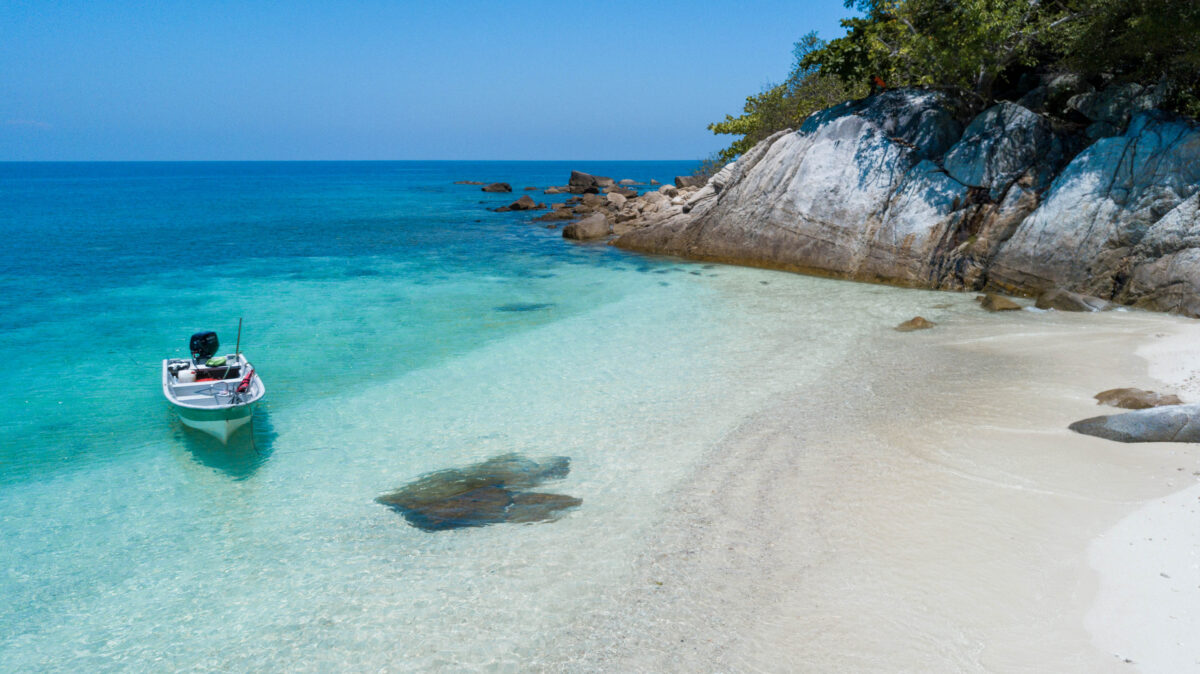
Photo by © Xavier Lorenzo | Dreamstime.com Rawa Island Beach, Perhentian Islands
Best beach for the bluest water
Several shades of blue intertwine on Rawa Island Beach. It’s the bright turquoise of the sandy shore, the shimmering azure of the coral reef, and the cyan of the deeper sea. This remote corner of Johor state is a visual feast and a one-of-a-kind boat trip. Rawa is also a snorkeling hotspot. Sadly, the monsoon destroyed most of the corals, but you can still marvel at the rich underwater world with snorkeling gear on. Reef sharks, parrotfish, snappers, bluespotted stingrays, clownfish—that’s what you’re up for.
The Rawa Island is an ultimate escape with no roads and pure bliss. You can stay at Alang’s Rawa Resort and Rawa Island Resort, the only two accommodation options, offering waterfront bungalows. There are direct ferries to Rawa Island from Mersing Jetty on the mainland.
Emerald Bay, Pangkor Laut
Best resort beach
Emerald Bay is a private beach of the five-star Pangkor Laut Resort, a mesmerising complex of luxurious villas set above the blue water. You can only reach this stretch by staying at the resort. If you’re contemplating a full immersion in the jungle, this hotel is among the best in Malaysia for an upscale retreat. Occupying the whole private Pangkor Laut island, the resort includes a lush rainforest, a large spa center and several superb restaurants.
Emerald Bay is a sandy, paradise-looking stretch on the private island’s west coast. The shallow water access makes it safe for families with kids. Great snorkeling awaits you along the rocky sides. It’s completely surrounded by the jungle, giving you that feeling of total escape.
Redang Long Beach, Redang
Best for white sands and crystal-clear waters
Long Beach on Redang island is among the most photogenic beaches in Malaysia. You’ll have the whitest of sands, hugged by the transparent water. A rocky islet divides the stretch into two parts, offering amazing snorkeling. You can spend hours exploring the corals and meeting the variety of fish (including unicornfish and parrotfish). There’s also a so-called Shark Point (or Tanjung Tengah), a spot at the center of the beach, where you can snorkel with baby sharks.
Redang is a popular resort destination, and Long Beach is where you find the largest concentration of accommodation for all budgets. For turtle encounters, head to Turtle’s Bay (also known as Teluk Dalam). It’s a gorgeous beach in the north of the island, where green turtles hatch and swim.
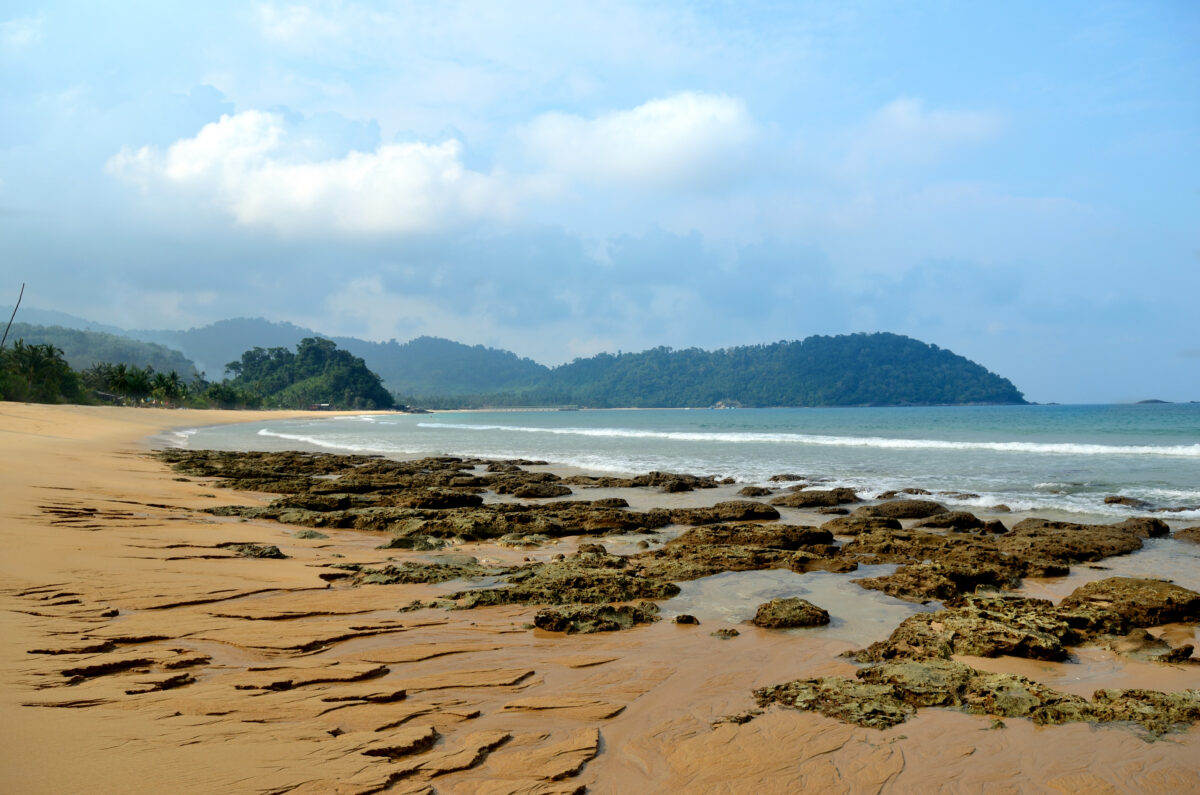
Photo by © Alexander Verkhovtsev | Dreamstime.com Juara Beach, Tioman
Best for monsoon surfing
Many Malaysians know Tioman Island as a duty-free shopping spot. However, this tropical paradise off the coast of Pahang state is also a secret destination for monsoon surfing. Come between November and February to experience the highest waves at this beautiful corner of the South China Sea. The beach still oozes that “paradise lost” charm, offering miles of white sand, low-priced backpacker lodges, relaxed waterside cafes, and a serene holiday atmosphere.
Apart from surfing, you can do diving, snorkeling and kayaking. As the Juara village doesn’t have road access to the rest of the island, the only way to reach it is by boat. A dense jungle hides spectacular waterfalls—Lubuk Teja and Air Terjun Ali—that are accessed by rainforest treks. Juara will work perfectly if you’re craving something undiscovered and wild.
Sandy Skulls Beach, Langkawi
Best for a golden sand retreat
If the tourist frenzy of Cenang is too much for you, Sandy Skulls Beach is an ideal alternative. Located in the north of the island, east of the Datai Bay resort, it’s a secluded stretch with golden sand and translucent sea. There are no restaurants, no vendors, no noisy music. It’s just you and the Andaman Sea magic. And monkeys. Lots of long-tailed macaques call the beach home, so you’re guaranteed to meet them. The primates are known to be naughty and regularly wreak havoc by stealing plastic bottles and food items from the bags of swimming tourists. Make sure to close your bags and not interact with the monkeys to avoid confrontation.
The best way to reach Sandy Skulls Beach is by hiring a scooter or a car (there’s parking 100 meters away from the stretch). You can also call a Grab (the Uber analog in Langkawi) to get there from major island tourist centers.
Batu Ferringhi, Penang
Best for dining options and luxurious resorts
Penang’s most vibrant beach town isn’t the place to seek calm and solitude. Batu Ferringhi is where the action’s at. Five-star resorts like Shangri-La and Hard Rock Hotel flank the miles of sandy-white shore. There are amusement parks, shopping malls, bars, and watersports rentals.
Batu Feringghi is also famous for its night market, where you can try the best Malaysian street food, such as roti canai (traditional flatbread), char kway teow (Peranakan stir-fried noodles with seafood), assam laksa (sweet and sour thick noodle soup with fish) and, of course, the iconic nasi lemak (coconut rice with sambal).
If such a diverse tourist proposition speaks to you, Batu Ferringhi is the place to be in multicultural Penang. For a more serene experience, visit Moonlight Bay, a charming sandy stretch a few minutes’ drive from the town.
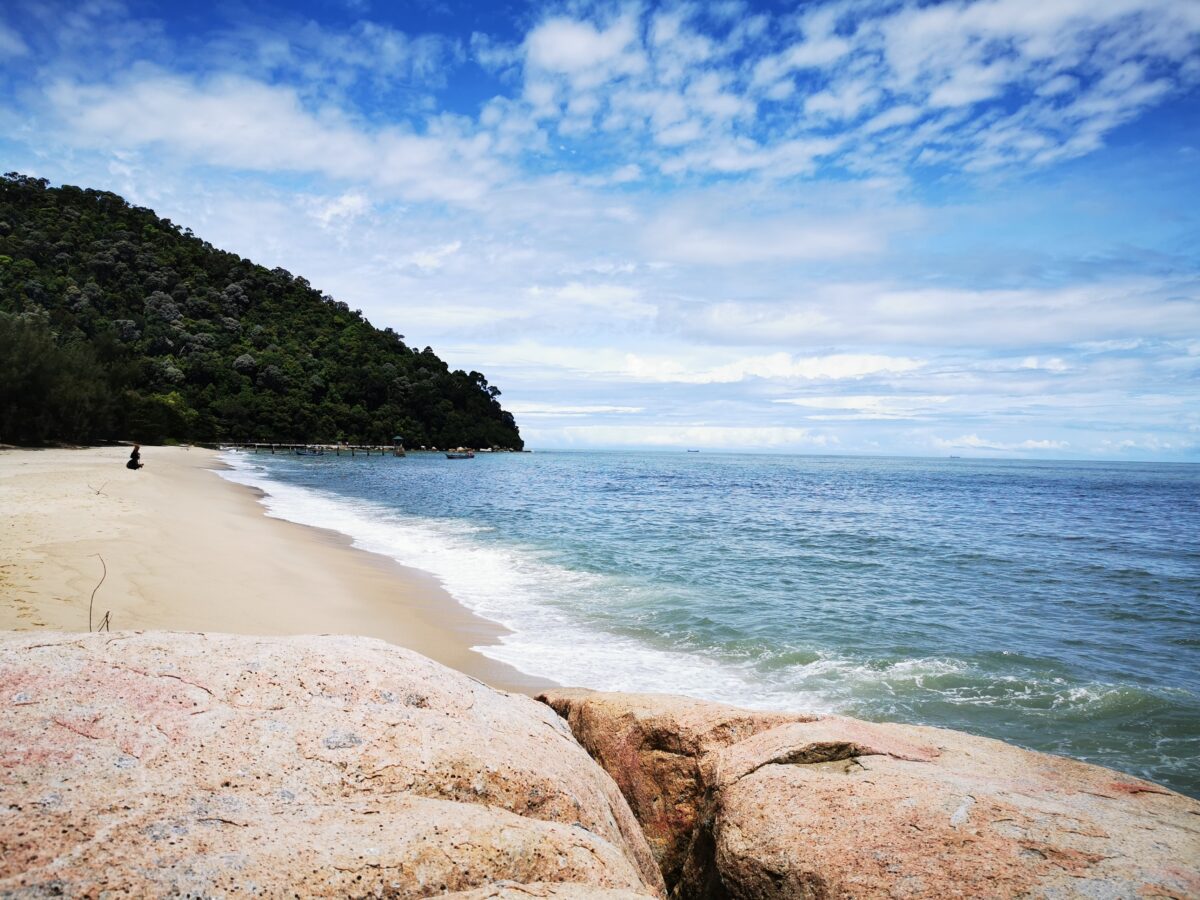
Photo by © Farhanahsaedin | Dreamstime.com Keracut Beach
Best for the untouched nature
Visiting Keracut Beach is a relief after the skyscraper-filled Georgetown. This stretch on the west coast of Penang is one of the few spots on the island that actually feel wild. Also, it’s about the journey here. First, you arrive at the National Park entrance and pay the fee (12 USD or 50 Malaysian rupees). Then, it’s the 1.5-hour hike through the thick jungle. Finally reaching the white sands of Keracut makes you proud as if you’ve accomplished something special.
The beach is home to Pantai Kerachut Turtle Conservation Centre, where you can usually see the tiny turtles that are expected to be released into the sea. The best way to return is by arranging a boat that stops at Monkey Beach, another famous national park stretch. April to August is the turtle hatching season, when you will spot the green turtles on the beach.
-
Northern England
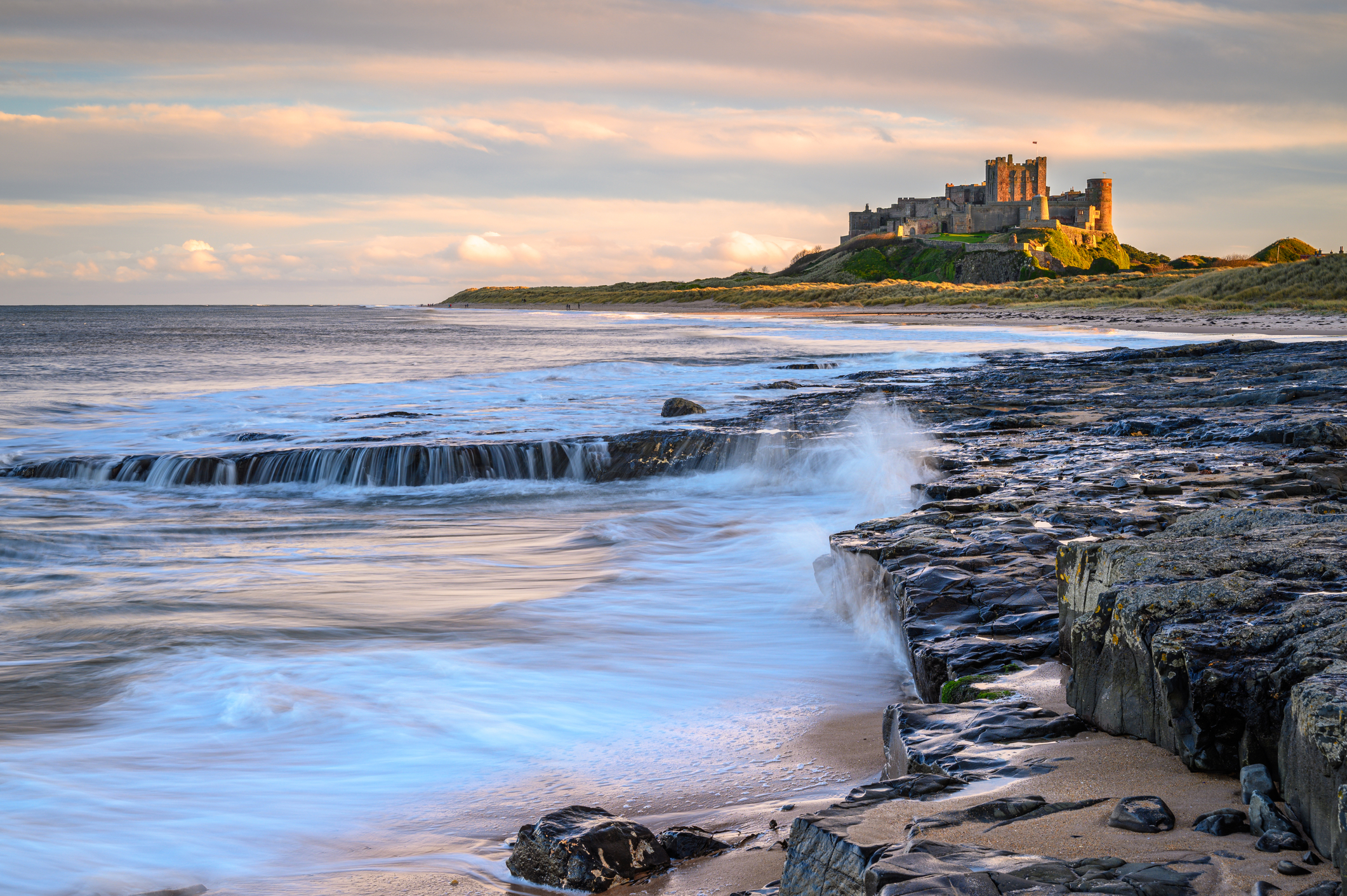
7 Best Beaches in Northern England
Wind-lashed cliffs, wild moorlands & storybook shores
I’m a southerner by birth… and early beach education.
I grew up believing that a good beach meant gentle heat, predictable sand, and the faint promise of an ice cream nearby. Northern England didn’t feature in that picture at all.
Then I moved north and stayed for four years. I dated northerners, which meant weekend plans were rarely optional and often involved long drives, flasks of tea, and the phrase, “You’ll love this one, just wait.”
They were right.
What I found were beaches that felt vast and spectacular. Places where the sand stretches so far it resets your sense of scale, where castles, cliffs, and dunes do more of the talking than sun loungers ever could.
These aren’t beaches designed for ticking off between sightseeing stops. They’re places to walk, think, breathe, and come back to again and again in different weather.
I’ve seen northern beaches in blazing sun, sideways rain, and mist so thick it erased the horizon. Every version worked. These are the best beaches in northern England, shaped by time, tide and mood, and the ones that completely changed how I think about what makes a beach truly great.
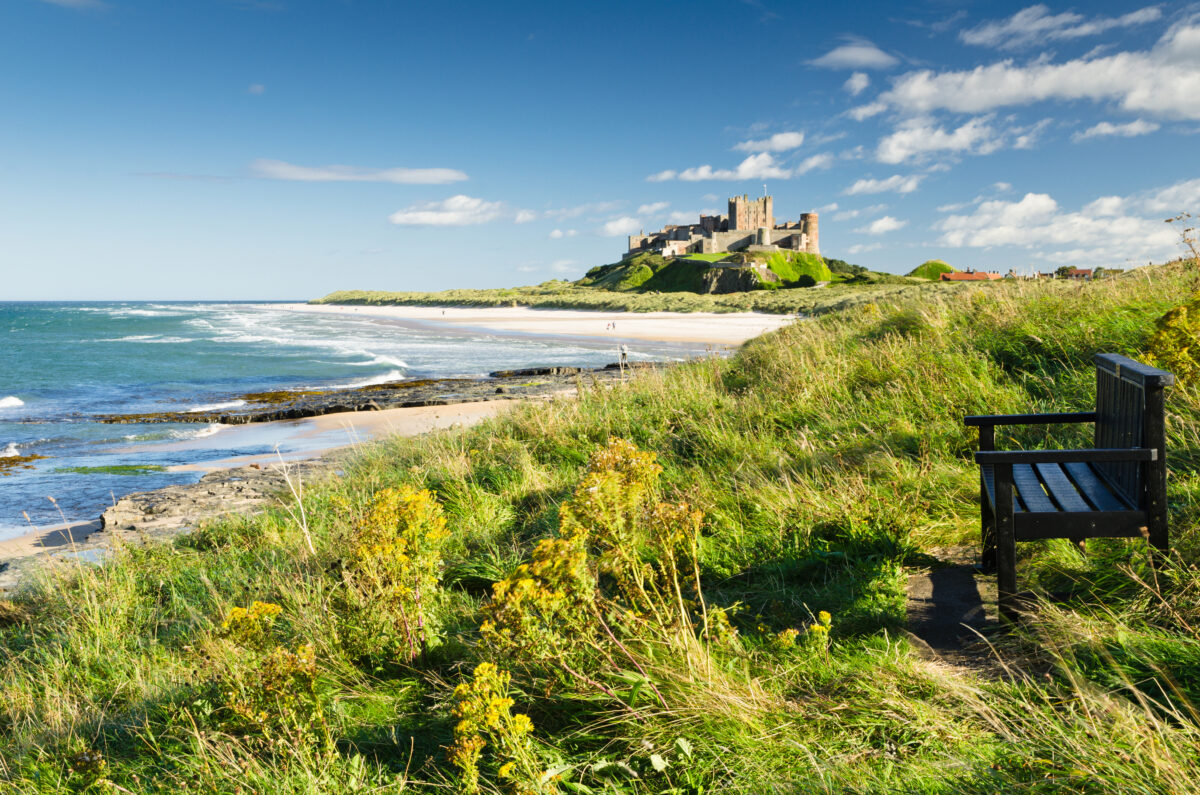
Photo by © David Head | Dreamstime.com Bamburgh Beach, Northumberland
There’s a reason Bamburgh Beach is the beach people mention first, and usually with a slightly reverent tone. The first time I went, I remember stopping mid-walk just to take it all in. Miles of pale sand, a huge open sky, and Bamburgh Castle rising up behind it all like something out of a film set.
What makes this beach so special is the sense of scale. Even on a warm summer day, it never feels busy. You can walk for ages without passing another person, especially if you head away from the main access points. At low tide, the beach feels almost endless, the sand firm and perfect for long, aimless walks with the sound of the sea rolling in beside you.
I’ve been here in bright sunshine and in blustery, dramatic weather, and both versions are equally compelling. It’s not a beach that demands you sit still. It invites movement. Walking, watching the light change, turning back just one more time to look at the castle before heading home.
If you’re visiting northern England for the first time and want a beach that immediately explains why people love this coastline so much, Bamburgh is it.
Embleton Bay, Northumberland
Just down the coast from Bamburgh, Embleton Bay offers the same sense of drama with a little less attention. This is where I go when I want the Northumberland coastline at its most peaceful, without sacrificing any of the beauty.
The beach is wide and open, with soft sand underfoot and the ruined silhouette of Dunstanburgh Castle sitting quietly in the distance. It’s less immediately theatrical than Bamburgh, but that’s part of the appeal. The atmosphere here feels calmer, more introspective, as if the beach is content to reveal itself slowly.
I love walking this stretch at a steady pace, letting the landscape unfold rather than rushing towards a focal point. On quieter days, it can feel like you have the whole place to yourself, just you, the sound of the waves, and the wind moving through the grass-covered dunes.
Embleton Bay is ideal if you’ve already seen the headline beaches and want something a little more understated. It’s restorative rather than impressive, the kind of place that stays with you long after you’ve left.
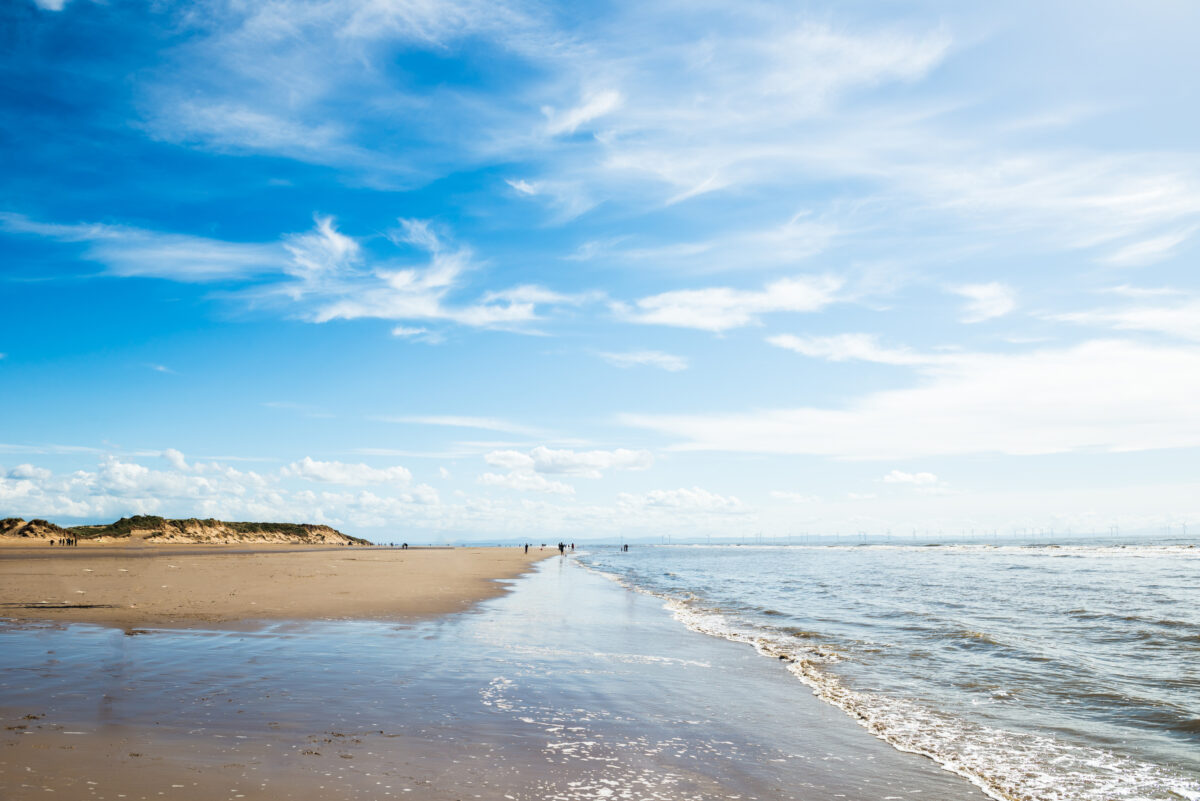
Photo by © Anna Denisova | Dreamstime.com Formby Beach, Merseyside
Formby Beach feels completely different to anything else on this list, which is exactly why it left such a strong impression on me.
Instead of cliffs or castles, this stretch of coast is defined by rolling sand dunes and pinewoods that run right up to the shore, creating a landscape that feels soft, shifting, and quietly immersive.
The approach to the beach is part of the experience. You wind through woodland paths before the dunes open up and the sea suddenly appears. The beach itself is wide and flat, especially at low tide, with huge skies and constantly changing light. It never quite looks the same twice.
Formby is also a protected nature reserve and home to one of the UK’s last populations of red squirrels.
Even if you don’t spot one, there’s a strong sense of being in a cared-for, living landscape rather than a traditional seaside spot. I like coming early in the morning or later in the day, when the dunes catch the light and the beach feels expansive and calm. It’s an easy day trip, but one that feels surprisingly transportive.
Saltburn-by-the-Sea, North Yorkshire
Saltburn-by-the-Sea was one of the beaches that really challenged my southern assumptions. Yes, it has a pier and a proud Victorian backbone, but it also has a creative, slightly rugged energy that keeps it feeling current rather than nostalgic.
The beach itself is long, sandy, and backed by cliffs, with a broad horizon that makes even short walks feel refreshing. There’s a well-established surf scene here, and watching surfers bobbing in the water adds movement and rhythm to the view, even on colder days. The pier stretching out into the sea gives the whole place a sense of balance and scale.
What I love most about Saltburn is how seamlessly the town and beach work together. You can spend the morning walking along the shore, ride the historic cliff tramway back up, then settle into one of the cafés for something warm. It’s a place that feels lived-in rather than polished, which makes it all the more appealing.
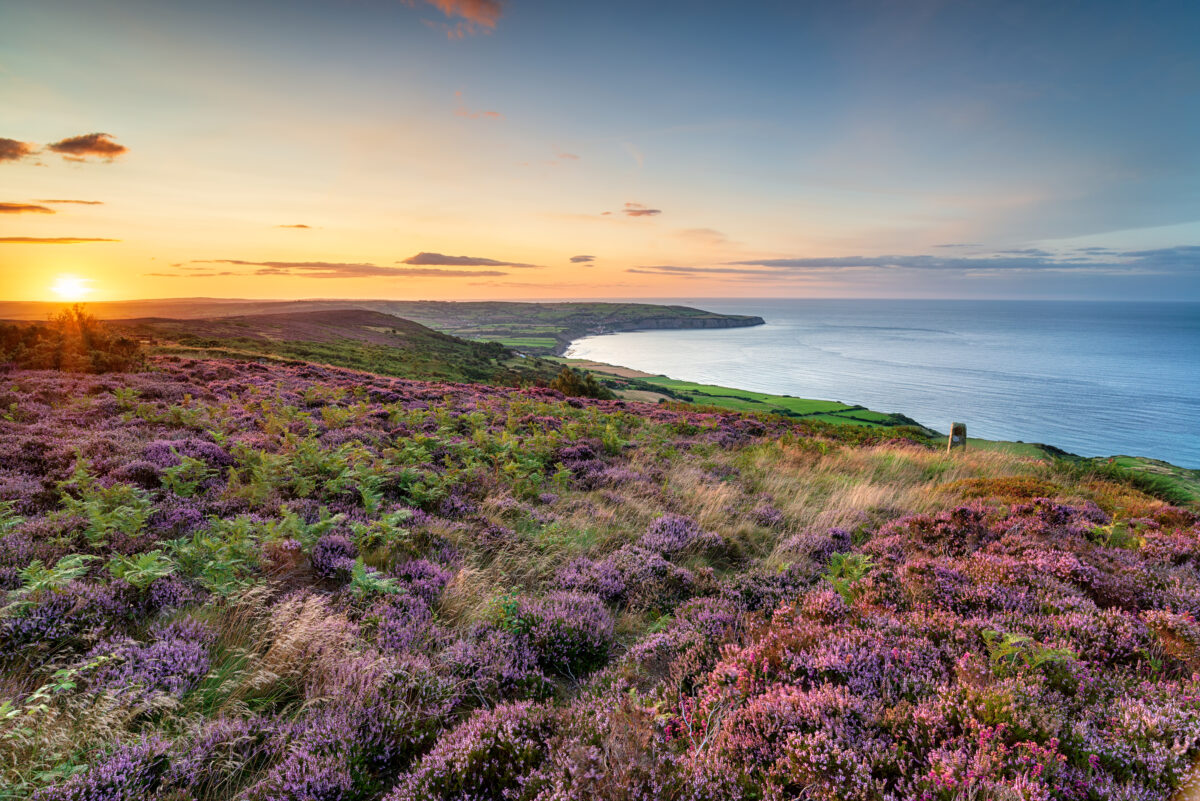
Photo by © Helen Hotson | Dreamstime.com Robin Hood’s Bay, North Yorkshire
The first time I went to Robin Hood’s Bay, I remember thinking it felt like a place you stumble upon rather than arrive at. The village spills steeply down towards the sea, with narrow streets and tightly packed cottages that suddenly open out onto a broad, textured shoreline.
This is a beach that completely changes with the tide. At low tide, the sea pulls far back, revealing rock pools, rippled sand, and long stretches perfect for wandering. It’s a brilliant spot for fossil hunting or simply moving slowly, stopping often to look down rather than out. At high tide, the beach feels more compact and dramatic, with waves pushing right up towards the village edge.
What makes Robin Hood’s Bay so memorable is its sense of character. It doesn’t try to be easy or polished. You earn your time here by walking down, and then back up again, and that effort somehow deepens the experience. I always linger longer than planned, usually finishing with a slow walk back through the village as the light softens and the sea changes colour.
St Bees Beach, Cumbria
St Bees Beach sits at the edge of the Lake District and feels shaped by both sea and land. It’s a quieter, more introspective beach than many others on this list, defined by red sandstone cliffs and a wide, open stretch of pebbles and sand.
This isn’t a beach I come to with a plan. It’s a place for slowing down, for sitting and watching the light shift across the water, for long pauses rather than long walks. The atmosphere is calm and almost meditative, especially outside of peak summer when the beach can feel entirely your own.
St Bees is also known as the starting or finishing point of the Coast to Coast walk, and there’s a subtle sense of transition here, of journeys beginning or ending at the water’s edge. I love it most in the evening, when the cliffs glow warm in the low sun and the sea feels endless.
It’s understated, powerful and moving, the kind of beach that doesn’t shout for attention but stays with you long after you’ve left.
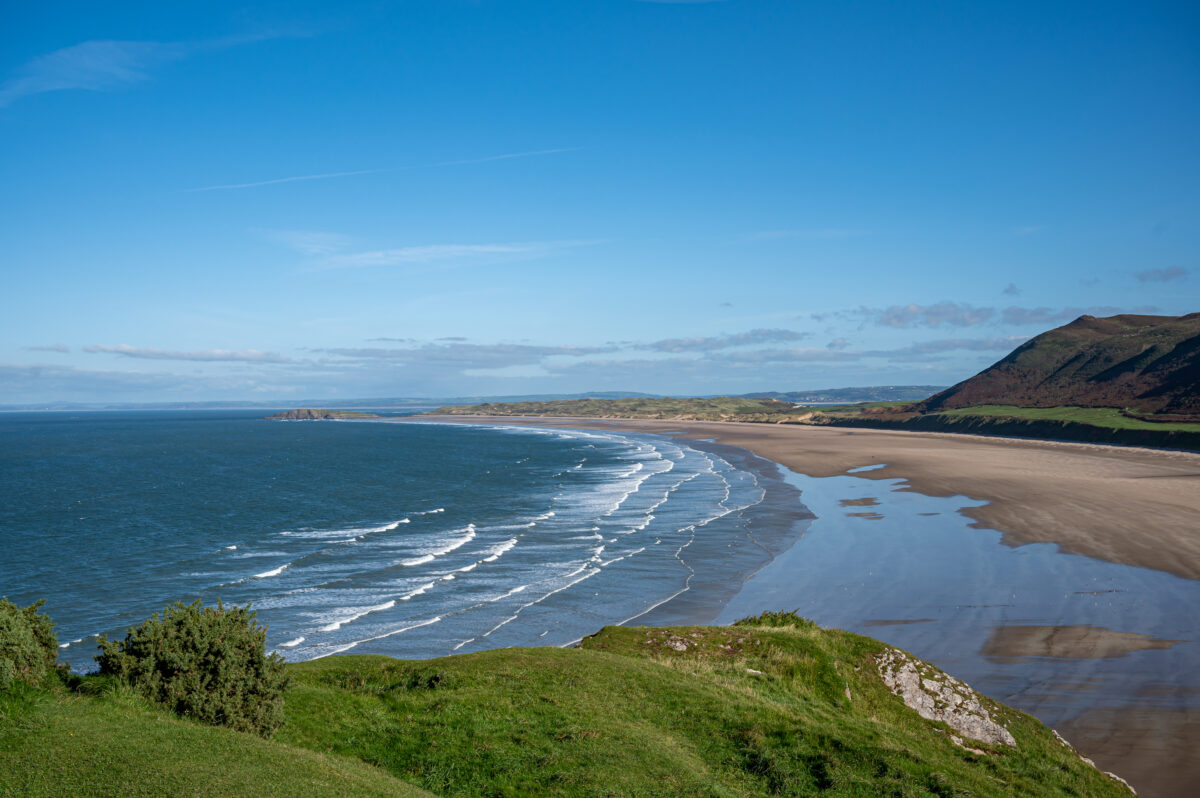
Photo by © Anders93 | Dreamstime.com Rhossili Bay, Gower Peninsula
If there’s one beach on this list that recalibrates what you think a beach can be, it’s Rhossili Bay. The first time I stood at the viewpoint and looked down over the curve of sand, I remember feeling momentarily quieted by it. The scale is immense.
The bay stretches on for miles, framed by cliffs and open Atlantic skies, and it feels powerful in a way that’s hard to put into words.
This is not a beach for popping down with a towel and a quick dip. It’s a beach for walking, for letting the weather do its thing, for watching the tide pull back and reveal details you didn’t notice on the way in. At low tide, the remains of the Helvetia shipwreck emerge from the sand, a reminder of how raw and changeable this coastline really is.
Wind is almost always part of the experience here, but it only adds to the drama. I’ve been on calm, sunlit days and on blustery ones where the air feels electric, and both felt equally right. Rhossili doesn’t ask you to relax. It asks you to pay attention. And once you’ve been, it has a habit of ruining other beaches for you.
What to Know Before Visiting Northern Beaches
A quick caveat: Northern beaches reward a slightly different mindset to their southern counterparts!
Timing matters, but flexibility matters more. Late May through September offers the best balance of light, warmth, and access, although some of my favourite days have been in early spring and early autumn when the beaches feel almost entirely empty. Shoulder season is where the magic often lives.
Tides play a huge role here. At low tide, beaches can stretch seemingly forever, revealing sandbars, rock pools, and long walking routes that disappear again a few hours later. It’s always worth checking tide times before you go, especially if you’re planning a long walk or visiting a more rugged stretch of coast.
Wind is part of the experience rather than something to fight against. A good jacket, layers, and sturdy shoes will get you far. The water is cold year-round, but there’s a strong wild swimming culture if you’re prepared. Facilities vary wildly too. Some beaches come with cafés and bathrooms, others come with nothing but sky and sea. That contrast is exactly the point.
-
Cornwall and Devon, UK
8 Best Beaches in Cornwall and Devon, UK
Wild Atlantic cliffs, hidden coves & storybook seaside villages
I grew up going to Cornwall and Devon almost every summer. Long car journeys down winding roads, sand stuck to sun cream, bodyboards rattling around in the boot.
Those holidays set the benchmark for what I still think a good beach should be. Space to run, waves with a bit of power behind them, and scenery that makes you pause even when you’ve seen it before.
As a kid, I didn’t have the language for it, but Cornwall and Devon felt different to other places we visited.
The beaches were bigger, wilder and somehow more alive. As an adult, returning again and again, that feeling still holds. These are beaches that need curiosity and time. Ones that look completely different depending on the tide, the light, and the weather rolling in off the Atlantic.
Cornwall and Devon are often talked about in the same breath, but they have distinct personalities.
Cornwall leans dramatic and elemental, with coves and cliffs that steal the show. Devon feels broader and more open, with beaches made for walking, swimming and long, unhurried days.
This list isn’t about ticking off famous names. It’s about the beaches I still want to spend more time on, shaped by years of returning to the same coastline and seeing it anew each time.
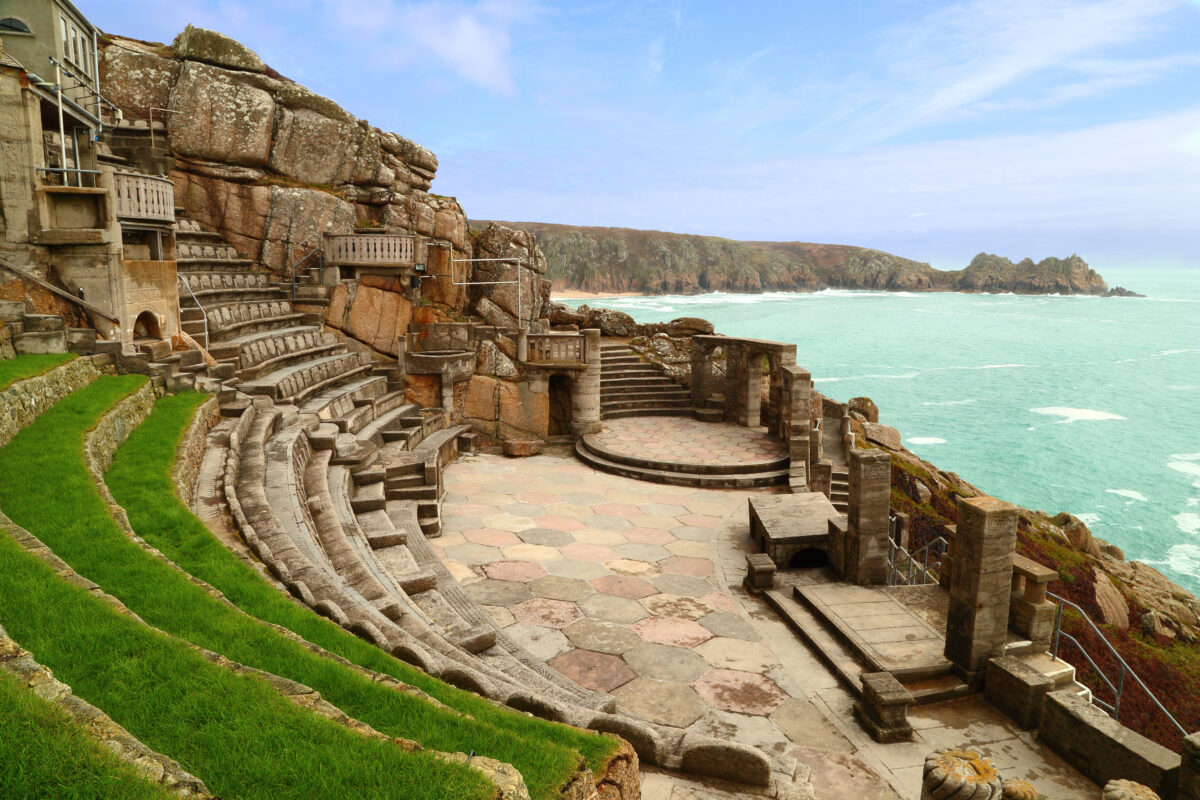
Photo by © Hannah6d | Dreamstime.com Porthcurno Beach, Cornwall
There are days at Porthcurno Beach when it barely feels like the UK at all. Sheltered by steep granite cliffs and washed by unusually clear water, this small cove regularly surprises people with how bright and almost tropical it looks, especially when the sun is out and the sea is calm.
I’ve been coming here since I was young, and it still stops me in my tracks. The sand is soft and pale, the water shifts between turquoise and deep blue, and the setting feels intimate without ever feeling cramped. On still days, swimming here is a real pleasure, with gentler conditions than many of Cornwall’s more exposed beaches.
Part of what makes Porthcurno so special is what surrounds it. The famous Minack Theatre sits dramatically above the beach, and even a short walk along the coastal path gives you views that make the effort of getting here worthwhile. Access involves a walk down to the sand, which helps keep numbers in check, especially outside peak summer.
Fistral Beach, Cornwall
Fistral Beach is Cornwall at its most confident. It’s bold, windswept, and unapologetically surf-led, with a sense of movement that you feel the moment you step onto the sand. Even if you never plan to get in the water, it’s a brilliant beach to simply be around.
The beach itself is long and open, backed by low cliffs and wide enough that it never feels overwhelmed, even on busy summer days.
The waves roll in steadily, and watching surfers paddle out and wipe out in equal measure becomes part of the rhythm of the place. I often walk the length of the beach first, letting the wind do its thing, before settling somewhere with a view and a coffee.
What I appreciate most about Fistral is that it caters to different energies at once. There’s a lively social scene near the main access points, but plenty of quieter space if you head further along the sand. It feels modern, youthful and active, a beach that reflects Cornwall’s surf culture without needing to explain itself.
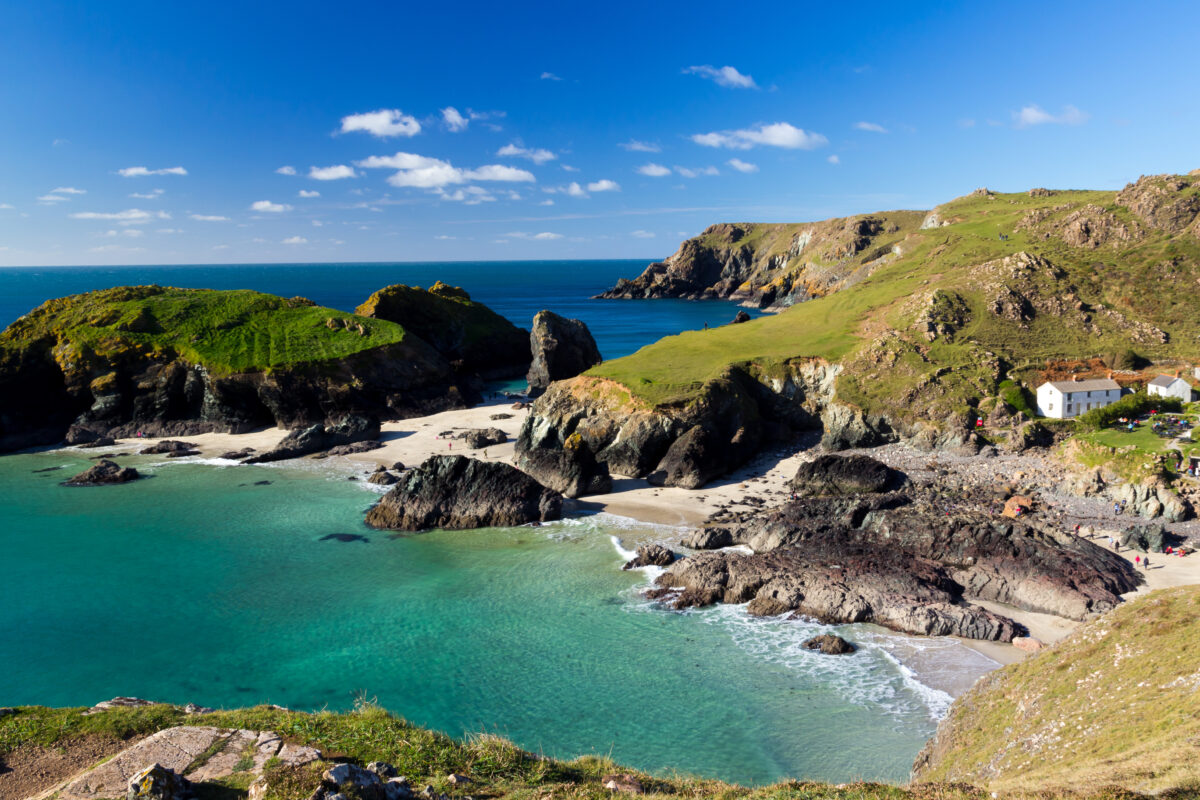
Photo by © Ian Woolcock | Dreamstime.com Kynance Cove, Cornwall
If Porthcurno feels serene, Kynance Cove feels almost unreal. Set on the Lizard Peninsula, this beach is defined by its serpentine rock formations, sea stacks, and vivid turquoise pools that appear and disappear with the tide.
Kynance is at its best at low tide, when the sea pulls back to reveal an intricate landscape of sandbars, rock pools, and hidden corners. It’s a beach that rewards curiosity. I find myself constantly stopping, climbing carefully over rocks and discovering new views that look completely different from one hour to the next.
Getting down to the beach involves a walk, and tide timing is essential, but that effort is part of what makes the experience feel special. On calm days, the water can be surprisingly inviting for a dip, though this is more about exploration than swimming laps.
Kynance Cove doesn’t feel designed for comfort or convenience. It feels elemental and alive, shaped by forces far bigger than you. Every visit feels slightly different, which is exactly why it leaves such a strong impression long after you’ve gone.
Polzeath Beach, Cornwall
Polzeath Beach is the kind of beach that makes everything feel simple. Wide, sandy, and gently sloping, it’s one of those places where days seem to organise themselves. You arrive, find a spot, and suddenly hours have passed without much effort at all.
This is a beach I associate with long, happy afternoons. The waves are usually forgiving, which makes it ideal for beginner surfers and bodyboarders, and the atmosphere is relaxed and sociable rather than showy. There’s a steady hum of activity, surf lessons, families coming and going, people wandering back up to the village for snacks or ice cream.
What really sets Polzeath apart is how easy it is to spend the whole day here. Cafés, surf shops, and casual places to eat sit just back from the sand, so you’re never far from what you need. It feels light-hearted and familiar, a beach that doesn’t ask for much planning and offers you exactly the kind of uncomplicated seaside day you were hoping for.
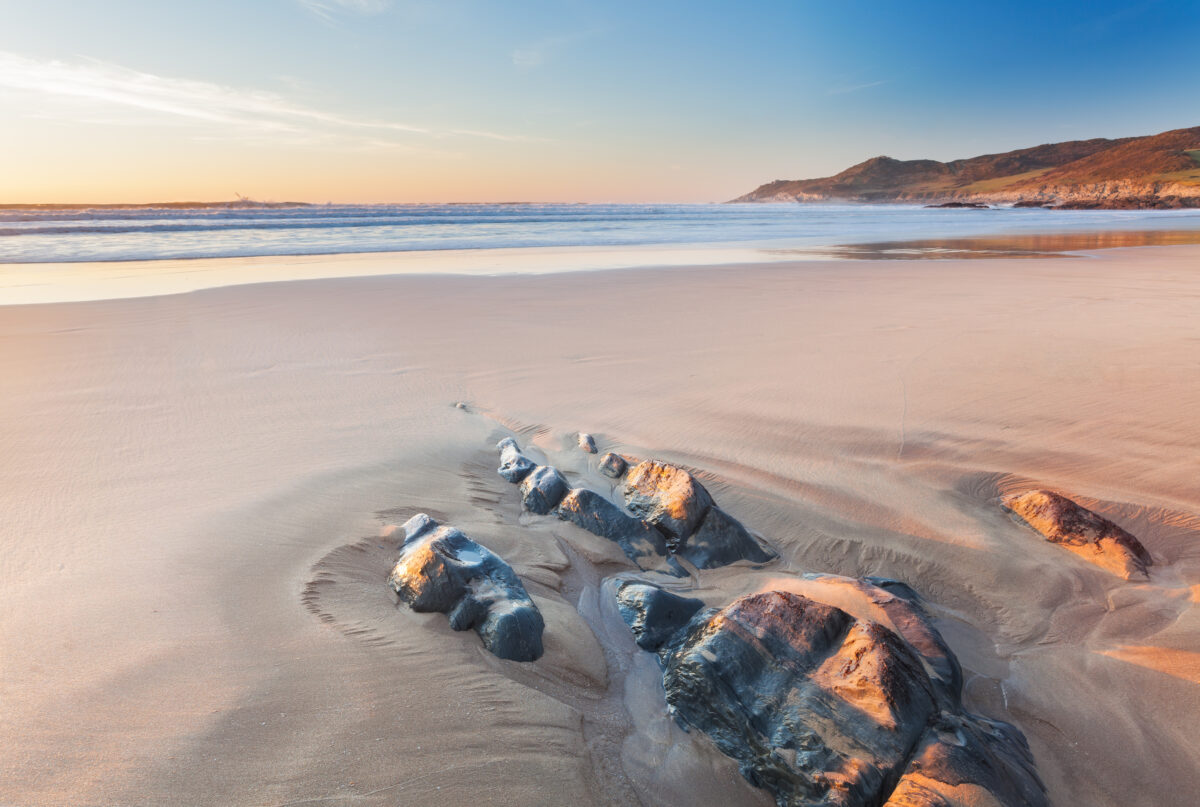
Photo by © Ian Woolcock | Dreamstime.com Woolacombe Beach, Devon
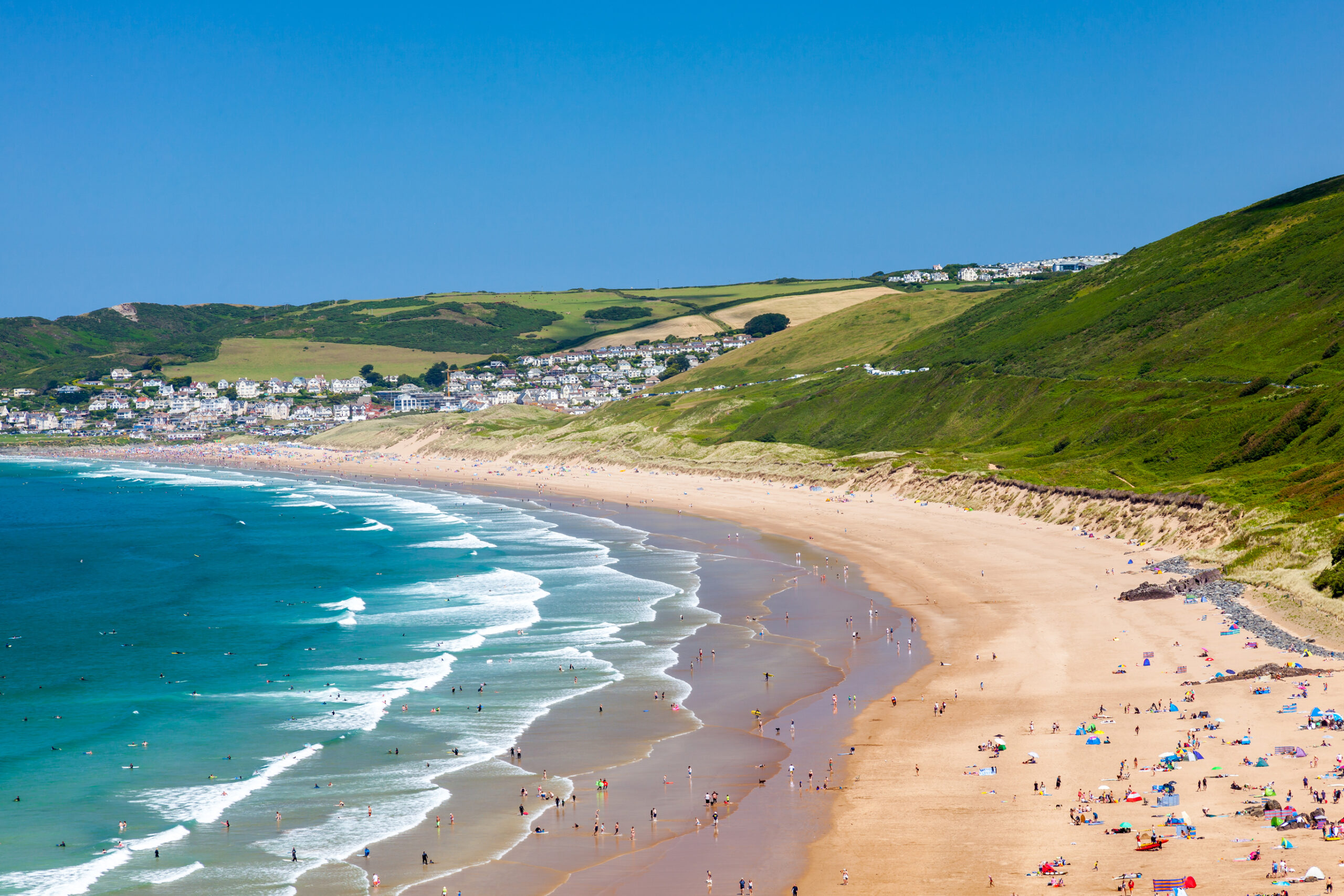
If there’s one beach that captures Devon’s sense of space, it’s Woolacombe Beach. Stretching for nearly three miles, this vast sweep of golden sand feels invigorating the moment you step onto it. Even on busy days, there’s always room to move, breathe, and find your own patch.
Woolacombe is a beach made for walking. I love starting at one end and heading off, letting the sound of the waves and the openness of the landscape set the pace. Surfers dot the shoreline, but there’s just as much space for swimmers, walkers, and anyone who wants to sit and watch the sky change.
But what I appreciate most here is the balance. It has the energy of a surf beach without feeling intense, and the scale of a wild coastline without being remote.
The surrounding hills and headlands give it shape, while the open horizon keeps it feeling fresh and expansive. Woolacombe suits long days, shifting weather, and the kind of beach time that feels restorative rather than rushed.
Blackpool Sands, Devon
Blackpool Sands feels a little different to many of Devon’s bigger, wilder beaches, and that’s exactly its appeal. Tucked into a sheltered bay near Dartmouth, this crescent of fine shingle is known for its calm water and gently polished feel.
Because it’s protected from the full force of the Atlantic, swimming here is often easier and more inviting than on exposed surf beaches. On warm days, the water can feel almost lake-like, especially in the morning before the breeze picks up. I tend to come here when I want a slower, more contained beach day, one that’s less about walking for miles and more about settling in.
The facilities are excellent without feeling intrusive, with a café, restrooms, and the option to hire sun loungers if that’s your thing. Blackpool Sands works particularly well outside peak summer, when the light softens and the beach feels subtly refined. It’s a reminder that not all great beaches need to be wild to be memorable.
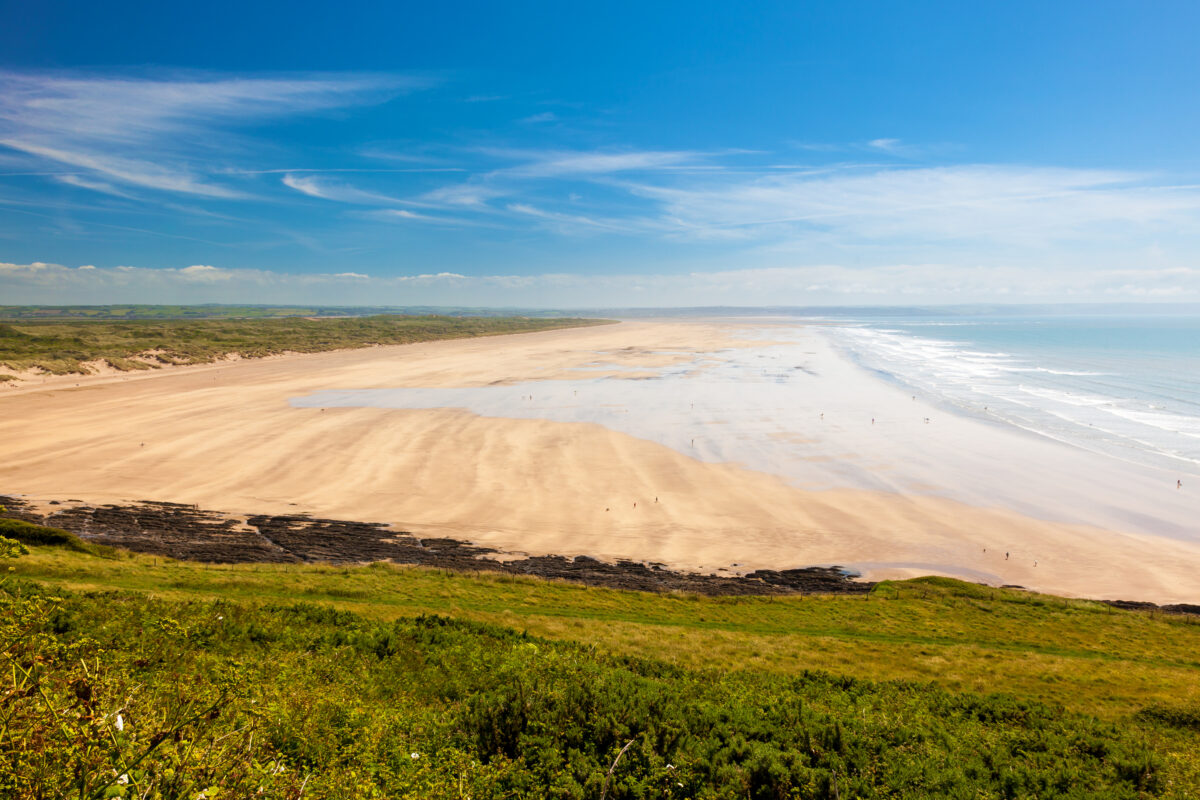
Photo by © Ian Woolcock | Dreamstime.com Saunton Sands, Devon
If Woolacombe is expansive, Saunton Sands is untamed. This huge stretch of sand runs alongside Braunton Burrows, one of the largest dune systems in the UK, and feels shaped more by weather and tide than by people.
It’s perfect for long walks, energetic swims, and watching the Atlantic roll in with real force. The wind is often part of the experience, tugging at clothes and sending sand skittering across the surface, but that only adds to the sense of drama. I rarely come here to sit still.
At low tide, the beach opens up into what feels like an entirely new landscape, with reflections on wet sand and endless space in every direction. It’s not a beach for neat plans or quiet lounging. It’s for embracing the elements, letting the scale of the place reset your perspective, and heading home a little tired and very content.
Hope Cove, Devon
Hope Cove is one of those places that instantly slows you down. Tucked into the South Devon coast near Salcombe, it’s made up of two small sandy beaches backed by low cliffs and a village that feels gently, unapologetically seaside.
What I enjoy most about Hope Cove is how protected it feels. The water is often calmer than on the exposed Atlantic-facing beaches, which makes it a brilliant spot for swimming, especially on warm summer mornings when the sea is glassy and clear. It’s the kind of place where you can ease into the water rather than brace yourself for it.
The scale here is more intimate. This isn’t a beach for endless walking, but for settling in, swimming, drying off, and doing it all again. There are pubs and cafés just above the sand, so lunch naturally becomes part of the day rather than a reason to leave.
Hope Cove feels gentle and inviting, a reminder that Devon does calm, classic beach days just as well as it does wild, wind-swept drama.
What to Know Before Visiting Beaches in Cornwall and Devon
Beaches in Cornwall and Devon are shaped as much by the Atlantic as they are by the seasons, and a little planning goes a long way.
Late May through September is the classic window, but June and September are my personal sweet spots. The water has warmed slightly, the days are long, and the crowds thin out just enough to make everything feel easier.
Tides matter here more than many first-time visitors expect. Some of the most beautiful coves all but disappear at high tide, while low tide can reveal vast expanses of sand, rock pools, and walkable shoreline. I always check tide times before choosing a beach for the day.
Access can take effort too. Narrow lanes, cliff paths, and limited parking are all part of the experience, especially in Cornwall. Surf culture is strong across both counties, so pay attention to flags and local advice if you’re swimming.
Facilities vary widely. Some beaches come with cafés, surf schools, and restrooms, while others offer nothing but sea, sky, and wind. Knowing which you’re heading to helps set expectations and lets the day unfold exactly as it should.
-
Crete
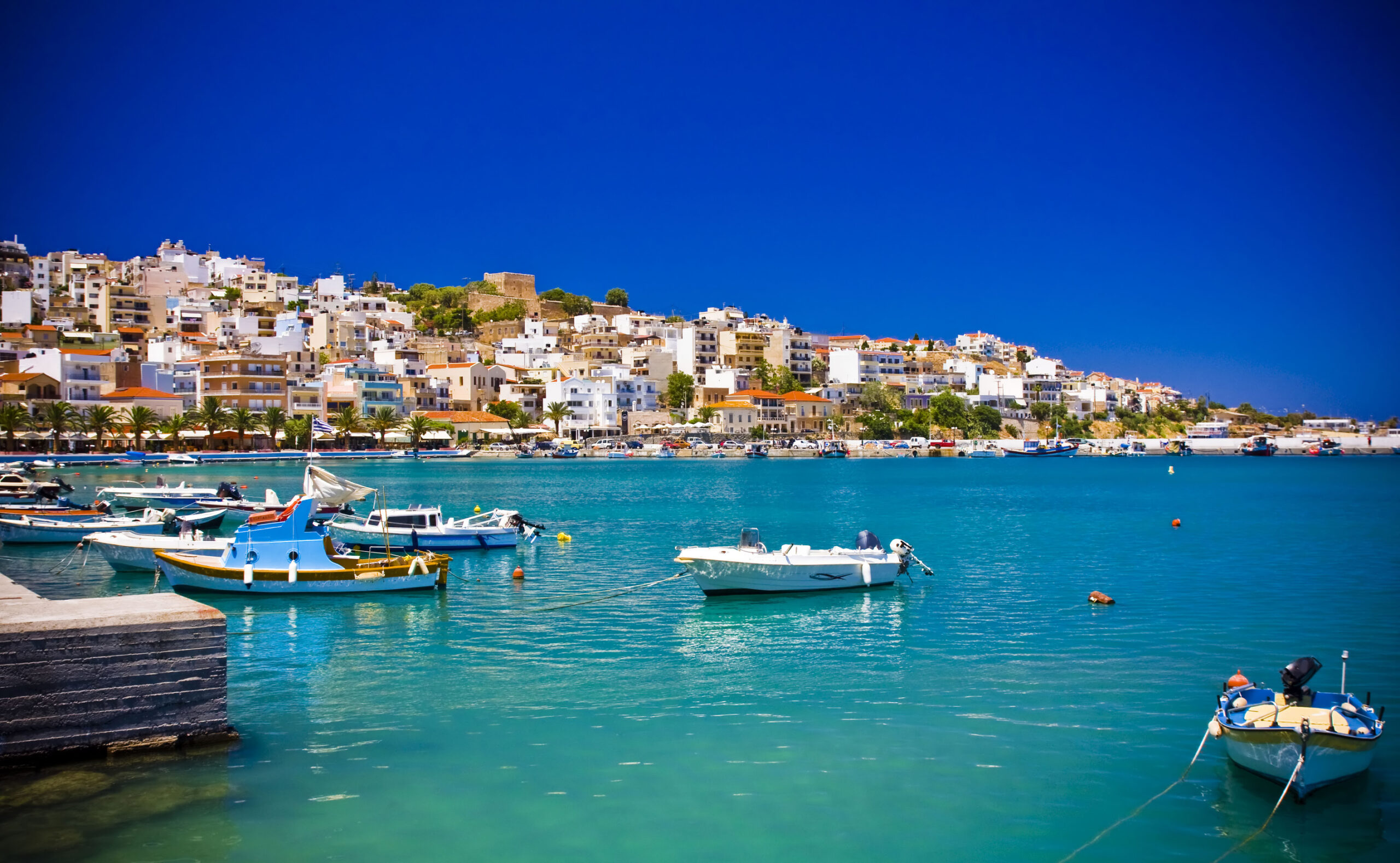
Crete is unique. The largest island in Greece proudly preserves its local traditions and ancient Minoan heritage. Cretan food is an example of the balanced Mediterranean diet. As for the beaches, you will be spoilt for choice here. 650 miles of the coastline gift travelers to Crete with many heavenly spots to swim, snorkel, and sunbathe. See the pink sands in Elafonisi, relax next to hundreds of palm trees in Vai, gaze at the stunning mountainous panoramas at Balos, and ride the powerful winds at Falasarna. There’s always a new beach to discover on Crete. Pebbles, sand, rocks or gravel—the island has got you covered. I always feel at home on Crete, it’s the destination where I know I am welcomed. Here are the best beaches to visit on the island.
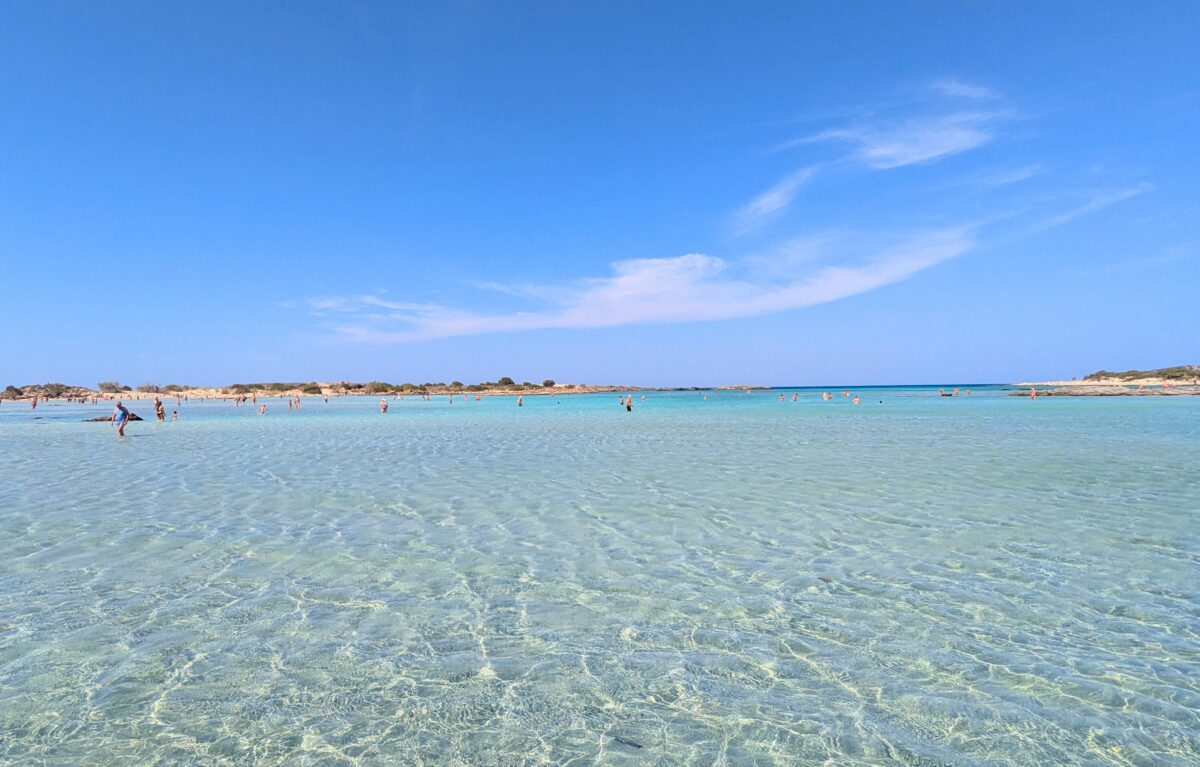
Photo courtesy of Pavlo Fedykovych Elafonisi
Best for shallow waters and pink sands
The sprawling Elafonisi may be one of the most awe-inspiring beaches in Europe. It’s definitely Crete’s most beautiful. Located in the remote southwestern corner of the island, it’s a wonderful spot with pink sands, transparent shallow waters, and dramatic mountains behind. The remoteness is a blessing and a curse here. During the summer, the beach gets extremely crowded, putting a strain on the limited facilities. If you’re coming in July or August, it’s best to arrive super early for a calm experience. Shoulder season is when you can admire Elafonisi at its most tranquil and stunning. The beach is also Crete’s best for families with small children—the lagoon is great for wading and playing in shallow water. A nice bonus is the access to the nearby islet of Elafonisi by a sandy isthmus.
Vai
Best for relaxing under the palm trees
Reaching Vai is an experience in itself. The road takes you through the magnificent palm tree grove, which contains thousands of Phoenix theophrasti date palms. Vai is part of Sitia Nature Park, a picturesque coastal area in East Crete. The palm trees give the beach an almost tropical appearance. Most importantly, they provide shade from the often scorching summer sun (a welcoming alternative to mostly barren Cretan beaches). Also, Vai is perfect for families. The golden sand is soft on your feet, and the sea is crystal-clear. A panoramic Palm Beach Vai Restaurant overlooks the bay, providing snacks, drinks, and local dishes. The area closer to the cliffs is good for snorkeling. There’s also a water sports center for jet ski rides, catamaran rental, and flyboarding.
Voulisma
Best for white sand
If you’re looking for those white-sand Caribbean-like bays, Voulisma Beach is that strip on Crete. The water is sapphire-blue, perfect for a swim. Voulisma is indeed among Crete’s most magical bays. That being said, there’s trouble in paradise. During high season, that heavenly corner of 12 km east of Agios Nikolaos gets almost entirely covered with overpriced loungers. This doesn’t decrease its dreamy appearance, but it definitely spoils the mood. However, my advice would be to visit outside of the high season. Late spring and early autumn will give you a more peaceful time on the beach and a chance to embrace its white-sand beauty in full. Right beside Voulisma, reached by the steep hike, is Istro Municipal Beach. It’s a postcard-perfect turquoise cove, where you find a mix of white sand and pebbles.
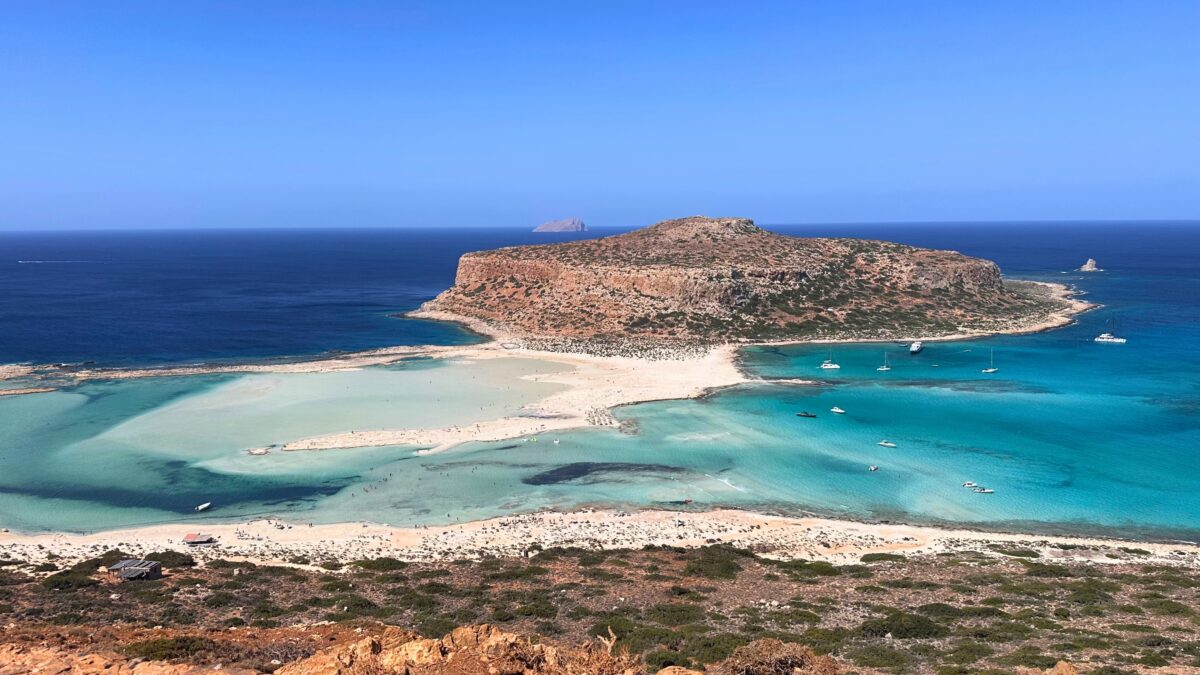
Photo courtesy of Pavlo Fedykovych Balos
Best for breathtaking views and wild nature
If Elafonisi mesmerizes you with its gentle Mediterranean looks, Balos is for jaw-dropping natural panoramas. A gem of the undeveloped northwest coast, this beach is the most famous in Crete. The view of a turquoise lagoon between the rocky Cretan coast and the wall-like Cape Tigani won’t leave you indifferent. Balos is a sandy beach with a tranquil lagoon section and a wavier open sea part. Due to its geography and lack of trees, it gets windy here. Tour boats to Balos depart from Kissamos and Chania. Reaching by land is trickier—there are over 10 miles of dirt road to get to the parking spot. Then, there’s a scenic, but tiring descent to the beach (and then a climb back, when you finish the lounging). Mountain goats are a nice addition to the hiking experience and you will almost certainly meet one or two of these cute Cretan locals. While it gets very crowded, the sheer size of Balos also means that there’s always space to put your towel on.
Falasarna
Best for windsurfing
Falasarna is a vast sandy bay, overlooking the open sea in the northwestern corner of Crete. As in Elafonisi, you’ll find the dreamy pink-colored sand here. Combined with the translucent water, it’s a beautiful sight. Thanks to its exposure to the strong Meltemi winds, Falasarna is also the premier surfing location on the island. It’s not always windy here, but when the waves get bigger, there’s no better place for wind- and kite-surfing. Don’t forget your snorkeling goggles—the more rocky northern section of Falassarni is a top location for underwater exploration. Tavernas and beach bars flank the sands, supplying the beachgoers with grilled seafood and refreshing drinks. You can rent surfing equipment and organize a paragliding jump from the water sports center right on the beach. If you’re into ancient history, the ruins of the 7th-century BC Dorian-founded city-state of Phalassarna are a few miles away.
Preveli
Best for the natural pools and gorge hikes
Preveli is hard to confuse with any other beach. It serves as a gateway to a stunning natural area. An oasis-like palm grove stands above the narrow Megalopotamos River, which flows into the blue Mediterranean waters. Hike upstream to find a spectacular gorge, surrounded by tall cliffs. The palm trees reflect in the calm river waters, creating a beautiful visual effect. And then there are freshwater pools, perfect for cooling off during the summer heat. With this amount of natural attractions, Preveli is among Crete’s best beaches to visit. The surface here is pebbles. The palm trees offer pleasant shade. There’s also a heart-shaped stack near the shoreline, adding to the magical look of this place. You can either park your car next to Ammoudi Beach or at the parking lot near Rousolakos tavern. In both cases, be prepared to follow a steep walk down the cliffs to reach the gorge and the beach.
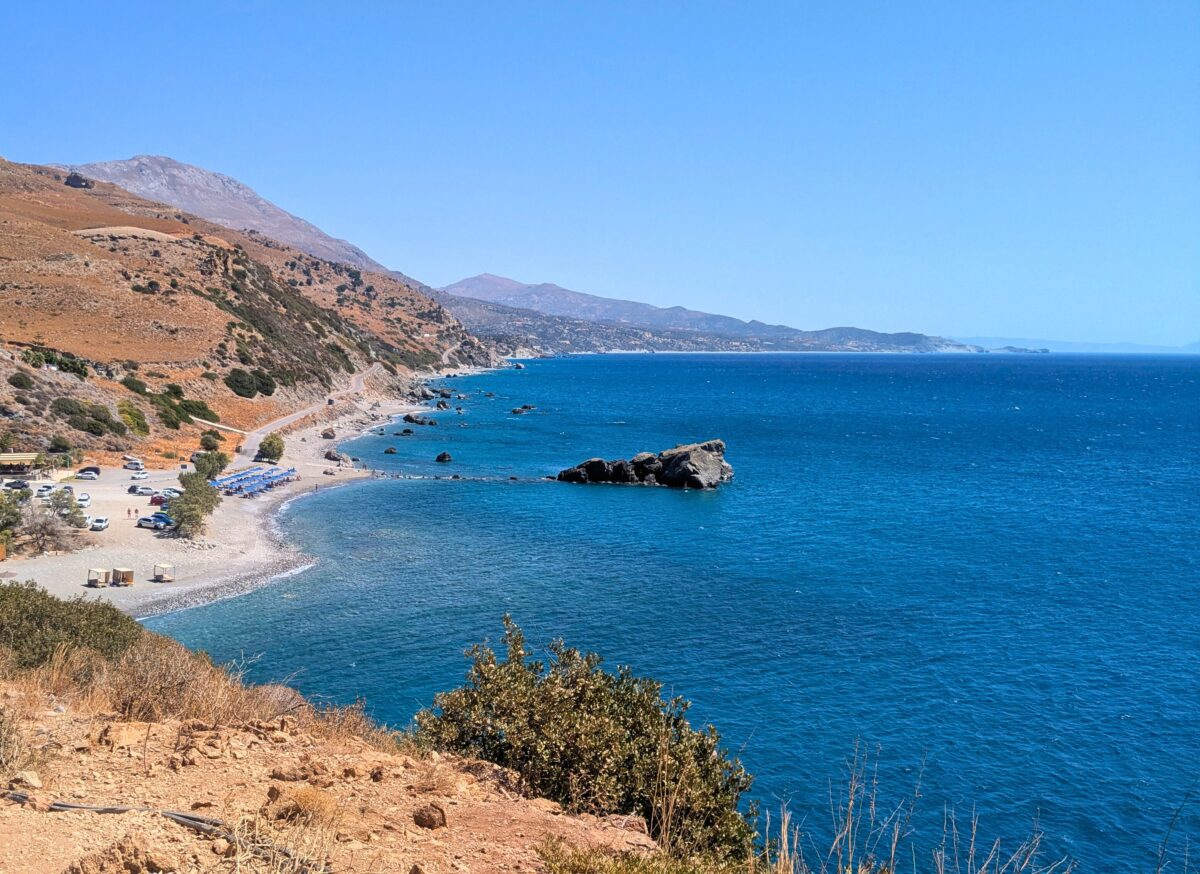
Photo courtesy of Pavlo Fedykovych Ammoudi
Best for a laid-back beach experience
A laid-back neighbor to busy Preveli, Ammoudi is just a good Cretan beach for having a relaxed time by the sea. Go here to escape the crowds and soak in the Mediterranean atmosphere. The beach is alongside the parking lot for the Preveli Beach hiking trail. Ammoudi is mostly composed of pebbles and rocks, so bring the water shoes. You can sample Cretan food at two tavernas nearby. The stones at the shore are nice for snorkeling. Ammoudi works great as a low-key alternative to the crowded island stretches.
Matala
Best for the hippie vibes and whitewashed houses
“And they’re playin’ that scratchy rock and roll, beneath the Matala Moon,” sings Canadian eleven Grammy award winner Joni Mitchell in her folk rock hit “Carey.” Back in the ’60s, the sleepy village of Matala in Crete’s south-west was a popular hippie hangout. The freedom-loving community squatted in the local coastal caves, taking in the sea breeze and the turquoise waters of the picturesque Matala cove. The hippies are long gone, but the laid-back spirit remains in this mesmerizing beach town. Wander the whitewashed streets, explore the labyrinth of limestone caves (dating back to the Neolithic Age), stop for a hearty Cretan meal at one of the pretty local tavernas, and spend a day on the beautiful pebbly beach, bordered by an impressive beige cliff.
Seitan Limania
Best for the stunning wild looks
The most beautiful beaches are often those that are difficult to reach. Hidden on the rocky coast of the Akrotiri Peninsula outside Chania, Seitan Limania is a visual spectacle. The dark blue of the Aegean Sea becomes bright aquamarine in this divine corner of the coast at this snake-shaped cove. Set among the barren landscapes, where goats roam freely, this tiny beach is accessible only by a challenging and steep hike. Here, it’s more about the journey than the destination. The small size of the cove makes it an ideal spot for a quick dip and a photo op. Spending a whole day here isn’t the best idea, as the beach is very narrow and there’s no shade. Seitan Limania is also a fantastic place for cliff-jumping.
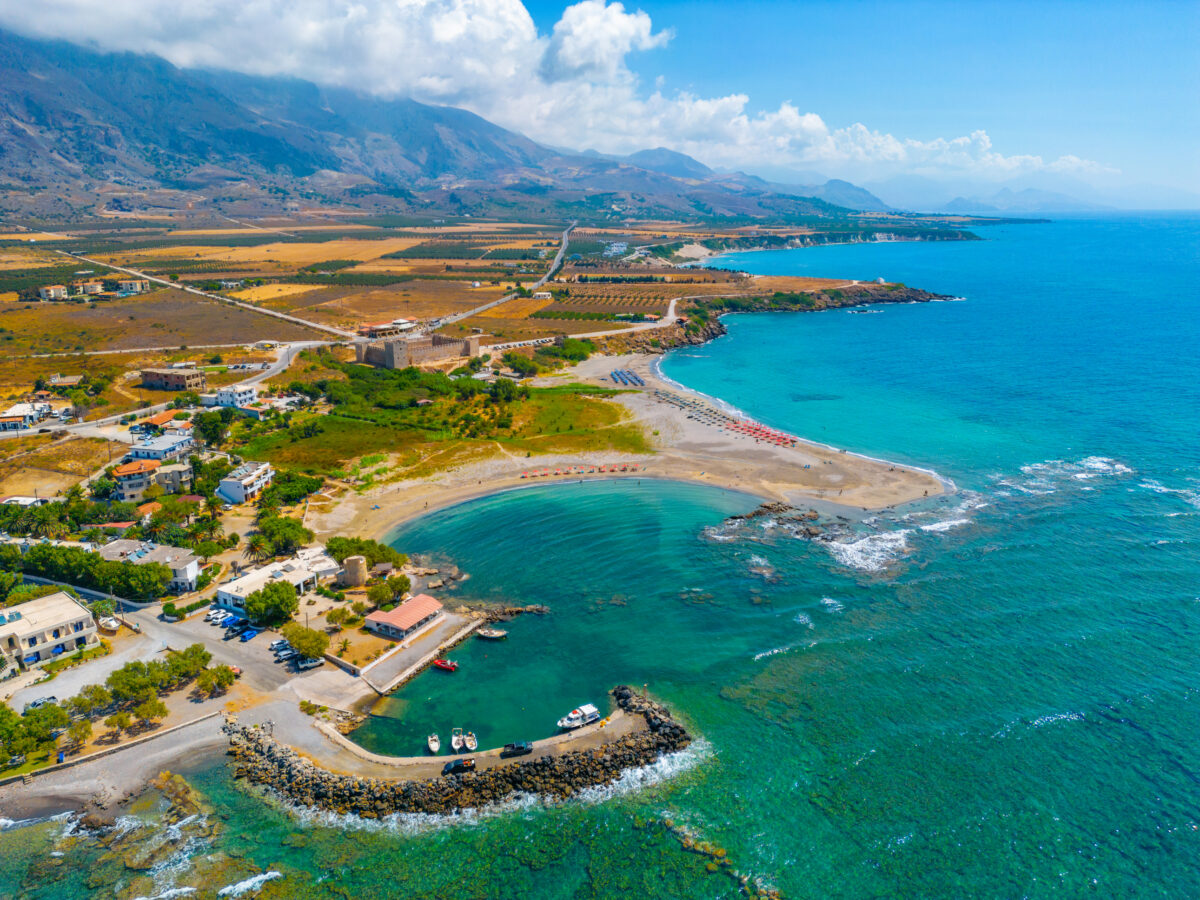
Photo by © Dudlajzov | Dreamstime.com Frangokastelo
Best for families and history
If you enjoy scenic beaches, Frangokastelo is the one. Here, you’ll bathe next to the 14th-century-built Venetian fortress set against a stunning mountain backdrop. The beach is perfect for families—it’s sandy, with translucent waters and shallow access. Castle-building takes a cool spin when you are alongside an actual castle. You kids will love it here. A small reef at the western end of the beach is great for snorkeling. You’ll find a supermarket and several traditional restaurants in Frangokastelo behind the beach. Walk further west to reach Orthi Ammos, another beautiful South Cretan stretch, backed by the tall dunes.
Gialiskari
Best for a wilder beach experience
Sometimes all you want is peace and tranquility. The South coast of Crete offers many semi-wild beaches in the middle of nowhere. Gialiskari is one of the best for such an escape. Located 3 miles away from Palaiochora and backed by the Anidri Canyon, it’s a beautiful pebbly stretch. Except for the simple tavern, there are no other signs of civilization here, making this beach the ideal destination for a true remote break. Gialiskari overlooks the dramatic mountainous coastline. It’s a Greek beach dream—order yourself souvlaki (the traditional meat skewers) and sit for hours, gazing at the beautiful Mediterranean and listening to the music of the waves. Palaiochora, nearby, is a picture-perfect whitewashed town with a hilltop Castel Selino and a pleasant resort town. You can also embark on a hiking adventure through the gorges of Anidri Canyon.
-
Albania
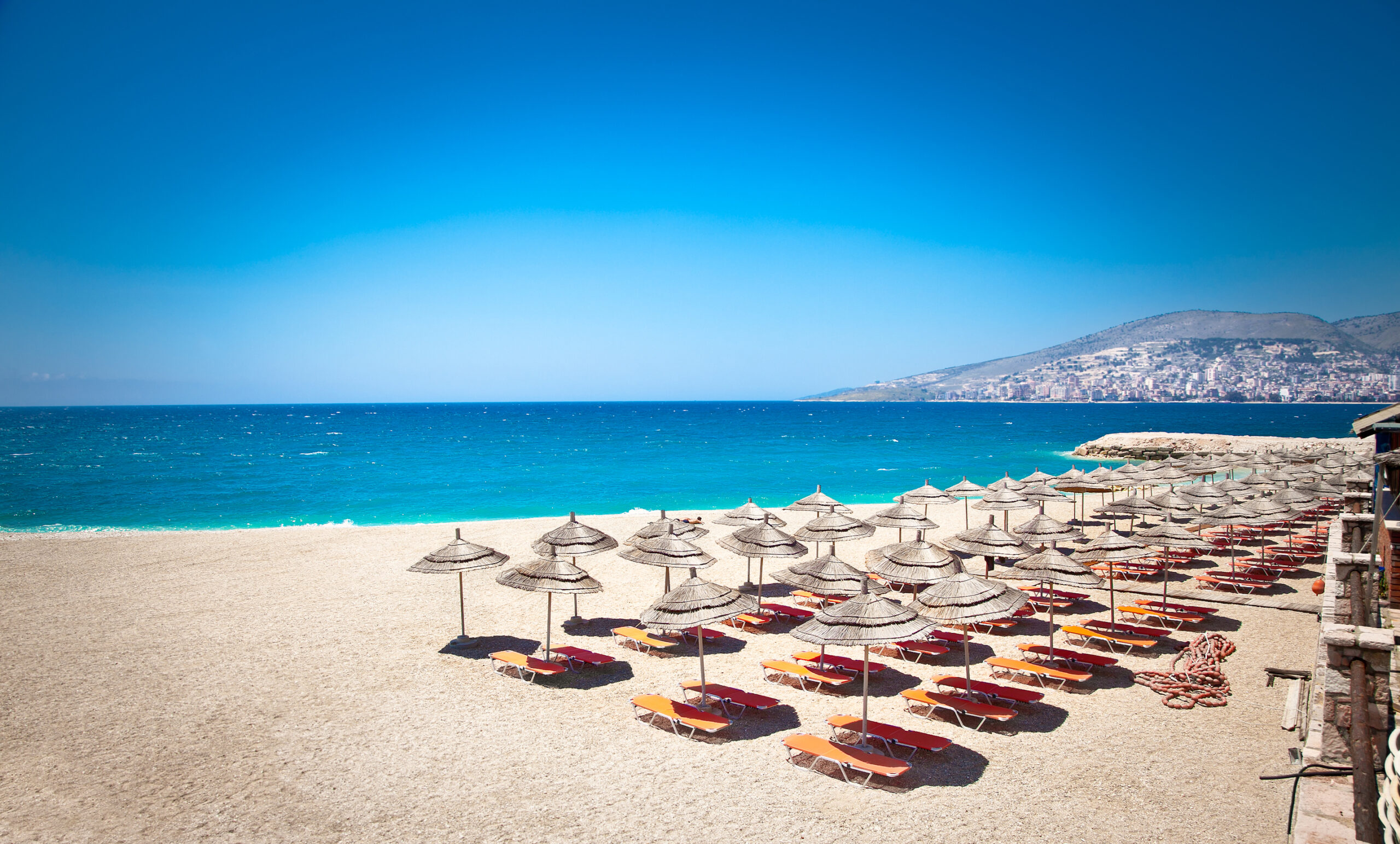
Albania’s coastline is one of Europe’s most underrated treasures. Stretched along nearly 300 miles of Adriatic and Ionian Seas, this Mediterranean gem offers something that’s increasingly rare: stunning beaches without the crowds. From the family-friendly shores of the north to the wild, dramatic beaches of the Albanian Riviera, this coastline delivers extraordinary beauty without the tourist masses (for now).
Ksamil Beach, Ksamil
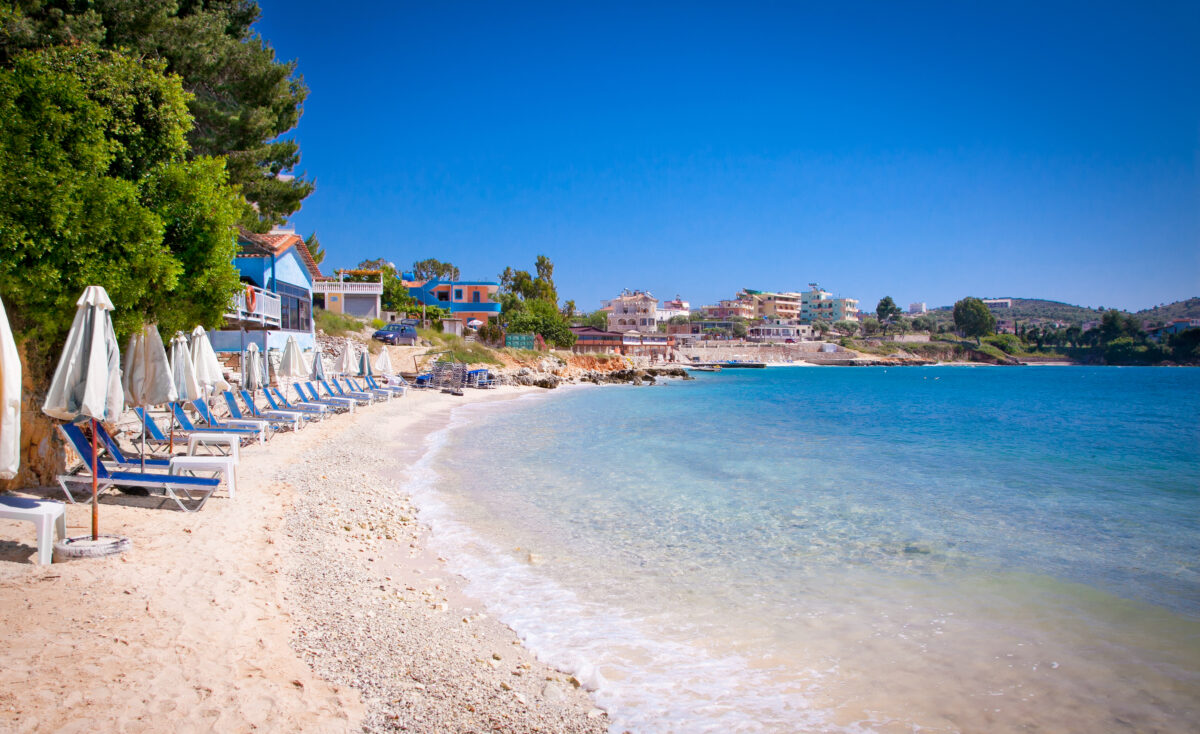
© Aleksandar Todorovic | Dreamstime.com If Albania has a postcard beach, this is it. Ksamil sits at the southernmost tip of the country, just a few miles from the Greek border, and the water here is an almost unreal shade of turquoise. The main beach faces a cluster of small islands where visitors can swim or kayak out to them in about 10 minutes. They’re perfect for exploring and finding a private patch of sand.
The beach itself gets busy in July and August (it’s no secret among Albanians), but even then, it never feels oppressive. Early mornings offer the best experience when the light is soft and golden, perfect for grabbing a coffee from one of the beachside bars and watching the water shimmer. The sand is fine and white, and the swimming is excellent (calm, clear, and warm through the summer months). There are also several beach clubs offering loungers and umbrellas, but it’s just as easy to spread out a towel for free.
Gjipe Beach
Getting to Gjipe is half the adventure. After parking along the road between Dhërmi and Vuno, it’s about a 30-minute hike down a rocky canyon path. The effort is well worth it. This wild, crescent-shaped cove wedged between towering cliffs offers pebbles underfoot and impossibly clear water.
There’s a small beach bar serving drinks and simple food, but otherwise, Gjipe feels wonderfully remote. The beach is popular for swimming and cliff-jumping (there’s a well-known spot on the left side), making it a favorite for adventure seekers. Water shoes are recommended since the pebbles can be tough on bare feet, and it’s wise to come prepared with everything needed since facilities are minimal. The hike back up is steep, but the untouched beauty makes it worthwhile.
Drymades Beach, Dhërmi
Drymades is where many travelers find their rhythm on the Albanian Riviera. It’s a long, wide beach with white pebbles and calm, crystal-clear water that’s perfect for swimming. Unlike some of the more famous spots nearby, Drymades still feels relatively laid-back, even in peak season.
There’s a nice mix here: beach bars and restaurants line the shore for those wanting music and cocktails, while quieter stretches can be found within a short walk. Drymades Beach Bar is a popular spot for cold Korça beer and sunset watching, as the sky transforms into shades of pink and orange. The water stays shallow for quite a distance, making it great for families, and the surrounding hills create a dramatic backdrop. For those staying in Dhërmi village up the hill, it’s about a 10-minute drive down winding roads.
Jale Beach
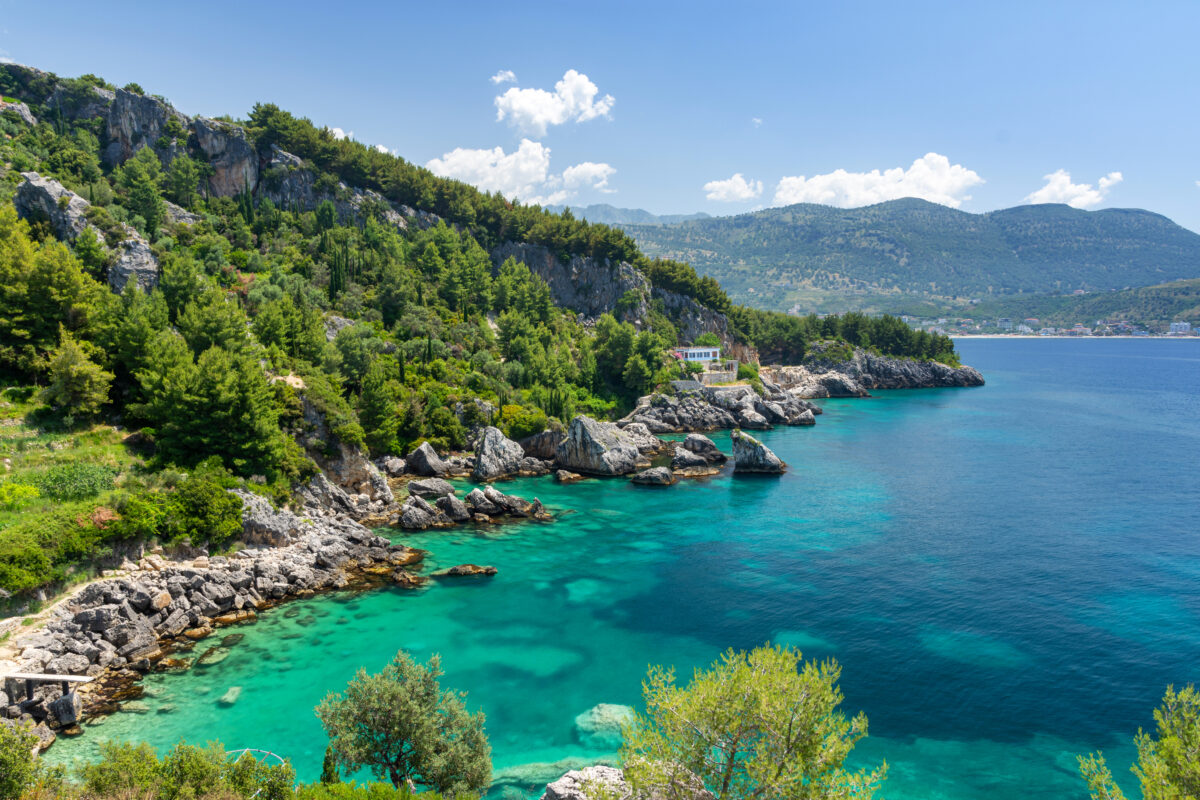
Photo by © Lukaszimilena | Dreamstime.com Jale is the spot for those wanting a bit more energy and social atmosphere. Located between Dhërmi and Himara, this beach has become a favorite with younger travelers and backpackers, thanks to its beach clubs, bars, and summer party scene. But the daytime atmosphere remains focused on the gorgeous setting for swimming and relaxing.
The beach is a mix of pebbles and sand, and the water displays that signature Albanian Riviera turquoise. Mornings are ideal for bodyboarding (boards can be rented from beach bars), while evenings come alive at waterfront restaurants serving fresh grilled fish. The vibe picks up after dark with live music and DJs, but visitors seeking just daytime beauty can enjoy the beach and move on. It’s easily accessible by car, with parking right near the beach.
Livadhi Beach, Himara
Livadhi is Himara’s main beach, and it’s got everything needed for a classic Mediterranean beach day. This long pebble beach curves along the bay, backed by cafés, restaurants, and guesthouses. The water is clean and calm, ideal for swimming, with loungers and umbrellas available for rent or space to set up independently.
What makes Livadhi special is how local it feels. Albanian families come here for weekend beach days, creating an easy atmosphere. Mornings are perfect for swimming followed by byrek (Albanian pastry) from a nearby bakery, while hours can be spent floating in the clear water. In the evenings, the beachside restaurants come alive. It’s not the wildest or most dramatic beach in Albania, but it’s comfortable, accessible and genuine.
Borsh Beach
Borsh claims to have the longest beach in Albania (about four miles of pebbles stretching along the coast) and the claim holds up. This is where visitors come when seeking space. Even in summer, quiet sections are always available.
The village of Borsh sits on the hillside above, surrounded by olive groves (some of the oldest in the region), and the beach below is backed by a thin strip of restaurants and accommodation. The water is wonderfully clear, and because the beach is so long, different vibes can be found depending on location. The southern end tends to be quieter, while the central section near the main road has more facilities. The slower pace here makes it ideal for morning swims, long walks along the shore, and dinners of freshly grilled squid while watching the sun dip into the Ionian Sea.
Dhermi Beach
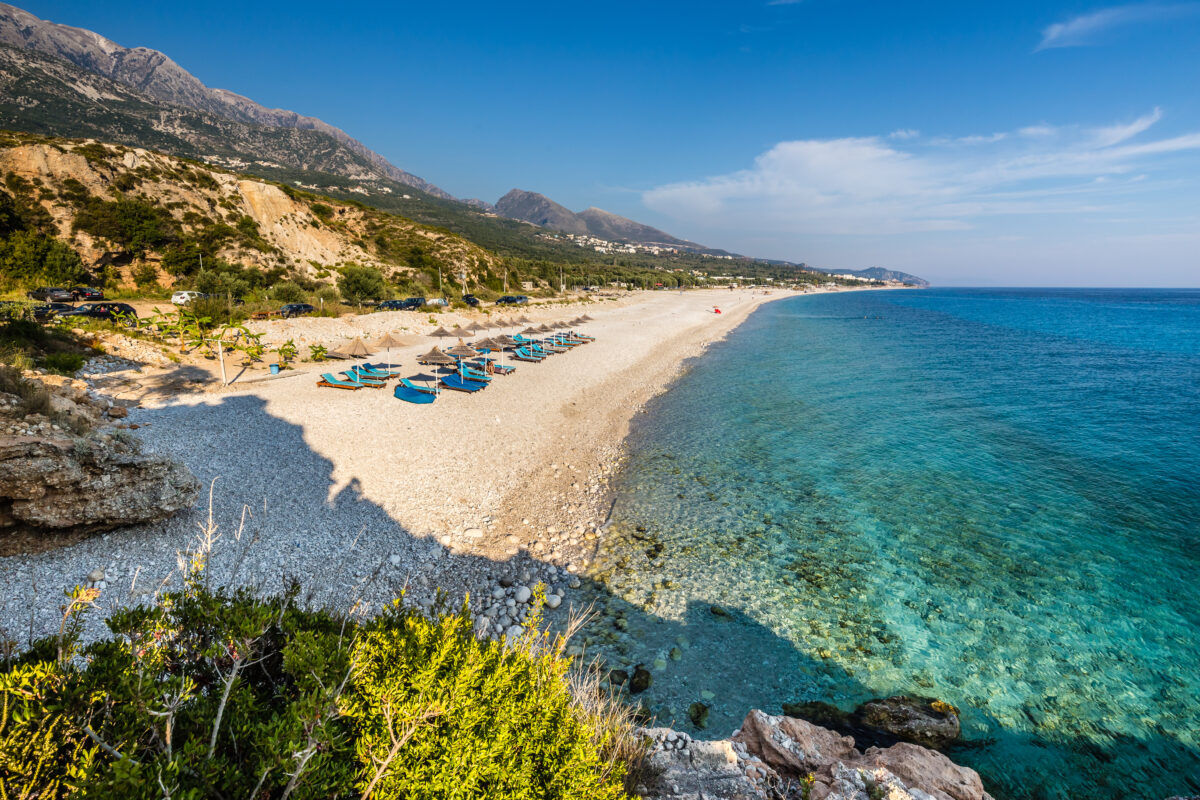
Photo by © Zdeněk Matyáš | Dreamstime.com Dhermi is one of the Albanian Riviera’s most popular beaches, and for good reason. It’s a beautiful stretch of white pebbles with crystal-clear water, backed by a lively scene of beach bars, restaurants, and clubs. During the summer, this is where the party happens, with music from various beach clubs and a younger, international crowd.
But it’s not all about nightlife. The beach itself is stunning, and the swimming is excellent. Days can be spent alternating between lounging under an umbrella and swimming in the impossibly blue water. The beach is well-organized with plenty of facilities, and there are options for all budgets, from simple beach bars to more upscale clubs. For those wanting energy and atmosphere with their beach time, Dhermi delivers.
Palasa Beach
Palasa sits at the base of the dramatic Llogara Pass, where the road descends from the mountains down to the coast. The beach is wide and pebbly, with striking views of the towering cliffs behind and the open sea ahead. It’s a popular stop for travelers driving the coastal route, and the beach has a relaxed, slightly rugged feel.
On windy days, the waves here are bigger than at other Riviera beaches—perfect for bodysurfing. There are a handful of beachside restaurants and guesthouses, and the vibe is low-key and unpretentious. Palasa is one of the best spots in Albania for paragliding (launches from Llogara can land right on the beach). Even for those just passing through, stopping for a swim and a cold drink is worthwhile. The setting is unforgettable.
Kakome Beach
Kakome is Albania’s ultimate secret beach—accessible only by boat from Borsh or Himara. That’s a good thing. This remote stretch of white pebbles and turquoise water feels like something out of a fantasy, completely untouched and wildly beautiful.
Water taxis from Himara make day trips possible, with visitors often finding just a handful of other people on the beach. There’s nothing but the beach, the cliffs, the sea and the sun—no bars, no facilities, just pure, unspoiled nature. Bringing everything needed (food, water, sunscreen) is essential, and the experience feels like discovering a private paradise. The water is perfect for swimming, and the surrounding cliffs are dramatic and photogenic. If only one remote beach can be visited in Albania, make it this one.
-
Sardinia
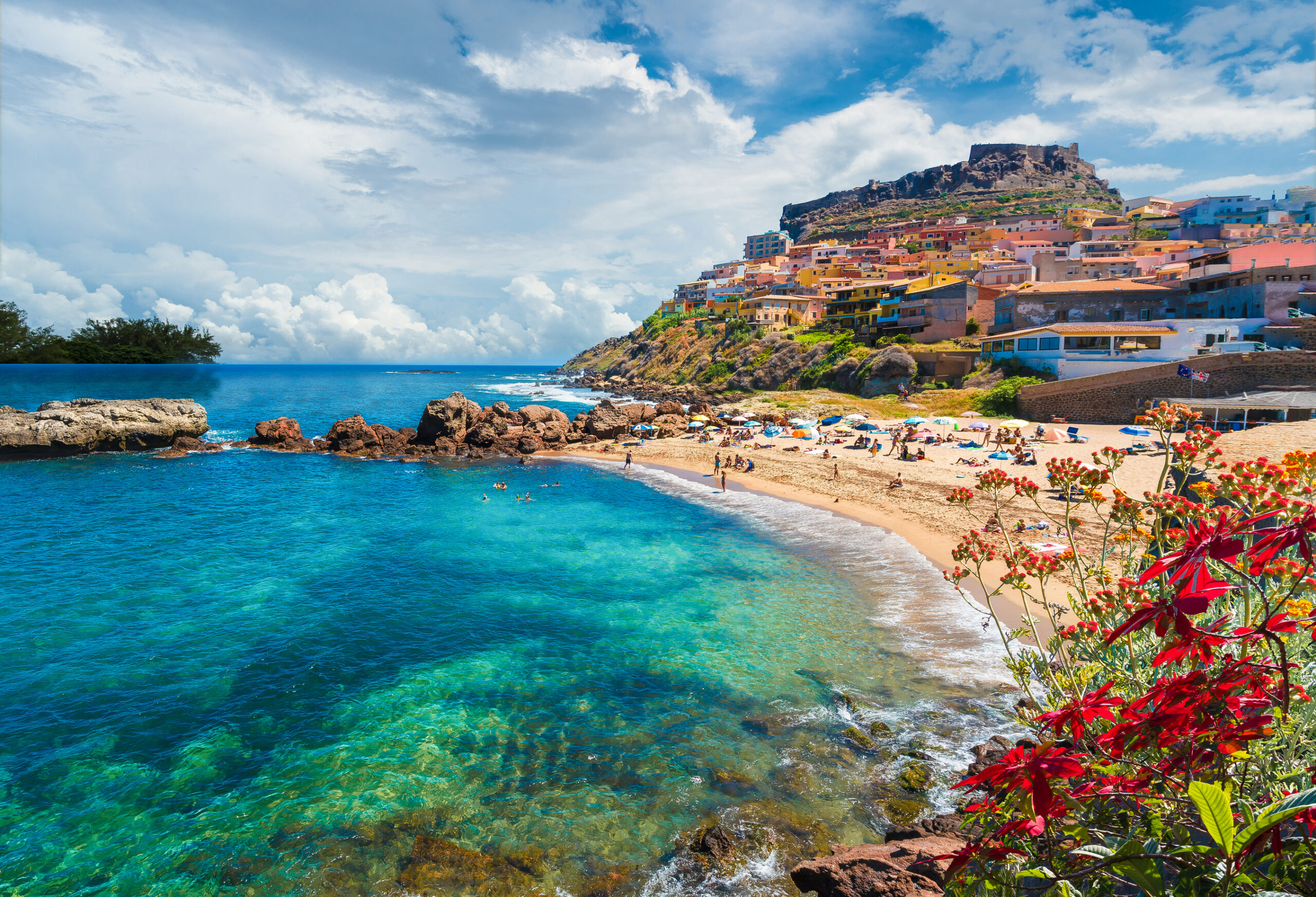
Sardinian beaches are spectacular. The second-largest island in the Mediterranean is blessed with a divine azure coastline, where transparent waters caress soft white sands. And it’s not just one or two idyllic stretches—the 1,149-mile-long Sardinian coast offers a variety of endless dunes, hidden coves, urban strips, and island escapes. This destination transports you to the Mediterranean before the rapid resort development, where you actually feel at peace with nature. It’s the kingdom of evergreen sclerophyll shrubs, rocky mountain ranges, and impossibly blue Tyrrhenian Sea. Anyway you look at it, this island is hands-down the best destination for beaches in Europe. Here’s the selection of the top stretches in Sardinia to soak in the island’s cyan beauty.
La Pelosa
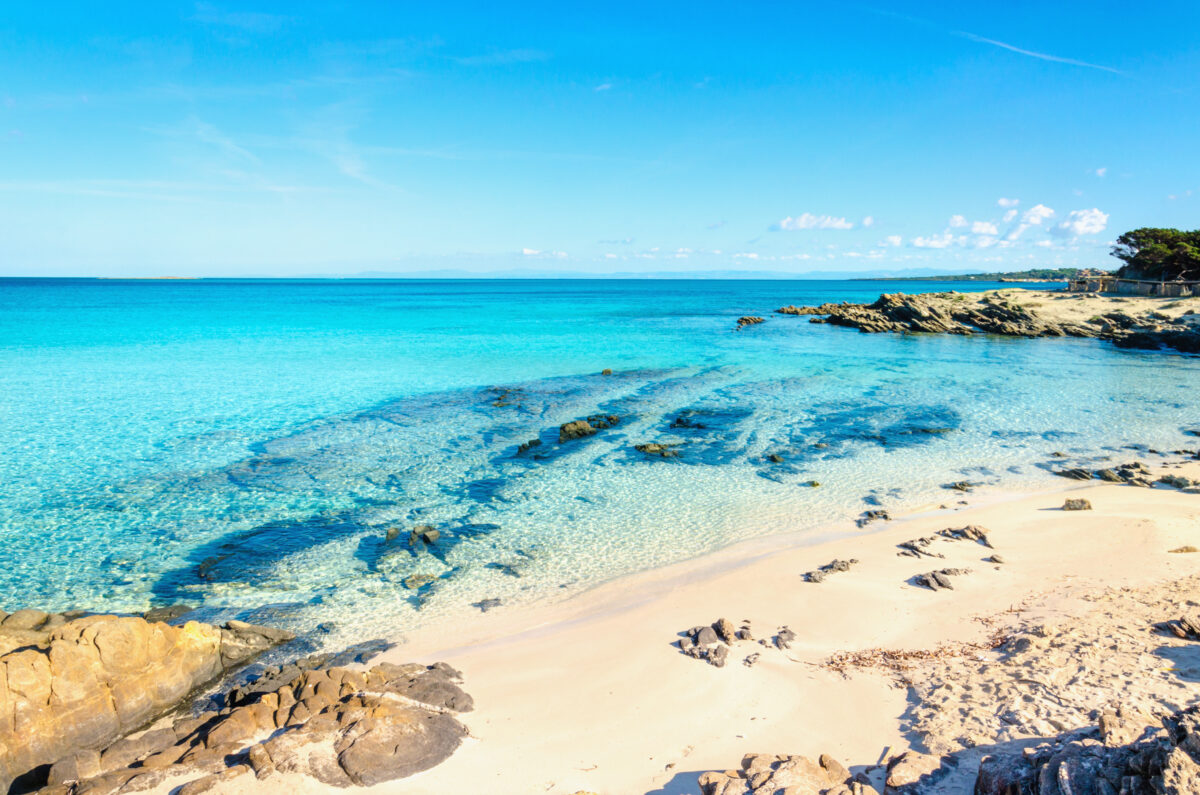
Photo by © Jedynakanna | Dreamstime.com Best for the breathtaking panoramas
A strong contender for the “Best Beach in the World” title, La Pelosa is the undisputed queen of Sardinian coastal strips. Its regal status is cemented by the fact that you have to book your spot on its milky sands beforehand, so popular is its allure. But it’s absolutely warranted, La Pelosa is love at first sight. Its sand is as soft as the clouds, and its waters look as if a saturation photo filter was applied. To make things even more scenic, the medieval ruins of an Aragonese watchtower guard the shores, and the Isola Piana island beacons with coves in front. Thanks to the shallow seabed, La Pelosa is also the ultimate family beach on Sardinia. If you’re visiting during the summer, reserve your spot through the official website and arrive early. Spiaggia della Pelosetta (near the watchtower) and Spiaggia del Gabbiano are two sister sandy stretches worth checking out.
Brandinchi
Best for families
A sunny playground for kids, Brandinchi is another picture-perfect white-sand stretch in Sardinia. Popular with TikTokers and Instagrammers, it’s often used to promote the island as the “Caribbean of Europe.” Expect translucent, shallow waters, powdery shore, and pink sunsets. Like La Pelosa, Brandinchi works on a pay-to-enter basis to limit the number of visitors in the fragile ecosystem during the season (1 June to 30 September). The fee is 2 EUR, and you can pay through the San Teodoro municipality website. The parking is 2.50 EUR per hour. The Brandinchi reservation also allows you to access Lu Impostu, another dreamy sandy stretch nearby. For something wilder and absolutely free in the vicinity, take a ride to Spiaggia di Capo Coda Cavallo, a gorgeous cove overlooking the gigantic Tavolara Island.
Su Giudeu
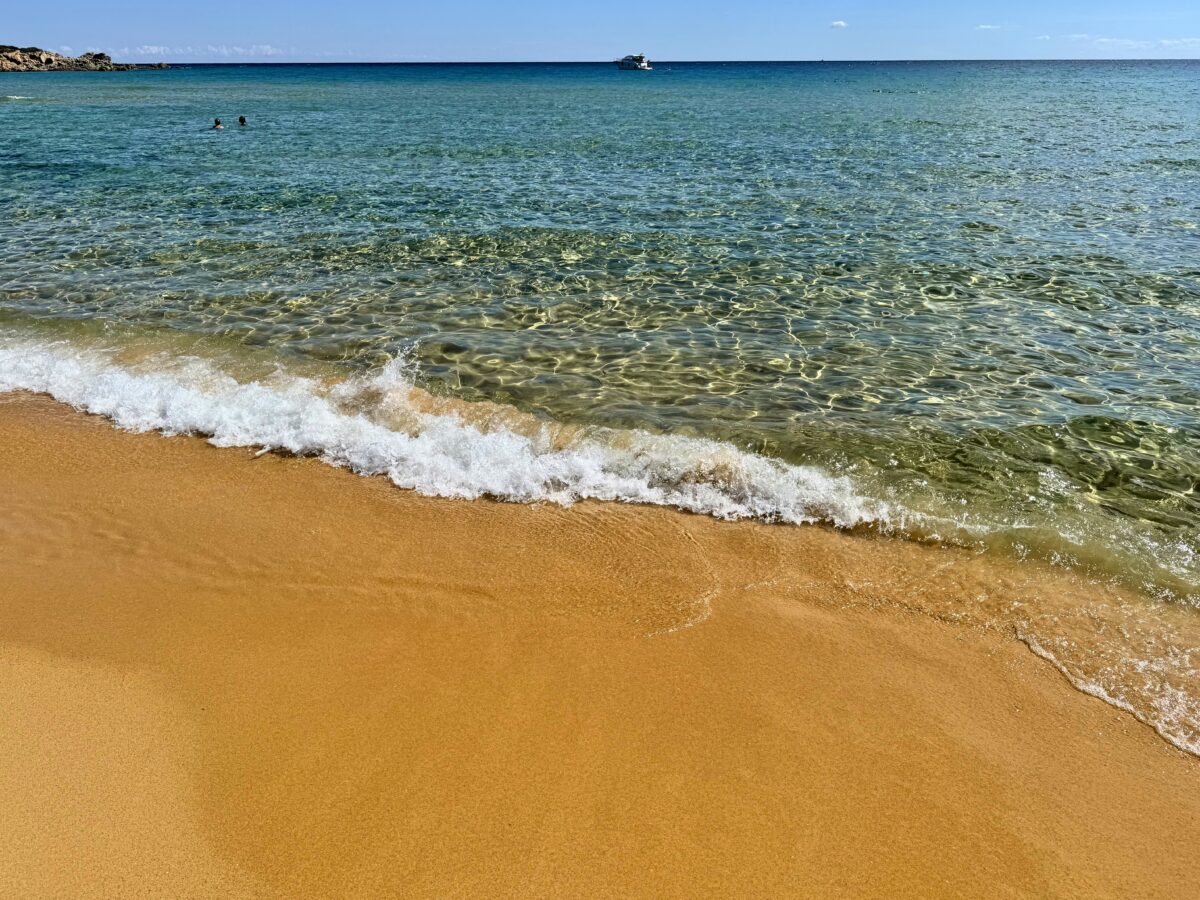
Photo courtesy of Pavlo Fedykovych Best for vast dunes and snorkeling
The white sands go as far as the eye can see. You can even hear the dunes whisper when the wind blows. Su Giudeu is the crescendo of Sardinian beach beauty with few rivals in Europe. Located on the south-western coast, it sprawls for almost a mile and offers pure sand. The sea access here is shallow, and the beach has an endless sand-castle-building potential that your kids will love to experience. A lagoon behind Su Giudeu is a popular hangout for pink flamingos, so bring your binoculars to observe these beautiful birds. There are two islands in front of the beach for snorkeling. You can reach them by a short swim or a kayak ride. Several photogenic beach bars supply drinks and panini for living Sardinian dolce vita.
S’Archittu Beach
Best for the cliff-diving and unspoilt beauty
It’s not only white sands on Sardinian beaches. S’Archittu offers a different experience. It’s a tiny stretch overlooking a gorgeous limestone arch, which forms a sort of sea portal. Passing through these natural gates on a kayak is a fantastic water activity. Cliff-jumping is another popular thing to do in S’Archittu. The sand-and-gravel beach starts at the resort village of S’Archittu and stretches to the rocky natural formation. It’s one of Western Sardinia’s hidden corners, so you’re not getting the crowds of La Pelosa or Brandinchi. Stay for the sunset and you will be rewarded with the breathtaking panorama of the sun “hiding” in the opening under the cliff.
Bados
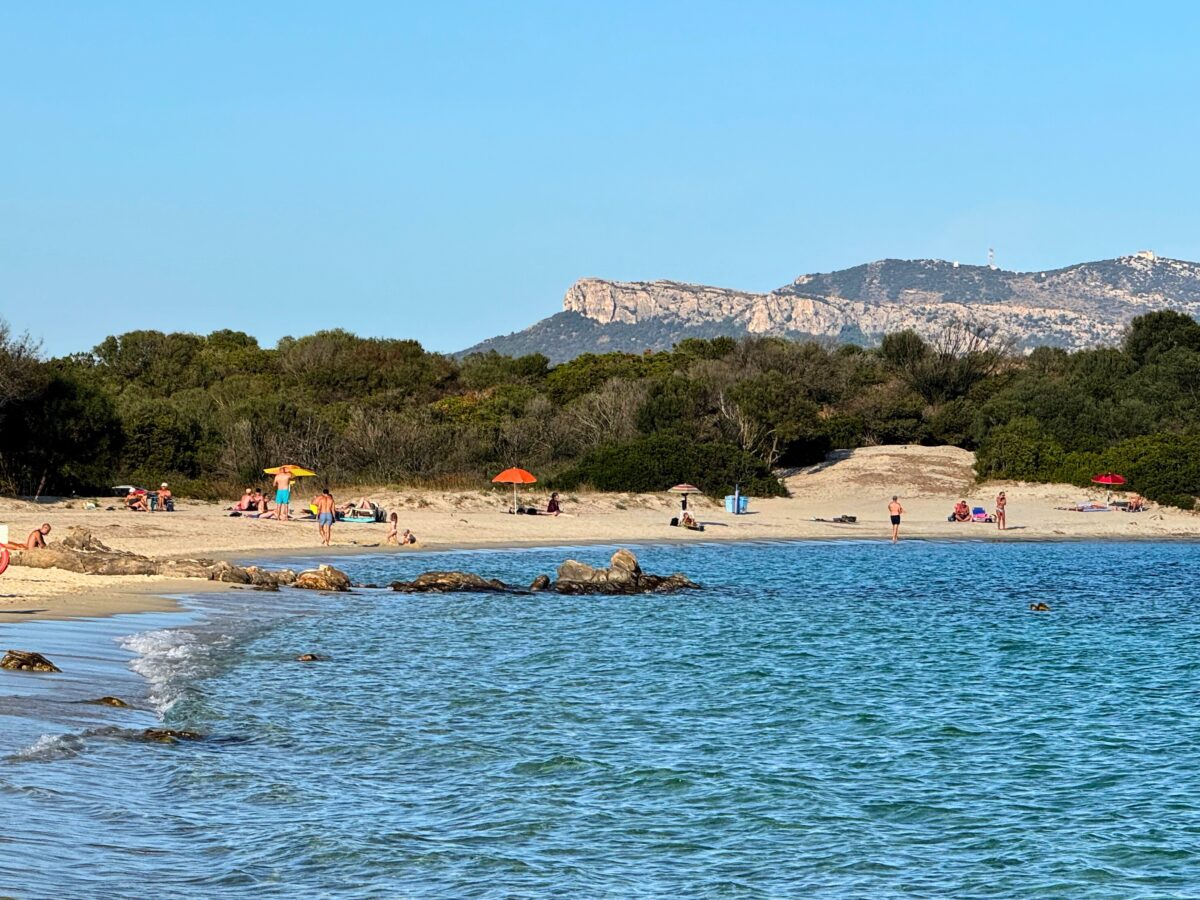
Photo courtesy of Pavlo Fedykovych Best for chilling out
While Olbia is a popular air gateway to Sardinia’s yacht-filled Costa Smeralda, it doesn’t offer good beaches within the city limits. About 5 miles north of Olbia, you find Pittulongu, a charming resort town with magnificent sandy stretches. Bados is the one to settle for. Overlooking the colossal rocky island of Tavolara, it’s just a perfect beach for relaxing. Family-friendly, it features shallow waters, pleasant golden sands and a chill beach bar. Bados isn’t the most striking of Sardinia’s stretches, but it’s among the best beaches near Olbia. Another plus is that it’s easily reachable by public transport (Bus 04 from Olbia center). When in the area, check out Spiaggia Pittulongu for more lazy beachgoing and idyllic views.
Cala Luna
Best for the blue waters and caves
The most popular destination for the boat tours on the island, Cala Luna is incredibly scenic. Located on the East Coast and surrounded by the wild beauty of Golfo di Orosei, this crescent-shaped cove is a stunner. Of course, there will be blue waters, fantastic rocky coast panoramas and caves. Cala Luna is peppered with grottos (or small limestone open caves), which look extremely good in your photos. There are two ways to reach this divine beach. The most rewarding is by boat—hop on a tour or rent a vessel at Cala Gonone. Hiking through the Gulf of Orosei wilderness is another. Leave your car at Cala Fuili and walk for about 2 hours to reach Cala Luna, enjoying the untamed Mediterranean landscapes along the way.
Is Arutas
Best for the quartz sand
From a distance, Is Arutas Beach looks as if someone spilled tonnes of salt next to the azure sea. This West Sardinian stunner is among the best beaches for pure white sand. You’ll walk on the grainy quartz sand, which feels heavenly on your toes, ensuring an exceptional beach experience. Is Arutas is also a perfect destination for snorkeling. Rocky Punta Su Bardoni (the northern end of the beach) is great for exploring the underwater life. The stretch is located on the Sinis peninsula, locally nicknamed “Eden” for miles of undeveloped coastline and transparent blue waters. Head south to find other paradisiac stretches, such as Spiaggia di Su Crastu Biancu, Spiaggia Corríghias, and Spiaggia S’Archeddu ‘e Sa Canna.
Poetto
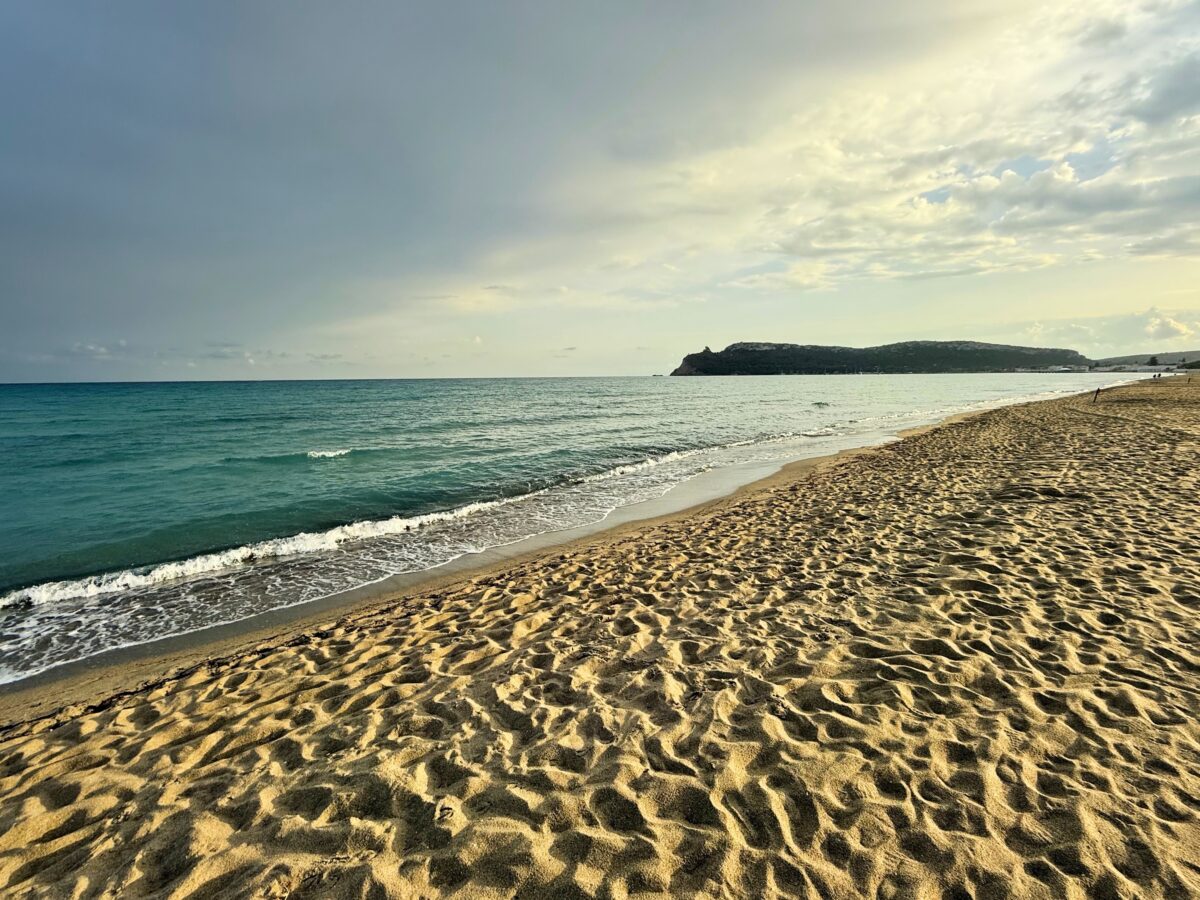
Photo courtesy of Pavlo Fedykovych Best urban beach in Sardinia
Hugged by the cyan waters of the romantically named Gulf of Angels, Poetto may well be Italy’s most gorgeous urban beach. It’s enormous too, stretching for over 5 miles. Poetto is flanked by the beautiful waterfront filled with beach bars, restaurants, Art Deco low-rise hotels, and palm tree-surrounded mansions. There’s always a place on the wide white sand. The beach is also a water sports area, where you can rent paddles, kayaks, canoes, and try jet skiing and windsurfing. Cagliari’s main stretch is part Rio’s sandy sprawl, part Miami’s Art Deco glamour, sprinkled with distinct Sardinian allure. Also, it’s an all-day kind of destination: sunbathe in the morning, have seafood for lunch, marvel at the violet sunset, and stay for the party-filled night at the beach bar.
Cala Goloritzé
Best for the wild vistas
Sardinia’s most spellbinding beach is also the newest one. A landslide in the ’60s gave birth to this heavenly spot. Today, it’s among the island’s most recognizable blue bays. Approach it by boat, and you’ll be mesmerized by the combination of sapphire-blue sea meeting the tall pinnacles of the Gulf of Orosei. It is the masterpiece of nature, no less. 148m-high Aguglia rock crowns the panorama to the delight of climbers who can brave the challenging ascent. Reaching this piece of Sardinian paradise isn’t the most straightforward. Hikers should book access to the 2-mile trail at least 3 days in advance. As for sailing, boats are only allowed to moor 200 meters from the beach (Cala Goloritzé is a protected natural monument). It’s either you’re swimming next to your boat or swimming to the cove to enjoy the pebbles. But then, unlike many heavenly stretches spoiled by the boat traffic, Cala Goloritzé stands in a tranquil glory.
Porto Pino
Best for the shallow sea
If you enjoy beaches in the middle of nowhere, Porto Pino is the one. Located on Sardinia’s south-western coast, it enchants you with the stunning dune landscape. Swathes of white sand give the impression of being in something like a mini Sahara, with the advantage of shallow blue water for plunging. Porto Pino is the ultimate kid-friendly beach, perfect for wading, playing in the sand, and running around. Almost 3 miles of the beach provide enough space for everyone to enjoy the unspoilt nature. There are also several sections in Porto Pino with wilder dunes starting at the southern edge. Spiaggia di Porto Pineddu is another white-sand beach with crystalline waters to check out, located next to the Porto Pino tourist village.
Porto Giunco
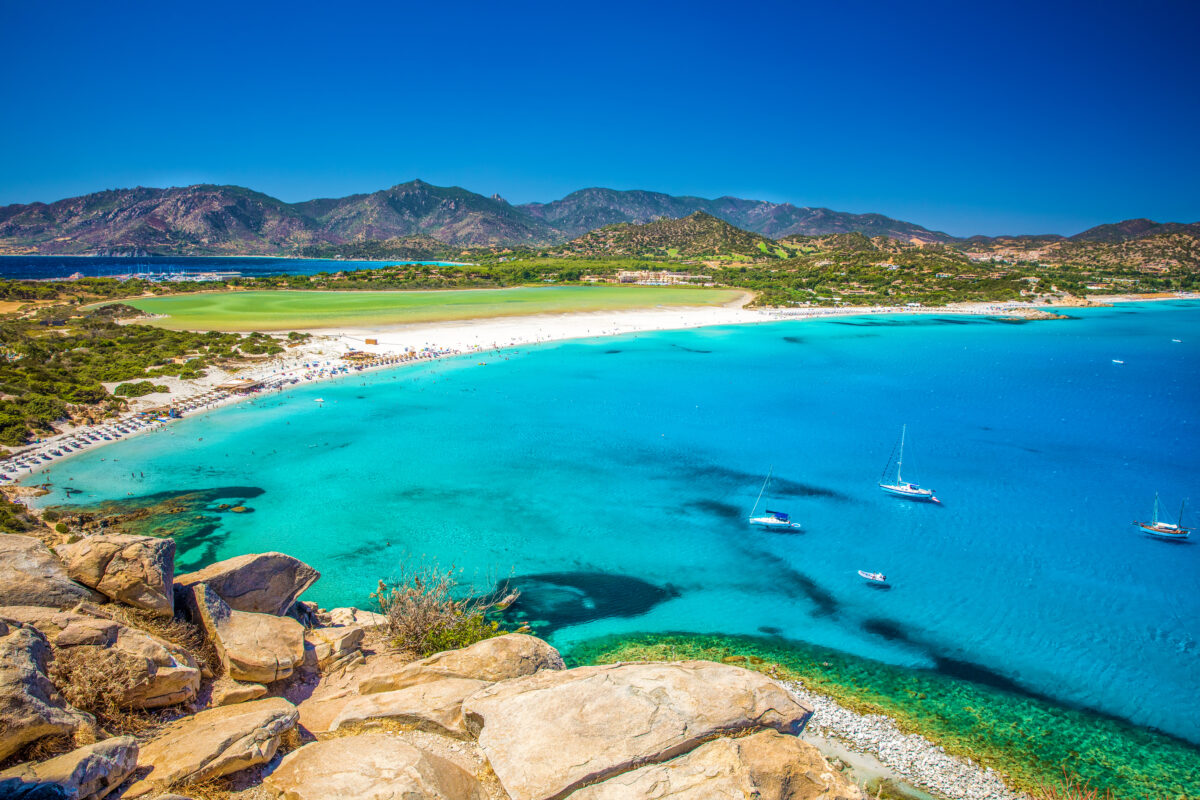
Photo by © Eva Bocek | Dreamstime.com Best for bird-watching
One side of Porto Giunco is a clear turquoise sea. The other is a lagoon, where pink flamingos roam. It doesn’t get more scenic in Sardinia than this. A part of the Vilasimius coast, the beach is among the best on the island’s south. Thanks to shallow access, it’s also a prime stretch for families. For a breathtaking panorama of Porto Giunco from above, hike to the Torre, a 16th-century watchtower, which is gloriously set on a hill. Private Timi Ama beach, of the five-star Pullman resort on the northern end of Porto Giunco, is the ultimate destination for luxurious beachgoing.


