

-
Valencia
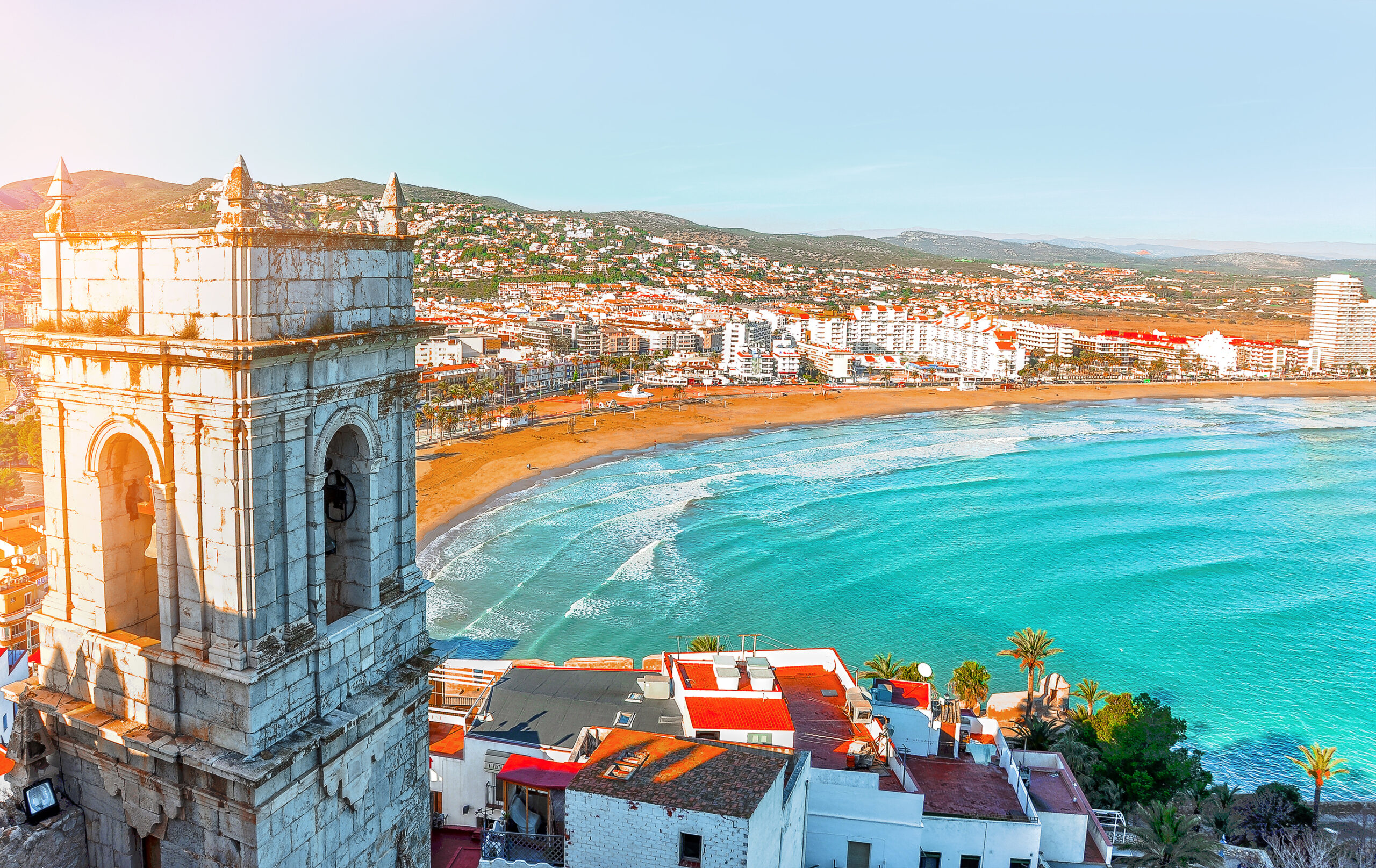
Valencia has my heart. It’s one of those cities I keep coming back to because it’s got everything I love in one place: golden sunshine, incredible food, and a coastline that makes you want to stay all afternoon with salty hair and a cold drink in hand.
Now that I live across the border in Lisbon, it’s easy to hop on a plane (or a bus!) for a few days in the city whenever my heart desires so.
I’ll happily spend the morning getting lost in the old town or cycling through the park, but the beaches here always pull me in. From the big, buzzing stretches with chiringuitos pumping out music to the quieter coves where you can just hear the waves, Valencia’s beaches never disappoint. Here are my favorites.
Playa de la Malvarrosa
Malvarrosa is the first beach I ever fell for in Valencia. There’s just something about walking out of the old town, hopping on a bike and suddenly arriving at this huge sweep of golden sand that feels like such a luxury.
The beach is big enough that you can always find your own patch, but what I love most is the atmosphere. Families set up for the whole day with coolers and umbrellas, volleyball games kick off near the promenade, and the smell of fried fish drifts out of the chiringuitos.
I usually end up staying longer than I plan to —lounging by the water, grabbing a horchata from the paseo, and watching the colours shift over the Mediterranean as the sun drops. It’s busy, yes, but in a way that makes you feel part of the city.
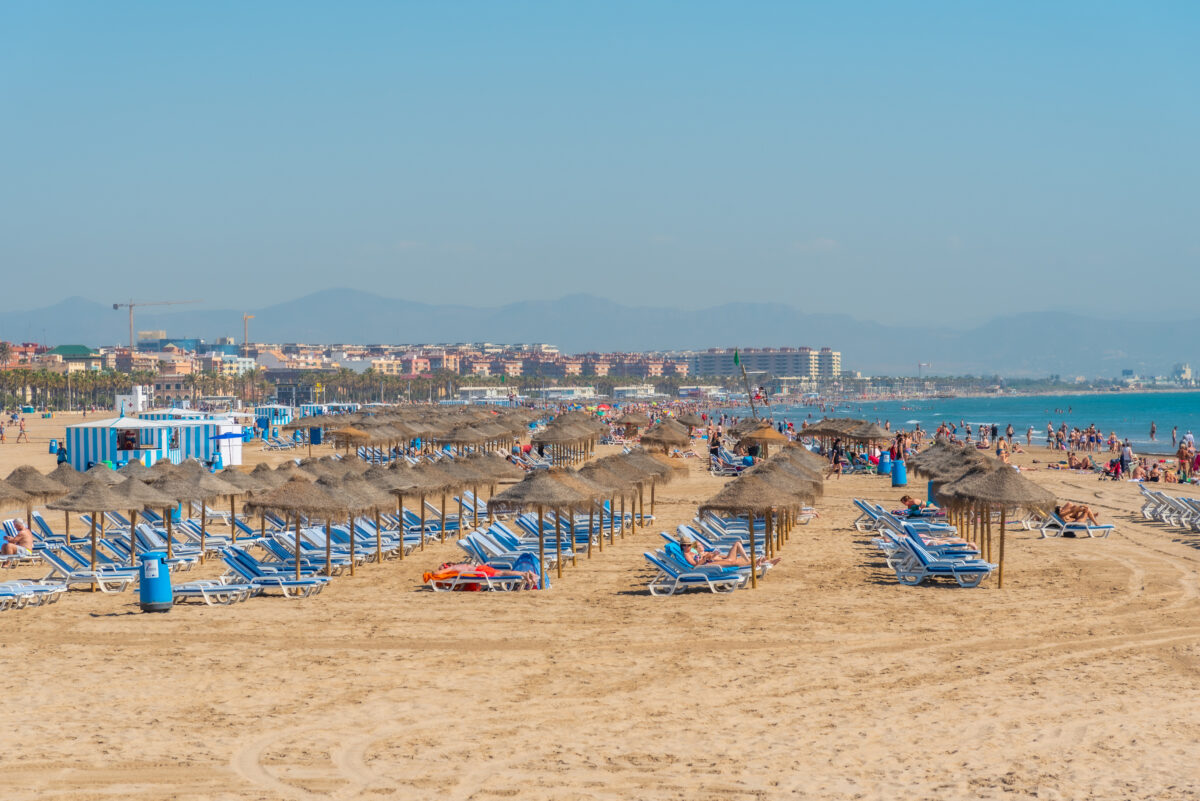
Photo by © Dudlajzov | Dreamstime.com Playa del Cabanyal (Las Arenas)
Cabanyal, often called Las Arenas, feels like Malvarrosa’s lively little sister. It’s right by the marina, so you get that mix of beach life with the buzz of boats and waterfront bars. I come here when I want more than just a swim—there’s always something happening, from locals playing paddleball to kids building castles in the sand.
The promenade is lined with cafés where you can sit with a cold beer and watch the world go by, and it’s a great spot if you’re into people-watching. One of my favourite things is staying late, when the beach slowly empties out and the sky turns pink behind the port cranes. It’s not the quietest stretch, but that’s exactly why I love it—it feels unapologetically Valencian.
Playa de Patacona
Patacona is where I escape when I want the beach without the full-on crowds of Malvarrosa. It’s just a short cycle north, but the vibe instantly changes: calmer, trendier, a little more local. The sand here is soft and wide, perfect for long lazy afternoons, and I always notice how much quieter it feels compared to the city centre beaches.
What really makes Patacona stand out, though, is the food. There are some brilliant restaurants just off the promenade—La Mas Bonita is my go-to for brunch by the sea, and I’ve spent countless afternoons lingering over coffee there before heading back to the sand. It’s the kind of beach you settle into for the whole day, moving between the water, a good book and a plate of something delicious.
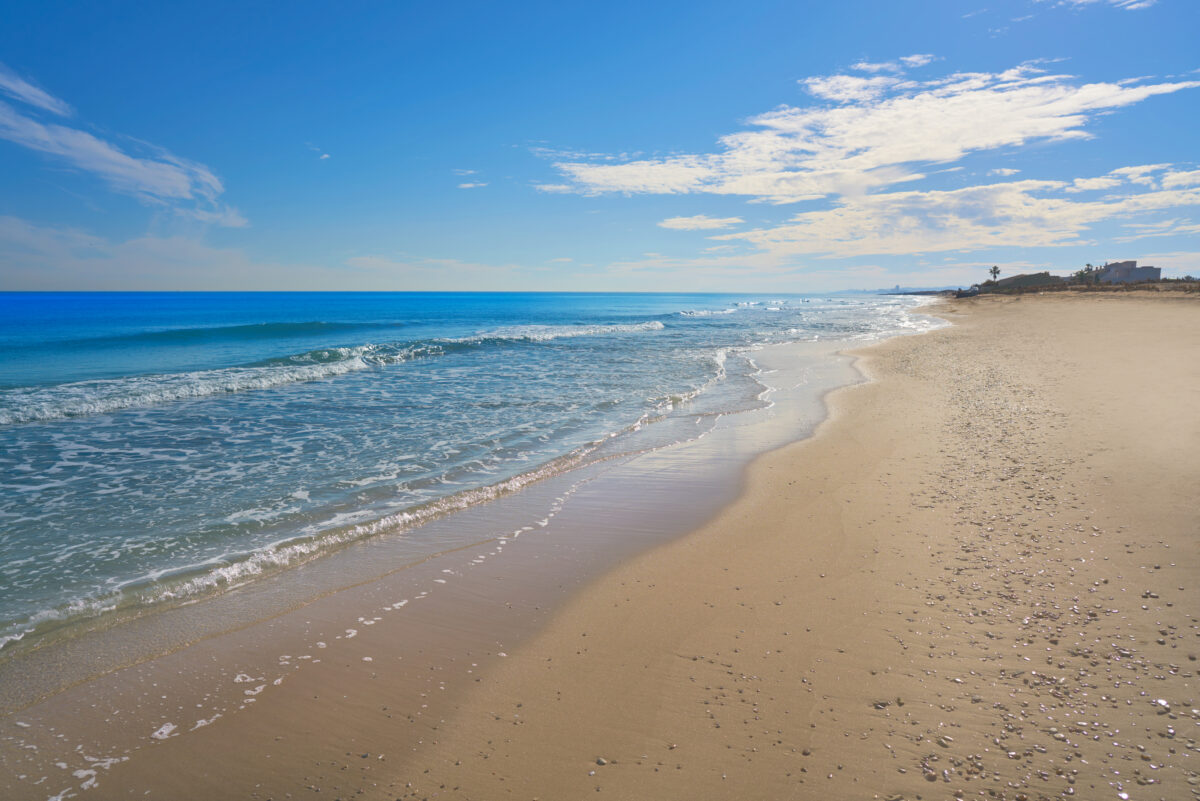
Photo by © Lunamarina | Dreamstime.com Playa de la Devesa (El Saler)
Whenever I need a proper reset, I head south to La Devesa. It’s part of Albufera Natural Park, so instead of cafés and promenades you get rolling sand dunes, pine forests and a feeling of being far away from the city, even though it’s only about half an hour’s drive.
The beach itself stretches for miles, and I love that you can walk for ages without seeing another soul if you head far enough along. The waves here are a little stronger than the calm city beaches, which makes it feel wilder, more rugged. Bring water, snacks and a good book, because once you settle into the rhythm of the waves and the wind in the pines, you won’t want to leave.
Playa de El Saler
El Saler is one of those beaches I recommend to friends when they want a proper Valencian day by the sea. It still has that wild, dune-backed feel, but it’s more popular than La Devesa, so you get a livelier atmosphere without losing the natural setting.
Families often come here with picnics, locals set up under umbrellas, and there’s usually a mix of swimmers, kite surfers and long walkers striding off into the distance. I like that you can dip into both worlds here: grab a paella in one of the restaurants tucked behind the dunes, then head back to the sand for a siesta. It’s the kind of beach that makes you forget the city is so close.
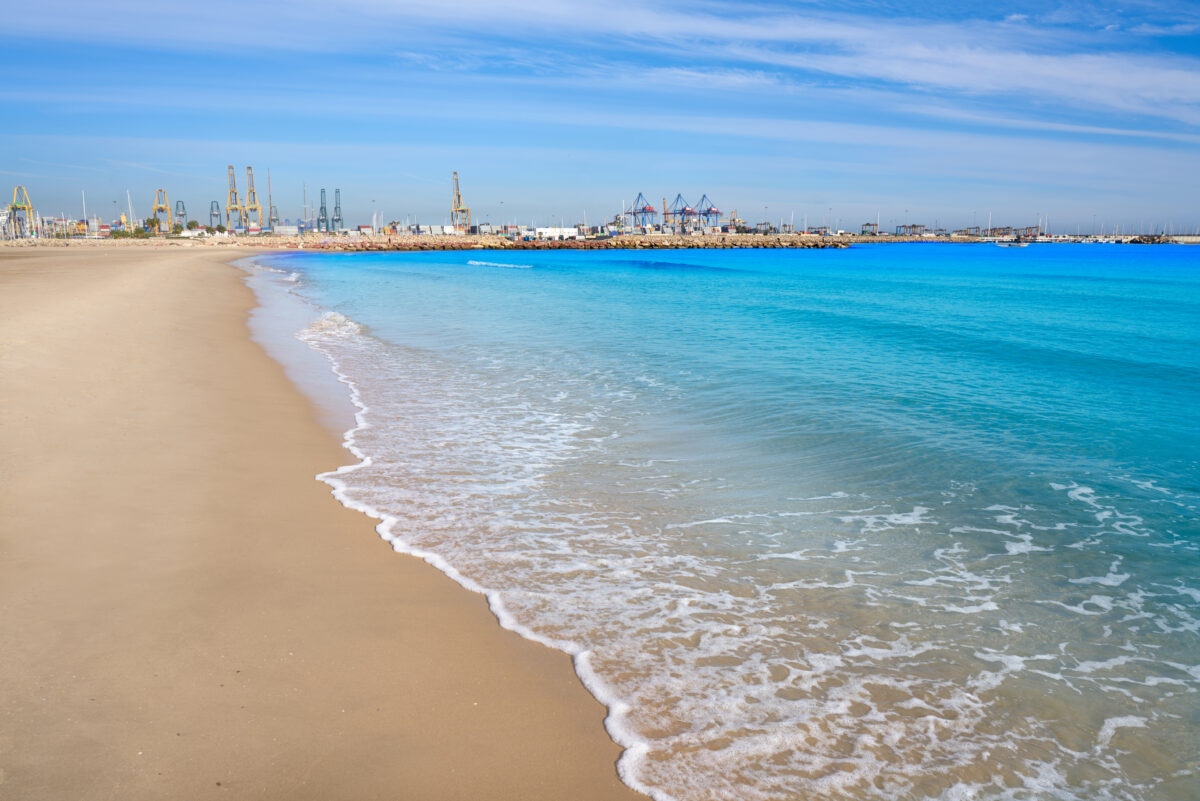
Photo by © Lunamarina | Dreamstime.com Playa de Pinedo
Pinedo always feels a little underrated, and that’s why I love it. It’s one of the closest beaches to the city, just south of the port, but it doesn’t get half the attention Malvarrosa does.
The sand is wide and golden, and there’s a relaxed, family vibe—you’ll see groups of locals setting up for the day with coolers, kids splashing in the shallows, and the occasional fisherman casting off at the edges. I usually head here when I want a quick beach fix without the bustle, or if I’ve been craving proper arroz at one of the traditional restaurants nearby. It’s not the wildest or the trendiest stretch, but it has a charm that keeps me coming back.
Playa de La Garrofera
La Garrofera feels like a secret, even though it’s part of Albufera Natural Park and not too far from the city. Tucked between El Saler and La Devesa, it’s quieter than both, and that’s exactly why I love it.
The sand is soft and golden, the dunes are backed by pines, and the whole place has this hushed, calm energy that makes you want to slow down. I usually come here when I need space because it’s the kind of beach where you can bring a picnic, settle in with a book and just listen to the waves for hours. No promenade, no crowds, just that perfect combination of sea breeze and wild nature that Valencia does so well.
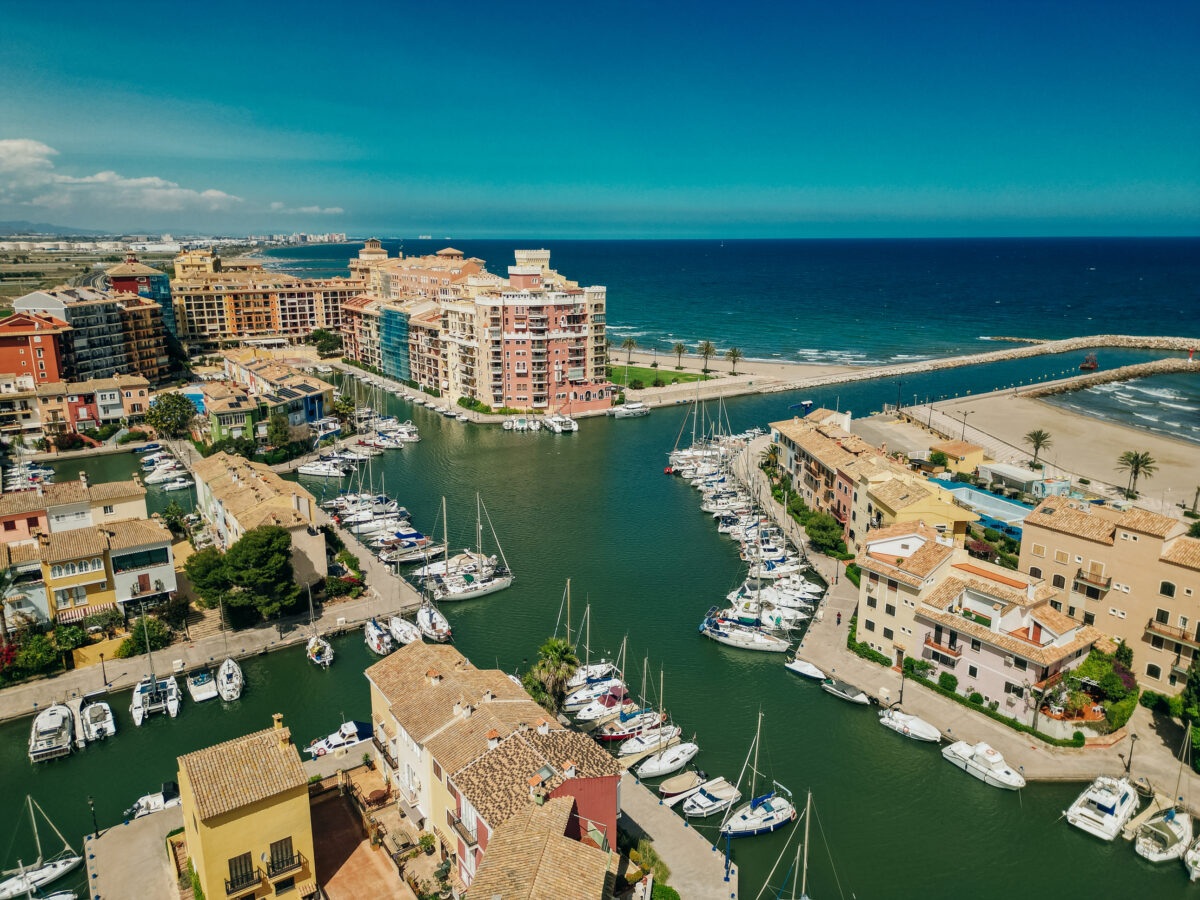
Photo by © Ibrester | Dreamstime.com Playa de Port Saplaya (Little Venice)
Port Saplaya is one of those places that surprises people—technically it’s just north of Valencia, but it feels like stepping into another world. The neighbourhood itself is nicknamed “Little Venice” thanks to the pastel-coloured houses and canals, and I love wandering through the marina before heading to the beach.
The sand here isn’t as wide as Malvarrosa, but it feels cosy, framed by the painted facades behind you and the open Mediterranean in front. It’s a favourite for lazy afternoons: swim, sunbathe, then grab an ice cream or sit on a terrace overlooking the boats. It’s less about wild landscapes here and more about charm, colour and atmosphere, which makes it one of the most photogenic spots on the coast.
Playa de La Pobla de Farnals
La Pobla de Farnals is one of those beaches that feels wonderfully local. It’s only about 15 minutes north of Valencia, but the pace instantly shifts—slower, more small-town, with a marina that gives it a cosy, nautical feel. The beach itself is wide and sandy with calm water that’s great for swimming, and it never feels overwhelmingly crowded.
What I always come here for, though, is the food. The little seafood restaurants near the marina serve some of the freshest fish and arroz dishes I’ve had on this stretch of coast. It’s the kind of place where you spend the morning on the sand, then roll straight into a long, lazy lunch that keeps you at the table until the sun dips.
-
Canary Islands
11 Best Beaches in the Canary Islands
Volcanic landscapes, year-round warm climate & black sand beaches
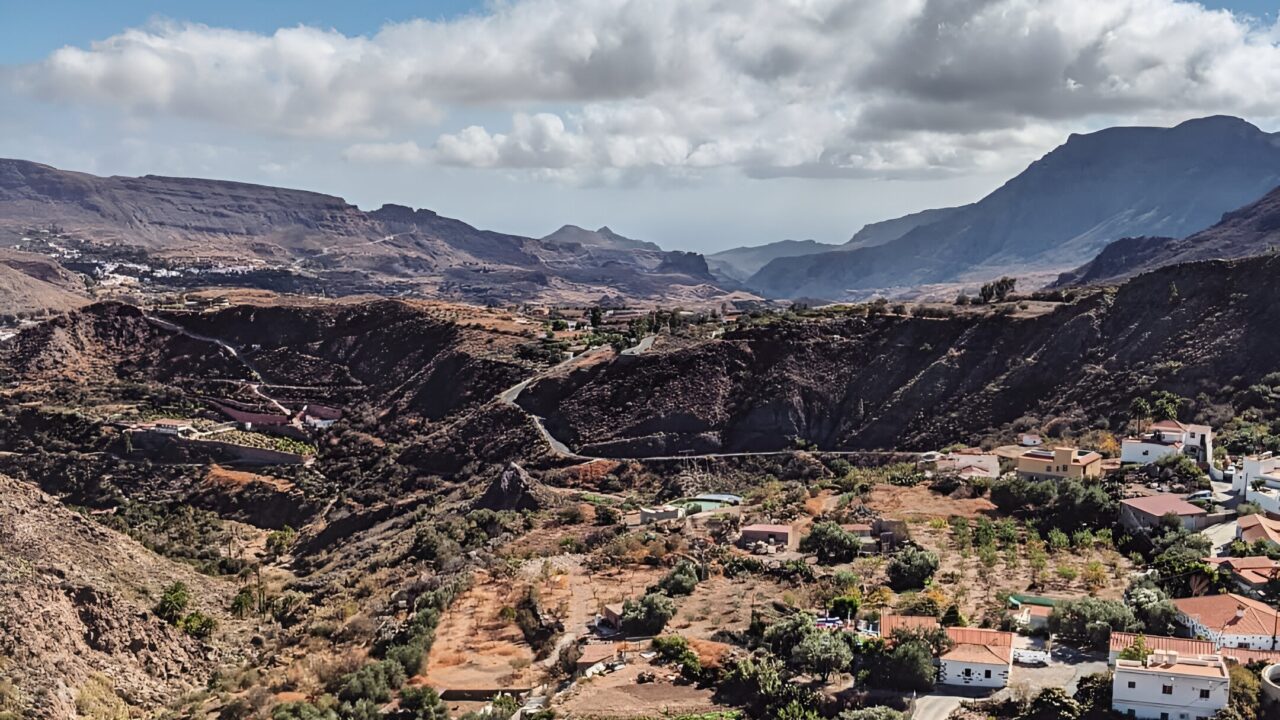
The Canary Islands are sure to put a spell on you. At least, that was my story. This Spanish archipelago in Macaronesia, off the coast of West Africa, is a region of diverse ecosystems, marvelous landscapes, a myriad of outdoor adventures, and magical beaches. From volcanic black-sand stunners on Tenerife to sprawling golden-sand desert stretches on Gran Canaria, the white-sand idyll on Fuerteventura, Lanzarote’s gorgeous wild bays, and La Grasiosa’s intimate ocean escapes—you’re in for a treat on the Canaries. My fascination with the islands began in Tenerife almost a decade ago, and I keep coming back to experience their irresistible charm and untamed energy.
Maspalomas, Gran Canaria
Best for the scenery and naturism
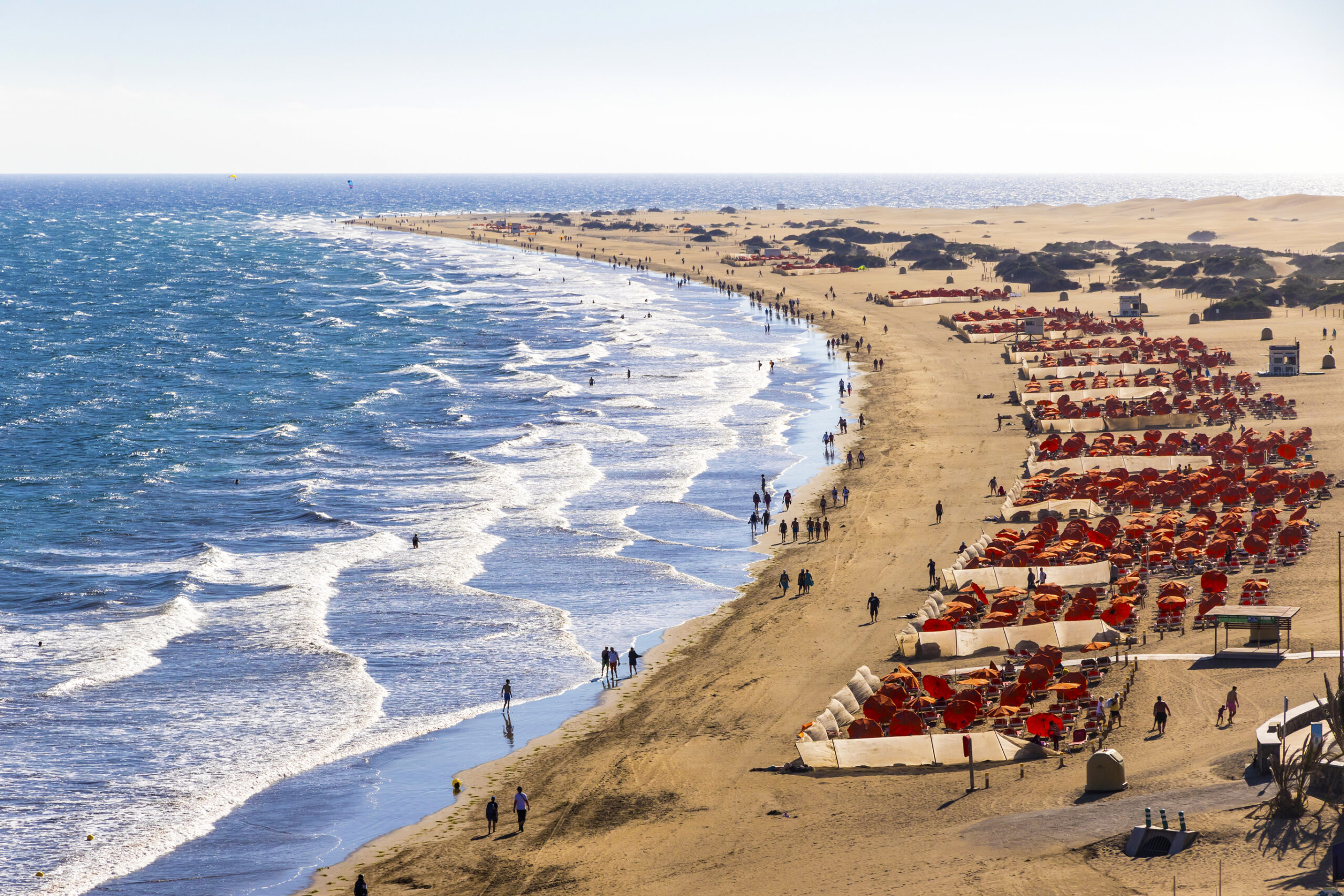
One of the most enchanting beaches in all of Spain, Maspalomas is a spectacular stretch of more than 5 miles of golden sands. It’s backed by nearly 1,000 acres of Sahara-like dunes. The beach is divided into several sections: Playa del Inglés is the most developed, with access to the resort town, while the Kiosco 5 is a LGBTQ-friendly and nudist part. You’d think that such a vast desert area would be a remote and desolate place, but it’s the opposite in Maspalomas. The magical dunes are easily accessible from the resort town, which encircles them. In the same hour, you can enjoy windsurfing and sunbathe naked with the picturesque high dunes backdrop, and then savor the seafood at the elegant five-star Riu Hotel restaurant. My favorite part about Maspalomas is the sunset—get yourself a spot atop the ridge and marvel at the orange-hued natural show.
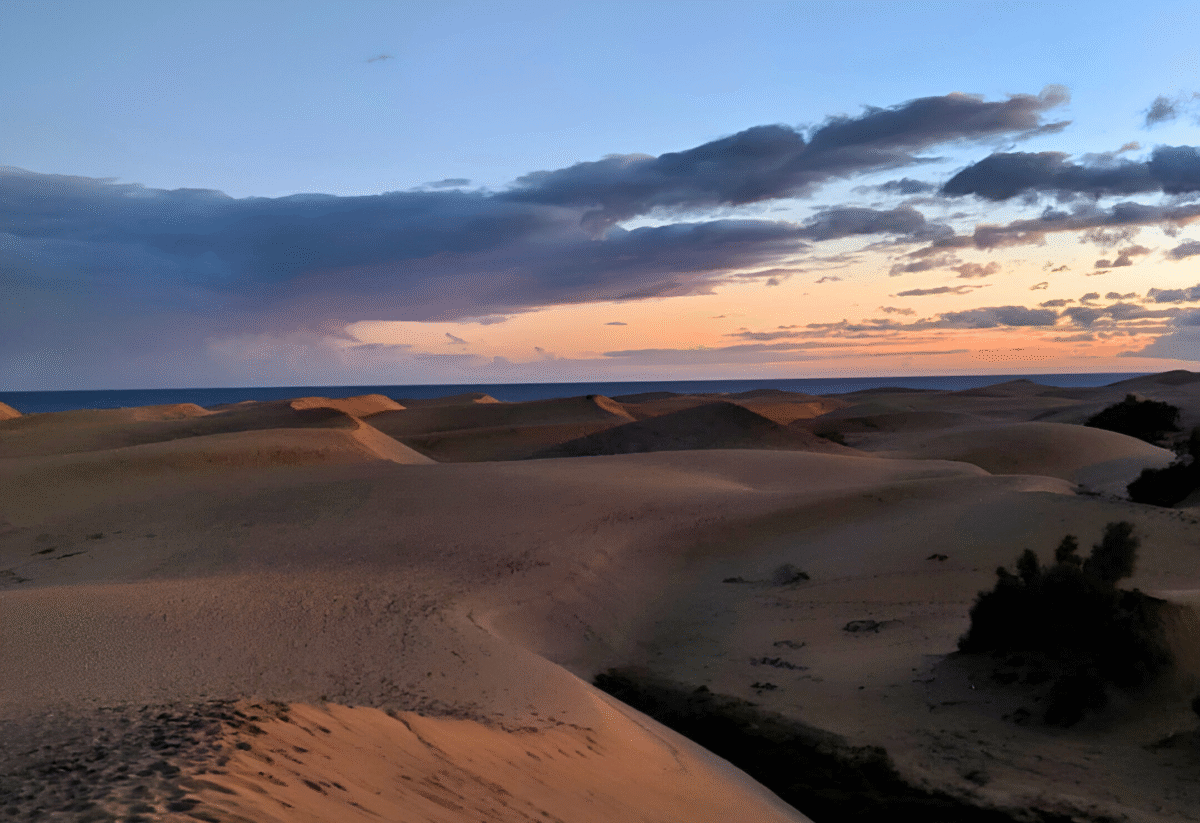
Photo Courtesy of Pavlo Fedykovych Las Canteras Beach, Gran Canaria
Best urban beach in the Canaries
One of the world’s greatest urban beaches, Las Canteras is a delight. Stretching for practically the whole center of Las Palmas, Gran Canaria’s capital city, it defines the local experience. There’s no water activity you cannot do at Las Canteras. It’s the main accompaniment to scenic walks, eating out at the borderwalk restaurants, lounging and sunbathing on the sands, kitesurfing, and even snorkeling. There is a reef in the middle of the beach, where you can dive and explore the underwater life. The southern end is the surfing hotspot, where you’ll have perfect conditions for conquering the waves. Las Canteras is also a family-friendly beach. The water access is mostly shallow, the sand is soft and there are several playgrounds.
Playa de Puerto Rico, Gran Canaria
Best resort beach with calm waters
Puerto Rico is a sheltered sandy bay surrounded by a classic resort town on Gran Canaria’s south coast. It’s not the most scenic of the stretches, but it’s perfect for kids. Breakwaters protect the beach, ensuring that the water is calm. The soft sand is ideal for sunbathing, building castles, playing around and wading in shallow ocean. In other words, it’s one of the coolest family-friendly beaches on the Canaries. Also, the restaurants, tall hotels, and bars with live music around give Puerto Rico a feel of mainland Spain—you can mistake yourself for being in Costa Blanca or Costa del Sol. Check out the open-air Shopping Center Puerto Rico for boutique stores and a big food court.
Ajuy, Fuerteventura
Best for black sand and cave exploration
There are beaches for relaxed swimming, and then there are beaches for nature admiration. While you can swim at Ajuy when the ocean is calm, that’s not the main reason to come. It is a stunning black-sand beach on the west coast of Fuerteventura, formed by the volcanic ash. There’s a charming, windy fishing village with several family-run seafood restaurants. But Ajuy is most famous for its caves. Cuevas de Ajuy is a breathtaking complex of 30-million-year-old volcanic caves. There’s a hiking trail through this coastal wonder that allows you to feel the geological power of the site.
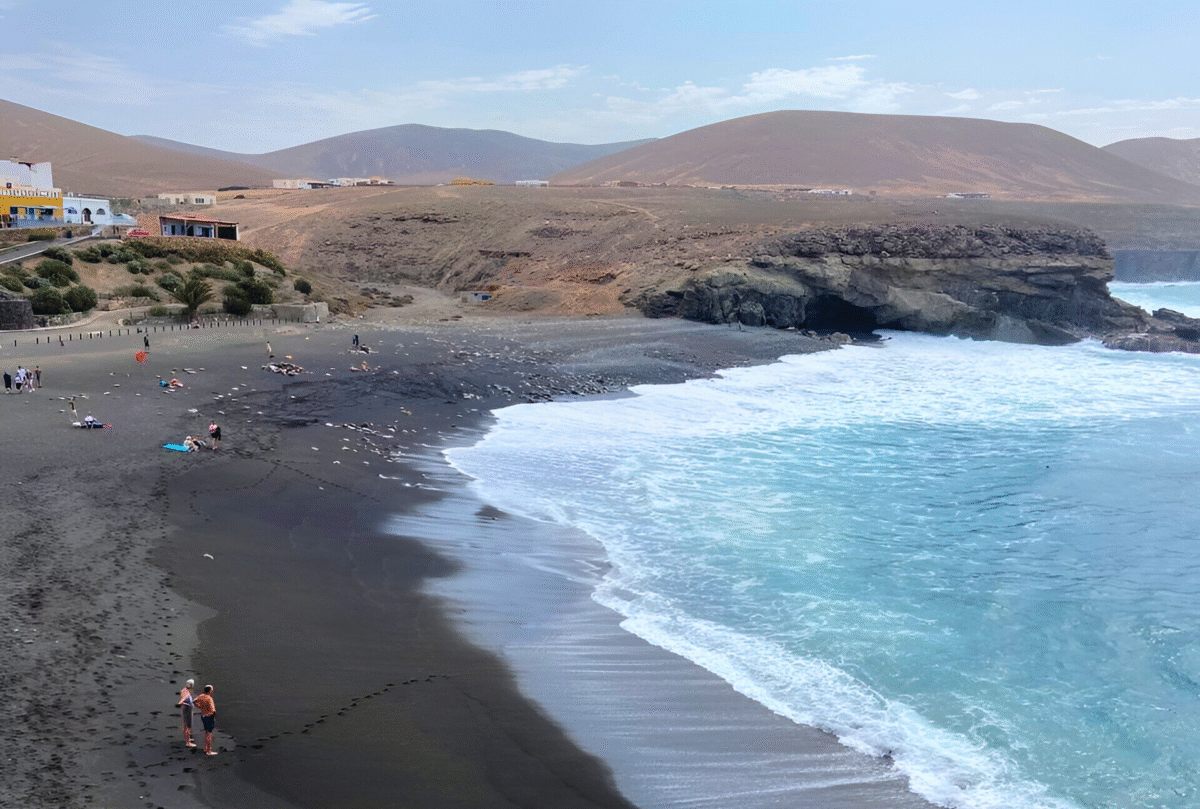
Photo Courtesy of Pavlo Fedykovych Playa de Los Cristianos, Tenerife
Best for families and city life
Los Cristianos is quite a divisive Tenerife destination. If your idea of a Canary holiday is beach-hopping through deserted stretches, exploring the untamed coast, and discovering hidden natural pools, it’s better to visit other places. But if you enjoy being in the center of resort action—a lively promenade with cafes, high-end hotels with spa complexes, buzzy city life—Playa de Los Cristianos and the neighboring Playa de las Vistas would work perfectly. Both stretches come with fine golden sands, sports facilities. and beach bars, while being minutes away from the center of Tenerife’s most popular holiday city. Also, these stretches are among the most accessible on the island, with wheelchair and pushchair access. The shallow ocean access, calm water, and playgrounds will make families happy. Another tourist high-hitter in the vicinity is Playa de las Américas, located near a popular shopping quarter.
Playa de Sotavento de Jandía, Fuerteventura
Best for shallow waters and soft white sands
With over 5.6 miles in length, Playa de Sotavento de Jandía is Fuerteventura’s most striking beach. It’s especially beautiful during the low tide, when the ocean forms shallow lagoons. Sotavento is great for families with kids—just imagine the wading and castle-building opportunities here. The beach is huge, so there’s never an issue with finding a spot. Thanks to ever-present winds, the stretch is a go-to for windsurfers and kitesurfers, who can endlessly enjoy the turquoise riding. Playa de Sotavento de Jandía is an umbrella name for five beaches between Jandía and Costa Calma. Playa de la Barca is the most favorite kitesurfing spot.
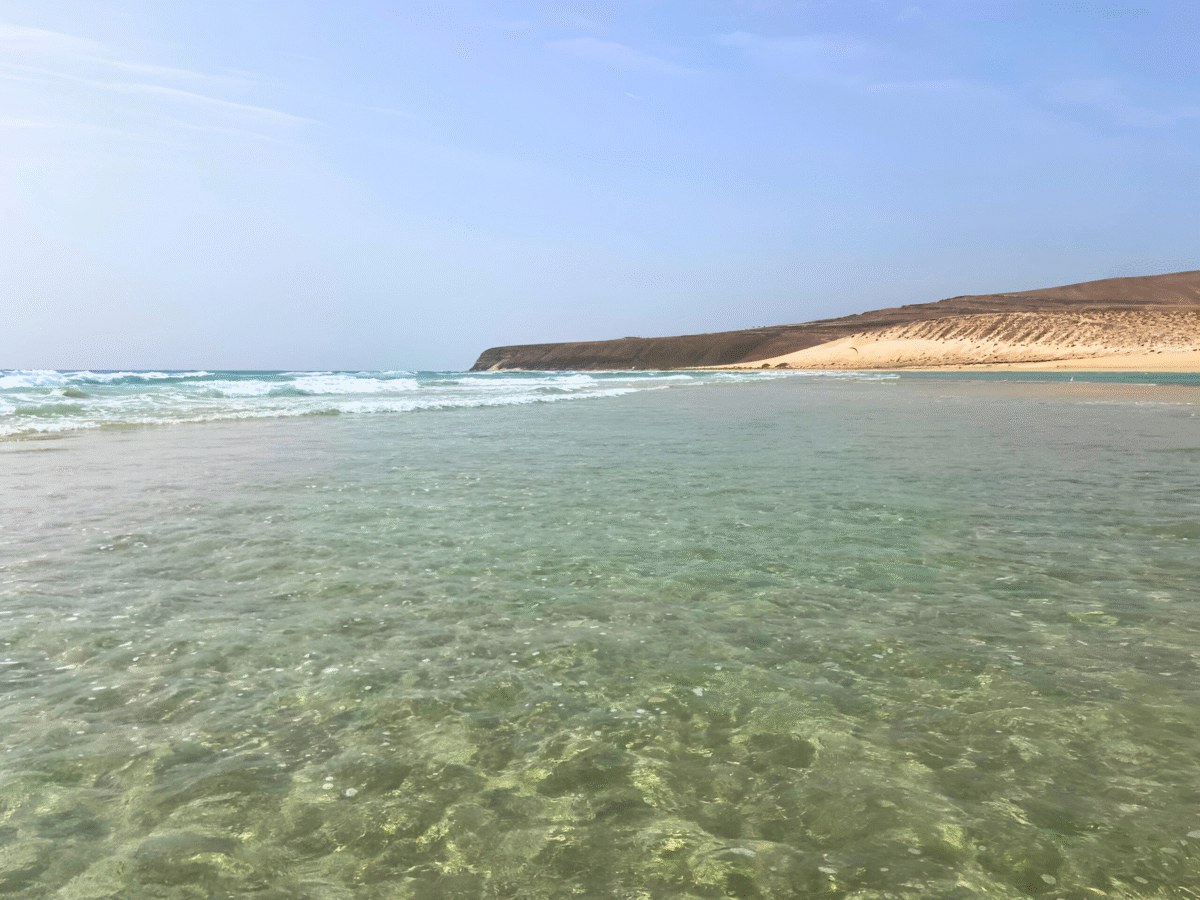
Photo Courtesy of Pavlo Fedykovych La Tejita Beach, Tenerife
Best for the breathtaking scenery
Bordered by the Mars-like Montaña Roja volcano, La Tejita is among Tenerife’s most photogenic wild beaches. It’s a wide expanse of golden sands with the remote allure and beautiful ocean views. The beach is easily accessible from the village of La Tejita. If you’re looking for a place to take all your clothes off on Tenerife, La Tejita also doubles as a popular nudist spot. Go to the area next to Montaña Roja for a clothing-optional zone. You can also go to the top of the Special Nature Reserve Montaña Roja—the scenic hiking trails start from La Tejita beach. Another unique bathing site to check is Piscinas Naturales Los Abrigos: a series of natural pools in the volcanic black rocks. This sublime location is between La Mareta and Los Abrigos.
Corralejo Beach, Fuerteventura
Best for silky soft sands
If you love sandy beaches, Corralejo is the one. Flanked by the largest dunes in the Canaries, it’s a spectacular area for bathing. The beach starts at the southern end of the resort town of Corralejo and stretches for miles. It gets wilder and less crowded as you go further south. Being in such a place feels sublime—the dune setting is awe-inspiring and the milky sand sports a Caribbean look. Two things to know about Corralejo: the water might be cold, and the wind will most probably be strong. It’s the open ocean, so don’t expect a calm sea. Sunbathing will be amazing. As with other Fuerteventura beaches, Corralejo is the ultimate windsurfing spot. You can rent equipment in town or at the Flag Beach watersports center. There are two Riu resorts right in the middle of the beach for a scenic stay. A short ferry ride from Corralejo will take you to Isla Lobos, an idyllic islet with more divine sandy beaches.
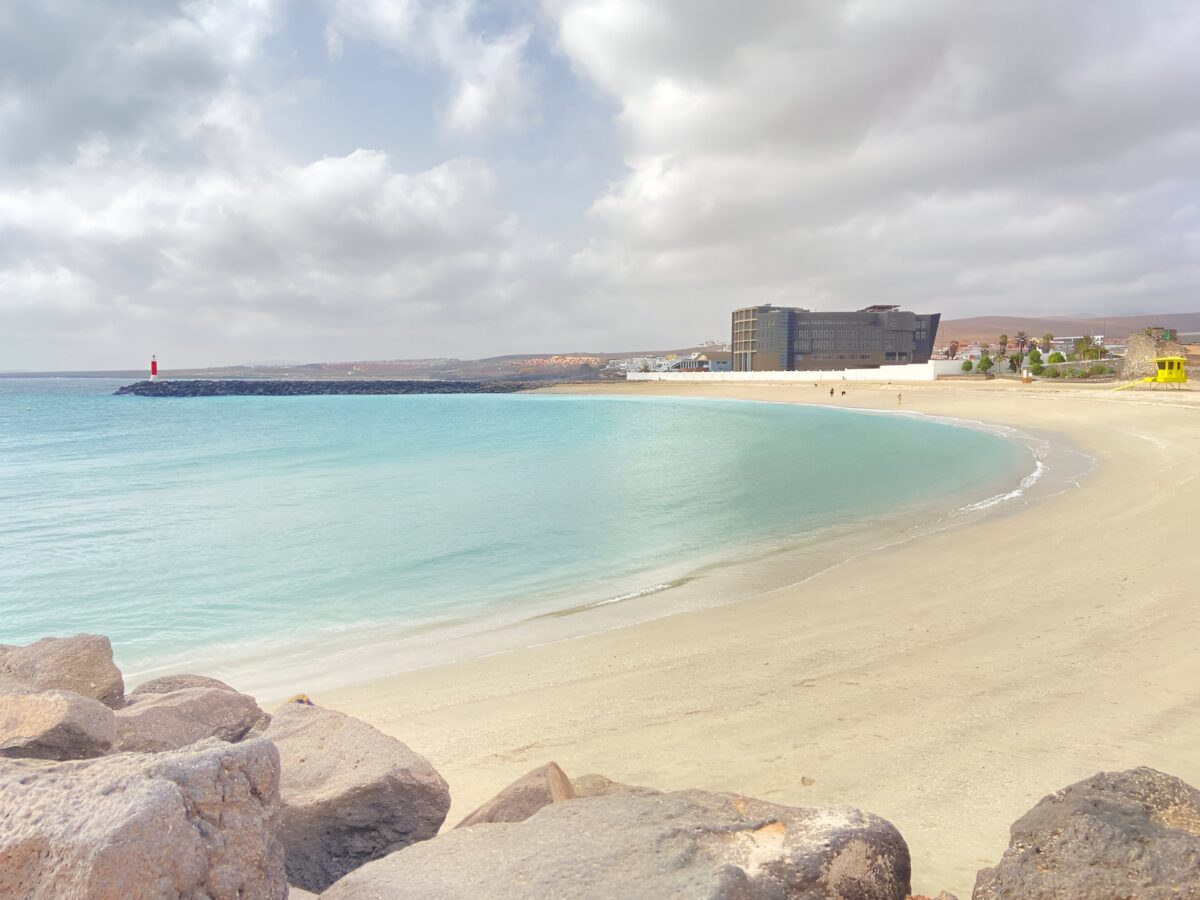
Photo Courtesy of Pavlo Fedykovych Playa de las Conchas, La Graciosa
Best for wild allure and naturism
There are many remote beaches on the Canary Islands, but Playa de las Conchas takes the crown. Located on La Graciosa, a small island off the coast of Lanzarote, this stretch is a magnificent spot, offering golden sands and blue ocean. Reaching it requires some effort—all the roads on La Graciosa are unpaved, and biking is the best option. Once you’re there, it’s a dreamy view of the unspoilt Atlantic. Bathing is a challenge due to strong currents, but sunbathing is a must. Playa de las Conchas is clothing-optional, so bare it all if you feel like it. The wild local landscapes are perfect for naturism.
Playa de Las Teresitas, Tenerife
Best for swimming
Las Teresitas is gorgeous. A crescent-shaped strip backed by the greenish brown mountains. It’s a perfect postcard view. Las Teresitas is also unlike any other beach in Tenerife. This mile-long stretch is man-made. It was constructed in the ’70s to serve the port of Santa Cruz. 270,000 tons of the Sahara’s white sand were brought to the island to create this bay. Today, it’s among the most popular stretches on Tenerife—both for the looks and the beach itself. Thanks to a long breakwater in front, there are no waves, and the sea is almost always tranquil. A perched village of San Andrés, at the beginning of Las Teresitas, creates a picturesque backdrop.
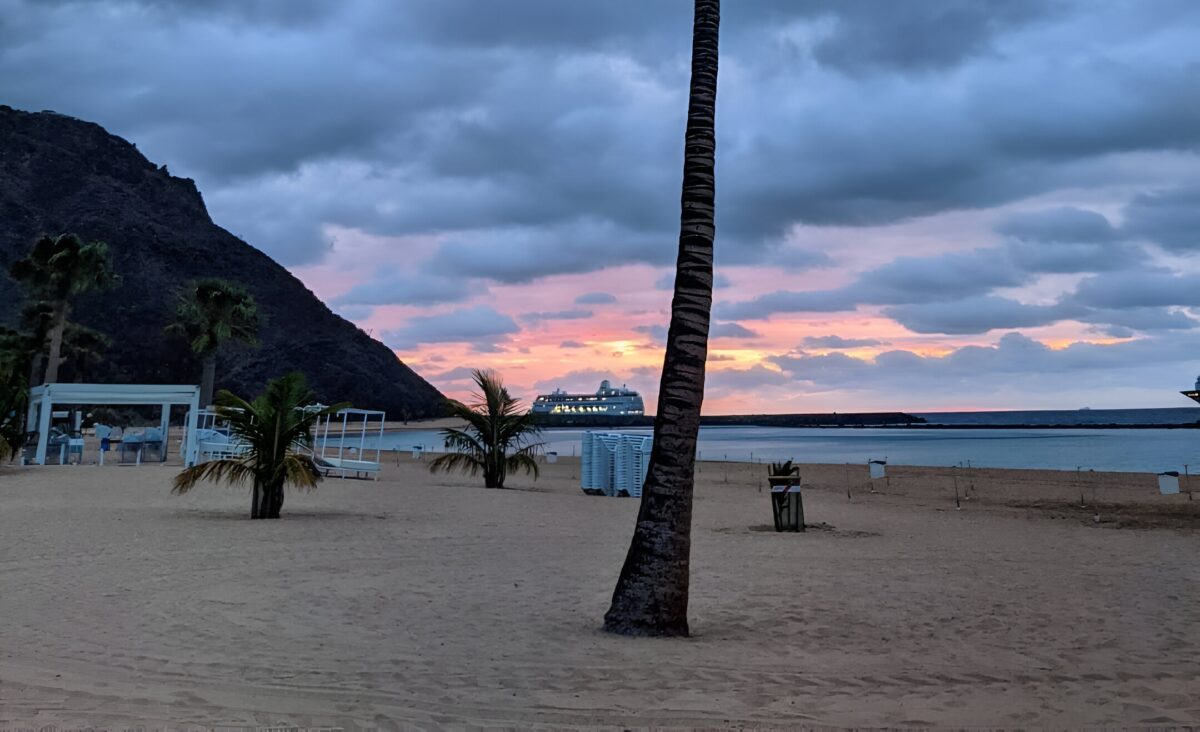
Photo Courtesy of Pavlo Fedykovych Papagayo Beach, Lanzarote
Best for lunar landscapes and pristine surroundings
One of the most beautiful beaches on the Canary Islands is in Lanzarote. Papayago, on the island’s southernmost tip, is a striking cove between two cliffs. Come here for soft white sands, larger-than-life ocean views, and the unspoilt rocky coast. The beach is well-sheltered from strong winds, so swimming is easy. Thanks to the underwater reefs, snorkeling at Papagayo is fantastic. Try Canarian food with the ocean views at Be Papagayo chirunguito, a traditional Spanish beach bar with grilled seafood and drinks. You will find more dreamy white sand at Playa de la Cera, Playa del Pozo, and Playa Mujeres north of Papagayo.
-
Malta
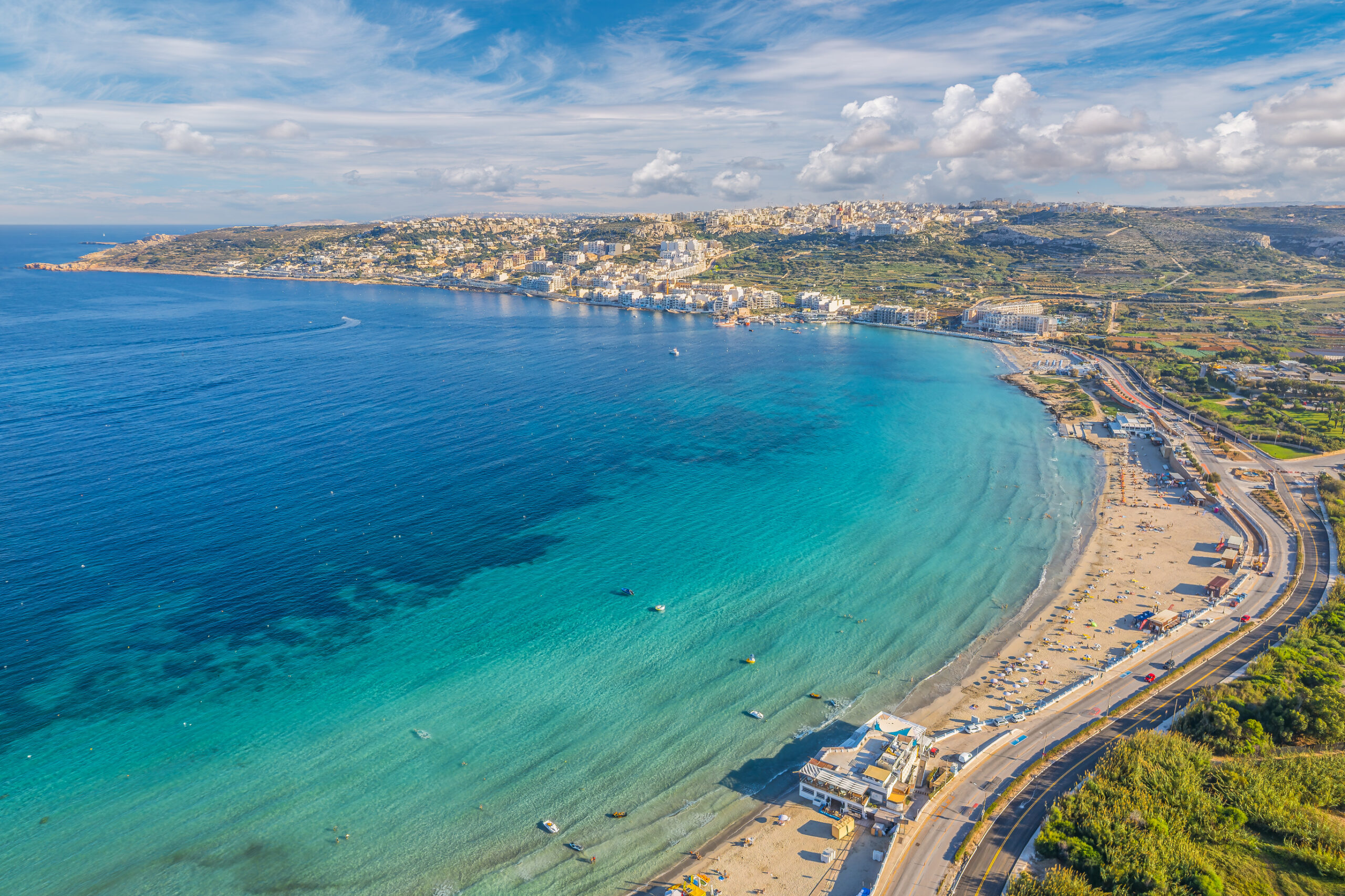
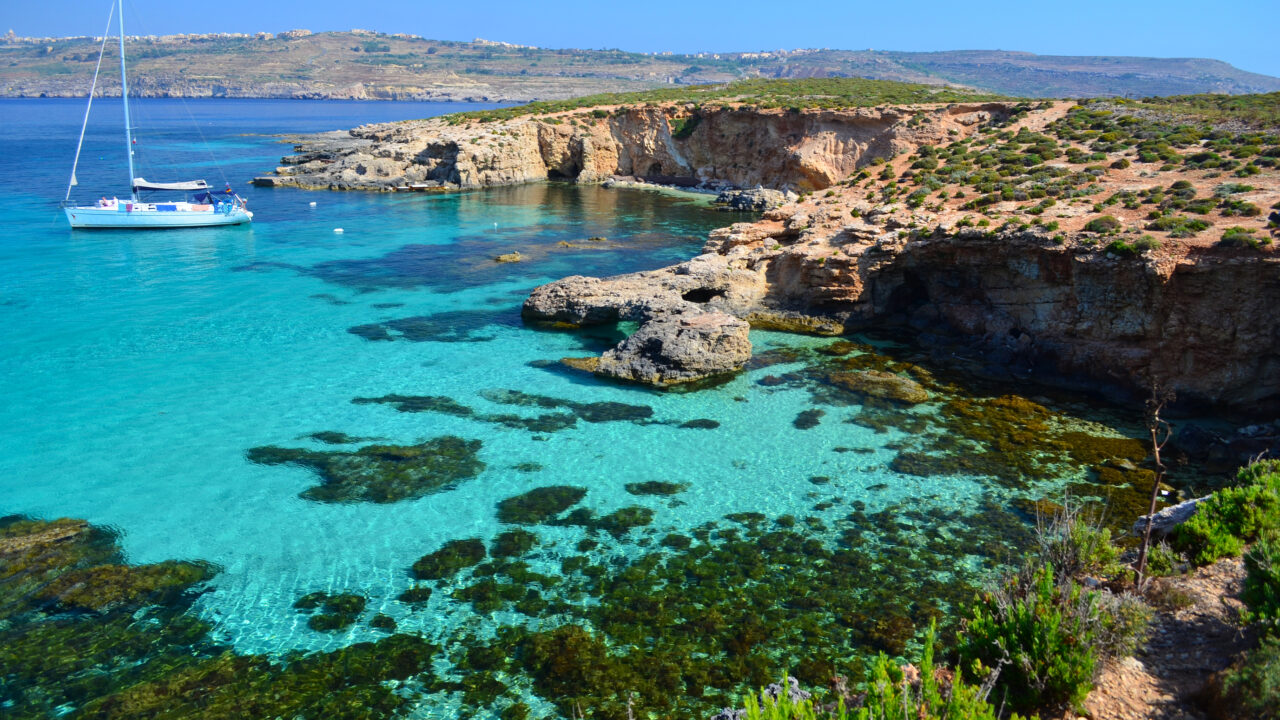
Malta’s coastline offers some of the Mediterranean’s most spectacular beaches, from the world-famous turquoise waters of Blue Lagoon to more expansive sandy stretches perfect for families. This archipelago of three main islands—Malta, Gozo, and Comino—combines dramatic limestone cliffs with hidden coves and pristine beaches that rival any Caribbean destination.
Having explored Malta’s beaches firsthand during an October visit, I can attest to the magic of swimming in these crystal-clear Mediterranean waters (even as autumn arrives). The comfortable temperatures and fewer crowds make shoulder season an ideal time to discover both famous spots like Blue Lagoon and more undiscovered spots like the secluded Ghajn Tuffieha Bay.
Blue Lagoon, Comino
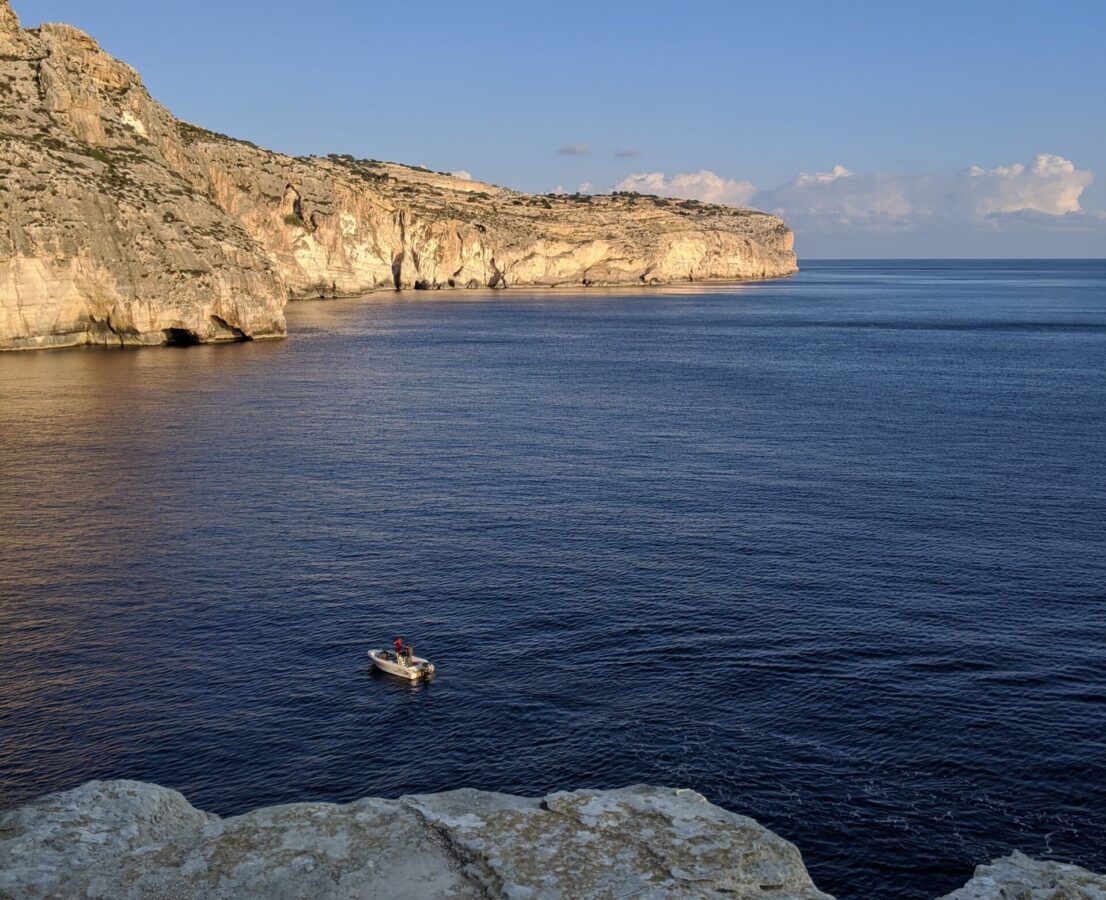
Photo Courtesy of Taylor Haught The water here is every shade of blue you’ve ever imagined, layered on top of each other like someone spilled an artist’s palette into the sea. The water so clear you can count pebbles on the seabed 15 feet down, and the silence broken only by the gentle lap of waves against the limestone platforms. Come early if you want solitude, because by noon, boats arrive loaded with day-trippers. The flat rock platforms become prime real estate for sunbathing, and the shallow areas fill with snorkelers marveling at the underwater visibility. Bring reef-safe shoes: the rocks can be sharp, and the best entry points aren’t always obvious. Also, that famous Instagram shot everyone posts? You’ll get it from the boat on the way in, not from the beach itself.
Paradise Bay
Paradise Bay lives up to its audacious name, but in a quiet, understated way that makes it feel like a secret even though it’s marked on every map. Tucked into a small cove near Mellieha you’ll take a short walk down from the car park with glimpses of that impossible blue water appearing between the trees. When you finally reach the sand, it hits you: this perfect horseshoe of golden beach surrounded by limestone cliffs that look like ancient cathedral walls, with water so clear you can see every ripple on the sandy bottom.
Morning brings the serious swimmers and snorkelers, afternoon attracts couples looking for romantic photo ops, and evening draws families for peaceful dinners at the beach bar while their kids play in the gentle shallows as the sun sets behind the cliffs.
Ramla Bay, Gozo
Ramla Bay is where I fell in love with Gozo. The sand here is unlike anywhere else I’ve been. The color is a striking orange-red and the texture, fine and soft with tiny flecks that catch the light.
The bay is huge by Malta standards, stretching in a perfect arc between protective headlands, and I had it almost entirely to myself. The only sounds were waves lapping the shore.
The water at Ramla has its own character too. It’s calmer than the exposed beaches on Malta, protected by the bay’s natural curve, but with more personality than a lagoon. The swimming is excellent, with a gradual deepening that makes it perfect for long, meditative swims parallel to the shore.
Mellieha Bay (Ghadira Bay)
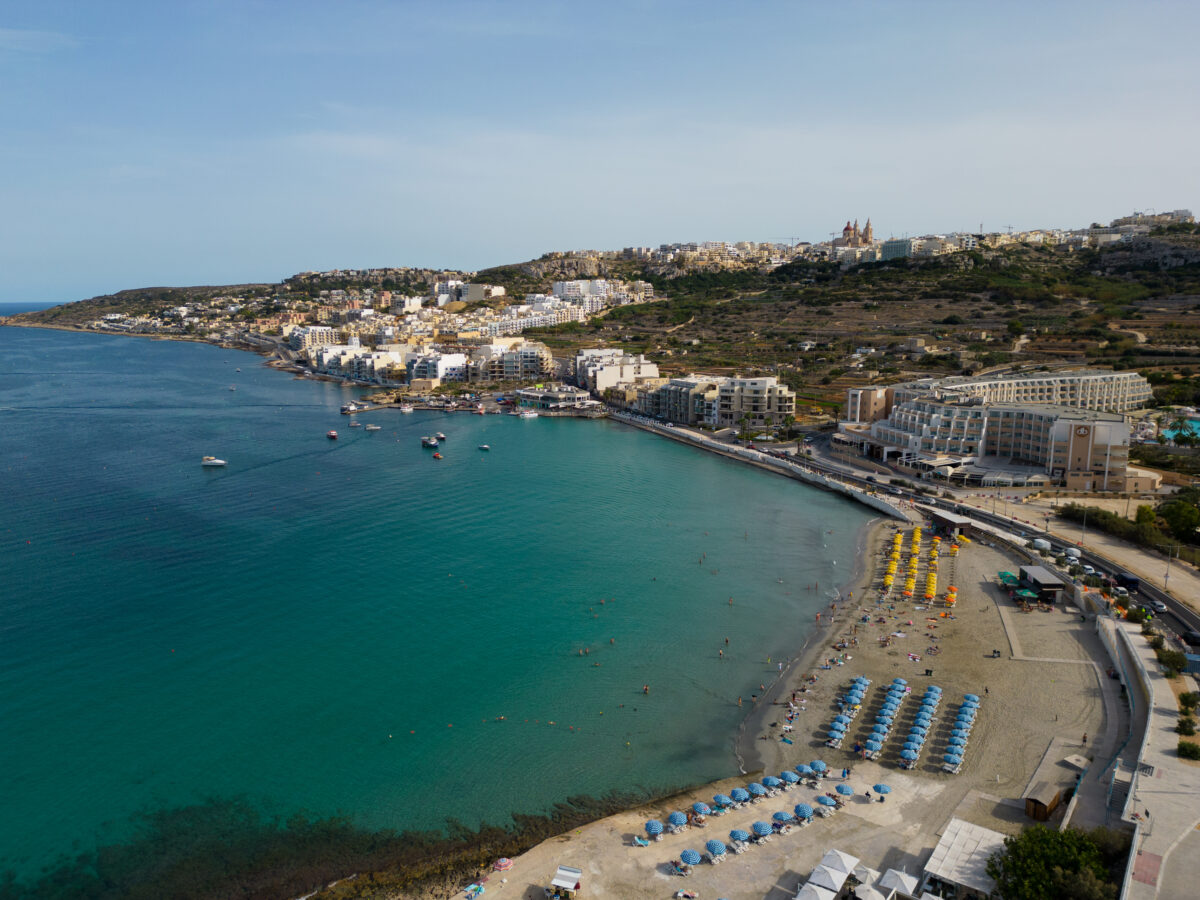
Photo by © Peterbabnik8 | Dreamstime.com This sweeping crescent of golden sand stretches for nearly a kilometer, and I spent entire afternoons here just watching the theater of Maltese beach life unfold.
The bay’s magic lies in its shallows. You can walk out 100 meters and still be chest-deep, making it perfect for the endless parade of Maltese families who arrive each weekend loaded with umbrellas and coolers.
I’m not sure if it’s the sand filtering the water or just the way this bay sits protected between two rocky headlands, but swimming here feels like slipping into a warm bath. The locals know it too; every evening around sunset, you’ll see serious swimmers doing their laps parallel to the shore, cutting through the water with the practiced strokes of people who’ve been doing this routine for decades.
Armier Bay
Armier Bay is actually two distinct beaches connected by a short walk but offering completely different experiences. The main bay gives you that classic Mediterranean beach day with crystal-clear water and space to spread out, while the smaller northern section feels like a private cove where locals come to escape.
The northern section is for refuge when you want solitude. Separated from the main beach by a small rocky outcrop, it attracts fewer visitors but offers the same spectacular water quality.
St. Peter’s Pool
Getting to St. Peter’s Pool feels like joining a secret club. Park among the prickly pear cacti and make the short walk down to the pool.
And what a pool it is. Carved from solid limestone by millennia of Mediterranean storms, St. Peter’s Pool is a natural amphitheater of flat rock platforms surrounding water so blue and clear it looks like a high-end infinity pool.
This isn’t a beach for everyone. There’s no sand, no shade, and definitely no facilities—just you, the rocks, and some of the most spectacular swimming water in the Mediterranean. The limestone platforms heat up beautifully in the sun, creating perfect spots for sunbathing between swims, and the various levels mean you can find jumping spots suited to your comfort level (though I recommend watching the locals first—they know exactly where the water’s deep enough).
Golden Bay
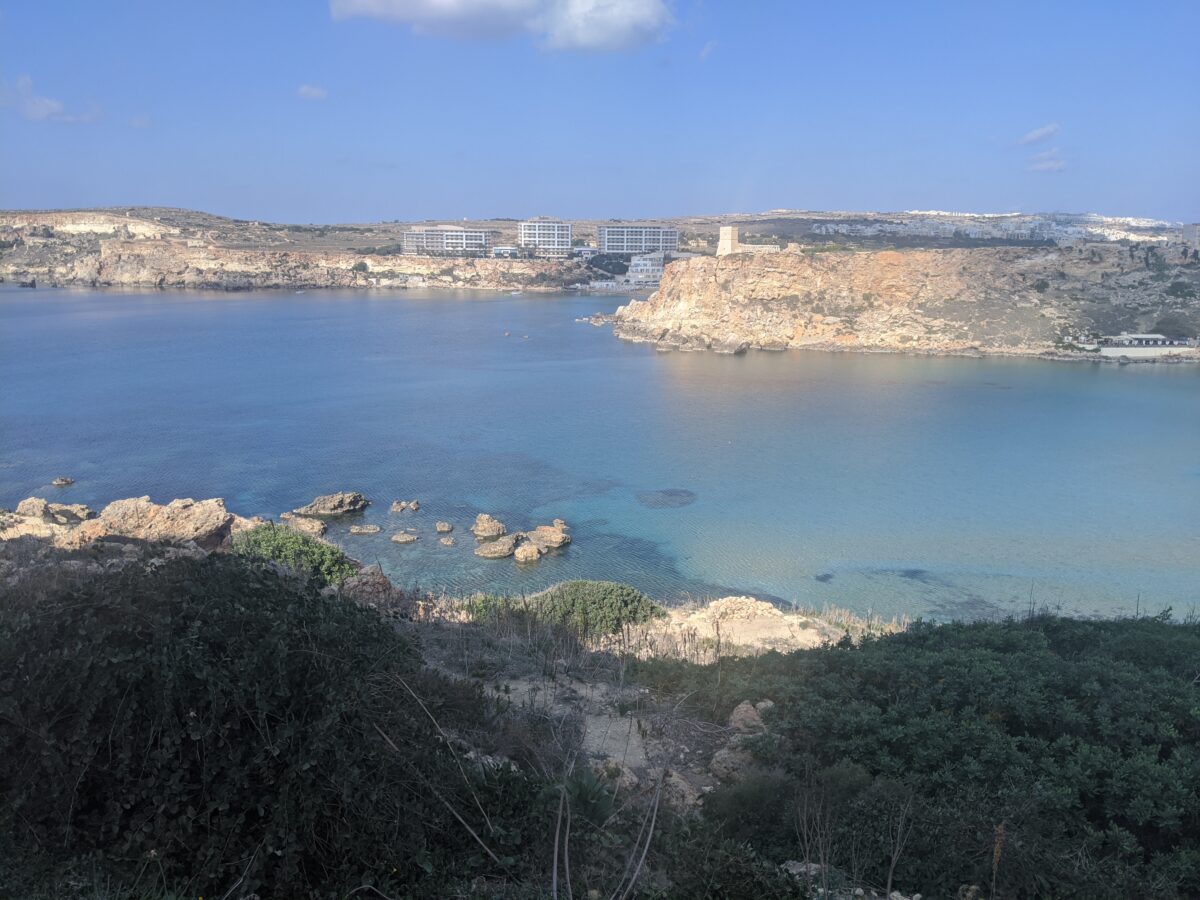
Photo Courtesy of Taylor Haught Golden Bay earned its name honestly—both the sand and the way the evening light hits those protective limestone headlands create this warm, honeyed glow. I came here initially for the sunset (everyone in Malta will tell you it’s the spot), but ended up returning day after day for the sheer energy of the place.
This is Malta’s party beach, but in the best possible way. The beach clubs here create this laid-back festival atmosphere where you can roll from a morning cappuccino to afternoon cocktails to evening dinner without ever leaving the sand.
The bay faces directly west, which means two things: spectacular sunsets and serious afternoon wind. The windsurfers and kitesurfers know this well—by 2 PM, the bay transforms into a colorful chaos of sails and boards.
But it’s the sunsets that really steal the show. Every evening, a informal gathering develops along the shoreline as locals and tourists alike position themselves for the daily spectacle.
Pretty Bay, Birżebbuġa
Pretty Bay might be Malta’s most unpretentious beach, and I mean that as the highest compliment. While other beaches compete on dramatic beauty or pristine nature, Pretty Bay succeeds by being exactly what a local beach should be—accessible, welcoming, and perfectly functional for the business of everyday beach life.
The sand here is imported, which could feel artificial, but somehow doesn’t. Instead, it creates this perfectly groomed environment that works beautifully for families with small children, elderly swimmers who need easy access, and anyone who just wants to enjoy a straightforward beach day without drama. The sea wall protects the bay from rougher weather, creating consistently calm conditions.
What Pretty Bay offers is something increasingly rare: a beach that exists primarily for locals to enjoy, rather than to attract tourists. The result is an authentic slice of Maltese beach culture that’s both welcoming to visitors and genuinely representative of how Maltese families spend their beach time.
The facilities here are excellent. Clean restrooms, good parking, several cafés and restaurants that serve solid local food at reasonable prices, and rental equipment that’s maintained for local use rather than tourist markup.
The protected conditions mean the water stays warmer longer into the season, and the gradual slope of the imported sand creates perfect conditions for confident swimmers and nervous beginners alike.
Ghajn Tuffieha Bay
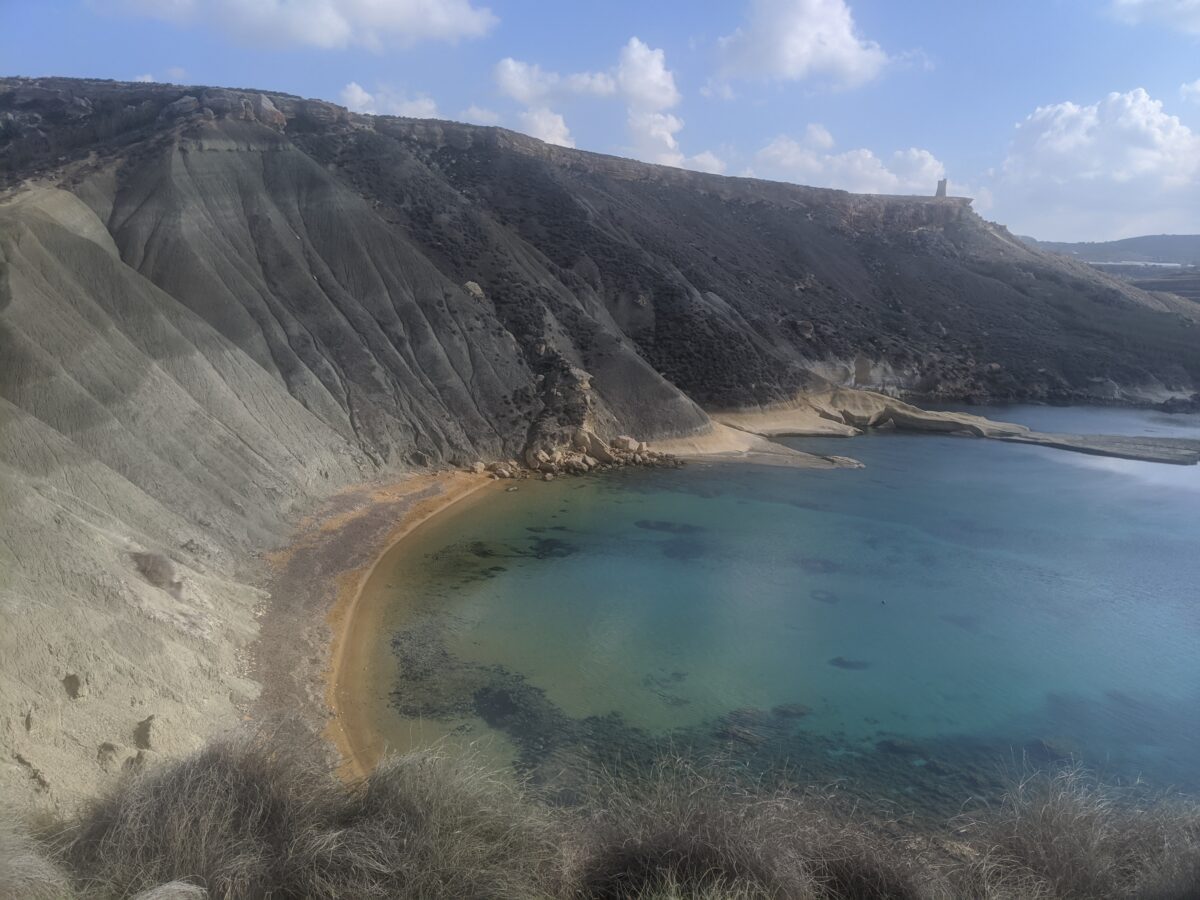
Photo Courtesy of Taylor Haught The 15-minute walk down to Ghajn Tuffieha is part pilgrimage, part workout, and entirely worth every step. The winding path descends through Mediterranean scrubland, revealing teasing glimpses of orange-golden sand and turquoise water through the vegetation until you finally round the last corner and the full glory of the bay opens up before you like a reward for your persistence.
Combined with the honey-colored limestone cliffs and that particular shade of blue-green water that Malta does so well, it creates a palette that looks almost artificial until you realize this is just what happens when geology and light collaborate perfectly.
Without the distractions of beach bars and water sports rentals, you become more attuned to the natural rhythms here. It’s meditative in a way that the busier beaches rarely achieve.
-
Ireland
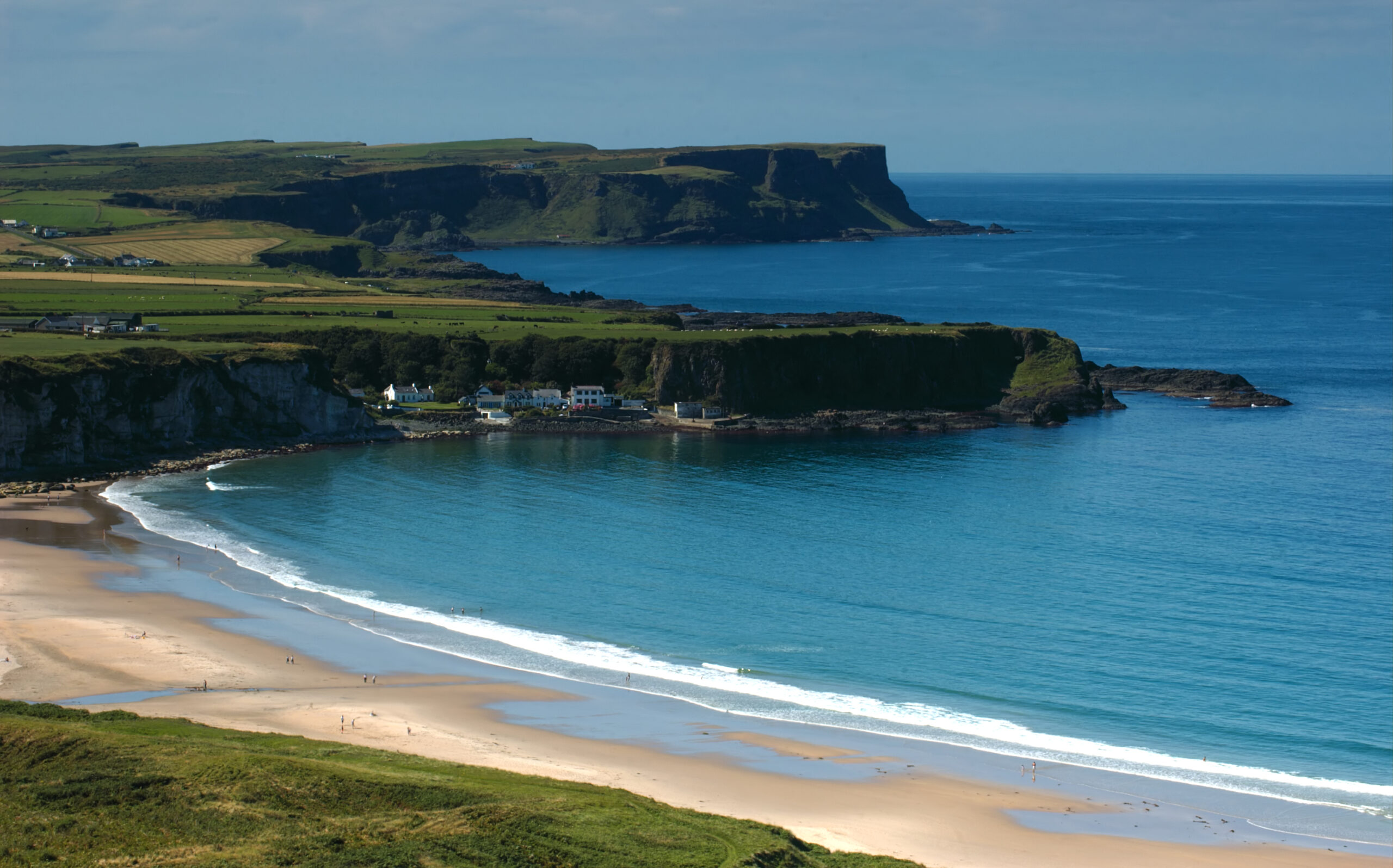
With family in Ireland, I’ve spent a lot of time exploring the country’s beautiful shores over the years. The Emerald Isle has 4,600 miles of rugged coastline with many enticing beaches—those on the east coast, along the Irish Sea, offer calmer waters and more sheltered stretches ideal for swimming in the summer. The west coast is more dramatic, with vibrant green hills plunging to steep cliffs hiding coves with golden sands thrashed by powerful waves.
No matter what type of beach you’re looking for, there’s bound to be one within relatively easy reach, whether you’re looking to spend the day swimming and sunbathing at a picturesque span near the city of Dublin, relax at an idyllic stretch in a remote locale, or surf epic waves. When making your plans to visit, you might even consider focusing your trip around one (or more) of the best beaches in Ireland.
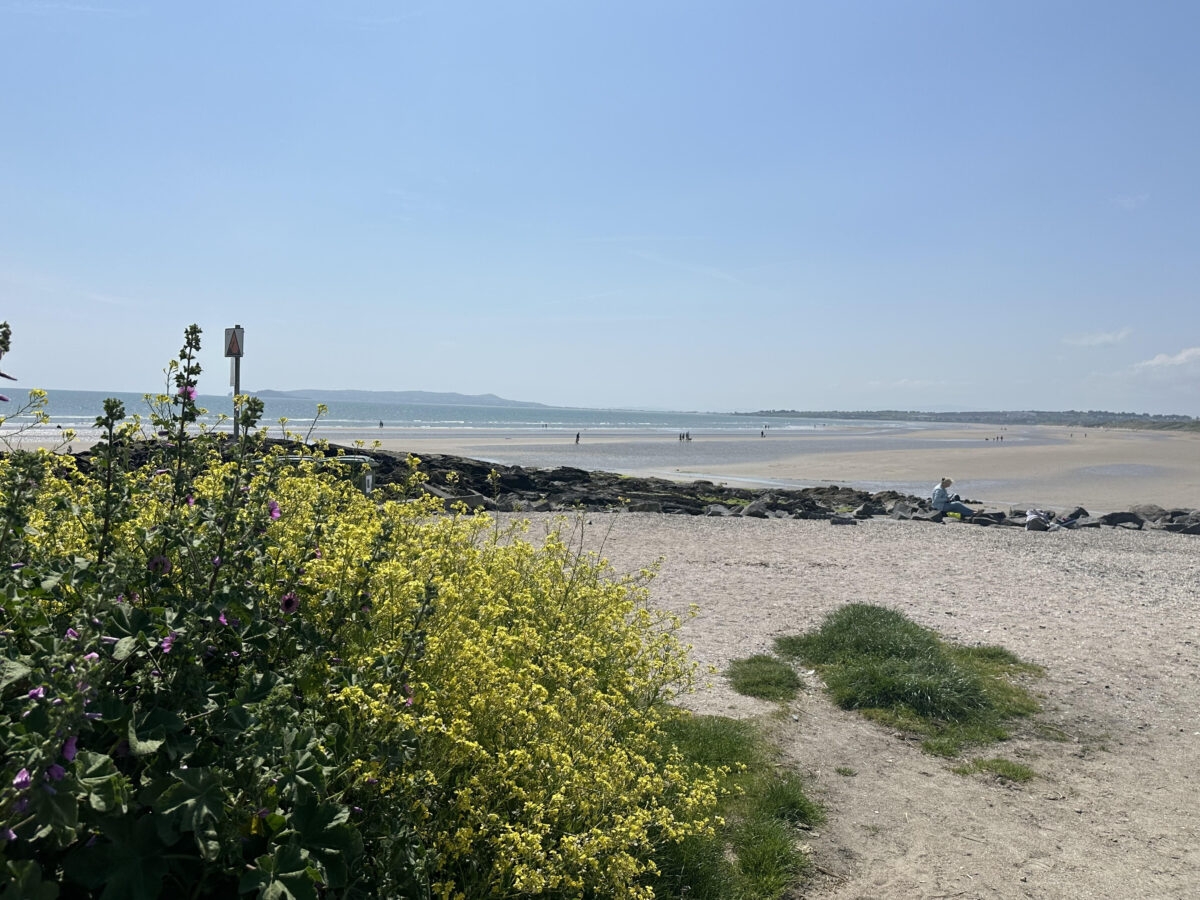
Photo Courtesy of K.C. Dermody Balcarrick Beach, County Dublin
One of the most spectacular beaches in the Dublin area, Balcarrick is a true hidden gem, one that mostly only the locals visit as it’s well off the beaten tourist path in the suburb of Donabate in North County Dublin. Ideal for those staying in or near the Irish capital, it’s a Blue Flag beach, designated as such for its pristine state with soft sands and swimmable blue waters. Stretching for two miles, it’s also a great spot for a stroll, with scenic views of the Malahide Estuary, Howth, and Lambay Island.
When the tide is out, tidepooling is a popular activity here. At the north end of the beach, the main access point, you’ll find the Waterside Hotel with a restaurant that has an outdoor patio where you can dine or relax with a pint of Guinness and a view.
Brittas Bay Beach, County Wicklow
An hour’s drive south of Dublin is one of County Wicklow’s most popular beaches. Another Blue Flag beach, it offers an over three-mile-long stretch of powdery sands and dunes that are ecologically important, supporting a diverse array of wildlife and rare plants. You can often see pink pyramidal orchids popping up among the dunes. Many come during the summer to enjoy a refreshing dip with lifeguards staffed here during the season, as well as to enjoy water sports like SUP and surfing, with a surf school on-site.
If you’re a fan of the History Channel’s “Vikings” series, this beach might look familiar, as scenes involving the Viking landings on the beach were shot here.
Curracloe Beach, County Wexford
Continue another hour south and you’ll reach the beach that’s famous for being the filming location for scenes featuring Omaha Beach in “Saving Private Ryan.” You might have seen it in the 2015 romantic period drama “Brooklyn” too, where stars Saoirse Ronan and Domhnall Gleeson walk along the shore. It’s even prettier in person, while offering activities like long walks on the approximately 10-mile-long span, swimming on calmer days, and birdwatching in the surrounding dunes. On a windy day, it’s a popular spot for windsurfing.
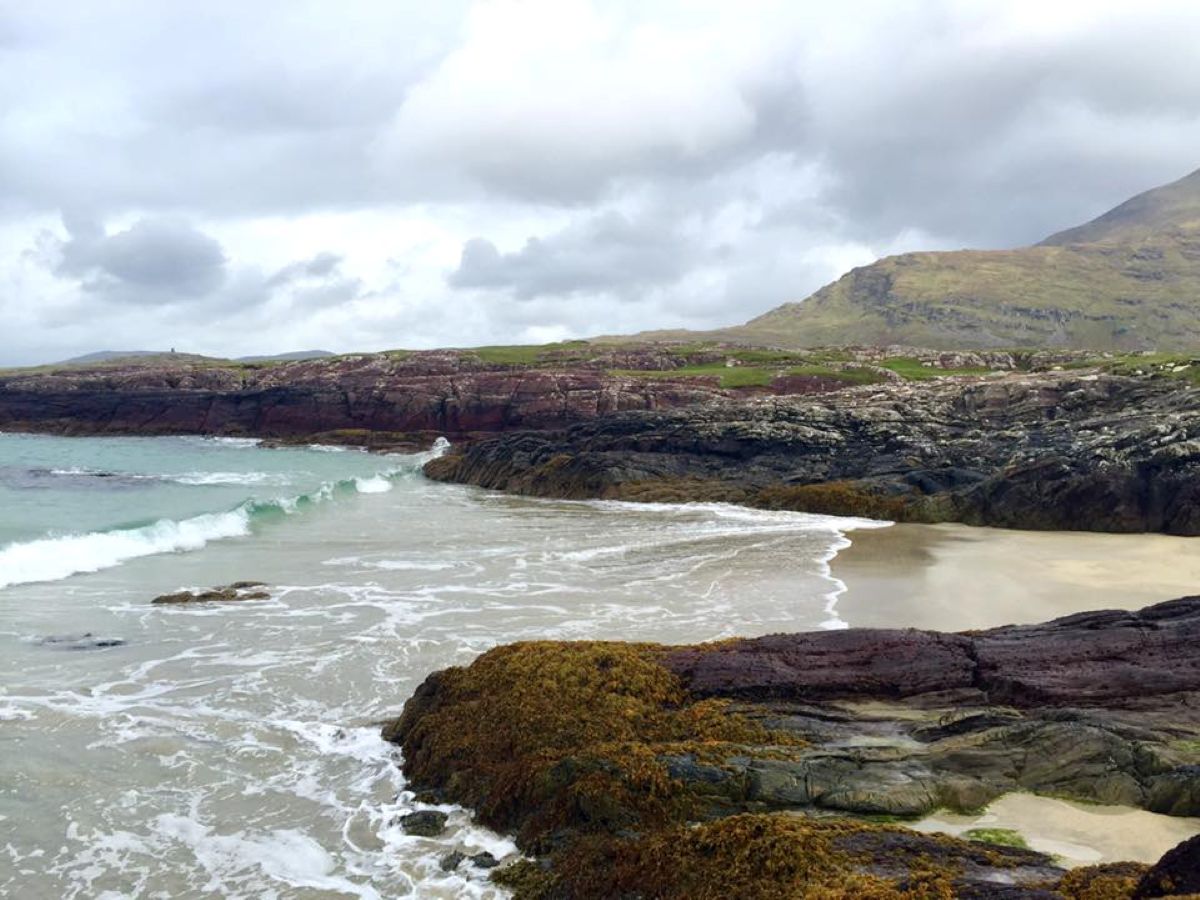
Photo Courtesy of K.C. Dermody Coral Beach – Carroe, County Galway
One of the most stunning beaches in all of Ireland, Coral Beach or Coral Strand, is in the Connemara region, made not from sand but a fine, coraline algae known as maёrl, a type of seaweed that hardens and washes ashore. It creates a distinct white appearance, strikingly contrasted by the turquoise waters. On a pleasant day, the water is usually calm and ideal for swimming or even snorkeling. Despite its beauty, it manages to retain a tranquil atmosphere, making it perfect for relaxing while enjoying the natural surroundings.
Ardmore Beach – Ardmore, County Waterford
Sandy Ardmore Beach in the village of Ardmore is a sweeping stretch with water that’s safe for swimming and enjoying other activities like kayaking and SUP. There’s plenty of room for sunbathing too, with the beach about two-thirds of a mile long, and just steps away, you’ll find the Ardmore Cliff Walk, which offers a stroll back in time passing medieval St. Declan’s Monastery, which includes a well-preserved round tower and the ruins of a medieval cathedral.
While you can bring a picnic to enjoy at the beach, the oceanfront Cliff House Hotel is a short walk away, offering a bar and a Michelin-starred clifftop restaurant for a leisurely lunch or a celebratory dinner.
Inch Beach, County Kerry
Arguably the most famous beach in Ireland, Inch is yet another stretch that’s been featured in blockbuster films, including 1981’s “Excalibur,” 1970’s “Ryan’s Daughter,” and 1992’s “Far and Away.” The three-mile-long Blue Flag-designated sand spit extends into Dingle Bay and is just 14 miles from the popular town of Dingle.
Inch Beach is a favorite for surfing in the area, often offering outstanding waves thanks to its west-facing position. In the summer, there are local surf schools here that can help get you up on a board. Otherwise, it’s a good place for a walk and a swim, with lifeguards here during the season. You’ll also find a beach bar and casual restaurant right on-site.
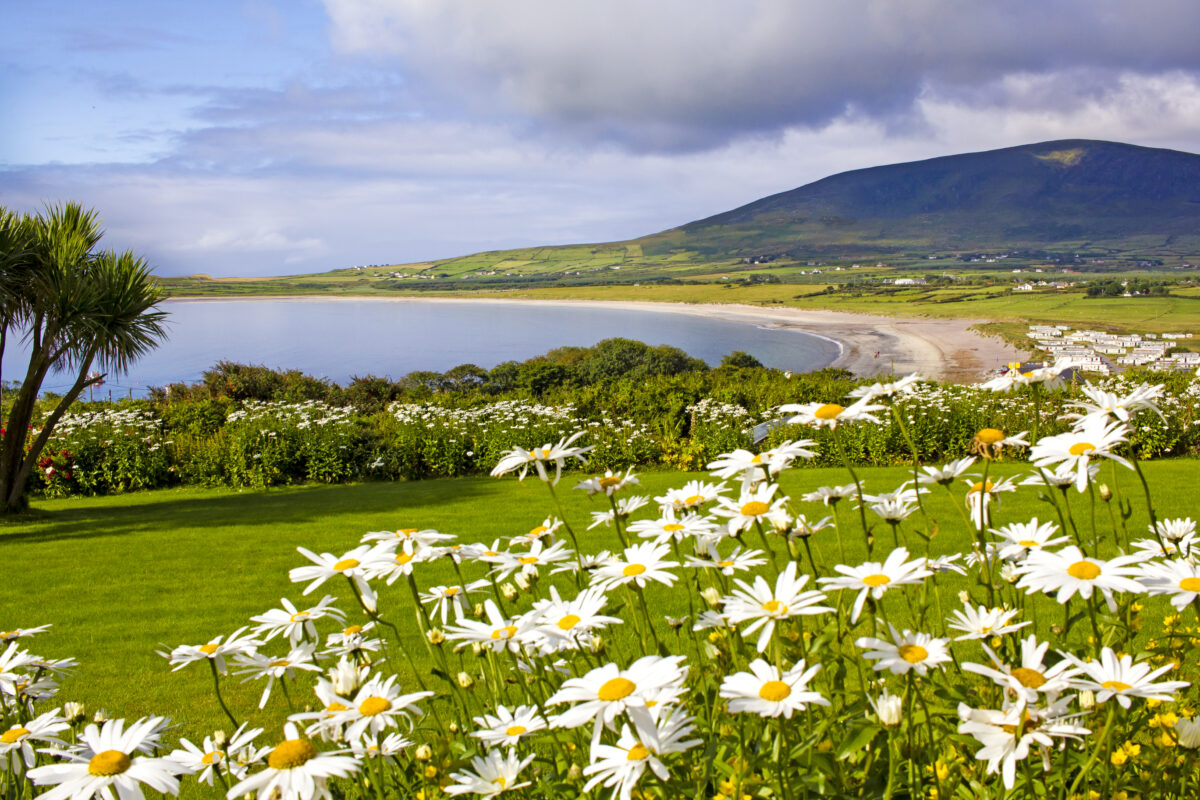
Photo by © Iryna Vlasenko | Dreamstime.com Ventry Bay Beach, County Kerry
Ventry Bay Beach is the most popular to visit from Dingle, only about a 10-minute drive away in the small village of Ventry. It lies along one of the world’s most scenic routes, Slea Head Drive, which loops around the western tip of the Dingle Peninsula, providing an ideal stop for enjoying golden sands and calm water for swimming and water sports like SUP and kayaking. Another Blue Flag beach, the water quality is excellent, and there’s a lifeguard here in the summer. Or just take a break from the car to enjoy the fresh salty sea air and a breathtaking view.
Coumeenoole Beach, County Kerry
Also along Slea Head Drive, about 25 minutes from Dingle, Coumeenoole is a small and secluded beach tucked in a windswept cove at the bottom of towering cliffs, accessed via a narrow path from the parking area. Despite the water’s tropical appearance on a sunny day, it’s all about enjoying the breathtaking coastal scenery rather than swimming due to the strong currents, although experienced surfers sometimes ride the waves.
The main draw at Coumeenoole is for photographers and nature lovers, with stunning views of the Atlantic and the Blasket Islands, but you’ll want to visit according to the tide table. At high tide, the beach almost disappears.
Spanish Point Beach – Miltown Malbay, County Clare
Just outside the picturesque town of Miltown Malbay, Spanish Point Beach is nestled in horseshoe-shaped Mal Bay. A discovery point on the popular Wild Atlantic Way, it’s a long sandy stretch ideal for relaxing by the sea, strolling, building sandcastles, and swimming or surfing with surf schools and rental gear available. The beach is also a site of historical significance, known for its link to the Spanish Armada, hence the name, with multiple ships wrecked here in 1588. While you’d never know it today, if you listen closely, you might just hear the stories of lost sailors echoing through the sea air, with some referring to the beach as the “Tomb of the Spaniards.”
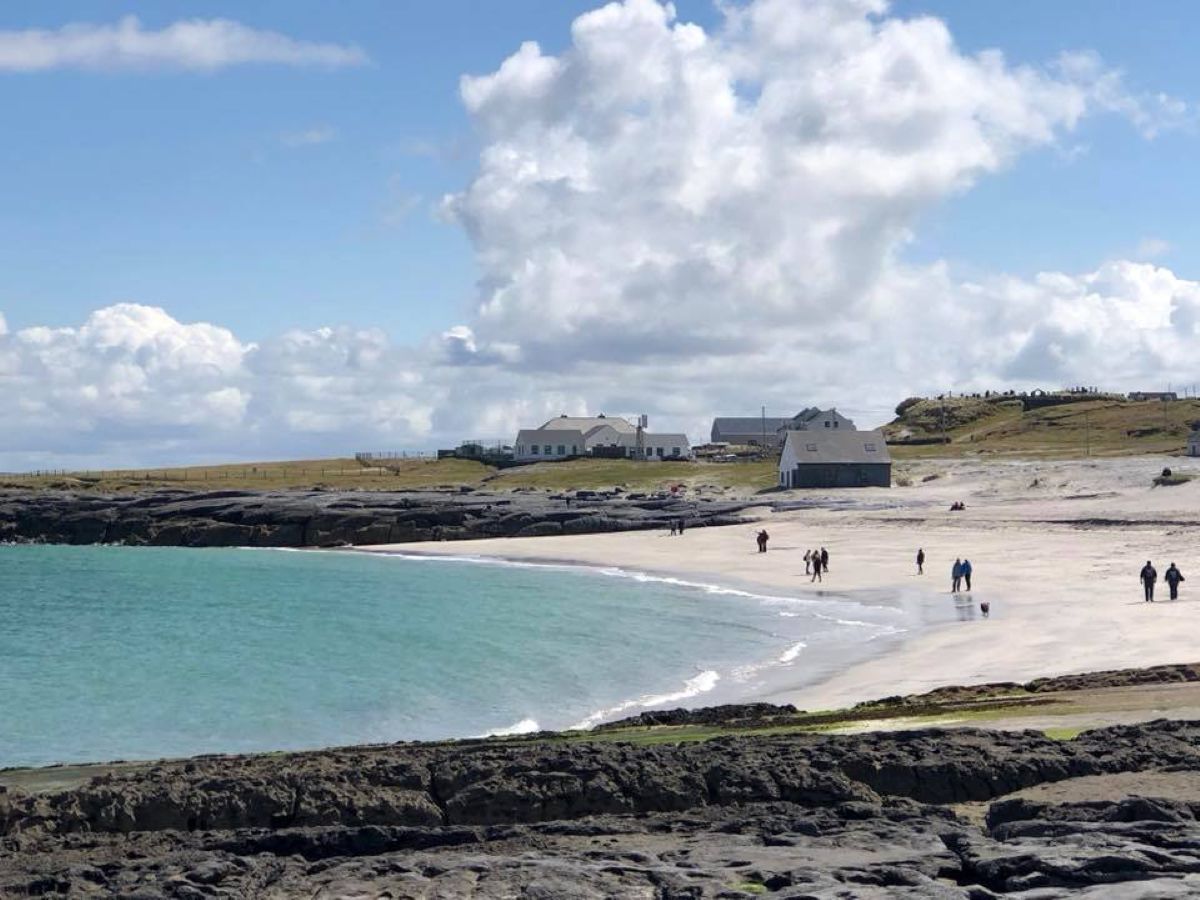
Photo Courtesy of K.C. Dermody An Trá – Inisheer Island, County Galway
The smallest of the three Aran Islands, located off the west coast, Inisheer not only offers an old-world Ireland experience for delving into authentic traditional life where islanders speak both Irish and English, but also spending time on a beautiful beach. The main beach (officially known as An Trá or “The Beach”) is located next to the ferry pier, looking as if it was stolen from the Caribbean, with its soft white sands and clear cobalt waters ideal for wading or swimming.
Something that only the locals and frequent visitors know is that a resident bottlenose dolphin often makes an appearance here—keep an eye out while arriving or departing on the ferry as “Sandy” likes to play in the wake. Just a stone’s throw away, Tigh Ned, a traditional pub, is the perfect spot for lunch, served daily throughout the summer.
Kilmurvey Beach – Inishmore, County Galway
Located on the largest of the Aran Islands, Inishmore, Kilmurvey is known for its crystal-clear blue waters, white sands, views of Connemara, and its Blue Flag status, making it a great place to swim, complete with a lifeguard in the summer. The beach is usually uncrowded and peaceful for those who want to simply relax. The Kilmurvey Seal Colony is nearby, where wildlife lovers can watch the animals basking in the sun on the rocks or lounging in the shallow waters. It’s a birdwatcher’s paradise too, with everything from oystercatchers and laughing cults to herons, comorants, and terns.
Keem Beach – Achill Island, County Mayo
Keem Strand is the finest of Achill Island’s five Blue Flag beaches, often celebrated for its dramatic scenery as a sweep of soft sands that edge a secluded, sheltered turquoise bay. Hemmed in by the Croaghaun Cliffs, Ireland’s highest, it ranks among The World’s 50 Best Beaches. If you saw the Oscar-nominated movie “The Banshees of Inisherin,” you’ll know it as the breathtaking setting for Colm Doherty’s house.
Take in the view (and advantage of the photo op) from the cliff-top road that overlooks it before clambering down a footpath to reach the sand. With the brilliant blue water often calm and clear, with the bay’s horseshoe shape protecting it from strong currents, it’s an unforgettable spot for swimming.
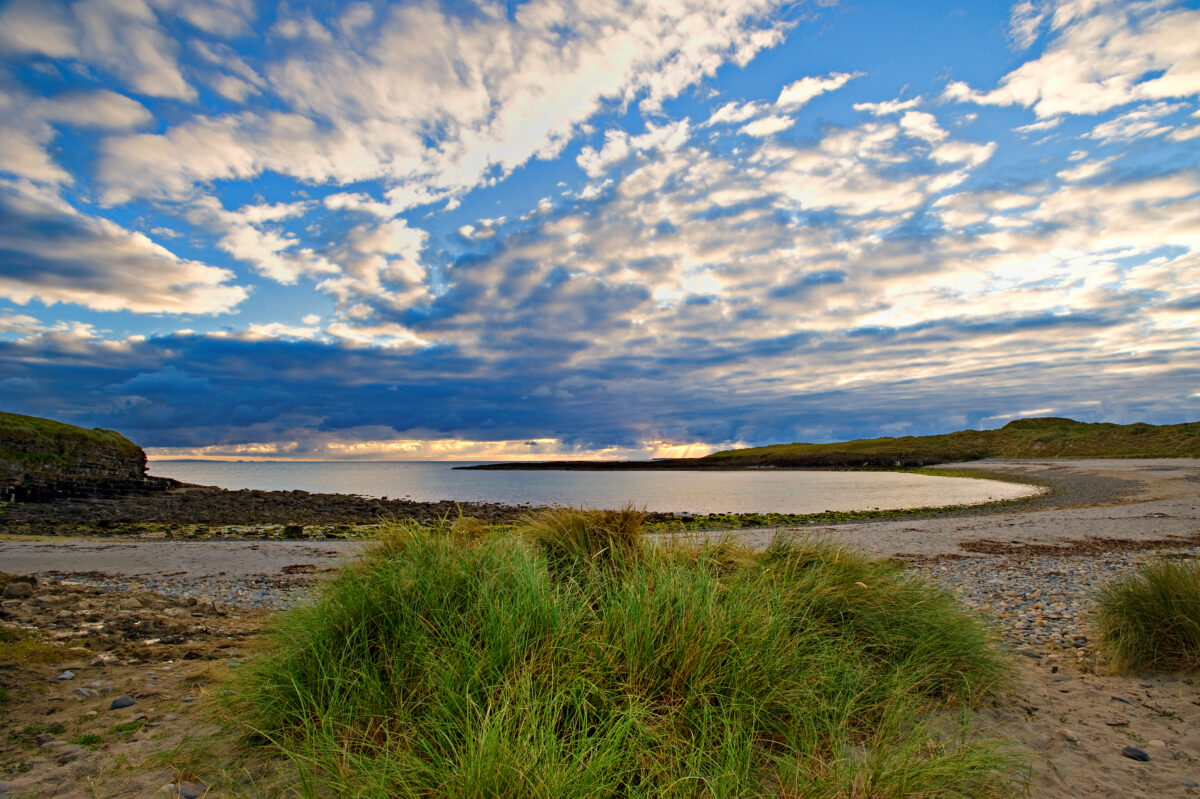
Photo by © Michael Walsh | Dreamstime.com Streedagh Beach – Grange, County Sligo
Streedagh is a long, sandy beach where you can take a stroll while enjoying scenic views of the Atlantic and Benbulben Mountain. If you walk here at low tide, you might even catch a glimpse of the remains of Spanish Armada ships that came aground in 1588, similar to Spanish Point but much further south in County Clare. The clear blue waters are popular for surfing, swimming, and SUP, depending on conditions, while the beach includes a dune system and fossils that can be seen in the rocks at low tide.
Tullan Strand – Bundoran, County Donegal
One of the most popular surfing beaches in Ireland, Tullan Strand attracts surfers from across the globe. Surf schools are available for lessons and gear with rentals for everything from wetsuits to boards. The long, sandy beach itself enjoys a backdrop of the Dartry Mountains. It’s ideal for strolling, or you can take a coastal hike on the Rougey Cliff Walk for a journey showcasing the beach, the Atlantic, and the Fairy Bridges, a natural arch in the cliffs, with blowholes providing a fantastic photo op.
The town of Bundoran itself is the quintessential beach town, providing an ideal base for families and all sorts of travelers, with something for everyone, including a seafront amusement park with rides, go-karts, and more.
-
Rhodes
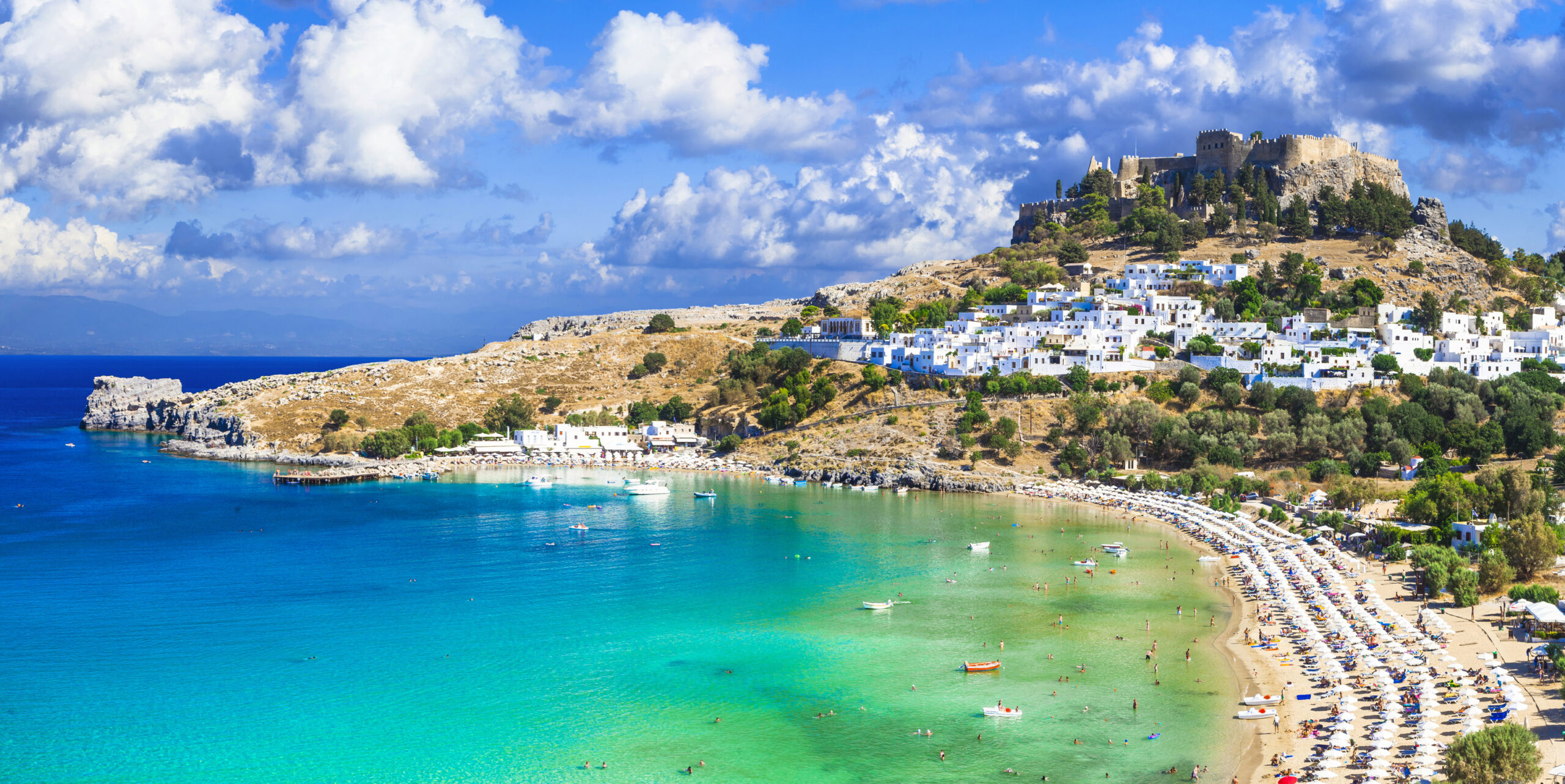
12 Best beaches in Rhodes, Greece
UNESCO old town, windswept coastlines & taverna culture
Few Greek islands combine ancient history and stunning beaches like Rhodes. Here, you feel like a true explorer wandering the centuries-old streets of the UNESCO-protected walled capital, taking hundreds of photos of Lindos’ white houses and hopping from beach to beach. The island’s coastline is varied and impressive—from the dramatic scenery of Anthony Quinn Bay to laid-back sandy Agia Agathi, windsurfing-friendly Prasonisi and breathtakingly turquoise Agios Pavlos. My visits to Rhodes have always included some of the most rewarding beach experiences. Here’s a collection of the best beaches on the island. Choose your favorite, and don’t forget to apply sunscreen—this Dodecanese destination enjoys over 300 days of sunshine annually.
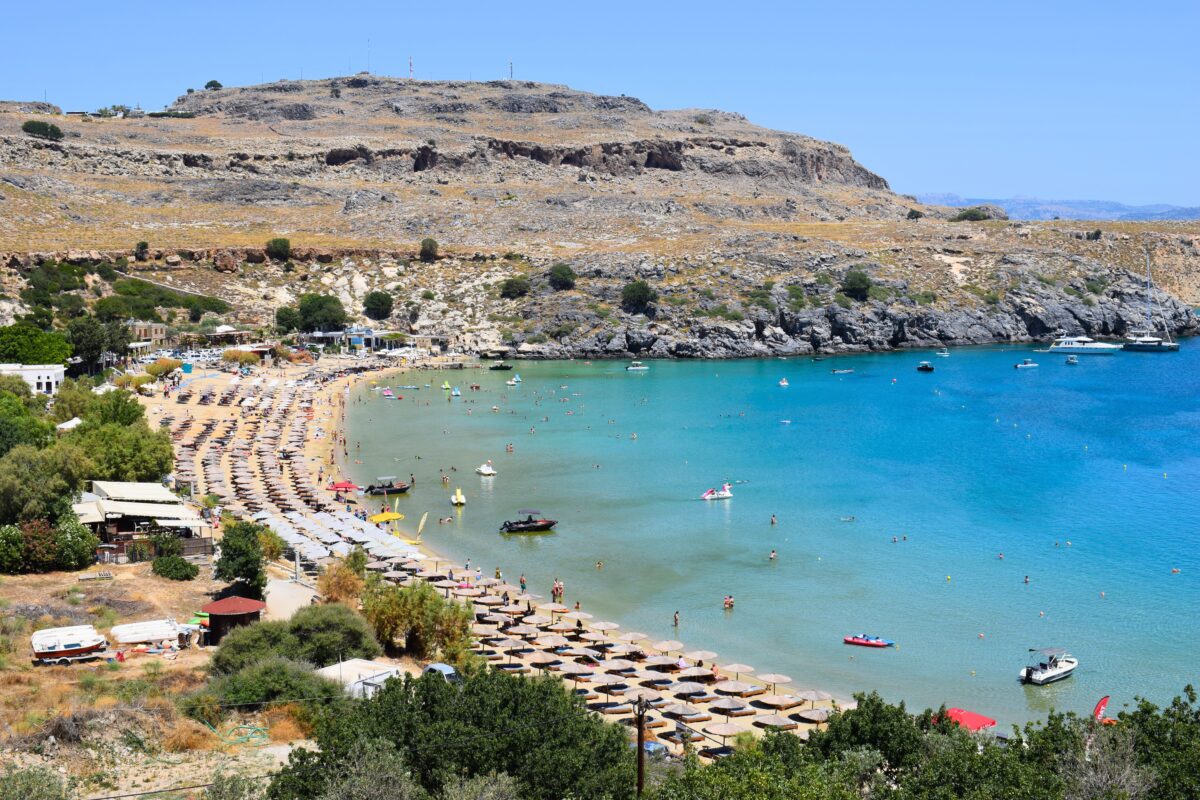
Photo Courtesy of Pavlo Fedykovych Lindos Beach
Best for magnificent views
There’s something magical about swimming at Lindos Beach. With views of the whitewashed houses of the eponymous village and the massive Acropolis dating to the 4th century BC, this stretch is among the most awe-inspiring in Greece. Your kids will love the soft golden sand—Lindos is a pleasant alternative to the mostly stony beaches of Rhodes. Thanks to its location in a gorgeous blue bay, the beach offers tranquil waters. Parking costs 7 EUR (all day) and sunbed and umbrella rentals are available on the beach. A great thing about Lindos Beach is that you’re steps away from the picturesque labyrinthine streets of the town. The Acropolis is another must-see. The ascending hike takes around 20 minutes, but the attraction is worth every step.
Glistra Beach
Best for a laid-back family leisure
A hidden gem, Glistra is a small bay with crystal-clear water 8 miles south of Lindos. The golden soft sand is what makes it a special spot for families. The access is shallow and the sea is tranquil. The perfect recipe for laid-back beachgoing with kids. The beach also works great for snorkeling, as there are several rocks at the edges. Apart from loungers, there are no facilities here, so bring snacks with you.
Agia Agathi Beach
Best for shallow waters
Rhodes is full of surprises, and Agia Agathi Beach is one of them. Fine golden sand, goats roaming freely, cave dwellings nearby and a picturesque chapel in the stone. It can’t get more Greek than this. Far from the buzz of the tourist towns, Agia Agathi offers a soothing retreat accompanied by the caressing music of the Aegean waves. Families love it for the shallow water and all the play opportunities the sand provides. There’s an inflatable amusement water park to keep children busy. Snorkeling is an option thanks to the rocky coastline on both sides of Agia Agathi. Shade is scarce, so bring your own umbrella or rent one on-site.
Prasonisi Beach
Best for windsurfing
Wild Prasonisi is spectacular. Located at the southernmost tip of Rhodes, it’s at the spot where the Mediterranean meets the Aegean. The energy of nature is felt vividly at this remote corner of the island (you’ll find the strongest winds here.) Prasonisi also serves as one of the most beautiful sandy beaches in Greece. The large strip is reminiscent of the Atlantic coast in Portugal or France. The wind conditions make this stretch a perfect place for windsurfing. You’ll find many rentals in Prasonisi, offering kites and boards. There are also a handful of boutique hotels in the tourist village to experience the magic of this desolate place firsthand.
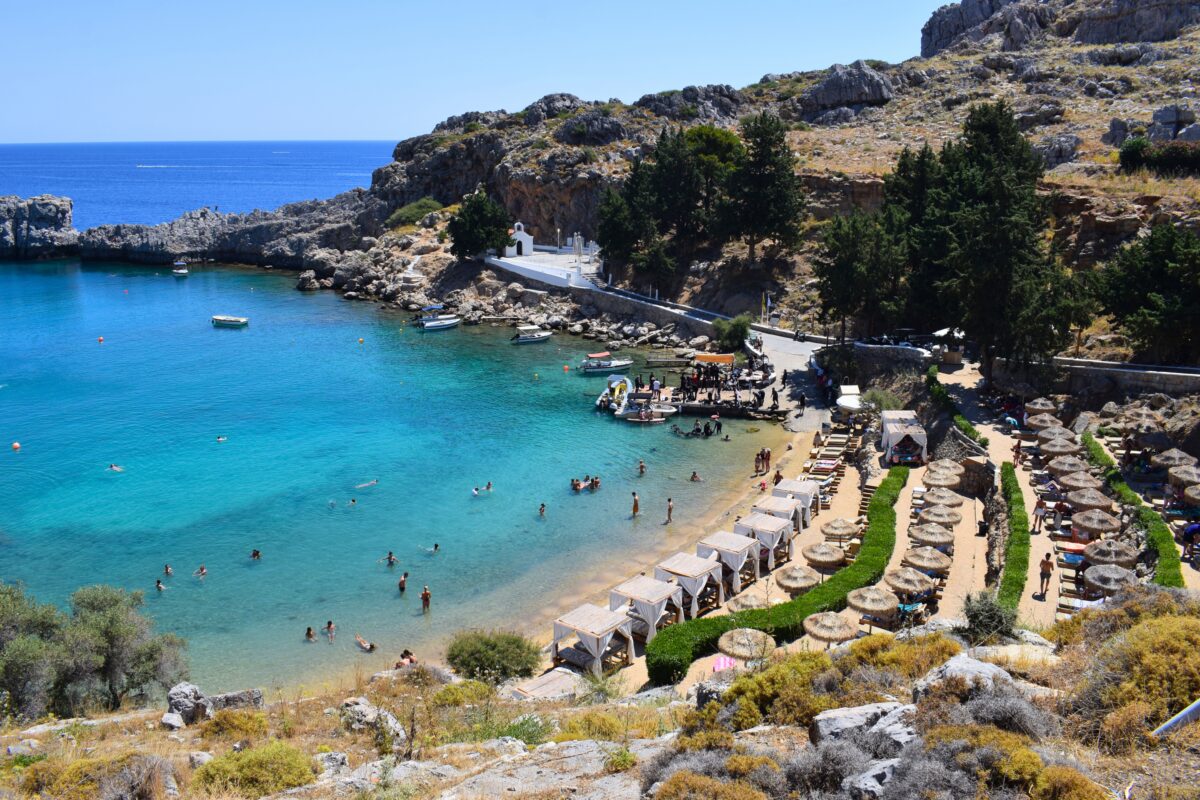
Photo Courtesy of Pavlo Fedykovych Agios Pavlos Beach
Best for turquoise waters
Located on the other side of Lindos Acropolis hill, Agios Pavlos is another stunning Rhodes beach highlight. The view here is picture-perfect: the tall rocky outcrop with the ancient archaeological site on top, the calm cyan bay and barren lunar landscape around. Be aware that Agios Pavlos is tiny, and an upscale beach bar occupies almost the entire stretch. An umbrella and sunbed combo costs around 40 EUR per day and a tent costs around 70 EUR. You don’t have to pay to swim, though. Take a walk to the incredibly scenic Chapel of Agios Pavlos nearby. The beach is made of tiny pebbles mixed with sand, so it’s suitable for children.
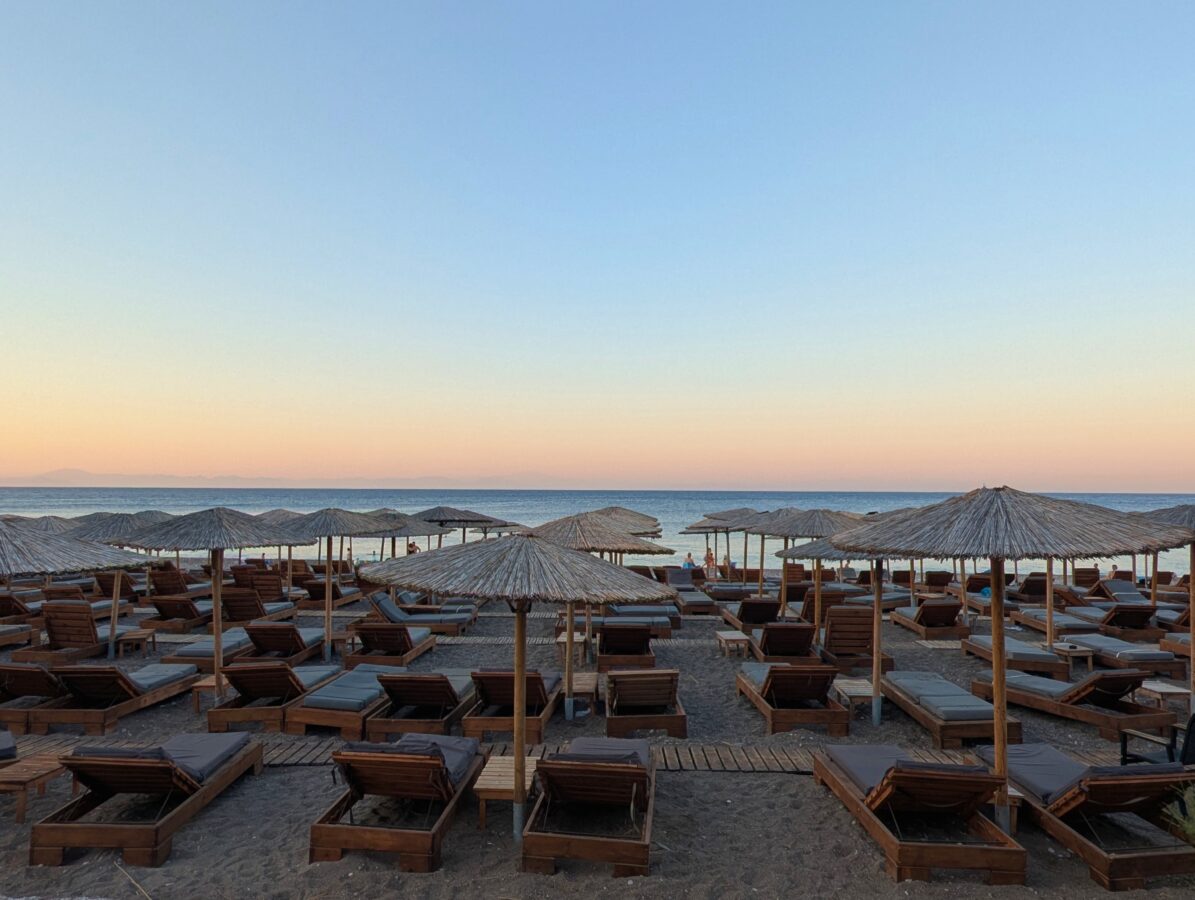
Photo Courtesy of Pavlo Fedykovych Elli Beach
Best urban beach
Apart from being the Aegean’s most spellbinding historic port city, Rhodes is also a superb beach town. Set on the northern edge, Elli is one of the reasons for that reputation. It’s a large pebbly stretch filled with vibrant beach bars. Its trademark is a striking diving platform in the middle of the blue sea. Swim there for unforgettable sea jumping with views of Rhodes town and the Turkish coast. It’s popular for cooling down and relaxing after exploring the city’s many wonders—the beach is just 15 minutes away from the Old Town on foot. It’s also the ultimate place to be during sunset when beach clubs and restaurants come alive with DJ sets.
Stegna Beach
Best for snorkeling
The East Coast of Rhodes is a collection of charming beach towns, and Stegna is the one to visit. The local pebbly beach has that trademark Greek azure water and perfect visibility. Its urban part is an ideal family beach, with moderately priced loungers, many traditional tavernas on the promenade and water sports rentals. Walk further south to find the rocky coastline, which is a snorkeling dream. Take steps to reach Archangelos Cave, a tiny idyllic strip with rich marine life. But that’s not all. A little further is Grande Blue Beach: a stunning turquoise bay with more snorkeling potential. Come to Stegna with your own gear to save on rental costs.
Tsambika Beach
Best for golden sands and no crowds
Visiting Tsambika feels like traveling to another island. Mountains rise over the spacious stretch of golden sand. The access is shallow, giving your kids a superb area to wade, play and swim. Apart from several laid-back beach bars, there’s no development around. You can park right at the edge of the beach, and it’s free—quite a rarity for the mostly commercialized beach areas of Rhodes. There’s also an inflatable water park for even more family fun. Tsambika is a good spot to try water sports without the hassle. Parasailing and waterskiing are very popular here, but you can also go for less extreme options like banana boats, SUP, or ring riding.
Anthony Quinn Bay
Best for yachting
It’s not only the marvels of the ancient world in Rhodes, the island is also steeped in cinematic history. The 1961 war movie “The Guns of Navarone” was filmed here. One particular bay, just outside Faliraki, made an impact on the movie’s leading star, Anthony Quinn. So powerful was the Rhodes spell that the actor bought the land. Although the island authorities reclaimed the stretch in the ’80s, it was renamed to honor Anthony Quinn. Today, it’s among the most popular spots to sail in Rhodes. There’s a tiny stretch with a beach bar that you can reach by land. Whichever way you choose, you’re greeted by unreal turquoise waters and fantastic Mediterranean panoramas.
Mandomata Beach
Best for naturists
While one may think that Greece, with its never-ending supply of idyllic coves, is a naturist paradise, there aren’t many stretches where you can bare it all. Mandomata is where nudists go in Rhodes. Located between Faliraki and Anthony Quinn Bay, it’s a scenic pebbly beach surrounded by rocky hills. Quite unexpectedly, the stretch isn’t as desolate as you may think. You can rent a lounger and an umbrella on the spot, parking is free and you’ve also got toilets and showers. And it’s not often that you encounter a restaurant on a nudist beach, but Mandomata has one, serving Greek dishes. Enjoying the Aegean without clothes is definitely better with souvlaki and gyros.
Faliraki Beach
Best for party vibes
If you’re looking for raucous nightlife, Faliraki fits the bill. The atmosphere here is far from the calm, family-friendly vibe of most of the smaller towns of Rhodes. Bass is pumping, the buzz of the bar street is loud and the beach bars keep the night party going. Faliraki Beach is a perfect accompaniment to your nights out. By day, it’s among Rhodes’ most charming stretches with clear water, pebbly surface and plenty of water activities to choose from. When dusk falls, it’s where the action is. There’s also a huge water park (the largest on the island) nearby, offering water fun for all ages. For something more scenic and calm, drive to the idyllic Ladiko Beach. Preferably with snorkeling gear, as the bay has abundant underwater life.
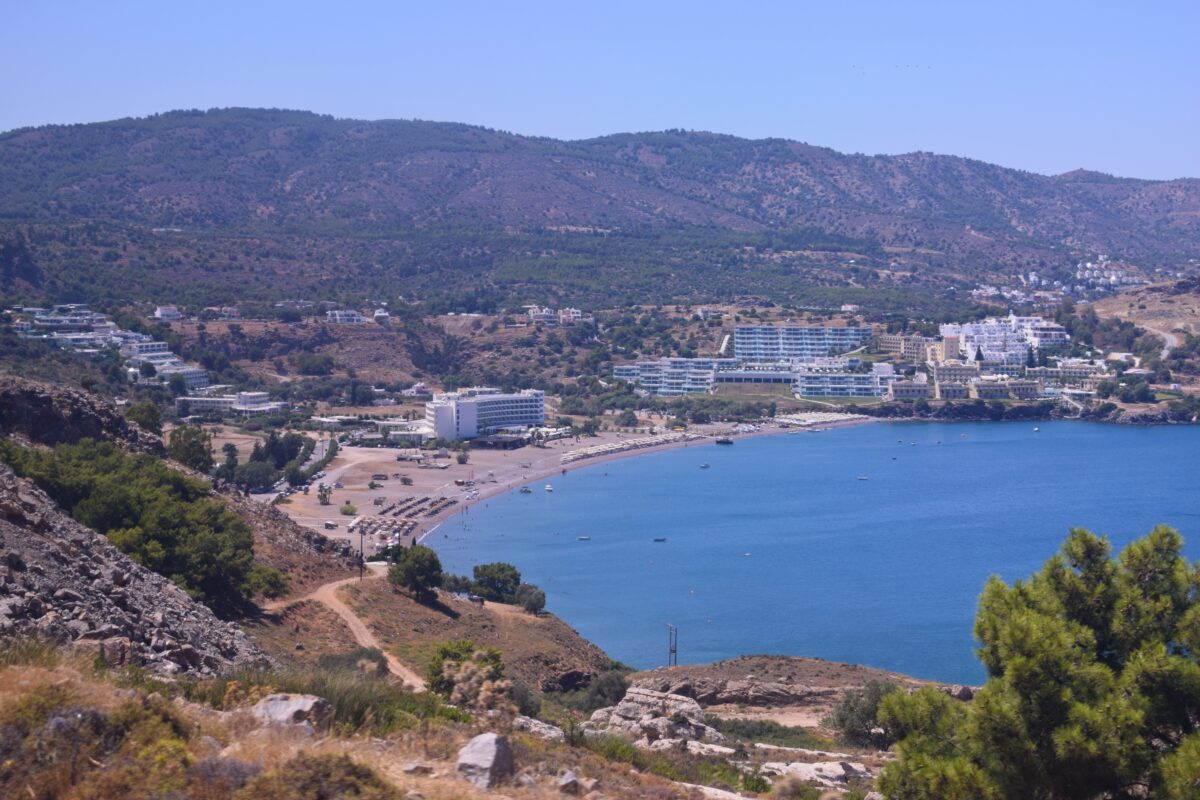
Photo Courtesy of Pavlo Fedykovych Vlicha Beach
Best for an affordable beach holiday
A short trip away from Lindos, Vlicha is a wide, long pebbly stretch backed by cliffs. Some would even say that it’s Rhodes’ best beach. Crowds are unheard of, the prices of facilities are surprisingly affordable and you’ll find a good variety of local restaurants. In other words, Vlicha is a perfect recipe for a hassle-free family holiday. Distances are minimal in town and you’re literally five minutes away by car from stunning Lindos.
-
Algarve
Living in Portugal means I’ve been lucky enough to explore beaches all over the country, but there’s something about the Algarve that keeps pulling me back.
Maybe it’s the ochre cliffs and secret sea caves. Or perhaps it’s the grilled sardines and vinho verde served in beach shacks where the sand sticks to your ankles. Or maybe it’s just the sheer variety of beaches–wild and rugged one day, calm and family-friendly the next.
Over the past few years, I’ve spent a lot of time exploring the Algarve’s coastline—with endless spontaneous road trips and long, lazy summers parked up near Lagos. This corner of Portugal feels like it was made for beach lovers and after plenty of trial (and a little sunburn), these are my picks for the absolute best beaches in the Algarve.
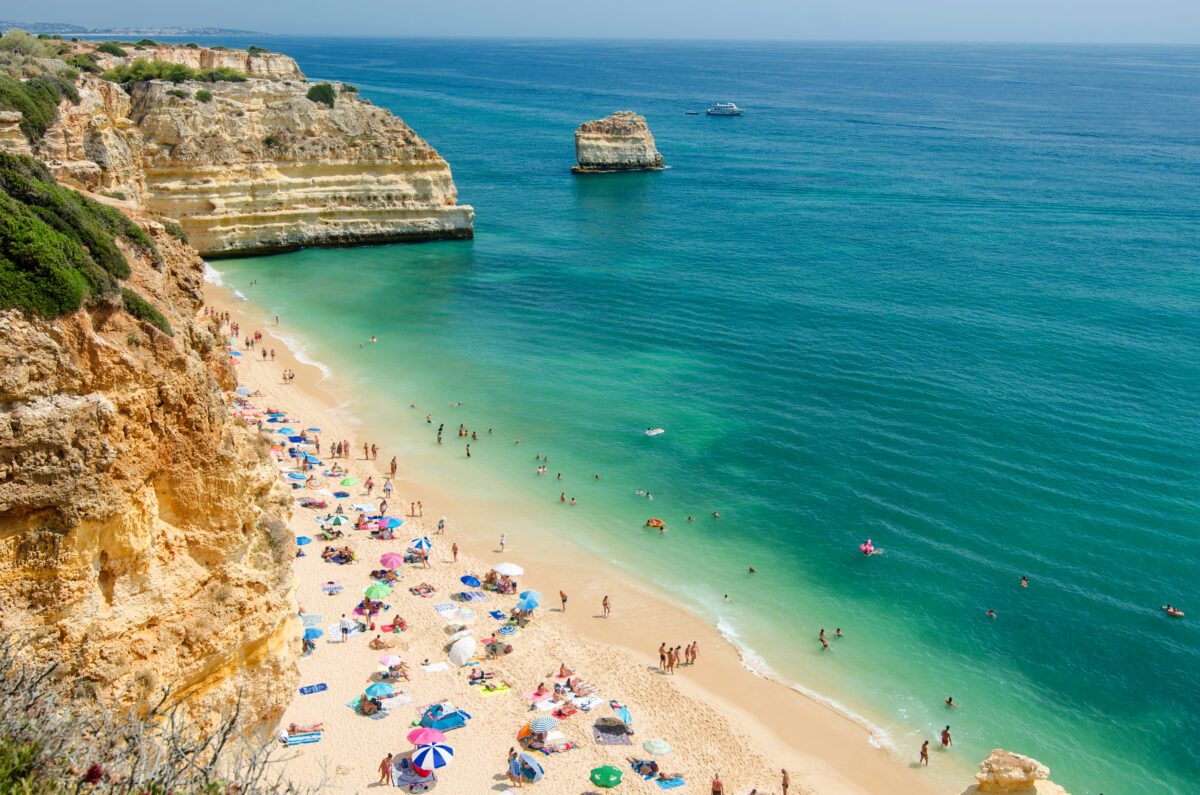
Photo by © Kazmulka | Dreamstime.com Praia da Marinha
Praia da Marinha is one of those places that actually lives up to the hype and then some. The view is ridiculous: honey-coloured limestone arches, emerald sea and those classic Algarve rock stacks rising out of the water like ancient sculptures.
Getting down to the beach means tackling a steep-ish staircase, so pack light and wear decent sandals. Once you’re down, it’s surprisingly peaceful. The crowds tend to stay up at the viewpoint. There’s a small café halfway down the cliff that does a decent coffee and tosta mista, but I usually bring my own snacks and settle in for the day.
Praia do Camilo
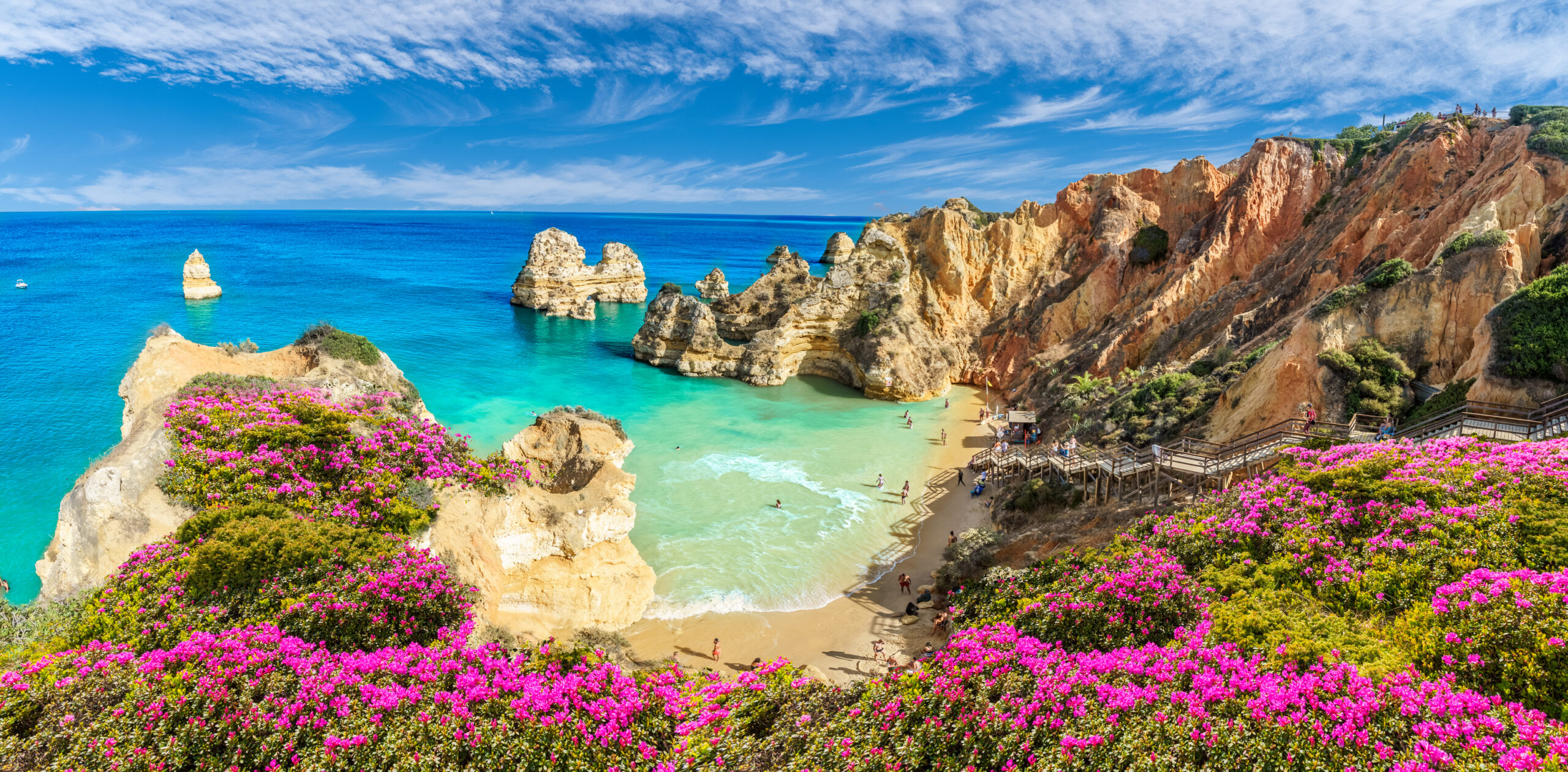
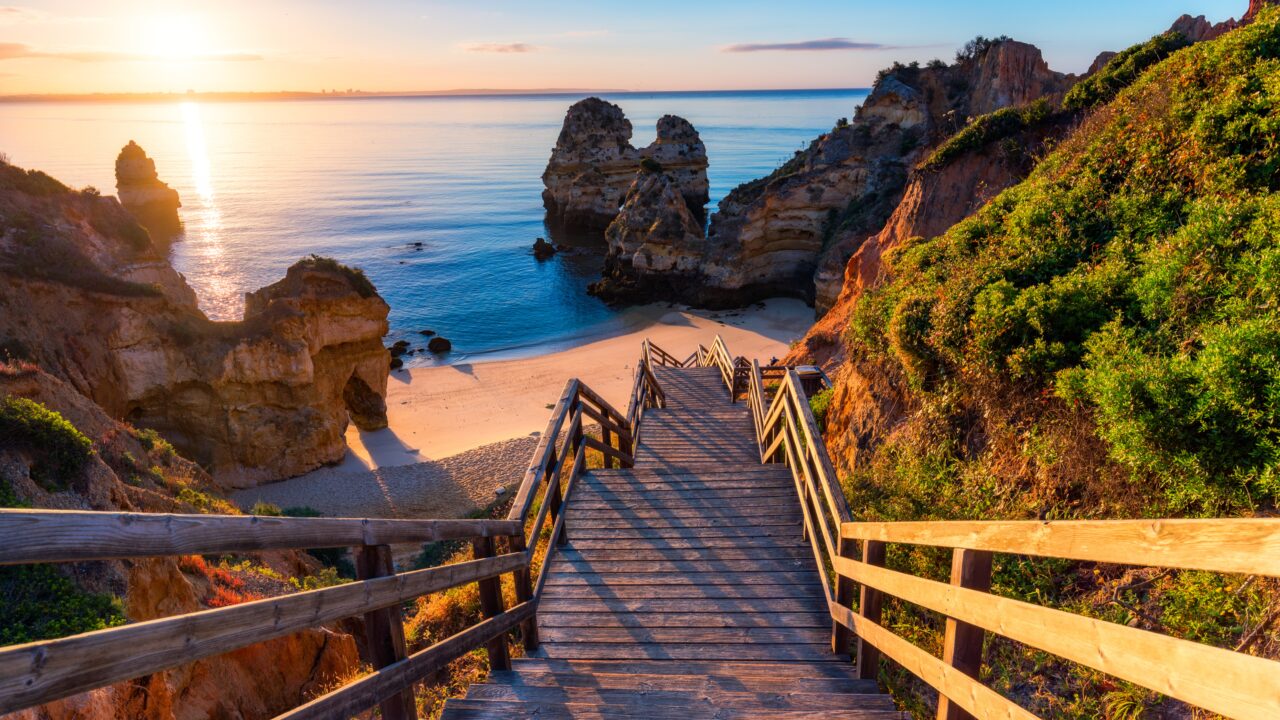
This is one of my go-tos whenever I’m in Lagos. It’s tiny, sheltered and completely postcard-perfect: you reach it by walking down 200-ish wooden steps and the descent is half the fun. The beach itself is framed by golden cliffs and has a tunnel carved into the rocks that connects the two little coves at low tide.
The water is usually calm and super clear, ideal for a quick snorkel or just floating around. There’s no beach bar, but the restaurant up at the top (O Camilo) serves incredible grilled fish and vinho verde with a killer view. Go early. It’s small and fills up fast, especially on weekends.
Praia da Falésia
This one’s a total contrast to the little hidden coves. Praia da Falésia is long (like, really long!) and backed by dramatic burnt-orange cliffs that look like something from a Western. I’ve spent entire afternoons here walking the shoreline barefoot, losing track of time.
It’s great for swimming, with plenty of space to spread out even in high season. There are loungers for hire and a few beach bars dotted along the sand. I usually end up at one near the Alfamar side that plays mellow music and does surprisingly good mojitos. The walk down is easy from the main car park and there are proper toilets and showers too.
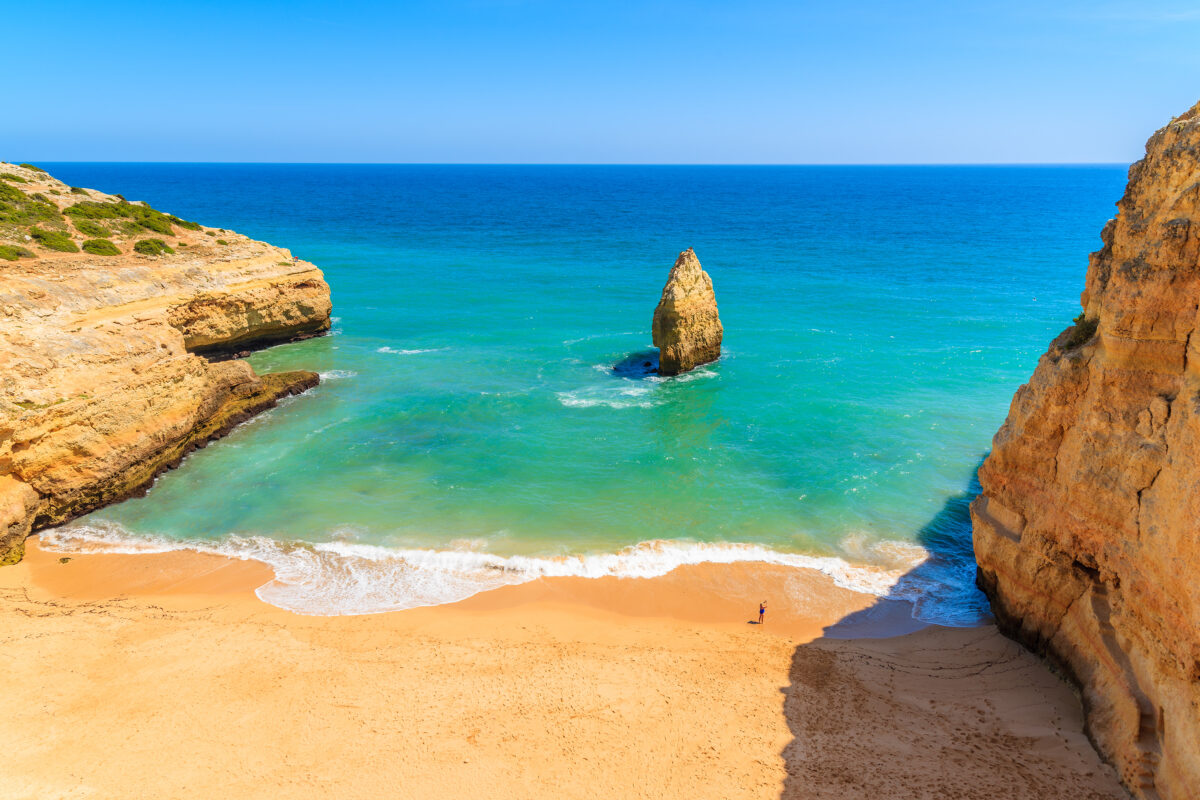
Photo by © Pkazmierczak | Dreamstime.com Praia do Carvalho
I found this beach almost by accident during a cliff walk between Benagil and Carvoeiro and it’s been one of my favourites ever since. To get there, you have to go through a hidden staircase tunnel carved into the rock and it feels like stepping into a secret world.
The beach is compact and usually quiet, with steep cliffs on both sides and great snorkelling near the rocks. I’ve seen people cliff-jumping here, though it’s definitely at-your-own-risk territory. There aren’t any facilities on the beach itself, so bring water and whatever you need for the day. But the reward is one of the Algarve’s most magical little spots.
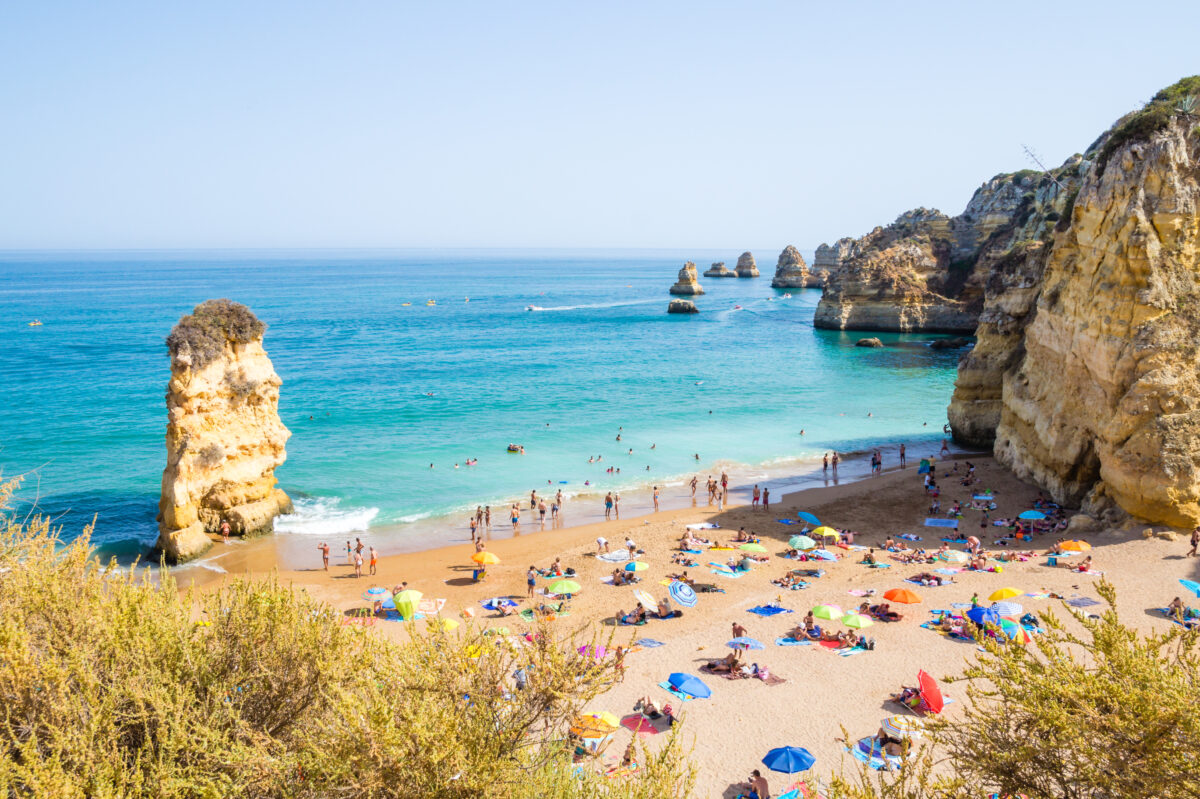
Photo by © Tamas Gabor | Dreamstime.com Praia Dona Ana
Praia Dona Ana was one of the first beaches I ever visited in the Algarve and it totally sold me on moving here one day. It’s right on the edge of Lagos and easy to reach on foot, but it still feels like a little slice of paradise. Surrounded by towering golden cliffs and accessed by a long wooden staircase, it’s one of those spots that feels protected from the rest of the world.
The water here is calm and clear, perfect for swimming and you can even rent kayaks to explore the caves and coves nearby. There are lifeguards in summer, a little beach café for cold drinks and toasts and decent public bathrooms too. Go early or late—midday in high season gets too busy, in my opinion!
Praia do Amado
If you’re into surfing, you’ve probably already heard of Praia do Amado. It’s one of the best-known surf beaches in the Algarve and one of my personal favourites to visit when I want to escape the more polished, touristy towns.
The drive out to the west coast feels like heading into wild territory—there’s a raw beauty out here that I never get tired of. Amado itself is a wide, wind-whipped beach with consistent waves and a really chilled-out surf crowd.
There are two surf schools, a beach shack selling toasties and cold beer and a big car park with basic toilets. I usually bring my own board, but rentals are easy to find on-site too.
Praia da Luz
Praia da Luz is the kind of beach I end up at when I want a relaxed day without too much fuss. It’s got a great mix of local families, retirees and the odd surfer catching mellow waves down at the far end.
The beach is long and sandy, with a gorgeous rocky outcrop at one end (I’ve scrambled up there a few times for sunset photos) and a paved promenade that gives it a slightly Mediterranean feel.
There are plenty of cafés and restaurants just a few steps from the sand. My usual move is a swim, followed by grilled sardines and vinho branco at one of the spots facing the sea. It’s easy, friendly and always feels like a little holiday away from my life in Lisbon.
Praia do Barril
Praia do Barril is one of the more unusual beach experiences in the Algarve, in the best way. It’s located on the Ilha de Tavira, and to get there, you either walk across a long wooden bridge and scenic footpath through the wetlands, or hop on a miniature train (yes, an actual tiny train!) that rattles its way out towards the dunes.
The beach is wide, calm and great for swimming, but what really makes it memorable is the Anchor Graveyard, a line of rusted ship anchors half-buried in the sand dunes from back when this was a tuna fishing outpost.
Praia da Marinha
No list of Algarve beaches would be complete without Praia da Marinha. I’ve visited more times than I can count and it still stops me in my tracks every single time. Think towering golden cliffs, sea stacks that rise like sculptures from the water and some of the clearest, calmest sea for swimming.
There’s a good-sized car park (free in the off-season, paid in summer) and a well-maintained path down to the beach—although be warned, it’s steep and rocky, so wear decent shoes. There’s a small café at the bottom with basic snacks and toilets, but I usually bring my own picnic and make a day of it. It’s also a great launch point for kayak or SUP trips to the nearby Benagil cave.
Praia do Beliche
Hidden away near Sagres, Praia do Beliche is a favourite when I’m craving a little escape from the crowds. It’s a curved cove framed by towering cliffs, with golden sand and rolling surf, and even in summer, it somehow feels mellow and uncrowded.
You’ll need to descend a steep set of stone steps (bring water shoes or trainers), but the payoff is worth it. Surfers love it here for the consistent break and I’ve seen some seriously impressive sunset surf sessions. There’s a tiny seasonal café up top for post-beach beers and toasties, but no formal lifeguards or bathrooms on the sand.
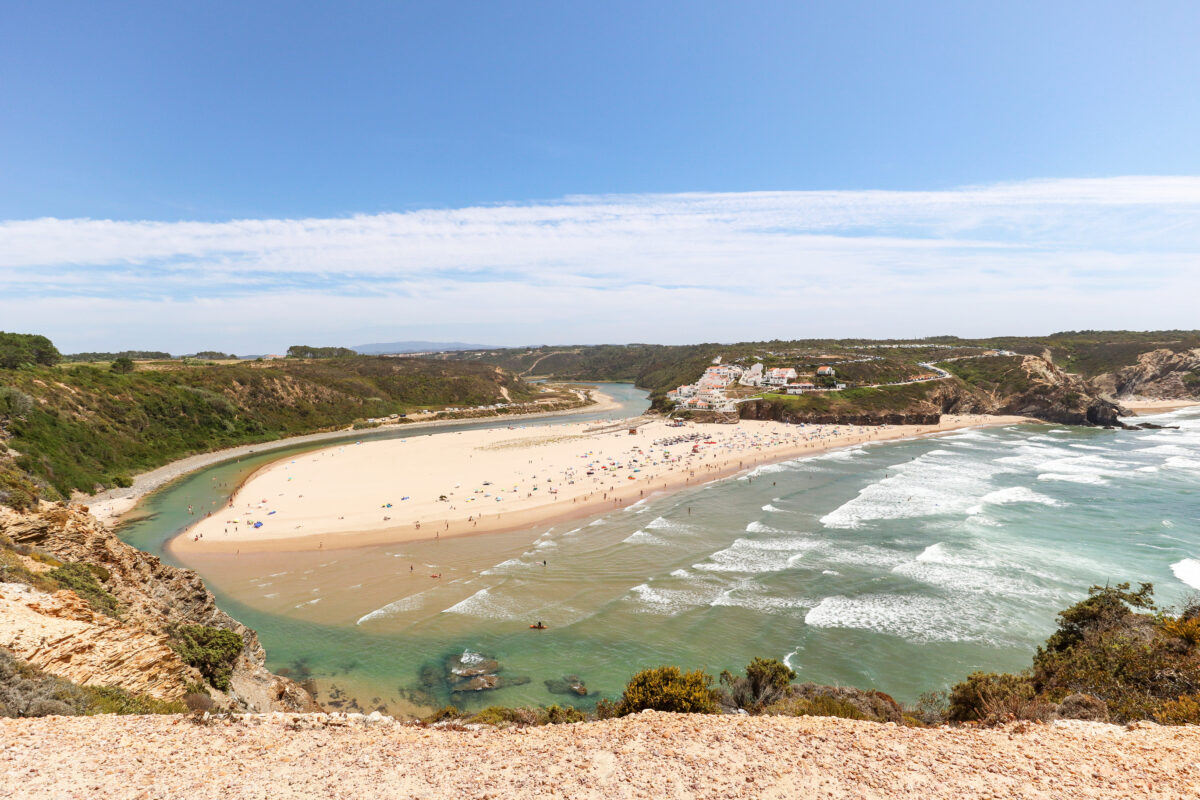
Photo by © Ahfotobox | Dreamstime.com Praia de Odeceixe
Right on the border of the Algarve and the Alentejo, Praia de Odeceixe has a special kind of wild charm. I stumbled on it during a road trip along the west coast and ended up staying a few days longer than planned.
The beach sits at the mouth of a river, so you’ve got the rare choice of swimming in fresh or saltwater—ideal when the Atlantic’s a bit choppy. It’s popular with both surfers and families, with a little surf school and paddleboard rentals by the river. There are a couple of laid-back restaurants at the top of the cliffs and a winding road down to the beach. Go for the views, if nothing else.
Praia do Castelejo
This one’s tucked away on the wild west coast and always feels like a bit of an adventure. Praia do Castelejo has this dramatic, end-of-the-world vibe – craggy black rock formations, huge Atlantic rollers and barely a building in sight. I usually head here when I’m craving space and solitude (and a bit of drama with my beach day).
It’s popular with surfers, but you don’t need to be on a board to appreciate it. I’ve spent hours here just walking the shoreline and watching the spray hit the cliffs. There’s a no-frills café right at the entrance that does a solid coffee and some great grilled fish when it’s open. Just bring layers as the wind can be serious!
Praia do Ancão
Whenever I want something a little more polished but still relaxed, Praia do Ancão hits the spot. It’s part of the Ria Formosa Natural Park and has this lovely mix of nature and understated luxury. The sand stretches for miles, and the beach is framed by dunes and pine forest, giving it a peaceful, away-from-it-all feel.
It’s also one of the few places I’ll happily splurge on a long lunch – there are a couple of chic beach restaurants right on the sand, where I’ve lingered over seafood rice and crisp vinho branco with my toes basically still in the sand. Great facilities, loungers for hire and gentle water make it perfect for a full day out.
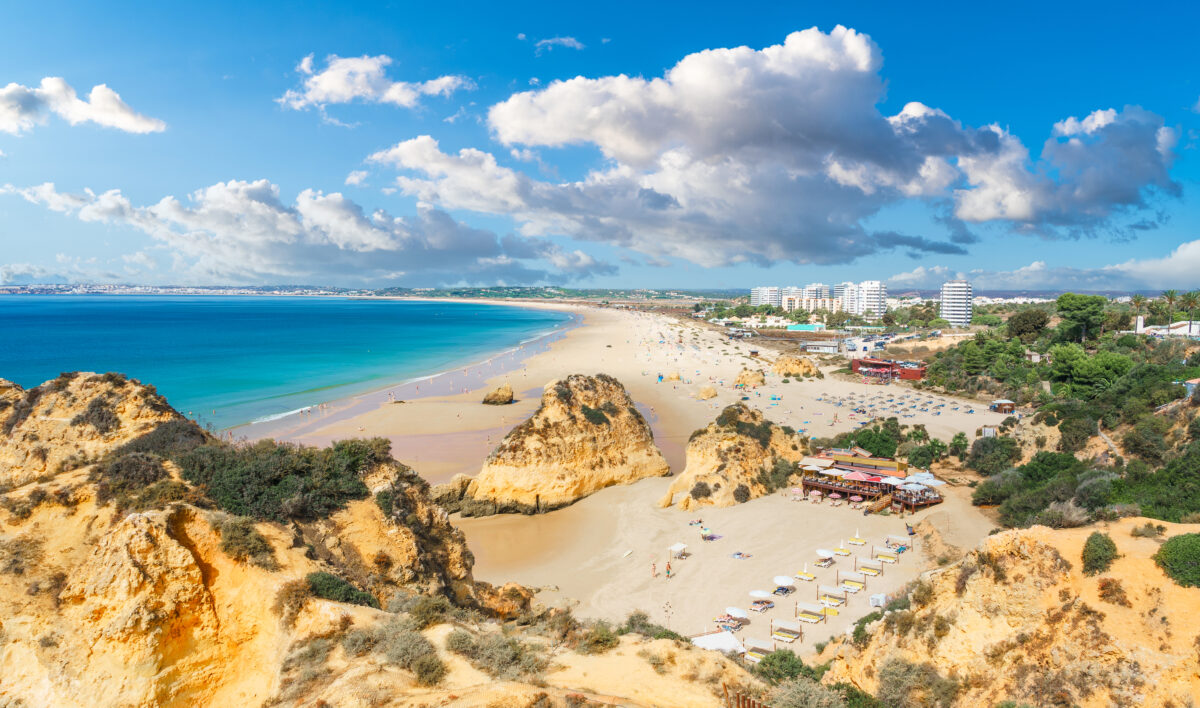
Photo by © Dorinmarius | Dreamstime.com Praia dos Três Irmãos
I still remember the first time I visited Três Irmãos – it felt a little like stumbling into a film set. The beach is known for its sea arches and hidden coves, which you can explore at low tide by wandering through natural rock tunnels. It’s one of those places where you feel like a kid again, ducking through gaps in the rocks to discover what’s around the corner.
The main beach is wide and sandy, great for swimming or just flopping out with a good book, but the real magic is in those tucked-away spots you find along the cliffs. There’s a beachfront restaurant up top if you want something more polished, but I usually just pack a picnic and let the day unfold.
-
Goa
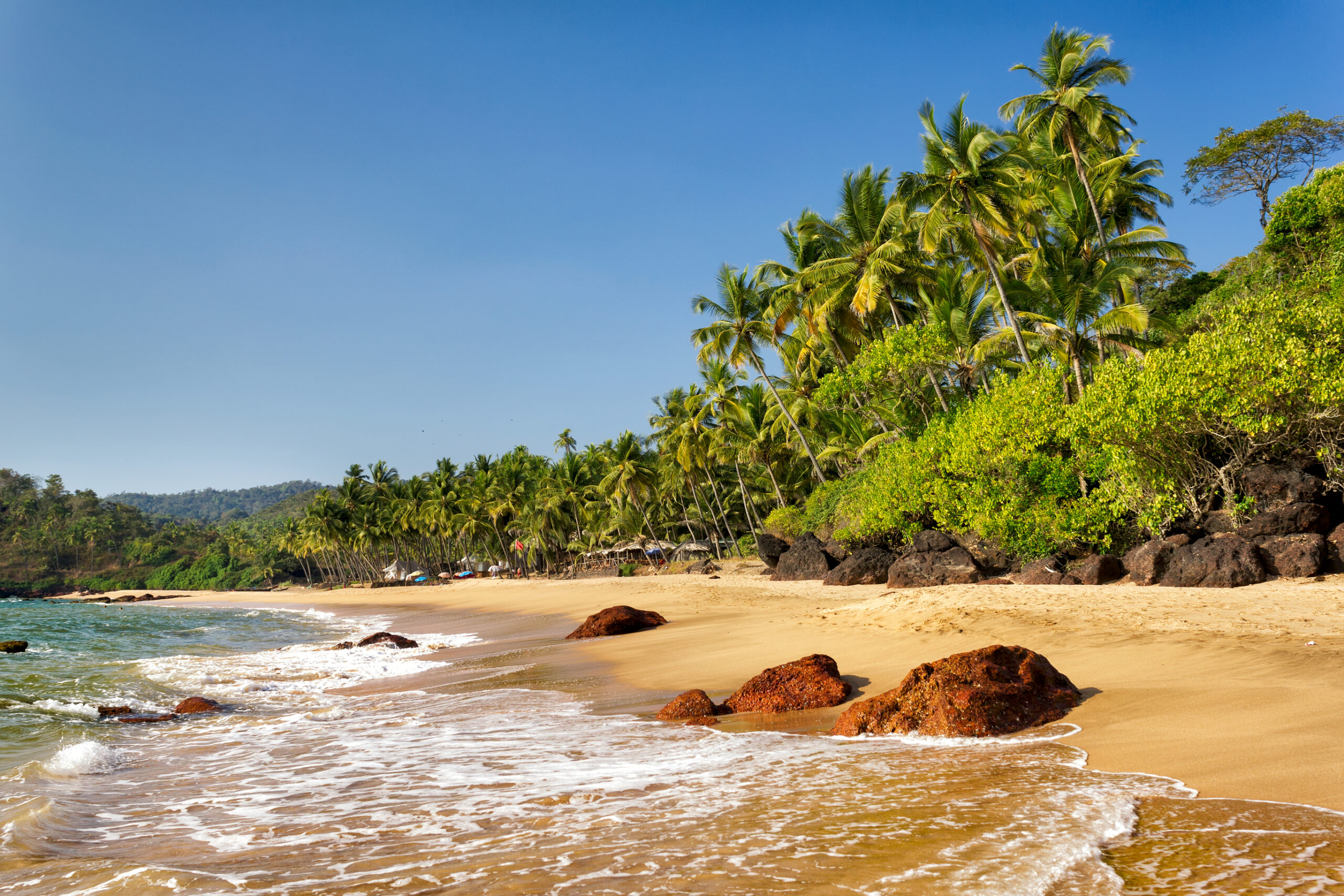

Goa is that dream of infinite coconut groves, shimmering sea, golden sand and absolute relaxation. This tiny state on India’s southwestern coast is packed with stunning beaches. Spacious stretches like Agonda, freedom-loving hippie hotspots like Arambol, hidden palm tree-shaded havens like Kakolem and family-friendly strips like Morjim—Goa has a variety. Also, the state’s sunshine-soaked allure is addictive. Once you experience its easygoingness, it’s hard to resist the urge to leave everything behind and just enjoy carefree days on a hammock overlooking the Arabian Sea. Here’s a list of the best beaches in Goa for you to easily find your next favorite spot.

Photo Courtesy of Pavlo Fedykovych Palolem Beach
Best beach for first-timers
You’ll find everything Goa’s famous for at Palolem. A hotspot of the southern part of the state, it’s a long and gorgeous stretch of white sand flanked by a lush palm tree grove. There’s a laid-back village, where you find a combination of hip coffee shops, water sports rentals, massage parlors and beachside bungalow complexes. Palolem may be a busy tourist destination, but it never feels too crowded or over-touristic. It works perfectly as a first-timer Goa base, where you’ll have a good connection to the other southern beaches and all the advantages of civilization. This beach is all about the hedonist lifestyle, where all you do is take surfing lessons, lounge on the sand, dine at the beachside restaurants and watch sunsets. No rush.
Candolim Beach
Best for families
While the majority of Goa beaches are in villages, Candolim is the main stretch of the eponymous town. It comes with its advantages: there are larger supermarkets, more varied urban life and well-known resort names like Radisson, Novotel and Golden Tulip. Still, Condolim is a calm beach destination free from the over-the-top atmosphere of Baga and Calangute nearby. It’s the ultimate family-friendly beach vacation—you’ve got facilities and a spacious sandy stretch with shallow access. One of the highlights here is the 17th-century Fort Aguada that scenically borders the Sinquerim beach.
Arambol Beach
Best for a creative atmosphere and beach parties
The echoes of the hippie boom of the 60s and 70s can be felt in Arambol. Famous for being a hotspot for Goan trance parties, Arambol of today is still buzzing, but in a more mainstream tourist fashion. While over-commercialized clubs and semi-authentic “find yourself” yoga courses have their tacky appeal, everyone should visit Arambol for what really turned it into a hippie hit in the 60s—the beach. It’s very long and tear-jerkingly beautiful during sunsets. You will also find many ways to enjoy the sea: try paragliding, surfing and kayaking. And don’t miss the Sweet Water Lake, a freshwater lagoon a short hike away from the town’s center. If you’re into the hippie lifestyle, Arambol has Goa’s most notorious flea market. As for the parties, the best ones are the impromptu beach gatherings (people bring their own instruments) when the sun sets.
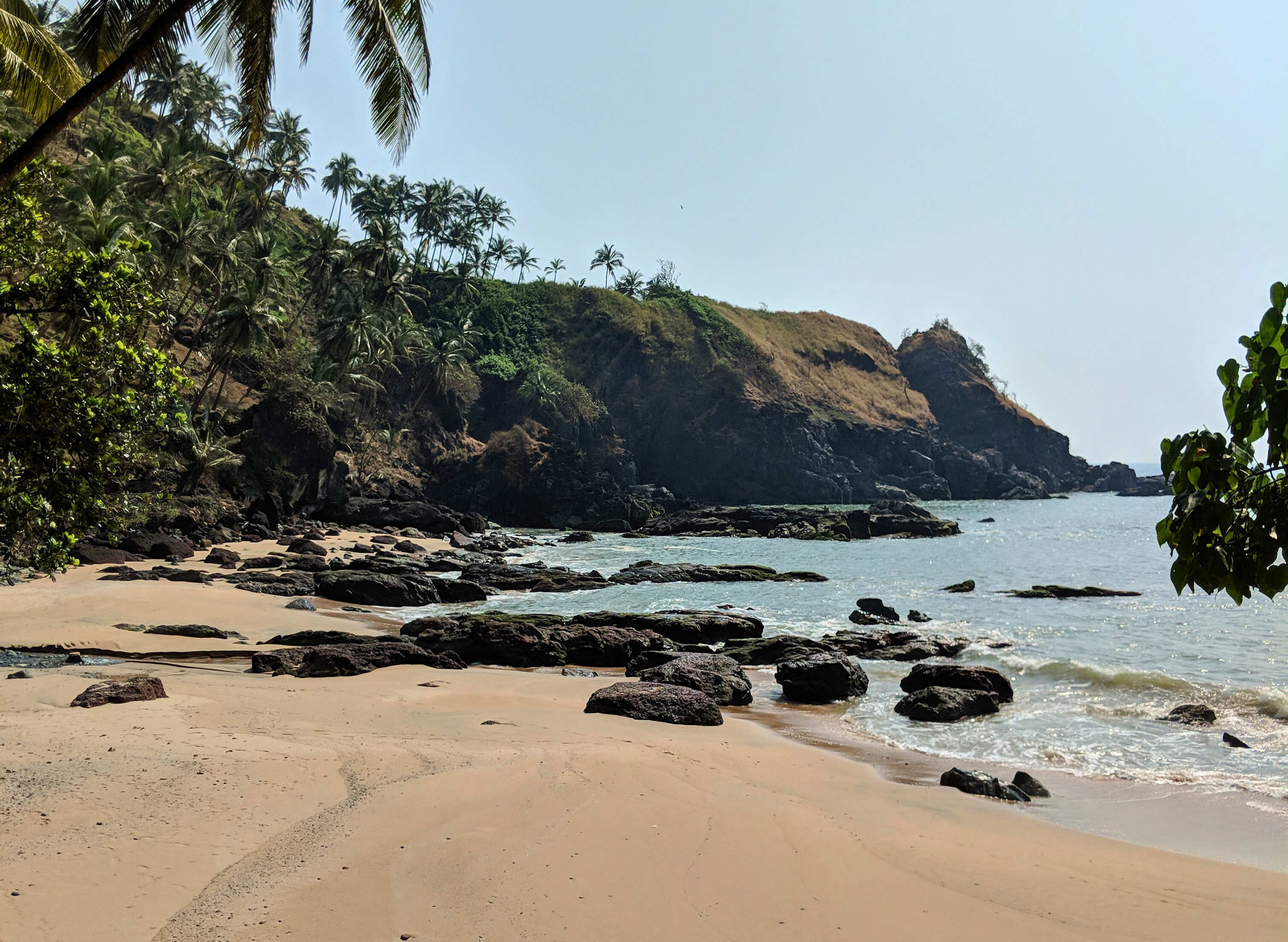
Photo Courtesy of Pavlo Fedykovych Kakolem Beach
Best for untouched nature
Kakolem looks unreal. First, drive the secondary road through the dense jungle between the villages of Kola and Nakeri. Pay attention to a sign directing you to this paradise-looking beach—it’s worth the detour. Follow the sound of the waves and hike downhill to enter this South Goan hidden gem. Once the silhouette of the beach appears through the lush leaves of the palm trees, you know you’re in heaven. Kakolem greets you with incredible sea panoramas, a simple beach bar, a few bungalows to stay the night and impossibly soft sand. Remoteness makes it a true hidden gem of the state, a dreamy image of the untouched Goa of yesteryears.
Patnem Beach
Best for a tranquil beach holiday
If you’re looking for a balance between peaceful rest and beach activities, Patnem is the one beach to visit. Still a sleepy corner of South Goa, it has everything that Palolem has, but with a calmer twist. Patnem is a wide, gorgeous sandy beach with bungalow resorts and massage parlors. You’re well-connected to Canacona and Palolem by the bus, but there’s no hustle. When the tide is low, it’s great for swimming. Otherwise, the currents may be too strong for a dip (keep up with the official information to stay safe).
Galgibaga Beach
Best for the seafood
Goa’s wilder side is on full display at Galgibaga. It’s an undeveloped sandy stretch in the south, where the Galgibag River meets the Arabian Sea. Steps away from the sand, the 1807-built Church of St Anthony of Lisbon adds a picturesque edge to the panorama. The beach is famous for being a nesting site for sea turtles. Also, it’s the best spot to try the local seafood. As it often is in Goa, the beach shacks are places where culinary magic happens. Santosh’s is where you find some of the best oysters in the state. With the spectacular view, of course.
Morjim Beach
Best for a longer stay
Boho-style boutique hotels with Instagrammable pools, specialty coffee houses under palm trees, fancy beach bars with multicolored umbrellas and the constant hum of tourists on scooters. In many ways, Morjim Beach feels like Changgu in Bali or Karon in Phuket, albeit with a more laid-back atmosphere. A remote worker’s dream, this North Goa destination is perfect for a longer vacation. Even if you’re not planning to stay, come for the beach because it’s just that stunning. Stretching for over 2 miles, Morjim is the ultimate sunbathing and beach bar-going spot. As with other Goa beaches, sea turtles choose Morjim for nesting. Head to the Chapora riverfront part of the beach to see this natural show in motion.
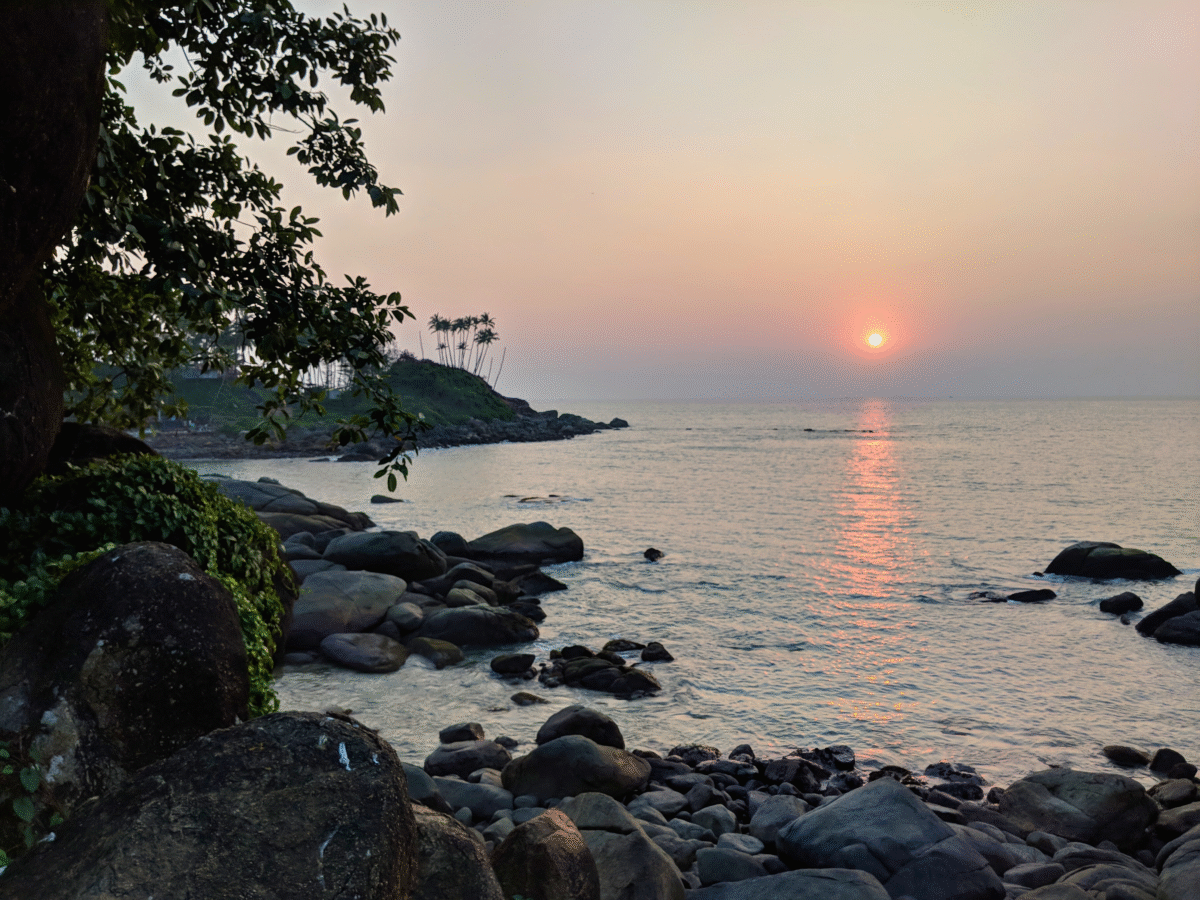
Photo Courtesy of Pavlo Fedykovych Colomb Beach
Best for a chilled atmosphere
Separated from the busy Palolem by a hill, Colomb is a sheltered bay and one of the most charming corners of Goa. Rocks protect the cove from big waves, so you can enjoy tranquil waters almost all the time. It’s especially magical in the morning when local fishermen on colorful wooden vessels commence their workday. This beach is ideal for chilling and getting a moment of peace after the often crowded Palolem. You will find snacks and drinks at the seafront shacks that double as improvised beach bars. Destiny Goa Beach Resort occupies the majority of the southern part of Colomb, offering chalets with private pools and Arabian Sea views.
Ashvem Beach
Best for a luxurious vacation
Morjim’s more tranquil and upscale little brother, Ashvem is among Northern Goa’s most enchanting beaches. Basically, the lion’s share of this village are elegant resorts set among lush greenery. Beautiful spas and high-class restaurants accompany them. This makes Ashvem a fantastic spot for couples seeking a calm and romantic Goan escape. But there’s another type of traveler you will meet at the beach here. Lured by superb conditions and established infrastructure, surfers have long come to Ashvem. If you’re contemplating having your first surf experience, Ashvem is ideal for that reason. There are many surfing schools to choose from with equipment rental.
Baga Beach
Best for nightlife and bar hopping
Not everyone comes to Goa to chase inspiring sunsets and enjoy the serenity of the palm tree groves. If you’re seeking good vibes and a non-stop party, go to Baga. It’s that in-your-face tourist town where you never run out of fun experiences. Bars are everywhere, beach shacks try to outcompete each other with the loudest bass and restaurants have “international food” on their menus. But it’s behind the sand. Go to the beach to find a magnificent stretch with plenty of space and the biggest variety of water sports in the state. Add an unlimited choice of accommodation for any budget, several amusement parks for kids and a big selection of eateries. Baga works ideally for what it is: a slightly chaotic yet fun beach holiday destination. Watch out for tourist traps and you’ll enjoy it. If it gets overwhelming, the peaceful villages of the south are a few hours away.
Cola Beach
Best for sublime nature and kayaking
Cola is a must-visit if you’re after untouched natural landscapes. This beach exemplifies Goan postcard-ready beauty—green hills meet golden sands with coconut palms swaying leisurely. But that’s not all, as the beach also has a spellbinding backwater lagoon. It’s best explored on a kayak, slowly gliding into the palm tree grove’s embrace. There’s a handful of exclusive resorts you can book to experience Cola’s magic first-hand. Imagine sunrises and sunsets at such a place. However, be aware that the beach is isolated, meaning you won’t have anything outside your resort (but for some, this might be the selling point).
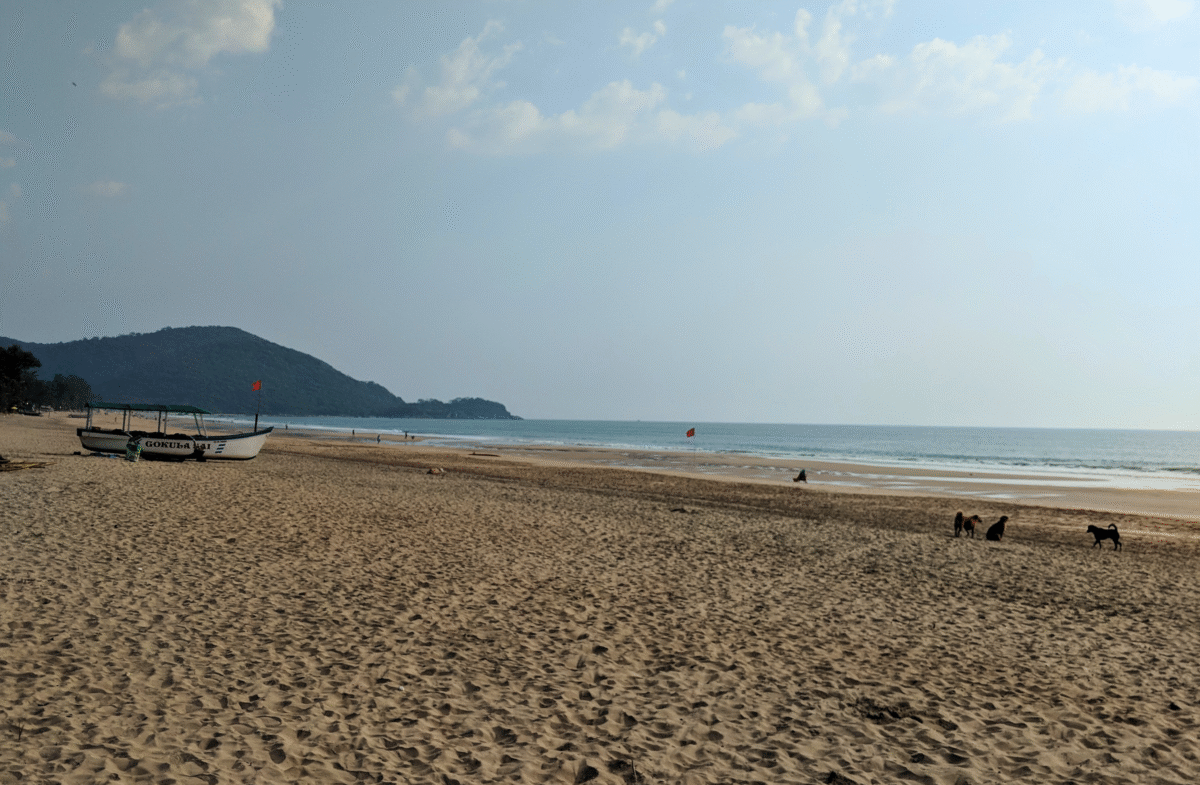
Photo Courtesy of Pavlo Fedykovych Agonda Beach
Best for expansive views
Agoda is Goa without the tourist buzz. It’s long, wide and never too crowded. Be prepared to see the cows roaming the red sands freely (it’s just a very Goan thing). The escape is what this beach is all about. Agonda is a top choice for a honeymoon if you’re into long beach walks, airy bungalows set among greenery and spa treatments to the sound of the jungle. The area behind the beach is dotted with resorts offering just that. In September, the olive ridley sea turtles choose Agonda to lay their eggs, so you’re going to see many nesting sites and have a high chance of spotting these cute creatures.
-
Amalfi Coast
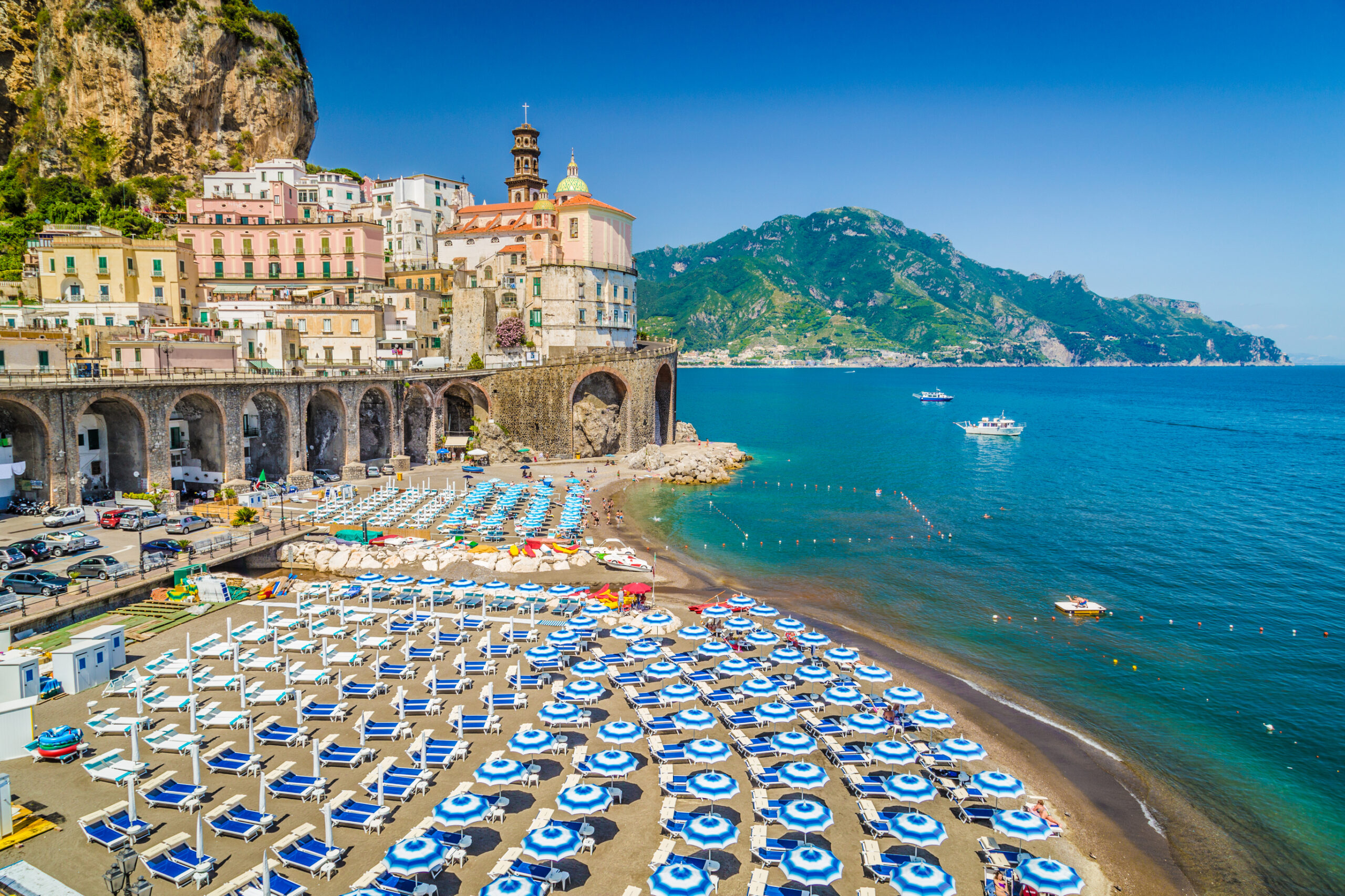
11 Best Beaches on the Amalfi Coast, Italy
Cliffside villages, lemon groves & Mediterranean views
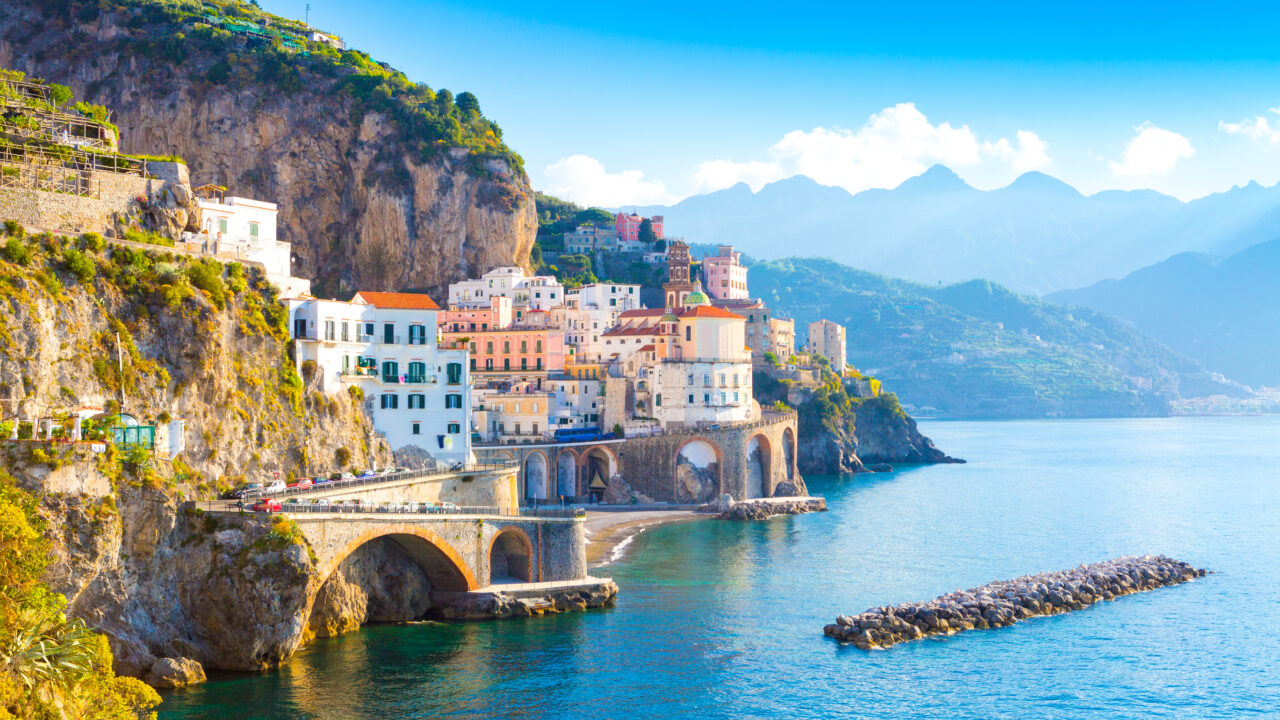
The Amalfi Coast is the Italian sogno—a dream—where glistening Tyrrhenian waters meet the high cliffs of the Monti Lattari range. There, you’ll find a series of perched towns that seem to exist for the sole purpose of admiration. It’s the embodiment of dolce vita. You can’t resist the urge to put your towel down and dive straight into the Mediterranean blue. The beauty of this area and the remoteness of its cities make beachgoing on the Amalfi Coast quite a challenge during peak season, when thousands of tourists visit.
Three things to know about Amalfi beaches: they are small, mostly private and quite expensive. That’s just the reality. The twisty, impossibly narrow roads become congested and the space on tiny local stretches fills up quickly. I love Amalfi with my whole heart, but there are things I wish I had known before coming here for the first time. That’s why I created this guide to the best Amalfi Coast beaches, with insider tips on getting the most out of the seaside in this sublime part of Italy.
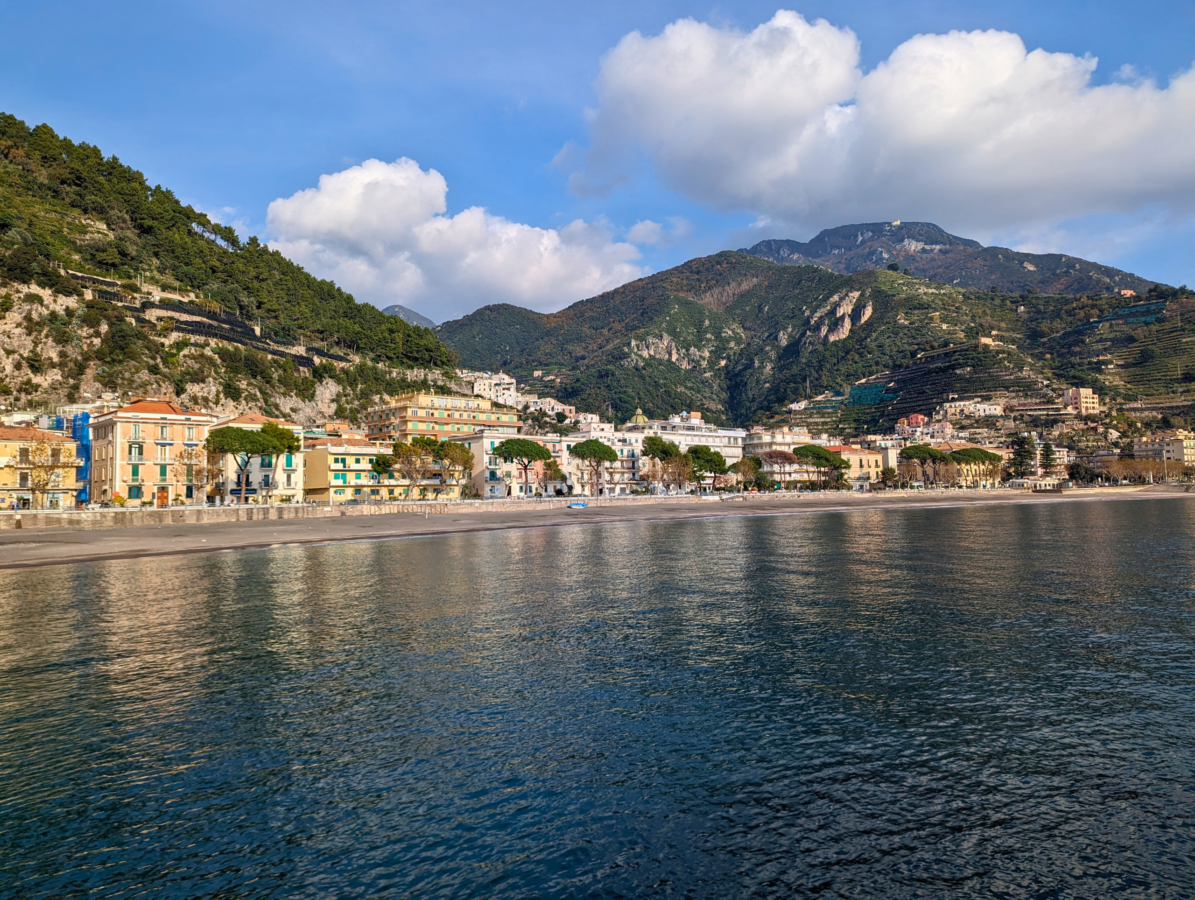
Photo courtesy of Pavlo Fedykovych Maiori Beach
Best Amalfi Coast beach overall
Maiori is the welcoming exception to the Amalfi rule of small, congested beaches. Here, you have the longest stretch on the coast (almost a mile) with a wide free section and many private beach clubs. It’s also the best choice for families. Maiori is a relaxing town with plenty of accommodations to choose from and a delightful historic center that’s less crowded than Positano or Amalfi. The beach is made of tiny pebbles and black sand. Maiori is also flat, so you won’t have to trek up and down every time you want to hit the water. And it has the Amalfi Coast’s best-priced restaurants and cafes, making it a great pick for an affordable base in the region.
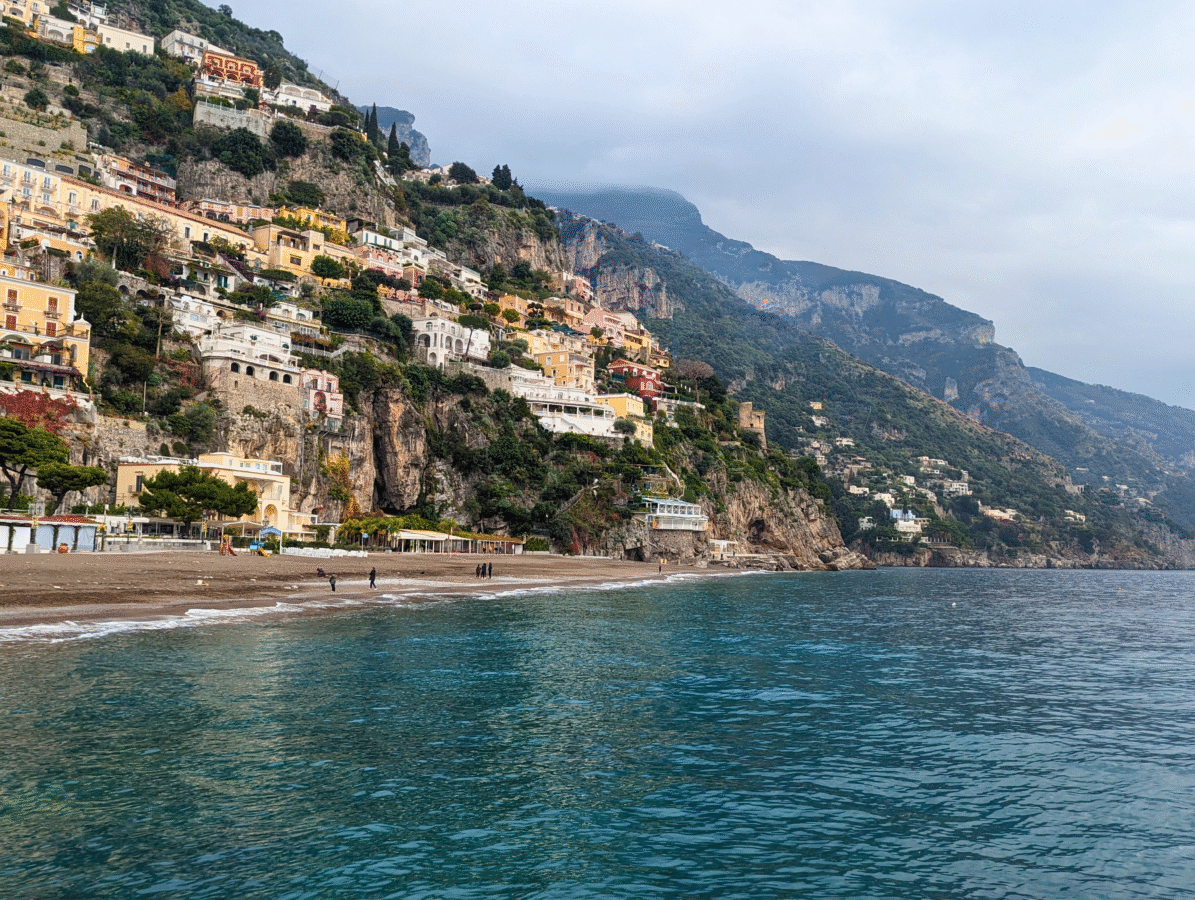
Photo Courtesy of Pavlo Fedykovych Positano Beach
Best for the iconic views
Yes, it might be small and overpriced, but it’s impossible not to stand in awe of Positano’s beauty. Its beach doubles as a scenic vantage point for the iconic perched town, which is among the most Instagrammable places on Earth. Come here during summer and the pebbly stretch will be packed with people all looking for a glimpse of Amalfi jet-set living. Get there early to secure the best spot in the free section. There’s also a private beach with blue umbrellas and the Ocean Bar, which charges around 45 EUR per umbrella and sun deck combo. For something more exclusive, check out La Scogliera Beach Club, set on the cliffs in the southern part of the beach. It has an elevated bar and a private sandy section for guests.
Fornillo Beach
Best for swimming
Located behind the cliff and sheltered from all the Positano craze, Fornillo is a surprisingly peaceful second beach in the most-visited town on the Amalfi Coast. Reach it by following the beautiful coastal path called Via Positanesi d’America starting at the town’s marina. The pebbly stretch opens to a magnificent cove guarded by ancient watchtowers perched on a limestone cliff. It’s as dramatic as it gets. A downside: there’s only a tiny free section at the northern tip of the beach. The rest is divided among private beach clubs, each with a distinct umbrella color. Expect to pay around 40 EUR for the facilities. Still, no one is stopping you from taking a quick, free dip in crystalline waters after exploring Positano. Fornillo might be a better spot for that than the main town’s stretch.
Marina di Praia Beach
Best beach without crowds
If any Amalfi Coast beach could be called “under-the-radar,” Marina di Praia would be it. It’s not exactly a hidden secret—calling anywhere in one of Italy’s most popular regions truly hidden would be misleading. But you’ll definitely find fewer crowds here than elsewhere. The setting is magical—two towering cliffs create a natural gateway, sheltering calm waters perfect for swimming. Just know that Marina di Praia stays shaded for most of the day thanks to those dramatic stone formations. If you’re taking the bus, look for the “Praiano” stop above the beach. Drivers can find reasonably priced parking just a 2-minute walk from the water.
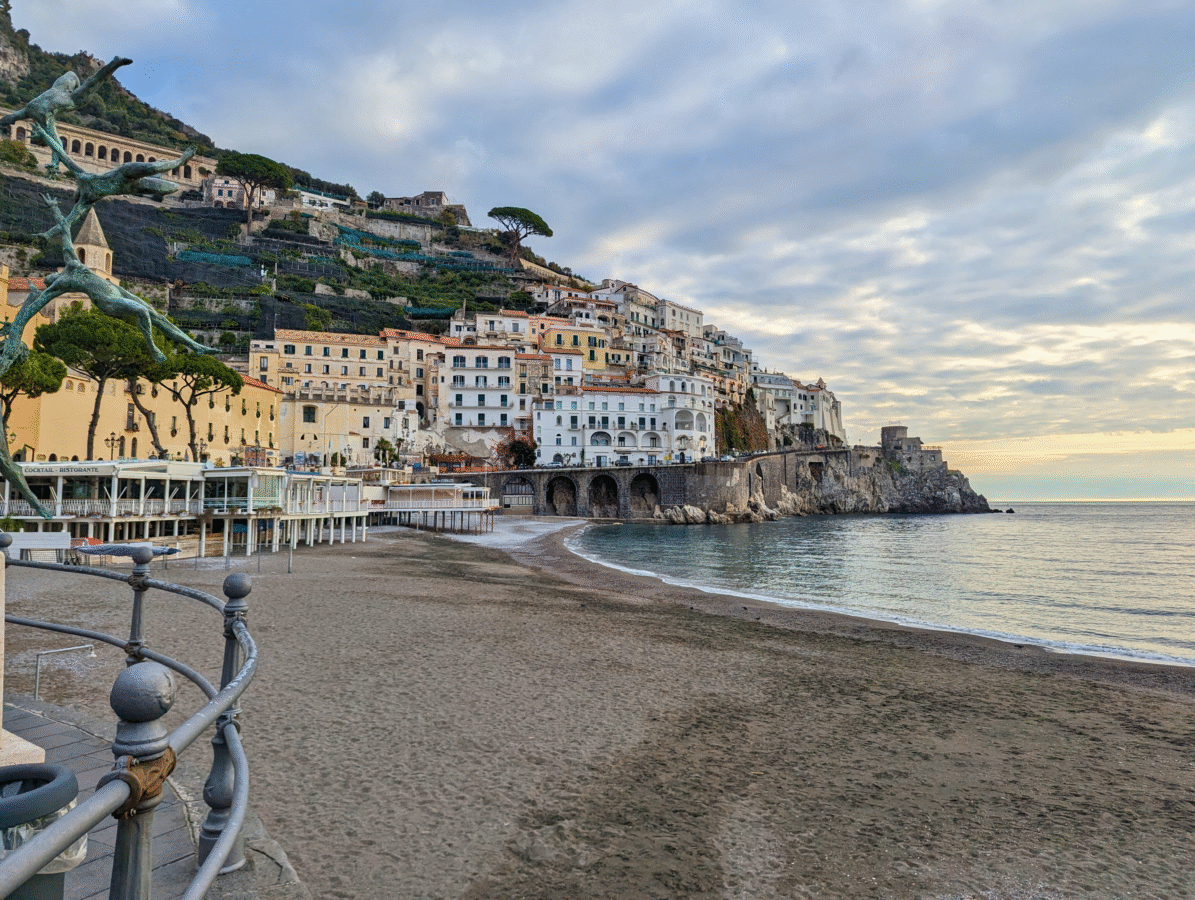
Photo Courtesy of Pavlo Fedykovych Spiaggia Grande, Amalfi
Best for a quick urban dip
Located at the heart of the coast, Amalfi is a busy transportation hub for buses and boats traveling between Salerno and Sorrento. It’s also a charming town with rich history, a stunning Norman-Arab-Byzantine Cathedral and a 13th-century Paradise Cloister. The local beach isn’t the most beautiful on the Amalfi Coast, but it works perfectly as a quick refresher before catching your transport. It’s definitely not the spot to spend a whole day, so skip the expensive beach bars (save your money for more charming Positano) and claim a small spot in the free section for your things. The proximity to all of Amalfi’s bars, coffee shops and restaurants is Spiaggia Grande’s biggest advantage.
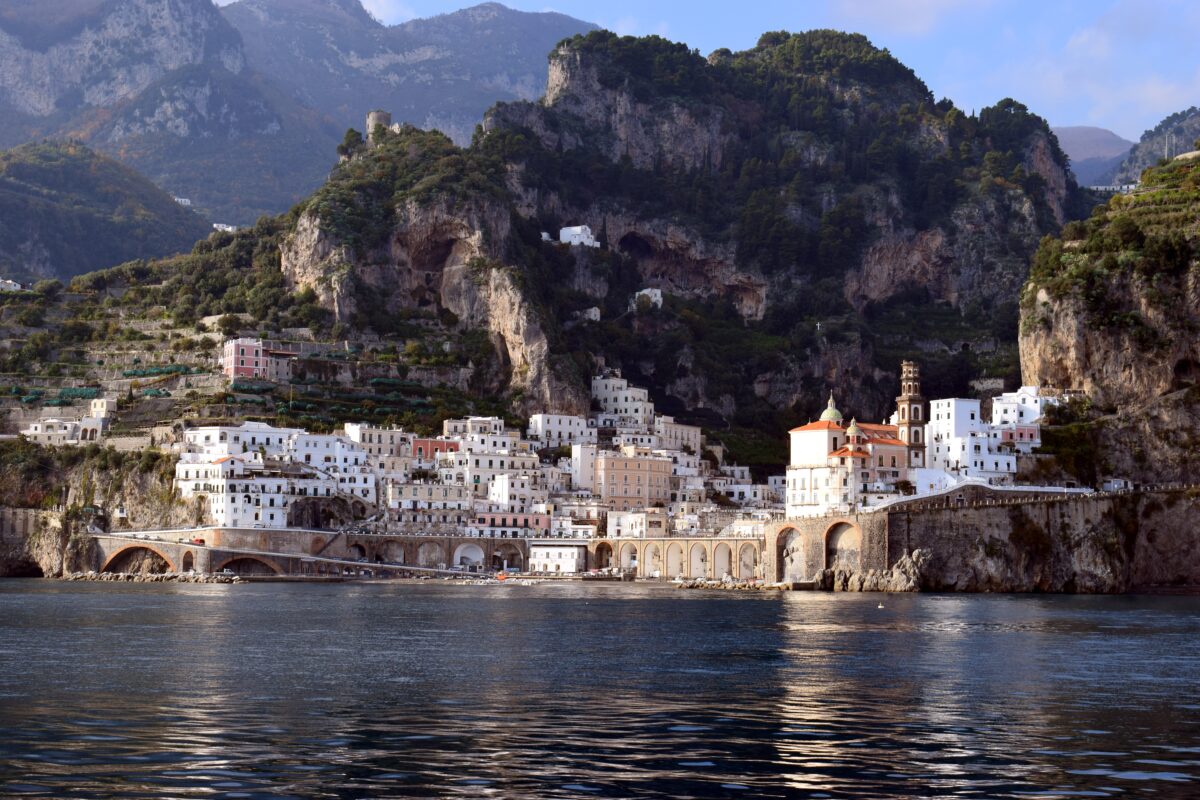
Photo courtesy of Pavlo Fedykovych Atrani Beach
Most cinematic beach
In the 2024 Netflix series Ripley, the main character, played by Andrew Scott, visits an idyllic (and deserted) beach in a striking village to sunbathe and gather his thoughts. That scene was filmed in Atrani. While the beauty is absolutely there, it’s anything but deserted. A small river divides this tiny, dark sand stretch into free and private sections. It’s calmer here than Positano or Amalfi, but it still gets hectic during summer. One of Campania’s most picturesque buildings, the 13th-century Collegiate Church of Santa Maria Maddalena, overlooks the bay. An arched tunnel connects the beach to lively Atrani’s center, with gelaterias and bars surrounding the postcard-perfect Piazza Umberto I. Coming here will feel like stepping into a classic Italian movie.
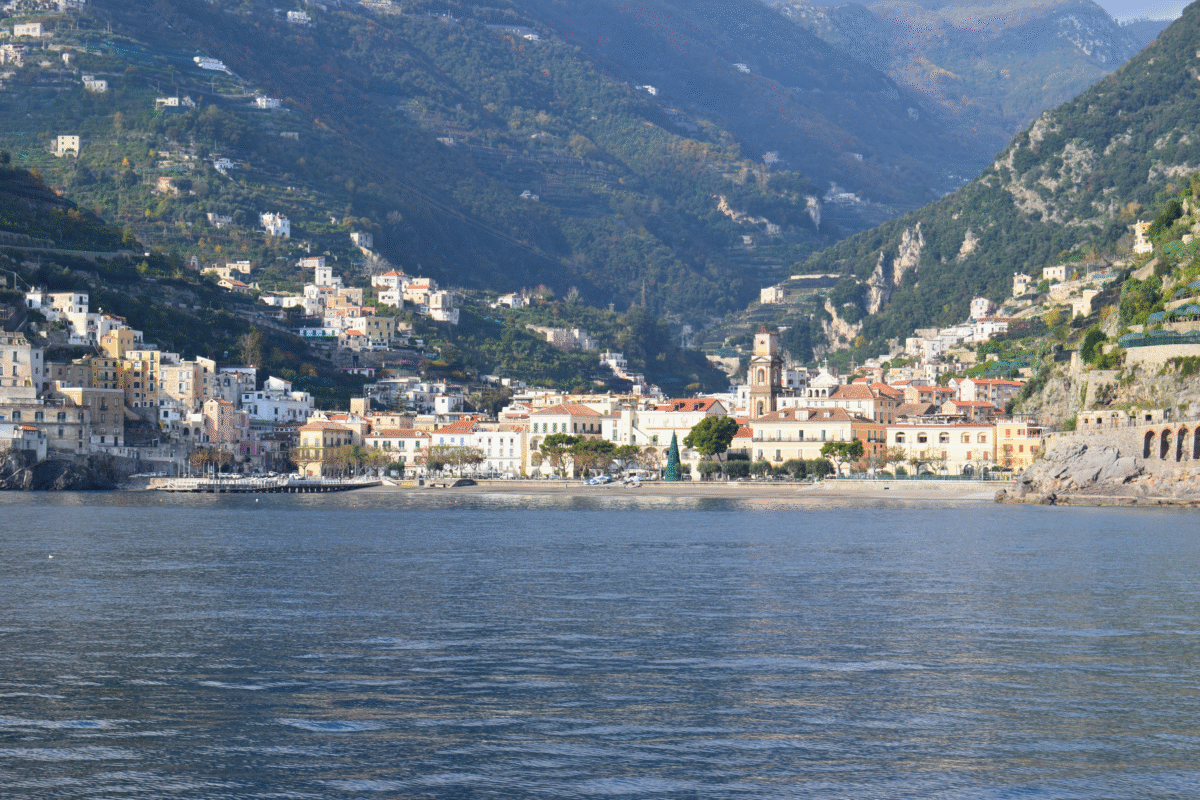
Photo Courtesy of Pavlo Fedykovych Minori Beach
Best for small town charm and local desserts
Minori, with its remains of a Roman villa and the yellow-façaded Basilica of Saint Trofimena, is often overlooked in favor of other Amalfi towns. This makes it a less touristy destination, where you can experience the area’s authenticity and culture firsthand. The town’s beach (a mix of pebbles and black sand) sits alongside the marina and features small free sections tucked between the private lidos. Minori is also famous for Pasticceria Sal De Riso, a superb promenade café serving iconic Amalfitan desserts like delizia al limone (lemon custard sponge cake), sfogliatella (a traditional shell-shaped pastry) with ricotta and babà al limoncello (a lemon liqueur-infused sponge cake). Savoring these sweets beside the sea is a uniquely sensory Amalfi experience.
Acquachiara Beach
Best hidden beach
If you’re feeling adventurous and craving an actual hidden beach, Acquachiara is there for this very reason. This sheltered pebbly stretch is less than 300 meters wide and you will have to descend over 160 steps to reach it. But once you do, it’s an untouched piece of Thyrrenean perfection. Acquachiara isn’t free from commercialization—there’s a beach bar with an umbrella rental. But the vibe here is tranquil and it feels worlds away from the overcrowded stretches of other popular Amalfitan destinations. Just remember that it’s over a hundred steps up to return.
Vietri Sul Mare Beach
Best sandy beach
There are several reasons why you should stop by Vietri Sul Mare. For starters, it’s among the most charming Amalfi Coast destinations with a stunning Old Town, rich ceramic production heritage and plenty of top-notch restaurants. It’s also the most accessible of all Amalfitan towns thanks to a train station and frequent connections to Naples and Salerno. Vietri has some of the widest sandy beaches in the area. During summer, the umbrellas of the private beach clubs take over almost all the space, leaving only tiny, free chunks, which aren’t the best spots to rest your towel on the Amalfi. For something more secluded, head to Marina di Albori, a tiny sheltered stretch on the exit of Vietri in the direction of Cetara.
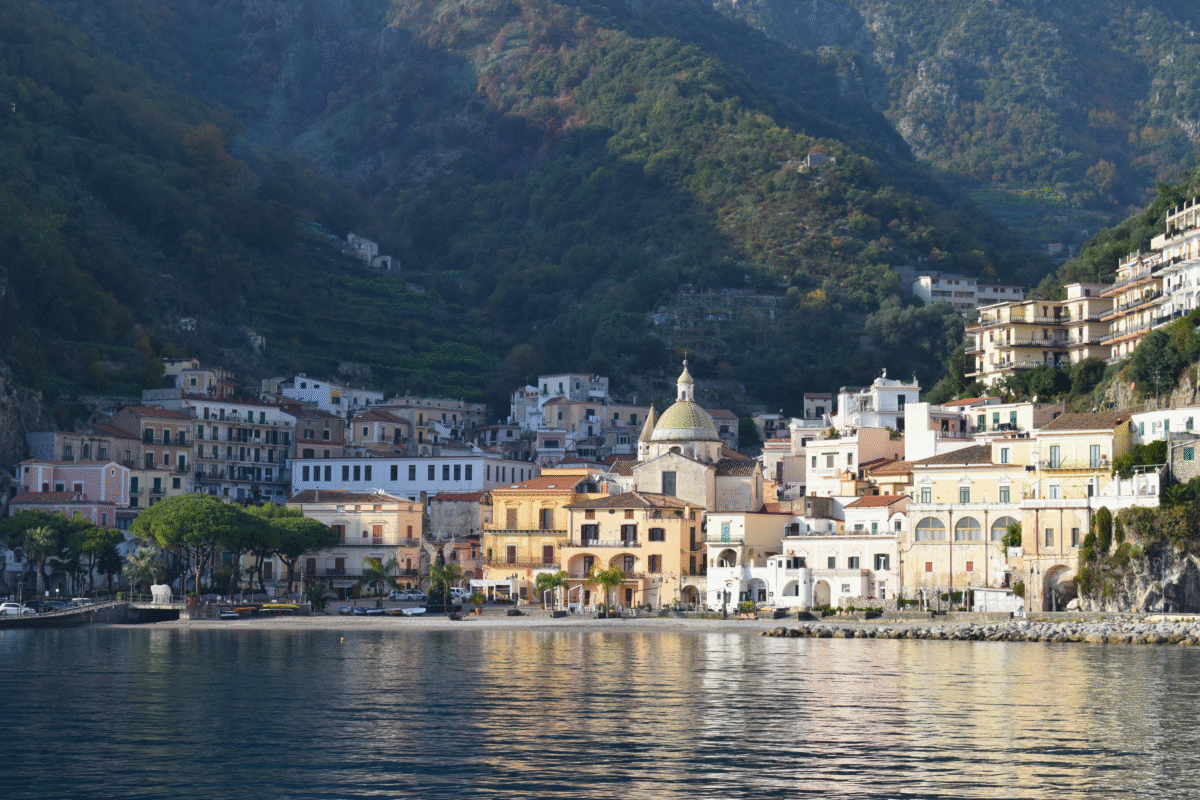
Photo Courtesy of Pavlo Fedykovych Cetara Beach
Best for dreamy panoramas
One of the dreamiest Amalfi Coast stretches is in Cetara. The town is world-famous and its anchovies and canned tuna are among Italy’s top exports. The beach here may be small, but the views are to die for. A medieval watchtower creates a romantic scenery, the elegant villas dot the promenade and the old houses of the marina set a cinematic ambiance. Like most Amalfi stretches, you find a mix of sand and pebbles in Cetara. There’s a lido with not-so-budget prices (35 EUR for a day) for umbrellas and sunbeds, but you can always just use your towel. While in Cetara, don’t miss the Church of St. Peter the Apostle with its magnificent ceramic dome and breathtaking interior.
Lannio Beach
Best for a secluded setting
Tucked beneath the road between Vietri and Cetara, Lannio isn’t your typical Amalfi Coast beach. A towering cliff flanks this stretch and wouldn’t look out of place on the Greek Ionian islands. The beach is public, with fine pebbles and crystal-clear water. It’s something of a local hidden gem and a delightful alternative to the more developed beaches in town marinas. That said, there’s still a beach bar and a private section filled with umbrellas. The dramatic clifftop setting means the sun disappears earlier here and you can expect shade by around 3 pm.


