

-
Naxos
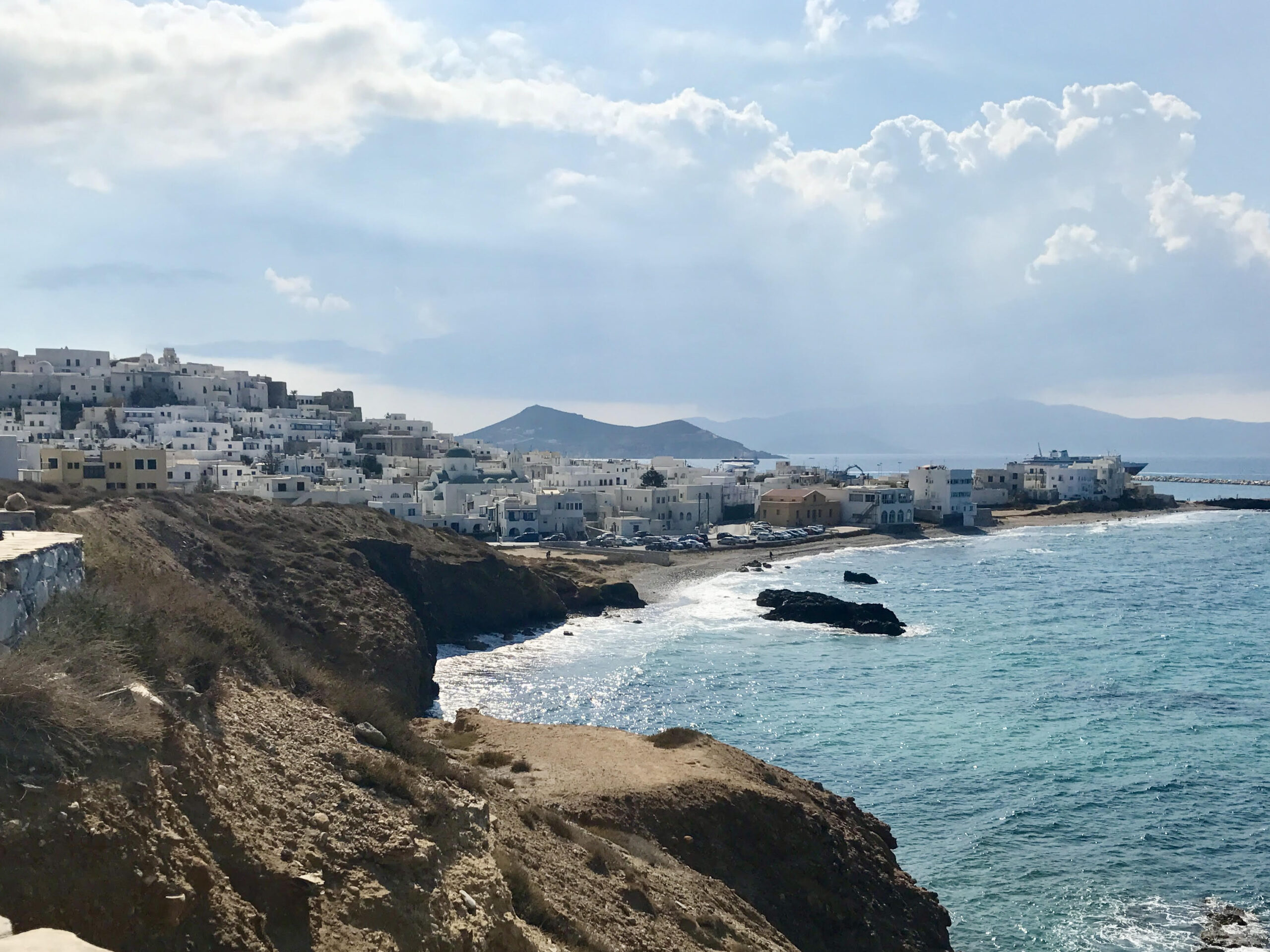
11 Best Beaches in Naxos, Greece
Turquoise lagoons, rugged mountain scenery, and unspoiled beaches
Located south of Mykonos and north of Santorini in the Cyclades archipelago, Naxos has become renowned for its farm- and sea-to-table food scene, but it also boasts some of the best beaches in the Greek islands. As the largest Cycladic island, it has nearly 100 miles of coastline and more than 20 named beaches in addition to countless smaller sandy stretches. They range from popular, lively spots with all the facilities you need to quiet, secluded spans where you can toss down a towel and enjoy the tranquility.
If you plan to spend time on Naxos beaches, you’ll want to get to know the best before deciding which to visit.
Grotta Beach
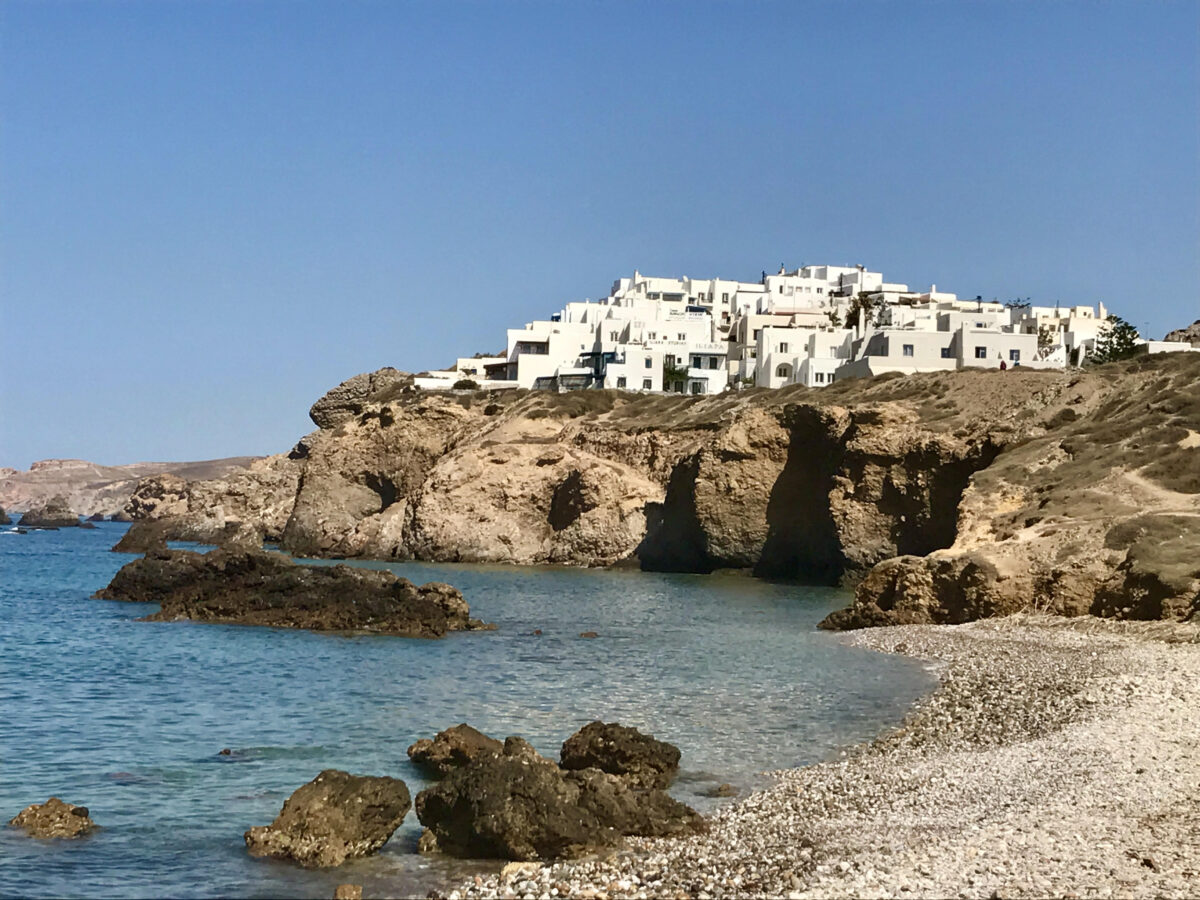
Photo courtesy of K.C. Dermody On my first visit to Naxos, I took a short stroll from my accommodation at Iliada Sunset Suites and stumbled upon Grotta Beach. It’s the closest to Naxos Town, only about five minutes from the ferry terminal. While it may not seem like much, this pebbly stretch is perfect for swimming and snorkeling on a calm day. You can even snorkel through the ruins of an ancient Mycenaean city that was destroyed during an earthquake and sank into the sea. The city walls, columns, and parts of homes are all still visible. Afterward, head to the hill above for an incredible sunset view framed by the iconic Portara that welcomes visitors arriving by ferry.
Agios Georgios
Agios Georgios (St. George Beach) is the closest sandy beach to Naxos Town, about a 10-minute walk from the center. Wide and about two-thirds of a mile long, it’s the busiest and most developed at the northern end, closer to town, but you often find a more peaceful atmosphere toward the south. The waves are more powerful at the southern end, popular for windsurfing, while shallow, calm water awaits in the north, ideal for families with young children. This is also where you’ll find umbrellas and loungers, lifeguards, beach bars, sea-view restaurants serving fresh seafood, and several beachfront hotels.
Agios Propkopios
Three miles south of Naxos Town, Agios Prokopios offers a mile-long stretch of pale golden sands and calm, crystal-clear turquoise waters that are protected from the winds. The exceptional clarity makes it particularly popular for snorkeling and diving, while numerous umbrellas and loungers are available for rent when it’s time to relax. It does get quite busy in the summer, with plenty of beach bars, restaurants, and facilities for watersports, but there are more tranquil sections too, making it a good pick for solos, couples, and families alike. It’s the type of beach where it’s easy to spend an entire day, occasionally enjoying dips in between time sprawled out on a towel or a lounger with a book in hand and a cocktail within easy reach.
Propkopios is also where you’ll find the Art Café. During the summer, visitors can enjoy the open-air cinema for movies under the stars and concerts, including live jazz and blues.
Agia Anna
Lying adjacent to Agios Propkopios, Agia Anna is basically a continuation of the beach. It has a good mix of organized and quieter areas, but each has its own distinct personality. The southern end is less developed, providing a more serene experience in a wide, shallow cove with colorful fishing boats. Snorkeling is exceptional around the rocky outcrop near the Spilia Restaurant, with strikingly clear, calm water, home to everything from Mediterranean parrotfish and wrasse to octopus and the occasional sea turtle.
On the other end of the beach, you’ll find many tavernas and casual bars where you can enjoy food and drink along with great people watching. Just behind the beach, you’ll find more eateries, shops, and a wide range of accommodation options.
Plaka
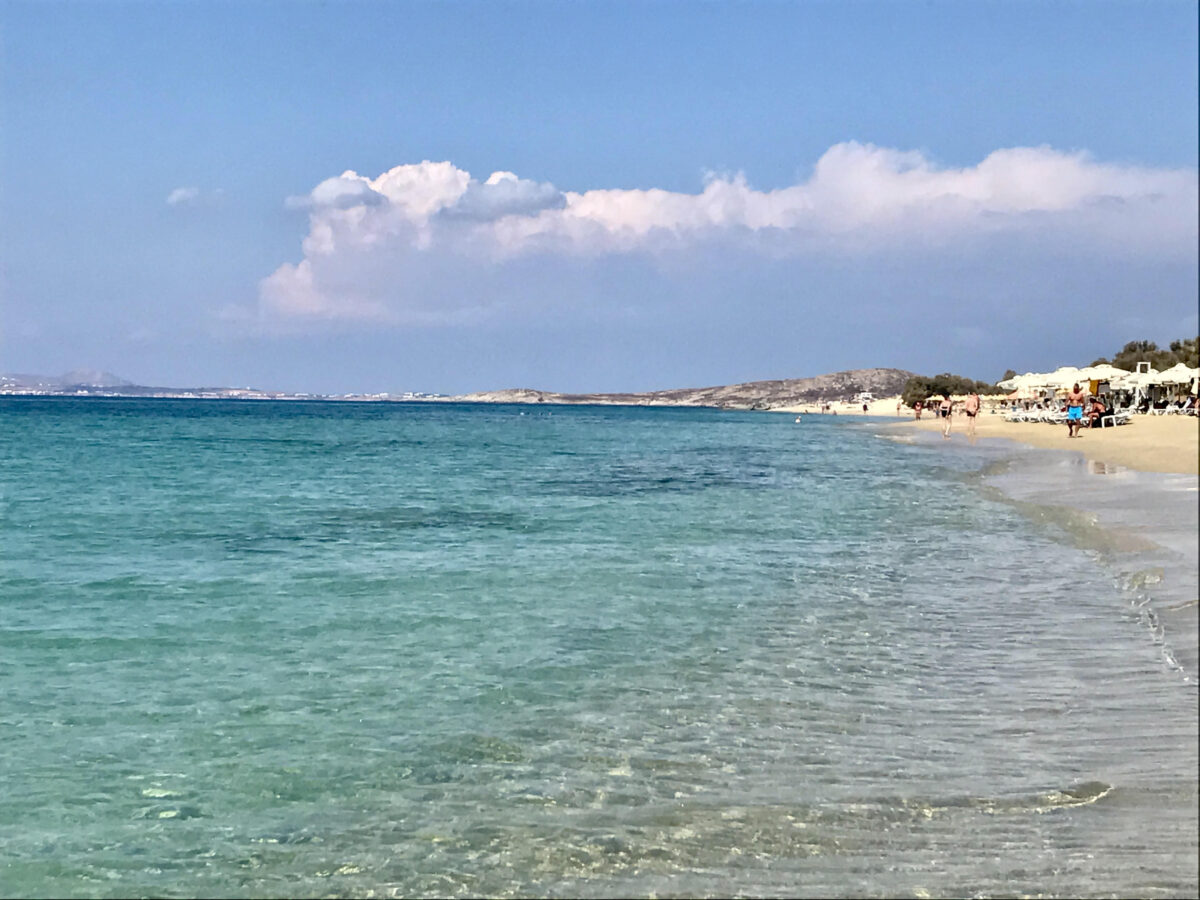
Photo courtesy of K.C. Dermody One of the most well-known beaches in Naxos, Plaka is the island’s longest uninterrupted beach. The 2.5-mile stretch of soft, powdery sands is edged by water that looks like a big, natural pool. As it is so large, you won’t have any trouble finding a spot to relax, whether you want to take advantage of beach clubs with cabanas rentals, umbrellas and loungers, or bring your own beach towels. There are also watersports facilities for renting sea bikes and banana boats, along with restaurants and boho-chic bars for sipping cocktails while watching the sun go down.
Most of the beach clubs, restaurants, and hotels are at the north end of Plaka, with the south offering more empty, long expanses of sand. It gets busy during the peak of the tourist season (July and August), but it’s still much quieter compared to beaches closer to Naxos Town.
Mikri Vigla
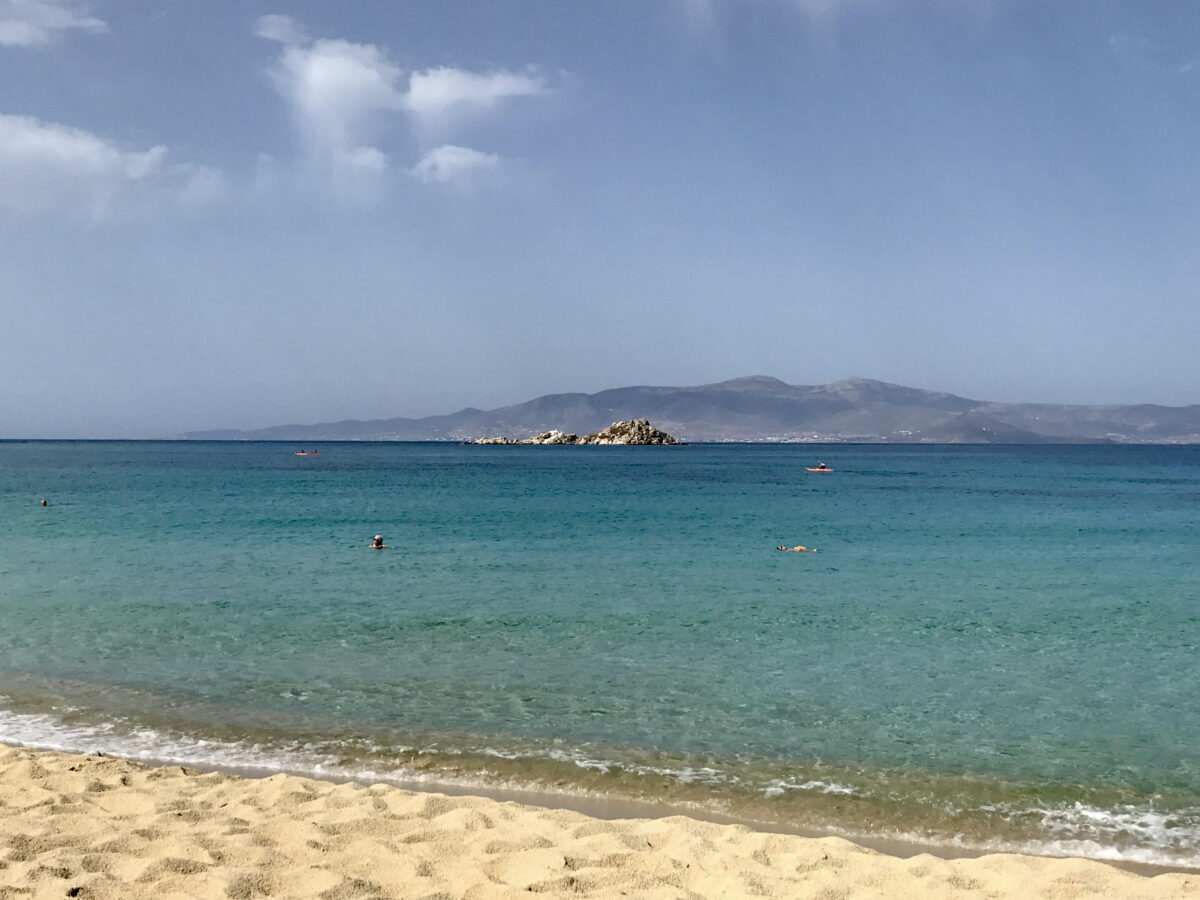
Photo courtesy of K.C. Dermody Mikri Vigla is about a 20-minute drive from Naxos Town, but it’s worth the effort to get there if you’re looking for a relatively undeveloped beach with opportunities for a wide range of activities. The southern section is protected from northerly winds in the summer, resulting in calm aquamarine water that’s ideal for swimming and snorkeling, particularly around the reef just to the west. The northern section, often referred to as Parthena Bay, is a premier spot for windsurfing and kitesurfing as it’s affected by the strong Meltemi winds.
While there are no beach clubs at Mikri Vigla, you will find a few cozy tavernas and beach bars along the shore. You won’t find sprawling resorts either. Accommodation is primarily villa and apartment rentals, including options that are perfectly positioned for stunning sunset views.
Kastraki Beach
Just a bit further south from Mikri Vigla, Kastraki is a great place to snorkel. The water is often calm, clear, and in dazzling colors that range from deep sapphire to turquoise and emerald green. On windy days, many come to kitesurf or windsurf. No matter what your plans, you’re sure to be mesmerized by the postcard-perfect scene, including a backdrop of whitewashed homes dotted across the rugged mountains.
As the white sands stretch for nearly two miles, even when it’s busy, you’ll find plenty of room along with opportunities for tranquil strolls. There are a few eateries and boutique hotels at the north end, but the south end is nearly unspoiled with massive dunes, cedar and juniper trees.
Hawaii Beach
Remote Hawaii Beach is about a 30-minute drive (11.5 miles) from Naxos Town, located right across from Koufonisi Island. Quiet and secluded, it’s tucked among the cedar trees while boasting a backdrop of rugged, uniquely colored cliffs that have streaks of tangerine. Contrasted by the white sand and translucent turquoise water, it’s truly breathtaking. Calm days are ideal for swimming and snorkeling, but anytime you can relax among the peaceful, natural environment.
Enjoy the unspoiled atmosphere by bringing your own shade, food, and drink, as there are no amenities here. Nearby, you’ll find the ruins of the old Alyko Hotel. The site has become a canvas for street artists, transforming the decaying buildings into a quirky kind of open-air art gallery. In fact, it’s from here that you’ll gain access to the beach via a short, steep trek down one of the sandy cliffs.
Pyrgaki Beach
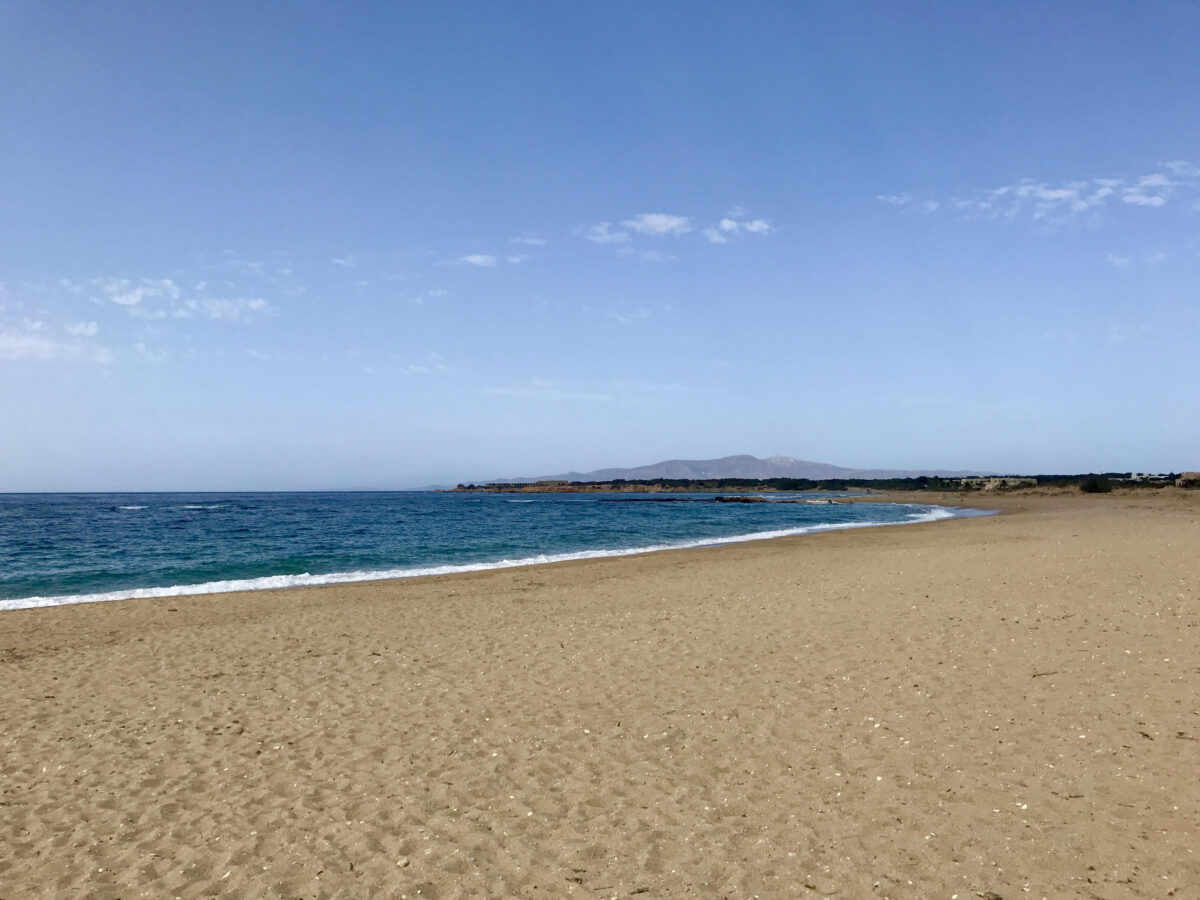
Photo courtesy of K.C. Dermody Serene and secluded, Pyrgaki is just south of Hawaii Beach. It’s a wide stretch of pale, golden sands ideal for escaping the busier tourist spots and enjoying brilliant cobalt waters, protected from northern winds by ancient cedar trees and dunes. Enjoy swimming, snorkeling, long walks, or simply relaxing while immersed in the natural beauty. Amenities are limited to a few hotels and traditional tavernas serving authentic Greek cuisine, with some umbrellas and loungers available.
Panermos Beach
The best beaches are often not the easiest to reach, and that includes Panermos. It takes approximately 90 minutes to get there from Naxos Town, located in the southeastern corner of the island. Much of the drive winds through the mountains, passing picturesque villages like the marble village of Apeiranthos. It feels as if time has stopped, with Venetian buildings lined along narrow streets. It’s also a renowned foodie destination, having been featured in an episode of the late Anthony Bourdain’s series, “Parts Unknown.”
Once you’ve reached the beach itself, you’ll find a peaceful, mostly undeveloped stretch set within a bay fringed by palms. The water is calm and swimmable, popular for paddleboarding, snorkeling, or just floating beneath the often brilliant blue skies. There are a couple of places for food and drink, including a beach bar serving beer, cocktails, and light bites. You’ll also find a venue for renting SUPs and the opportunity to take a boat tour from the jetty that will take you to visit sea caves and hidden swimming holes.
Apollonas Beach
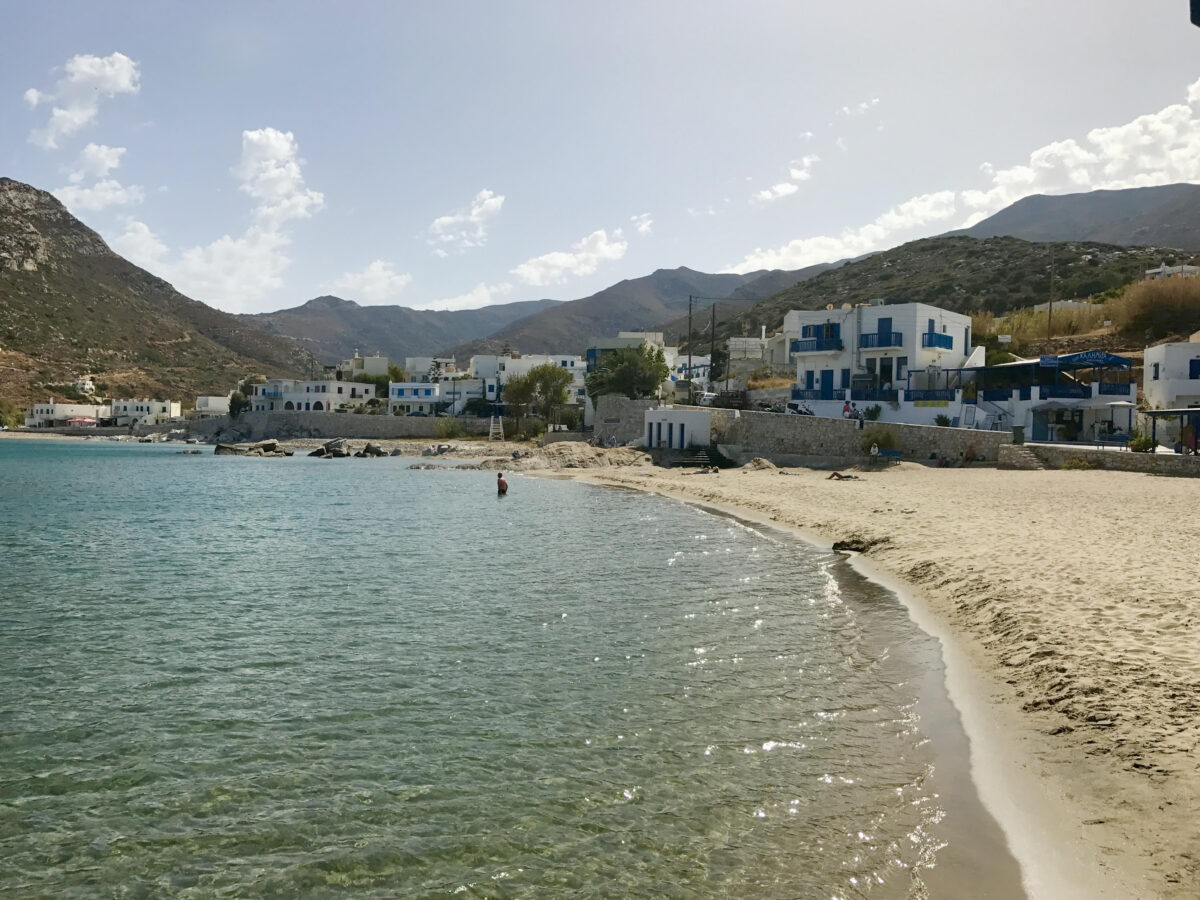
Photo courtesy of K.C. Dermody About 20 miles from Naxos Town on the northeast coast, Apollonas Beach is located in the charming fishing village of Apollonas, providing another opportunity to experience a more secluded side of the island. The sandy and pebbled shoreline has deep, clear blue waters, perfect for swimming on a calmer day. After a dip, head to one of the multiple seafront tavernas serving fresh fish, seafood, and traditional Greek dishes like spit-roasted lamb, along with cold Greek beer. If you happen to visit in late June, you’re welcome to join the residents at the annual Fisherman’s Festival, which includes traditional music and plenty of tasty local eats.
-
Sardinia
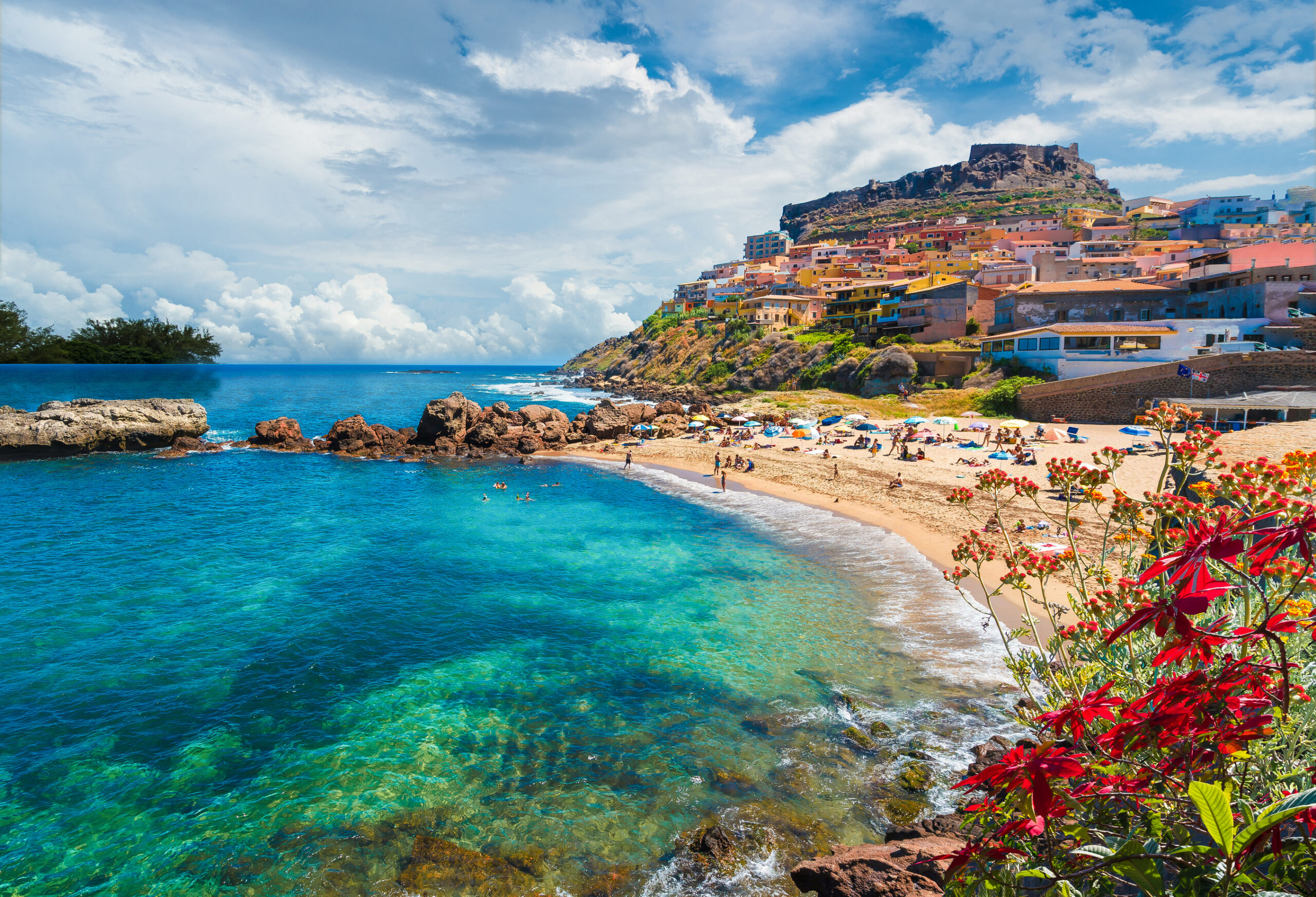
Sardinian beaches are spectacular. The second-largest island in the Mediterranean is blessed with a divine azure coastline, where transparent waters caress soft white sands. And it’s not just one or two idyllic stretches—the 1,149-mile-long Sardinian coast offers a variety of endless dunes, hidden coves, urban strips, and island escapes. This destination transports you to the Mediterranean before the rapid resort development, where you actually feel at peace with nature. It’s the kingdom of evergreen sclerophyll shrubs, rocky mountain ranges, and impossibly blue Tyrrhenian Sea. Anyway you look at it, this island is hands-down the best destination for beaches in Europe. Here’s the selection of the top stretches in Sardinia to soak in the island’s cyan beauty.
La Pelosa
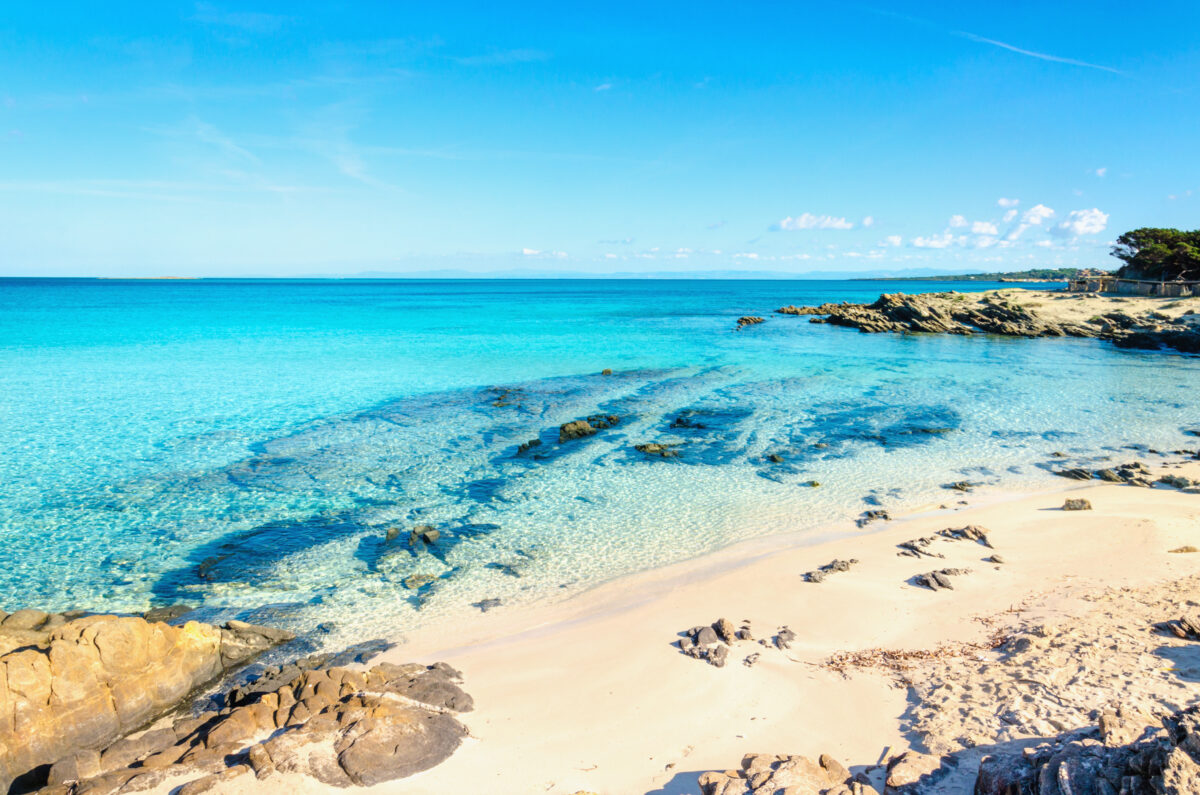
Photo by © Jedynakanna | Dreamstime.com Best for the breathtaking panoramas
A strong contender for the “Best Beach in the World” title, La Pelosa is the undisputed queen of Sardinian coastal strips. Its regal status is cemented by the fact that you have to book your spot on its milky sands beforehand, so popular is its allure. But it’s absolutely warranted, La Pelosa is love at first sight. Its sand is as soft as the clouds, and its waters look as if a saturation photo filter was applied. To make things even more scenic, the medieval ruins of an Aragonese watchtower guard the shores, and the Isola Piana island beacons with coves in front. Thanks to the shallow seabed, La Pelosa is also the ultimate family beach on Sardinia. If you’re visiting during the summer, reserve your spot through the official website and arrive early. Spiaggia della Pelosetta (near the watchtower) and Spiaggia del Gabbiano are two sister sandy stretches worth checking out.
Brandinchi
Best for families
A sunny playground for kids, Brandinchi is another picture-perfect white-sand stretch in Sardinia. Popular with TikTokers and Instagrammers, it’s often used to promote the island as the “Caribbean of Europe.” Expect translucent, shallow waters, powdery shore, and pink sunsets. Like La Pelosa, Brandinchi works on a pay-to-enter basis to limit the number of visitors in the fragile ecosystem during the season (1 June to 30 September). The fee is 2 EUR, and you can pay through the San Teodoro municipality website. The parking is 2.50 EUR per hour. The Brandinchi reservation also allows you to access Lu Impostu, another dreamy sandy stretch nearby. For something wilder and absolutely free in the vicinity, take a ride to Spiaggia di Capo Coda Cavallo, a gorgeous cove overlooking the gigantic Tavolara Island.
Su Giudeu
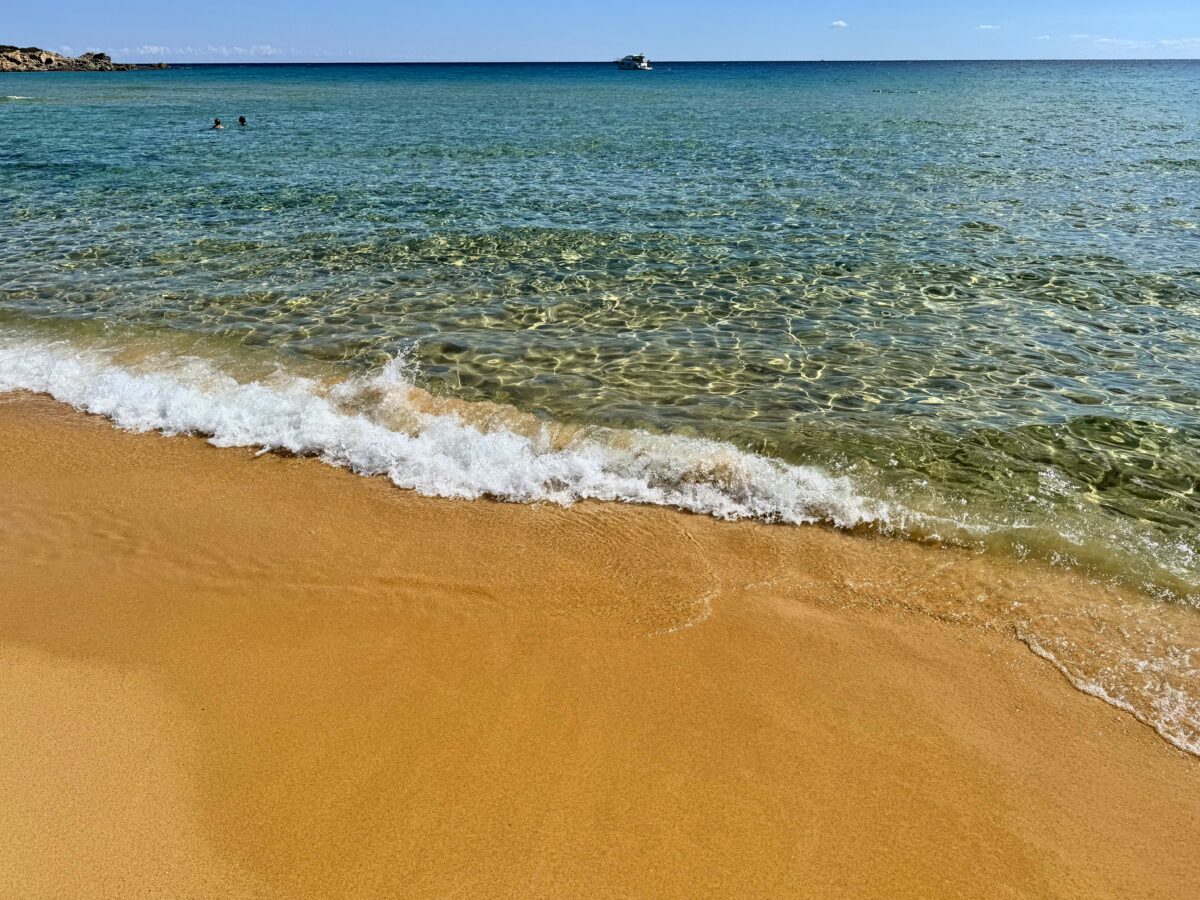
Photo courtesy of Pavlo Fedykovych Best for vast dunes and snorkeling
The white sands go as far as the eye can see. You can even hear the dunes whisper when the wind blows. Su Giudeu is the crescendo of Sardinian beach beauty with few rivals in Europe. Located on the south-western coast, it sprawls for almost a mile and offers pure sand. The sea access here is shallow, and the beach has an endless sand-castle-building potential that your kids will love to experience. A lagoon behind Su Giudeu is a popular hangout for pink flamingos, so bring your binoculars to observe these beautiful birds. There are two islands in front of the beach for snorkeling. You can reach them by a short swim or a kayak ride. Several photogenic beach bars supply drinks and panini for living Sardinian dolce vita.
S’Archittu Beach
Best for the cliff-diving and unspoilt beauty
It’s not only white sands on Sardinian beaches. S’Archittu offers a different experience. It’s a tiny stretch overlooking a gorgeous limestone arch, which forms a sort of sea portal. Passing through these natural gates on a kayak is a fantastic water activity. Cliff-jumping is another popular thing to do in S’Archittu. The sand-and-gravel beach starts at the resort village of S’Archittu and stretches to the rocky natural formation. It’s one of Western Sardinia’s hidden corners, so you’re not getting the crowds of La Pelosa or Brandinchi. Stay for the sunset and you will be rewarded with the breathtaking panorama of the sun “hiding” in the opening under the cliff.
Bados
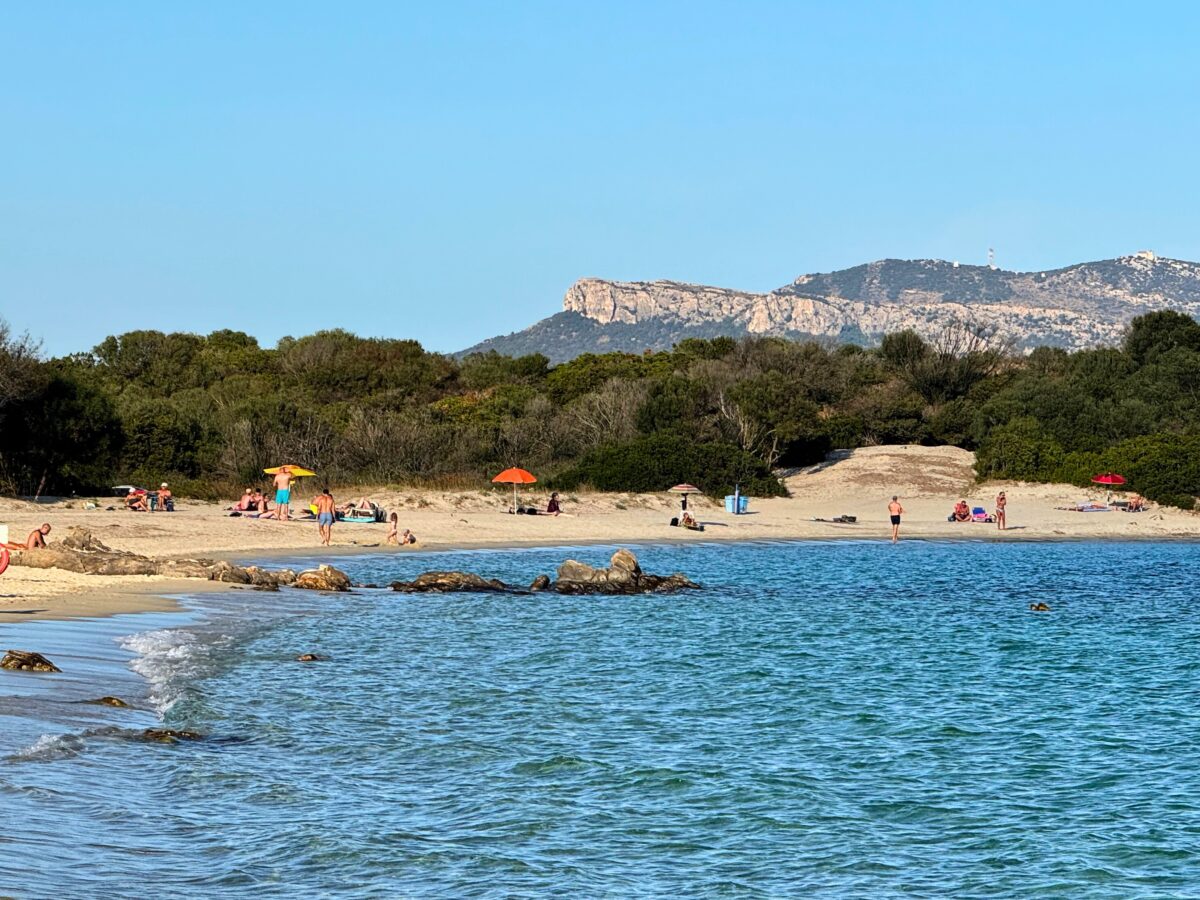
Photo courtesy of Pavlo Fedykovych Best for chilling out
While Olbia is a popular air gateway to Sardinia’s yacht-filled Costa Smeralda, it doesn’t offer good beaches within the city limits. About 5 miles north of Olbia, you find Pittulongu, a charming resort town with magnificent sandy stretches. Bados is the one to settle for. Overlooking the colossal rocky island of Tavolara, it’s just a perfect beach for relaxing. Family-friendly, it features shallow waters, pleasant golden sands and a chill beach bar. Bados isn’t the most striking of Sardinia’s stretches, but it’s among the best beaches near Olbia. Another plus is that it’s easily reachable by public transport (Bus 04 from Olbia center). When in the area, check out Spiaggia Pittulongu for more lazy beachgoing and idyllic views.
Cala Luna
Best for the blue waters and caves
The most popular destination for the boat tours on the island, Cala Luna is incredibly scenic. Located on the East Coast and surrounded by the wild beauty of Golfo di Orosei, this crescent-shaped cove is a stunner. Of course, there will be blue waters, fantastic rocky coast panoramas and caves. Cala Luna is peppered with grottos (or small limestone open caves), which look extremely good in your photos. There are two ways to reach this divine beach. The most rewarding is by boat—hop on a tour or rent a vessel at Cala Gonone. Hiking through the Gulf of Orosei wilderness is another. Leave your car at Cala Fuili and walk for about 2 hours to reach Cala Luna, enjoying the untamed Mediterranean landscapes along the way.
Is Arutas
Best for the quartz sand
From a distance, Is Arutas Beach looks as if someone spilled tonnes of salt next to the azure sea. This West Sardinian stunner is among the best beaches for pure white sand. You’ll walk on the grainy quartz sand, which feels heavenly on your toes, ensuring an exceptional beach experience. Is Arutas is also a perfect destination for snorkeling. Rocky Punta Su Bardoni (the northern end of the beach) is great for exploring the underwater life. The stretch is located on the Sinis peninsula, locally nicknamed “Eden” for miles of undeveloped coastline and transparent blue waters. Head south to find other paradisiac stretches, such as Spiaggia di Su Crastu Biancu, Spiaggia Corríghias, and Spiaggia S’Archeddu ‘e Sa Canna.
Poetto
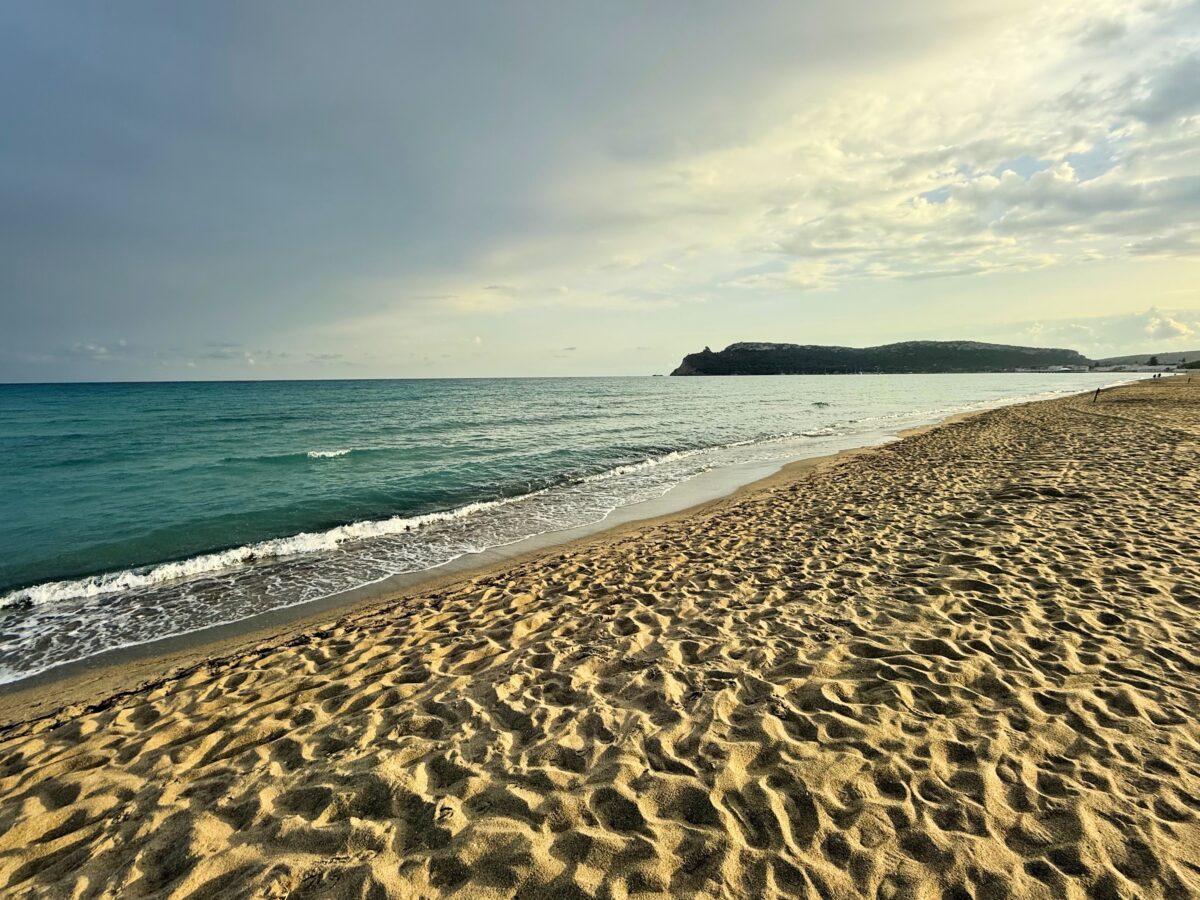
Photo courtesy of Pavlo Fedykovych Best urban beach in Sardinia
Hugged by the cyan waters of the romantically named Gulf of Angels, Poetto may well be Italy’s most gorgeous urban beach. It’s enormous too, stretching for over 5 miles. Poetto is flanked by the beautiful waterfront filled with beach bars, restaurants, Art Deco low-rise hotels, and palm tree-surrounded mansions. There’s always a place on the wide white sand. The beach is also a water sports area, where you can rent paddles, kayaks, canoes, and try jet skiing and windsurfing. Cagliari’s main stretch is part Rio’s sandy sprawl, part Miami’s Art Deco glamour, sprinkled with distinct Sardinian allure. Also, it’s an all-day kind of destination: sunbathe in the morning, have seafood for lunch, marvel at the violet sunset, and stay for the party-filled night at the beach bar.
Cala Goloritzé
Best for the wild vistas
Sardinia’s most spellbinding beach is also the newest one. A landslide in the ’60s gave birth to this heavenly spot. Today, it’s among the island’s most recognizable blue bays. Approach it by boat, and you’ll be mesmerized by the combination of sapphire-blue sea meeting the tall pinnacles of the Gulf of Orosei. It is the masterpiece of nature, no less. 148m-high Aguglia rock crowns the panorama to the delight of climbers who can brave the challenging ascent. Reaching this piece of Sardinian paradise isn’t the most straightforward. Hikers should book access to the 2-mile trail at least 3 days in advance. As for sailing, boats are only allowed to moor 200 meters from the beach (Cala Goloritzé is a protected natural monument). It’s either you’re swimming next to your boat or swimming to the cove to enjoy the pebbles. But then, unlike many heavenly stretches spoiled by the boat traffic, Cala Goloritzé stands in a tranquil glory.
Porto Pino
Best for the shallow sea
If you enjoy beaches in the middle of nowhere, Porto Pino is the one. Located on Sardinia’s south-western coast, it enchants you with the stunning dune landscape. Swathes of white sand give the impression of being in something like a mini Sahara, with the advantage of shallow blue water for plunging. Porto Pino is the ultimate kid-friendly beach, perfect for wading, playing in the sand, and running around. Almost 3 miles of the beach provide enough space for everyone to enjoy the unspoilt nature. There are also several sections in Porto Pino with wilder dunes starting at the southern edge. Spiaggia di Porto Pineddu is another white-sand beach with crystalline waters to check out, located next to the Porto Pino tourist village.
Porto Giunco
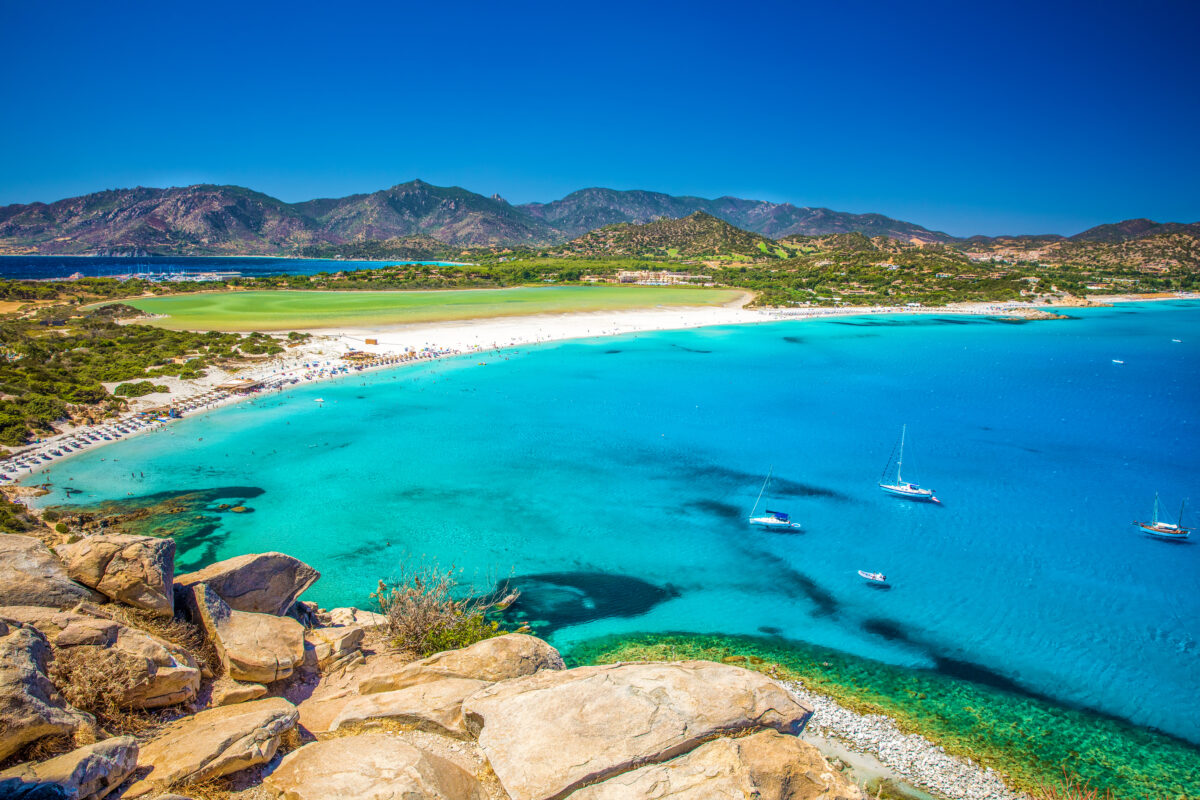
Photo by © Eva Bocek | Dreamstime.com Best for bird-watching
One side of Porto Giunco is a clear turquoise sea. The other is a lagoon, where pink flamingos roam. It doesn’t get more scenic in Sardinia than this. A part of the Vilasimius coast, the beach is among the best on the island’s south. Thanks to shallow access, it’s also a prime stretch for families. For a breathtaking panorama of Porto Giunco from above, hike to the Torre, a 16th-century watchtower, which is gloriously set on a hill. Private Timi Ama beach, of the five-star Pullman resort on the northern end of Porto Giunco, is the ultimate destination for luxurious beachgoing.
-
Valencia
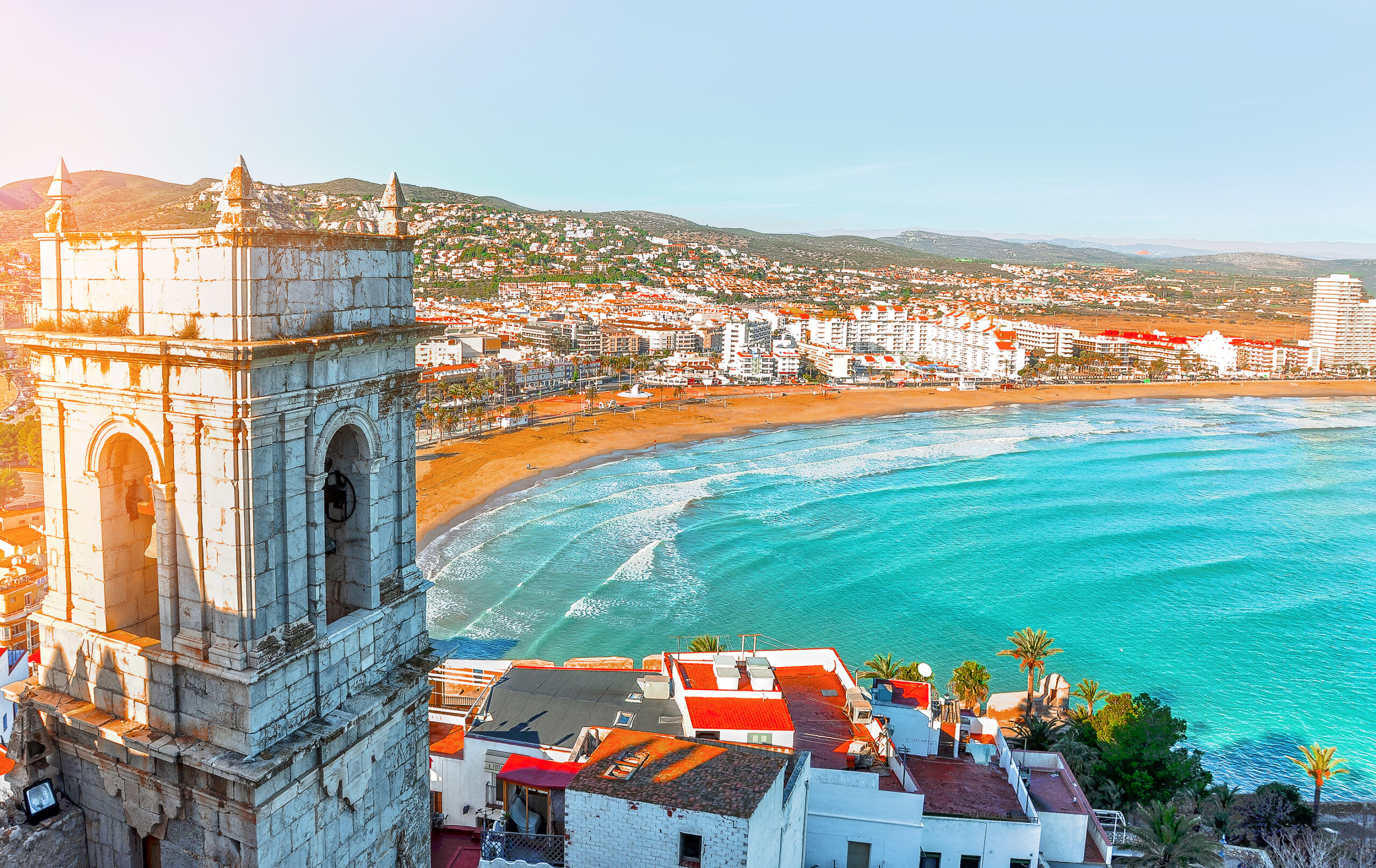
Valencia has my heart. It’s one of those cities I keep coming back to because it’s got everything I love in one place: golden sunshine, incredible food, and a coastline that makes you want to stay all afternoon with salty hair and a cold drink in hand.
Now that I live across the border in Lisbon, it’s easy to hop on a plane (or a bus!) for a few days in the city whenever my heart desires so.
I’ll happily spend the morning getting lost in the old town or cycling through the park, but the beaches here always pull me in. From the big, buzzing stretches with chiringuitos pumping out music to the quieter coves where you can just hear the waves, Valencia’s beaches never disappoint. Here are my favorites.
Playa de la Malvarrosa
Malvarrosa is the first beach I ever fell for in Valencia. There’s just something about walking out of the old town, hopping on a bike and suddenly arriving at this huge sweep of golden sand that feels like such a luxury.
The beach is big enough that you can always find your own patch, but what I love most is the atmosphere. Families set up for the whole day with coolers and umbrellas, volleyball games kick off near the promenade, and the smell of fried fish drifts out of the chiringuitos.
I usually end up staying longer than I plan to —lounging by the water, grabbing a horchata from the paseo, and watching the colours shift over the Mediterranean as the sun drops. It’s busy, yes, but in a way that makes you feel part of the city.
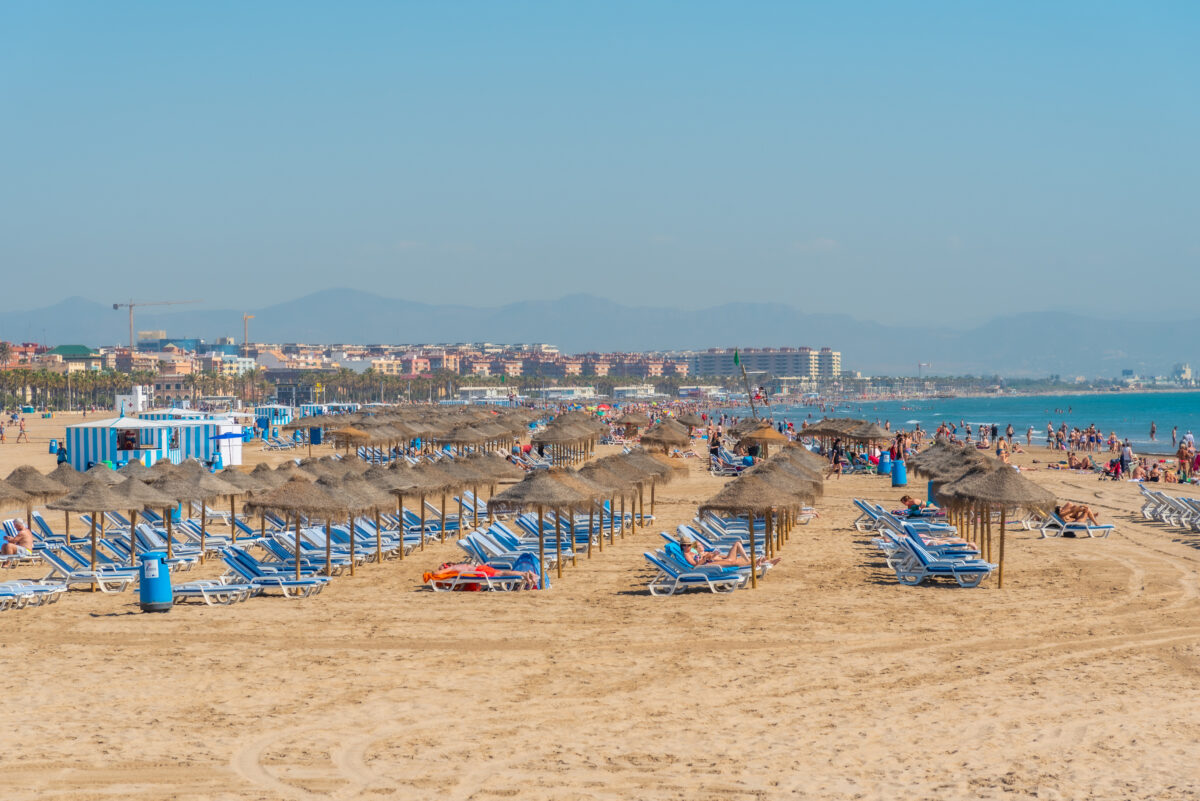
Photo by © Dudlajzov | Dreamstime.com Playa del Cabanyal (Las Arenas)
Cabanyal, often called Las Arenas, feels like Malvarrosa’s lively little sister. It’s right by the marina, so you get that mix of beach life with the buzz of boats and waterfront bars. I come here when I want more than just a swim—there’s always something happening, from locals playing paddleball to kids building castles in the sand.
The promenade is lined with cafés where you can sit with a cold beer and watch the world go by, and it’s a great spot if you’re into people-watching. One of my favourite things is staying late, when the beach slowly empties out and the sky turns pink behind the port cranes. It’s not the quietest stretch, but that’s exactly why I love it—it feels unapologetically Valencian.
Playa de Patacona
Patacona is where I escape when I want the beach without the full-on crowds of Malvarrosa. It’s just a short cycle north, but the vibe instantly changes: calmer, trendier, a little more local. The sand here is soft and wide, perfect for long lazy afternoons, and I always notice how much quieter it feels compared to the city centre beaches.
What really makes Patacona stand out, though, is the food. There are some brilliant restaurants just off the promenade—La Mas Bonita is my go-to for brunch by the sea, and I’ve spent countless afternoons lingering over coffee there before heading back to the sand. It’s the kind of beach you settle into for the whole day, moving between the water, a good book and a plate of something delicious.
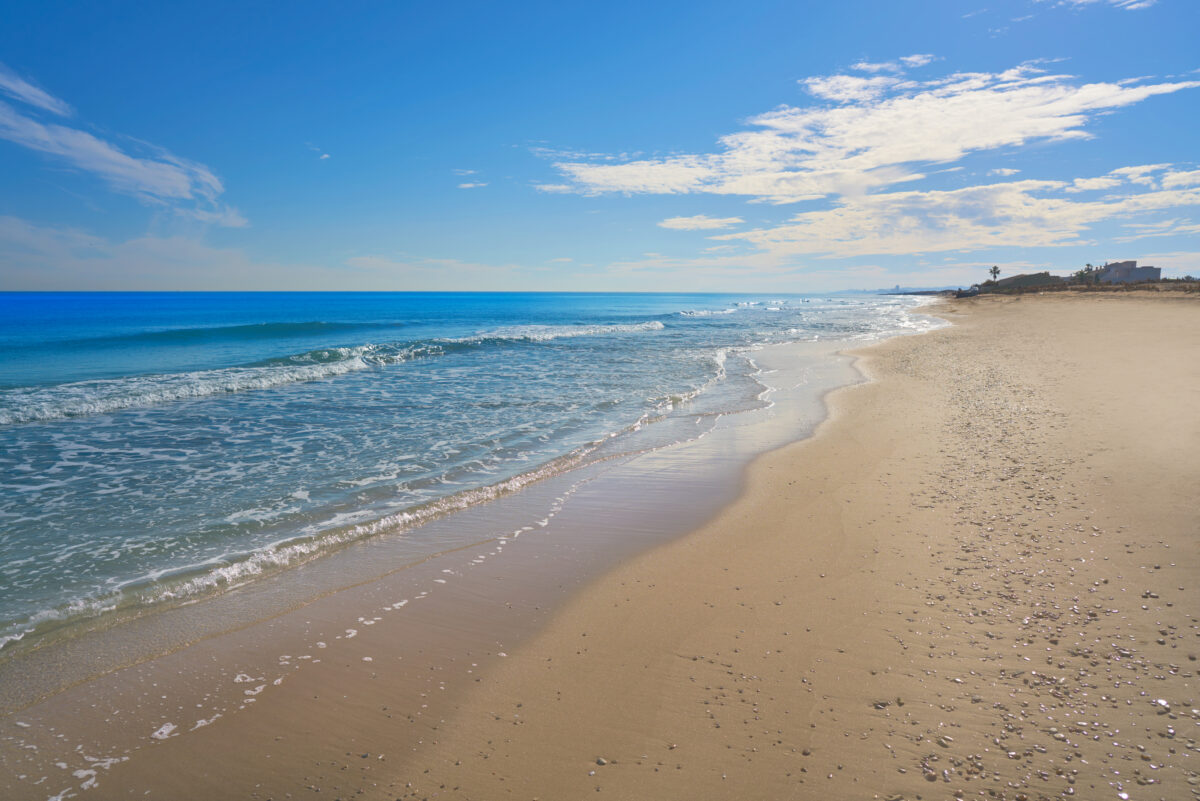
Photo by © Lunamarina | Dreamstime.com Playa de la Devesa (El Saler)
Whenever I need a proper reset, I head south to La Devesa. It’s part of Albufera Natural Park, so instead of cafés and promenades you get rolling sand dunes, pine forests and a feeling of being far away from the city, even though it’s only about half an hour’s drive.
The beach itself stretches for miles, and I love that you can walk for ages without seeing another soul if you head far enough along. The waves here are a little stronger than the calm city beaches, which makes it feel wilder, more rugged. Bring water, snacks and a good book, because once you settle into the rhythm of the waves and the wind in the pines, you won’t want to leave.
Playa de El Saler
El Saler is one of those beaches I recommend to friends when they want a proper Valencian day by the sea. It still has that wild, dune-backed feel, but it’s more popular than La Devesa, so you get a livelier atmosphere without losing the natural setting.
Families often come here with picnics, locals set up under umbrellas, and there’s usually a mix of swimmers, kite surfers and long walkers striding off into the distance. I like that you can dip into both worlds here: grab a paella in one of the restaurants tucked behind the dunes, then head back to the sand for a siesta. It’s the kind of beach that makes you forget the city is so close.
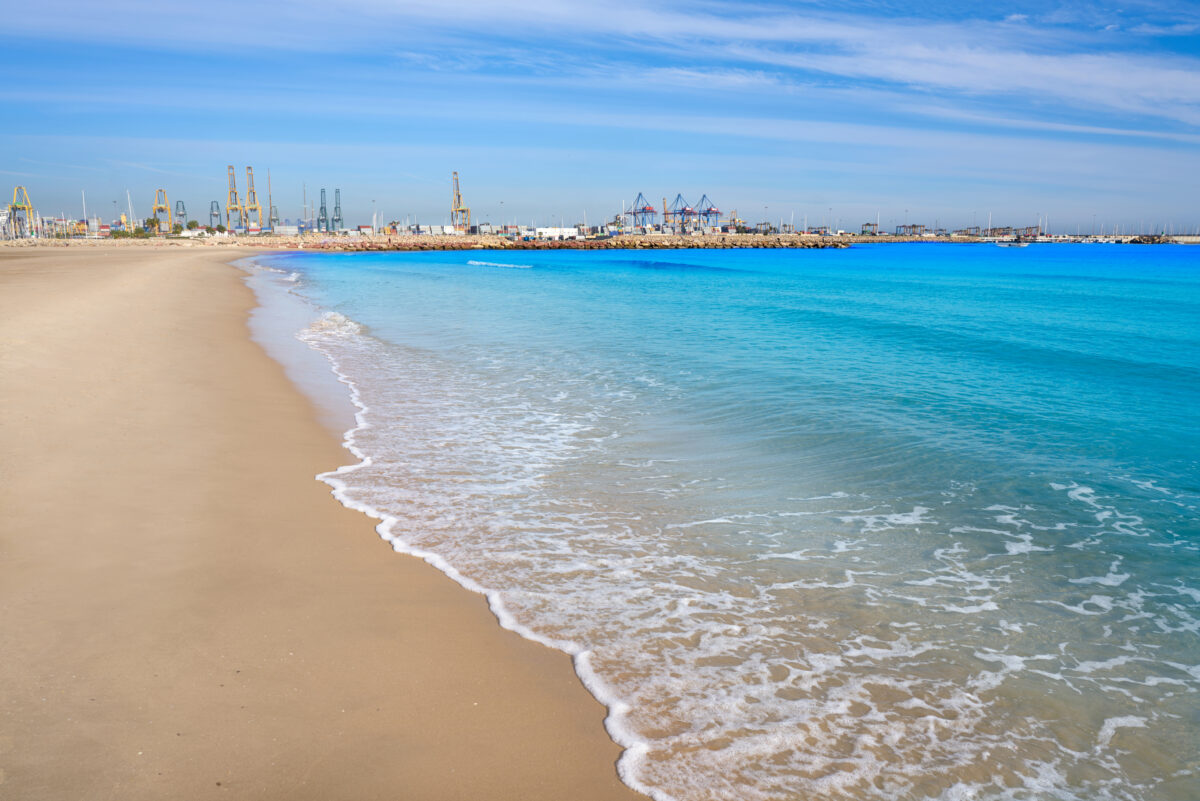
Photo by © Lunamarina | Dreamstime.com Playa de Pinedo
Pinedo always feels a little underrated, and that’s why I love it. It’s one of the closest beaches to the city, just south of the port, but it doesn’t get half the attention Malvarrosa does.
The sand is wide and golden, and there’s a relaxed, family vibe—you’ll see groups of locals setting up for the day with coolers, kids splashing in the shallows, and the occasional fisherman casting off at the edges. I usually head here when I want a quick beach fix without the bustle, or if I’ve been craving proper arroz at one of the traditional restaurants nearby. It’s not the wildest or the trendiest stretch, but it has a charm that keeps me coming back.
Playa de La Garrofera
La Garrofera feels like a secret, even though it’s part of Albufera Natural Park and not too far from the city. Tucked between El Saler and La Devesa, it’s quieter than both, and that’s exactly why I love it.
The sand is soft and golden, the dunes are backed by pines, and the whole place has this hushed, calm energy that makes you want to slow down. I usually come here when I need space because it’s the kind of beach where you can bring a picnic, settle in with a book and just listen to the waves for hours. No promenade, no crowds, just that perfect combination of sea breeze and wild nature that Valencia does so well.
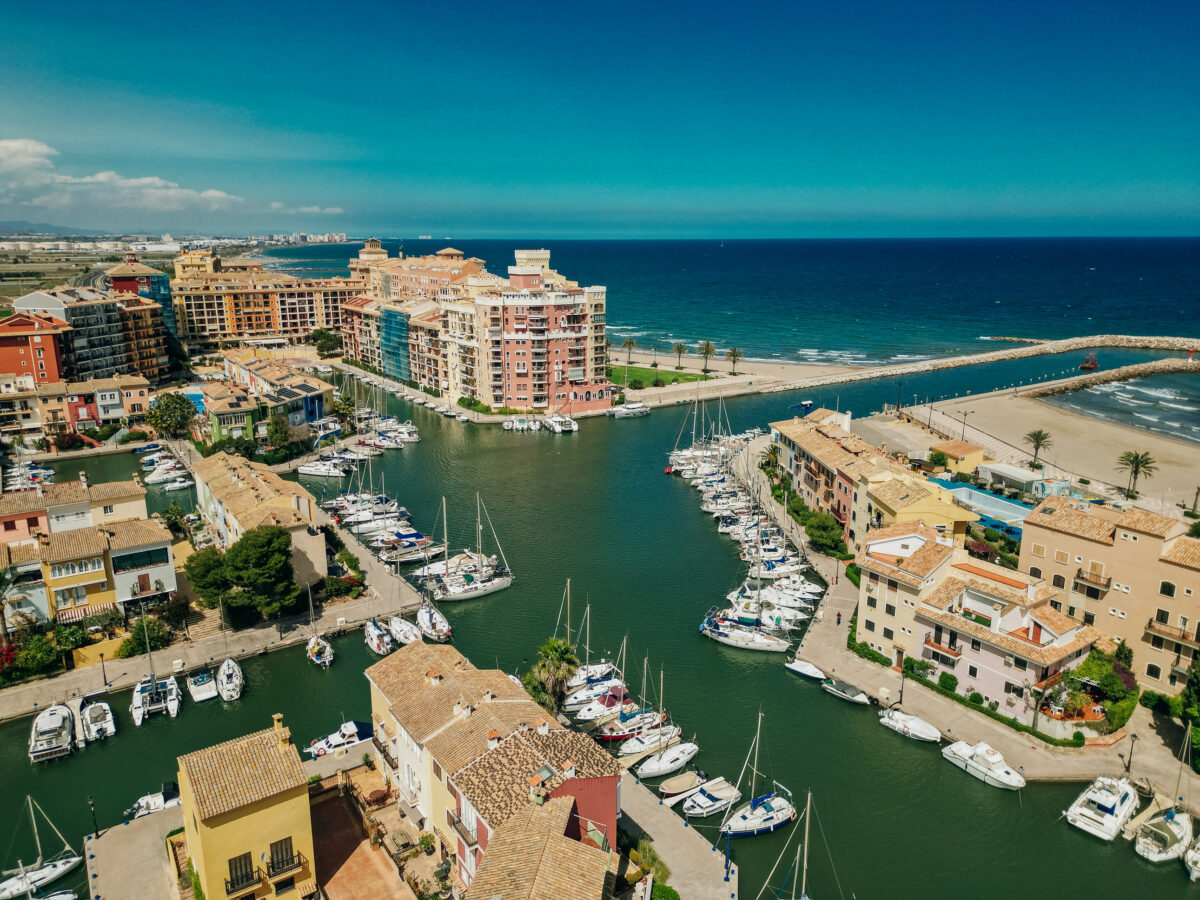
Photo by © Ibrester | Dreamstime.com Playa de Port Saplaya (Little Venice)
Port Saplaya is one of those places that surprises people—technically it’s just north of Valencia, but it feels like stepping into another world. The neighbourhood itself is nicknamed “Little Venice” thanks to the pastel-coloured houses and canals, and I love wandering through the marina before heading to the beach.
The sand here isn’t as wide as Malvarrosa, but it feels cosy, framed by the painted facades behind you and the open Mediterranean in front. It’s a favourite for lazy afternoons: swim, sunbathe, then grab an ice cream or sit on a terrace overlooking the boats. It’s less about wild landscapes here and more about charm, colour and atmosphere, which makes it one of the most photogenic spots on the coast.
Playa de La Pobla de Farnals
La Pobla de Farnals is one of those beaches that feels wonderfully local. It’s only about 15 minutes north of Valencia, but the pace instantly shifts—slower, more small-town, with a marina that gives it a cosy, nautical feel. The beach itself is wide and sandy with calm water that’s great for swimming, and it never feels overwhelmingly crowded.
What I always come here for, though, is the food. The little seafood restaurants near the marina serve some of the freshest fish and arroz dishes I’ve had on this stretch of coast. It’s the kind of place where you spend the morning on the sand, then roll straight into a long, lazy lunch that keeps you at the table until the sun dips.
-
Canary Islands
11 Best Beaches in the Canary Islands
Volcanic landscapes, year-round warm climate & black sand beaches
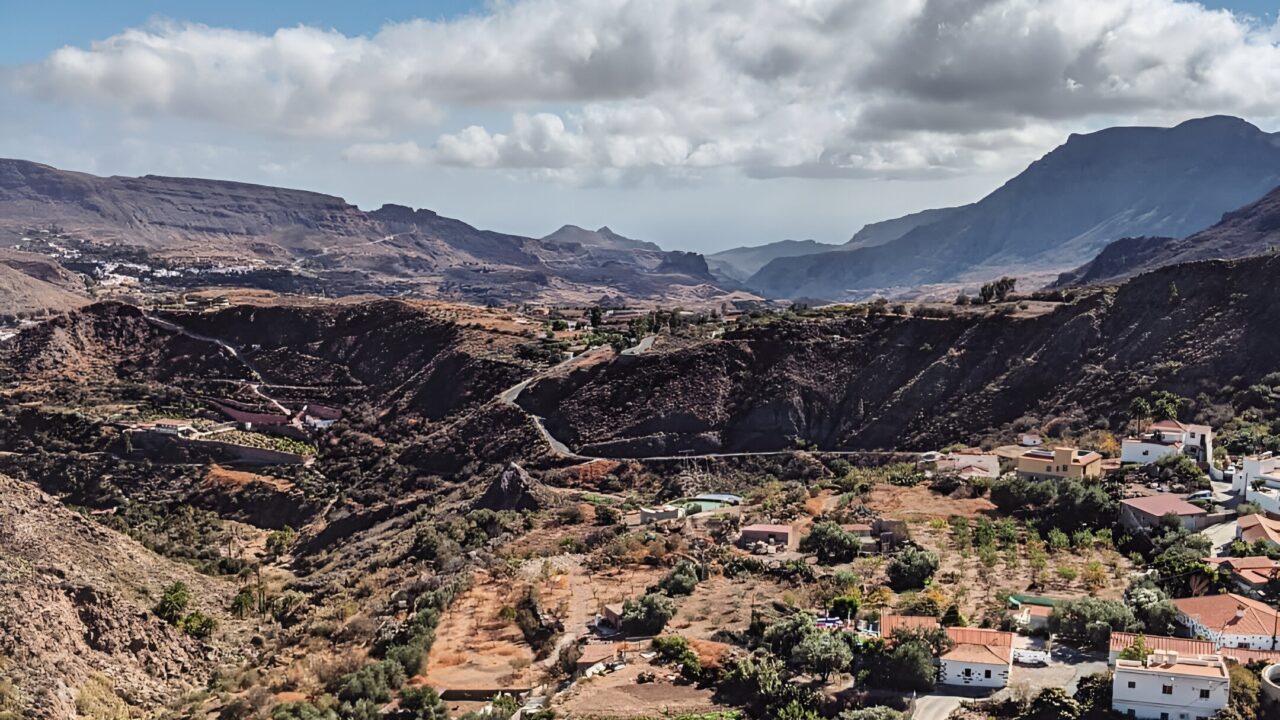
The Canary Islands are sure to put a spell on you. At least, that was my story. This Spanish archipelago in Macaronesia, off the coast of West Africa, is a region of diverse ecosystems, marvelous landscapes, a myriad of outdoor adventures, and magical beaches. From volcanic black-sand stunners on Tenerife to sprawling golden-sand desert stretches on Gran Canaria, the white-sand idyll on Fuerteventura, Lanzarote’s gorgeous wild bays, and La Grasiosa’s intimate ocean escapes—you’re in for a treat on the Canaries. My fascination with the islands began in Tenerife almost a decade ago, and I keep coming back to experience their irresistible charm and untamed energy.
Maspalomas, Gran Canaria
Best for the scenery and naturism
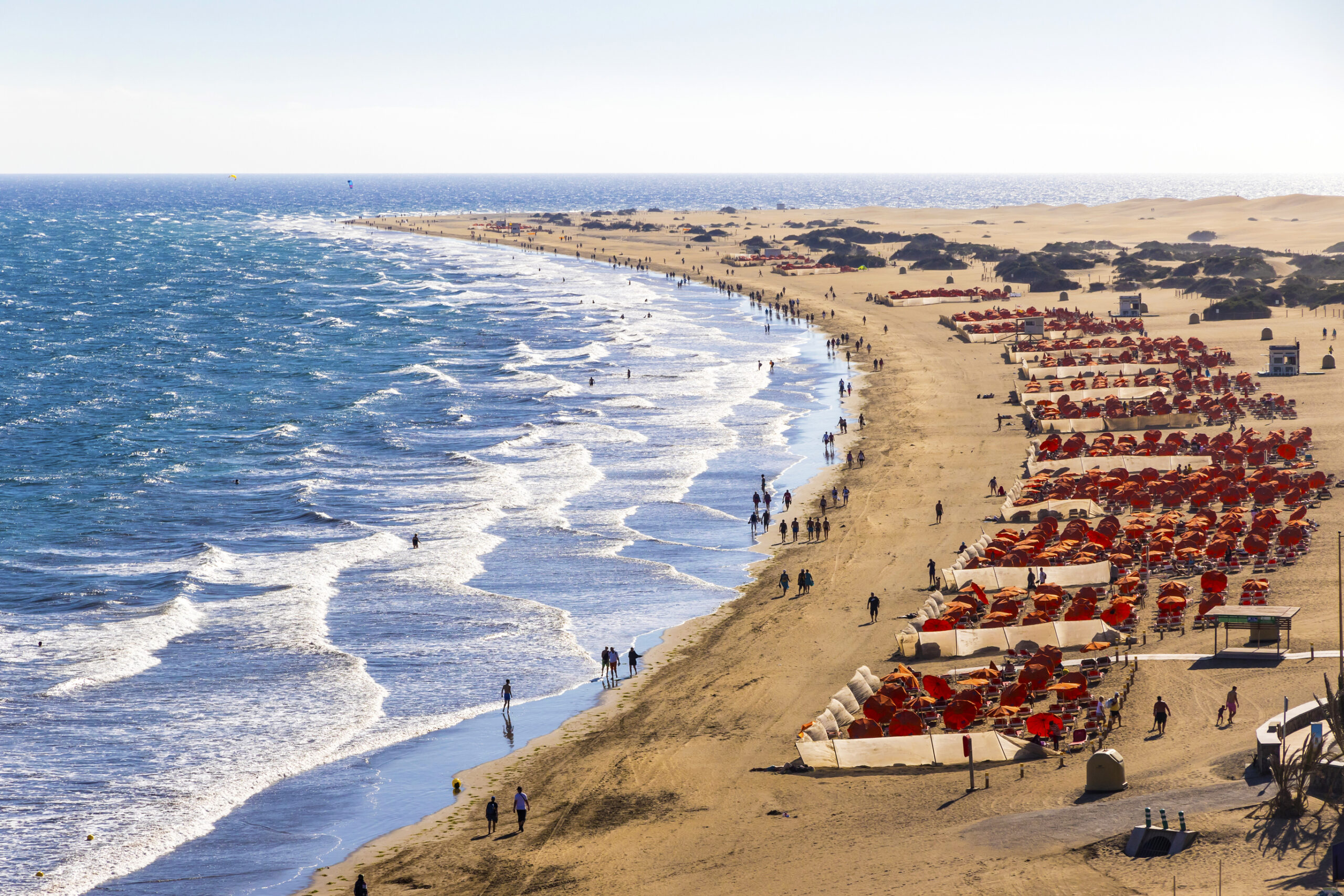
One of the most enchanting beaches in all of Spain, Maspalomas is a spectacular stretch of more than 5 miles of golden sands. It’s backed by nearly 1,000 acres of Sahara-like dunes. The beach is divided into several sections: Playa del Inglés is the most developed, with access to the resort town, while the Kiosco 5 is a LGBTQ-friendly and nudist part. You’d think that such a vast desert area would be a remote and desolate place, but it’s the opposite in Maspalomas. The magical dunes are easily accessible from the resort town, which encircles them. In the same hour, you can enjoy windsurfing and sunbathe naked with the picturesque high dunes backdrop, and then savor the seafood at the elegant five-star Riu Hotel restaurant. My favorite part about Maspalomas is the sunset—get yourself a spot atop the ridge and marvel at the orange-hued natural show.
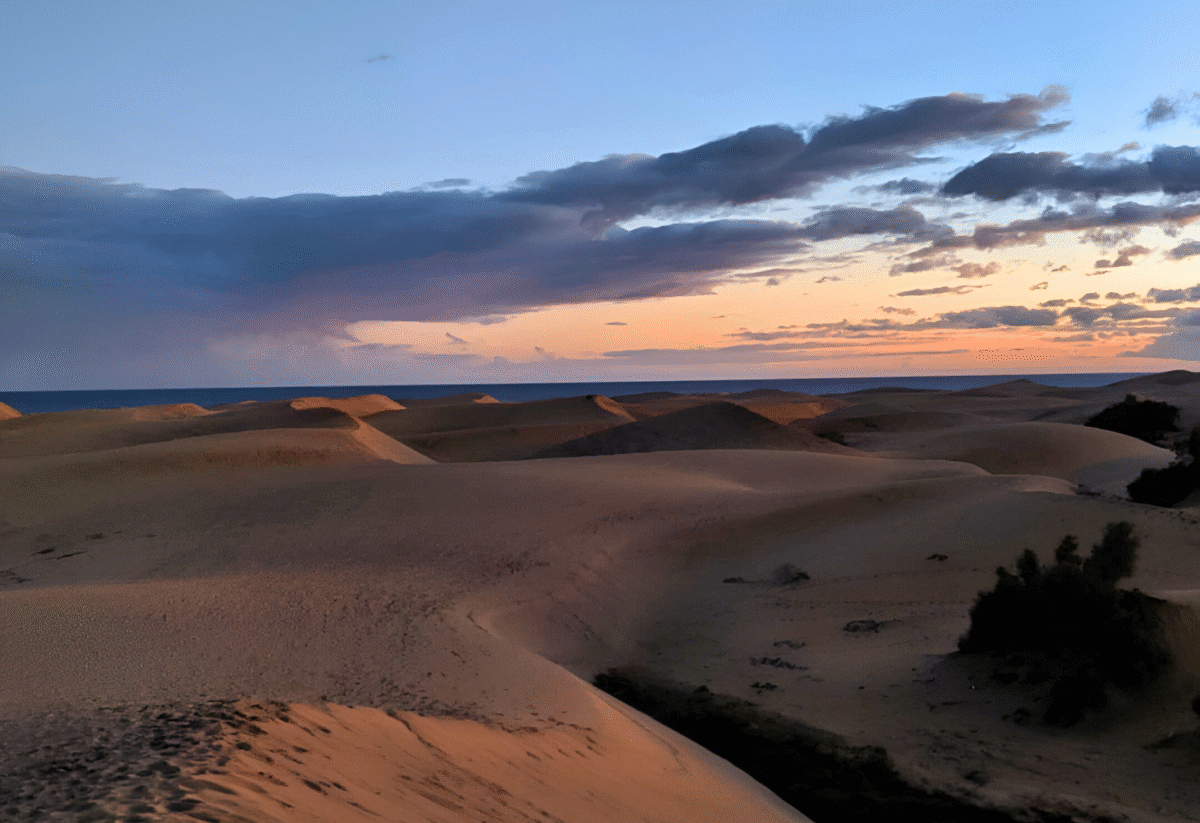
Photo Courtesy of Pavlo Fedykovych Las Canteras Beach, Gran Canaria
Best urban beach in the Canaries
One of the world’s greatest urban beaches, Las Canteras is a delight. Stretching for practically the whole center of Las Palmas, Gran Canaria’s capital city, it defines the local experience. There’s no water activity you cannot do at Las Canteras. It’s the main accompaniment to scenic walks, eating out at the borderwalk restaurants, lounging and sunbathing on the sands, kitesurfing, and even snorkeling. There is a reef in the middle of the beach, where you can dive and explore the underwater life. The southern end is the surfing hotspot, where you’ll have perfect conditions for conquering the waves. Las Canteras is also a family-friendly beach. The water access is mostly shallow, the sand is soft and there are several playgrounds.
Playa de Puerto Rico, Gran Canaria
Best resort beach with calm waters
Puerto Rico is a sheltered sandy bay surrounded by a classic resort town on Gran Canaria’s south coast. It’s not the most scenic of the stretches, but it’s perfect for kids. Breakwaters protect the beach, ensuring that the water is calm. The soft sand is ideal for sunbathing, building castles, playing around and wading in shallow ocean. In other words, it’s one of the coolest family-friendly beaches on the Canaries. Also, the restaurants, tall hotels, and bars with live music around give Puerto Rico a feel of mainland Spain—you can mistake yourself for being in Costa Blanca or Costa del Sol. Check out the open-air Shopping Center Puerto Rico for boutique stores and a big food court.
Ajuy, Fuerteventura
Best for black sand and cave exploration
There are beaches for relaxed swimming, and then there are beaches for nature admiration. While you can swim at Ajuy when the ocean is calm, that’s not the main reason to come. It is a stunning black-sand beach on the west coast of Fuerteventura, formed by the volcanic ash. There’s a charming, windy fishing village with several family-run seafood restaurants. But Ajuy is most famous for its caves. Cuevas de Ajuy is a breathtaking complex of 30-million-year-old volcanic caves. There’s a hiking trail through this coastal wonder that allows you to feel the geological power of the site.
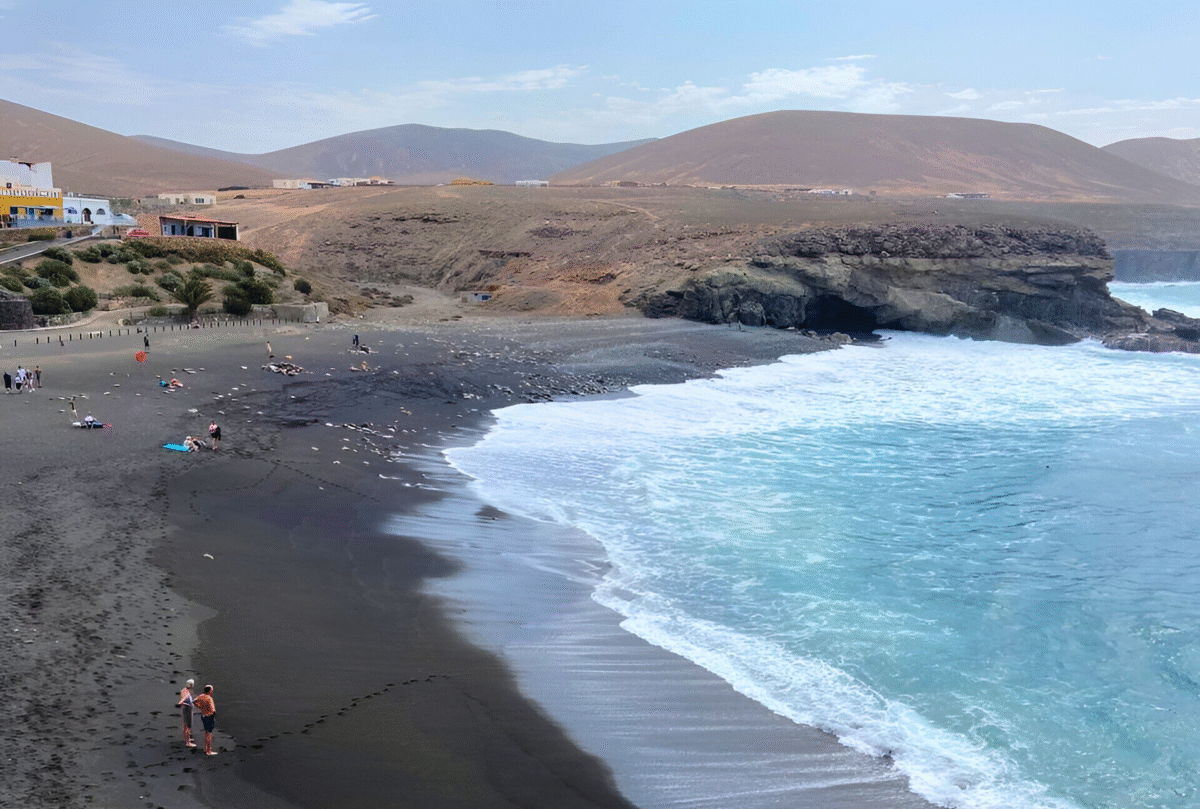
Photo Courtesy of Pavlo Fedykovych Playa de Los Cristianos, Tenerife
Best for families and city life
Los Cristianos is quite a divisive Tenerife destination. If your idea of a Canary holiday is beach-hopping through deserted stretches, exploring the untamed coast, and discovering hidden natural pools, it’s better to visit other places. But if you enjoy being in the center of resort action—a lively promenade with cafes, high-end hotels with spa complexes, buzzy city life—Playa de Los Cristianos and the neighboring Playa de las Vistas would work perfectly. Both stretches come with fine golden sands, sports facilities. and beach bars, while being minutes away from the center of Tenerife’s most popular holiday city. Also, these stretches are among the most accessible on the island, with wheelchair and pushchair access. The shallow ocean access, calm water, and playgrounds will make families happy. Another tourist high-hitter in the vicinity is Playa de las Américas, located near a popular shopping quarter.
Playa de Sotavento de Jandía, Fuerteventura
Best for shallow waters and soft white sands
With over 5.6 miles in length, Playa de Sotavento de Jandía is Fuerteventura’s most striking beach. It’s especially beautiful during the low tide, when the ocean forms shallow lagoons. Sotavento is great for families with kids—just imagine the wading and castle-building opportunities here. The beach is huge, so there’s never an issue with finding a spot. Thanks to ever-present winds, the stretch is a go-to for windsurfers and kitesurfers, who can endlessly enjoy the turquoise riding. Playa de Sotavento de Jandía is an umbrella name for five beaches between Jandía and Costa Calma. Playa de la Barca is the most favorite kitesurfing spot.
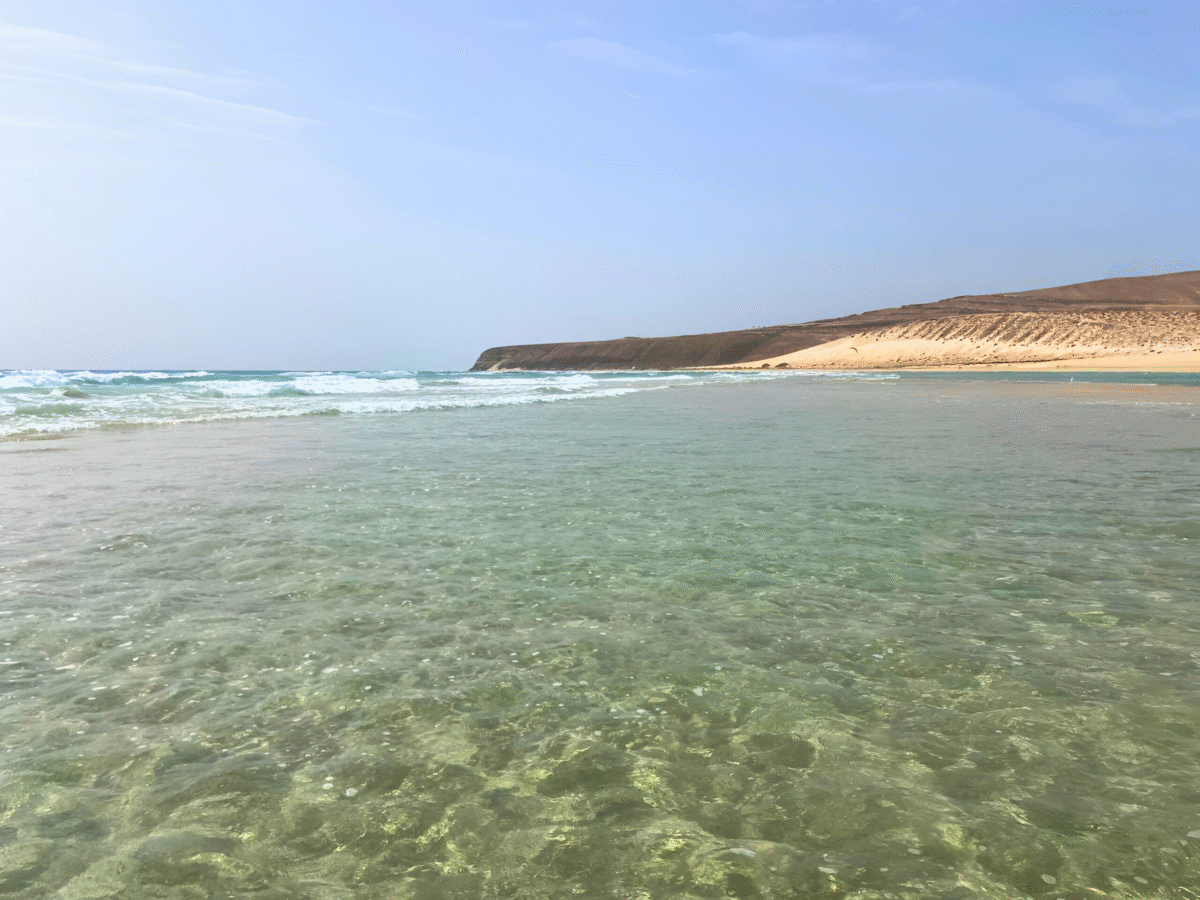
Photo Courtesy of Pavlo Fedykovych La Tejita Beach, Tenerife
Best for the breathtaking scenery
Bordered by the Mars-like Montaña Roja volcano, La Tejita is among Tenerife’s most photogenic wild beaches. It’s a wide expanse of golden sands with the remote allure and beautiful ocean views. The beach is easily accessible from the village of La Tejita. If you’re looking for a place to take all your clothes off on Tenerife, La Tejita also doubles as a popular nudist spot. Go to the area next to Montaña Roja for a clothing-optional zone. You can also go to the top of the Special Nature Reserve Montaña Roja—the scenic hiking trails start from La Tejita beach. Another unique bathing site to check is Piscinas Naturales Los Abrigos: a series of natural pools in the volcanic black rocks. This sublime location is between La Mareta and Los Abrigos.
Corralejo Beach, Fuerteventura
Best for silky soft sands
If you love sandy beaches, Corralejo is the one. Flanked by the largest dunes in the Canaries, it’s a spectacular area for bathing. The beach starts at the southern end of the resort town of Corralejo and stretches for miles. It gets wilder and less crowded as you go further south. Being in such a place feels sublime—the dune setting is awe-inspiring and the milky sand sports a Caribbean look. Two things to know about Corralejo: the water might be cold, and the wind will most probably be strong. It’s the open ocean, so don’t expect a calm sea. Sunbathing will be amazing. As with other Fuerteventura beaches, Corralejo is the ultimate windsurfing spot. You can rent equipment in town or at the Flag Beach watersports center. There are two Riu resorts right in the middle of the beach for a scenic stay. A short ferry ride from Corralejo will take you to Isla Lobos, an idyllic islet with more divine sandy beaches.
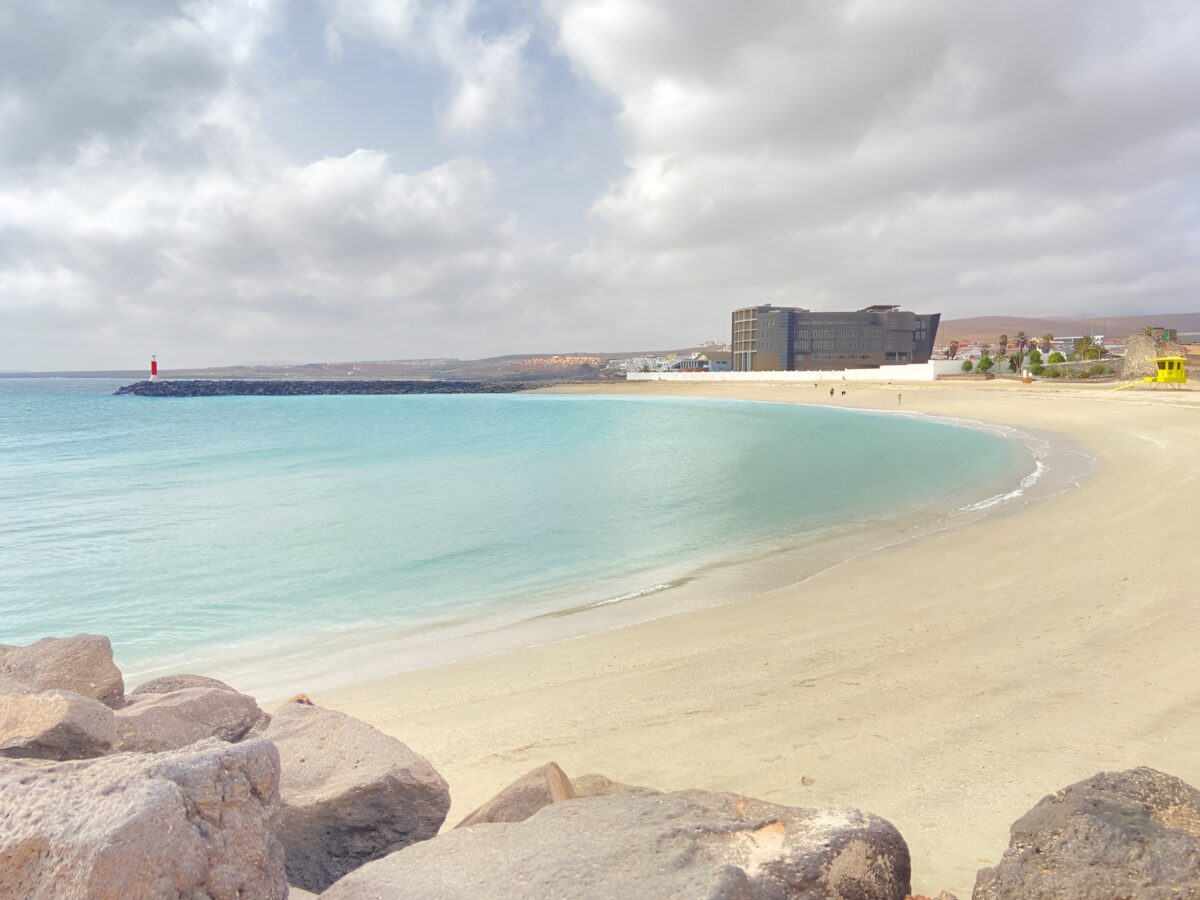
Photo Courtesy of Pavlo Fedykovych Playa de las Conchas, La Graciosa
Best for wild allure and naturism
There are many remote beaches on the Canary Islands, but Playa de las Conchas takes the crown. Located on La Graciosa, a small island off the coast of Lanzarote, this stretch is a magnificent spot, offering golden sands and blue ocean. Reaching it requires some effort—all the roads on La Graciosa are unpaved, and biking is the best option. Once you’re there, it’s a dreamy view of the unspoilt Atlantic. Bathing is a challenge due to strong currents, but sunbathing is a must. Playa de las Conchas is clothing-optional, so bare it all if you feel like it. The wild local landscapes are perfect for naturism.
Playa de Las Teresitas, Tenerife
Best for swimming
Las Teresitas is gorgeous. A crescent-shaped strip backed by the greenish brown mountains. It’s a perfect postcard view. Las Teresitas is also unlike any other beach in Tenerife. This mile-long stretch is man-made. It was constructed in the ’70s to serve the port of Santa Cruz. 270,000 tons of the Sahara’s white sand were brought to the island to create this bay. Today, it’s among the most popular stretches on Tenerife—both for the looks and the beach itself. Thanks to a long breakwater in front, there are no waves, and the sea is almost always tranquil. A perched village of San Andrés, at the beginning of Las Teresitas, creates a picturesque backdrop.
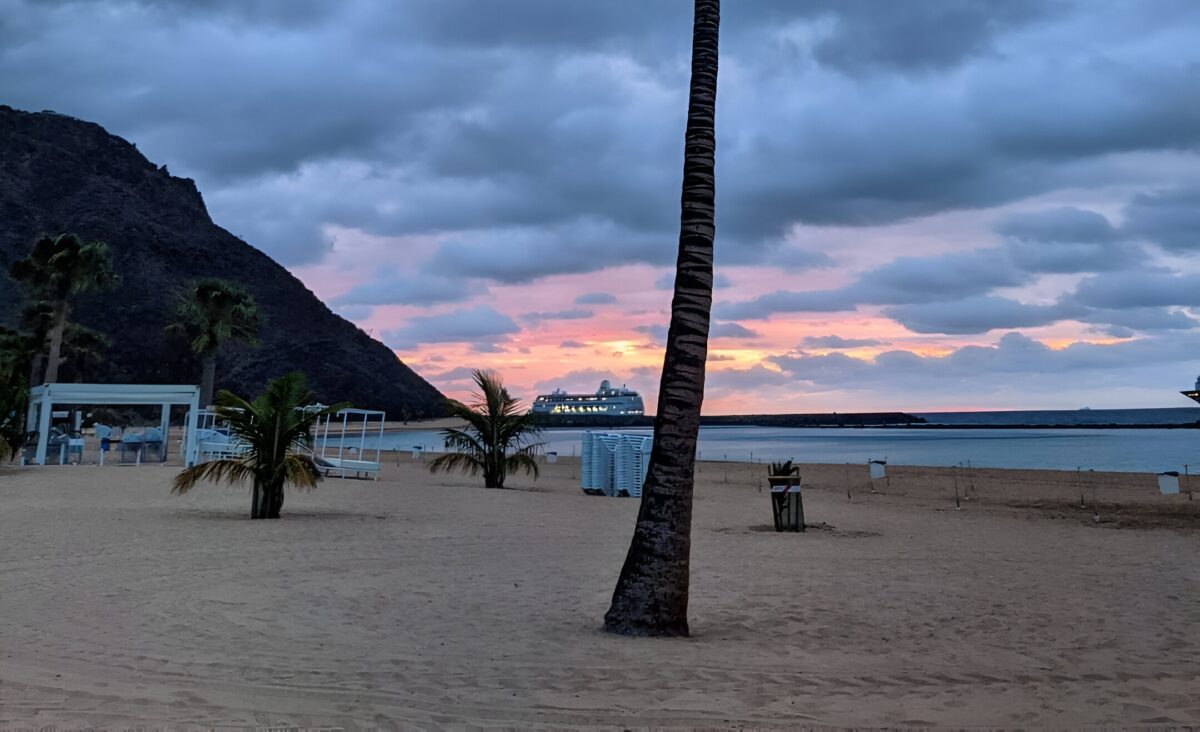
Photo Courtesy of Pavlo Fedykovych Papagayo Beach, Lanzarote
Best for lunar landscapes and pristine surroundings
One of the most beautiful beaches on the Canary Islands is in Lanzarote. Papayago, on the island’s southernmost tip, is a striking cove between two cliffs. Come here for soft white sands, larger-than-life ocean views, and the unspoilt rocky coast. The beach is well-sheltered from strong winds, so swimming is easy. Thanks to the underwater reefs, snorkeling at Papagayo is fantastic. Try Canarian food with the ocean views at Be Papagayo chirunguito, a traditional Spanish beach bar with grilled seafood and drinks. You will find more dreamy white sand at Playa de la Cera, Playa del Pozo, and Playa Mujeres north of Papagayo.
-
Malta
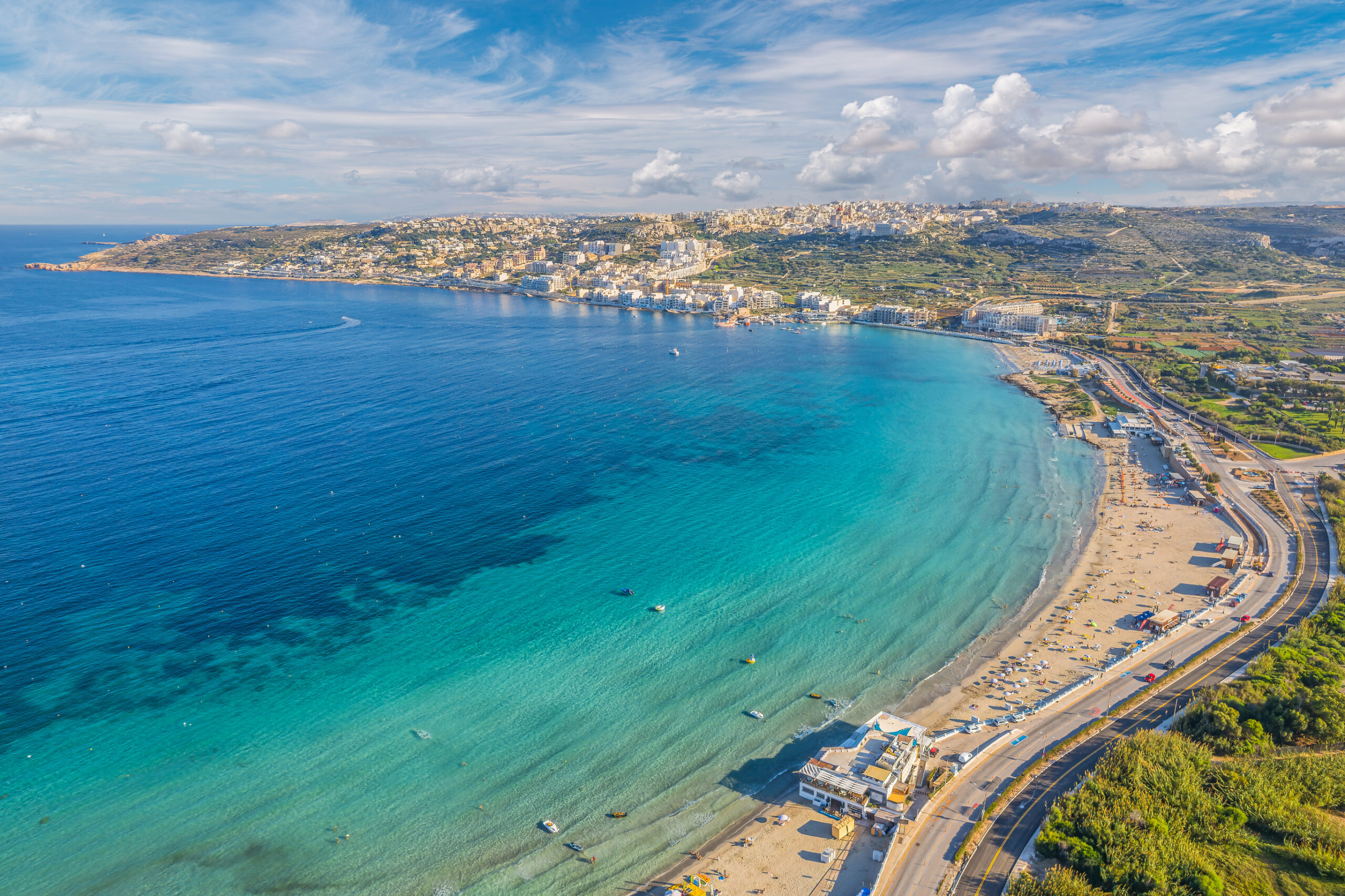
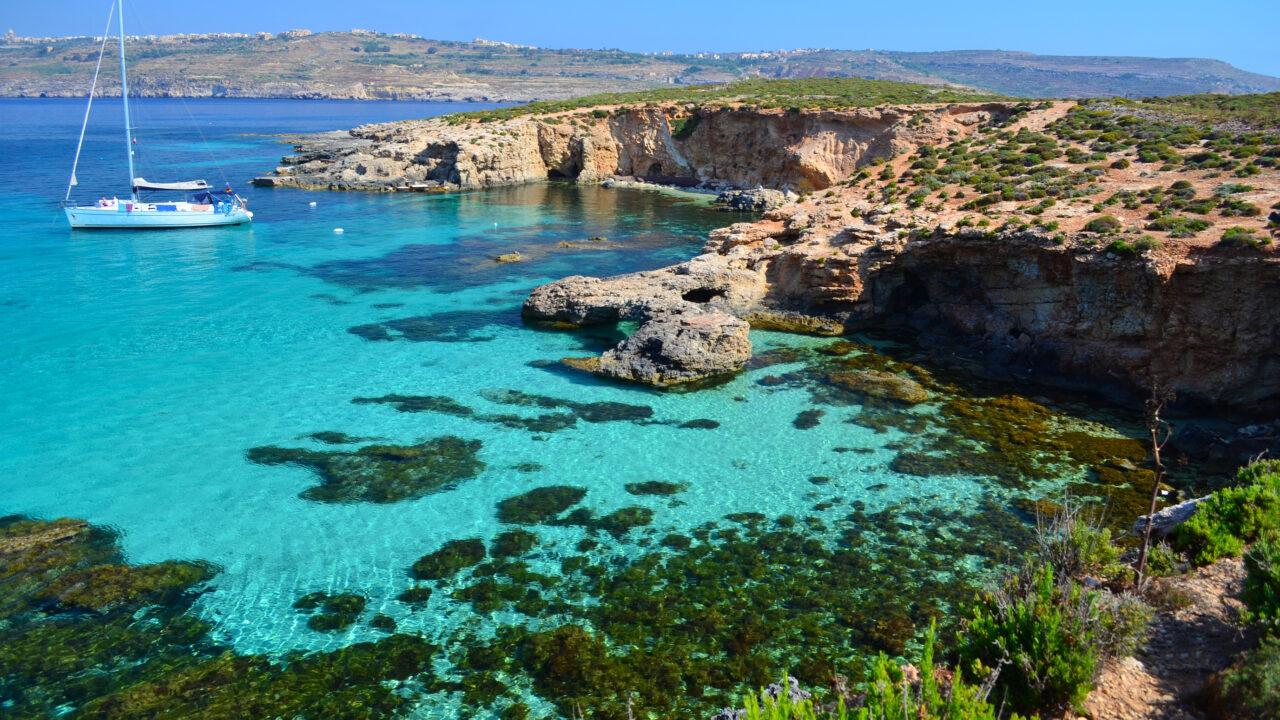
Malta’s coastline offers some of the Mediterranean’s most spectacular beaches, from the world-famous turquoise waters of Blue Lagoon to more expansive sandy stretches perfect for families. This archipelago of three main islands—Malta, Gozo, and Comino—combines dramatic limestone cliffs with hidden coves and pristine beaches that rival any Caribbean destination.
Having explored Malta’s beaches firsthand during an October visit, I can attest to the magic of swimming in these crystal-clear Mediterranean waters (even as autumn arrives). The comfortable temperatures and fewer crowds make shoulder season an ideal time to discover both famous spots like Blue Lagoon and more undiscovered spots like the secluded Ghajn Tuffieha Bay.
Blue Lagoon, Comino
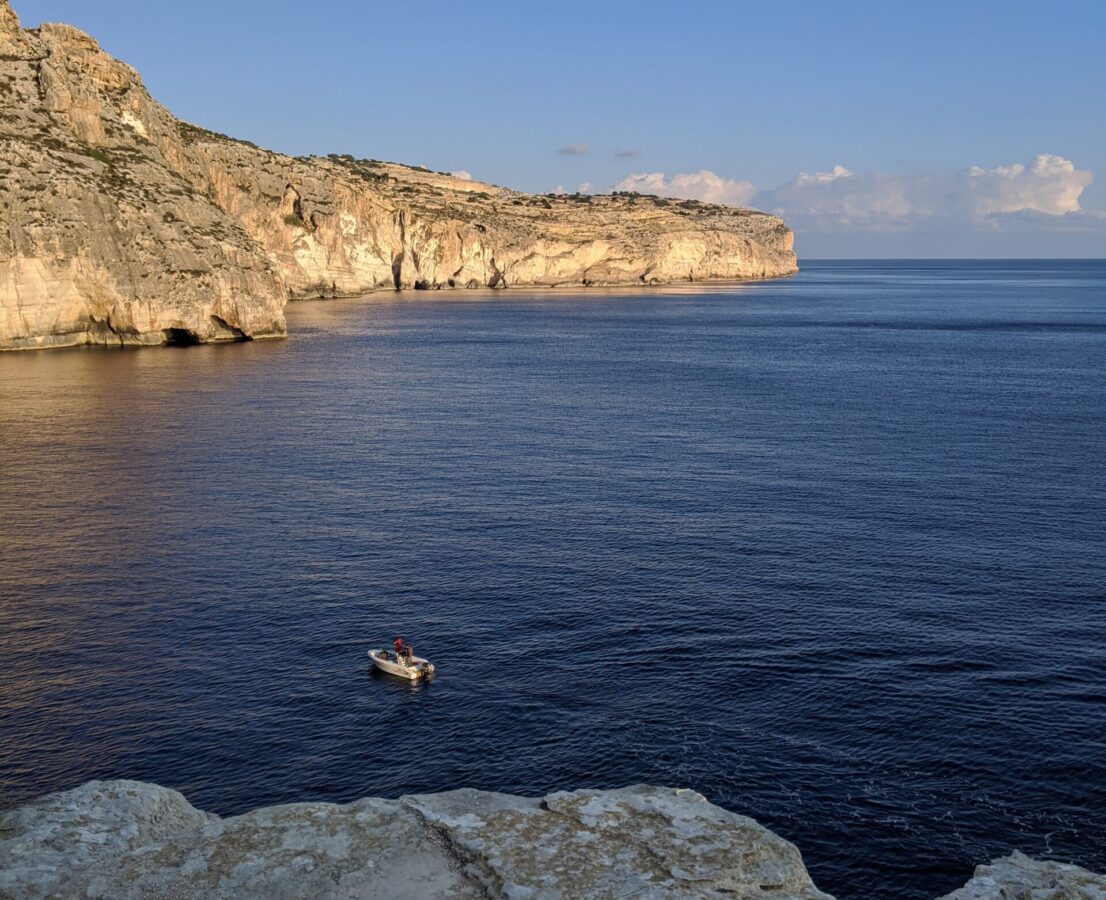
Photo Courtesy of Taylor Haught The water here is every shade of blue you’ve ever imagined, layered on top of each other like someone spilled an artist’s palette into the sea. The water so clear you can count pebbles on the seabed 15 feet down, and the silence broken only by the gentle lap of waves against the limestone platforms. Come early if you want solitude, because by noon, boats arrive loaded with day-trippers. The flat rock platforms become prime real estate for sunbathing, and the shallow areas fill with snorkelers marveling at the underwater visibility. Bring reef-safe shoes: the rocks can be sharp, and the best entry points aren’t always obvious. Also, that famous Instagram shot everyone posts? You’ll get it from the boat on the way in, not from the beach itself.
Paradise Bay
Paradise Bay lives up to its audacious name, but in a quiet, understated way that makes it feel like a secret even though it’s marked on every map. Tucked into a small cove near Mellieha you’ll take a short walk down from the car park with glimpses of that impossible blue water appearing between the trees. When you finally reach the sand, it hits you: this perfect horseshoe of golden beach surrounded by limestone cliffs that look like ancient cathedral walls, with water so clear you can see every ripple on the sandy bottom.
Morning brings the serious swimmers and snorkelers, afternoon attracts couples looking for romantic photo ops, and evening draws families for peaceful dinners at the beach bar while their kids play in the gentle shallows as the sun sets behind the cliffs.
Ramla Bay, Gozo
Ramla Bay is where I fell in love with Gozo. The sand here is unlike anywhere else I’ve been. The color is a striking orange-red and the texture, fine and soft with tiny flecks that catch the light.
The bay is huge by Malta standards, stretching in a perfect arc between protective headlands, and I had it almost entirely to myself. The only sounds were waves lapping the shore.
The water at Ramla has its own character too. It’s calmer than the exposed beaches on Malta, protected by the bay’s natural curve, but with more personality than a lagoon. The swimming is excellent, with a gradual deepening that makes it perfect for long, meditative swims parallel to the shore.
Mellieha Bay (Ghadira Bay)
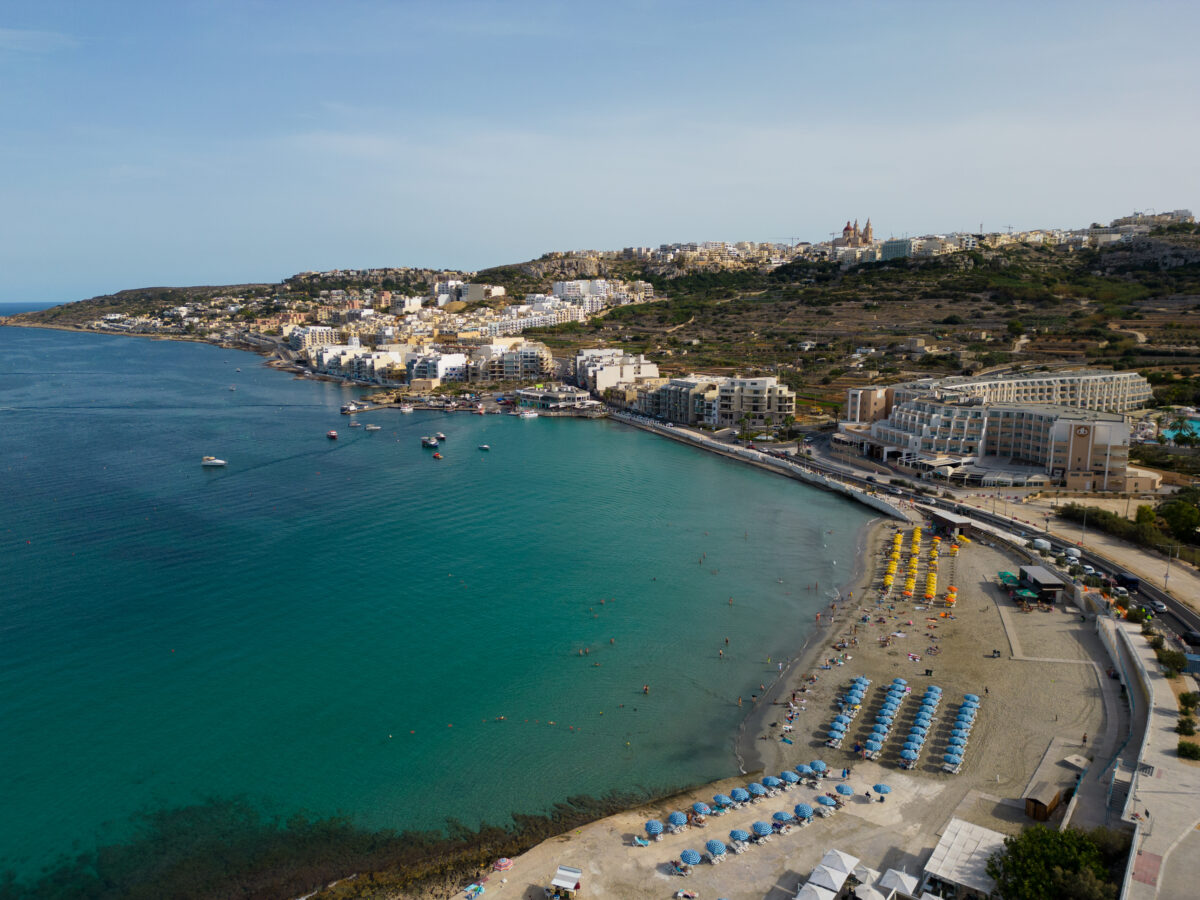
Photo by © Peterbabnik8 | Dreamstime.com This sweeping crescent of golden sand stretches for nearly a kilometer, and I spent entire afternoons here just watching the theater of Maltese beach life unfold.
The bay’s magic lies in its shallows. You can walk out 100 meters and still be chest-deep, making it perfect for the endless parade of Maltese families who arrive each weekend loaded with umbrellas and coolers.
I’m not sure if it’s the sand filtering the water or just the way this bay sits protected between two rocky headlands, but swimming here feels like slipping into a warm bath. The locals know it too; every evening around sunset, you’ll see serious swimmers doing their laps parallel to the shore, cutting through the water with the practiced strokes of people who’ve been doing this routine for decades.
Armier Bay
Armier Bay is actually two distinct beaches connected by a short walk but offering completely different experiences. The main bay gives you that classic Mediterranean beach day with crystal-clear water and space to spread out, while the smaller northern section feels like a private cove where locals come to escape.
The northern section is for refuge when you want solitude. Separated from the main beach by a small rocky outcrop, it attracts fewer visitors but offers the same spectacular water quality.
St. Peter’s Pool
Getting to St. Peter’s Pool feels like joining a secret club. Park among the prickly pear cacti and make the short walk down to the pool.
And what a pool it is. Carved from solid limestone by millennia of Mediterranean storms, St. Peter’s Pool is a natural amphitheater of flat rock platforms surrounding water so blue and clear it looks like a high-end infinity pool.
This isn’t a beach for everyone. There’s no sand, no shade, and definitely no facilities—just you, the rocks, and some of the most spectacular swimming water in the Mediterranean. The limestone platforms heat up beautifully in the sun, creating perfect spots for sunbathing between swims, and the various levels mean you can find jumping spots suited to your comfort level (though I recommend watching the locals first—they know exactly where the water’s deep enough).
Golden Bay
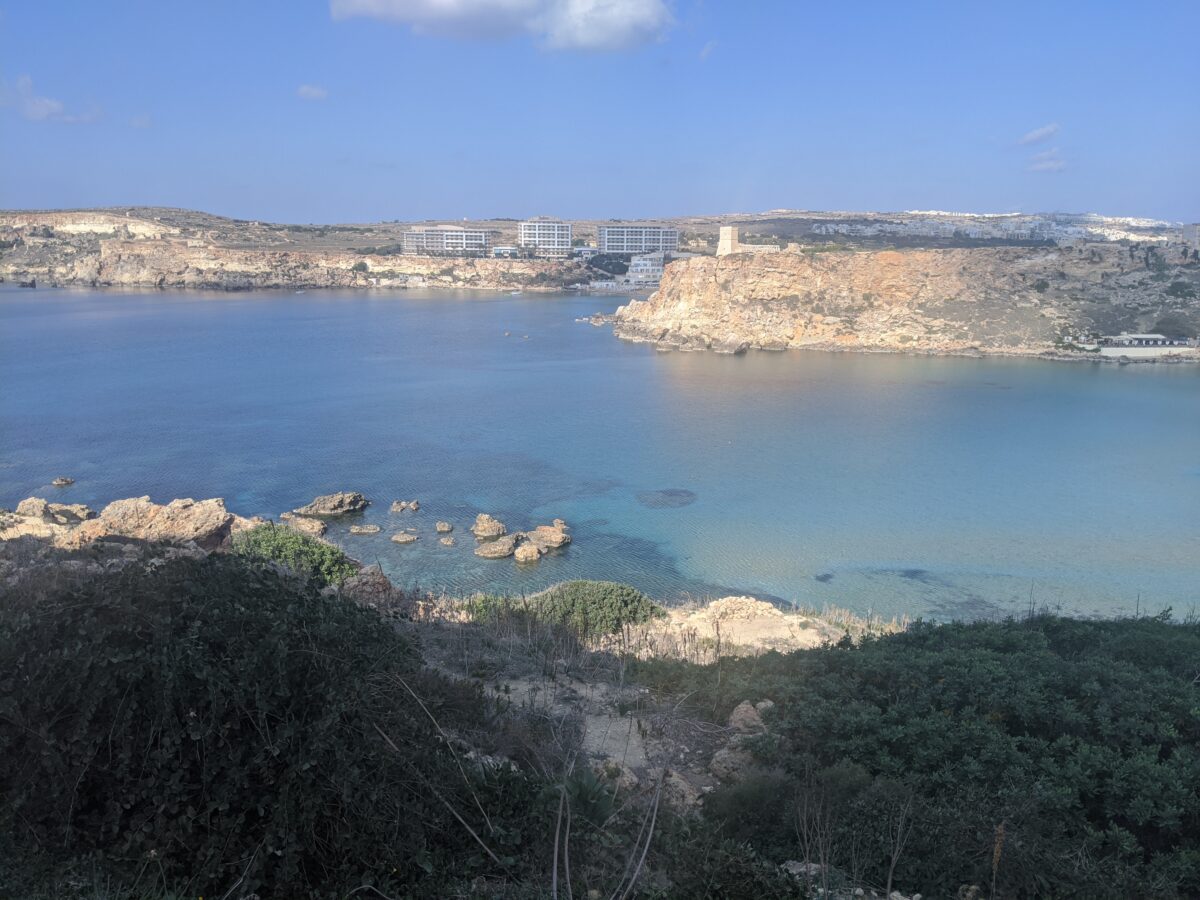
Photo Courtesy of Taylor Haught Golden Bay earned its name honestly—both the sand and the way the evening light hits those protective limestone headlands create this warm, honeyed glow. I came here initially for the sunset (everyone in Malta will tell you it’s the spot), but ended up returning day after day for the sheer energy of the place.
This is Malta’s party beach, but in the best possible way. The beach clubs here create this laid-back festival atmosphere where you can roll from a morning cappuccino to afternoon cocktails to evening dinner without ever leaving the sand.
The bay faces directly west, which means two things: spectacular sunsets and serious afternoon wind. The windsurfers and kitesurfers know this well—by 2 PM, the bay transforms into a colorful chaos of sails and boards.
But it’s the sunsets that really steal the show. Every evening, a informal gathering develops along the shoreline as locals and tourists alike position themselves for the daily spectacle.
Pretty Bay, Birżebbuġa
Pretty Bay might be Malta’s most unpretentious beach, and I mean that as the highest compliment. While other beaches compete on dramatic beauty or pristine nature, Pretty Bay succeeds by being exactly what a local beach should be—accessible, welcoming, and perfectly functional for the business of everyday beach life.
The sand here is imported, which could feel artificial, but somehow doesn’t. Instead, it creates this perfectly groomed environment that works beautifully for families with small children, elderly swimmers who need easy access, and anyone who just wants to enjoy a straightforward beach day without drama. The sea wall protects the bay from rougher weather, creating consistently calm conditions.
What Pretty Bay offers is something increasingly rare: a beach that exists primarily for locals to enjoy, rather than to attract tourists. The result is an authentic slice of Maltese beach culture that’s both welcoming to visitors and genuinely representative of how Maltese families spend their beach time.
The facilities here are excellent. Clean restrooms, good parking, several cafés and restaurants that serve solid local food at reasonable prices, and rental equipment that’s maintained for local use rather than tourist markup.
The protected conditions mean the water stays warmer longer into the season, and the gradual slope of the imported sand creates perfect conditions for confident swimmers and nervous beginners alike.
Ghajn Tuffieha Bay
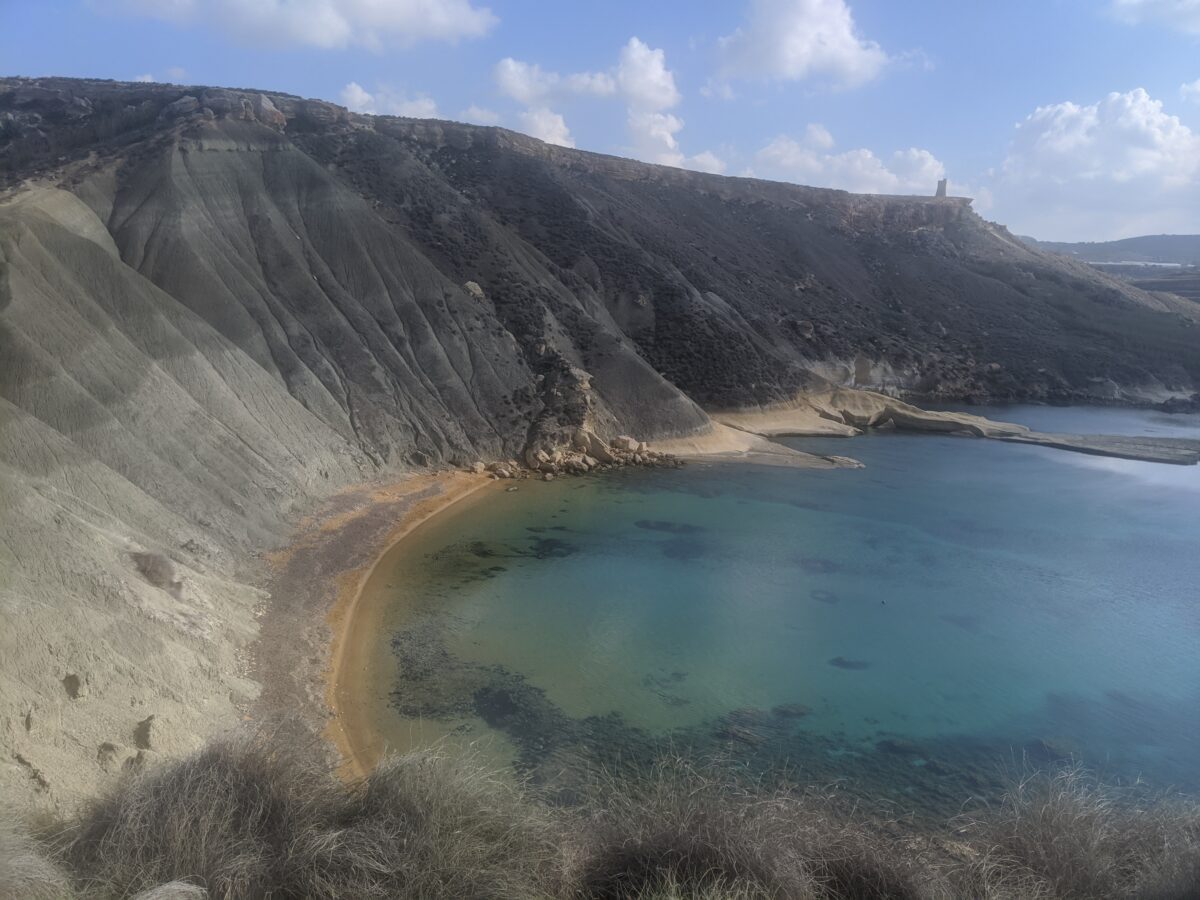
Photo Courtesy of Taylor Haught The 15-minute walk down to Ghajn Tuffieha is part pilgrimage, part workout, and entirely worth every step. The winding path descends through Mediterranean scrubland, revealing teasing glimpses of orange-golden sand and turquoise water through the vegetation until you finally round the last corner and the full glory of the bay opens up before you like a reward for your persistence.
Combined with the honey-colored limestone cliffs and that particular shade of blue-green water that Malta does so well, it creates a palette that looks almost artificial until you realize this is just what happens when geology and light collaborate perfectly.
Without the distractions of beach bars and water sports rentals, you become more attuned to the natural rhythms here. It’s meditative in a way that the busier beaches rarely achieve.
-
Ireland
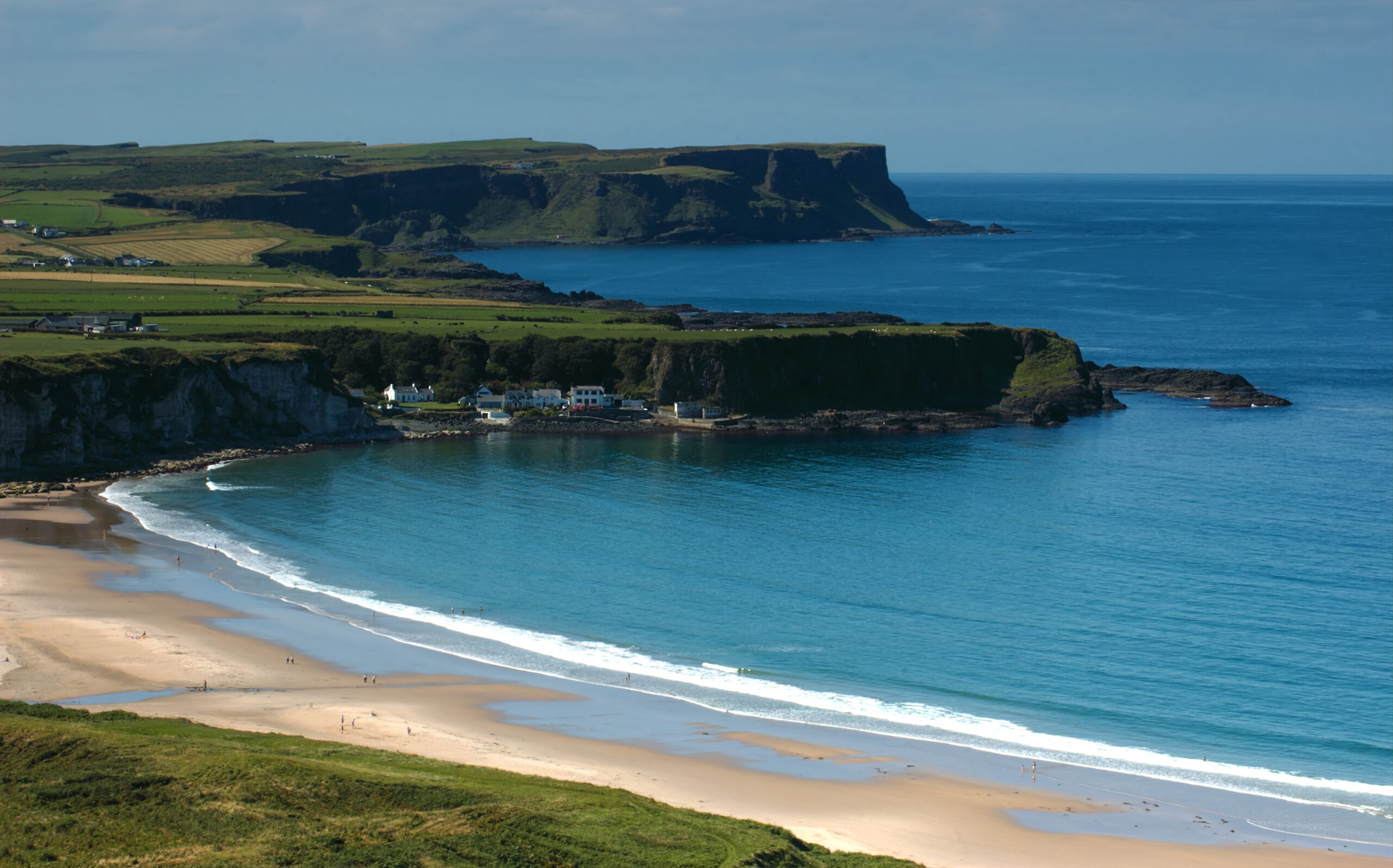
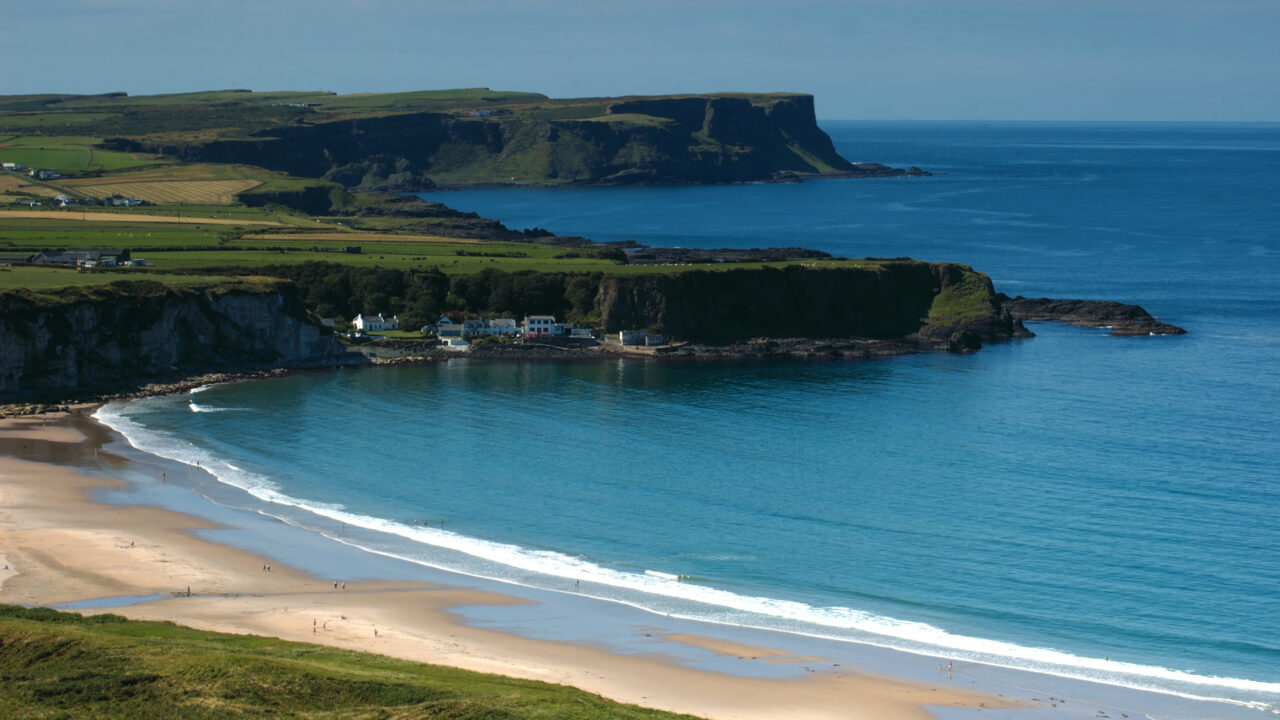
With family in Ireland, I’ve spent a lot of time exploring the country’s beautiful shores over the years. The Emerald Isle has 4,600 miles of rugged coastline with many enticing beaches—those on the east coast, along the Irish Sea, offer calmer waters and more sheltered stretches ideal for swimming in the summer. The west coast is more dramatic, with vibrant green hills plunging to steep cliffs hiding coves with golden sands thrashed by powerful waves.
No matter what type of beach you’re looking for, there’s bound to be one within relatively easy reach, whether you’re looking to spend the day swimming and sunbathing at a picturesque span near the city of Dublin, relax at an idyllic stretch in a remote locale, or surf epic waves. When making your plans to visit, you might even consider focusing your trip around one (or more) of the best beaches in Ireland.
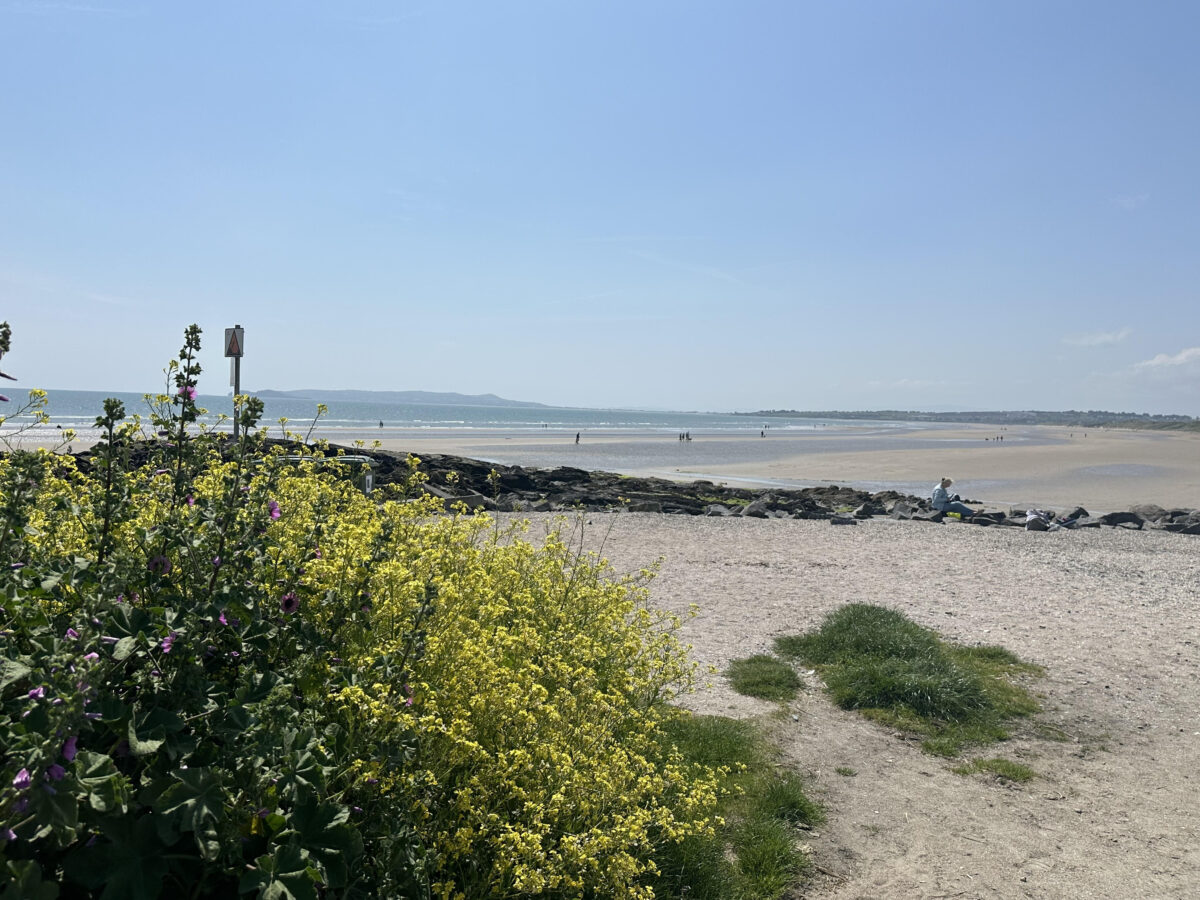
Photo Courtesy of K.C. Dermody Balcarrick Beach, County Dublin
One of the most spectacular beaches in the Dublin area, Balcarrick is a true hidden gem, one that mostly only the locals visit as it’s well off the beaten tourist path in the suburb of Donabate in North County Dublin. Ideal for those staying in or near the Irish capital, it’s a Blue Flag beach, designated as such for its pristine state with soft sands and swimmable blue waters. Stretching for two miles, it’s also a great spot for a stroll, with scenic views of the Malahide Estuary, Howth, and Lambay Island.
When the tide is out, tidepooling is a popular activity here. At the north end of the beach, the main access point, you’ll find the Waterside Hotel with a restaurant that has an outdoor patio where you can dine or relax with a pint of Guinness and a view.
Brittas Bay Beach, County Wicklow
An hour’s drive south of Dublin is one of County Wicklow’s most popular beaches. Another Blue Flag beach, it offers an over three-mile-long stretch of powdery sands and dunes that are ecologically important, supporting a diverse array of wildlife and rare plants. You can often see pink pyramidal orchids popping up among the dunes. Many come during the summer to enjoy a refreshing dip with lifeguards staffed here during the season, as well as to enjoy water sports like SUP and surfing, with a surf school on-site.
If you’re a fan of the History Channel’s “Vikings” series, this beach might look familiar, as scenes involving the Viking landings on the beach were shot here.
Curracloe Beach, County Wexford
Continue another hour south and you’ll reach the beach that’s famous for being the filming location for scenes featuring Omaha Beach in “Saving Private Ryan.” You might have seen it in the 2015 romantic period drama “Brooklyn” too, where stars Saoirse Ronan and Domhnall Gleeson walk along the shore. It’s even prettier in person, while offering activities like long walks on the approximately 10-mile-long span, swimming on calmer days, and birdwatching in the surrounding dunes. On a windy day, it’s a popular spot for windsurfing.
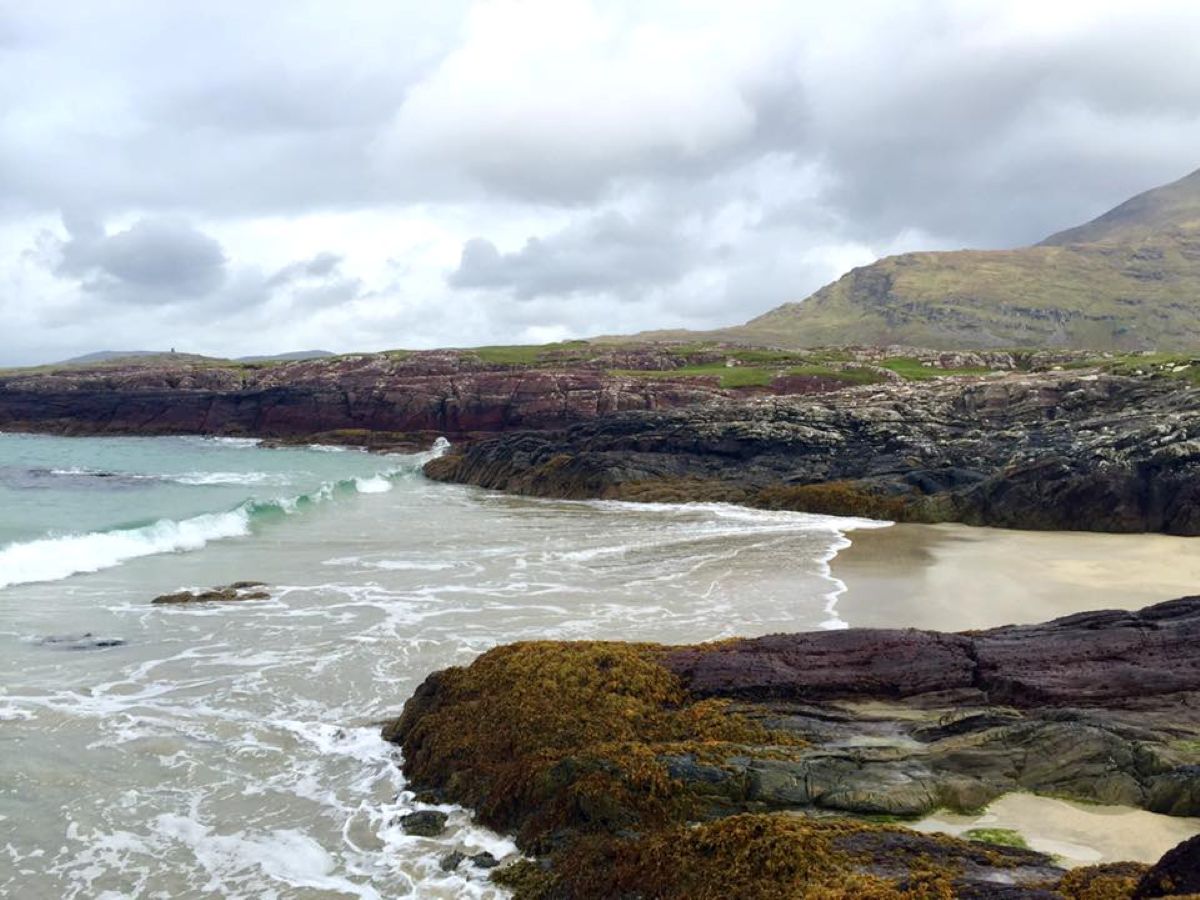
Photo Courtesy of K.C. Dermody Coral Beach – Carroe, County Galway
One of the most stunning beaches in all of Ireland, Coral Beach or Coral Strand, is in the Connemara region, made not from sand but a fine, coraline algae known as maёrl, a type of seaweed that hardens and washes ashore. It creates a distinct white appearance, strikingly contrasted by the turquoise waters. On a pleasant day, the water is usually calm and ideal for swimming or even snorkeling. Despite its beauty, it manages to retain a tranquil atmosphere, making it perfect for relaxing while enjoying the natural surroundings.
Ardmore Beach – Ardmore, County Waterford
Sandy Ardmore Beach in the village of Ardmore is a sweeping stretch with water that’s safe for swimming and enjoying other activities like kayaking and SUP. There’s plenty of room for sunbathing too, with the beach about two-thirds of a mile long, and just steps away, you’ll find the Ardmore Cliff Walk, which offers a stroll back in time passing medieval St. Declan’s Monastery, which includes a well-preserved round tower and the ruins of a medieval cathedral.
While you can bring a picnic to enjoy at the beach, the oceanfront Cliff House Hotel is a short walk away, offering a bar and a Michelin-starred clifftop restaurant for a leisurely lunch or a celebratory dinner.
Inch Beach, County Kerry
Arguably the most famous beach in Ireland, Inch is yet another stretch that’s been featured in blockbuster films, including 1981’s “Excalibur,” 1970’s “Ryan’s Daughter,” and 1992’s “Far and Away.” The three-mile-long Blue Flag-designated sand spit extends into Dingle Bay and is just 14 miles from the popular town of Dingle.
Inch Beach is a favorite for surfing in the area, often offering outstanding waves thanks to its west-facing position. In the summer, there are local surf schools here that can help get you up on a board. Otherwise, it’s a good place for a walk and a swim, with lifeguards here during the season. You’ll also find a beach bar and casual restaurant right on-site.
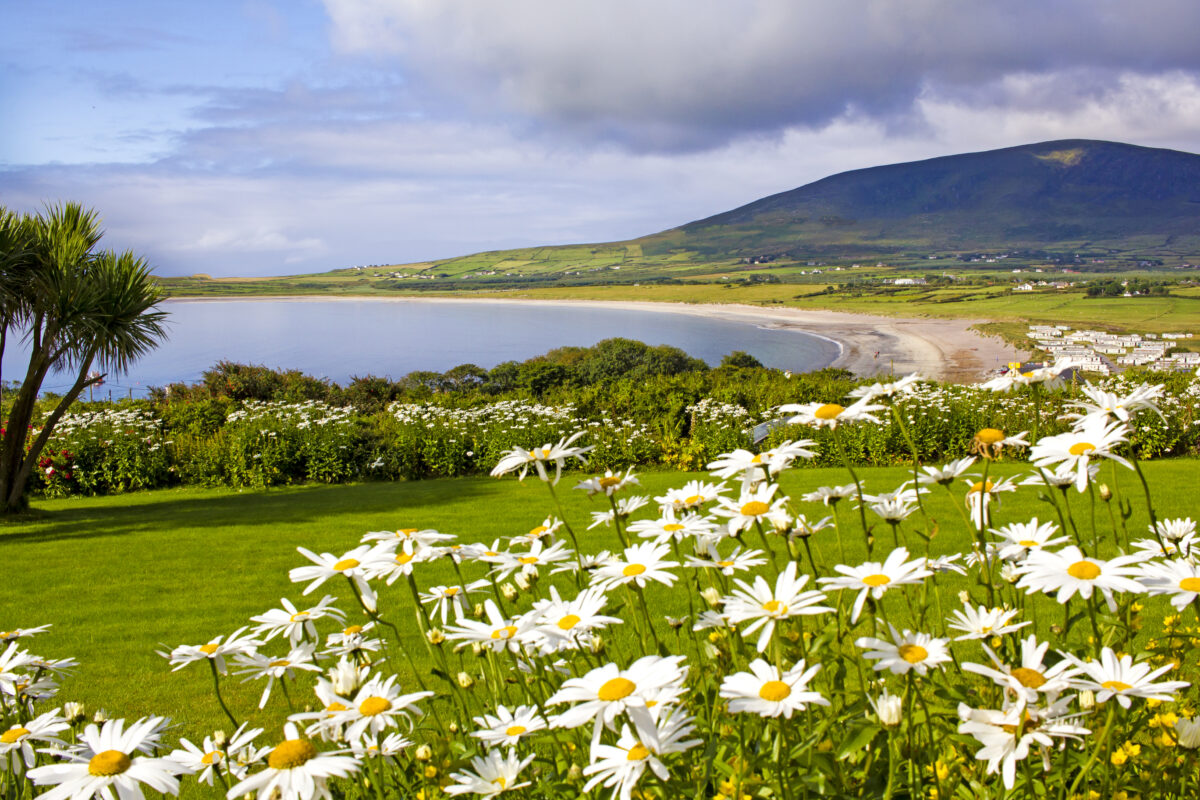
Photo by © Iryna Vlasenko | Dreamstime.com Ventry Bay Beach, County Kerry
Ventry Bay Beach is the most popular to visit from Dingle, only about a 10-minute drive away in the small village of Ventry. It lies along one of the world’s most scenic routes, Slea Head Drive, which loops around the western tip of the Dingle Peninsula, providing an ideal stop for enjoying golden sands and calm water for swimming and water sports like SUP and kayaking. Another Blue Flag beach, the water quality is excellent, and there’s a lifeguard here in the summer. Or just take a break from the car to enjoy the fresh salty sea air and a breathtaking view.
Coumeenoole Beach, County Kerry
Also along Slea Head Drive, about 25 minutes from Dingle, Coumeenoole is a small and secluded beach tucked in a windswept cove at the bottom of towering cliffs, accessed via a narrow path from the parking area. Despite the water’s tropical appearance on a sunny day, it’s all about enjoying the breathtaking coastal scenery rather than swimming due to the strong currents, although experienced surfers sometimes ride the waves.
The main draw at Coumeenoole is for photographers and nature lovers, with stunning views of the Atlantic and the Blasket Islands, but you’ll want to visit according to the tide table. At high tide, the beach almost disappears.
Spanish Point Beach – Miltown Malbay, County Clare
Just outside the picturesque town of Miltown Malbay, Spanish Point Beach is nestled in horseshoe-shaped Mal Bay. A discovery point on the popular Wild Atlantic Way, it’s a long sandy stretch ideal for relaxing by the sea, strolling, building sandcastles, and swimming or surfing with surf schools and rental gear available. The beach is also a site of historical significance, known for its link to the Spanish Armada, hence the name, with multiple ships wrecked here in 1588. While you’d never know it today, if you listen closely, you might just hear the stories of lost sailors echoing through the sea air, with some referring to the beach as the “Tomb of the Spaniards.”
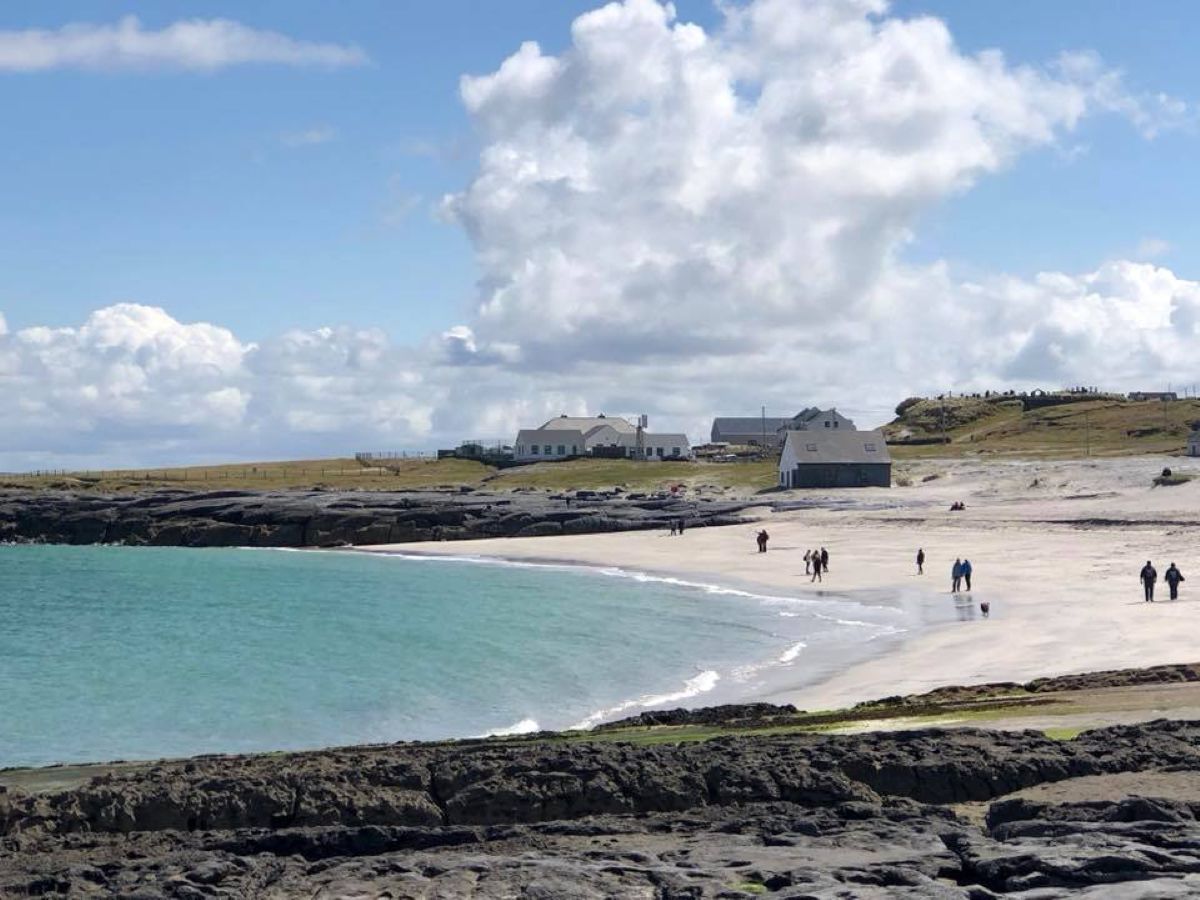
Photo Courtesy of K.C. Dermody An Trá – Inisheer Island, County Galway
The smallest of the three Aran Islands, located off the west coast, Inisheer not only offers an old-world Ireland experience for delving into authentic traditional life where islanders speak both Irish and English, but also spending time on a beautiful beach. The main beach (officially known as An Trá or “The Beach”) is located next to the ferry pier, looking as if it was stolen from the Caribbean, with its soft white sands and clear cobalt waters ideal for wading or swimming.
Something that only the locals and frequent visitors know is that a resident bottlenose dolphin often makes an appearance here—keep an eye out while arriving or departing on the ferry as “Sandy” likes to play in the wake. Just a stone’s throw away, Tigh Ned, a traditional pub, is the perfect spot for lunch, served daily throughout the summer.
Kilmurvey Beach – Inishmore, County Galway
Located on the largest of the Aran Islands, Inishmore, Kilmurvey is known for its crystal-clear blue waters, white sands, views of Connemara, and its Blue Flag status, making it a great place to swim, complete with a lifeguard in the summer. The beach is usually uncrowded and peaceful for those who want to simply relax. The Kilmurvey Seal Colony is nearby, where wildlife lovers can watch the animals basking in the sun on the rocks or lounging in the shallow waters. It’s a birdwatcher’s paradise too, with everything from oystercatchers and laughing cults to herons, comorants, and terns.
Keem Beach – Achill Island, County Mayo
Keem Strand is the finest of Achill Island’s five Blue Flag beaches, often celebrated for its dramatic scenery as a sweep of soft sands that edge a secluded, sheltered turquoise bay. Hemmed in by the Croaghaun Cliffs, Ireland’s highest, it ranks among The World’s 50 Best Beaches. If you saw the Oscar-nominated movie “The Banshees of Inisherin,” you’ll know it as the breathtaking setting for Colm Doherty’s house.
Take in the view (and advantage of the photo op) from the cliff-top road that overlooks it before clambering down a footpath to reach the sand. With the brilliant blue water often calm and clear, with the bay’s horseshoe shape protecting it from strong currents, it’s an unforgettable spot for swimming.
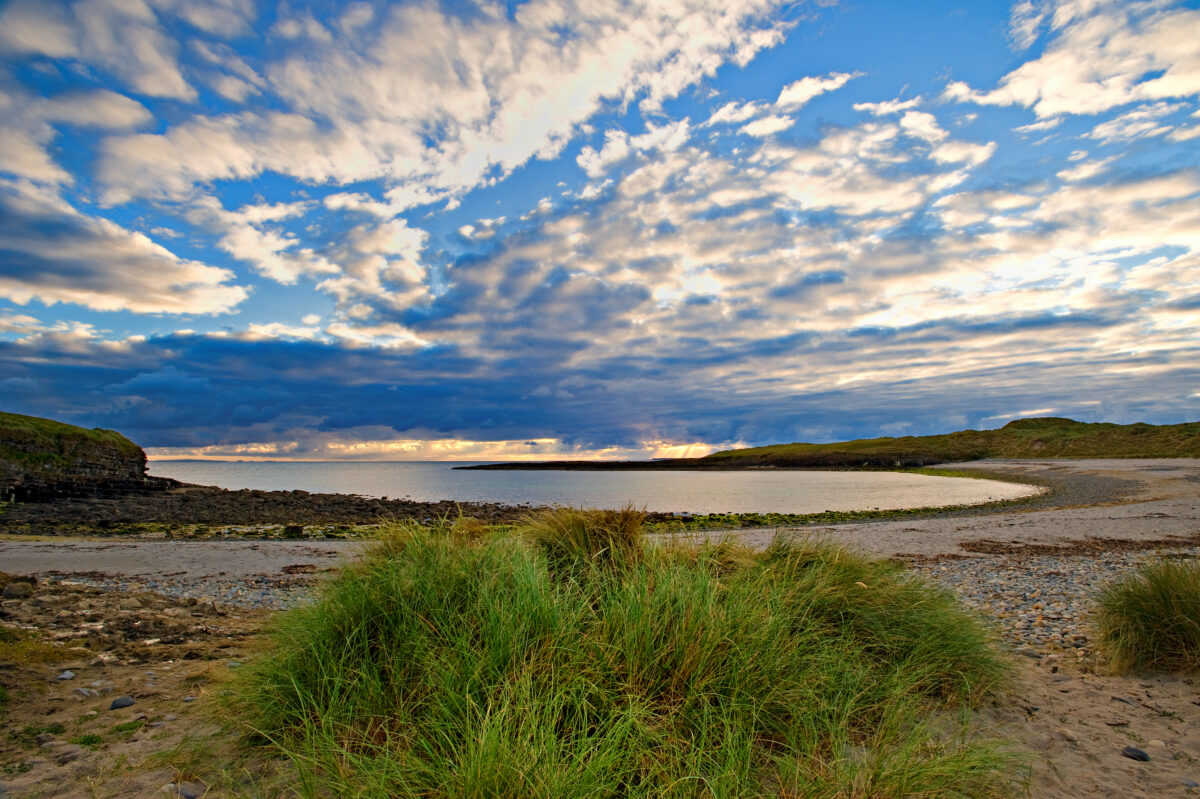
Photo by © Michael Walsh | Dreamstime.com Streedagh Beach – Grange, County Sligo
Streedagh is a long, sandy beach where you can take a stroll while enjoying scenic views of the Atlantic and Benbulben Mountain. If you walk here at low tide, you might even catch a glimpse of the remains of Spanish Armada ships that came aground in 1588, similar to Spanish Point but much further south in County Clare. The clear blue waters are popular for surfing, swimming, and SUP, depending on conditions, while the beach includes a dune system and fossils that can be seen in the rocks at low tide.
Tullan Strand – Bundoran, County Donegal
One of the most popular surfing beaches in Ireland, Tullan Strand attracts surfers from across the globe. Surf schools are available for lessons and gear with rentals for everything from wetsuits to boards. The long, sandy beach itself enjoys a backdrop of the Dartry Mountains. It’s ideal for strolling, or you can take a coastal hike on the Rougey Cliff Walk for a journey showcasing the beach, the Atlantic, and the Fairy Bridges, a natural arch in the cliffs, with blowholes providing a fantastic photo op.
The town of Bundoran itself is the quintessential beach town, providing an ideal base for families and all sorts of travelers, with something for everyone, including a seafront amusement park with rides, go-karts, and more.
-
Rhodes
12 Best beaches in Rhodes, Greece
UNESCO old town, windswept coastlines & taverna culture
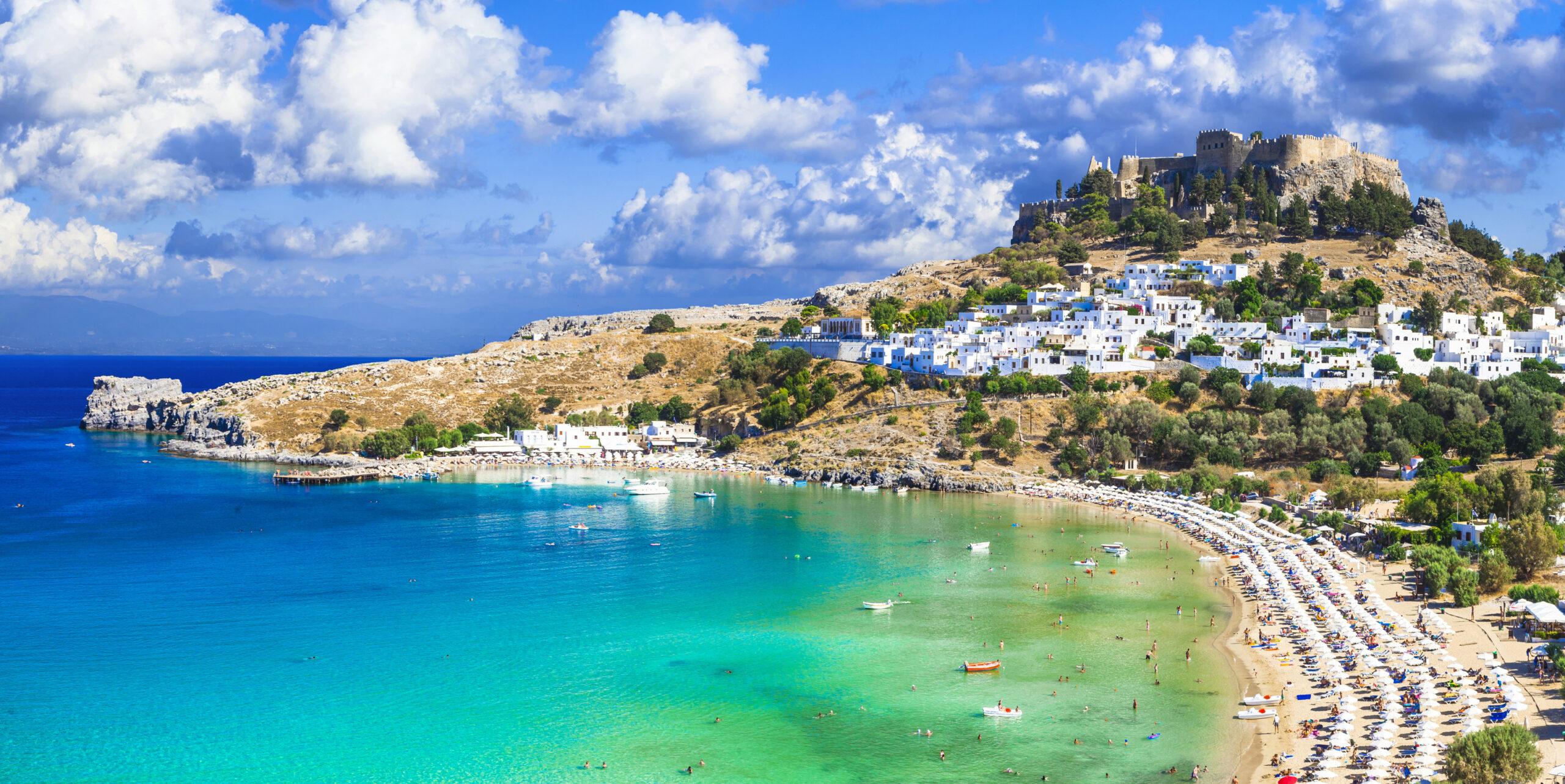
Few Greek islands combine ancient history and stunning beaches like Rhodes. Here, you feel like a true explorer wandering the centuries-old streets of the UNESCO-protected walled capital, taking hundreds of photos of Lindos’ white houses and hopping from beach to beach. The island’s coastline is varied and impressive—from the dramatic scenery of Anthony Quinn Bay to laid-back sandy Agia Agathi, windsurfing-friendly Prasonisi and breathtakingly turquoise Agios Pavlos. My visits to Rhodes have always included some of the most rewarding beach experiences. Here’s a collection of the best beaches on the island. Choose your favorite, and don’t forget to apply sunscreen—this Dodecanese destination enjoys over 300 days of sunshine annually.
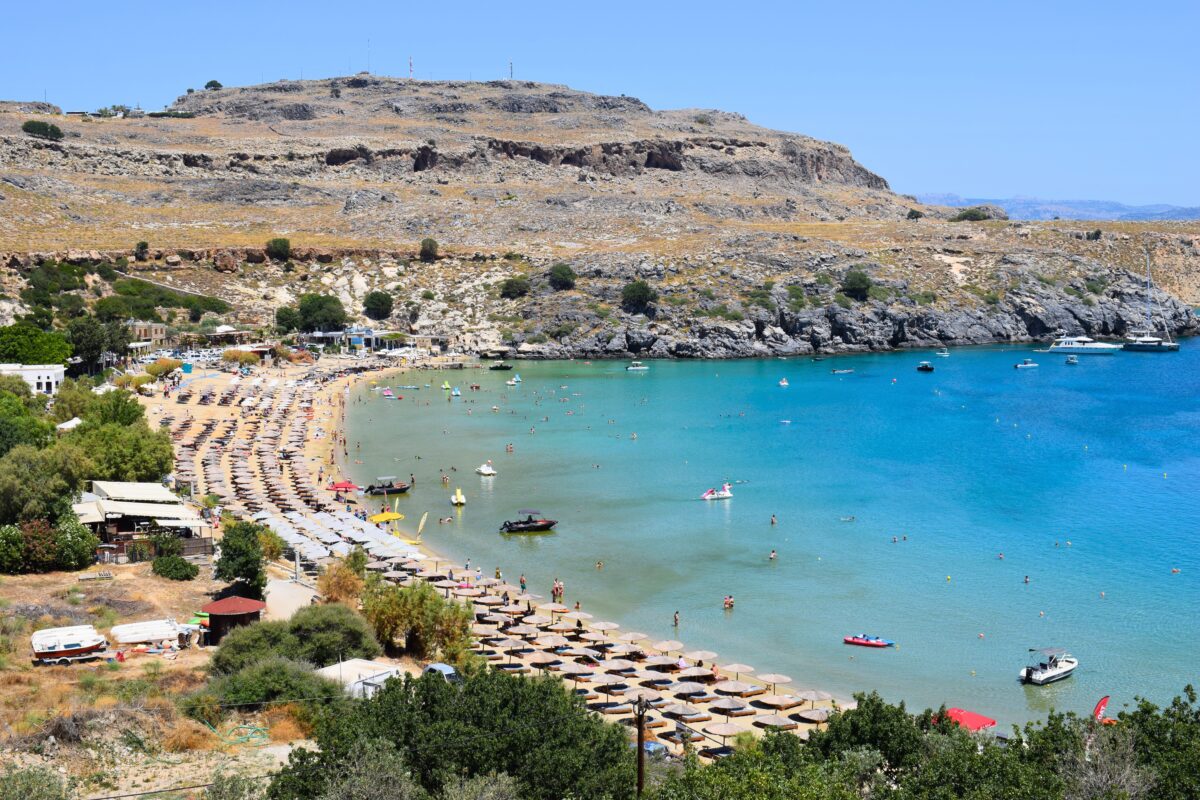
Photo Courtesy of Pavlo Fedykovych Lindos Beach
Best for magnificent views
There’s something magical about swimming at Lindos Beach. With views of the whitewashed houses of the eponymous village and the massive Acropolis dating to the 4th century BC, this stretch is among the most awe-inspiring in Greece. Your kids will love the soft golden sand—Lindos is a pleasant alternative to the mostly stony beaches of Rhodes. Thanks to its location in a gorgeous blue bay, the beach offers tranquil waters. Parking costs 7 EUR (all day) and sunbed and umbrella rentals are available on the beach. A great thing about Lindos Beach is that you’re steps away from the picturesque labyrinthine streets of the town. The Acropolis is another must-see. The ascending hike takes around 20 minutes, but the attraction is worth every step.
Glistra Beach
Best for a laid-back family leisure
A hidden gem, Glistra is a small bay with crystal-clear water 8 miles south of Lindos. The golden soft sand is what makes it a special spot for families. The access is shallow and the sea is tranquil. The perfect recipe for laid-back beachgoing with kids. The beach also works great for snorkeling, as there are several rocks at the edges. Apart from loungers, there are no facilities here, so bring snacks with you.
Agia Agathi Beach
Best for shallow waters
Rhodes is full of surprises, and Agia Agathi Beach is one of them. Fine golden sand, goats roaming freely, cave dwellings nearby and a picturesque chapel in the stone. It can’t get more Greek than this. Far from the buzz of the tourist towns, Agia Agathi offers a soothing retreat accompanied by the caressing music of the Aegean waves. Families love it for the shallow water and all the play opportunities the sand provides. There’s an inflatable amusement water park to keep children busy. Snorkeling is an option thanks to the rocky coastline on both sides of Agia Agathi. Shade is scarce, so bring your own umbrella or rent one on-site.
Prasonisi Beach
Best for windsurfing
Wild Prasonisi is spectacular. Located at the southernmost tip of Rhodes, it’s at the spot where the Mediterranean meets the Aegean. The energy of nature is felt vividly at this remote corner of the island (you’ll find the strongest winds here.) Prasonisi also serves as one of the most beautiful sandy beaches in Greece. The large strip is reminiscent of the Atlantic coast in Portugal or France. The wind conditions make this stretch a perfect place for windsurfing. You’ll find many rentals in Prasonisi, offering kites and boards. There are also a handful of boutique hotels in the tourist village to experience the magic of this desolate place firsthand.
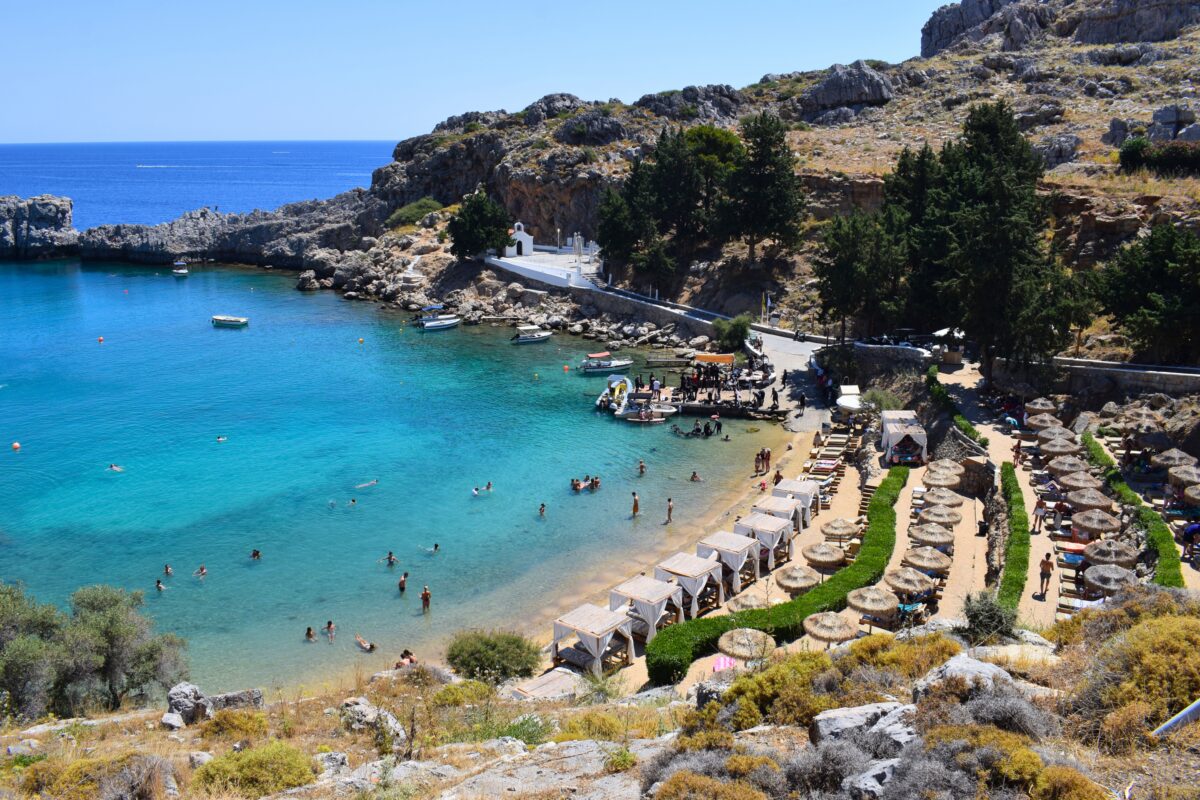
Photo Courtesy of Pavlo Fedykovych Agios Pavlos Beach
Best for turquoise waters
Located on the other side of Lindos Acropolis hill, Agios Pavlos is another stunning Rhodes beach highlight. The view here is picture-perfect: the tall rocky outcrop with the ancient archaeological site on top, the calm cyan bay and barren lunar landscape around. Be aware that Agios Pavlos is tiny, and an upscale beach bar occupies almost the entire stretch. An umbrella and sunbed combo costs around 40 EUR per day and a tent costs around 70 EUR. You don’t have to pay to swim, though. Take a walk to the incredibly scenic Chapel of Agios Pavlos nearby. The beach is made of tiny pebbles mixed with sand, so it’s suitable for children.
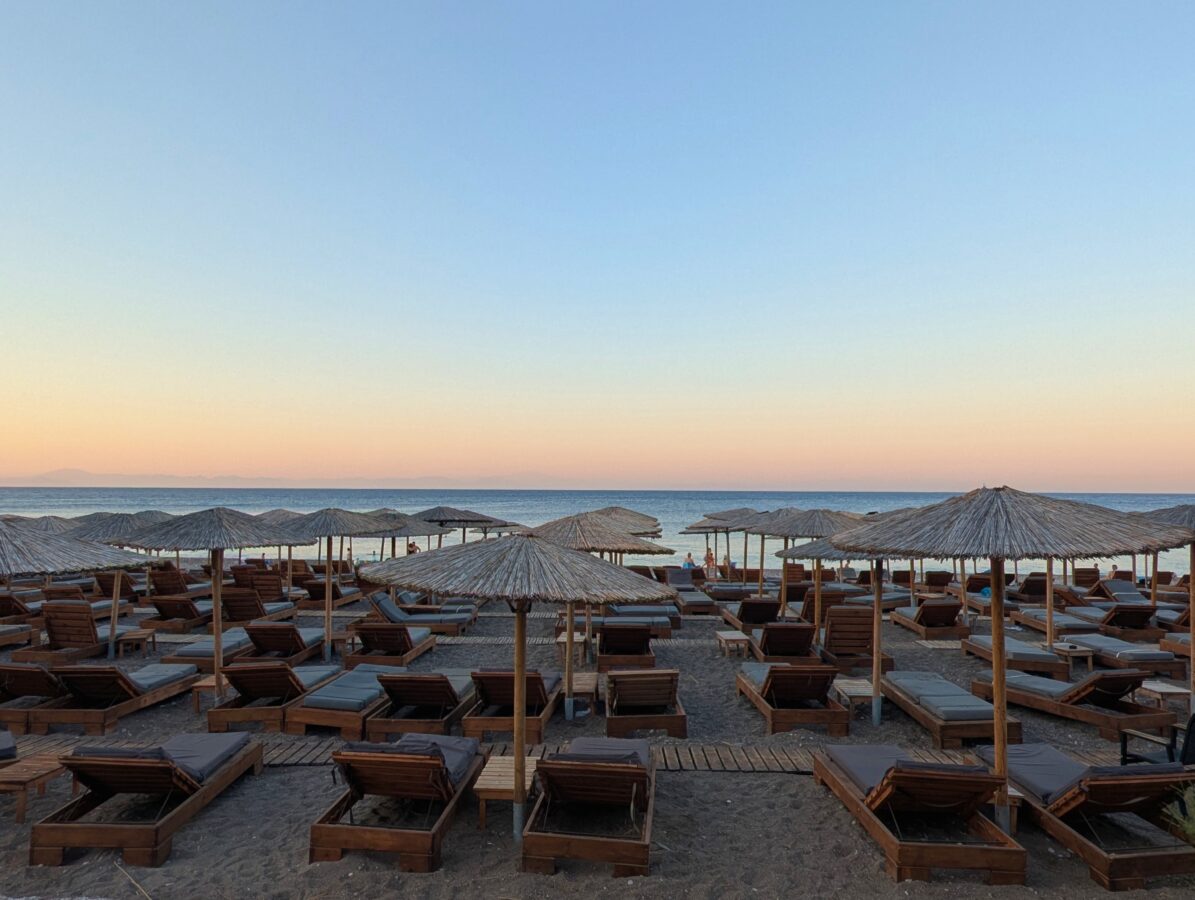
Photo Courtesy of Pavlo Fedykovych Elli Beach
Best urban beach
Apart from being the Aegean’s most spellbinding historic port city, Rhodes is also a superb beach town. Set on the northern edge, Elli is one of the reasons for that reputation. It’s a large pebbly stretch filled with vibrant beach bars. Its trademark is a striking diving platform in the middle of the blue sea. Swim there for unforgettable sea jumping with views of Rhodes town and the Turkish coast. It’s popular for cooling down and relaxing after exploring the city’s many wonders—the beach is just 15 minutes away from the Old Town on foot. It’s also the ultimate place to be during sunset when beach clubs and restaurants come alive with DJ sets.
Stegna Beach
Best for snorkeling
The East Coast of Rhodes is a collection of charming beach towns, and Stegna is the one to visit. The local pebbly beach has that trademark Greek azure water and perfect visibility. Its urban part is an ideal family beach, with moderately priced loungers, many traditional tavernas on the promenade and water sports rentals. Walk further south to find the rocky coastline, which is a snorkeling dream. Take steps to reach Archangelos Cave, a tiny idyllic strip with rich marine life. But that’s not all. A little further is Grande Blue Beach: a stunning turquoise bay with more snorkeling potential. Come to Stegna with your own gear to save on rental costs.
Tsambika Beach
Best for golden sands and no crowds
Visiting Tsambika feels like traveling to another island. Mountains rise over the spacious stretch of golden sand. The access is shallow, giving your kids a superb area to wade, play and swim. Apart from several laid-back beach bars, there’s no development around. You can park right at the edge of the beach, and it’s free—quite a rarity for the mostly commercialized beach areas of Rhodes. There’s also an inflatable water park for even more family fun. Tsambika is a good spot to try water sports without the hassle. Parasailing and waterskiing are very popular here, but you can also go for less extreme options like banana boats, SUP, or ring riding.
Anthony Quinn Bay
Best for yachting
It’s not only the marvels of the ancient world in Rhodes, the island is also steeped in cinematic history. The 1961 war movie “The Guns of Navarone” was filmed here. One particular bay, just outside Faliraki, made an impact on the movie’s leading star, Anthony Quinn. So powerful was the Rhodes spell that the actor bought the land. Although the island authorities reclaimed the stretch in the ’80s, it was renamed to honor Anthony Quinn. Today, it’s among the most popular spots to sail in Rhodes. There’s a tiny stretch with a beach bar that you can reach by land. Whichever way you choose, you’re greeted by unreal turquoise waters and fantastic Mediterranean panoramas.
Mandomata Beach
Best for naturists
While one may think that Greece, with its never-ending supply of idyllic coves, is a naturist paradise, there aren’t many stretches where you can bare it all. Mandomata is where nudists go in Rhodes. Located between Faliraki and Anthony Quinn Bay, it’s a scenic pebbly beach surrounded by rocky hills. Quite unexpectedly, the stretch isn’t as desolate as you may think. You can rent a lounger and an umbrella on the spot, parking is free and you’ve also got toilets and showers. And it’s not often that you encounter a restaurant on a nudist beach, but Mandomata has one, serving Greek dishes. Enjoying the Aegean without clothes is definitely better with souvlaki and gyros.
Faliraki Beach
Best for party vibes
If you’re looking for raucous nightlife, Faliraki fits the bill. The atmosphere here is far from the calm, family-friendly vibe of most of the smaller towns of Rhodes. Bass is pumping, the buzz of the bar street is loud and the beach bars keep the night party going. Faliraki Beach is a perfect accompaniment to your nights out. By day, it’s among Rhodes’ most charming stretches with clear water, pebbly surface and plenty of water activities to choose from. When dusk falls, it’s where the action is. There’s also a huge water park (the largest on the island) nearby, offering water fun for all ages. For something more scenic and calm, drive to the idyllic Ladiko Beach. Preferably with snorkeling gear, as the bay has abundant underwater life.
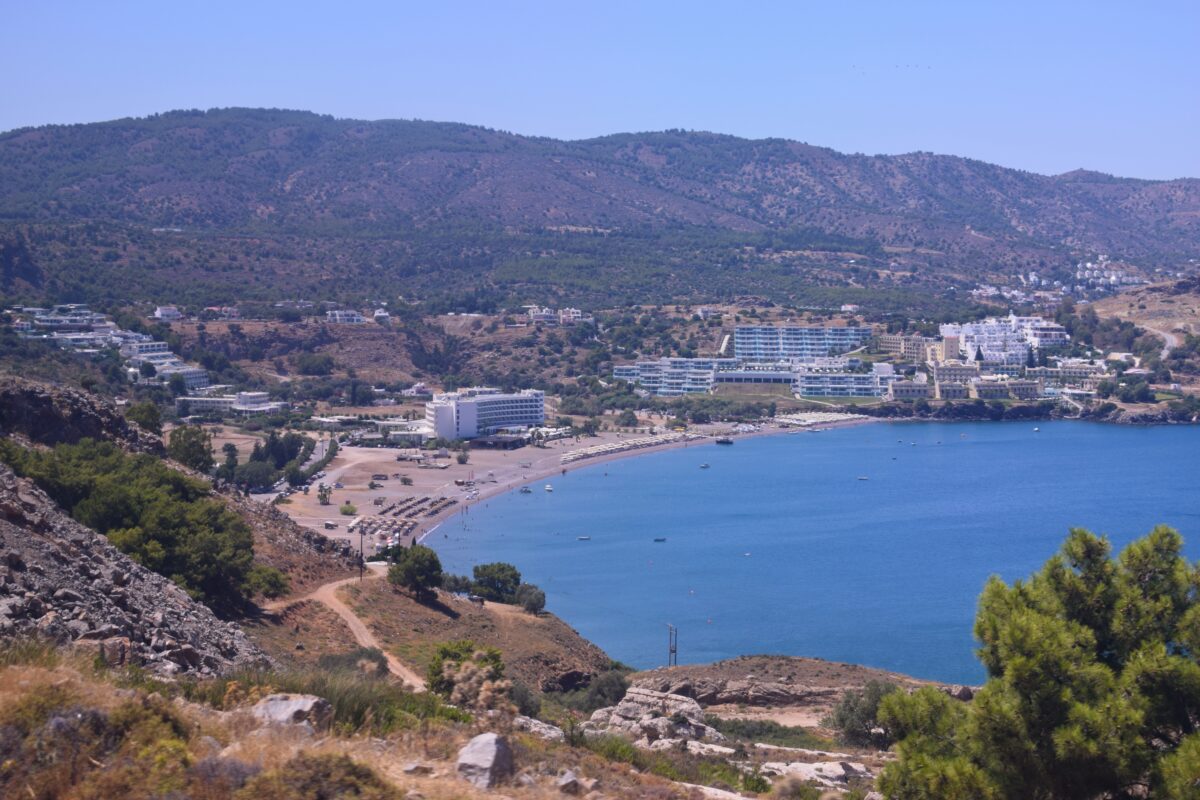
Photo Courtesy of Pavlo Fedykovych Vlicha Beach
Best for an affordable beach holiday
A short trip away from Lindos, Vlicha is a wide, long pebbly stretch backed by cliffs. Some would even say that it’s Rhodes’ best beach. Crowds are unheard of, the prices of facilities are surprisingly affordable and you’ll find a good variety of local restaurants. In other words, Vlicha is a perfect recipe for a hassle-free family holiday. Distances are minimal in town and you’re literally five minutes away by car from stunning Lindos.
-
Algarve
Living in Portugal means I’ve been lucky enough to explore beaches all over the country, but there’s something about the Algarve that keeps pulling me back.
Maybe it’s the ochre cliffs and secret sea caves. Or perhaps it’s the grilled sardines and vinho verde served in beach shacks where the sand sticks to your ankles. Or maybe it’s just the sheer variety of beaches–wild and rugged one day, calm and family-friendly the next.
Over the past few years, I’ve spent a lot of time exploring the Algarve’s coastline—with endless spontaneous road trips and long, lazy summers parked up near Lagos. This corner of Portugal feels like it was made for beach lovers and after plenty of trial (and a little sunburn), these are my picks for the absolute best beaches in the Algarve.
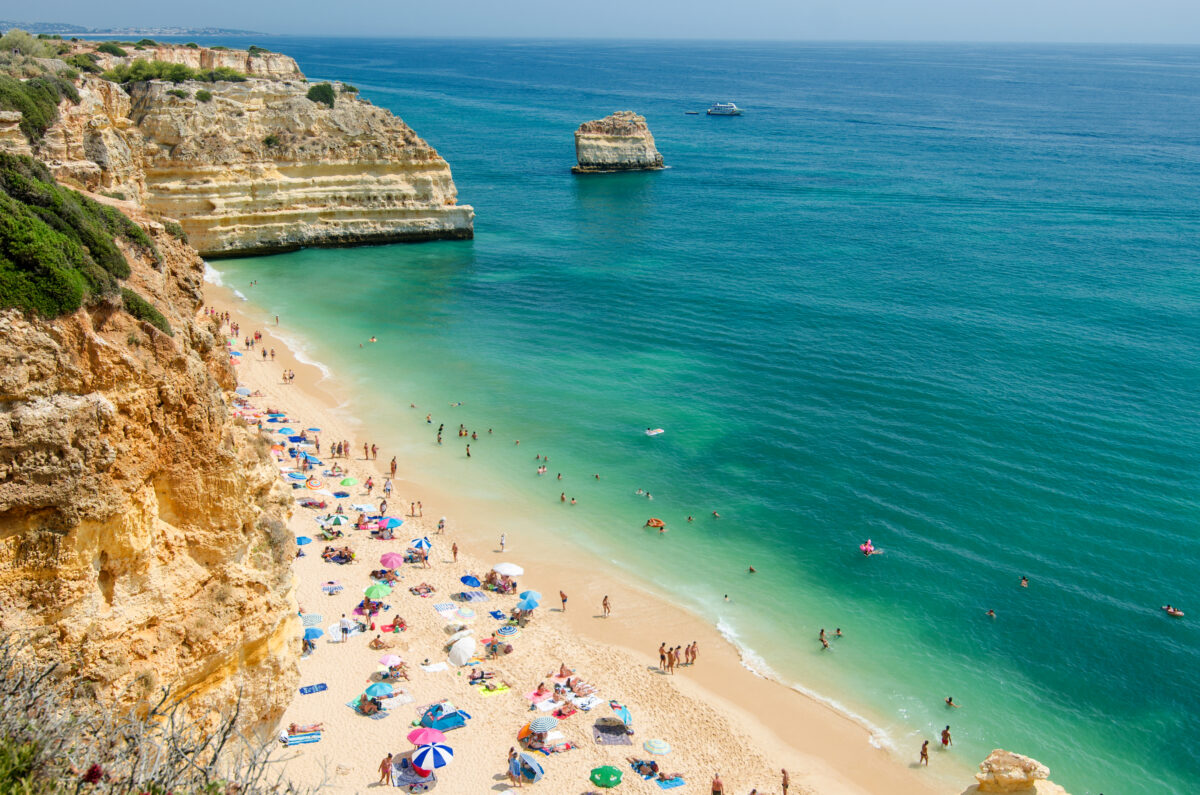
Photo by © Kazmulka | Dreamstime.com Praia da Marinha
Praia da Marinha is one of those places that actually lives up to the hype and then some. The view is ridiculous: honey-coloured limestone arches, emerald sea and those classic Algarve rock stacks rising out of the water like ancient sculptures.
Getting down to the beach means tackling a steep-ish staircase, so pack light and wear decent sandals. Once you’re down, it’s surprisingly peaceful. The crowds tend to stay up at the viewpoint. There’s a small café halfway down the cliff that does a decent coffee and tosta mista, but I usually bring my own snacks and settle in for the day.
Praia do Camilo
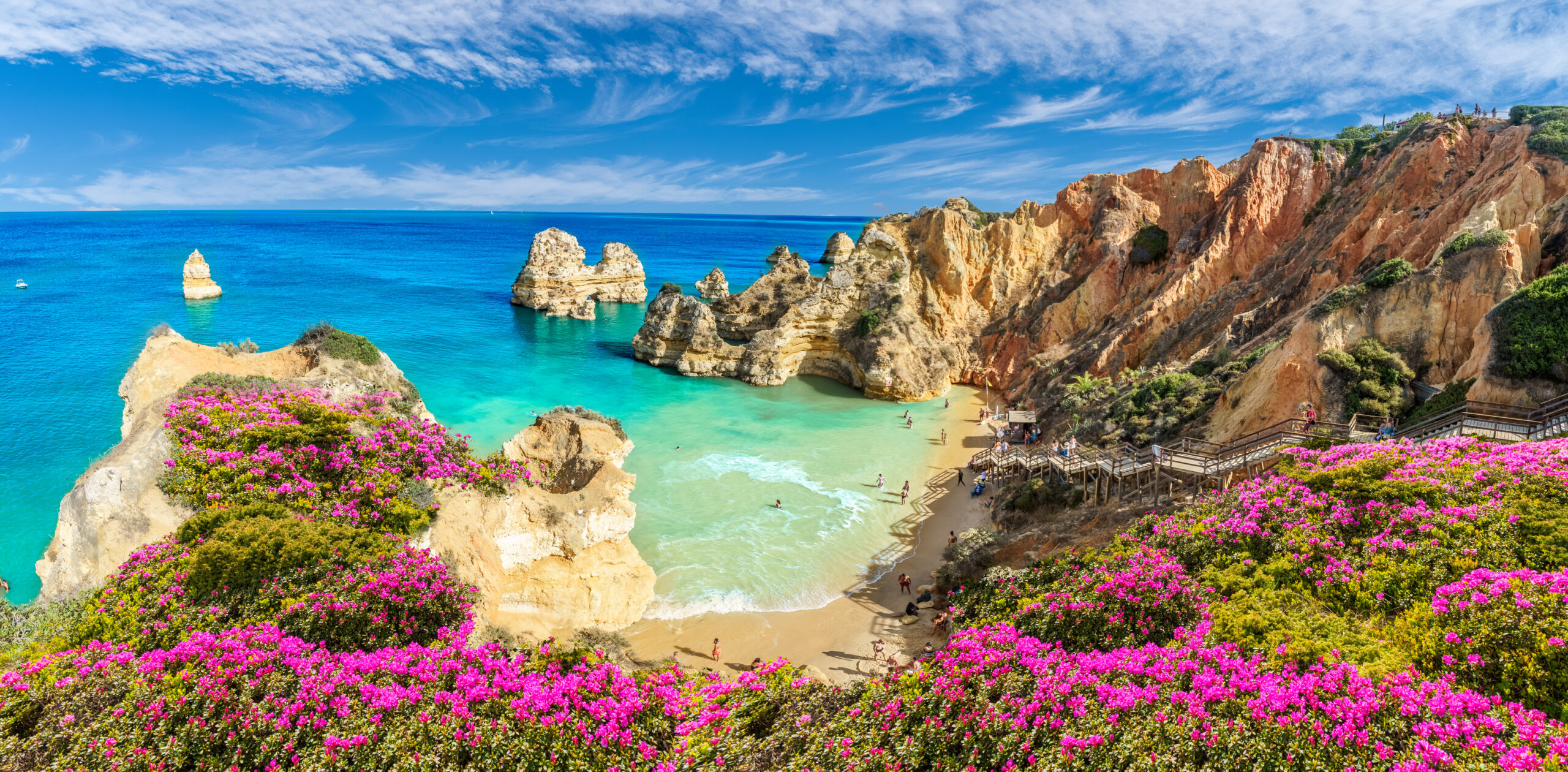
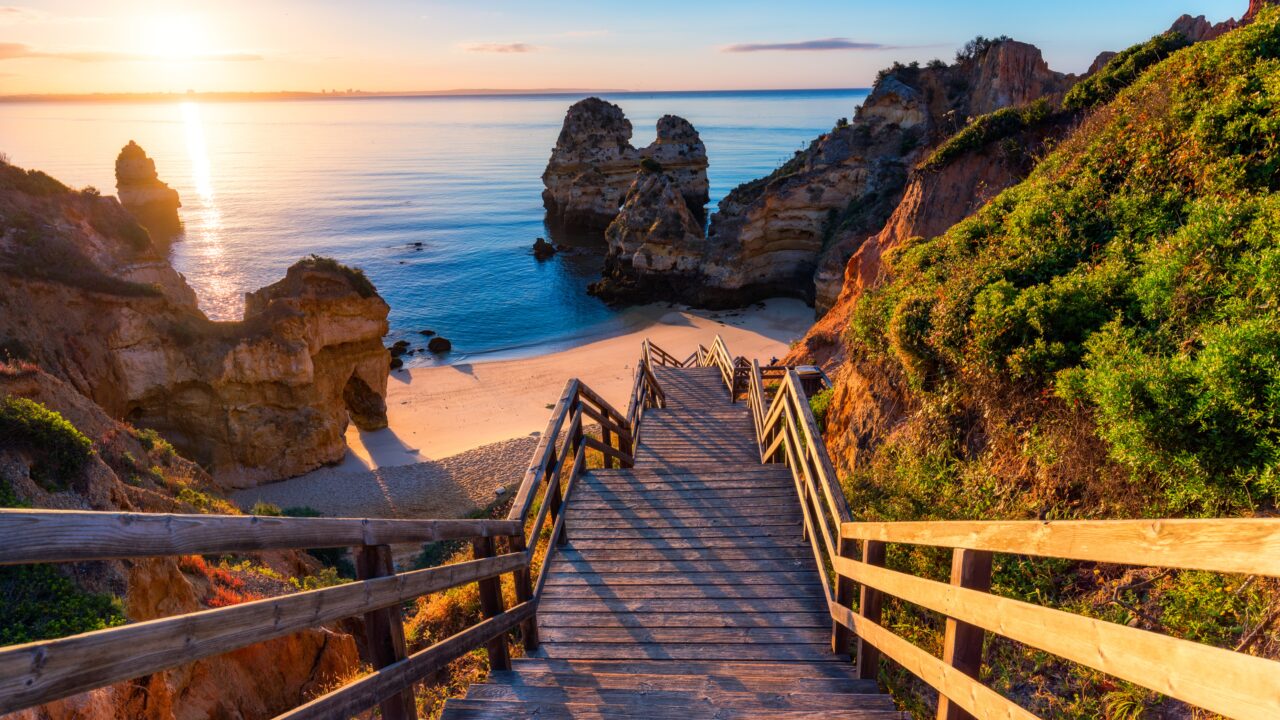
This is one of my go-tos whenever I’m in Lagos. It’s tiny, sheltered and completely postcard-perfect: you reach it by walking down 200-ish wooden steps and the descent is half the fun. The beach itself is framed by golden cliffs and has a tunnel carved into the rocks that connects the two little coves at low tide.
The water is usually calm and super clear, ideal for a quick snorkel or just floating around. There’s no beach bar, but the restaurant up at the top (O Camilo) serves incredible grilled fish and vinho verde with a killer view. Go early. It’s small and fills up fast, especially on weekends.
Praia da Falésia
This one’s a total contrast to the little hidden coves. Praia da Falésia is long (like, really long!) and backed by dramatic burnt-orange cliffs that look like something from a Western. I’ve spent entire afternoons here walking the shoreline barefoot, losing track of time.
It’s great for swimming, with plenty of space to spread out even in high season. There are loungers for hire and a few beach bars dotted along the sand. I usually end up at one near the Alfamar side that plays mellow music and does surprisingly good mojitos. The walk down is easy from the main car park and there are proper toilets and showers too.
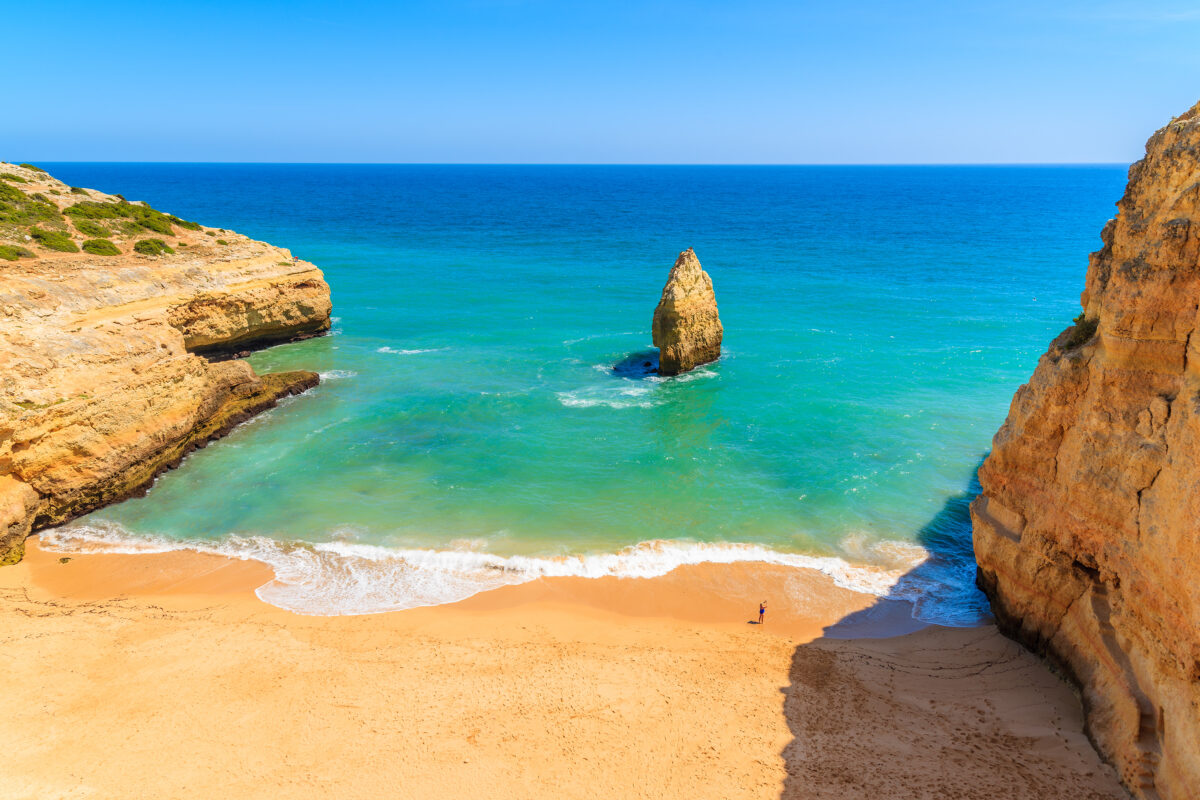
Photo by © Pkazmierczak | Dreamstime.com Praia do Carvalho
I found this beach almost by accident during a cliff walk between Benagil and Carvoeiro and it’s been one of my favorites ever since. To get there, you have to go through a hidden staircase tunnel carved into the rock and it feels like stepping into a secret world.
The beach is compact and usually quiet, with steep cliffs on both sides and great snorkelling near the rocks. I’ve seen people cliff-jumping here, though it’s definitely at-your-own-risk territory. There aren’t any facilities on the beach itself, so bring water and whatever you need for the day. But the reward is one of the Algarve’s most magical little spots.
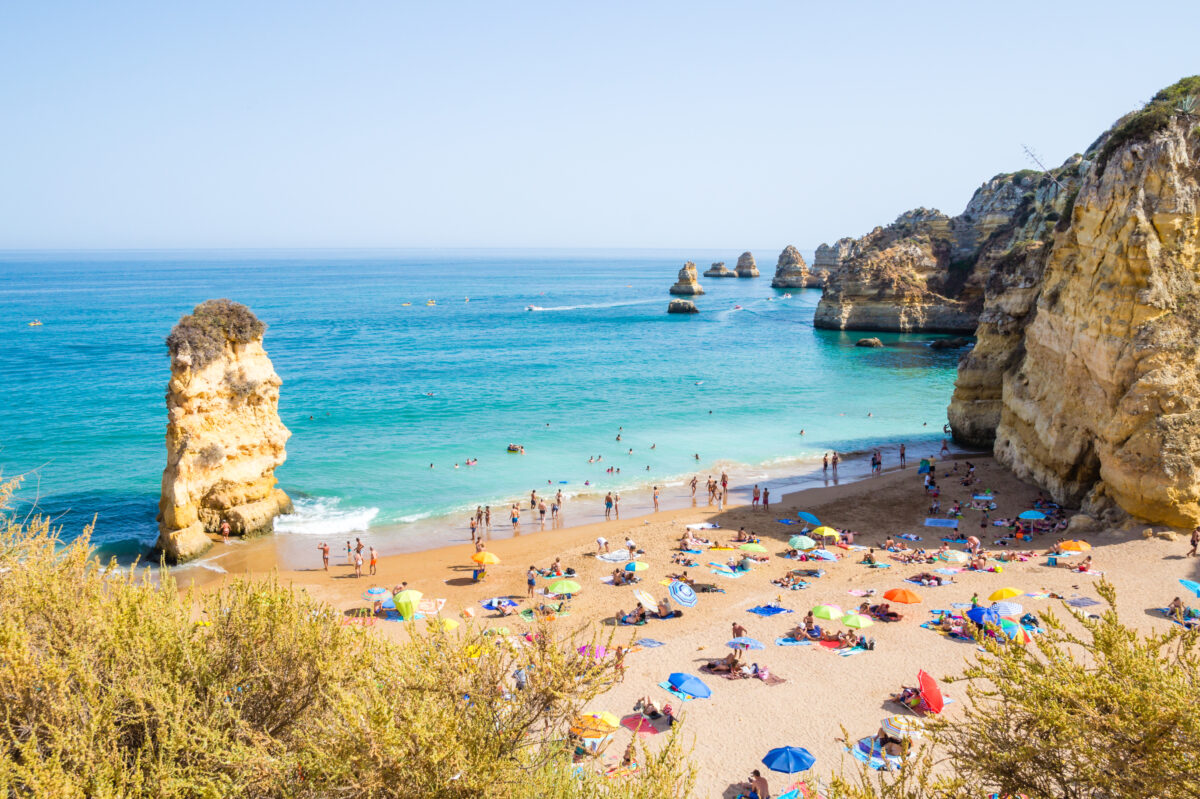
Photo by © Tamas Gabor | Dreamstime.com Praia Dona Ana
Praia Dona Ana was one of the first beaches I ever visited in the Algarve and it totally sold me on moving here one day. It’s right on the edge of Lagos and easy to reach on foot, but it still feels like a little slice of paradise. Surrounded by towering golden cliffs and accessed by a long wooden staircase, it’s one of those spots that feels protected from the rest of the world.
The water here is calm and clear, perfect for swimming and you can even rent kayaks to explore the caves and coves nearby. There are lifeguards in summer, a little beach café for cold drinks and toasts and decent public bathrooms too. Go early or late—midday in high season gets too busy, in my opinion!
Praia do Amado
If you’re into surfing, you’ve probably already heard of Praia do Amado. It’s one of the best-known surf beaches in the Algarve and one of my personal favourites to visit when I want to escape the more polished, touristy towns.
The drive out to the west coast feels like heading into wild territory—there’s a raw beauty out here that I never get tired of. Amado itself is a wide, wind-whipped beach with consistent waves and a really chilled-out surf crowd.
There are two surf schools, a beach shack selling toasties and cold beer and a big car park with basic toilets. I usually bring my own board, but rentals are easy to find on-site too.
Praia da Luz
Praia da Luz is the kind of beach I end up at when I want a relaxed day without too much fuss. It’s got a great mix of local families, retirees and the odd surfer catching mellow waves down at the far end.
The beach is long and sandy, with a gorgeous rocky outcrop at one end (I’ve scrambled up there a few times for sunset photos) and a paved promenade that gives it a slightly Mediterranean feel.
There are plenty of cafés and restaurants just a few steps from the sand. My usual move is a swim, followed by grilled sardines and vinho branco at one of the spots facing the sea. It’s easy, friendly and always feels like a little holiday away from my life in Lisbon.
Praia do Barril
Praia do Barril is one of the more unusual beach experiences in the Algarve, in the best way. It’s located on the Ilha de Tavira, and to get there, you either walk across a long wooden bridge and scenic footpath through the wetlands, or hop on a miniature train (yes, an actual tiny train!) that rattles its way out towards the dunes.
The beach is wide, calm and great for swimming, but what really makes it memorable is the Anchor Graveyard, a line of rusted ship anchors half-buried in the sand dunes from back when this was a tuna fishing outpost.
Praia da Marinha
No list of Algarve beaches would be complete without Praia da Marinha. I’ve visited more times than I can count and it still stops me in my tracks every single time. Think towering golden cliffs, sea stacks that rise like sculptures from the water and some of the clearest, calmest sea for swimming.
There’s a good-sized car park (free in the off-season, paid in summer) and a well-maintained path down to the beach—although be warned, it’s steep and rocky, so wear decent shoes. There’s a small café at the bottom with basic snacks and toilets, but I usually bring my own picnic and make a day of it. It’s also a great launch point for kayak or SUP trips to the nearby Benagil cave.
Praia do Beliche
Hidden away near Sagres, Praia do Beliche is a favourite when I’m craving a little escape from the crowds. It’s a curved cove framed by towering cliffs, with golden sand and rolling surf, and even in summer, it somehow feels mellow and uncrowded.
You’ll need to descend a steep set of stone steps (bring water shoes or trainers), but the payoff is worth it. Surfers love it here for the consistent break and I’ve seen some seriously impressive sunset surf sessions. There’s a tiny seasonal café up top for post-beach beers and toasties, but no formal lifeguards or bathrooms on the sand.
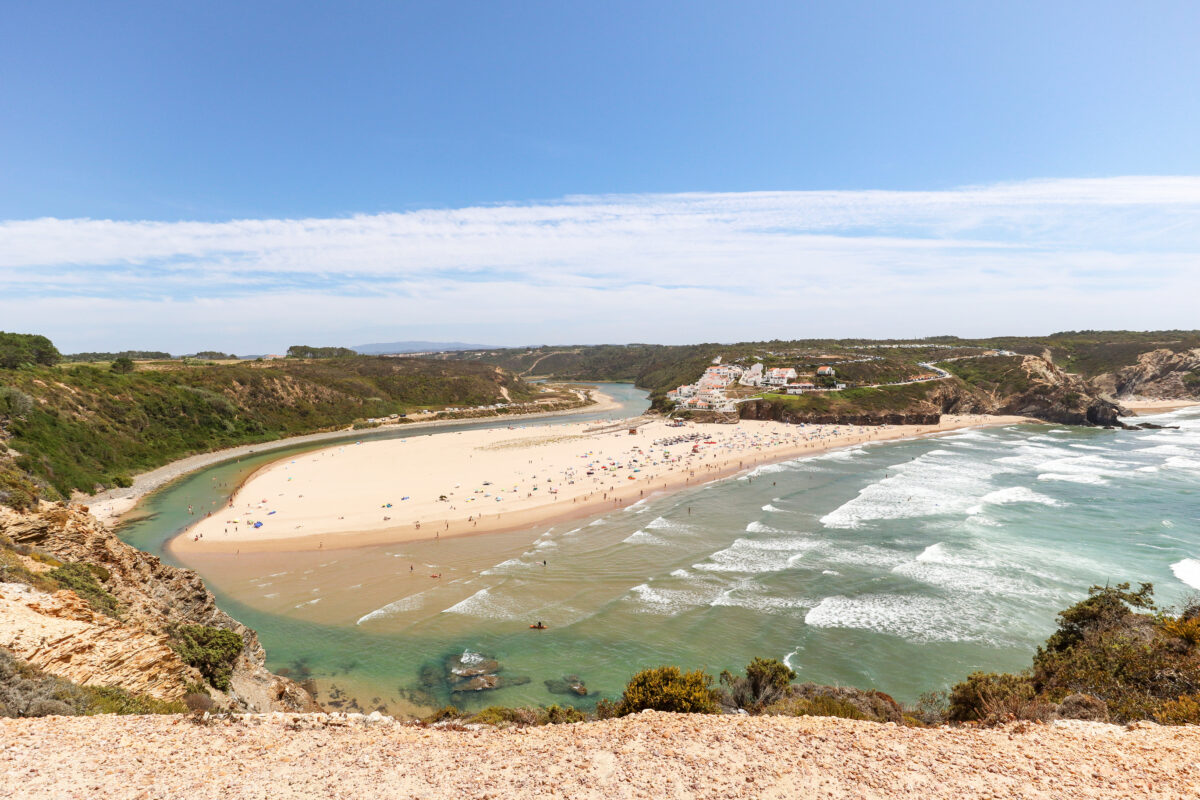
Photo by © Ahfotobox | Dreamstime.com Praia de Odeceixe
Right on the border of the Algarve and the Alentejo, Praia de Odeceixe has a special kind of wild charm. I stumbled on it during a road trip along the west coast and ended up staying a few days longer than planned.
The beach sits at the mouth of a river, so you’ve got the rare choice of swimming in fresh or saltwater—ideal when the Atlantic’s a bit choppy. It’s popular with both surfers and families, with a little surf school and paddleboard rentals by the river. There are a couple of laid-back restaurants at the top of the cliffs and a winding road down to the beach. Go for the views, if nothing else.
Praia do Castelejo
This one’s tucked away on the wild west coast and always feels like a bit of an adventure. Praia do Castelejo has this dramatic, end-of-the-world vibe – craggy black rock formations, huge Atlantic rollers and barely a building in sight. I usually head here when I’m craving space and solitude (and a bit of drama with my beach day).
It’s popular with surfers, but you don’t need to be on a board to appreciate it. I’ve spent hours here just walking the shoreline and watching the spray hit the cliffs. There’s a no-frills café right at the entrance that does a solid coffee and some great grilled fish when it’s open. Just bring layers as the wind can be serious!
Praia do Ancão
Whenever I want something a little more polished but still relaxed, Praia do Ancão hits the spot. It’s part of the Ria Formosa Natural Park and has this lovely mix of nature and understated luxury. The sand stretches for miles, and the beach is framed by dunes and pine forest, giving it a peaceful, away-from-it-all feel.
It’s also one of the few places I’ll happily splurge on a long lunch – there are a couple of chic beach restaurants right on the sand, where I’ve lingered over seafood rice and crisp vinho branco with my toes basically still in the sand. Great facilities, loungers for hire and gentle water make it perfect for a full day out.
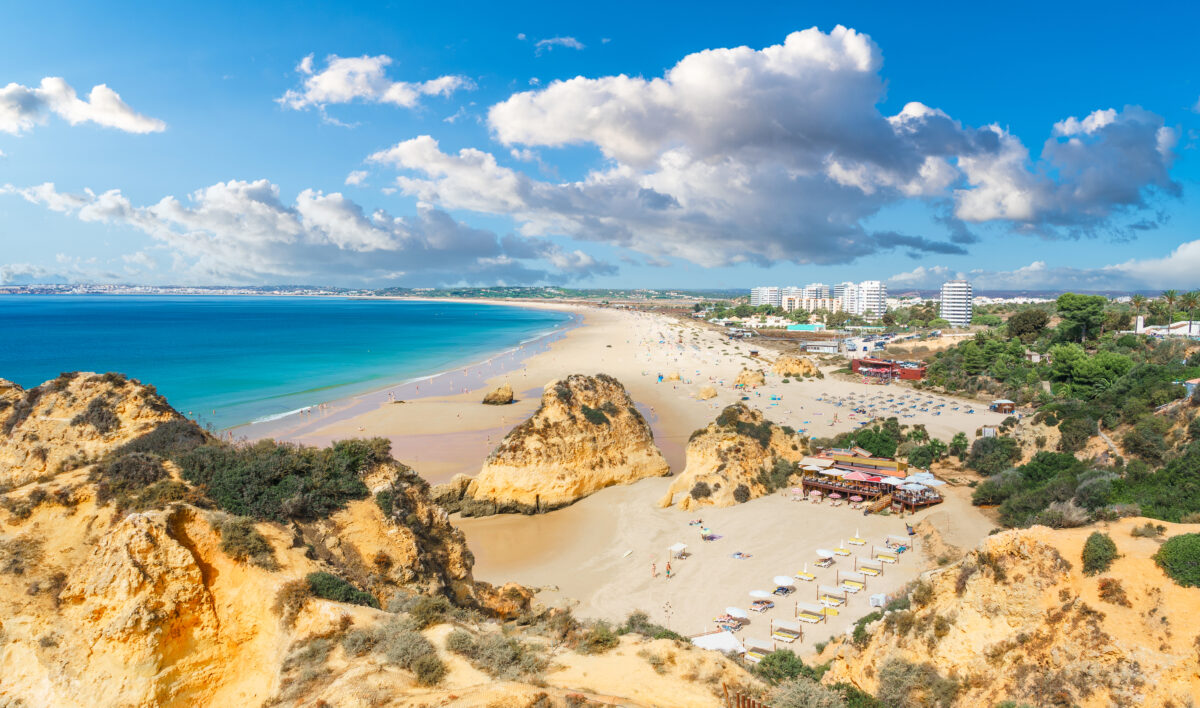
Photo by © Dorinmarius | Dreamstime.com Praia dos Três Irmãos
I still remember the first time I visited Três Irmãos – it felt a little like stumbling into a film set. The beach is known for its sea arches and hidden coves, which you can explore at low tide by wandering through natural rock tunnels. It’s one of those places where you feel like a kid again, ducking through gaps in the rocks to discover what’s around the corner.
The main beach is wide and sandy, great for swimming or just flopping out with a good book, but the real magic is in those tucked-away spots you find along the cliffs. There’s a beachfront restaurant up top if you want something more polished, but I usually just pack a picnic and let the day unfold.


