
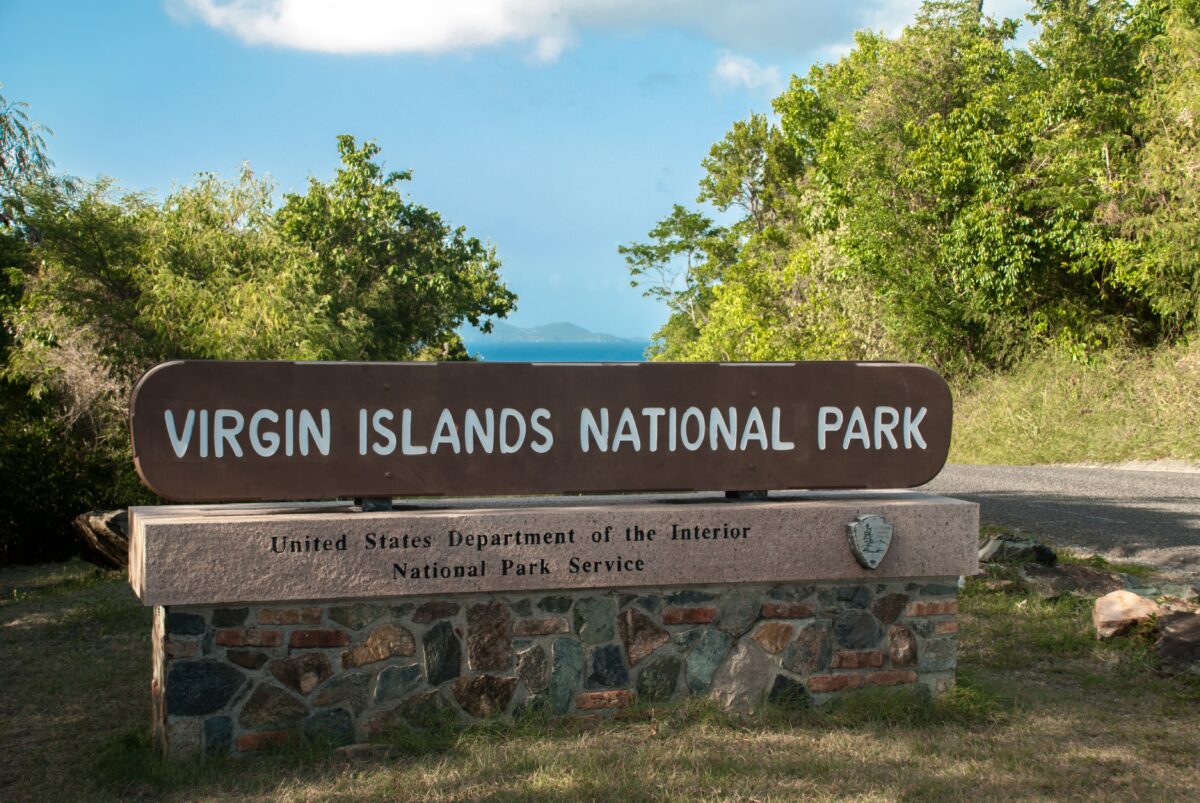
For generations, people have snuck to St. John in the U.S. Virgin Islands to hide away. Robert Oppenheimer, the father of the atomic bomb, chose St. John for a vacation home for its solace. Philanthropist Laurance Rockefeller fell in love with St. John and helped create the Virgin Islands National Park, and today, country singer Kenny Chesney has a home up in the hills.
Vacationers love the island for its nature, as almost 70% of the island is a national park, allowing travelers to explore via snorkeling, kayaking, hiking, boating, and more. St. John is for relaxation, while its neighboring St. Thomas is for the see-and-be-seen crowd.
Why Stay Inside Virgin Islands National Park
Most accommodations in St. John, however, come in the form of villas that are hundreds to thousands of dollars a night, making St. John less affordable than other Caribbean islands. As a solo traveler to St. John, I sought something smaller, more affordable, and close to the beach. The solution? Glamping inside Virgin Islands National Park at Cinnamon Bay Beach and Campground, where guests have direct beach access plus gear for paddle boarding, snorkeling, kayaking, guided hiking, and more.
First-Time Beach Glamping at Cinnamon Bay
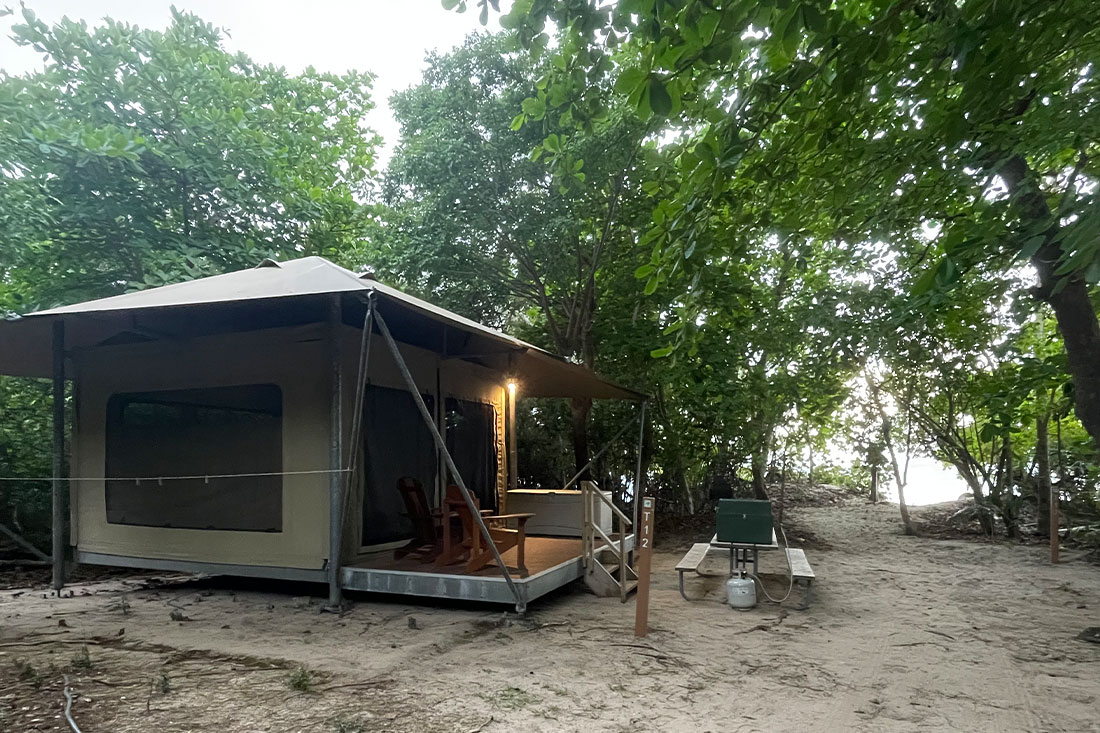
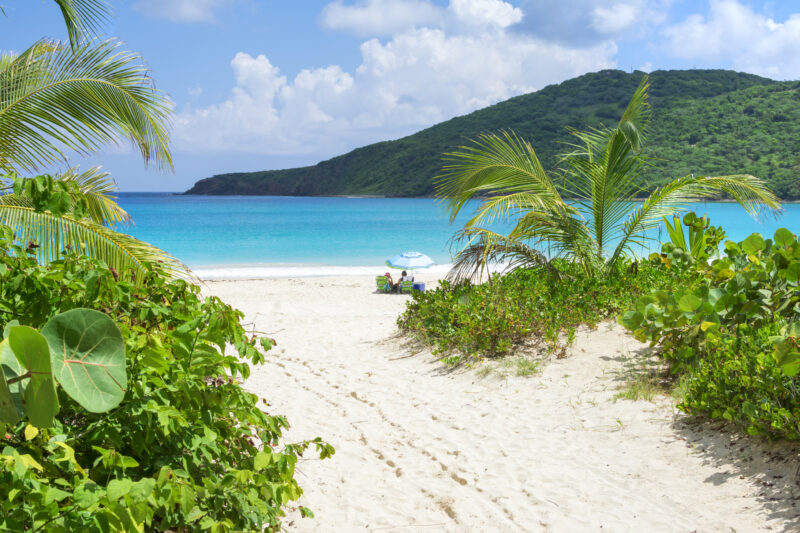
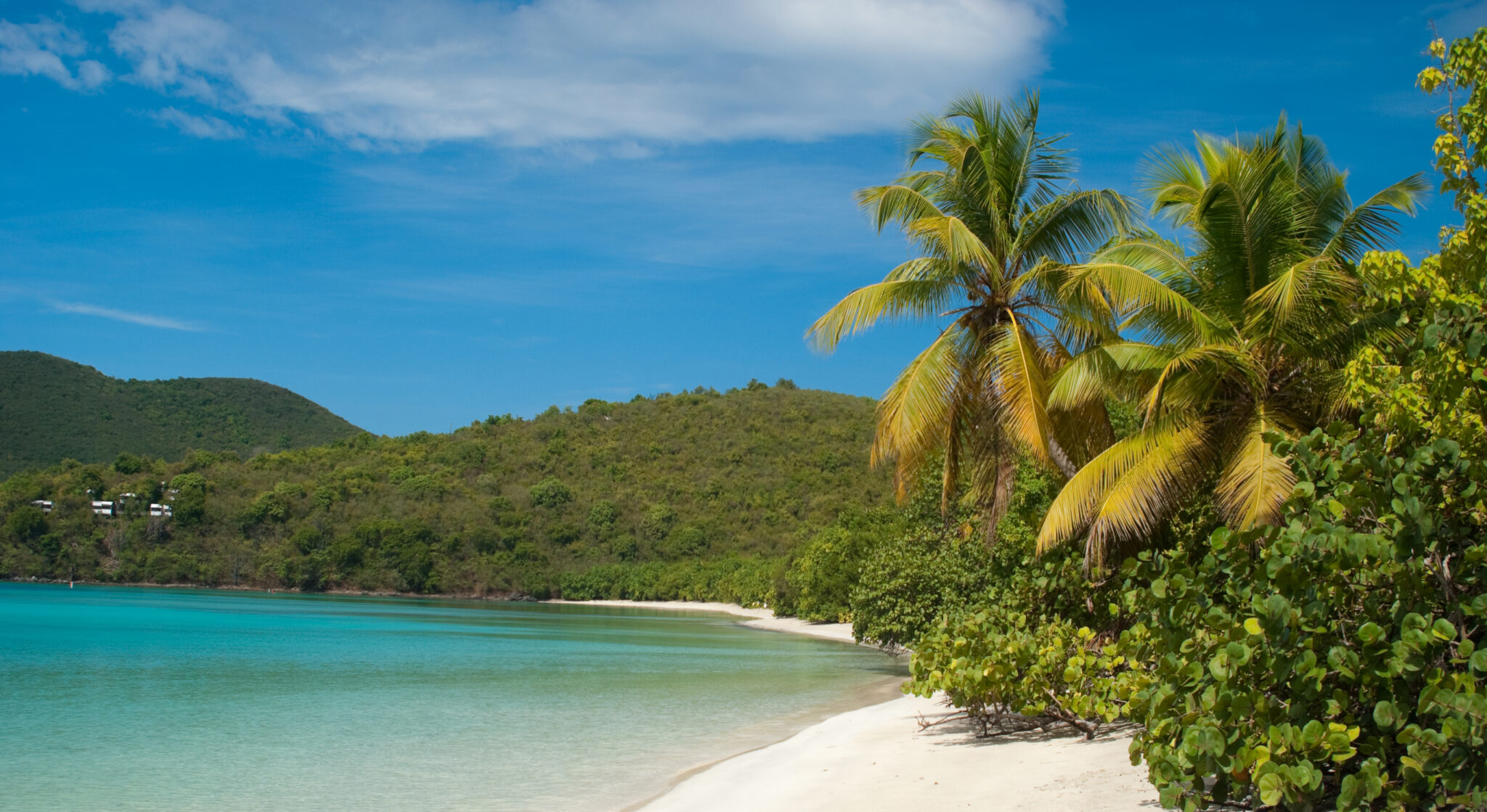
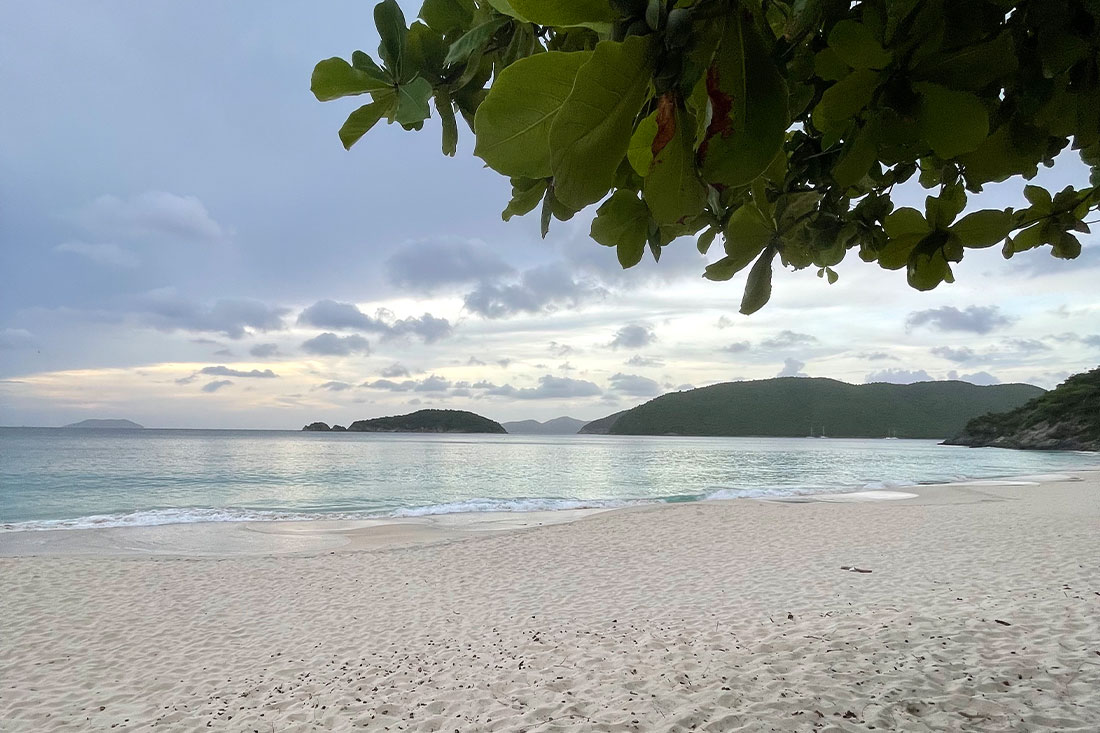
In all honesty, I am not a camper. I love exploring outside all day, then retreating to the comfort of the indoors to sleep. And while I’m not opposed to glamping in the mountains, where crisp mountain air keeps me cool, this was my first foray into beach glamping. I opted for an eco-tent, which included a fan, light, queen-size bed, electrical outlet, linens, bath towels, a cooking kit, and a picnic table and chairs on the small front porch. The tent could’ve easily accommodated two people, and while it was basic, with zip-up canvas walls to keep bugs away and a planked floor beneath, it put me right on Cinnamon Bay Beach. All I had to do was take about 10 steps through the sand, slink underneath a canopy of low-hanging branches, and the white-sand beach unfolded before me with plenty of room to throw down a beach towel or a chair, and practically no one in sight.
Sure, glamping here means there is no AC, but the provided fan kept me cool at night, and the sound of frogs, birds, and insects chirping lulled me to sleep. Losing some creature comforts like cell service and AC was concerning for me at first, but being able to walk straight from my eco-tent onto an empty beach made up for it.
Dining at Cinnamon Bay Campground
For meals, the on-site Rain Tree Café serves breakfast and dinner daily, with meal choices always changing. During my stay, I dined on bacon, egg, and cheese bagels; omelets, pancakes, and yogurt parfaits to fuel up for days spent on the water. In the evenings, jerk chicken, roasted cauliflower with curry sauce, and prime rib all graced the table. The Café is also where I went for brief moments back into reality, as the Wi-Fi here allowed me to do necessary emails and pesky work tasks on deadline. Lunches are served from the on-site food truck near the beach, where you can find hot dogs, pulled pork sandwiches, nachos, and other concession-style grabs. It’s also where afternoon cocktails are served, including your favorite Caribbean classics: painkillers, dark and stormies, rum punch, daiquiris, and margaritas.
Things to Do at Cinnamon Bay
Snorkeling, Kayaking & Water Activities
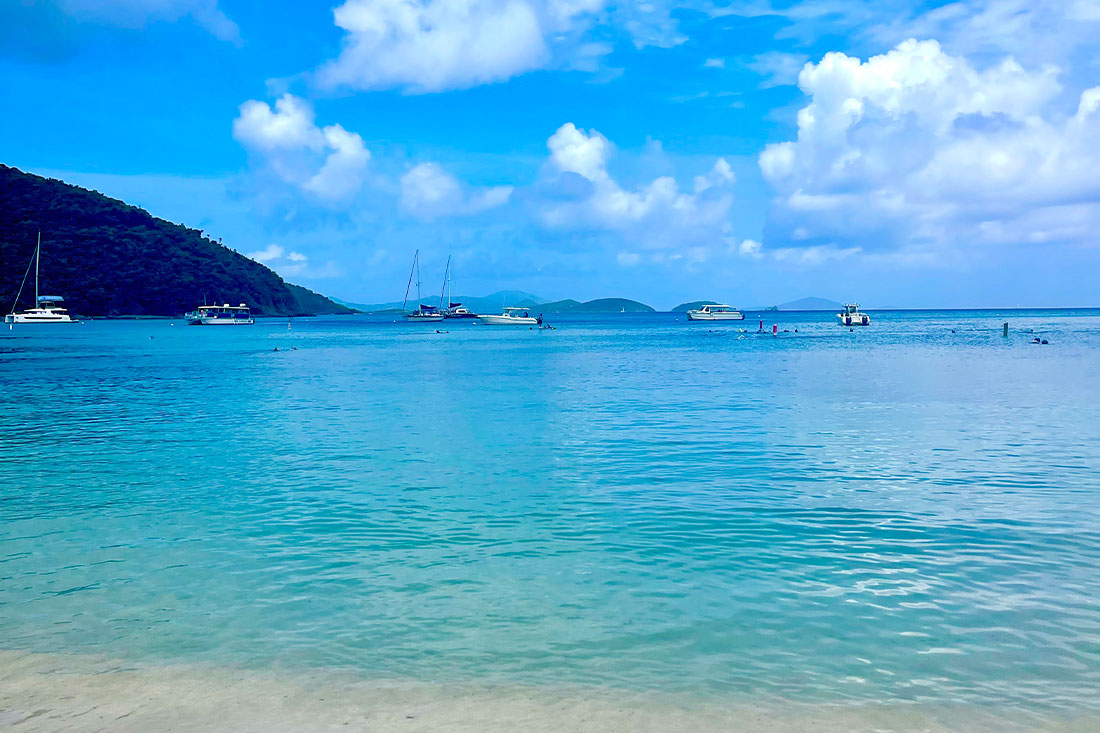
Days at Cinnamon Bay are usually spent, obviously, on the water, as Cinnamon Bay has watersport rentals including snorkel gear, kayaks, paddle boards, and beach chairs. One day, I opted for a kayak and took off from Little Cinnamon Bay Beach and paddled past Maho Bay Outlook to Little Maho Beach, where I then docked my kayak and headed into the water for snorkeling. While flipping my fins through the aquamarine water, I spotted a sea turtle beneath me slowly drifting near the sandy bottom. Taking a deep breath, I dove down to get a closer look at the turtle, careful not to touch it. I’m surprised more people aren’t swimming in to get a look at the turtle, but then again, not that many people are around me at all—a note I make for the duration of my time in quiet St. John.

Hiking in Virgin Islands National Park
Another day, I opted for a guided hike on the nearby Reef Bay Trail in Virgin Islands National Park. I was looking for some exercise, and this was no picnic. The trail is a strenuous hike that takes you across rocky terrain and up and down dirt paths, so close-toed shoes and hiking experience are required. Underneath the tree canopy, you’ll pass old sugar plantation ruins, walls from cattle grazing, and ancient rock carvings left from the pre-Colombian Taino people. At the end of the hike, you’ll hit the beach, where the surf is a rewarding treat after a humid, sweaty hike. Pro tip: Do not forget mosquito repellent, sunscreen, water, snacks, and a hat. And if you want to swim at the end, pack a bathing suit.
Culture & Relaxation
Back on land, Cinnamon Bay offers art and yoga classes, plus evening chats over area birds, sea turtles, Caribbean music, traditional crafts, and coral reef ecosystems at the Rain Tree Café. Before dinner one night, I learned about traditional Caribbean dancing from Delroy “Ital” Anthony, one of St. John’s cultural ambassadors, and another night about the national park’s sea turtle monitoring and protection program.
Walking back to my eco-tent at night, I absorb the sounds of the island: a croaking frog in the distance, crickets chirping all around, and somewhere, a bat flapping overhead beginning its nighttime feeding session. I zip my tent, turn on the fan, and listen to the sounds of nearby waves and St. John’s fauna rock me to sleep.
Cinnamon Bay‘s Other Accommodations
For those wanting to skip glamping or even basic tent camping, Cinnamon Bay also offers cottages that sleep up to four people. Each unit, a solid concrete building, has ceiling fans, electrical outlets, lights, a queen bed and a day bed/sofa with trundle (in separate rooms), linens, bath towels, a mini fridge, cooking kit, indoor table and chairs, a grill, picnic table, and two outdoor chairs.