
Going to the beach always makes for a good time, but it can be even better when you visit a stretch where wildlife is known to visit. Can you imagine soaking up the sun and enjoying the scenery when suddenly a baby kangaroo hops by? Or, maybe you’ll be swimming right next to a friendly pig in the clear turquoise waters around the Bahamas?
Those are just a couple of the surprising wildlife encounters that are possible at these incredible beaches, from the Land Down Under to stretches a bit closer to home.
Punalu’u Black Sand Beach, Big Island
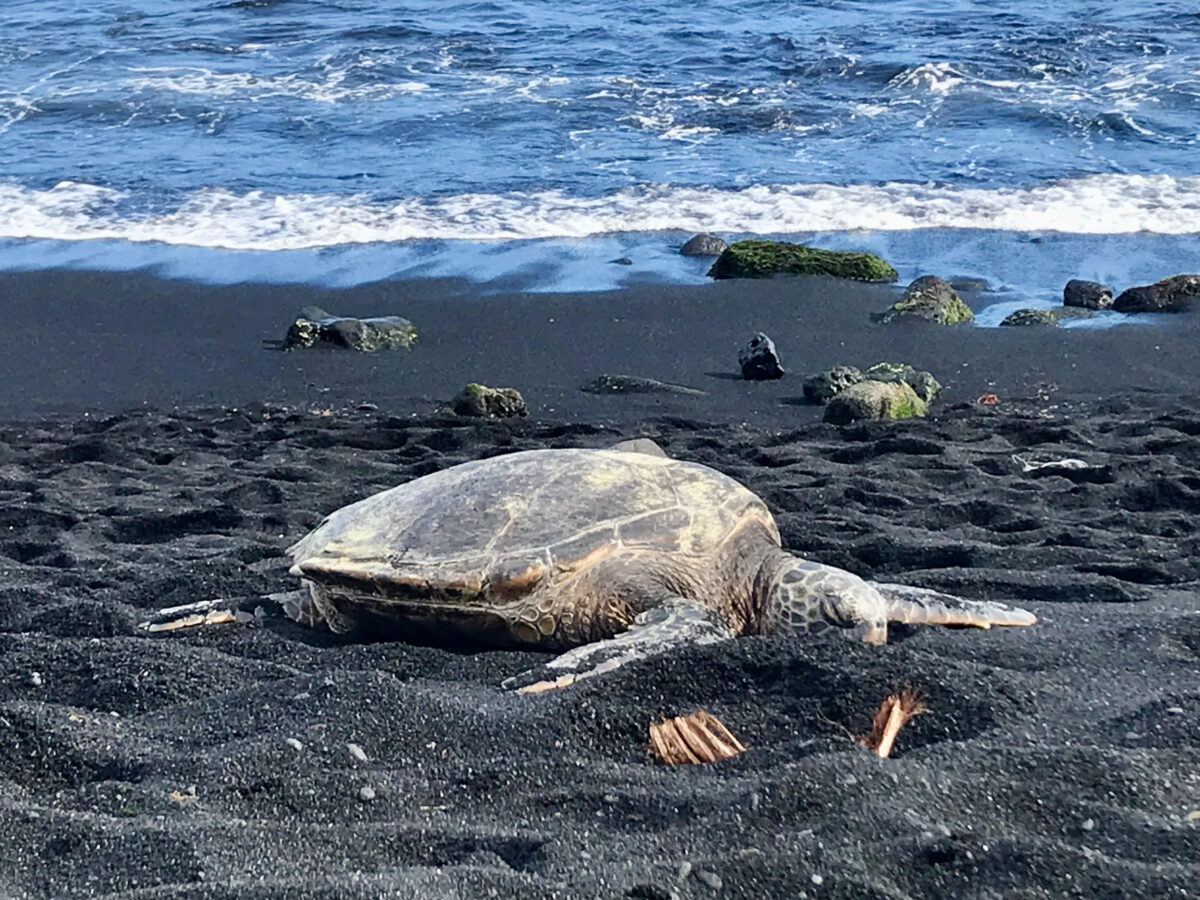
One of the most famous black sand beaches in Hawaii, Punalu’u is a stunning stretch with volcanic black sands lapped by brilliant turquoise waves. But it’s best known for its turtles. Every time I’ve visited (many times, thanks to a good friend who lives on the island!), there have been dozens of Hawaiian green sea turtles basking in the sun here. In fact, there are so many that you have to tiptoe around them. Occasionally, endangered hawksbill turtles show up too. While the waves are usually too powerful here for swimming, on calmer days, you can enjoy a dip from the northeast end, which means you might even get to swim alongside a turtle or two.
Al Mughsail Beach, Oman
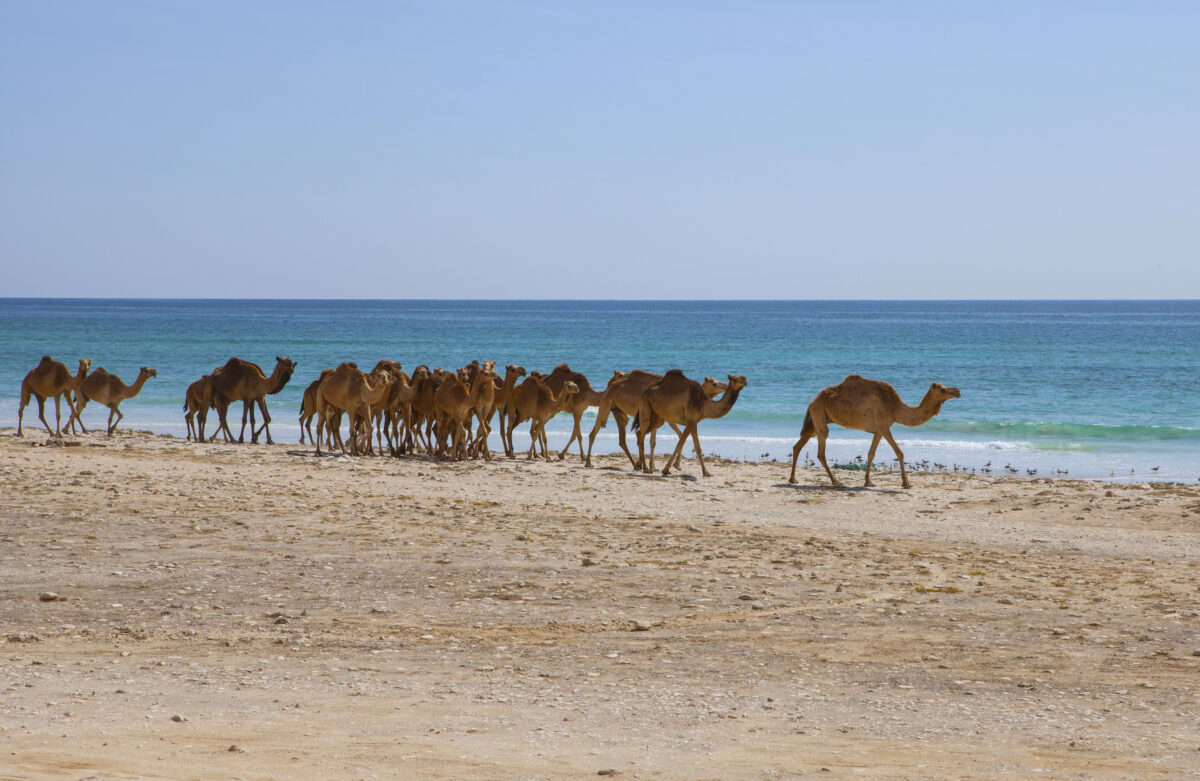
Camels are a common sight in many deserts around the world, but on the beach? Al Mughsail Beach in Salalah, the capital of Oman’s Dhofar province, is one of the best places to see the animals wander the coast. Flamingos often wade in the shallows right next to them, presenting some fantastic photo ops. With the wide expanse of soft white sand and brilliant blue sea framed by dramatic mountains on both sides, the scenery is impressive too. Swimming isn’t recommended as the waves are too rough, but you can enjoy peaceful strolls and watch the blowholes at Al Marnif Cave, with water shooting high into the air through natural holes in the rock.
The highest temperatures here come just before the monsoon season, during the spring and early summer. While the average high is in the low 90s, it can exceed well over 100 degrees, which means it’s best to avoid visiting Oman this time of year, with October through April much more pleasant.
Pebbly Beach, NSW, Australia
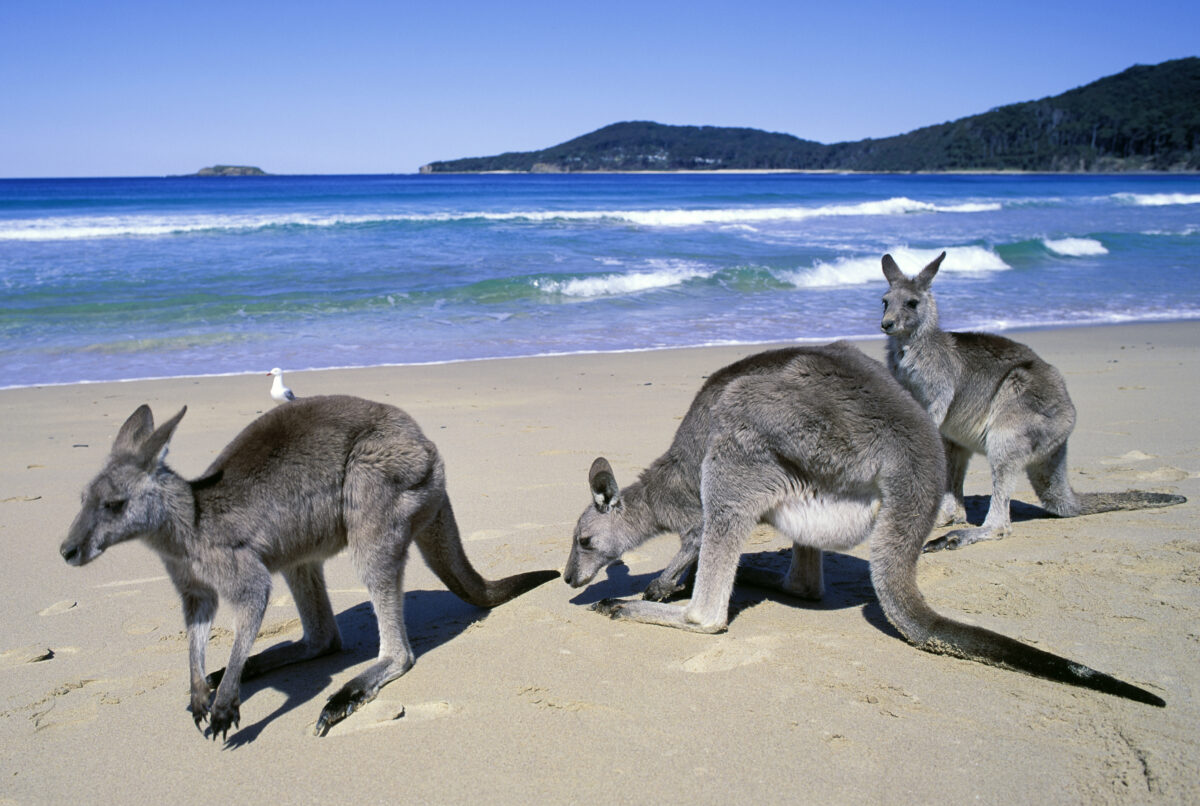
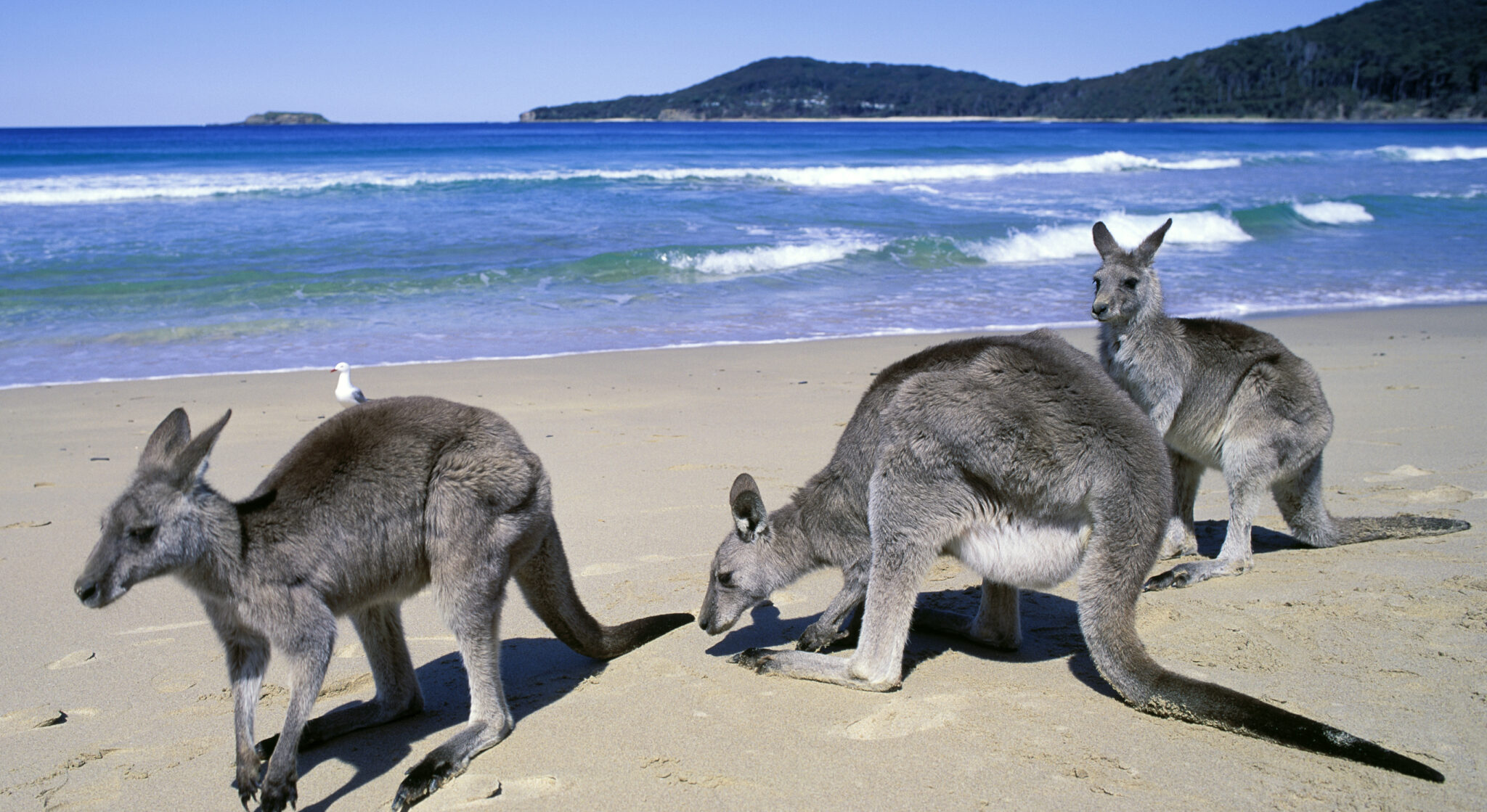
Australia is an ideal country for a beach getaway, but it’s also famous for its wildlife, particularly kangaroos. At Pebbly Beach in Murramarang National Park, you can enjoy time on the sand while watching the animals hop around. Eastern grey kangaroos seem to be everywhere you turn in this area, along the sides of the road, in people’s front yards, and on the beach. If you’re lucky, you might even see a joey (baby kangaroo) jump into its mother’s pouch. Beyond the kangaroos, this is a great place to swim on calmer days, with sheltered areas at either end the most enjoyable. This is also a great spot to watch dolphins ride the waves while sea eagles soar above.
Boulders Beach, Cape Town, South Africa
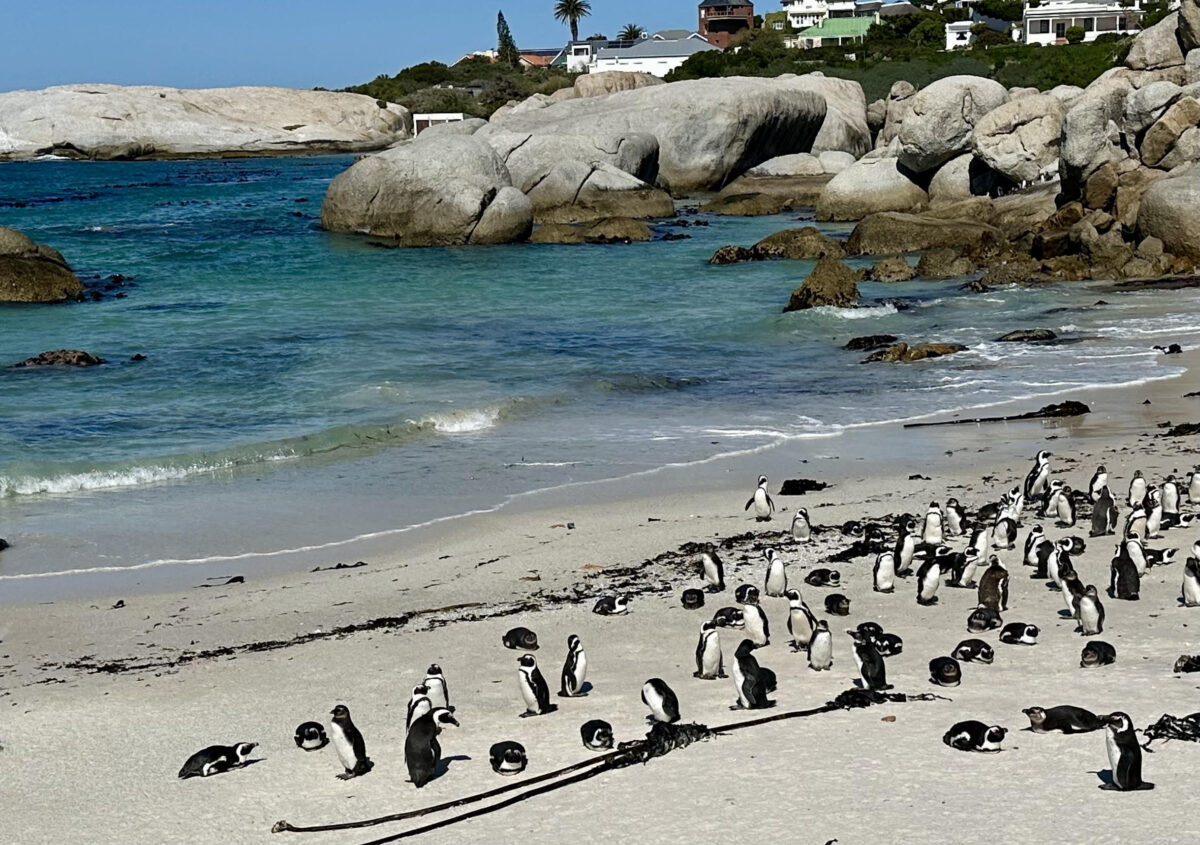
If you like penguins, you’ll want to put Boulders Beach on your travel bucket list. You’ve probably at least seen the images online, with many tuxedoed birds waddling around the beach. It’s easy to reach independently, or by taking a guided tour, located just a short distance from Cape Town. Strolling the pathways that wind through the free-roaming colony provides close encounters and great photo ops. They aren’t just hanging out on the sand; they’re pretty much everywhere, napping beneath trees and tucked into bushes. I was lucky enough to visit not long ago, and it was a highlight of my time in South Africa. If you’re here between June and November, you can watch for southern right whales too. I saw dozens of them during my trip.
Loango National Park, Gabon
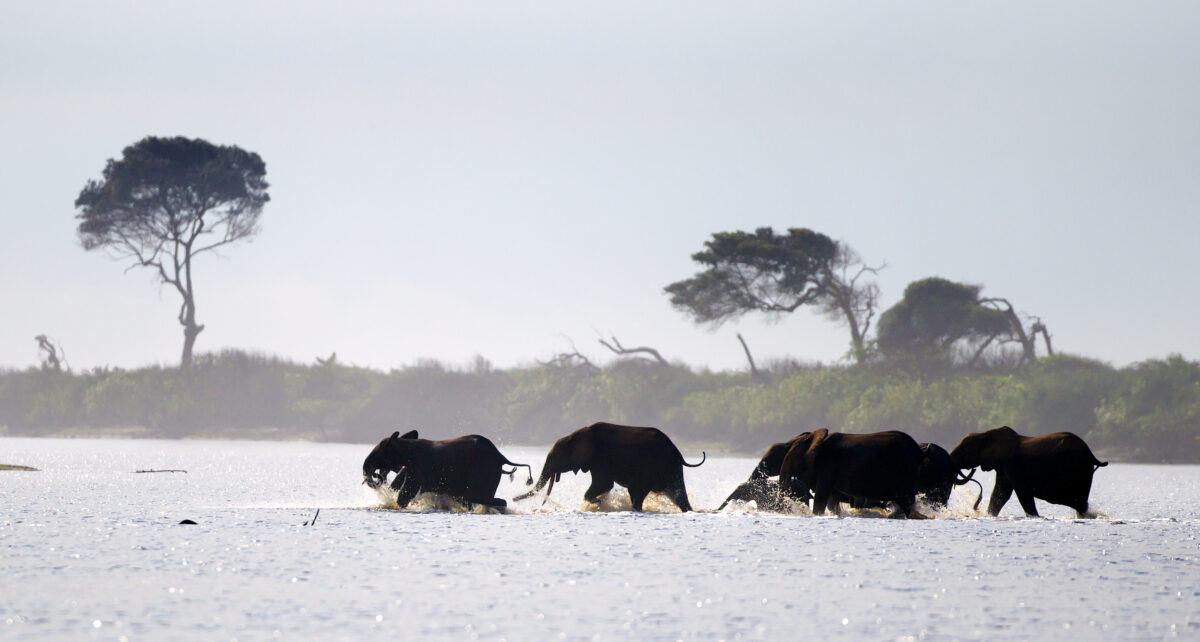
There are many places where you can see elephants in the wild, but Loango National Park is the only one in the world where you can see them on the beach and occasionally swimming in the open ocean. They use their trunks to breathe, similar to people using a snorkel. This is also where you might see the surfing hippos, made famous by National Geographic. Usually, hippos stick to swamps and inland rivers, but for some reason, the hippos here prefer the salty waves. That said, it’s less common to see them than it is the elephants, so count yourself lucky if you witness both.
Loango is truly a wildlife lover’s dream, with many other creatures often spotted right at the beach, including gorillas and buffalo, while dolphins and whales pass by a bit further from shore.
West Bali National Park, Indonesia

Bali is home to the well-known Sacred Monkey Forest, where visitors can get up close to free-roaming Balinese long-tailed monkeys, but it’s also possible to enjoy close encounters with all sorts of animals right at the beach in West Bali National Park. This tranquil park in northwest Bali is much less visited than the island’s popular beach areas like Kuta, Legian, Seminyak, and Canggu. Here, you can almost always see long-tailed macaques on and around the sand, right alongside Javan rusa deer. The park is one of the most common places to spot the deer, a native species to Bali, Java, and Timor.
Staying at The Menjengan resort with a room right along the beachfront, I was treated to daily sightings of deer and monkeys right from my room window. Just be aware that the monkeys are quite clever. If you stay here, you’ll want to keep the door to your open-air bathroom locked at all times, as they like to sneak in and steal snacks. After forgetting once, I didn’t make that mistake again.
Highland Cows, Clachan Sands, Scotland
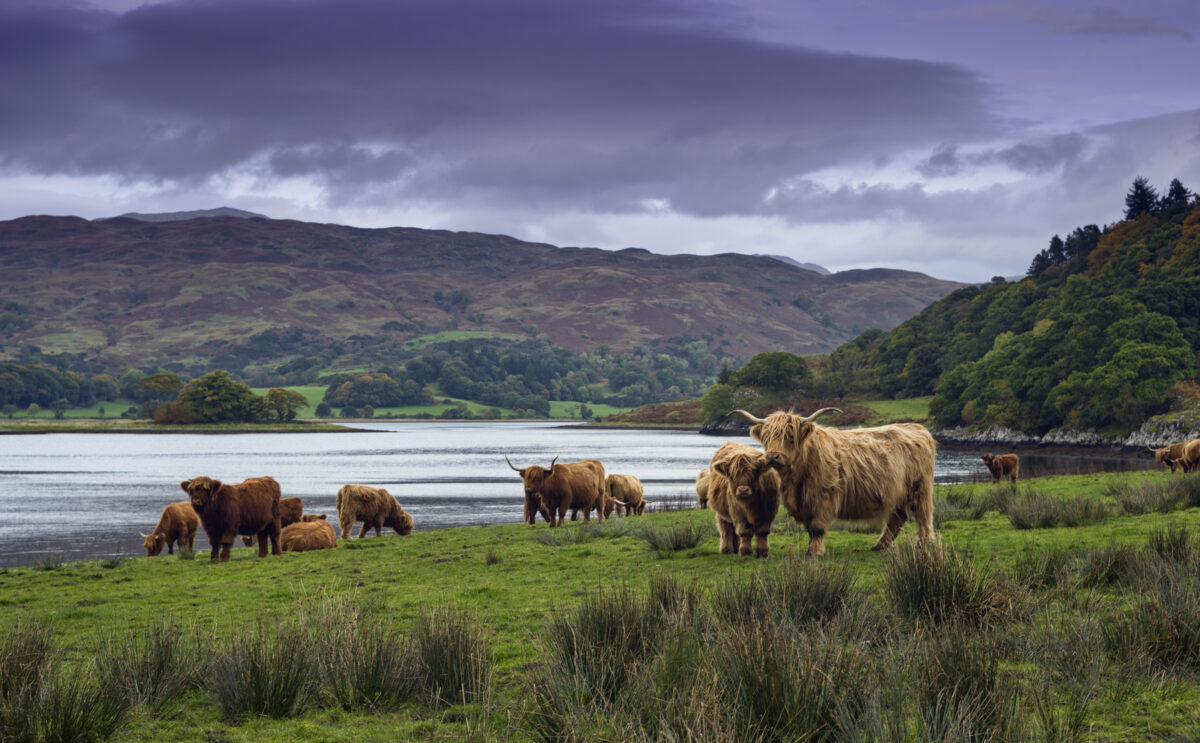
Originating in the Western Islands and Scottish Highlands, Highland cows, with their long, shaggy coat, distinctive long horns, and gentle nature, have become a must-see for many travelers in Scotland. While there are farm tours and opportunities to visit them in various places across the country, Clachan Sands on North Uist in the Outer Hebrides offers the chance to see them right along the coast. They aren’t there for tourism purposes, but they like to graze right by the stunning turquoise water that laps the shore.
This vast, white sandy beach on the northwestern side of the island is ideal for strolling, stretching about four miles. The grassland that runs parallel is dotted with colorful wildflowers in late spring and summer, including rare orchids. With the mountains on the nearby Isle of Harris appearing in the distance, it’s an awe-inspiring scene.
Big Major Cay, Exuma, Bahamas
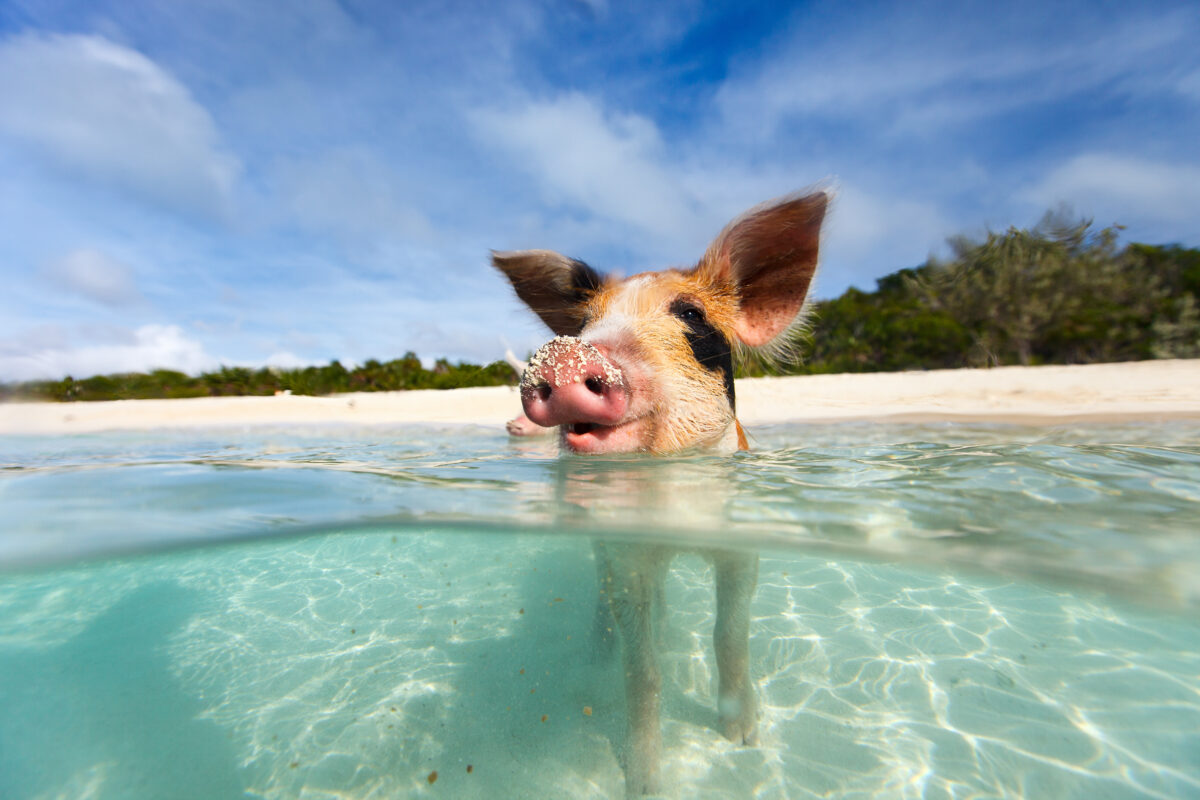
Big Major Cay is the place that’s become famous for its swimming pigs. Many now refer to it as Pig Beach, but whatever you call this one-mile-long uninhabited island, a visit here is sure to be memorable. There are no hotels or tourist facilities of any kind, so you’ll have to take a boat tour from another island. Staniel Cay, a popular hub just a 10-minute ride away, has accommodations, an airport, and tour operators. The pigs swim from the beach to greet their visitors, in hopes of getting a snack thrown their way. Many people leap into the water to swim alongside them, with the population including around two dozen, from piglets to large adults, all of which tend to be quite friendly.
Great Guana Cay, Exuma, Bahamas
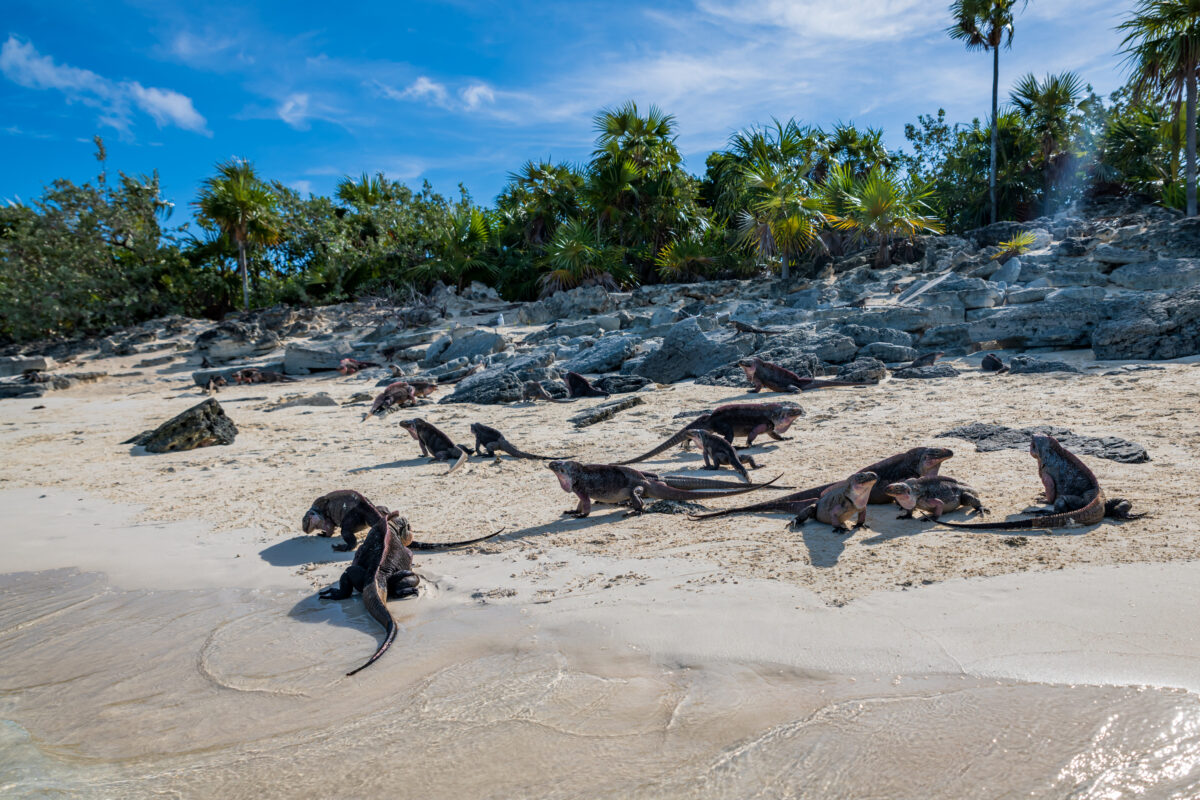
Here’s one you probably haven’t heard about when it comes to wildlife on Bahamian beaches. On Great Cuana Cay, just south of Staniel Cay, you can feed iguanas grapes on a stick. The iguanas get excited, seeming to magically appear as a boat approaches the shore. They often stand on their hind legs like a dog to get to the suspended grapes, sometimes after a little squabble among friends.
Renaissance & De Palm Islands, Aruba
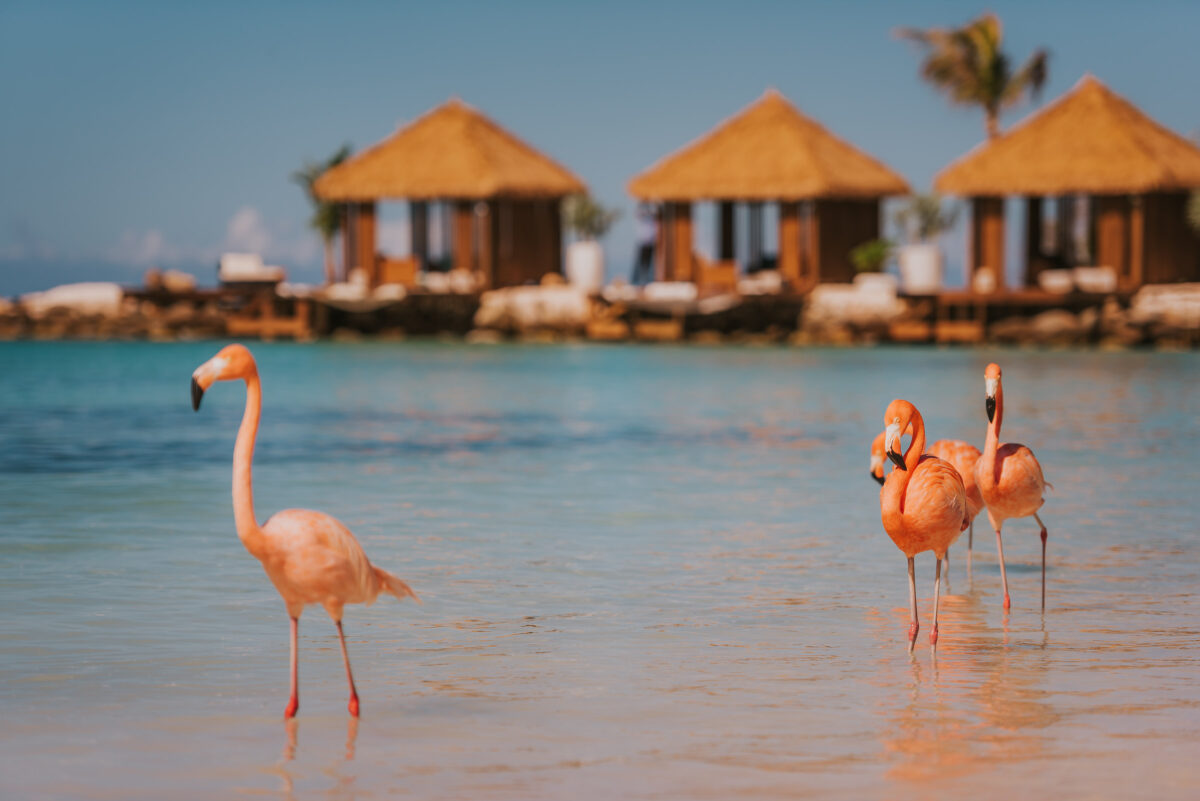
Just a short distance from the Venezuelan coast, Aruba is renowned for its chalk-white sand beaches, stunning turquoise waters, and close encounters with flamingos. Images of the birds and their visitors have often gone viral and are frequently featured on Instagram. There are two places popular for the experience, with Renaissance Island the top spot. A private, man-made island, it’s owned by the Renaissance Wind Creek Aruba Resort. Guests have first access, which means booking a stay here is the most convenient option. Non-guests can access the island, but you’ll have to buy a ticket, and they sell out within minutes after they’re made available. De Palm Island is an alternative, open to visitors just six hours each day.
La Loberia Beach, San Cristobal Island, Galapagos
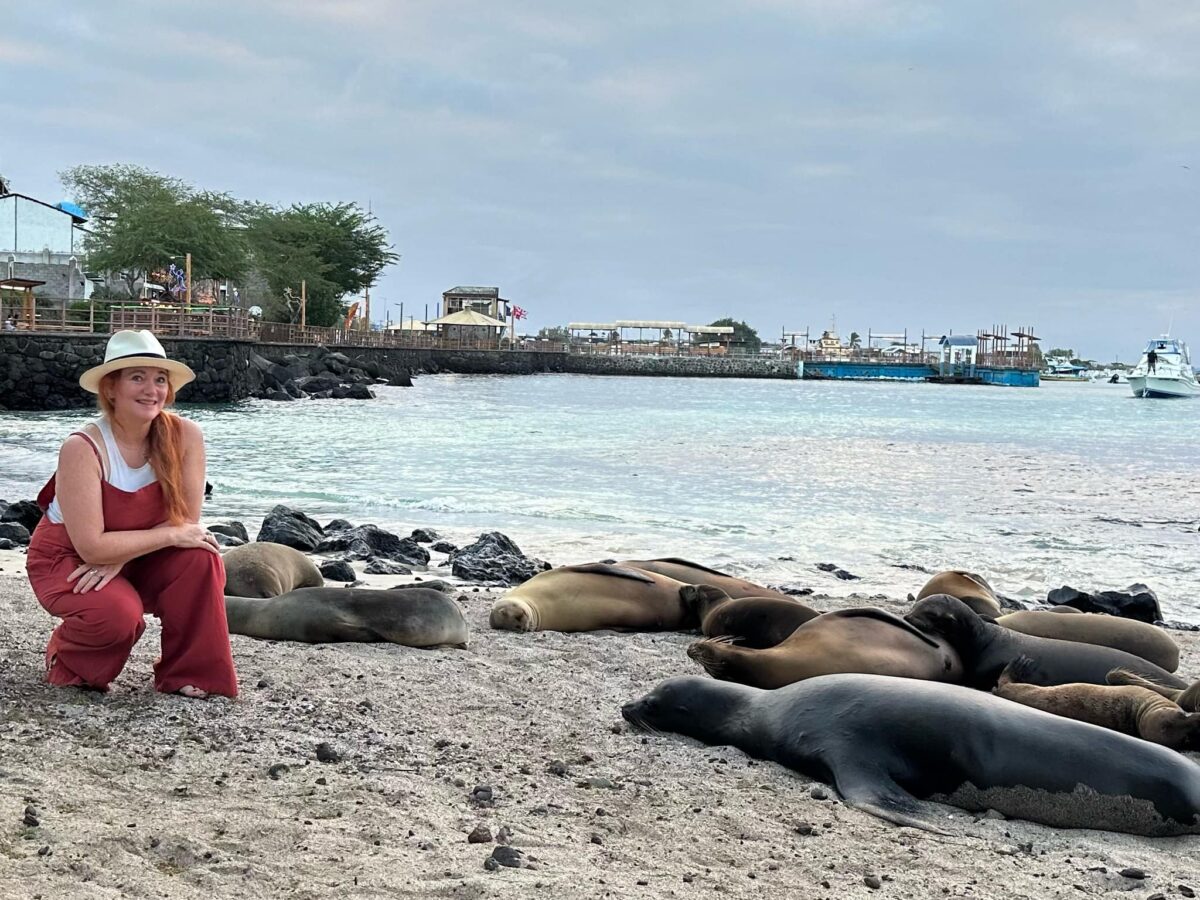
The main reason to visit the Galapagos is for its wildlife, but for one of the most unique experiences, you’ll want to visit La Loberia Beach on San Cristobal Island. There aren’t many places on the planet where you can walk among dozens of sea lions lounging on the sand. And, if you visit between August and November, there will be a large number of newborns and playful pups. I spent hours here watching the adorable flipper-footed babies waddling around. Some are very curious and will attempt to come close, but there’s no touching. Instead, take plenty of photos!
Assateague Island, Maryland & Virginia
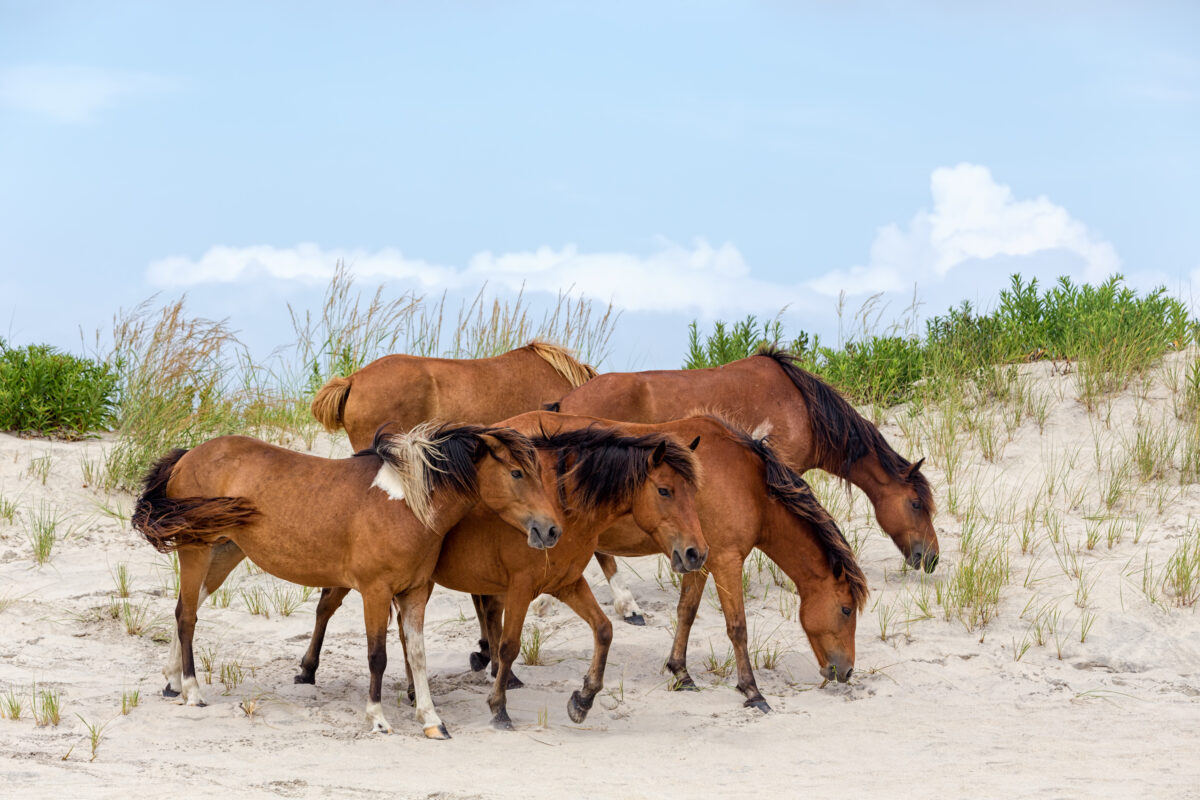
For a unique animal encounter closer to home, wild horses roam freely on Assateague Island, a protected area shared between the states of Maryland and Virginia. It’s also home to beautiful sandy beaches, dunes, and pine forests, with trails winding through for exploring. The wild horses, descendants of domesticated animals, have been here for centuries. You can often see them wandering the soft sands, but remember they are wild and can be unpredictable. Touching, feeding, or approaching them is strictly prohibited. Observe from a safe distance of at least 40 feet.