
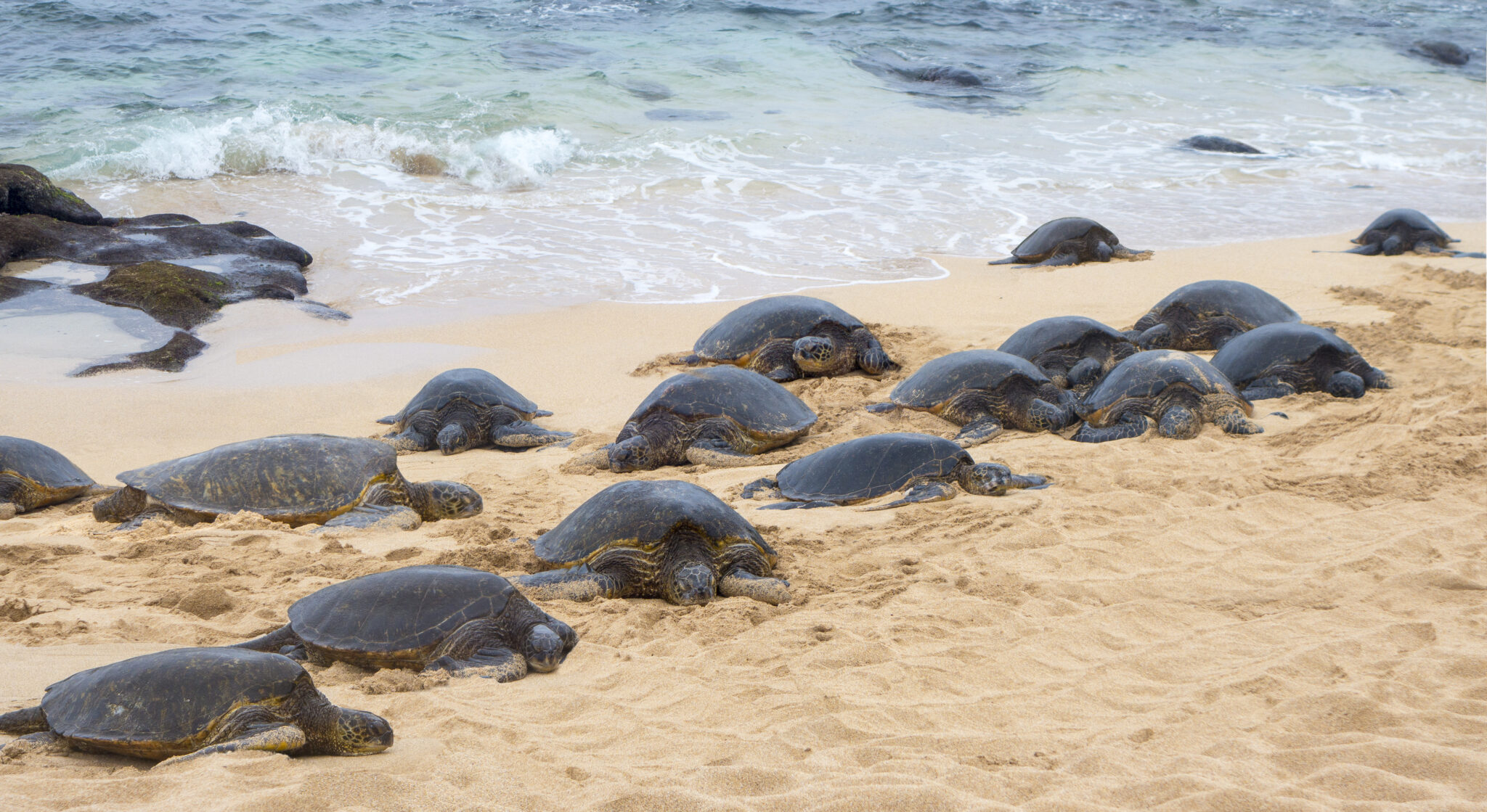
Each summer, thousands of sea turtles make an intentional voyage ashore to nest on Florida’s beaches—and there’s a way to view them in a very intimate and meaningful way. As a longtime Florida resident, I can tell you from personal experience that there’s just something magical about seeing a sea turtle crawl onto the beach to nest and start the next generation (as long as you do it in an ethical way). While nesting may happen all along the state’s coastline, there are certain areas that are much more popular with mama turtles.
Here’s all you need to know about visiting Florida during sea turtle nesting season, as well as ways that you can experience it.
Sea Turtles That Nest on Florida Beaches
The three main species nesting on Florida’s beaches are the loggerhead, green turtle, and leatherback. The hawksbill and Kemp’s ridley occasionally make an appearance as well, but the main three species are closely monitored by state wildlife officials and researchers across the state. To see how many sea turtles were nesting here, I reviewed data from the 2025 Florida Statewide Nesting Beach Survey that was compiled by the Florida Fish and Wildlife Conservation Commission. This shows how many sea turtle nests were found in the state last year, as well as the locations.
2025 Florida Sea Turtle Nest Counts
- Loggerhead: 100,951
- Green turtle: 66,476
- Leatherback: 2,012
Florida Beaches With the Most Sea Turtle Nests
In order to determine the best places to see nesting sea turtles in Florida, I used FWC’s data to see which counties had the most nests in 2025. It was apparent that the majority of the nesting activity happened in one stretch of shoreline on Florida’s east coast. This popular nesting area extends from Brevard County through the Treasure Coast beaches, and all the way to Palm Beach County. There is also one county on Florida’s Gulf coast that made our list of best places to see sea turtles nesting in Florida:
Brevard County
- 53,276 sea turtle nests
- Best spot: Archie Carr National Wildlife Refuge
According to the U.S. Fish and Wildlife Service, this is the most significant area for loggerhead sea turtle nesting in the world. I’ve personally participated in two guided sea turtle walks there and have been fortunate enough to see nesting turtles each time. Since this area had the highest overall number of nests in 2025, this is our top pick for the best place in Florida to see sea turtles nest under the stars.
Indian River County
- 11,306 sea turtle nests
- Best spot: Sebastian Inlet State Park
St. Lucie County
- 9,200 sea turtle nests
- Best spot: St. Lucie Inlet Preserve State Park
Martin County
- 22,566 sea turtle nests
- Best spot: Nathaniel P. Reed Hobe Sound National Wildlife Refuge
Palm Beach County
- 39,309 sea turtle nests
- Best spot: John D. MacArthur Beach State Park
Sarasota County
- 9,240 sea turtle nests
- Best spot: Casey Key
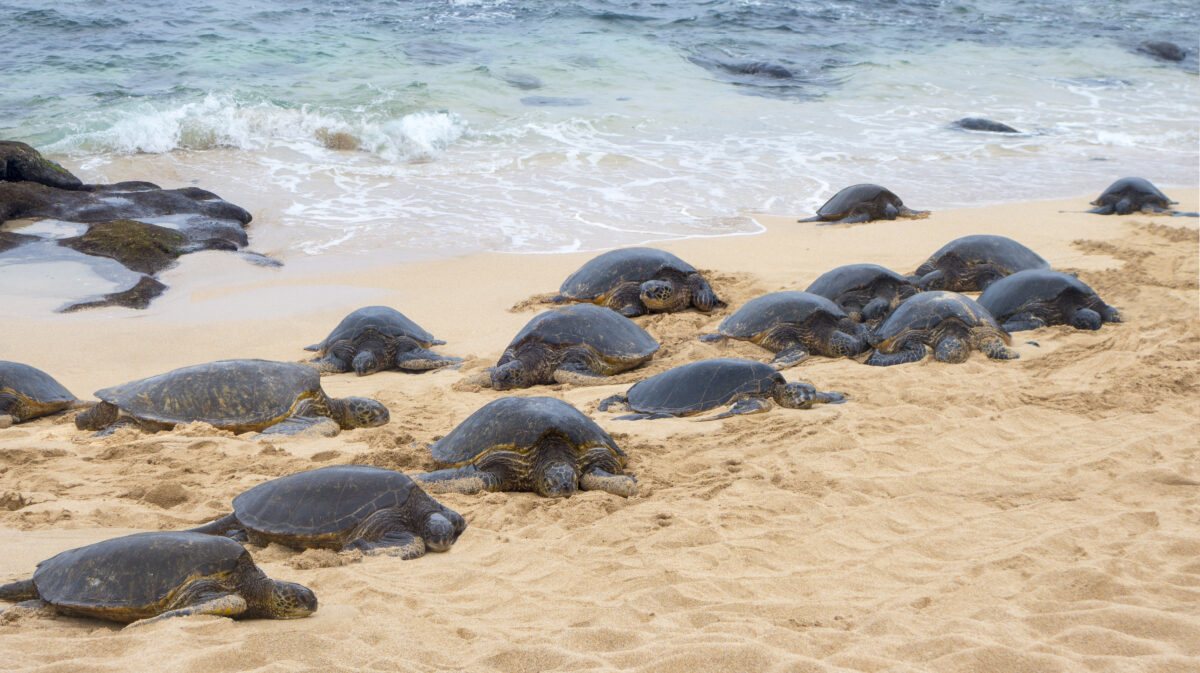
How to Experience Nesting Sea Turtles in Florida
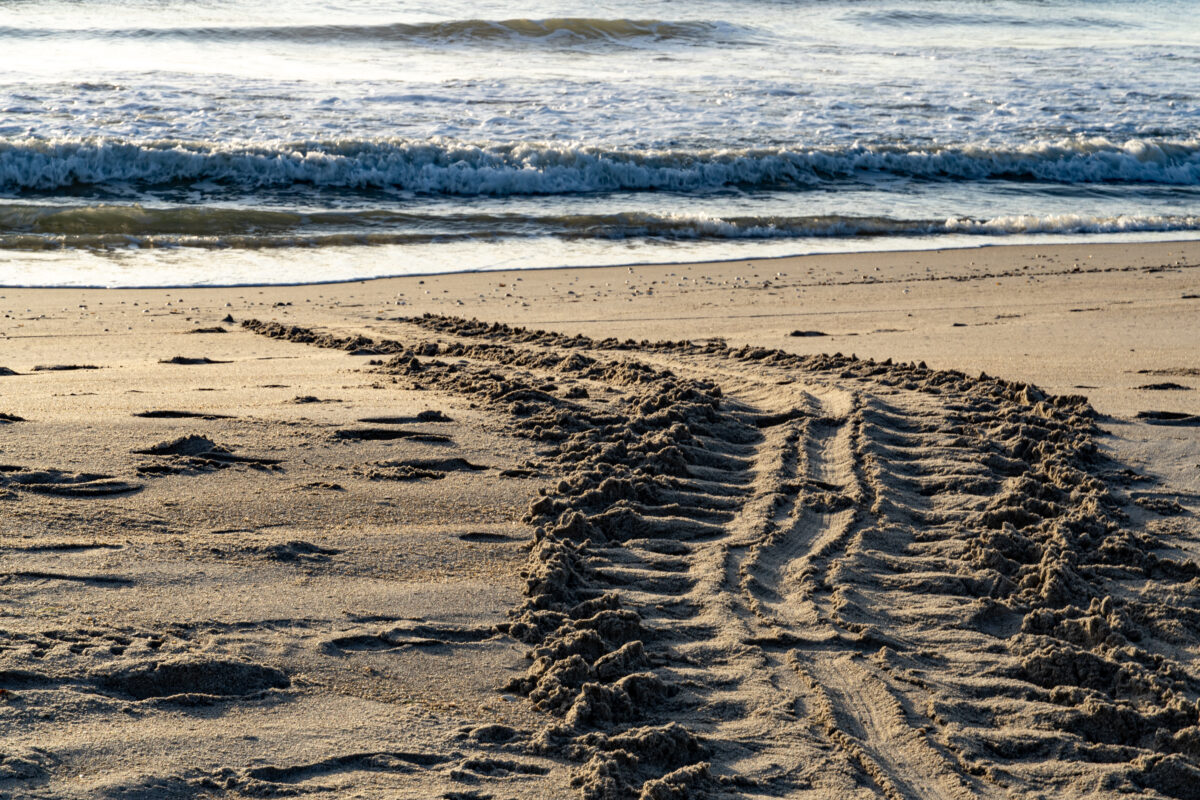
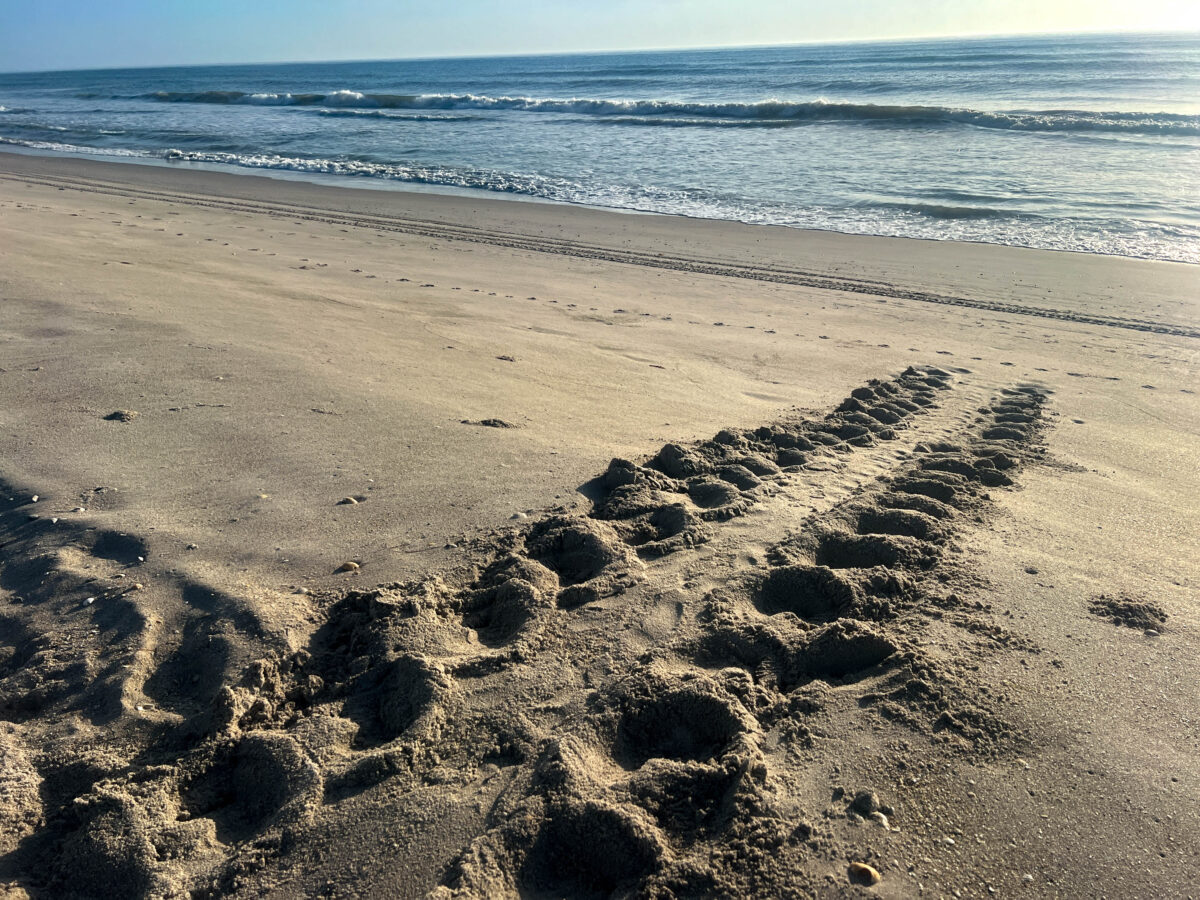
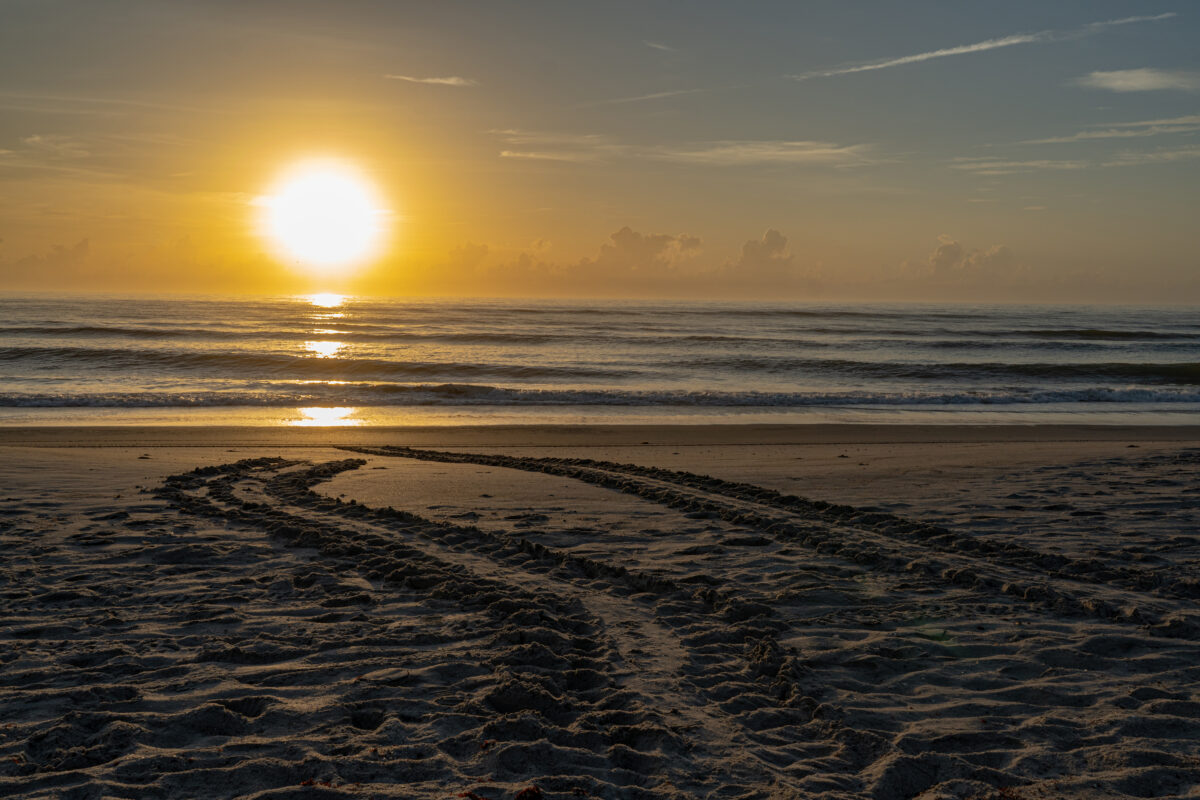
While it’s clear that Florida beaches are full of sea turtle nests, data shows there were 290,936 documented false crawls in 2025. This means sea turtles made their way onto the beach, but then changed their mind. Researchers are able to gather this information by studying the tracks that are left behind each morning. The tracks were there to prove their presence, but they were able to determine that there wasn’t a nest.
A female sea turtle may change her mind for any reason as she’s seeking the best place to lay her eggs, but human disturbance is a big factor. That’s why it is important to experience sea turtle nesting in the appropriate way. Here are three cool ways to do it:
Take a Morning Walk and See Sea Turtle Tracks
I love taking morning walks on the beach, and especially during sea turtle nesting season. Nesting takes place at night, and each morning brings a new gift, as you can see tracks left behind from the previous night’s activity. Photographers, you’ll never find a cooler leading line to shoot than the lines that trace a turtle’s path to her nest, and then back to the ocean. You can do this on your own, but groups like Longboat Key Turtle Watch also lead free guided beach walks each Saturday morning in June and July.
Participate in a Sea Turtle Nest Excavation
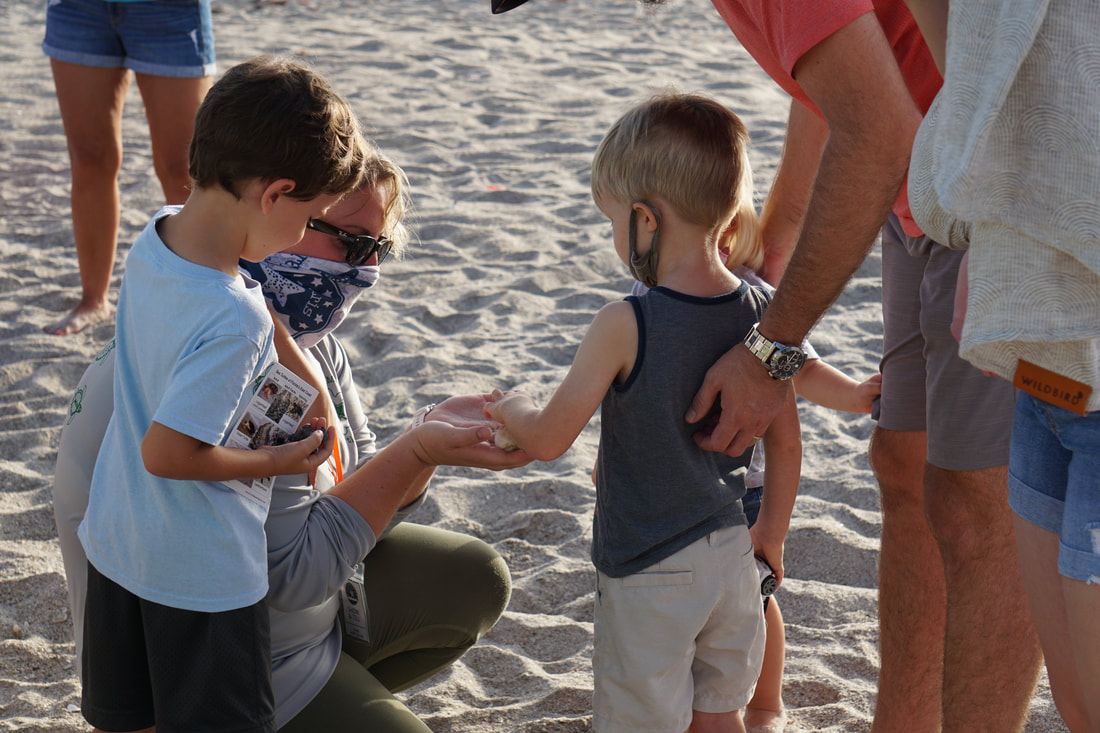
While it may sound counter-productive to dig up a sea turtle nest, that’s exactly what researchers do – but they don’t do it until the end of nesting season. Groups such as Sea Turtle Conservancy offer the opportunity to come along as they study nests and determine how many turtles hatched each year. Sometimes there are hatchlings left behind in a nest that haven’t made their way to the ocean yet. It is never guaranteed, but you could possibly get to see a turtle being released into the ocean.
Book a Guided Sea Turtle Walk
I think this is my personal favorite! If you want to actually be there for the action and see a sea turtle lay her eggs, you can do that as well. This is one of the most incredible wildlife experiences you can have in Florida, but is not something you should try to do on your own. This can be disruptive for the turtles, and could cause them to not lay their eggs.
However, you can book a guided sea turtle walk with a reliable organization that is authorized to conduct tours. They are trained to witness this amazing experience in a way that doesn’t disturb the nesting turtles. It’s great to be with a pro that can help you navigate your way on a dark beach, too.
Book a guided sea turtle walk with these trusted Florida organizations:
| Organization | Location | Min. Age |
|---|---|---|
| Stella Maris Environmental Research | Brevard County | 7+ |
| Friends of Sebastian Inlet State Park | Indian River County | 7+ |
| Florida Oceanographic Society | Stuart (Martin County) | 10+ |
| Environmental Studies Center | Martin County | 7+ |
| Loggerhead Marine Life Center | Palm Beach County | 10+ |
Reservations fill quickly. Book as early as possible, especially for walks at Archie Carr.
What to Expect on a Guided Sea Turtle Walk in Florida
- Only a small number of people are allowed on each guided walk. You’ll want to make reservations well in advance if you hope to join one of these exclusive experiences.
- Nesting turtles ease their way onto the beach late at night, so that’s when these walks happen. Some could last until midnight or later, so be prepared to be out late.
- Spotters will walk the beach until they see a nesting turtle and will let your group leader know when it is time to walk toward the nesting location. This may happen quickly, or you could be waiting for a while. On the walks I have participated in, the group leaders did a great job of keeping us entertained with presentations as we waited.
- It is going to be really dark on the beach. You won’t be allowed to take a flashlight, though. Your group leader will guide you down the beach and your eyes will acclimate after a few minutes.
- Pictures aren’t allowed – this isn’t the place for a selfie. Phones and cameras emit artificial light that isn’t allowed on the beach, as that can confuse a nesting sea turtle and cause her to not lay her eggs.
- This activity isn’t recommended for young children, and various groups have set age limits.
- You aren’t guaranteed to see a sea turtle nesting. While I can say that I have a 100% success rate of seeing turtles on the walks I’ve participated in, and your chances are very high if you go with a group in one of the popular nesting areas, this is still nature. You can never make guarantees when it comes to animals in the wild.
Things to Know About Visiting Florida’s Beaches During Sea Turtle Nesting Season
Even when you aren’t walking the beach on a guided sea turtle walk, it’s important to observe local rules when visiting a Florida beach during sea turtle nesting season. A lot of the nesting takes place in June and July, but some overachieving turtle moms could start nesting as early as March. Of course, there are some procrastinators who wait a little longer as well. To err on the side of caution, many places observe sea turtle nesting season from March to October and have special regulations during that period of time.
- If you are outside at night, don’t use flashlights, cameras, or video equipment. If you must use any light as you walk outside at your beachside accommodations, use a red light. Don’t even use that on the beach, though. Any artificial light can disturb nesting sea turtles.
- Don’t leave toys and chairs on the beach, as they can pose a hazard to sea turtles.
- Many beach towns in Florida have lighting ordinances that may require you to shut off outdoor lights on a patio and/or close your curtains to avoid artificial light on the beach.
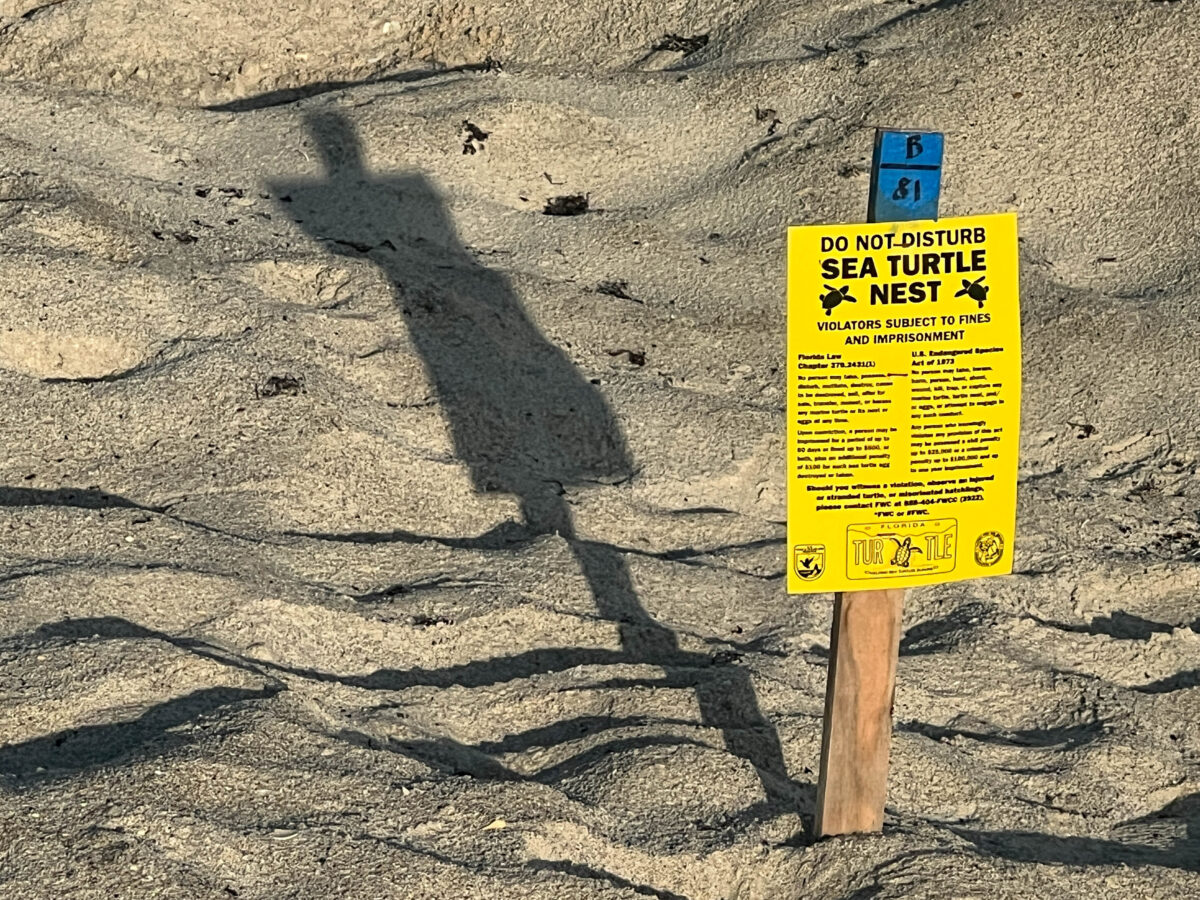
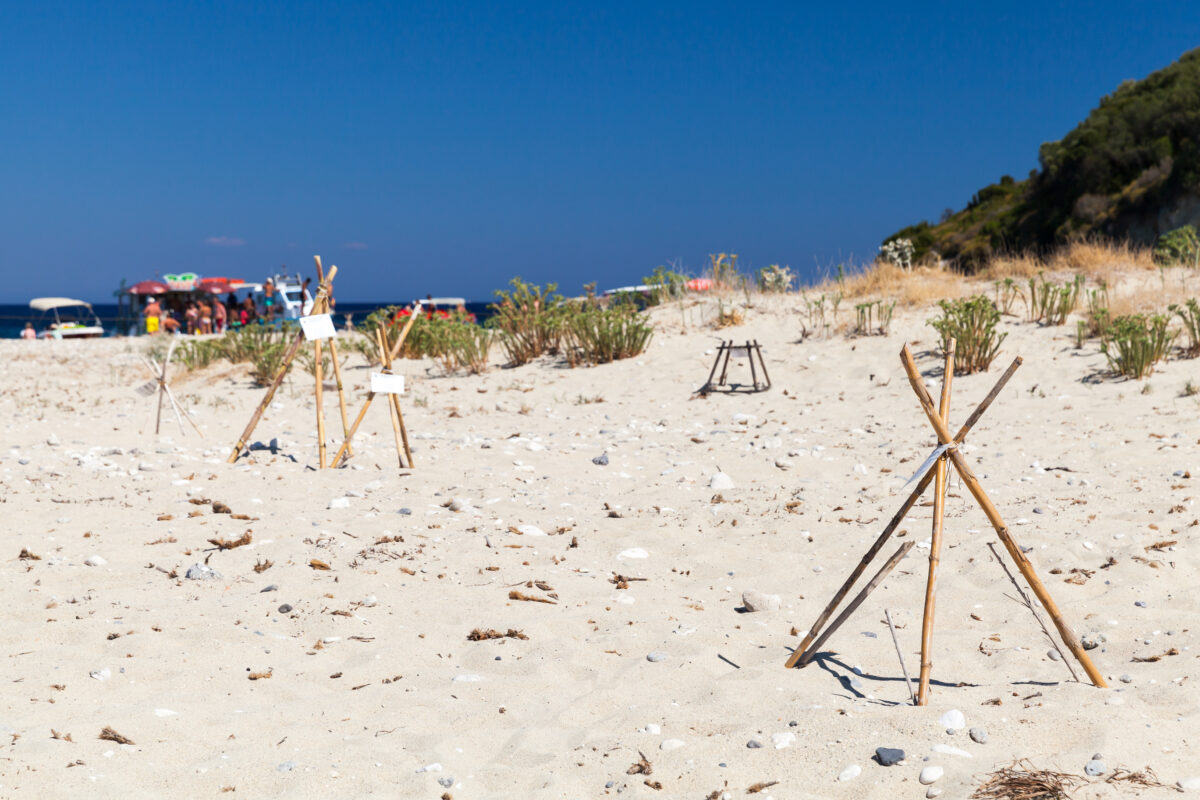
- Some nests are marked with stakes and/or may be roped off. If you see a marked nest, stay away and don’t disturb it.
- Be careful about digging in the sand and pushing umbrellas into the ground during sea turtle nesting season. Not all nests are marked, and you never know where a nest may be right under the sand.
- Although you should never litter, it becomes increasingly important to pick up your trash during sea turtle nesting season. Trash that’s left behind poses unnecessary obstacles for Florida’s sea turtles.
- If you come across hatchlings during the day, stay far away from them and don’t touch them. If you happen to see one that has wandered too far and isn’t headed toward the water, you can call and report it to the FWC so they can assist. 888-404-FWCC
Pro Tip: FWC has sea turtle puzzles and coloring pages that you can download for free. This is a fun way to learn about these fascinating creatures before you visit.