

| Location | Put Zlatnog Rata, 21420, Bol, Island of Brač, Croatia |
| Beach type | Fine white pebble · Shifting promontory · Pine-backed |
| Access | 20-minute walk or train from Bol · Ferry or catamaran from Split |
| Entry permit | None required · Beach free to access |
| Best Time to Visit | Early fall (mid-September to mid-October) when crowds thin and the water is comfortably warm |
| Best for | Swimming · Windsurfing · Kitesurfing · Family beach days · Hiking |
| Facilities | Beach bars and kiosks · Restrooms · Showers · Changing rooms · Paid toilets · Sun lounger and umbrella hire · watersport rentals (kayaks, jet skis, SUPs, paddle boats) |
| Lifeguard | No |
| Dogs allowed | Dogs aren’t allowed on the main beach during the peak summer season; however, they’re permitted in certain areas during the off-season and at designated coves nearby year-round. |
| Parking | Multiple locally-operated lots approximately 5 minutes on foot from the beach; generally starting from approximately $9.25 USD |
The Beach
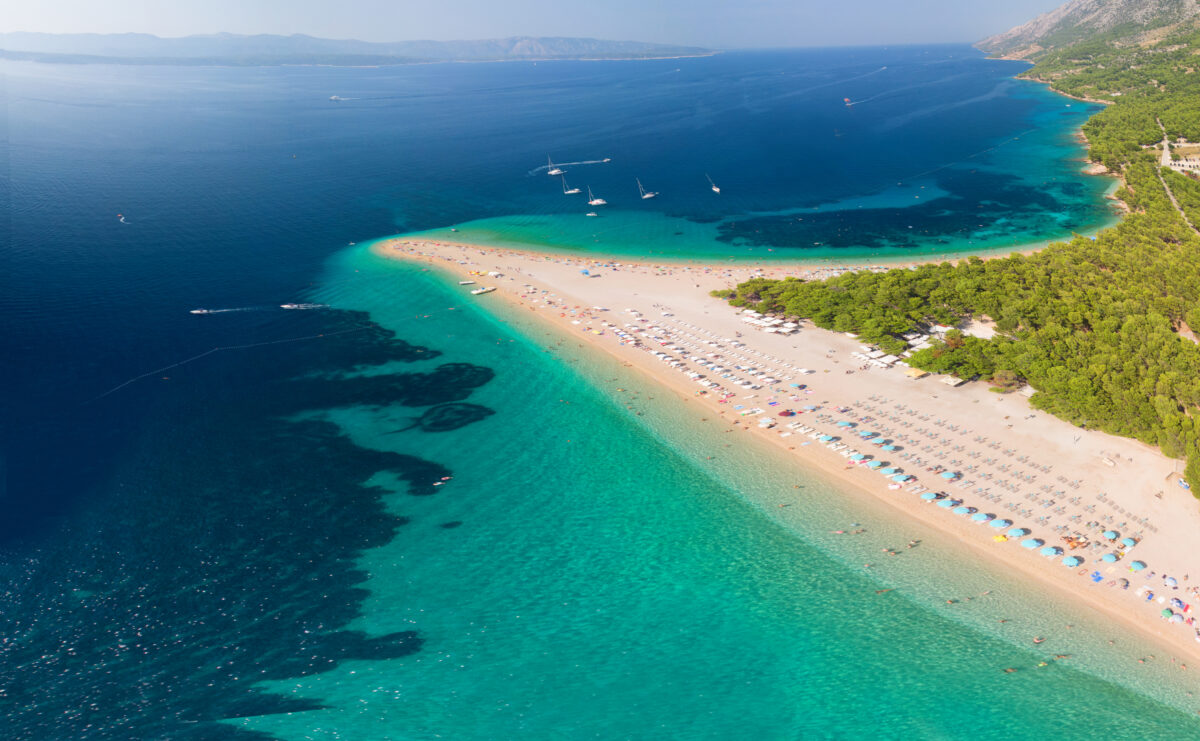
The thing people get wrong about Zlatni Rat (Croatia’s most photographed beach, known in English as the Golden Horn) is that they expect sand, but It is actually a pebble beach. The pebbles are small, pale, and round, ground smooth over centuries by runoff from the Vidova Gora mountain directly behind it, and they are more comfortable to lie on than they sound. But arriving expecting sand and finding pebble is something that first-time visitors should know about in advance.
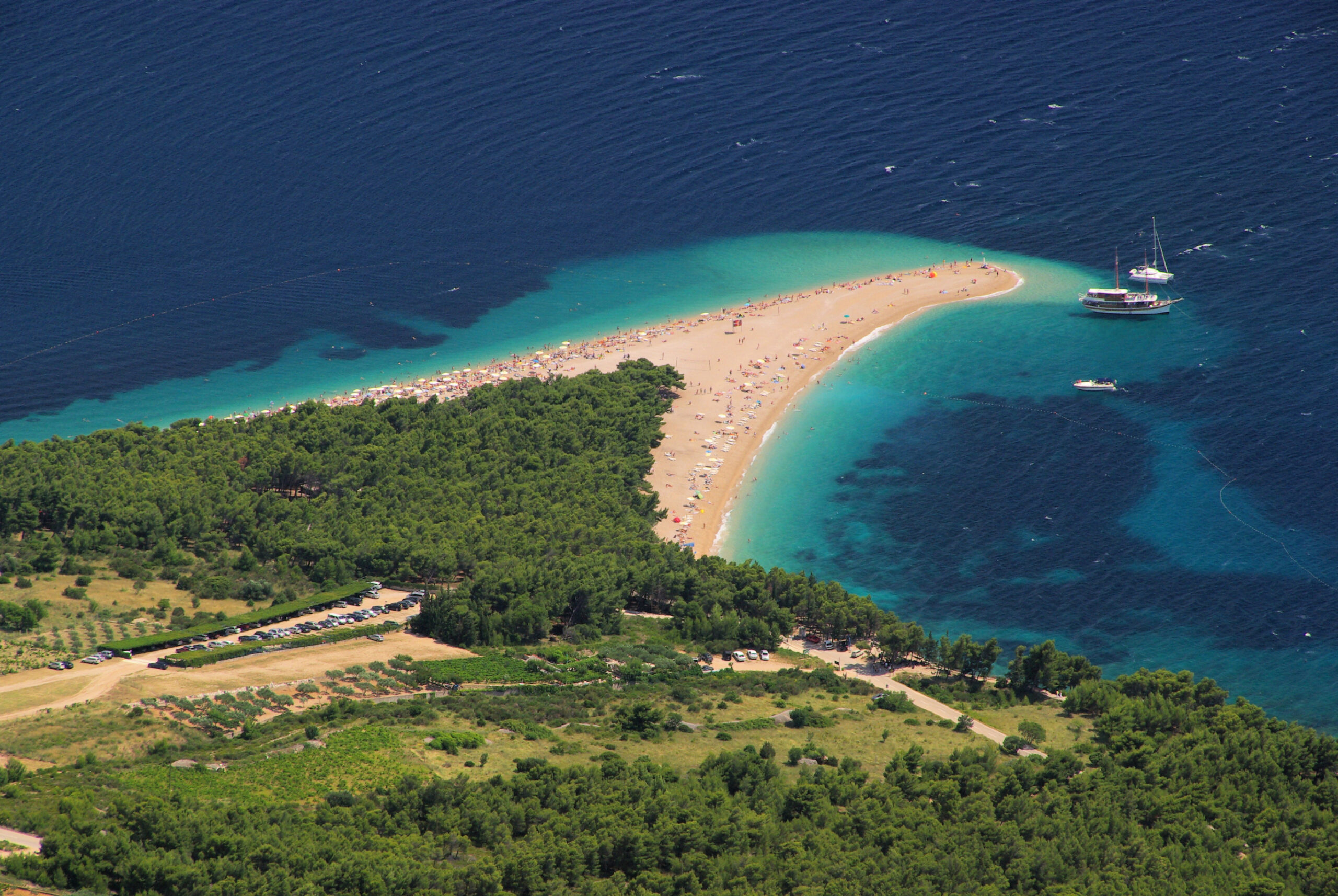
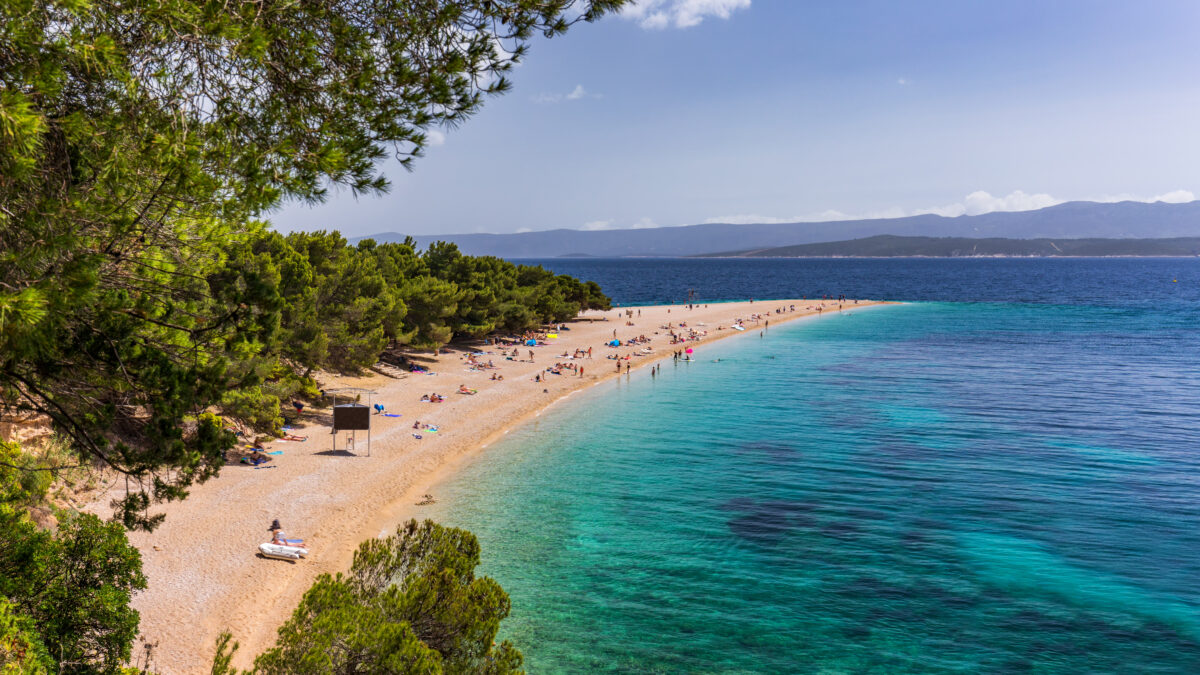
Zlatni Rat is a narrow promontory—roughly 500 meters long and considerably narrower than aerial images suggest—that extends southward into the Hvar Channel between the islands of Brač and Hvar. The sea flanks it on both sides simultaneously; you can reach down and touch water from either edge of the tip. The tip itself shift, pushed east by the Maestral afternoon wind, west by the Jugo, occasionally swinging so far that it briefly encloses a small lagoon before releasing it back to the sea. The Croatian government protects Zlatni Rat as a geomorphological monument, which is an unusual distinction for a beach.
The pine forest that backs the beach gives the beach its character. You walk or take the tourist train from Bol along a promenade that runs under the pines, past smaller beaches and beach bars, and arrive at the horn.
Why It Made Our World’s Best Beaches List
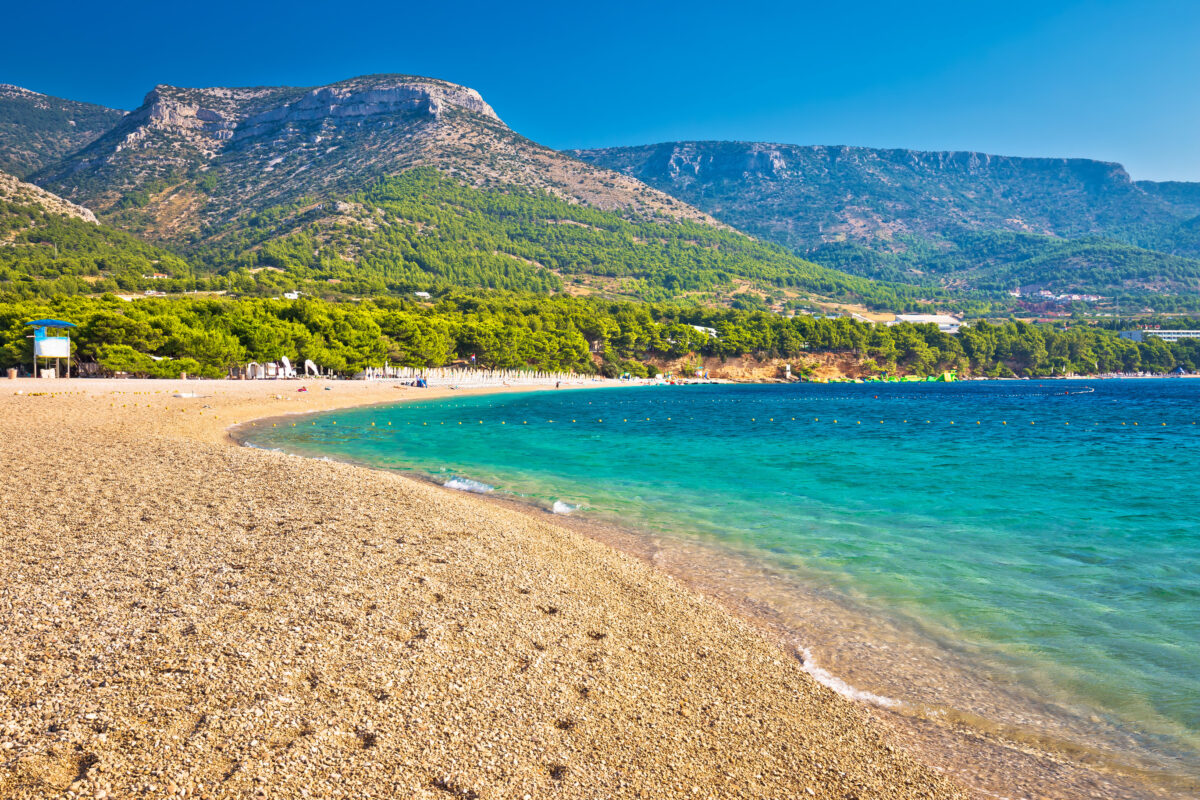
It’s the only beach in Europe that moves visibly on a daily basis, and is protected by law because of it. The Croatian government’s designation of Zlatni Rat as a geomorphological monument acknowledges what the beach actually is. The tip rotates up to 20 degrees across a season and extends by roughly 30 cm each year as the mountain above continues feeding it material. No other beach in our global study earned a formal conservation designation for its shape.
Unlike Croatia’s many rocky shorelines, the white pebbles at Zlatni Rat are remarkably smooth and rounded. They’re comfortable to walk on with bare feet and for tossing down a towel to sunbathe. The dense pine forest running down the middle of the spit provides free, natural shade, eliminating the need to rent pricey umbrellas. The spit also divides the water, which means one side is calm for tranquil swims, while the other catches the wind, ideal for activities like parasailing and windsurfing.
The wind makes it world-class for water sports. The Maestral (a thermic wind that funnels through the channel between Brač and Hvar every afternoon in summer) is the reason the beach fills with windsurfers and kiteboarders, and the reason morning swimmers can have calm conditions on one side of the promontory while whitecaps build on the other. The geography that drives wind conditions at Zlatni Rat is specific to this channel and this coastline.
The water is exceptional. The sea shifts from turquoise to deep blue and the clarity extends deep enough that you can watch fish moving beneath the pebble at the water’s edge.
It sits three miles from an airport. Brač Airport (BWK) is among the closest airports to any beach in our study. And yet Bol receives a fraction of the visitor pressure of a comparably connected beach in, say, the Aegean or the Canaries. June and September at Zlatni Rat are quiet by international standards for a beach of this calibre.
How to Get There
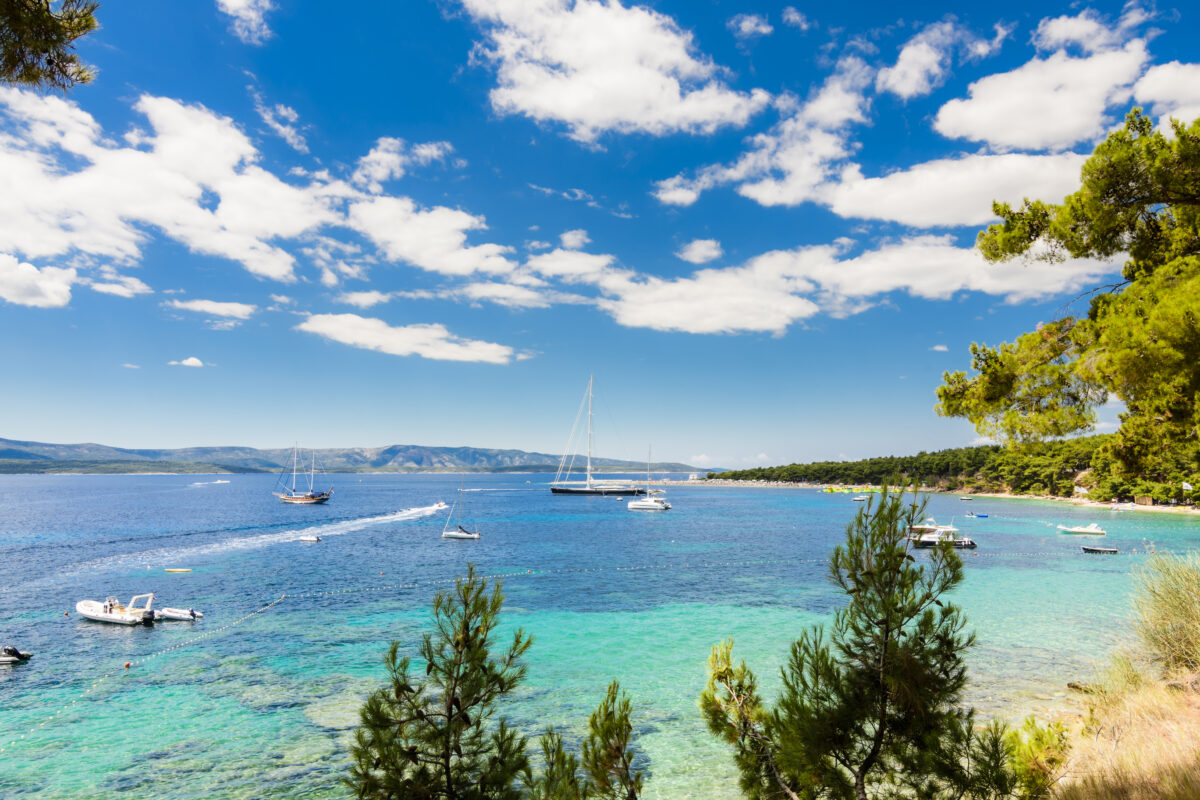
Nearest airport: Brač Airport (BWK), roughly 20–25 minutes by taxi or shuttle. Seasonal flights operate from Zagreb, Split, and several European cities during summer; the schedule is limited and should be checked well ahead. Split Airport (SPU), on the mainland, is the most practical year-round option and connects to Bol via catamaran.
By catamaran from Split (recommended): Jadrolinija operates a daily passenger catamaran service from Split harbour directly to Bol, taking approximately 1 hour 10 minutes. The catamaran then continues to Jelsa on Hvar. Check current seasonal schedules at jadrolinija.hr—departure times shift between summer and shoulder season.
By car ferry from Split to Supetar, then drive: The car ferry runs frequently from Split to Supetar (50 minutes) and is the standard route for visitors travelling with a vehicle. From Supetar, Bol is 38 km by road (allow around 45 minutes). Ferries run year-round; book ahead in July and August. From Bol, Zlatni Rat is 2 km west: a paid car park sits above the beach (around €10/day), or leave the car in Bol and walk.
From Bol to the beach: Three options: walk the pine promenade (20–30 minutes, flat and scenic), take the tourist train that runs every 30 minutes from Bol bus station during summer (15 minutes, a few euros), or take a taxi boat from Bol harbour (10–15 minutes, around €4 per person one way). Walking is the obvious choice for anyone staying in town.
Entry requirements: Free to access. Croatia uses the euro. No beach entry fee. Paid parking above the beach; paid toilets on site.
Best Time to Visit
Recommended: June or the first three weeks of September.
June–August is the optimal three-month season for conditions, but the honest answer for most visitors is that June and September deliver the same clear water and reliable sunshine at a fraction of the July–August crowd. The Maestral still blows in June so windsurfing conditions are good and water temperature reaches a comfortable 24–25°C by mid-month. September cools slightly by late in the month but remains genuinely warm for swimming. Accommodation in Bol is cheaper and the promenade is less congested
Peak season (July–August): The beach can accommodate around 10,000 people across its 20,000 square meters. Water sports operators are fully staffed, all facilities are running, and the Maestral blows reliably every afternoon. If you’re visiting specifically to windsurf or kitesurf, July and August offer the most consistent conditions and the most available instruction. Book accommodation months ahead.
Shoulder (June, September, early October): The best value window. Weather warm and stable, water temperature high from accumulated summer heat, crowds noticeably reduced. Some beach bar operations wind down in October. Windsurfing and kitesurfing schools operate through September.
Off-season (November–April): Bol quiets significantly. Most tourist infrastructure closes. The beach remains publicly accessible and the shape-shifting phenomenon is actually most dramatic in autumn and winter, when storms drive the tip furthest from its summer position. Worth seeing if you’re on the island for other reasons (the Vidova Gora hike is excellent in cooler months) but not a beach holiday destination.
Things to Do at Golden Horn Beach
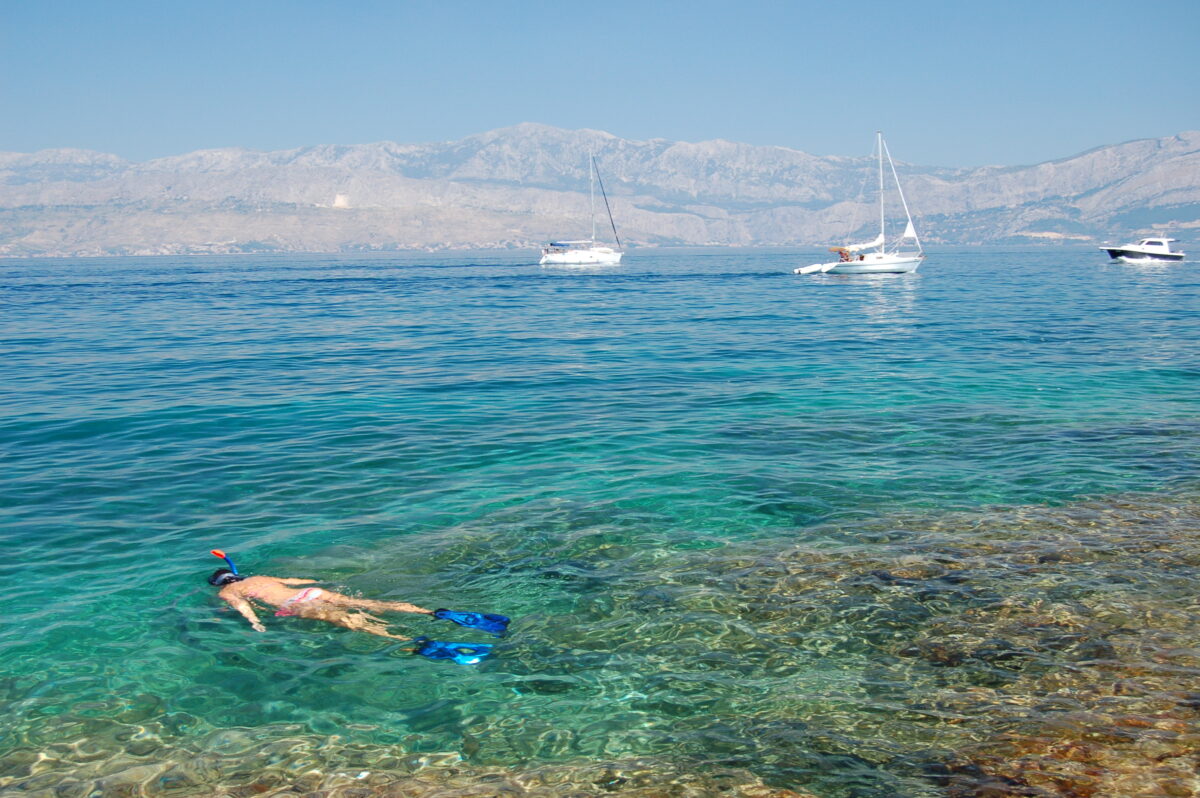
Swimming: The geometry of the promontory means one side is almost always calmer than the other— the western side is typically sheltered when the Maestral builds in the afternoon, and warmer. The tip itself carries a mild current when the sea is running; stay within 150 meters of shore when swimming around the point. No lifeguard is present.
Windsurfing and kitesurfing: The Maestral arrives most afternoons between noon and sunset, funneled through the Hvar Channel with consistency that makes Zlatni Rat one of Europe’s most reliable summer wind venues. Windsurfing and kitesurfing schools—including Big Blue Sport and Active Bol—operate on Borak Beach, immediately east of Zlatni Rat on the walk from Bol. Beginner courses run from around €60–80 for two hours; equipment rental for experienced riders runs approximately €80 per day. Book lessons in advance in July and August.
Vidova Gora hike: The highest peak on any Adriatic island, at 778 meters, rises directly above Bol. The trail from town is 10.6 km return, with around 715 meters of elevation gain (allow 3–5 hours). The summit provides the view that no photograph of Zlatni Rat quite captures: the promontory from directly above, white pebble against blue water, Hvar extending to the south, the Croatian mainland visible to the north on a clear day. The summit is also reachable by car for those who want the view without the ascent. Combine with an early start; the beach is a natural endpoint for the return.
Diving: The waters around Brač contain underwater caves, drop-offs, and Posidonia seagrass meadows that support significant marine life. Big Blue Diving and Diving Centre Dolphin, both based in Bol, run guided dives for all levels. Note that anchoring in Posidonia seagrass is prohibited throughout Croatian waters (a rule that applies to visiting boats and is increasingly enforced).
Parasailing and watersports: Jet ski hire, banana boat rides, kayak and paddleboard rental are all available directly at or near the beach during summer. The parasailing view is one of the more convincingly spectacular aerial perspectives available at any beach in Europe.
Blaca Hermitage: A 16th-century monastery built into a remote cliff face on the western side of Brač, reachable by a marked hiking trail from Murvica or by boat. One of the more extraordinary buildings in Dalmatia.
Where to Stay Near Golden Horn Beach
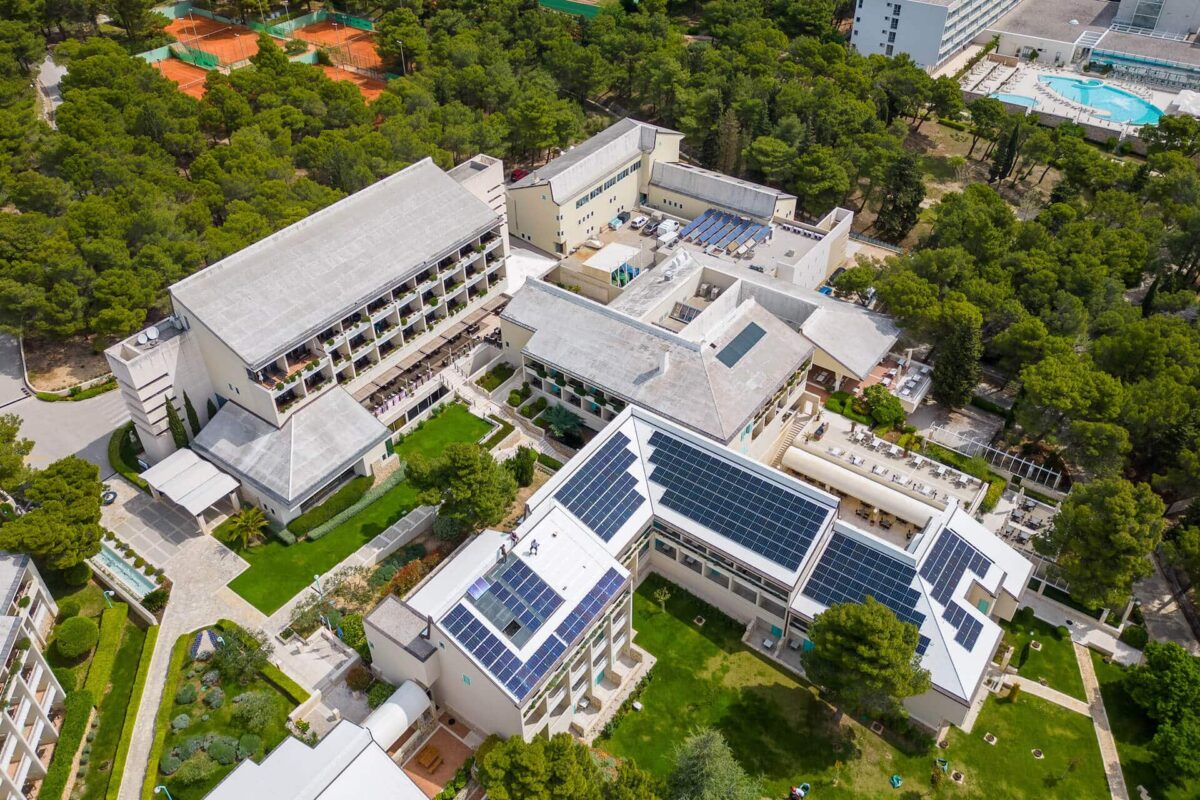
Bol has a range of accommodation concentrated in and around the town, within walking distance of Zlatni Rat. There are no large international hotel chains; most options are locally run hotels, villa complexes, and private apartments.
Hotel Bretanide Sport & Wellness — Mid-to-upper range. Between Bol and Zlatni Rat, on the promenade. Pool, spa, well-regarded for sports and family stays.
Hotel Borak — Mid-range. Close to Borak Beach and the windsurfing schools. Practical choice for water sports visitors; pool, direct beach access.
There are many beachside bars and food stands, serving coffee, cold drinks, cocktails, pizza, burgers, fresh fruit, and snacks. Several eateries offer more substantial meals nearby, such as grilled fish and seafood, meat dishes, risotto, and pasta. Restaurant D’Oro is a favorite, offering a variety of cuisine from pizzas to octopus salad and the fresh catch of the day.
Nearby Beaches
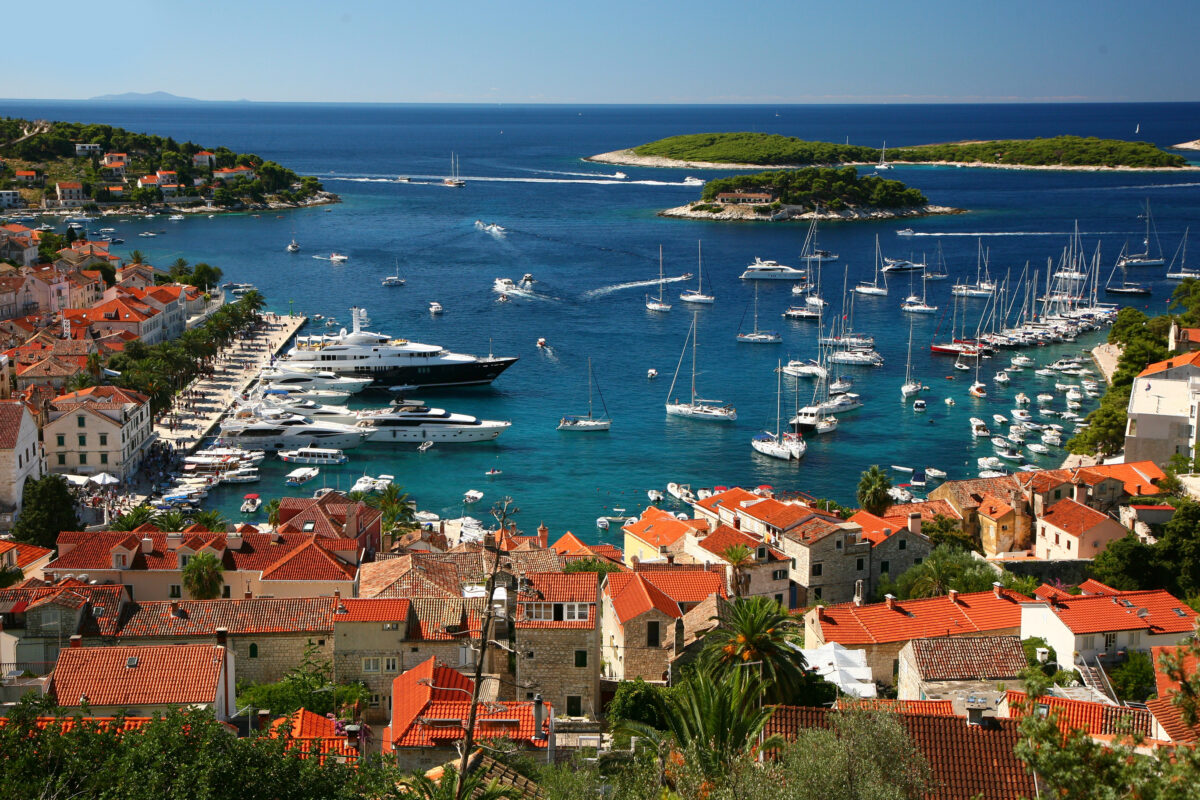
Zlatni Rat’s promontory position means the adjacent beaches are easily reachable on foot or by rented boat, and several are worth the short detour.
Borak Beach: Five minutes east of Zlatni Rat on the promenade. Pebble, quieter than the main beach, home to the windsurfing and kitesurfing schools. A good fallback on days when Zlatni Rat is at its most crowded.
Murvica Beach: A small pebble cove west of Zlatni Rat, reachable by rented boat or a longer walk. Quieter and wilder, with Dragon’s Cave (Zmajeva špilja) nearby (a medieval monk’s cave with unusual rock carvings).
Hvar Island: 20 minutes by catamaran from Bol to Jelsa, or accessible on day-trip excursions. Hvar Town, with its long harbour and Venetian architecture, is the natural cultural counterpoint to a beach stay in Bol. The beaches along Hvar’s southern Pakleni Islands are among the clearest water in the Adriatic.
Conservation and Responsible Travel
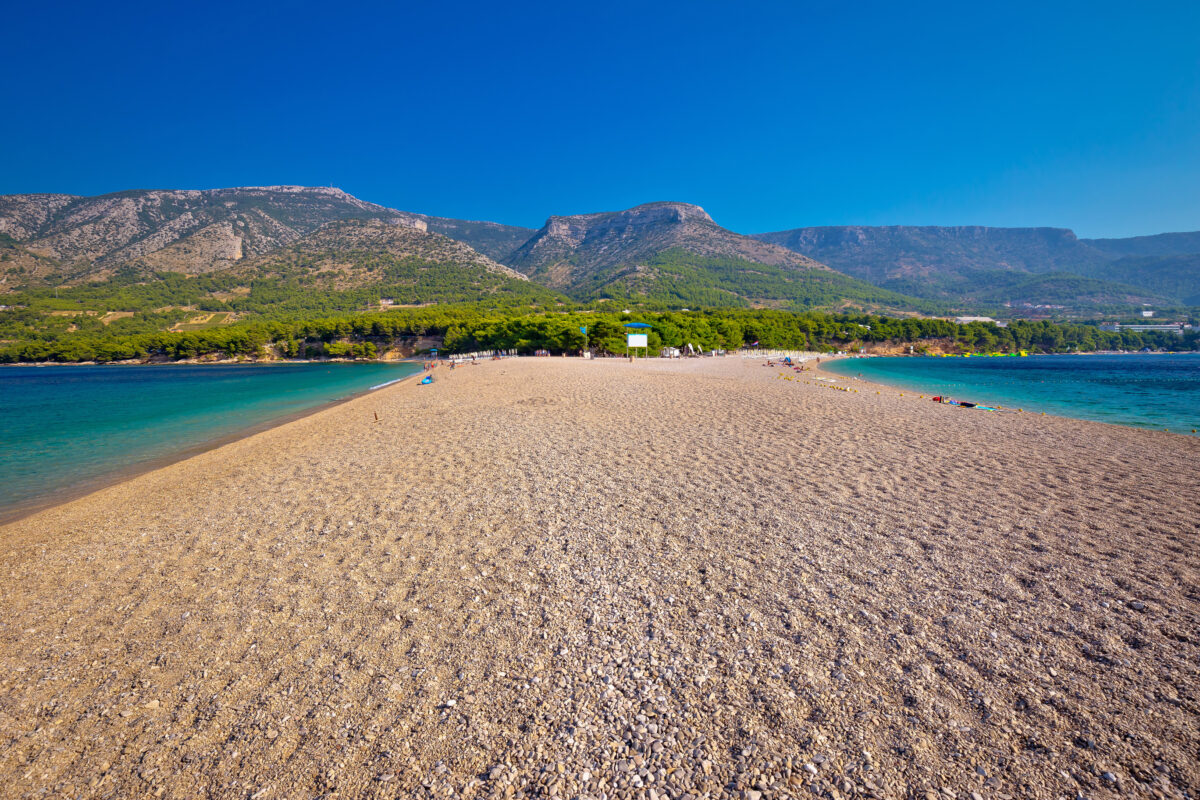
Zlatni Rat is protected under Croatian law as a geomorphological natural monument (one of only a handful of beaches in Europe with this designation). The classification protects the landform from any development or modification that would interfere with its natural dynamics.
Rules visitors must follow:
- No anchoring in Posidonia oceanica seagrass (a marine meadow species that takes decades to recover from anchor damage). This applies to all private boats and is signposted in the bay.
- Reef-safe sunscreen. The Adriatic at this point is clear enough that chemical sunscreen compounds are a genuine pressure on the seagrass and marine life below.
- Stay on marked paths when exploring the pine forest behind the beach. The root systems are not designed for foot traffic beyond the established routes.
- Take all rubbish from the beach and deposit it in the bins at the car park. The beach’s cleanliness record (it held Blue Flag status for many years) depends on visitor behavior as much as management.
FAQs
Is Golden Horn Beach sandy or pebbly?
Pebbly. A common point of surprise for first-time visitors is the aerial photographs. The pebbles are small, smooth, and pale, worn down from limestone debris off the Vidova Gora mountain over centuries. Water shoes help if you have sensitive feet; the entry into the sea is pebbly to knee depth.
Is Zlatni Rat good for swimming?
Zlatni Rat is one of the best beaches for swimming in Croatia, with one side featuring generally calm waters perfect for a memorable dip while surrounded by spectacular scenery.
Why does Golden Horn Beach change shape?
The tip of the promontory shifts in response to wind and current. The Maestral, which blows from the west through the channel between Brač and Hvar each afternoon in summer, pushes the tip eastward. The Jugo, a southeasterly wind more common in autumn and winter, pulls it west. In extreme conditions, the tip can swing far enough to briefly enclose a small lagoon before the pebble shifts back. The beach extends by approximately 30 cm per year as material continues to deposit from the mountain above. This continuous movement is why the Croatian government protects it as a geomorphological monument.
Is Zlatni Rat busy in the summer?
Yes, summer is the peak of Croatia’s tourism season. If you must visit then, avoid the biggest crowds by arriving early in the morning or late afternoon/early evening, when many tourists are eating dinner.
When is the best time to visit to avoid crowds?
June and the first three weeks of September. July and August are peak season—the beach is busy by mid-morning, parking fills early, and accommodation in Bol books out months ahead. June offers comparable water temperature (warming from 22°C in early June to 25°C by month’s end), reliable sun, and a beach you can walk the length of without navigating towels and sun loungers. September retains summer warmth with rapidly diminishing tourist pressure after the first week.
How do I get to Golden Horn Beach from Split?
The cleanest route is the Jadrolinija catamaran from Split harbor directly to Bol (approximately 1 hour 10 minutes, passenger only). From Bol harbor, it’s a 20–30 minute walk to Zlatni Rat along the pine promenade. For visitors with a car, the Split–Supetar car ferry (50 minutes) followed by a 38 km drive to Bol is the standard alternative. Check current catamaran schedules at jadrolinija.hr as they change seasonally.
Is Zlatni Rat Beach good for families with kids?
Yes, this is a family-friendly beach in Croatia with some caveats. With a clear, shallow entry to the water, a floating inflatable water park, pine trees for natural shade, and plenty of food and drink, Zlatni Rat is great for families with children. The western side of the promontory is consistently calmer than the eastern side, and the shallow entry and clear water make supervision straightforward. However, the tip of the horn carries a mild current (keep children well back from the exposed point). The pebble entry requires some care for small feet; water shoes are worth bringing.
What are the essential things to see and do at Zlatni Rat?
As such a photogenic beach, capturing photos is a must. Vidova Gora, the highest point in the Adriatic Islands, provides one of the best vantage points, overlooking the beach, Hvar and Vis islands, the Peljesac Peninsula mountains, and more. A swim in the translucent blue-green water when it’s pleasantly warm, typically from late May through mid-October, is also highly recommended.