
While you probably envision the Caribbean or the South Pacific when it comes to postcard-perfect beaches, Europe is also home to some of the world’s most spectacular stretches of sand.
From pink-tinted shores in the Greek Islands to Portugal’s dramatic cliff-backed beaches and Croatia’s crystal-clear Adriatic gems, the latest World’s Best Beaches ranking from Beach.com highlights just how impressive the continent’s coastline can be. And, it wasn’t just any list.
The European beaches that managed to break into the world’s best were based on scientific analysis, water-quality data, visitor reviews, accessibility, and climate factors, combined with input from travel experts. That means you can be sure that they’re all well worth planning a trip around for those seeking the ultimate coastal experiences.
Elafonissi Beach, Crete, Greece
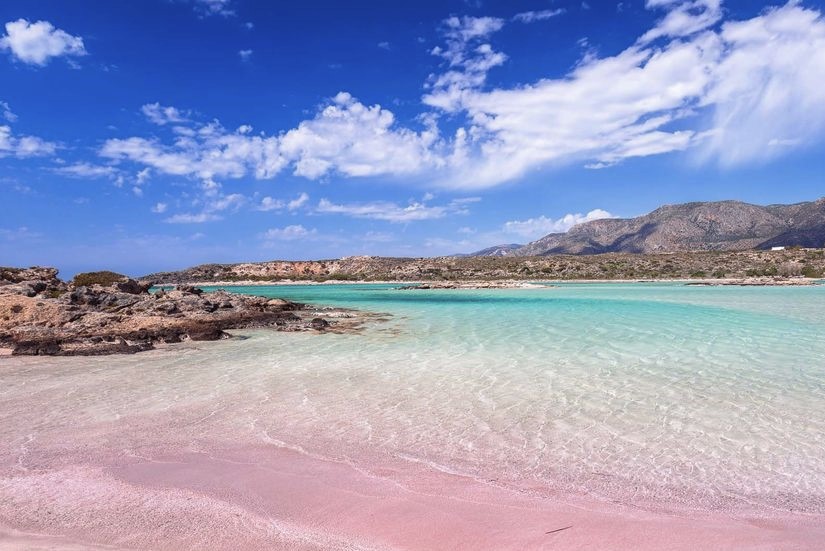
Elafonissi is often named on lists of the world’s most beautiful beaches, and Beach.com’s data backs that up. It was the No. 1 in all of Europe and No. 2 in the world, ranking high on everything from water quality to beauty. Located along the southwestern coast, about an hour’s drive from Kissamos, arrive early in the morning or outside of the peak travel months to enjoy barefoot walks on the soft pink-hued sands with few others around. Taking a dip in the stunningly clear, shallow water in a range of brilliant blues and greens while surrounded by the entire breathtaking scene is something you won’t soon forget.
When others start to arrive, simply wade through the lagoon toward the Elafonissi Ilset, where you’ll find intimate sandy coves for a more tranquil experience. There are also dunes with rare white sand lilies and sea cedars, a little chapel, and a lighthouse to explore.
Golden Horn, Bol, Brač, Croatia
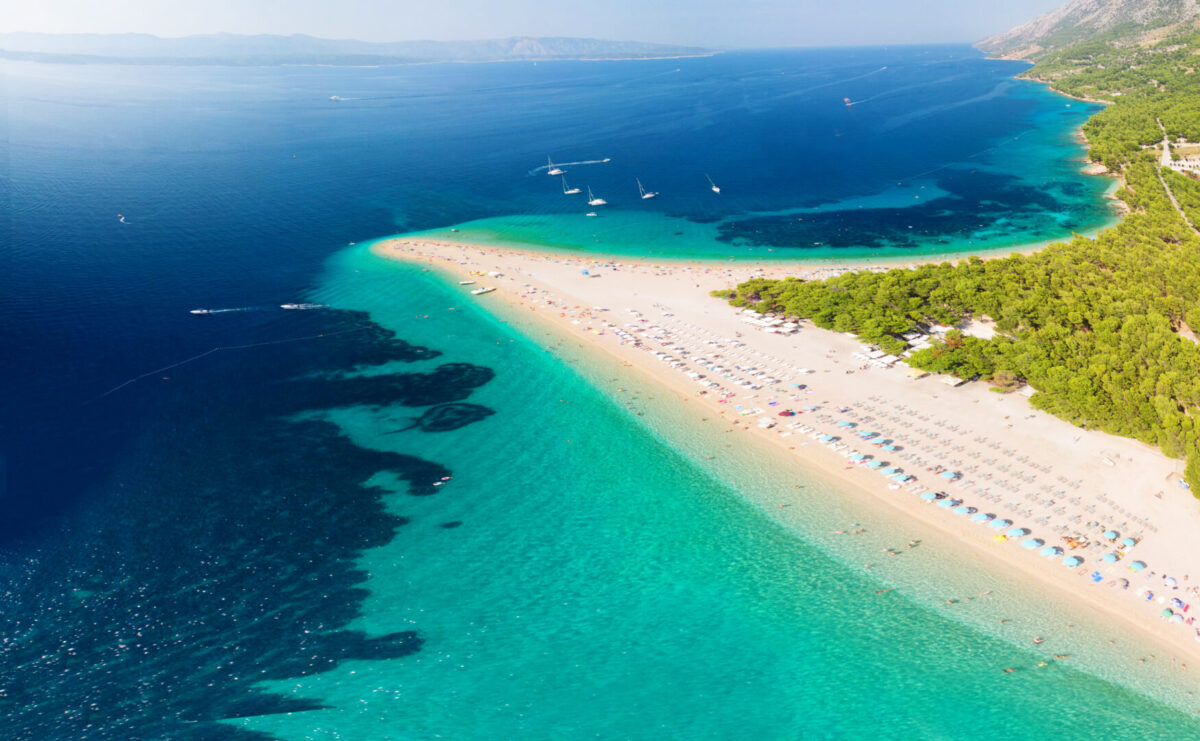
Europe’s second-best beach has become a symbol of Croatian tourism as one of the most photographed in the country. Offically called Zlatni Rat, a scenic two-mile walk (or short tourist “train” ride) from the town of Bol will bring you there. Nicknamed the Golden Horn for its unique swirling shape that changes with the wind and the waves, it’s made up of fine, white pebbles that glisten in the sun. The beach juts out about a third of a mile into the sea, surrounded by translucent turquoise water on three sides.
Visitors can soak up the sun while mesmerized by the scene and enjoy a variety of beach activities, including swimming and snorkeling. The water is typically calm in the morning, but in the early afternoon, when westerly winds often blow in, it’s great for windsurfing or kitesurfing. Loungers and umbrellas are available for rent, and you’ll also find facilities like beach bars, restrooms, and showers.
Praia da Falésia, Algarve, Portugal
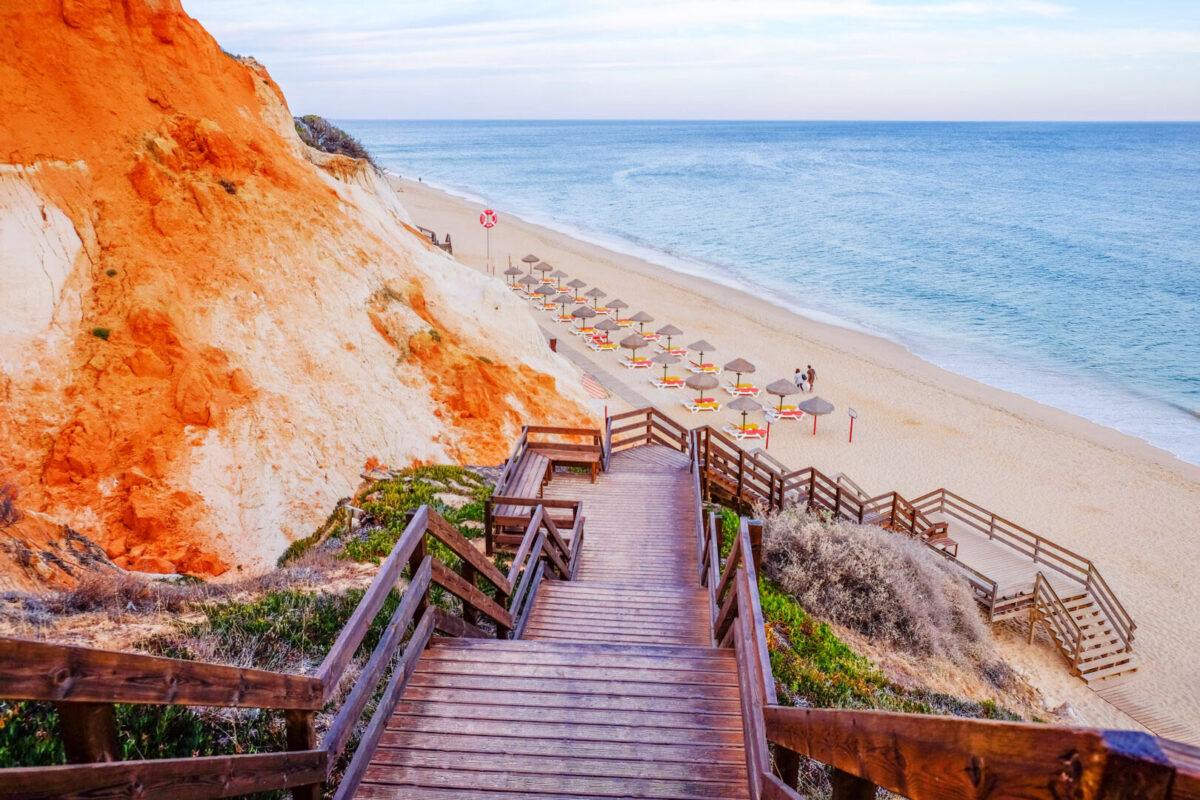
The pristine environment and stunning natural beauty that visitors often rave about landed Praia da Falésia at No. 3 of the best beaches in Europe and among the top 10 in the world. Not only did multiple travel experts back that up, but the satellite analysis conducted by Beach.com found that its water is often exceptionally clear. Spanning around five miles of the central Algarve Coast, it boasts golden sands backed by dramatic cliffs that glow in vibrant shades of orange and red, magnificently contrasted by the azure Atlantic. As it is such a long stretch, it never feels crowded. Plus, the sand is wide, firm, and flat, perfect for strolling.
Visitors will also find a hiking path running along its entire length atop the cliffs for panoramic coastal views. Water activities are possible too, with a gentle swell that’s great for stand-up paddleboarding or body surfing.
Falasarna Beach, Crete, Greece
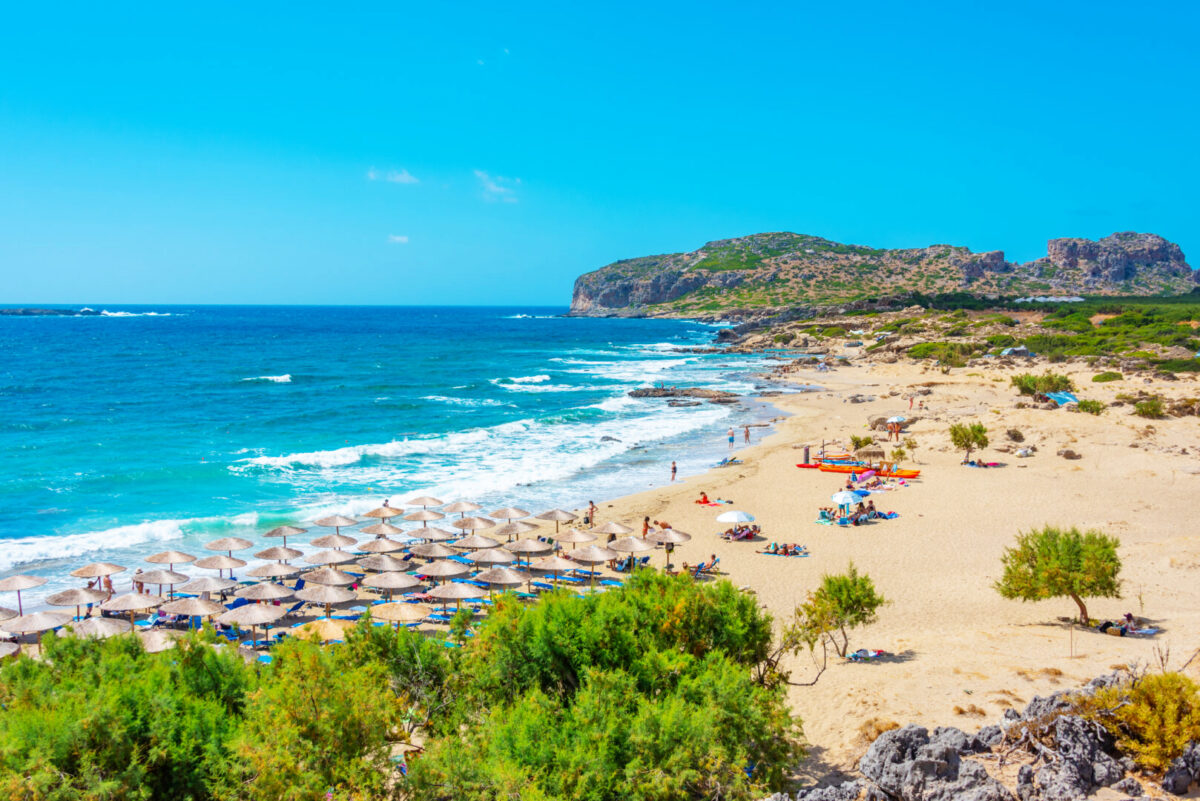
Yet another stunner on the island of Crete, Falasarna is just a 20-minute drive from Kissamos. It gets strong visitor praise when it comes to environmental quality, while travel experts validate the beauty and quality of its water in brilliant shades of aquamarine in the shallows before transforming to a shade of deep cobalt farther out. On calmer days, it’s also strikingly clear,
looking like a dazzling lagoon. There are coves particularly ideal for swimming, while the northern end tends to get more wind, providing opportunities for water sports.
The highlight of Falasarna is its sunsets. Stick around until dusk to be in one of the best vantage points for witnessing the sky as Mother Nature paints it with golden yellows, fiery oranges, and scarlet reds.
Balos Beach, Crete, Greece
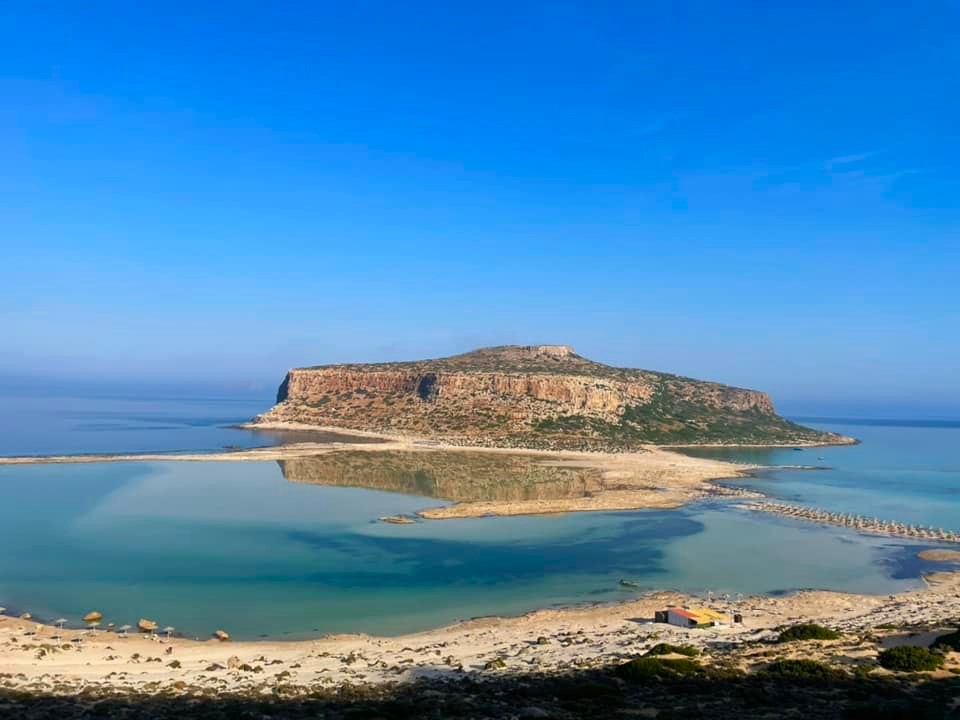
As if you needed another excuse to visit Crete, the island boasts three of the world’s best beaches, with Balos among the top 25. It’s typically not as busy as Elafonissi, but that’s because it’s a bit more difficult to access. Boat tours can bring you there, but if you want to enjoy it at its most tranquil, it’s worth renting a car. Located nine miles north of Kissamos, it requires five miles of driving on a bumpy, dirt road, but there’s no need for a 4WD vehicle. From the parking area, stop to take in the panoramic view before descending the rocky path for about two-thirds of a mile. Arrive before 8 am, and there’s a good chance you’ll have it all to yourself.
Balos ranks high for its beauty, water quality, and amenities. It’s the perfect place to spend the day with umbrellas and lounge chairs for rent, a beach bar, and opportunities to swim in the calm waters of the turquoise lagoon.
Myrtos Beach, Kefalonia, Greece
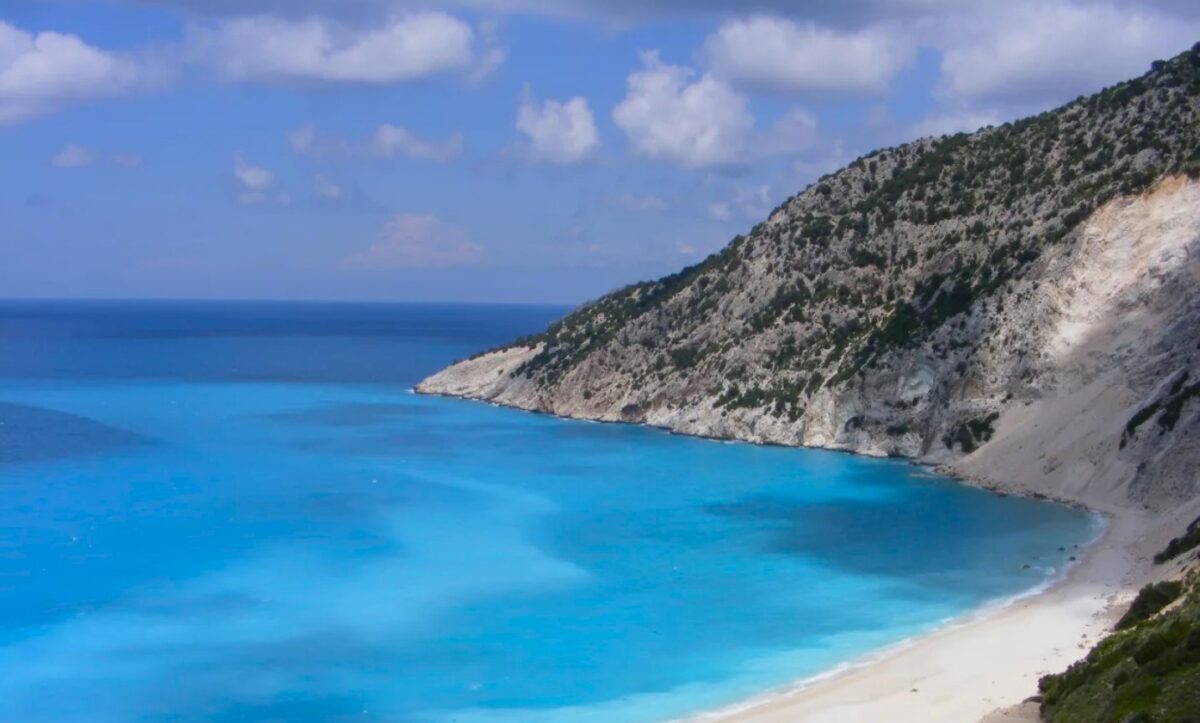
Nestled in the lush Ionian Islands, Myrtos Beach ranked a 5 out of 5 for its stunning natural beauty. Located in the northwest part of the island, it’s a mile-and-a-half-long, crescent-shaped cove surrounded by soaring cliffs covered with pine trees while extending toward the electric blue sea. The water looks as if it’s practically glowing under the sunshine due to marble sediment. While relaxing on the smooth white stones with patches of fine sand, the only thing you’re likely to hear is the sounds of the birds and the gentle waves.
Sun lounger and umbrella rentals are available, but it’s also possible to simply toss down a beach blanket for free. You’ll also find public showers and a seasonal snack bar, while a wider selection of eats can be found at the tavernas in nearby Divarata village.
Su Giudeu Beach, Sardinia, Italy
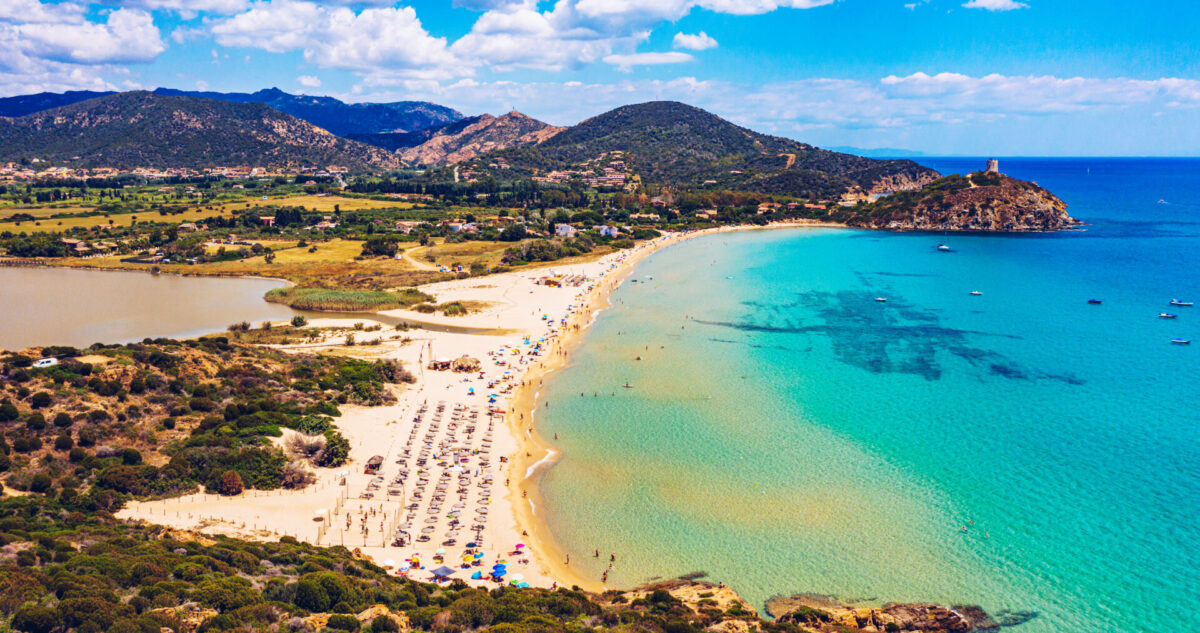
It’s no surprise that several of Sardinia’s beaches rank among the world’s best, often compared to stretches in the Caribbean. The island itself has been called the Mediterranean’s “most perfect,” located in the Tyrrhenian Sea between the Balearic Islands and the Italian Peninsula. Su Giudeu is in the village of Chia, offering sugary white sands and clear, shallow blue waters. With a gently sloping seabed, it’s safe and enjoyable for families with children who want to swim or splash around. Plus, just behind the wind-sculpted dunes is a lagoon where pink flamingoes can often be spotted.
Other activities can be enjoyed too. Along the southern end of the beach, an area that can catch a breeze, kitesurfing and windsurfing are possible. Or, at low tide, walk to the small island that rises from the sea just in front of the beach.
Cala Goloritzè, Sardinia, Italy
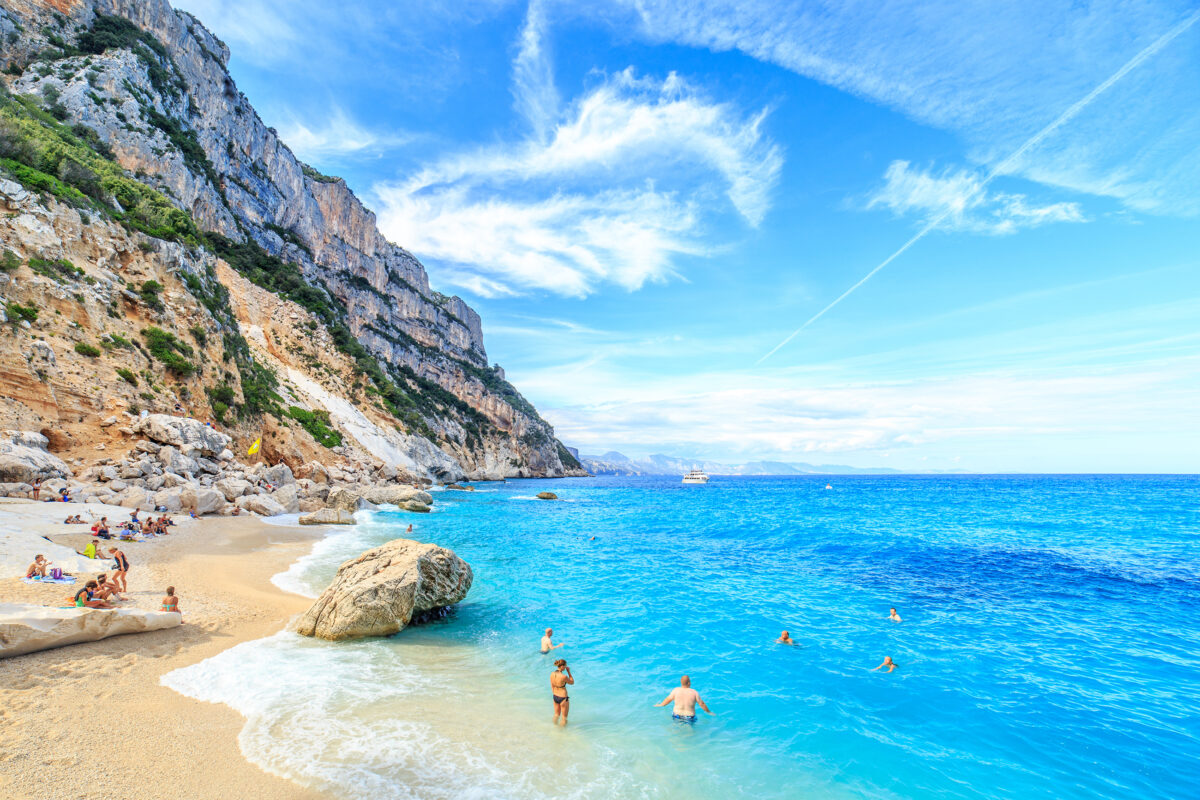
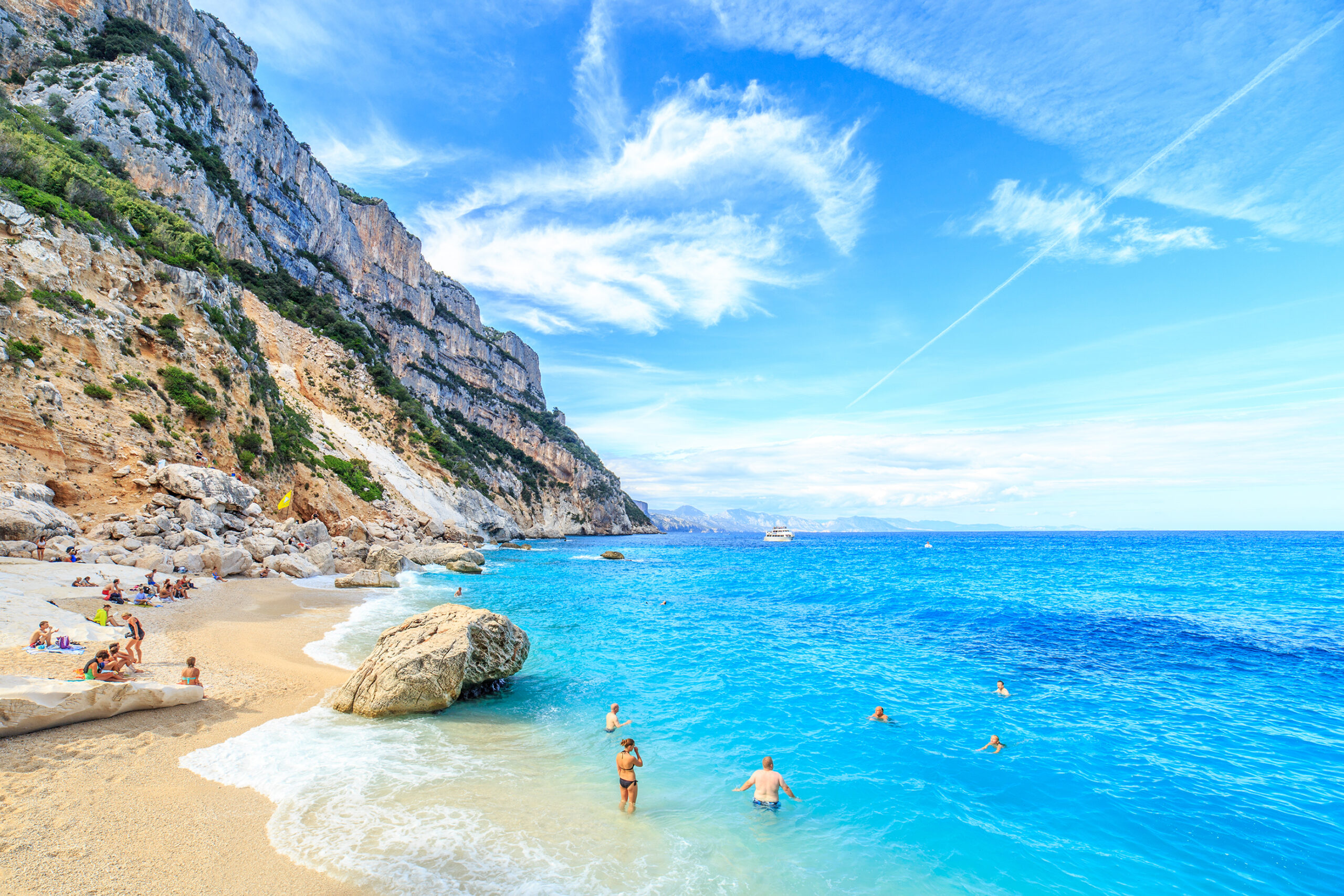
Also highly rated for its beauty, Cala Goloritzè is an unspoiled gem that sits beneath towering cliffs in the Gulf of Orosei. It’s totally undeveloped and can only be accessed on foot or by private boat. Its nearly 470-foot-high limestone pinnacle has become a landmark photo op, providing an awe-inspiring backdrop for the Easter egg blue waters. The water is exceptionally clear and excellent for snorkeling among marine life, including cuttlefish and octopus. Birdwatchers should keep an eye out for the many different bird species, such as the peregrine falcon.
Reaching the beach by land requires hiking the roughly 2.2-mile trail from the Su Porteddu parking area, taking about 90 minutes downhill and two hours on the return. If you rent a boat or join a tour to visit, the vessel will have to anchor 200 to 300 meters from the shoreline, requiring a swim or paddle for access.
La Pelosa Beach, Stintino, Sardinia, Italy
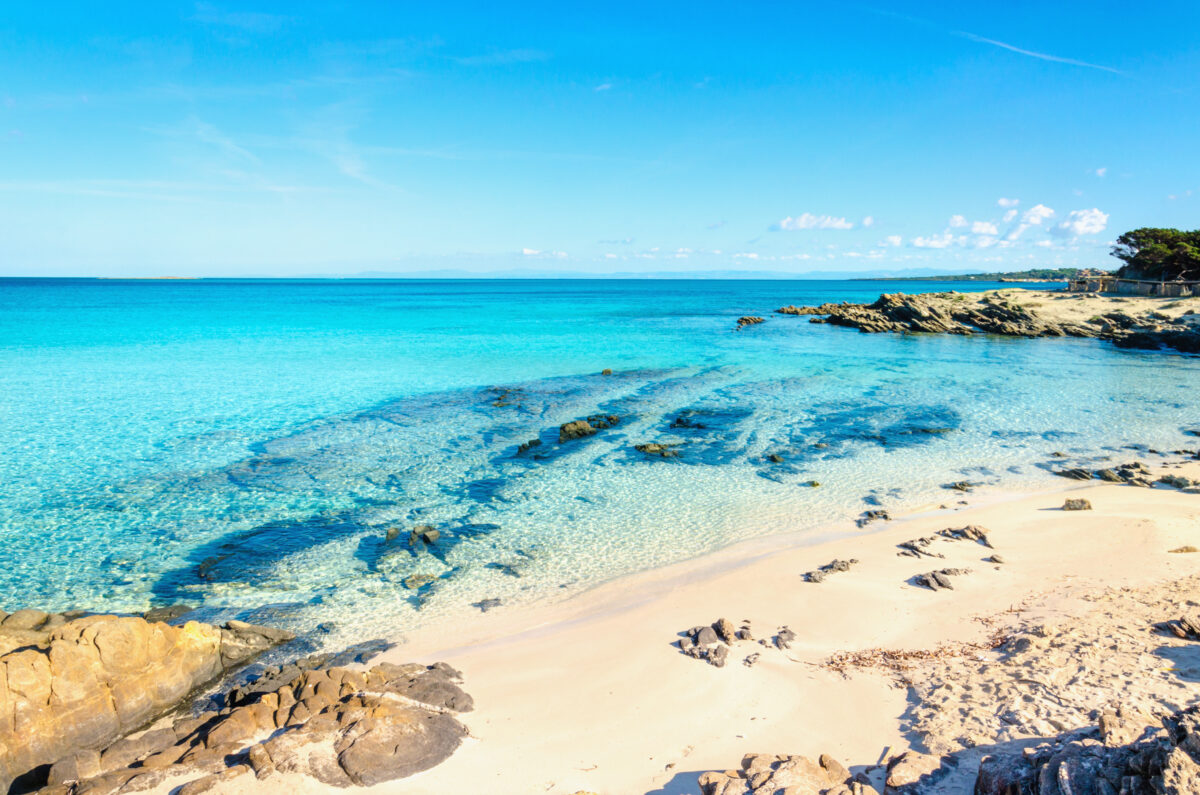
Located along Sardinia’s northwest coast in the Stintino area, La Pelosa is renowned for its fine white sand and jaw-dropping waters, in shades ranging from azure to turquoise, often compared to what you’d see at a tropical beach. The shallow, calm waters are perfect for floating and swimming, while views of the island of Piana and the iconic 16th-century Torre della Pelosa tower add to the enchanting scene. Snorkeling is possible along the rocks near the tower, while paddleboard rentals are available right on the beach.
Note that to preserve the beauty of La Pelosa, access is limited and by reservation only. No matter when you visit, you’ll enjoy the best experience by arriving early.
Cofete Beach, Fuerteventura, Canary Islands, Spain
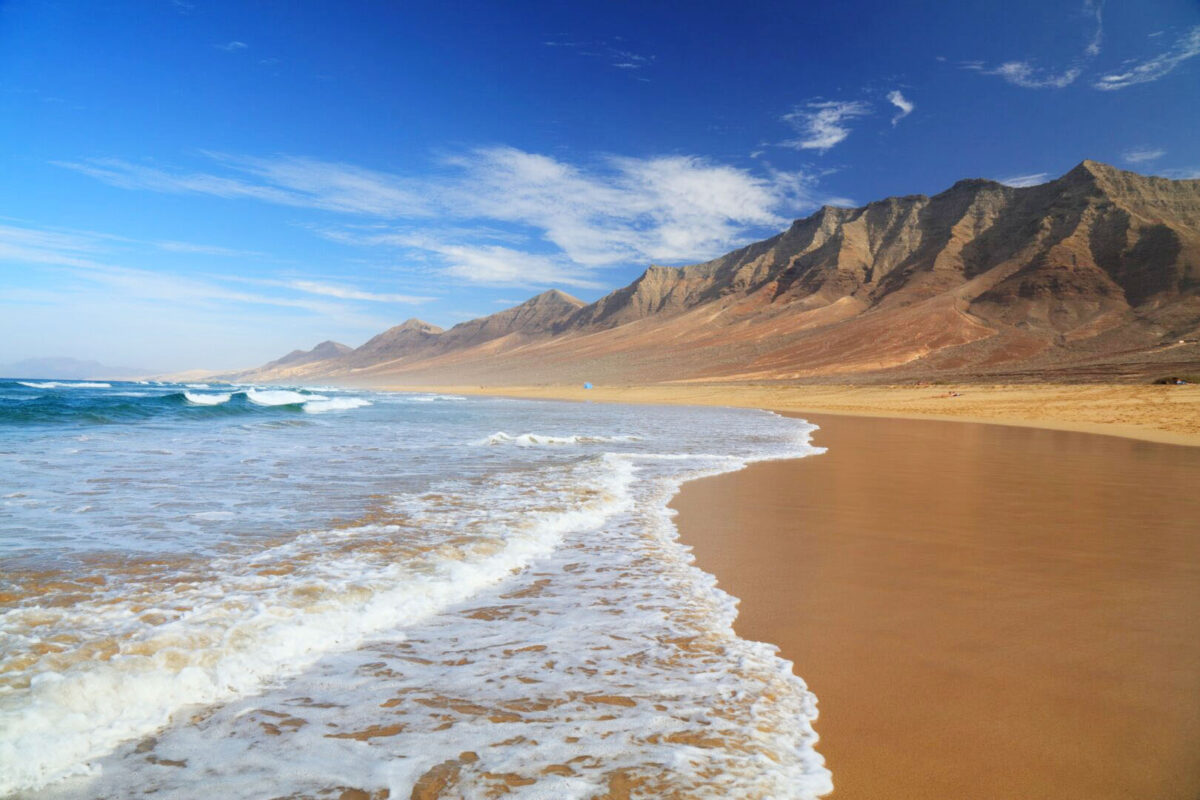
Located in Jandía Natural Park on the southwestern coast of Fuerteventura, Cofete is one of the island’s most spectacular, wild spots with nearly 7.5 miles of golden sand, surrounded by mountains, minus the commercial development. Forget about crowds or sprawling resorts, this is all about enjoying an untamed atmosphere for experiencing nature in its purest form. While it’s not the best for swimming as the current and the waves can be strong, you can walk for miles without seeing another person.
Clothing-optional sunbathing is possible and wildlife enthusiasts can often spot wild goats, while the dramatic Roque del Moro at the southern end of the beach provides an excellent photo op.