
The Great Ocean Road was one of those trips that came together almost by accident. My boyfriend and I were already in Australia when we realised two friends we’d met at a festival years ago were also passing through Melbourne at the same time.
Within a few messages we’d decided that, obviously, the only sensible thing to do was hire a car and road-trip along one of the most iconic coastal drives in the world.
We’d planned on getting something small and easy to handle—the kind of car you can slide into parking spaces without embarrassing yourself. Instead, the rental company upgraded us for free to what can only be described as a monster truck.
My friend could barely climb into it, let alone drive it, and watching the four of us try to manoeuvre this beast through Melbourne traffic was hilarious. But by the time we hit the open road, windows down and music blaring, it felt like the perfect (if slightly ridiculous) way to start the trip.
The Great Ocean Road is dramatic, beautiful and full of surprises, and somehow that giant truck ended up matching the energy perfectly.
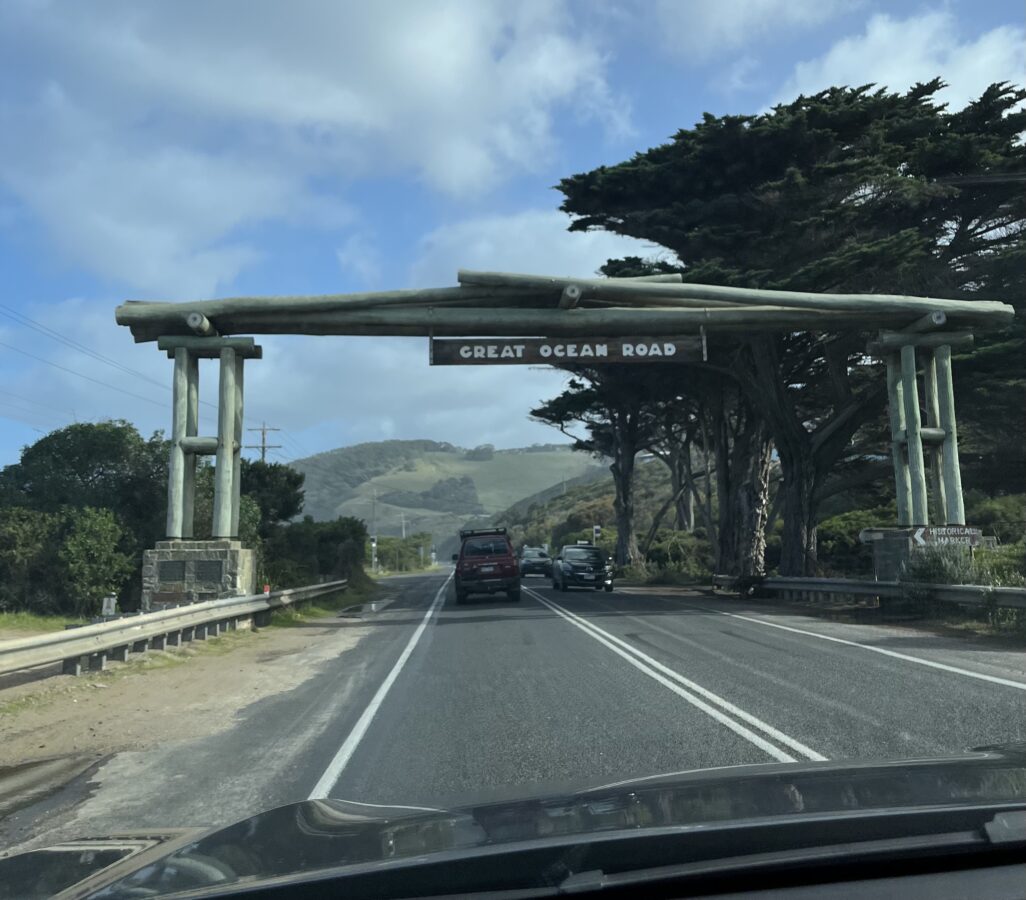
What Is the Great Ocean Road & How Long Do You Need?
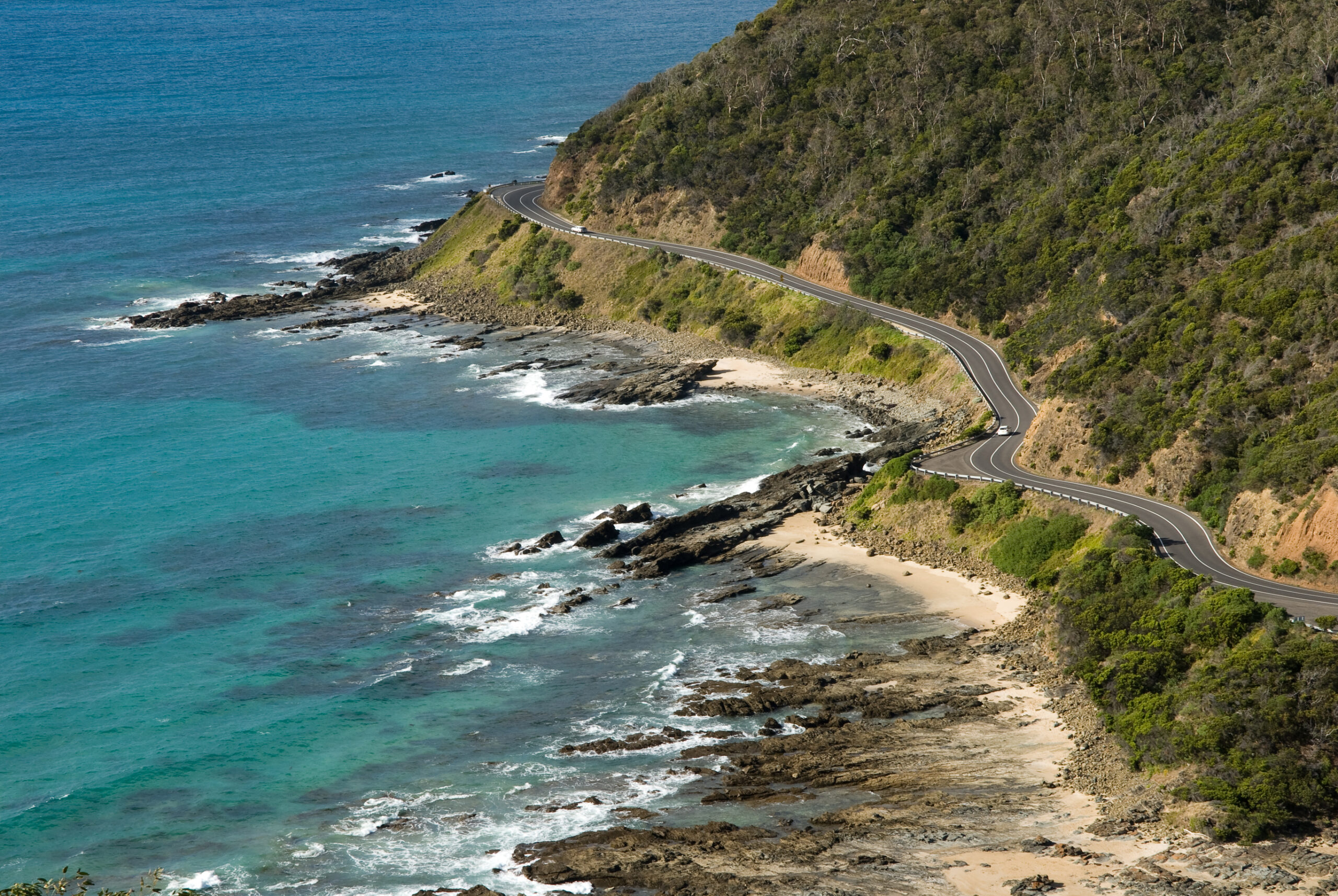
The Great Ocean Road is one of Australia’s most famous coastal drives—a 243-kilometre stretch of dramatic cliffs, sweeping beaches, surf towns, and rainforest that runs from Torquay to Allansford, just west of Melbourne.
It was originally built by returned soldiers after World War I and is now considered the world’s largest war memorial, which adds a surprising layer of history to what most people see as just a scenic drive.
What makes it so special is how varied it is. One minute you’re winding around cliff edges with the ocean crashing below, the next you’re in quiet beach towns or deep in the Otway rainforest surrounded by towering eucalyptus trees. Then, of course, there’s the big moment everyone comes for: the Twelve Apostles rising out of the water like giant sandstone sculptures.
You can drive the whole stretch in a single day, but it feels rushed and a little wasteful. The ideal amount of time is 2-4 days, depending on how slowly you like to travel. We took it easy, stopping for beaches, koala spotting, and far too many snack breaks—and it made the whole trip feel effortlessly fun.
Planning Your Road Trip: Route, Car Hire, Timing
The classic Great Ocean Road route starts in Melbourne, heads southwest to Torquay, continues through Lorne and Apollo Bay, and then curves inland towards the Twelve Apostles and Port Campbell. It’s straightforward, well signposted, and packed with places to stop—which is ideal, because you’ll want to pull over constantly.
We hired our car in Melbourne, which is the easiest option, but here’s my biggest tip: don’t overthink the car size. We tried to rent the smallest, most sensible car possible… and ended up with a free upgrade to a giant truck that felt like driving a small building. Intimidating? Yes. Impossible to park? Also yes.
On the open road it was a lot more spacious and gave us endless inside jokes for the rest of the trip. Still, unless you, too, want to experience mild heart palpitations in tight car parks, a smaller car is more practical.
In terms of timing, late spring to early autumn (October-April) is the best window. Summer brings the brightest weather but also the most crowds. Weekdays are quieter and sunrise starts are worth the early alarm if you want the lookouts to yourself.
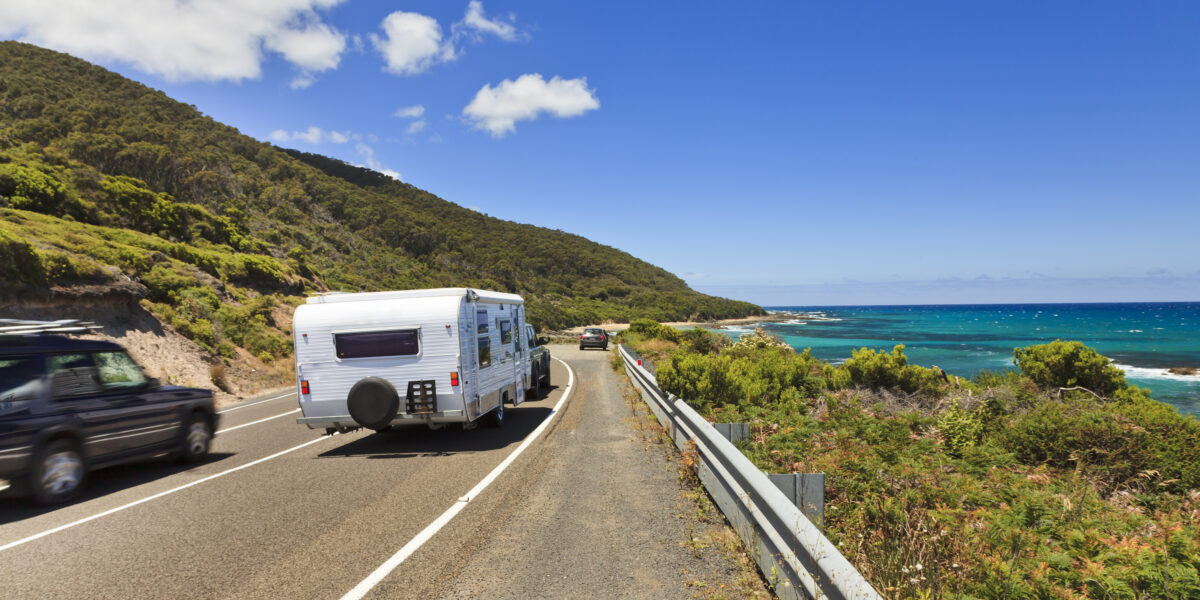
One thing to know: the roads can be windy, and wildlife—especially kangaroos—appears when you least expect it. Take your time, avoid driving after dark, and lean into the slower pace. That’s the whole point of the trip.
Day-by-Day Itinerary for the Great Ocean Road
Day 1: Melbourne → Torquay → Anglesea → Lorne
We set off from Melbourne far too excited for a group of adults in a comically oversized vehicle. Once we’d finally guided the “truck” out of the city (with only minor panic), the coastline opened up in front of us and everything suddenly felt easy.
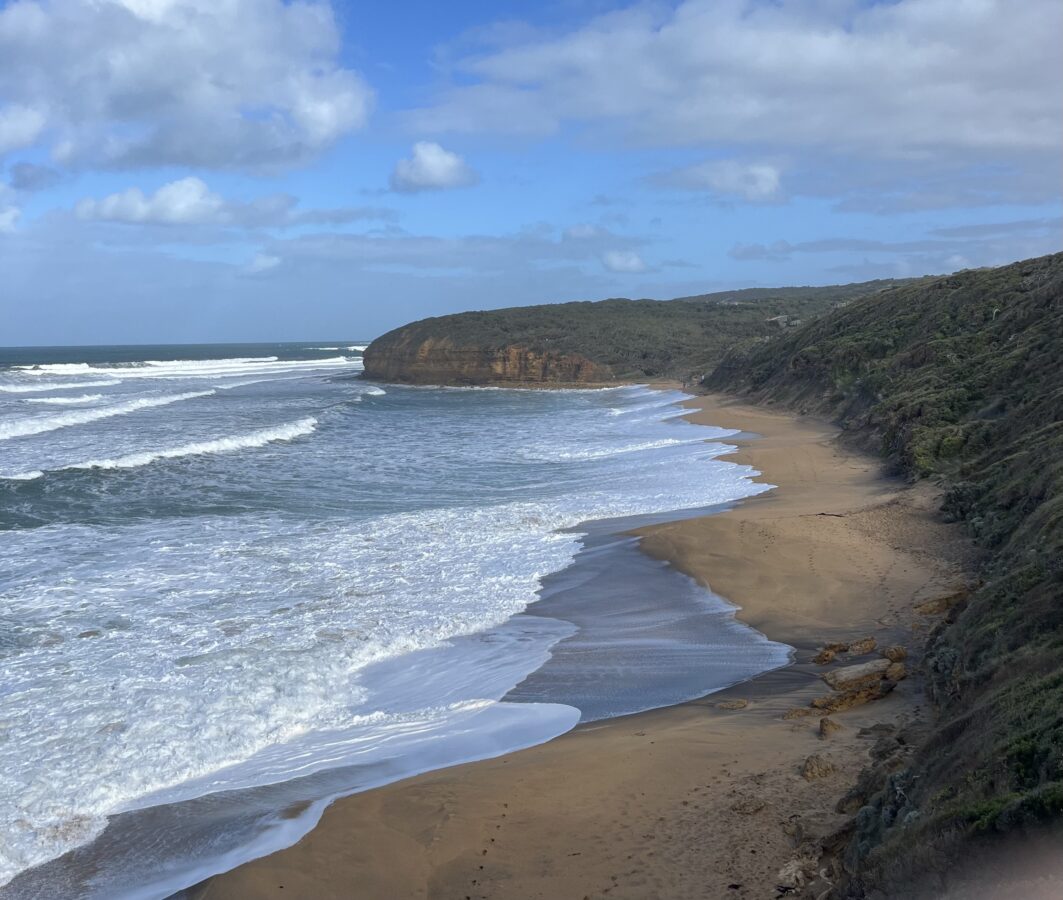
Our first stop was Torquay, the official start of the Great Ocean Road and the home of Australia’s surf culture. Bells Beach is just around the corner, and even if you’re not a surfer, the cliffs alone are worth the detour. We stood there for ages watching tiny specks (actual humans) ride enormous waves with ridiculous confidence.
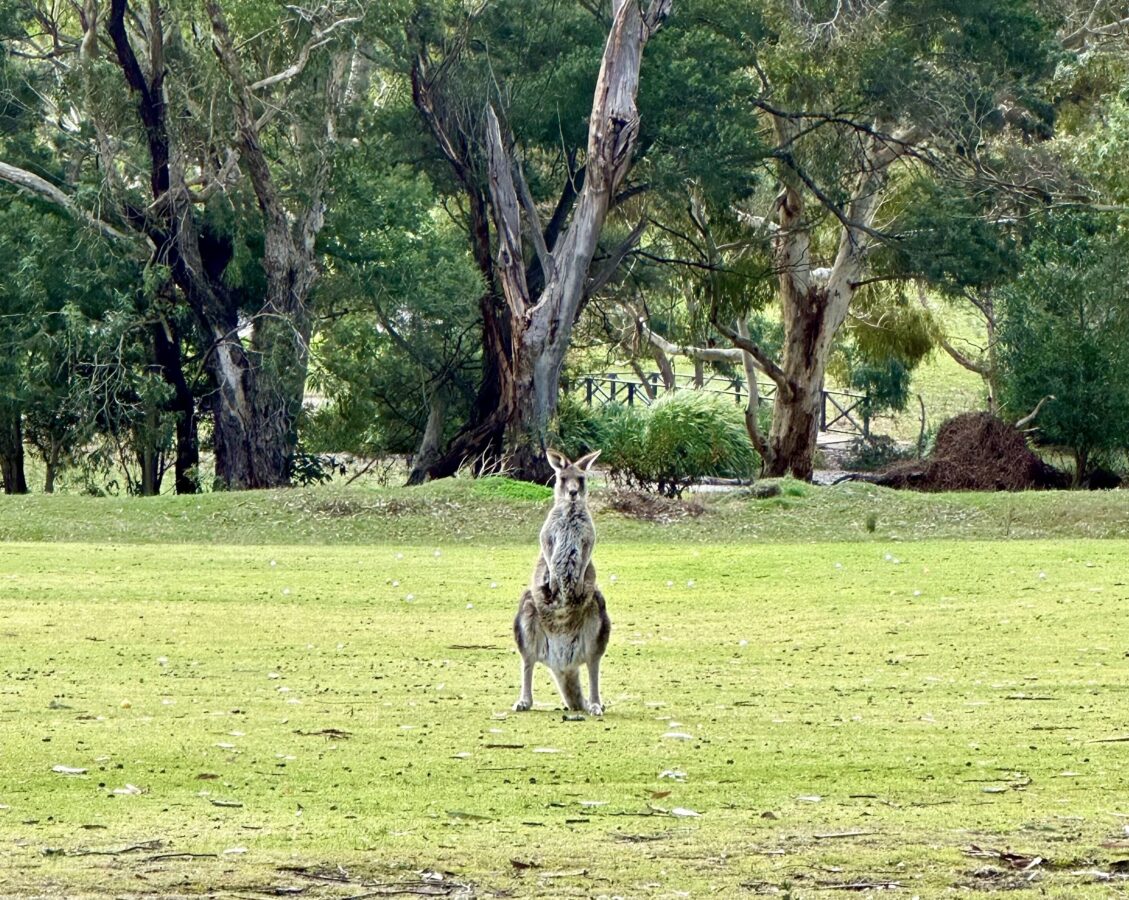
From there, we rolled south to Anglesea, where kangaroos famously hang out on the golf course. We didn’t play golf, obviously, but we did pull over to watch a whole group of them lounging like they owned the place.
By late afternoon we reached Lorne, one of my favorite towns on the route. It has a dreamy holiday energy—beaches, ice cream shops, cafés, surfboards everywhere. We checked into our accommodation, stretched our legs with a walk along the pier and ended with dinner overlooking the water.
Day 2: Lorne → Apollo Bay → Great Otway National Park
We started the morning at Erskine Falls, one of the prettiest short walks in the region. The drive inland is lush and green, a complete contrast to the coastal cliff views. It’s one of those stops that makes you realise how diverse this region actually is.
From there, we followed the coastline south, pulling over constantly because every corner seemed to reveal another postcard view. Eventually we reached Kennett River, where koalas often sleep in the trees above the café. And yes, we saw a few!
We reached Apollo Bay in the early afternoon and instantly loved it. It’s quieter than Lorne, with a long curved beach and a cluster of cafés where you can recharge before heading into the rainforest.
The Great Otway National Park was the surprise highlight for all of us. We did the Maits Rest Rainforest Walk, which feels like stepping into a prehistoric world with giant ferns, towering trees, and the kind of soft forest silence that instantly slows your brain down.
We finished the day with a swim back in Apollo Bay and fish and chips on the beach as the sky turned pink.
Day 3: Apollo Bay → Twelve Apostles → Loch Ard Gorge → Port Campbell
This was the big day–the reason most people come to the Great Ocean Road—and it absolutely lived up to the hype.
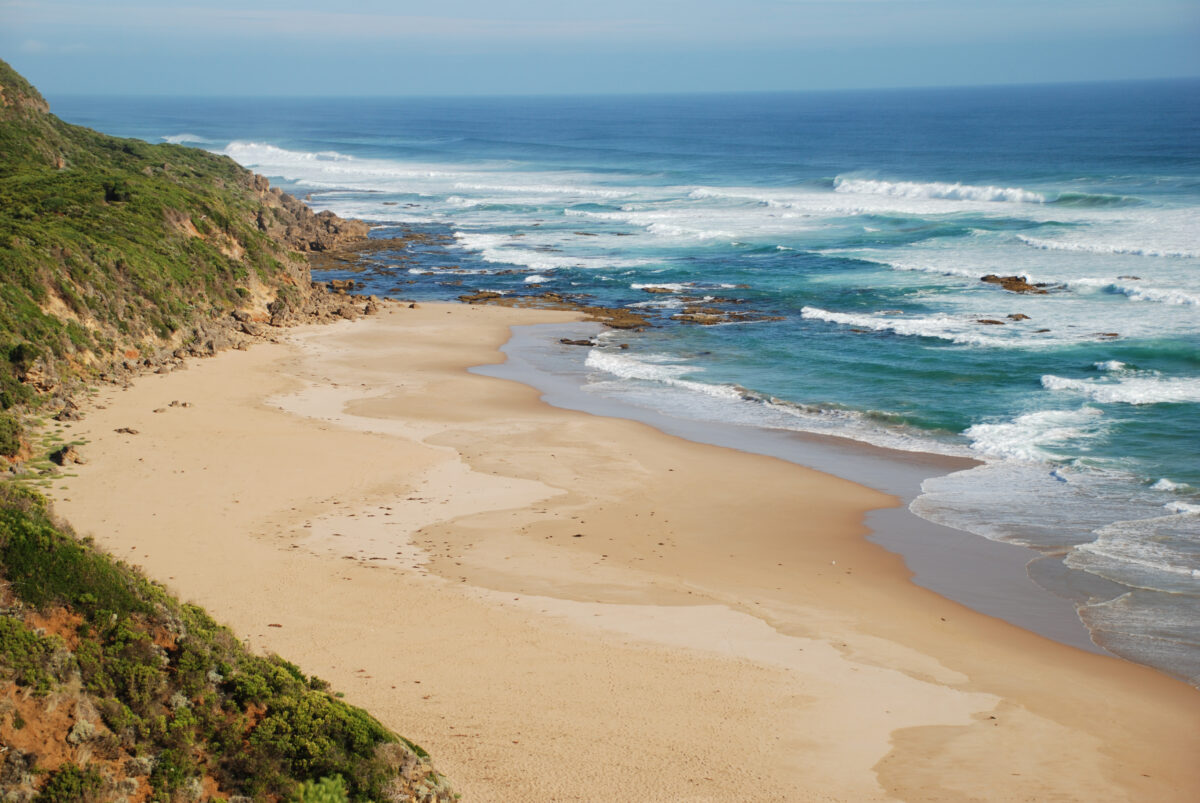
The stretch between Apollo Bay and the Twelve Apostles is spectacular. Dramatic cliffs, wild ocean, long empty beaches. Even the drive itself feels cinematic.
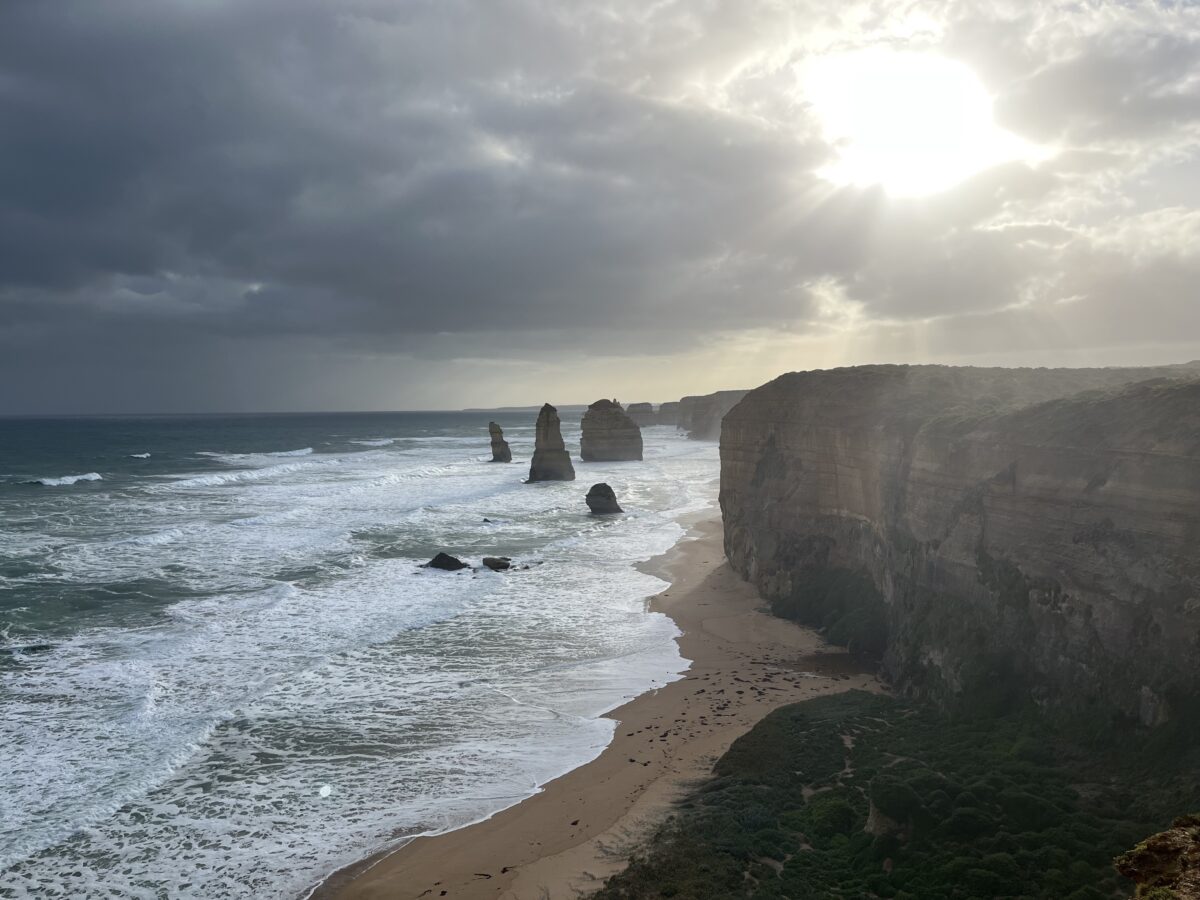
Seeing the Apostles for the first time is surreal. They rise out of the water like enormous carved pillars, and it genuinely took my breath away. We walked along the viewing platforms, trying (and failing) to take photos that captured how massive they are. The wind nearly blew us sideways, but that just added to the drama.
Next we headed to Gibson Steps, where you can actually walk down to the beach and stand eye-level with the limestone cliffs. It gives you an entirely different appreciation of the landscape, and it’s a lot quieter than the main viewpoint.
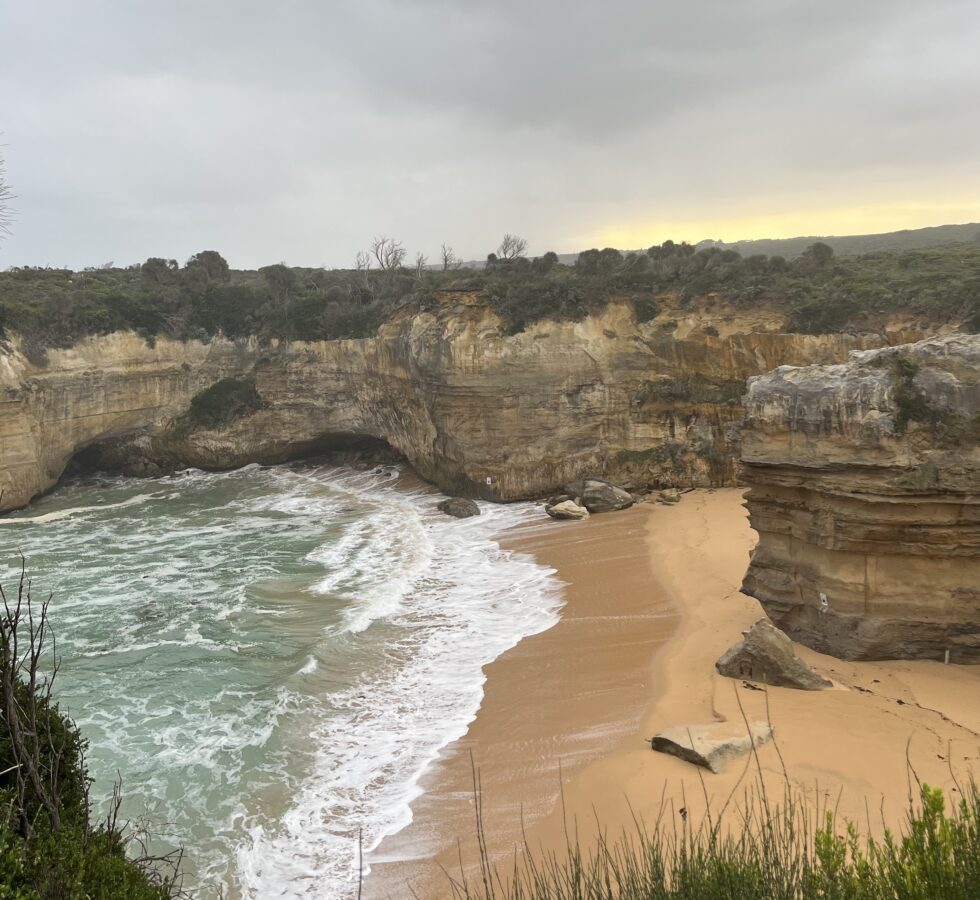
Our final stops were Loch Ard Gorge, The Razorback and London Arch, each one like its own mini attraction. Loch Ard Gorge was my favorite: turquoise water, golden cliffs, and a sheltered cove that feels almost unreal.
We ended the day in Port Campbell, a tiny, charming town right next to all the major sights.
Optional Day 4: Port Campbell → Bay of Islands → Back to Melbourne
If you’ve got an extra day, keep driving west to the Bay of Islands. It’s quieter than the Twelve Apostles but just as beautiful, with huge offshore rock formations and far fewer people.
From there, you can loop back inland through farmland and small towns before returning to Melbourne. It’s a long driving day, but completely doable—especially if you happen to be in a vehicle the size of a billboard.
Where to Stay Along the Great Ocean Road
Where you stay along the Great Ocean Road really shapes the feel of your trip, and because each town has its own personality, I’d recommend splitting your nights across at least two stops. We did a mix, and it worked perfectly.
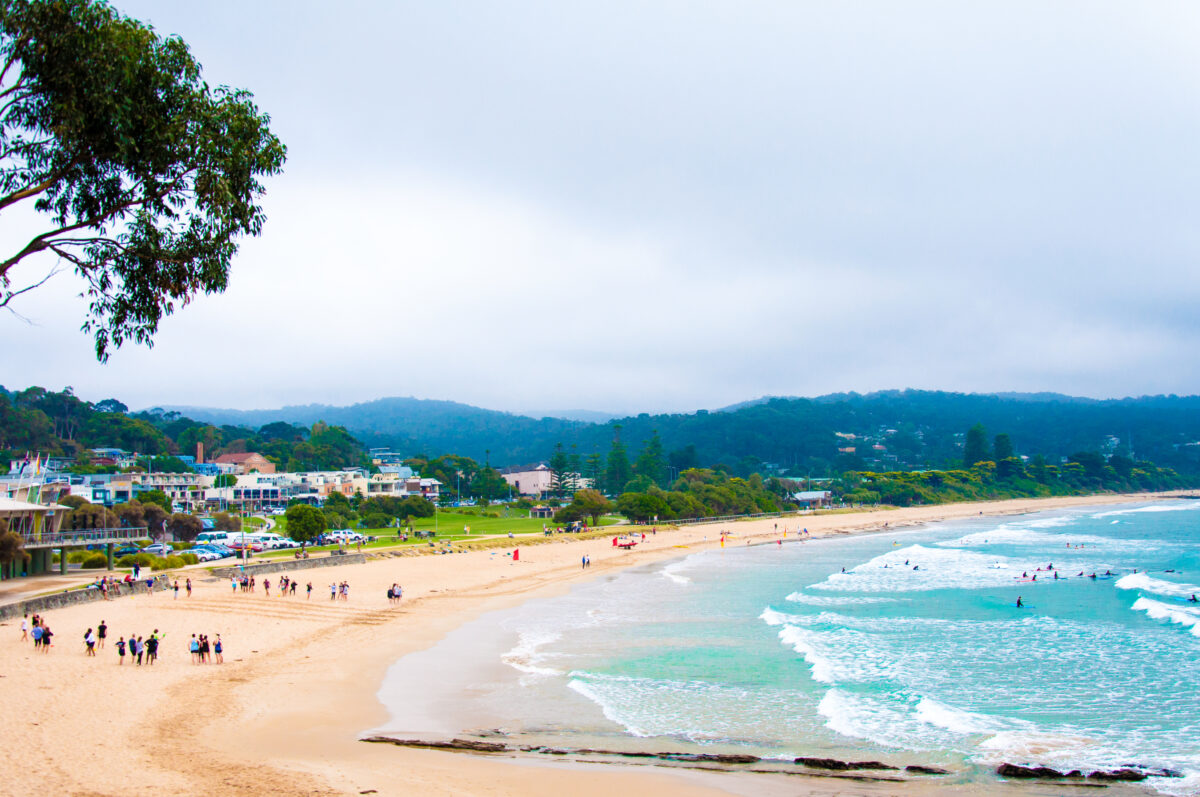
Lorne is an ideal first stop. It’s lively without feeling hectic, with great cafés, a long sandy beach, and plenty of accommodation ranging from simple motels to boutique stays. It’s the kind of place where you can wander out for morning coffee and run into surfers still dripping from their sunrise session. We stayed here on our first night and loved the energy.
Apollo Bay makes the perfect halfway base. It’s quieter and more relaxed than Lorne, with a big curved beach and a handful of restaurants that keep things easy. A lot of people skip it and rush towards the Twelve Apostles, but that feels like a mistake. Staying here means you get the rainforest, coastline, and town charm all in one place.
Port Campbell is where you want to be for the big-ticket sights. It’s only a few minutes from the Twelve Apostles, Loch Ard Gorge, and the Razorback, so waking up early to see everything before the crowds is incredibly easy. Accommodation is more limited, but there are good mid-range hotels and cosy guesthouses that make it a convenient final stop.
What to Pack + Road Trip Essentials
Packing for the Great Ocean Road is a bit of an art because Victoria’s weather cannot make up its mind. One minute it’s blazing sunshine, the next you’re rummaging for a jumper—so layers are your best friend. I lived in comfy shorts, a light fleece, and a waterproof jacket that came on and off about twelve times a day.
You’ll also want good walking shoes, especially for waterfall trails and cliff walks, plus a swimsuit and towel for those spontaneous beach stops you absolutely will make. Snacks are essential, as is a solid playlist—it sets the tone for the whole drive.
Mobile signal drops more often than you’d expect, so download an offline map (and your best playlists) before you leave Melbourne.
The goal is comfort, practicality, and embracing a bit of chaos (because isn’t that half the fun of a road trip anyway)?