
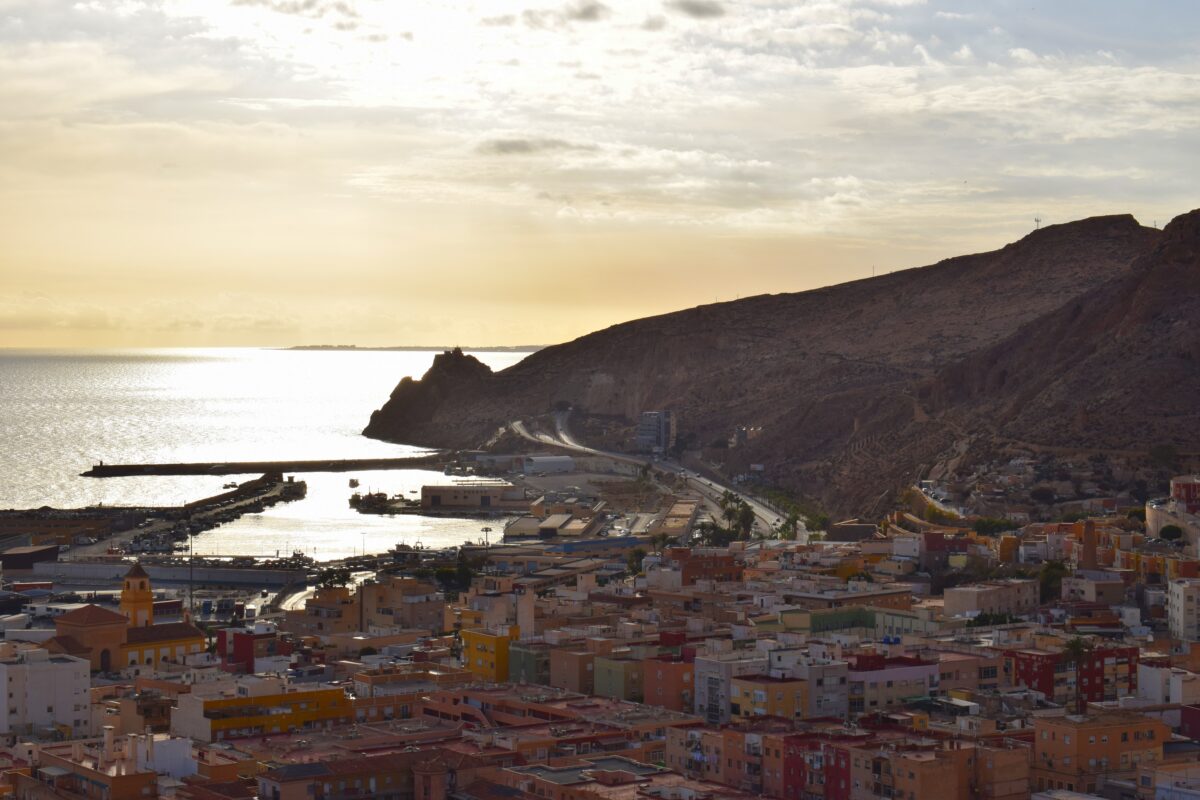
Cinematic is a great adjective to describe Almería. Located between Cartagena and Malaga, this port town offers some of the most dramatic views in Spain. It serves as a perfect alternative to the busy resorts of Costa Blanca and Costa del Sol, mesmerizing you with vast sandy beaches, untouched marine natural parks, and impressive Moorish landmarks. It’s also a vibrant Spanish seaside town, where mass tourism hasn’t yet arrived, allowing for a very local experience.
And then, of course, there’s the movie history—since the 1970s, Almería has become a Hollywood darling, providing mesmerizing backdrops to high-budget productions, such as Indiana Jones, Cleopatra, Lawrence of Arabia, and even Game of Thrones. There’s a lot to unpack here, so let’s see why Almería should be high on your Spanish itinerary.
Best Beaches
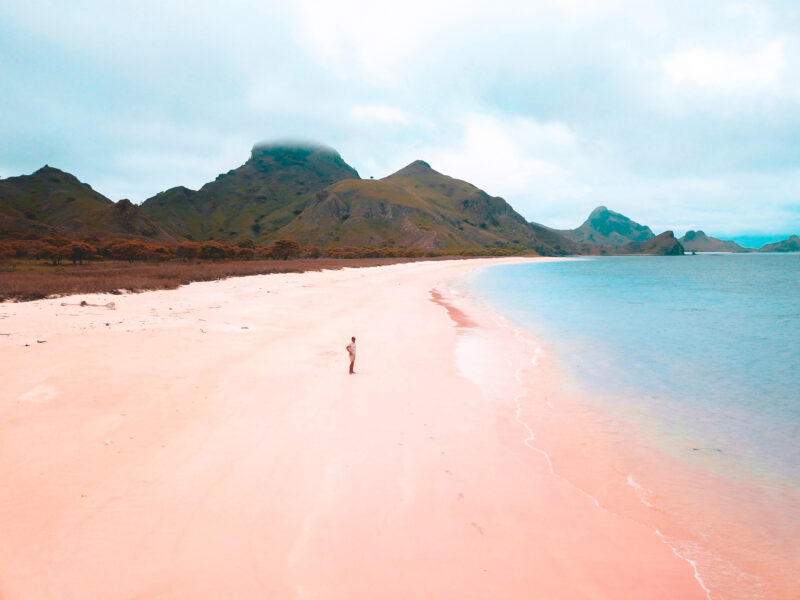
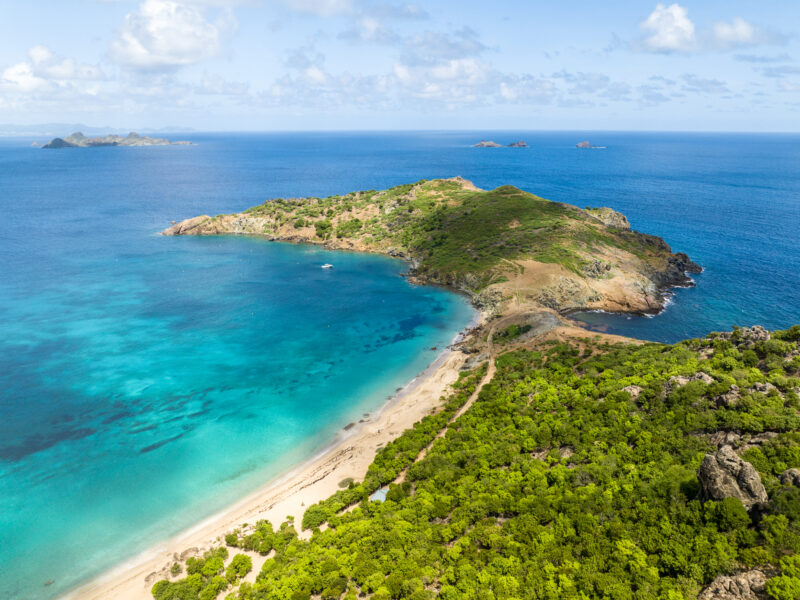
First and foremost, Almería is the ultimate beach town. But typically, when locals refer to Almería beaches, they include those outside the city borders, within the spectacular Cabo de Gata-Níjar Natural Park. This 190-square-mile area is among Spain’s most spellbinding natural attractions. Barren and isolated, it is home to breathtaking beach gems, where naturism is widely practiced. Here’s where to find the best beaches in Almería and beyond.
Zapillo
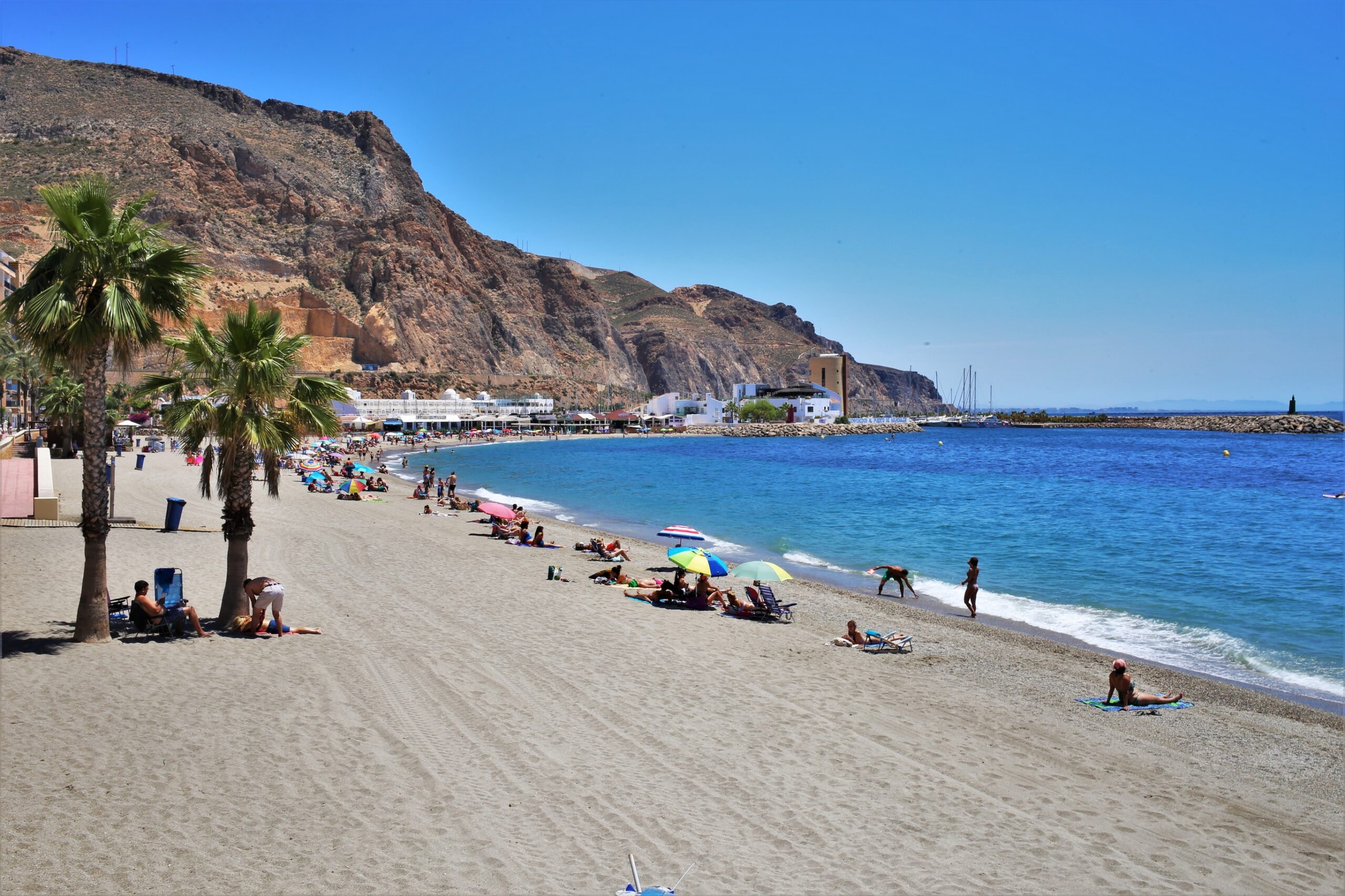
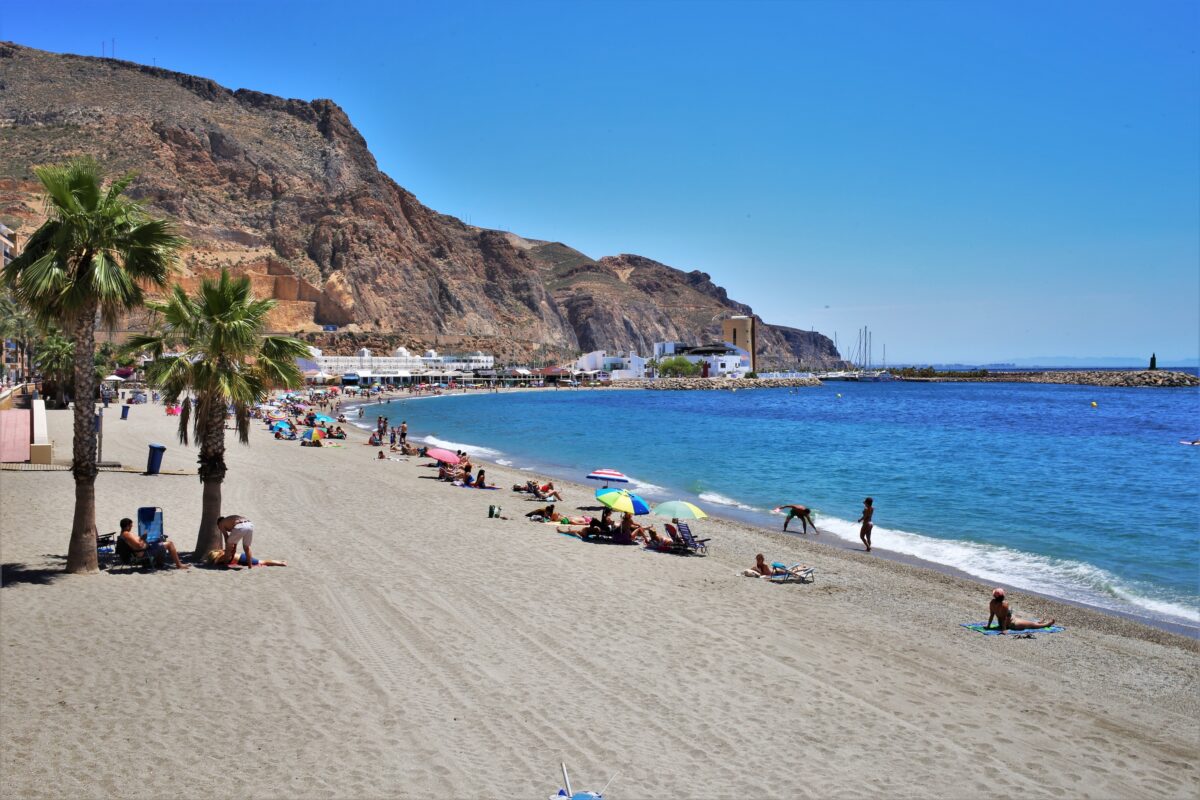
A quintessential Spanish urban beach, Zapillo has everything for spending a great time by the blue water. Stretching for a mile south of the city center, it’s ideal for sunbathing, strolling, jogging, running, sunset-watching, and bar-hopping. There’s a promenade with seafood-serving restaurants, casual tapas bars, and cozy cafes for year-round terrace living. What else do you really need for a good seaside life?
Playa de Mónsul
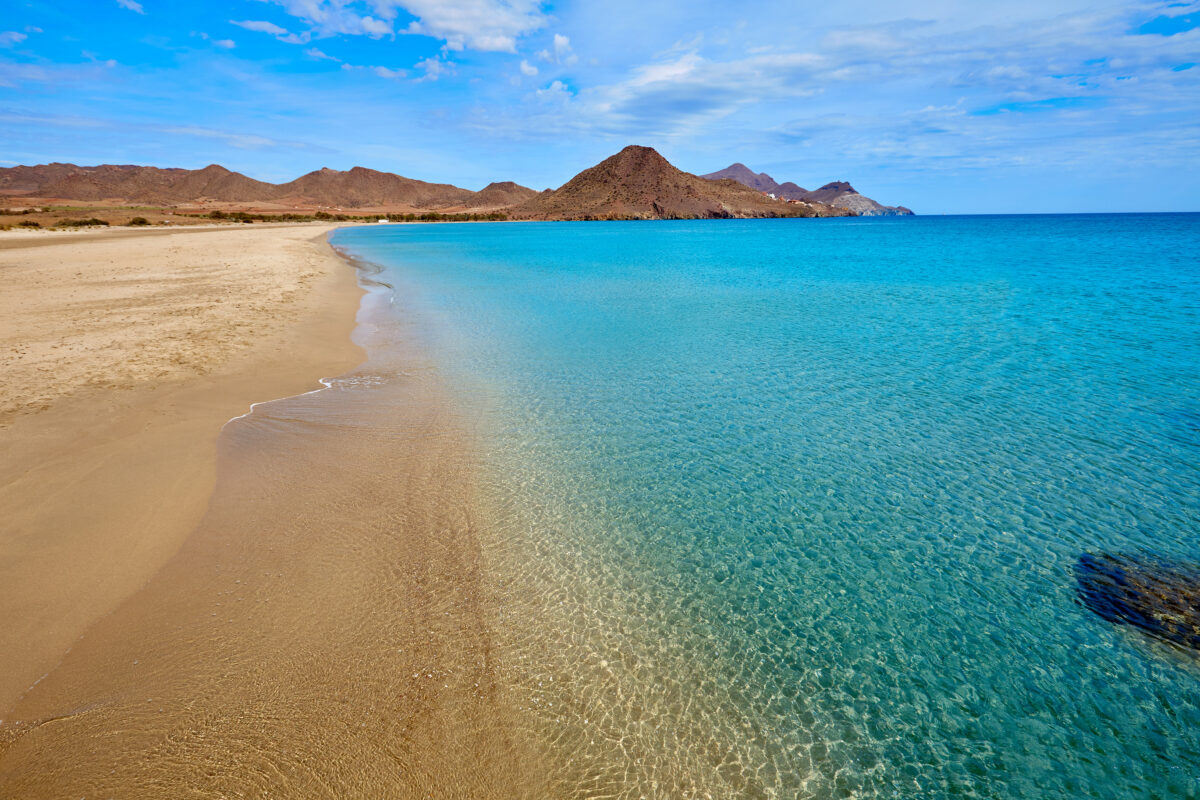
When someone uses “Almería” and “beach” in a sentence, Playa de Mónsul is usually a place they have in mind. Cabo de Gata’s most precious jewel, it is the gorgeous wild beach, backed by the brown volcanic mountains. You might have deja vu here. Mónsul was featured in some of the most iconic ’80s films, such as “Indiana Jones and the Last Crusade,” “The NeverEnding Story,” and “The Adventures of Baron Munchausen.”
Playa de los Genoveses
This one is for the lovers of the “end of the world” kind of beaches. Playa de los Genoveses is an isolated bay in the Cabo de Gata-Níjar Natural Park. Flanked by the mountains, it offers soft golden sand and calm waters. A difficulty of access adds to the remoteness—there’s no public transport, so you’d have to walk from the nearby town of San Jose. The virgin looks and the larger-than-life panoramas are definitely worth the hike.
Playa de San José
Looking like a transplant from Gran Canaria or Tenerife, San José is the most popular resort town in Almería province. Located among the arid landscapes of Cabo de Gata, its whitewashed houses stand out against the yellow desert colors. The local beach is a top family-friendly stretch, offering plenty of space, soft sands, and clear waters.
Playa de La Calilla
Another notable San Jose beach, La Calilla, is a tiny sandy cove, surrounded by rocks. Apart from the beautiful vista of the mountains and the town, it’s the go-to spot for snorkeling. Sheltered outline and shallow water access made this beach a family favorite in the area.
Cala Rajá
This one is for the adventurers. It’s an untouched cove in the heart of the rocky Cabo de Gata coastline. You can only reach it by a moderate hike through the volcanic mountainous valley. Wear your best walking shoes, grab your snorkeling gear, and enjoy this ultra-scenic trail. Cala Rajá is mostly sandy, with rocky borders, where all the snorkeling action is.
Where to Eat & Drink
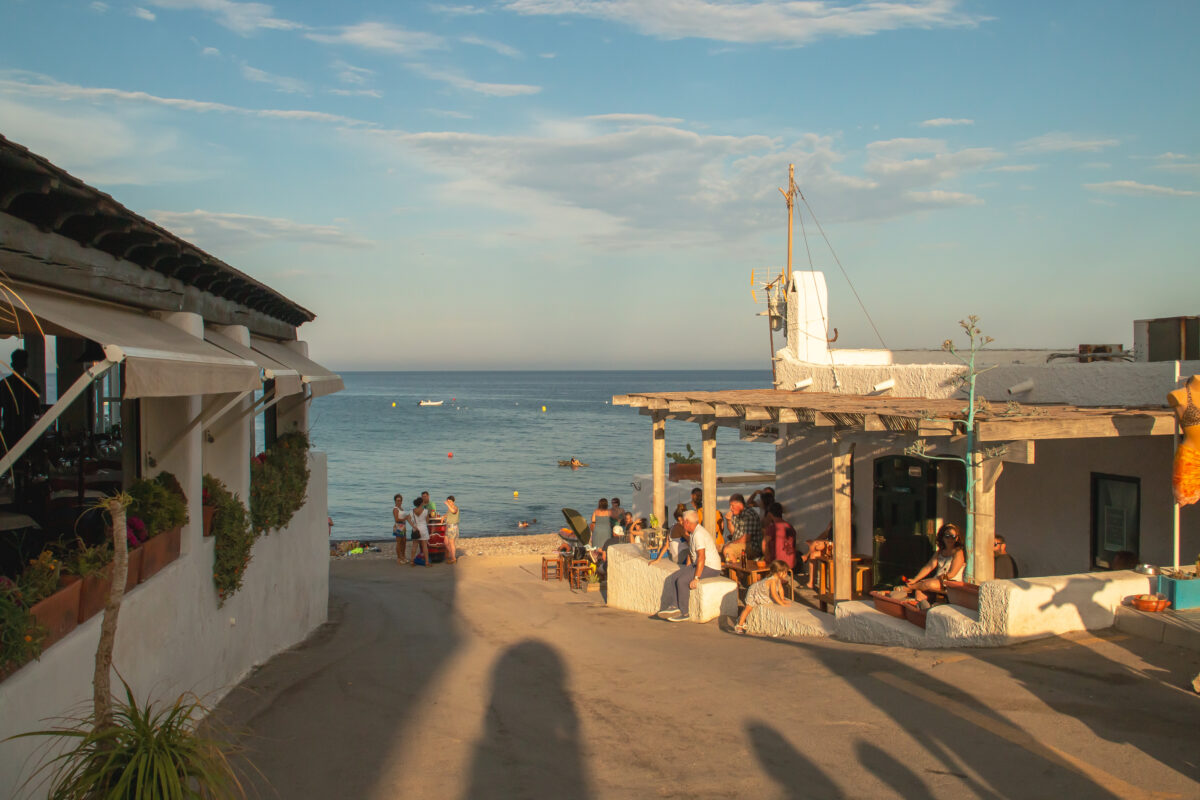
While the cuisine of Almería is classic Mediterranean, several regional peculiarities make the local recipes unique. The seafood is king on the dining table, but it’s also about the fruits of the land, such as dates, potatoes, oranges, prickly pears, and table grapes. The stews, grilled seafood, and soups are the basis of Almería’s food. You’ll also find a strong tapas culture here.
As a rule, the first place in any Spanish city to immerse yourself in food traditions is the fresh market. Almería’s Mercado Central is a perfect introduction to local dining. Restaurante Ibéricos Ortuño, inside the market hall, is where you sit down for delicious tapas.
Other local tapas superstars are El Quinto Toro, Casa Puga, and Jovellanos 16. Also, check out La Consentida Brasería, a long-running tavern with a wide choice of Spanish dishes and an extensive tapas selection. For a creative take on local cuisine, visit the fine dining hits, such as Tony Garcia Espacio Gastronómico and Restaurante Gines Peregrin.
Nightlife in Alicante is loud and energetic. An area locally known as Cuatro Calles (or Four Streets) is the epicenter of all the bar and nightclub action. Head to the quarter between Plaza de la Catedral and Plaza Marqués de Heredia for the biggest concentration of drinking establishments. La Bambalina is a busy bar, offering free tapas with drinks. Canta La Gallina is for cocktails in a relaxed setting. Go to Terraza Urbana Ático for a superb rooftop view over Paseo de Almería.
Things to Do Beyond the Beach
Almería is a city with one of the most evident Muslim influences in Spain. An important port of the Al-Andalus Kingdom, it was founded by the Córdoba-born Caliph Abd al-Rahman III in the 10th century. The Moorish rule gave the city its most famous attraction, the breathtaking Alcazaba fortress. Beneath the stronghold are the labyrinthine streets of the cozy Old Town. Here’s what to do in Almería beyond the beach.
Alcazaba
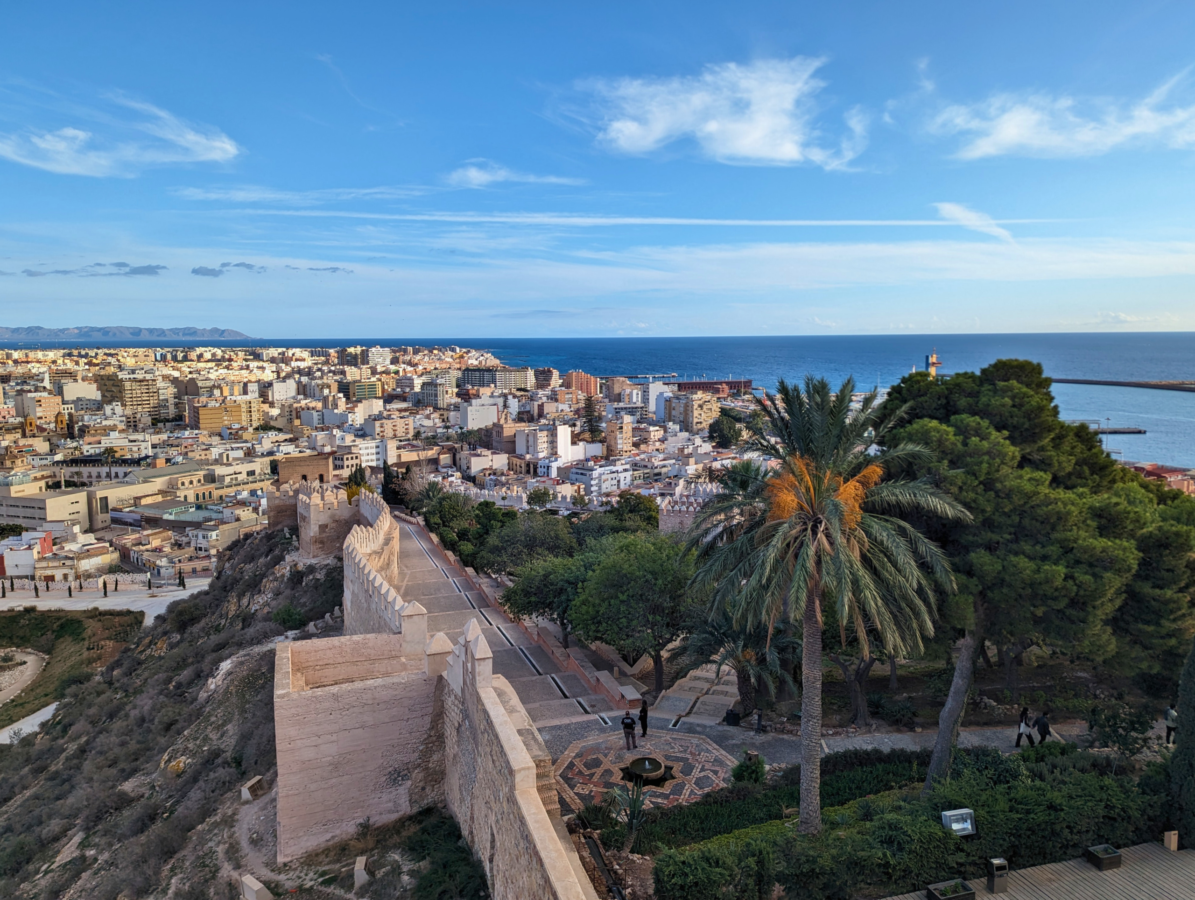
I have seen all the major Moorish fortresses in Spain. While the ones in Granada, Seville, and Malaga are stunning, it’s the Almería’s Alcazaba that has the most epic look. Constructed in the 10th century to defend the port, it’s a gargantuan hilltop complex of defensive walls, intricate gates, waterways, gardens, and former royal buildings. The Alcazaba is also the best viewpoint in the city, offering magnificent views of the barren mountains, blue sea, and the city rooftops.
Almería Cathedral
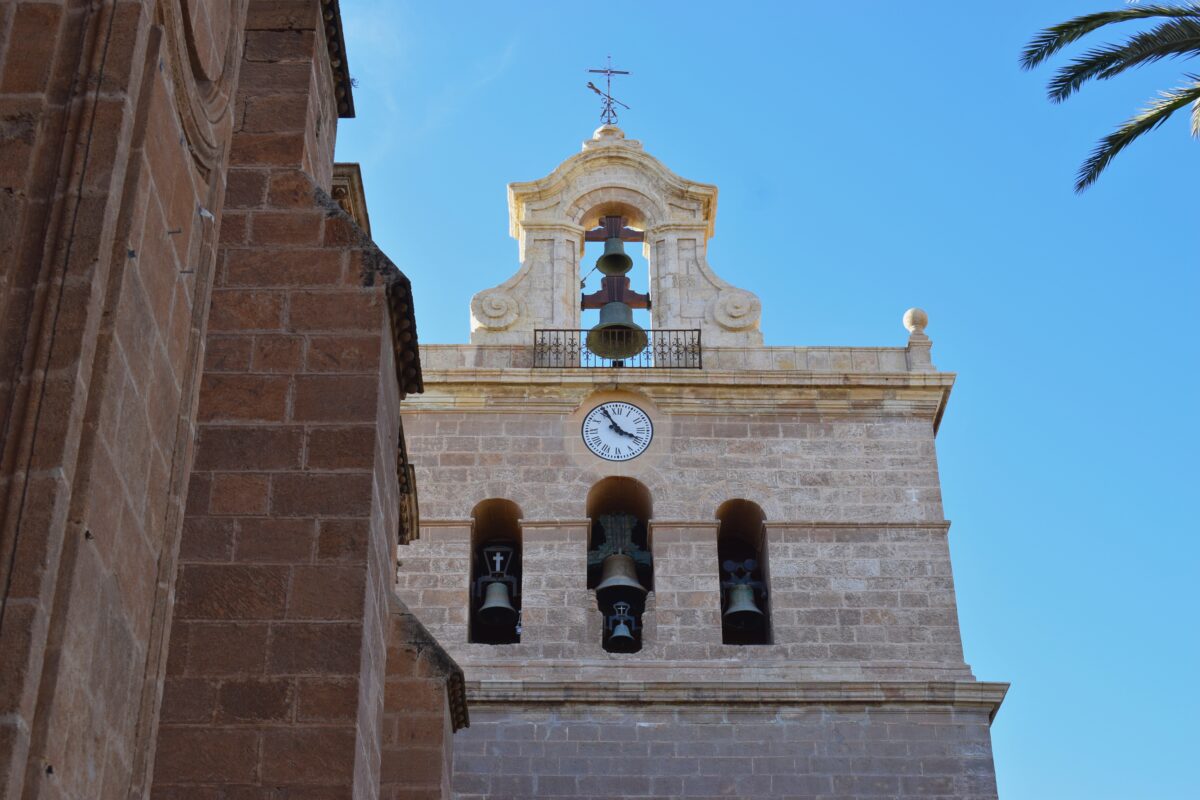
Austere and monolithic, Cathedral Encarnación de Almería is the opposite of the flamboyant Sagrada Familia Church in Barcelona. Combining Gothic and Renaissance features, this 16th-century-built attraction doubled as a fortress to defend the city against the Berber pirate attacks. Step inside for a gold-filled interior and a charming palm tree-dotted cloister.
Tabernas Desert
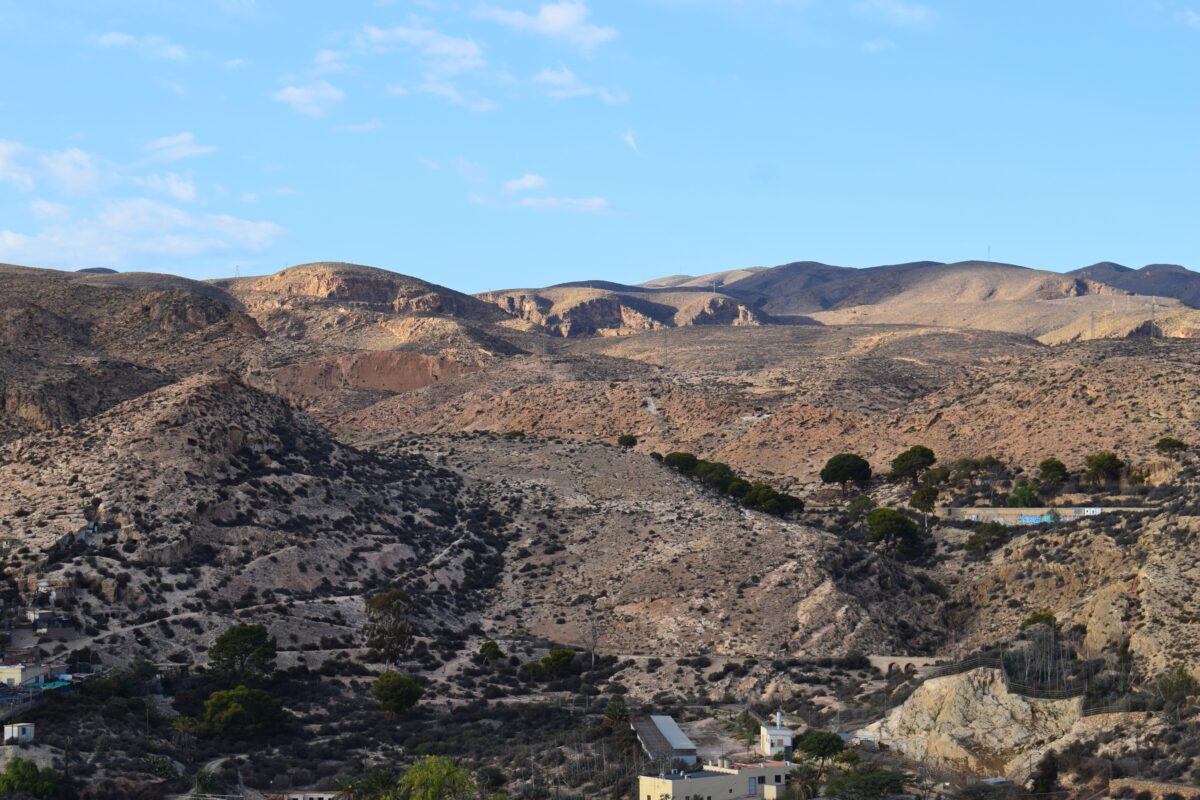
Almería is a gateway to a unique natural attraction. Located 20 miles away is Tabernas, Europe’s only desert. The scenery here is very much Californian–it’s easy to mistake yourself for being in Death Valley. This resemblance to US landscapes was successfully utilized in the so-called “Spaghetti Westerns” of the 1960s and 1970s, when directors like Sergio Leone filmed their movies in this province. Even without the filmmaking background, the badlands are beautiful. Hike the Tabernas Loop for a full immersion into the desert landscapes.
MiniHollywood Oasys Theme Park
The Wild West comes alive in Oasys. It’s a family-friendly theme park on the fringes of Tabernas Desert, notorious for “playing” Yucca City, a fictional US town from Sergio Leone’s 1965 Western “For a Few Dollars More.” The entertainment program includes dining in a saloon, observing a reenactment of a cowboy shootout, exploring an abandoned gold mine and meeting camels, giraffes and rhinos at the zoo.
Where to Stay
Ohtels Gran Hotel Almería
Fully renovated in 2025, Ohtels is a great option for residing in Almería’s center while enjoying the sea views. This four-star high-rise is conveniently placed between the Old Town, the port, and the beaches of the Zapillo neighborhood. The outdoor pool is a great bonus to your stay.
Barceló Cabo de Gata
If you’re after the turnkey resort experience, Barceló Cabo de Gata is the one. It’s the ultimate getaway accommodation. Relax in four outdoor pools, treat yourself at the spa complex, and try various water activities at the private beach. Keep in mind that the resort is in Retamar, a tourist settlement between Almería Airport and the Cabo de Gata Natural Park, offering quick access to both.
Aire Hotel & Ancient Baths
Aire is a perfect boutique hotel in the very heart of Almería. The selling point here is the view. You’ll wake up to the fantastic panorama of the Alcazaba fortress. There’s an Instagram-friendly rooftop pool with a bar for an even more scenic stay. You can also book a thermal bath program with a massage at the spa.
Best Time to Visit
There are two things you should know about Almería’s weather. It’s officially the driest city in Europe, and it has never recorded a temperature below freezing. The town has a transitional climate, combining the features of a hot semi-arid and a hot desert climate.
In other words, it’s a year-round destination. Summers tend to be extremely hot. Temperatures above 40 degrees Celsius are not that rare here. Considering that local beaches don’t have much vegetation, July and August may be too sunny for some. However, if you (like me) prefer summer heat and long days, it’s an ideal time to come.
Spring and autumn are the best seasons to visit Almería. The weather is steadily warm, the sea temperatures are great for swimming, and there’s no scorching heat. It’s a great time to explore the historical monuments, relax on the golden sands of Zapillo, and embark on long hikes in Cabo de Gata-Nijar Natural Park.
Insider Tips / Hidden Gems
- It’s best to rent a car. The best beaches are in the Cabo de Gata-Nijar Natural Park, and the public transport links are infrequent.
- Don’t underestimate the Costa de Almería sun. Always apply sunscreen before going out and lounging on the beach. A head cover is advised for hikes in the desert.
- Almería is easily reached by fast intercity trains from Madrid, Alicante, and Granada. There’s also a small international airport, mostly serving low-cost airlines such as EasyJet, Iberojet, and Vueling.
- The Old Town and port area are very pedestrian-friendly. You can easily reach all the major attractions on foot.
- Take an easy day trip to Roquetas de Mar and Aguadulce for more beautiful sandy beaches of the Costa de Almería province.