
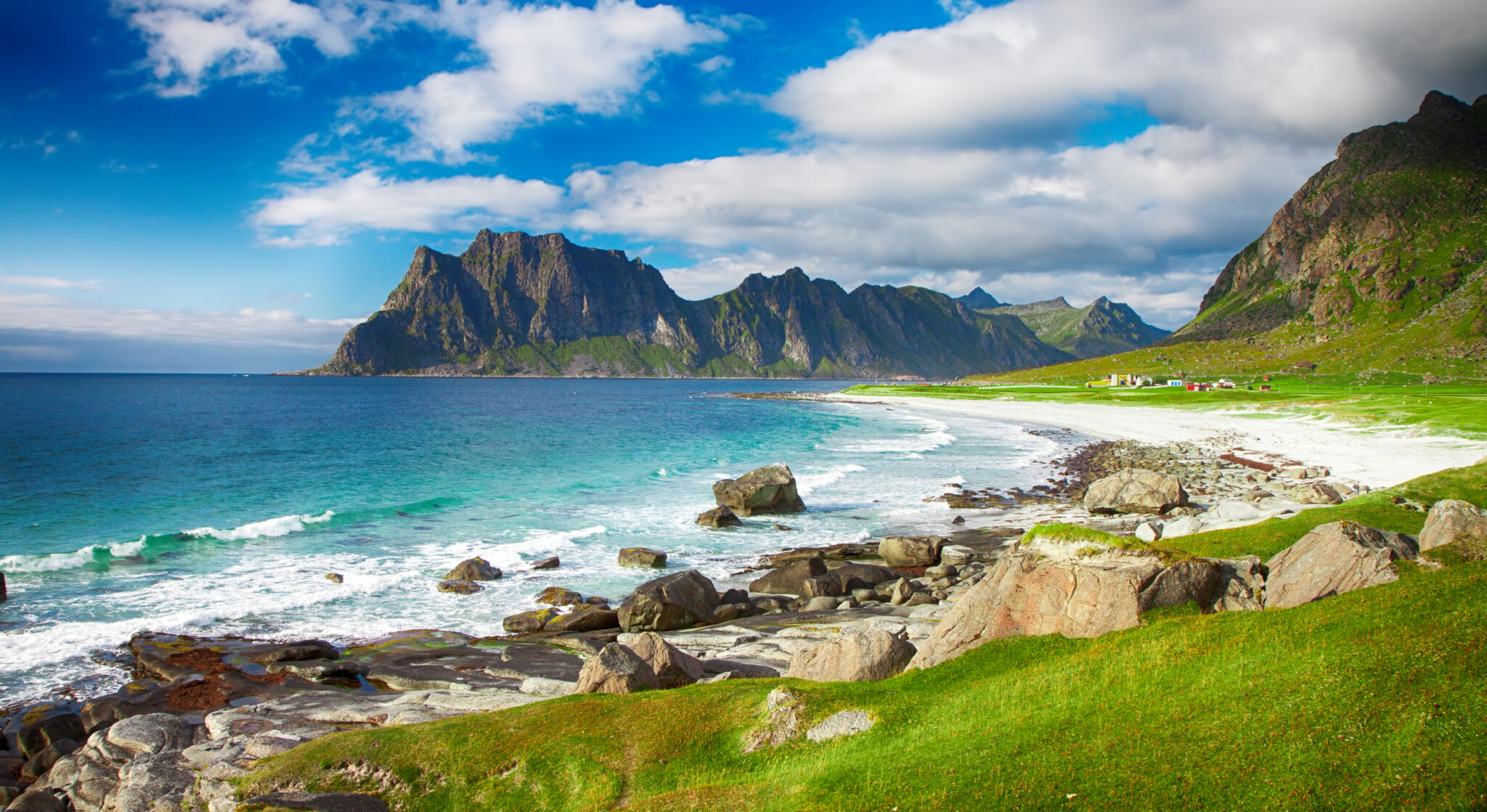
When you think about the Arctic, you probably envision a frozen wilderness with endless snow, an extreme environment where animals like reindeer, Arctic foxes, and polar bears battle the elements. But the Lofoten Islands in Norway offer a surprisingly world-class beach experience that can visually rival any tropical destination, despite being located above the Arctic Circle. Think snow-white beaches with fine powdery sands, lapped by strikingly clear, brilliant turquoise waters reminiscent of the Caribbean, and a backdrop of jagged mountain peaks rising from the shoreline.
The warm Gulf Stream keeps the coastal water temperatures milder compared to other areas at the same latitude, but of course, it’s not going to be bathwater warm. Still, many come to swim while others simply enjoy a refreshing dip while surrounded by the breathtaking scenery. Either way, it’s an invigorating experience that causes the body to release feel-good hormones like dopamine and endorphins, providing a buzz of happiness that can last long after you leave the water.
Even if you aren’t up for the chill, there are plenty of other things to do at Lofoten’s beaches. They’re not only a photographer’s dream, but from around late May through mid-July, the sun never sets, making them perfect for strolling across the sand or paddling across the calm water in a kayak late into the night, a phenomenon referred to as the Midnight Sun. Throughout the archipelago, there are dozens of stunning stretches, but these beaches are truly what fantasies are made of.
Haukland Beach
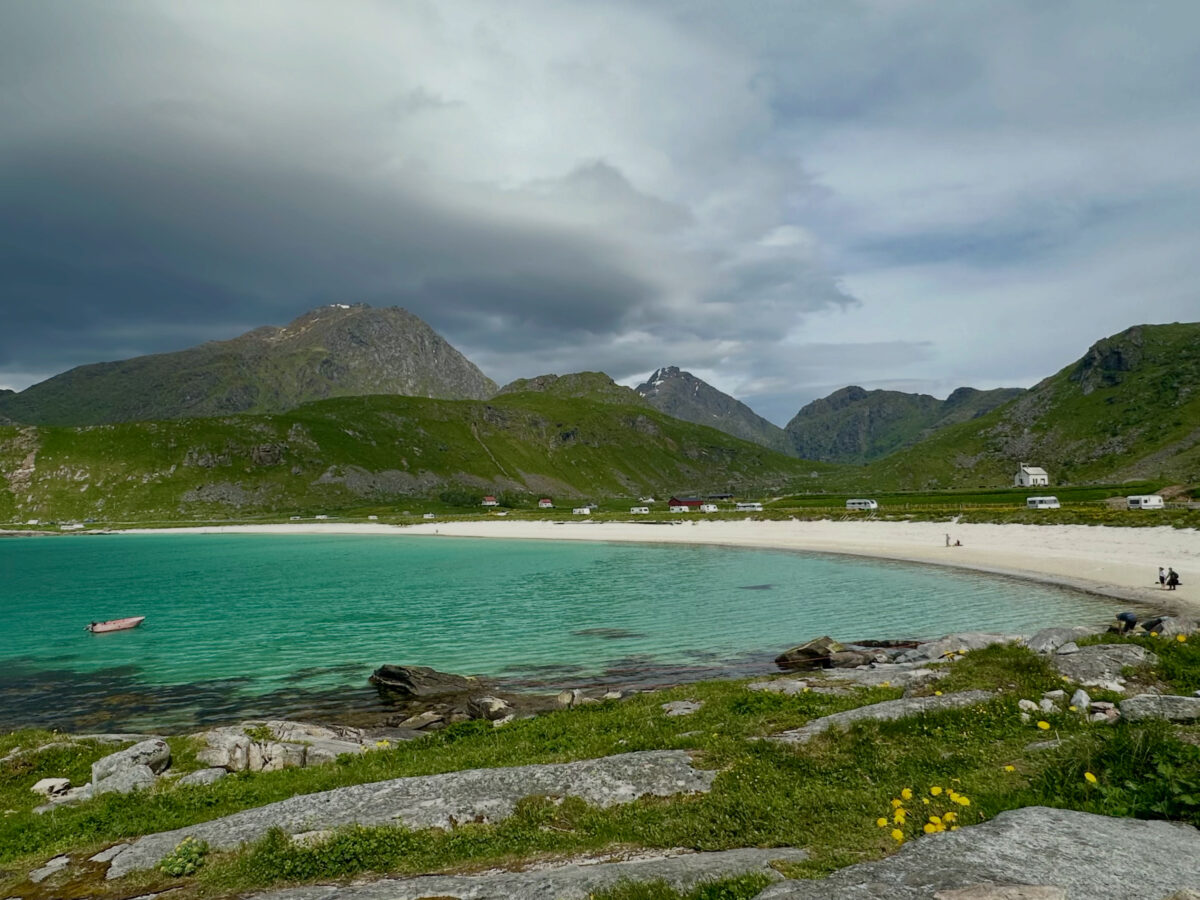
No exaggeration, when I first saw Haukland Beach, my eyes teared up. One of the most beautiful places I’ve ever seen, those images many assume must have been digitally altered won’t prepare you for the vision that awaits when you actually get there. Yes, that water is surreal, in hues of azure, teal, and transparent turquoise, contrasted against the chalk-white sand, a perfect crescent framed by emerald hills and mountains streaked by the last of winter’s snow.
A hike to the top of Mount Mannen, rising directly above Haukland, offers panoramic views of the beach and its surrounds. Afterward, there’s no better grand finale than a dip in that enticing water followed by food and drink at the beach cafe with a menu of homemade baked goods, soup, and sandwiches.
Horseid Beach
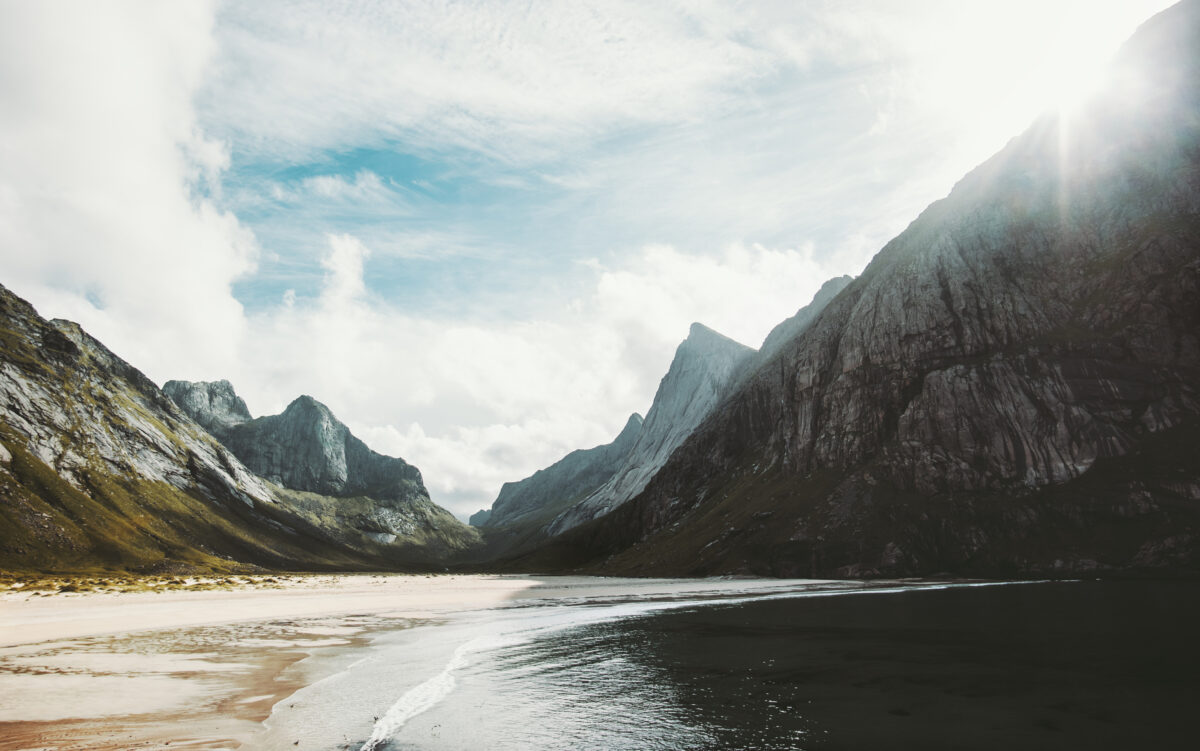
While there were plenty of empty parking spaces and only a handful of others when I visited Haukland (in June!), if you want a guarantee that you’ll have a vast stretch of sand to yourself, head to Horseid. Getting there requires a journey by boat followed by a hike through a mountain pass, but that extra effort deters most tourists. You’ll enjoy an unrivaled sense of Arctic wilderness, with no vehicle noise and no power lines to detract from those postcard-perfect photos.
The beach is hemmed in between the walls of towering granite cliffs, with its chalk-white sand meeting cobalt water and lush valleys. Bring your water bottle to fill it with the clean mountain streams that flow right down to the beach, and perhaps even pitch a tent, with the sand dunes providing shelter from the wind.
Vik Beach
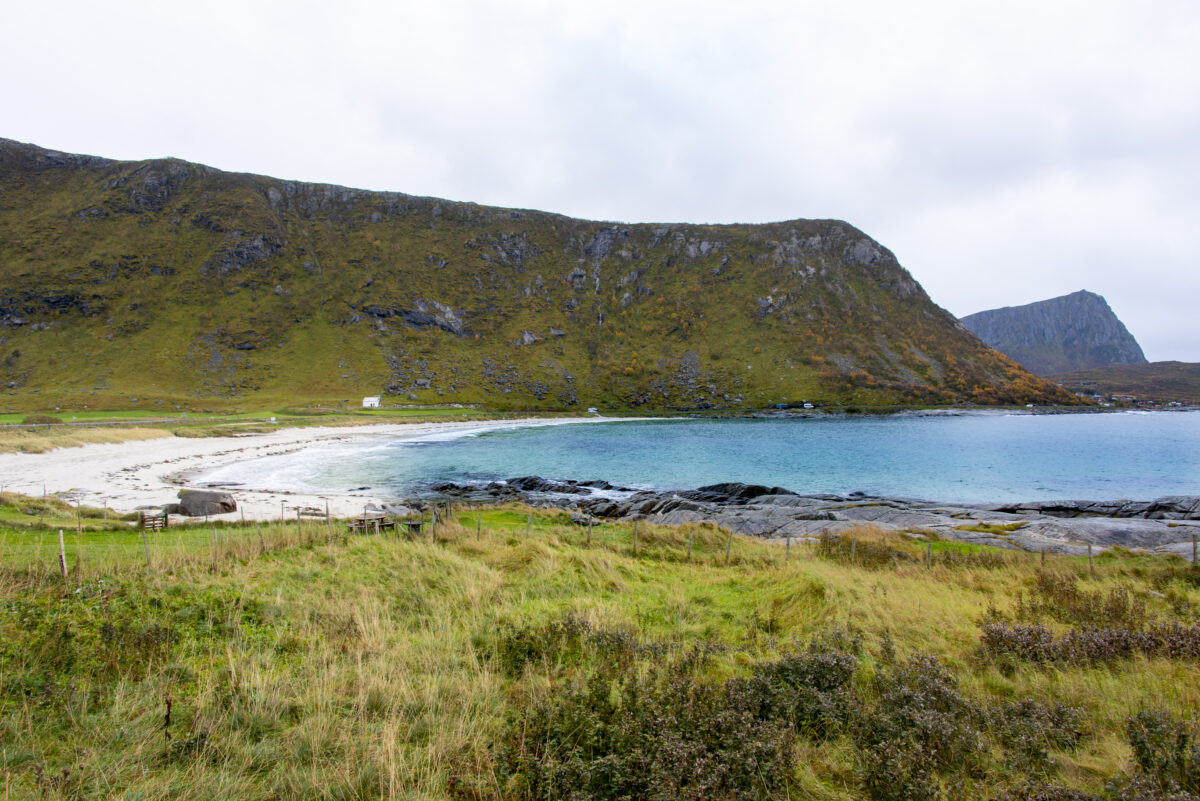
Vik Beach is a curving stretch of glistening white sand with emerald waters and a mountain backdrop, just 10 minutes from the town of Leknes. It’s easily accessible with no hike required, conveniently located right off the main road, yet it offers a serene atmosphere without visits from tour buses. Plus, you can enjoy a two-in-one, as it’s possible to walk to Haukland Beach along the road or via the old mountain pass for a sweeping panorama of the coast.
Outside of the Midnight Sun period, Vik is also an ideal spot for watching the sun go down, with glowing sunset reflections on the water. Due to its northerly exposure, it’s more open than other beaches nearby, making it a great vantage point for watching the northern lights between mid-September and mid-April.
Rorvik Beach
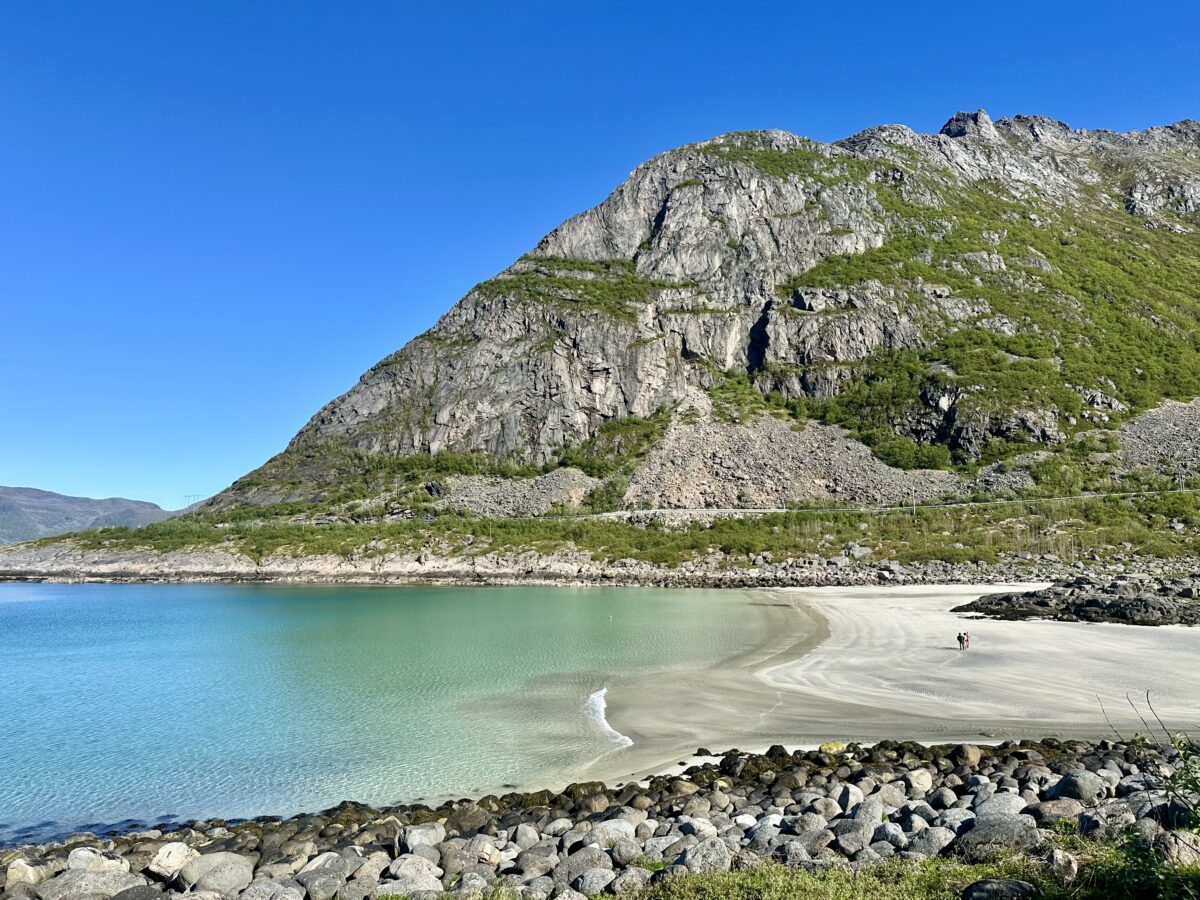
Right off the E10 on your way to nearby Henningsvær, Rorvik is a popular locals’ beach with a wide stretch of white sand at low tide, a river running down it, a view of Vestvågøy, and, as with most beaches in the Lofoten Islands, a spectacular mountain backdrop. Dip your toes in the clear aquamarine water, swim, build a sandcastle, sunbathe, picnic, or enjoy a barefoot walk across the soft sand.
Outside of the Midnight Sun period, Rorvik is another great beach for watching a glorious sunset. In fact, it’s famous for its glowing Arctic sunsets that create a dramatic contrast between the golden glows, fiery crimson skies, and the magnificent color of the sea.
Bunes Beach
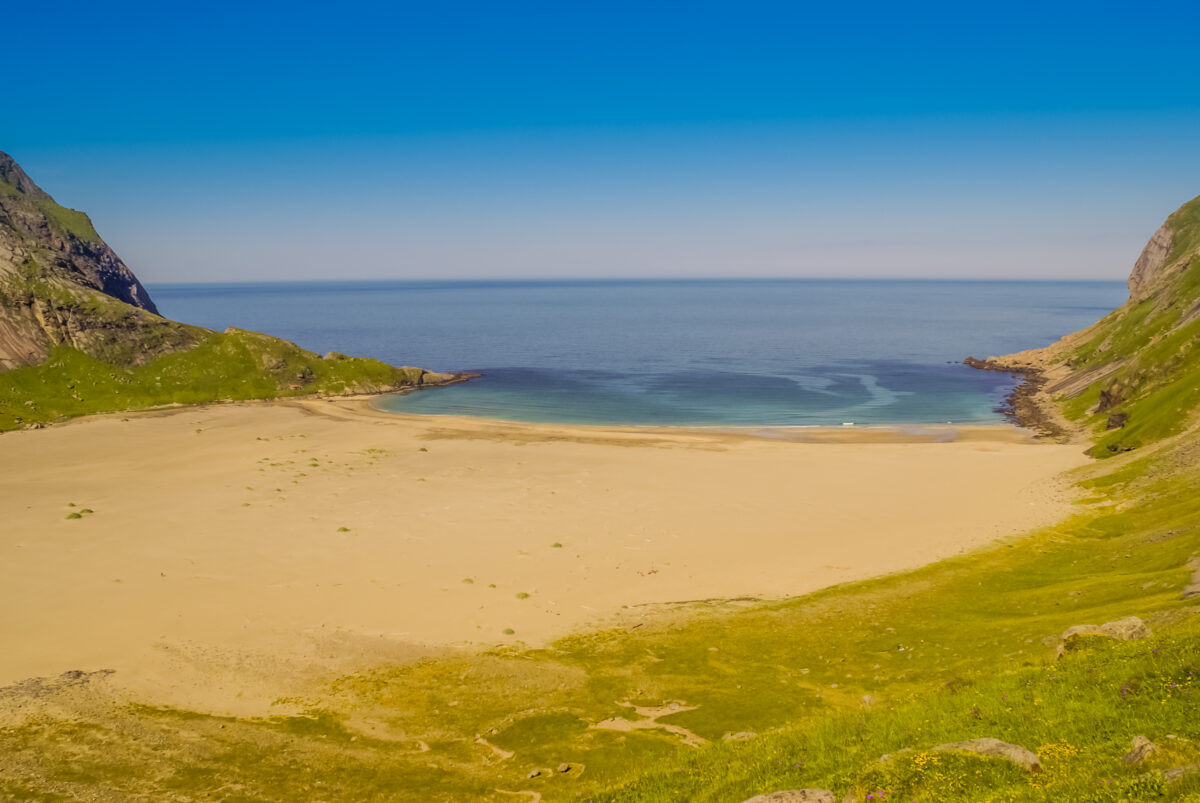
Bunes is another stretch ideal for immersing yourself in tranquil nature. You’ll need to take the ferry to Vindstad from Reine and walk over a mountain pass to reach it (an easy 1.8-mile, roughly 40-minute hike), but your reward is one of the most breathtaking, peaceful destinations. Framed by the towering peaks of Storskiva and Helvetestinden, it offers a true sense of remoteness. Once here, you can brave a chilly Arctic swim, enjoy a long and peaceful walk, and take advantage of the incredible photo ops.
Want to stick around a while? The grassy dunes behind the beach provide one of the best places to camp in the archipelago. Plus, the longer you’re here, the greater the chance that you’ll see orcas that occasionally enter the fjord. Sightings of seals and sea eagles are common.
Ramberg Beach
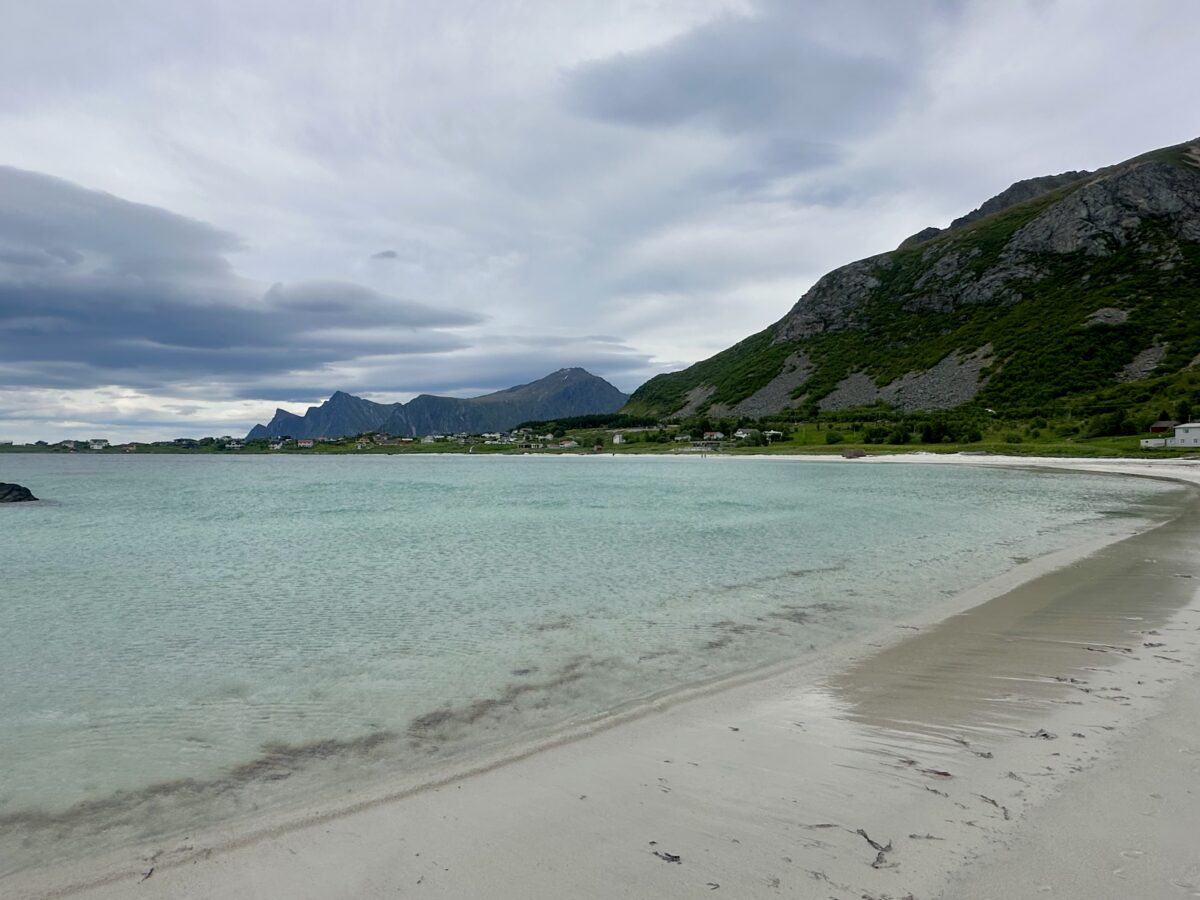
Located on the north side of Flakstadøy directly along the main E10 road when driving south toward Mokenes, you’ll naturally pass Ramberg. It’s practically impossible not to stop, with Lofoten’s classic striking contrast of white, powdery sand, sparkling turquoise waters, and a backdrop of dramatic mountains streaked with snow. You might enjoy a stroll along the sweeping, crescent-shaped coastline while listening to the waves and spotting colorful wildflowers, wade, swim, or just relax. As the beach is wide and open, there’s plenty of room to find your own secluded space to unwind with a dazzling view.
Eggum Beach
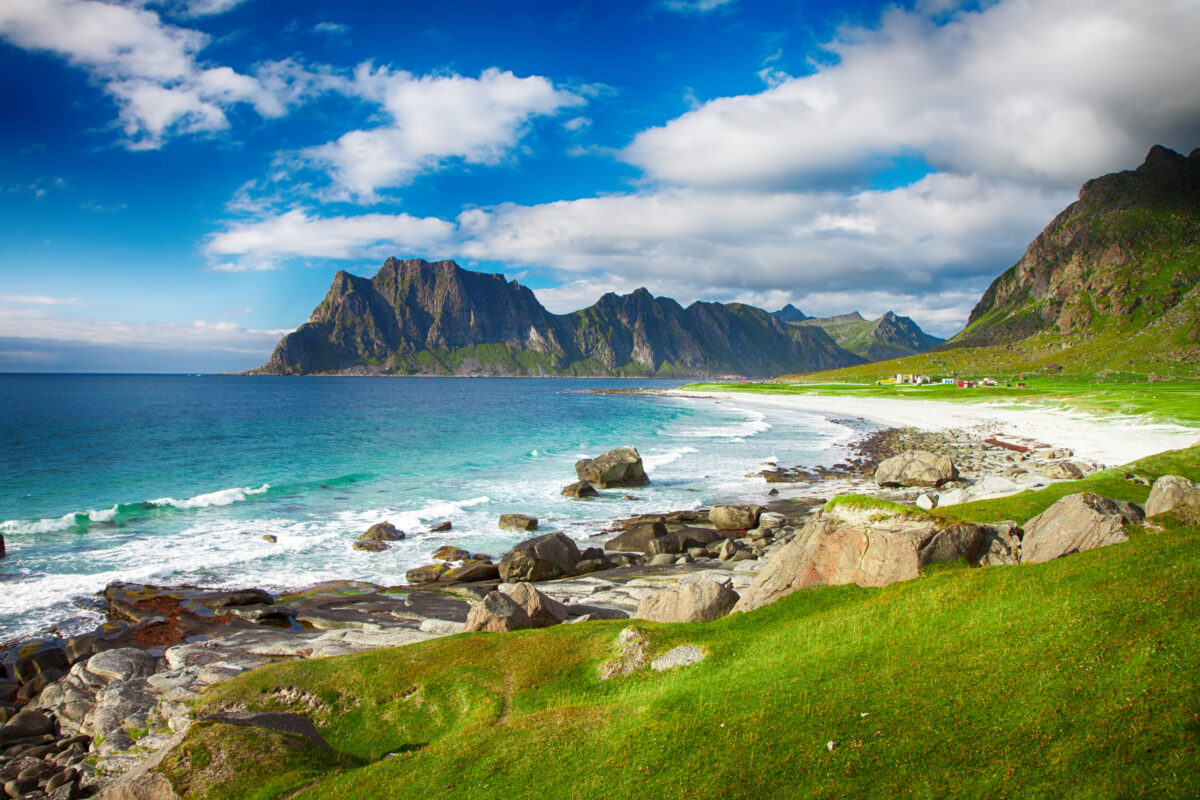
Nestled right next to the small fishing village of Eggum, Eggum Beach offers wild and untamed scenery, exposed to the powerful waves of the Atlantic, unlike most on Lofoten that are sheltered from the open sea. As it faces north, it’s one of the best places in the archipelago for experiencing the Midnight Sun. The waters here are legendary for sea kayaking, with Midnight Sun paddling tours often launching here, and if you’re up for a hike, you can walk to the surfing village of Unstad.
Birdwatchers will find a paradise for spotting various species as the area is a designated nature reserve. Watch for everything from black guillemots and Eurasian oystercatchers to majestic sea eagles that are frequently seen soaring overhead. There’s even something for history enthusiasts here, including the remnants of a WWII German radar station.
Punn Beach
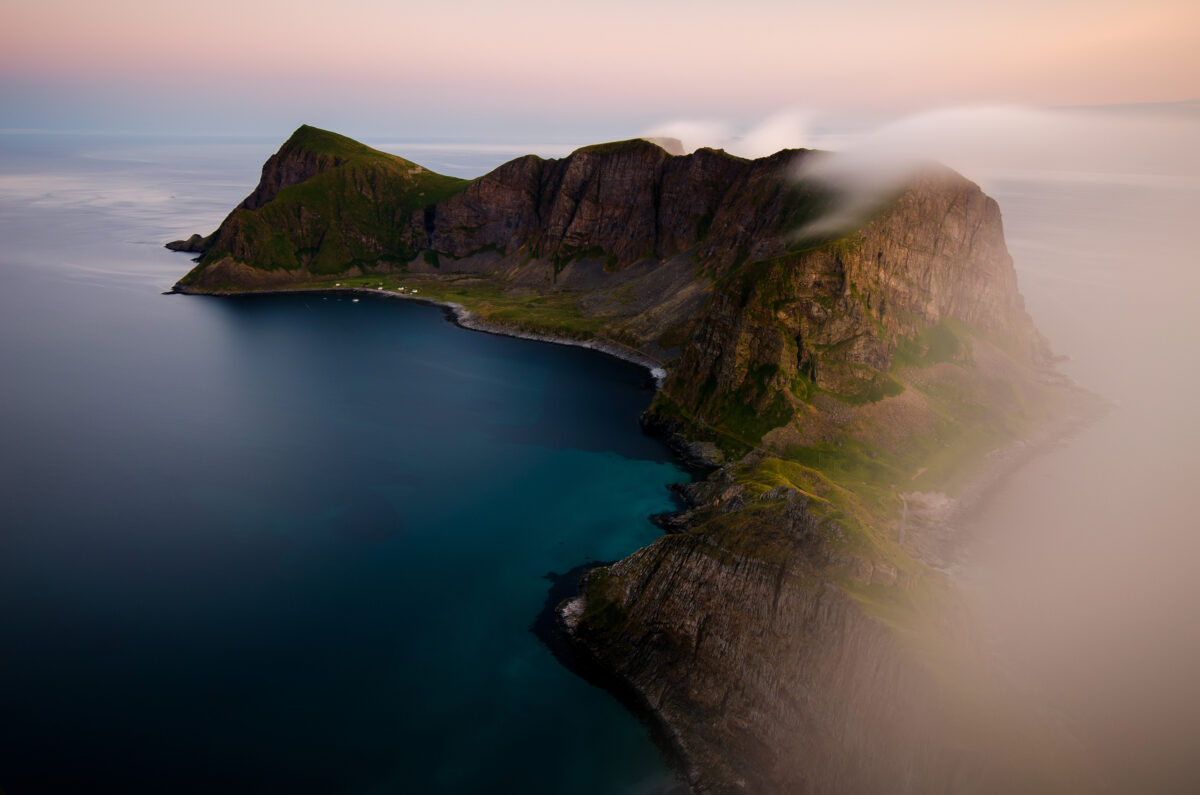
Punn (also known as Puinn Sanden) is located on Værøy Island. It’s been named among the world’s best beaches, remaining pristine and untouched, as it takes some effort to reach. Located beneath imposing mountain slopes, it’s a hidden gem that’s difficult to access without a boat. You’ll need to take a 90-minute ferry ride from one of the main islands just to see it, but to stand on the sand, a local kayak tour or boat safari from the town of Sørland is required. Experiencing this remote and stunning coastal location is worth the effort, and there’s a good chance you’ll enjoy it all to yourself.
Kvalvika Beach
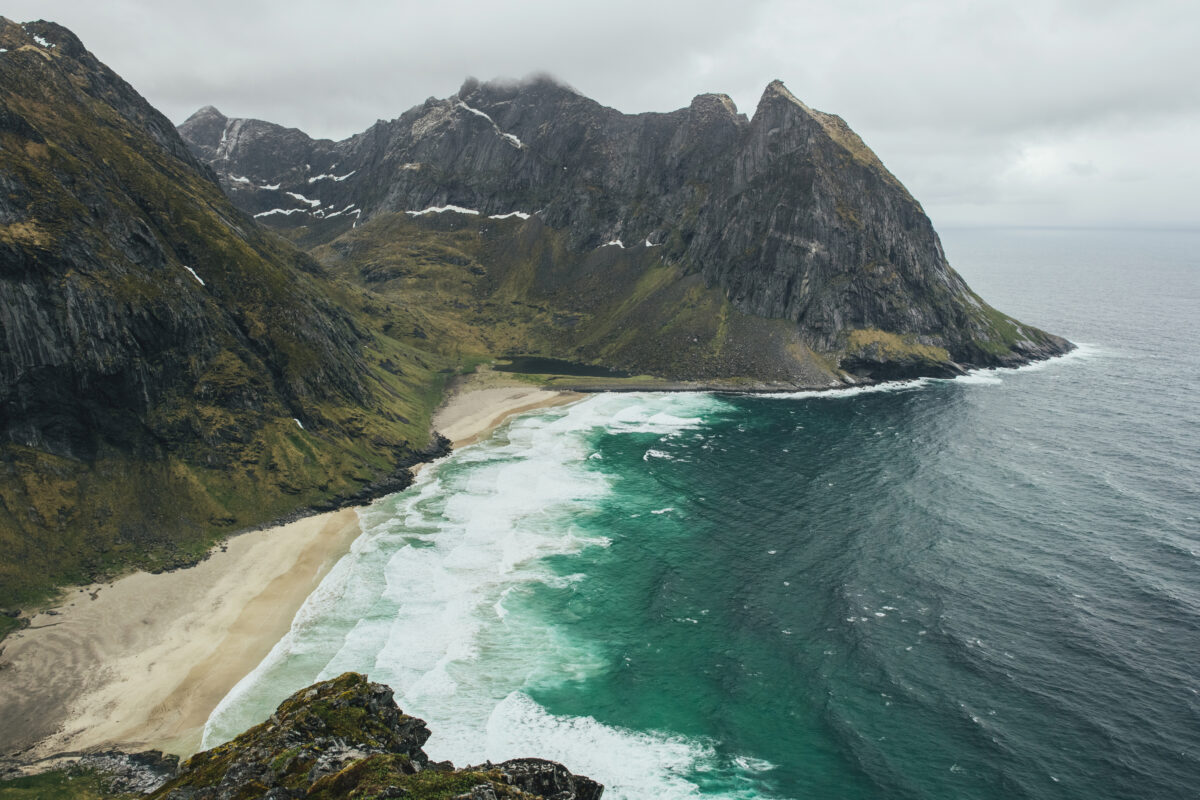
Another one for those up for an adventure, Kvalvika Beach is entirely hidden from the road, accessible only with a scenic hike. It’s surrounded by towering peaks, tucked into a cove between the mountains of Moltinden and Ryten, featuring a sweep of golden sands lapped by emerald water, with no trace of modern civilization. Getting here can take one to one-and-a-half hours, involving many boardwalks, trekking over boggy terrain, and navigating some rocks. The beach trip is often combined with a climb up Mount Ryten for a panoramic view of the beach from above.
Surfers like to visit Kvalvika for its outstanding swells (when conditions are right), but when the water is calm, it’s ideal for an adrenaline-inducing polar dip. The dramatic rock formations and ocean views make it a paradise for photographers. Plus, avid birdwatchers can spot a wide variety of species, including sea eagles, Arctic terns, and Atlantic puffins that inhabit the nearby cliffs.
Uttakleiv Beach
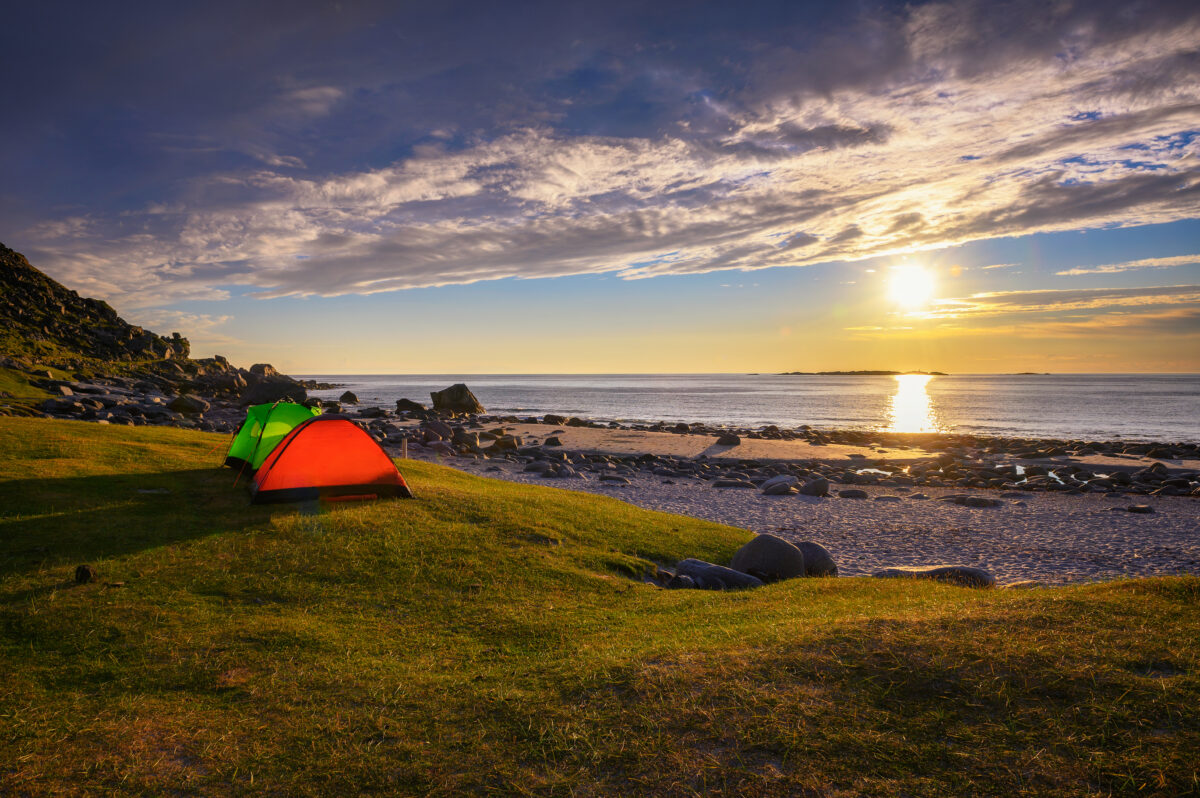
The most photographed beach in the Lofoten Islands, Uttakleiv boasts award-winning beauty. It’s been named one of the world’s most beautiful beaches and one of the most romantic in Europe. It has a wild, untouched feel with a mix of fine, white sands and large, round pebbles, along with the towering mountains that the archipelago is so renowned for. You’ll find many fantastic photo ops, including the beach’s famous “Dragon’s Eye” geological formation, with smooth black rocks that resemble an eye at low tide.
For a bird’s-eye view of Uttakleiv, there are short trails that wind up Mannen and Vaggen mountains. Or, enjoy a leisurely coastal walk along the scenic trail to Haukland Beach, about 2.5 miles each way.