

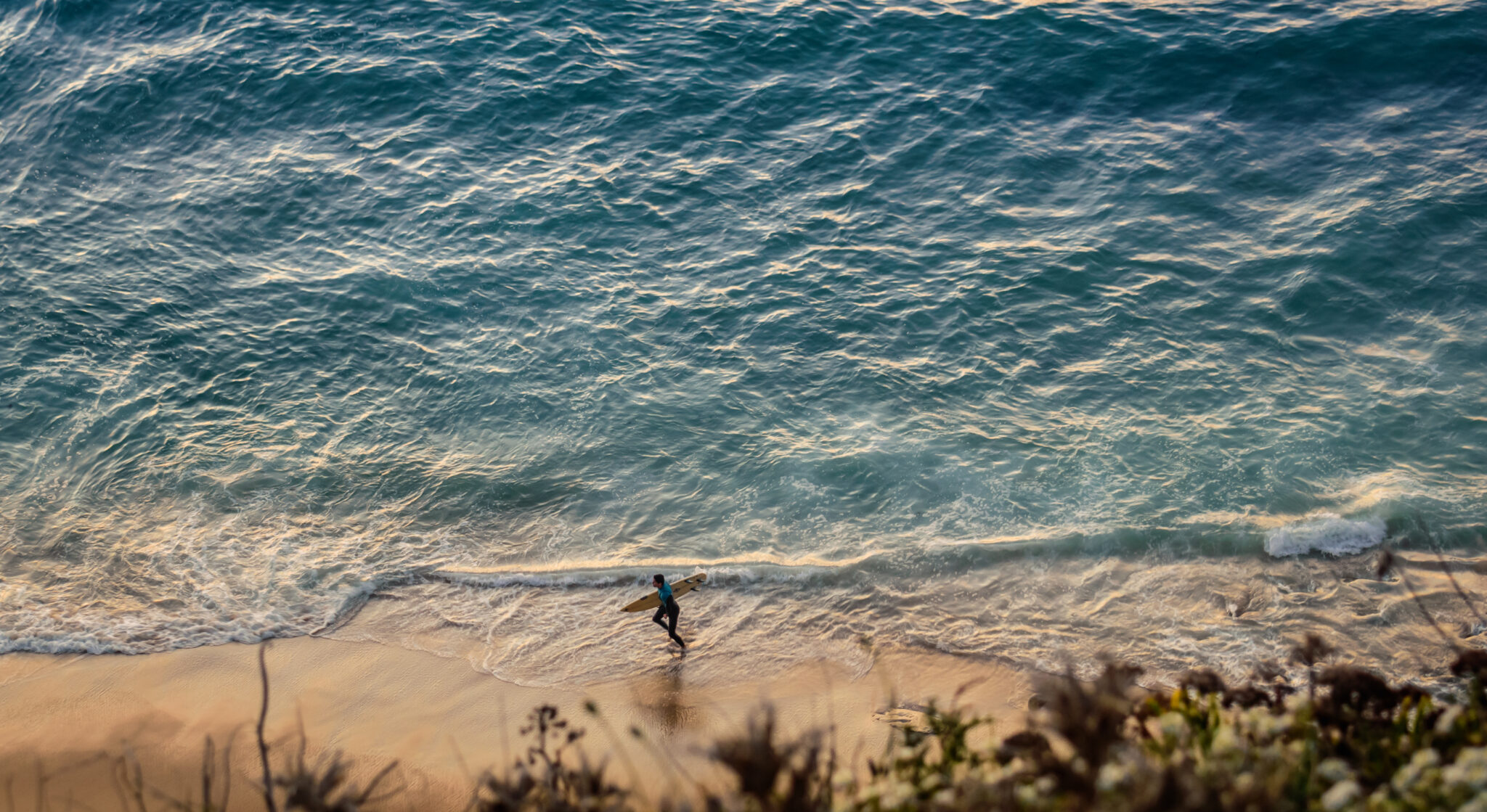
Somewhere between the rise of $400-a-night wellness retreats and the cultural obsession with optimizing every waking hour, another movement has been gaining momentum. Travelers are skipping the resort pools and booking flights to wild coastlines instead—places where the ocean itself does the heavy lifting.
Science backs this up too. “Blue mind” research—a growing field studying the psychological and physiological effects of being near water—suggests that coastal environments lower cortisol, reduce anxiety, and sharpen attention in ways that even the best spa package can’t fully replicate. Add cold-water immersion, tidal walking and salty air, and you’ve got a wellness prescription that nature naturally offers for free.
These are the beaches the world’s most intentional travelers are heading to right now.
Lofoten Islands, Norway
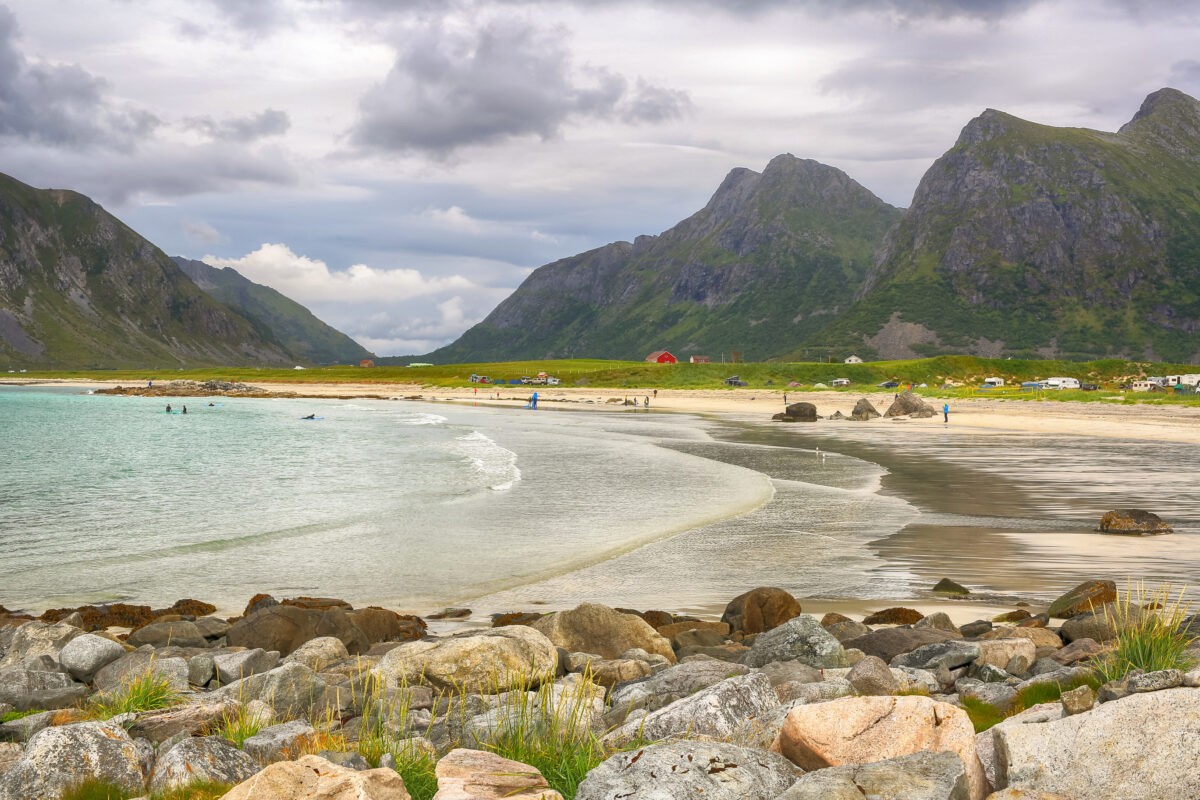
Best for: Cold-water immersion
Few places make you feel more alive (or more humbled) than the Lofoten Islands in winter. Ringed by dramatic peaks that plunge straight into the Arctic Sea, this remote Norwegian archipelago has become a pilgrimage for cold-water swimmers drawn by the Wim Hof effect and the growing body of research linking cold immersion to improved mood, circulation, and immune function.
The water here hovers around 4–8°C (39–46°F) for much of the year, and local wild-swimming communities welcome visitors with an almost evangelical enthusiasm. After a dip, warm up in a traditional rorbuer (fisherman’s cabin) and watch the Northern Lights reflect off the fjords. No ice bath at a wellness retreat comes close.
When to go: February to April for the best light; summer for milder temperatures and the midnight sun.
Biarritz, France
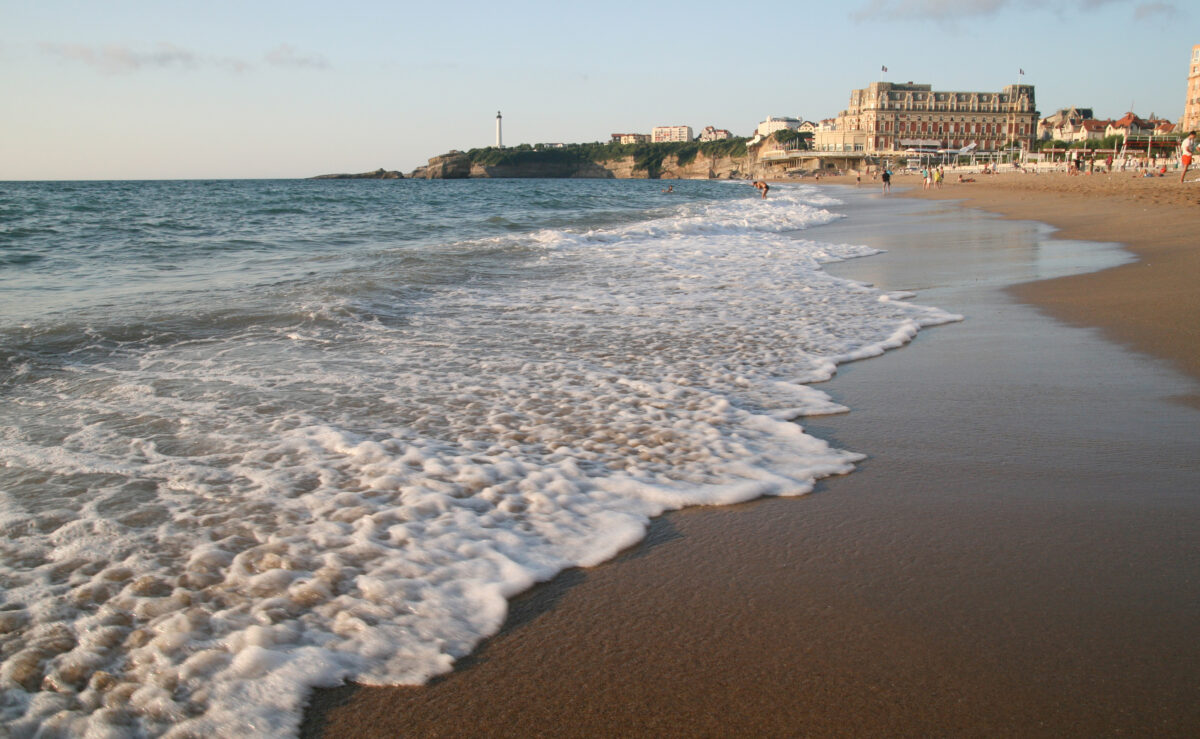
Best for: Cold-water swimming + coastal walking
Biarritz was Europe’s first surf town, and its Basque coastline has been drawing swimmers, surfers, and sea-lovers for years, long before “blue mind” had a name. The Atlantic here is bracing year-round, which is actually part of the appeal. Cold-water swimmers gather at dawn at the Côte des Basques beach, one of Europe’s most famous breaks, while the coastal path from Biarritz to Bidart offers some of the most dramatic cliff-top walking on the continent.
The town itself has leaned into thalassotherapy (seawater-based treatments) since the 19th century, and modern thalassospas use heated seawater, seaweed wraps, and salt scrubs that complement what the ocean already offers for free.
When to go: May to June, or September to October for crowd-free coastline and perfect swimming conditions.
Skagen, Denmark
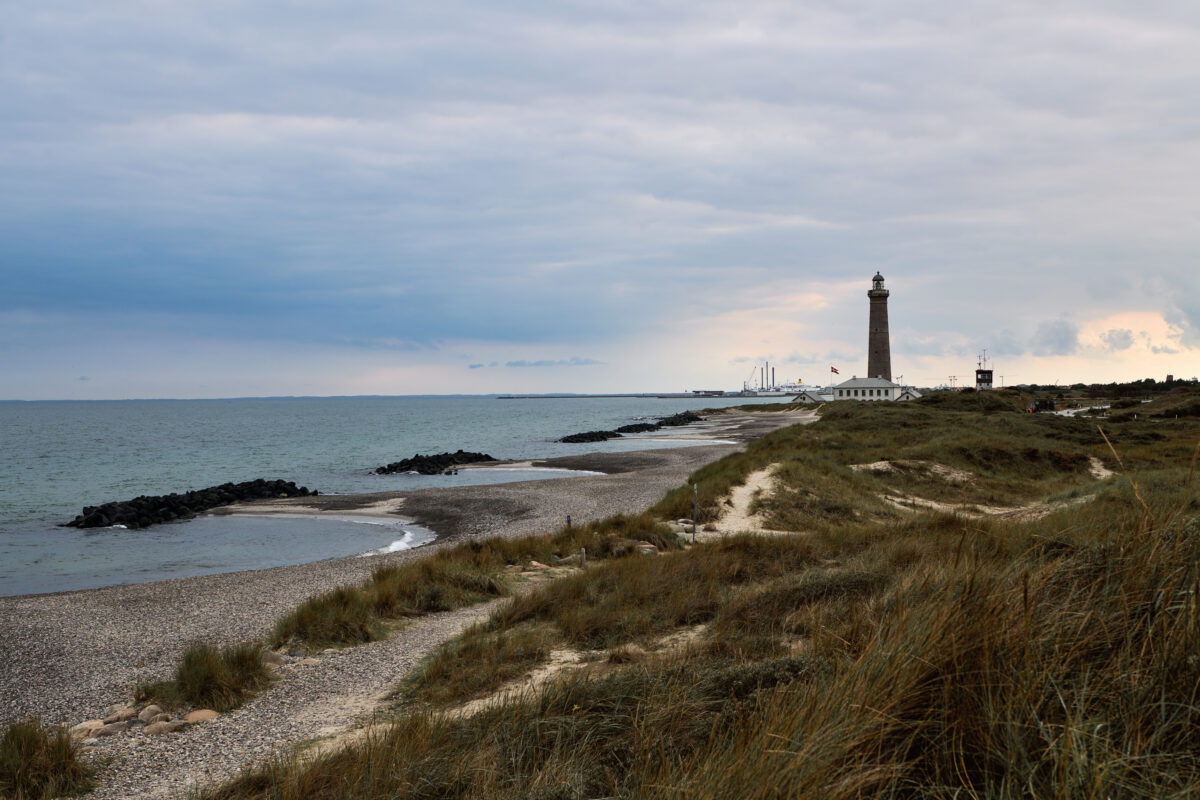
Best for: Tidal walking
At the very tip of Denmark, where the North Sea collides with the Baltic in a swirling meeting point visible from the beach, lies Skagen, a place that feels like the edge of the world. The phenomenon here, known as Grenen, draws visitors who come to literally stand in two seas at once.
Miles of white sand dunes, heath, and tidal flats stretch in every direction, perfect for slow, meditative coastal walks. The light at Skagen has long attracted artists for the same reason it attracts wellness seekers—it’s golden, diffuse, and otherworldly.
When to go: Late spring and early autumn for quiet beaches and mild temperatures.
Ericeira, Portugal
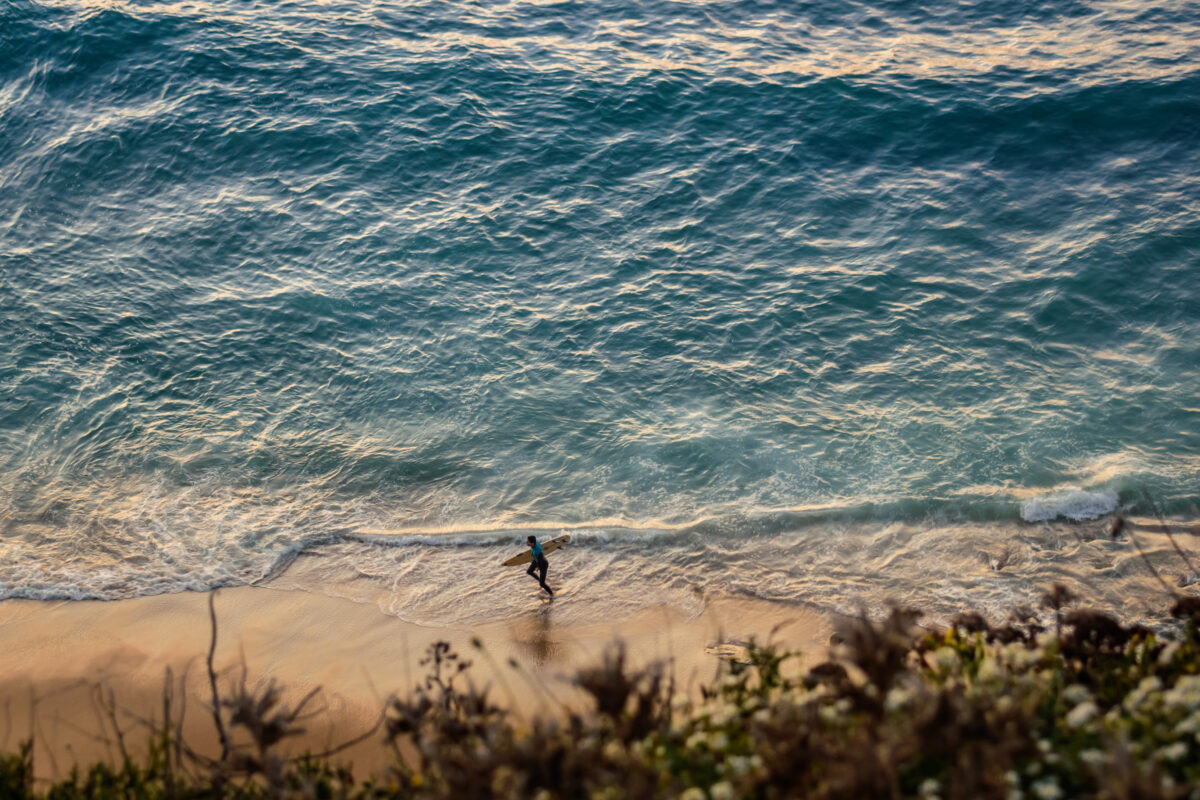
Best for: Surf therapy + salty resets
Portugal’s only World Surfing Reserve sits just 45 minutes north of Lisbon, but it feels like a different world entirely. Ericeira is a whitewashed fishing village that has somehow managed to absorb an international surf community without losing its soul. The local fishermen still bring in their catch at dawn, and the pastéis de nata are still the best thing on the menu.
Surfing here is a full-body reset. The physical demands of paddling, the focus required to read a wave, and the cold Atlantic water combine to create what surfers have known for decades and scientists are only now quantifying: being in the ocean changes your brain.
When to go: September to November for the best waves and warm golden-hour light.
Nosara, Costa Rica
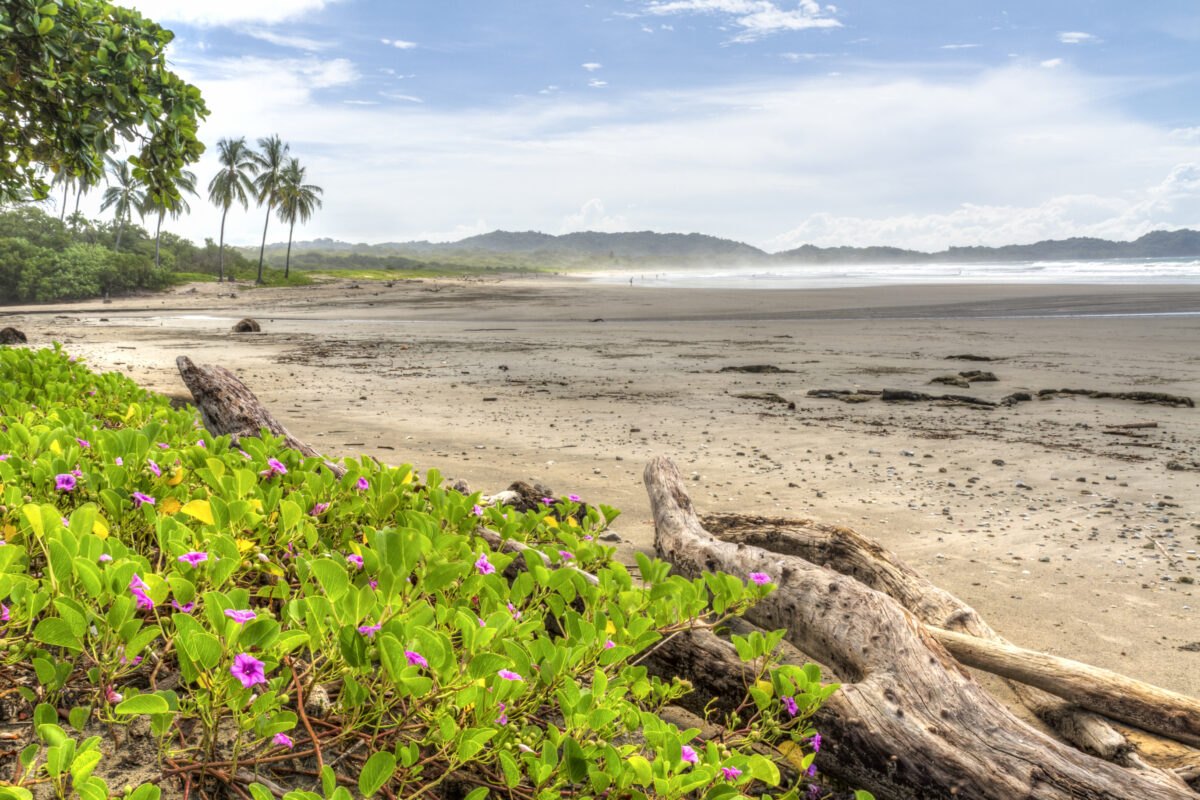
Best for: Nature immersion + nervous system reset
Nosara is the kind of place people visit for a week and end up staying for a year. Tucked into the Nicoya Peninsula, one of the world’s five Blue Zones, where people regularly live past 100, this small beach town has become a hub for yoga practitioners, breathwork teachers, and anyone seeking the particular kind of quiet that only a biological reserve can provide.
The beach itself, Playa Guiones, is one of Central America’s most pristine: no hotels on the sand, no jet skis, and strict development restrictions that keep the jungle thick right up to the shore. You might spot howler monkeys and Scarlet macaws flying overhead during swimming sessions. The biological richness here is so gorgeous and healing.
When to go: December to April for the dry season; May to November is quieter and greener.
Big Sur, California
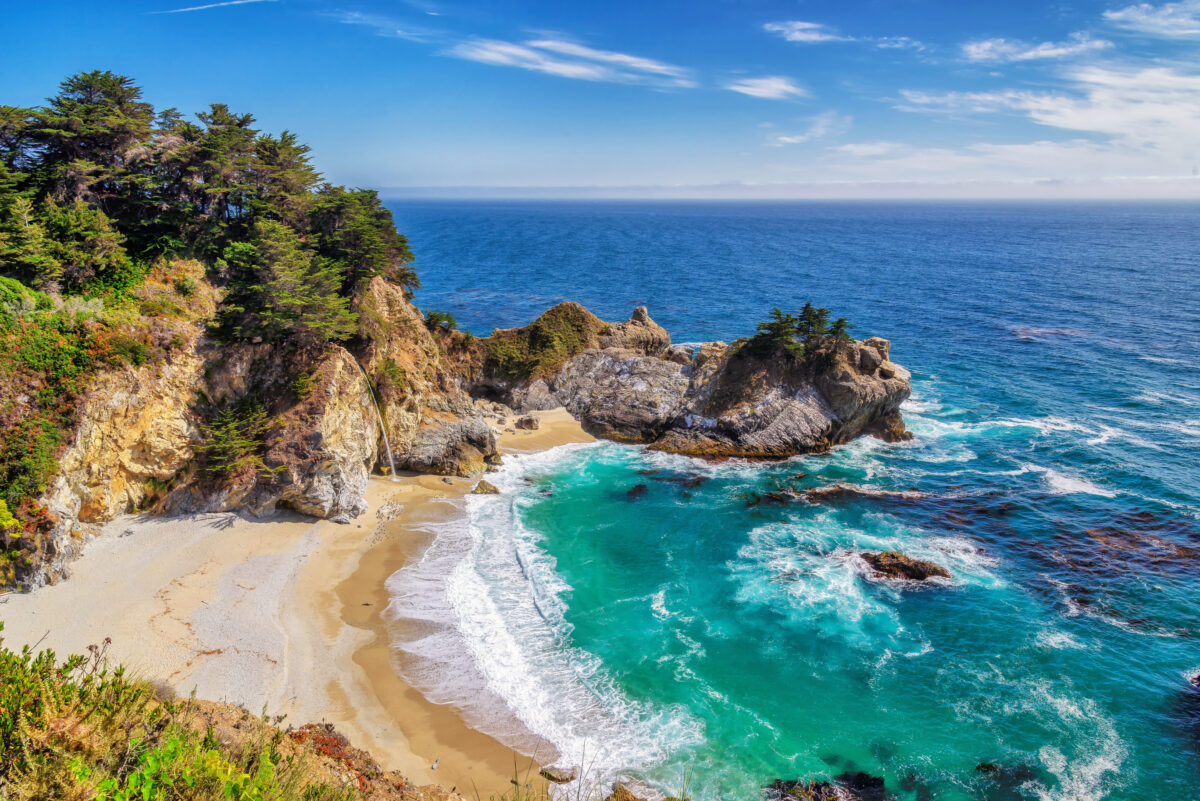
Best for: Long coastal walks + solitude
Big Sur isn’t a beach destination in the traditional sense. You won’t find warm shallows or beach bars here. What you will find is 90 miles of the most dramatic coastline in North America, where the Santa Lucia Mountains drop straight into the Pacific and the fog rolls in.
The healing here is geological and elemental. Hiking the Ewoldsen Trail or the Tan Bark Trail brings you to viewpoints where the scale of ocean, sky, and rock is genuinely perspective-altering. Big Sur delivers awe in industrial quantities.
When to go: April to June before the summer crowds; September is golden.
Kangaroo Island, Australia
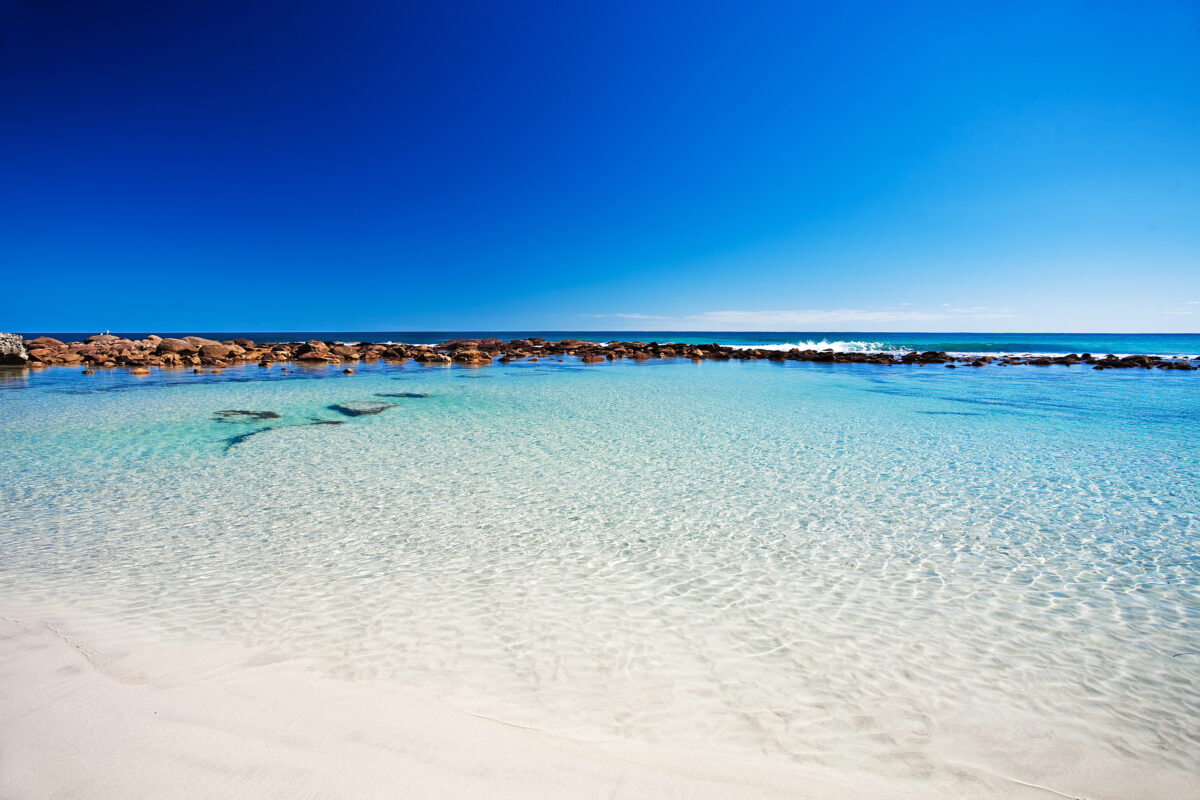
Best for: Wildlife encounters + deep nature connection
An hour’s ferry ride from Adelaide, Kangaroo Island is one of the few places on earth where wildlife still outnumbers people by a comfortable margin. Sea lions lounge on Seal Bay with complete indifference to human observers. Little penguins waddle home at dusk. The beaches here—Vivonne Bay, Stokes Bay, Pennington Bay—are wild, empty, and consistently ranked among Australia’s best.
The wellness case for Kangaroo Island is rooted in something the Japanese call shinrin-yoku, or forest bathing, extended to the full spectrum of nature. Studies on wildlife watching and species-rich environments suggest that biodiverse natural settings produce measurable stress relief. On Kangaroo Island, you’re never more than a few minutes from a reminder that the world is bigger, stranger, and more alive than daily life suggests.
When to go: March to May for mild weather and fewer visitors.
Santa Teresa, Costa Rica
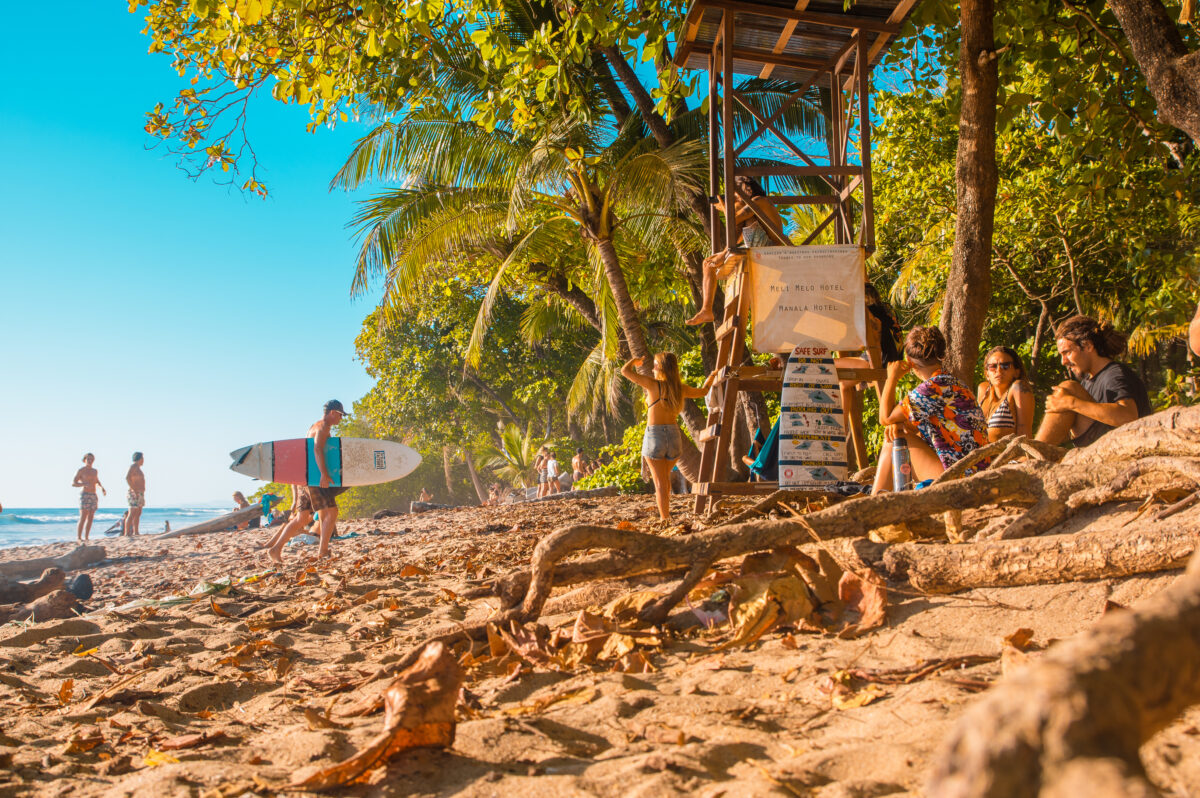
Best for: Sunset swimming + pura vida living
If Nosara is meditative, Santa Teresa is kinetic—a beach town that hums with surfers, yogis, and travelers who’ve found something here they can’t quite name but aren’t ready to leave. The waves are consistent, the jungle meets the sand, and the sunsets are the kind that make you stop whatever you’re doing and just watch.
Sunset swimming at Santa Teresa is a ritual. Enter the warm Pacific water as the sky turns orange and pink, then float on your back while the light fades. It’s one of those experiences that sounds simple but lands deeply. The beach’s south-facing orientation means the sun sets directly over the water—something most beaches, frankly, don’t offer.
When to go: December to April for dry season; the roads are better and the beaches emptier in the shoulder months.
The Science Behind It All
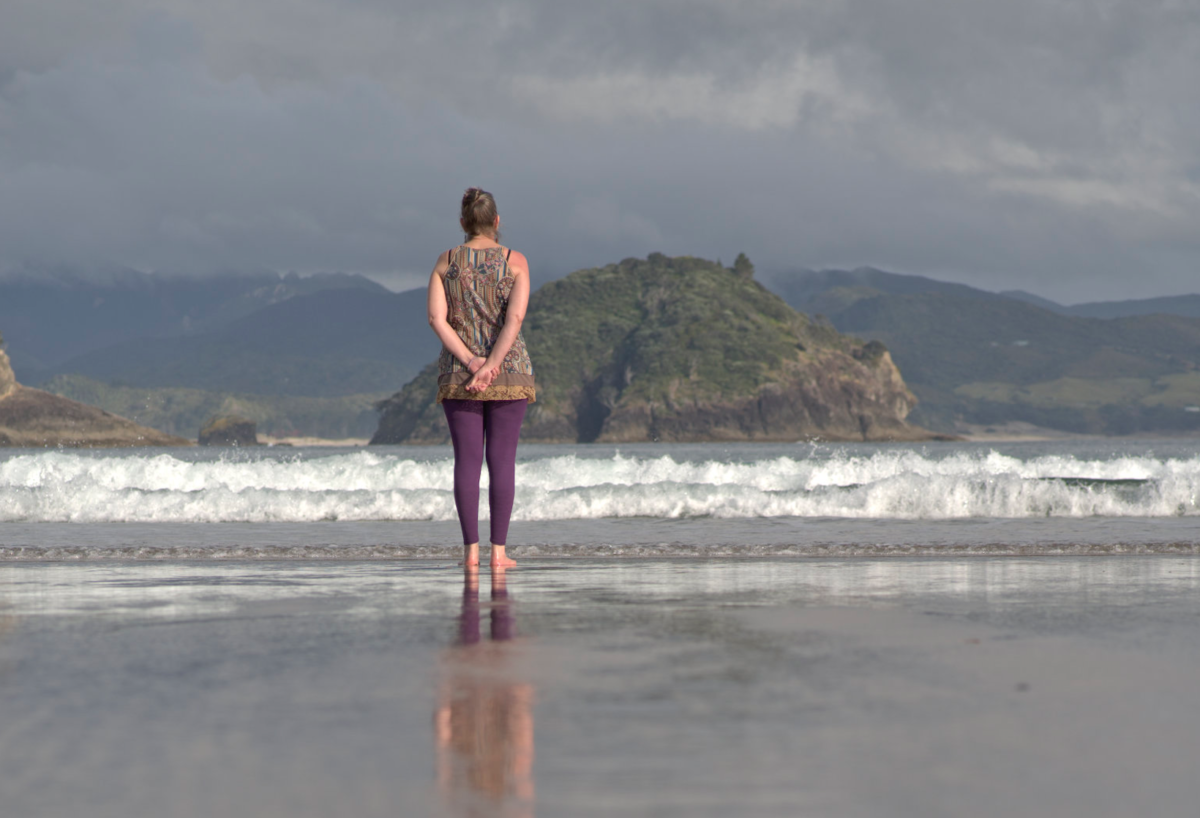
It’s worth pausing on why any of this works. Dr. Wallace J. Nichols, marine biologist and author of Blue Mind, argues that water—especially the ocean—triggers a mildly meditative state he calls the “blue mind”: a restful, connected, creative headspace that stands in direct contrast to the overstimulated, anxious “red mind” most of us inhabit day-to-day.
Cold-water immersion research, meanwhile, has shown measurable increases in dopamine and norepinephrine after cold swims—effects that last hours after you get out. Tidal walking engages present-moment awareness in ways that mirror more traditional mindfulness practices. Salt air carries negative ions that some researchers believe boost serotonin. And the rhythmic sound of waves has been shown to slow brainwave activity into patterns associated with deep relaxation.
None of this requires a wellness retreat package, either. It just requires a beach, an open mind, and enough time to enjoy it all and reap the benefits.