
Costa Blanca (or the “White Coast”) is a perfect Spanish holiday strip. Stretching for over 120 miles, it’s the ultimate destination for sun, beautiful blue beaches, classic Spanish gastronomy, vibrant tapas culture, and thrilling history. There’s also a diversity of things to do. Explore centuries-old Moorish heritage in Alicante, enjoy a classic seaside holiday in skyscraper-filled Benidorm, relax among the turquoise coves of Jávea, and relive the times of Mediterranean pirates in Tabarca. I have been visiting the Costa Blanca for many years, and it has always been my preferred place to unwind in Spain. Here are my recommendations for the unforgettable week on the Costa Blanca.
Day 1 – Alicante
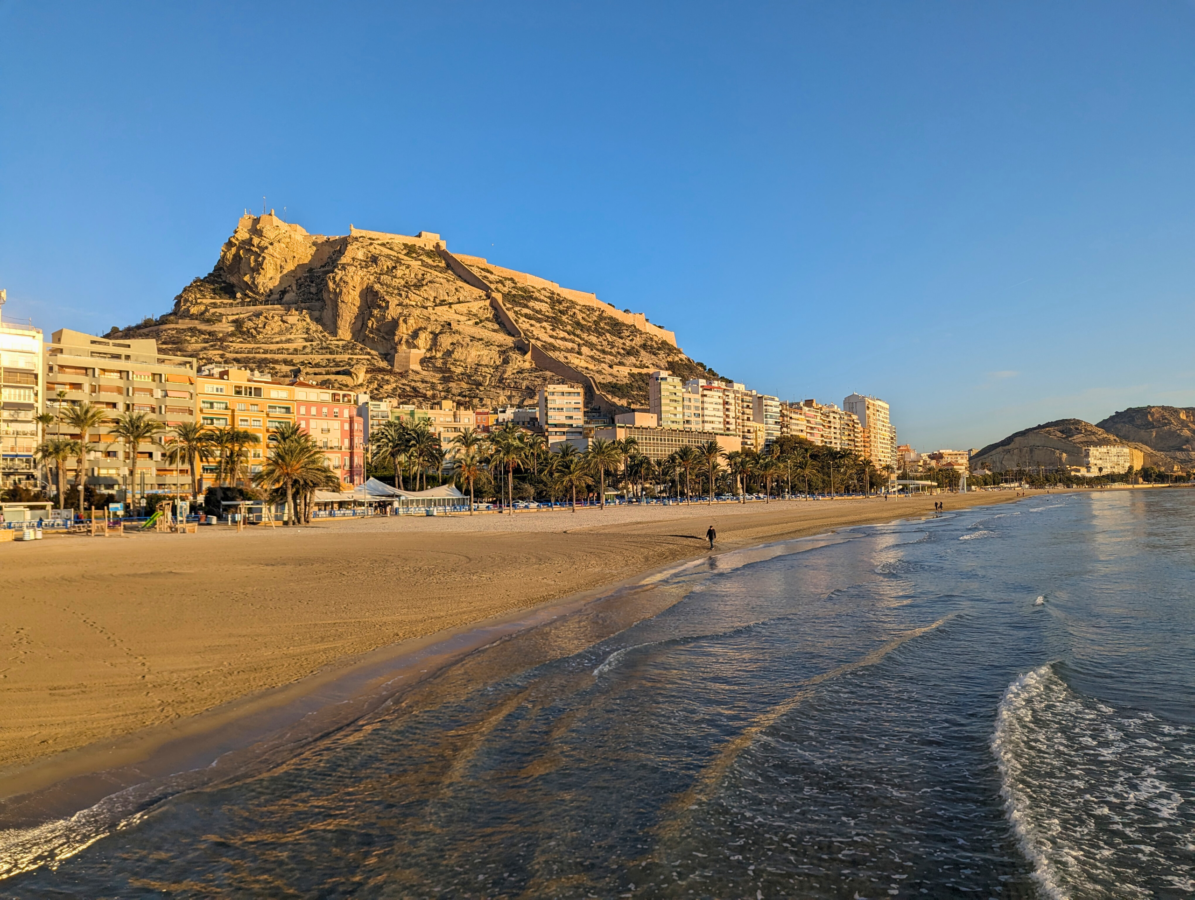
The capital of Costa Blanca is also one of Europe’s sunniest cities. Alicante doesn’t have the world-renowned museums of Madrid or the bombastic architectural masterpieces of Barcelona. However, many call it their favorite Spanish town. The lifestyle may be the reason. Alicante is delightfully compact and packs lots of beauty within a walkable range. Its panorama is dominated by the mighty Castell de Santa Bàrbera, a hilltop fortress built by the Moors in the 9th century. That’s exactly where you should go on your first day to admire the 360-degree panoramas of the city and the sea. You can either hike there or take a lift (€2.70) on Avinguda Juan Bautista Lafora. At the footsteps of the castle is the charming old quarter of Santa Cruz. I always enjoy wandering through its narrow streets with a camera, capturing cute street cats, painted window frames, and picturesque steps.
After exploring the upper town, head straight to the beach. Playa del Postiguet is among the best urban stretches in Spain. Golden sands invite lounging in the sun. Take a dip in the blue Sea of Alboran waters or have grilled seafood in one of the promenade chirungitos (traditional Spanish beach bars). The beach is situated alongside the Explanada, a palm tree-lined boardwalk that features a distinctive “wavy” tile pattern. From there, numerous streets lead you to the Centre neighborhood, the heart of city life, with buzzy restaurants, tapas bars, and cafes. Check out Mercat Central d’Alacant for an immersion into the local gastronomy. When the night falls, go to the Carrer Castaños, where all the nightclubs and drinking establishments are concentrated.
Day 2 – Elche and the beaches of Alicante
One of the most famous attractions of the Alicante province is in Elche. Take a 30-minute regional train ride to see the mesmerizing El Palmeral, a vast date palm orchard, which is also a UNESCO World Heritage Site. This unique garden was established by the Islamic rulers of the Caliphate of Cordoba in medieval times for the cultivation of date palms. Today, it’s a spectacular sight—walking among thousands of palm trees transports you to the tropics. Visit the Huerto del Cura, a charming garden, where the “Imperial Palm” grows.
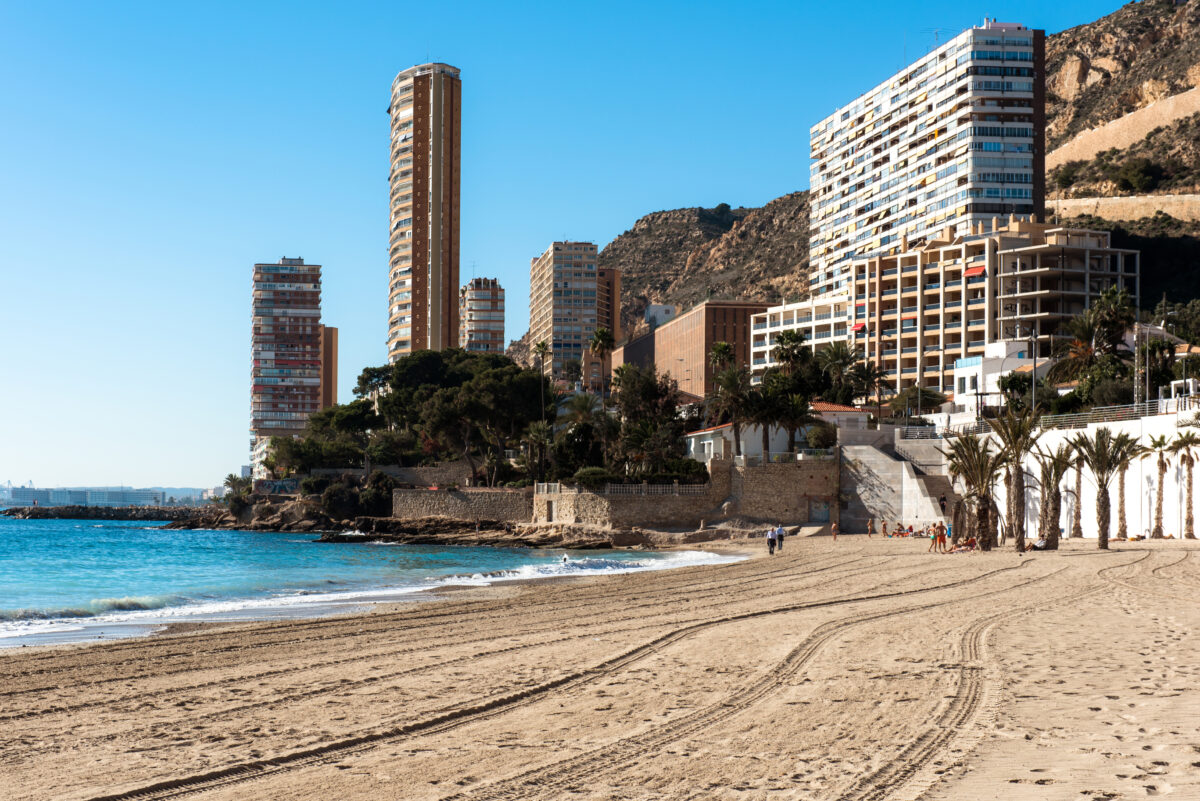
Go back to Alicante for more beachside fun. A short tram ride from the center will take you to Playa de la Albufereta, one of the favorite beaches of the locals. Nearby is the Metropolitan Park of Cabo de la Huerta, a scenic natural area with turquoise coves Cala Cantalar and Cala de la Palmera. This effortless change of scenery from the busy center to idyllic coves is one of Alicante’s advantages. But that’s not all of the city’s beach proposition. End the day at Playa San Juan, a glorious 4-mile fine sand strip in the northern part of Alicante. Basically, it’s like a separate beach town within the city. You’ll find a scenic boardwalk, water sport rentals, sea-facing restaurants, and many chirungitos. It’s very accessible—the fast tram stops at several points along San Juan. Stay for the sunset, preferably at the restaurant terrace, eating arroz a banda (Alicante’s traditional fried rice with fish).
Day 3 – Santa Pola and Tabarca
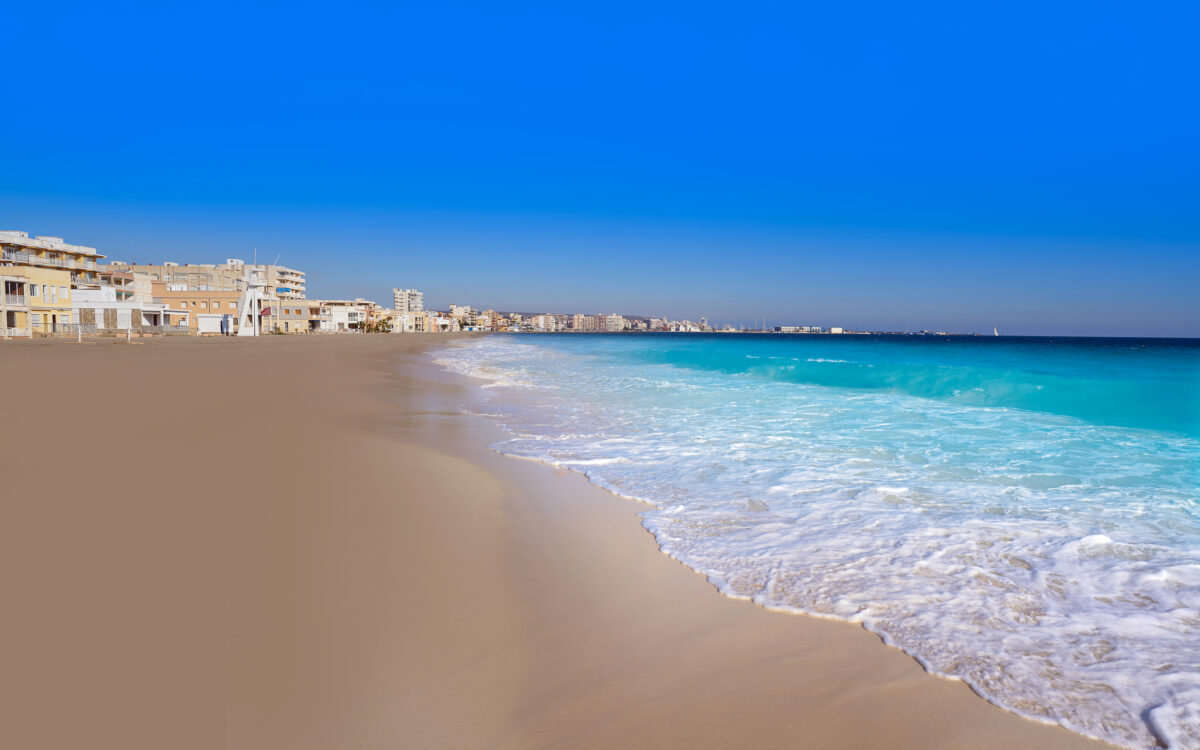
More charming sea views await you on Day 3 of the Costa Blanca trip. Head south for Santa Pola, a laid-back resort town with a collection of fine beaches. Get a history fix at the Castle of Santa Pola. Constructed in the 16th century to counter the pirate attacks, the fortress is a portal to medieval times. Still, the main reason to visit Santa Pola is its coast. The beaches of Llevant, Santiago Bernabeu, and Varadero are perfect for families, offering soft sands and shallow water access. If you’re into bird-watching, visit the Las Salinas de Santa Pola Nature Reserve, a gorgeous marshland, where flamingos roam.
Costa Blanca isn’t only mainland. Just 30 minutes from Santa Pola by ferry is the tiny island of Tabarca. Going there is a fun day trip for the whole family. Although small, it offers a mini-Balearic island experience. Tabarca is famous for being a hiding place of Barbary pirates, and the adventurous theme will keep the kids busy. The menu of local activities includes snorkeling around its picturesque rocky coves, wandering the photogenic whitewashed town, hiking from one end to another, and relaxing on the sands of the main Platja de Tabarca beach. The most scenic coves are Calas del Birros y la Guardia and Cova del Llop Marí. You can also swim to La Cantera, an islet next to the Tabarca town.
Day 4 – Villajoyosa
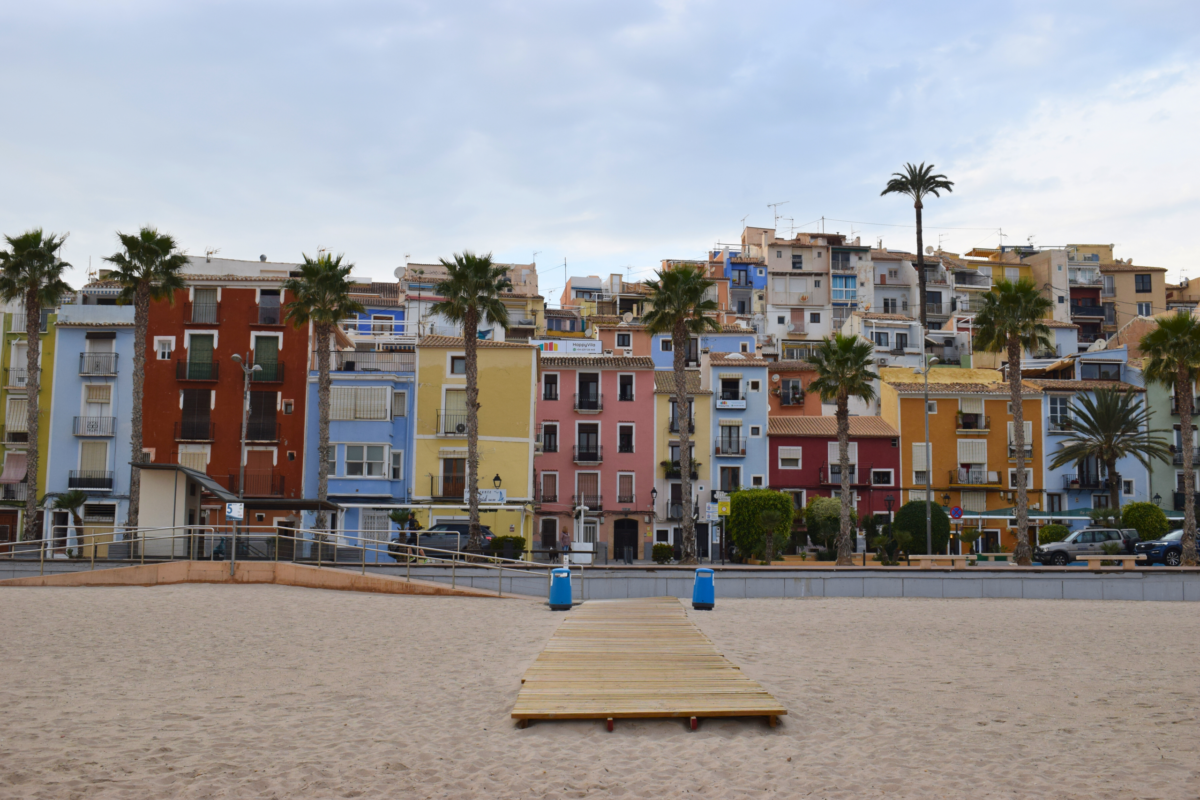
There’s time for activities, and there’s time for soaking in the relaxed atmosphere of the Mediterranean holiday. Villajoyosa is for the latter. This town is ideal for a short break, where all you do is go to the beach, sit on a bar terrace, or indulge yourself in tapas with a sunset view. Who wouldn’t want this kind of holiday? A former fishing village, Villajoyosa hasn’t lost its small-town charms to the mass tourism machine. All roads lead to Platja de Villajoyosa, a wide swath of golden sand. The colorful fishermen’s houses (known as “Les Cases de Colors”) flank the beach, giving it an Instagrammable look. It may be the most family-friendly beach town in Costa Blanca. The main stretch has playgrounds, bathrooms and toilets. The city center is right by the beach, making it easy to get around.
But there’s more than the main beach in Villajoyosa. Dreamy Mediterranean coves and uncrowded pebbly strips surround the town. Head South for Platja del Paradís with transparent waters. Next up is Platja de Bon Nou, bordered by the beautiful limestone cliffs. Finally, you’ll reach Platja de la Caleta, one of the most popular nudist beaches in the area. The coastal area between Villajoyosa and Benidorm is for scenic hiking. Follow the Sender de la Costa trail to find Cala Fonda and Cala Racó de Conill, two mesmerizing cyan coves.
Day 5 – Benidorm
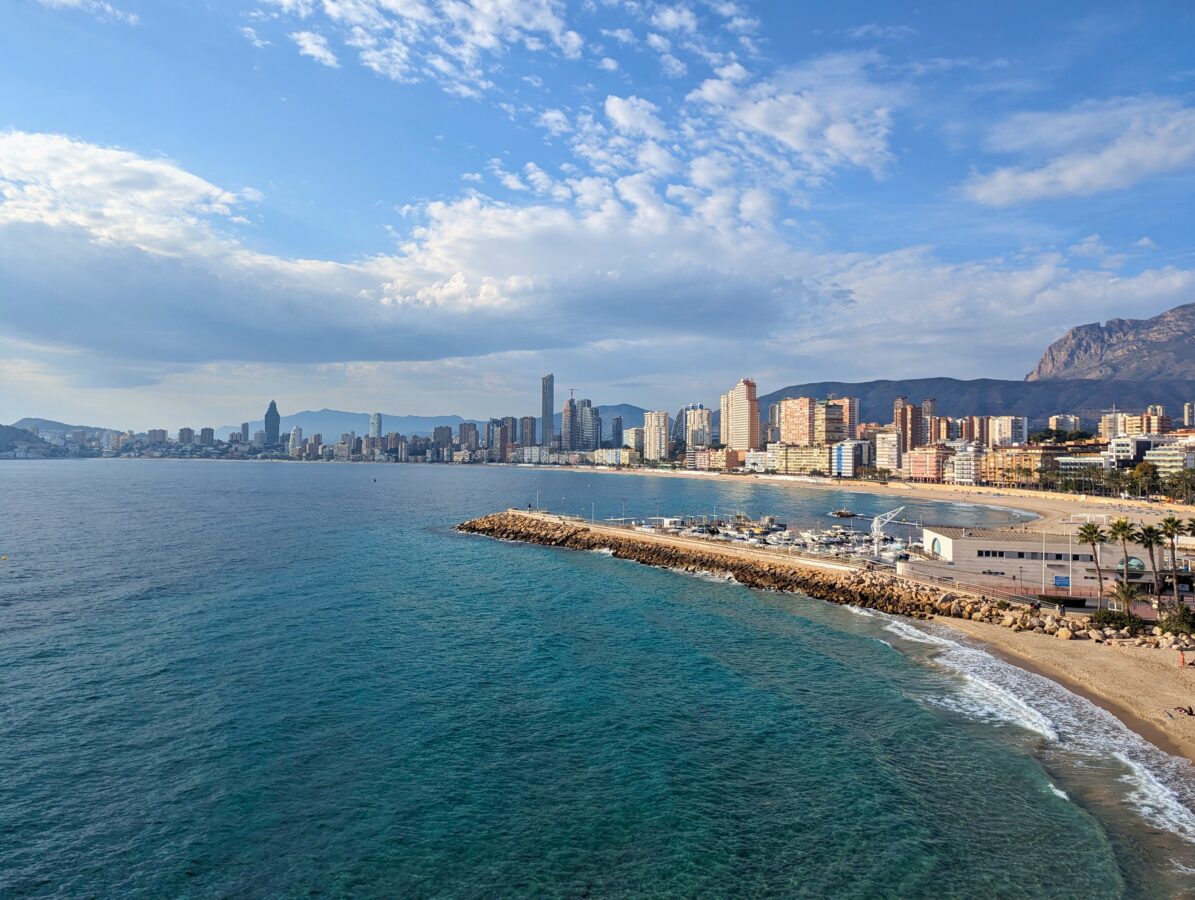
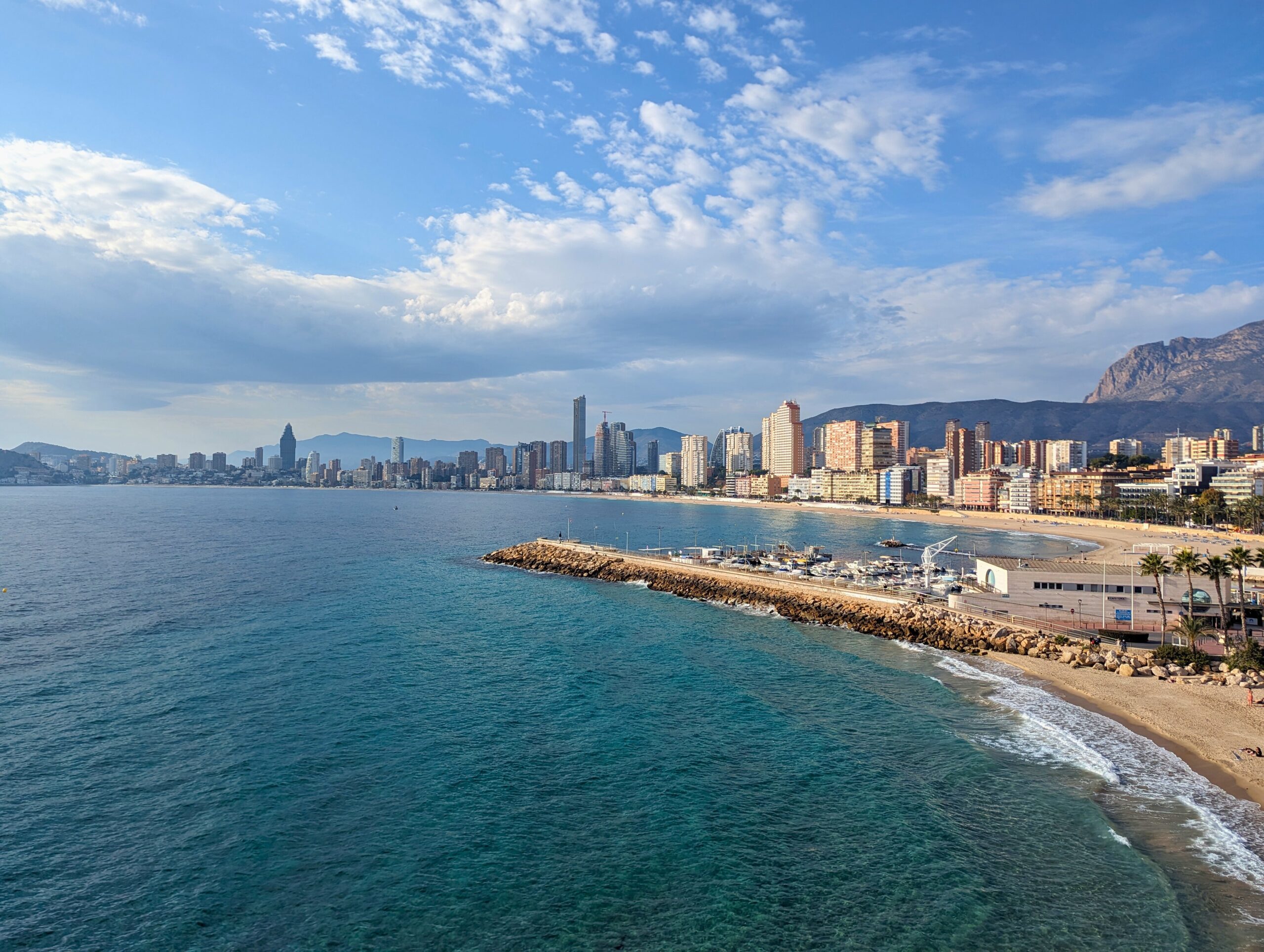
Peace and serenity are nowhere to be found in Benidorm. Costa Blanca’s most famous resort is unlike any other Spanish beach town. The Manhattan-like skyline is the first thing you see arriving here. In the UK, Benidorm is synonymous with package holidays and mostly known for its nightlife, affordable accommodation, and scandalous tourist behavior. It’s rarely mentioned for its coastal beauty, which is also undeniably there. Having been to Benidorm multiple times, I’d say the truth is in between. In fact, it’s among my favorite coastal stops in Spain. But this skyscraper-dotted tourism powerhouse requires a certain approach to be savored.
The first rule is to visit during the shoulder season, when crowds leave and there’s room to breathe. Late spring and early autumn give you the best experience on Benidorm’s gorgeous beaches of Ponent and Levant. It’s also a great time to hike the hills around the city. With increased tourist popularity comes a wide range of accommodations, dining, and entertainment. Take advantage of the local theme parks and visit Aqualandia, Terra Natura, and Terra Mitica—the big three of Benidorm family entertainment.
Day 6 – Altea and Calp
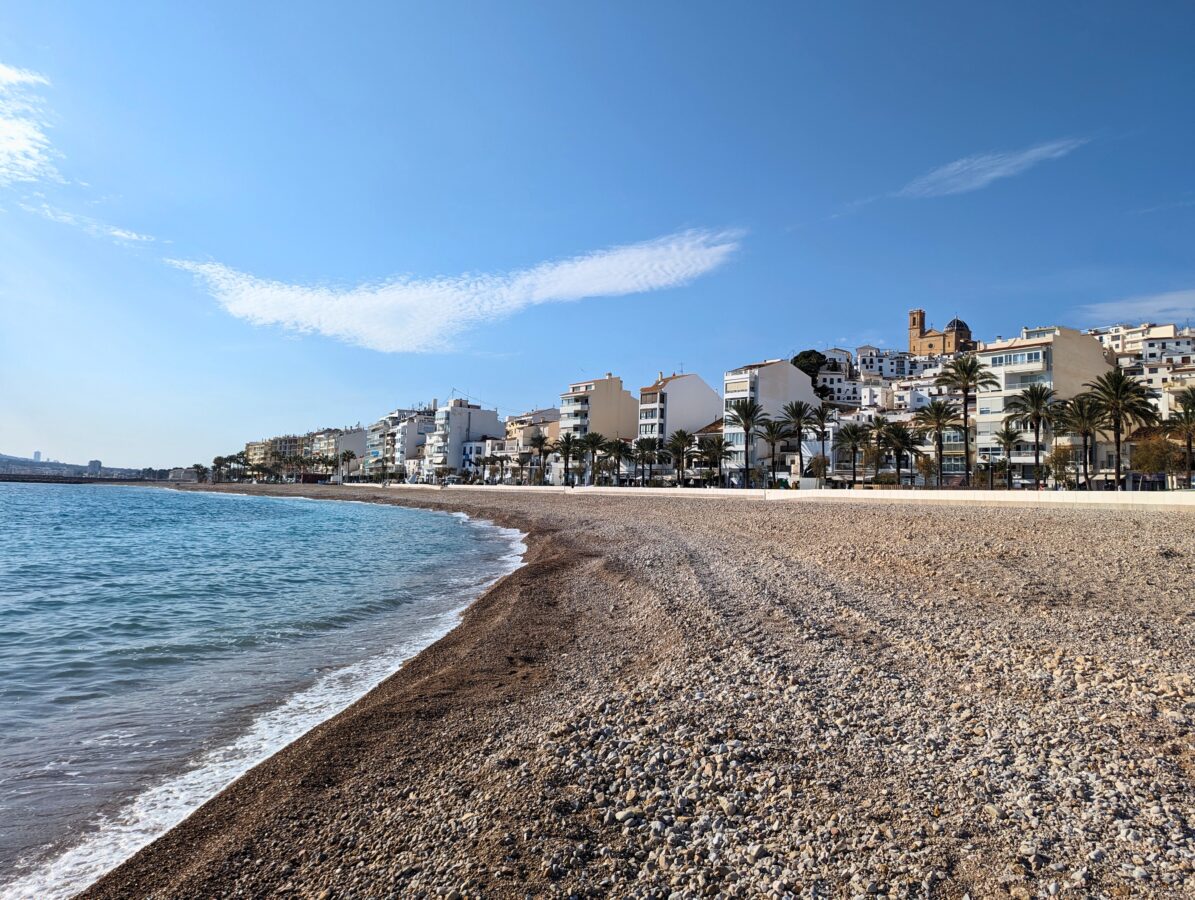
Altea is easily Costa Blanca’s (if not Spain’s) most beautiful small town. Being here, you can’t help but draw comparisons with Santorini. You’ll wander through the pretty, narrow streets, filled with whitewashed houses. The hilltop location of Altea ensures magnificent vistas over the Mediterranean Sea. The town’s center point, a cinematic Plaza de la Iglesia, is a perfect place for a coffee break or a seafood feast. It’s also a great vantage point of the dome of the Virgin of Consuelo church, adorned with white and blue tiles. Time stops in this picturesque town. After exploring the upper part, visit La Roda, Altea’s pebbly urban beach with clear waters.
Then, go to Calp. A classier version of Benidorm, it’s a quintessential Costa Blanca seaside resort. You won’t confuse the Calp panorama with anything else—the town overlooks a dramatic silhouette of the Rock of Ifach. Combined with the turquoise color of the sea, it’s an eye-pleasing sight. Calp’s coastline stretches for over 7 miles, offering all the attributes of a superb beach holiday. A lively promenade backs the sandy Playa del Arenal-Bol. You can explore the ancient Roman baths (Los Baños de La Reina) and snorkel in Cala del Morelló. Another fantastic snorkeling spot is Cala el Racó, at the foot of the Ifach Rock.
Day 7 – Jávea and the Four Capes
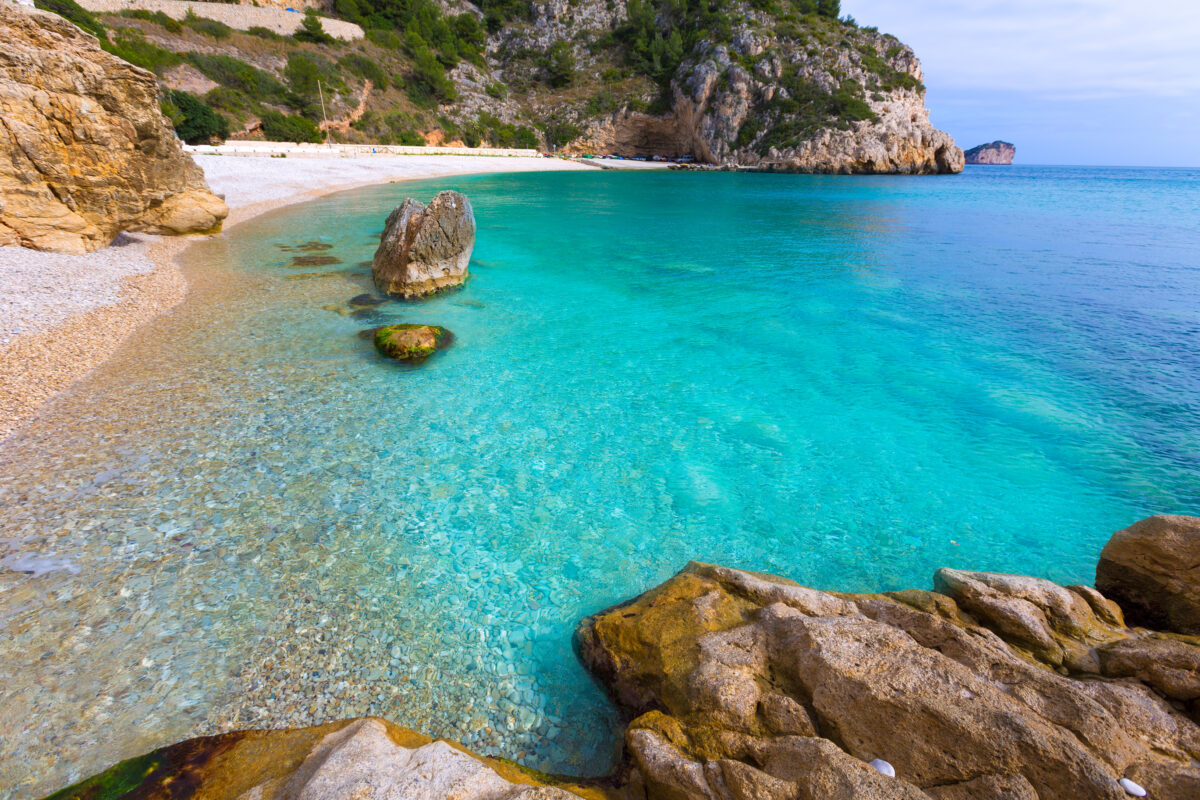
A lesser-known destination, Jávea is a charming town located in the Marina Alta region between Calp and Dénia. It’s here that you find the most stunning beaches of Costa Blanca. First, take a stroll in the compact Old Town of Javea, visiting the medieval church-fortress of Sant Bertomeu. Then, go beach-hopping. There are many spectacular stretches to check out in the area. Platja de l’Arenal is a sandy beach for families, located next to the restaurants-filled boardwalk. The surrounding resort town is a perfect base for exploring the Four Capes, the dramatic coastline around Jávea.
The area is a snorkeler’s dream. Cala Blanca, the nearest cove to Jávea, is a magical spot with natural pools among the rocks and transparent waters. Enjoy the untouched Mediterranean nature at Cap de Martí, stopping for a plunge at pebbly Cala Sardinera. Another picture-perfect cove to visit is Cala del Portixol, overlooking the uninhabited Portitxol Island. Rent a kayak to admire the coast from the water. There’s also Platja Granadella, the ideal cove, mesmerizing you with the sapphire-blue sea color and surrounded by high cliffs.