
Cruising out into Florida’s Gulf Coast with the wind in your hair and the sun kissing your skin is always a good time. However, there’s one time of year when that boat ride is more intentional: scallop season. My friends Timmy and Chelsea are lifelong Floridians and I credit them with introducing me to scalloping. I’m so thankful for that first fun and tasty adventure, and I’m now hooked. Although I had eaten more than my fair share of scallops over the years, I had never had any so delicious and fresh until my first expedition into the Gulf to gather them myself.
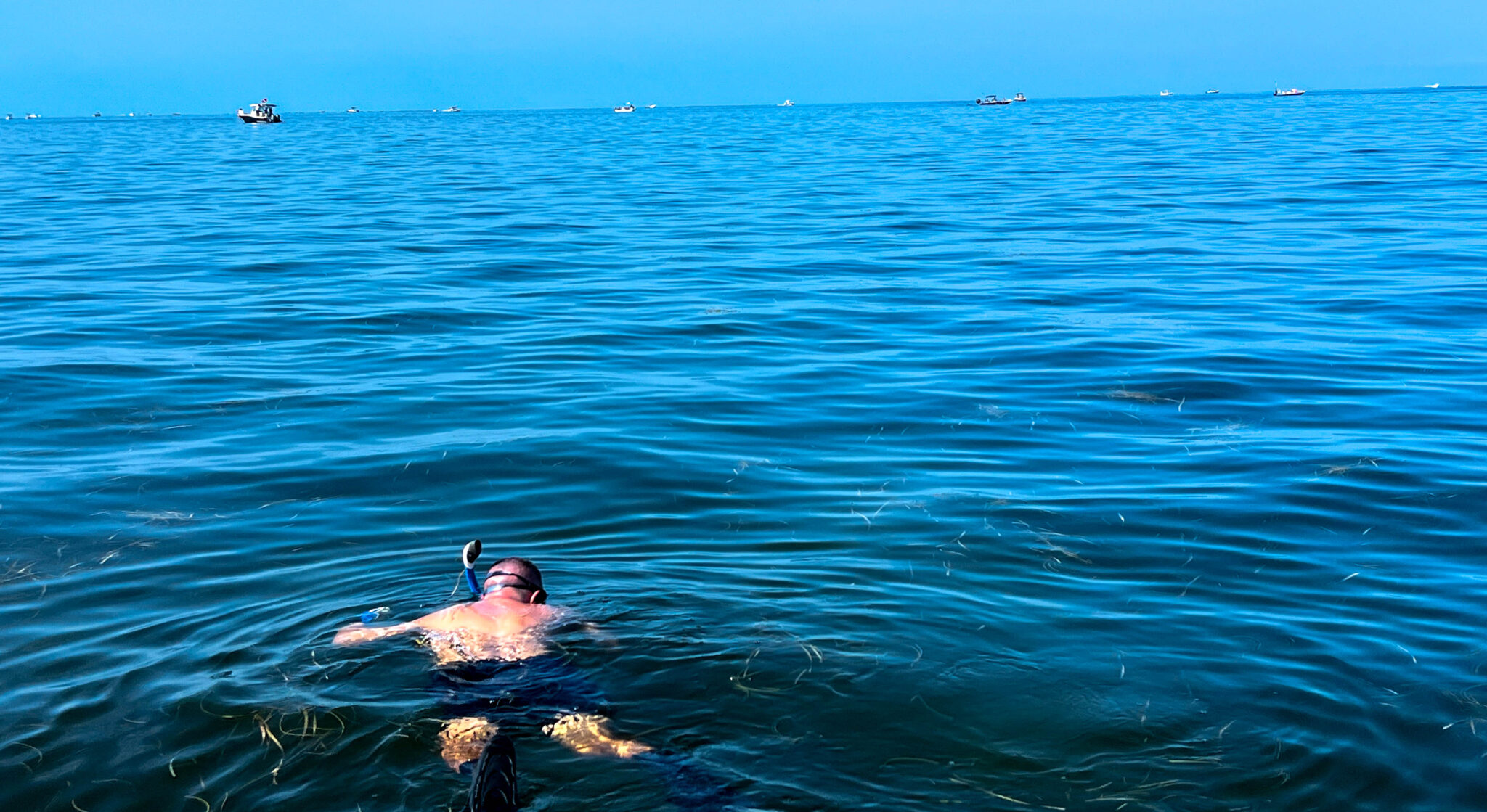
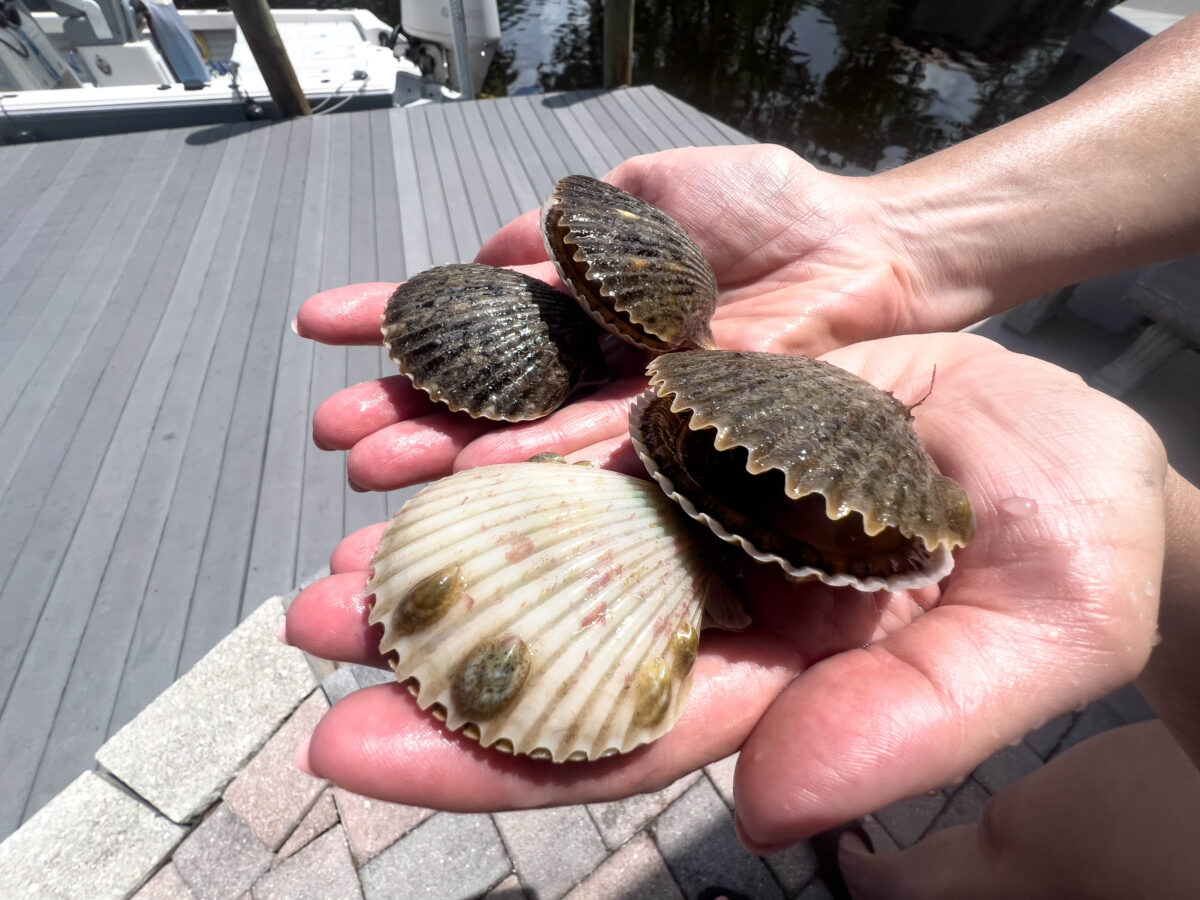
Sure, the end reward is a tasty seafood dinner, but a scalloping trip is one of those rare times where the journey is just as cool as the destination. Snorkeling in the Gulf Coast water and searching for scallops can best be described as one giant aquatic Easter egg hunt. There’s no excitement that can compare to spotting my first scallop tucked among the seagrass beds. I’ve also learned to keep an eye on the sandy spots. Scallops often stand out more against the sandy bottom than they do in the seagrass.
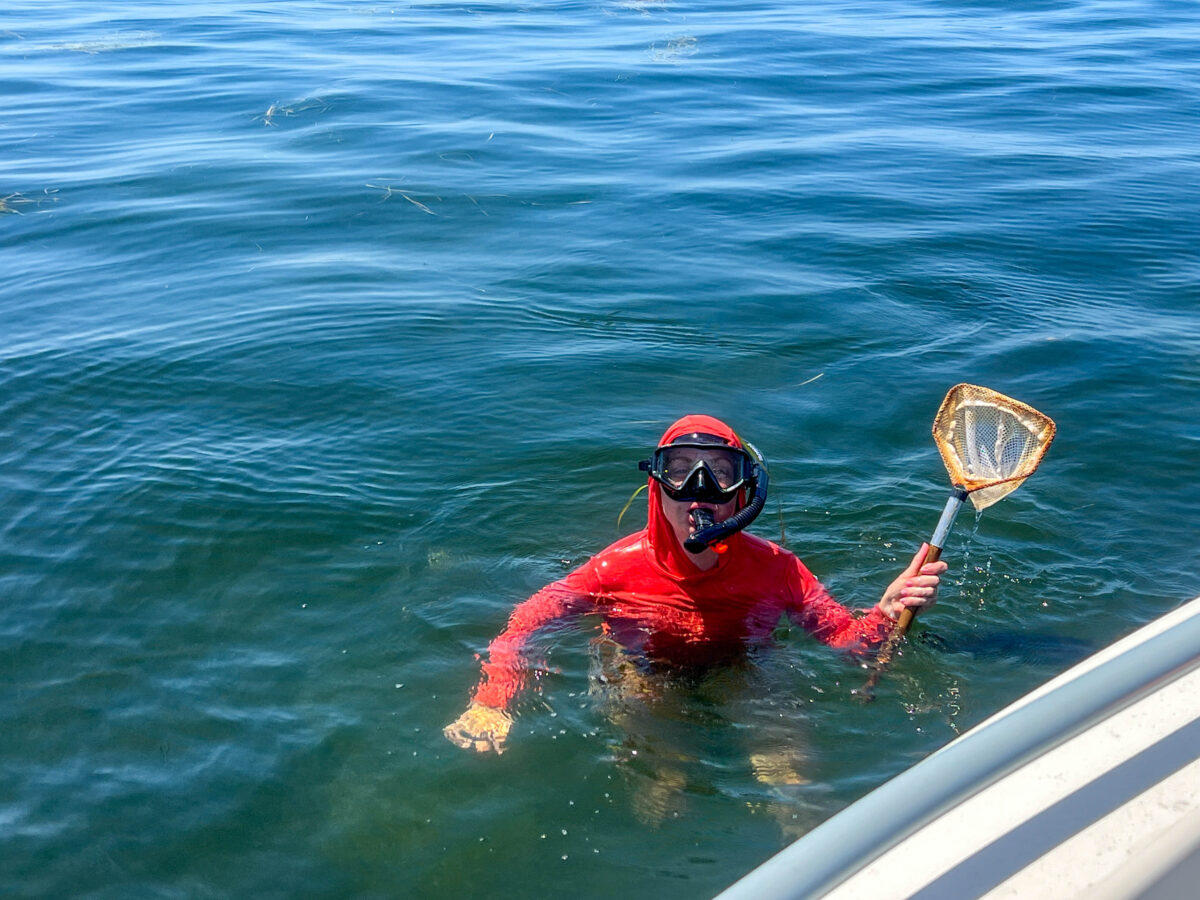
Before my first scalloping trip, I wondered if I would be able to do it. I’ve always loved snorkeling, but I’m not a strong diver. Luckily, that doesn’t matter. If you can snorkel, you can scallop. Scalloping takes place in the shallower Gulf waters and you don’t need to be a certified diver to enjoy the fun. You may have to dive down a short distance to grab your scallops, but I find that having a net with a long handle helps extend your reach. Many people just dive all the way down and grab them with a gloved hand. Personally though, I like having that extra reach the net provides. I’ve learned a few things from my time under the water and I hope my tips help you prepare for your own underwater Easter egg hunt.
Why Scalloping is One of Florida’s Best Coastal Activities
As a Florida resident who’s been here for more than 20 years, I’ve enjoyed the state’s salty waters in so many ways. I’ve spent plenty of lazy days just relaxing and hanging out on Florida’s best beaches, but I also really enjoy snorkeling and fishing—and scalloping kind of gives you the best of both of those worlds. There are several aspects that make this one of Florida’s best coastal activities.
- You can enjoy the freshest and most delicious scallops you’ll ever eat.
- You’ll see pretty fish and other cool marine life while snorkeling.
- It’s fun for all ages.
- No SCUBA certification is needed.
- You can go on your own or book a charter.
- It gives you an excuse to spend a day on Florida’s beautiful Gulf waters.
Gear You’ll Need for Your Scalloping Trip
If you have a boat, or rent one from a local company, you can head out on your own. I think that’s a great way to do it, but make sure you have all that you need for your day on the water.
My packing list includes:
- Water and snacks
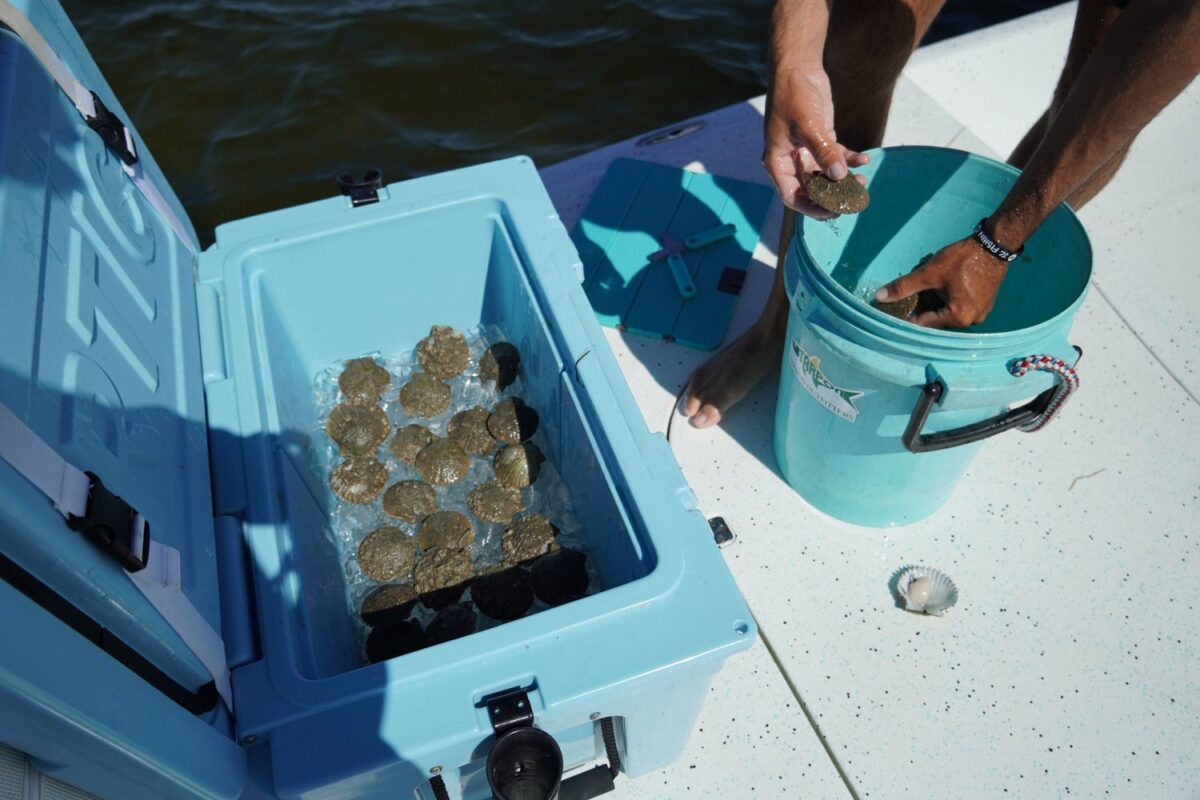
- Cooler with ice
- Snorkel and mask
- Fins and neoprene socks
- Reef-safe sunscreen
- Gloves
- Long-handled net
- Mesh bag to collect your scallops
- Dive flag—You are legally required to have a dive flag up at all times when you’re snorkeling in the water. For your own personal safety, I can’t stress how important this is.
If you book a guided scalloping trip in Florida, your tour company will likely bring along the gear you need. However, it’s always a good idea to check with them before you go to make sure what will be provided.
Charters in Florida That Will Take You Scalloping
If you would rather go out with a charter, you’ll find several along Florida’s Gulf Coast. You can even find places that bundle everything together, such as Paddletail Waterfront Lodge in Crystal River. You can book a package there that includes lodging, a guided scalloping excursion, and a tiki bar that will cook your catch.
Some other local scalloping charters on Florida’s Gulf Coast are:
- Shallow Seas Charters – Port St. Joe and Cape San Blas
- Florida Big Bend Scalloping Charters – Keaton Beach and Steinhatchee
- Crystal River Watersports – Crystal River
- Pasco County Scalloping Charters – Holiday
- JC Fishin Charters – New Port Richey
When is Florida’s scallop season?
The area on Florida’s Gulf Coast that allows scalloping is divided into five regions. The season varies for each of those specific areas.
- St. Joseph Bay and Gulf County: August 16 through September 24
- Franklin County through northwestern Taylor County: July 1 through September 24
- Fenholloway through Suwannee Rivers Zone: June 15 through Labor Day
- Levy, Citrus, and Hernando Counties: July 1 through September 24
- Pasco Zone: July 10 through August 18
You can also check the Florida Fish and Wildlife Conservation Commission’s map to confirm which region your destination lies within.
Scallop Limits in Florida
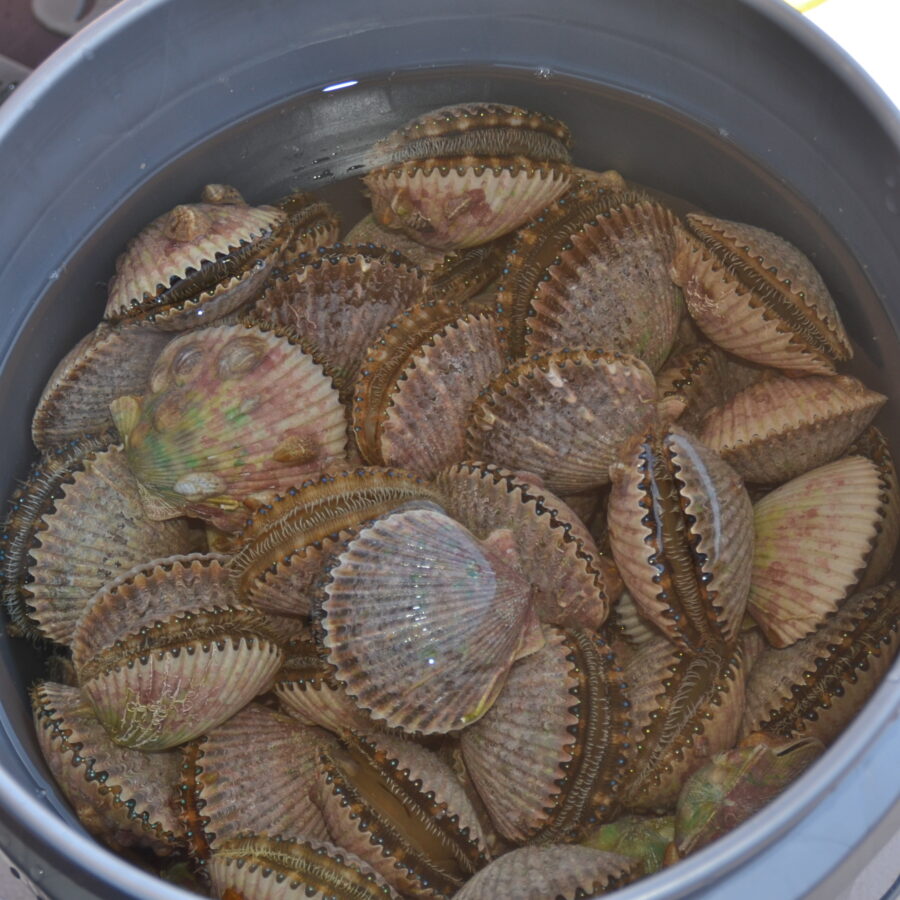
There are limits in place to ensure the scallop population remains plentiful and can continue to be enjoyed by all. Depending on the region and specific dates, the amount of scallops you can harvest varies. It can get a little confusing because there are per-person and per-vessel limits. Just remember that no matter what the vessel limit is, each person can’t exceed the per-person limit. When you’re trying to determine how many scallops you can keep, first take a look at the region where you’ll be scalloping.
Gulf County through Northwest Taylor County and Levy through Pasco County
- Maximum per person: Two gallons of whole bay scallops in shells or one pint of bay scallop meat
- Maximum per vessel: No more than 10 gallons of whole bay scallops in shells or ½ gallon (four pints) of bay scallop meat
Fenholloway through the Suwannee River Zone
- June 15-30 Maximum per person: One gallon of whole bay scallops in shells or one cup of bay scallop meat
- June 15-30 Maximum per vessel: No more than five gallons of whole bay scallops in shells or two pints of bay scallop meat
- July 1-Labor Day Maximum per person: Two gallons of whole bay scallops in shells or one pint of bay scallop meat
- July 1-Labor Day Maximum per vessel: No more than 10 gallons of whole bay scallops in shells or ½ gallon (four pints) of bay scallop meat
The Easiest and Best Recipe for Scallops
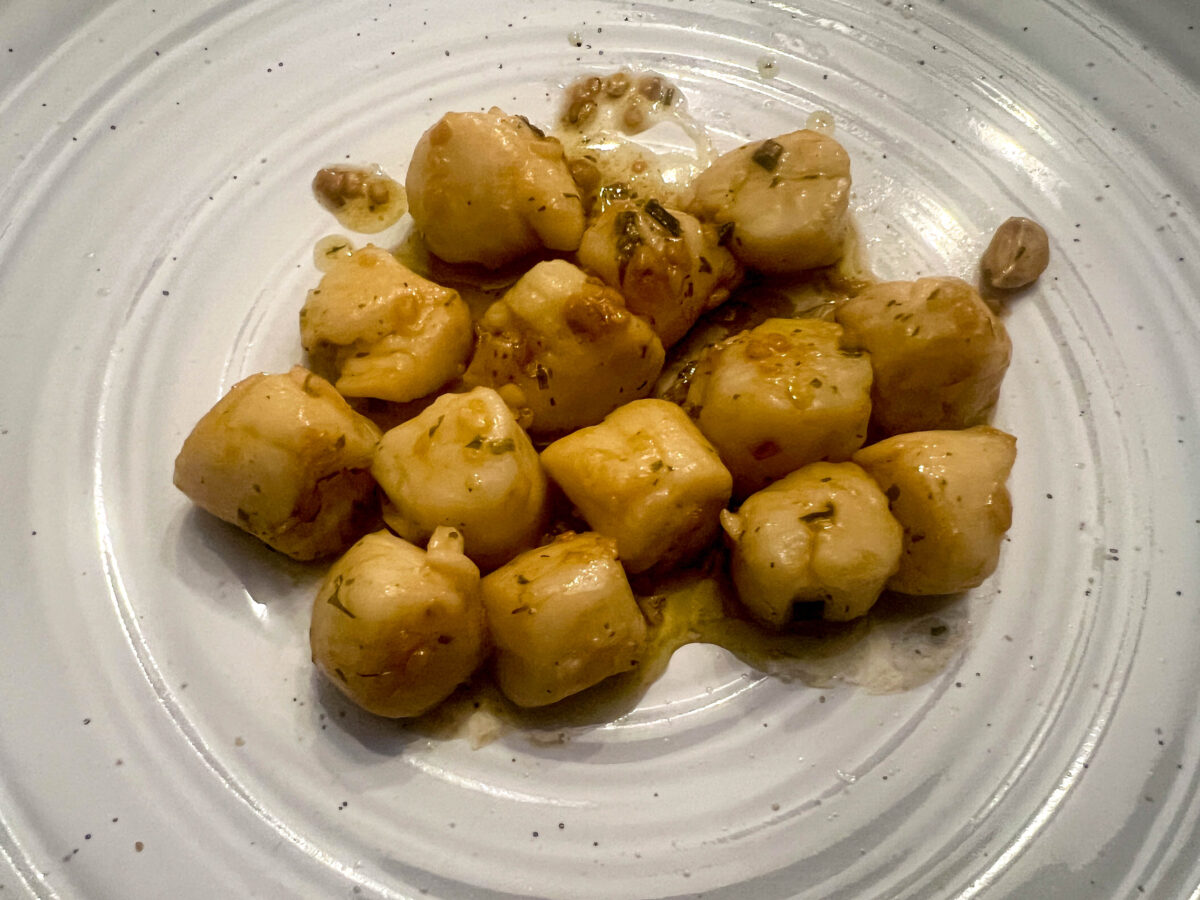
Think ahead and book accommodations that have a space for you to cook your scallops. Despite their gourmet taste, they are actually really easy to prepare. Bay scallops from the Gulf Coast are smaller than sea scallops and they don’t take long to cook. My friend Timmy’s recipe for bay scallops is the best I’ve had, and it only has three simple ingredients.
- Garlic herb butter
- Chopped fresh garlic
- Lemon juice
Melt the butter and then stir in the garlic and lemon juice. Then toss in the fresh scallops and pan-sear them for a few minutes. You’ll want to cook your fresh scallops within a couple of days, and make sure you keep them cold until then.
Restaurants That Will Cook Your Catch
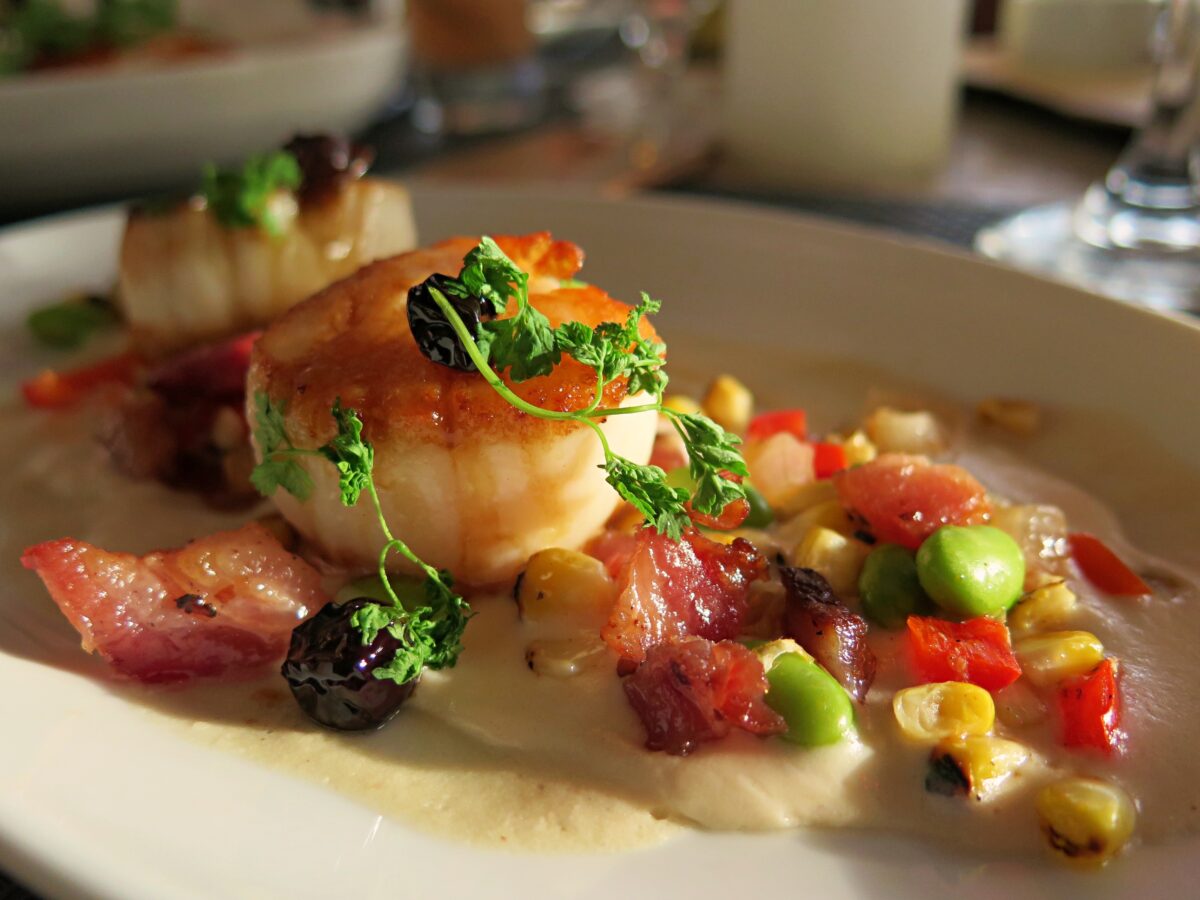
If you don’t feel confident about cooking them on your own, or just don’t want to, you can also find restaurants that will cook your catch. A few examples include:
- Shipwreck Raw Bar – St. Joe Beach
- The Shed at MacRae’s – Homosassa
- Fiddler’s on the River – Steinhatchee
Tips for Going on Your First Scalloping Trip
- If it’s your first time scalloping, and you aren’t going out with a friend who’s been before, consider booking a guided excursion so you can learn the ropes.
- Watch the weather. Scallop season falls right in the middle of Florida’s hurricane season, and while you’ll know about tropical storms and hurricanes ahead of time, it’s not uncommon for afternoon storms to just pop up out of nowhere that time of the year. It can be easy to get caught up in the fun of scalloping and not have your eyes to the sky, but it’s critical that you pay attention to the weather. Being on the water during a storm is not a situation you want to be in.
- Don’t forget the reef-safe sunscreen—and don’t forget to reapply it. When you’re scalloping, you’ll spend a good portion of the day face down in the water with your back exposed. It can be easy to forget to lather up your back and the back of your head, but a brutal sunburn can affect your fun the next day.
- Check your gear before heading out on the water. Most scalloping towns along the Gulf Coast will have stores that sell the basic gear if you do forget something. I’ve even bought a snorkel at the grocery store here in Florida.
- Make sure your mesh bag is tied tightly to your arm while scalloping, and securely put away while you’re boating. You don’t want that to float or fly away, as it can be a hazard to marine life.
- While the long-handled net is a game changer, you will inevitably spot a few scallops that are just out of your reach. That’s when it’s nice to have a good friend nearby to answer your excited squeals with a quick dive and scoop of their net. Don’t be embarrassed to ask for help if needed.
- Regulations can change, so always confirm the current season dates and harvest limits on FWC’s website before your trip.
FAQ:
Where can you go scalloping in Florida?
Florida’s Gulf Coast has a section of coastline with designated areas where you can go scalloping. The scalloping areas stretch from the region around Port St. Joe/Cape San Blas to the waters near Tarpon Springs.
Do I need a license to go scalloping?
Most scallopers who go out on their own will need a Florida saltwater fishing license. Although some people are exempt, it’s best to check FWC’s saltwater fishing requirements ahead of time to see if you’ll need one. If so, you can buy it online. If you’re going with a commercial charter, ask them if their fishing license covers you.
Is scalloping safe for kids?
There is no minimum age for scalloping. Children who are comfortable swimming and snorkeling can participate, though you’ll want to make sure there’s an adult supervising.